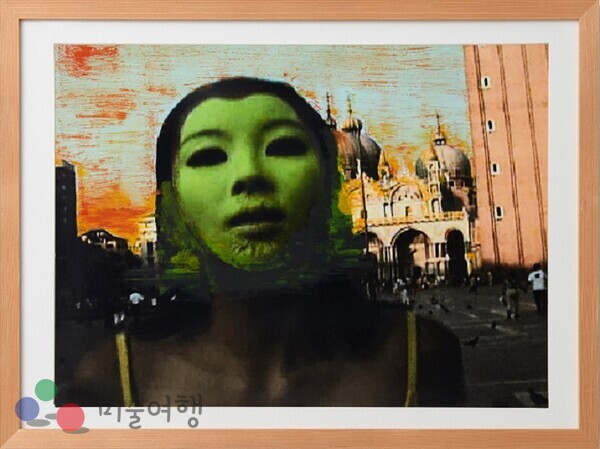
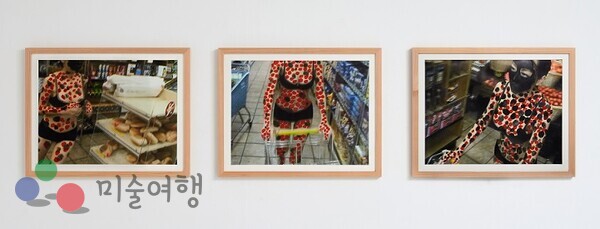
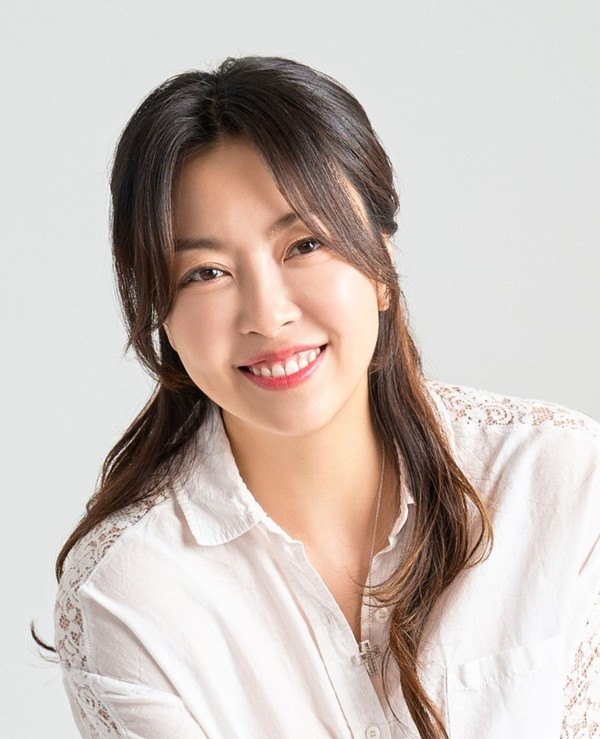
Starya Hee-seung Sung’s practice has moved fluidly across painting, performance, video, and photography rather than remaining confined to a single medium. In her earlier works, she treated her own body as both surface and medium, painting her face, shaving her head, and performing before surveillance cameras. Images generated through these performances were sometimes transformed into paintings months or even years later.
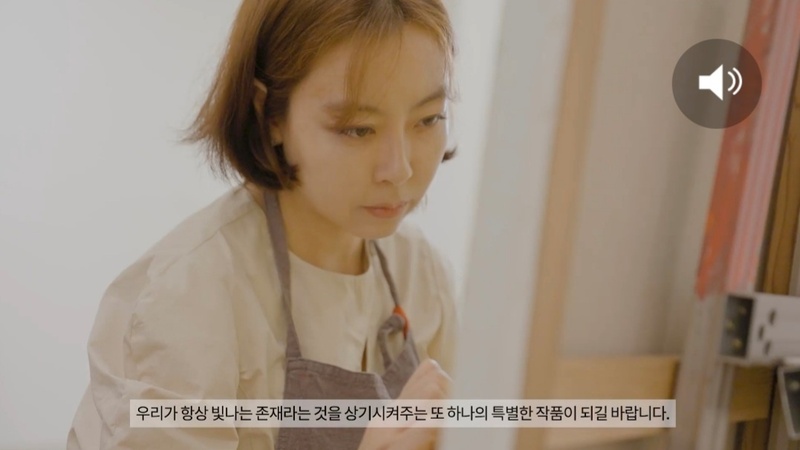
In this process, action, documentation, image, and painting operate less as separate genres than as successive forms through which a work continues to evolve. Her performances of painting directly before an audience similarly render the process of production visible, extending the act of making the “invisible” visible into the work itself.
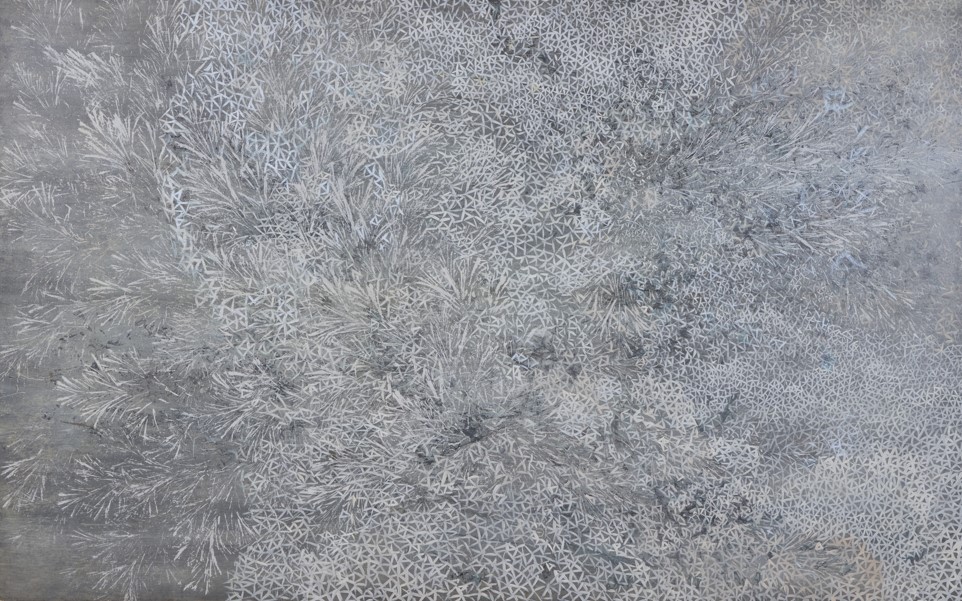
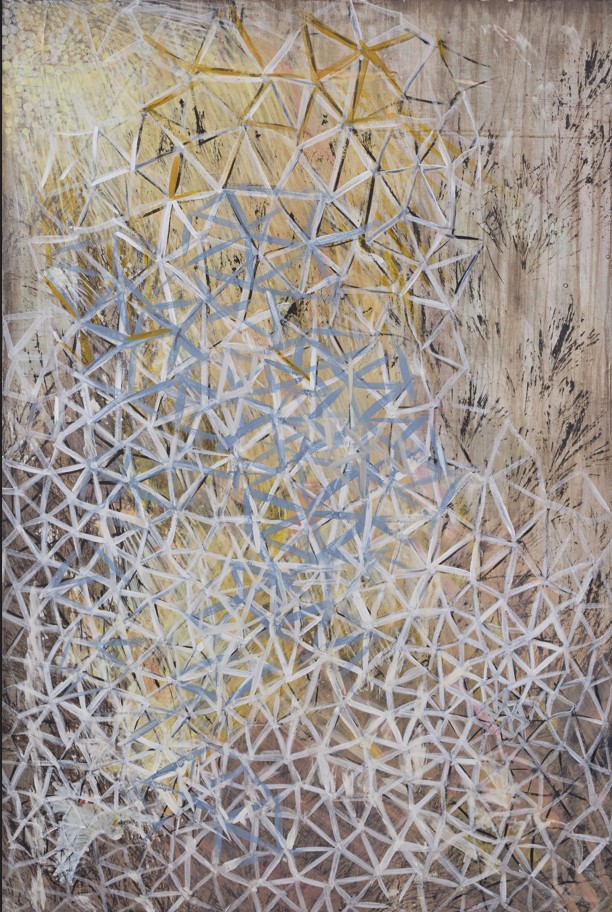
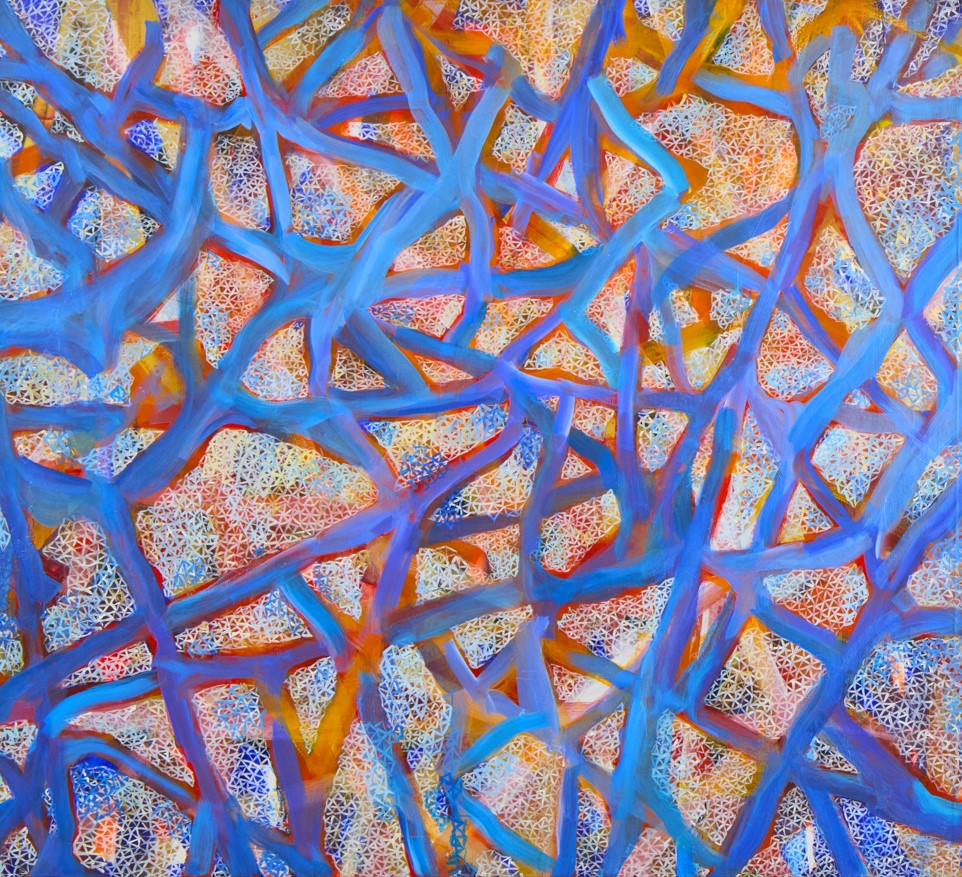
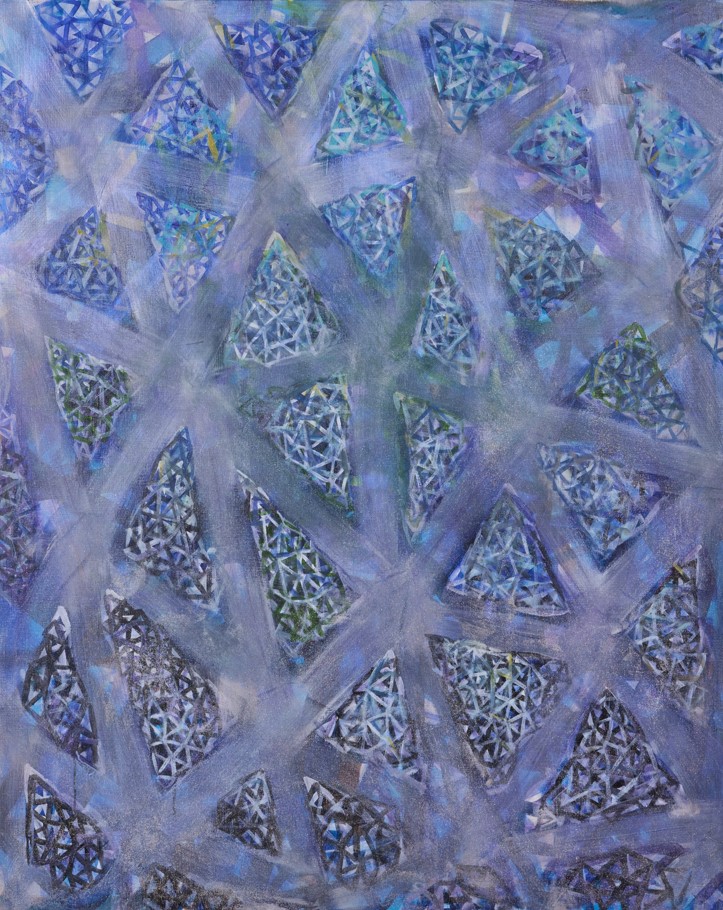
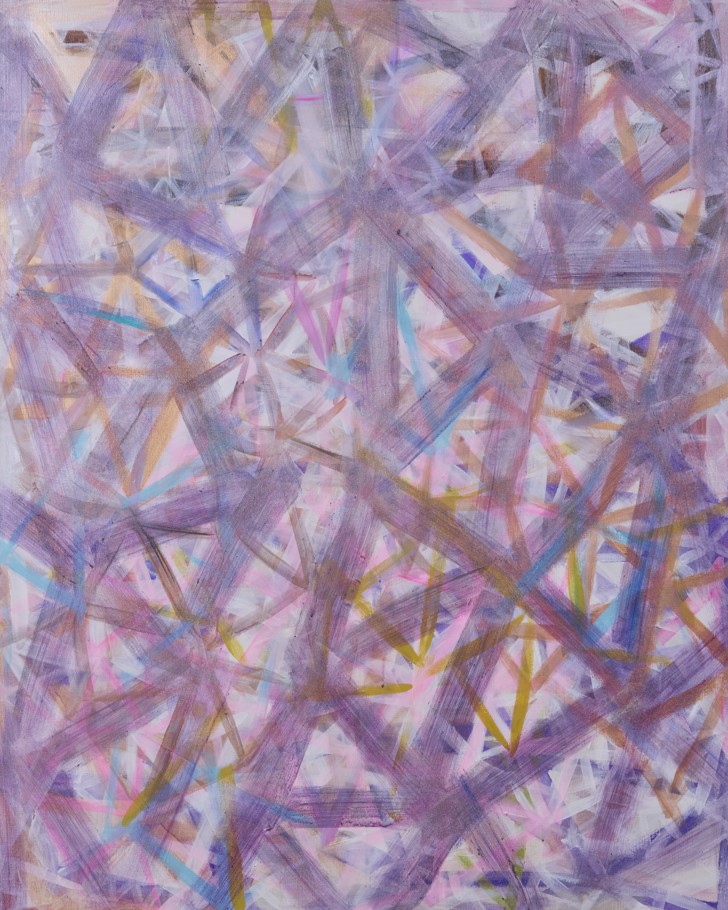
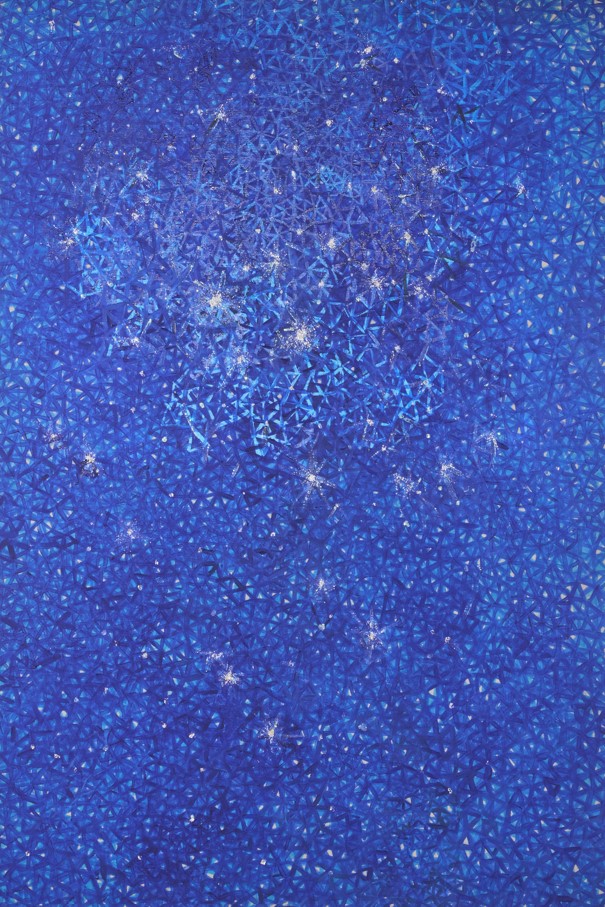
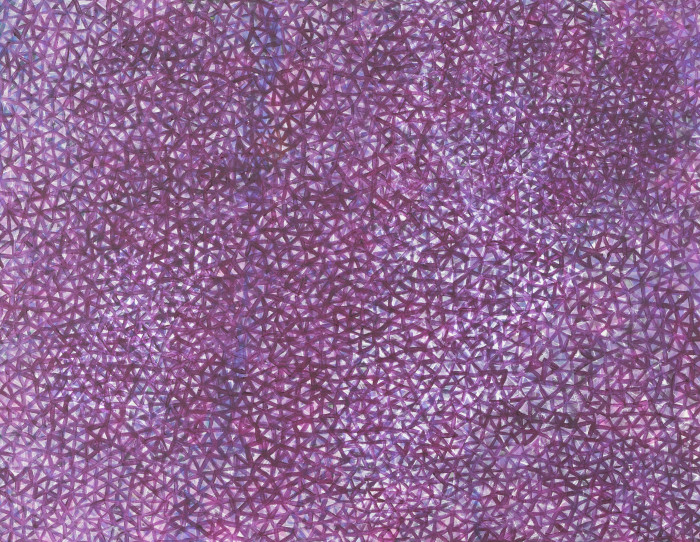
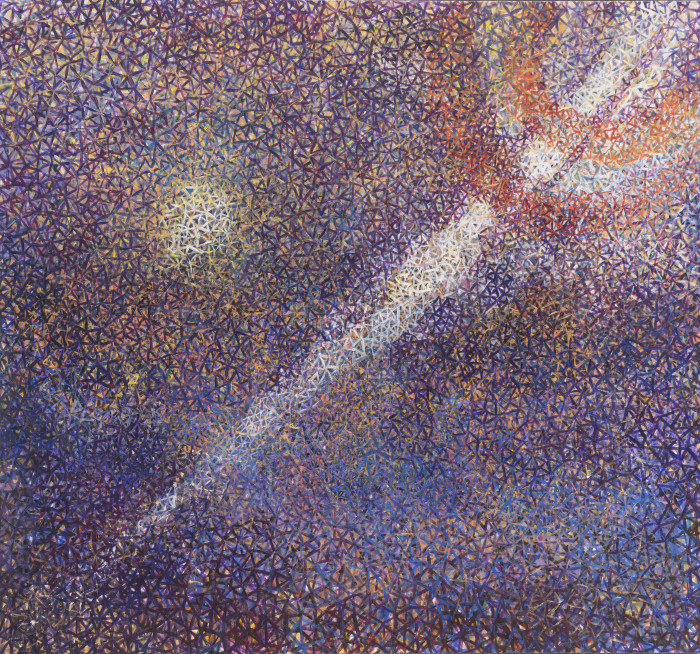
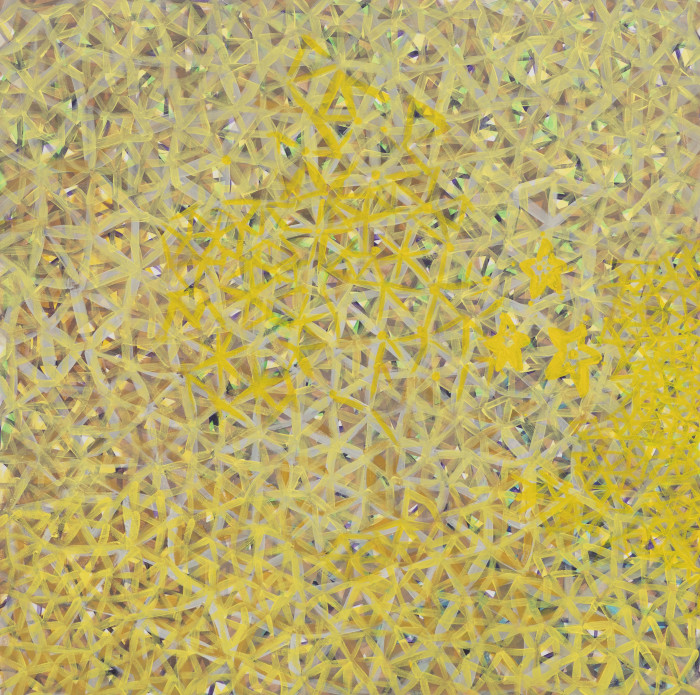
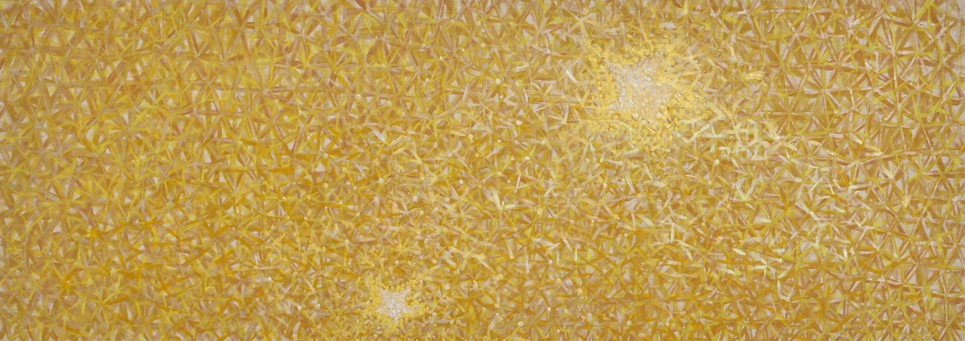
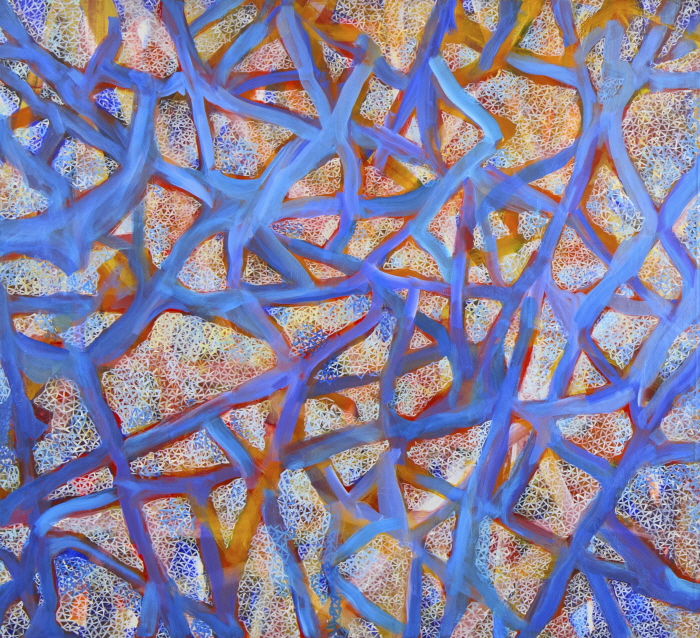
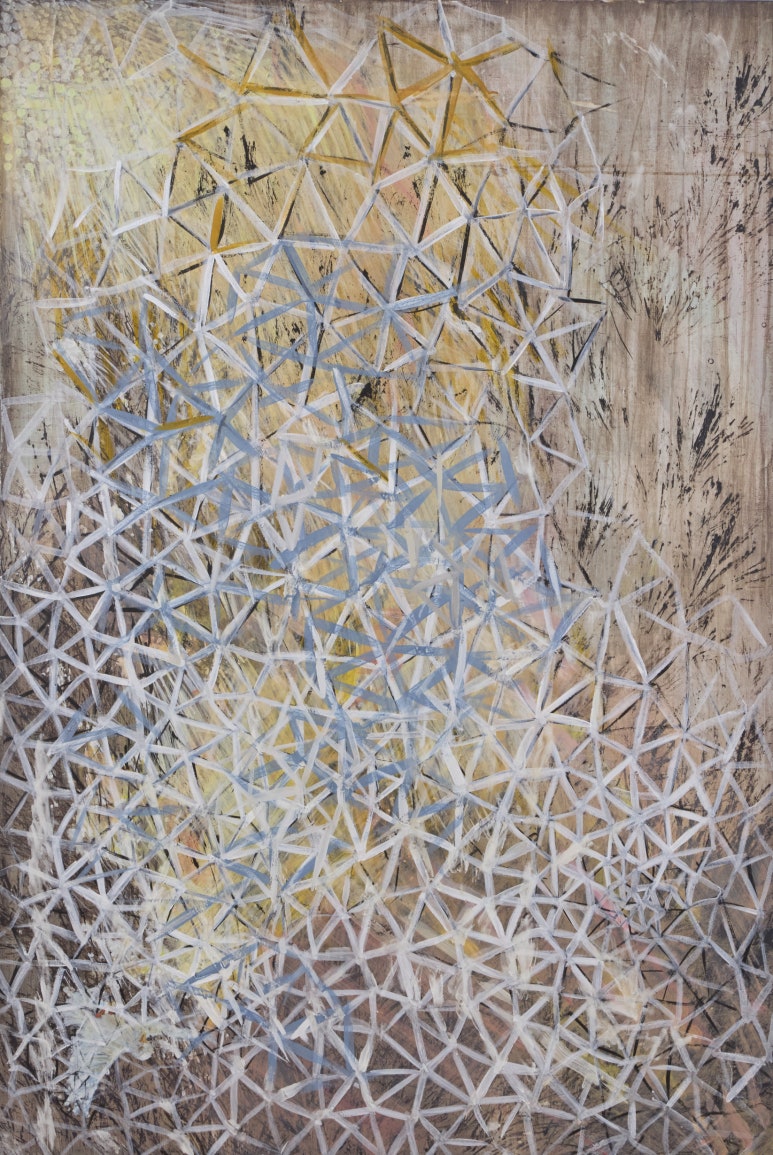
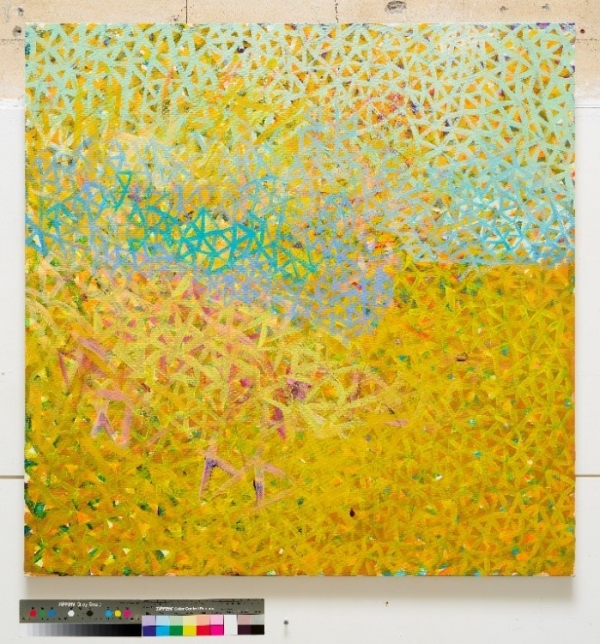
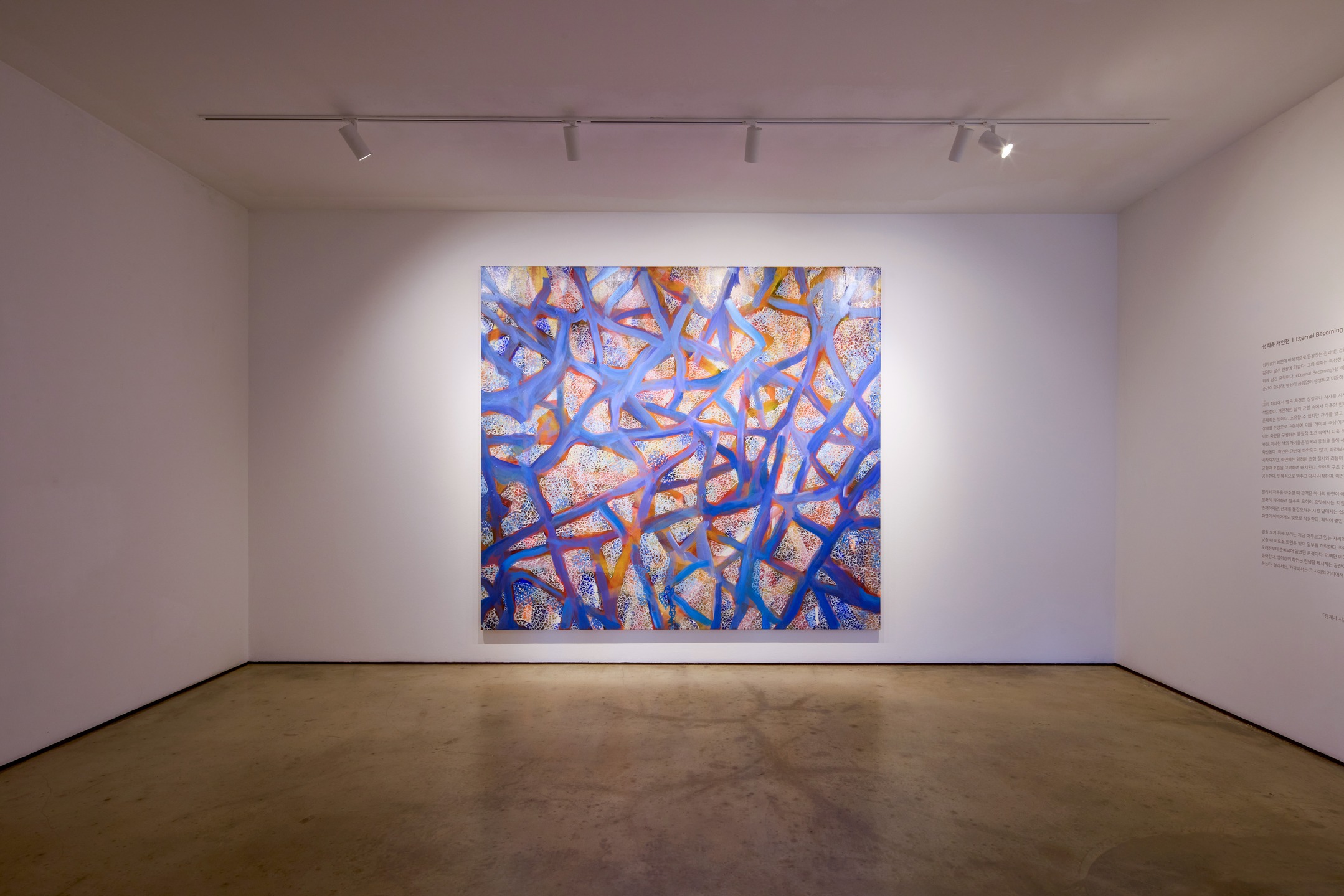
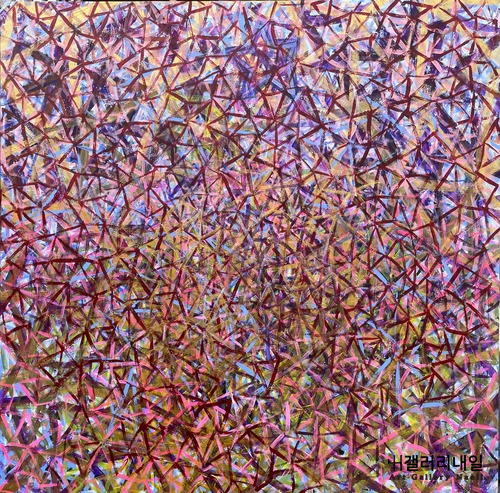
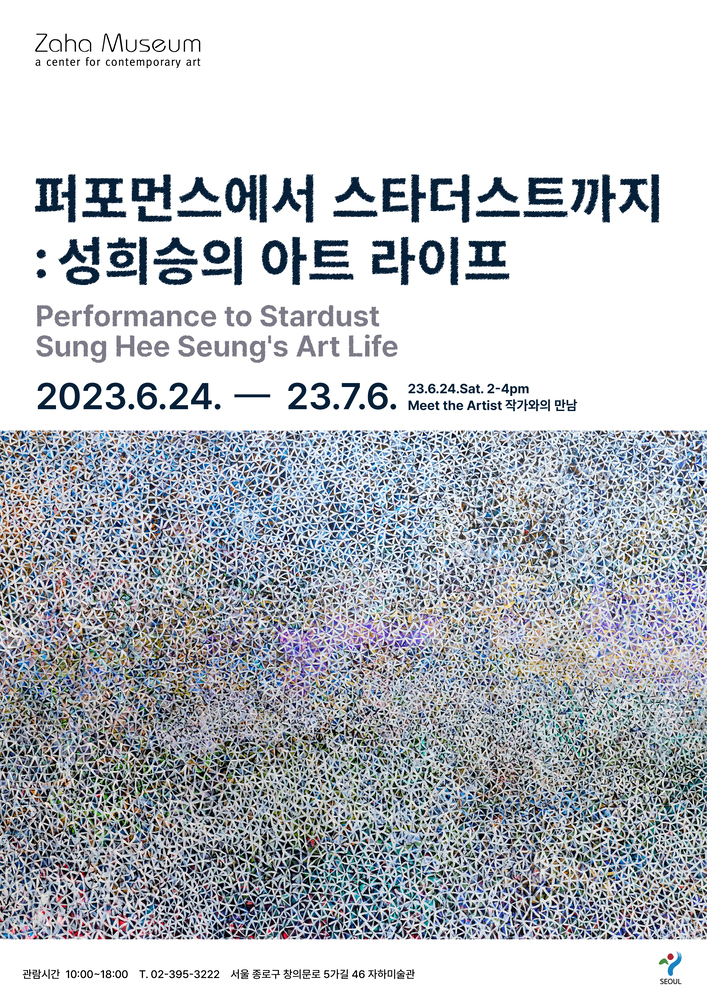
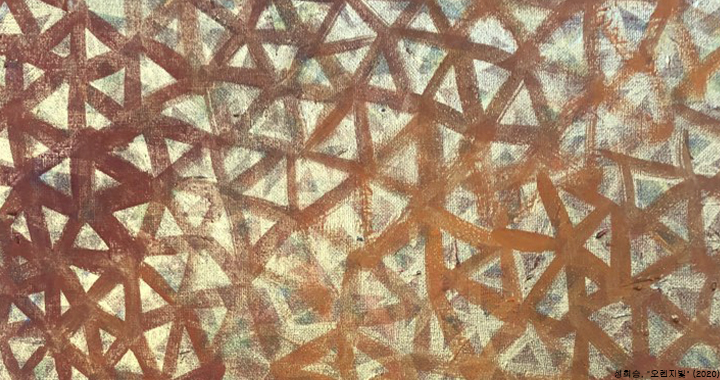
As painting became increasingly central to her practice, points, lines, and triangles emerged as the primary units organizing the pictorial field. Small triangles are repeatedly layered and connected in a process resembling the weaving of a surface, while accumulated lines spread across the canvas to produce an all-over structure. Yet Sung’s paintings differ from uniformly saturated fields.
Dense accumulations coexist with sparse areas and open intervals, while lines simultaneously divide forms and connect them. These gaps and vacant spaces prevent the surface from becoming closed, allowing the viewer’s gaze to enter and suggesting the possibility of spatial depth beyond the two-dimensional plane.
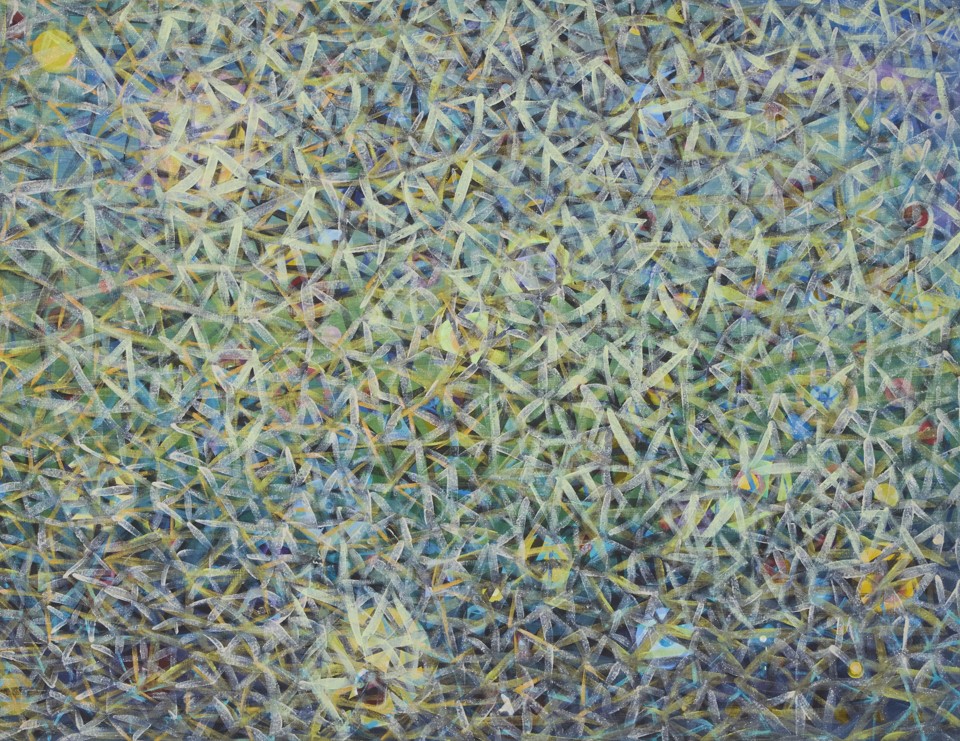
Repetition and improvisation, as well as control and chance, operate simultaneously within her process. Points, short brushstrokes, and subtle variations of color are gradually layered to build density across the surface, expanding in multiple directions rather than converging toward a single center. Although the brushwork often appears spontaneous, an underlying structural rhythm maintains the balance of the whole, while repeated pauses and resumptions add new temporal layers over existing traces.
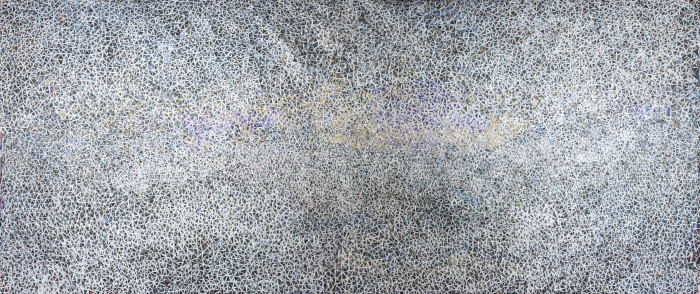
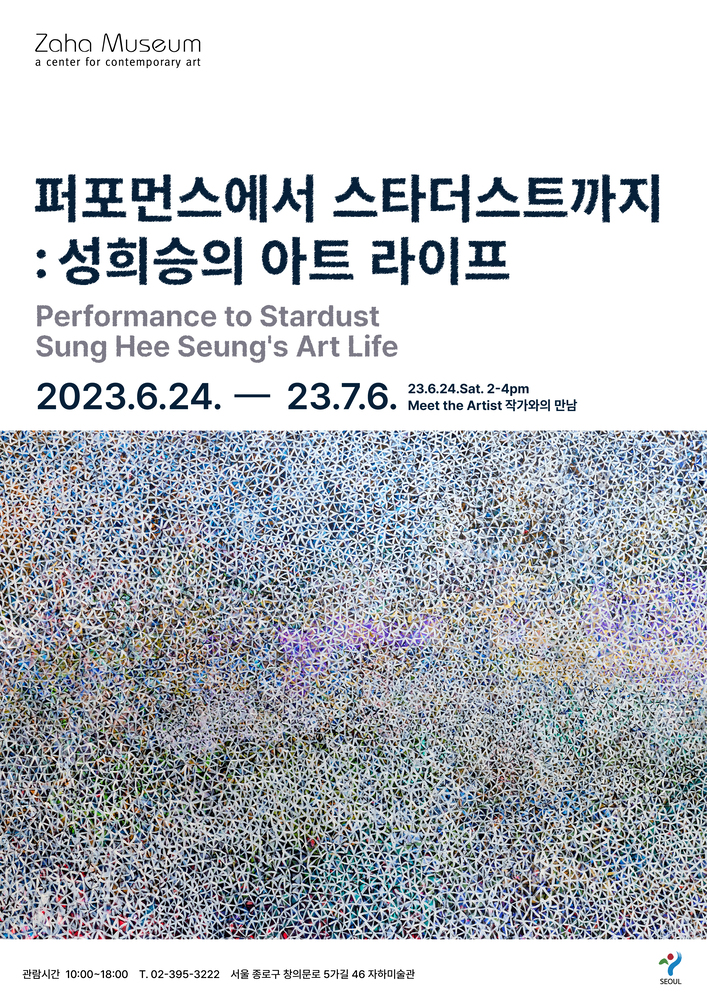
In more recent works, her palette has shifted from intense, direct colors toward restrained tones of ivory, off-white, gray, and pastel, emphasizing subtle chromatic differences and gradations of light rather than strong contrast. While acrylic painting remains central, Sung has also expanded her material vocabulary through works incorporating Korean paper and, in Stardust, ash from a mountain fire.
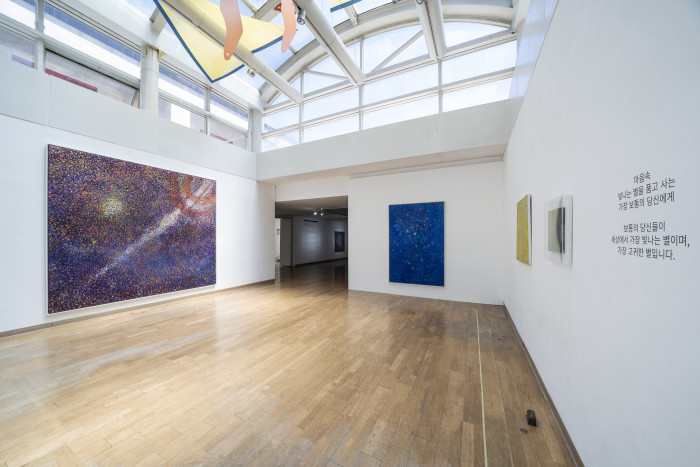
These formal strategies also determine how the works are experienced. From a distance, innumerable points, lines, and layers of color merge into a constellation or field of light; at close range, individual brushstrokes and untouched areas of canvas emerge as distinct traces. The relationship between whole and part therefore continually changes as the viewer moves and shifts focus.
Rather than allowing the image to be grasped at once, the paintings require sustained looking, making time not only something accumulated through the process of making but also a condition of viewing. Rather than directly depicting stars or the cosmos, Sung constructs sensations of light and space through the material organization of point, line, color, and emptiness, bringing abstract form into contact with memory, relationship, and emotion.