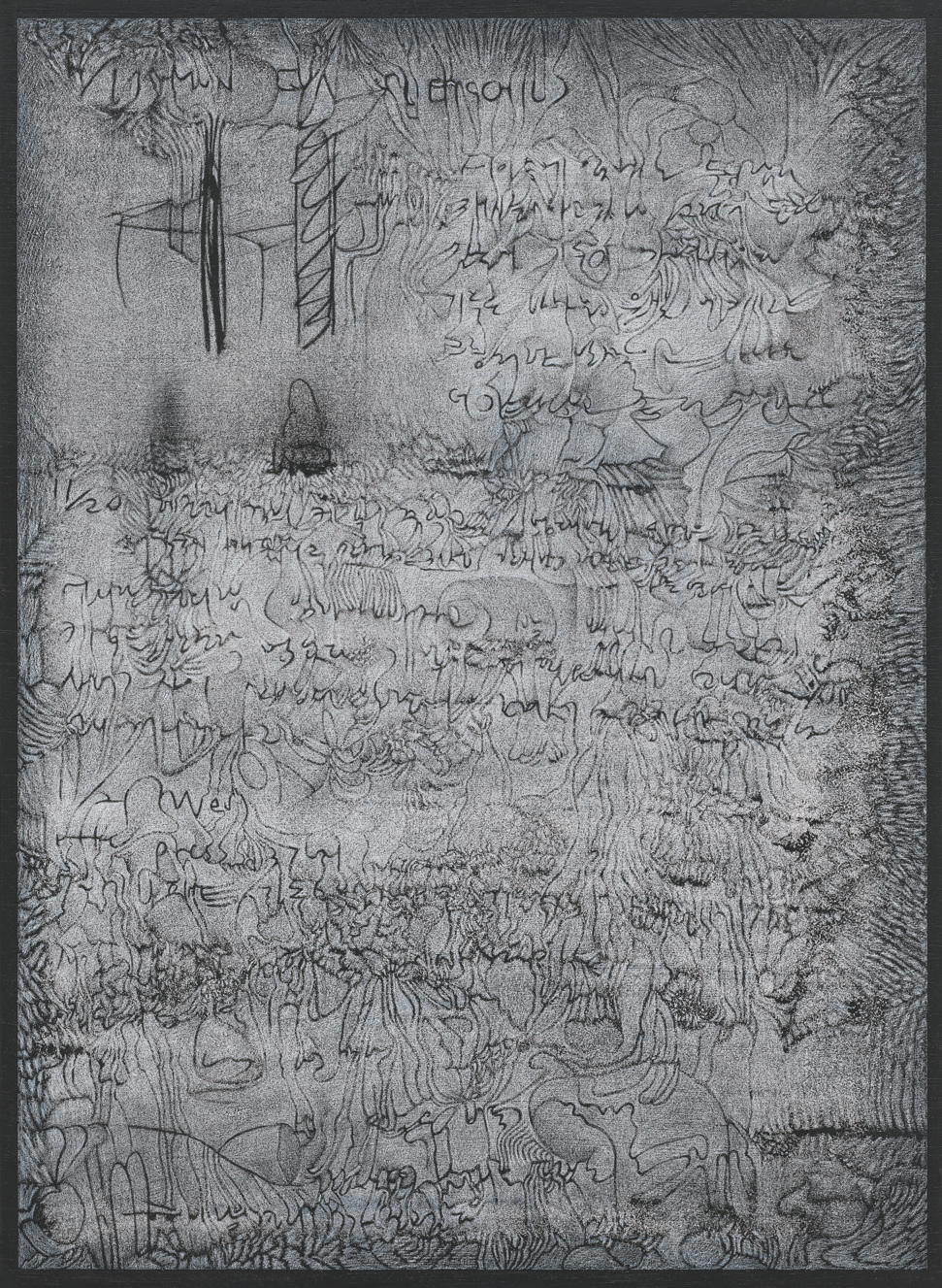
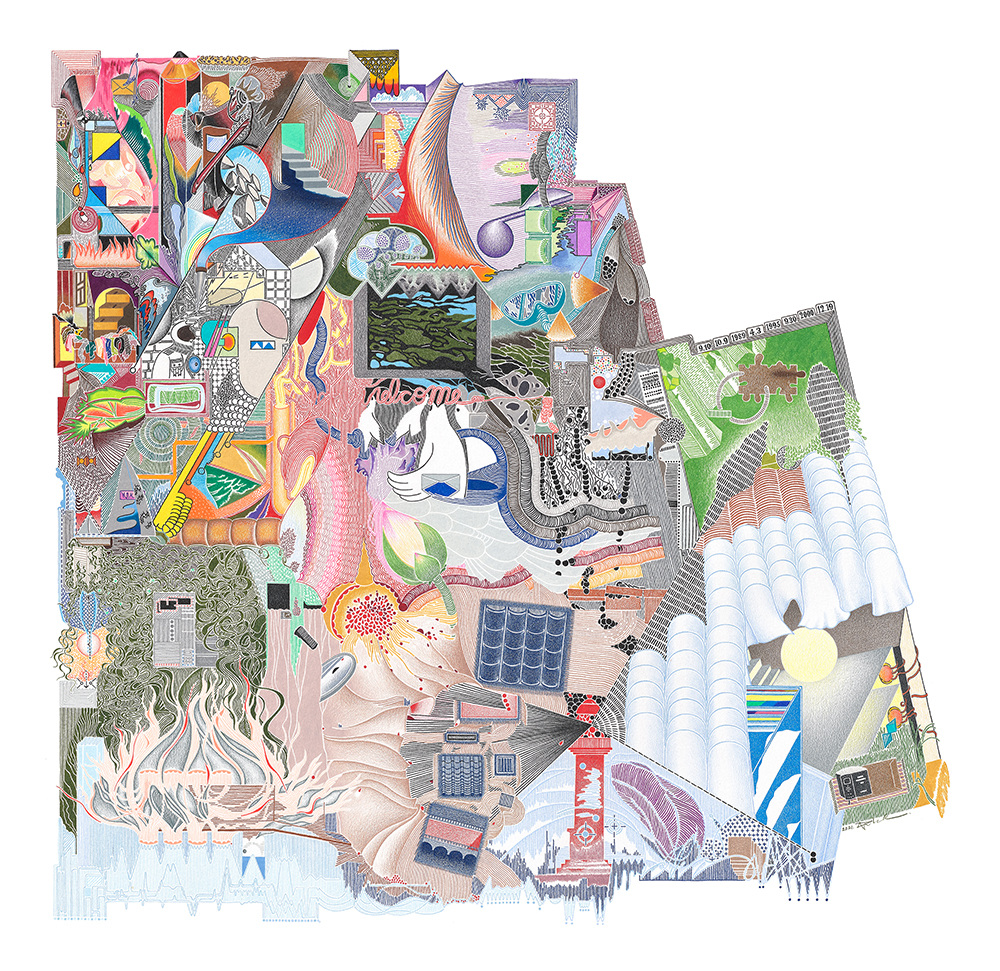
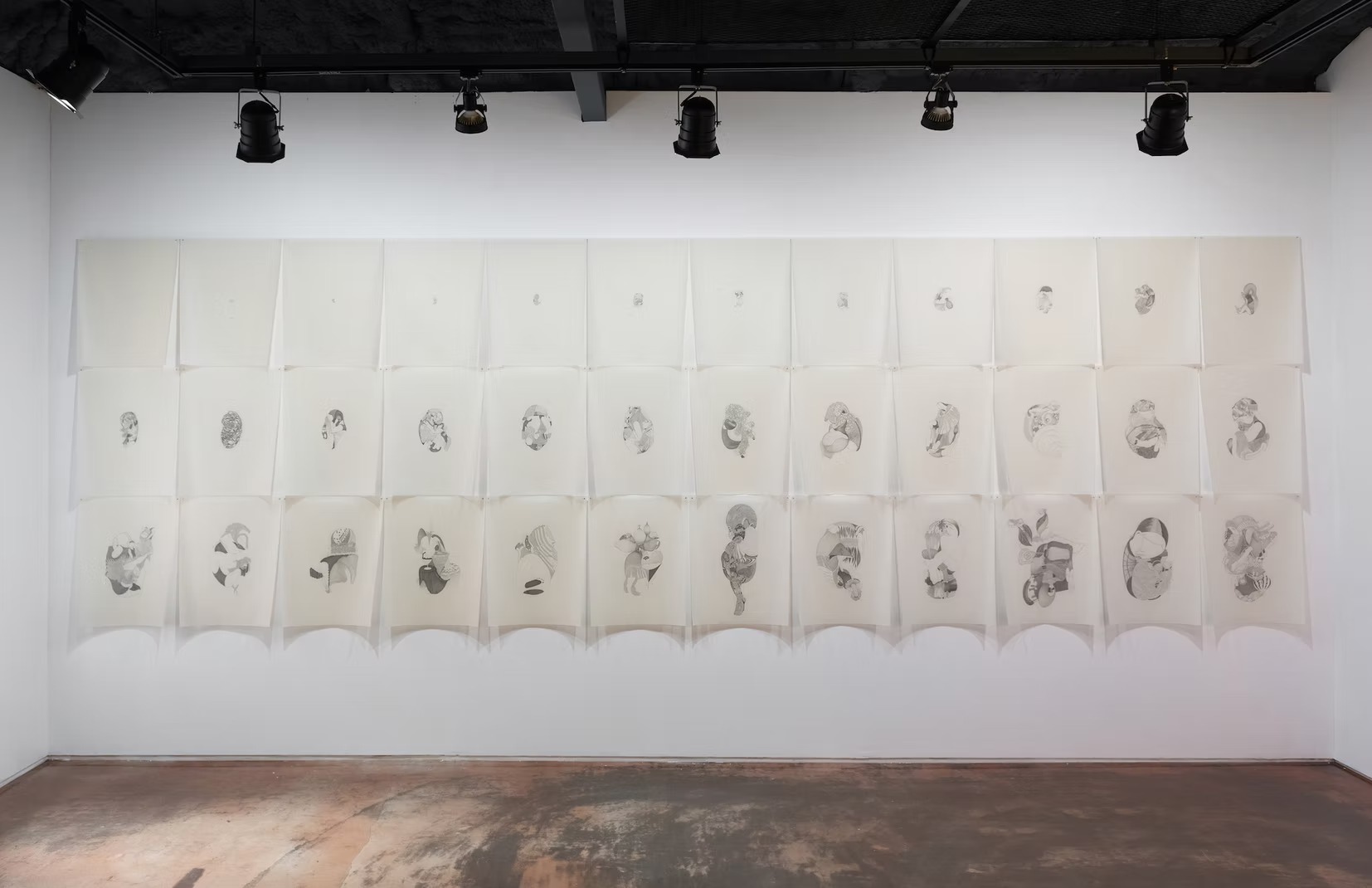
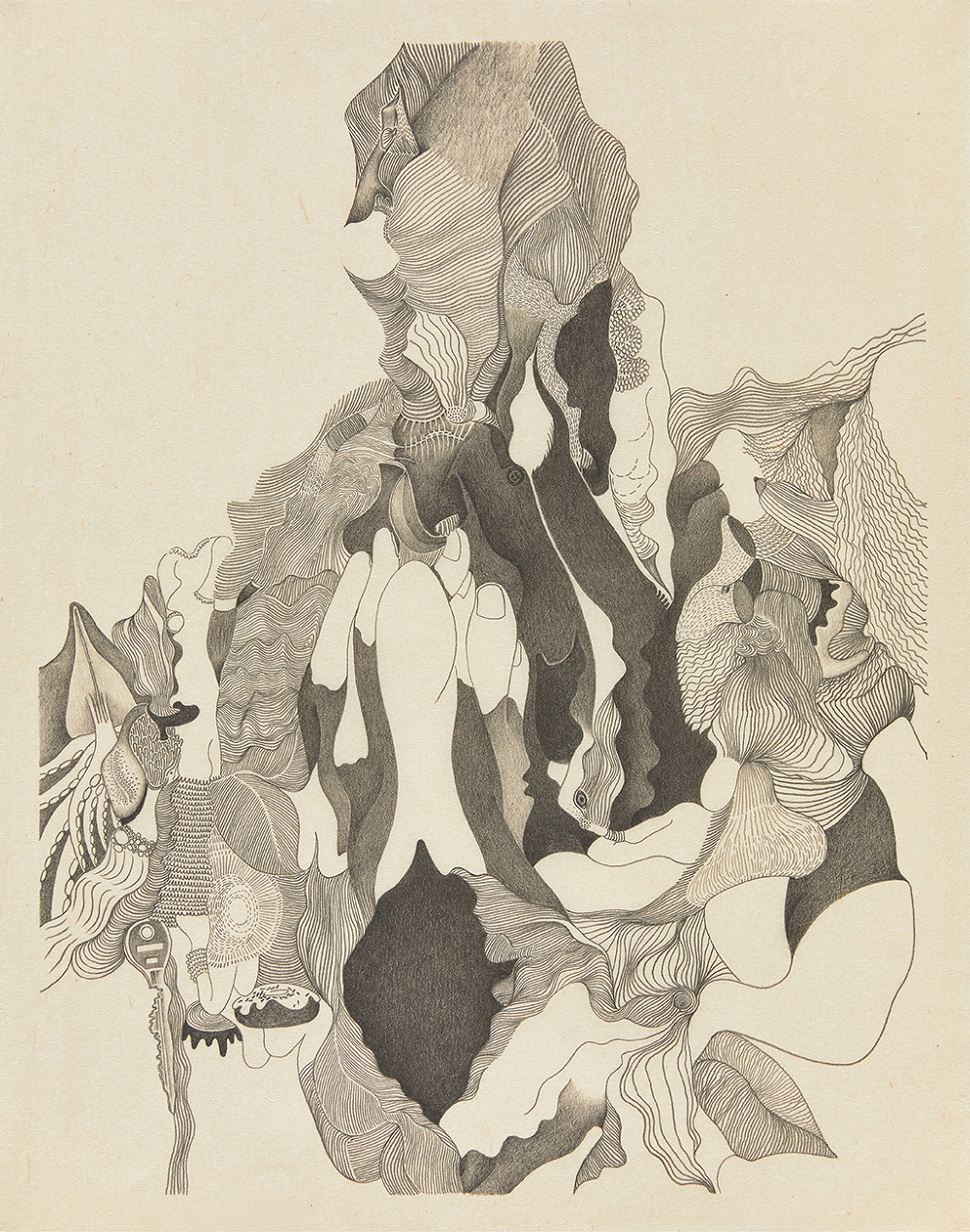
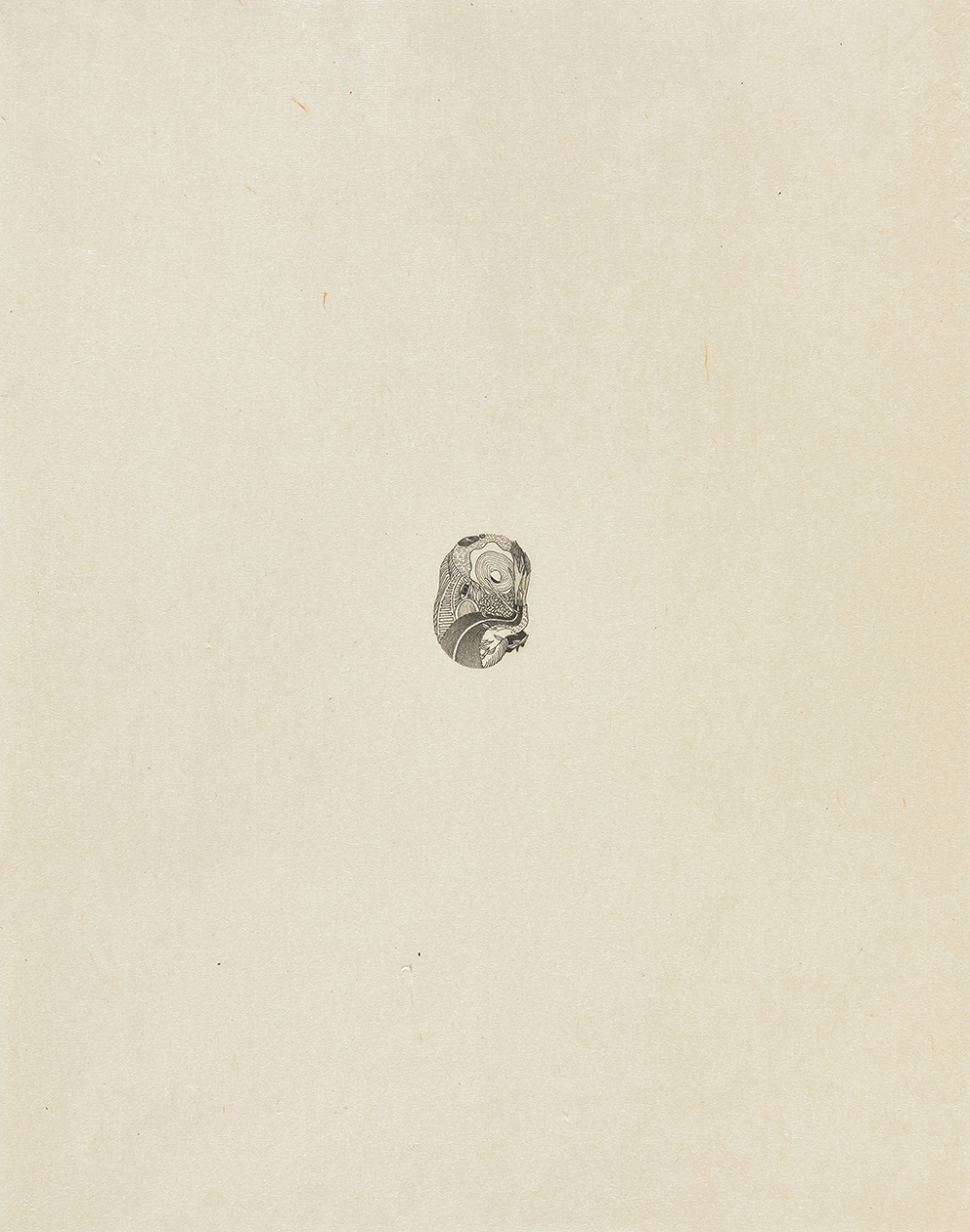
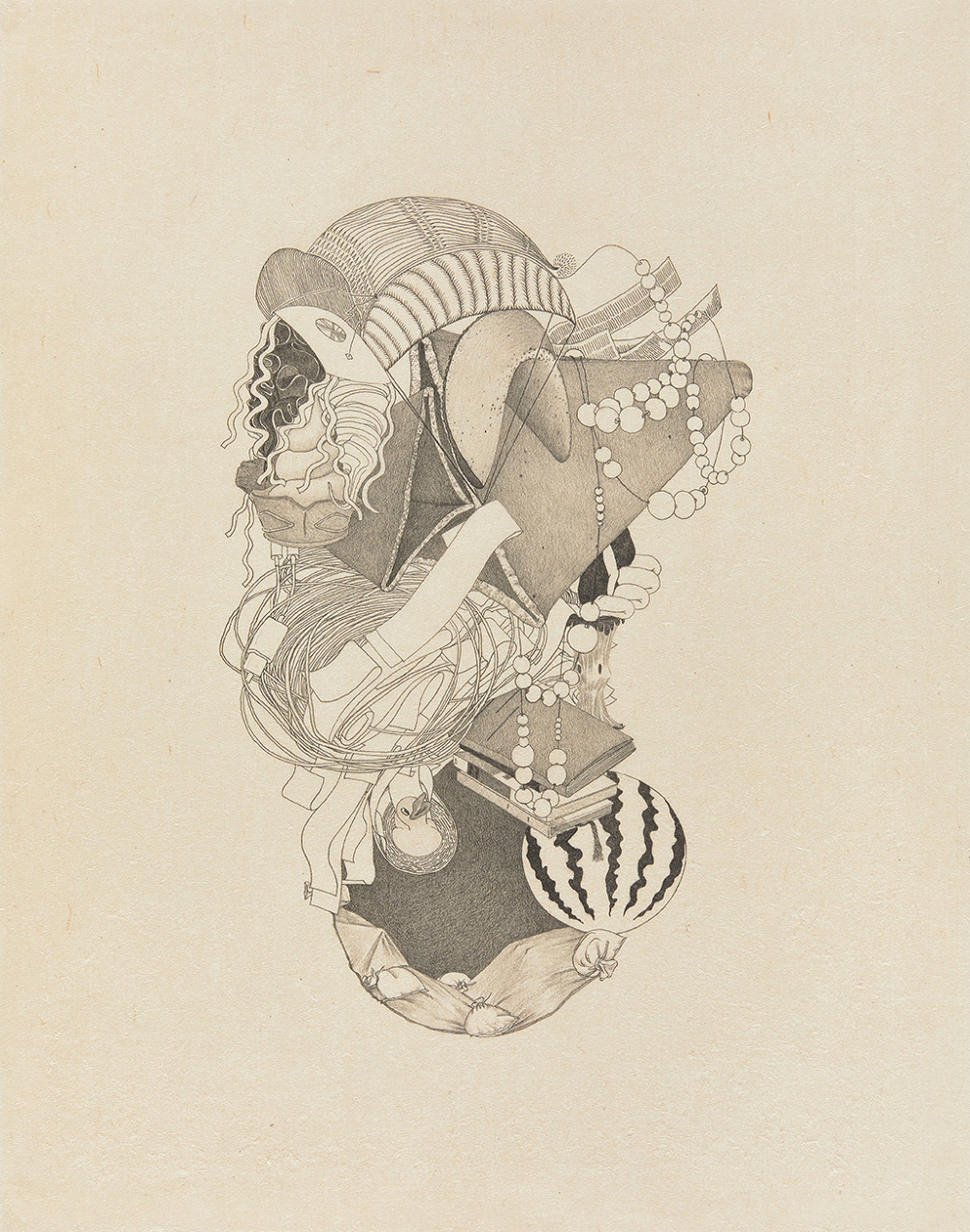
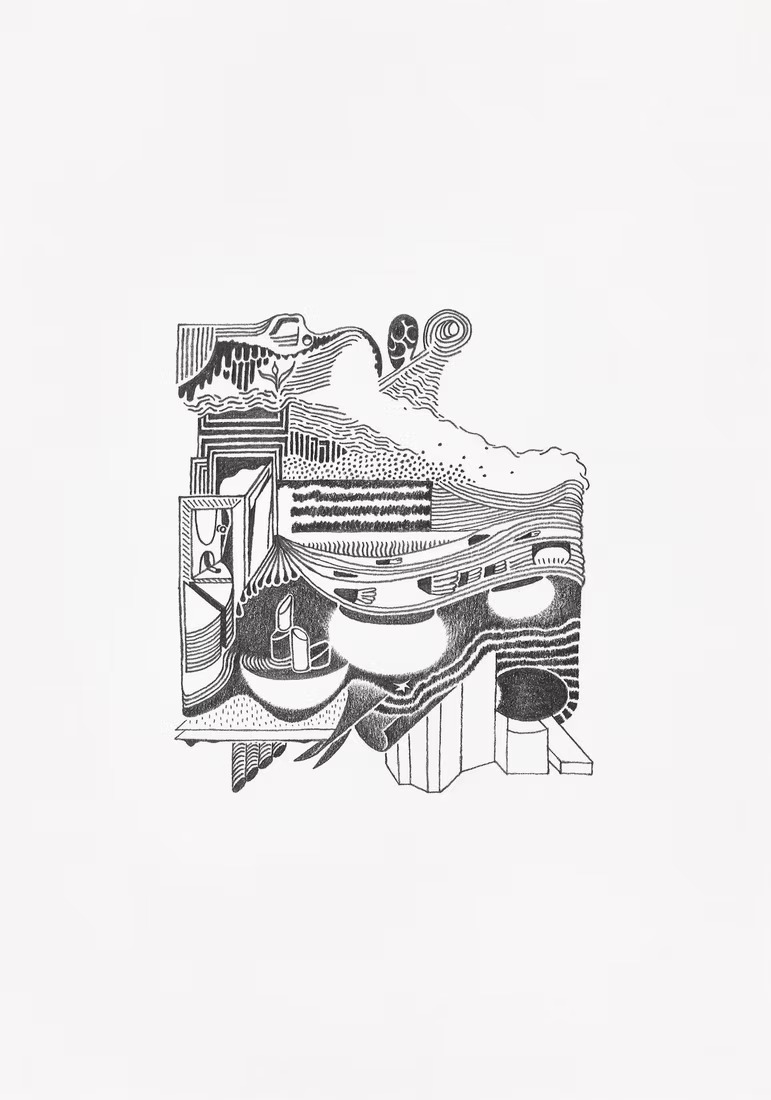
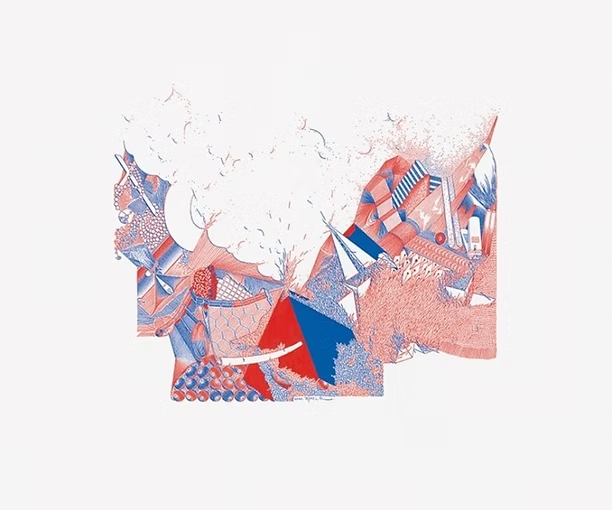
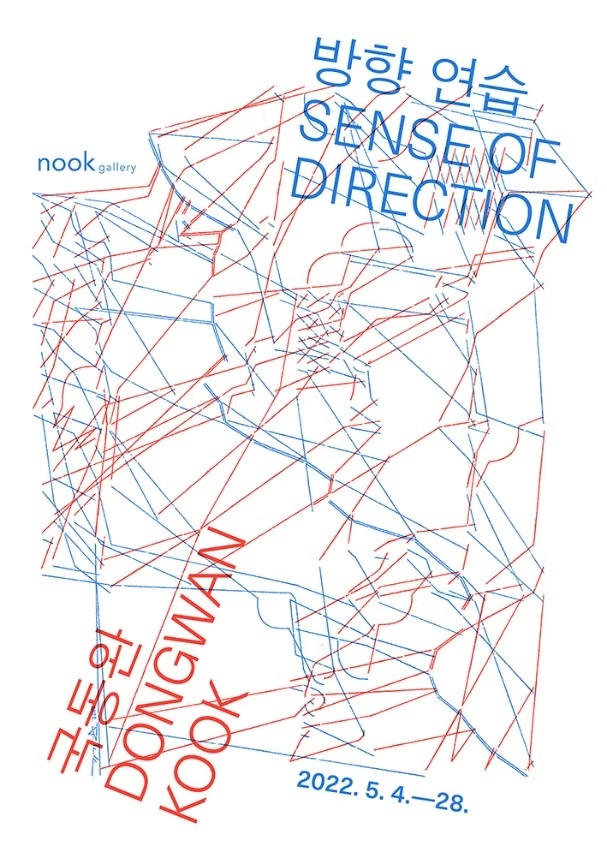
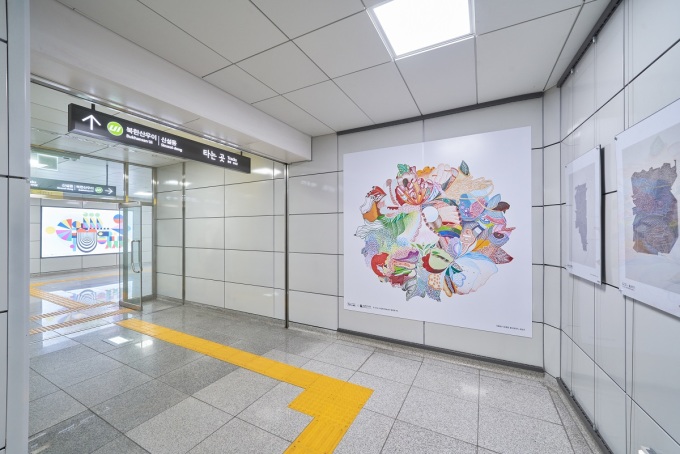
Dongwan Kook, Sense of Direction #1, 2022, Colored pencil on paper, 54 x 65 cm © Dongwan Kook

Beginning with the recording of dreams, Dongwan Kook repeatedly examines and unfolds in various ways the entangled relationships between consciousness and the unconscious, and between her inner world and the world outside. Her practice is both a process of responding with her whole body to the questions that seize her and an attitude of sustained observation toward them.

Drawing, in particular, is less a means of representing something clearly defined than a journey that draws out an inner landscape and encompasses every sensation and concern that arises in the act of making. Even the artist herself cannot predict what will emerge before she begins following where her fingertips lead.

At its core, drawing resembles a path. Based on free association, Kook’s drawings are like feeling one’s way through the dark, using the traces of one’s own passage as a walking stick. Without a predetermined route, any direction can become a path. Even when a shorter route lies close at hand, she has consistently chosen to wander without destination and take the longest detour. Only the preliminary sketches she calls “image questionnaires” occasionally serve like beacons, reminding her where she is meant to go.

Even after spending a long period completing an image, the question does not always disappear. Kook gazes quietly at what she has drawn, then devises particular methodologies in order to discover another story within the drawing and explore new relationships. She cuts the completed image apart with a knife and recombines it, or enlarges the image, filling the empty spaces of the original drawing with paper tape and applying color with brushstrokes to the remaining areas.
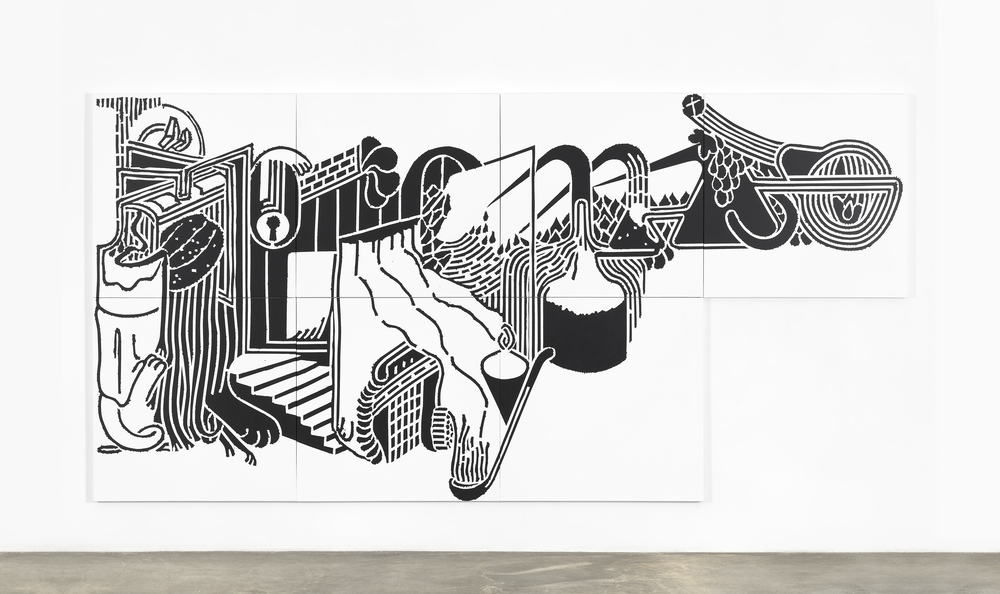
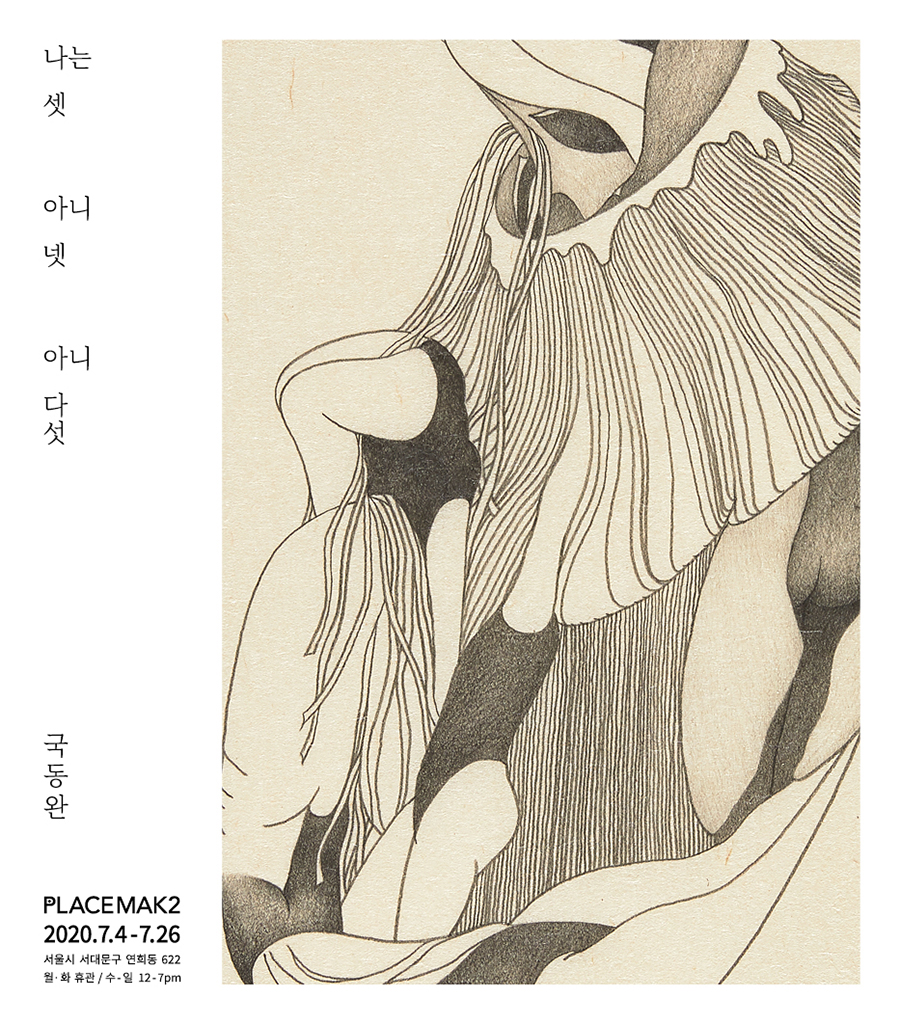
At times, she simply transcribes the story told by the image. This is a way of returning to the beginning to walk a road not taken, or of crossing one path with another to create a new one.


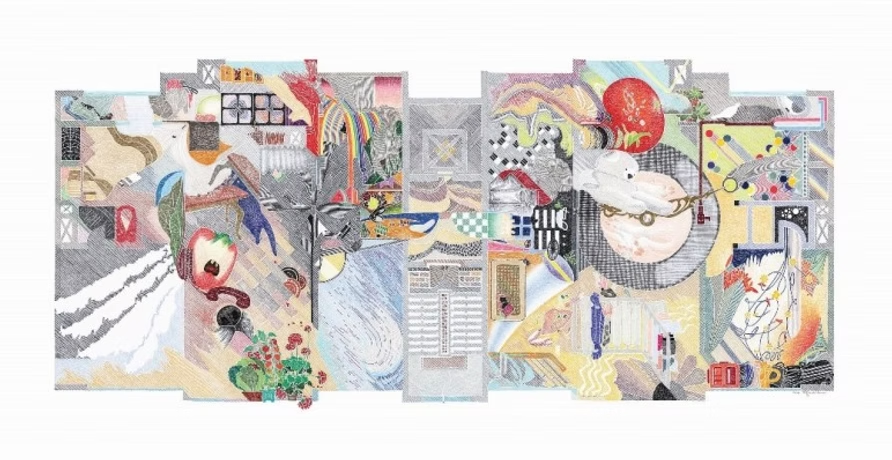
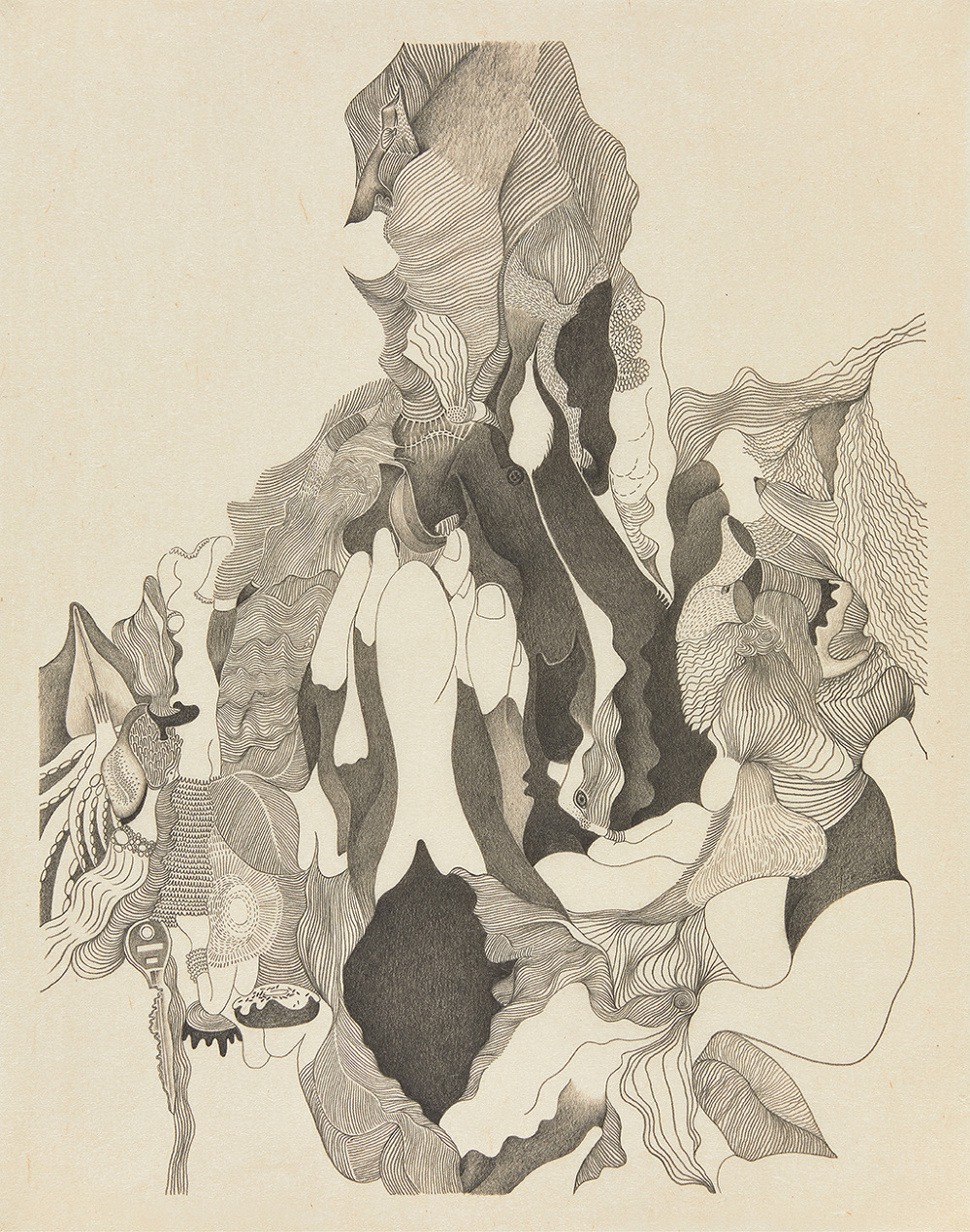
Dongwan Kook, Decalcomanie Life, 2014, Colored pencil on paper, 45 x 81 cm © Dongwan Kook

Kook began to address the subject of the home more directly in Decalcomanie Life (2014). Taking as her point of departure the apartment floor plans of her parents’ home, where she spent her formative years, and the neighboring unit, she retrieved fragments of memory and embraced every sensation that arose from relationships among family members and neighbors.

In Korean society, the home—and the apartment in particular—had long since become established as a symbol of desire and consumption translated into monetary value. Yet at the time, Kook regarded the home as a place where human intimacy is condensed and where the most fundamental social relationships take shape. Within only a few years, however, her own understanding of the home became increasingly unsettled.

Single-person households grew exponentially, while housing prices soared to unprecedented levels. With her child approaching school age, she too found herself confronting practical issues surrounding housing. Discovering herself divided between the tax regulations that define a home in material terms and its more fundamental value, she began to question the influence that the logic of capital exerts on one’s attitude toward life.

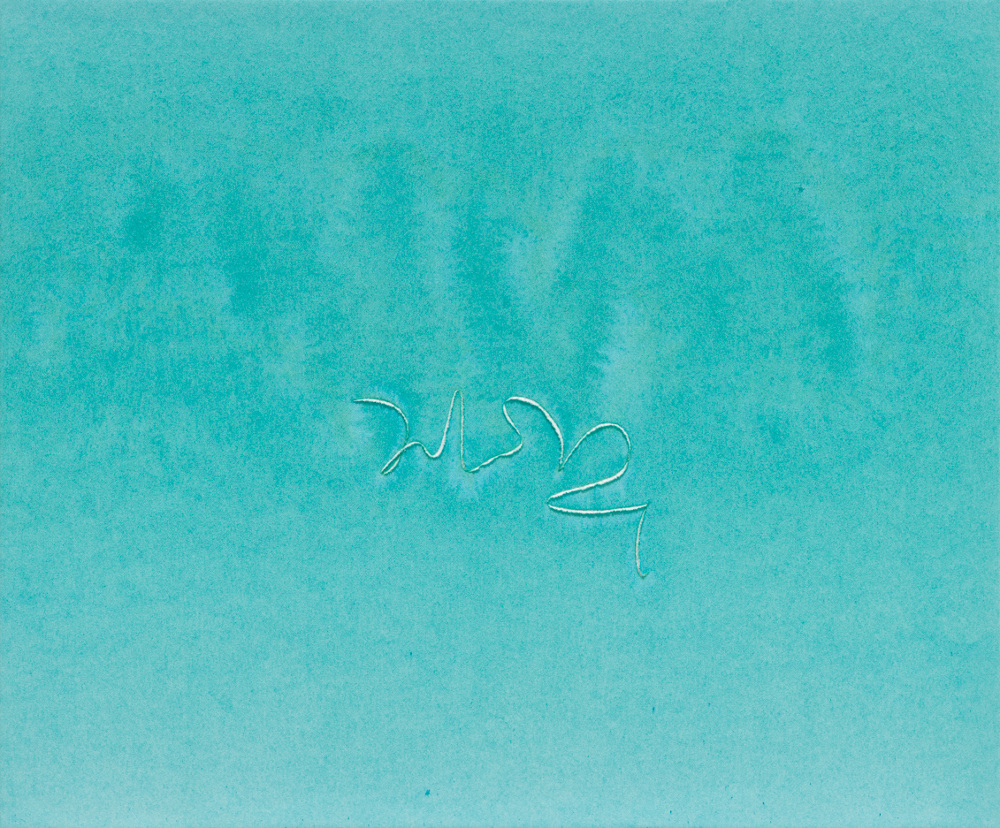
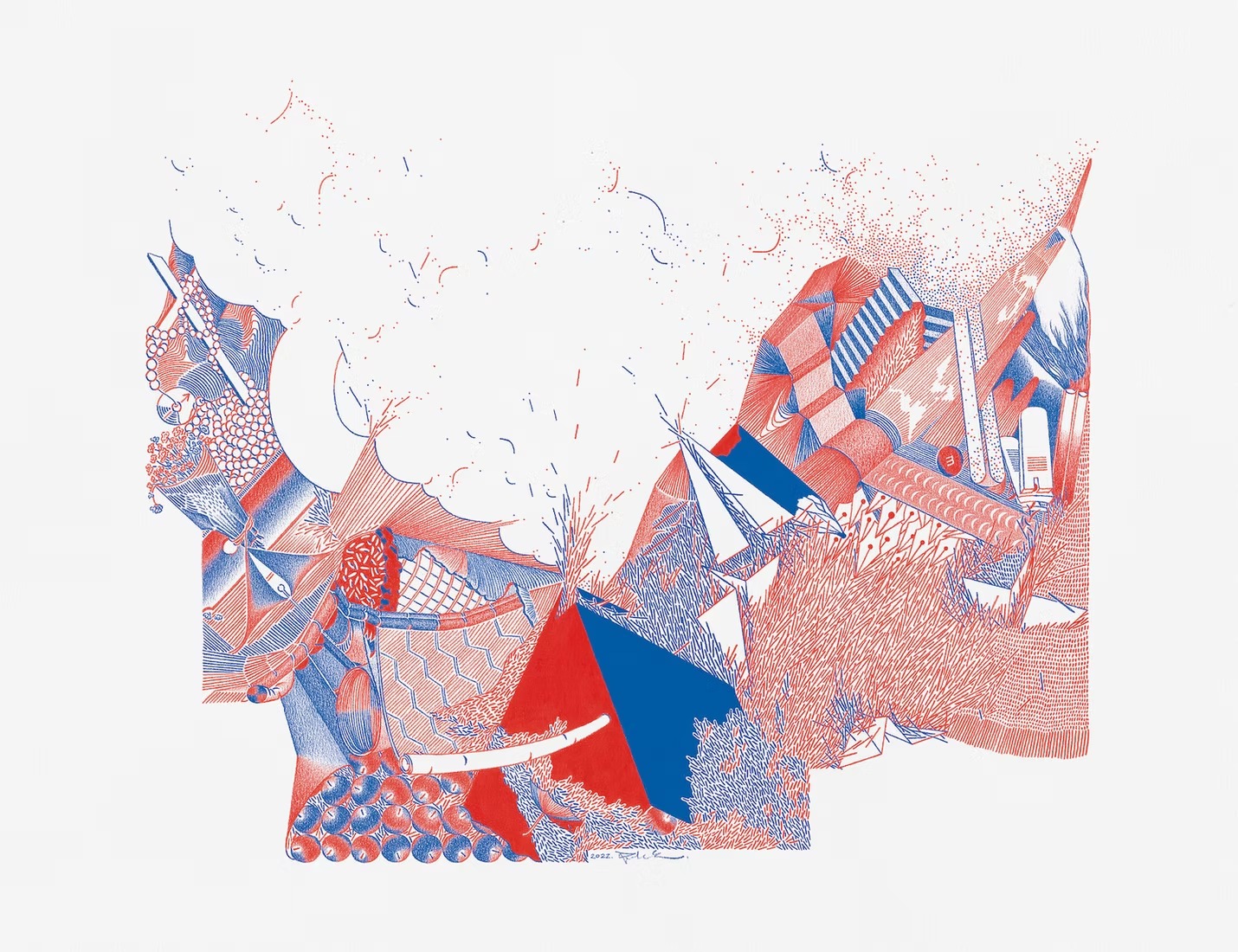
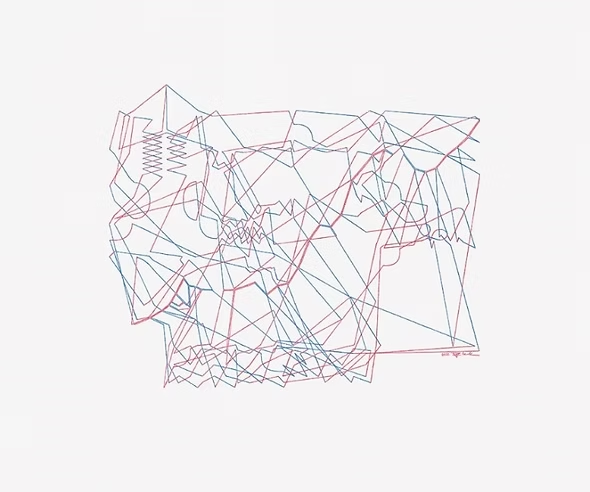
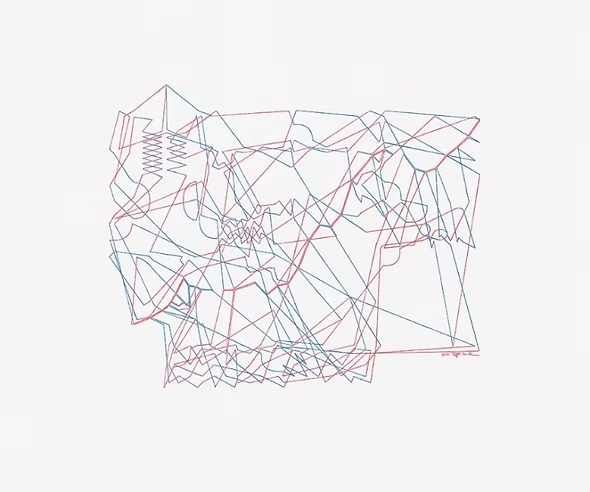
For these new works, Dongwan Kook established a drawing rule derived from stock charts: upward movements would be rendered in red and downward movements in blue. At first, even her hand, trained through years of practice, responded helplessly to this unfamiliar constraint. Unlike her densely worked earlier drawings, the few lines in Sense of Direction #1, Sense of Direction #2, Sense of Direction #3, and Sense of Direction #4, drawn with an emphasis on shifts in direction, bring the surrounding blank space strikingly to the fore.

In Sense of Direction #5, her hand was able to draw out forms resembling those of her earlier works; images such as a paper airplane crashed into the ground and a bomb evoke a state of disaster. Aside from the restricted palette, the works may appear formally similar to her previous drawings, yet Kook could clearly perceive a fundamental difference. For her, drawing is a process of moving beyond the “self,” embracing what is “not-self,” and becoming an unknown being; once a rigid rule began to operate, however, she found herself unable to experience any new sensation.


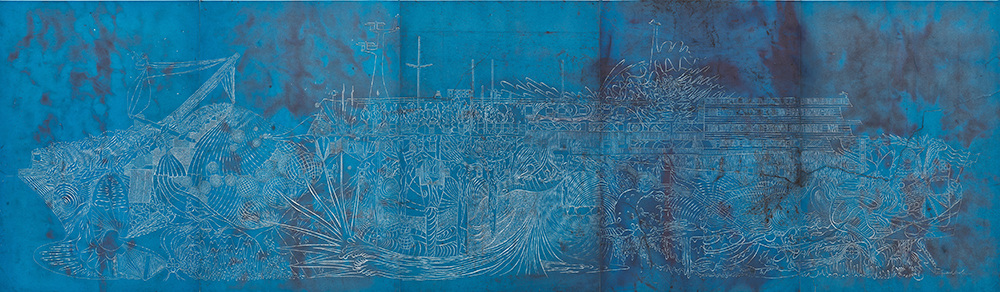
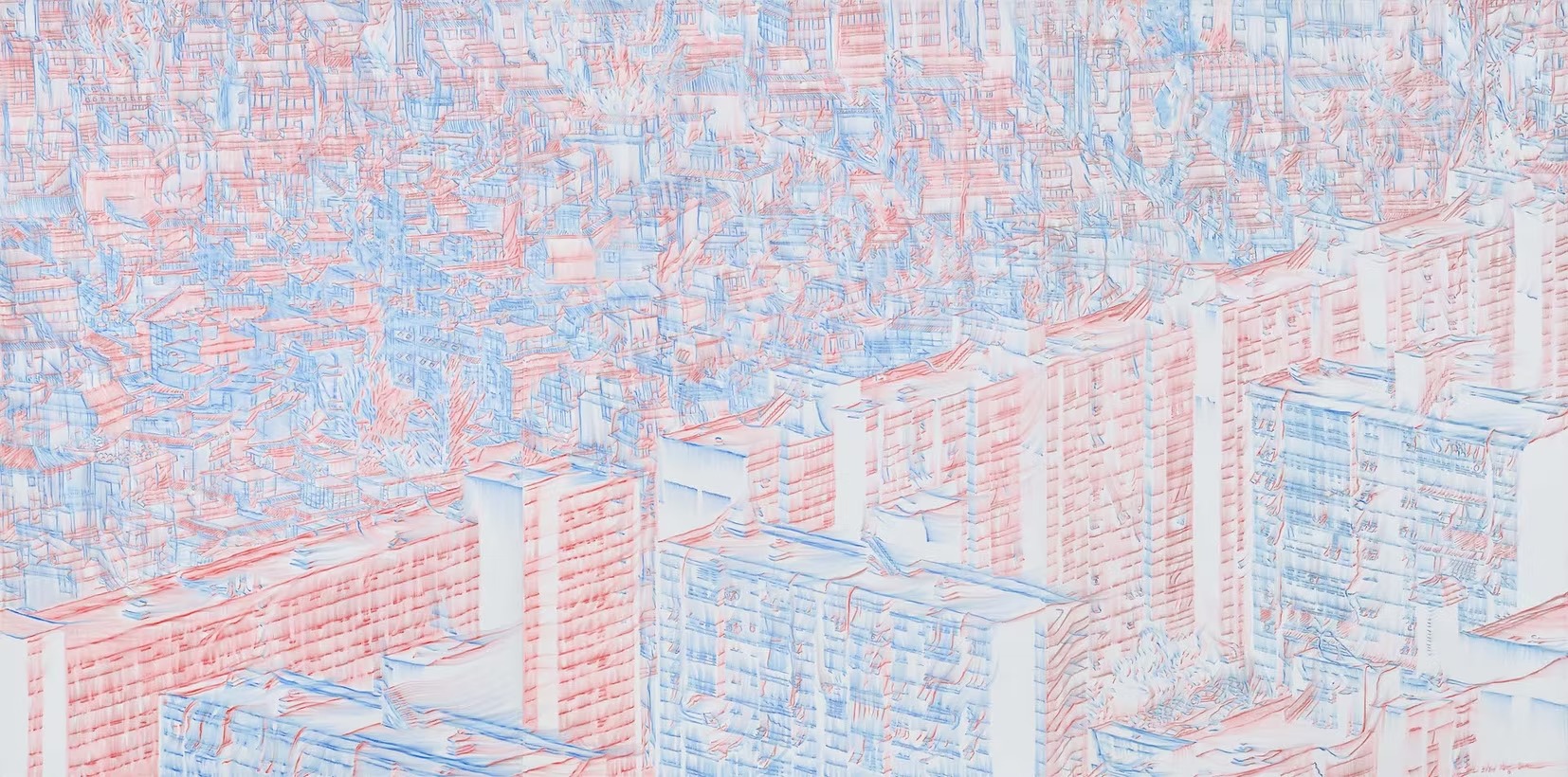
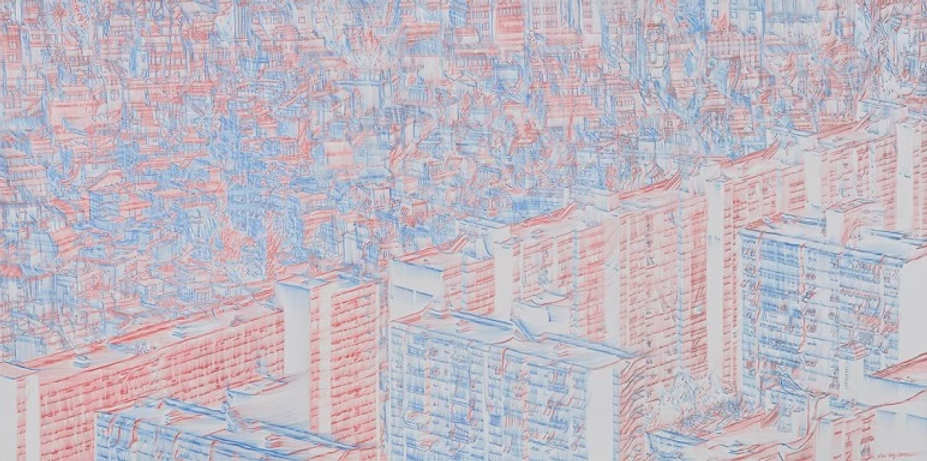
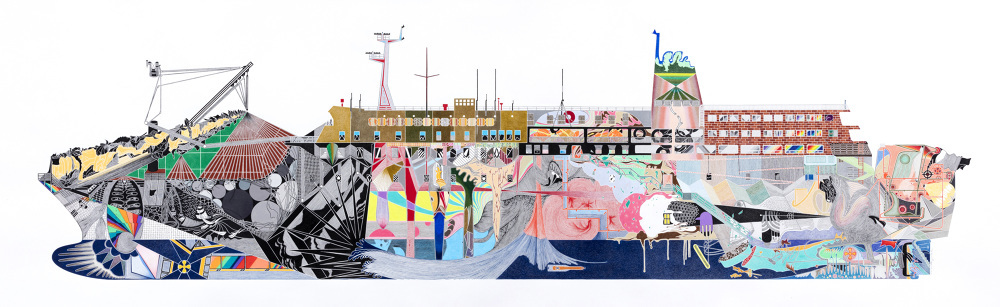
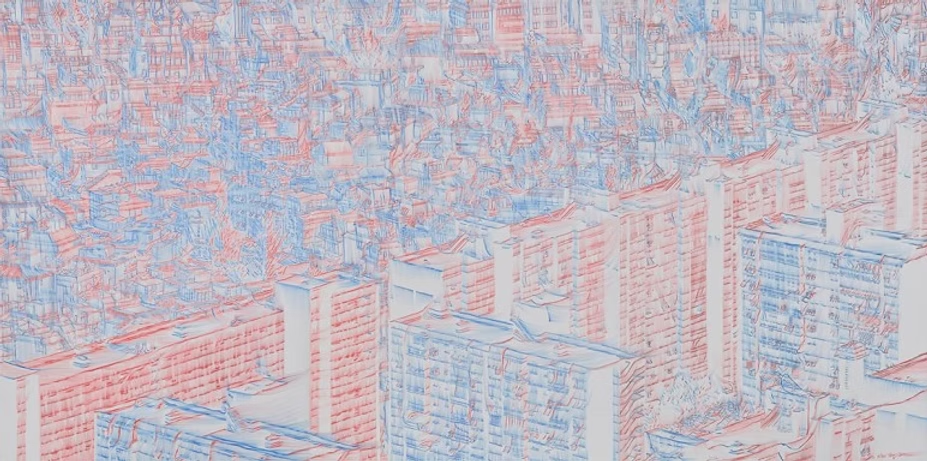
Dongwan Kook, Bull Market, 2022, Acrylic and oil pastel on canvas, 193.9 x 390.9 cm © Dongwan Kook

In Bull Market, Kook adhered to the earlier rule, but instead of paper and colored pencil, adopted another method: oil pastel drawing on canvas. She also undertook the role of a machine outputting red and blue, rendering directly the “image questionnaires” she had never before shown so explicitly.

The act of tracing the underdrawing projected onto the canvas by a beam projector functioned in a completely different register from her previous reflective method, which illuminated her inner self and awakened her senses. It recalls Plato’s “Allegory of the Cave,” in which prisoners confined within a cave mistake the shadows before their eyes for reality itself. Are we, too, so thoroughly subordinated to the logic of capital that we merely carry out its commands?

In the completed Bull Market, one encounters a scene divided between an area of multi-family housing and apartment complexes, the typical forms of housing in Korea. Added to this is a distinctive sensation: as the red and blue lines are smudged away, a natural rhythm emerges, as though flames were flaring up or water were rushing downward. Looking back at the process of the drawing, Kook did not draw a line and immediately erase it; rather, she first completed the entire underdrawing in red and blue, then moved on to the stage of blurring the lines.

At the beginning of the drawing process, her hand and gestures were in an intensely compulsive state. The pressure weighing on her shoulders was suffocating, and she often found herself out of breath as she chased the oil pastel slipping across the canvas the moment it touched the surface. In order to break free from these one-sidedly controlled conditions, she attempted escape again and again, but free association did not emerge at all.

If her earlier drawings had been a process of feeling her way through darkness, this time it was like running bodily along a highway on which cars sped past—a one-way road enclosed by concrete walls. Free association only emerged after all the lines had been drawn, at the stage when they were being effaced. She felt no resonance in the mechanical drawing itself, but in the process of erasing the lines, as she extended herself along the paths of water and flame without resistance, she felt as though her breathing had finally opened up.

In fact, the failure of mechanical drawing had already been foreseen the moment oil pastel was chosen as the material. The lines made by oil pastel across the rough surface of the canvas could never come out as smoothly as colored pencil on paper, and as the two colors were repeated, errors occasionally occurred. The human body could never become a machine.

What this work newly discovered was an entirely different possibility in the meaning of erasure, as the concepts of error and mistake were added to the domain of her drawing. That does not mean, however, that all of the original lines disappeared. Crossing line over line, she connects them and creates a direction of her own.


Dongwan Kook, Sense of Direction #5, 2022, Colored pencil on paper, 54 x 65 cm © Dongwan Kook

Interestingly, the works presented in this exhibition reveal a distinct progression according to when and in what order they were produced. Kook’s drawings have always undergone subtle shifts in density, saturation, and other qualities as they move from the starting point at the upper left toward the endpoint at the lower right, but here the changes are more dramatic.

This is because, through repeated practice, the gestures of drawing transformed her into someone different from who she was at the outset. In 'Sense of Direction', the first works produced, one can clearly trace how the initially awkward gestures responding to unfamiliar constraints gradually become more fluid. Yet apparently unsatisfied with this, Kook attempted a new approach in the subsequent Bull Market. Confronted with an even greater obstacle created by red and blue, she ultimately recovers her own rhythm of breathing by energetically erasing the lines.

The perspective of seeing everything through the relationship between red and blue extends into scenes of everyday life. What these images share is the presence of directional lines that are far more varied than those in Bull Market. In the later works depicting everyday life, lines composed of the two colors sway and circulate in multiple directions, naturally connecting or becoming entangled and influencing one another.

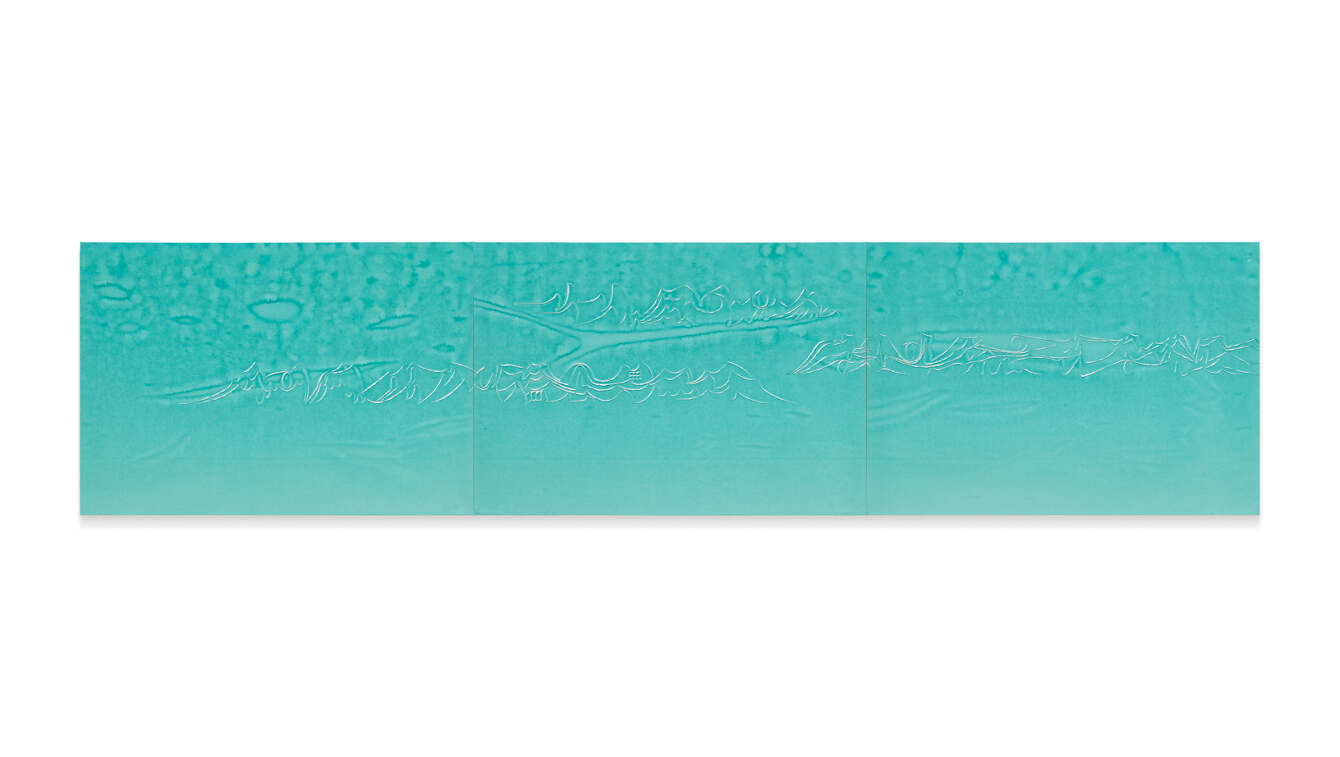
The manner in which the lines are erased also varies subtly in atmosphere from scene to scene. It becomes unmistakable that, at a certain point, Kook began to enjoy the variations generated by red and blue. Drawing While Erasing, the final work she produced, records traces of a dream diary written by hand on glass rendered opaque by high humidity.

Here, even the rule that the drawing must be made in red and blue no longer carries any meaning. Through this body of work, Kook broadened her points of contact with the world through gestures opposed to those she had previously employed, and learned to establish her own sense of balance.

In Korean society, polarization appears not only in economic matters but across a broad range of issues, including national division, gender conflict, and generational conflict. Yet we have relatively little experience either in seeking a point somewhere between these poles or in learning how to establish balance. One of the most pressing social concerns in recent years has been “sustainability.”

We encounter an array of concepts modified by the term “sustainable,” including sustainable development, sustainable consumption, and sustainable cities. At its foundation, sustainability refers to nature’s capacity to maintain diversity and productivity while preserving ecological balance, and it presupposes that everything in the world exists in relationships of interdependence. What kind of attitude, then, should we adopt in order to pursue a “sustainable life”?

At its core, Dongwan Kook’s drawing is a process of searching for her own answer to this question. It bears the traces of a struggle to consciously recognize one’s own life and social relationships and to seek a way forward. The act of crossing rigid lines that resemble closed circuits and creating new directions allows us to imagine that there may be another path in our lives, and a wider world beyond what we already know.

Rather than racing at the speed of the world in order to reach the summit before others, the gesture of looking back at oneself, meeting the eyes of the person beside us, looking around, and finding one’s own direction can become a force that enables us to move forward together.

References