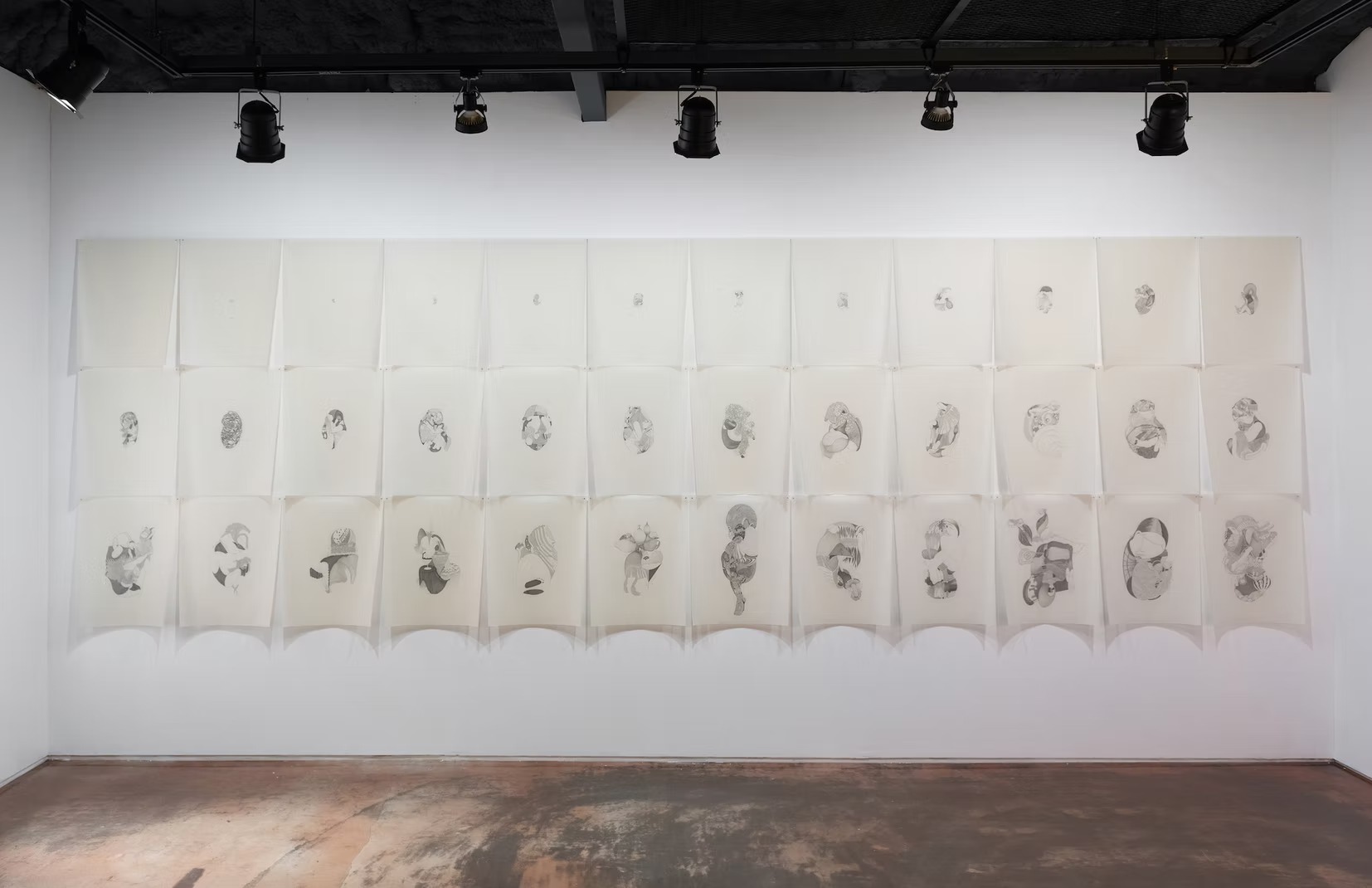
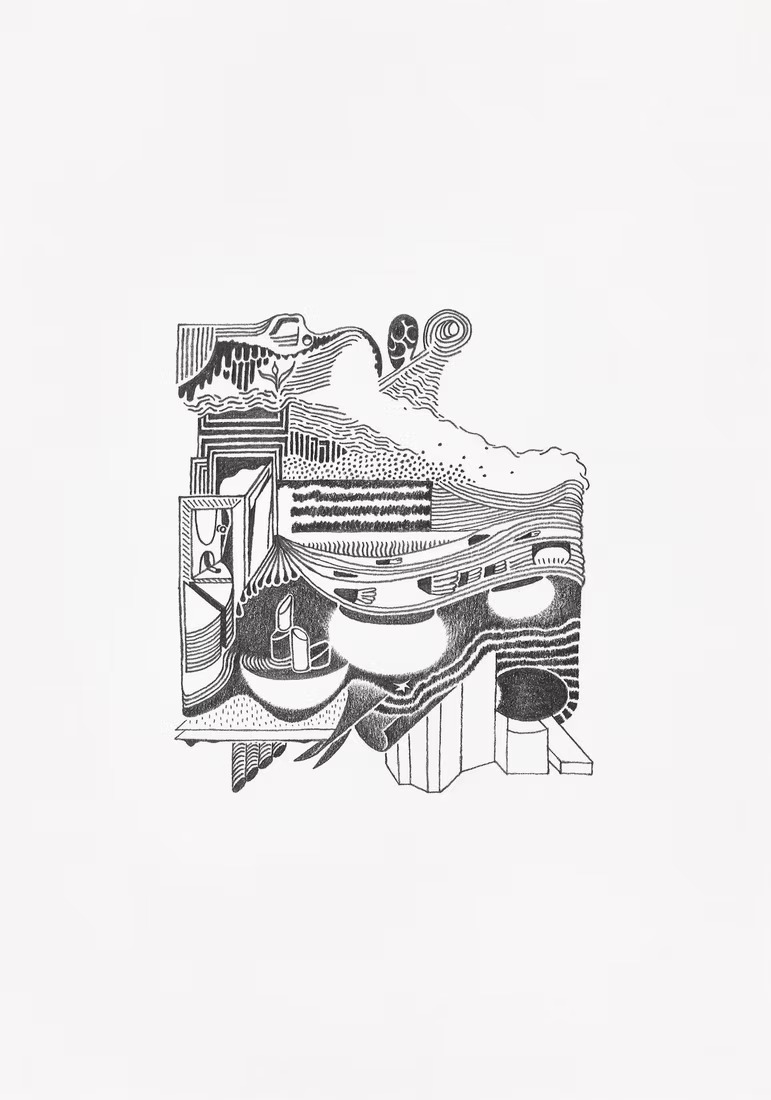
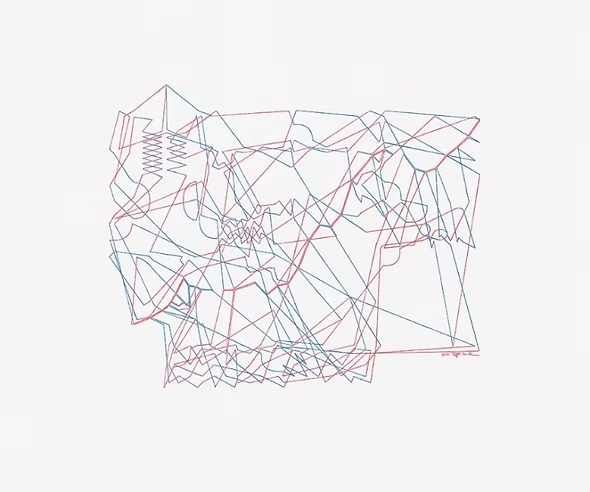
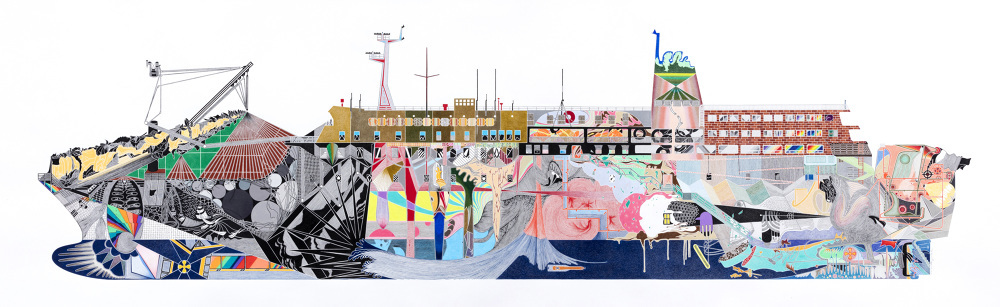
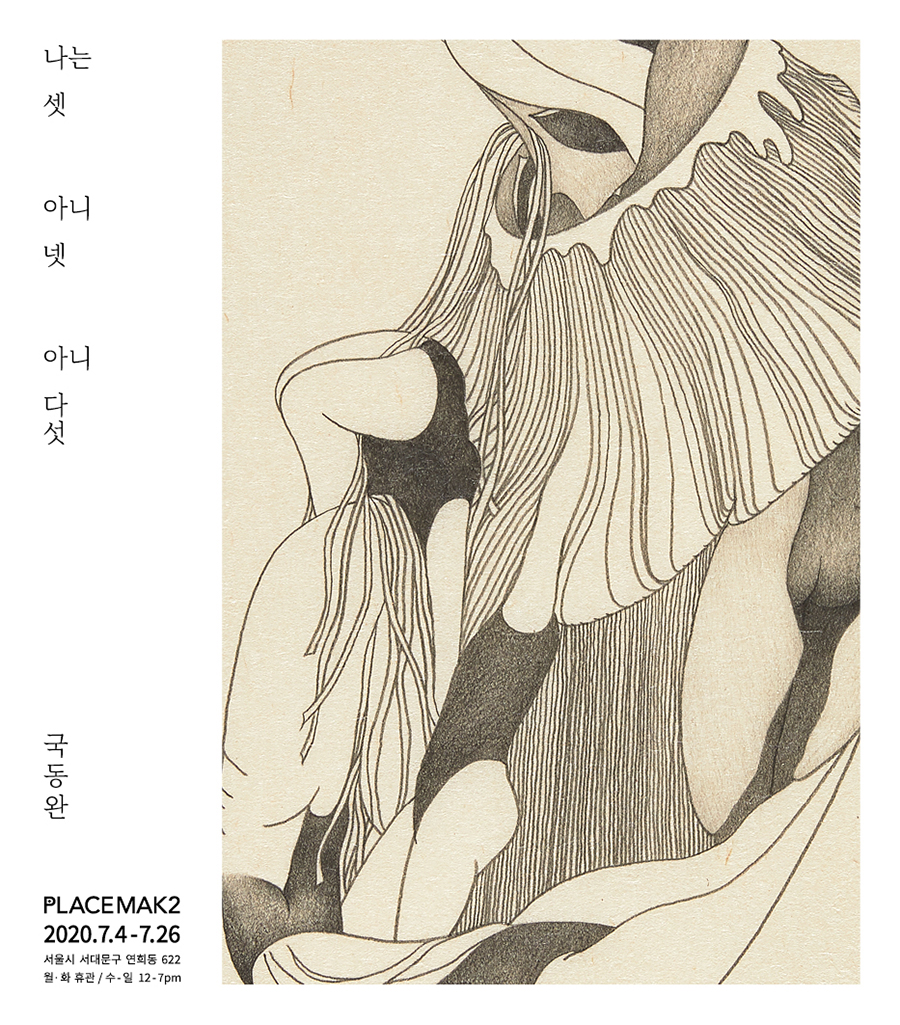
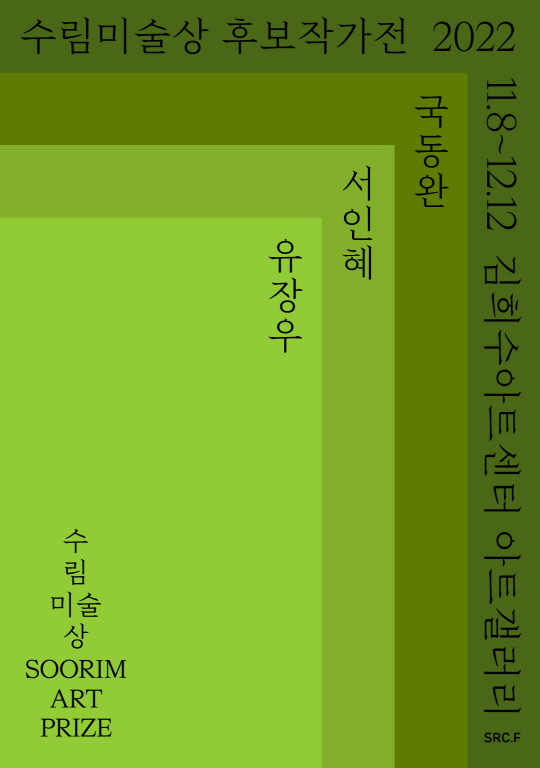
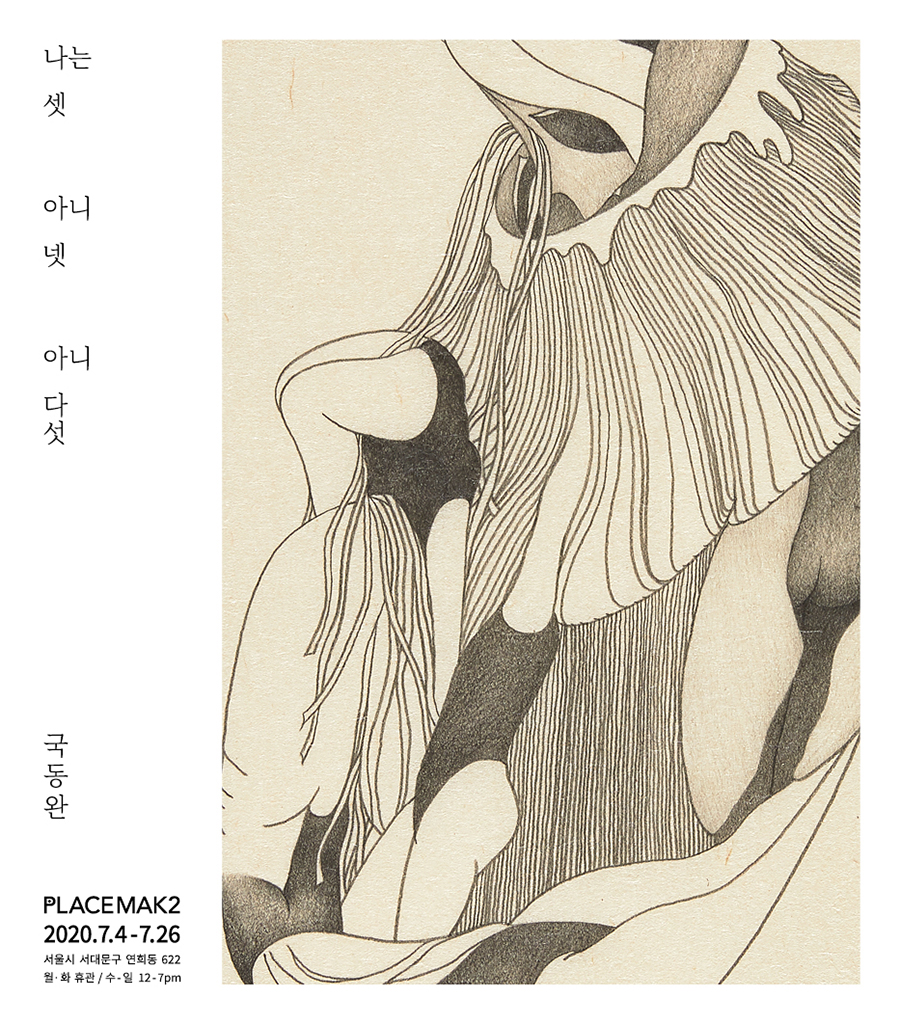
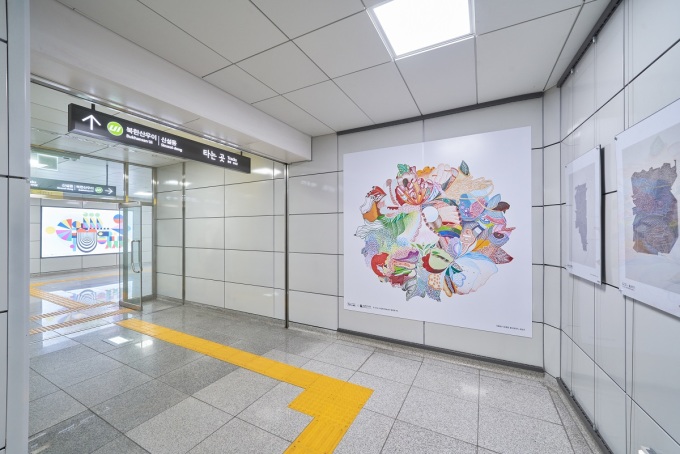
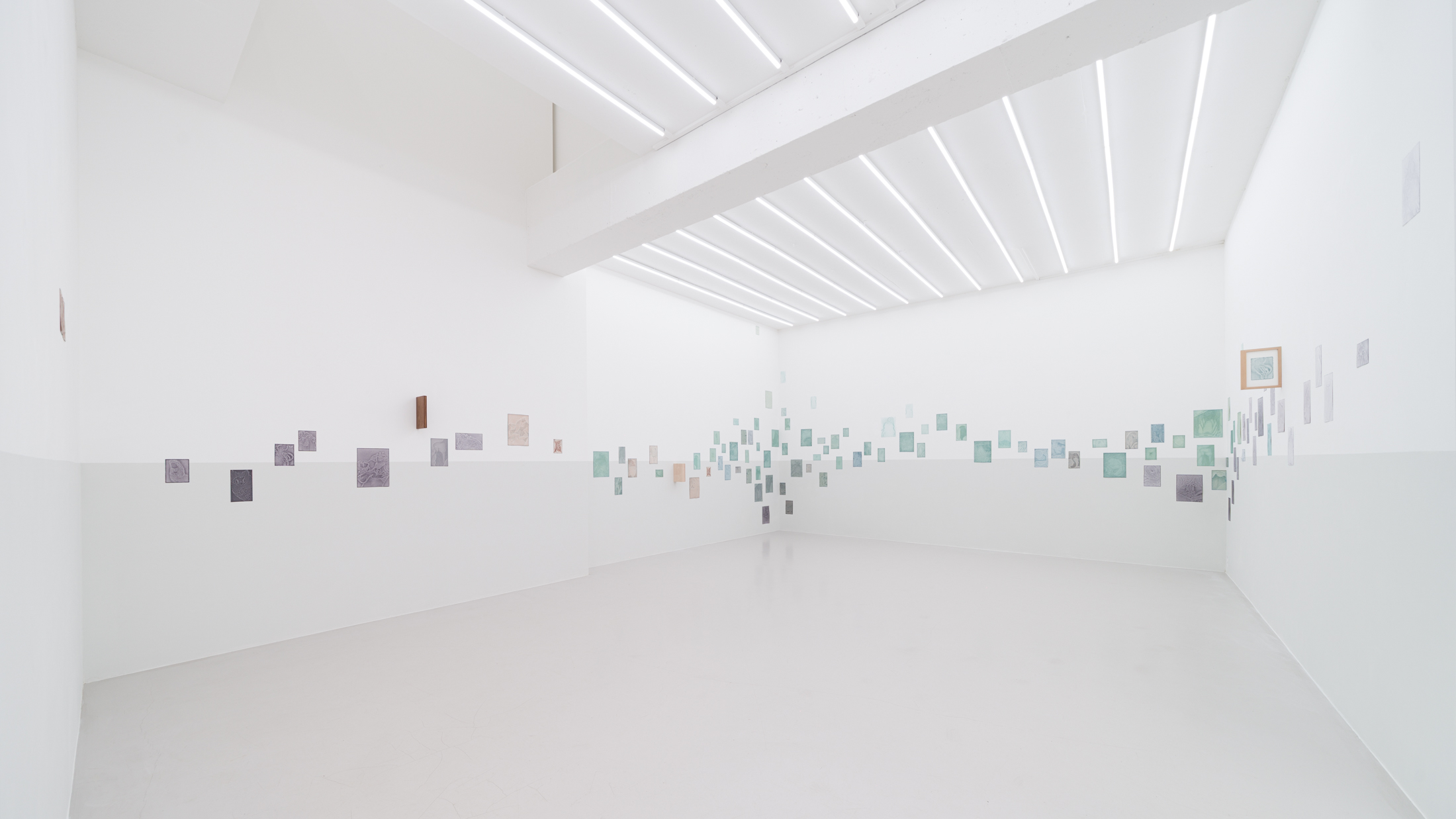
Poster image of 《I Am Three or Four or Five》 © PlaceMAK2

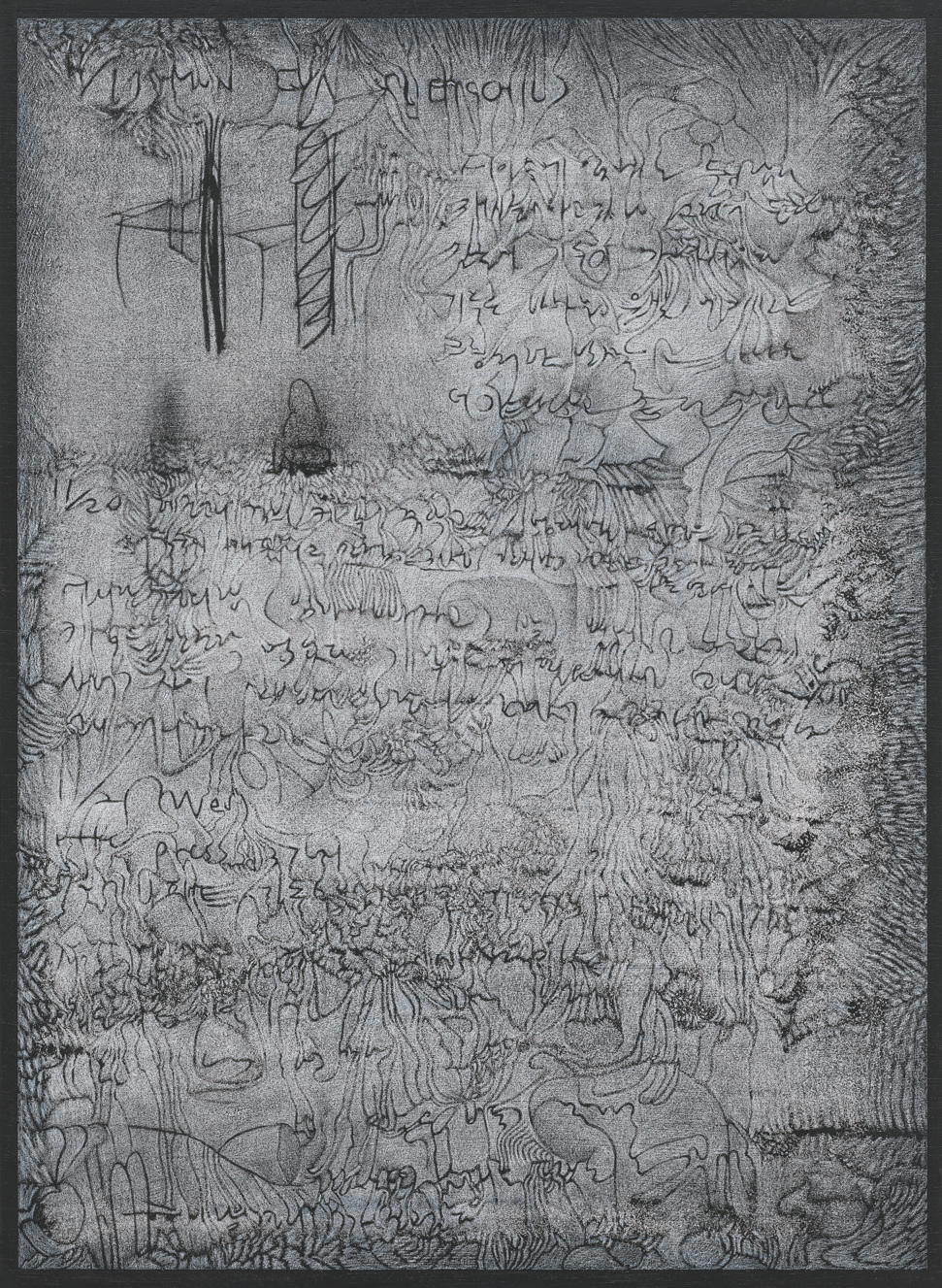
It is a clarity akin to black and white, yet also like the blank sheet guarded by white or the space held by black. The forty-one drawings documenting an arduous forty weeks are, as Dongwan Kook puts it, “watching the hand draw on its own; accepting the lines and images that the hand inevitably produces.” They are the black of signs that emerge through the capriciousness of graphite powder settling onto opaque hanji.

These unavoidable signs of stains resemble the underside of drawing and writing—acts that seek thought and meaning not in bodies that can be confronted or grasped, but within an elusive void—as the poet Stéphane Mallarmé described in Brise Marine: “a poem that could not be born despite wrestling all night with the white sheet of paper.”

The attitude embodied in drawing and writing in black and white is both a process of thought arising from black, cast as a carefully conceived mass upon the stubborn immutability of white, and another form of formlessness. It begins with an attitude that identifies the desire for conceptual images that justify form with a sense of emptiness—for instance, in the drawing from week seven, a form that appears half like eyelashes and half like wrinkles.

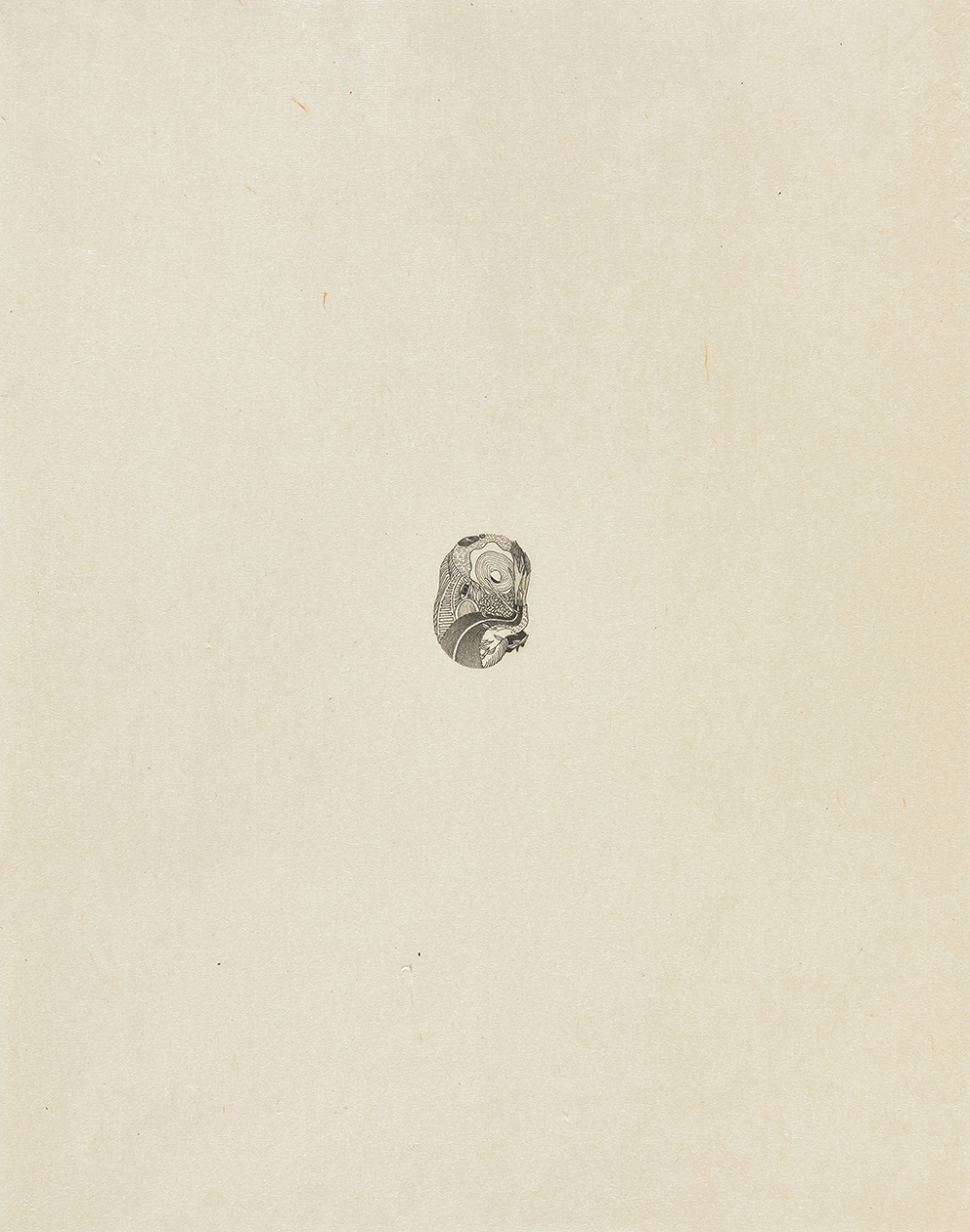
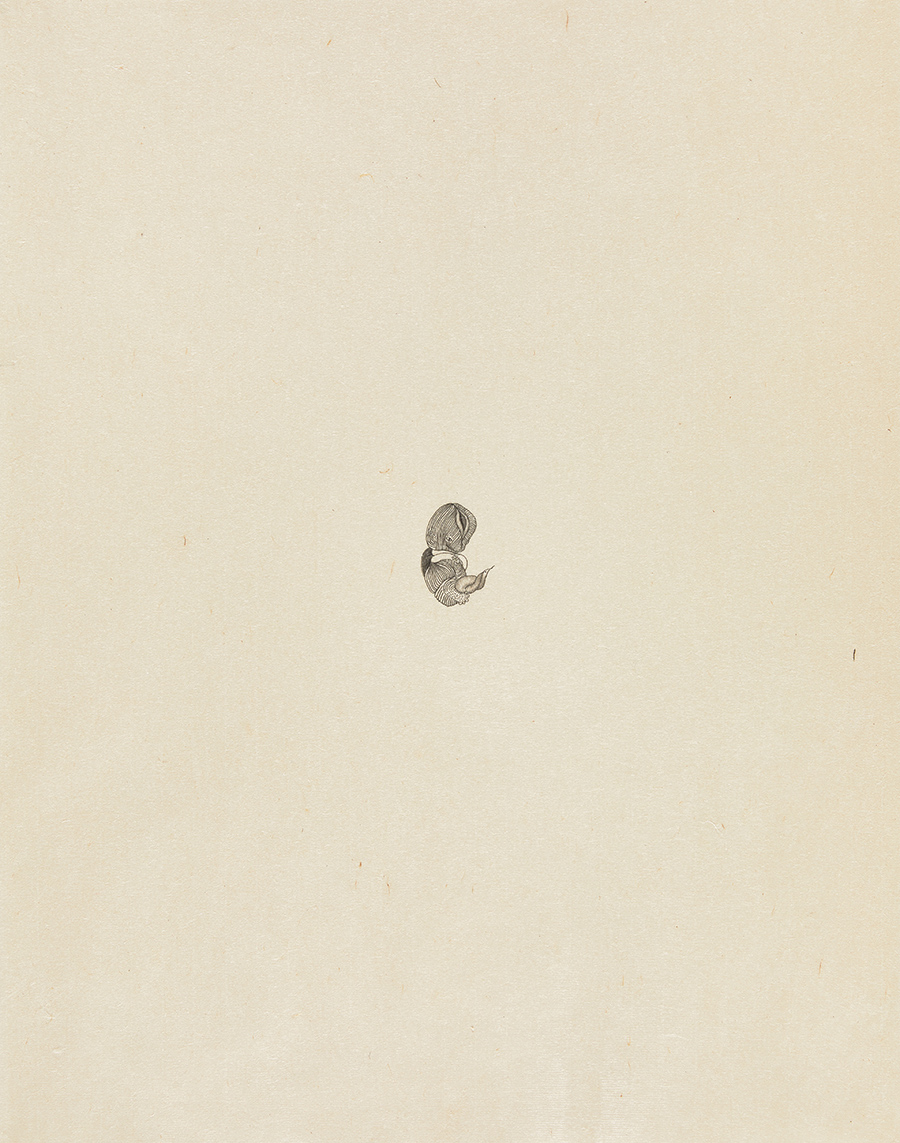
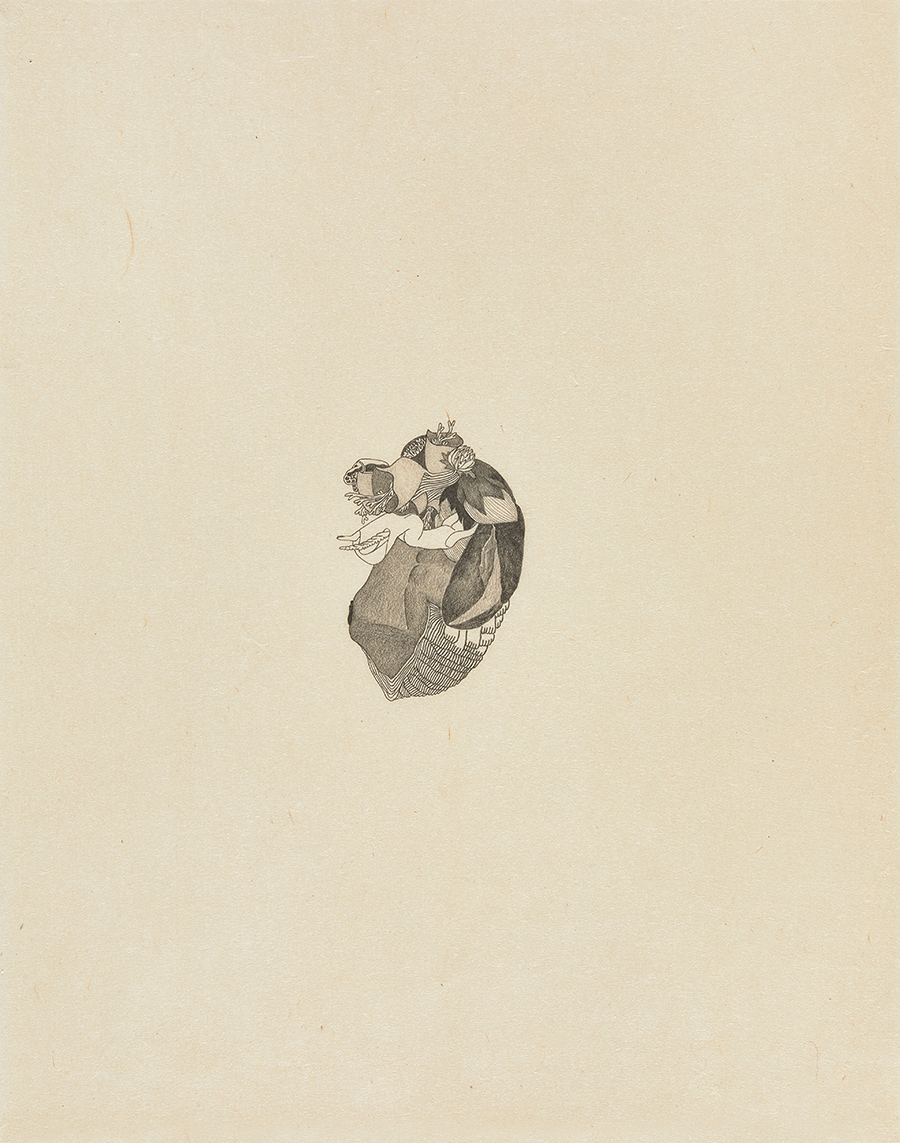
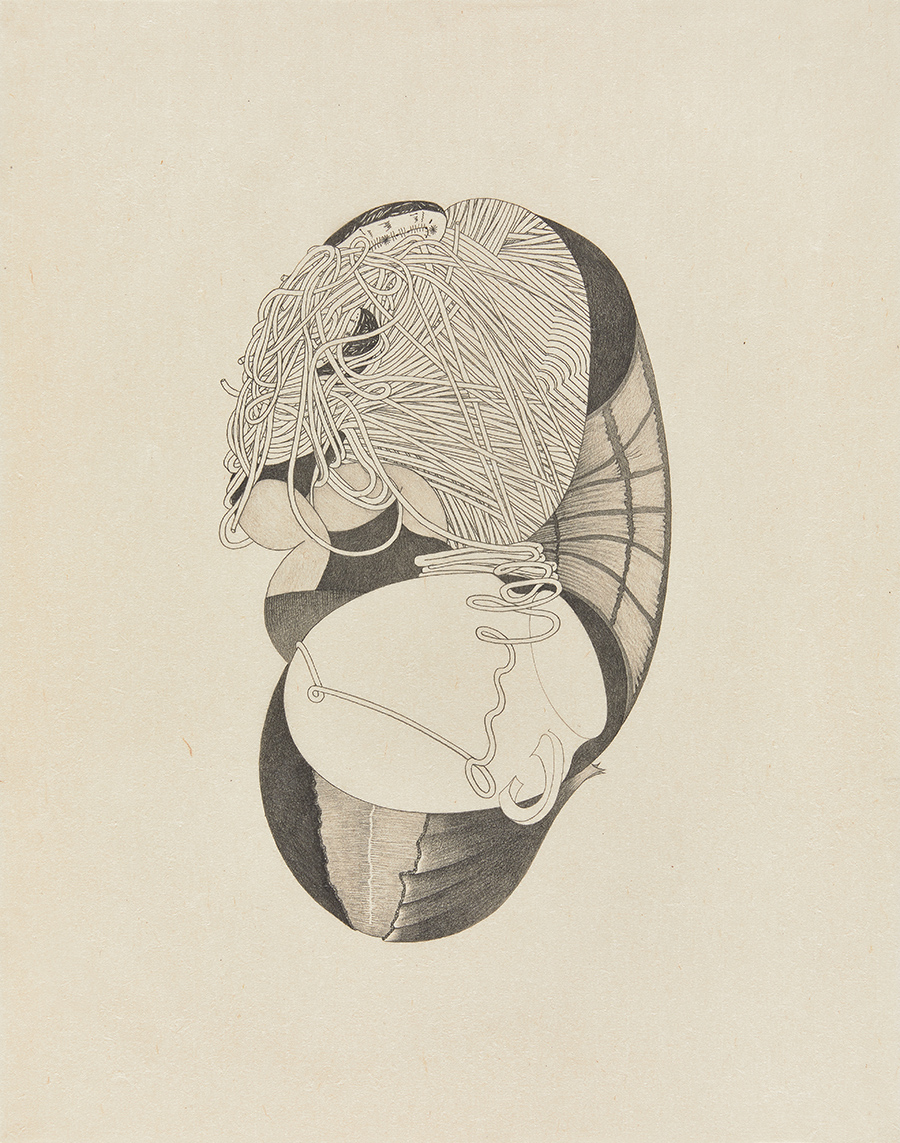
Dongwan Kook, I Am Three or Four or Five: Week 0, 2020, Graphite on hanji, 44 x 56 cm © Dongwan Kook

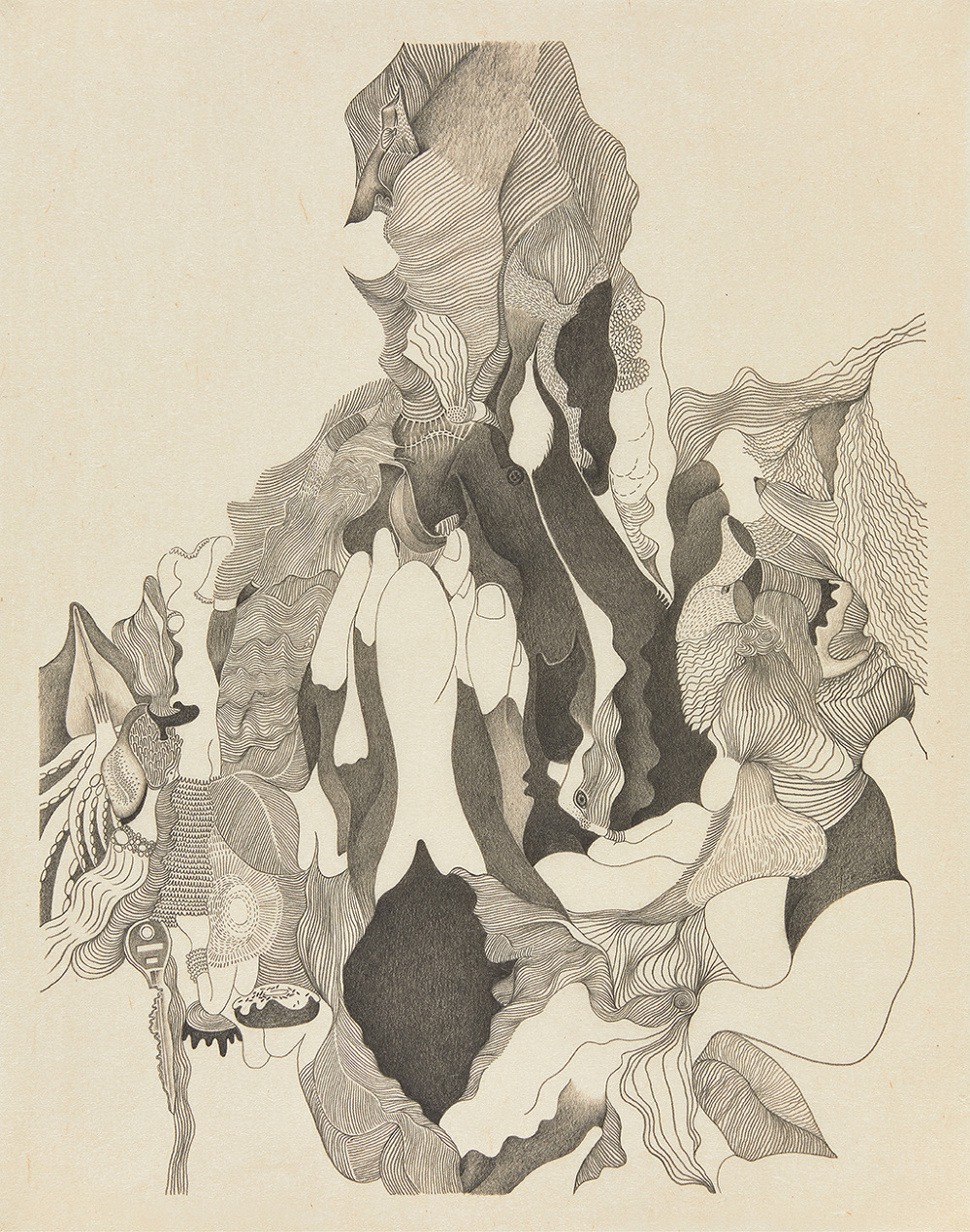
The records, in which a single form was drawn each week from week 0 through week 40 while imagining the living being carried within the womb, give rise at the center of the picture plane to indiscriminate, organic images that ambiguously reveal a relationship to identity as portraits of the unborn. The imagining of a life not yet encountered in reality, but destined to be met in the future, represents a force or desire for that “something” circulating within an assumed equivalence between black and white, prior even to existence or subjecthood.

The black drawings are a kind of exploration of the pictorial possibilities inherent in black itself, approaching something that is neither image nor language. Precisely because it is neither image nor language, it remains there in solitude like a ghost, mediating between nothing and everything in color through achromaticity. Within the formless world created by the artist.

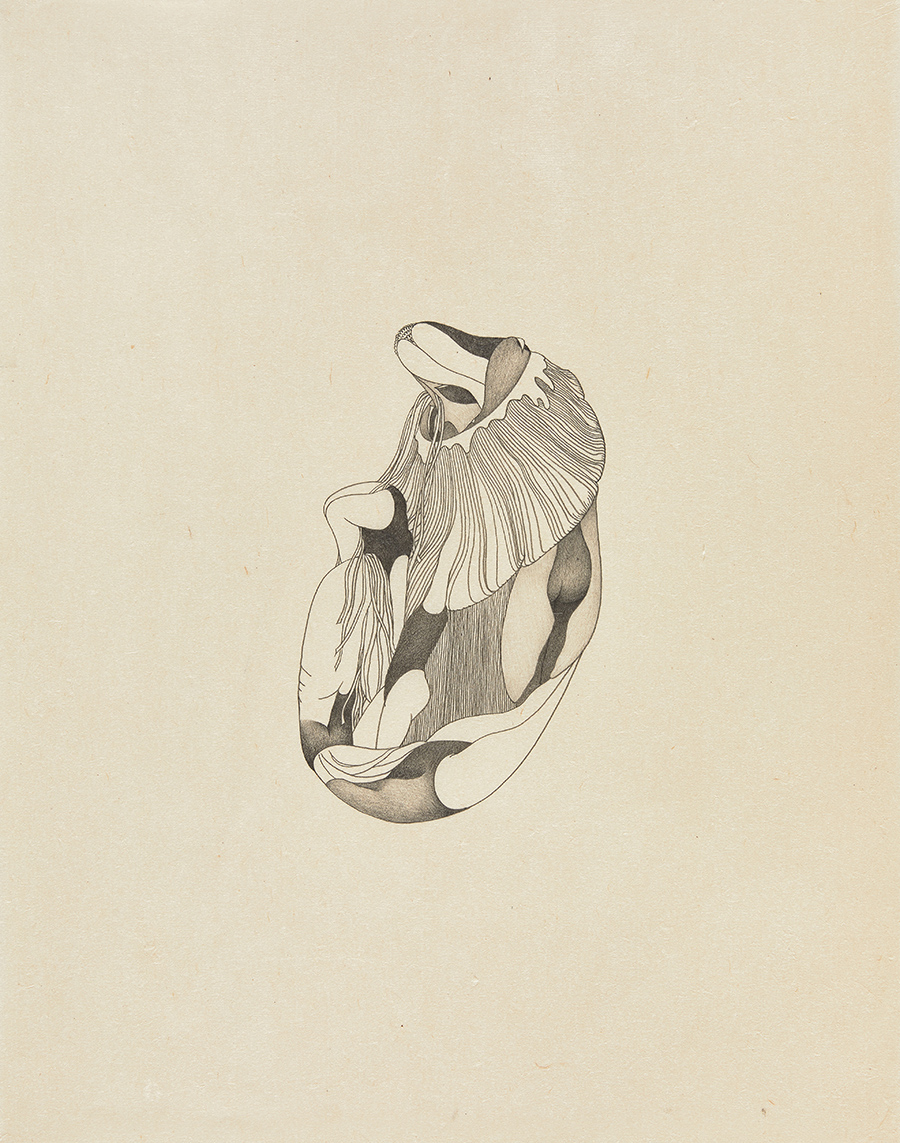
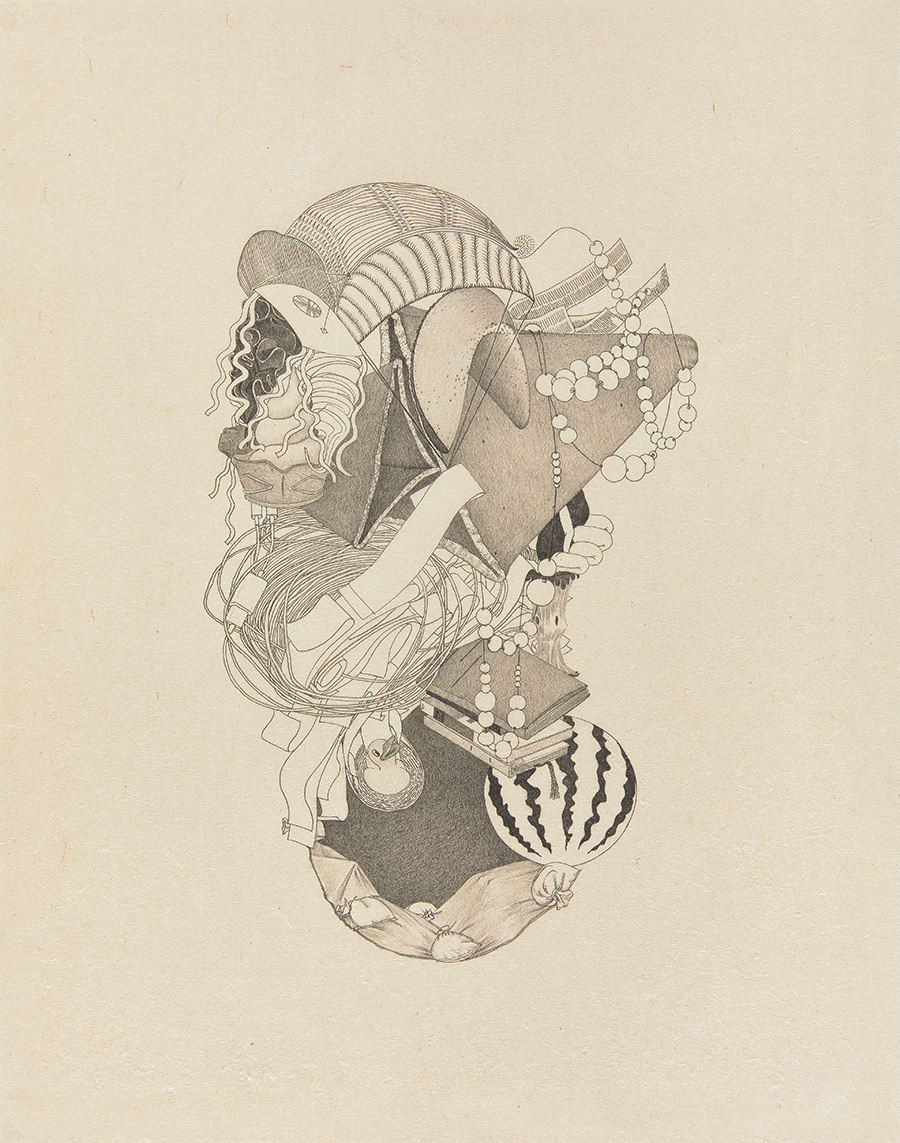
Dongwan Kook, I Am Three or Four or Five: Week 9, 2020, Graphite on hanji, 44 x 56 cm © Dongwan Kook

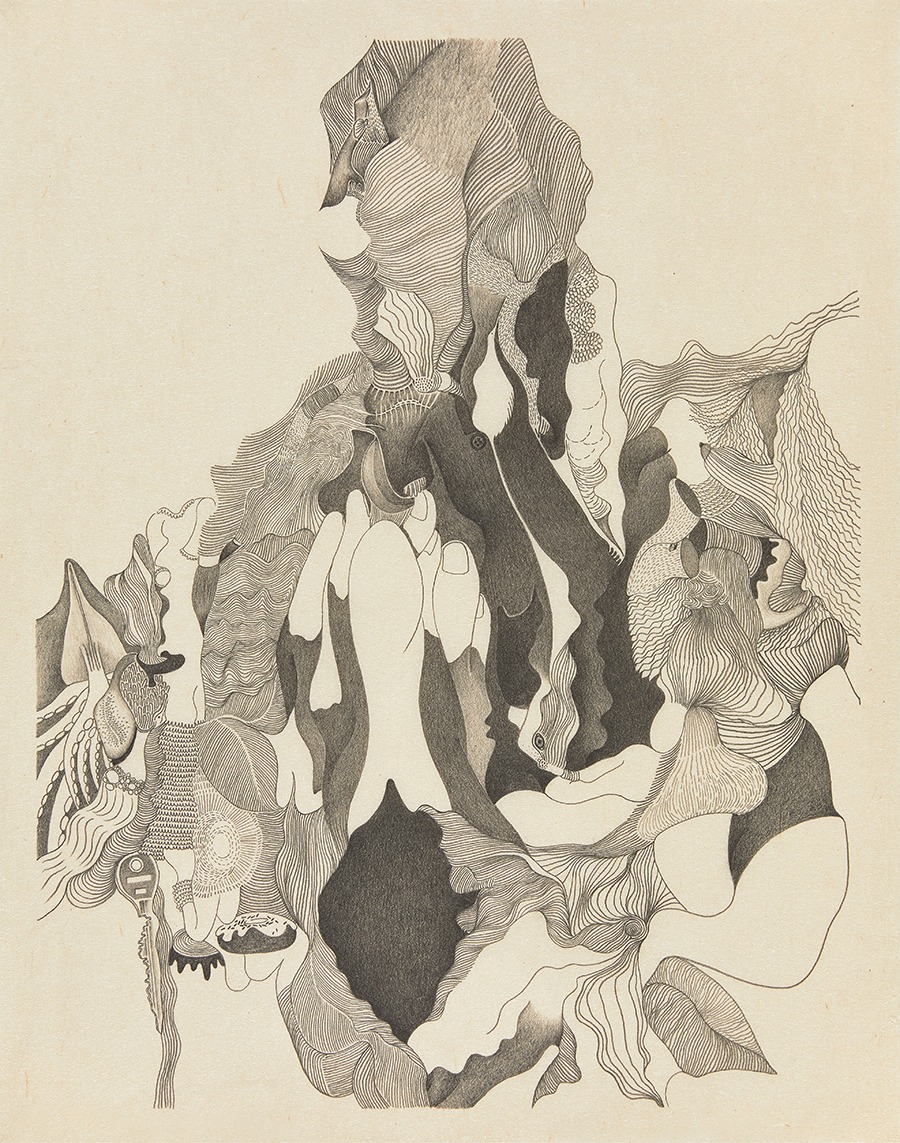
As long as this world arrives at the age-old opposition between divisible black and indivisible white, everything seems to reach completion. The forty-one drawings in the series 'I Am Three or Four or Five' (graphite on hanji, 44 × 56 cm, 41 works, 2020) present faint and distinct contours that confront one another, mutate, and proliferate, while simultaneously becoming one another’s shadows.

Set against a pitch-black world—or perhaps a luminous space in which light exists—the living portrait of a life growing week by week can be understood as a story of the forty-week history and mythology of a small world yet unseen. The movements of the artist’s fingertips, following the course of consciousness, turn toward what can be repeated or recalled from memories deeply embedded in the mind, much as Kook once recorded his unconscious dreams each day.

Lines and planes arising spontaneously within the growing contours take on forms of sensibility that oscillate between the familiar and something strange, diverging from one another while at times becoming typological. As the fortieth week approaches, the rapidly enlarging form finally allows a glimpse of its intimate contours and makes perceptible the numerous forms of relation through which the artist and this world are connected.

It constructs and dismantles a mode of narration that moves freely between sameness and difference, foregrounding the still-unrefined multiplicity of one and many—the many as one—while also emphasizing its potential to connect with other narratives. The records presented by Dongwan Kook suggest the possibility that, from an enigmatic object, other stories might be woven across multiple surfaces, different times, and different places.

Kook persistently delves into something fundamental: the possibility that the blank margins at the edges of the picture plane and the dense drawings at its center, separated from one another, may move from emptiness to fullness, from fullness to emptiness, and from the inexhaustible to that which might be nothing at all. Under the name “black.” In this way, the manner in which the formal qualities of drawing unfold narratively is also distinctive to the artist’s practice.

Dongwan Kook, I Am Three or Four or Five: Week 15, 2020, Graphite on hanji, 44 x 56 cm © Dongwan Kook

The endless division and amplification of the many faces of black appears alongside the forty-week drawings in the form of linguistic articulation and fragmentary records in the text I Am Three or Four or Five (written by Dongwan Kook, Boundary Books, 2020), which unfolds those forty weeks through the gaze of an infinitely extended network.

The text resembles an archive of drawings transcribed once again into writing, based on drawings that themselves transcribed the shapes of bodies and objects traced along their contours. This record is a densely woven fiction that gradually reveals itself through complex and open relationships. As though uncovering what had been concealed, the artist excavates as fossils the traces of moments transferred into writing, compressing into a few lines those things that remain beyond reach yet are still alive and in motion.

Kook’s approach to writing moves beyond the singularity of black that confines relationships, describing the objects that erupt visually in the drawings and the world surrounding them through fragmented blacks: “a mother dressed in black, a black stone, black bread, a black lake, black buttocks, darkened feet, a black pyramid, a line of black droplets, black eyelashes, a black mountain, a black waterfall, a black cylinder, black smoke…”

In this way, Kook overlays parts of that “something” preparing for forty weeks to emerge into the world—something prior to being, prior to existence and thought—with “blackness,” while naming every perceptible sensation, landscape, and object through various manifestations of black.

Paradoxically, this expansion of transcription around black things before birth resembles a figure lost in darkness, like a black wind appearing in the second circle of limbo after the transience of life and the flames of human display have been extinguished. Thus, these black things may resemble one another in their blackness, but they are not “black” in precisely the same way.

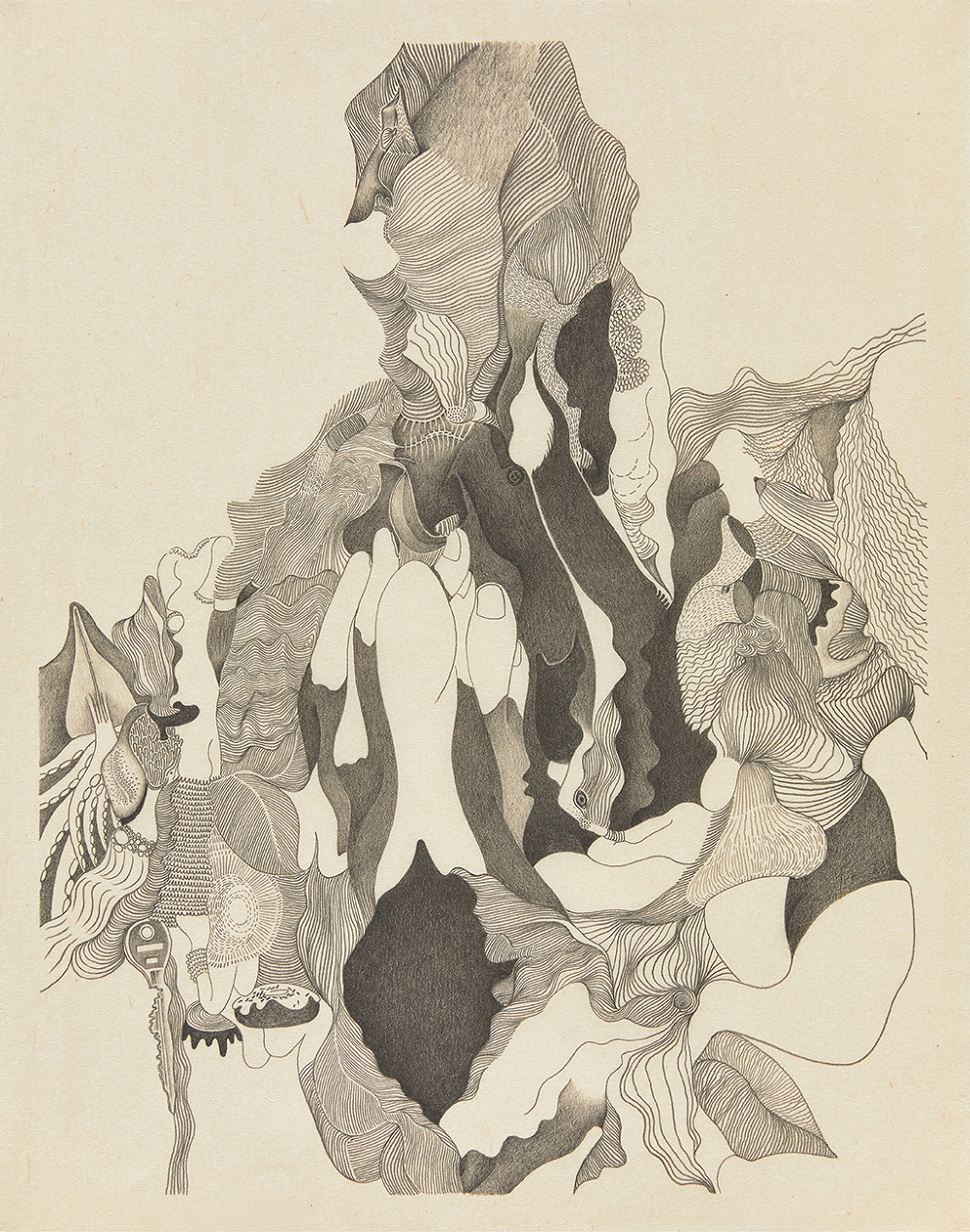
Dongwan Kook, I Am Three or Four or Five: Week 25, 2020, Graphite on hanji, 44 x 56 cm © Dongwan Kook

The artist’s desire to make fiction possible by becoming another Other in order to inhabit a world of the Other that has not yet come into being is, interestingly, given rhythm in the text I Am Three or Four or Five through descriptions of the many faces of black and through visual and auditory memories. Through this text, we might imagine a journey that begins when a single point emerges in a small, weightless universe where nothing can be heard.

The opening sentence, which begins quietly with “There is nothing, I can’t see it, no, it is there, I simply cannot see it,” starts from an ambivalent contradiction: from the simultaneous existence of the invisible in relation to existence from a cosmological perspective and of a kind of unidentifiable gap in perception, so that thought itself does not fall into absence through malfunction. Here, the one-and-many called “I,” relying on black as a symbol for things that cannot be identified, becomes absorbed in filling the lack within thought precisely by remaining difficult to locate with certainty.

Dongwan Kook, I Am Three or Four or Five: Week 35, 2020, Graphite on hanji, 44 x 56 cm © Dongwan Kook

“ Sometimes I am alone and sometimes I am many

I become fifteen

I am seven, seven are alive

The six of me are strange

The five of me

I became four ”

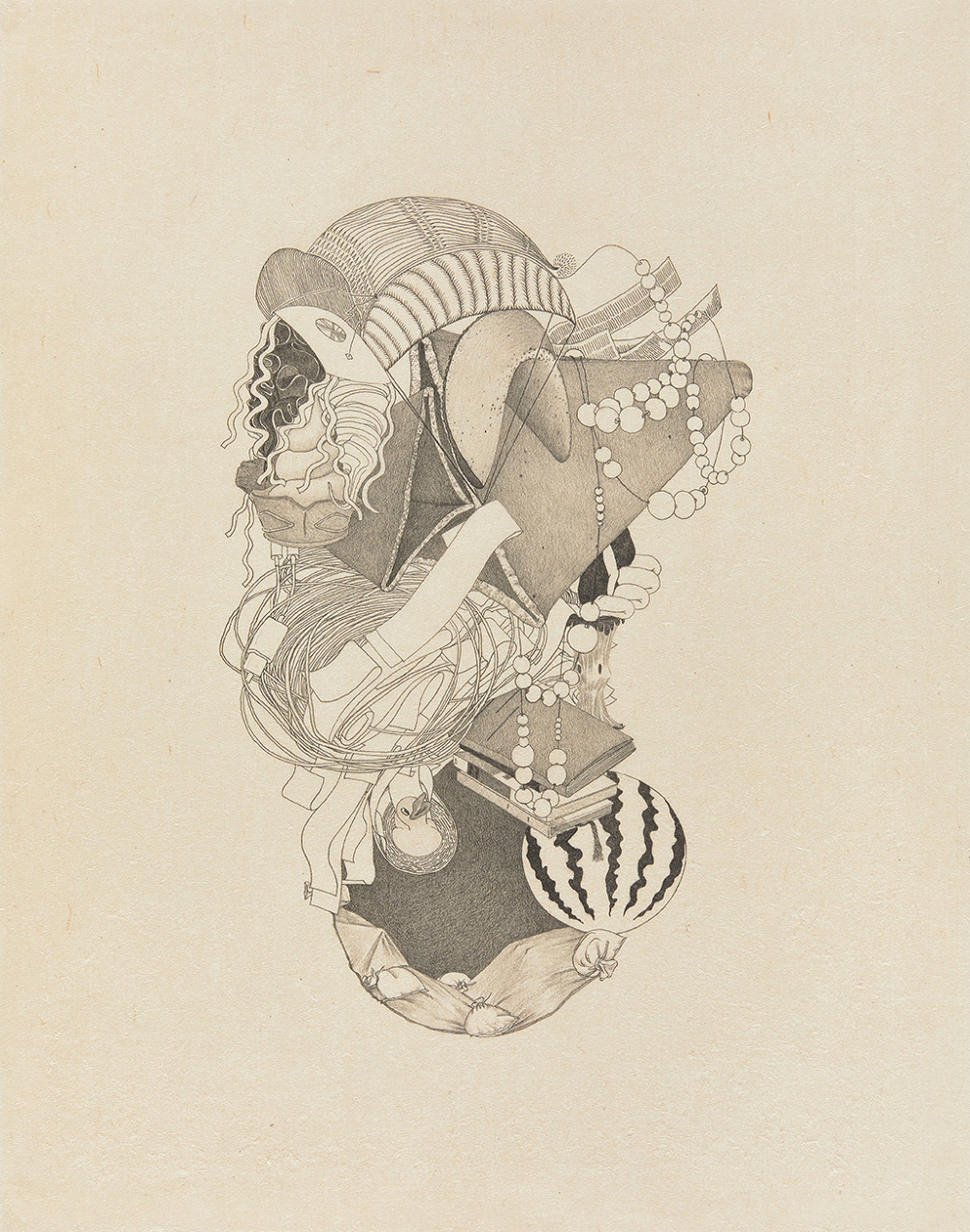
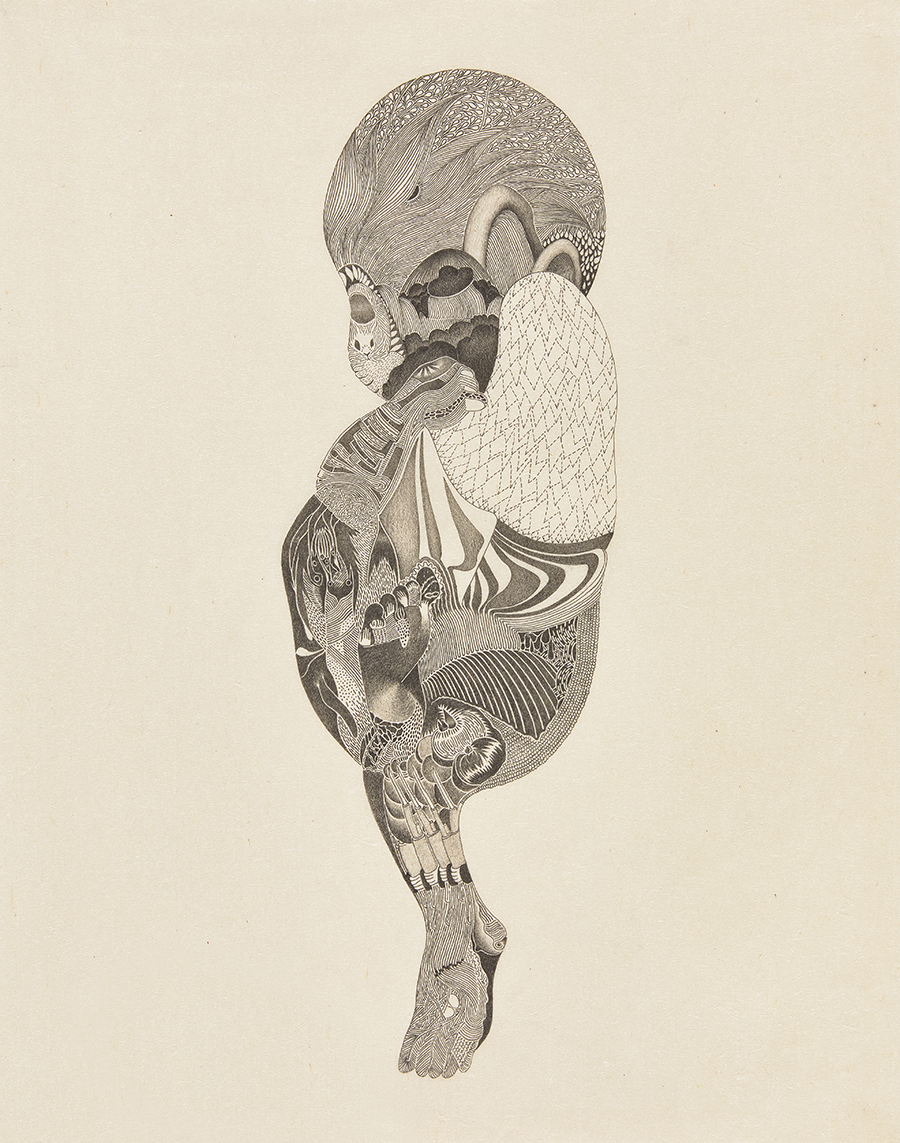
Dongwan Kook, I Am Three or Four or Five: Week 38, 2020, Graphite on hanji, 44 x 56 cm © Dongwan Kook

In this way, rather than constituting a malfunction of thought, everything becomes possible so that nothing is lacking; the name of something, and the name of everything that must exist, is carried through as “black.” The sentences describing the multiple doubles of “I” thus feel almost like reading a musical score, with irregular spacing and syncopated rhythms.
The tone and rhythm that emerge from these sentences highlight how each sound gradually revives the meaning of each letter, allowing the visual to be approached aurally, or vice versa. These doubles also appear throughout the forty-one drawings not as fixed objects, but as forms that repeatedly emerge from and recede into the background, condensed within individual frames in ways that allow us to infer characters and the scenes they signify.

From the doubles of “Mona” that appear in Dongwan Kook’s drawings and writing, we can consider the distinctive plurality at work in the artist’s practice. Much as the poet Fernando Pessoa referred to himself through more than seventy self-others under the concept of the “heteronym,” Kook’s approach similarly gives imagined figures not only names but also distinct, concrete characteristics, rendering them as doubles in their own right.

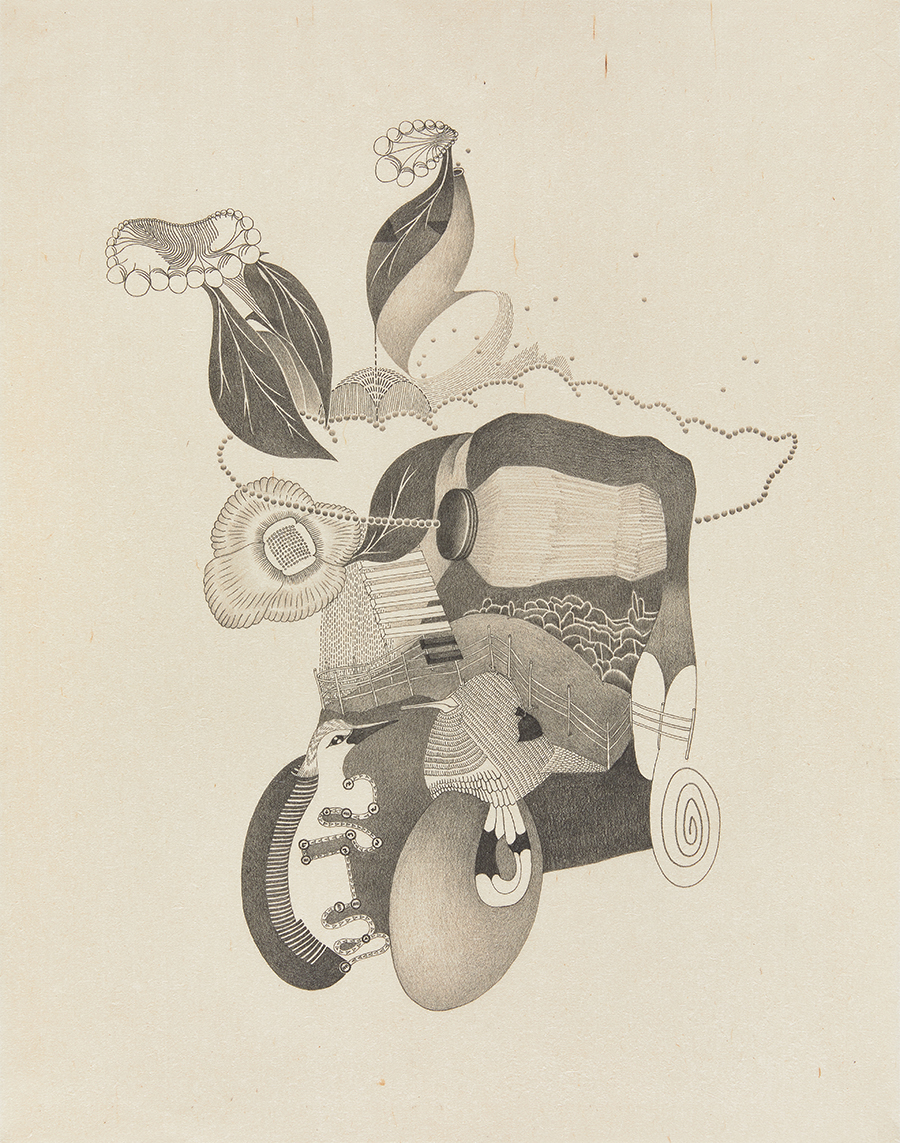
Dongwan Kook, I Am Three or Four or Five: Week 39, 2020, Graphite on hanji, 44 x 56 cm © Dongwan Kook

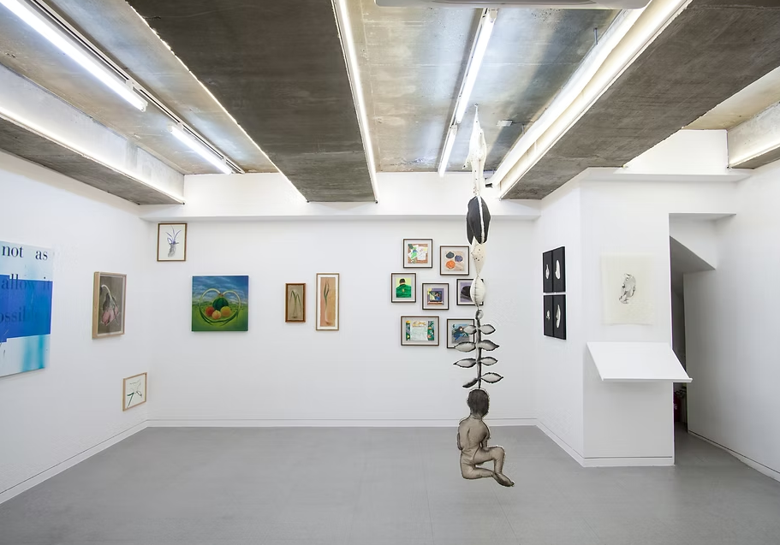
Dongwan Kook’s current exhibition, 《I Am Three or Four or Five》 (Placemark2, 2020), is enveloped by a strong attachment to the individuality possessed by the subjects that appear in the drawings and writings of the same title. At the same time, the desire to transcend this individuality can be inferred from the process of ceaselessly splitting into multiples and from the meanings symbolized by the color black.

Attachment and desire, operating in opposite directions, paradoxically imply both life and death. The tension and anxiety delicately revealed in the drawings and writings express a consciousness that seeks to activate life itself, as the various thoughts perceived by the existence called “I” gather together and reach outward into the world; yet at the same time, they also indicate a contradictory direction of consciousness that cannot be reduced to life itself.

In this way, the internal observation of the Other in reality (the artist) and the Other prior to reality (the fetus), within a reality that is inevitably contradictory, transforms a single subject and allows that subject to emerge from itself, gathering into a series of symbolic clusters that imply movement and temporality as finite individuality crosses its own boundaries and moves outward.

Such contingencies and clusters of symbols, together with the accidental records generated by words and the spaces between lines, move toward a desire to apprehend reality, much like the stream of consciousness found in automatism, where one cannot predict what form will emerge next as black planes are filled in with pencil and lines recur at intervals within organic forms.
Dongwan Kook, I Am Three or Four or Five: Week 40, 2020, Graphite on hanji, 44 x 56 cm © Dongwan Kook

Kook’s two forms of record demonstrate an attitude of becoming the Other and transcribing twice the traces of life’s most private moments and thoughts that had rarely been put into words, much like drawings pressed firmly between sheets of paper and sentences inscribed between one page and another. This act of double transcription deciphers visible form-images from disordered language and draws meaning from each fragment of image and sentence that strikes the artist.
Over the long span of forty weeks, the sensitive and concentrated perception that peels back the veil layer by layer, pushing through the opacity of what is known and what one seeks to know, becomes the gesture of an “I” and of “many” attempting to approach the essence of beings and things after an uncertain and prolonged journey.

The imaginings and memories that the artist excavates and classifies are at once full and empty upon the page. What, then, were the spaces that his hand filled relentlessly with drawing and writing meant to preserve? A space that preserves black, a space preserved by something black, or the place of black itself? “I am three, not four, not five”; my name is black.

References