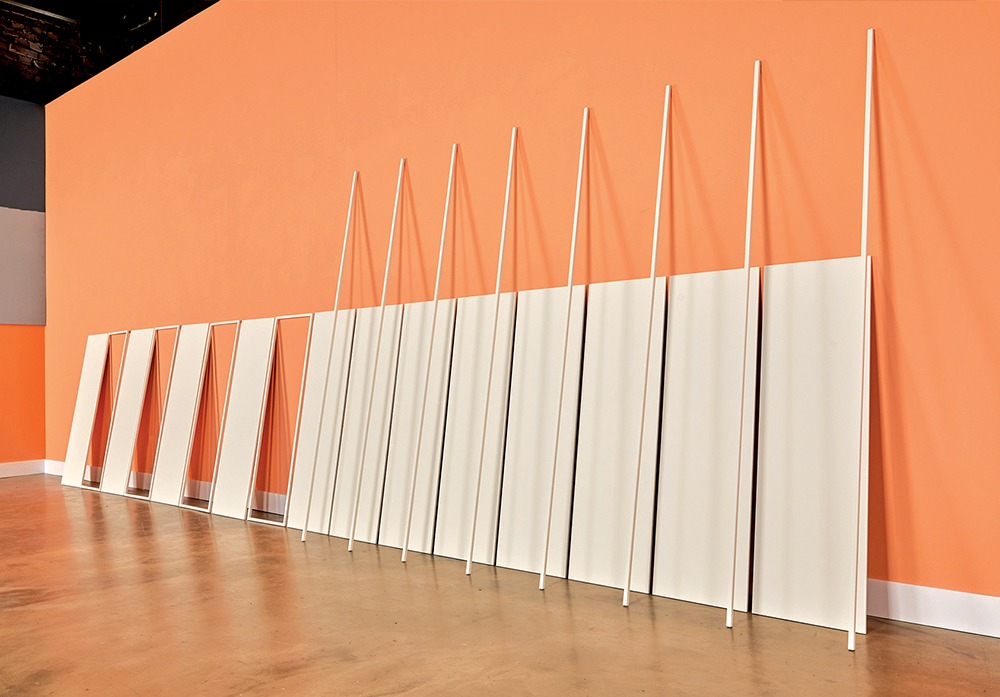
‘Sculpture’ has recently emerged as an important subject in the Korean art scene, a phenomenon directly contrary to earlier predictions of the genre’s ‘death.’ In the late twentieth century, with the arrival of postmodernism and its dismantling of boundaries, contemporary sculpture was assigned the ambiguous identity of the ‘three-dimensional.’
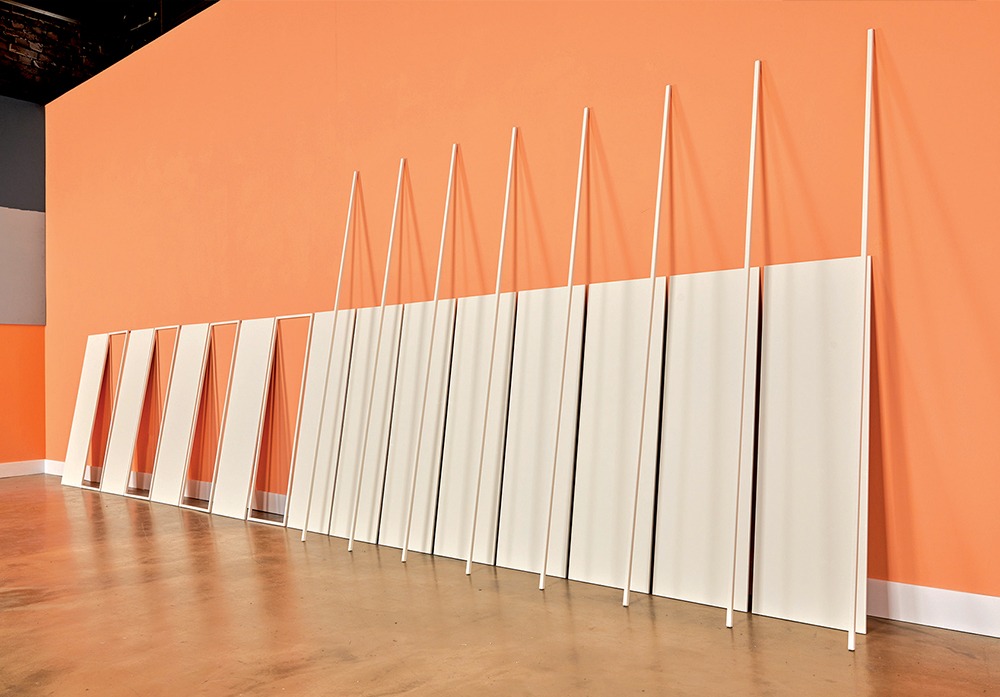
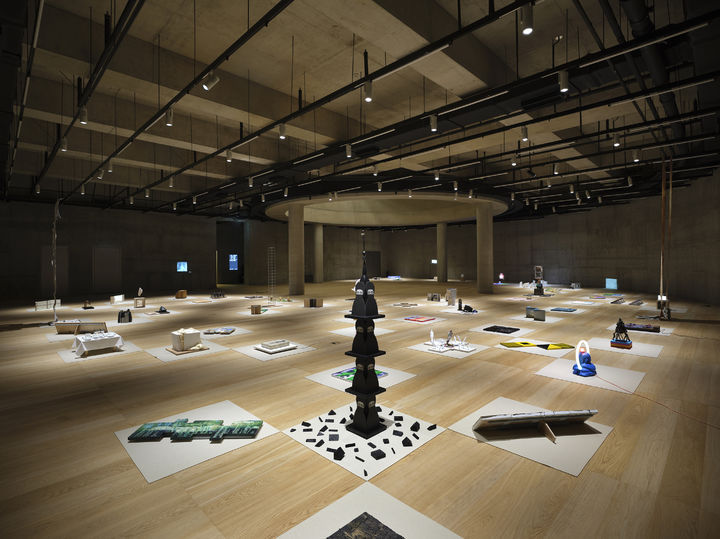
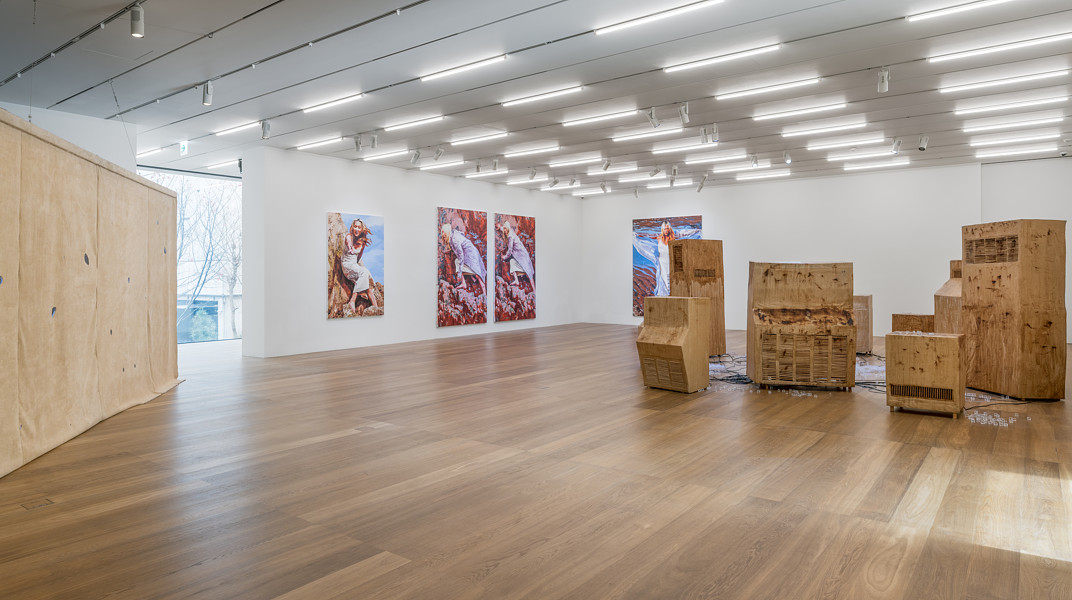
As sculpture rapidly crossbred with other genres including painting, photography, performance, and video, it seemed likely to be absorbed into installation art. Yet sculptors who continued to consider sculptural modes of perception and attitude, materials and techniques, remained active. In the 2020s, sculpture finally ‘returned’ to Korean contemporary art.
Choi Taehoon is a young sculptor working at the forefront of this development. At P21, he presented 《FIELD》(June 9-July 1), the first chapter of a two-part solo exhibition. In this exhibition, Choi extended the concept of ‘SAL,’ which he had developed as part of his sculptural language, into the dimension of space and unveiled large-scale works.
The Self-Generating Force of Matter, Hybrid Sculpture
Sculpture is fundamentally an art of materials, in which the work begins with the very act of selecting what to use. Whether the traditional materials of wood, stone, clay, and bronze or industrial materials such as plastic, cement, and fabric, the choice of material determines numerous aspects of the work, including production techniques, surface texture, volume, and form.
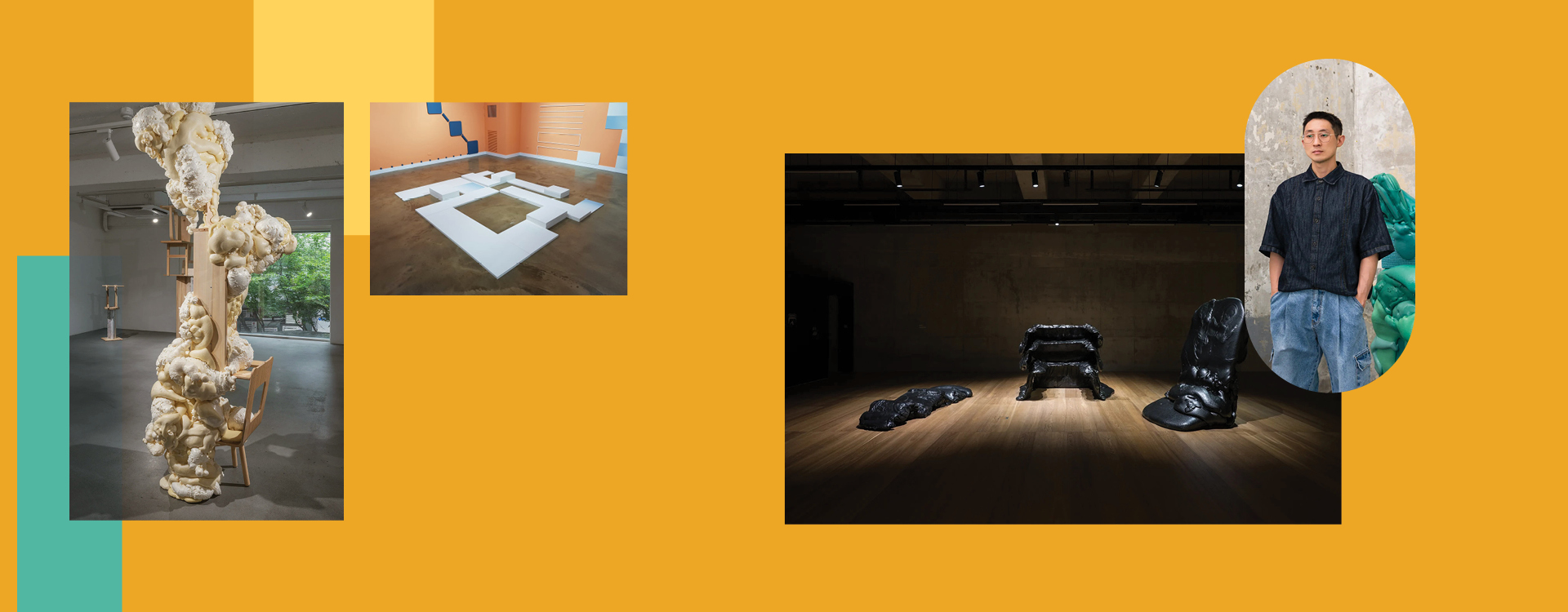
For this reason, the sculptural process is sometimes described as a ‘struggle with materials.’ The labor of wrestling with matter has been intrinsic to sculpture from the beginning. A brief material history of Choi Taehoon’s sculpture might be summarized as follows. From 2012 to 2016, the artist transformed everyday objects into sculpture.
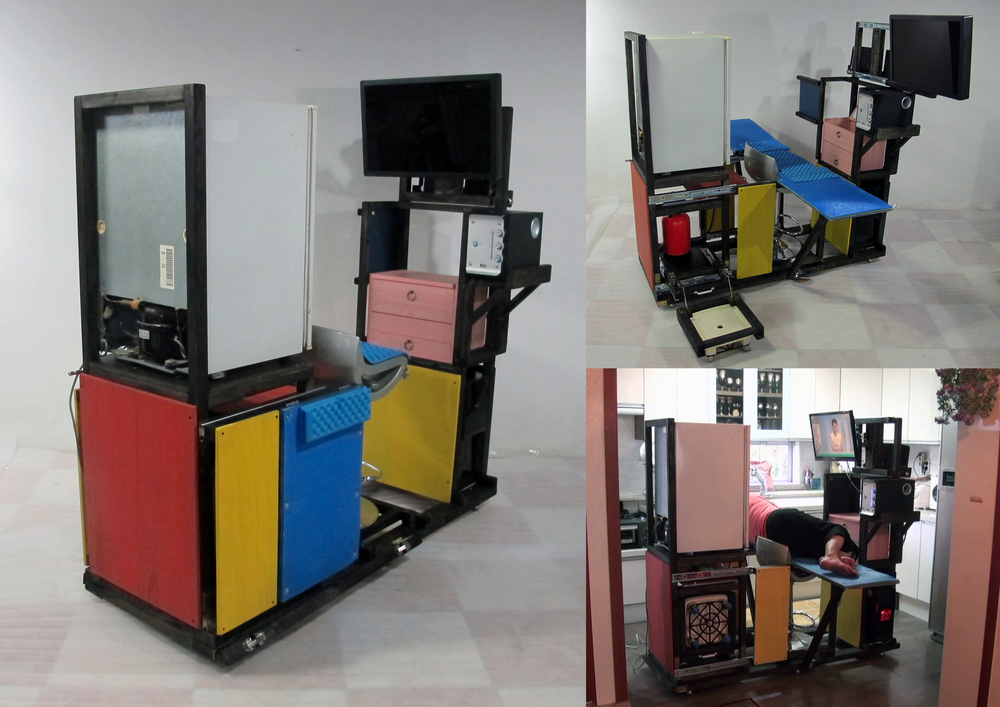
He stacked vivid blue cleaning products such as wastebaskets, dustpans, and brooms into the form of Vladimir Tatlin’s Monument to the Third International, turning them into a functional sculpture that could actually be used (All in One–Indoor Cleaners), or modified household objects including refrigerators, computers, monitors, and stretching equipment according to his parents’ behavioral patterns (Multitasking Device). Although these objects convincingly assumed the appearance of something ‘useful,’ they were in fact ‘useless’ sculptures that restricted human behavior.
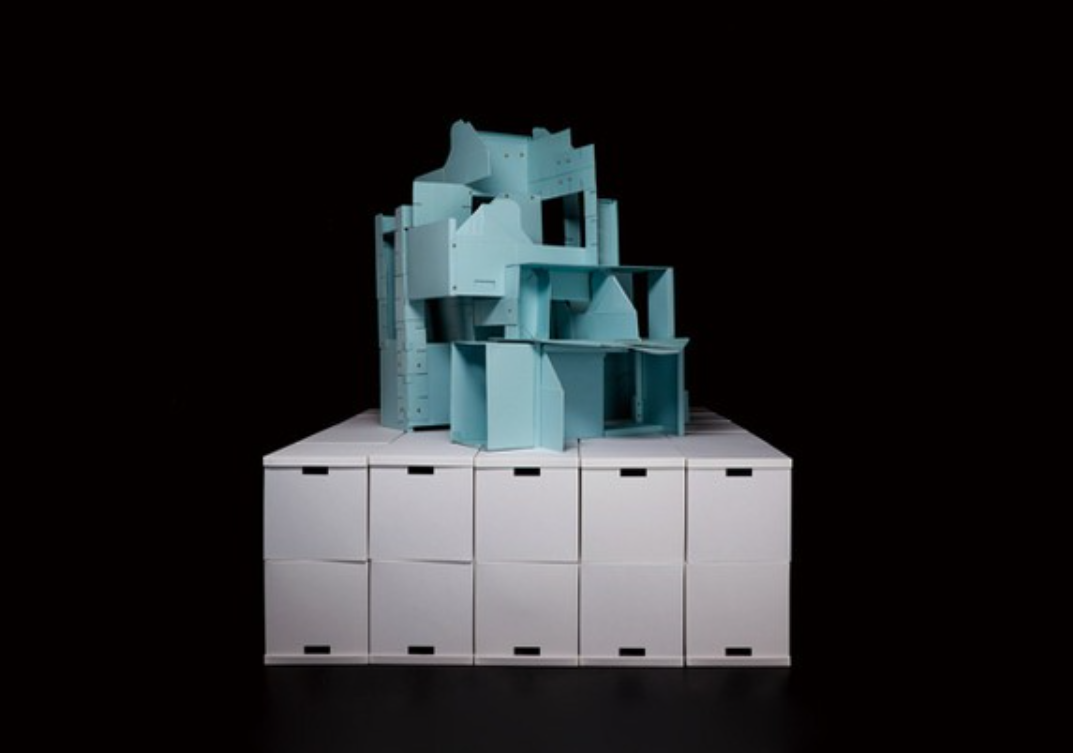
Around 2017, Choi began using IKEA furniture as material. IKEA reduces costs through a DIY policy in which customers assemble parts themselves. Choi attempted what he called DIY hacking, arbitrarily assembling IKEA furniture units rather than following the company’s instructions. At the time, he established four ‘self-rules’: ① the work must stand on its own; ② it must look different from every direction; ③ the level of finish must remain consistent from every viewpoint; and ④ the objects must not be reprocessed through cutting, bending, or other alterations.
In other words, volume and mass, heterogeneous and de-functionalized forms, sculptural finish, and an emphasis on the original material constituted the minimum conditions for transforming an object into sculpture. Moving across the boundaries between object and artwork, function and contemplation, figuration and abstraction, user and creator, Choi explored the conditions through which sculpture comes into being.
“Transforming objects into sculpture felt like liberating them, both formally and conceptually—as though I were changing the fate of an object destined to become furniture into that of an artwork. Looking back, I think I wanted objects to ‘self-generate,’ to develop a language of their own.”
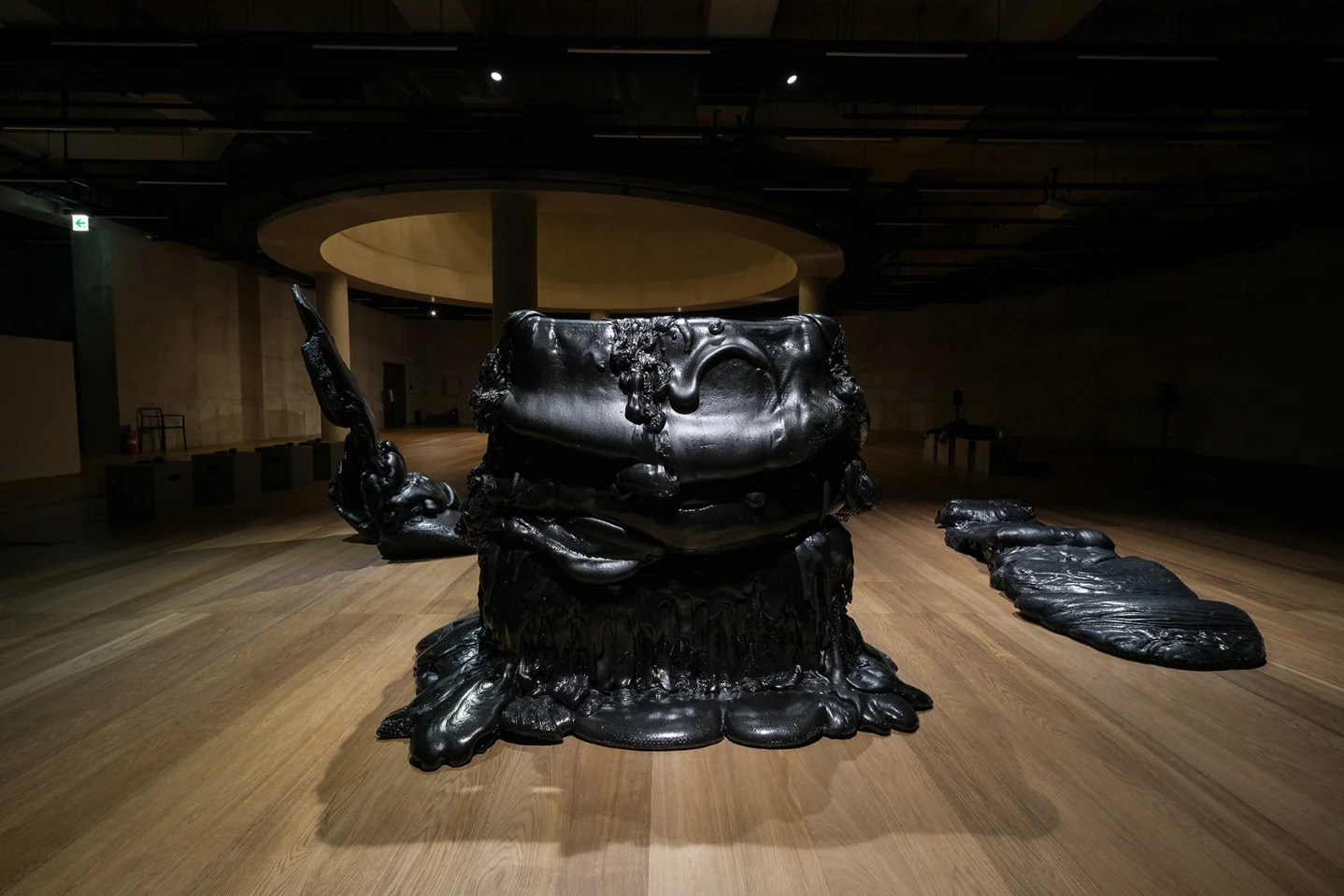
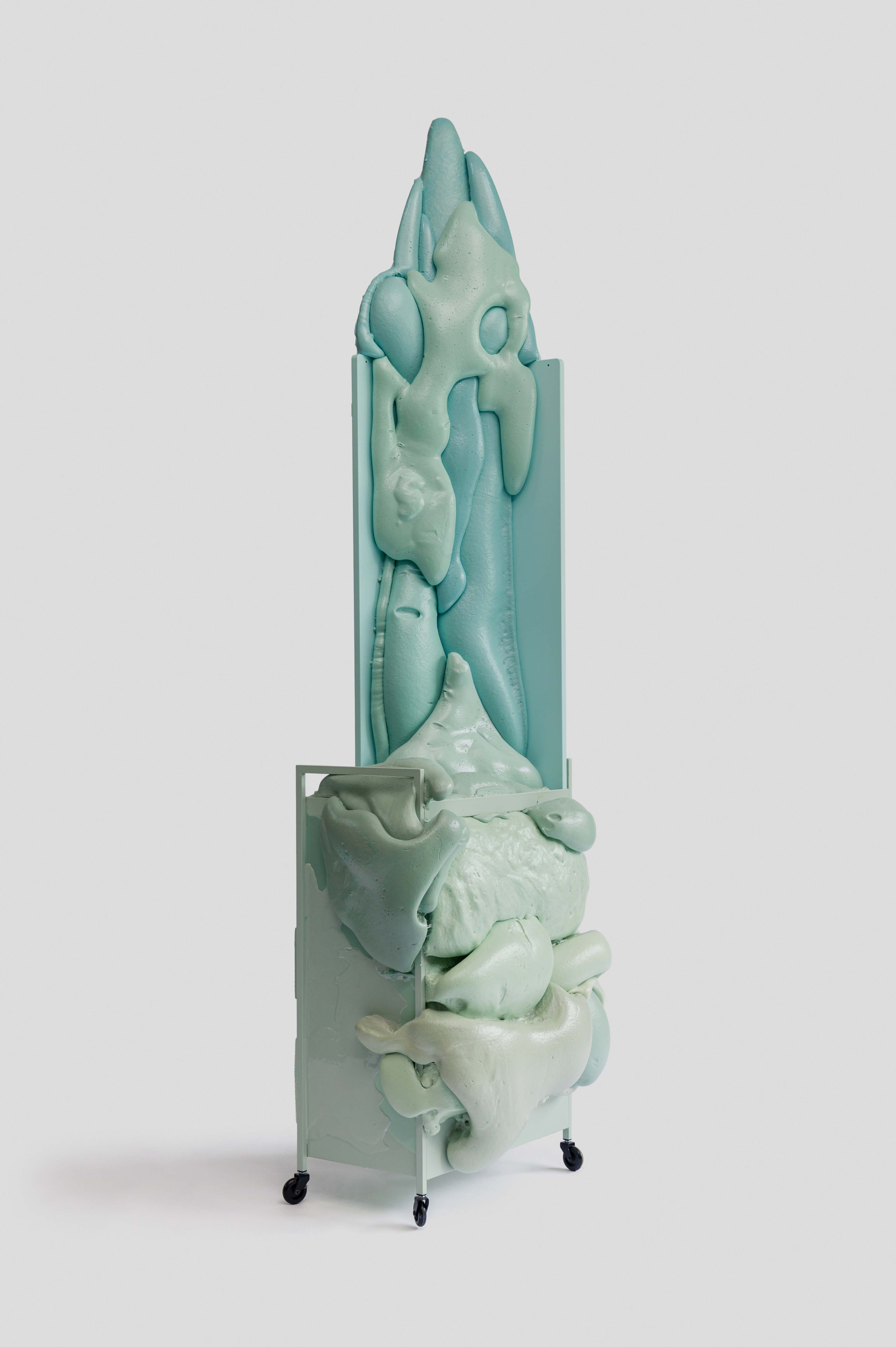
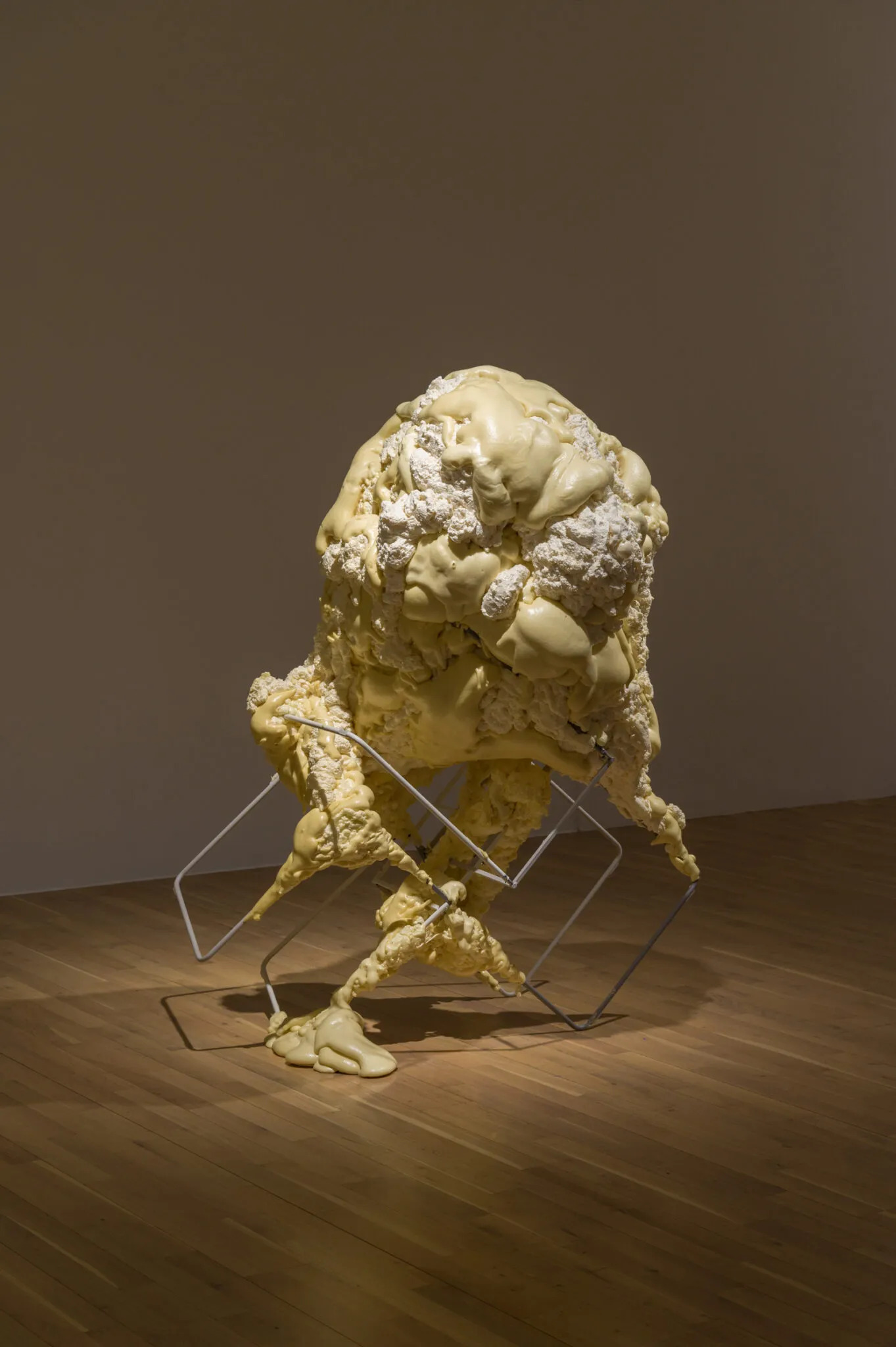
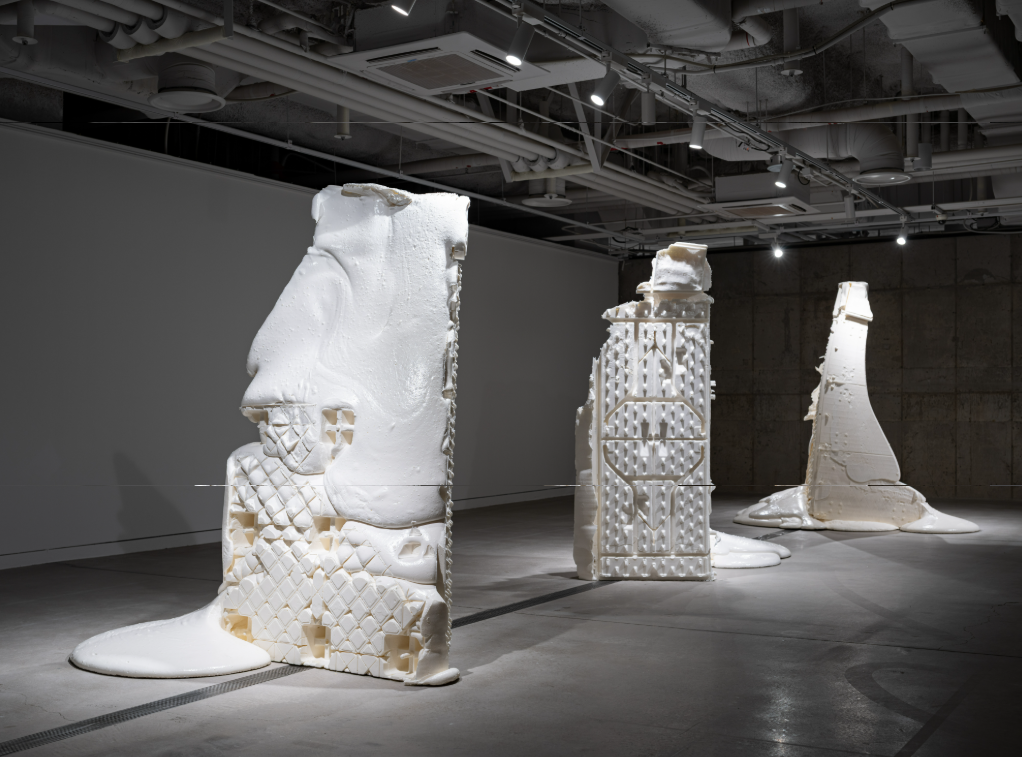
In 2021, Choi introduced architectural urethane foam as a primary material. What kind of struggle does the artist wage against this new substance? In fact, it is a ‘losing battle.’ From the moment urethane foam begins to expand, it rapidly swells, taking only about a minute to cure.
It is an ‘uncontrollable’ material whose final form can neither be anticipated nor deliberately directed. The artist has little choice but to wait for the material to take shape on its own. This is a significant departure from the logical sculptural method of his IKEA furniture series, in which he assembled DIY products according to self-imposed rules.
“Liquid urethane foam begins to harden while I am still mixing the raw materials and pigment. It proliferates uncontrollably and hardens however it wants. I have to work quickly in response. The contingent properties of urethane foam give it a kind of vitality. What matters in my work is not realizing a particular form, but the process itself.”
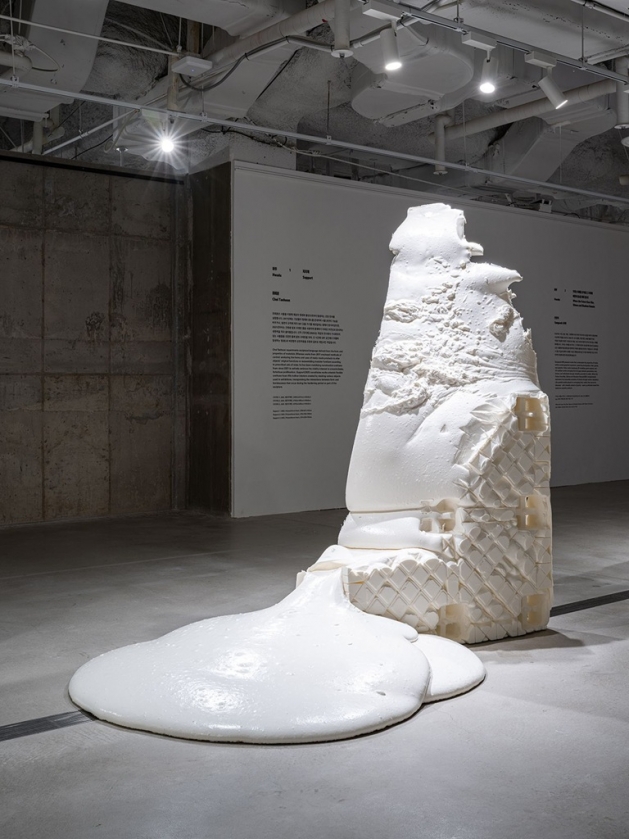
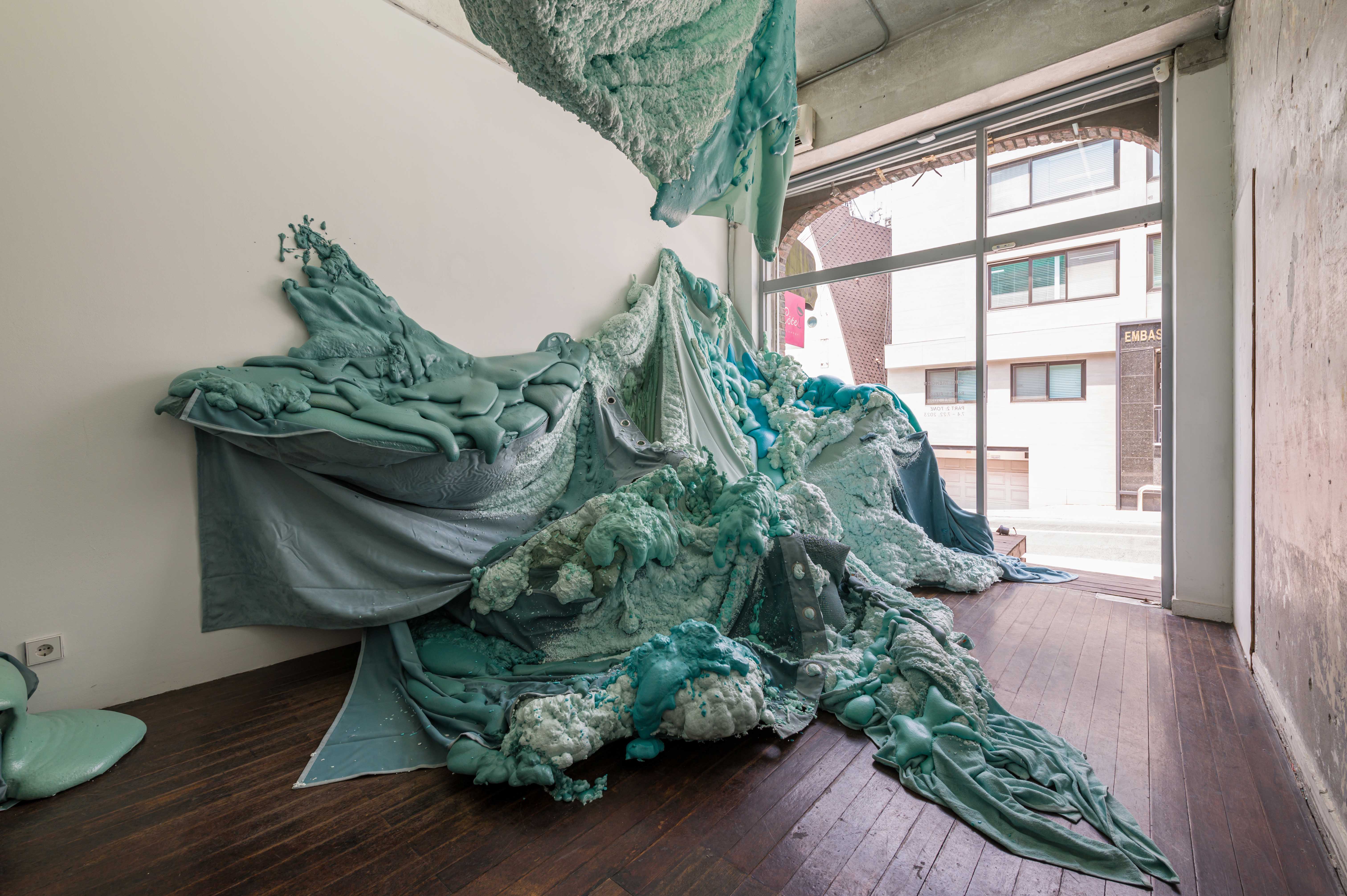
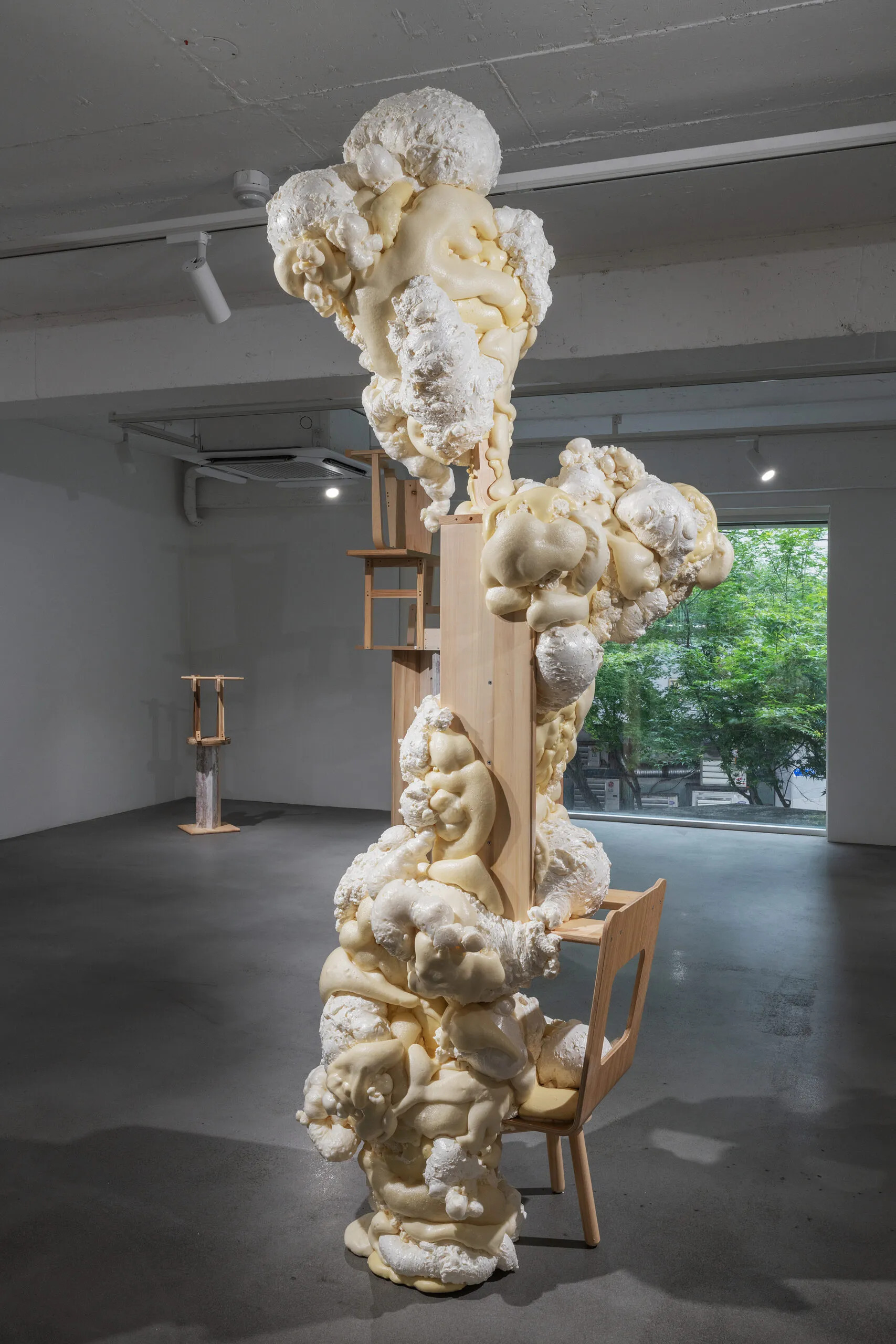
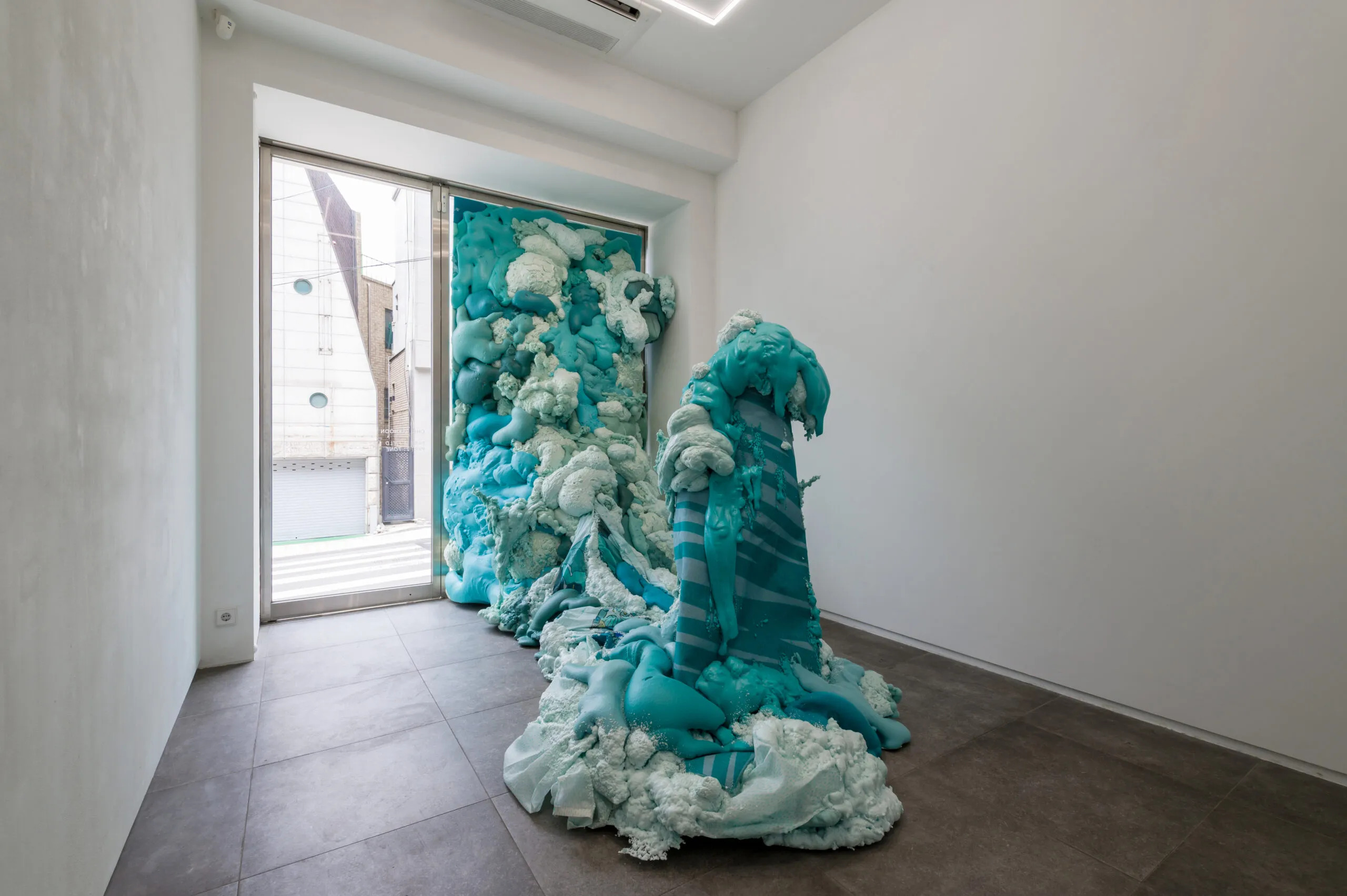
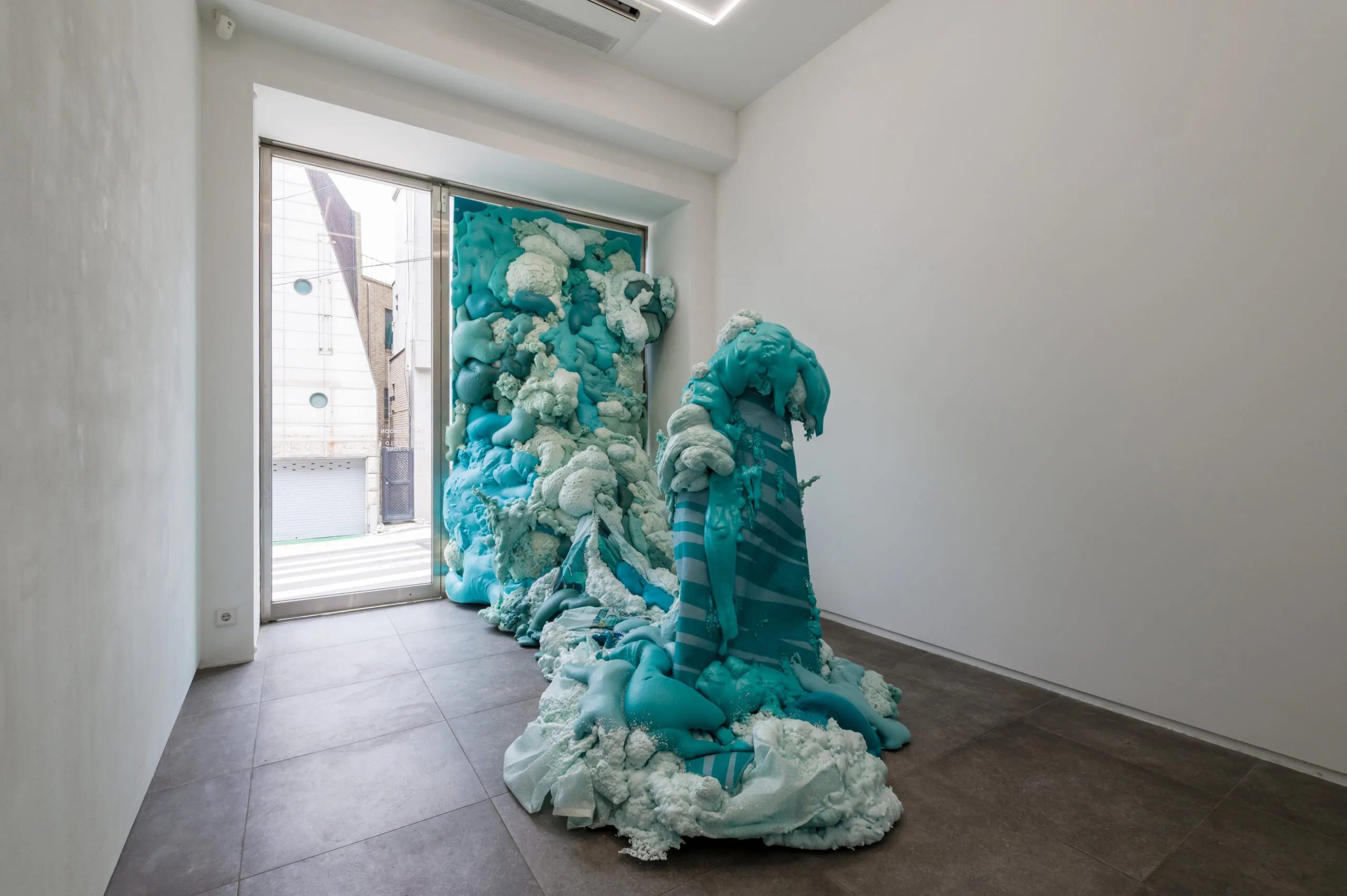
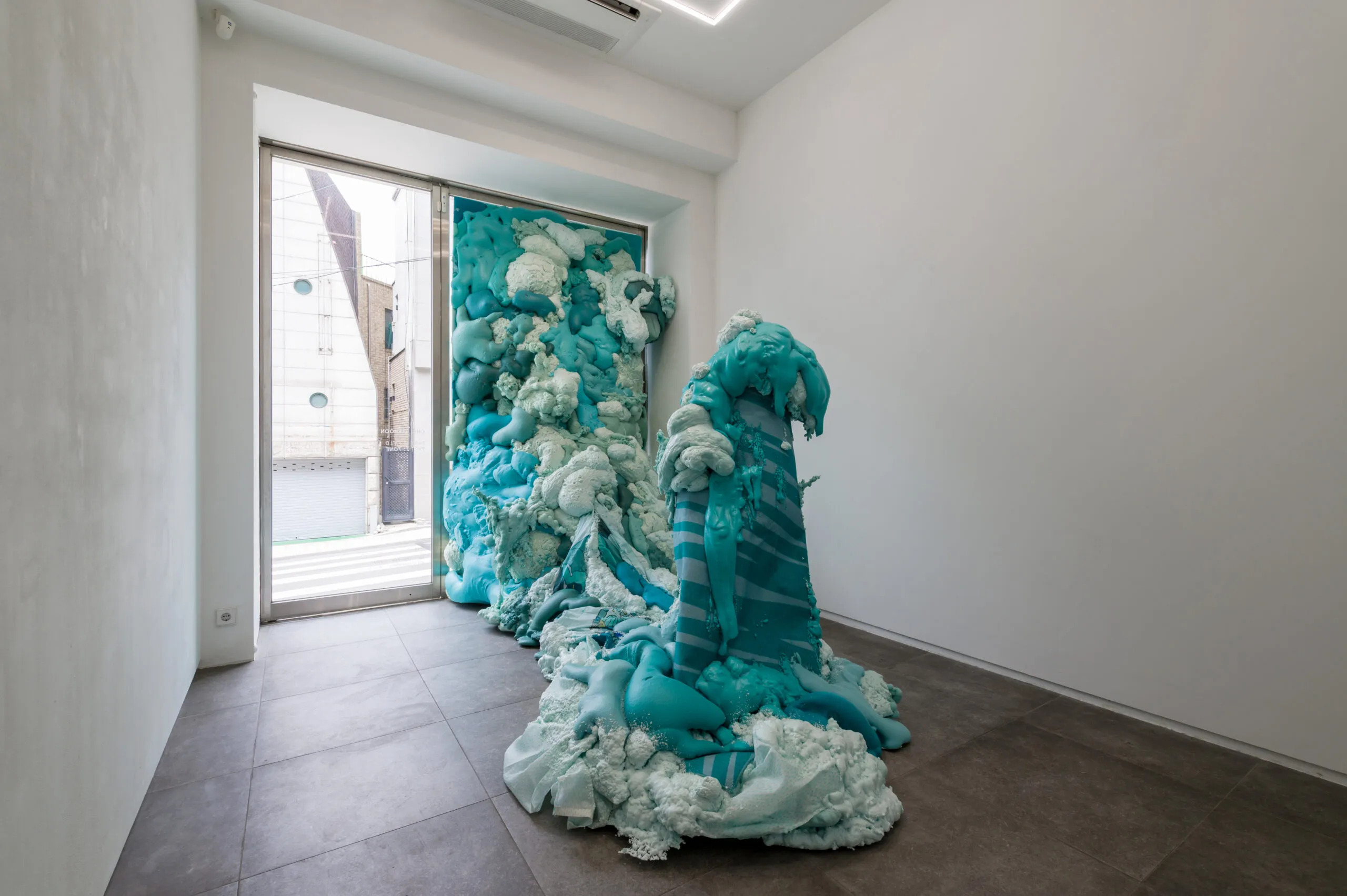
Choi named the series of works made from urethane foam ‘SAL.’ Here, ‘sal’ encompasses multiple meanings related to sculpture, including its framework (bar), surface (skin), and volume (mass). In 《FIELD》, Choi presented SAL(2023), in which urethane foam not only fills the exhibition space but appears to overflow beyond it. Although it may resemble a site-specific installation responding to its surroundings, the work in fact originates in the concept of modeling used to create figurative sculpture.
Choi conceived the two separate exhibition spaces at P21 as the armature used in modeling and poured copious amounts of urethane foam throughout them, much as clay is built up around a supporting rod. Drawing inspiration from the rope used to improve adhesion between layers of clay in modeling, he also employed IKEA textile products—including shower curtains, blankets, and bedding—as soft joints.
The exhibition space thereby becomes a kind of conceptual ‘figurative sculpture’ modeled from fabric and urethane foam, as well as a ‘spatial sculpture’ that incorporates empty air as material. If space itself becomes sculpture, then viewing it becomes an experience of entering the interior of a sculpture.
The decision to press flowing urethane foam directly against the floor-to-ceiling glass window of the P1 space was likewise intended to expose the sculpture’s cross-section. Moving between the interior and exterior of the gallery, viewers can experience both the inside and outside of the sculpture. “Sculpture may have stepped down from the pedestal and moved into space, nearly disappearing into history in the process, but I wanted to reinterpret space through a traditional technique and bring sculpture back into the field of art. That is why the exhibition is titled ‘FIELD.’”
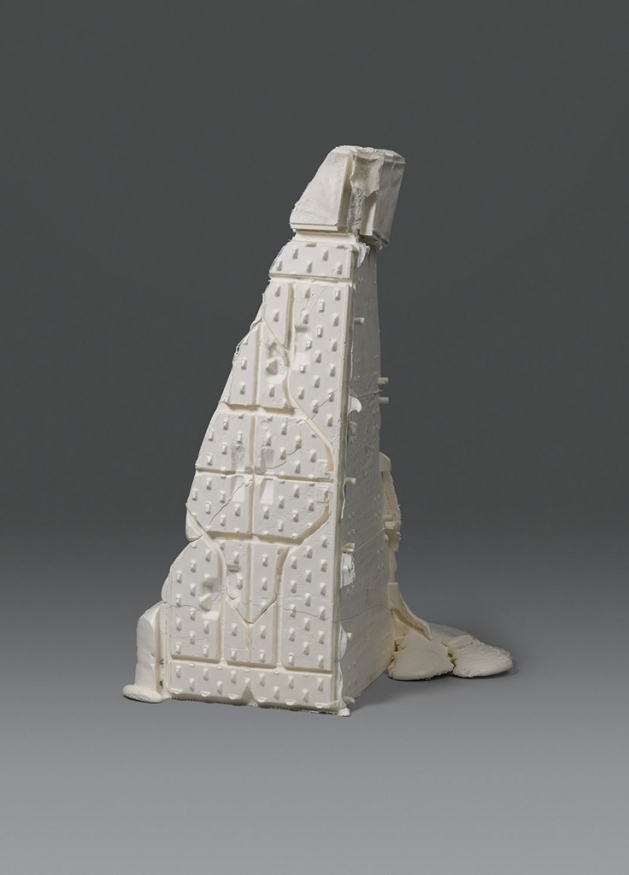
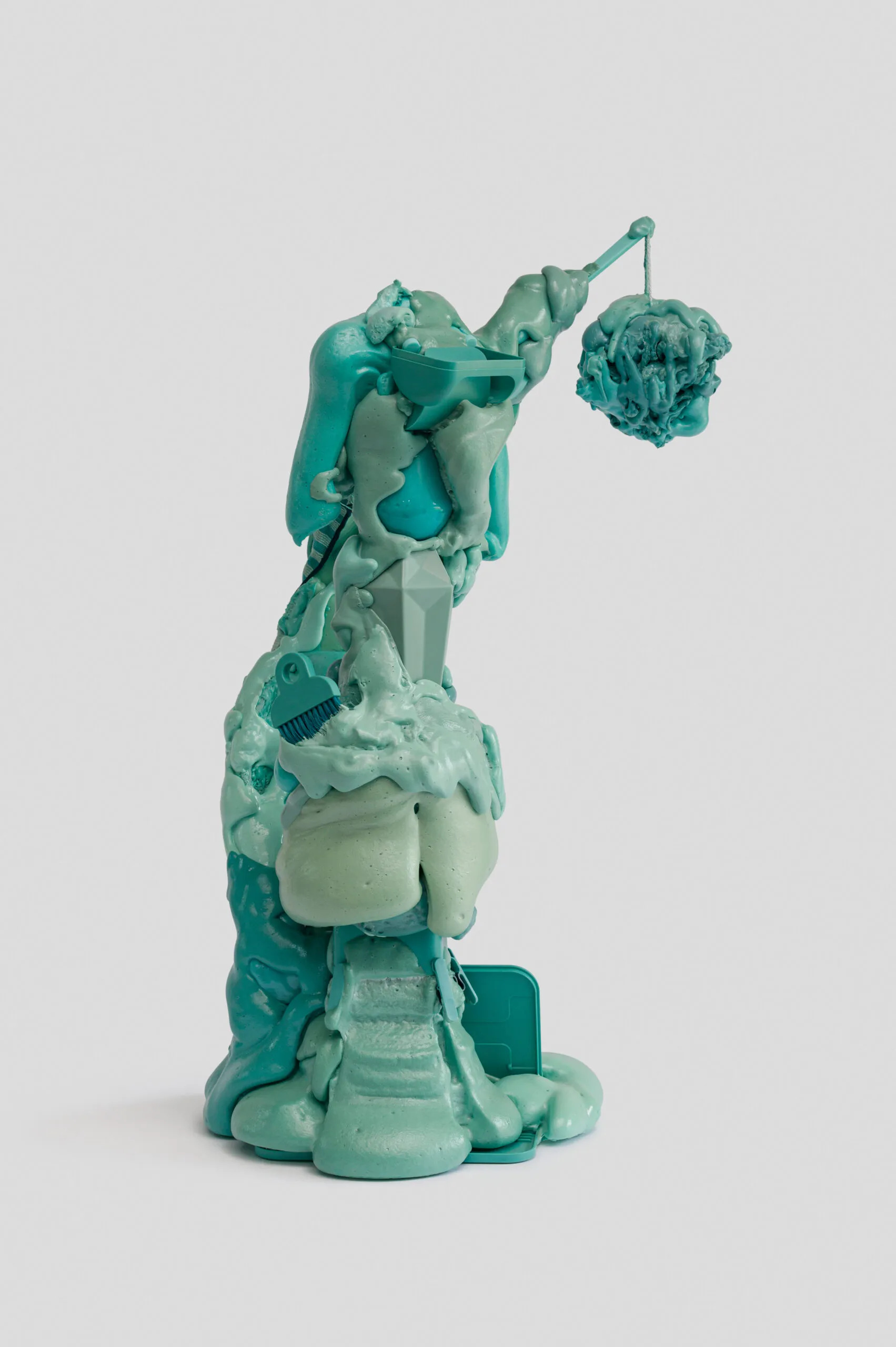
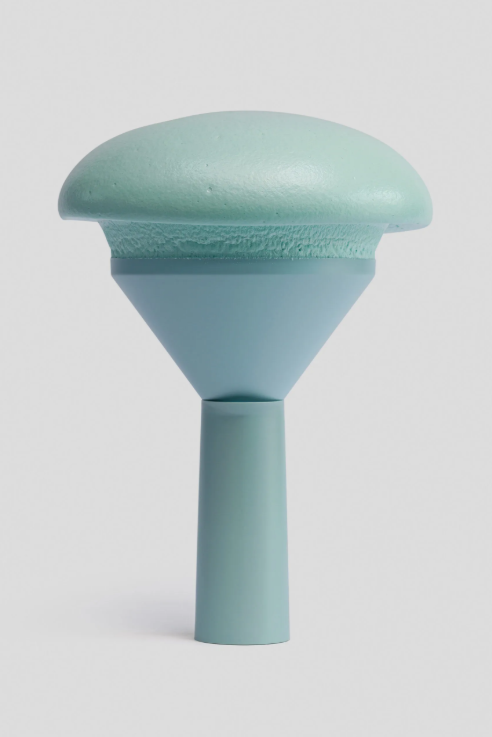
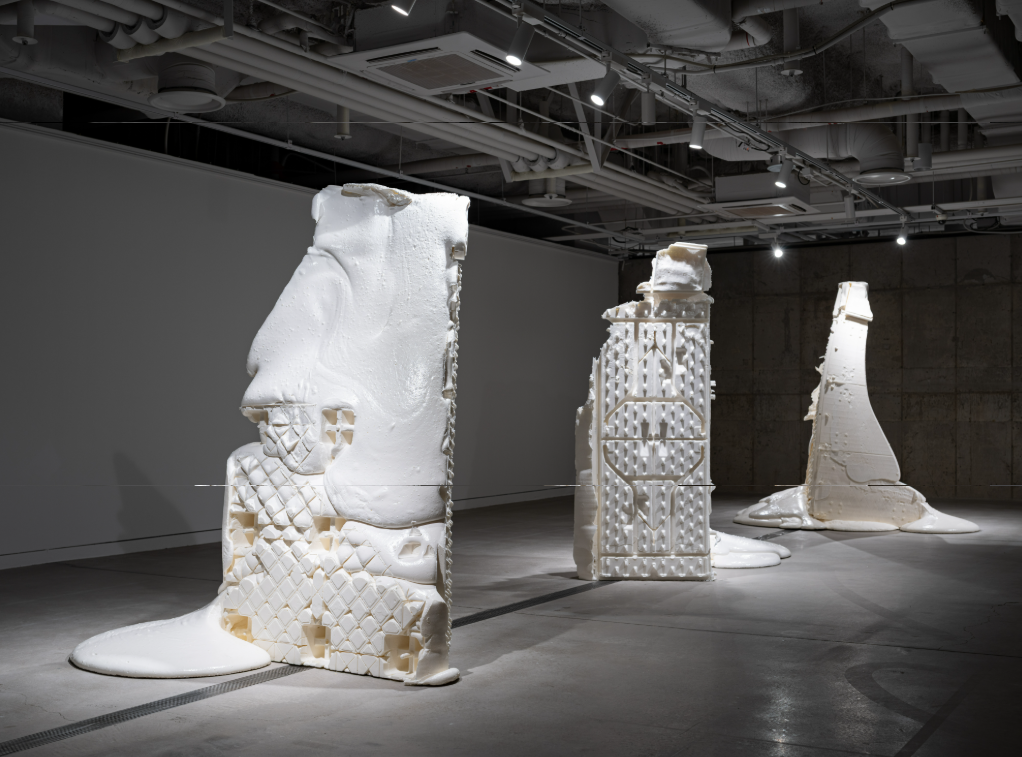
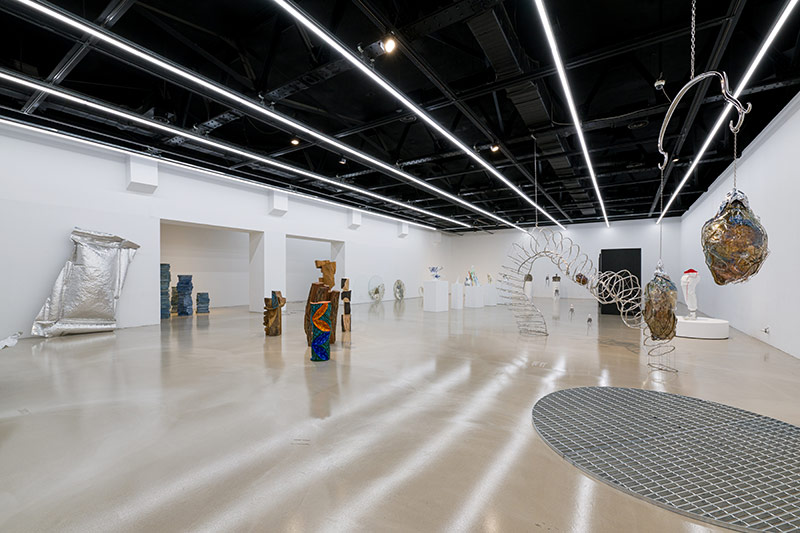
The second chapter of the two-part solo exhibition, 《TONE》(July 4-22), presented comparatively small-scale, freestanding sculptures. “In 《TONE》, the key ideas are ‘self-generation’ and ‘hybridity.’ I’m interested in the discordant back-and-forth created by things that have nothing in common yet somehow share a similar texture or tone.” Choi says that objects, too, have ‘families.’ For human convenience, objects are grouped into such categories as the ‘kitchen sink family’ or ‘bathroom shelf family.’
Previously, the artist often gathered IKEA product lines whose designs already resembled one another, as in Senna Composition, Skubb Composition, and Algot Composition. In 《TONE》, by contrast, objects with entirely unrelated functions but similar colors come together to form ‘alternative families.’ Objects that would never have met had they been sold and used according to their intended purposes now press their ‘flesh’ against one another, held together by the binding force of urethane foam.