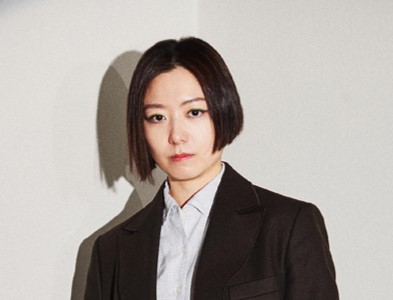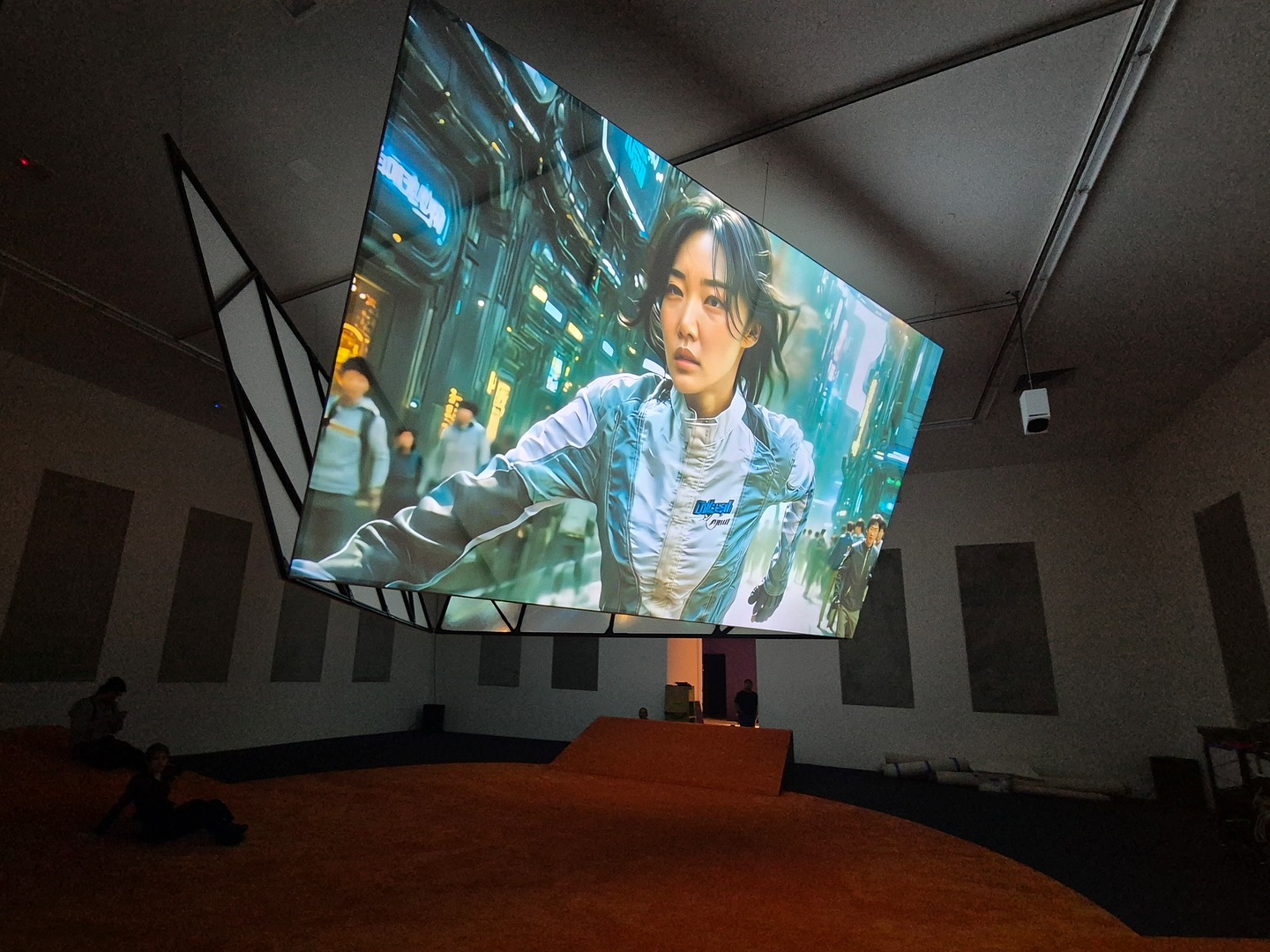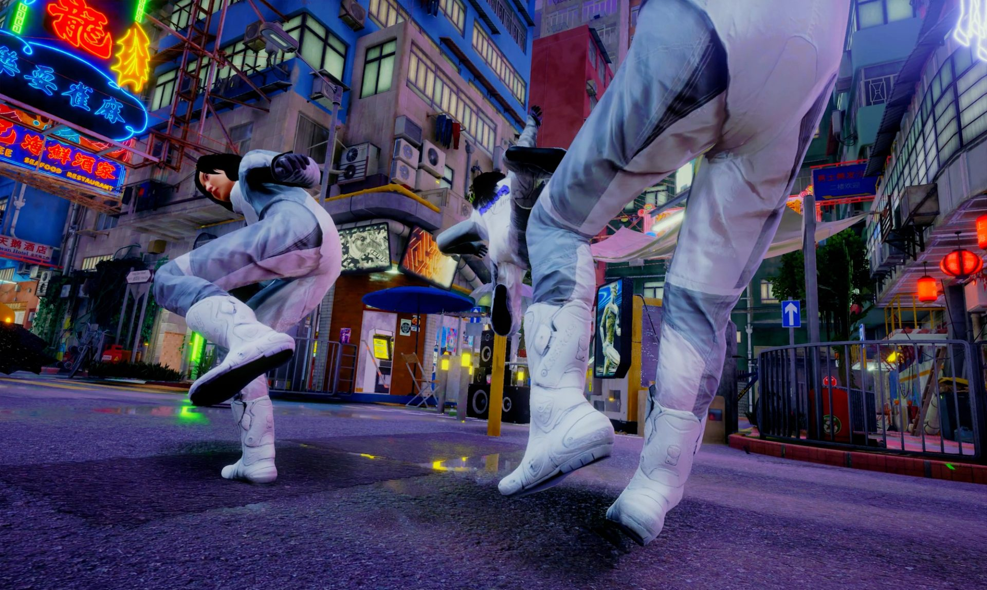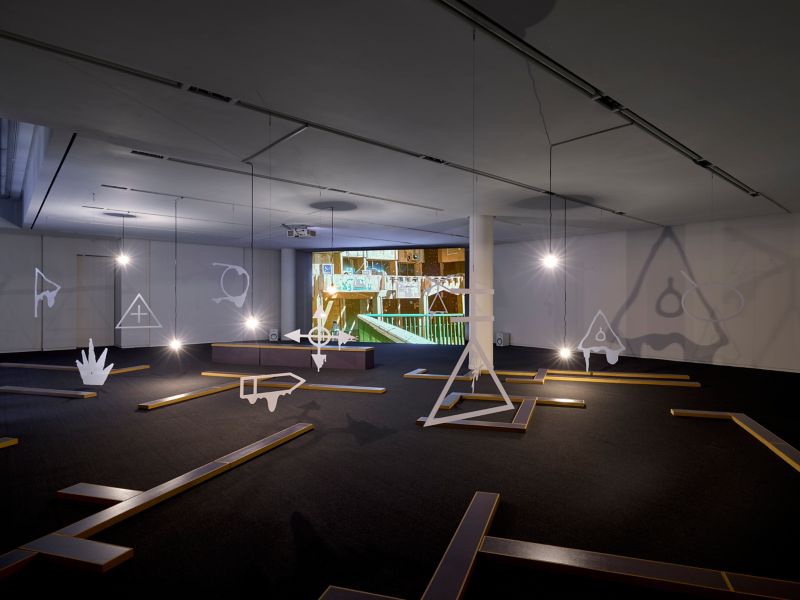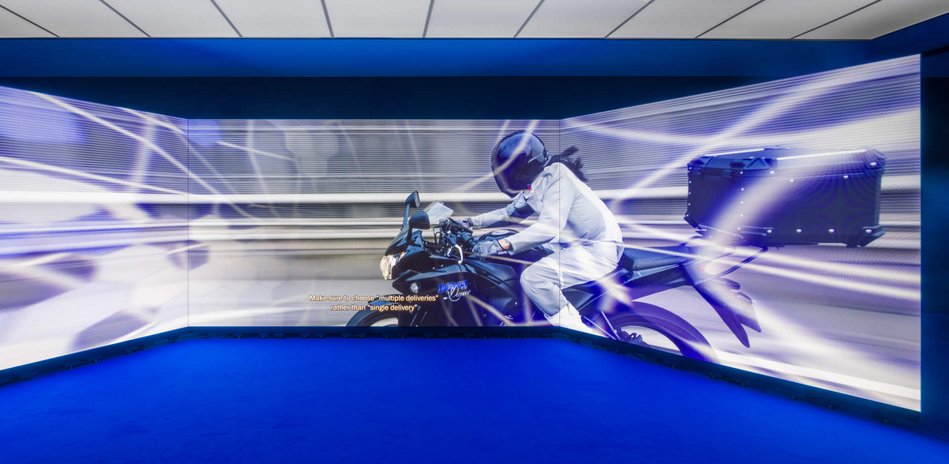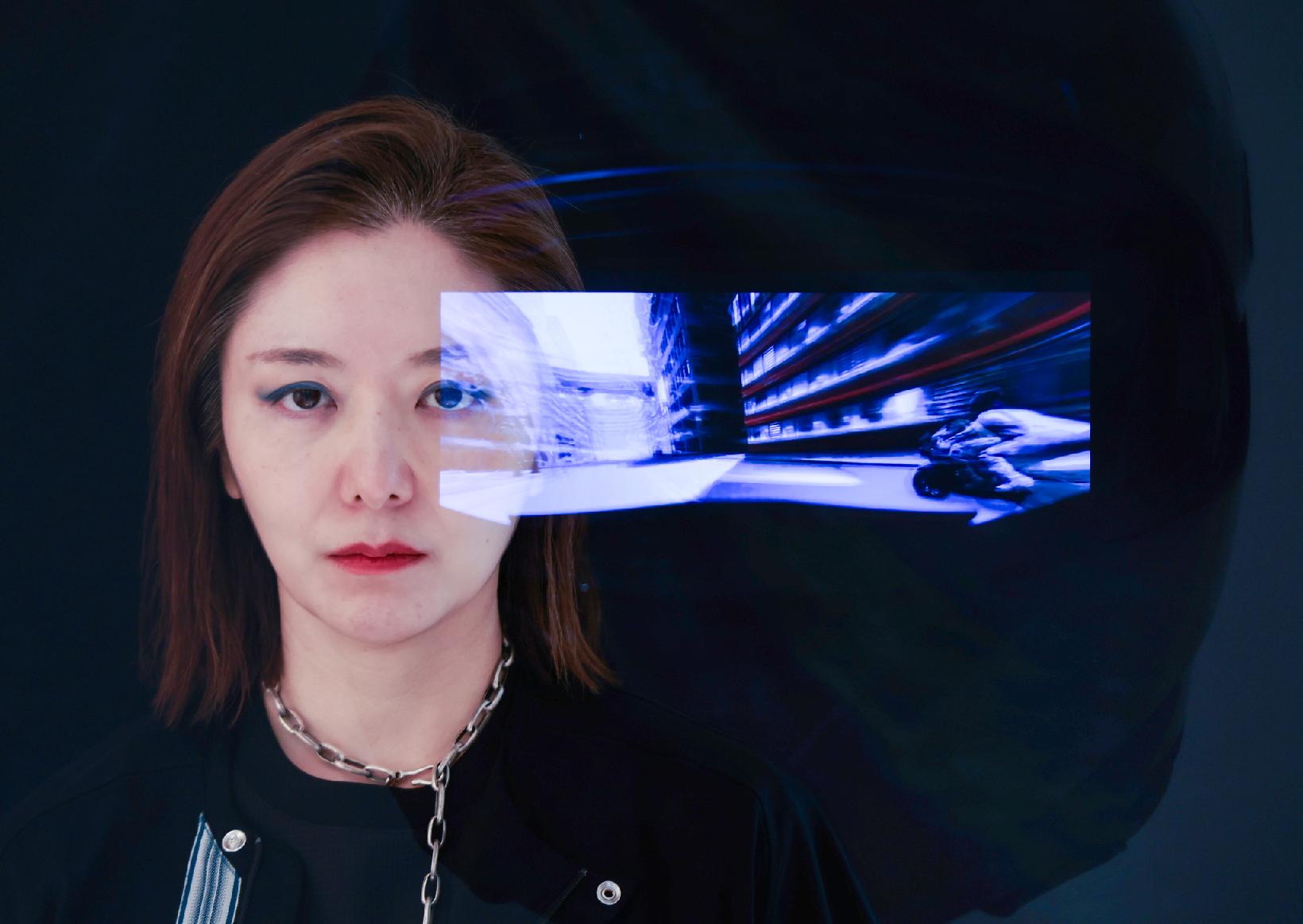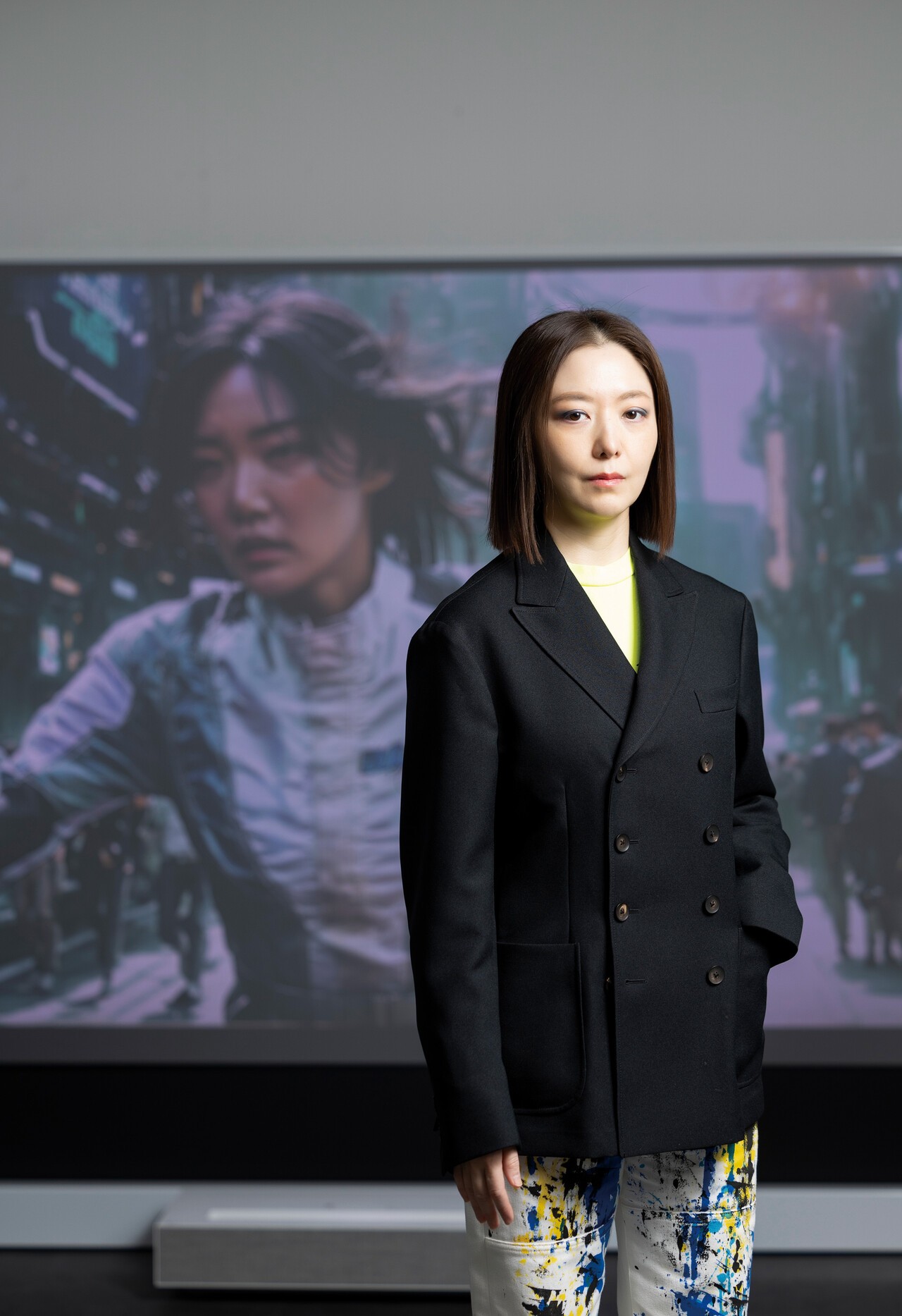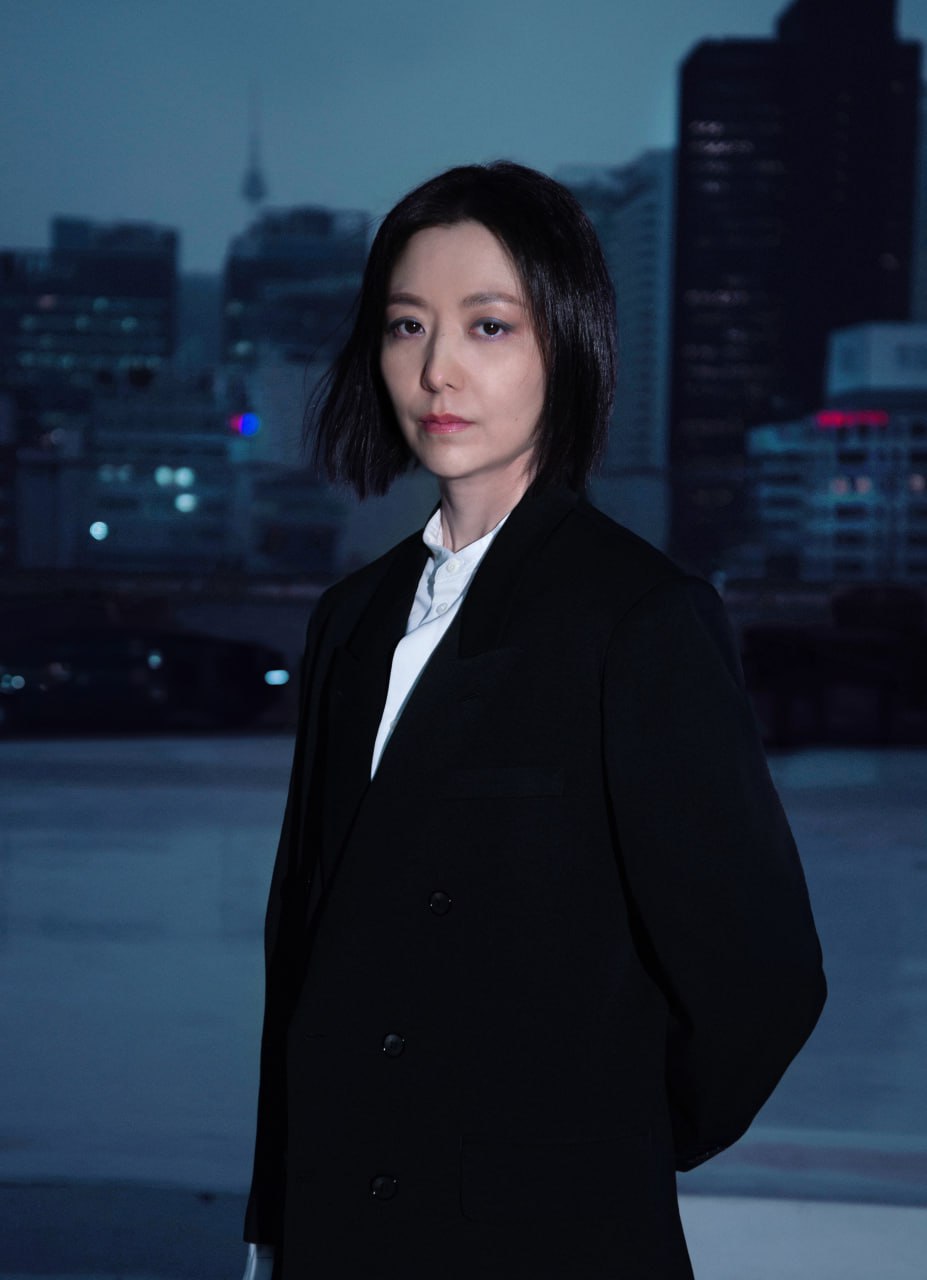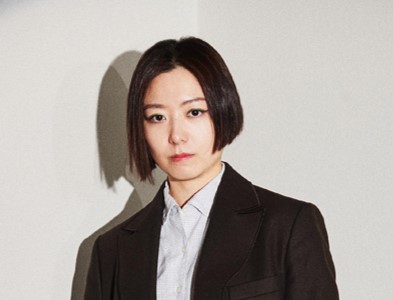


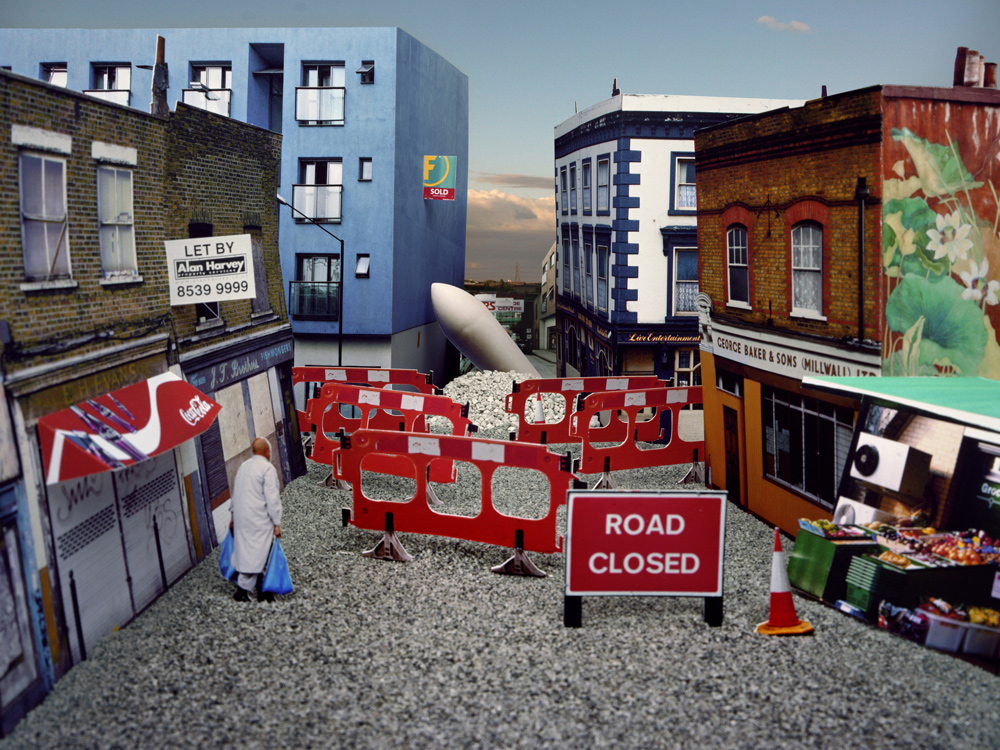
Ayoung Kim was born in Seoul and received her B.F.A. in Visual Communication Design from Kookmin University, Seoul, Korea. She then earned a B.A. (Honors) in Photography from London College of Communication (LCC), London, UK, graduating with First Class in Dissertation, and completed her M.A. in Fine Art at Chelsea College of Arts, London, UK. She currently lives in Seoul and is represented by Gallery Hyundai.
Political Art and Resistance Art – Minouk Lim vs. Sanghee Song vs.
Ayoung Kim

1. Deviant Political Art and Resistance Art
The 11th round of The Golden Phoenix invites
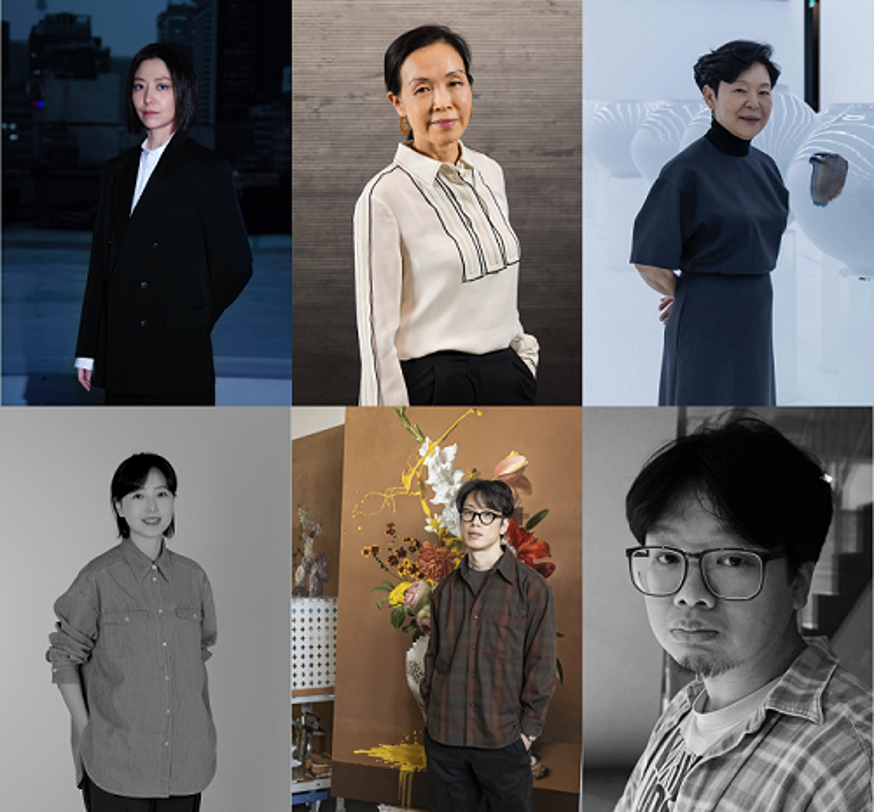
Minouk Lim (1968), Sanghee Song (1970), and Ayoung Kim (1979). These artists
engage in contemporary political art through critical reflections on modernist
progress ideologies and utopian constructs, while simultaneously continuing the
lineage of historical resistance art through multi-media practices deviating
from formalist modernism.
However, their political art is characterized by a
refined, non-political or post-political sensibility, and their sense of
resistance is aesthetically encoded through metaphor and paraphrase. Additionally,
they expand and deepen the realms of contemporary art and feminist art by
discursively and practically creating shared ground, focusing on cultural codes
of representation, gender, and difference.
2. Minouk Lim, ‘Bartleby Within Me’
Minouk Lim: The Aesthetics of Contemplation and Bypassing
Resistance through Weakness and Idleness
Turning Attention to the History of Concealed Existences
Minouk Lim's socio-political consciousness and critical stance
towards the times stem from her everyday life and existential experiences.
Consequently, her intensely serious artistic world resonates with human warmth
and sensory vibrations. This magnetic pull or human appeal is deeply connected
to her contemplative, questioning mindset that lays bare issues without
asserting clear-cut conclusions, choosing instead to mull over them
thoughtfully. From her unavoidable hesitation emerges a distanced contemplation
and the aesthetics of bypassing, allowing latent political consciousness to
surface.
Identifying with ‘Bartleby’ from Herman Melville's novel (Bartleby,
the Scrivener), Lim becomes another Bartleby who substitutes
resistance and refusal with powerlessness, thus transcending politics to become
a leap-forward political artist.
Minouk Lim’s artistic career began in the mid-1990s to mid-2000s
with the Pijin Collective, a collaboration with Fredric
Michon. Her early works, including the provocative Social Meat (1999),
were marked by rebellious activism. From 2005 to 2010, a prolific period in her
career, she focused on the harmful effects of Korea's accelerated construction
boom and new town culture under neoliberalism. Through poetic and narrative
documentaries, she explored themes of modernization and uniformity.
New Town Ghost (2005) was the precursor to
this era. In this work, a two-member street band consisting of a rapper and a
drummer rides a mobile stage truck around the bustling Yeongdeungpo Market
area, singing about the contrasting fortunes brought by new town developments.
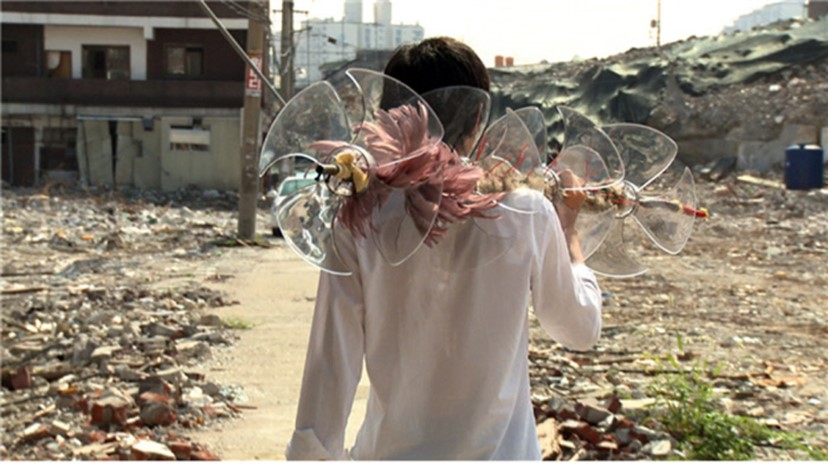
In Portable Keeper (2009), set in Moraenae Market,
a lethargic young man carrying useless rods made from discarded items, such as
fan blades and faux fur, wanders through the market ruins and construction
sites. His presence contrasts with the rapper's vitality, embodying Bartleby’s
resistance through apathy and idleness.
S.O.S. - Adopted Discrepancy (2009)
and The Weight of Hands (2010) are key works from
this period that emphasize theatricality and cinematic elements. In S.O.S.,
a cruise carrying passengers/viewers passes through three episodes
sequentially:
1. A protest by youths shouting, "Leave the nameless things
alone,"
2. A couple wandering in search of seclusion,
3. A long-term prisoner’s solitary monologue rejecting conversion.
Meanwhile, a searchlight mounted on the ship illuminates the
unvarnished reality of the developing Han River banks. In The
Weight of Hands, Lim experiments with perceptual disruptions using
jump cuts. A group of people disembark from a tourist bus and explore
construction sites along the rainy Han River, following a mysterious figure
playing a drum. Inside the bus, mournful passengers pass along the limp body of
a woman singing a sorrowful farewell. Images of flowing liquids—river water,
rain, and the woman's tears—are captured using infrared thermography,
transforming them into sensuous fields of temperature and color. By visualizing
the weight of the invisible through luminous hues, Lim resurrects the erased
memories of the Han River, once celebrated as a symbol of economic miracle.
Since the 2010s, Lim has shifted her focus to the hidden histories
within sensitive political and social issues, such as division, diaspora, war,
and violence. Her works from this period involve montage videos that
reinterpret political events by appropriating broadcast footage, differing from
her earlier staged videos.
In The Possibility of Half (2012),
she juxtaposes the funerals of South Korea’s Park Chung-hee and North Korea’s
Kim Jong-il, along with the mirrored images of mourning citizens from both
countries. By cross-editing these scenes, Lim envisions a future where the two
streams of tears, divided by ideology, might connect, imagining the possibility
of reconciliation.
Promise of If (2015) reexamines the 1983
live TV program Finding Dispersed Families, which
captivated the entire nation. The work captures the suspended moments of hope,
despair, and reunion experienced by separated families, reinterpreting this
historical event through video and installation art.
In Navigation ID (2014), Lim summoned
collective memory and historical catastrophe by relocating a container storing
the remains of civilian massacre victims from the Korean War to the forecourt
of the Gwangju Biennale. The mourners were greeted by mothers of the victims of
the May 18 Gwangju Uprising, connecting those who lost parents in the 1950s
with those who lost children in the 1980s. This poignant performance condensed
30 years of history into a visceral, life-affirming event, showcasing Minouk
Lim’s distinctive aesthetics of mourning.
3. Sanghee Song, ‘Come Back Alive, Baby’
Sanghee Song, Come Back Alive, Baby , 2017
© Sanghee Song
Sanghee Song: Focusing on Fearful Tragedies
Uncovering Psychological Trauma and Calling Spirits
Finding Hope Amidst Apocalyptic Situations
Sanghee Song examines the symptoms of modernity and modernism,
revealing the human oppression internalized by these systems, while
simultaneously uncovering the psychological trauma etched like a stigma. As a
feminist who challenges patriarchal structures and phallocentric subjects, she
critically examines the violence inflicted upon historical victims, the
oppressed, marginalized women, minorities, and subalterns positioned outside of
power structures. Her work delves into the terrifyingly tragic histories of
catastrophic massacres and enforced sexual labor, functioning as a critique of
systems, institutions, and civilization itself.
Sanghee Song's early works are characterized by feminist satire
that addresses the realities imposed upon women by patriarchal destiny.
In Correctional Devices for Success (2001)
and Gestures to Become a Good Daughter (2001), she
parodies the disciplining of the female body to conform to the ideals of
lady-like behavior and the fantasy of being the perfect daughter. She further
explores the multifaceted identities of women through a series of staged
photographs where she herself becomes the model.
In Floor
Cleaning (2002), she rolls on the floor, wrapped tightly in
double-sided tape, collecting dust from every corner of the house, representing
the domestic female. In Dongducheon (2005), she
portrays a woman in the red-light district of Dongducheon, living a life
alienated by enforced silence, symbolizing women marginalized by social
conventions. A smiling bus conductor with a prosthetic arm, photographed at the
pier of Wolmido, symbolizes the submissive woman tamed by patriarchal norms.
After settling in Amsterdam in 2006, Sanghee Song expanded her
thematic concerns beyond the self and gender to encompass global issues,
broadening her cultural perspective within European society. This shift marked
a significant transformation in her artistic world, characterized by a
comprehensive use of mixed media, including drawing, text, sound, and video.
Notably, her work began to be underpinned by extensive research involving
on-site investigation, data collection, and analytical study, leading to larger-scale
projects with evolved content and form.
Metamorphoses, Book XVI (2009) symbolizes
this transformation. An ambitious creative work, it serves as the final volume
of Ovid's Metamorphoses, metaphorically narrating
evolutionary transformations of primordial creatures through tales of gods and
humans, love, desire, betrayal, and revenge. Set against the backdrop of
ancient mythology, Song portrays tragic love stories among imaginary marine
creatures, humans, dinosaurs, and whales. By depicting apocalyptic love stories
that ultimately end in catastrophe, she warns against ecological destruction
caused by petro-capitalism and state power, highlighting humanity’s arrogance
and ignorance that could lead to the earth's demise. This eschatological
narrative is softened by the artist's delicate pencil animations and poetic
narration.
Byeon Gang-soe-ga: In Search of a Person 2016 (2015–2016)
is a video installation inspired by the Korean folktale of Byeon Gang-soe and
Ong-nyeo. The legend of wandering souls—Byeon Gang-soe, the cursed Ong-nyeo,
shamans, musicians, and beggars expelled from society—is interwoven with video
sketches and interviews of war prisoners and surviving comfort women who
continue to live marginalized lives.
This juxtaposition transforms the
narrative into an epic saga that transcends time. As exemplified by Shoes (2011),
which re-enacted the 1983 KAL flight incident with abandoned shoes floating
eerily on the waters of Sakhalin, Sanghee Song mourns innocent deaths through a
ritualistic invocation of spirits, archiving tragic maritime events such as the
Sewol Ferry disaster and the Mediterranean refugee crisis using video and text.
Come Back Alive, Baby (2017), presented as
her winning piece for the Korea Artist Prize at the National Museum
of Modern and Contemporary Art, stands as the culmination of Sanghee Song's
artistic prowess. This comprehensive video installation expands on-site exploration
and research, deepens the political narrative, and elevates aesthetic
expression. It creates a multisensory montage environment through archival
films, documentary photographs and videos, pencil drawings, text, and sound.
Filmed at concentration camps in Germany and Poland, World War II
bunkers in the Netherlands, and nuclear power plants in Korea and abroad, the
video footage is displayed across three large screens. Viewers are confronted
with the fall of reason and morality, as testified by scenes of nuclear
warfare, Auschwitz's mass extermination, the murder of refugees escaping by
sea, and human experiments at baby farms.
However, Sanghee Song finds hope amidst these apocalyptic scenes
by incorporating the Korean folktale of the Baby Warrior.
Twice killed by parents and the state but ultimately resurrected, the baby’s
supernatural power is interpreted as a possibility for salvation after the end
of the world. Through this déjà vu-like narrative, Sanghee Song envisions
feminine healing and peace, discovering humanistic motherhood that yearns for
renewal and reconciliation.
4. Ayoung Kim’s ‘Speculative Fiction’
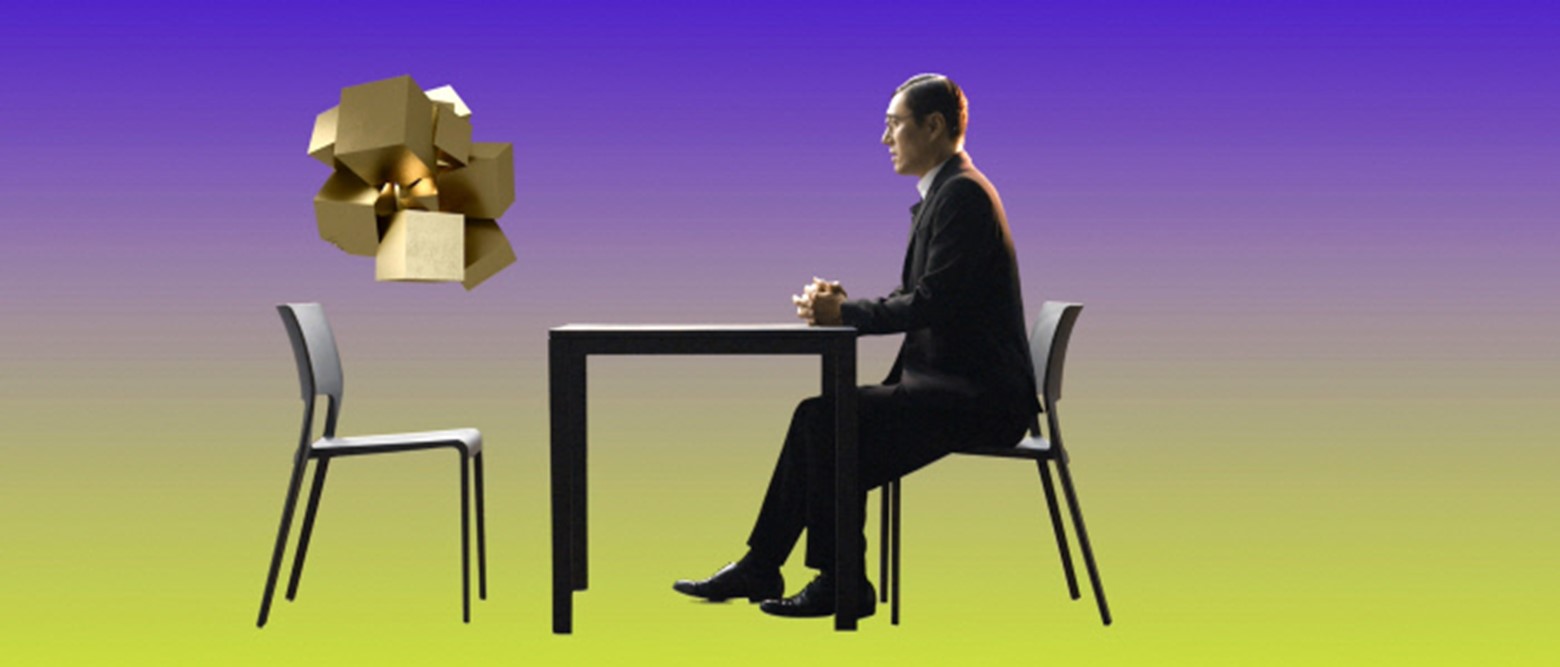
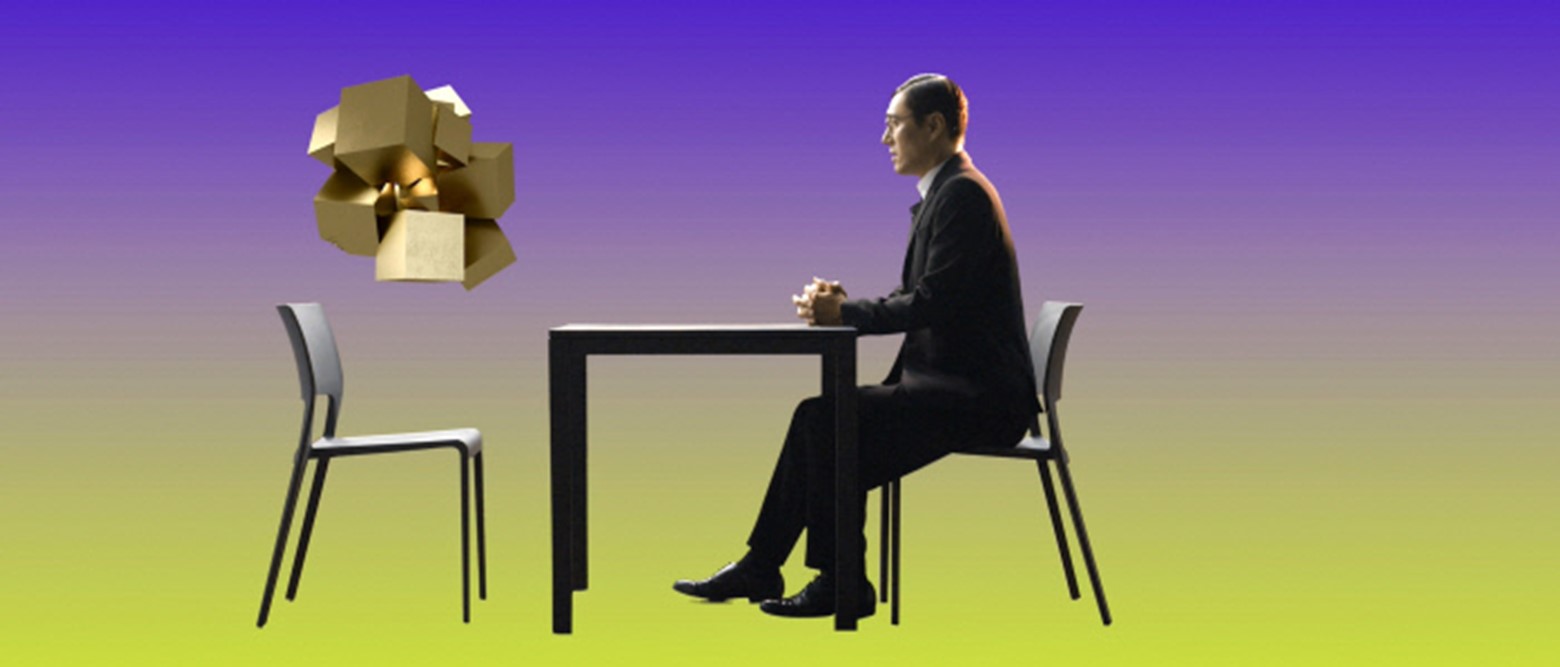
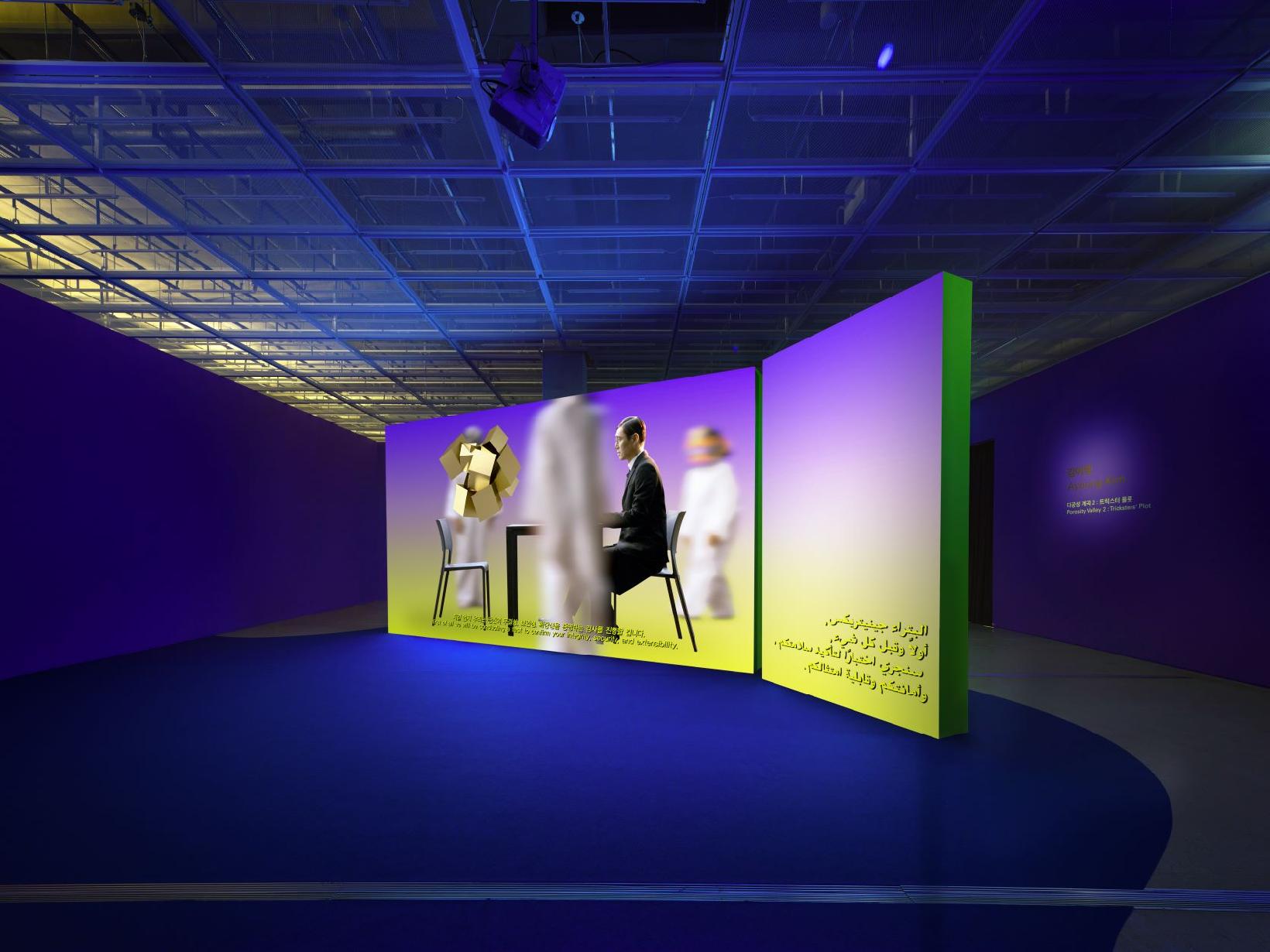
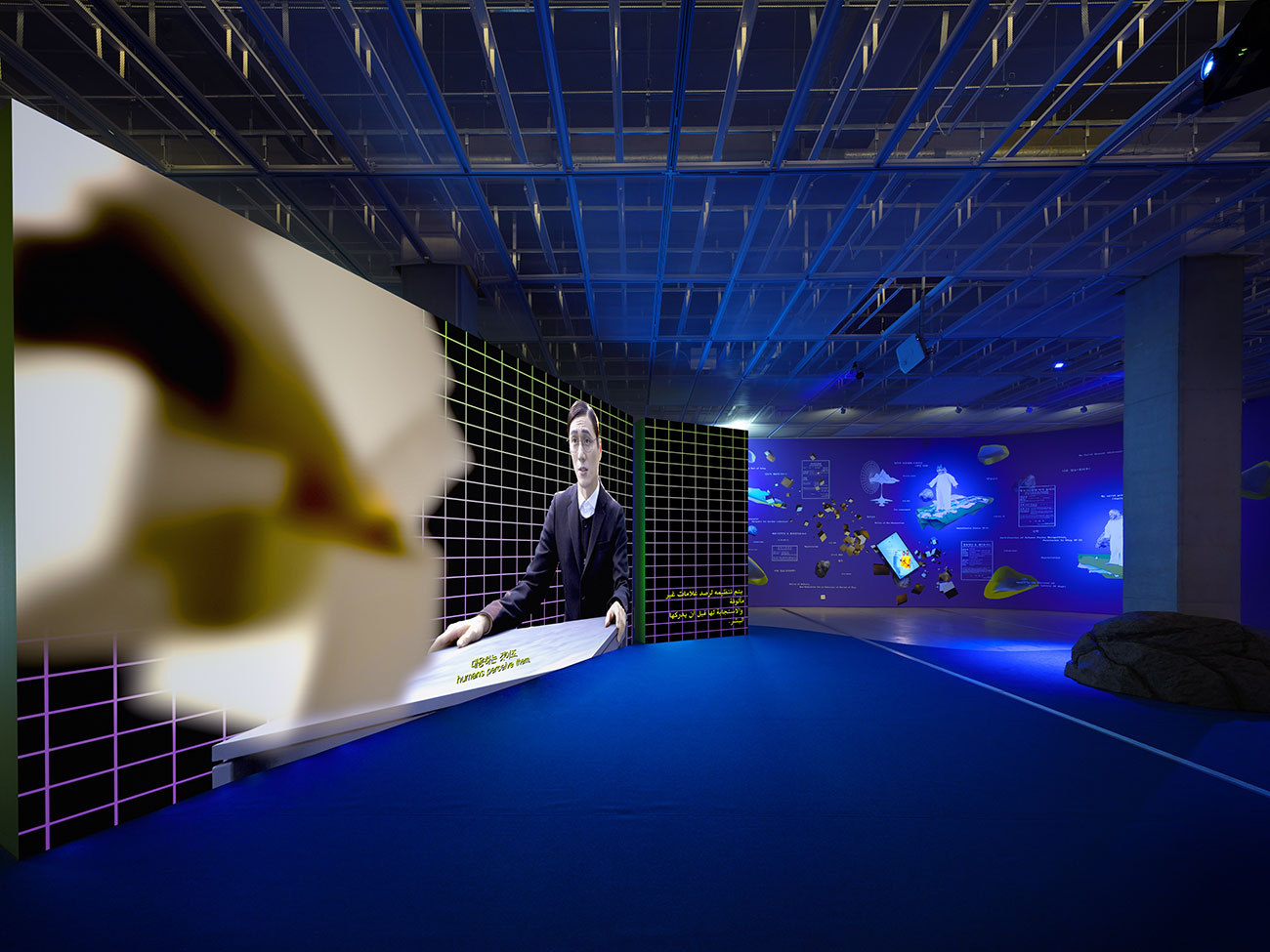
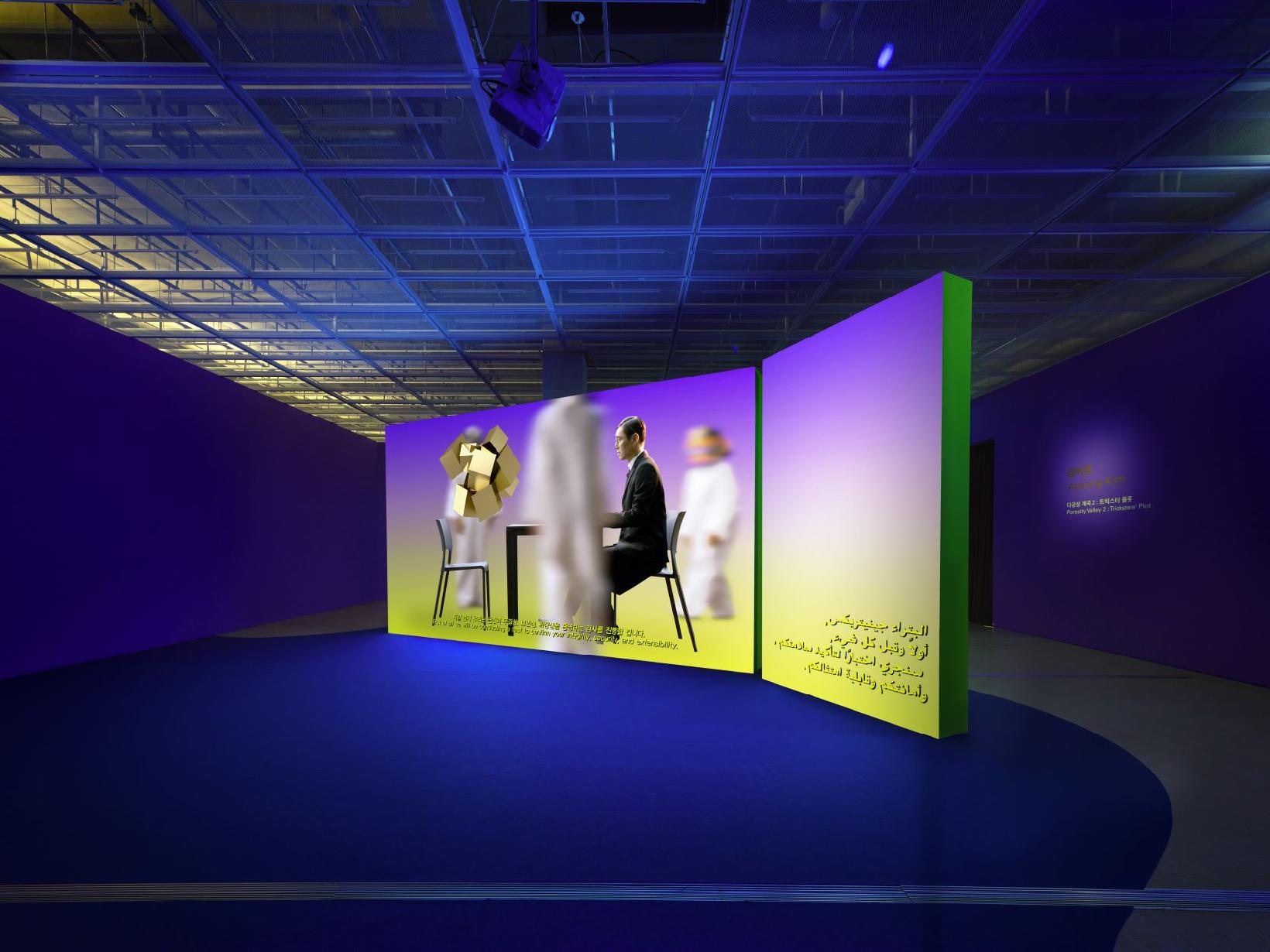
Ayoung Kim, Porosity Valley 2: Trickster Plot (2019,
2-Channel Video, 23 min 4 sec) © Ayoung Kim
Ayoung Kim: Between Fiction and Nonfiction
Mapping within Global Contexts
Evoking Contemporary Issues and Critiquing Civilization
Ayoung Kim examines historical events, both significant and
anecdotal, from modern and contemporary Korean history within the context of
global dynamics, mapping their interconnectedness through a unique cartographic
practice. Her mapping projects are interpreted as "mental maps"
translating psychological processes or as "speculative maps"
constructed using dialectical reasoning.
These projects stem from her acute
awareness of specific issues related to territorial imperialism, multinational
capitalism, and neo-colonialism. By gathering relevant data and reworking it
through artistic techniques like montage and bricolage, she creates hybrid
music-dramas or videos that blend sound, text, and performance. This process
results in a fragmented and disjointed form of "speculative fiction,"
where fiction and fact, virtuality and reality, past and present, are
interwoven.
Since transitioning from photography to video in 2010, Ayoung Kim
has focused on reflecting and critiquing the myths of utopia during modernity
and their underlying symptoms of imperialist and colonialist ruptures. By
tracing the fluid phenomena of modern liquid civilization—characterized by
conflicts, assimilation, and transplantation between civilizations—she
initially focused on physical modes of transportation such as steamships,
trains, and railways.
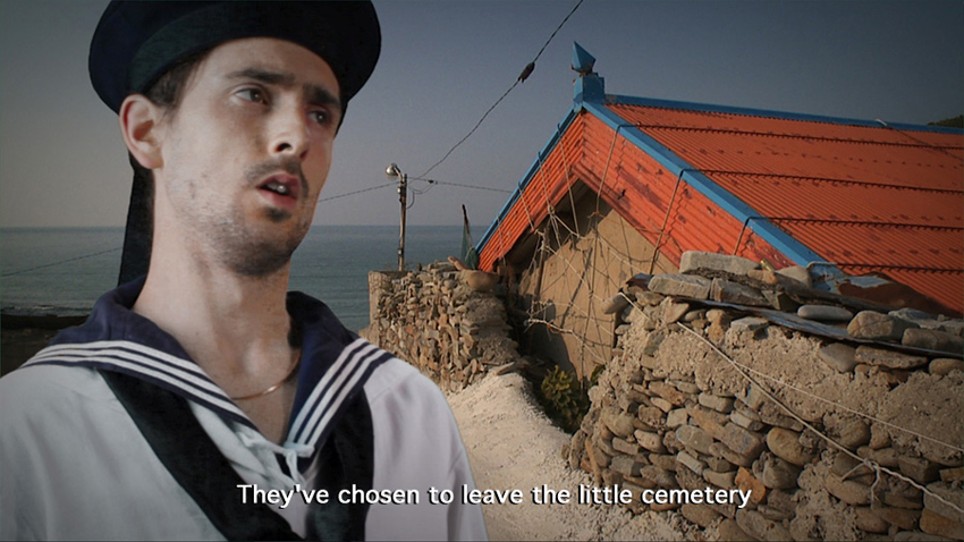
PH Express (2011) visualizes the
equivalence between modernization and colonization brought about by the rapid
transportation devices invented to expand imperial territories. Set in the
geopolitical context of open-port-era Joseon (Korea), this cinematic narrative
explores the dynamics of power among empires at the end of the 19th century.
The title itself refers to a steamship route designed for East Asian plunder,
exposing the geopolitical conflicts of the time through the historical incident
of Britain’s illegal occupation of Geomun Island’s “Port Hamilton” to counter
Russian expansion into Joseon. By dramatizing this lesser-known historical
event with satire and imagination, Ayoung Kim presaged her unique speculative
fiction style, blurring the lines between fiction and nonfiction.
Zephir: Whale Oil from the Hanging Gardens, Shell (2014–2015)
is a three-part sound drama that adapts speculative fiction into a musical
theater format. This work centers on petroleum, the modern energy resource,
exploring various dimensions related to its use, including the history of
bitumen, petro-capitalism, and the expansion of Korean construction companies
into the Middle East. To create a non-contextualized narrative, Kim developed a
simple algorithm resembling a digital chance operation, generating
unpredictable and indeterminate storytelling.
The subtitle, "Whale Oil
from the Hanging Gardens," derived from the name "Zephir"
(bitumen in the Old Testament), is an example of the arbitrary output produced
by her algorithm. Using a montage script co-authored with the algorithm, Kim
combined the compositions of contemporary musicians with dialogues and
choruses. In Version 3, presented at the 56th Venice Biennale, she experimented
with a synesthetic music drama by incorporating visual elements, reinterpreting
and evolving the work.
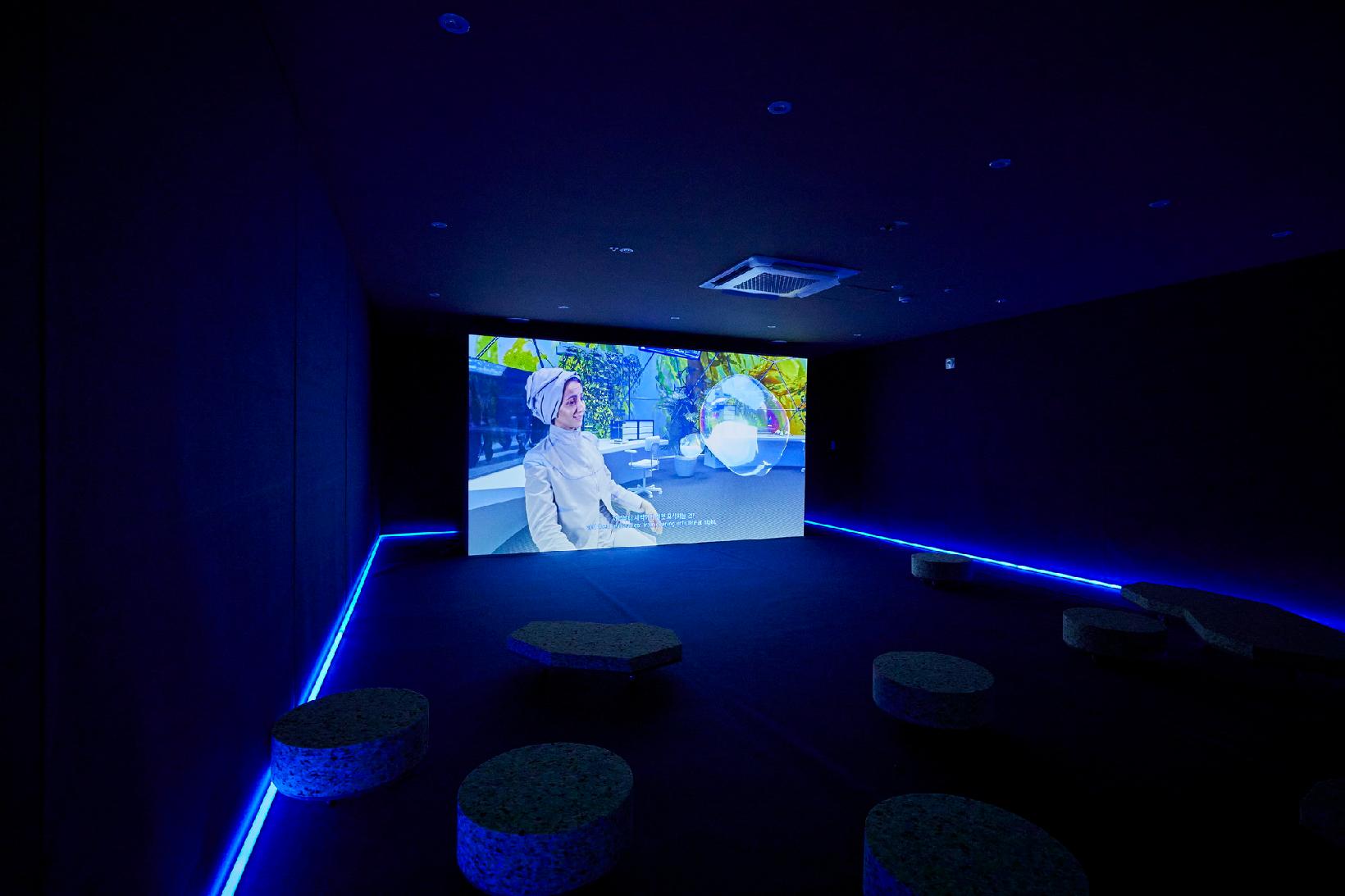
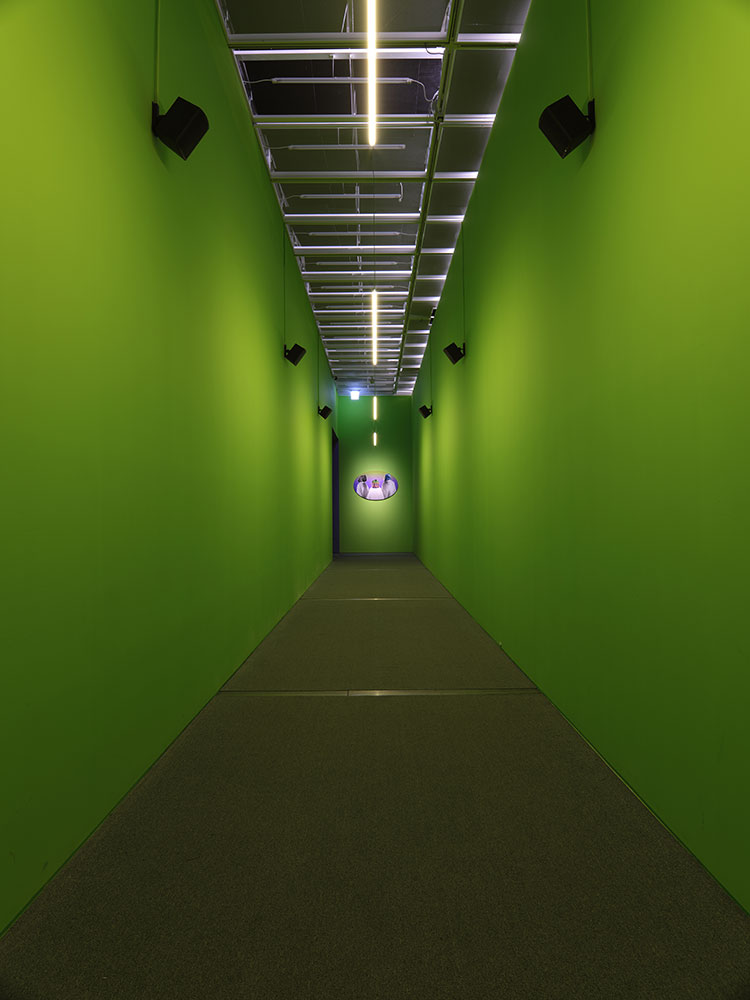
Ayoung Kim's speculative fiction reached its zenith in Porosity
Valley 1: Portable Holes (2017) and Porosity
Valley 2: Trickster Plot (2019). The concept of
"porosity" originated from contemplating the emptying geological
layers created by petroleum extraction. The movement of matter through these
porous spaces metaphorically evokes contemporary issues of refugee migration
and data mobility, triggering Kim's imaginative creativity. By juxtaposing
geological porosity with human migration and data movement, Kim completes her
civilizational critique, linking modern colonialism with contemporary
neo-colonialism.
Porosity Valley is a form of speculative
science fiction that depicts the arduous migration of "Petra
Genetrix," a mythological creature and metaphorical entity representing
underground minerals, symbolizing perpetual movement. In Porosity
Valley 2, Petra's existence is analogized to the Yemeni refugees who
sought asylum in Korea, adding a layer of contemporary reality to Kim's
speculative fiction. In Porosity Valley 1, Petra merges
with its clone before disappearing into an unknown realm. In Porosity
Valley 2, Petra escapes a migration center and encounters
"Mother Rock," a transcendent entity embodying the totality of data,
culminating in a fantastical union.
The self-identical merging of the genderless Petra or its queer
union with the Mother Rock is interpreted not as dystopian apocalypticism but
as a sublime narrative where ancient mythology and digital fables converge.
From this perspective, Porosity Valley as
"Speculative Fiction" can ultimately be interpreted as
"Speculative Feminism."
5. Subversive Fluidity, Buoyancy, and Mobility
The works of Minouk Lim, Sanghee Song, and Ayoung Kim share a
scholarly approach grounded in research and a sensitivity to multi-media
aesthetics. They also exhibit a preference for metaphor over literalism and
allegory over simile, with a contemplative attitude that reads the present
through the lens of historical memory. Additionally, they share an ethical
consciousness that listens to the voices of minorities and women, anticipating
the return of the oppressed, along with a matured sense of otherness that
mourns disaster and death.
Above all, they utilize fluidity, buoyancy, and mobility as
feminine mechanisms to dismantle the rigid and ossified walls of patriarchal
civilization. Flow, symbolized by the Han River, the deep sea, navigation, and
migration, is inherently unstable and non-fixed, but it also carries subversive
potential. This is the aesthetic motivation and practical result that align
their political and resistant works with feminism.