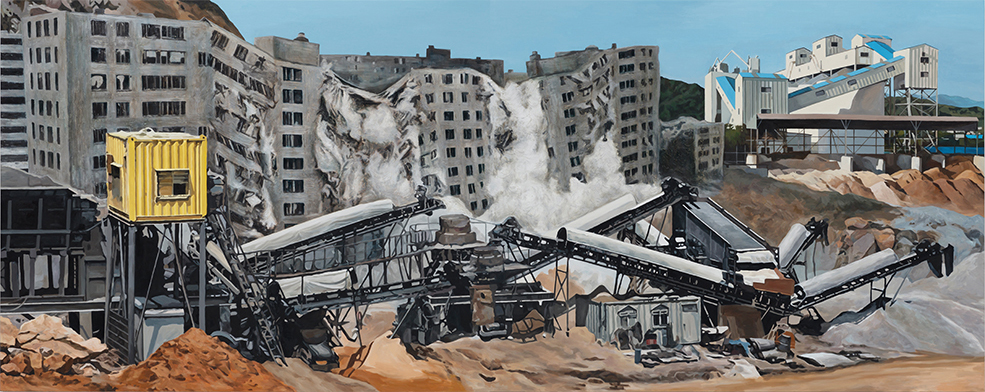
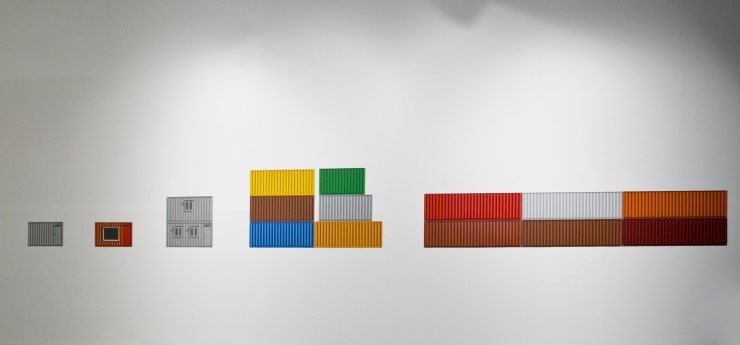
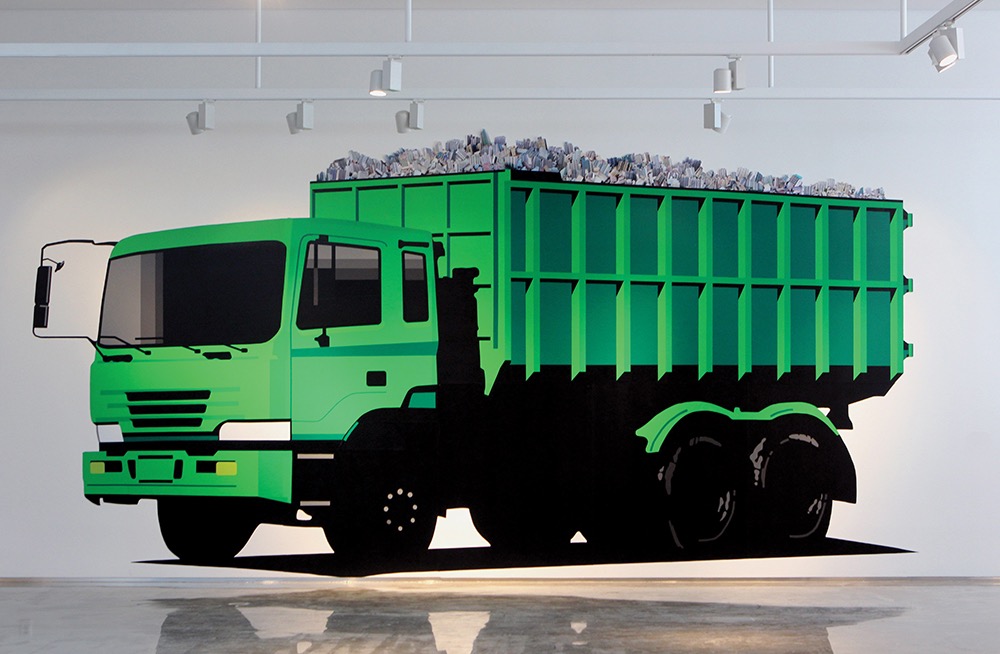
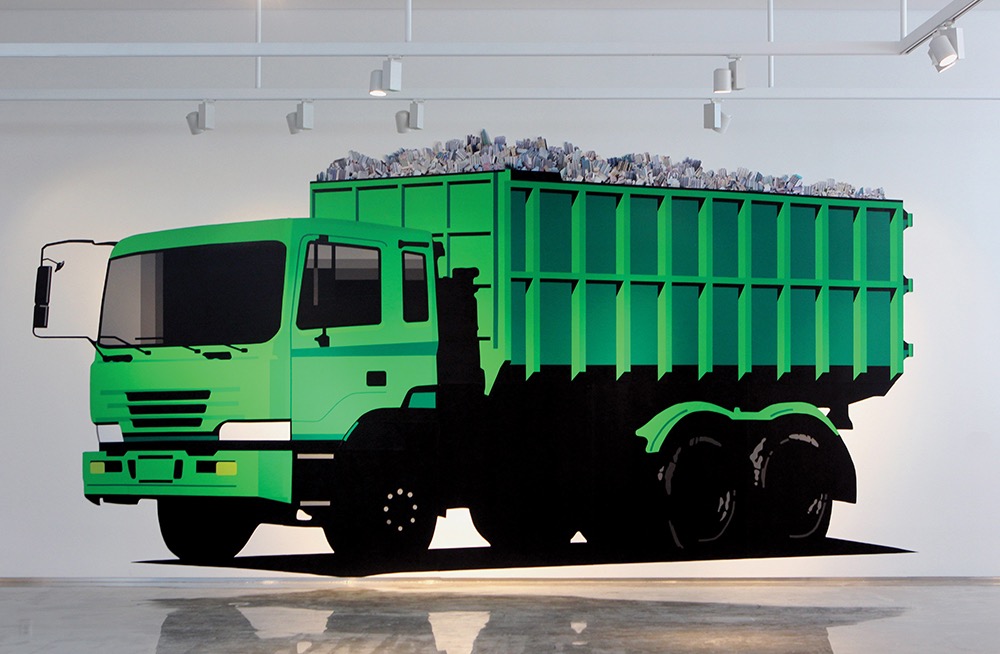
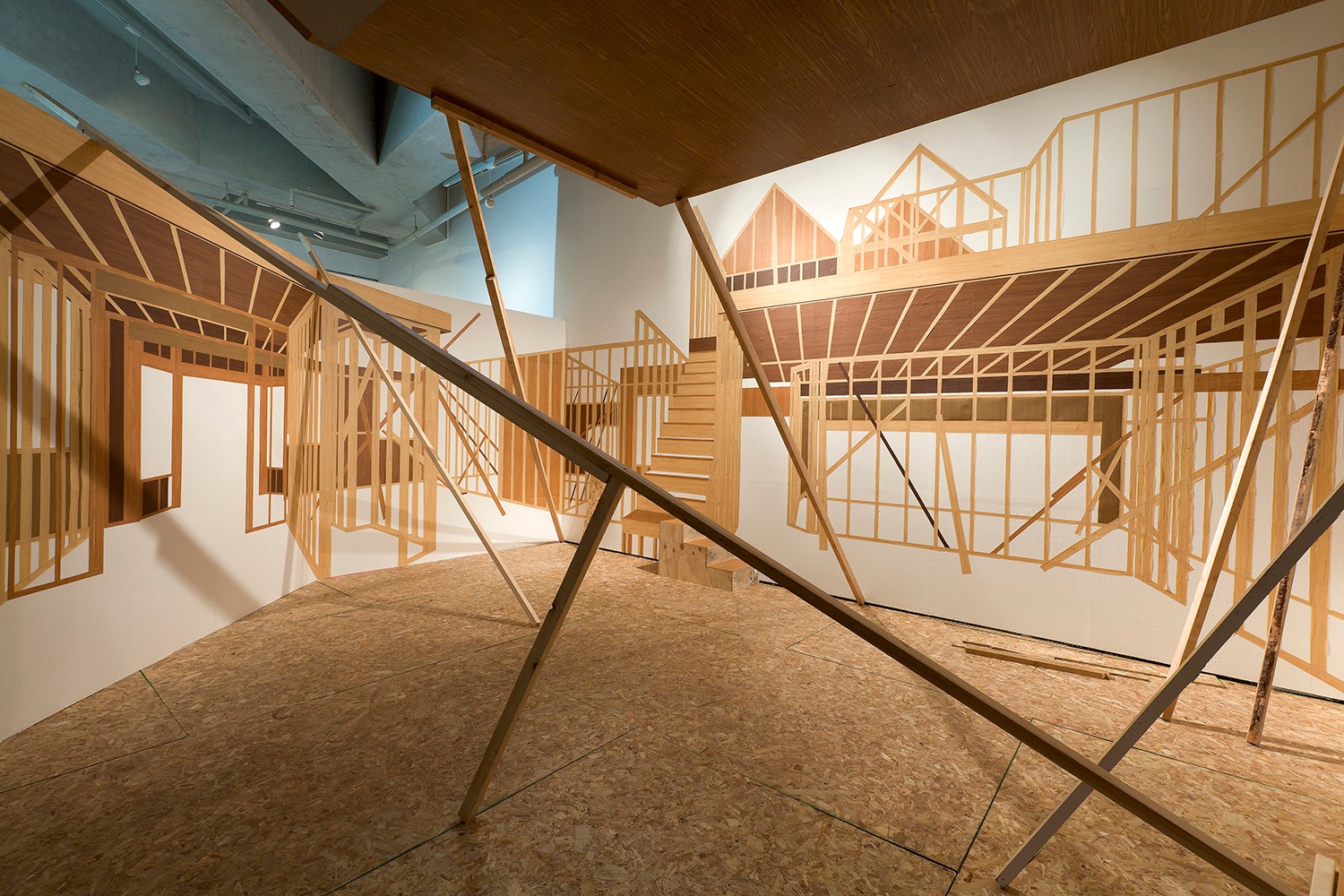
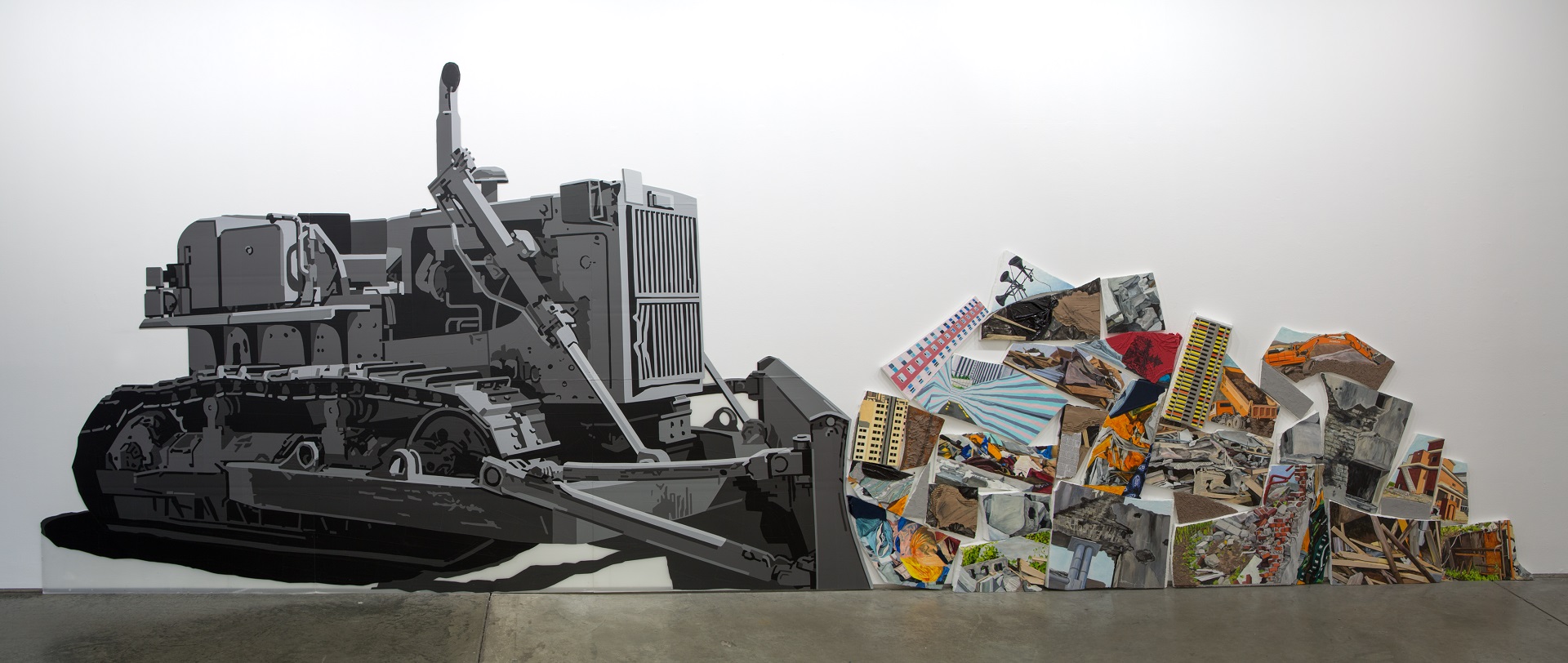
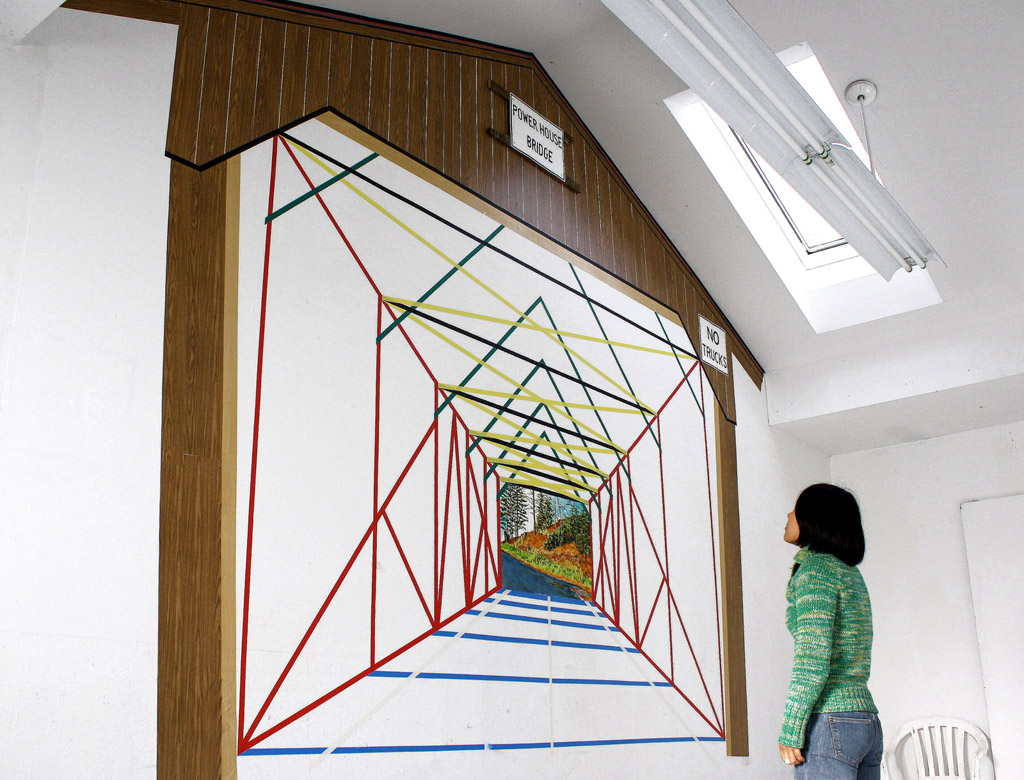
Ji Eun Kim, Dumpster Truck, 2011, Self-adhesive vinyl and print collage, 280 x 580 cm © Ji Eun Kim

People perceive the same situation or object in different ways. This is because perspective is formed through a combination of one’s environment, psychology, knowledge, and other factors. Even the kinds of disagreements that can stir an entire society around a single issue arise from differences in perspective. Art has the power to present new ways of perceiving society and to overturn existing discussions.

Put differently, perhaps the role of the artist is to produce work that embodies a distinctive attitude toward the world. At the core of Ji Eun Kim’s practice is the observation of the urban environment in which she lives and the revelation of the meanings and underlying structures concealed within its landscapes.

Countless people inhabit familiar everyday urban environments, and their views of the city inevitably differ according to age, gender, occupation, level of education, and other conditions. As both a member of the city and an artist by profession, Kim has spent considerable time reflecting on the “role of the artist.” The ‘Rainbow Rice Cake Project’ series, begun in 2005, was an important body of work that helped shape her attitude as an artist.

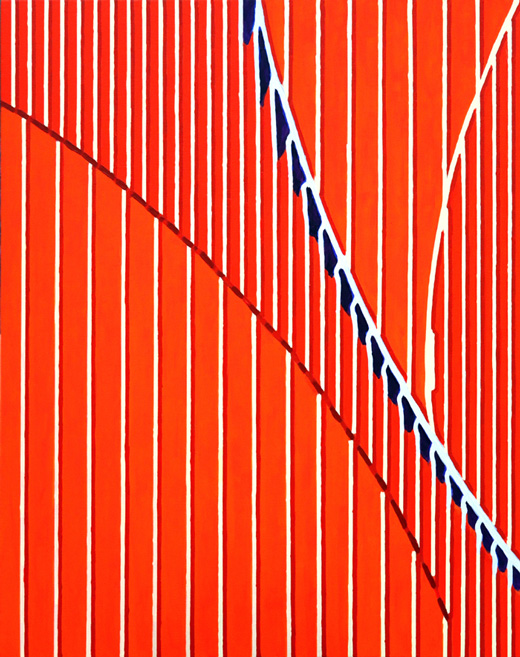
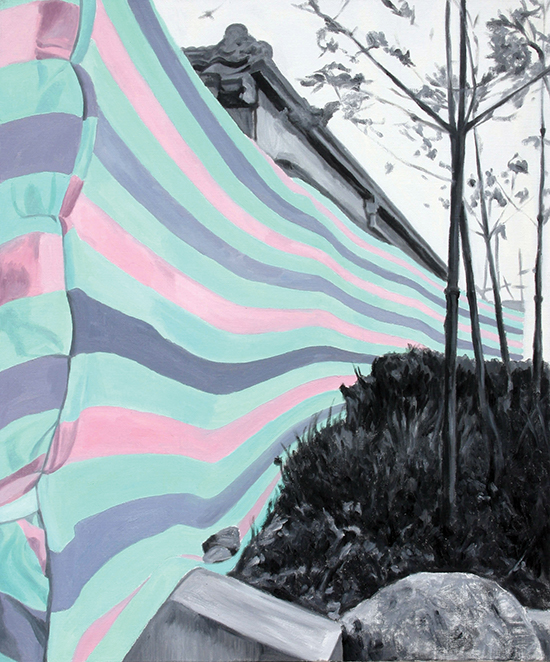
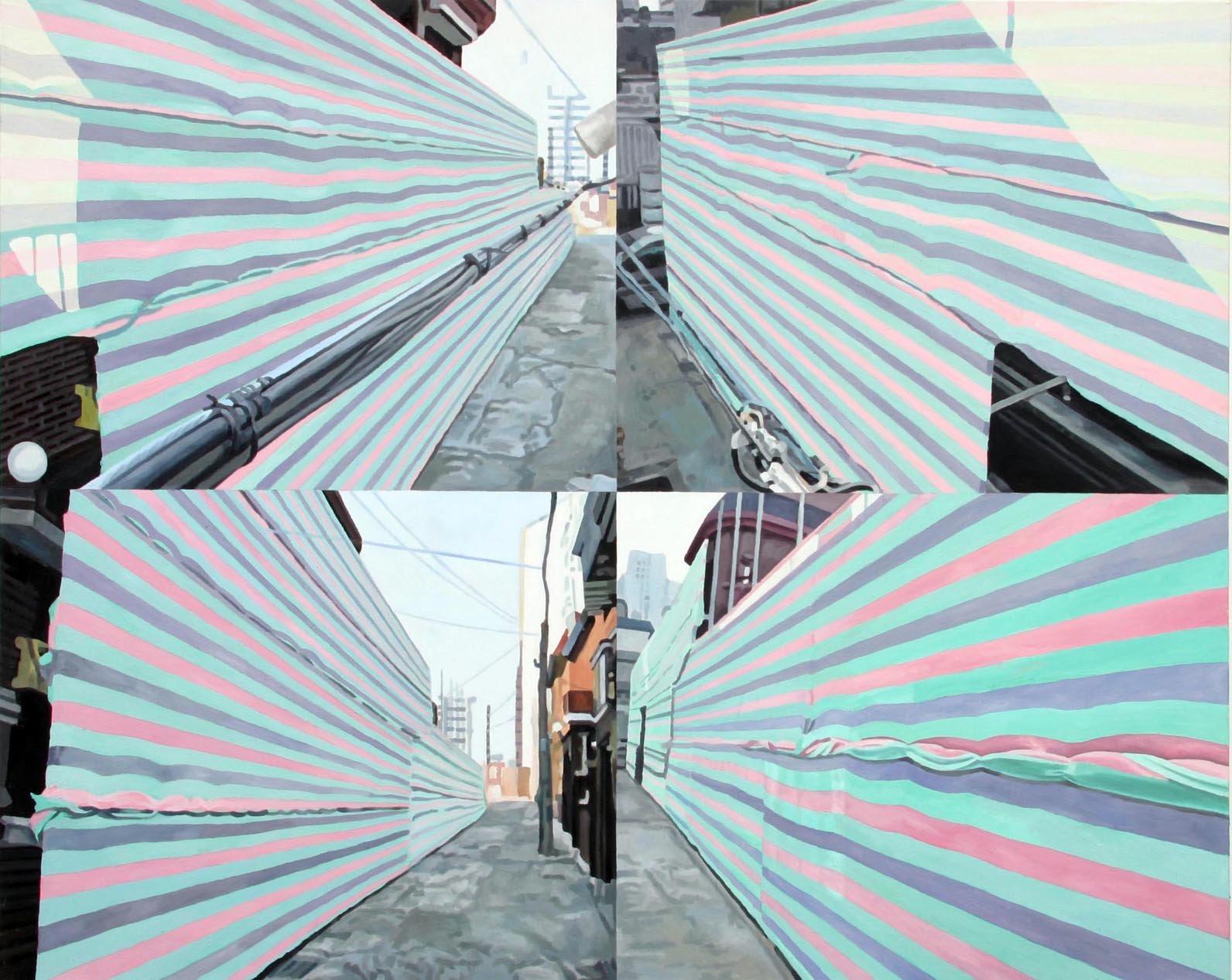
It was also at this time that she began addressing what would become an inseparable theme in her practice: the architectural environment of the city and the landscapes it produces. The starting point was her discovery that the vividly colored dust-control screens commonly seen at construction sites were in fact installations prescribed by law.

She came to realize firsthand that an entire world existed within the spaces of her everyday life that she had never known about. Laws such as the Clean Air Conservation Act, the Cadastral Act, and the Telecommunications Business Act—regulations that might at first seem to have little to do with art—became another source of inspiration for her.

Because many of the facilities we pass without much thought in everyday life are mandatory installations imposed by such regulations, virtually every landscape is entangled with the law. Realizing how closely law exists around us became a form of knowledge that she had never encountered in the course of her visual arts education.

As Kim came to understand that the surrounding environment is not a landscape in any merely superficial sense, but something produced through the intersection of countless gazes, she began to consider what kind of perspective she herself might possess as an artist.

Her reflection eventually led her to the conclusion that the artist’s role is to remain outside the boundaries of any single field, to inhabit the gaps between them, and to visualize the invisible networks of society. Since then, she has continued to tell stories about the places in which she lives, sustaining a practice focused on what lies closest to her own life.

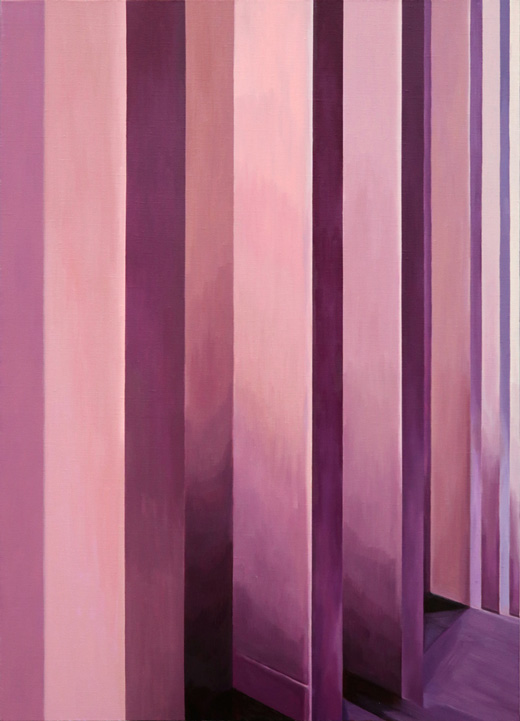
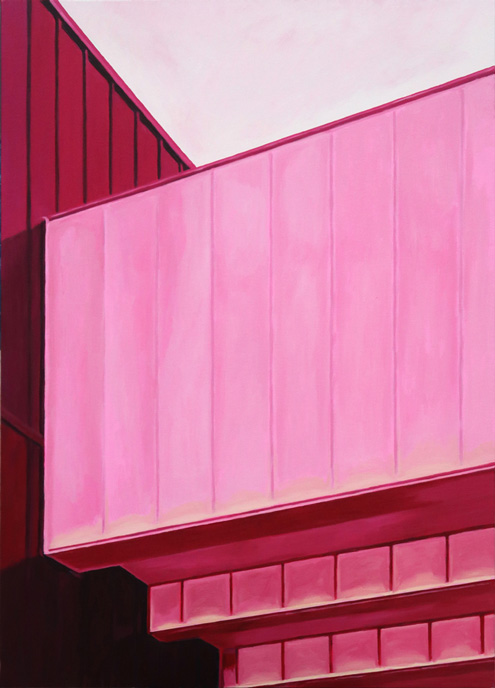
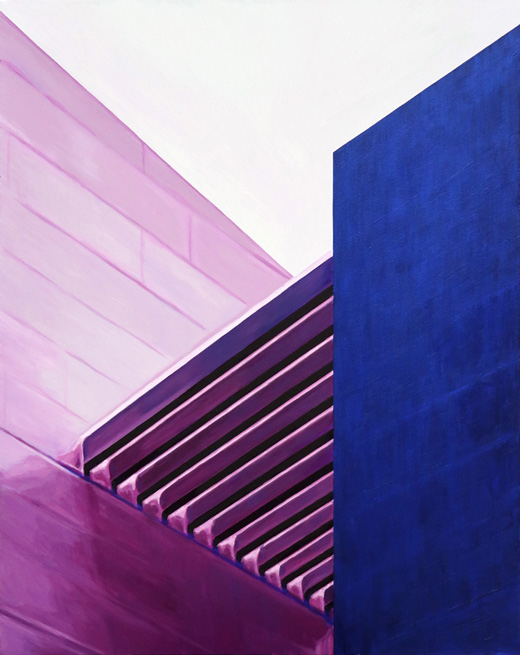
This does not mean, however, that Kim neglects the visual dimension of her work. Trained in painting, she also wants to retain the artisanal aspect of the artist who draws and makes things by hand. When planning a work, she first creates an engaging scene capable of attracting the viewer visually, then inserts elements that provoke further curiosity.

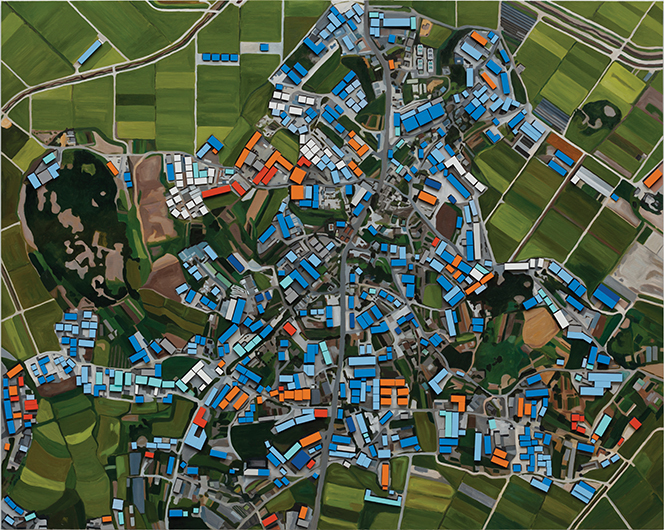
For example, she might depict brightly colored roofs that, on closer inspection, turn out to belong to factories emitting various hazardous substances and destroying nearby villages. The work undeniably produces formal and aesthetic effects, but beneath them lies the story she actually wants to tell. Works conceived and produced through this consideration of art’s social role are thus the results of a process of primary critique undertaken by the artist herself.


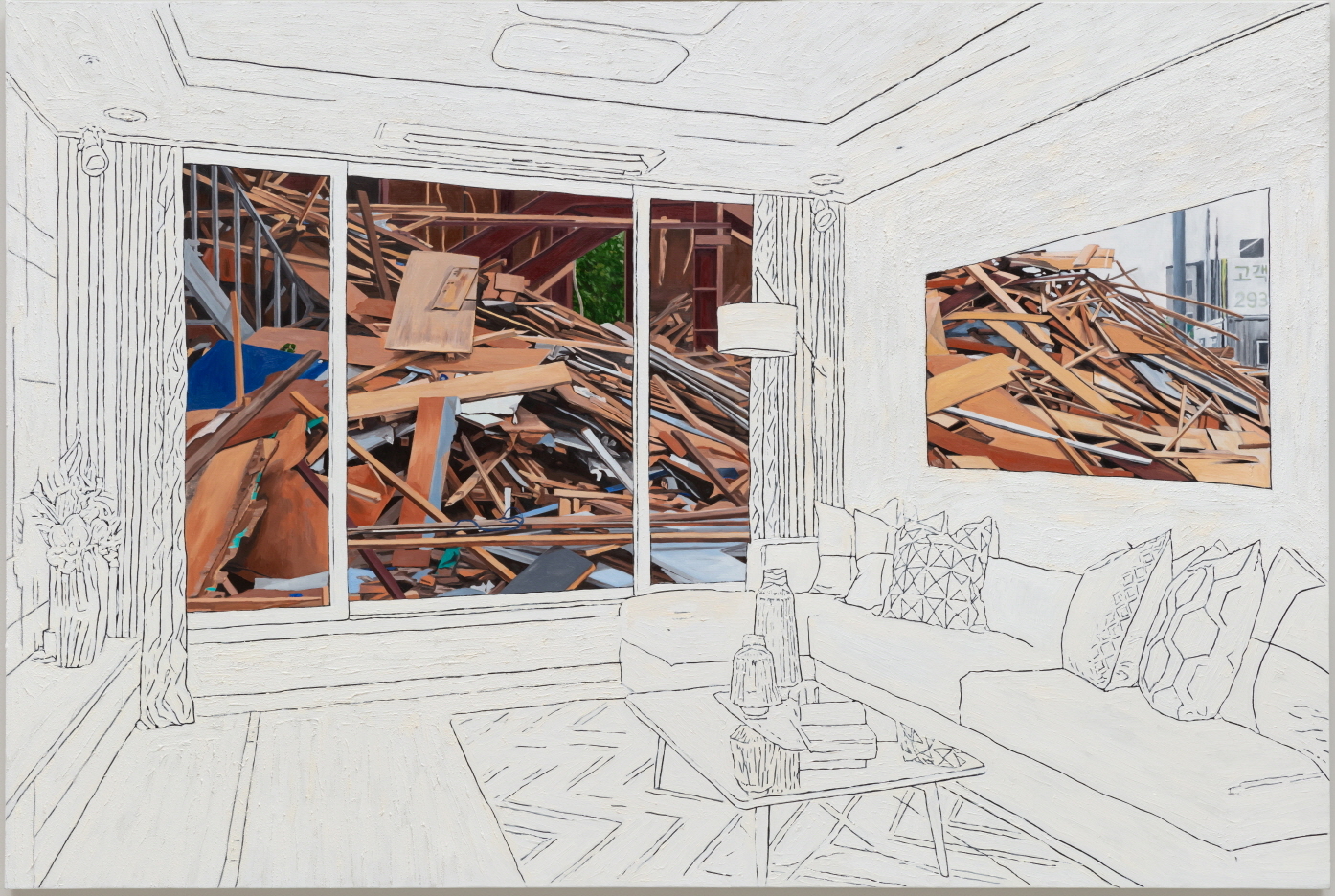
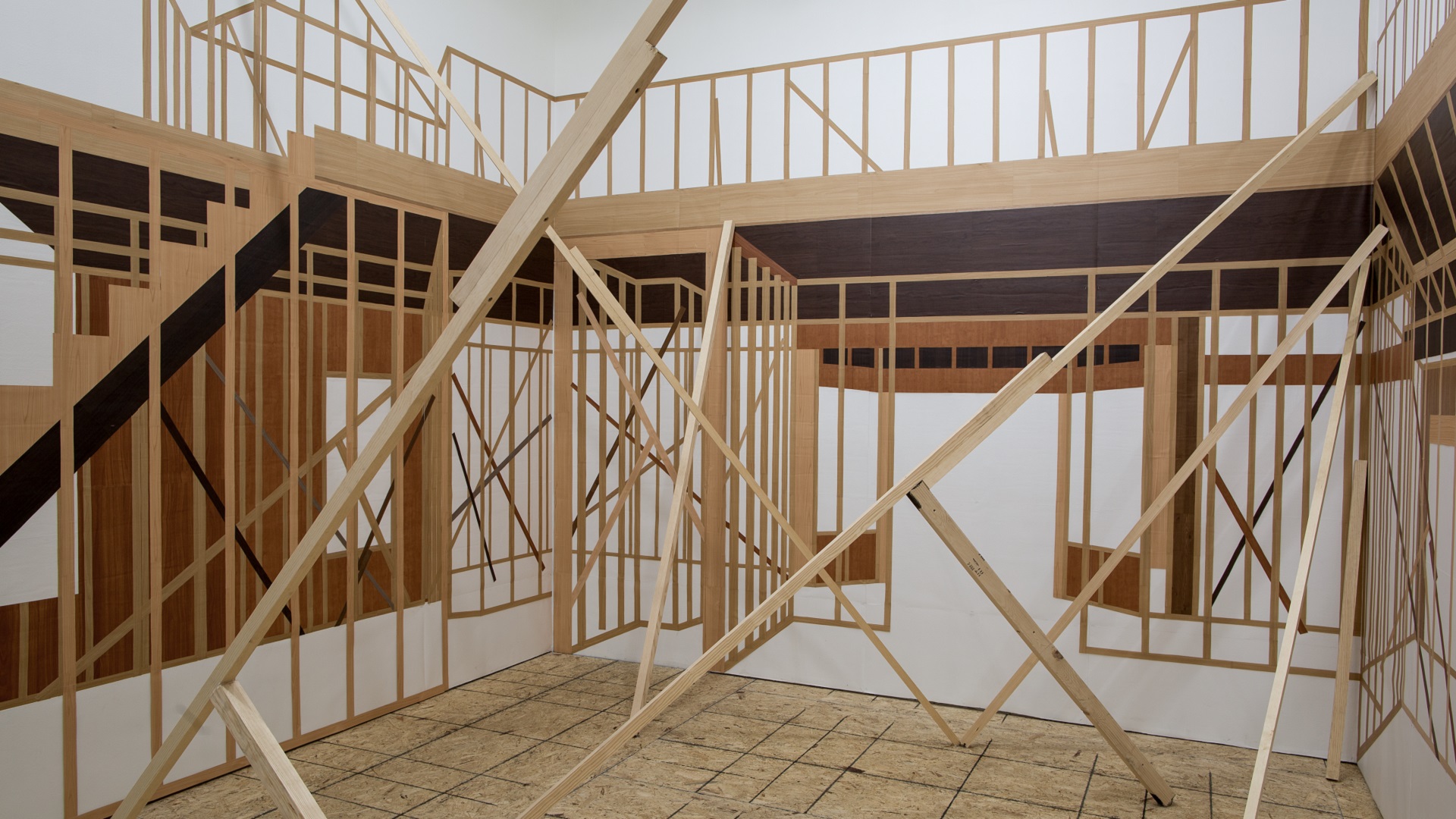
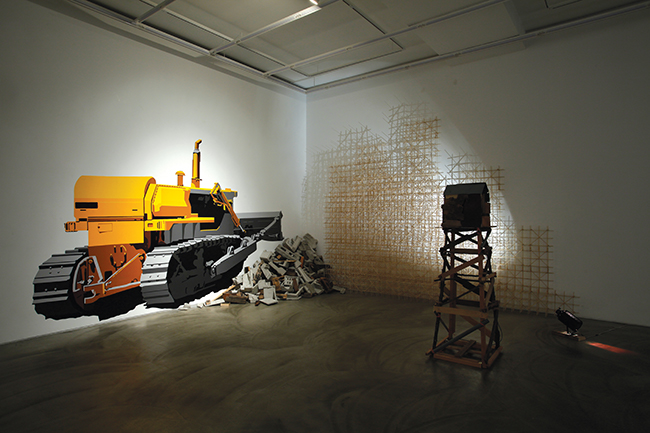
Ji Eun Kim, Planned Obsolescence and Ruins, 2013, Bamboo skewers, twist ties, self-adhesive vinyl, scrap wood, etc., Dimensions variable © Ji Eun Kim

This would be more accurately described not as a critique of the work itself, but as a critique of the social phenomena that surround us. In fact, Ji Eun Kim regularly reads books on the social sciences. She is not inclined toward fantasy or imaginative reverie; rather, she is interested in things that directly affect her own life and tends to question them, and this disposition is directly reflected in her work.

As a result, she walks through the neighborhoods and surrounding areas where she lives, capturing situations that catch her eye and wondering about the background and circumstances through which such landscapes have come into being. What she observes is transformed, after extensive research, into intuitive works.

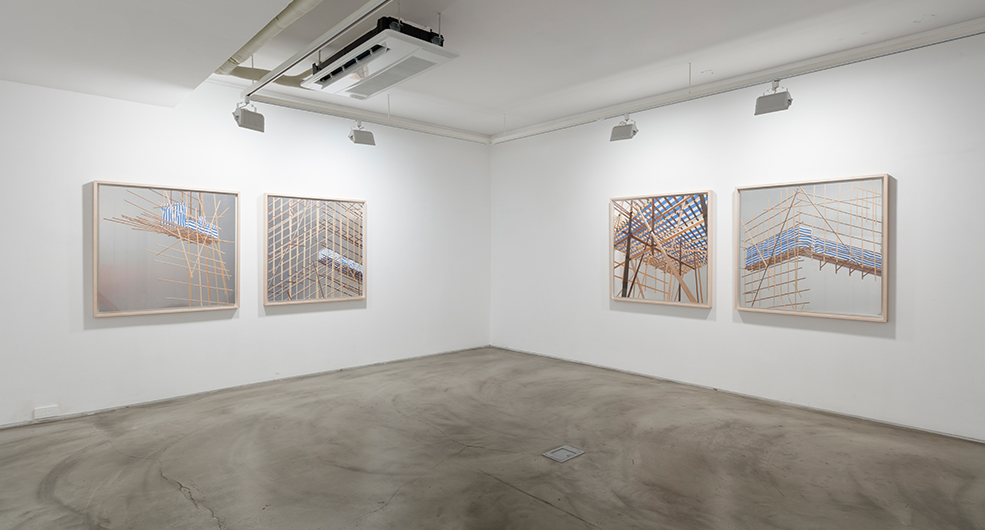
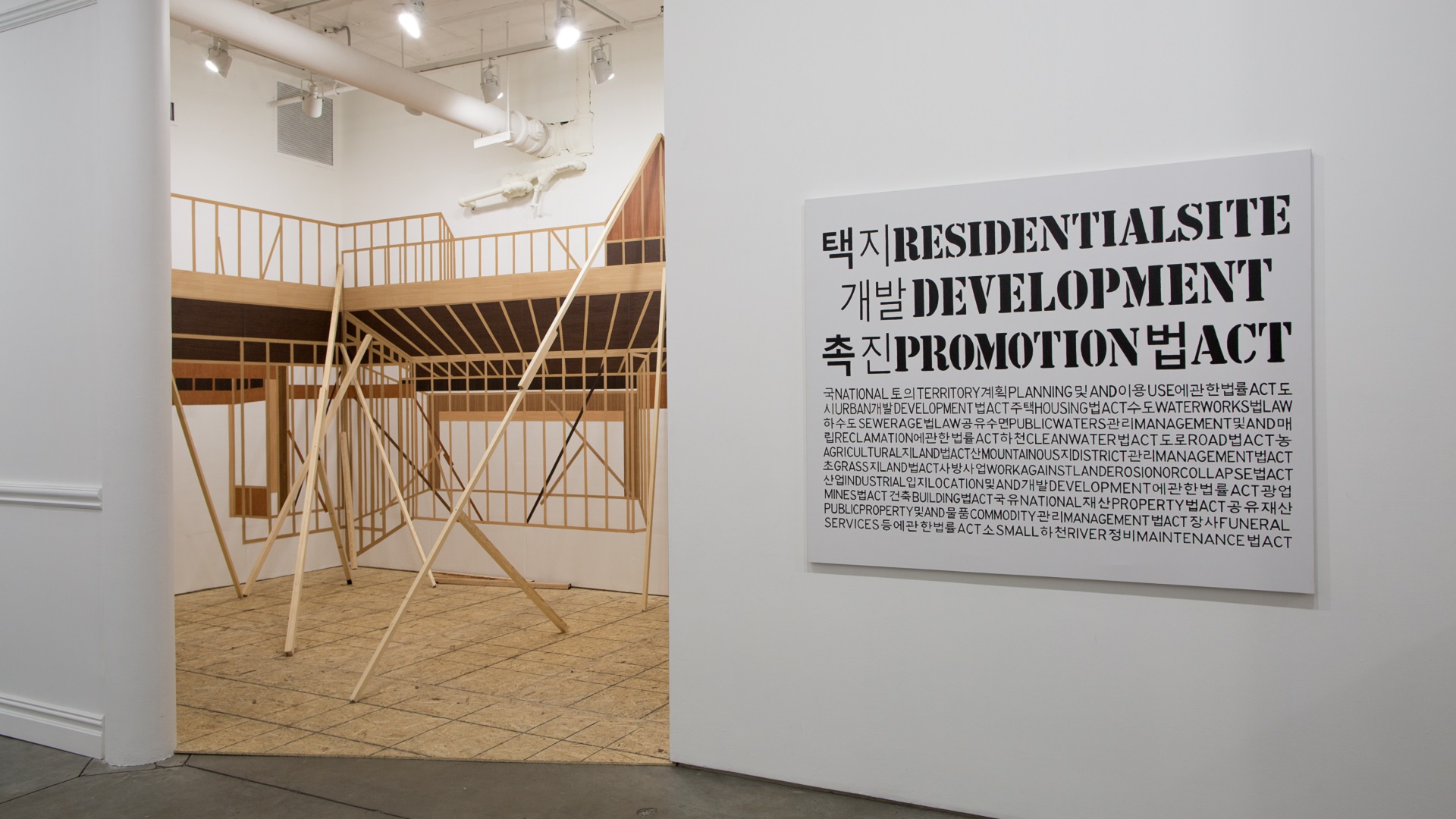
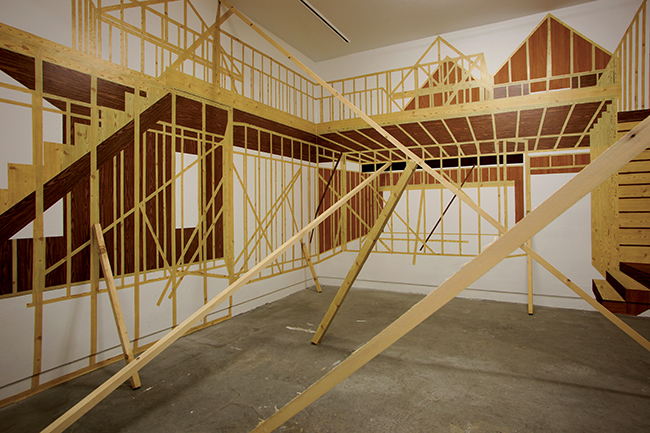
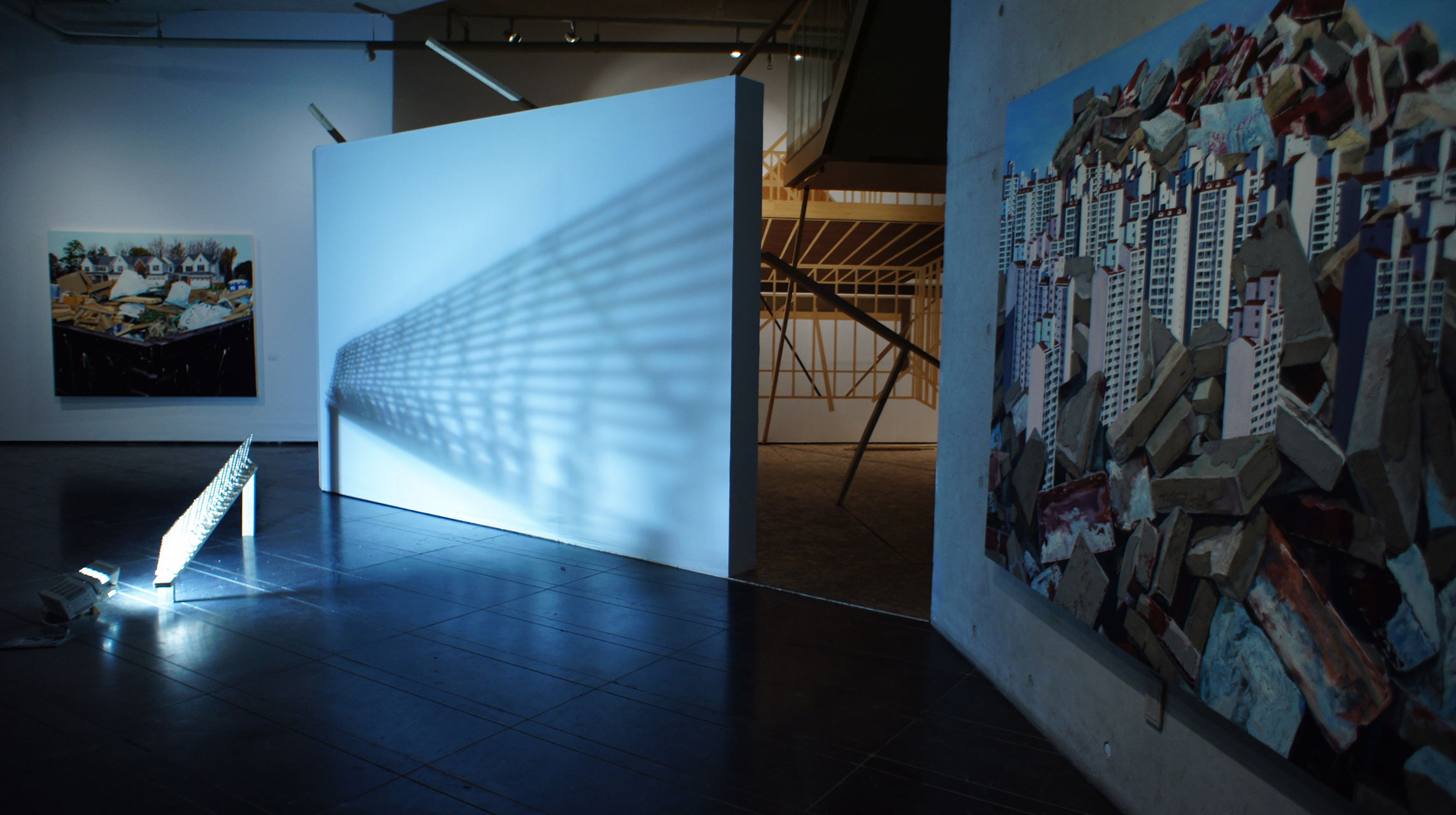
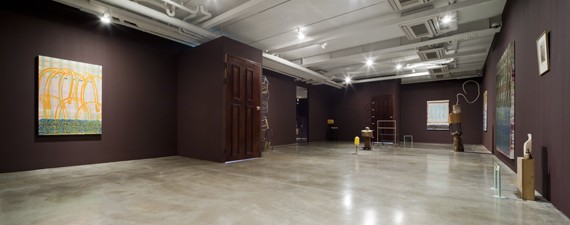
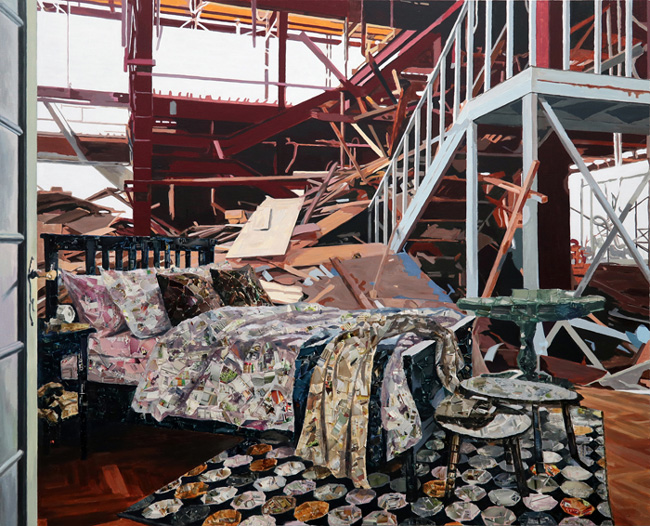
This is the result of her attention not only to what is visible, but also to the structures that produce what lies beyond it. The title of her 2010 solo exhibition, 《Planned Obsolescence》, was also used for the work Planned Obsolescence, which dealt with houses destined to be discarded and represented, through collage, a type of housing commonly seen in American suburbs.

Originally an economic term referring to a corporate strategy that deliberately makes consumers perceive older products as obsolete in order to encourage the purchase of new ones, “planned obsolescence” is transformed in Kim’s work into the structural framework of a house. Drawing on landscapes she encountered while living in the United States, she brought into the exhibition space materials and objects more commonly associated with construction sites, such as dumpsters, Tyvek, and timber battens.

Missing from this landscape, however, are the sounds one would expect to hear: workers shouting, steel bars clashing, and the deafening noise of heavy machinery drilling through concrete. The absence of noise and the clean fields of color make the familiar urban construction site appear almost like a carefully designed stage set. Yet the fact that a stage set, too, is destined eventually to be dismantled aligns it with the broader context of the exhibition.


Ji Eun Kim, Developer's House, 2010, Tyvek, wood beams, self-adhesive vinyl, spray paint, marker, Dimensions variable © Ji Eun Kim

In fact, Ji Eun Kim possesses a strong identity as a “painter” and has never forgotten that painting remains the starting point of her practice. However, when she began living abroad, she found herself in circumstances where she could no longer insist on working solely within painting, and from that point on she began experimenting beyond the limits of material and genre.

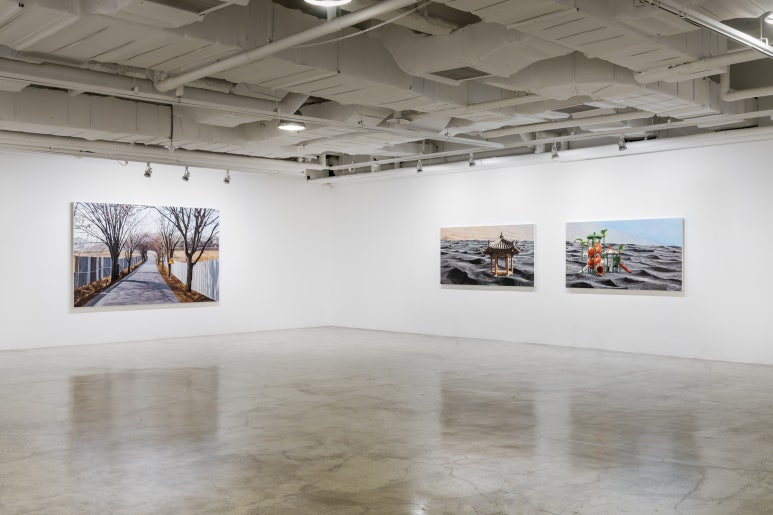
It was during this period that she started making collage works using adhesive sheets and exploring various forms of installation. Yet she did not turn away from painting altogether. She continues to make representational works and considers herself to be using the language of painting within them. She also regards installation as painting in an expanded sense.
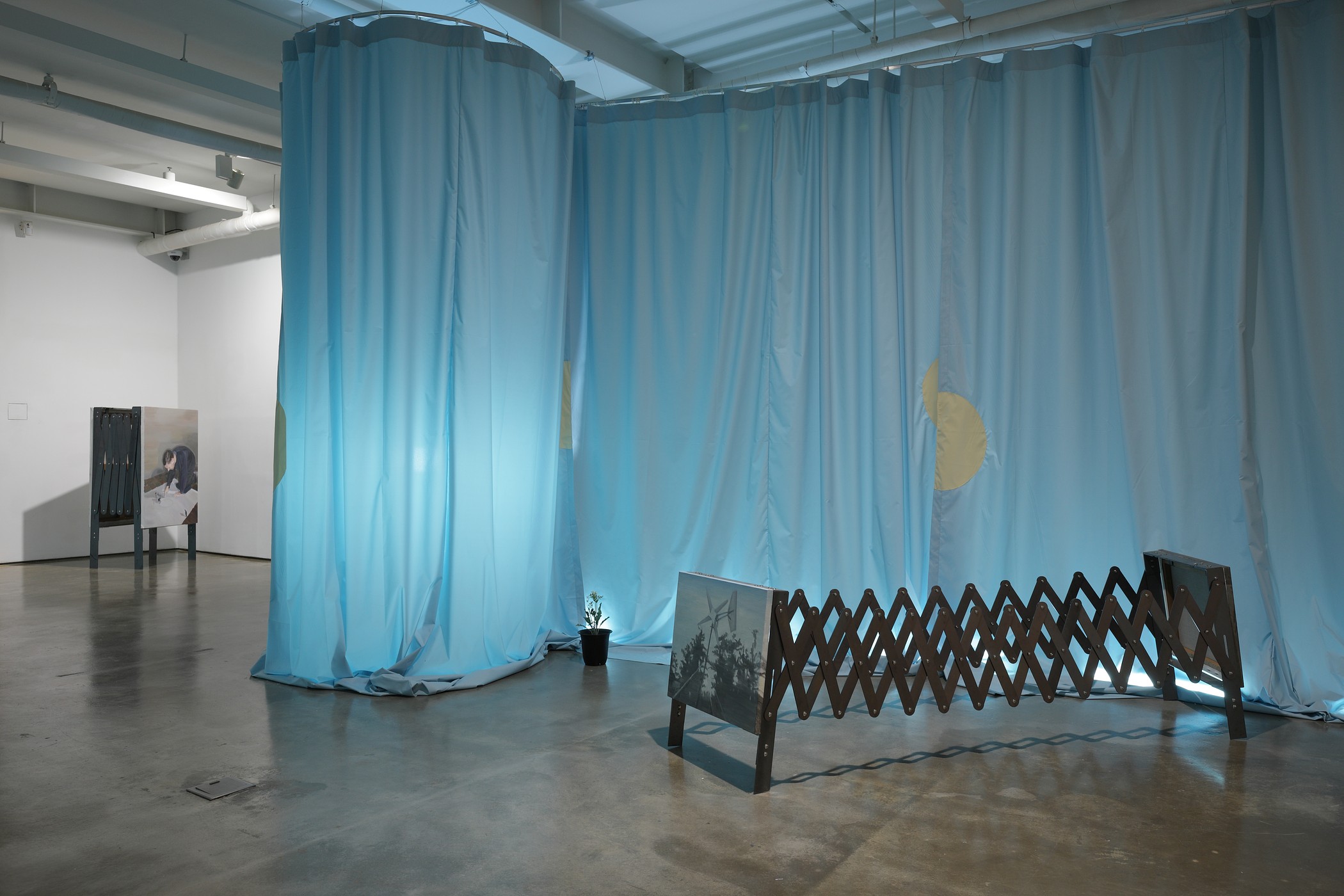
Once she had broken out of the frame, Kim became increasingly uninhibited in producing large-scale installations such as Mass of Scaffolding (2012) and Some Watchtower (2014). Scaffolding, a temporary structure erected at construction sites to enable work at height, was recreated using wooden skewers for fish cakes and string used for wrapping bread.

Some Watchtower
, reconstructed with wood-grain adhesive sheets painstakingly applied one by one while working from a hydraulic lift, reaches approximately twelve meters in height. Having escaped the confines of the canvas, the artist’s gestures expand endlessly upward and outward.


Ji Eun Kim, Rainbow Rice Cake Project 4, 2004, Oil on canvas, 72.8 x 60.6 cm © Ji Eun Kim

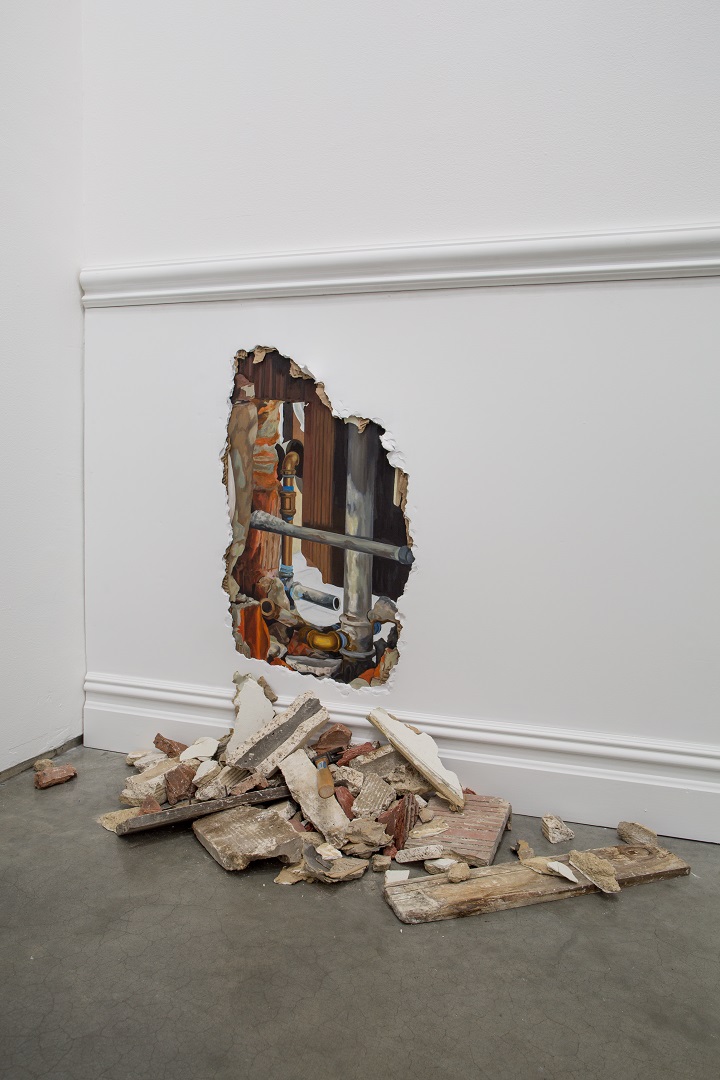
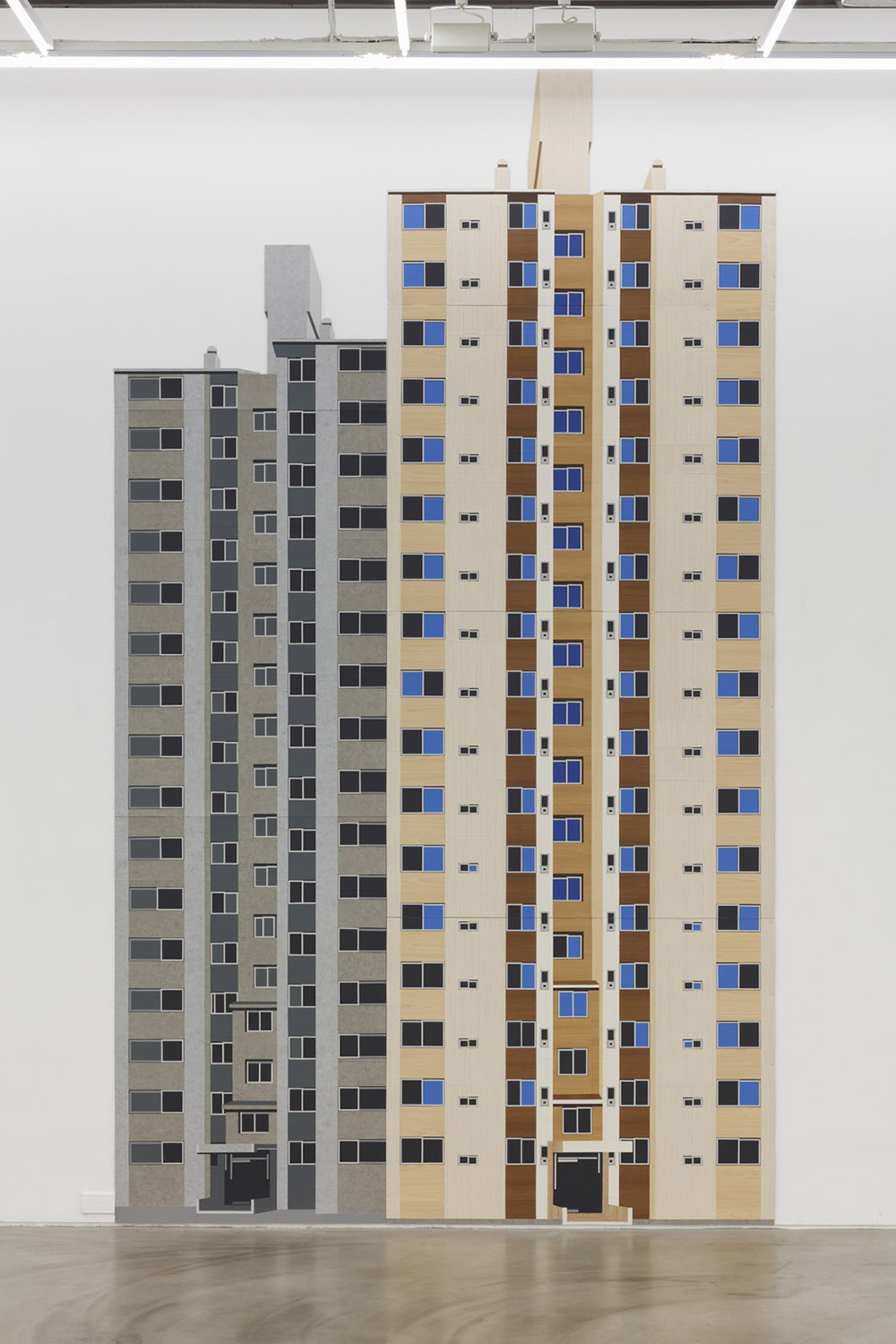
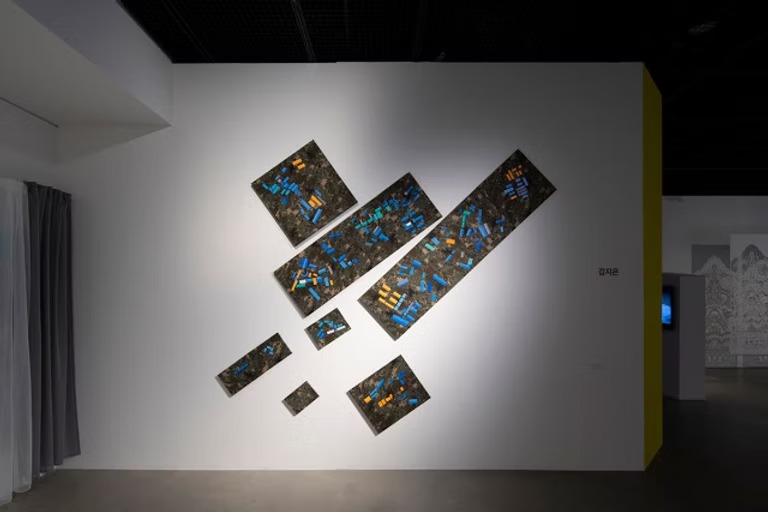
What currently draws Kim’s attention is concrete. In cities densely packed with buildings, concrete is one of the most familiar materials of all, yet few people pay close attention to it. Kim believes that concrete, too, carries its own politics and meanings. As suggested in Planned Obsolescence, she considers even buildings made of concrete to be temporary structures that will ultimately disappear.

People may live in them as though their permanence were self-evident, yet buildings, like human beings, will eventually vanish. Nevertheless, the frenzy of real-estate speculation and indiscriminate development continues unabated. Through her work, Kim makes her own statements about such phenomena, and the weight and responsibility of those statements function as points of contact with the society to which she belongs.

Underlying her practice is a single attitude that encompasses everything from her fundamental ideas and use of materials to her methods of research and the resulting forms of expression.


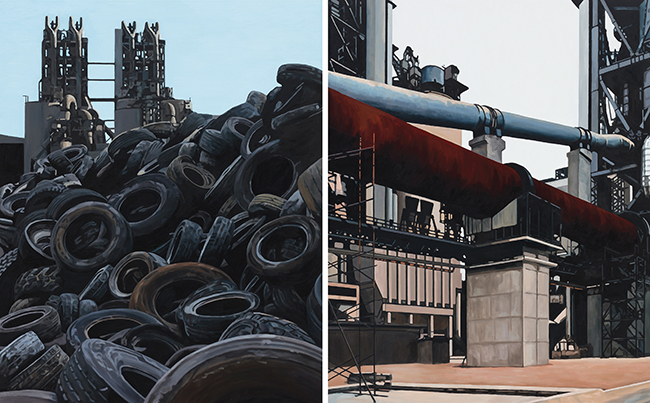
Ji Eun Kim, Waste Tire and Kiln, 2016, Oil on canvas, 227.3 x 181.8 cm x (2) © Ji Eun Kim

It is about fully embracing what can be done here and now. Kim firmly states that being able to do something and choosing not to do it is a “waste.” She therefore finds her subjects in the places where she lives, studies them, uses materials available around her, and simply begins by taking up a brush or scissors in her own hands.

Kim explains her practice with greater clarity than anyone else: “My work, which approaches present-day issues entangled with the past and future with an attitude akin to that of a sociologist or anthropologist, is a journey in search of the everyday (non-)monuments that have always been there, yet have gone unnoticed or unexamined.” And one might add that this journey is always ongoing.

References