Lotus L. Kang (b. 1985) is a Korean-Canadian artist whose practice spans photography, sculpture, installation, and other media, exploring questions of identity, memory, and belonging.
 
Rather than confining personal experience and history to the realm of private memory, Kang expands her inquiry to encompass architecture, the environment, and the layers of memory accumulated within them.


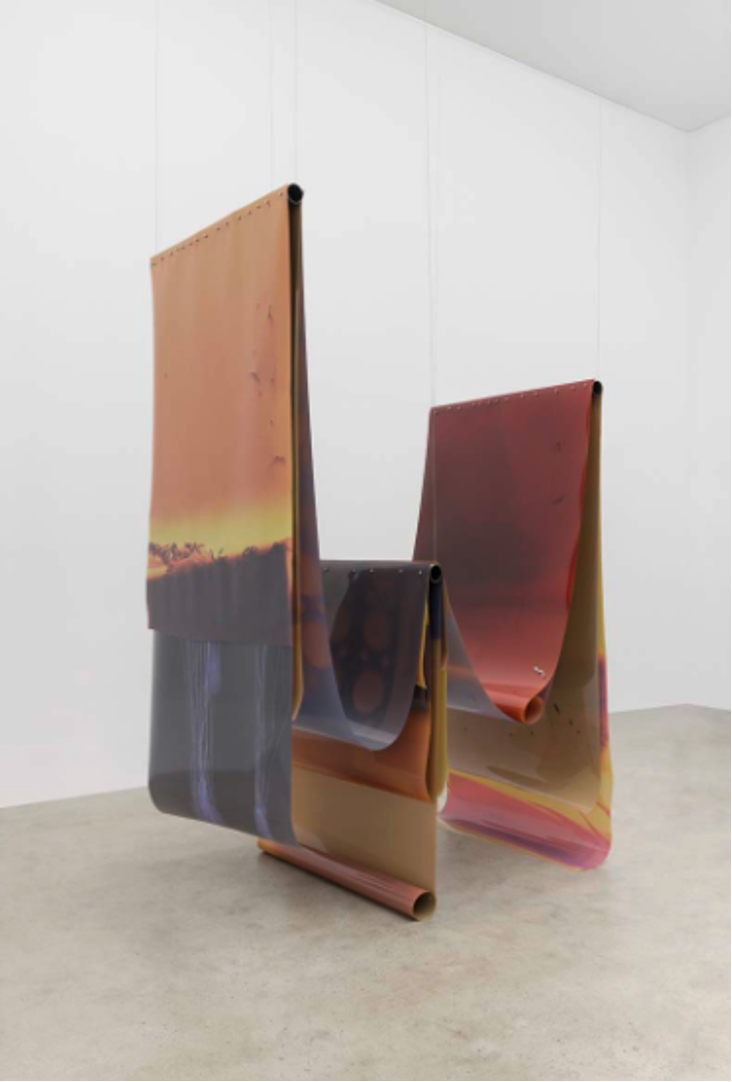
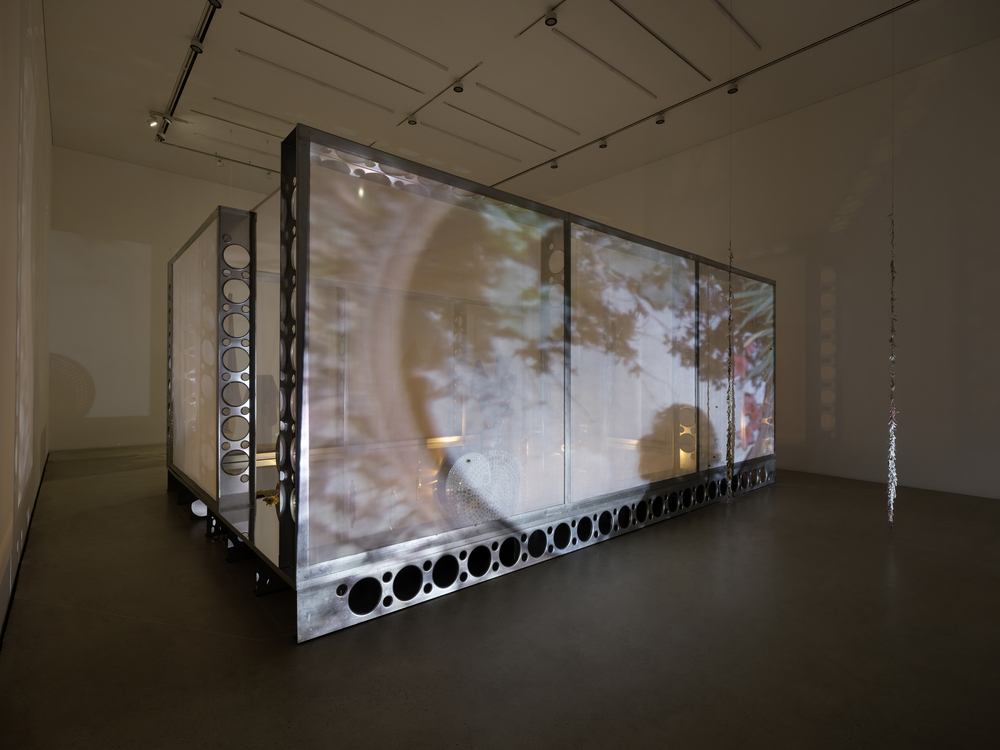
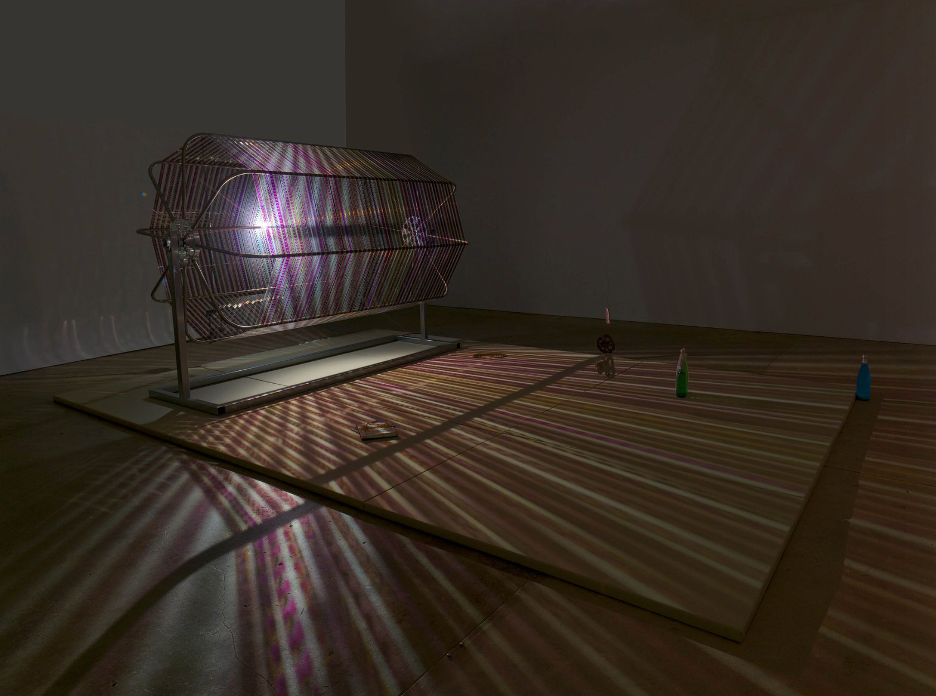
Installation view of 《The face of desire is loss》 (Bvlgari Pavilion at the 61st Venice Biennale, 2026) © Lotus L. Kang

Developed across a range of media, Lotus L. Kang’s practice engages with unstable and unfixed materials and forms, raising questions around “becoming.” For instance, she combines film, aluminum objects, and poetic texts to create environments that discolor and transform over time, sensorially translating invisible presences and traces.
 
By bringing elements that respond sensitively to their surrounding environments and spaces to the center of her practice, Kang considers identity as something that is continually shaped and transformed through its relationship with the given environment.


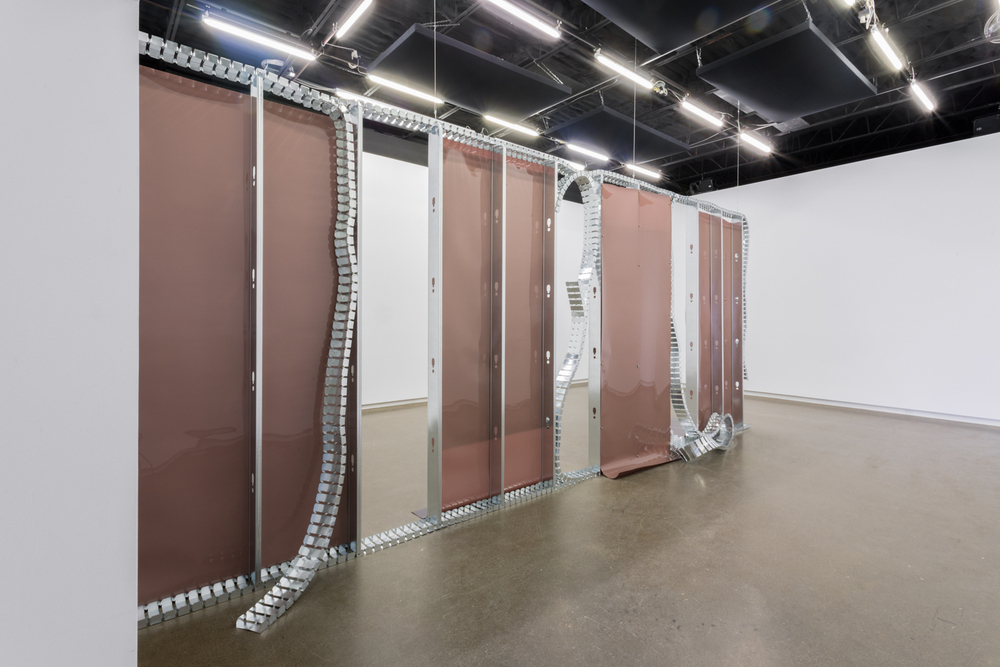
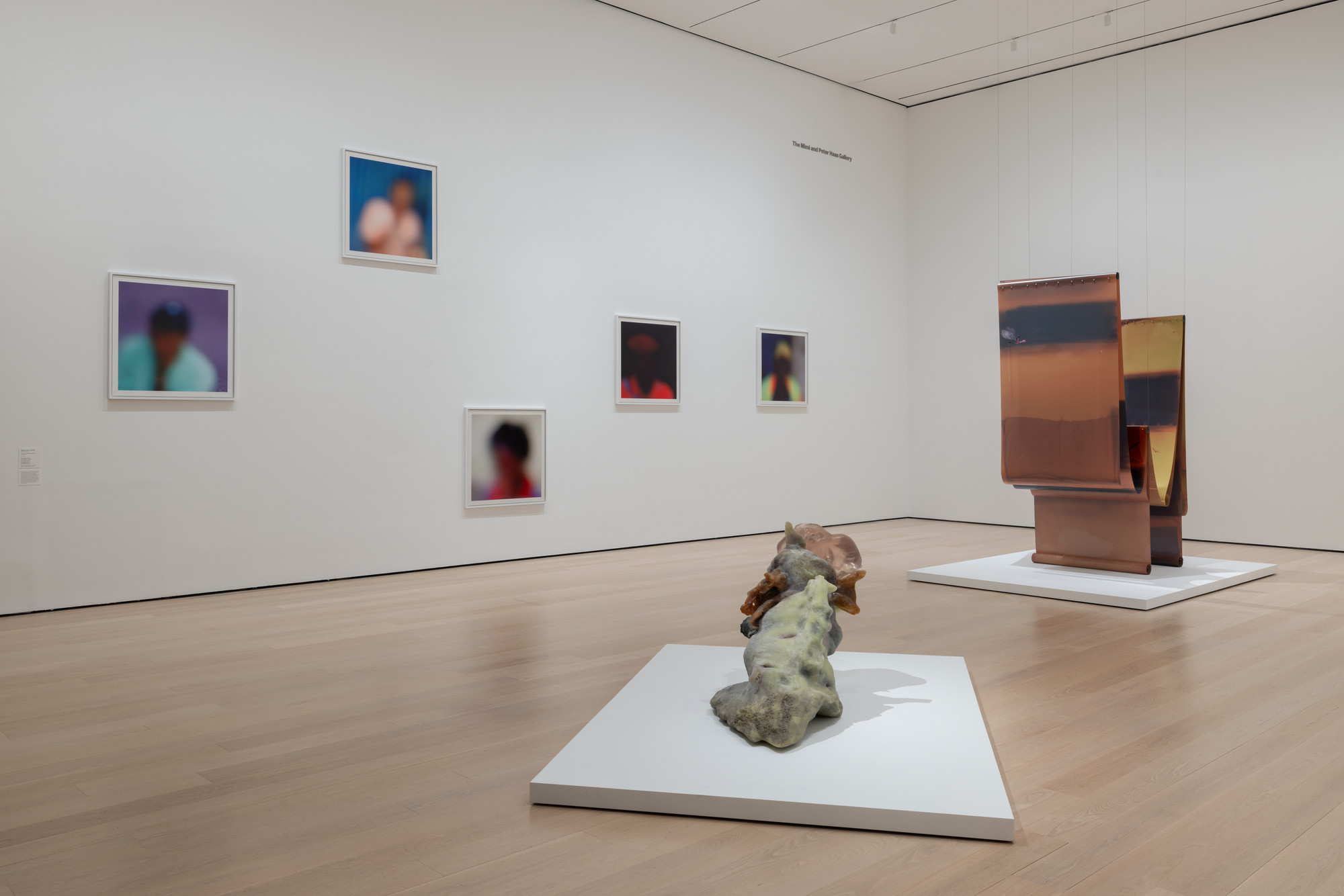
Lotus L. Kang, A Body Knots, 2018, Flex track, steel studs, airline cable, hardware, unfixed and unprocessed photographic paper and darkroom chemicals (continually sensitive), unfixed film (continually sensitive), magnets © Lotus L. Kang

For example, her 2018 site-responsive installation A Body Knots explores the relationship between bodies and their environments, drawing on her interests in science, science fiction, feminist theory, and personal and cultural histories.
 
In particular, Kang considers the potential for bodies and materials to change in response to their environments through the concept of epigenetics.
 
Working without a camera, Kang creates images using light-sensitive paper, organic materials, darkroom chemicals, and natural light, allowing the unfixed photographs to continually respond to and transform with their surroundings.
 
Through this process, she approaches photography not as a medium that fixes vision and memory, but as a material that absorbs and transforms in response to its environment.


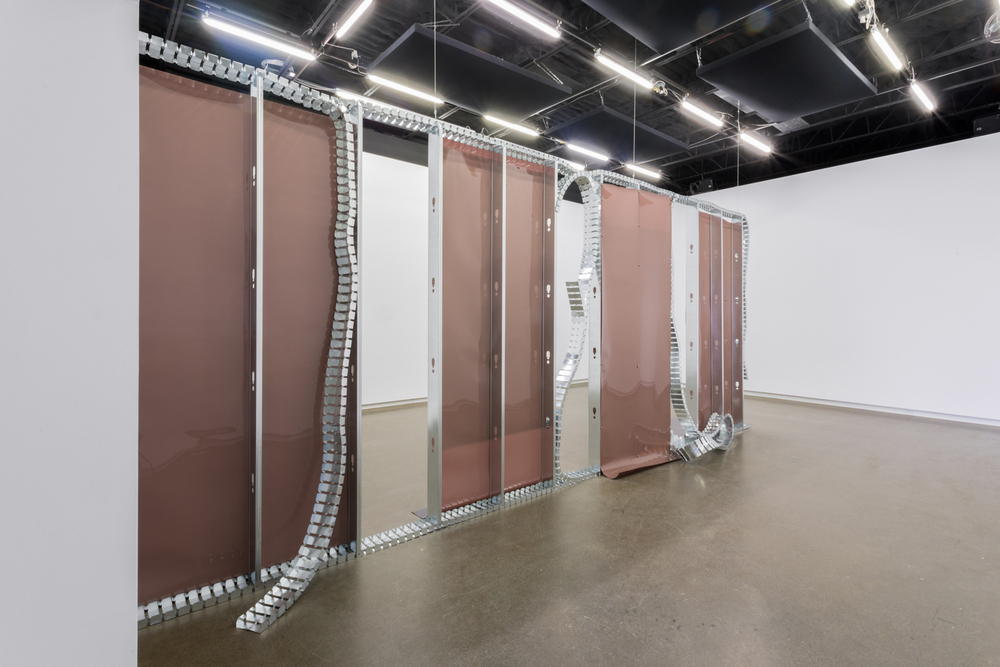
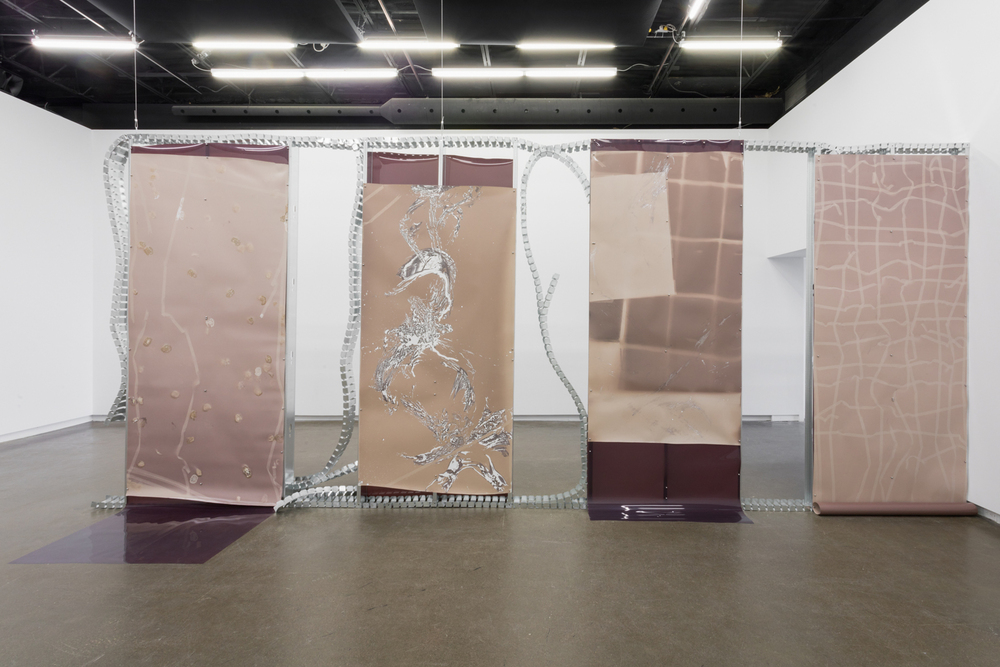
Lotus L. Kang, A Body Knots, 2018, Flex track, steel studs, airline cable, hardware, unfixed and unprocessed photographic paper and darkroom chemicals (continually sensitive), unfixed film (continually sensitive), magnets © Lotus L. Kang

In the exhibition, photography expands into a “skin” through its combination with material forms ranging from intimate to architectural scales.
 
Frames and structural elements transform into bodily forms that evoke skeletons, muscles, fascia, and flesh, while the interplay between photography and sculpture explores the possibility of bodies, materials, and environments coexisting and continually transforming.
 
In this way, Lotus L. Kang’s fluid and mutable practice invites viewers to physically experience how particular images become embodied and take up a place within us, much as the afterimage of an image is retained in memory.


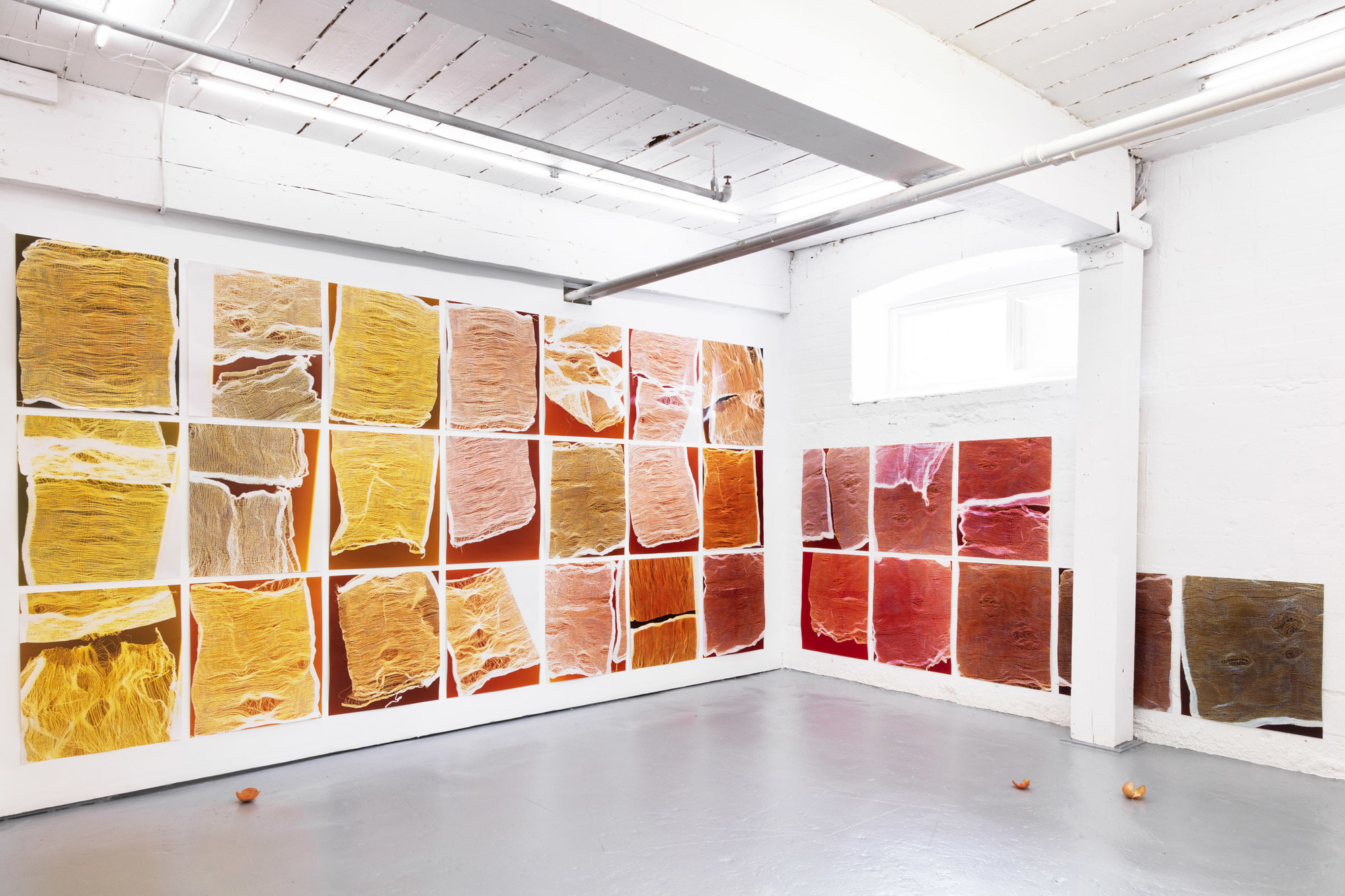
Installation view of 《Her Own Devices》 (Franz Kaka, 2020) © Lotus L. Kang

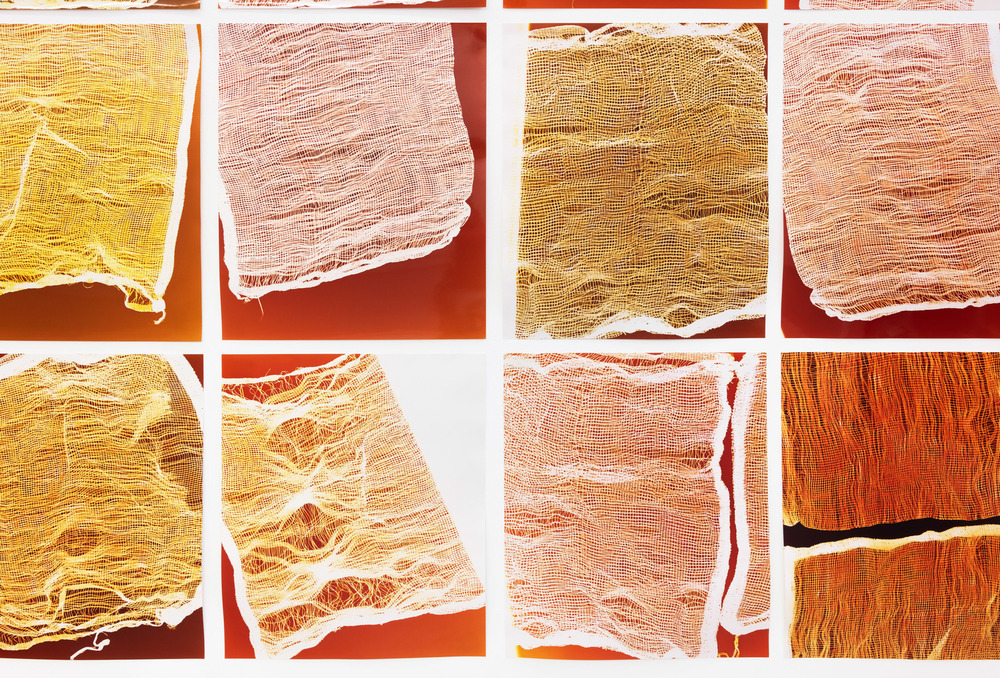
Meanwhile, in her 2020 solo exhibition 《Her Own Devices》, Kang presented 35 photograms made from bags she had collected, once used to carry firewood and onions.
 
As tools for holding other tools and supporting growth, these bags resemble both pockets and skin. Through her practice, Kang transforms these everyday vessels into devices capable of generating and containing something else.


Installation view of 《Her Own Devices》 (Franz Kaka, 2020) © Lotus L. Kang

As a porous and permeable everyday object, the bags are placed directly onto light-sensitive surfaces, revealing through photographic images the traces of time that each “skin” has accumulated from holding and containing something.
 
In this way, the bags, which once functioned as “skins” that held and protected firewood and onions, are transformed through Kang’s practice into another kind of skin: photography itself.
 
Through this transformation, the artist moves beyond asking what these objects have held to pose the question, “What do you carry?” In doing so, she evokes the ways in which memory and experience become accumulated and embodied in bodies and materials.


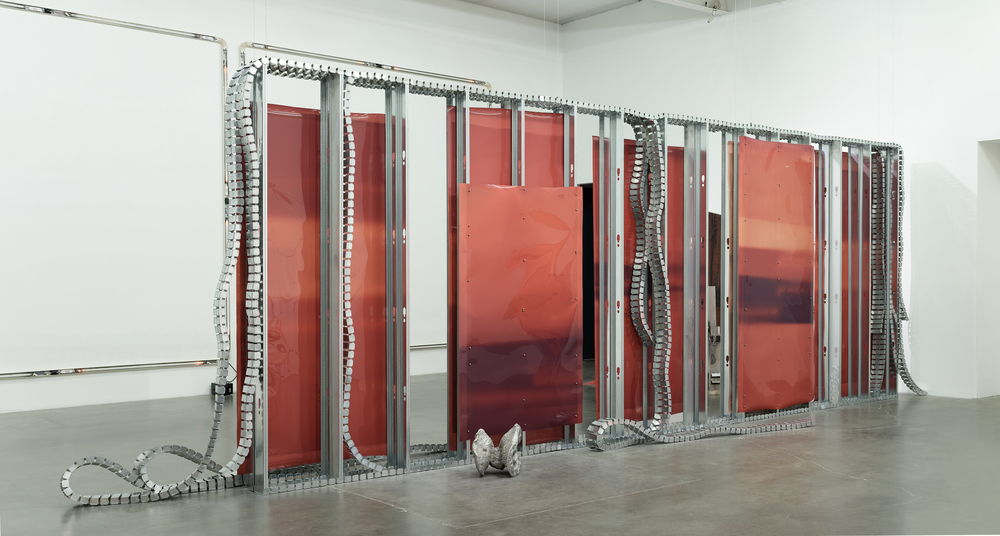
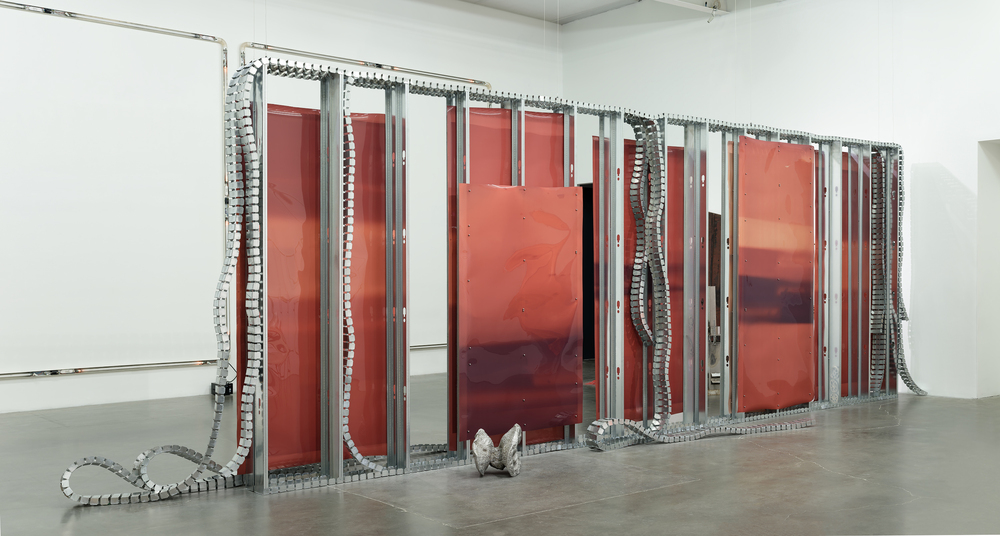
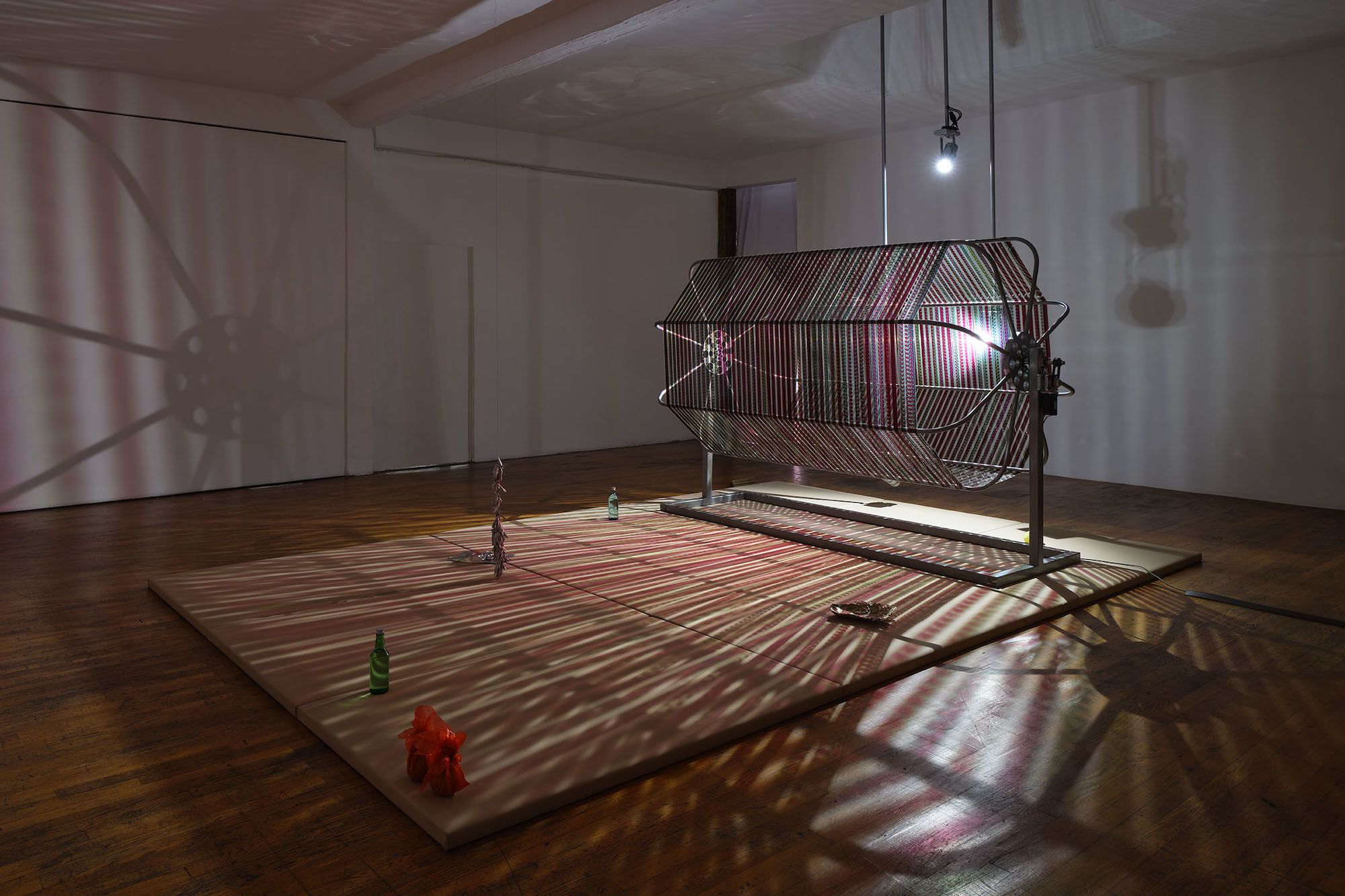
Lotus L. Kang, Great Shuttle, 2020-2021, Flex track, steel studs, airline cable, hardware, unfixed and continually sensitive film, photograms, spherical magnets, silicone, thread; cast aluminum anchovies, lotus root, perilla leaf, and cabbage leaf. © Lotus L. Kang

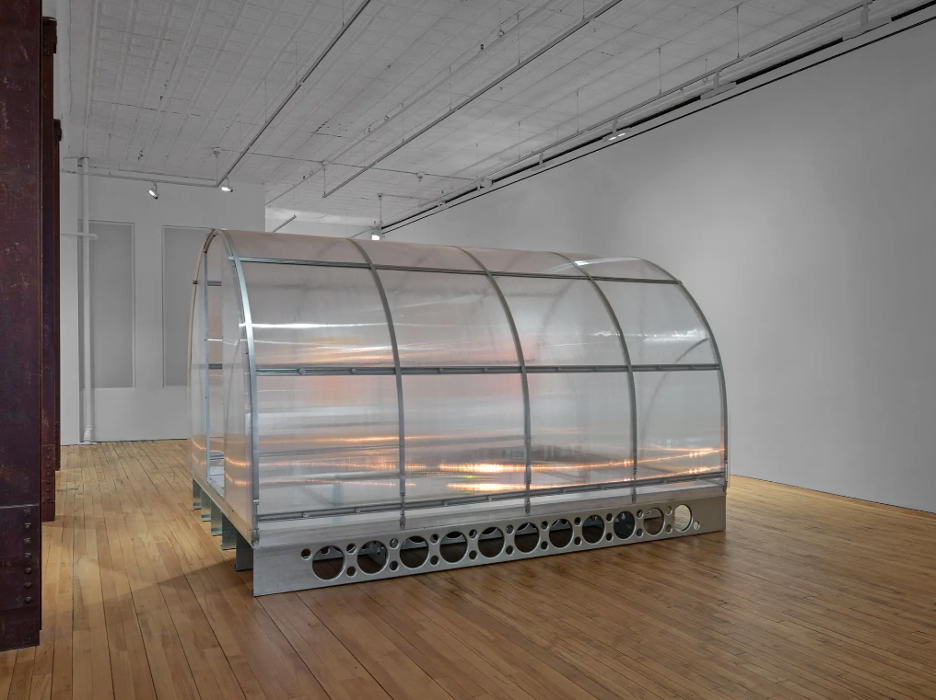
Furthermore, in the 2021 New Museum Triennial 《Soft Water Hard Stone》, Lotus L. Kang reinterpreted the museum space from a new perspective, emphasizing the embodied experience of viewers as they encountered artworks within it.
 
Drawing on the structure of temporary partition walls used to install artworks in museums, Kang installed Great Shuttle (2020–2021), a steel structure covered with photographic film, at the center of the exhibition space.
 
Configured as a track using the flexible movement of photographic film, the work functions as a temporary and mutable wall that responds sensitively to its environment and the passage of time. In particular, traces of the surrounding environment left on the film-skin form distinct layers of time, revealing how changes in space and time become accumulated within matter.
 
These traces evoke organic, visceral forms that seem to blur and seep across boundaries, appearing in tones reminiscent of blood, bruises, and bile.


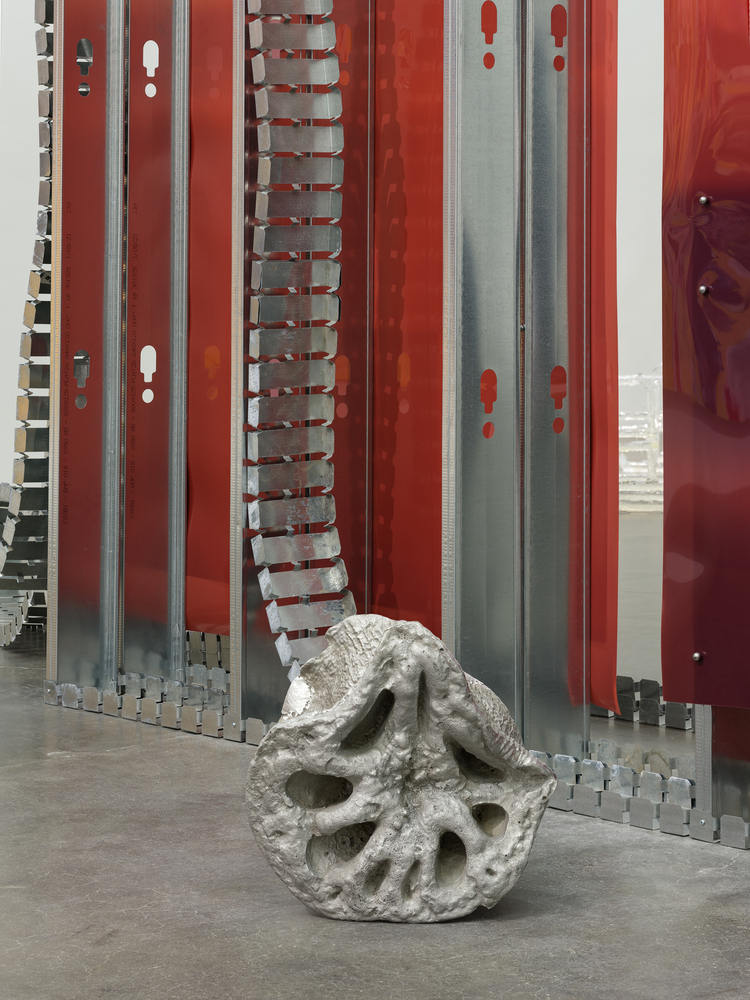
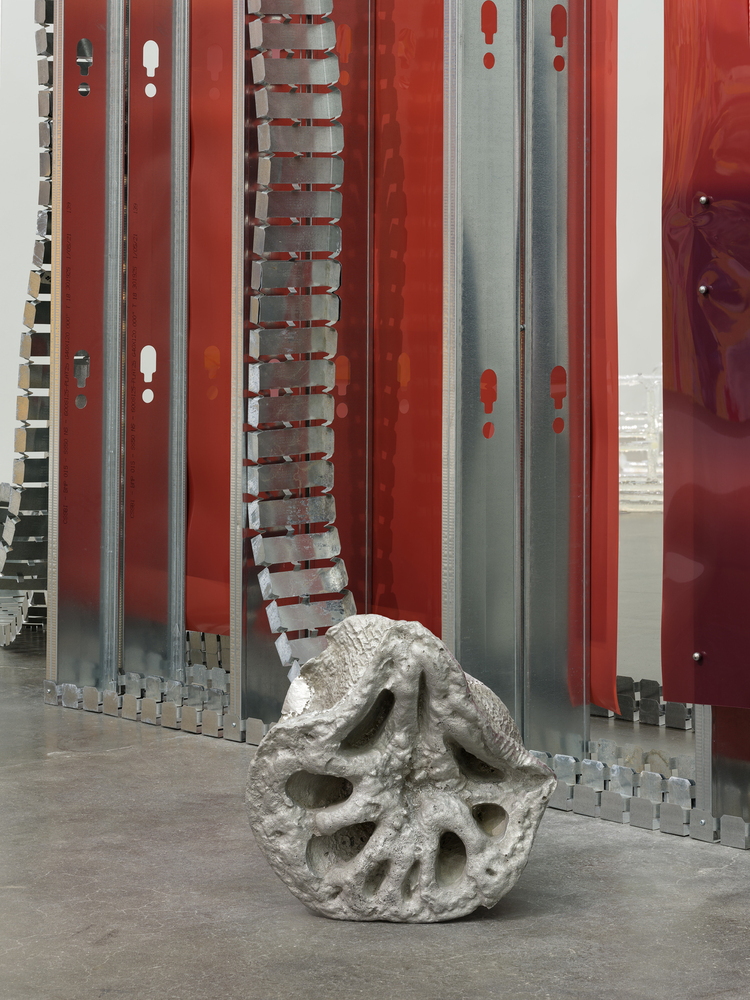
Lotus L. Kang, Root, 2020-2021, Cast aluminum © Lotus L. Kang

In this way, rather than establishing fixed boundaries, Kang creates structures that continually respond to time, space, and the movements of viewers, reminding us that the boundaries between bodies and spatiotemporal environments are never fixed.
 
Meanwhile, the aluminum sculptures in the form of lotus roots placed around the work metaphorically express the meaning of the work as it continually emerges through its interaction with the surrounding environment.
 
With its porous structure, the lotus root grows by receiving oxygen and nutrients through its numerous openings. These openings, or structures of absence, have become a key motif in Kang’s practice, suggesting the potential for emergence and generation.


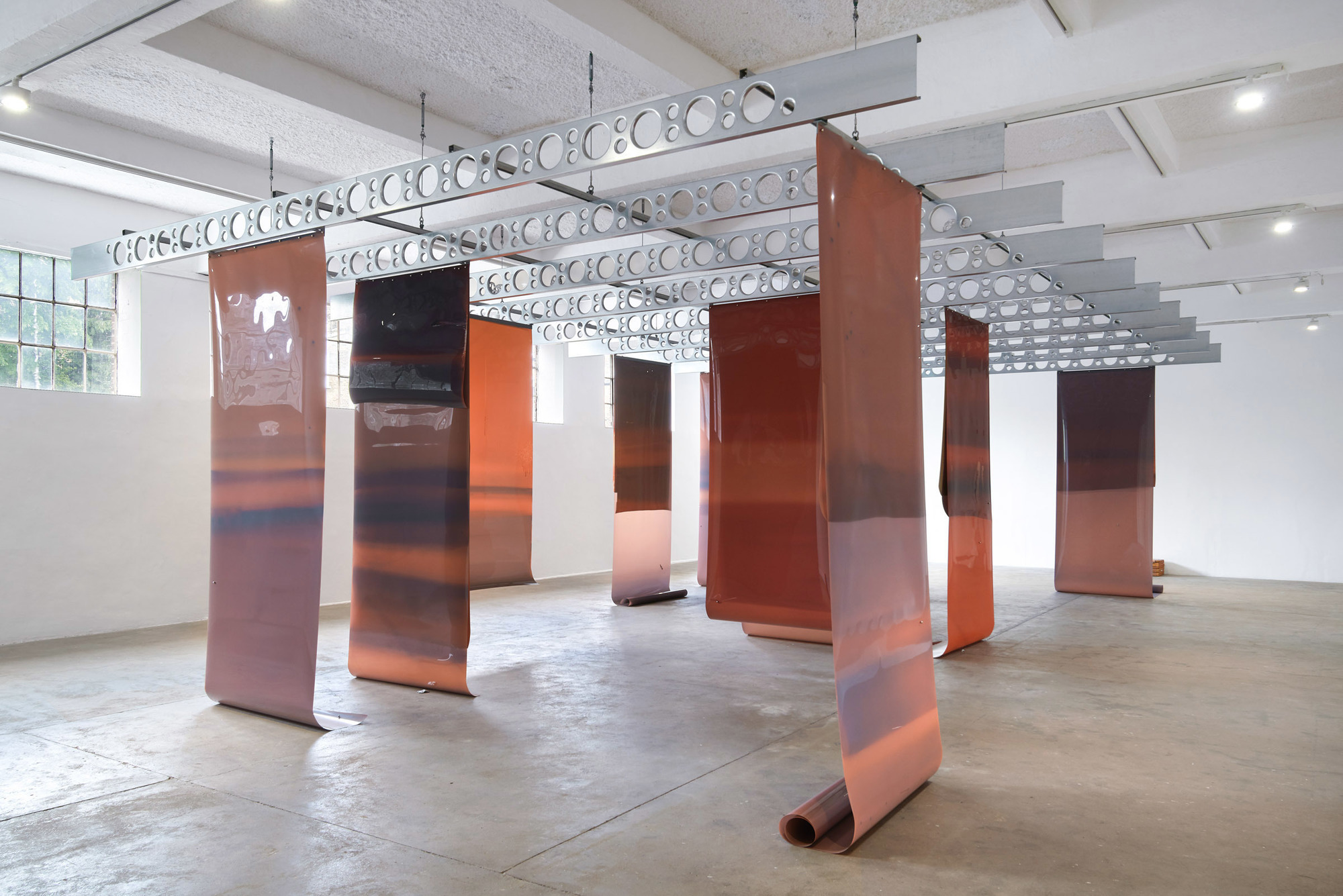
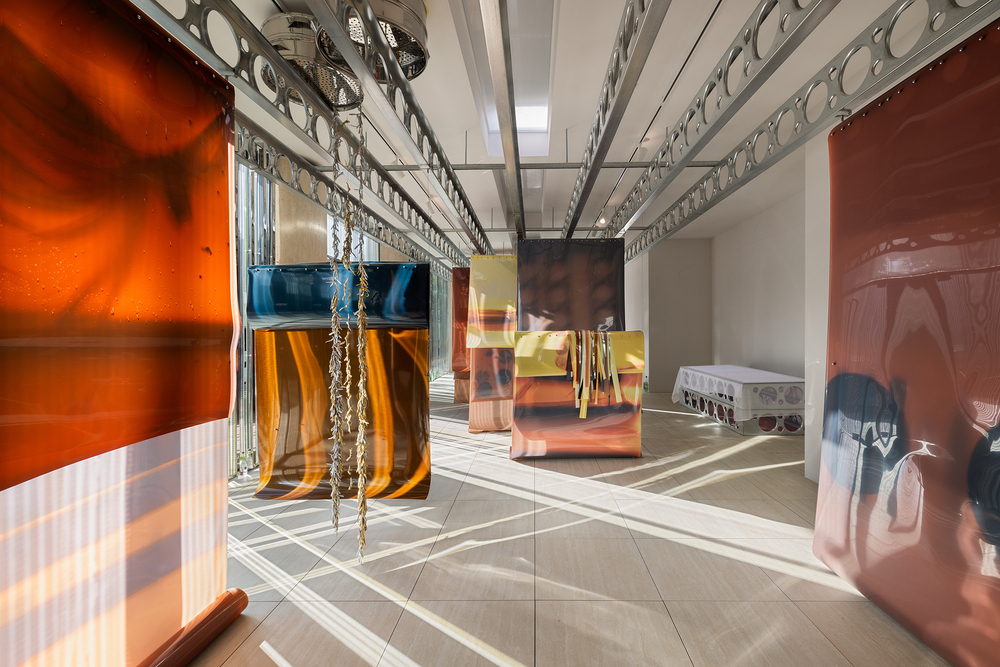
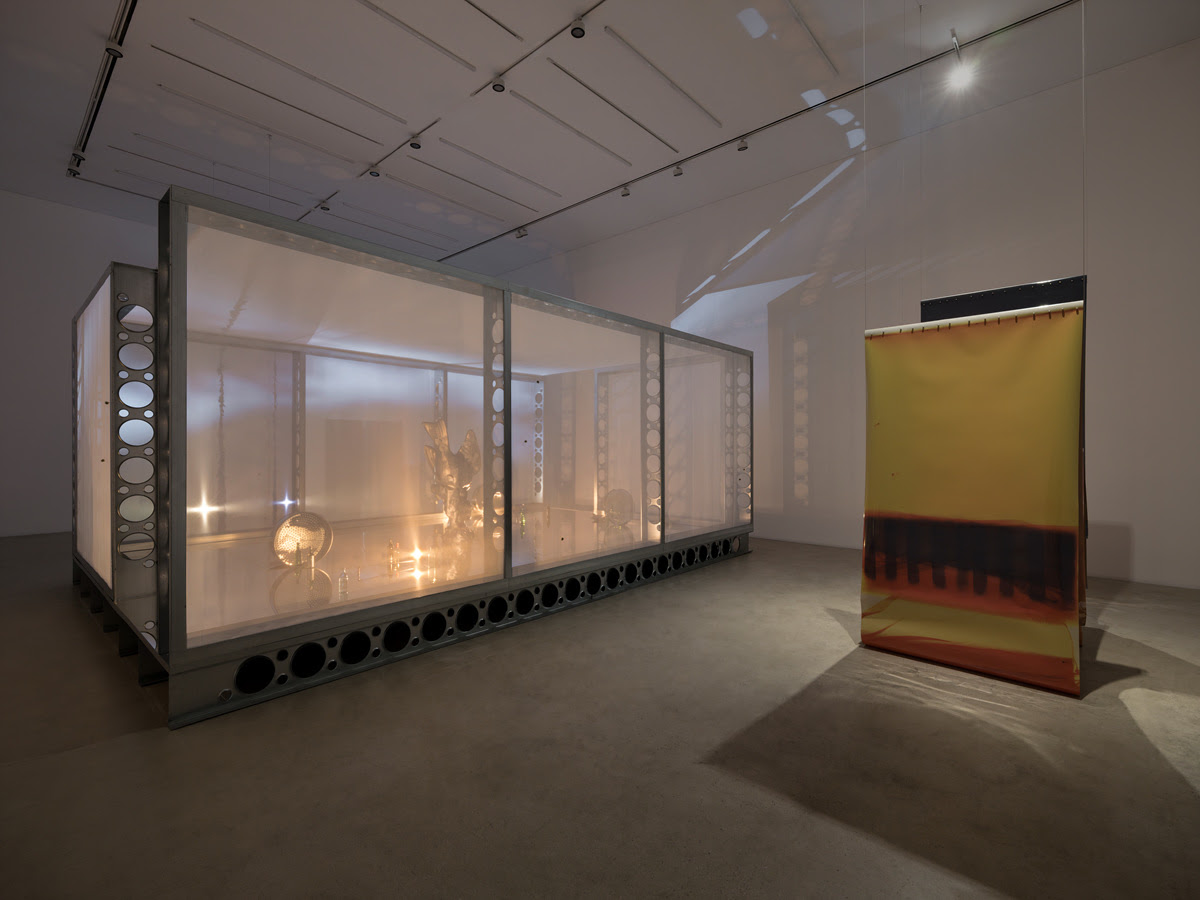
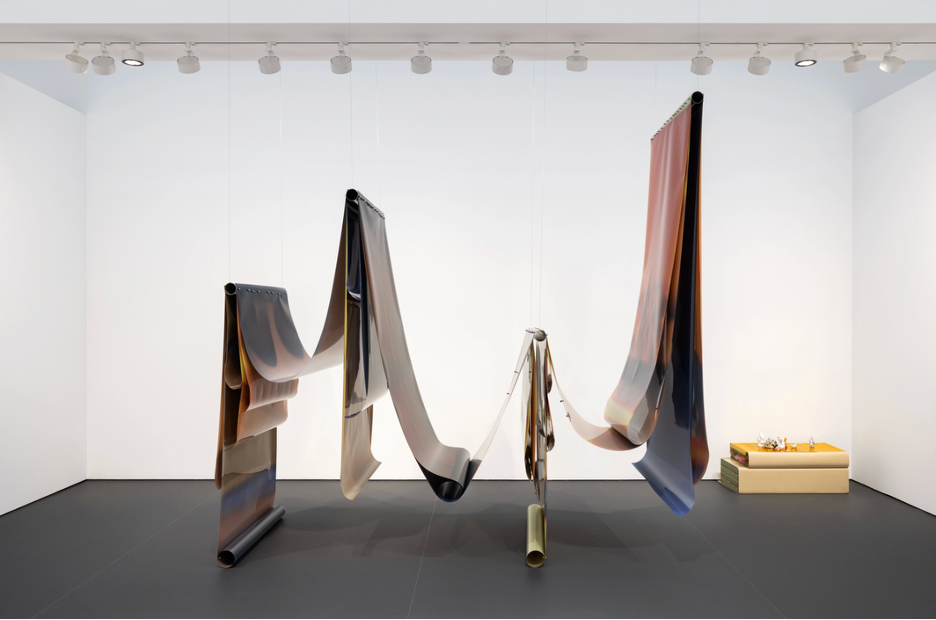
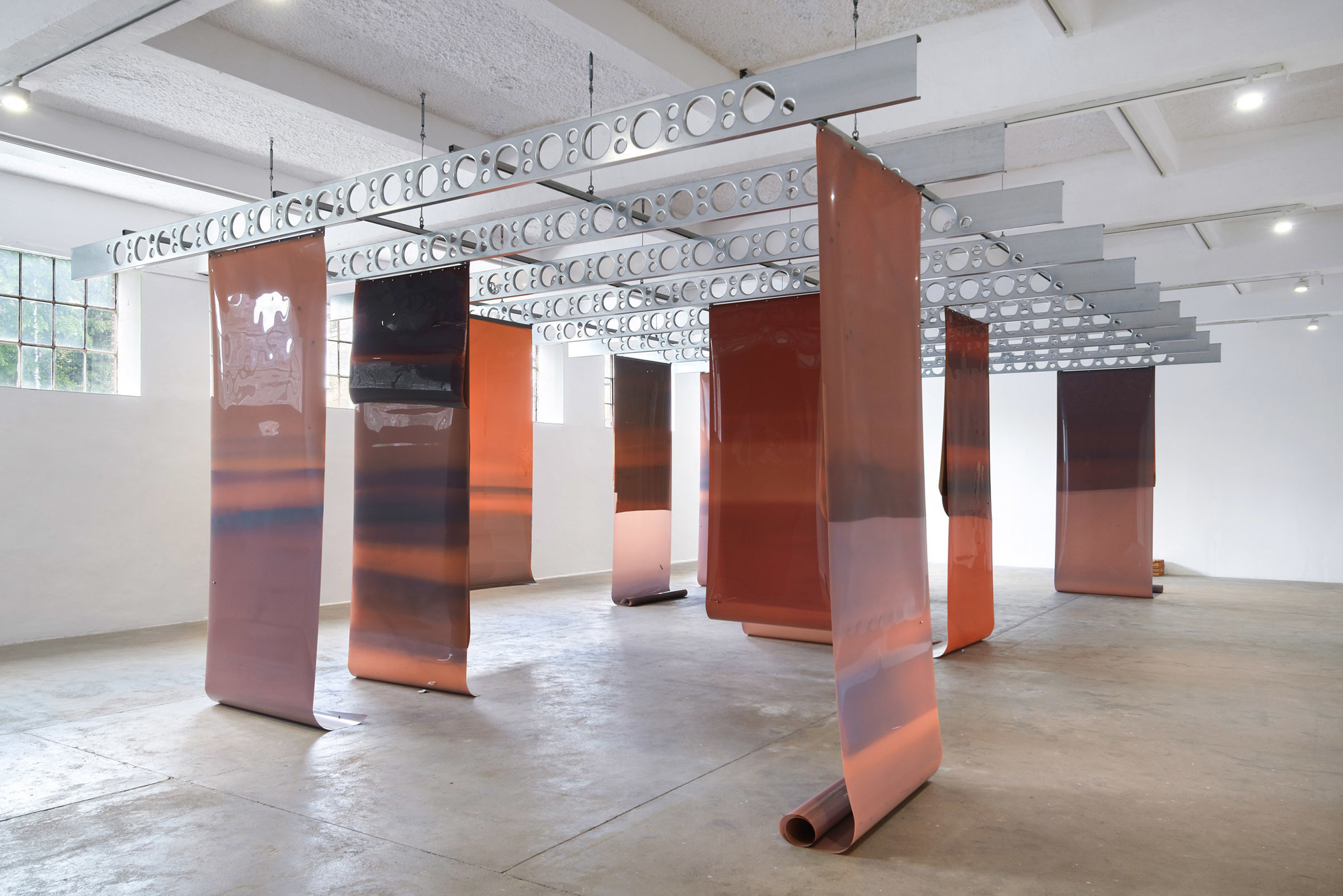
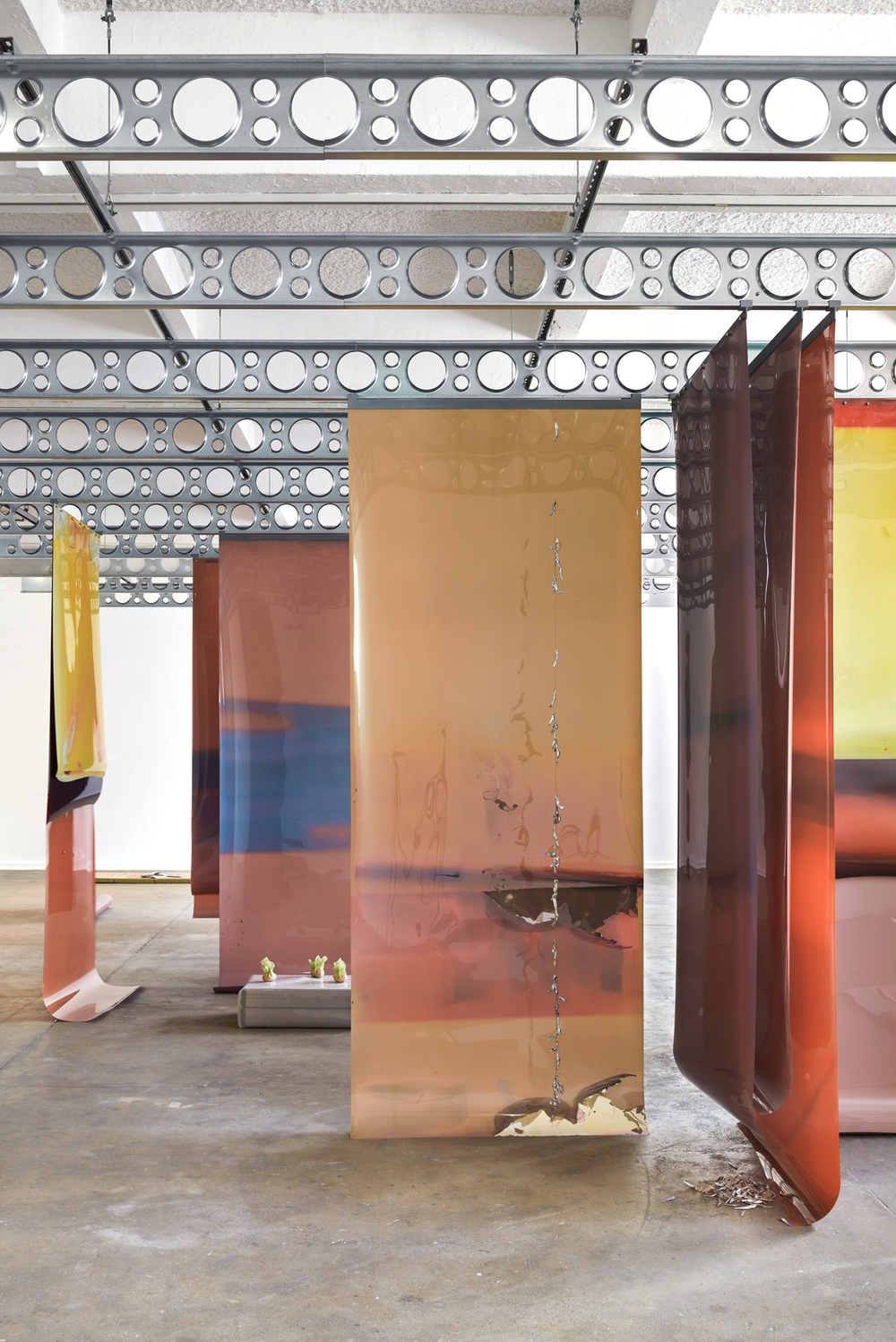
Lotus L. Kang, In Cascades, 2023, Super Joist, steel, hardware, tanned and unfixed film (continually sensitive), sheet silicone, cast aluminium kelp knots, cast aluminium lotus root, spherical magnets, 3500 x 6960 x 11430mm © Lotus L. Kang

In In Cascades (2023), this porous structure of the lotus root is translated into the industrial steel joists that suspend the photographic films, functioning as skins, from the ceiling. Just as the empty spaces within the lotus root contribute to its strength, the openings in these joists likewise enhance their structural integrity.
 
Rooted in this generative structure of absence, unfixed photographic films hang loosely from the ceiling, becoming another porous skin that responds sensitively to its surroundings. Continuously absorbing light and humidity, the films take on the condition of bodies perpetually “becoming.”


Lotus L. Kang, In Cascades, 2023, Super Joist, steel, hardware, tanned and unfixed film (continually sensitive), sheet silicone, cast aluminium kelp knots, cast aluminium lotus root, spherical magnets, 3500 x 6960 x 11430mm © Lotus L. Kang

Meanwhile, aluminum sculptures depicting lotus roots, anchovies, and kelp knots discreetly revealed themselves at various points around the work. Seven rat pups cast in colored glass were placed along the edges of the exhibition space, leaning against its boundaries or intertwined with one another.
 
As liminal beings that traverse the gaps within today’s infrastructure and inhabit its interiors, rats function simultaneously as repulsive pests, accepted kin, and, in scientific contexts, stand-ins for humans.
 
Through these structures and elements, Lotus L. Kang moves fluidly between the visible and the felt, the abundant and the lost.


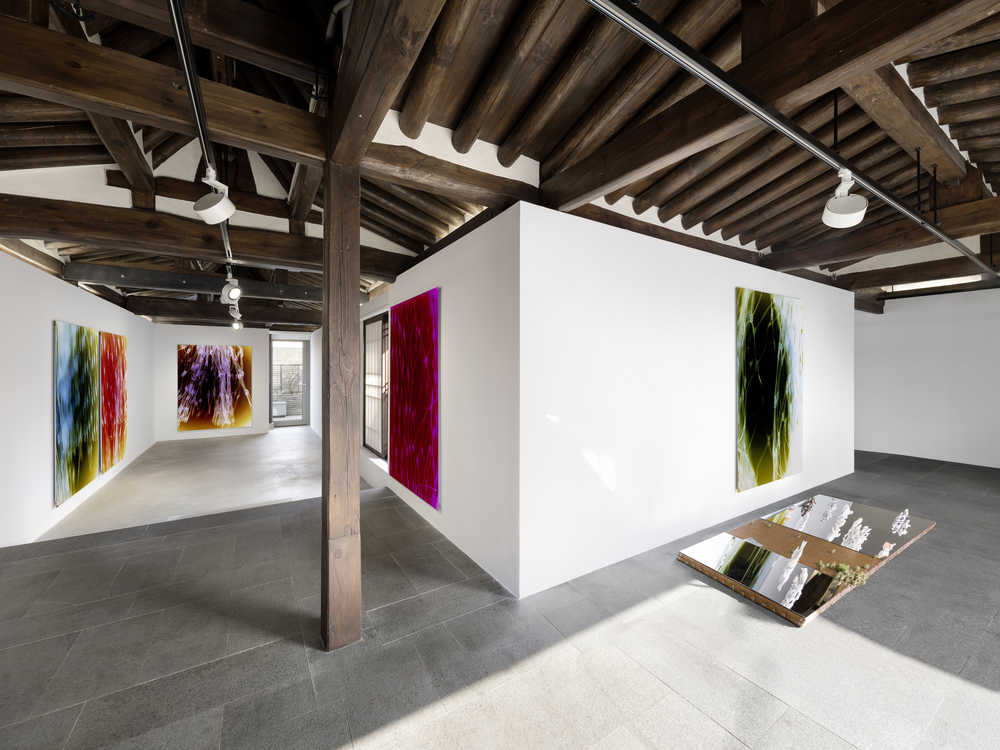
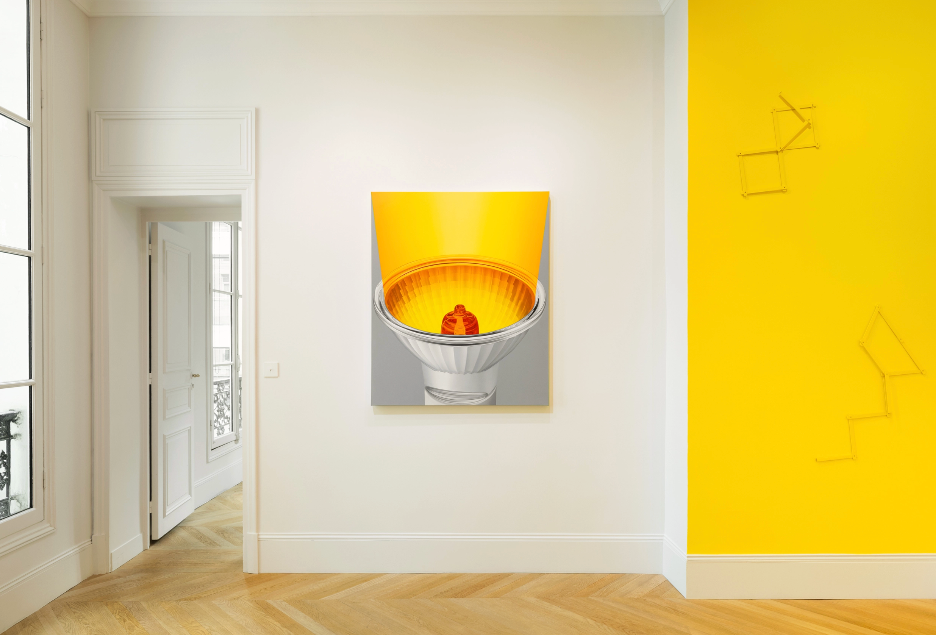
Installation view of 《Chora》 (kukje Gallery, 2026) © Lotus L. Kang

Meanwhile, in 《Chora》, Lotus L. Kang’s first solo exhibition in Korea, held at Kukje Gallery in 2026, the artist approached the concept of inheritance as an embodied condition, expanding her exploration of personal inheritance beyond the private narrative of bloodline to encompass architecture, environment, and memory.
 
Moving between the gallery’s traditional and contemporary exhibition spaces, Kang presented a spatial translation in which past and present cohabit without resolution.


Lotus L. Kang, Chora II, 2025-2026, Cast aluminum © Lotus L. Kang

The title of the exhibition draws from the concept of “chora” articulated by Julia Kristeva, which describes a primordial space prior to fixed meaning or form. Likened to a mother’s womb, chora suggests a generative field—receptive, rhythmic, and continuously in flux.
 
Kang approaches this notion as a framework for understanding space not as a mere container but as a site of nourishment and transformation. Across the exhibition, forms emerge from states that are neither fully solid nor fully void, but suspended in between.


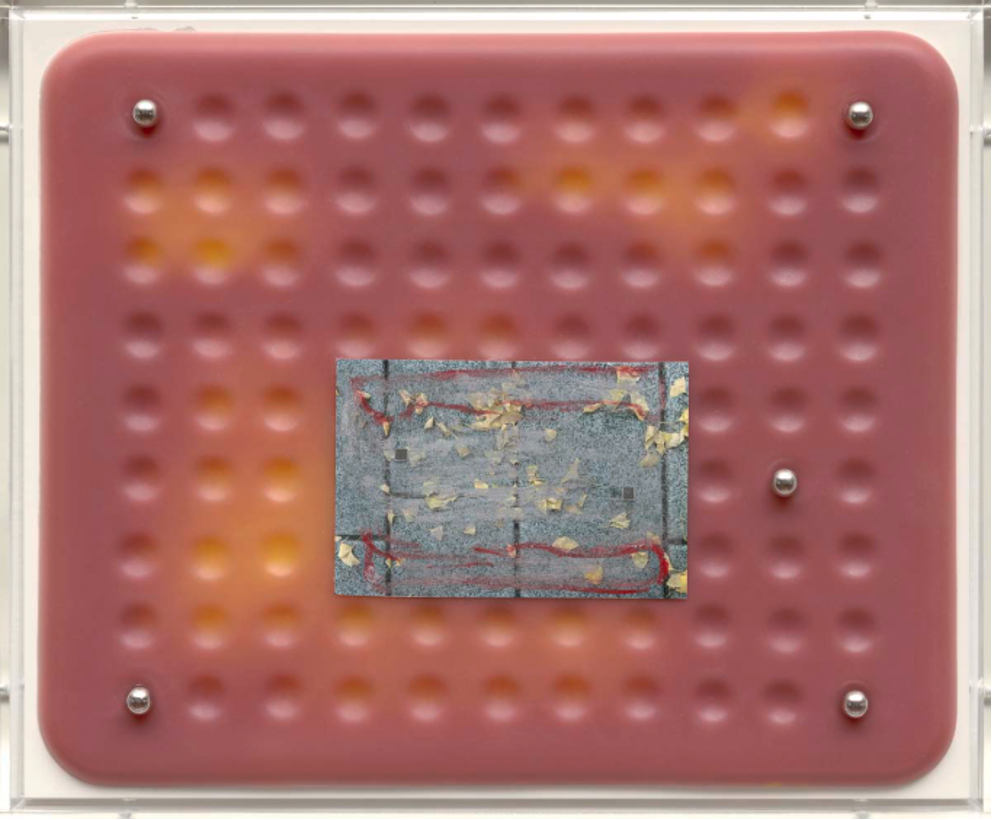
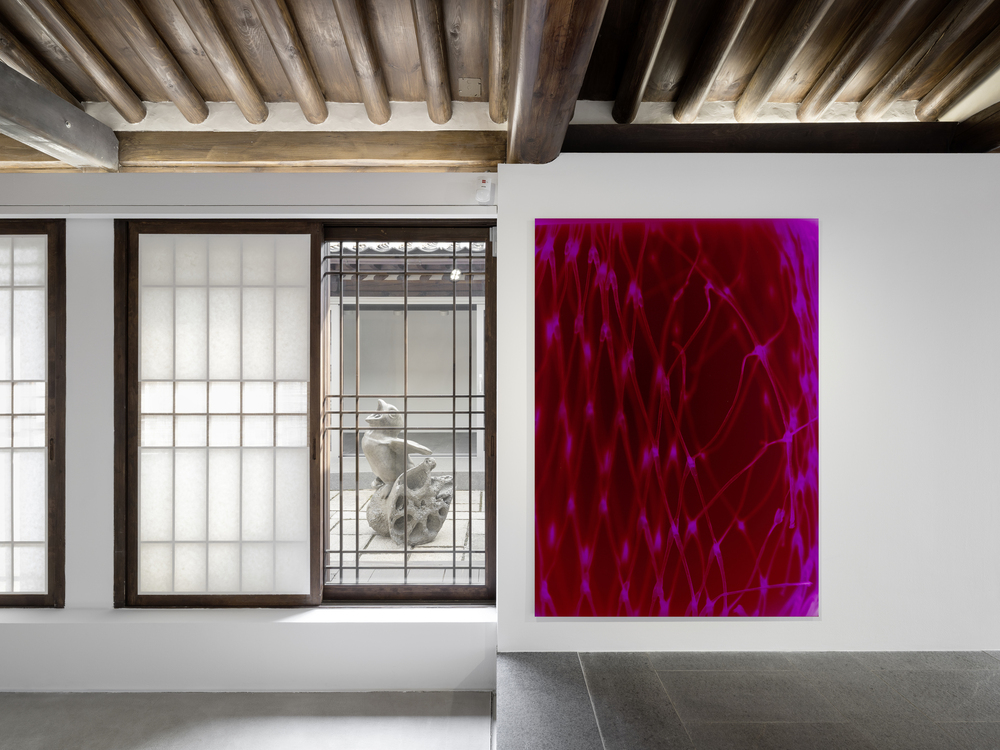
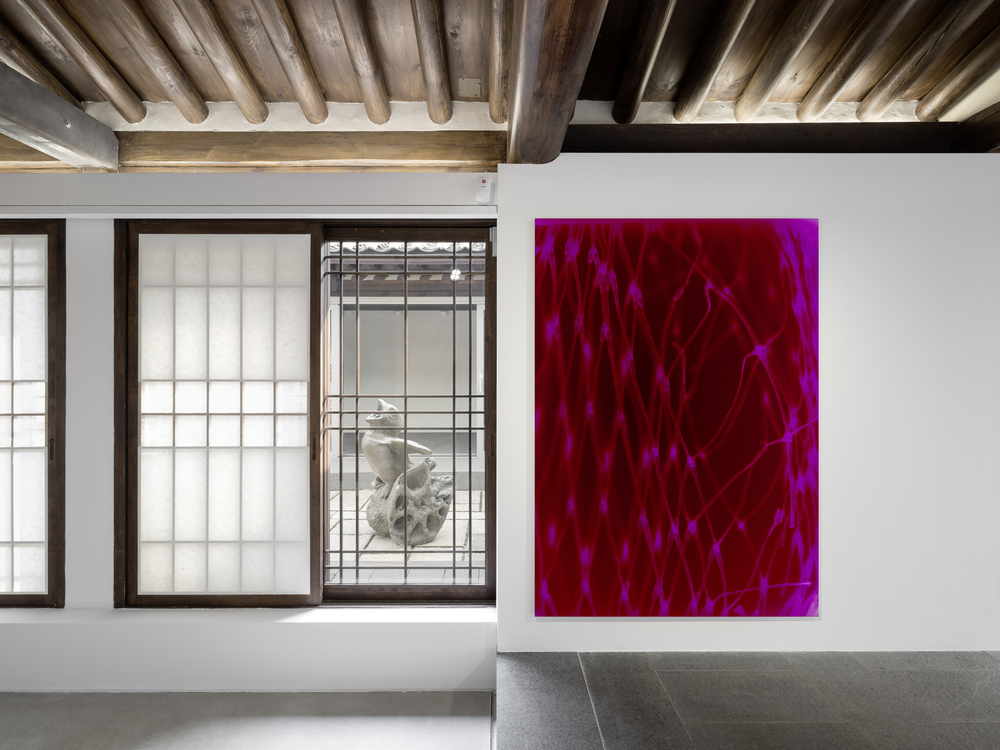
Lotus L. Kang, Synapse, 15:27, 2025, Luminogram mounted to dibond, 117.8x127cm © Lotus L. Kang

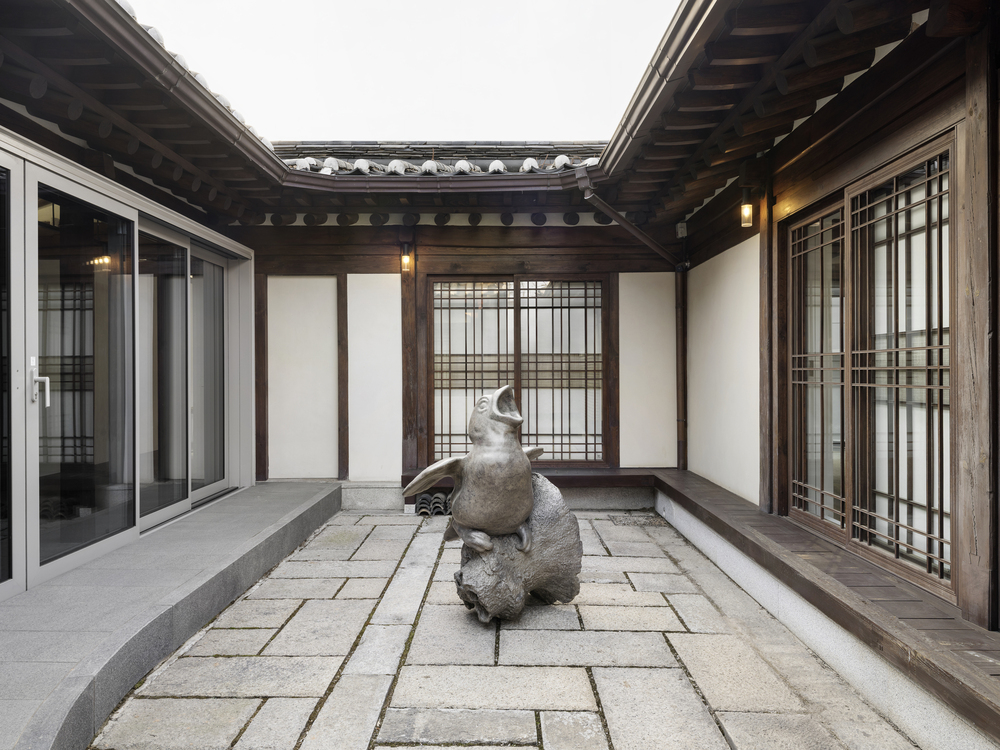
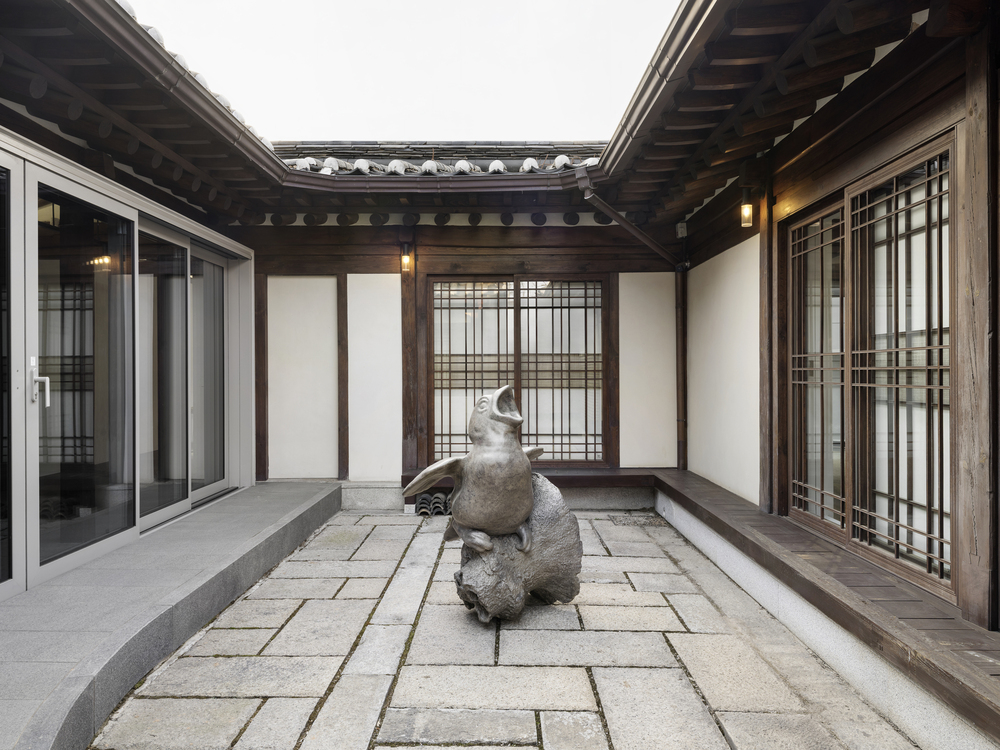
The courtyard of the hanok most directly embodies this concept of the chora. By supporting the architecture through its emptiness, the courtyard exists in an “in-between” state, neither completely filled nor entirely empty, becoming a site that holds the potential for new forms of emergence.
 
At its center, a fragile baby bird embodies both infinite potential and vulnerability, symbolizing a cyclical temporality in which life and death, beginnings and endings, continuously unfold. Inside the hanok, the ‘Mesoderm’ and ‘Synapse’ series explore states of bodies and matter that remain unfinished, using imagery that evokes the processes of embryonic formation as well as cells and tendons.


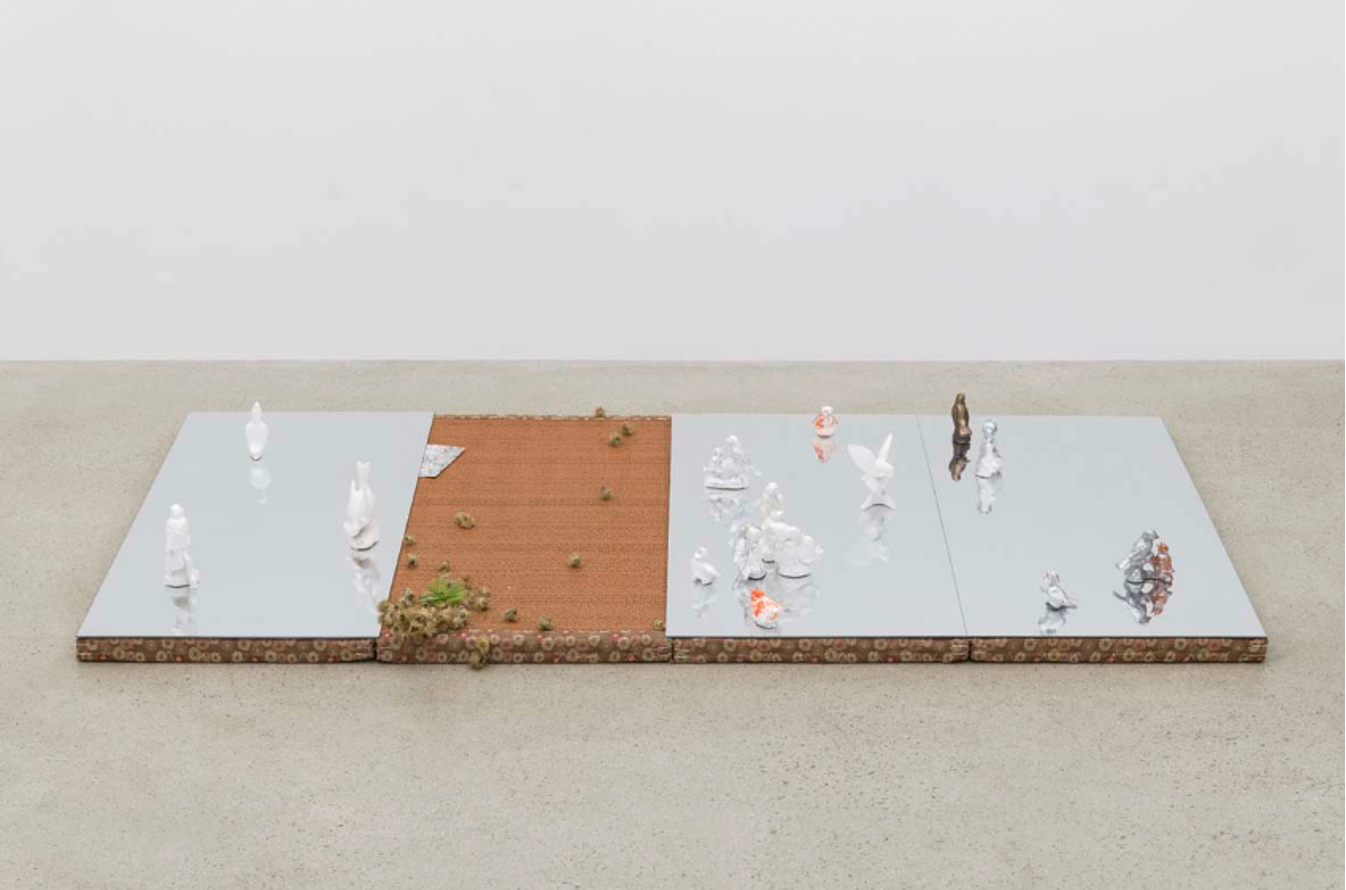
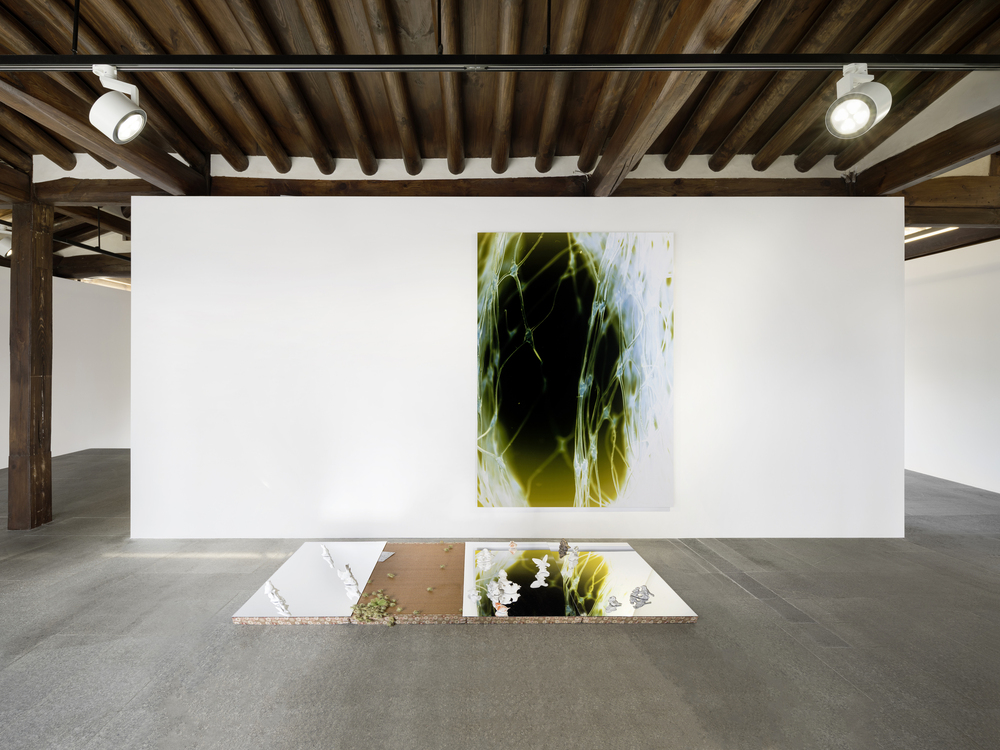
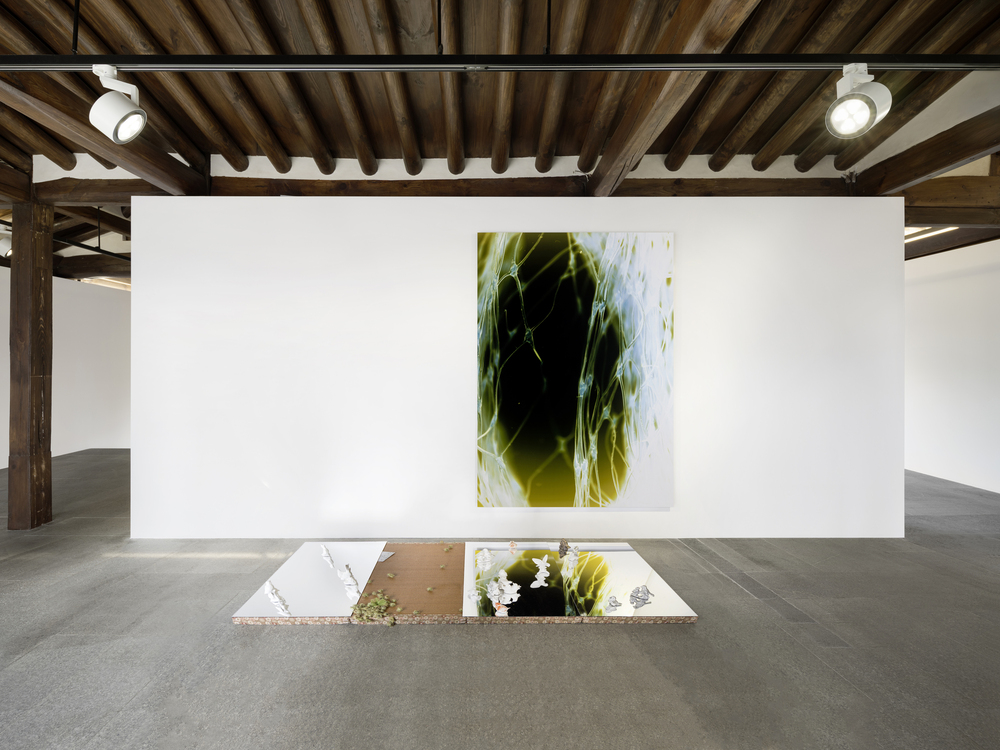
Lotus L. Kang, Synapse, 16:00, 2025, Luminogram mounted to dibond, 117.8x127cm / Receiver Transmitter (Born Inside Death II), 2025, Receiver TransmitterTatami mat, mirrored acrylic, cast plaster, cast aluminum, ink, photographs, burrs © Lotus L. Kang

The ‘Receiver Transmitter’ series, which incorporates tatami mats, transforms objects with stable functions and uses, drawing attention to the time and memory accumulated along their edges and folds. For Kang, memory does not remain in monumental forms, but is closer to small, intimate traces that seep into and are transmitted through wrinkles and gaps.
 
In particular, mediated through the memories of her grandmother, who migrated from North Korea to Seoul and made a living there, the tatami becomes entangled with complex histories encompassing not only Korea but also Japan and the United States.
 
Within the context of traditional architectural space, Kang simultaneously moves closer to and distances herself from her inheritance.
 
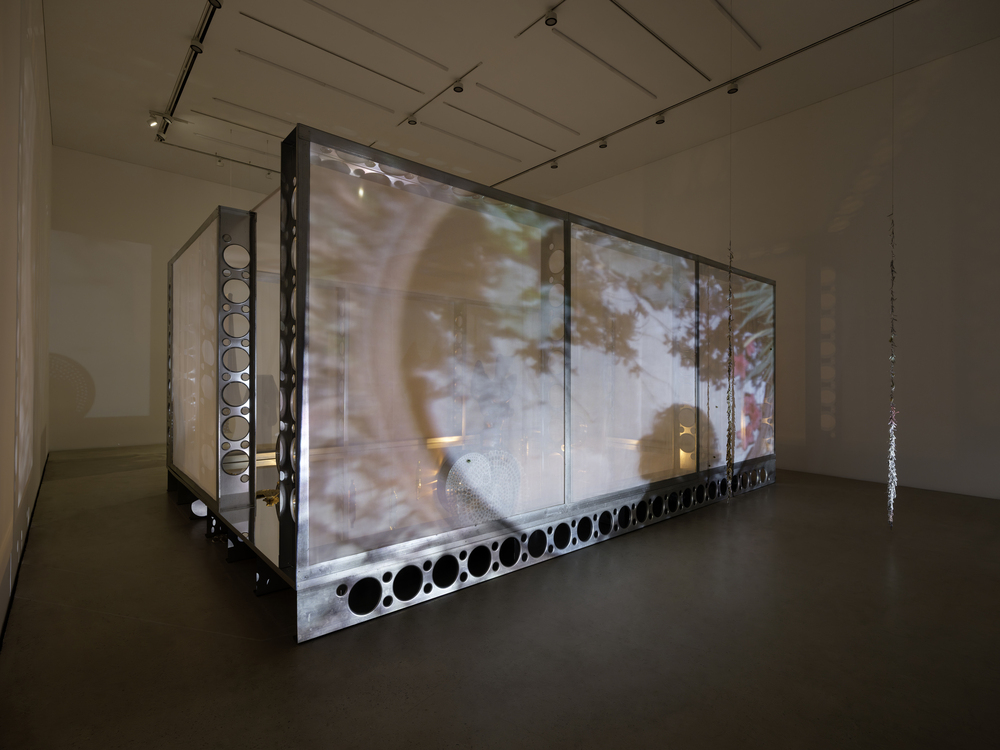
At K3, Kang presented Chora Chora, which transposed the courtyard of a hanok into the context of contemporary architecture. A steel structure reminiscent of the porous structure of lotus roots, translucent fabric, and a mirrored floor visually expand the space toward infinity, unsettling perceptions of fixed structures and boundaries.


Lotus L. Kang, Chora Chora, 2025-2026, Superjoist, plywood, mirrored plexi, voile, dowels, steamers, cast aluminum, cast brass bronze, cast bronze, single channel projection, stainless steel, acrylic, ceramic, glass, LED, motors, hardware, burrs, ink, spirits © Lotus L. Kang

In this way, space and body, memory and inheritance in Lotus L. Kang’s practice do not exist as fixed forms, but emerge through relationships that continually influence and transform one another.
 
Embracing the possibilities of ongoing change and emergence, Kang’s practice invites us to consider more fluidly the boundaries that distinguish the physical and psychological inside from the outside of the “self.”

”My work exists in literal and metaphoric states of becoming and unfixity, and this deconstructive strategy aims to continually build, break down and rebuild.” (Lotus L. Kang, Artist’s Note)


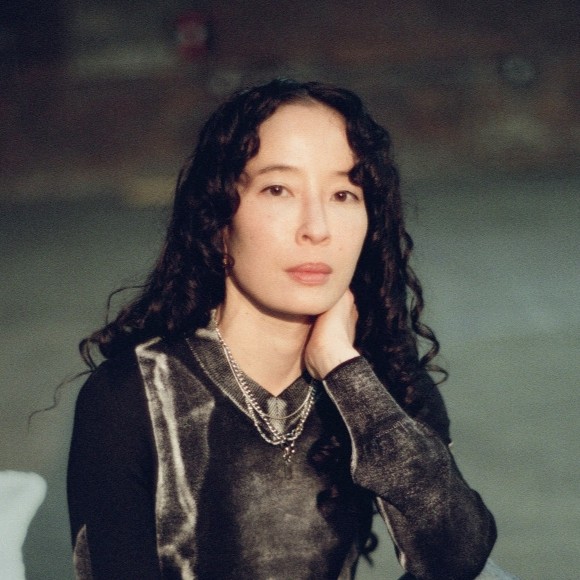
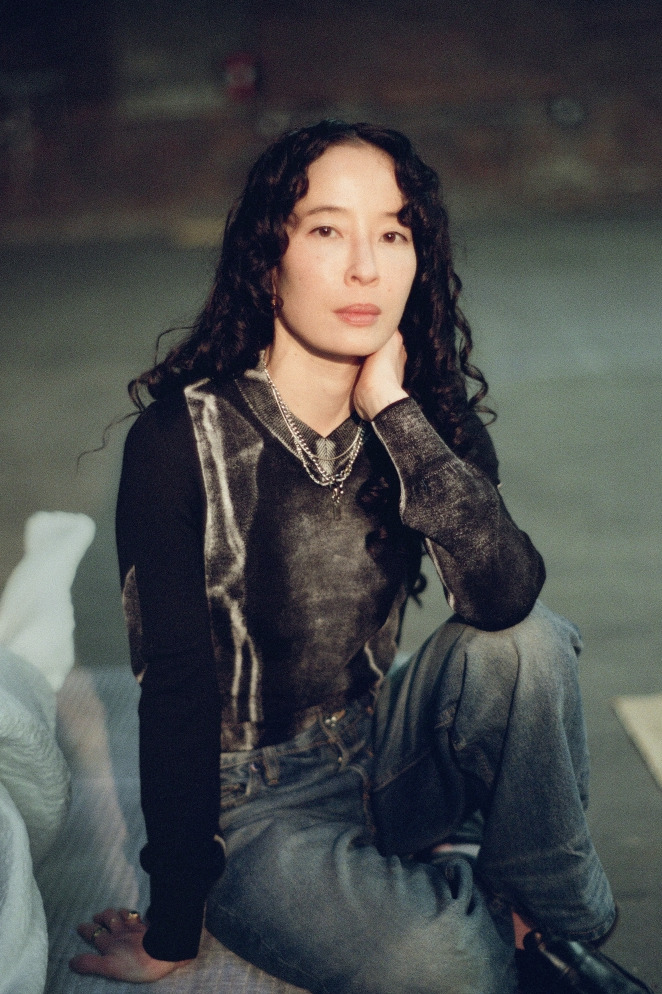
Artist Lotus L. Kang © Kukje Gallery

Lotus L. Kang received her BFA from Concordia University and MFA from Milton Avery School of the Arts at Bard College. Her recent solo exhibitions include 《The face of desire is loss》 (Bvlgari Pavillion at the 61st Venice Biennale, Venice, 2026), 《Chora》 (Kukje Gallery, Seoul, 2026), 《Borne》 (Esther Schipper, Berlin, 2025), 《Already》 (52 Walker, New York, 2025), and 《Azaleas》 (Commonwealth and Council, Los Angeles, 2024).
 
Kang has also participated in numerous group exhibitions, including 《Printemps 2026》 (Esther Schipper, Paris, 2026), the 15th Shanghai Biennale 《Does the flower hear the bee?》 (Power Station of Art, Shanghai, 2025), 《What is Parasite and What is Kin?》 (MoMA, New York, 2025), the 2024 Whitney Biennial 《Even Better Than the Real Thing》 (Whitney Museum of American Art, New York, 2024), and 《We Are Story: The Canada Now Photography Acquisition》 (Art Gallery of Ontario, Toronto, 2023).
 
In 2024, Kang was awarded a John Simon Guggenheim Memorial Foundation Fellowship in Fine Arts.

References