1
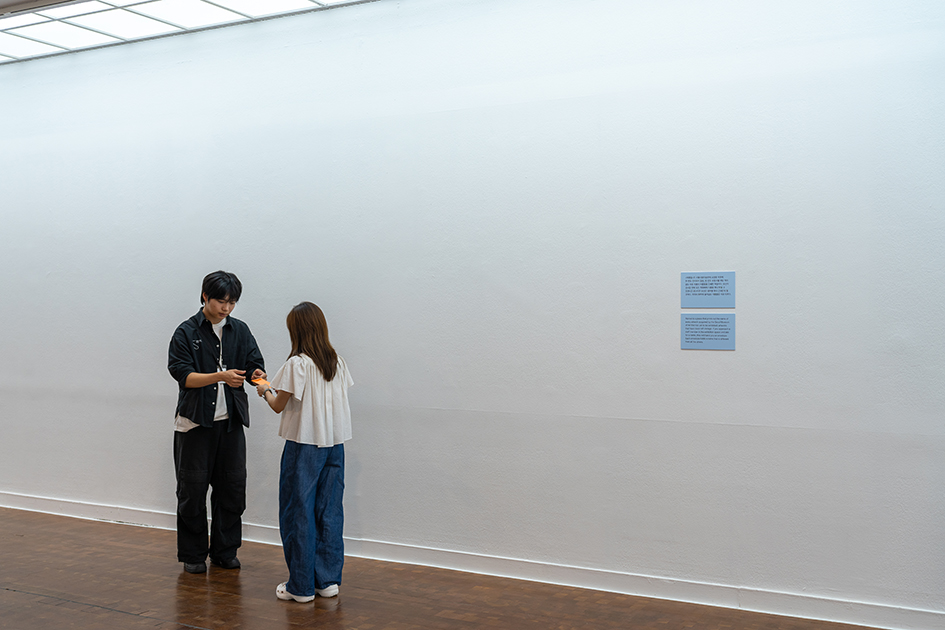
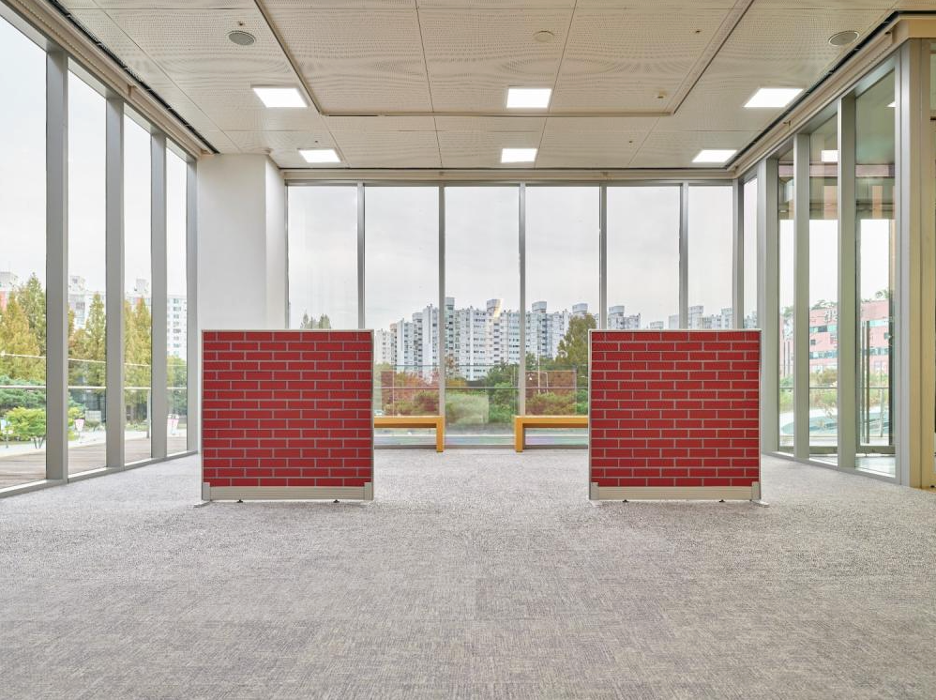
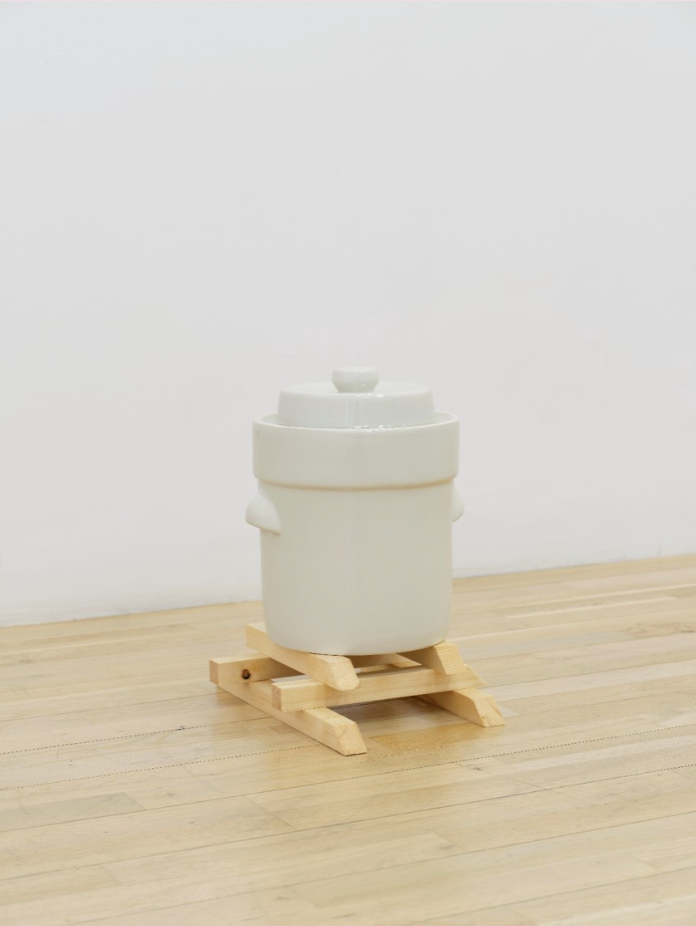
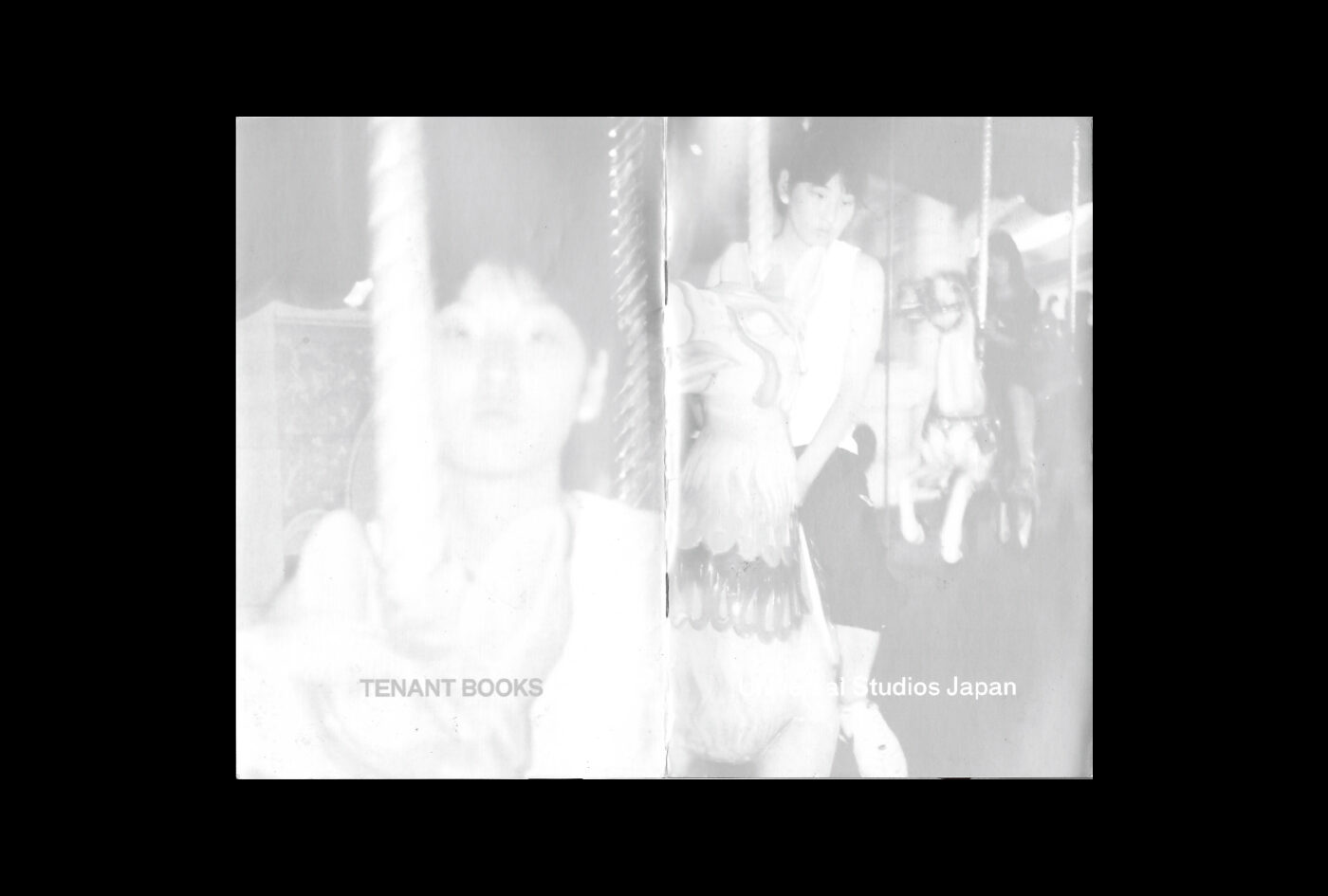
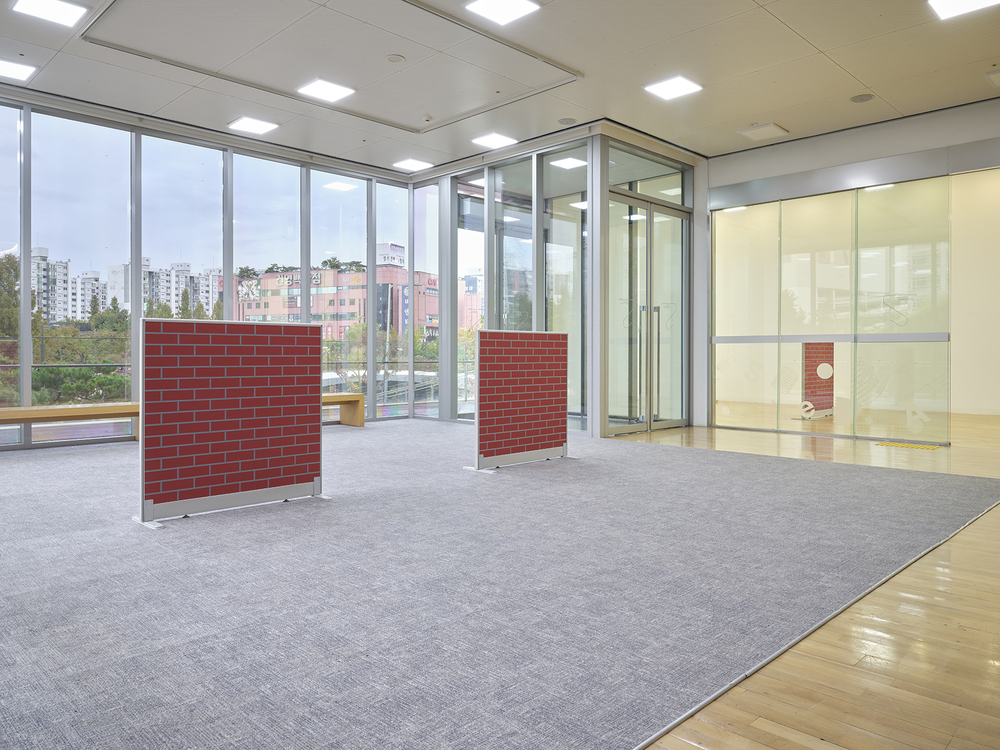
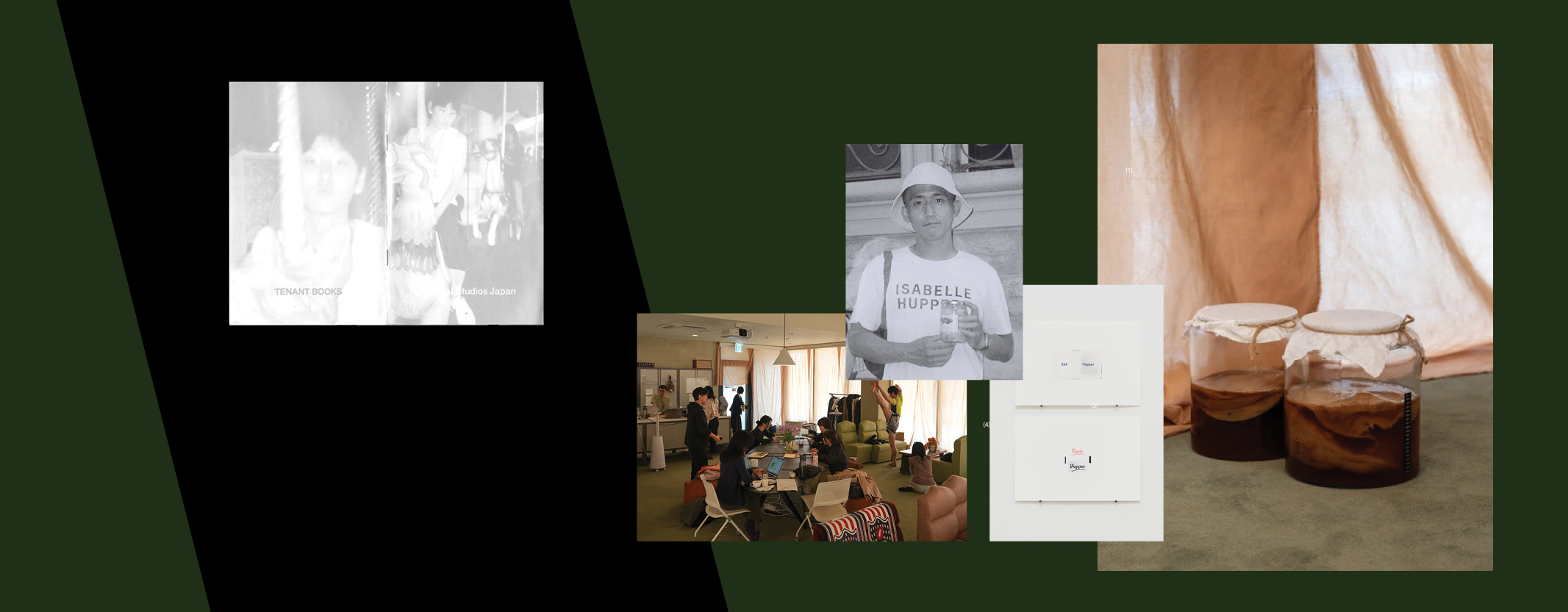
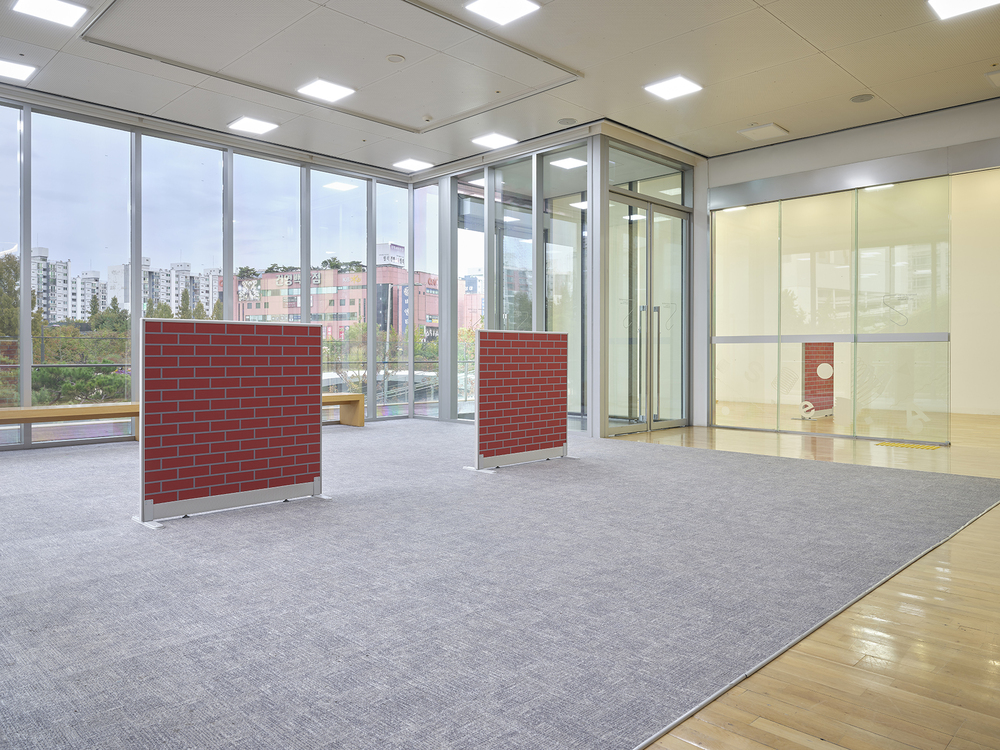
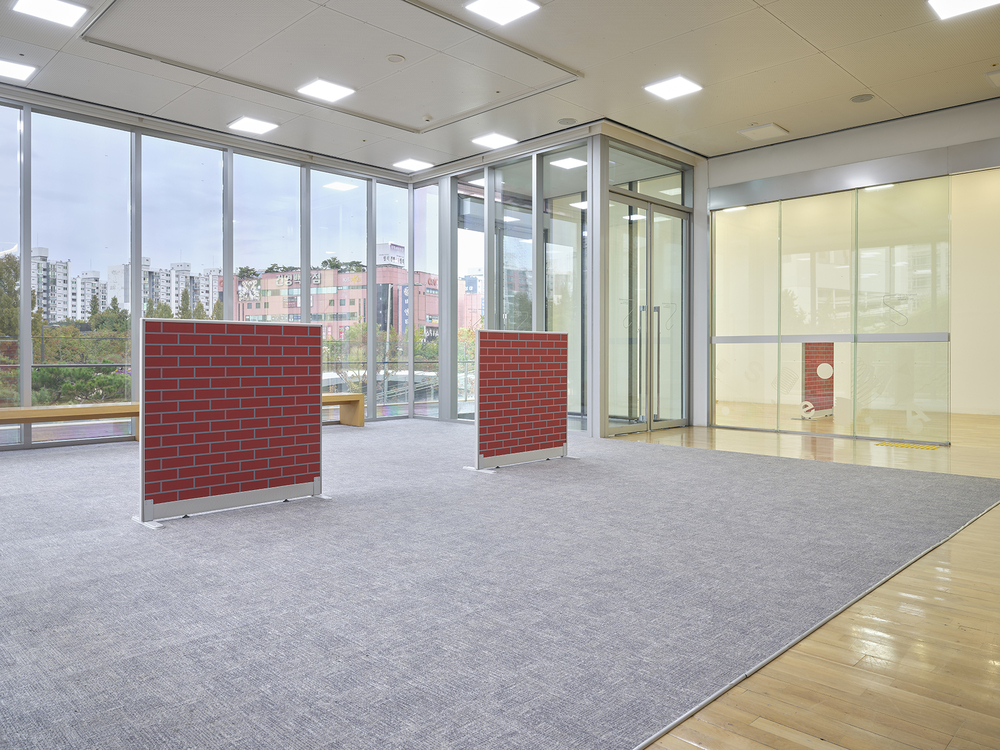
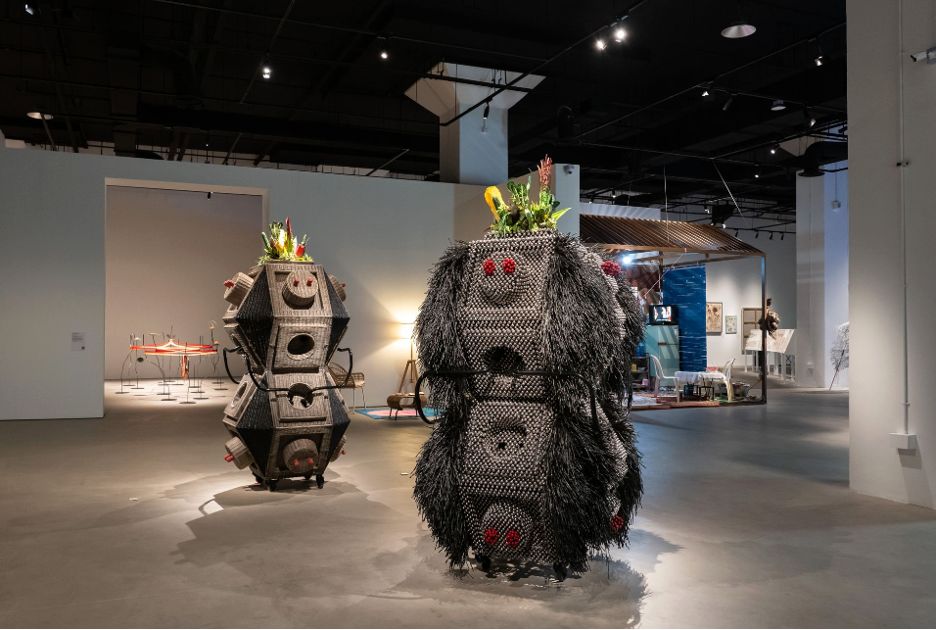
I glanced around at the objects placed in the exhibition space—three square office partitions about the size of a young child, imitating a red brick wall; a single matchstick suspended in the air with the wooden end opposite its head sharpened to a point; two postcards attached one above the other, printed with the words “salt” and “pepper” in different typography; and a moderately sized beige crockpot placed on a wooden stand—then returned to the starting point and picked up the saddle-stitched booklet To the beaver’s house.
Looking for a suitable place to read the story, I sat on one of the two wooden benches beyond the partitions. Sitting there, I could see the exhibition space I had just looked around in a single view, and somehow felt as though I had hidden myself somewhere and curled up.
To the beaver’s house was the story of a beaver who, after developing self-consciousness, came to suffer from an overwhelming anxiety. The reason the beaver suffered from anxiety was the ambiguity of its own self, its fate of being entangled in a boundary: belonging to this side and also that side, yet neither this side nor that side.
“One day, the beaver began to consciously distinguish the fact that there were no webs between the fingers of its hands, but there were webs between the toes of its feet. It could not remember exactly which came first, but it was around the same time that it realized its house had been built on the boundary between two worlds, water and land.”
The beaver’s recent hobby was to sneak into a campsite at dawn and collect the salt and pepper that people had thrown away in piles of trash—or more precisely, the objects packaged as one, containing salt and pepper in equal halves.
“Salt and pepper, water and land, black and white, one made of two.”
It was not because the beaver needed salt or pepper that it took the trouble to collect and store them. For the beaver, tormented by the anxiety of boundaries, salt and pepper—two substances so different from each other, yet joined into one—must have been an object that could briefly calm its own anxiety, or one onto which it could project its longing. The beaver overheard people gathered at the campsite talking about salt and pepper.
“But this thing, you know, it’s so natural that I never noticed it, but isn’t it kind of funny? The way pepper is always next to salt. Or salt next to pepper. Salt comes from the sea and pepper comes from the land, and salt is even white while pepper is black. How did something like this become fixed as one relationship? And why are these things always two in one body? I mean, what I’m saying is, it’s so obvious that calling it obvious feels strange.”
Despite diligently collecting salt and pepper, two things in one body that were so obvious they became strange, the beaver’s anxiety did not subside; it only grew. The beaver suddenly felt an impulse to burn down its own house. Just as it took out a matchstick and was about to light it, it became intensely aware of a piece of spinach stuck between its two front teeth.
It sharpened the opposite end of the matchstick and removed the spinach caught between its teeth. The beaver felt a satisfaction it had never felt before, and the story ends with it staring intently at this thing that is both matchstick and toothpick.
“Gazing blankly at the piece of spinach hanging limply like wet laundry from the sharpened end of the match, she soon put the spinach back into her mouth and chewed it carefully, staring at the small, mysterious body that had a matchstick at one end and a toothpick at the other, and could therefore burn down a dwelling or pick one’s teeth.”
I closed the book and, sitting on the bench, thought for a moment about this story that was both funny and sad, a story that made it impossible to either laugh or cry, the story of the beaver as both tragedy itself and the protagonist of tragedy. If tragedy is an event in which situations that can never be reconciled compete with one another, then the protagonist of tragedy would be an agent swept up among the forces of that conflict, unable to escape an irrecoverable loss no matter what choice is made.
The beaver is tragic because, in a world where A and B are clearly distinguished, it possesses both A and B, exists between A and B, and moves back and forth across both. For tragedy to be resolved or for the event to be transformed, the world must either stop distinguishing between A and B, or the beaver must bear the anxiety and endlessly exhaust it.
Destruction that burns away the form and mode of existence, or compromise that chooses and gives up one of the two, may temporarily appear to resolve the tragedy, but in fact it completes and further solidifies it. This is because there is only the loss of one element, while the relationship between the competing situations is not readjusted or reorganized in the slightest. Fortunately, there is no such story in To the beaver’s house. Of course, it almost happened…
Let us call a literary attempt to readjust and reorganize relations in order to transform an event speculative literature. Among such attempts, the genre that introduces a world in which the world no longer distinguishes between A and B, or in which the competing circumstances are configured differently, is generally called science fiction. To the beaver’s house is speculative literature, but it is not science fiction.
In this story, the world does not change, nor does anyone propose a new world. Instead, the story grants the beaver a wondrous, magical moment: a fictional space in which a dramatic turn occurs for reasons unknown, enabling a complete reorganization of relations. It is “just then” that the spinach between the beaver’s front teeth appears amid the imminent tension of burning down the house, and although in an utterly absurd and strange way, the beaver eventually creates the match-toothpick that bears and exhausts its anxiety, “without time to think,” “instinctively.”
Although the beaver is the subject undergoing all of this, it “does not know why” the event has turned. In the intervals of the situation surrounding the appearance of an object that had not existed in the world, there is a fictional space so vast that it is difficult to fathom. And it is slyly sutured between the letters. Neither the author of the story, nor the beaver, nor the reader can ever determine and explain what this space is.
We can only sense its presence through the diffraction held within the story. It is real to everyone, but because it is not substantial, it is fictional. Therefore, the beaver could only have stared quietly at that mysterious object, and the story could only end with the beaver looking at the mysterious object.
What remains is only a mysterious object that is both a matchstick and a toothpick, neither matchstick nor toothpick. Yet this object is decisive, because it is an object that is pure potentiality, nothing in itself. It has the possibility of burning down the house and the possibility of picking between teeth, and as the story shows, it possesses countless other possibilities beyond those alone. What matters, then, is not the transformation or transmutation by which it was a match and became a toothpick.
What matters is the infinite three-dimensional space secured by an object that is both of them and neither of them, displaced from the positions of “match” and “toothpick” into a nameless place that was extremely narrow yet real, and that gains excessive agency there. Suddenly, I think of the space of zero, located between -1 and 1 on an imaginary coordinate plane. Is “0” nothing, or is it everything?
Perhaps this is not a very important question. What To the beaver’s house expresses is the vastness of the in-between space that is neither 1 nor -1, and a contemplation of the capacity of an object that secures that space as potentiality, as well as a simulation of how that capacity operates. Therefore, this story may be called literature that speculates sculpturally.1
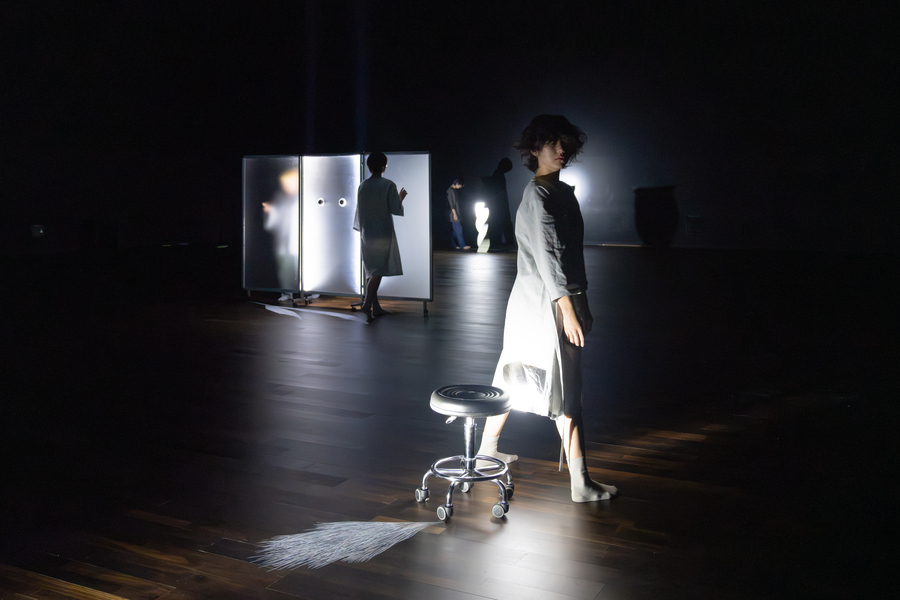
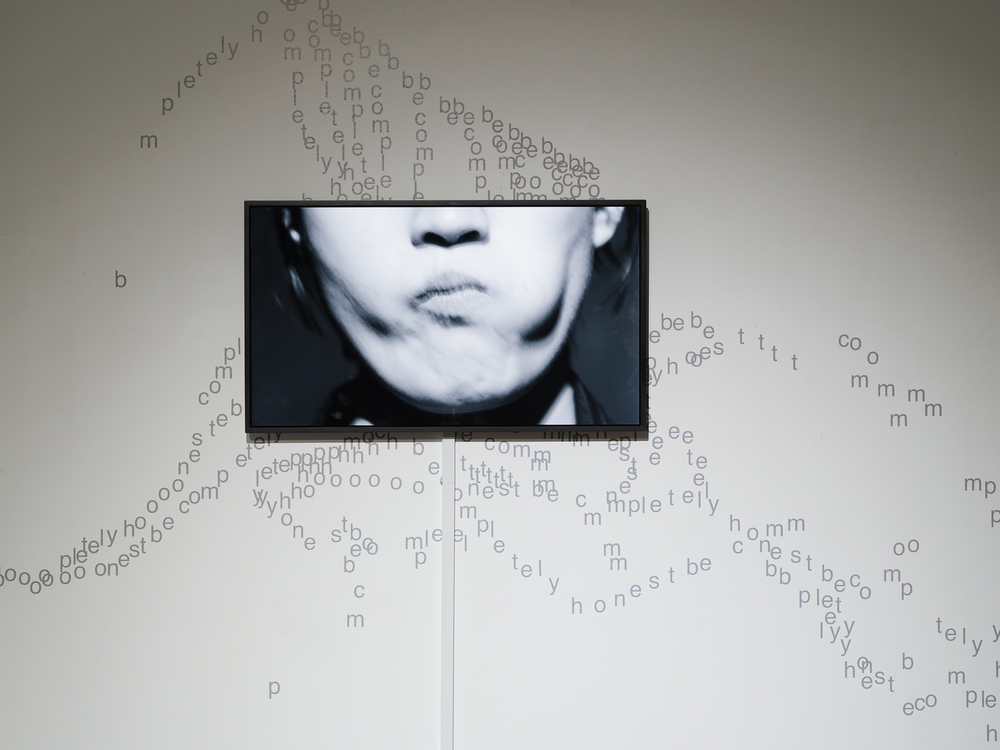
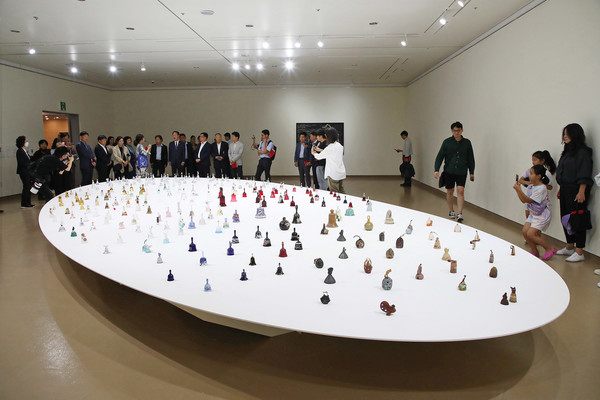
Mysterious objects… fictional space… potentiality… different competitions… new relations… As these thoughts began to tangle together and I grew troubled, I got up from the bench and looked around the exhibition space once more. The strange objects placed in the exhibition space—the “wall-shaped wall,” “the small, mysterious body that can burn down a dwelling or pick one’s teeth,” “salt and pepper,” and the crockpot around which “the humans who kept a fire going late into the night, drinking makgeolli and talking” might have sat—were all things that appeared in the story.
They were things that come out when one holds the story with both hands and wrings it out. Yet they are not merely a few elements from the story pulled outside it and placed there for us to enjoy alongside the story. Looking closely, these mysterious objects, somehow strange and funny, all look clearly toward one problem: the matter or situation of two different ones being together or becoming divided, and the space or potentiality that this competition hides or treats as though it does not exist.
Like the match-toothpick in the story, these objects too must have appeared by being gradually pushed into a nameless place. If the story is a simulation, these objects implicate viewers in that problem in a different way from the story. Before leaving the exhibition, I turned around and looked for a long time at the landscape outside the museum, seen behind the strange partition, the wall-shaped wall that neither covered nor blocked what lay beyond it.
In the story, the beaver trembled while looking at a swarm of crocodiles beyond the wall, but what I saw were the beautiful colors of autumn and children playing in the park on a weekend afternoon. “A thousand weights, ten thousand weights, ninety thousand weights”… Without realizing it, I found myself chewing over the words of the beaver’s maternal grandmother. Even if what is seen beyond the partition differs endlessly, one cannot help but think about the distance between here and there, inside and outside, this place and that place, this and that, me and you—about what lies between.
On my way home, I suddenly thought of the crockpot. They say that makgeolli is fermenting inside it, and that on the final day of the exhibition the finished makgeolli will be shared with people. This story, too, is romantic. But what if, for various reasons, the makgeolli does not ferment deliciously but spoils, so that when the lid is opened a terrible smell emerges and the artist, flustered, repeatedly apologizes to people? Who knows.
What it may become is still unknown. In that sense, the crockpot is perhaps not empty, nor filled with makgeolli, but filled with a tremendous number of different stories. Put differently, it has not yet mediated any particular relation; it is only the potentiality of all relations. Some may feel relieved and stable in the promise of definite mediation, but when it comes to heightening expectation for the future, it is probably better not to do so.
2
Recently, while participating in a seminar with anthropological researchers working on death rituals, I read a paper that makes an interesting argument about witchcraft.2 The author asks why witchcraft is often performed by handling ordinary things from everyday life, materials or objects that are almost nothing, and argues that this has to do with intentionality toward accessing “the realm that is nothing at all.”
Witchcraft is the act of “manipulating basic material objects in order to speak the truth about a space beyond life, a space beyond materiality, a space beyond ‘here’ and ‘now,’” and the witch “sees the composition of elements and figures from another realm in the way basic forms rearrange themselves.”
What is needed in this process of witchcraft is an intermediary space beyond social structure. The author argues that the essence of witchcraft lies precisely in this empty space, this “ambiguous space of ‘not-being,’” and in its capacity to introduce uncertainty into existing relations and reconstitute social relations.
One reason this work is interesting and significant is that it positions fictional space as an indispensable element in understanding and explaining social reality. Toward the end of the paper, the author introduces philosopher Alain Badiou’s theoretical reflection on the ontology of nothingness or the void, which strengthens the author’s own argument that a certain kind of fictional space must be considered a distinct social element, and as something real.
Or perhaps, more than that, it is a powerful critique of the very epistemology through which we have limited and confined ourselves. Put differently, we must consider as social elements not only the entities that have appeared and become visible, but also the potentialities that still remain in the gaps and have not yet emerged. I think this may be a matter of caring for the possibilities of a society.
And I think it will allow us to contemplate how we compete with our own ontological structure. I suspect that Donghwan Kam’s work may belong precisely to such matters. Could the beaver’s house be a metaphor for that empty space? If so, the artist would appear to us as a surveyor measuring that house.
1. Here, sculpture is not a technical term in the narrow sense of handling materials to make a form or shape. Rather, sculpture is the act of engaging with or participating in the countless real events produced through the handling of material objects. Within this definition, sculpture meets literature. Literature is a field and technique of negotiating with fiction generated through the handling of letters, and since letters are material objects, when sculpture handles letters, sculptural processes and literary processes come to resemble each other.
They resemble each other, but they are also clearly distinct. In this context, I think the obscure and compromising term “artist book” needs to be redefined upon a broader concept of sculpture. Otherwise, the continuous, reciprocal, and organic relations among artistic practices are severed, divided, and misunderstood because of categorical distinctions based on medium. In visual art, a book is close to an object discovered in the process of sculptural exploration of the world and handled for a specific purpose.
In response to Hans Ulrich Obrist’s question about the book as a medium of artistic practice, artist Kim Beom once answered as follows: “Each medium conveys meaning to different cognitive domains in different ways. Since a book, unlike a painting or sculpture, is mainly a work that uses language as its material, it can of course express things that other works cannot. Language is a medium that can convey a wide range of contents in detail, from communication and information transmission to literary expression.
For example, while I have expressed matters related to visual cognition through the forms of paintings or the appearances of sculptures, through books I have also been able to expand that expression in another direction, toward the virtuality and deceptiveness of the object of cognition, and the human characteristics and psychology related to these.” Hans Ulrich Obrist, interview with Kim Beom, November 2022, in Radio-Shaped Iron, Iron-Shaped Kettle, Kettle-Shaped Radio, curated by Lee Seolhui, Workroom Press, 2024, pp. 242–244.
2. Knut Rio, “Death, Witchcraft and the Temporal Aspects of Divination,” in Rane Willerslev and Dorthe Refslund Christensen, eds., Taming Time, Timing Death: Social Technologies and Ritual (London: Routledge, 2016).
Included in the catalogue for Donghwan Kam’s solo exhibition 《To the beaver’s house》(Buk-Seoul Museum of Art, 2024).