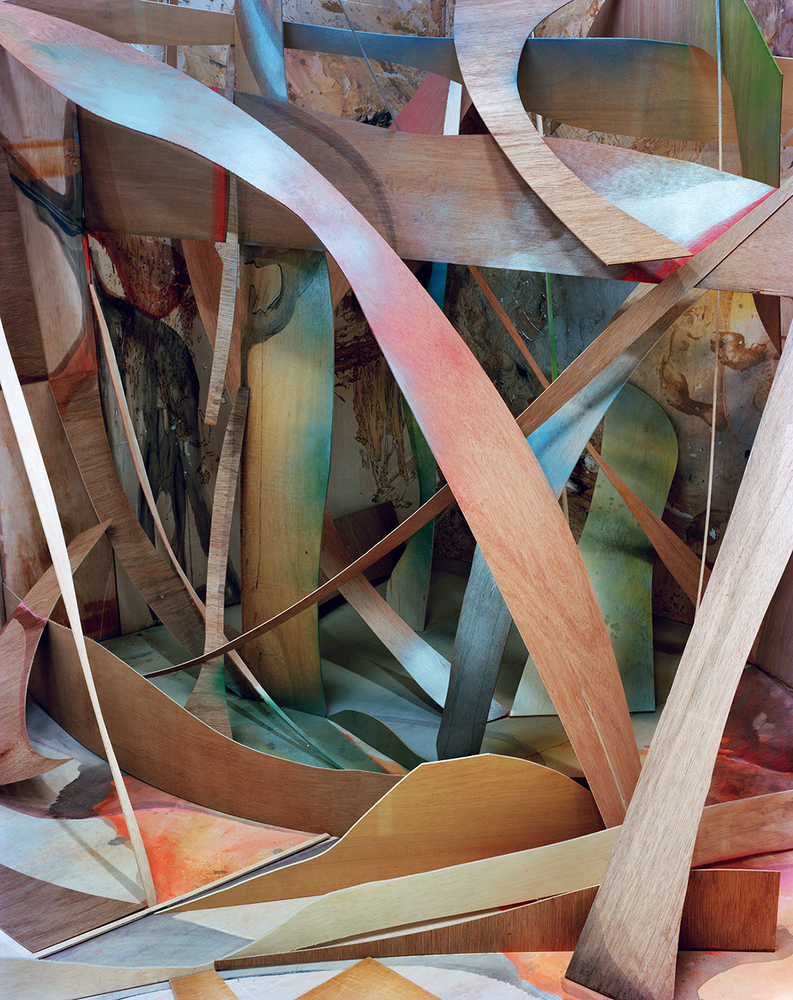
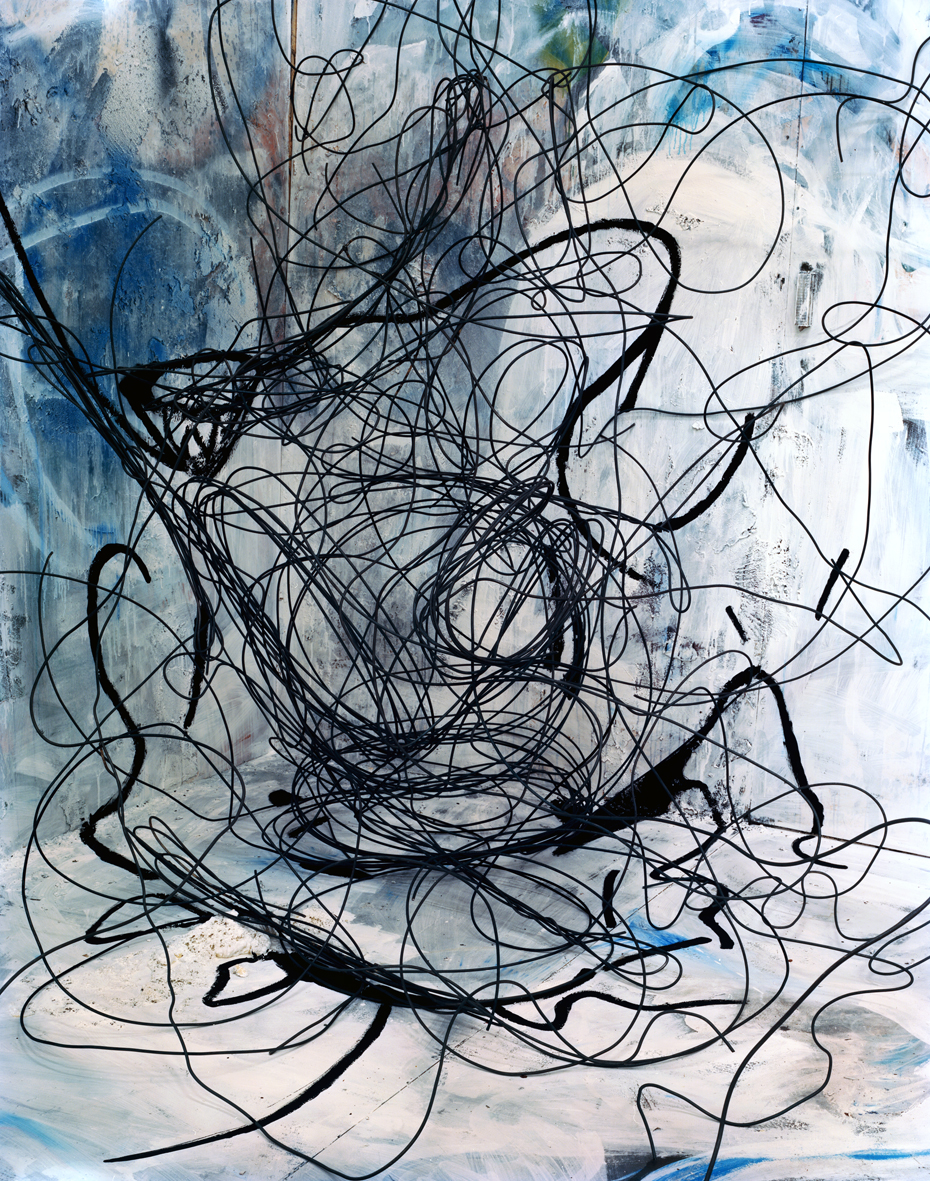
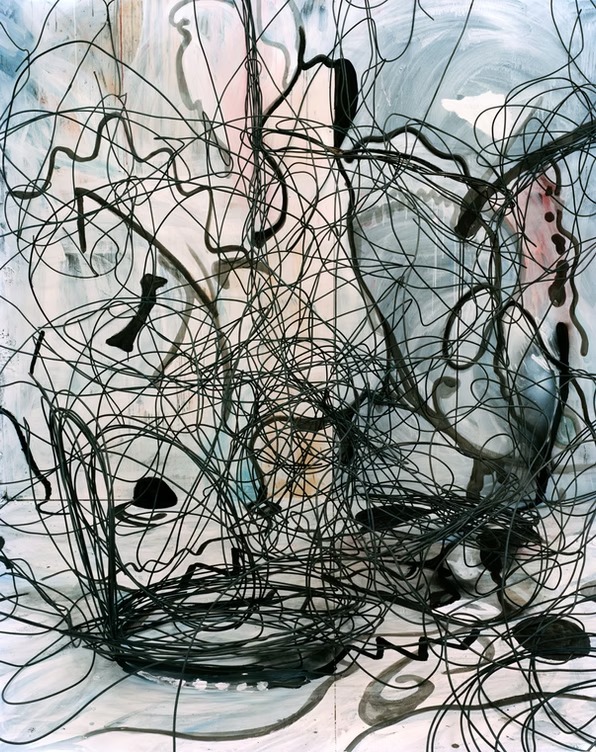
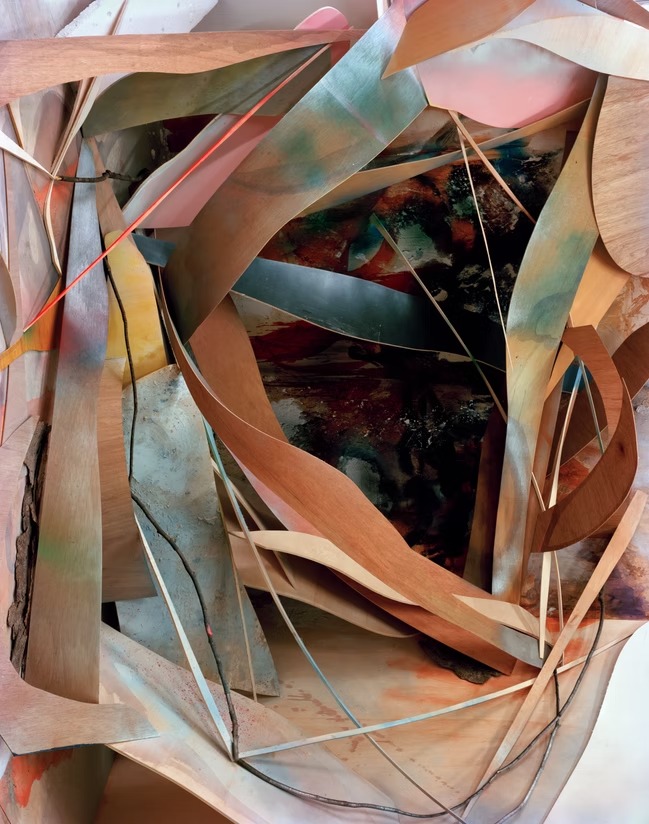
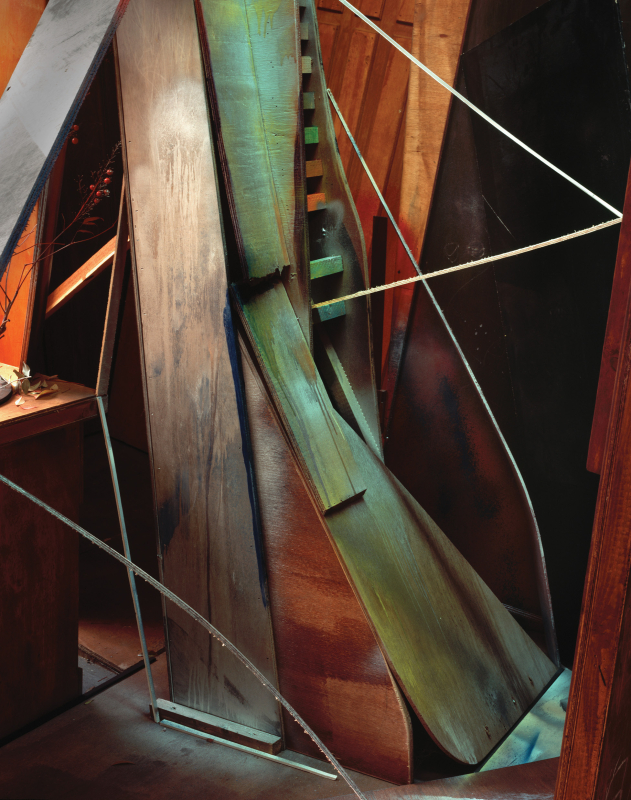
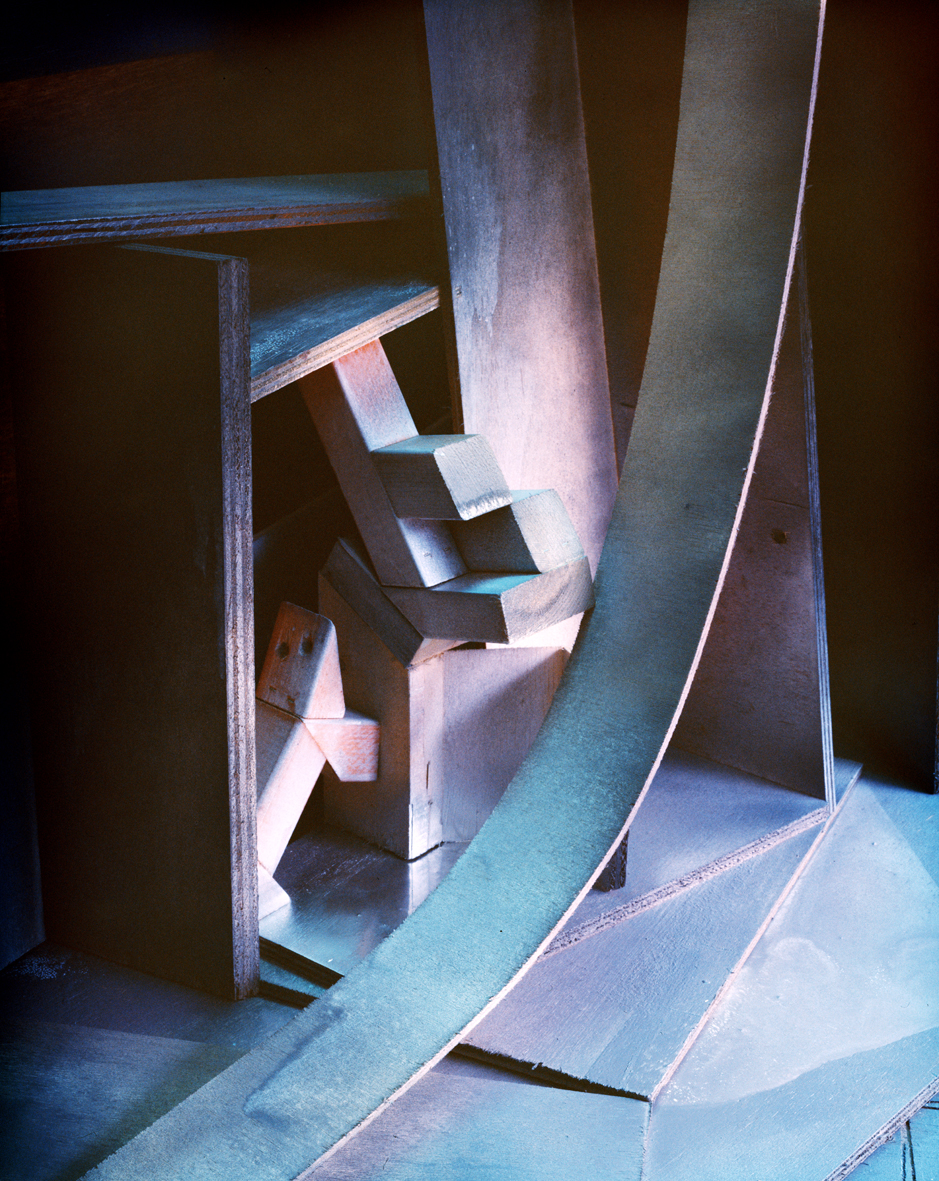
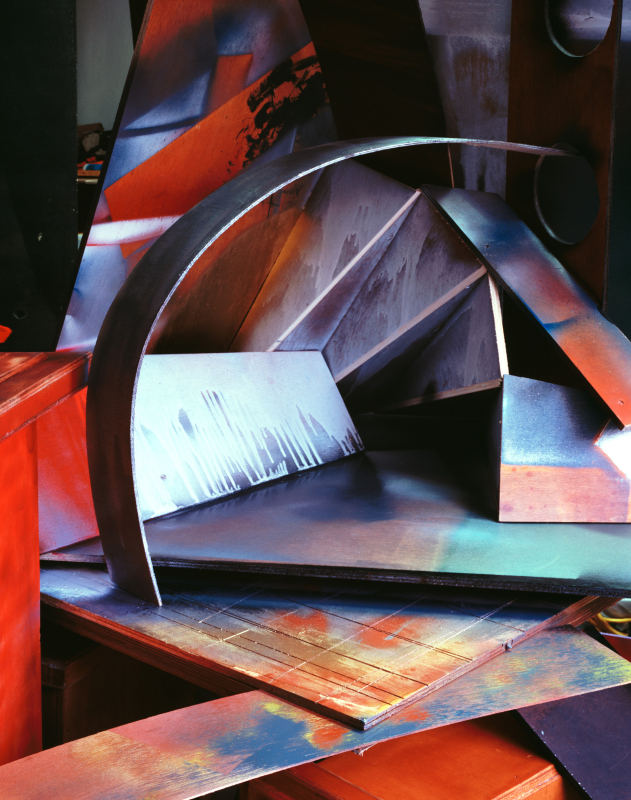
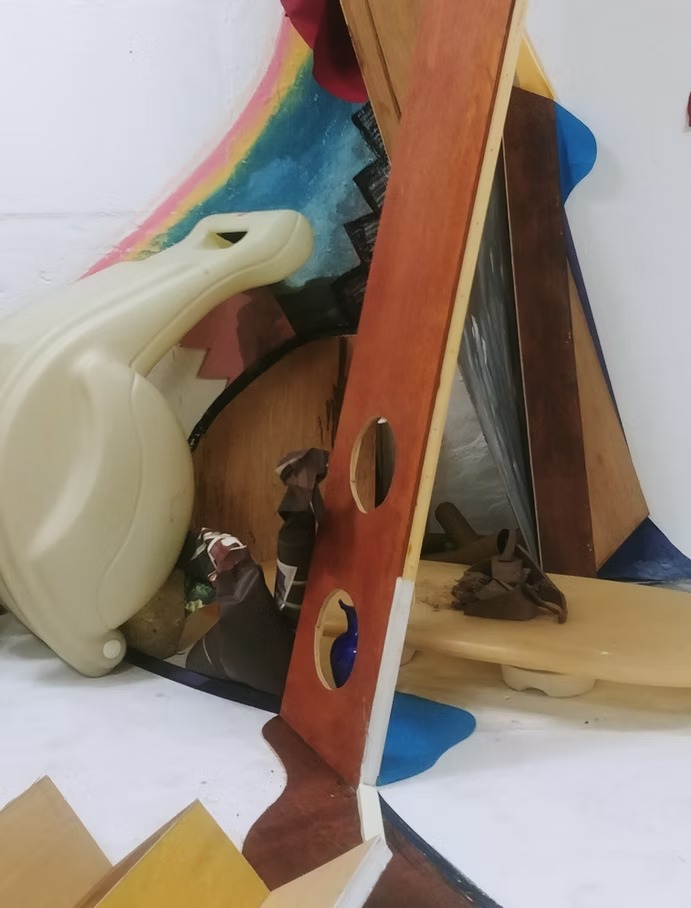
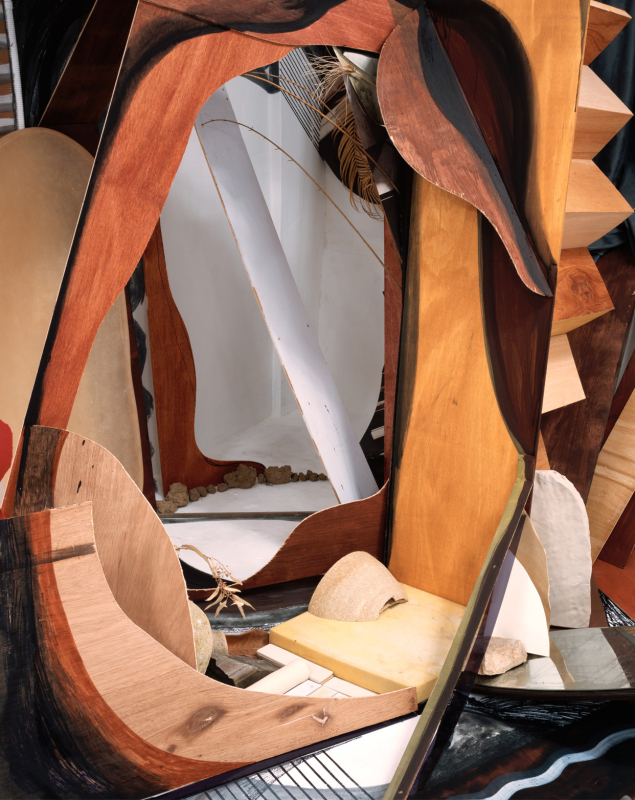
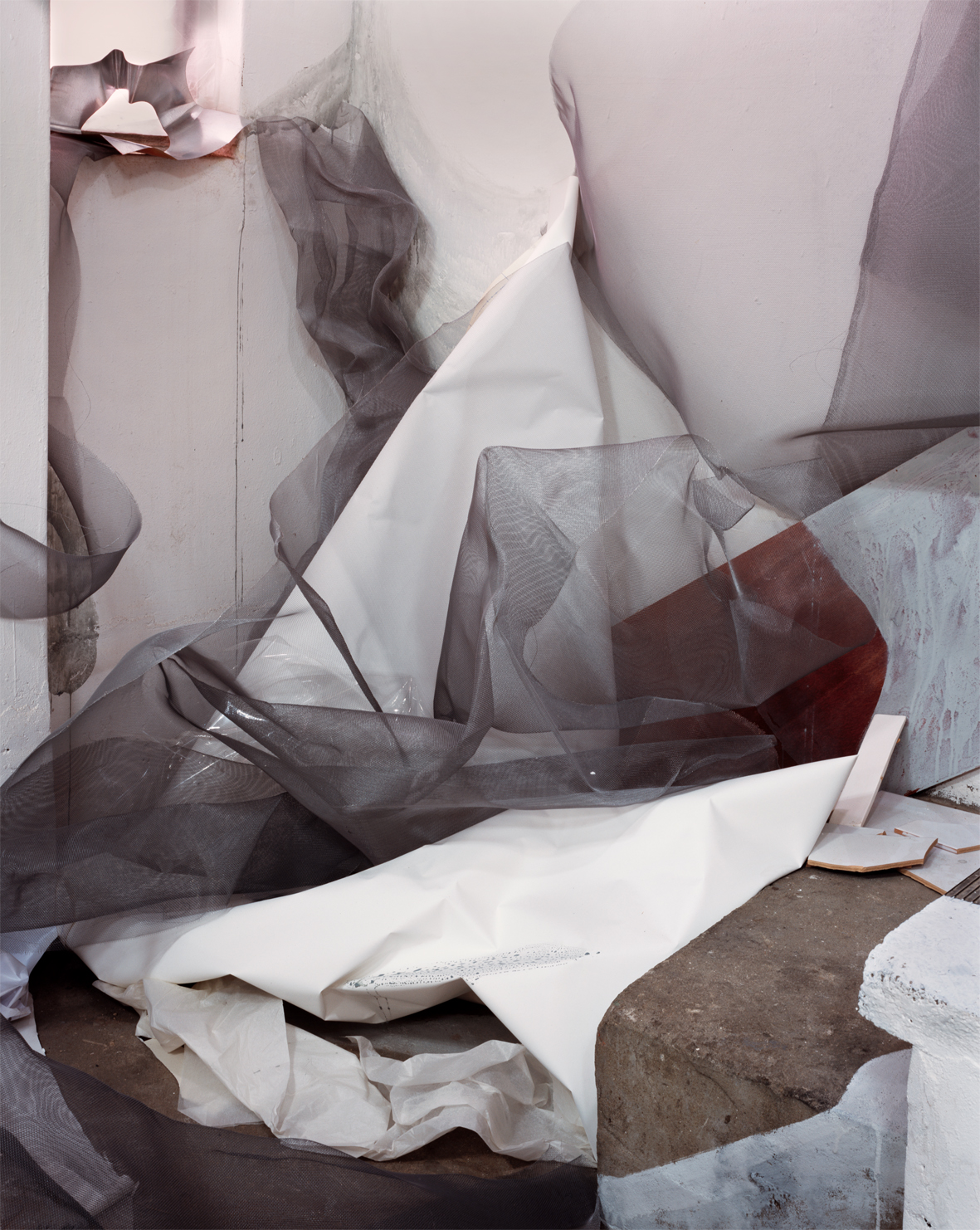
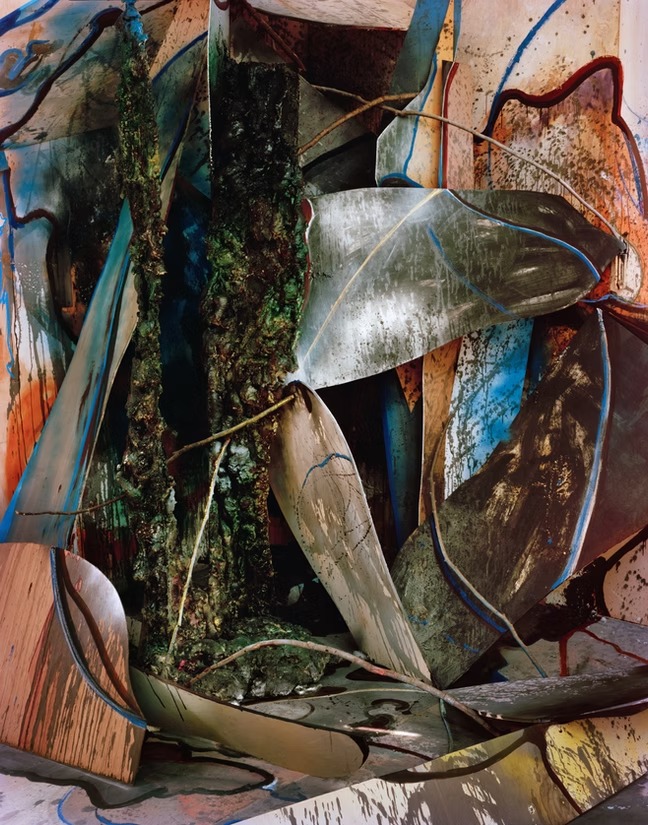
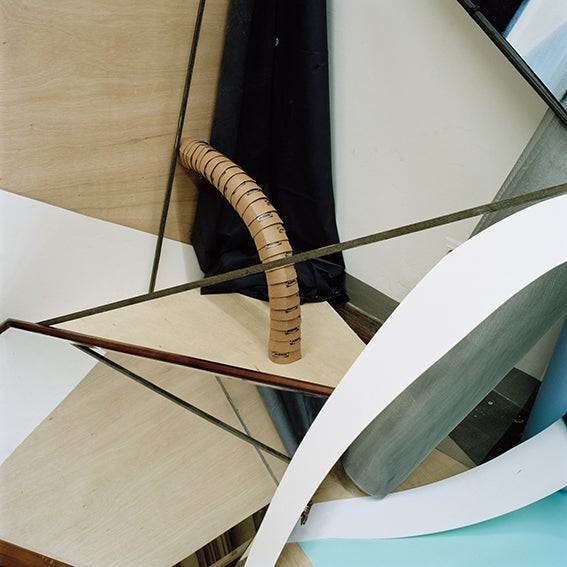
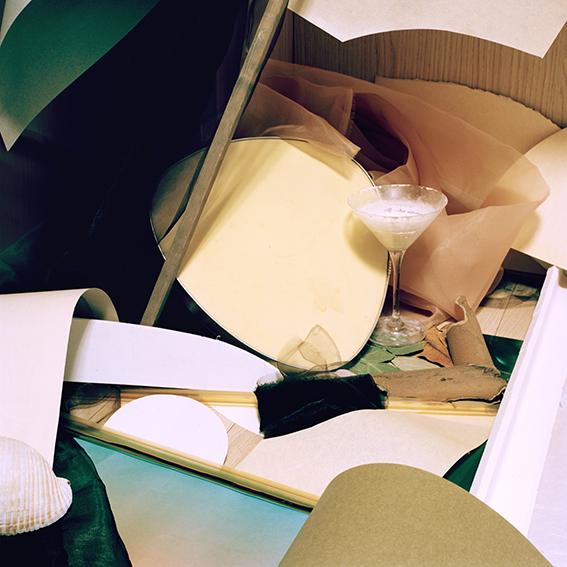
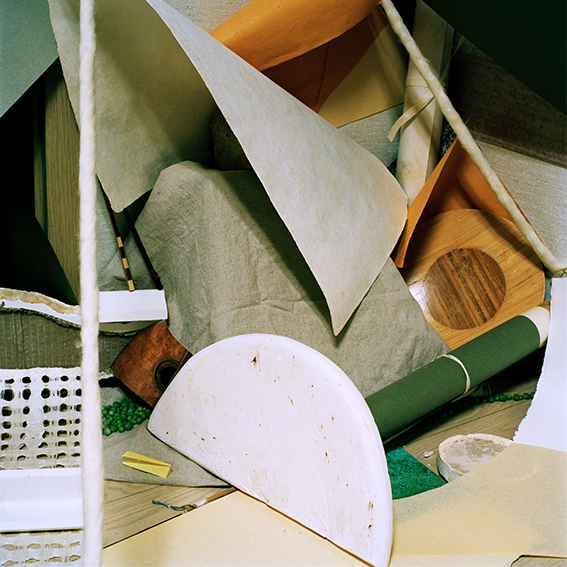
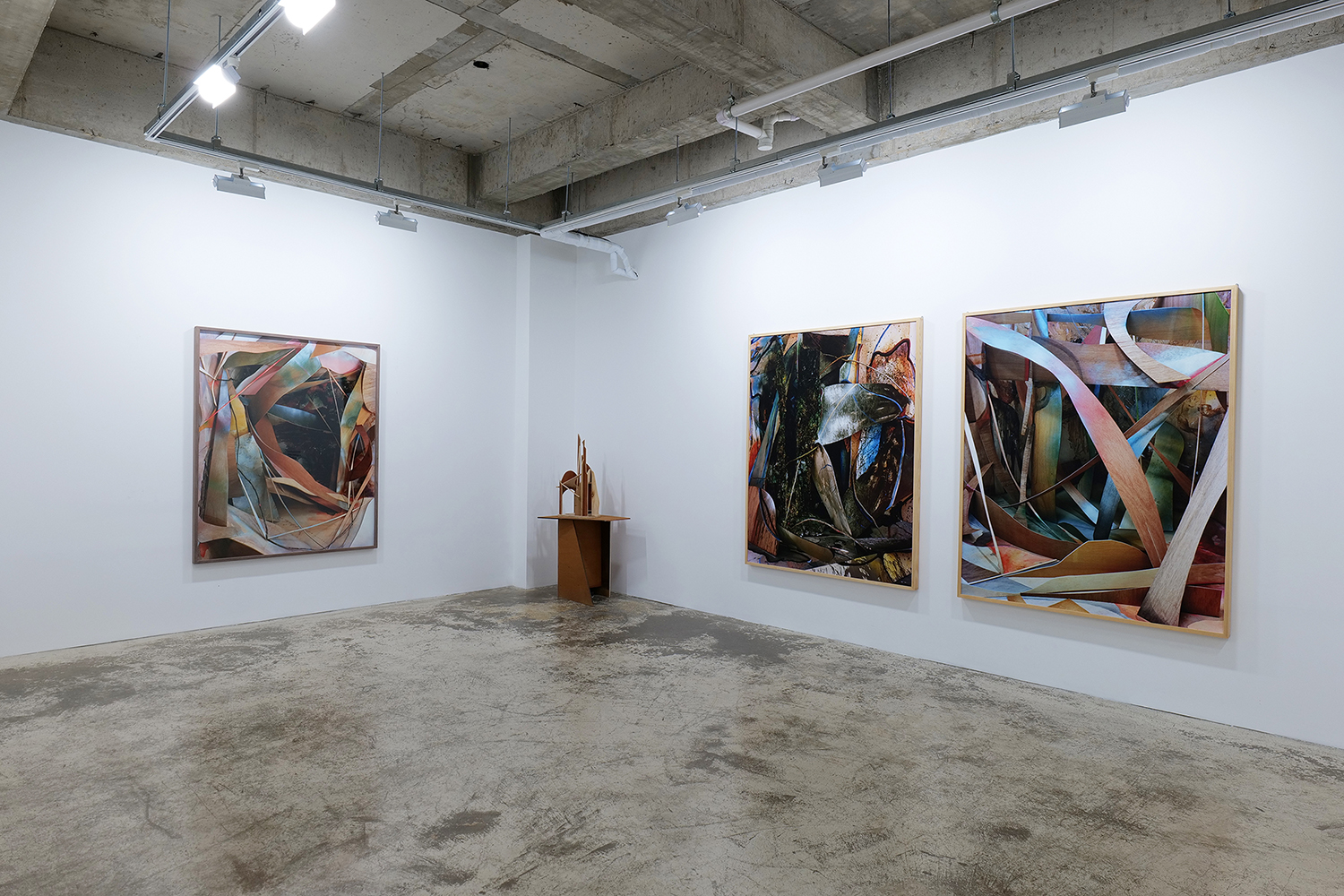
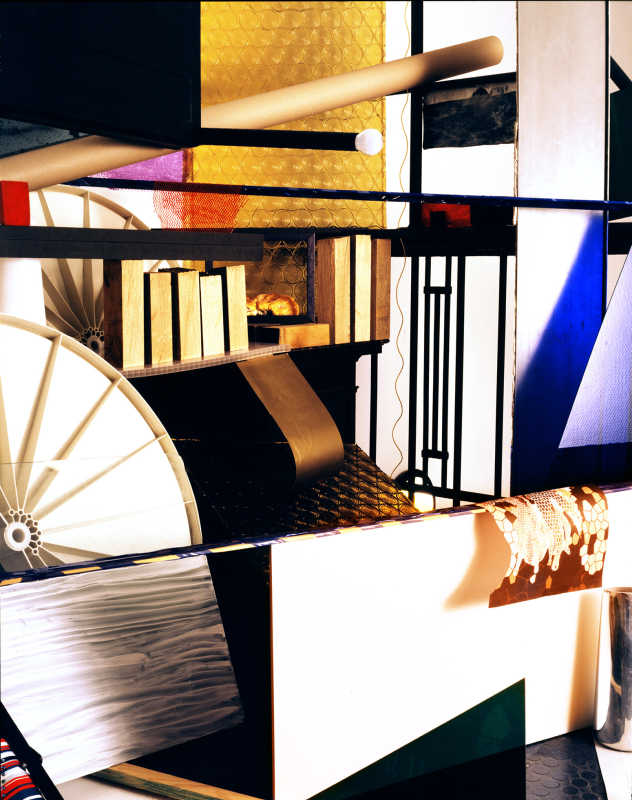
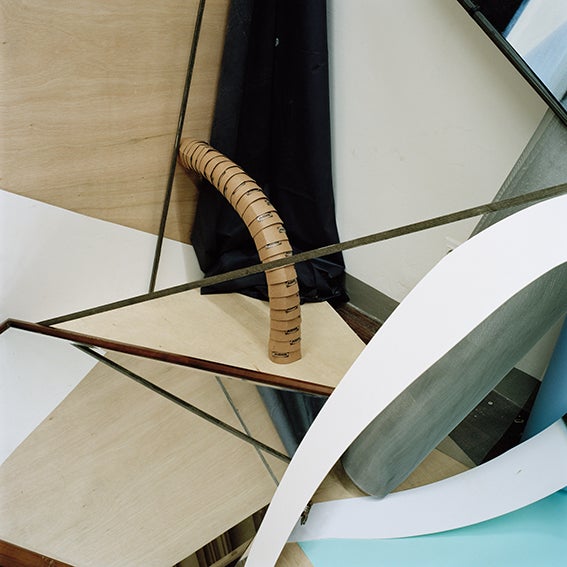
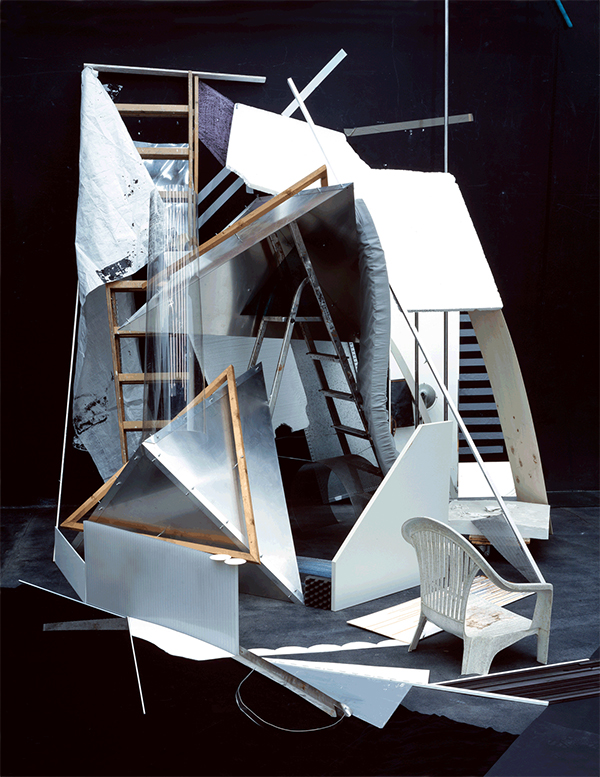
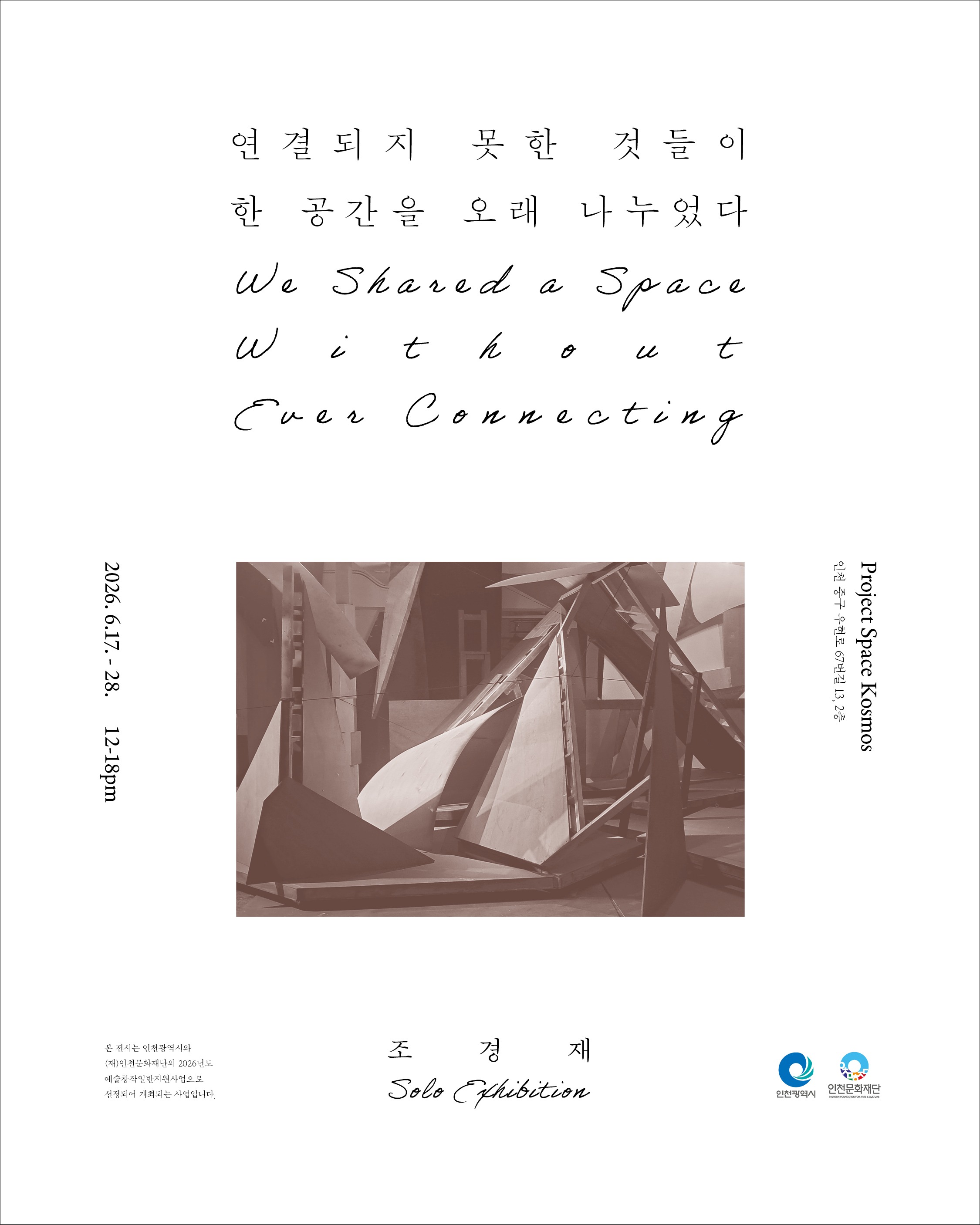
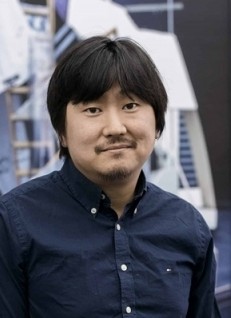
1. Artist Cho Kyoungjae overlays one space onto another. Using objects that once occupied their respective spaces, he creates yet another space and transfers it through the camera. This constitutes a form of compositional practice and results in what may be called a “sculptural structure.” In the artist’s own words, it is “a practice of staging actual space within the camera’s limited field of view so that it appears like an abstract painting, and recording it photographically.”
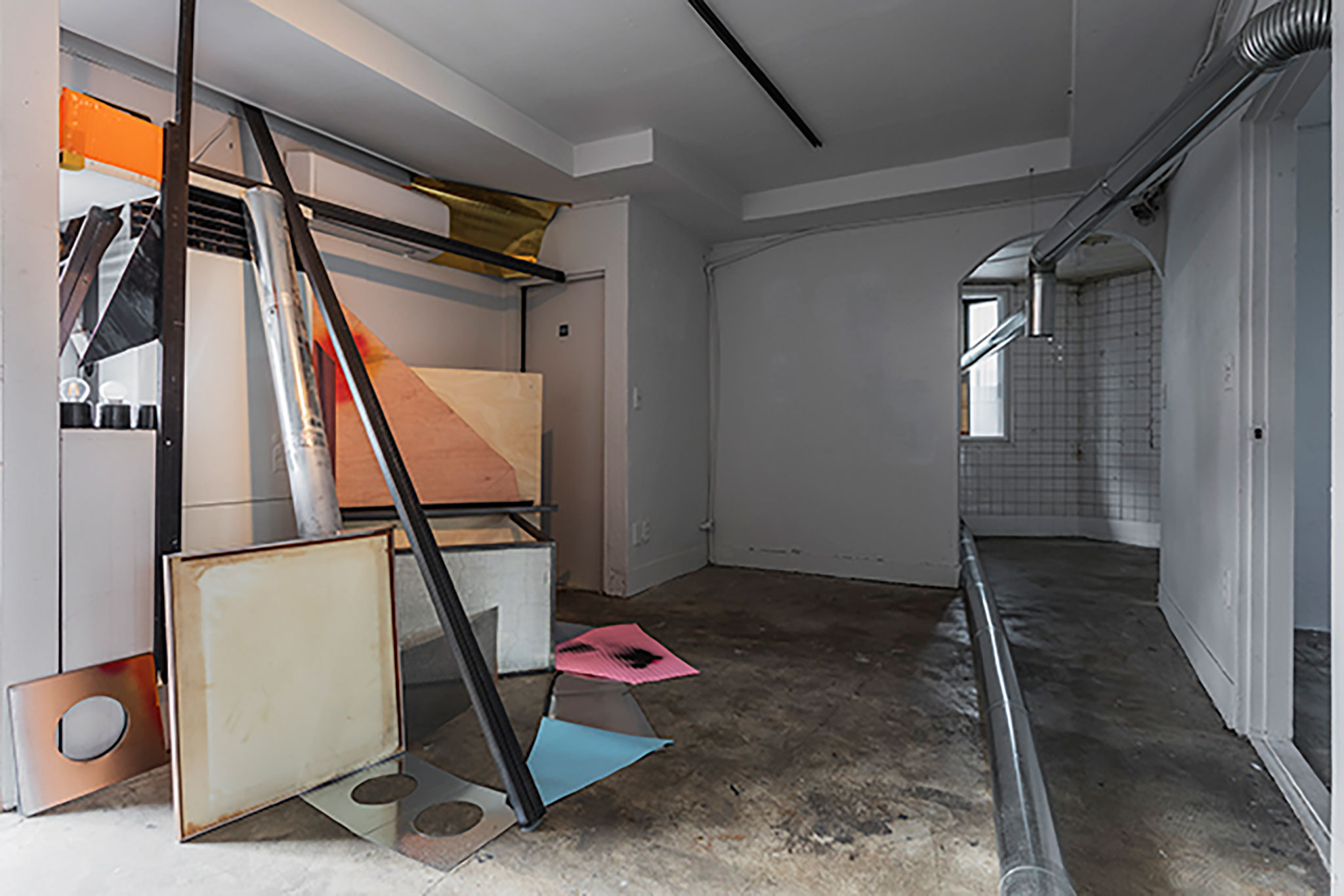
The objects appearing in his images are nothing extraordinary. Carpets, bricks, wood, steel pipes, Styrofoam, steel plates, and other mass-produced materials can be found almost anywhere around us. They may be traces of urban civilization, discarded objects, or things that have departed from their original functions. With these objects, the artist presents a mode of representation that is non-artificial and stripped of overt intention.
Such non-artificial representation is, of course, also common in the practices of other artists. Some works by Thomas Hirschhorn, for example, similarly employ discarded products to create sculptural structures and likewise involve the staging of situations.
Yet unlike Cho Kyoungjae, for whom each object can become a field of color, a trace of action, or an unfamiliar evocation of something familiar, Hirschhorn explicitly addresses contemporary issues related to war, sexuality, violence, and political unrest. Whereas Cho Kyoungjae suppresses the artist’s intention, Hirschhorn’s work clearly suggests an anti-idealistic and realistic stance—one that is both grounded in reality and rooted in the everyday.
The distinctive quality of Cho Kyoungjae’s work does not lie in prompting us to reconsider our attitude toward discarded things. His installations are first and foremost extensions of his photographic practice and belong to an expanded conception of photography. Yet insofar as the three-dimensional and two-dimensional worlds intersect, the boundary between them becomes meaningless.
The possibilities of interpretation likewise cannot be confined to a single discipline. Furthermore, rather than emphasizing a passive attitude on the part of viewers toward what the artist presents, his work foregrounds an “expansion of interpretation” that arises when viewers respond sensorially and through action.
What is therefore important in his work is both the ambiguity of boundaries between media and their persistent openness. In other words, installations incorporating photography maintain diluted boundaries among object and object, space and space, within particular contexts and interrelationships, while the outcomes produced through processes of dismantling, combination, and presentation always remain open-ended.
What ultimately remains is a condition of accidental situations in which the work participates in multilayered communication through the language of art and expands on a large scale beyond the artist’s own intentions.
2. The foundation of Cho Kyoungjae’s practice lies in the uncalculated realm of “seeing.” Seeing belongs not to the realm of consciousness but to that of the unconscious, because it occurs as naturally as breathing. The reverberation of an image is likewise unconscious. (Just as no one breathes consciously, perhaps if one were to breathe consciously, one might literally suffocate.)
Against this background, the artist places emphasis on broadening horizons, prompting action, and allowing each viewer to arrive at a proposition of their own. For him, what is meaningful is the way each of these propositions generates ripples and ultimately leads toward another world—one entirely unfamiliar or previously unknown.
In this sense, nothing in his work is predetermined. The exhibition space falls within the same category. Rather than functioning as a mere showroom, it becomes a work in itself, where “chance” arising from dismantling and combination floats freely and predetermined settings are kept to a minimum. Although his works involve a certain degree of formal arrangement, he provides no separate instructions regarding subject matter or how the work should be viewed.
As in the photographic work WT004, there is no visual hierarchy between space and camera, and he rejects the fixed forms that might arise in the process of arranging things naturally. He states, “Just as I freely combined objects while making photographic works, I leave open the possibility for viewers to freely recombine the forms within the photographs as they look at them.”
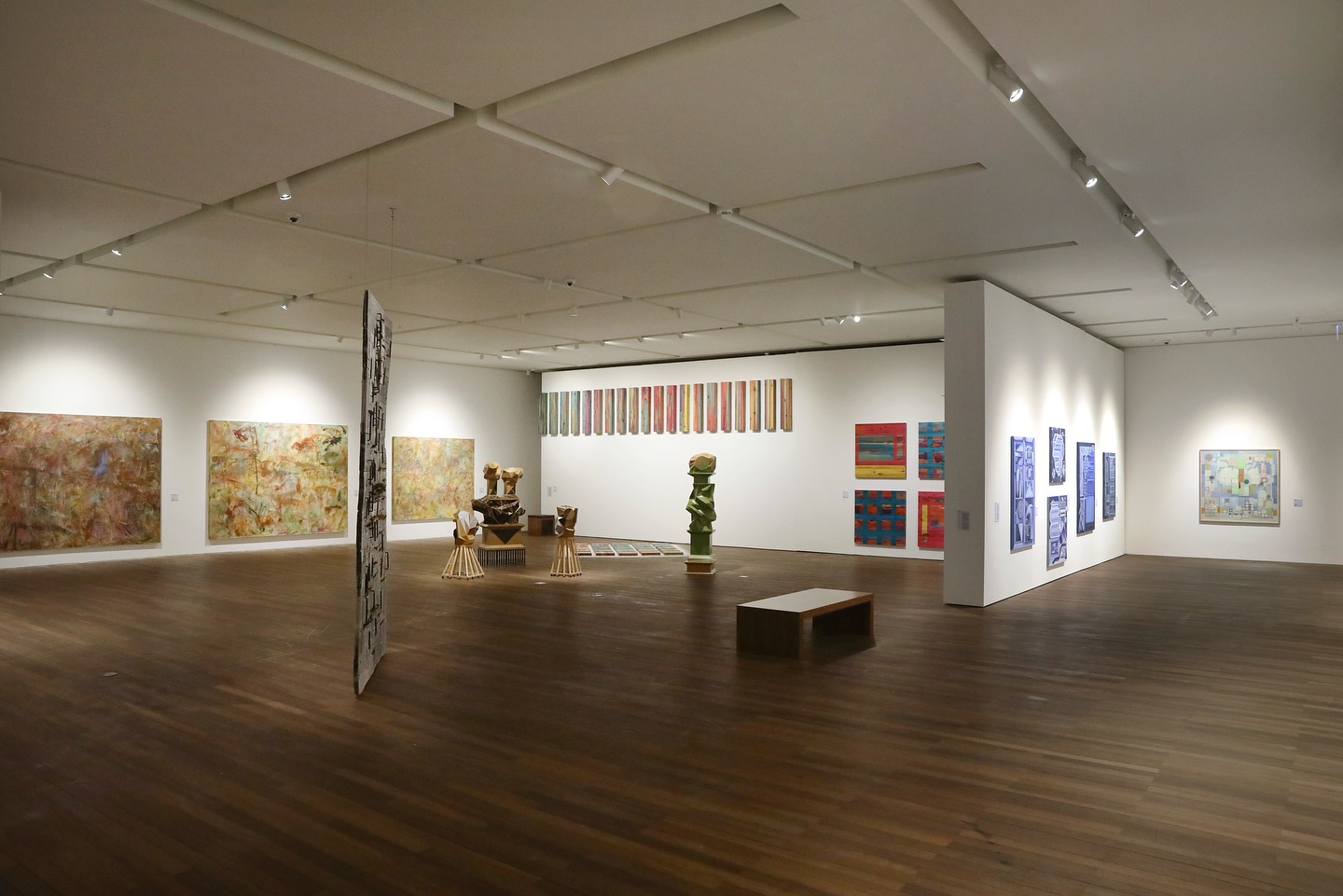
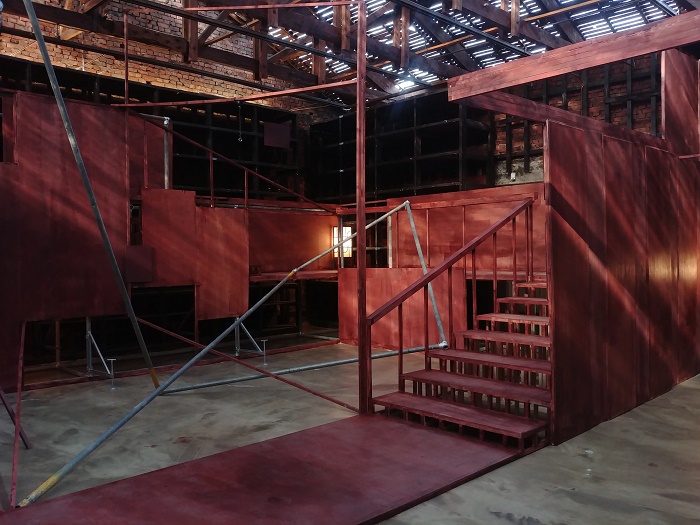
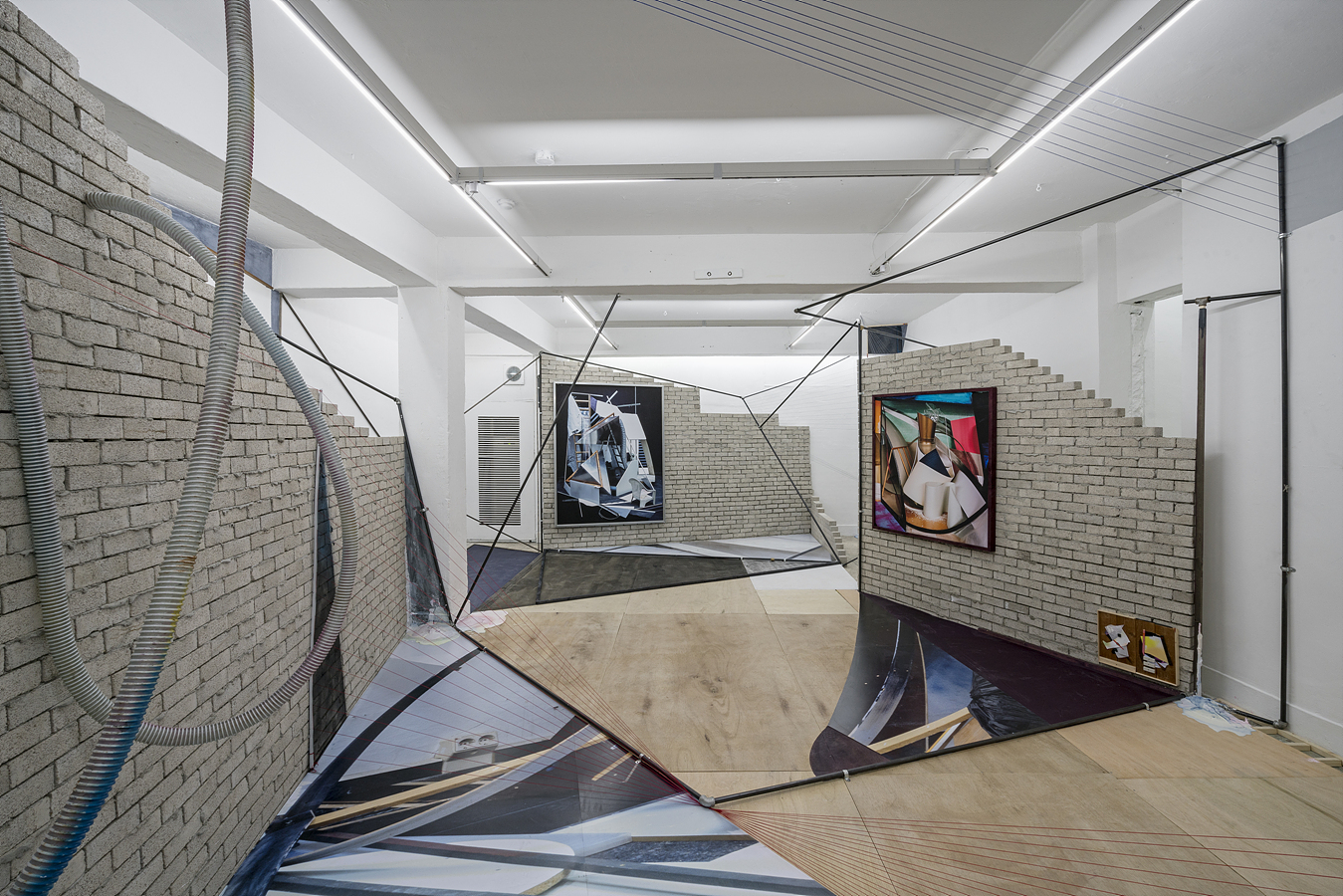
This trajectory was also clearly evident in 《Broken Edges》, an exhibition held at Project Space SARUBIA in 2017. Through a configuration in which bricks, wooden boards, and installations traversing the space were intermingled and translated into installation and photography, the exhibition demonstrated how such work could be expanded through the viewer’s experience.
It featured works including the 'Collage' series, Sadari 004 (2015), Blue Cheese (2017), and Stairs 02 (2015). Maintaining a balance among themselves, these objects produced a fluid situation, revealing what one curator described in relation to Cho Kyoungjae’s work as “a situation in which, while expanding from photography into installation, visual-perceptual elements recognized within each genre are manipulated or connected, combined or dismantled, so that heterogeneous images employing different modes of expression overlap within a space.”
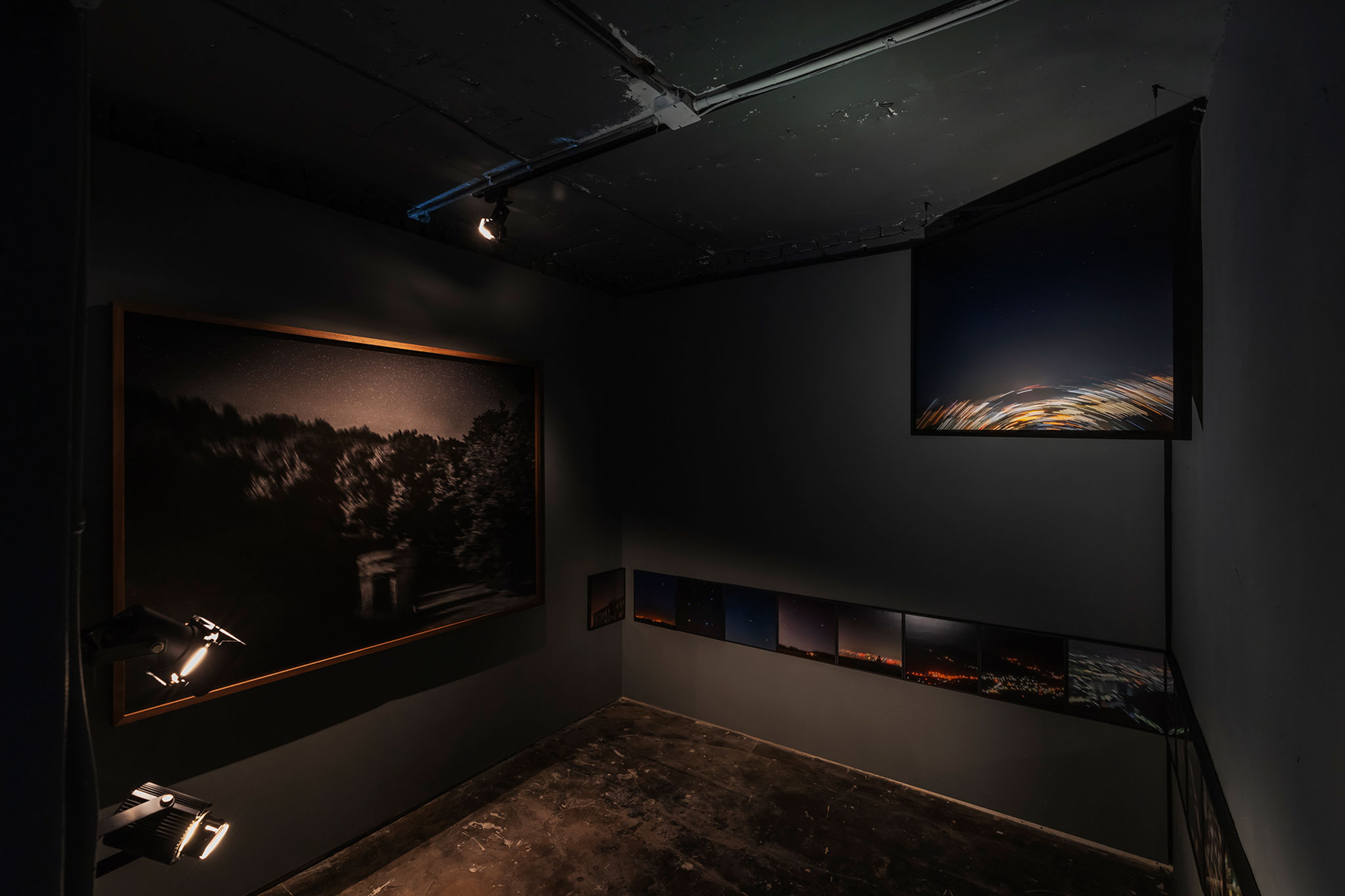
The same applies to works such as SHOW ROOM (2018), Drum (2013), and Chair (2012), presented in 《The Reveal of Tooth Pulp》 at Amado Art Space in 2018. According to the artist, the works “took as their motif the spatial characteristics of anxiety and tension inherent in the city,” yet in practice they are improvisational and highly mutable. Objects and photographs curling from inside to outside and back again assumed unpredictable forms and moved in unrestricted directions.
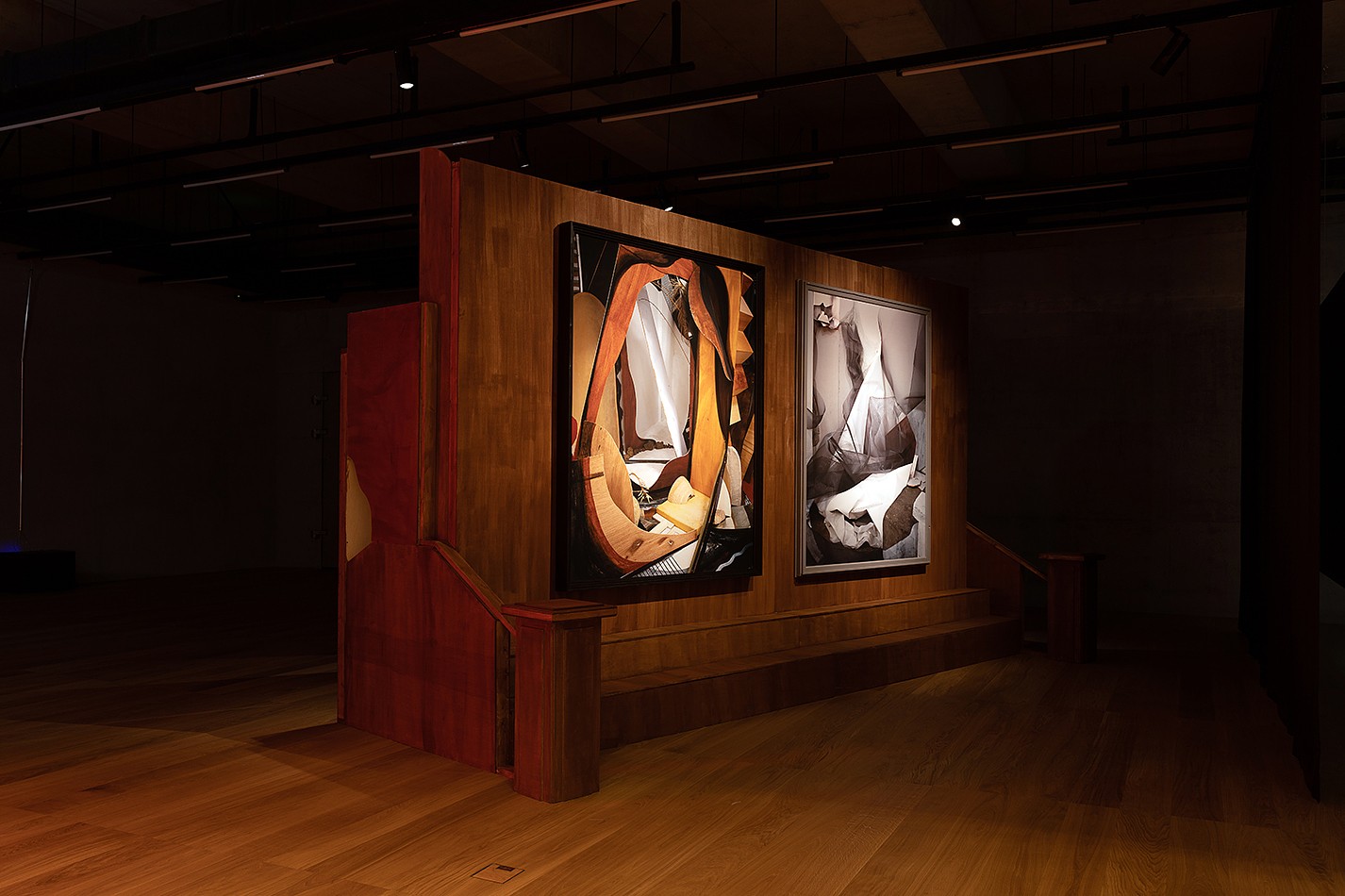
《A Transformed Space (Un espace transformé)》 (2018), held in France, was much the same. One text describes it as follows: “The lines of the supports on which photographs are hung intersect with lines within the photographs, connecting two-dimensional and three-dimensional space. This integration of the photographic plane with the space in which it is situated transforms the nature of the viewing experience.
Whereas the experience of installation-based photography was frontal and visual, that of photographic installation is multifaceted and bodily. It is a spatial and phenomenological experience in which the perceived scene changes continuously as the viewer moves through the space and shifts perspective.”
What is particularly interesting is that this, too, was conceived spontaneously with expansibility in mind. Various objects within the existing space, together with viewers moving freely through an irregular space, generate an endlessly proliferating series of new spaces. The social media platforms they use become new sites for this proliferation.
These platforms change according to each viewer’s emotions and circumstances, and the resulting “responses” and unintended developments constitute the ultimate outcome Cho Kyoungjae seeks. In other words, while each element remains independent within its own domain, his practice aspires to a condition in which the interplay of tension and relaxation is brought forth visually, giving rise to a new world.