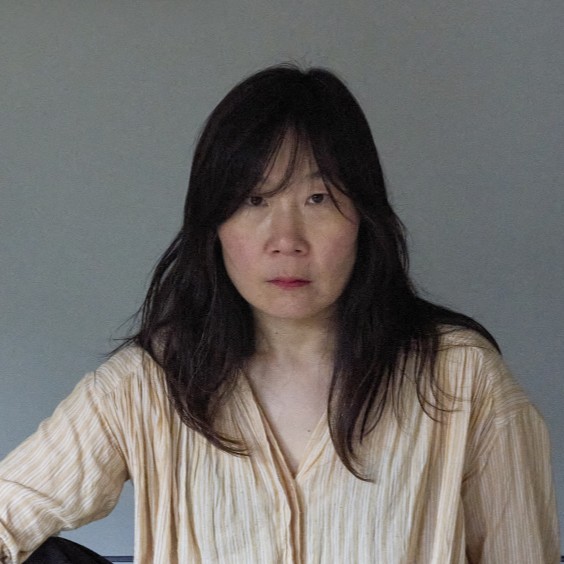
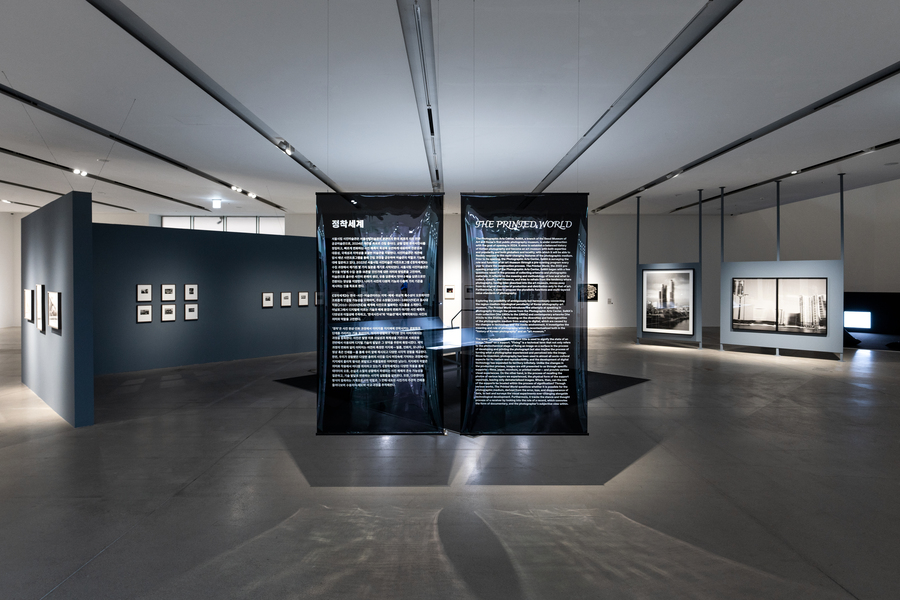
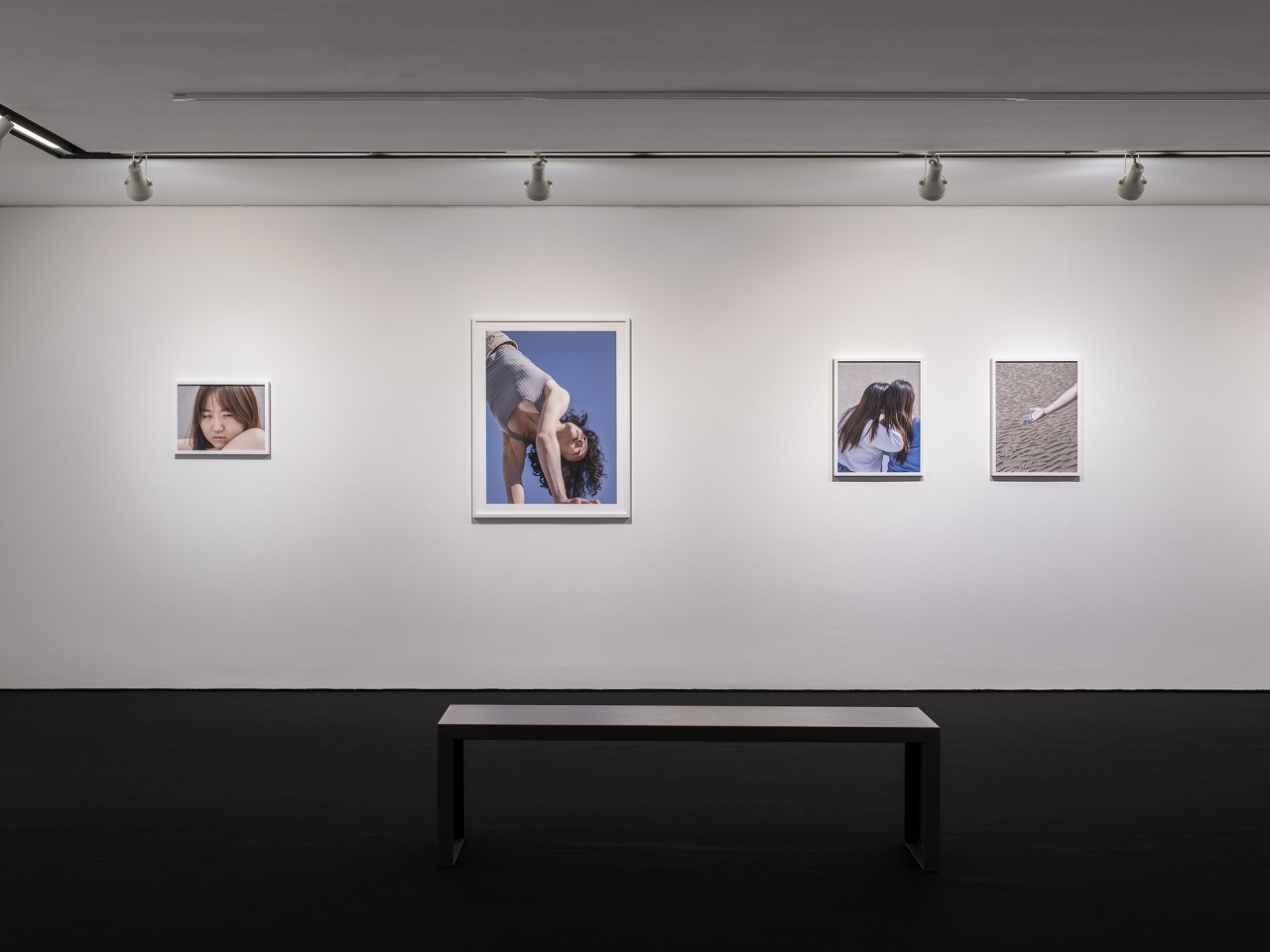
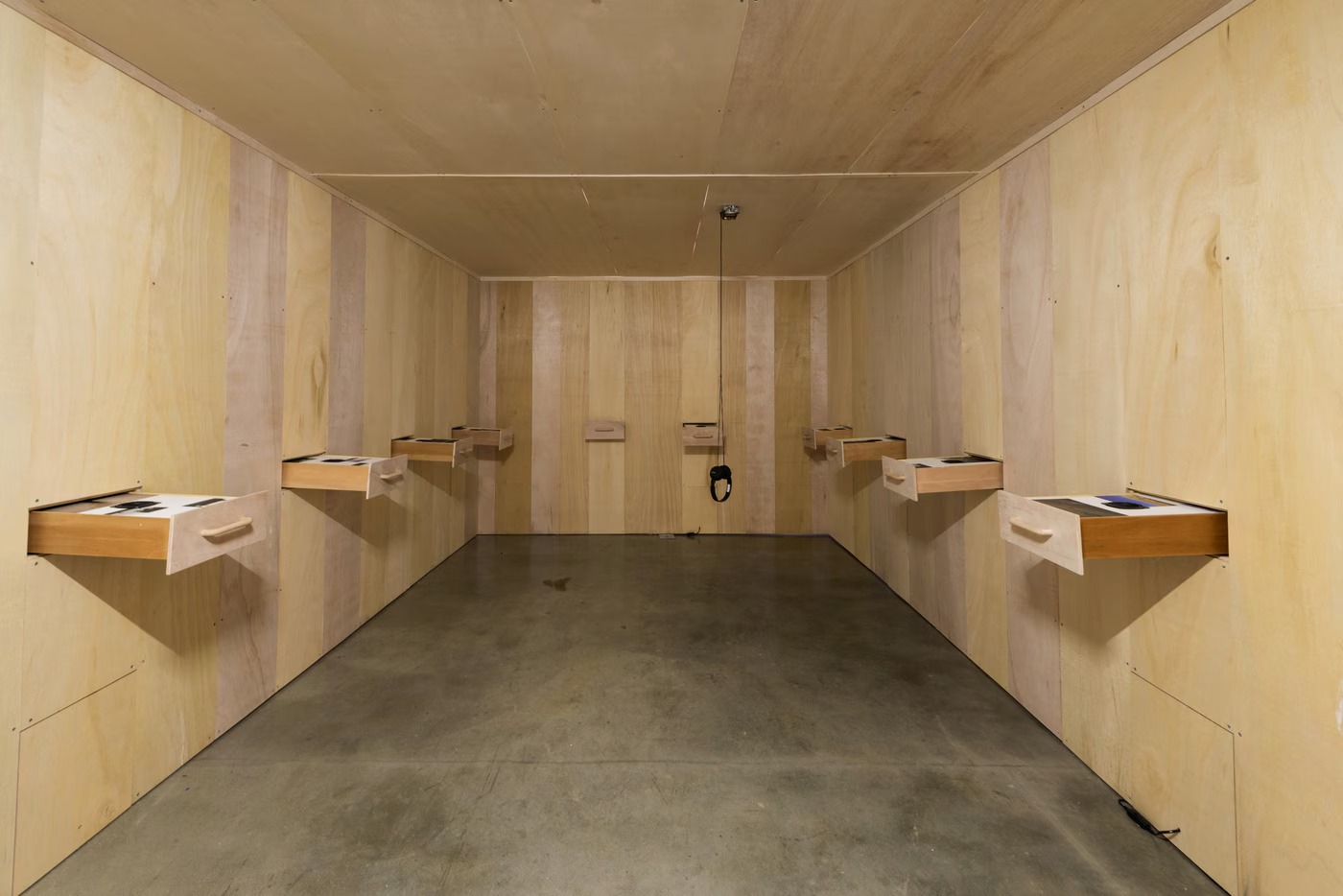
I first met Eun Chun in the fall of this year at Seongbuk Young Art Space. The gallery was presenting 《Blackbox Recorder》, an exhibition of the results of a five-month image experiment that Chun conducted with seven hearing-impaired teenagers. The participants drew objects by reaching their hands into a black box and touching them, freely imagined and drew what might exist beyond the edges of partially obscured photographs, and also took photographs using pinhole cameras.
Looking at the works displayed in the gallery, I could sense that the young participants were expanding the visual worlds given to them in ways that were both earnest and playful. Chun carefully explained the 《Blackbox Recorder》 project to me, while I examined the works closely and gradually approached the imaginary worlds that had taken shape in the participants’ minds.
After seeing 《Blackbox Recorder》, I felt a certain warmth emanating from Chun. At the time, I vaguely thought of this warmth as a metaphor for every process through which life and art encounter one another. Since the narrators of the 《Blackbox Recorder》 project were the participating teenagers themselves, Chun’s own perspective could only be revealed indirectly from the outset.
The warmth I had sensed in her was therefore certainly perceptible, but it was not something that came into sharp focus. Yet after viewing the exhibition, as I reflected on my conversation with Chun and looked through printed materials documenting her artistic practice, I began to sense that faint warmth more clearly as it revealed its varied textures.
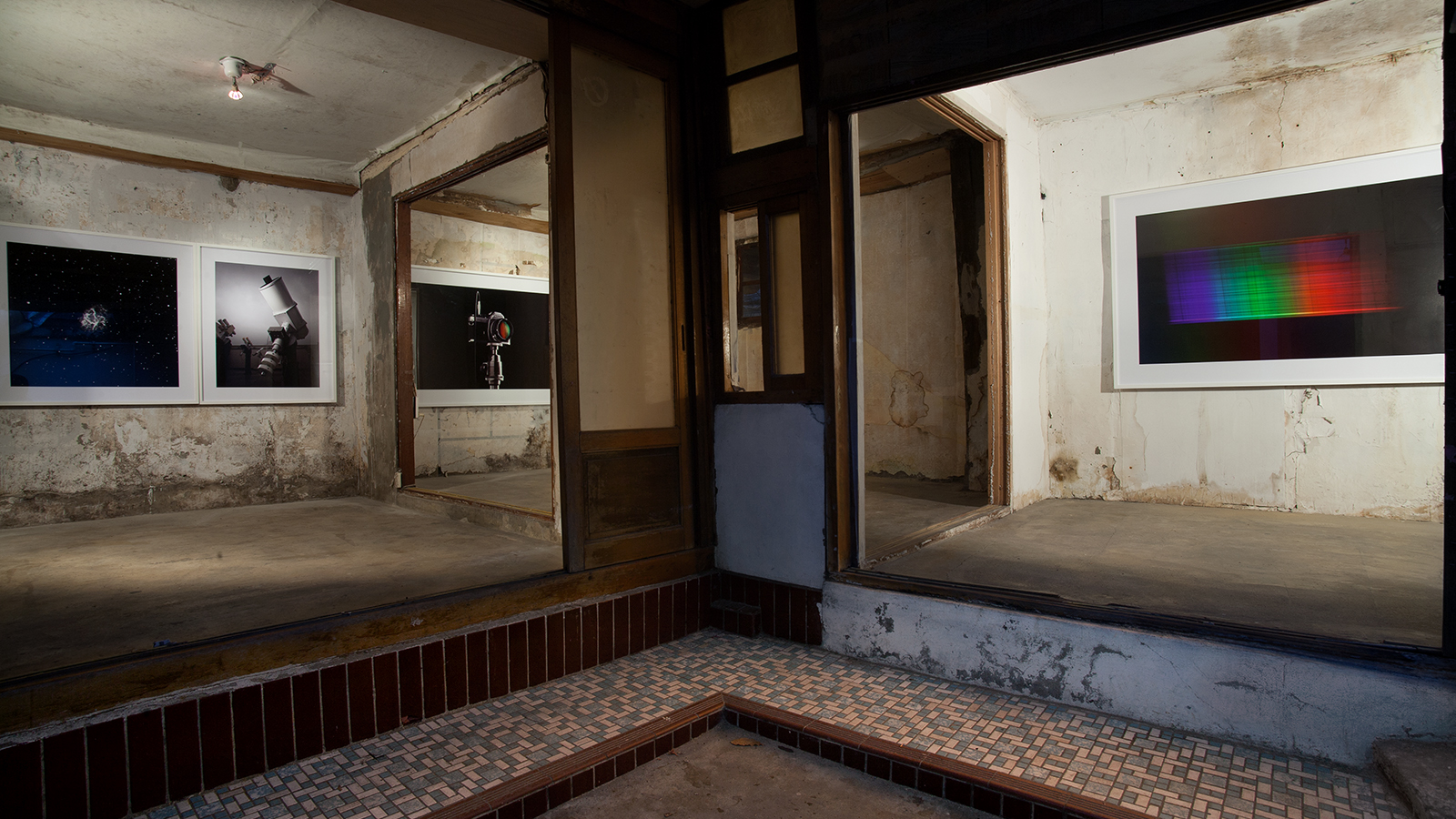
Several bodies of work among the many projects I encountered that day are scheduled to be presented this December at Old House. This essay reflects my perspective on the works included in Chun’s fourth solo exhibition, 《Searching for the Photograph》, to be held at Old House, while also offering an opportunity to consider the meaning of the warmth I had only vaguely sensed in her.
The work I would like to discuss first is Searching for the Photograph, which shares its title with the exhibition. The installation was developed from a single black-and-white photograph. The photograph was taken by someone who captured Chun’s father holding a camera. In the image, the angle of the grasses in the foreground and the inclination of her father’s body in the middle ground are linked in a tense relationship.
The tension created by these vertical inclinations in the foreground and middle ground is further intensified as they repeatedly interact with the horizontal slope of the hill ridge in the background. Moving through the tension generated by the composition, I find myself focusing again on the way her father carefully presses the camera to his eye in order to take a photograph.
As I gaze intently at him, I am seized by the feeling that a moment from the past is overlapping with my present. Could the subject her father was looking at through the camera possibly be me? Such an experience suggests that, by looking at this photograph, I have entered into a certain continuum of relationships.
The fact that I, encountering the photograph for the first time, can have this experience means that it could just as readily occur for someone else who looks at it. Of course, before we can confront this unfamiliar photograph more closely, we inevitably create a certain distance through various questions: Why was Chun’s father taking a photograph at that moment, for instance, and why did the photographer choose to photograph him? Or why should we establish a relationship with the two gazes that constitute this photograph?
If we understand looking at a good photograph as a process of revealing the complexity and inscrutability of contemporary life, then clarifying the factual circumstances surrounding this black-and-white photograph need not be our primary concern. A photograph has difficulty acquiring meaning entirely on its own. The photograph of Chun’s father discussed above, for example, does not possess meaning solely in and of itself.
It acquires meaning as the photographer, her father as the subject, and those who subsequently encounter the image become organically connected through their relationships with one another. By contrast, stock photographs produced in advance for commercial use and sold through licensing, or biased press photographs deliberately deployed by the media to conceal or disparage facts, may still be photographs in themselves, but they lack such organic relationships between people.
In particular, centralizing forms of press photography that assert biased versions of reality go beyond an absence of relationships and are underpinned by a malicious intention to trample on the lives of others. I therefore believe that meaningful photography is relational photography capable of listening to and remembering the stories of the various people who encounter it.
Through photographs of this kind, we can understand and give concrete form to the complexity and inscrutability of contemporary life. I have unfolded these thoughts on the relationality inherent in photography and in the act of looking at photographs because I believe the structure of Searching for the Photograph can be considered in relation to what I have discussed above.
When the photograph of Chun’s father is projected by a projector onto both the gallery wall and a sheet of glass rotating in midair, no hierarchy exists between the resulting images. The absence of hierarchy between the images here means that centralism has been excluded from the ways in which we look at and perceive an object.
By connecting our own gaze with the gazes that form equally in every direction, we can attempt an experience of confronting life in the present. This experience unfolds organically and without hierarchy across a horizon where past and present are connected. I believe that Searching for the Photograph functions as a signpost indicating the direction Chun would take in her subsequent practice.
From this perspective, the other bodies of work she will present in this solo exhibition—'Bird and Umbrella', 'The Photography Is the Retina of Scholars', and 'Optographic'—may likewise be connected to the significance that can be discerned in Searching for the Photograph.
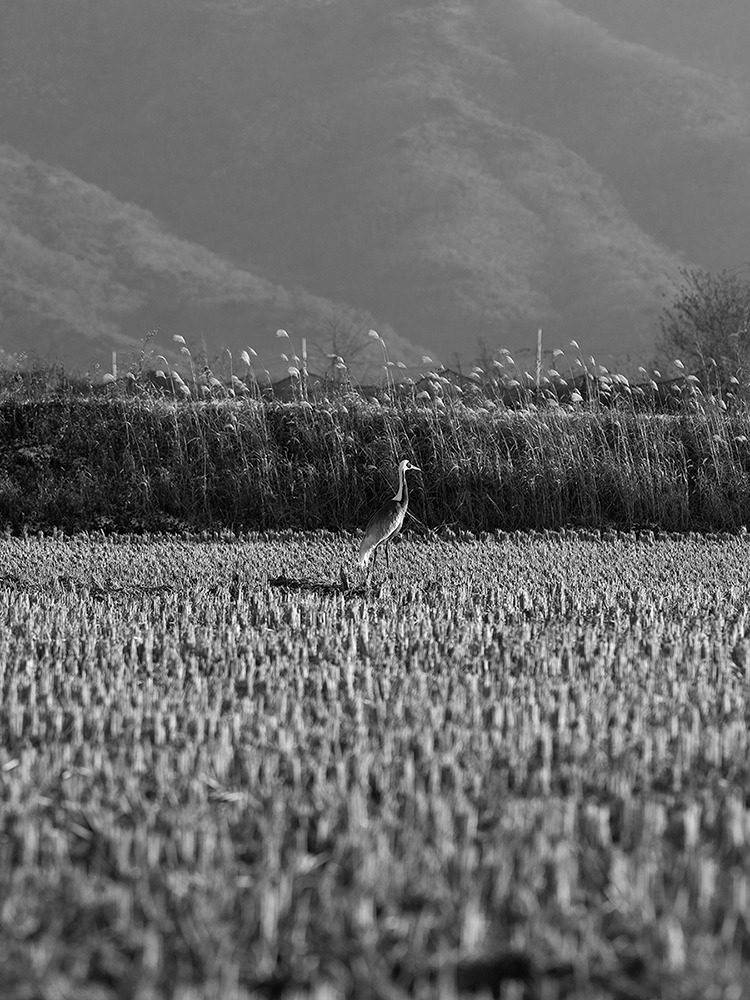
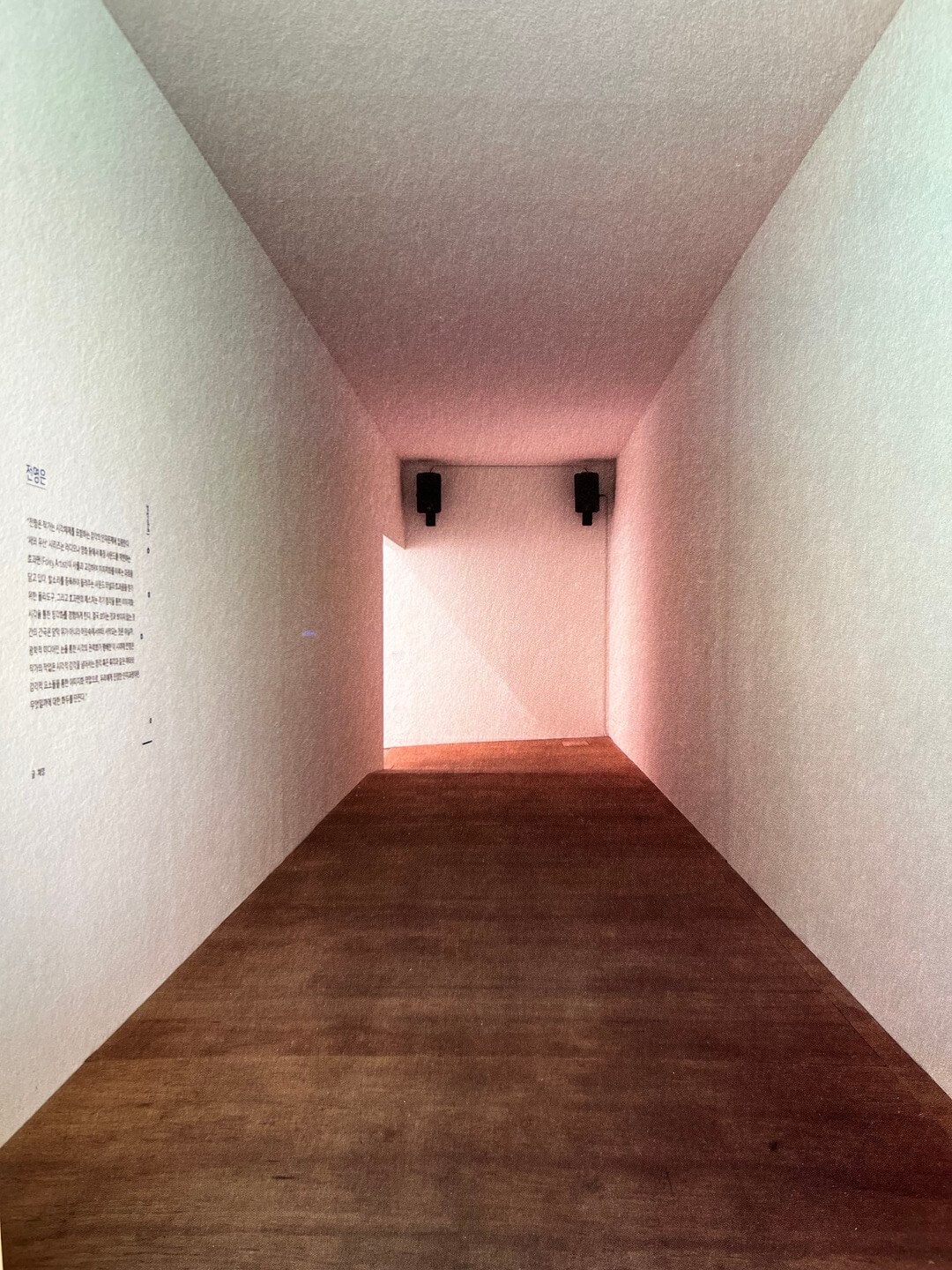
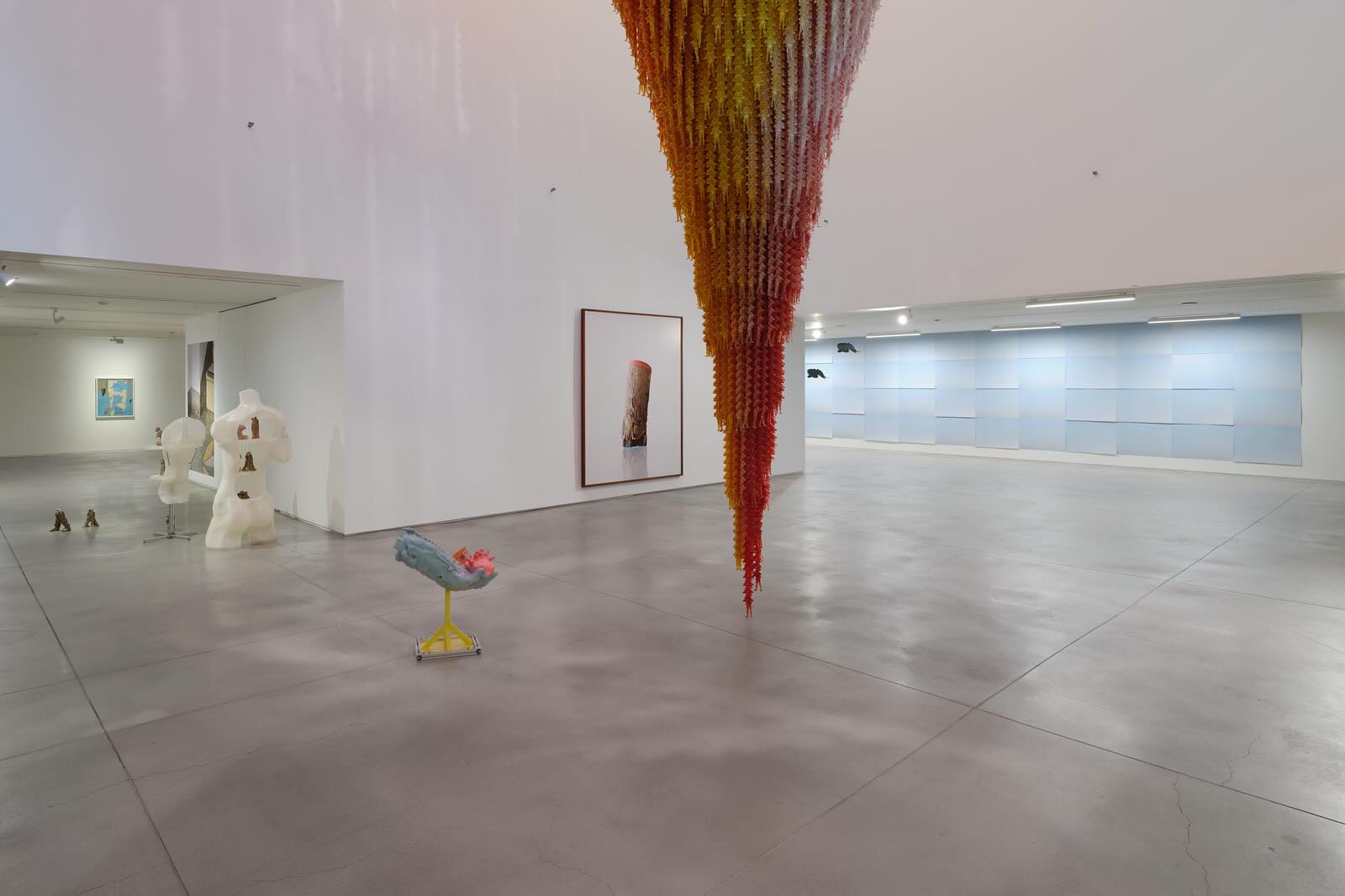
Let us now turn to the 'Bird and Umbrella' series, which centers on the work of sound-effects artists. A sound-effects artist—also known as a Foley artist (the term “Foley” derives from Jack Foley, who pioneered techniques for producing sound effects with props during the early years of sound film in Hollywood)—is someone who creates sounds needed for radio dramas, films, and various other fields using entirely unexpected objects.
For example, the crunching sound of footsteps in snow may be produced with starch powder or rubber gloves, the swishing sound of pushing through undergrowth with rush film, and the flapping wings of a large bird such as an eagle by opening and closing an umbrella. Why do sound-effects artists reproduce sounds that we commonly hear in everyday life using such unexpected tools? Radio dramas and films contain a wide range of sounds that combine with and affect the emotions of their audiences.
Among these, sound-effects artists recreate the sounds they can artificially reproduce, using various objects to make them more vivid. As a result, many of the sounds we encounter in radio dramas and films are not recordings captured during filming but sounds recreated by sound-effects artists. Yet it is difficult for us to imagine that the sounds we hear in radio dramas or films differ from the situations actually taking place, because these sounds often seem even more vivid than those produced by the real actions themselves.
Could we ever imagine, for instance, that the sound accompanying a scene of stew boiling in a film was created by striking a plate against a glass and placing wet tissue paper against a heated soldering iron? When we discover the secrets hidden behind the sounds created by sound-effects artists, we realize that the act of hearing does not itself make an object visible; rather, the object is visualized through an interpretive system operating in our minds in response to sound.
This is because we generally judge objects through what we have previously seen and what we already know. The incompleteness of the interpretive system operating in our minds can also be seen in the 'Blackbox–Object' series that Eun Chun developed with hearing-impaired teenagers. When objects hidden inside a black box were translated into drawings through the participants’ sense of touch, the resulting images departed from our expectations just as radically as the tools used by sound-effects artists to produce sounds.
In the 'Bird and Umbrella' series, Chun brings the process by which sound-effects artists create sounds to the surface, showing that the interpretive systems in our minds need not be reduced to a single system but can instead operate through a process in which diverse textures enter into non-hierarchical relationships with one another.
From this perspective, we may begin to question the objects we have conventionally perceived in familiar ways. Yet the possibility of encountering familiar things differently can be frightening and, at the same time, profoundly pleasurable. If we are able to preserve this pleasure, we may also be able to preserve a way of life in which we form relationships with ourselves and all other things through a multitude of possibilities.
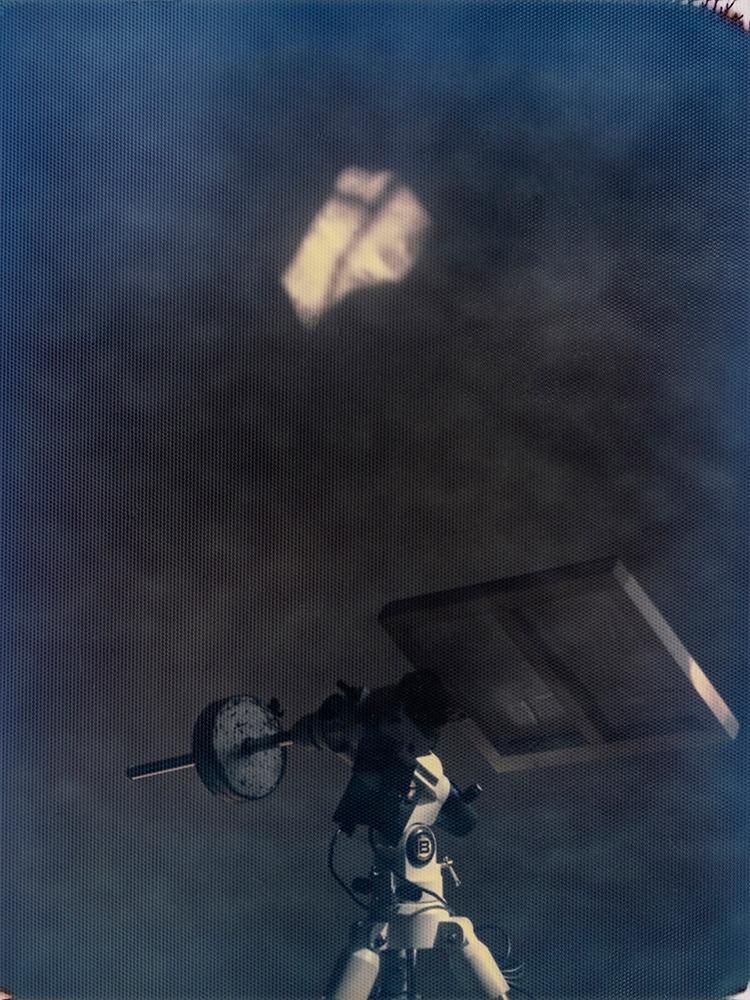
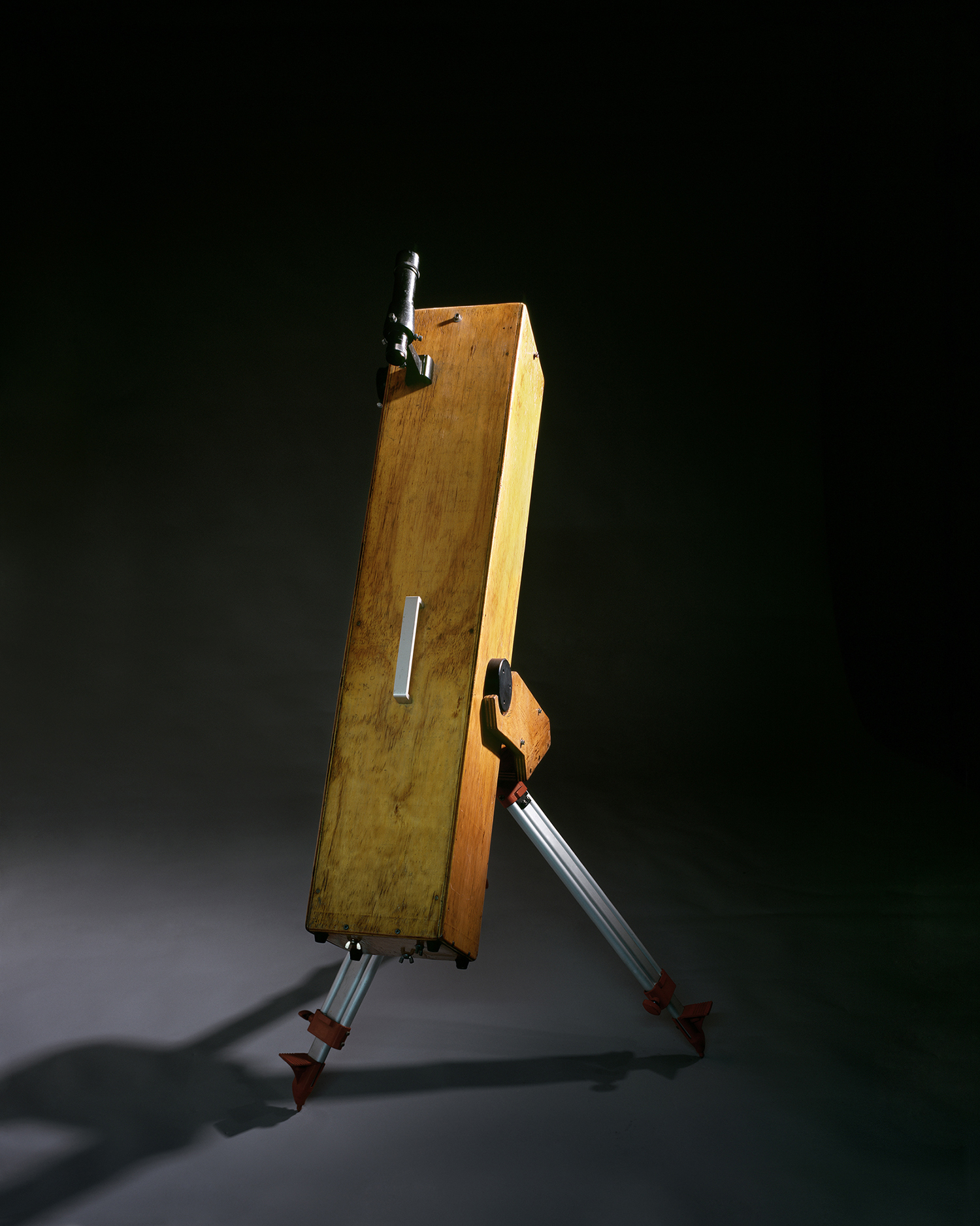
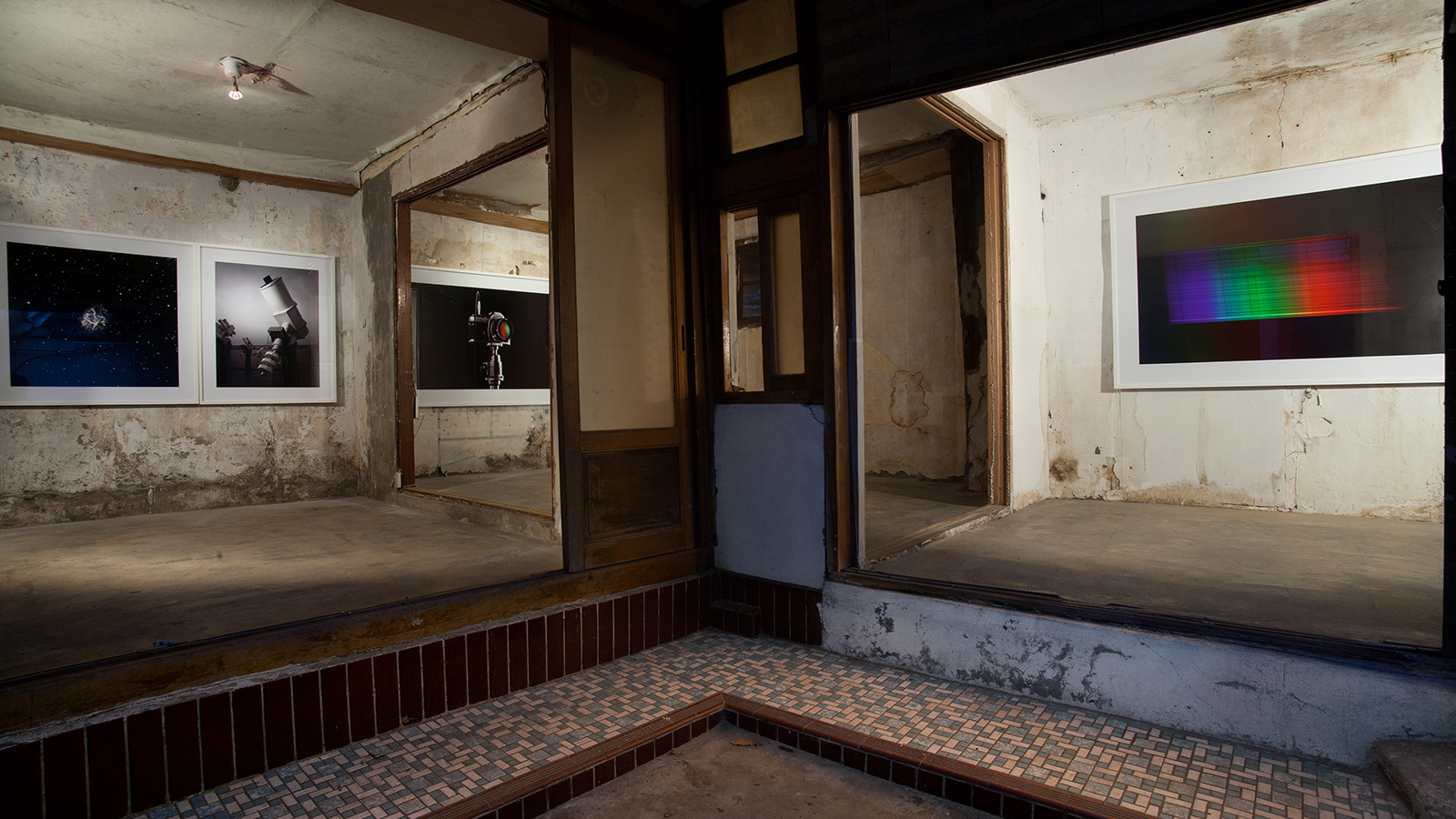
The next series by Eun Chun I would like to examine is 'The Photography Is the Retina of Scholars'. This series tells the story of amateur astronomers who observe celestial bodies and of the observational tools they have made themselves. Through 'The Photography Is the Retina of Scholars', Chun captures the lives of amateur astronomers who devote themselves with pure passion to observing the heavens.
Amateur astronomers use various instruments in order to see celestial bodies, with all their wonders and mysteries, more clearly. These tools allow them to view celestial bodies more closely or to visualize astronomical phenomena invisible to the naked eye. Why, then, do amateur astronomers look toward the heavens? Polaris, for example, which is familiar to many of us, is known to be approximately 430 light-years away.
The light from Polaris that we see today began its journey from the star roughly 430 years ago, traveling at the speed of light. Ultimately, the starlight we see in the night sky is an image of the past, having begun its journey hundreds of millions or even billions of years ago, and we cannot even know with certainty whether the star itself still exists in the present.
In this sense, I find it beautiful to look upon the distant starlight of celestial bodies in which birth and death are mysteriously intertwined. Perhaps amateur astronomers observe the heavens in a similar spirit. The effort they devote simply to seeing celestial bodies more clearly seems closer to aspiration than desire. We often use the words aspiration and desire as if they were overlapping concepts, but they require a more careful distinction.
Aspiration and desire share the fact that someone intensely wants a particular object, yet they differ according to the attitude with which that desired object is approached. Aspiration is self-sufficient because the object of intense longing reaches completion within the inner world of the person who longs for it. Desire, by contrast, operates through complex relationships connecting the self to objects beyond itself.
I believe that the act of amateur astronomers observing distant celestial bodies through various instruments is, above all, a self-sufficient act. This self-sufficient act is aspiration, or perhaps pure passion. Through Chun’s gaze, the lives of the amateur astronomers we encounter converge upon an intense and persistent aspiration: the desire to see and to know.
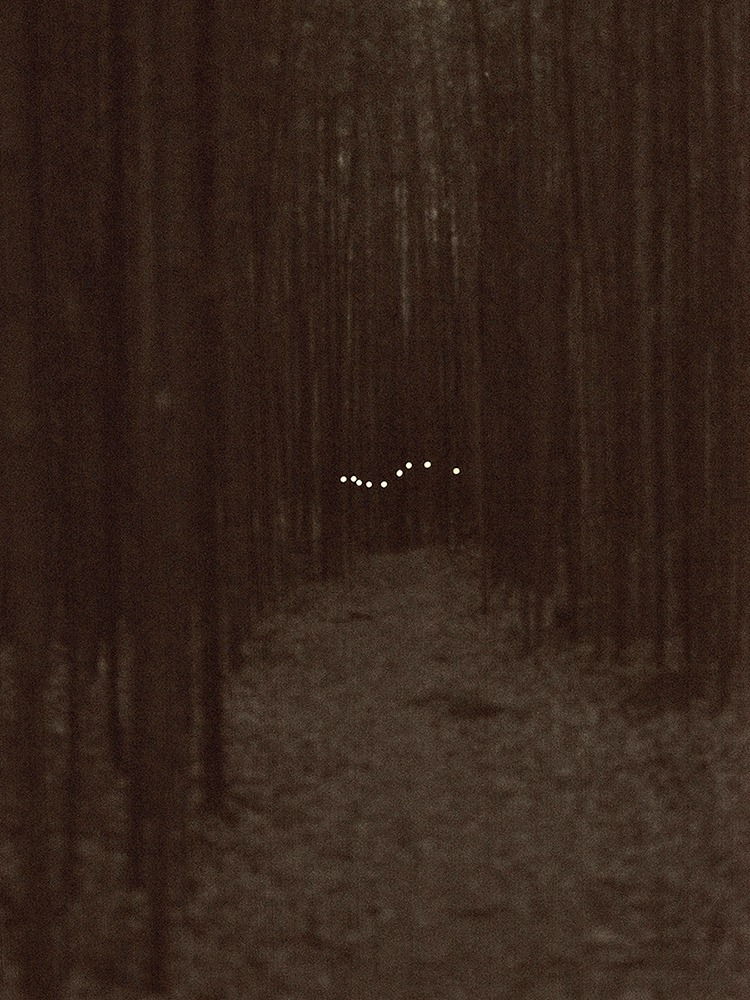
This aspiration can be felt not only in the celestial bodies observed through the instruments they use, but also in the instruments themselves. The aspiration embodied in the tools themselves can likewise be examined through the 'Optographic' series, which deals with a camera museum. Chun chose the title 'Optographic' because she believed that humanity’s desire to see, when driven to an obsessive extreme, approaches the delusion of Optography—the belief that an image remains imprinted on the retina.
The numerous cameras we encounter in 'Optographic' express, through their very physical presence, our desire or aspiration to see objects more clearly even before they function as optical instruments. As Chun herself has remarked, the pleasure of looking at a camera itself might be compared to the pleasure of looking at a map pinned beside one’s bed rather than actually going on a journey.
Let us return once more to the distinction between desire and aspiration. A society that prescribes what individuals should desire as though there were a correct answer inevitably standardizes desire. There are many reasons why people’s desires become homogenized within the society in which we live together, but one particularly important factor may be the absence of experiences of self-sufficient happiness—that is, aspiration—in individual lives.
A person who has never experienced aspiration cannot generate a subject within their own life. Just as a sentence requires a verb and an object, life also needs them. If we imagine all the elements of a sentence other than the subject as desire, then our lives may become better when they are able to articulate sentences in which aspiration and desire coexist.
Reframed in the context of society, we might say that a good society is one capable of recognizing and sustaining the possibility for individuals to pursue their own unique aspirations. Looking at Chun’s photographs, imbued with traces of the time she spent with amateur astronomers, I was once again reminded that we are living while losing our sense of aspiration. Simply losing aspiration would be one thing.
What is saddest in our lives is when aspiration disappears altogether. The amateur astronomers I encountered through Chun’s photographs were people who still carried the embers of the aspiration that we ourselves are gradually losing. Looking at her photographs, I therefore felt as though I had received a precious gift from these amateur astronomers. The world in which we live together has not yet forgotten how to aspire.
Earlier, through Searching for the Photograph, I argued that the relationality of photography and the act of looking at photographs can contribute to understanding and giving concrete form to the complexity and inscrutability of contemporary life. We can experience this same relationality when we encounter Eun Chun’s photographs of the lives of amateur astronomers and sound-effects artists at close range.
How, then, do the lives of amateur astronomers and sound-effects artists come into contact with our present? Stories about sound-effects artists and amateur astronomers may in themselves strike us as something unusual, yet both exist outside the concentric structure of social desire. Although the profession of sound-effects artist is gradually becoming more institutionalized through increasingly established systems of education and employment, it remains such an unfamiliar field that it is not widely sought after as a career.
The activities of amateur astronomers, meanwhile, are difficult to accommodate within the concentric structure of social desire precisely because they bear no direct relation to livelihood. In this way, Chun shares with us, through her own gaze, the lives of people who retain their singular aspirations even within social structures that tend to standardize individual desire.
Here, I find myself recalling once again the warmth I sensed in Chun. Earlier, I noted that in the 《Blackbox Recorder》 project, Chun’s distinctive perspective could only be revealed indirectly. In the bodies of work included in 《Searching for the Photograph》, her gaze emerges more actively than it does in 《Blackbox Recorder》, yet the artist herself still does not occupy the position of narrator at the center of the work. What stands at the center is not Chun herself, but the lives of the people with whom she forms relationships.
Chun positions herself beside those who occupy the center of her work and strives to allow what they see, say, and feel to emerge more clearly. This process does not treat encounters with others as a means to an end, but seeks instead to respond sincerely to the lives of those she engages with. The art world I have recently experienced not only encourages a desire for success without a subject, but has also deeply internalized the logic of survival of the fittest.
Within such conditions, artists become preoccupied with narcissistic struggles for recognition, and the more they do so, the more life and art become separated and diminished. Chun’s way of encountering others through her practice allows life and art to form a relationship without hierarchy. In her work, I feel the warmth generated through the friction between life and art. Within that warmth, I begin to imagine that our lives, confronted by all manner of crises, might be renewed in a direction that is a little freer and happier.