The Will to Transform
Byun Sanghwan dismantles aesthetic conventions formed through established structures and inserts into them elements drawn from the most ordinary aspects of daily life. Looking closely at his work, one encounters objects, tools, and functional products commonly used in everyday life. The materials and substances that convey this sense of lived reality encompass containers, waterproof paint, mechanical parts, whole fried chickens, tangerines, ginger, avocados, icicles formed on boiler flues, water, and plaster.
Like the humorous proposition that anything deep-fried in oil must be good, the artist handles the most concrete objects of everyday life like an alchemist, cooking them and plating them as objects. In the 1960s, the Nouveau Réalistes extracted fragments of everyday life rather than grand narratives and revealed possibilities for objects after their utility had disappeared.
The consumer society filled with mass-produced goods had become a new reality in which the memories, time, and values embedded in matter evaporated with increasing speed. What, then, of art today? As we know, contemporary art grows at a speed that is almost impossible to imagine. Ours is an era in which substance is ambiguous and immaterial life is increasingly valued.
Byung-Chul Han emphasizes that “today, time is fragmented at every level.”[1] Information reaches an unspecified multitude earlier, faster, and farther than reality itself, yet such information seems to circulate repeatedly between an elusive time and its opposite, a time that can be grasped. Since around 2010, contemporary Korean art has begun to actively question the relationship between the material and the immaterial.
Alongside this, a kind of discourse on landscape rooted in the city has gradually matured. As accelerated time began to overtake everyday life, this new landscape discourse resisted speed, attending anthropologically to the surroundings of life and turning its gaze toward nature and civilization, history and institutions, matter and immateriality, and the borderlands between them.
This period can also be understood as one in which artists experimented with inscribing the body into reality beyond a purely visual mode of perception. Fundamentally, artistic creation unfolds through a struggle with matter. In this sense, the plastic arts involve “getting one’s hands dirty.” From here, we will examine Byun Sanghwan’s printmaking practice.
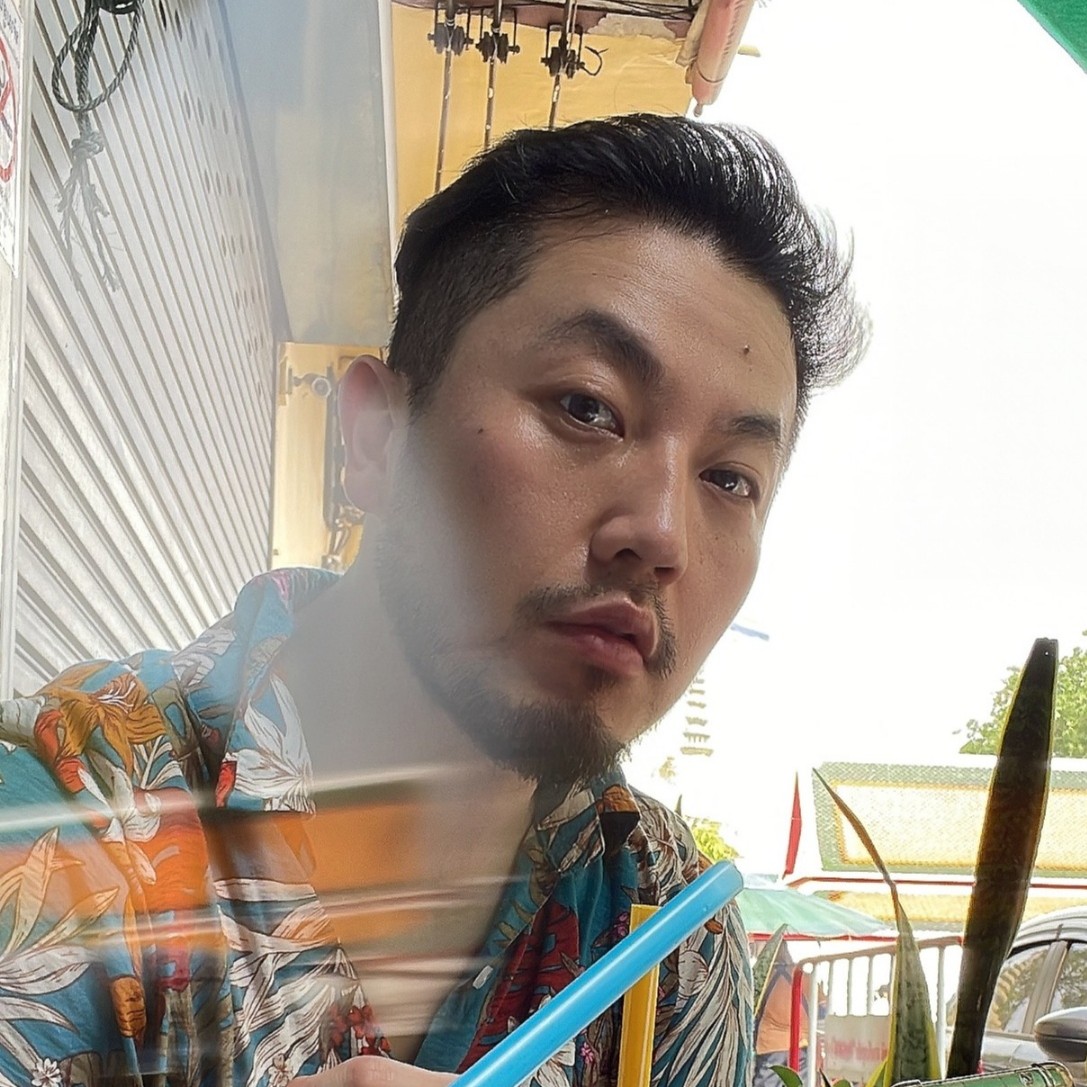
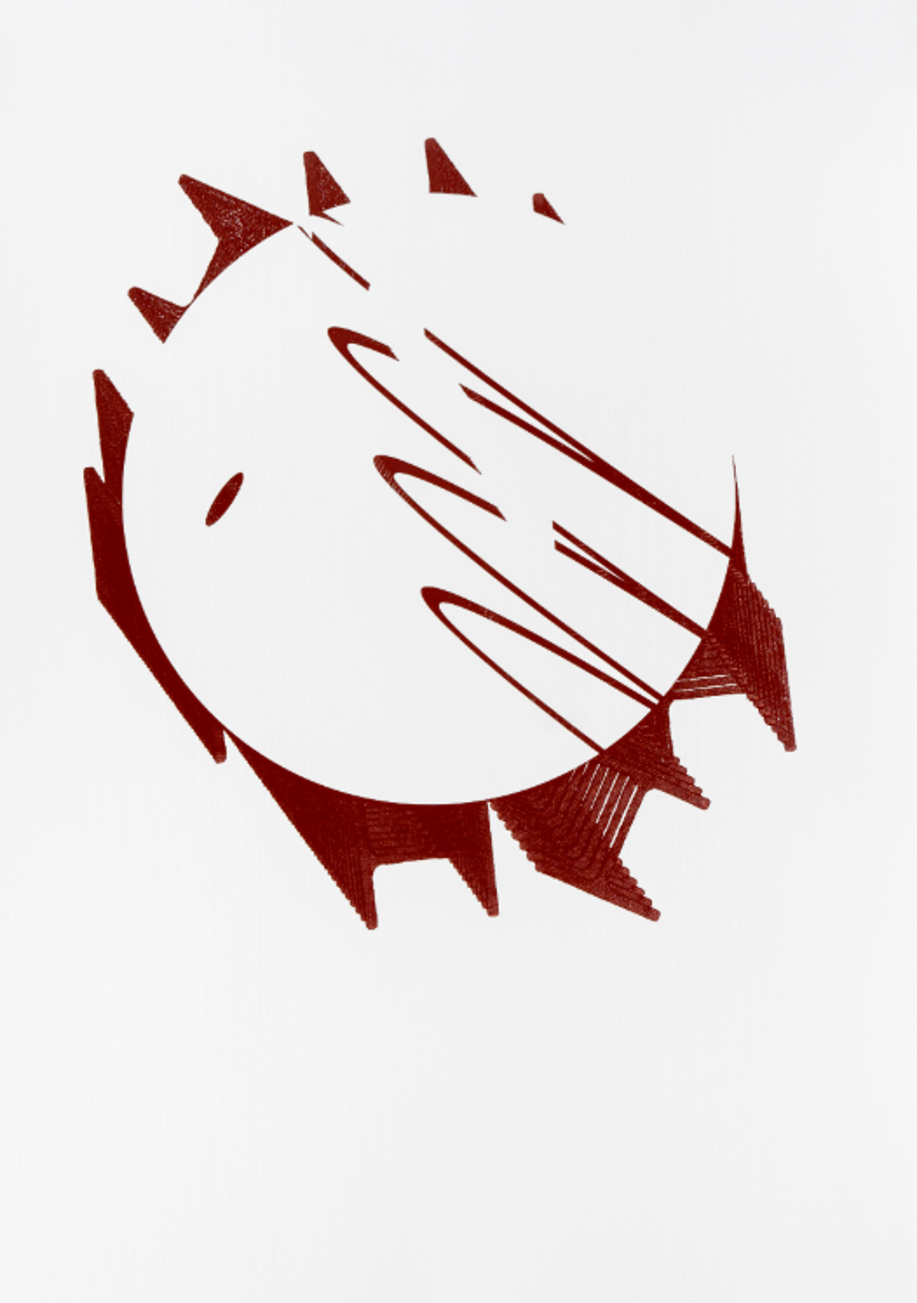
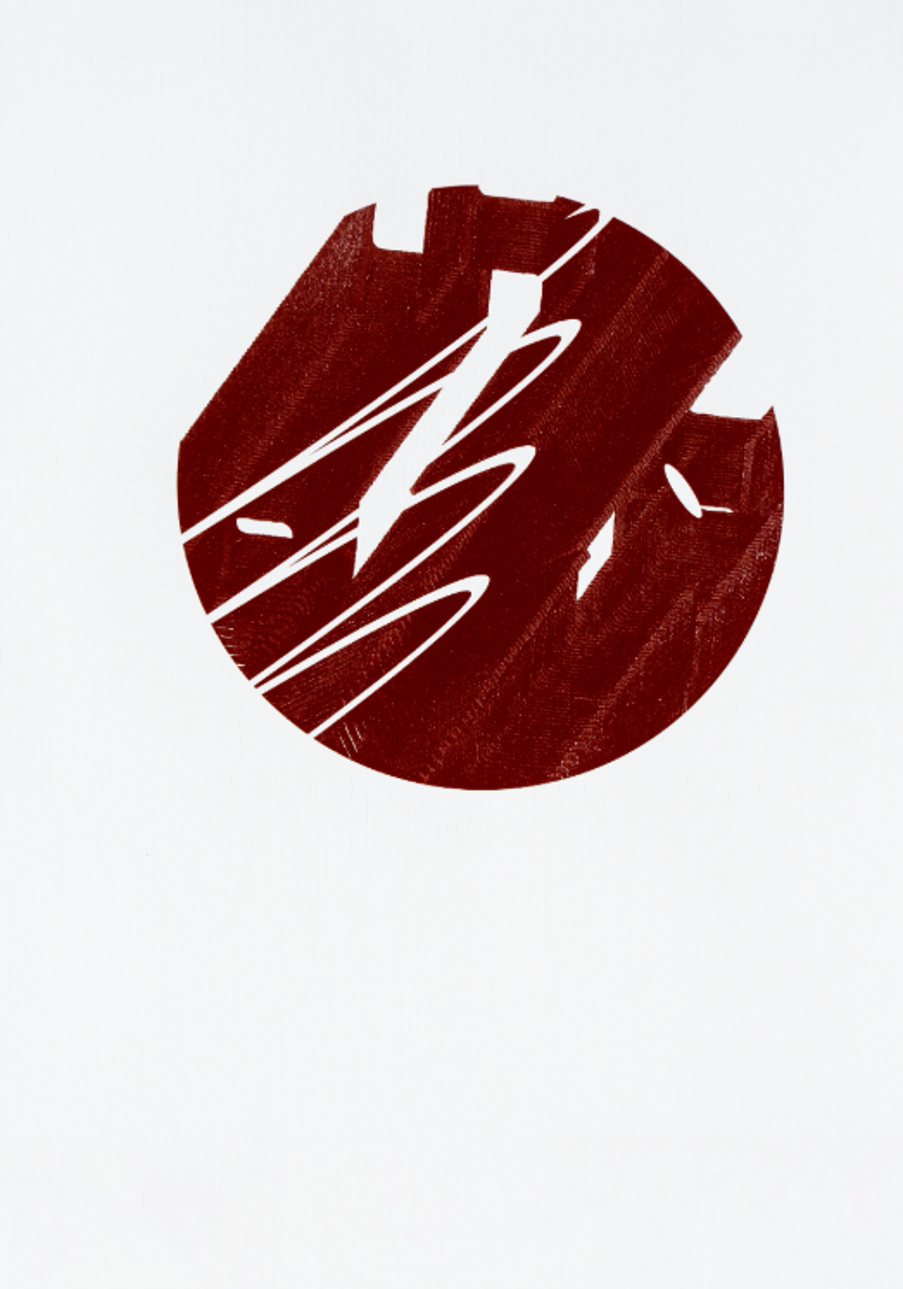
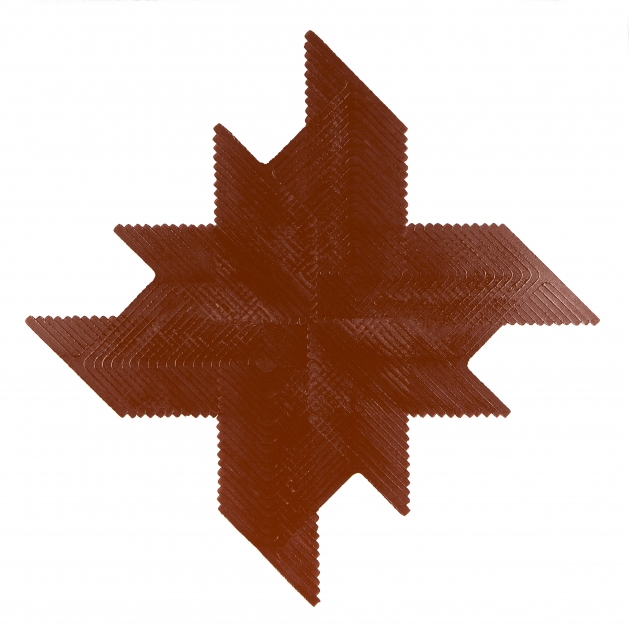
His prints dismantle conventional methods: instead of using standard flat plates, he works with the weight and volume of materials he can physically manage and produces monotype prints without using a printing press. By deliberately imposing exceptional conditions that cannot be fully controlled, he seeks to transform the formal conventions of printmaking.
Weight and Force
Byun Sanghwan uses specific physical materials themselves as printing plates rather than images or figurative forms. One of the conditions determining the plate is the amount of weight he himself can support. The printing process can therefore be understood as a period in which the artist bears the full weight through his own strength, while body and matter submit to gravity and tension.
Gaston Bachelard, emphasizing that the printmaker’s work is not immaterial in the way Romantic painting might be, writes that “the printmaker says that matter exists” rather than merely referring to an external world.[2] The print, as Bachelard perceives it, is read through the mass of matter and through the weight and speed of force.
His emphasis on the relationship between matter and the hand may stem from the fact that printmaking is completed through the artist’s own hand—gauging weight, sensing texture, and exerting pressure—and thus points toward how printmaking approaches reality. In this sense, Byun’s unconventional printmaking may be understood as a means of sensing the real world rather than a virtual one.
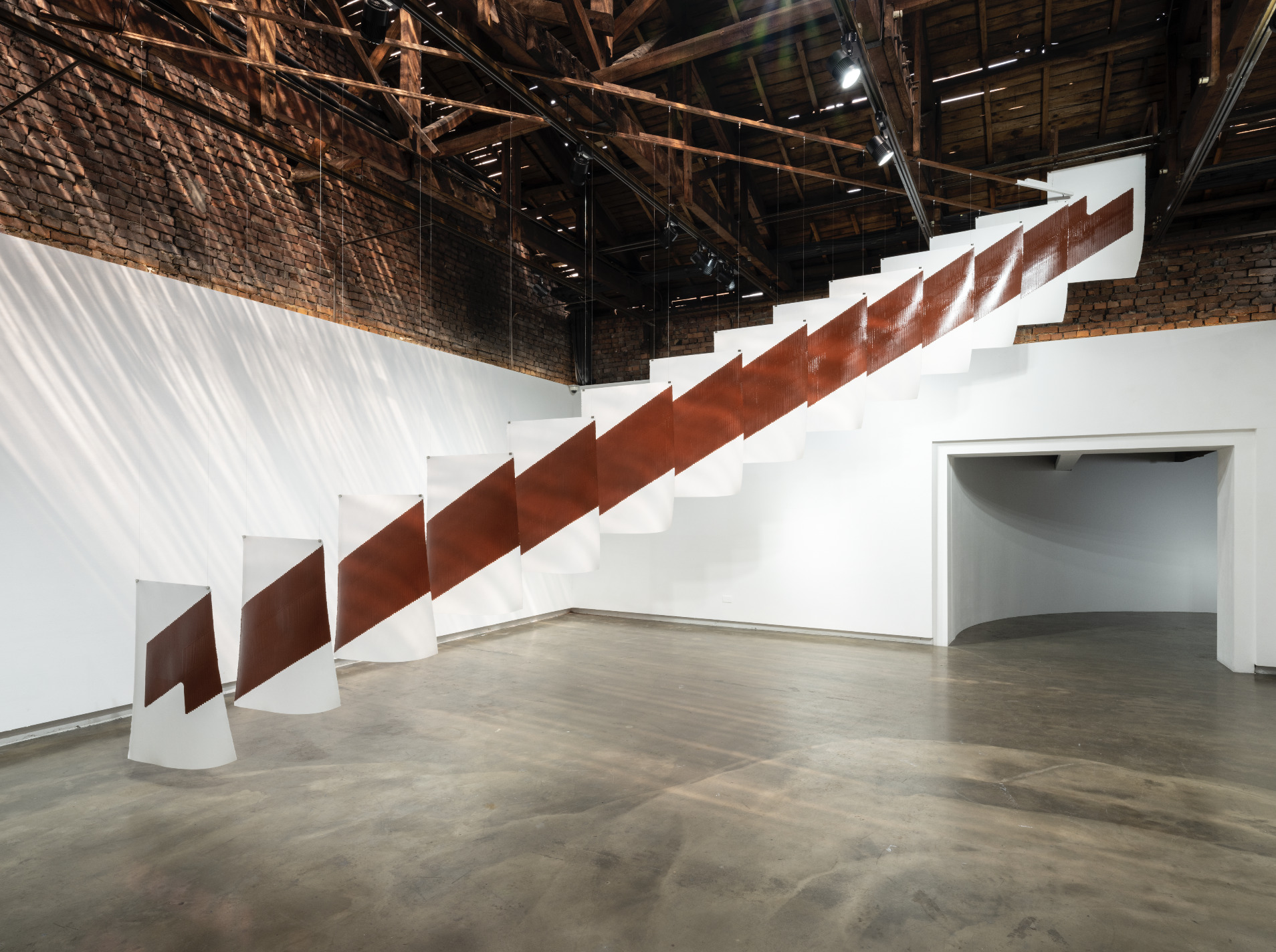
His unconventional printmaking process unfolds as follows. First, he purchases leftover structural steel used in steel mills to serve as the printing plate. Structural steel, commonly known as H-beam, refers to rolled steel construction material with standardized cross-sections. Second, for an obsolete piece of steel to become a printing plate, its weight must be manageable by the artist himself.
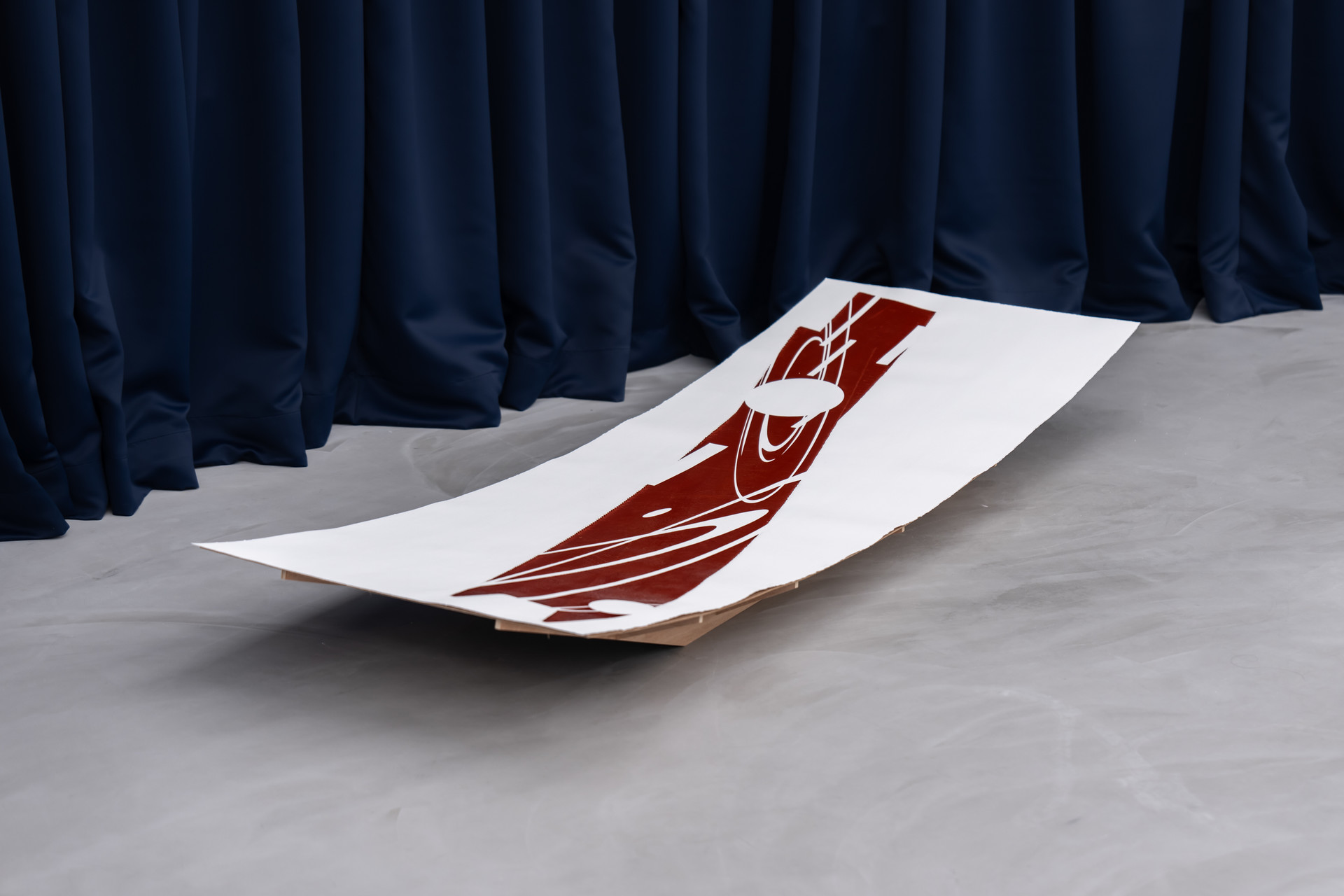
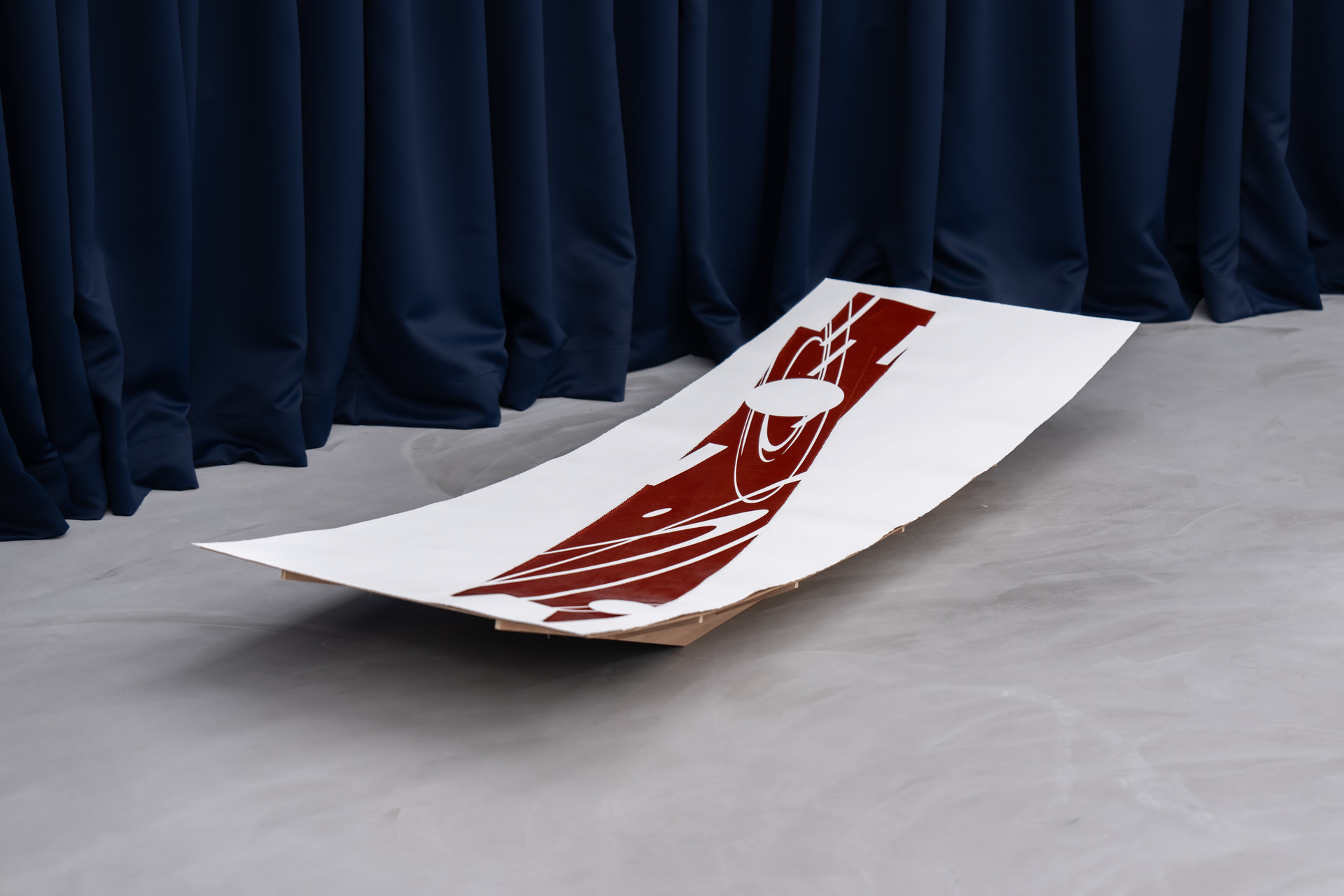
For him, approximately 15 to 25 kilograms is appropriate. Third, he removes rust from the aged form and levels the surface. Fourth, he applies anti-corrosion paint. Anti-corrosion paint is a functional pigment designed to prevent corrosion of steel and is a material the artist has used repeatedly. Here, however, it functions as printing ink.
Byun Sanghwan’s printmaking thus exists outside the conventional material vocabulary of the plastic arts. For the artist, the reddish-brown anti-corrosion paint operates as a signifier reflecting one aspect of Korean society as a manufacturing-based industrial nation. These everyday non-artistic—or functional—materials seem almost indistinguishable from the elements that constitute reality itself.
At this point, let us return once more to Nouveau Réalisme. In the 1960s, Western avant-garde artists began to move away from the purity of art situated outside everyday life and entered instead into reality and lived experience. It was a shift brought about by rejecting self-referential narcissism and broadening the field of vision toward the materials and objects that constitute reality.
Such elements of change, discovered through attempts to read the world, inevitably became turning points in artistic practice. Returning to Byun Sanghwan’s work, the use of non-art materials, as described above, requires a new method of printing. Because alphabet-shaped structural steel forms are used as plates, the very method of taking an impression must change. The printing process proceeds as follows.
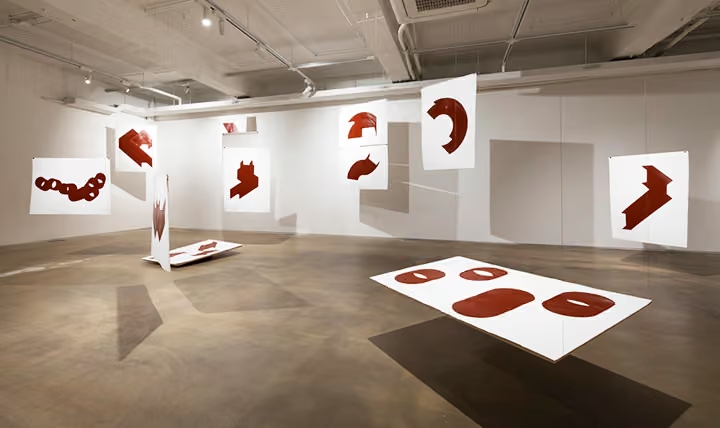
First, he marks the area to be printed on the paper. He then adds a weight equivalent to that of the structural steel in order to increase the speed of printing. Once the first impression is completed, he immediately repeats the same process, following the intended trajectory. Through this exceptional printing process, Byun proposes a new role for objects that have lost their function outside the standardized systems of the art industry.
Anthropological Landscape
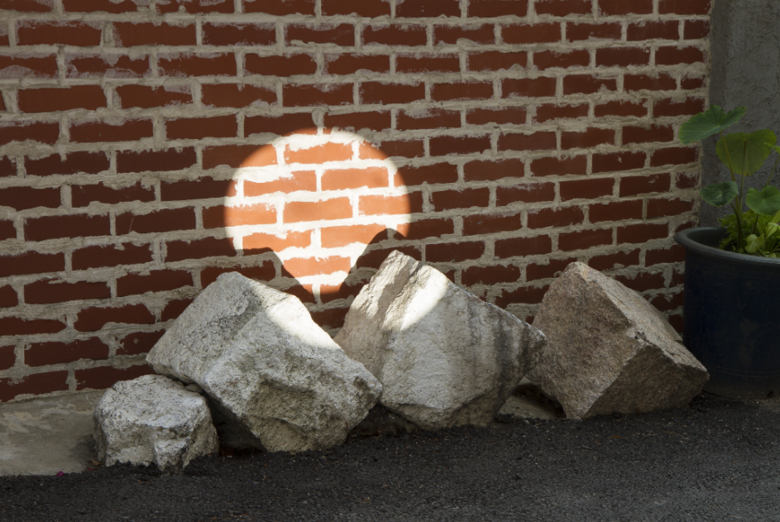
Byun Sanghwan describes his practice as being similar to the way an anthropologist explores the world: he moves through different parts of the city and collects minor, overlooked landscapes. Here, landscape is not limited to the form of nature. For him, “landscape” can extend beyond everyday life, nature, and the city to the scale of the cosmos. This idea overlaps with John Berger’s understanding of landscape.
In short, landscape is not merely an aesthetic object; because it remembers human life, it must ultimately be connected to social relations. Byun’s prints reject representation, and in its place are inscribed the weight, hardness, and material traces of matter. Differences in the elasticity and sheen of printing paper are also handled carefully from one work to another. In his prints, I found the properties of matter more immediately perceptible than the image itself.
Around 2010, alongside the increasing prominence of discourse on immateriality in Korean art, an anthropological attitude toward exploring the urban periphery revealed new rhetorical possibilities for landscape. Landscape at the time sought to draw phenomena such as plants, animals, objects, nature, climate, and atmosphere—things growing or occurring at the margins of developmentalism—into the field of landscape, in order to capture the boundary between such phenomena and an accelerating, technologically driven information society.
This affective landscape held an ambivalent condition, containing not only anxiety but also unspoken expectation. It was perhaps a sign of the period emerging at the turning point toward the post-internet era. Byun, meanwhile, appropriates obsolete tools as media for printmaking, thereby reconsidering aesthetics, function, and value.
Beauty and function, looking and usefulness, are not merely compared within his work; together they construct a particular world. To borrow Hannah Arendt’s words, human beings “fabricate the infinite variety of things” beyond labor and thereby “construct an artificial world.”[3] Arendt emphasizes that the human condition rests on survival, yet labor must extend beyond survival and connect with the world.
Here, Homo Faber suggests that humanity, through the use of tools, can ultimately evolve beyond survival toward artistic activity. The Latin word faber originally referred to a craftsman or artist working with hard substances such as stone or wood.[4]
The Force of Observation and Practice
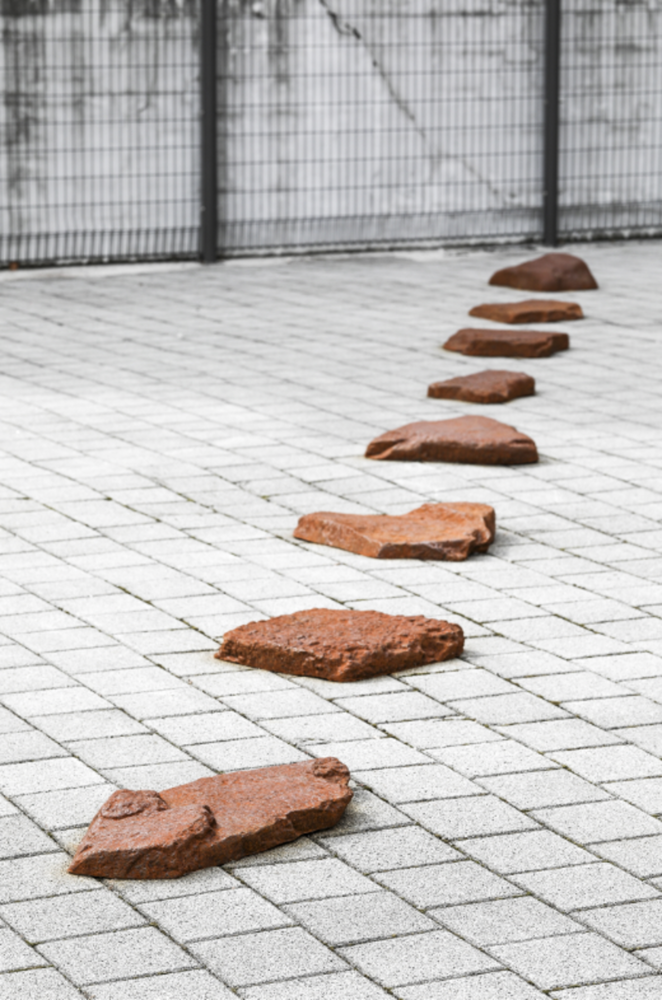
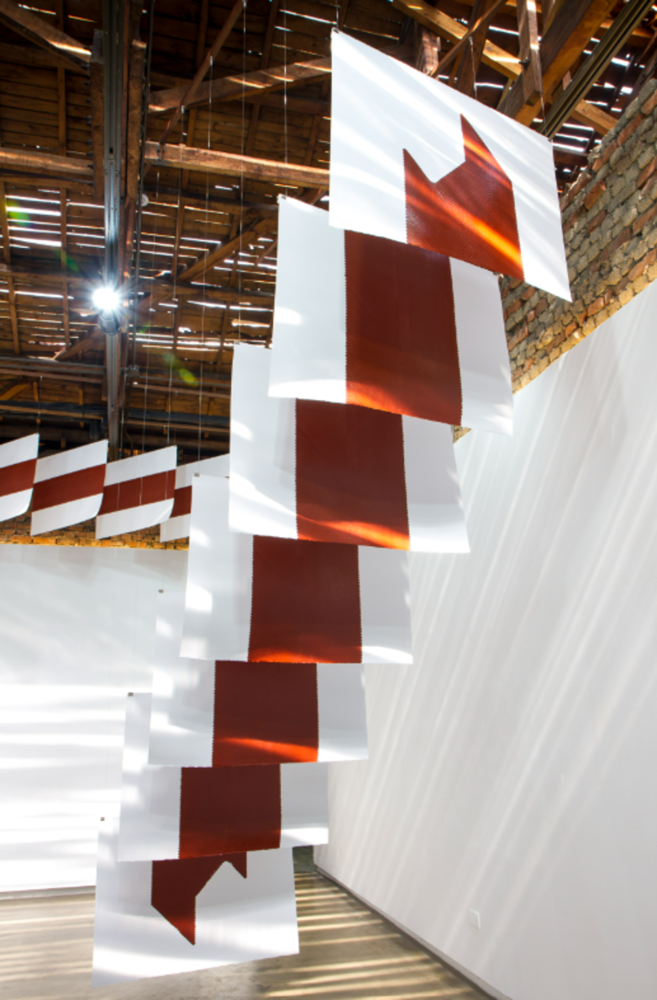
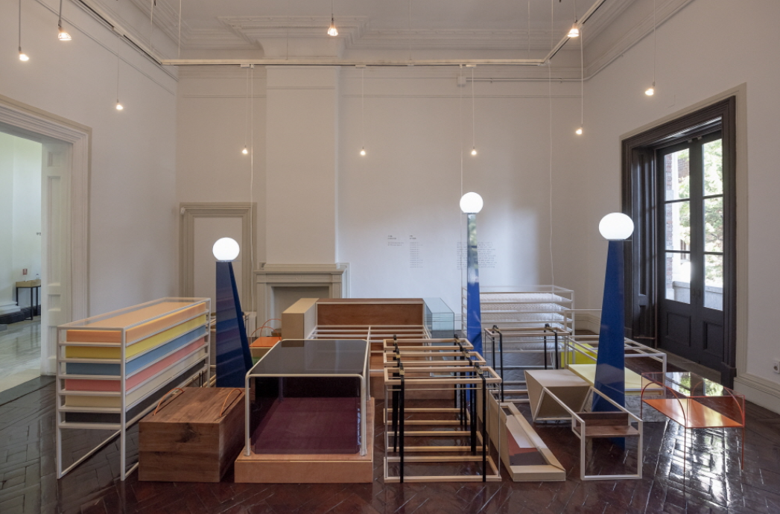
Byun Sanghwan’s printmaking has consistently been accompanied by installation, which should be distinguished from a simple mode of display. He intervenes in exhibition spaces, at times erasing their existing spatial characteristics altogether or inserting new objects in order to reactivate the surrounding environment.
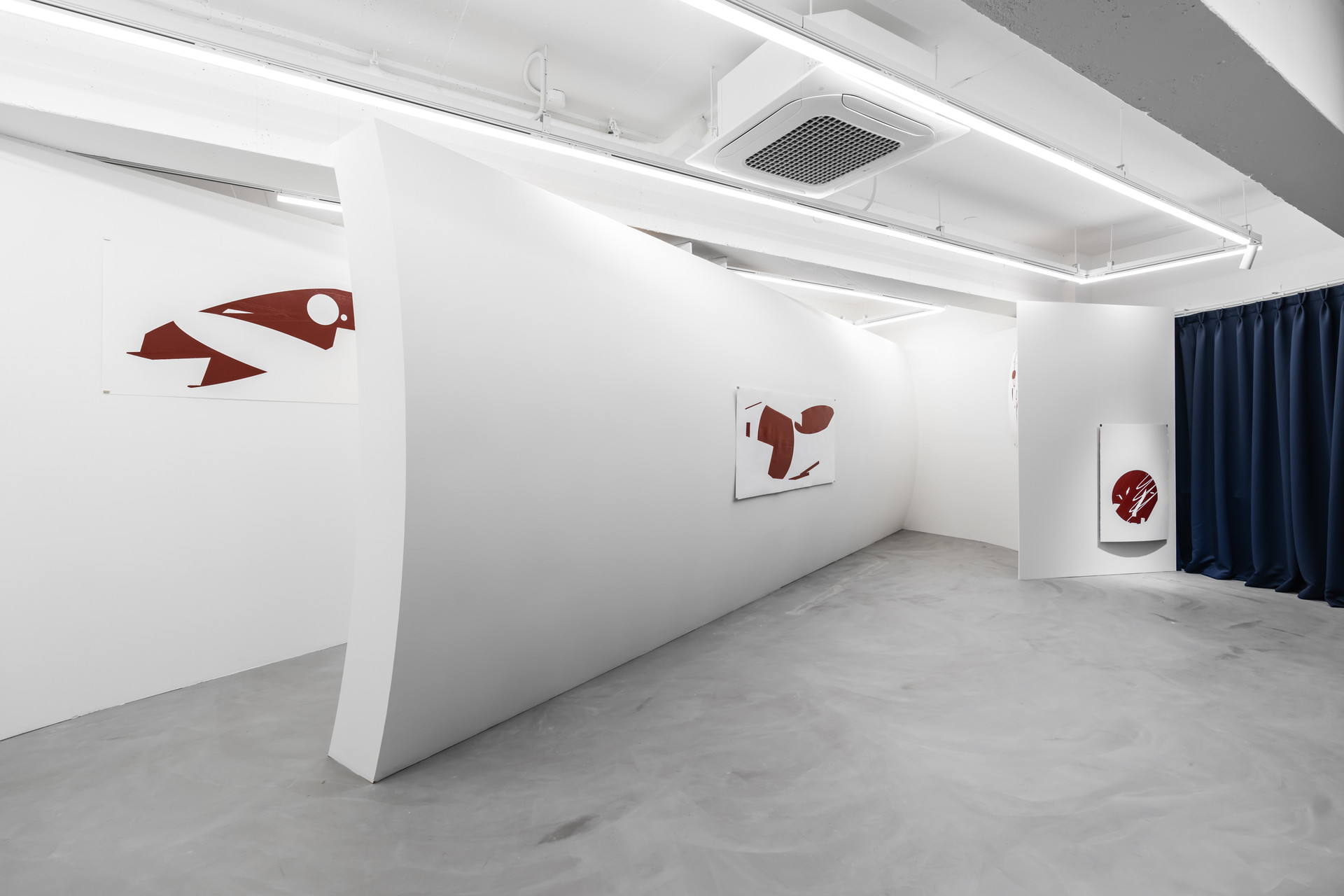
The spatial composition of his solo exhibition 《Horizon, and the Curtain of Ellipses》 in particular takes on a curatorial character. If the works function as visual signs within the exhibition, the space operates as a stage that supports the positions of those signs. The relationship between work and space can be assumed to have gradually evolved through the artist’s successive exhibitions.
Above all, attention should be paid to the way the prints are displayed. Rather than following conventional aesthetic frames, he produces custom frames himself through woodworking. Yet these frames are not flat; because they possess curved surfaces and three-dimensional volume, they simultaneously take on sculptural characteristics.
He does not deliberately exploit the distinction between object and artwork in order to conduct conceptual experiments. Rather, precisely because such a distinction does not appear to be his primary concern, his practice seems to place greater emphasis on constructing a new space within the exhibition and then giving each unconventional work an individual spatial setting suited to its intention and meaning.
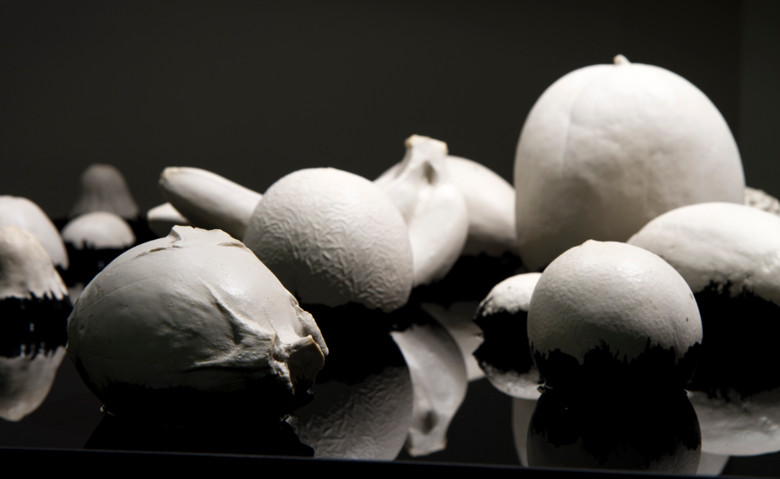
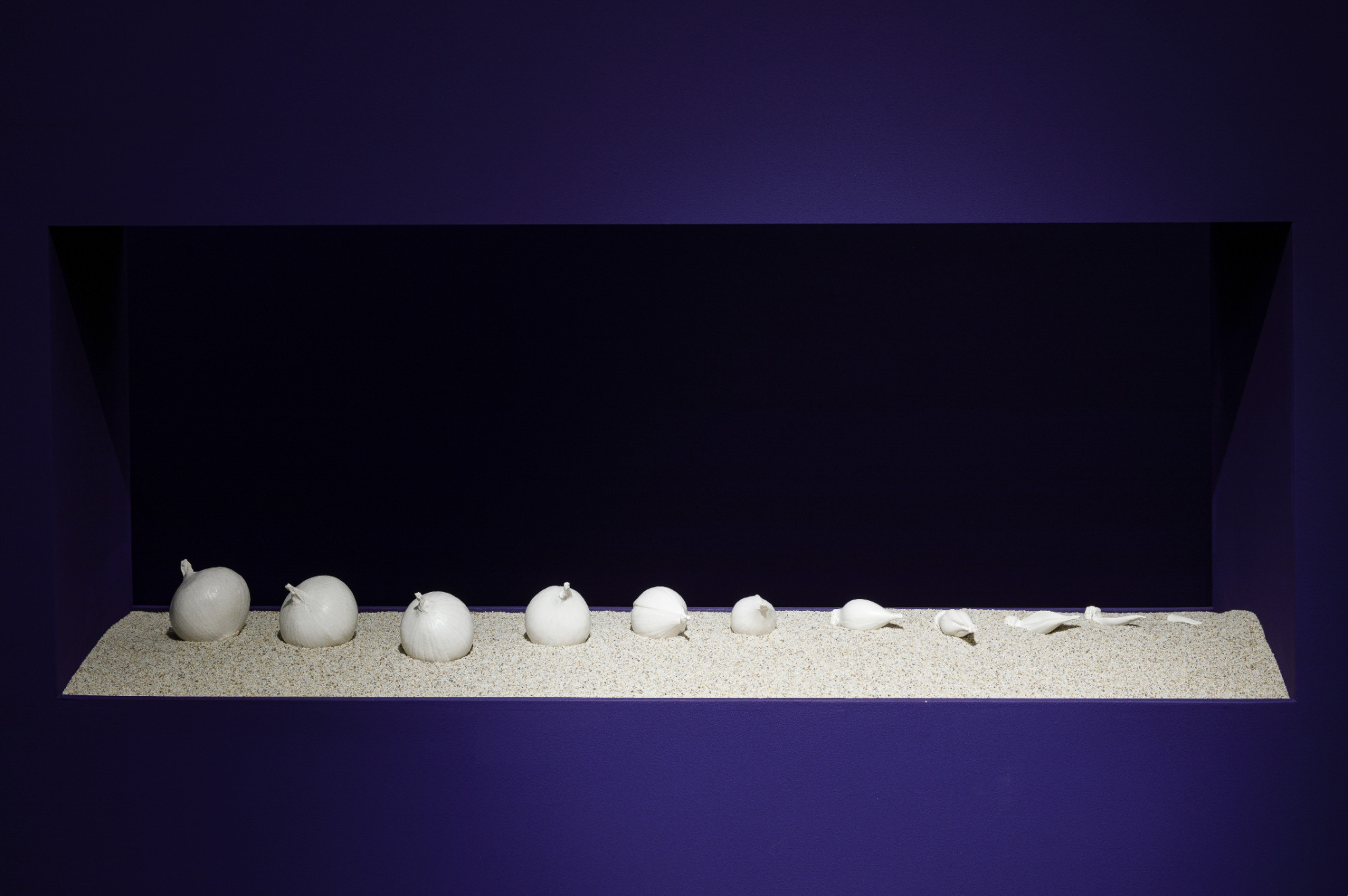
In the solo exhibition 《The Hand Is Quicker than the Eye》(Space So, 2022), he produced a curved purple display structure tailored to the given shape of the gallery and positioned works within it. Personally, it felt as though everyday objects disguised in plaster were parading across a flamboyant stage.
The criteria by which value is judged in contemporary art are highly diverse and require complex forms of thought. But precisely for that reason, might they not also become more intuitive? What, then, do the words “horizon,” “ellipse,” and “boundary” in the title of this exhibition signify? To answer this question, we need to look at another aspect of the artist’s activities. Byun Sanghwan is also an amateur rock climber.
Rock climbing is a process of embracing nature with the entire body. It is, in some sense, also a process of learning from nature. Depending on a rope, physically sensing rock that has endured immense stretches of time, and cautiously finding a route where no path exists bears certain similarities to the process of his structural-steel printmaking.
Moving vertically through the world and looking out over the landscape panoramically from such heights must surely be an experience belonging to a dimension distinct from that of a flat plane.
In this exhibition, the artist extends the scale of landscape from the Earth toward what lies beyond it. Experience and imagination multiply one another. His work follows the curvature of light, crossing the horizon and tracing the time of light itself. The series titled “Odyssey” calls to mind Stanley Kubrick’s film 2001: A Space Odyssey(1968).
Seen from this perspective, the process of structural-steel printmaking may also be read as a metaphor for a physics experiment. Ultimately, Byun Sanghwan prompts us to reconsider the material foundation of the existing world—a foundation we may have temporarily forgotten.
[1] Byung-Chul Han, Infocracy: Digitization and the Crisis of Democracy, Kim Youngsa, 2023, pp. 35–36.
[2] Gaston Bachelard, The Right to Dream, trans. Lee Garim, Youlhwadang, 2001, p. 76.
[3] Hannah Arendt, The Human Condition, trans. Lee Jinwoo, Hangilsa, 2017, p. 219.
[4] Ibid., p. 219, note 1, partially quoted.