Currently
in its 10th year since its inception, 《Korea Artist Prize 2021》 has selected
four artists, Kim Sangjin, Bang Jeong-A, Oh Min, and Chan Sook Choi, all
domestically and internationally recognized for exploring various themes and
mediums such as painting, video, installation, and sound.
Kim Sangjin, who has
consistently studied the relationship between technology and humans, presents
video and installation works that visualize our changing perspectives on people
and society that evolve from fast-changing technological developments. Bang
Jeong-A is an artist interested in capturing obscurities behind everyday life.
Her large-scale paintings reveal day-to-day life scenes of "the here and
the now," the concealed realities lurking behind them and the
sociopolitical landscape with invisible yet real powers-that-be.
Oh Min has
pored over the nature of time for a long time, deconstructing existing mediums
of video, music, and performance, reconstructing them with renewed perceptions,
and venturing into new territories. She takes fundamental elements of
performance, such as light, camera, body, and space and unfolds them within an
unconventional space, compelling her audience to question their perception of
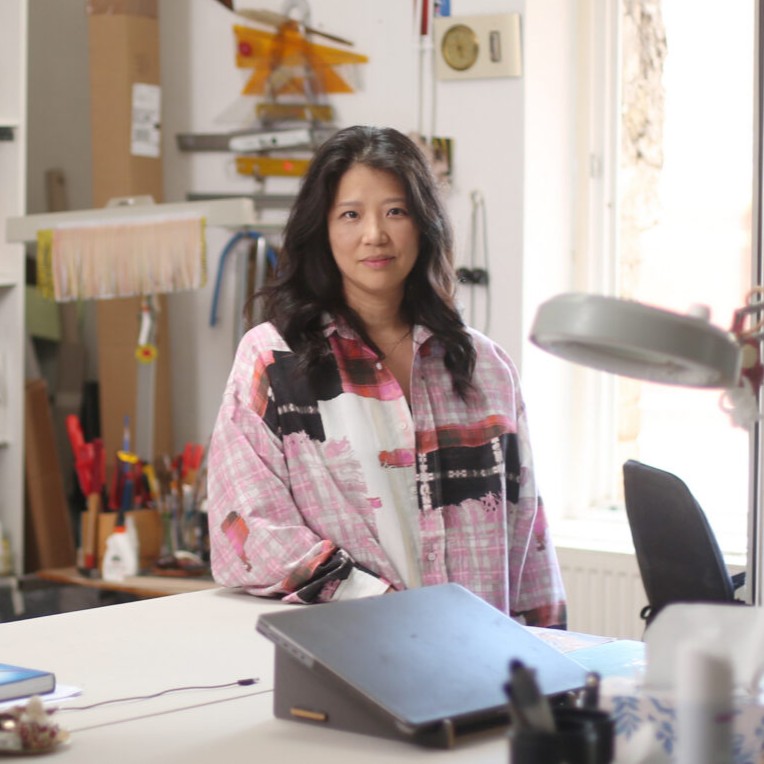
synchronic moments. Lastly, the Berlin-based artist Chan Sook Choi presents
work revolving around her interest and research area of migration and movement.
Through large-scale installations of video and sound, she explores the theme of
memory concerning past events, documentation, and memory narratives.
This
year's exhibition features artists with novel understanding and
reinterpretations of reality and the ensuing changes during difficult times.
The finalist of the Korea Artist Prize will be selected through a judging
process during the exhibition period. It is our hope that this year's event
will serve as an opportunity for celebration and reflection of Korean
contemporary art.
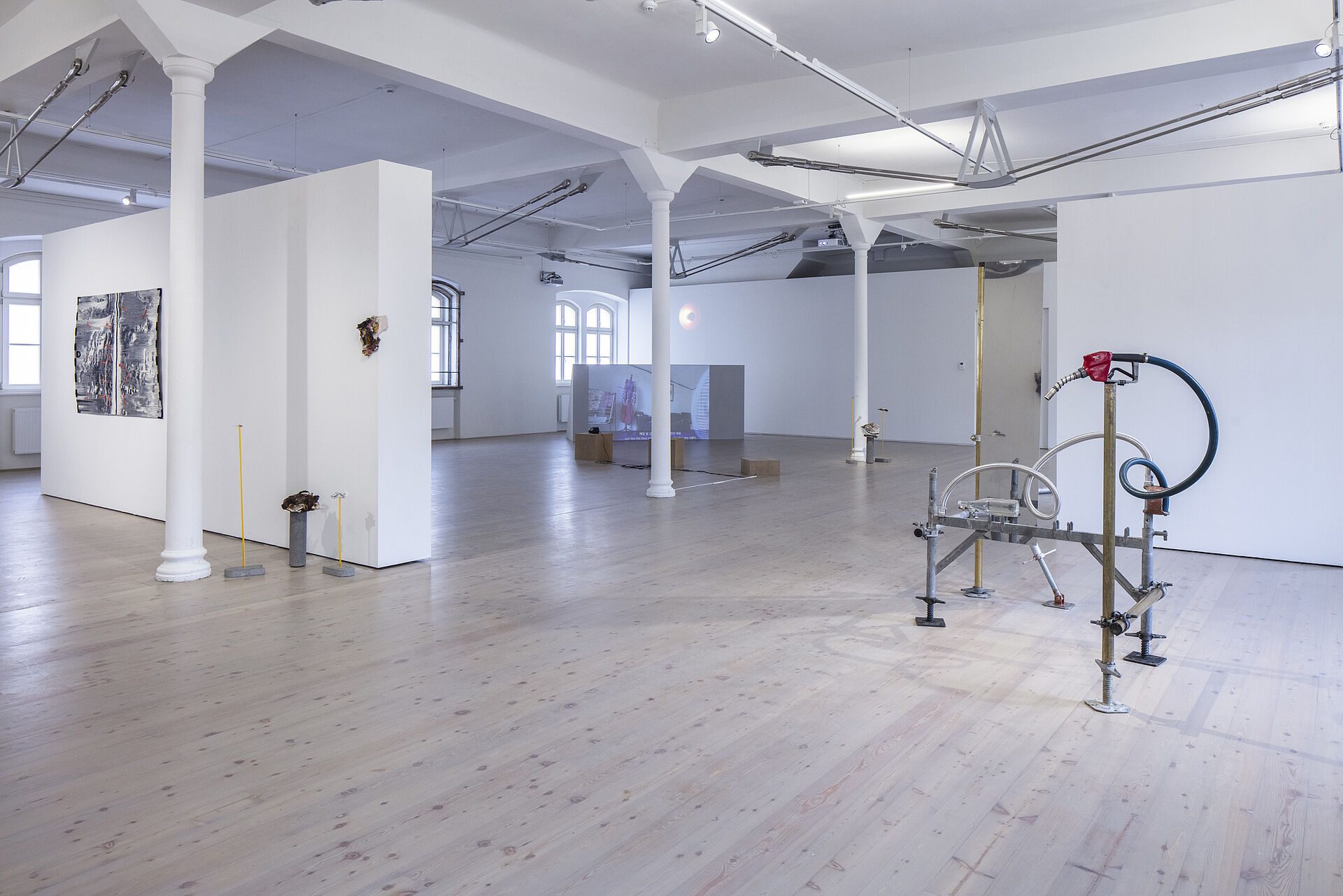
Kim
Sangjin - Lamps
in video games use real electricity
An artist
who has been exploring the themes of people and the world through various
mediums and formats, Kim Sangjin presents Lamps in video games
use real electricity, an exhibition of large-scale video
installations, sound, and sculptures. Based on his longtime study of the human
cognitive system, Kim rekindles our interest in its uncertainties and
imperfections, prodding us onto uncharted virtual territories. He spotlights
today's contemporary art by making visual through his work the human experience
of living with and questioning the absurdities in our present reality.
Kim
addresses the themes of "people and the world," which he has explored
over a long period, by depicting the polarized human existence at the
crossroads of real and virtual realms. His new work, Lo-fi
Manifesto_Cloud Flex (2021), which takes center stage in the
exhibition hall, is a visualization of the ordinary, everyday virtual reality
that contrasts with the Hi-Fi based, fascinating, but fleeting virtual
moments.
Chroma Key Green (2021) is an astute
representation of the dichotomy the color green represents today. The color
symbolizes nature in our human-constructed environments of cities and
societies, but in video productions, it indicates features that need to be
obliterated to facilitate computer graphic work. Through the sharing platform
of an exhibition, Kim reconstructs the diverse human experiences that arise
with fast-growing virtual and digital experiences, including social media,
cryptocurrency, and metaverse.
Bang
Jeong-A - Heumul-heumul
Bang
Jeong-A is an artist based in Busan who has consistently addressed the theme of
"the here and the now" through her painting. She strives to relate on
canvas the stories obscured behind the ordinary and familiar scenes of our
contemporary society. In this exhibition, Bang features her paintings as the
confluence of the flows of time and history that bring in drifting stories and
events concealed behind everyday places. In bringing to the surface the
overlooked past and unrecognized dangers, she urges us to take another closer
look into our life and our surroundings.
Bang
presents two different sections in the exhibition that represent her chosen
theme of "Heumul-heumul," which describes a soft and mushy
state. Korean Political Landscape, large-scale
paintings that depict the rigidity of systems, structures, power,
relationships, and other complicated Korean political contexts imbued in the
ordinary landscape of everyday life; and A Plastic Ecosystem that
epitomizes things that must not soften.
Each section addresses the same theme
but tells a different story. She shares her perspectives and experiences by
inviting the audience into her "the here and the now," urging them to
face the hidden realities and perils they encompass. Her paintings illustrate
the theme of "Heumul-heumul" in diverse ways, depicting narratives
that deliver a sense of crisis felt by individuals up against the powers that
be.
Oh
Min - Heterophony
Oh Min is
an artist who explores the nature of time through experiments in various
mediums such as music, sound, and performance. Oh expands the realm of the
senses in her research of time. She studies the temporality, movement, and
characteristics of light in performance and visual arts, delving into physical
considerations affecting gaps in time and paradoxical contradictions that range
from the perfect to the imperfect. Experimenting with time through its control,
structure, and form, Oh has worked toward developing new methodologies.
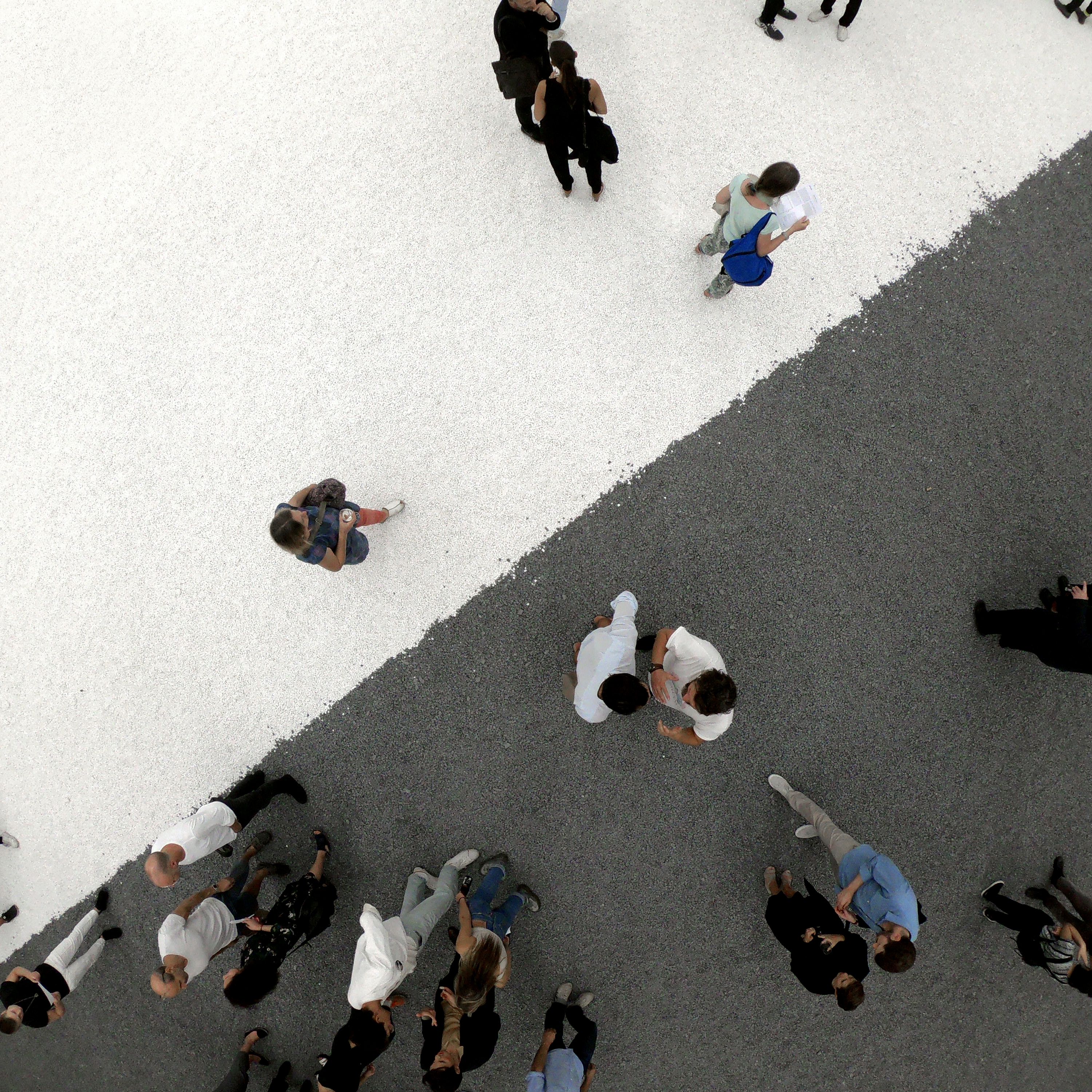
In Heterophony of Heterochrony (2021), she treats
time as both raw material and format, raising questions from different angles
on images and connections resulting from time-based arts. To an artist, the
format and structure of an artwork represent their perspectives honed by extensive
study and mastery. They also serve as a tool in awakening new sensations across
genres and mediums.
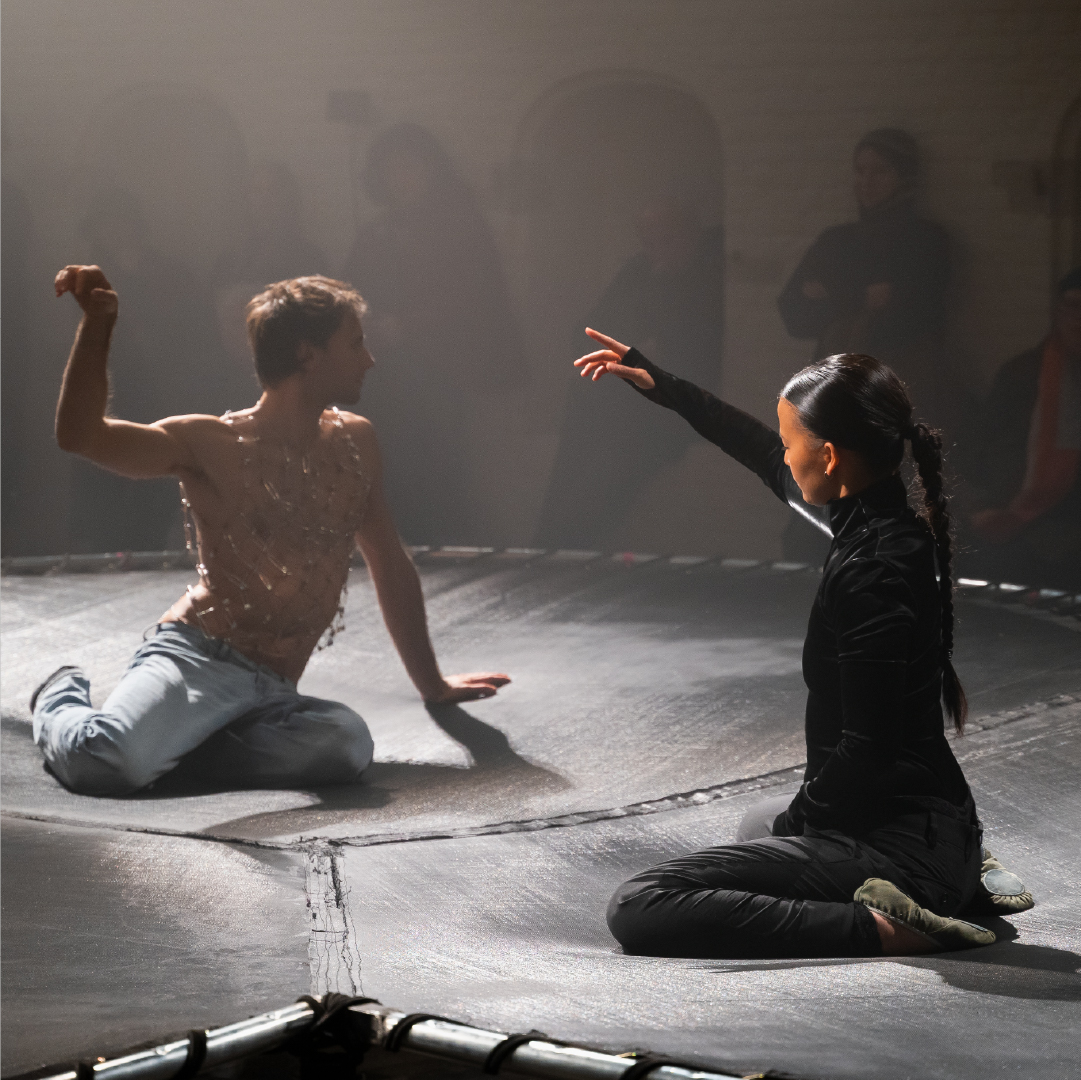
Heterophony
consists of 5-channel screen projections with sound installations to present
images and sounds as well as light and body in synchronic moments that
culminate in synaesthetic experiences. In music, the word heterophony
refers to multiple individuals simultaneously performing a single melody to
create melodic variations that coexist and synchronize.
Through examining how
audiences move through an exhibition space and experience visual images, Oh
questions the role of material and format in the visual arts. It is as if she
transforms the exhibition space into a performance stage or lab. Although each
visitor spends their own time here, multiple people experiencing contemporaneous
time together within the same place can share a heterophonic moment.
Chan
Sook Choi - qbit
to adam
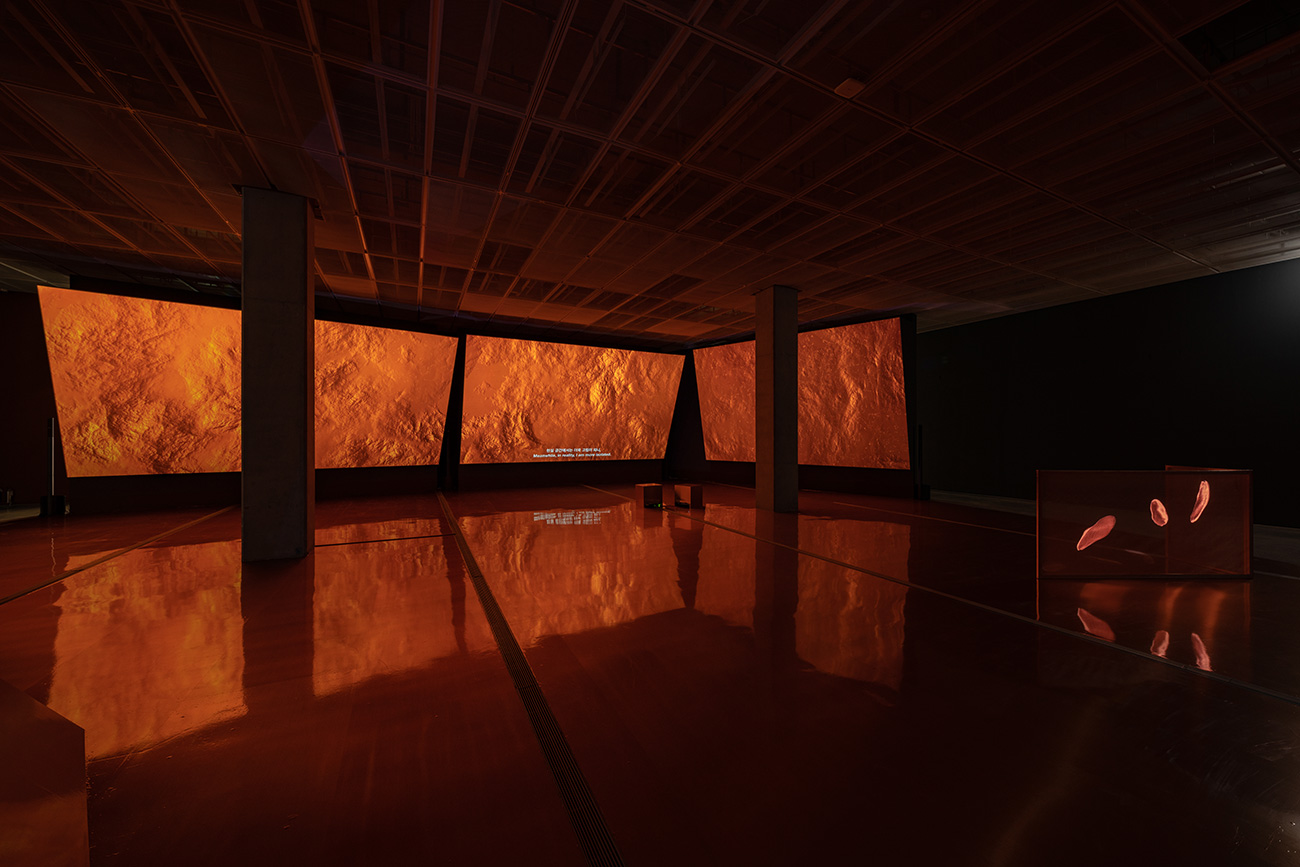
Chan Sook
Choi has been building up a visual vocabulary revolving around the themes of
movement, migration, and community. She presents in various formats diverse
perspectives and narratives pertaining to her position in life and existence.
Through a long personal history of emigration, she expresses interest in
migration experiences at both physical and emotional levels, particularly
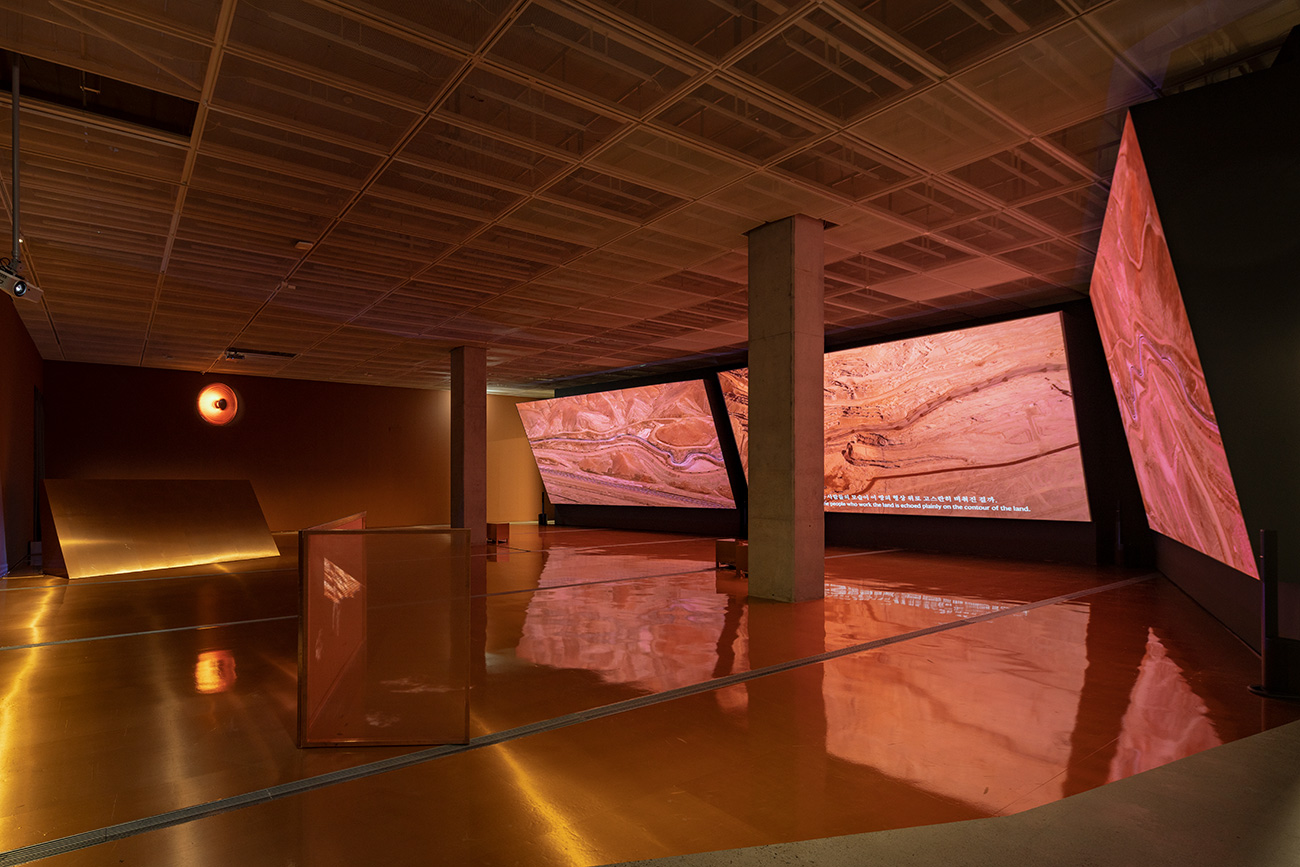
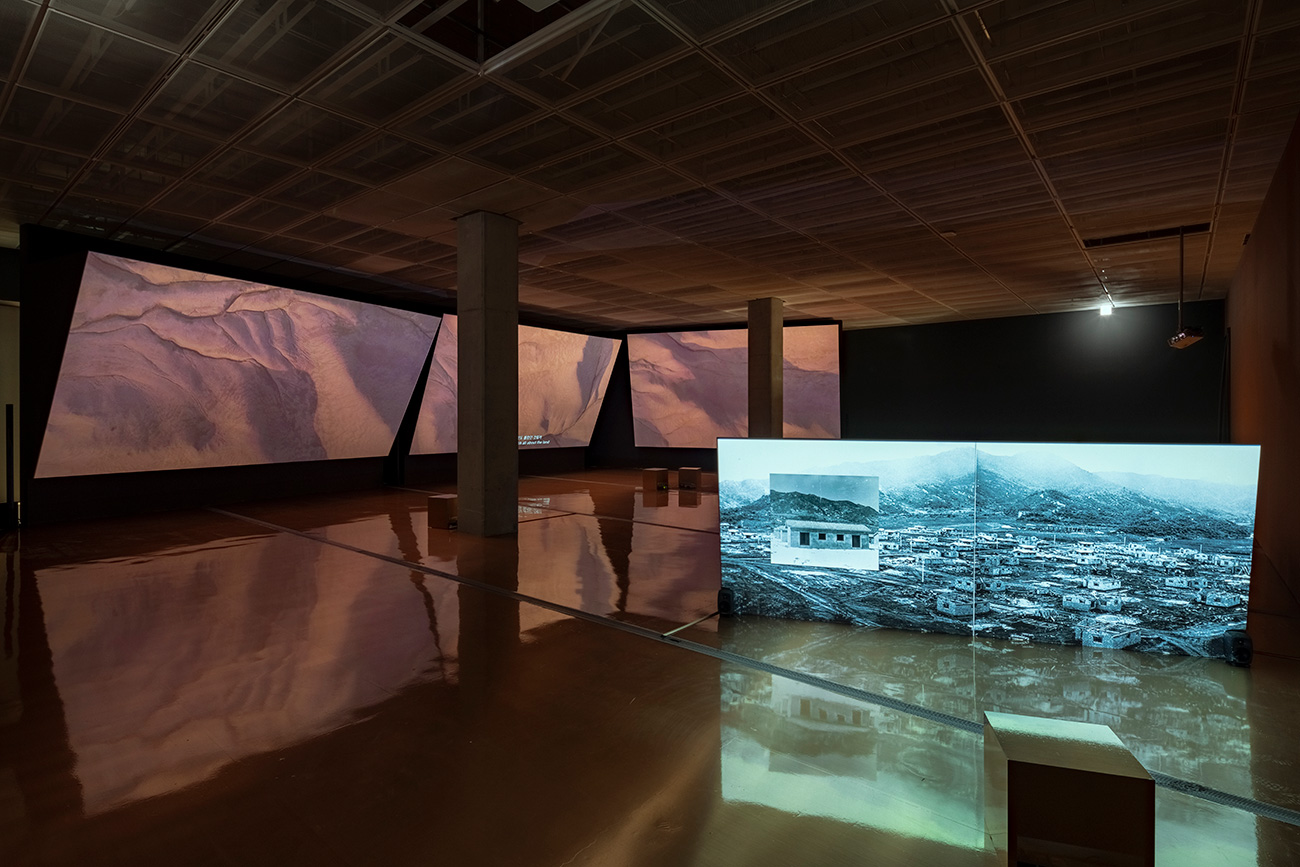
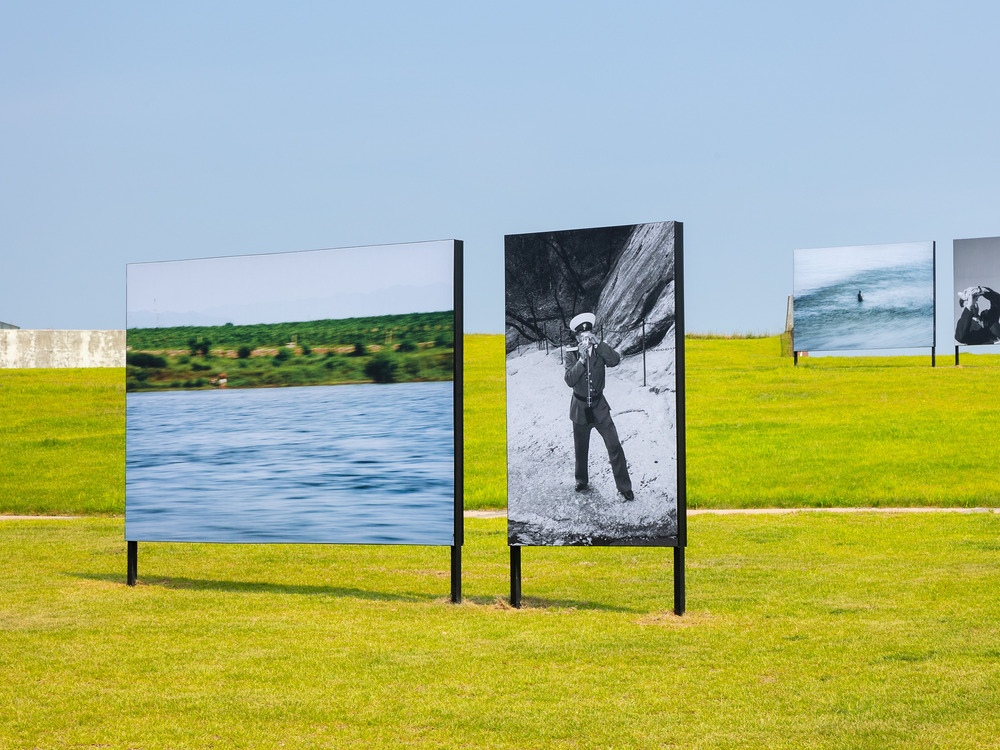
issues surrounding land as a place for living and as property. 60
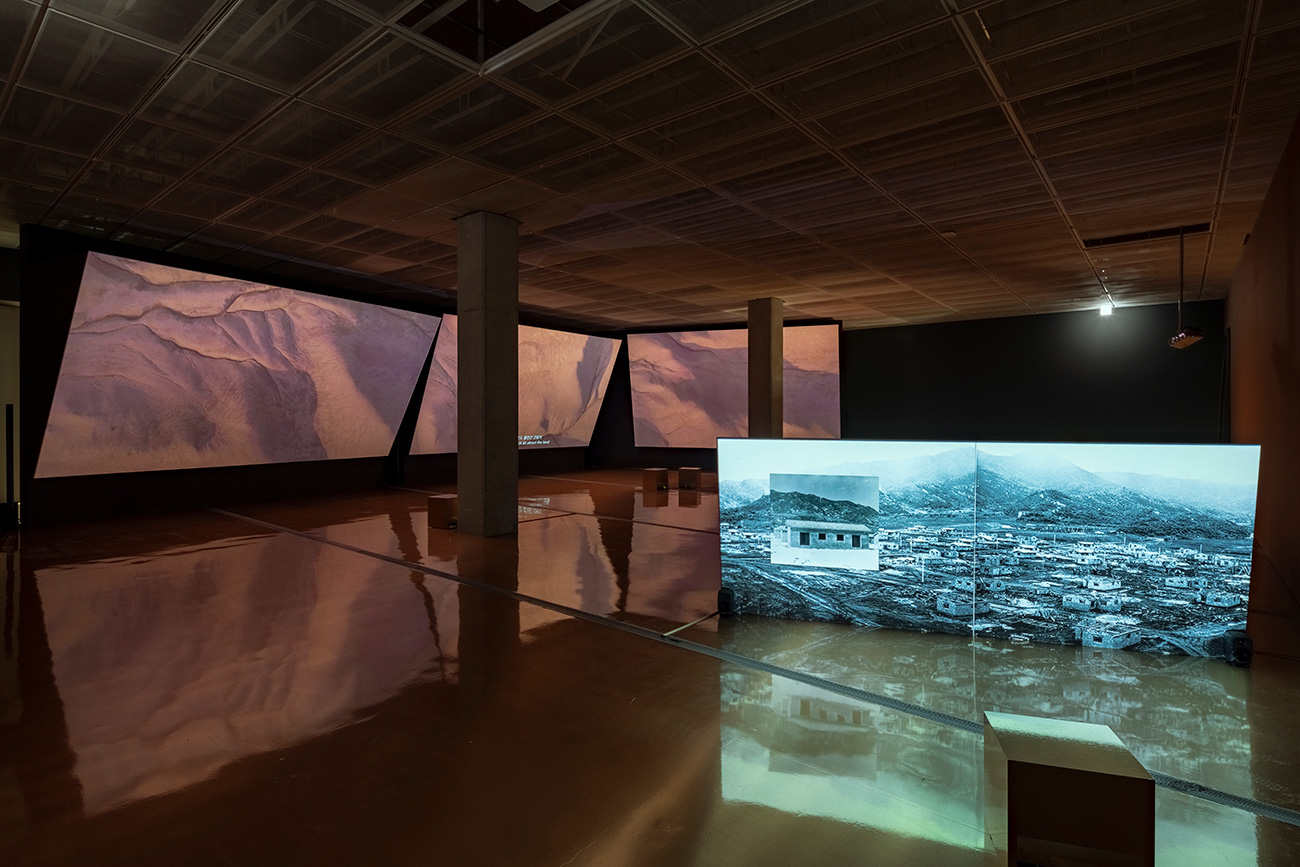
Ho (2020) features stories about women living in Yangji-ri, a
village near the Demilitarized Zone formed for propagandistic purposes.
Through
their stories, Choi brings to spotlight the power dynamics surrounding
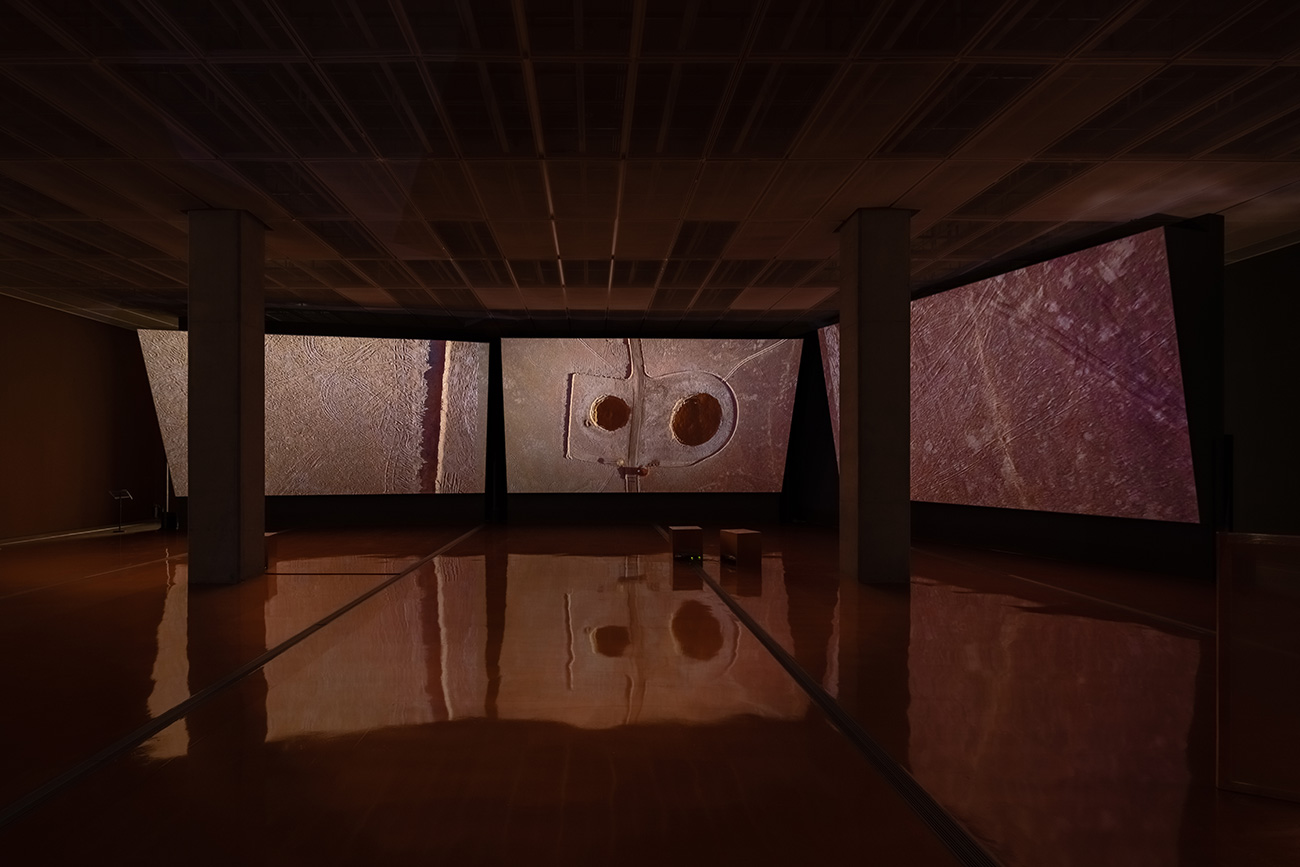
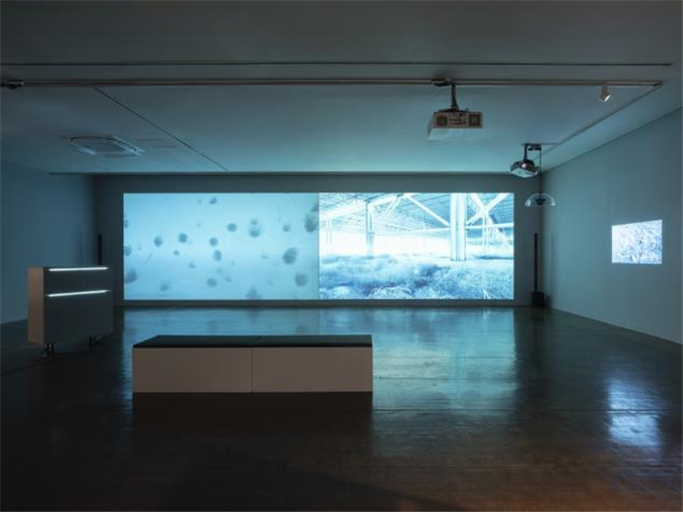
ownership of land. qbit to adam (2021) embodies
the artist's longtime study of land pertaining to our physical bodies that walk
on it and our relationship to it as a possession.
In this
exhibition, Choi takes her long-standing focus on marginalized people and
neglected stories one step further by addressing the land and body through the
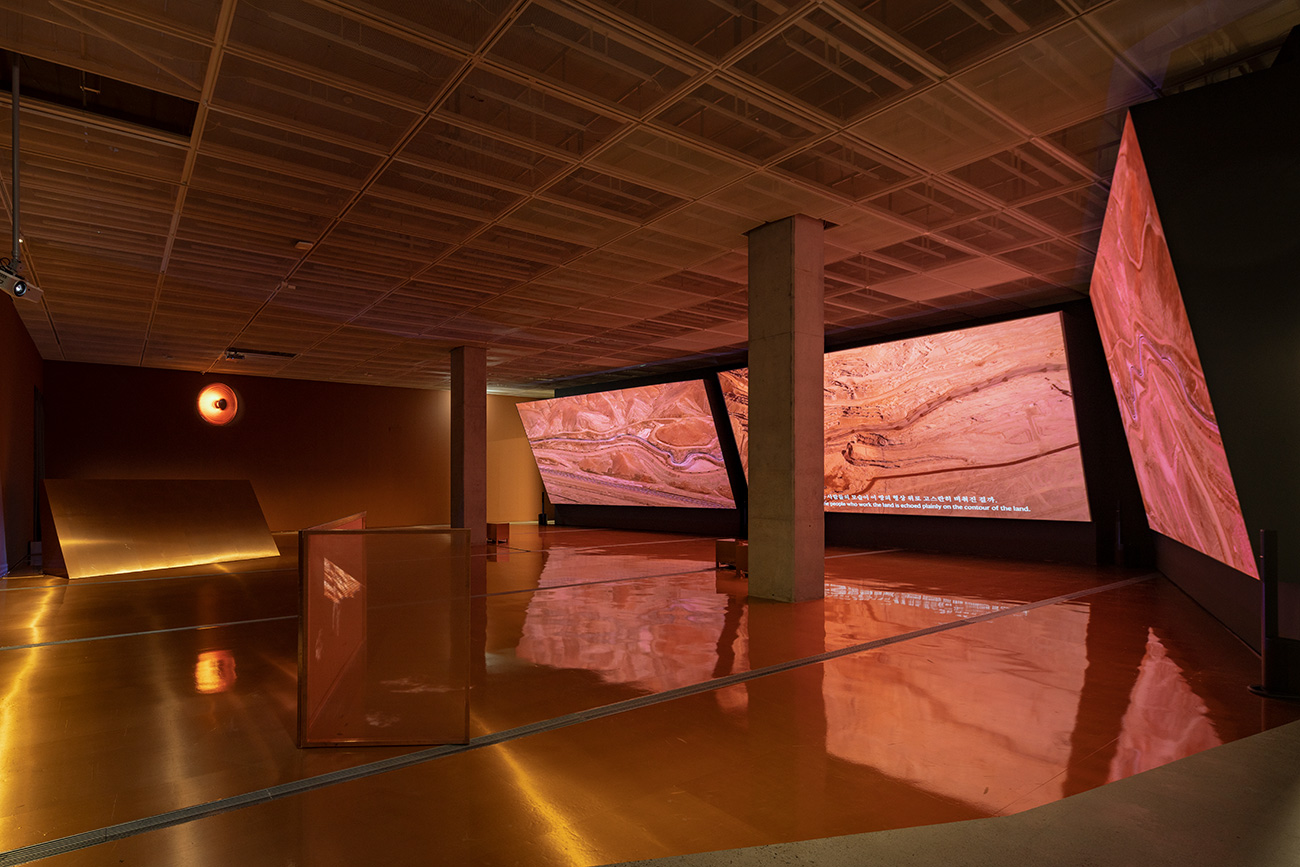
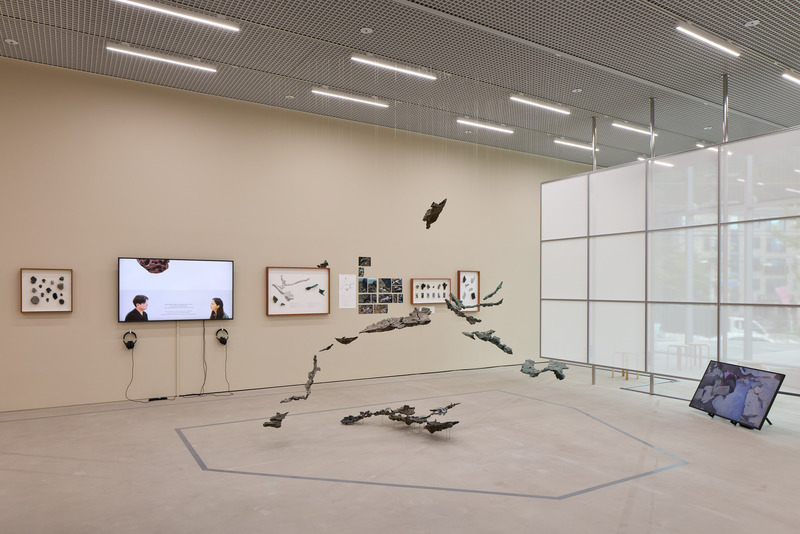
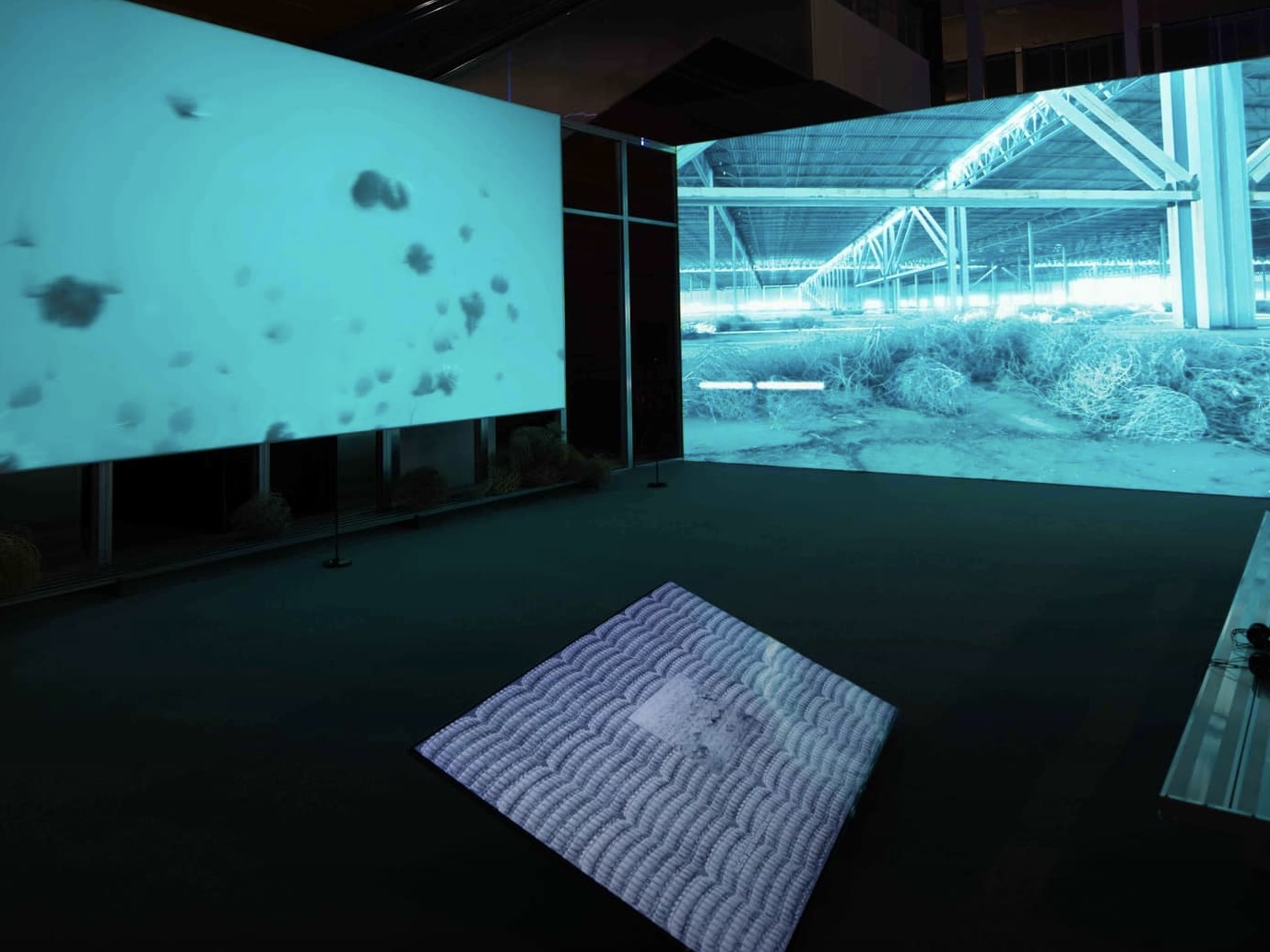
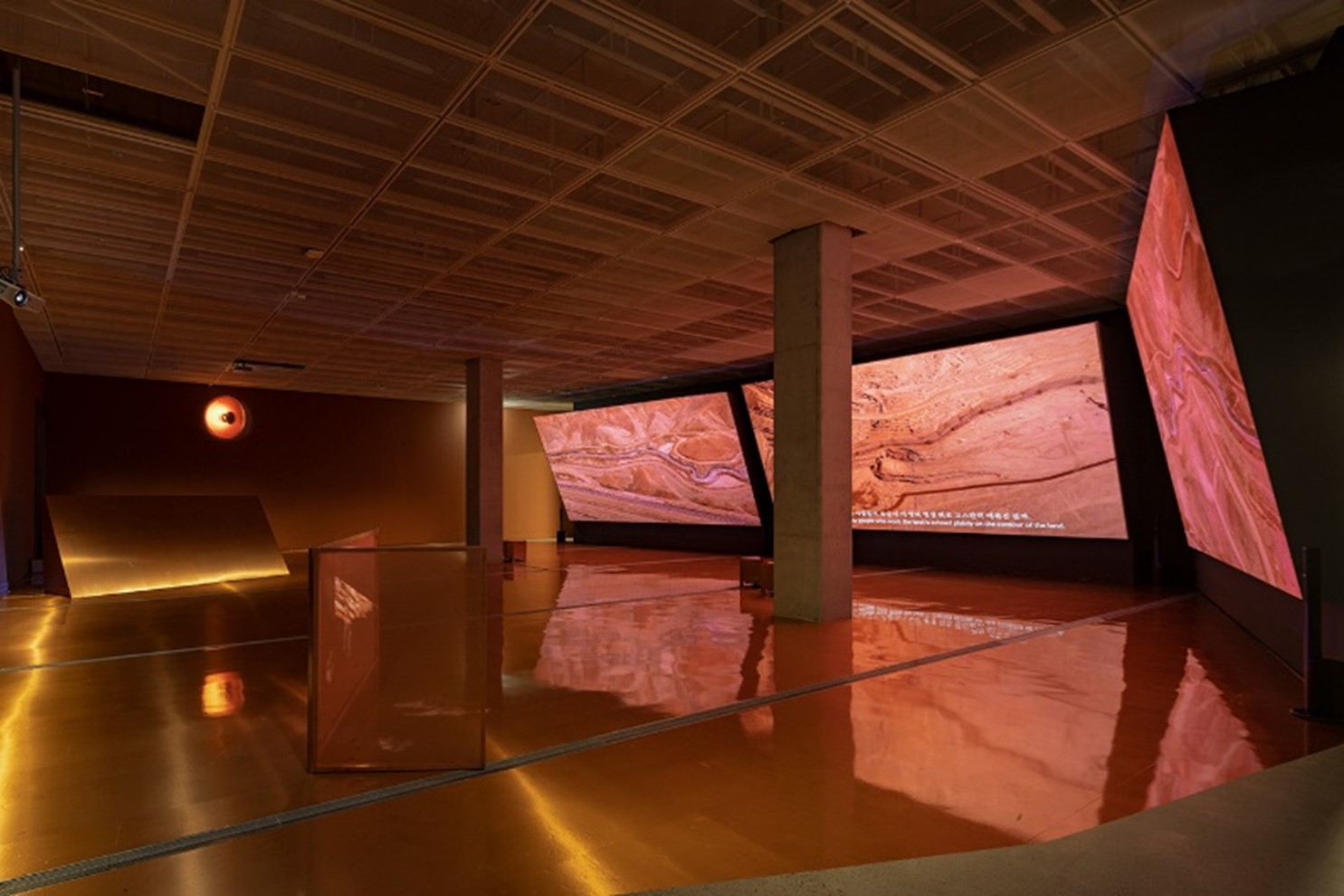
lens of personal history and memories. From mining coals to mining
cryptocurrency, the different stories told through video and sound in qbit
to adam unearth the irony-laden human history of labor and material
possession. The different narratives in the 4-channel video installation unite
and separate within the same space, reestablishing the interrelationships
within.
At the same time, these images are projected onto the copper-hued floor
of Gallery 2, encouraging another opportunity for reflection. Choi probes into
how the virtual spaces and systems in our midst come together with existing
narratives to create visceral sensations, and she challenges us to question the
true nature of these newly experienced sensations derived from those places.