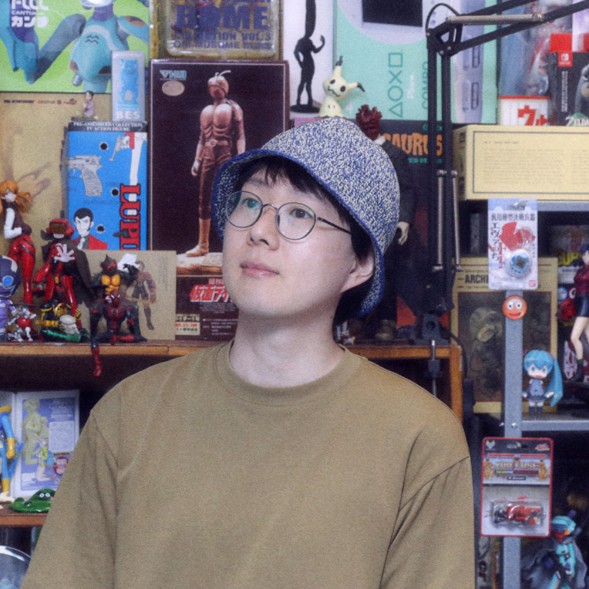
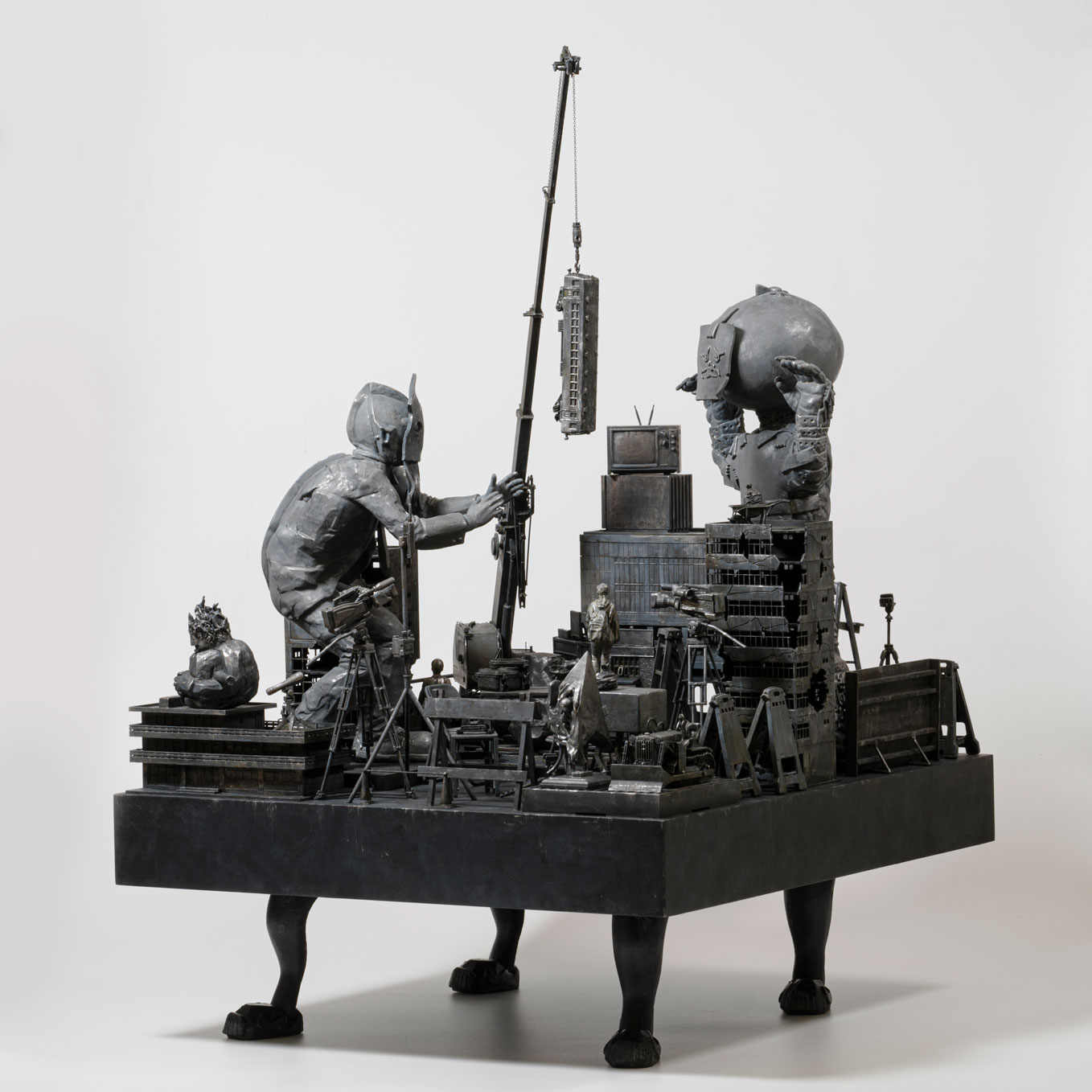
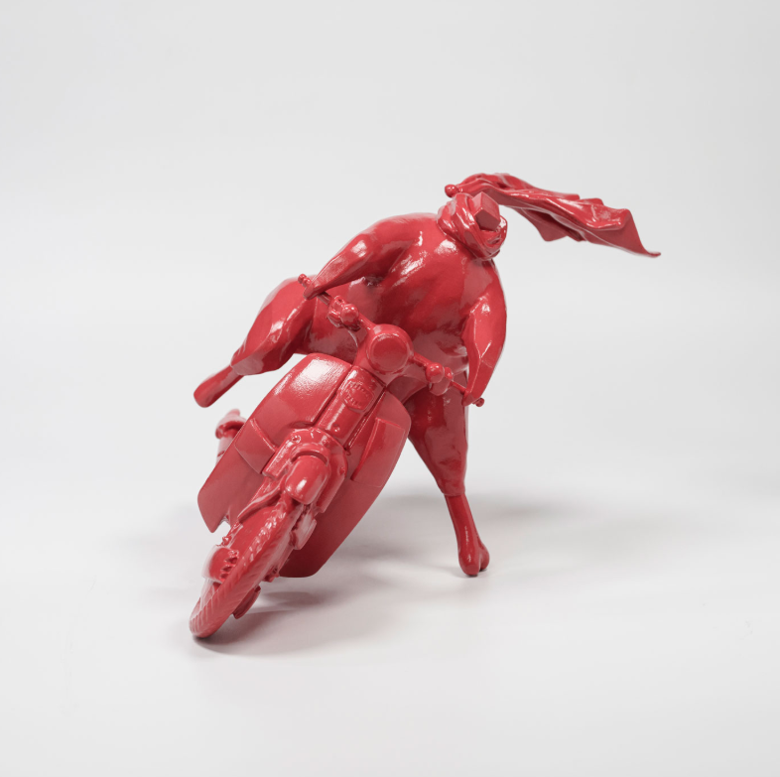
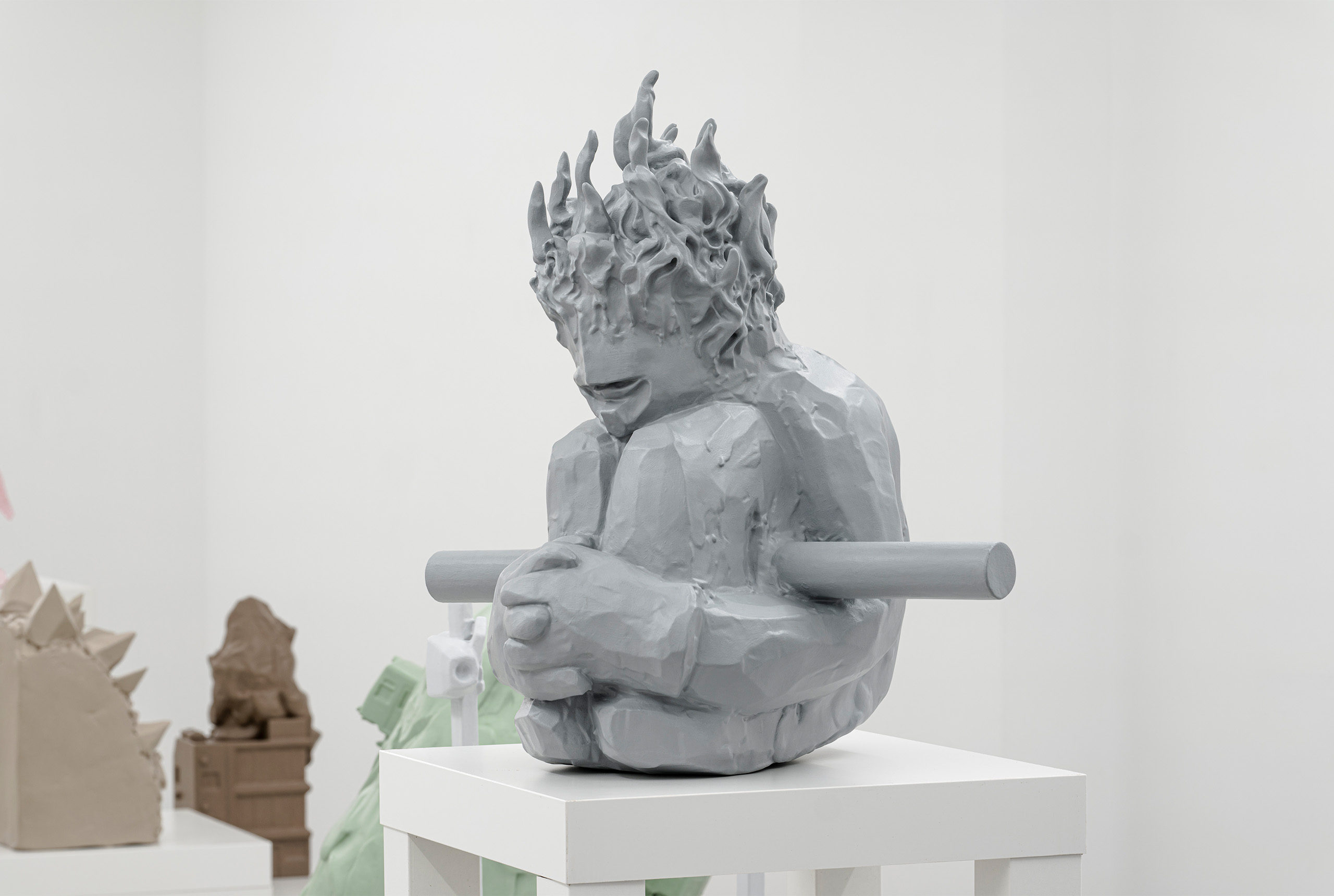
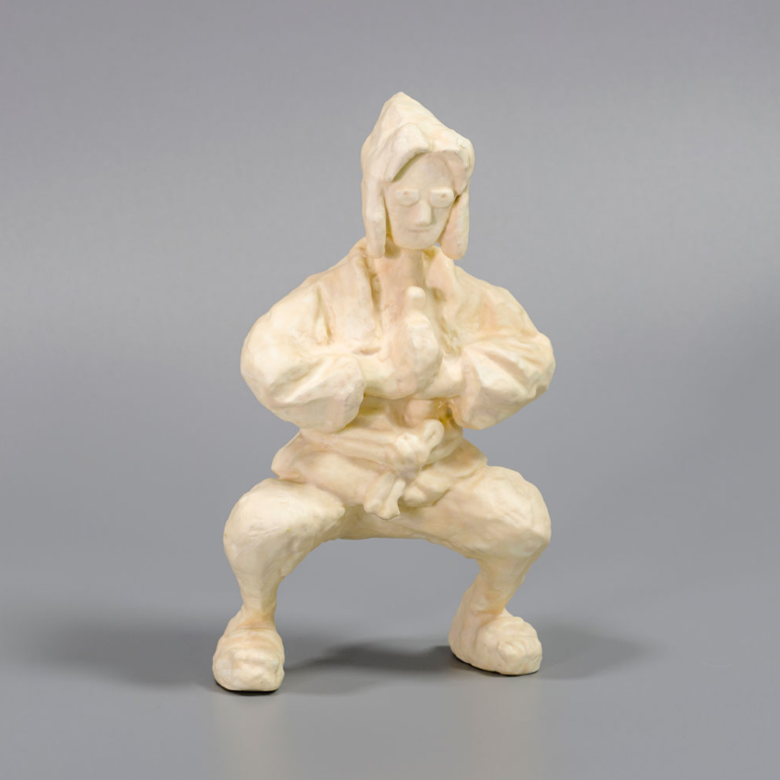
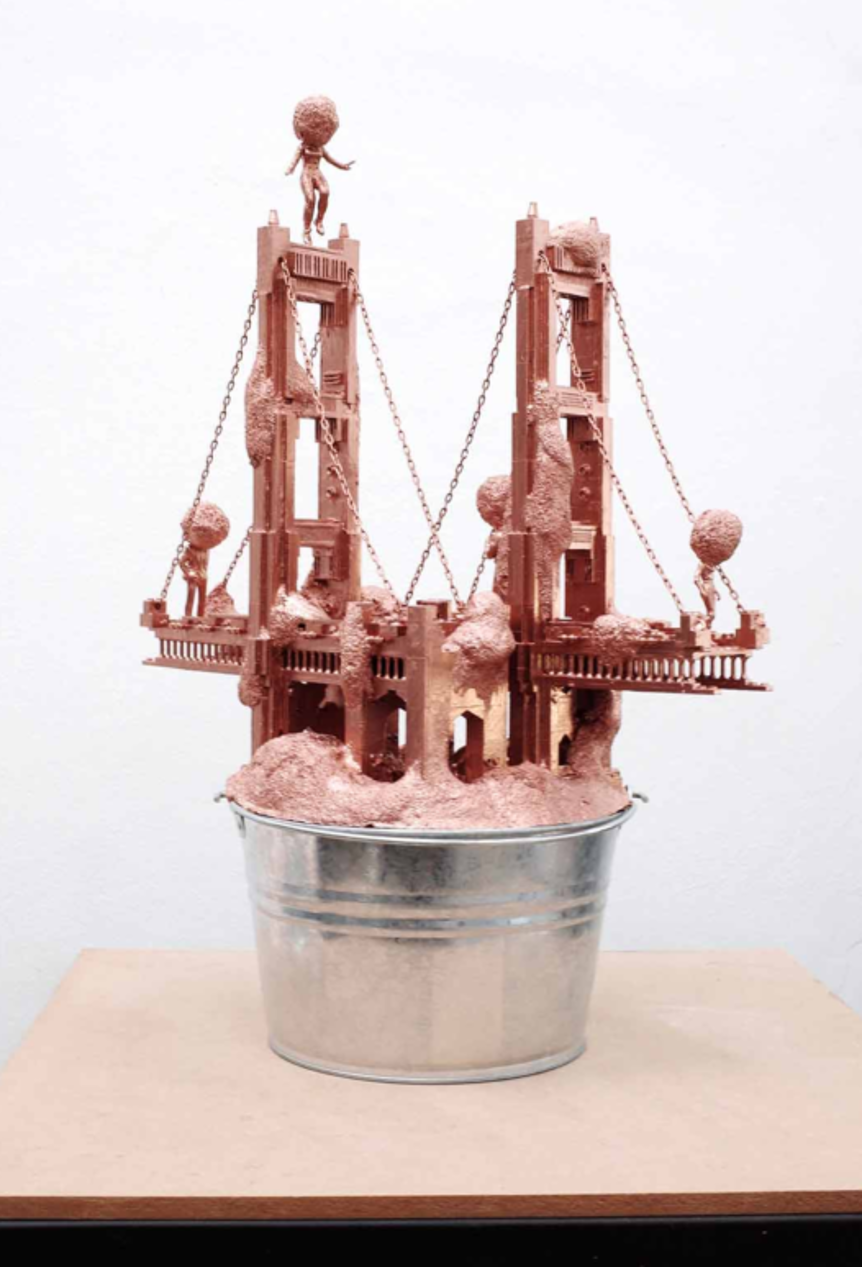
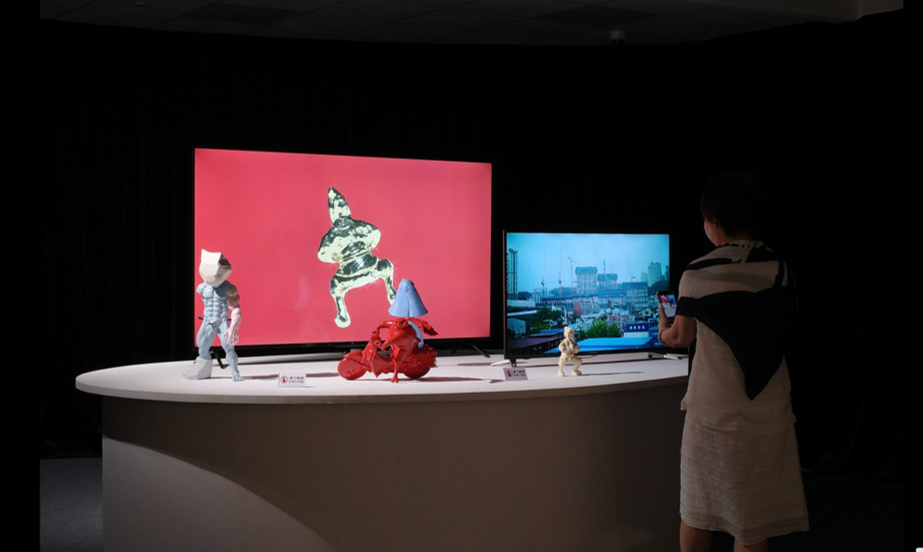
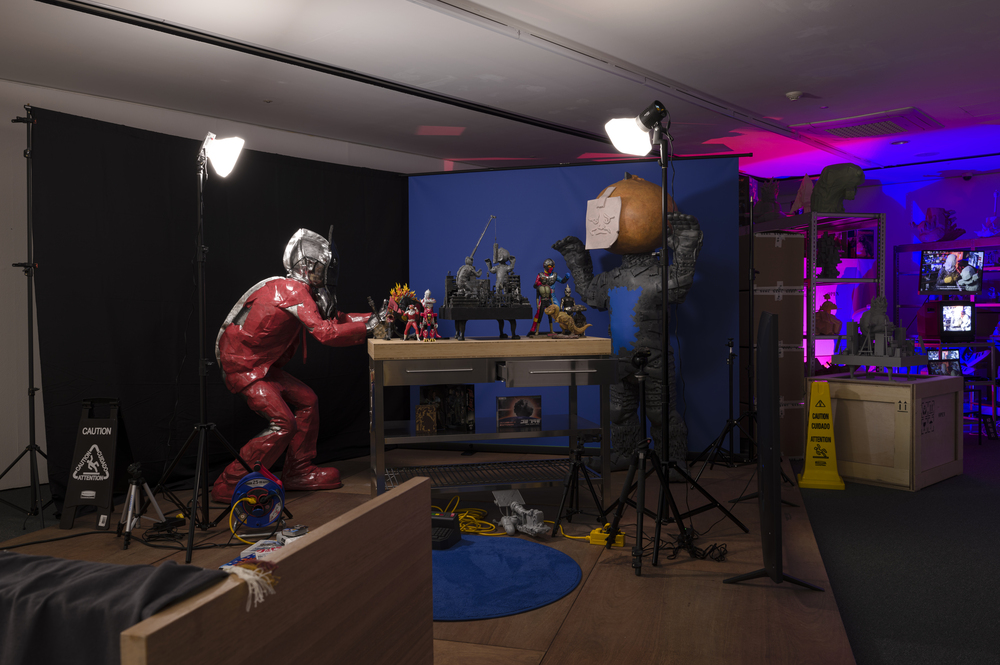
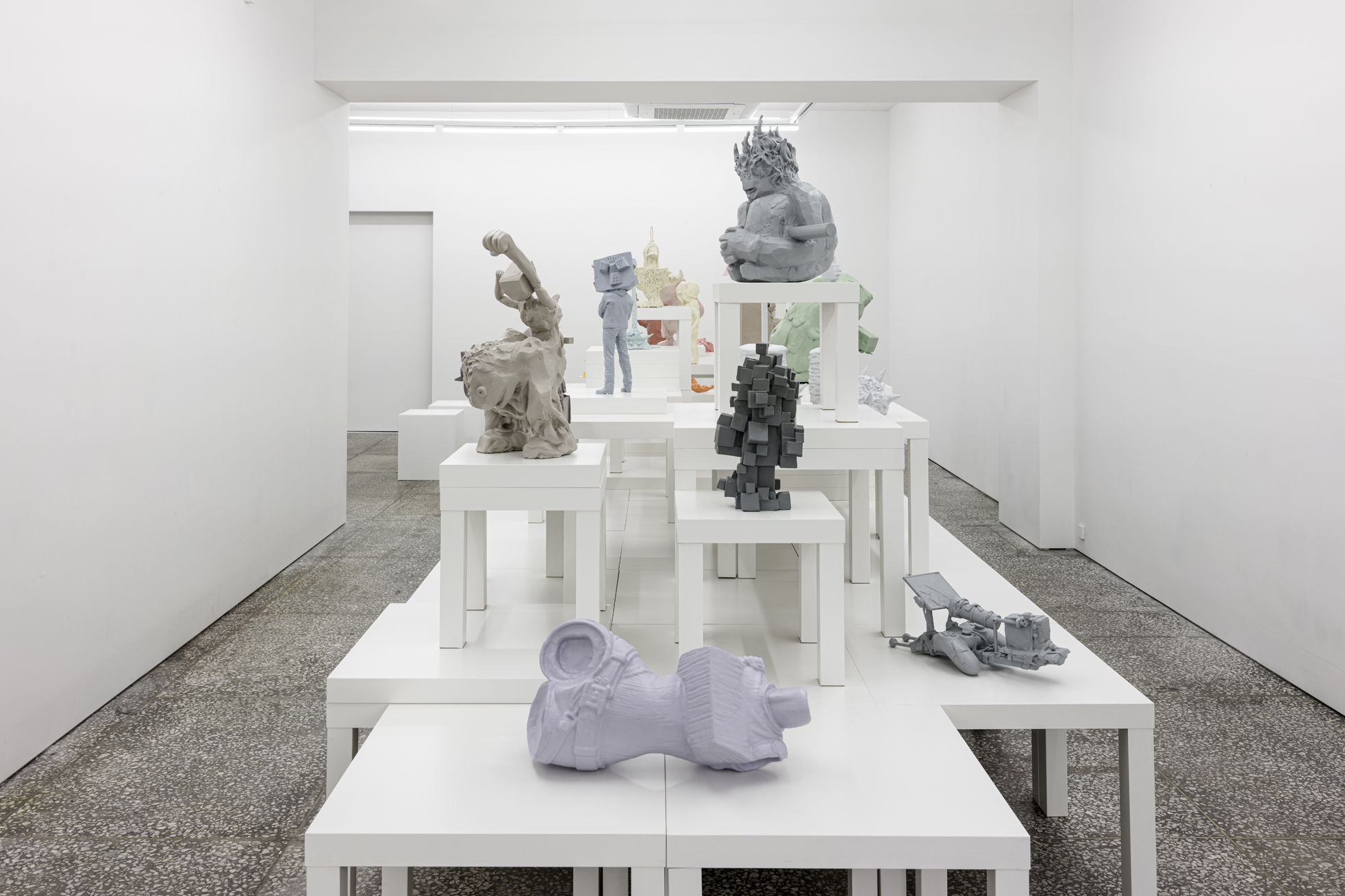
With many exhibition spaces closing in the wake of COVID-19, I encountered three interesting solo exhibitions at Art Sonje Center in Jongno-gu. Through three articles examining each of these three exhibitions, this series seeks to consider, however tentatively, questions concerning the body, technology, and media. The final exhibition is Don Sunpil’s solo exhibition 《Portrait Fist》.
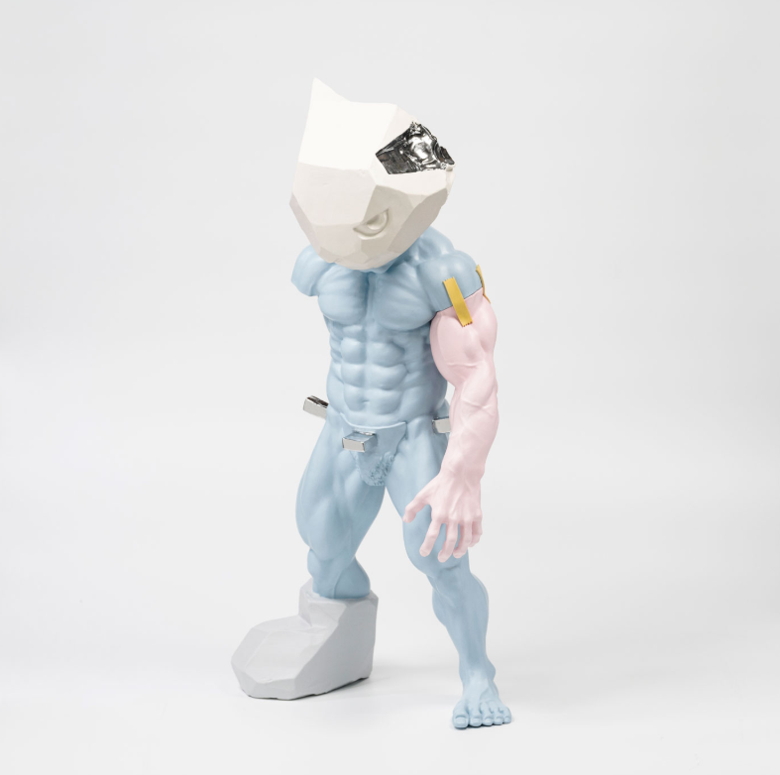
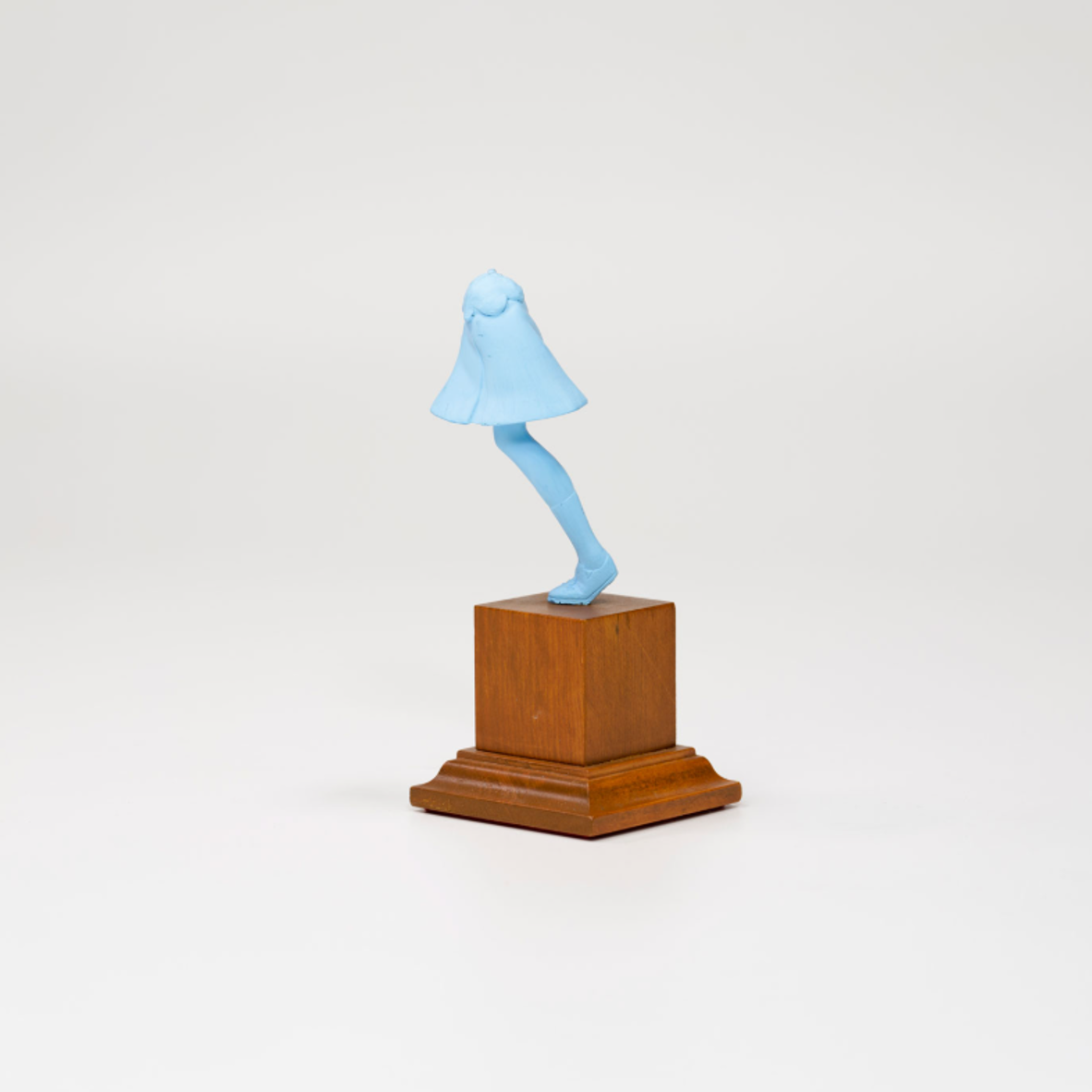
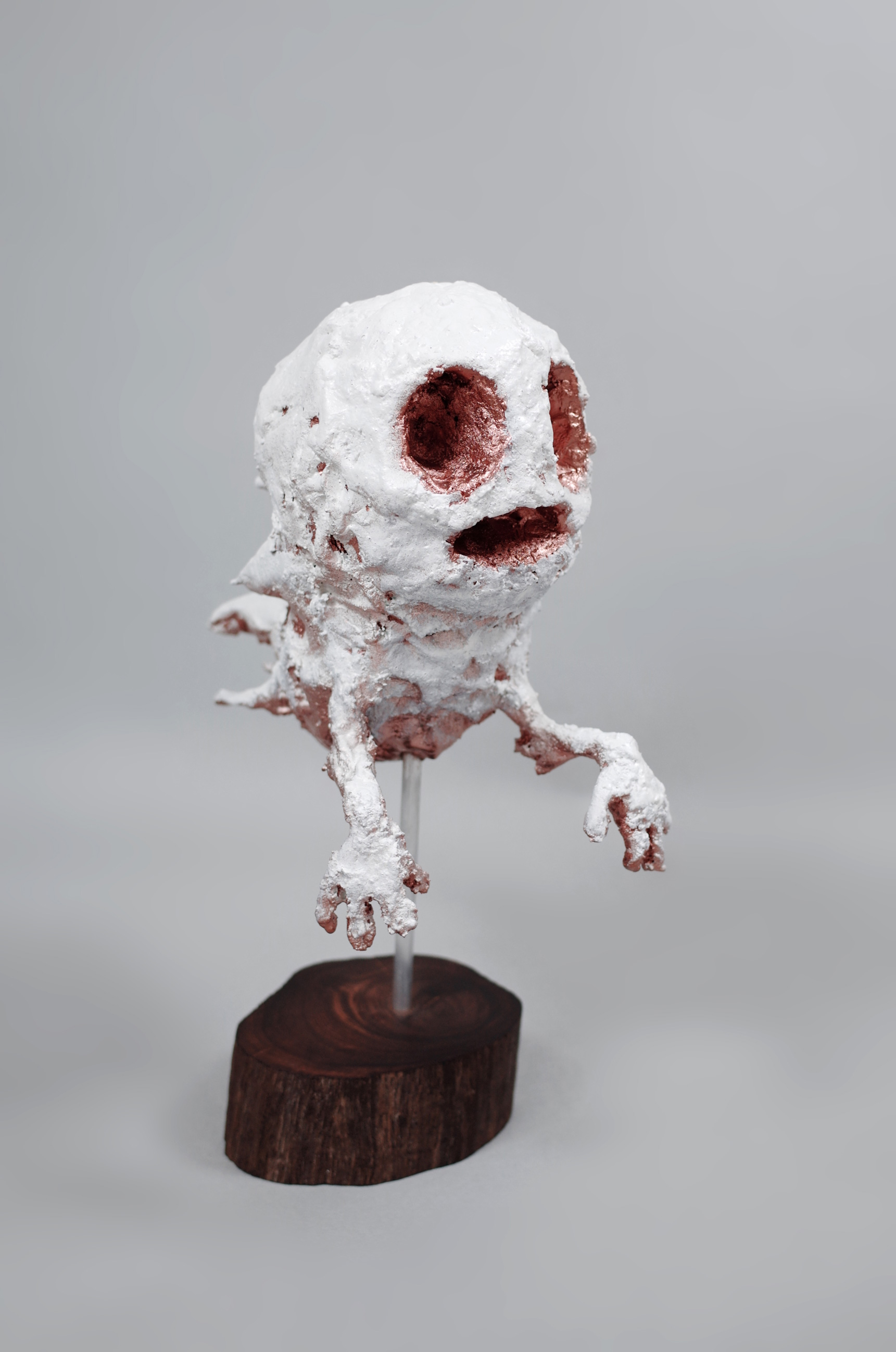
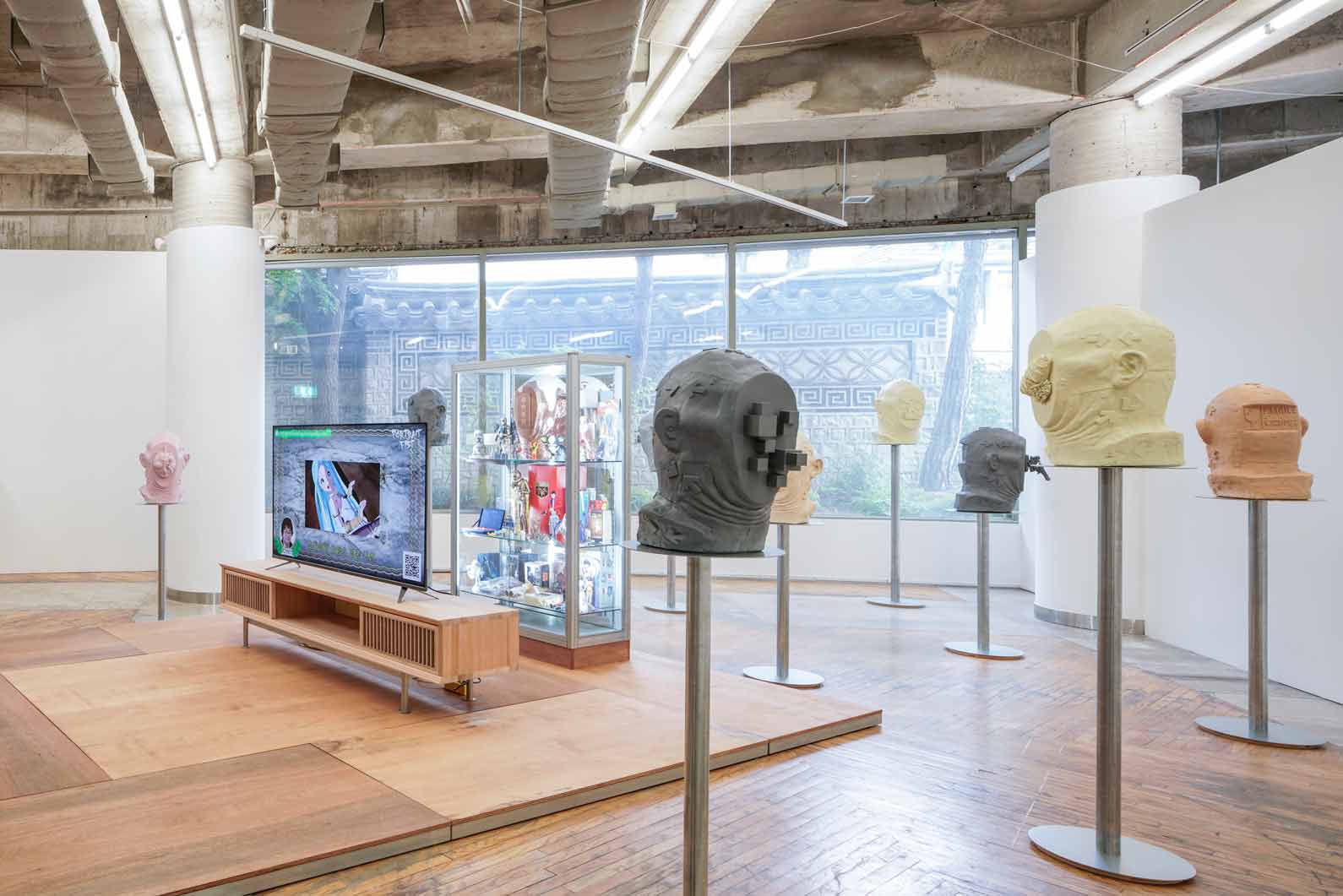
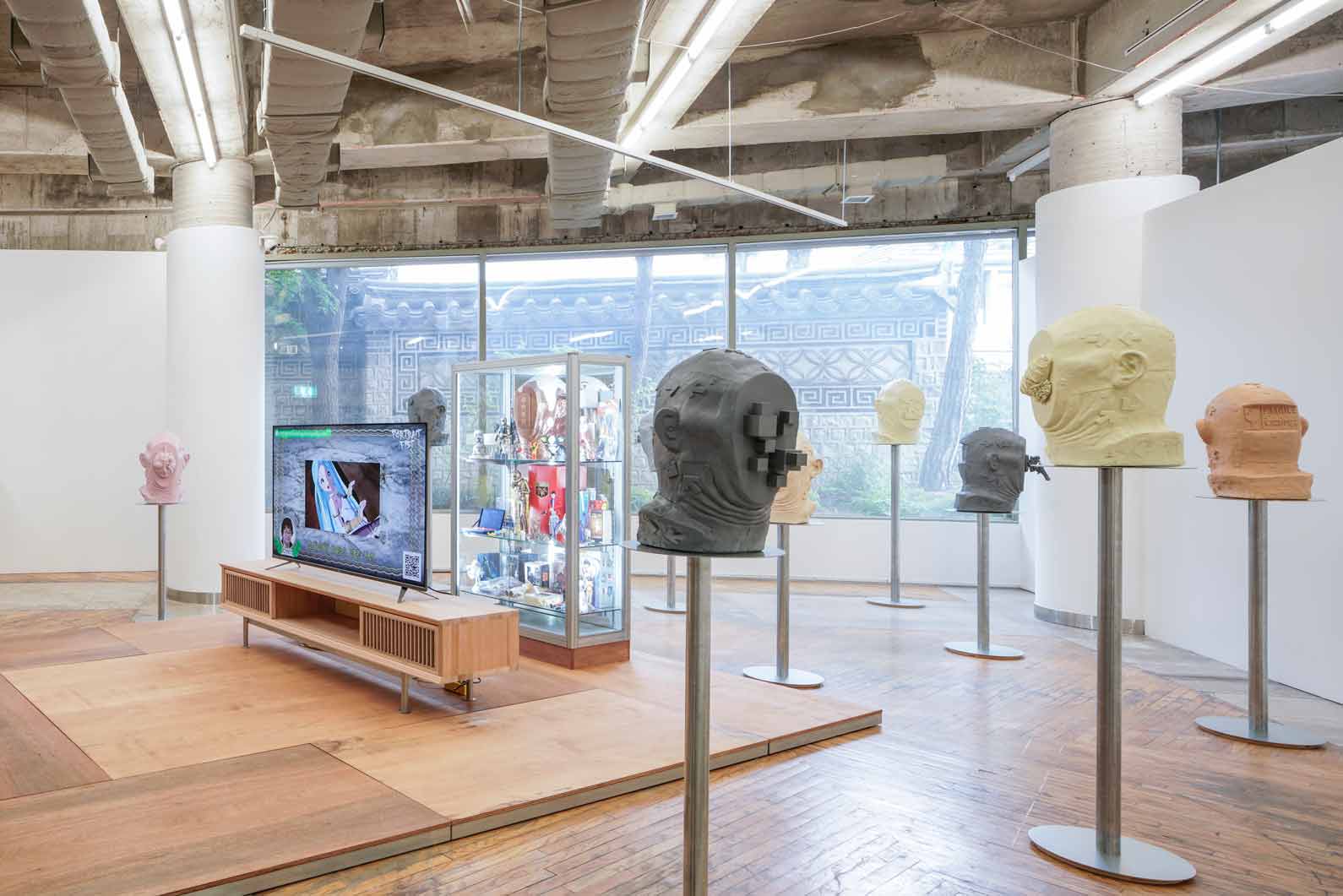
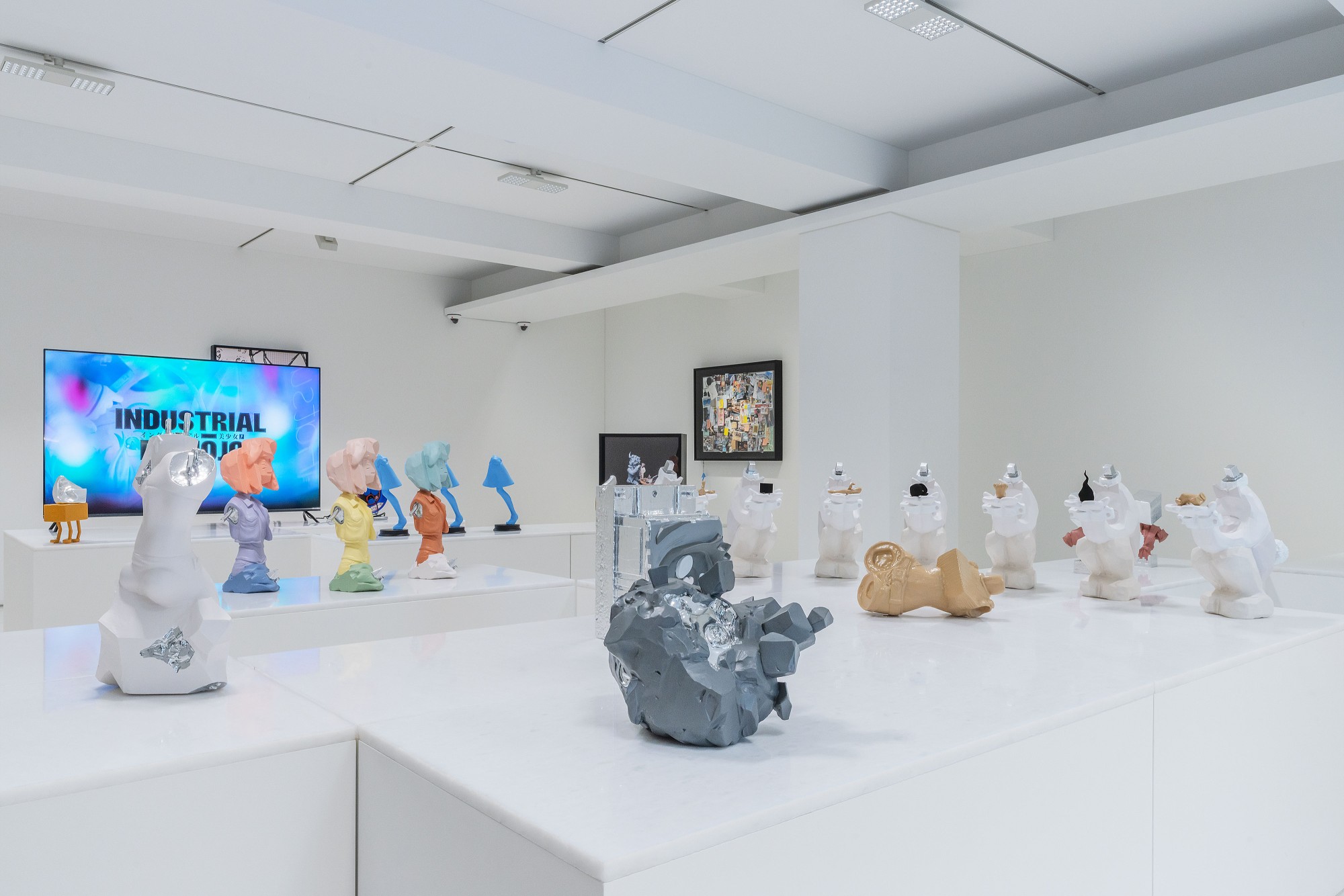
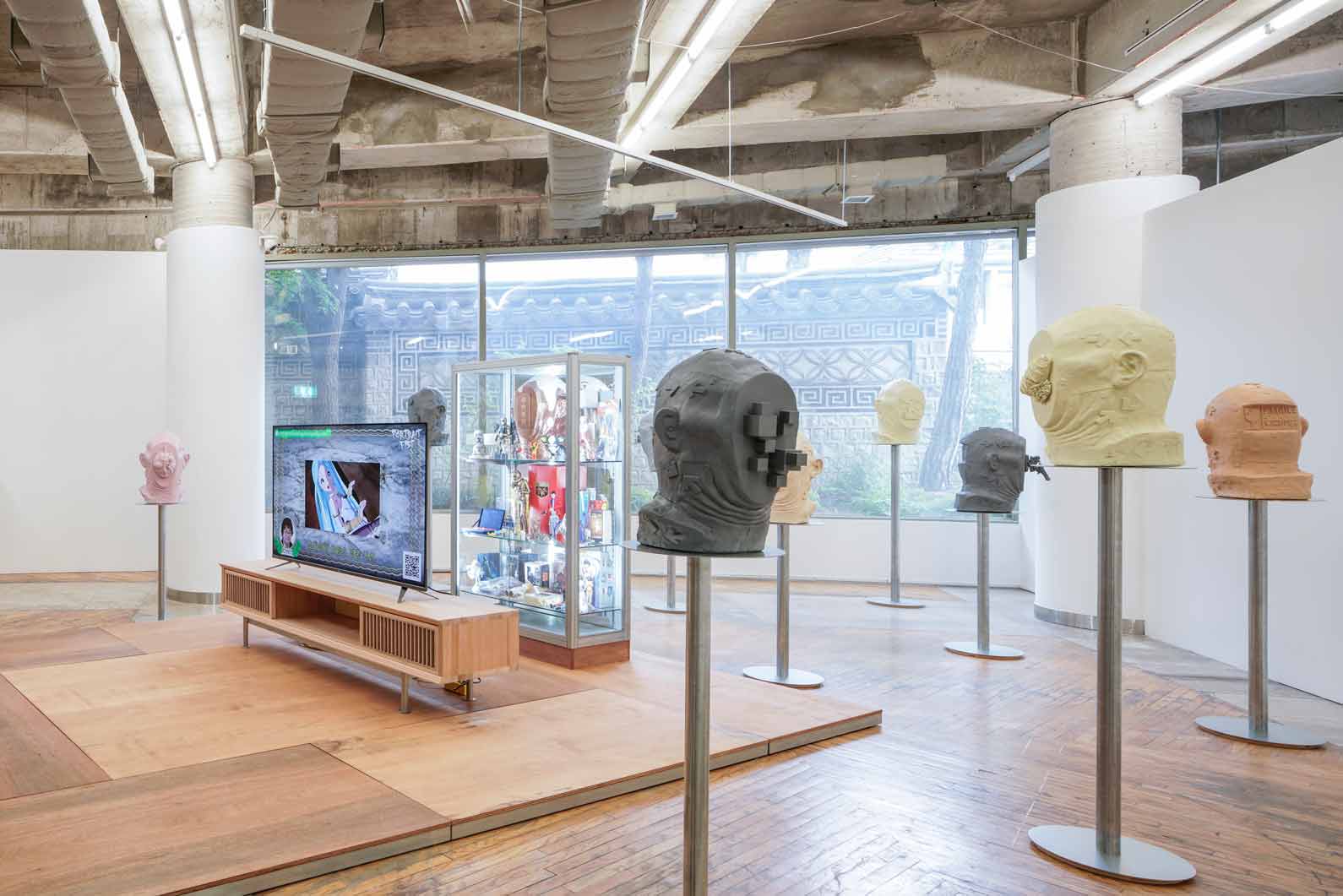
Upon entering the first-floor gallery, one encounters twenty-four faces. At any rate, they have parts that appear to be ears and necks, as well as rounded backs of heads like those of many other people. Yet there is nothing where the face itself ought to be. Or rather, there is something there. Not facial features, but a variety of things that one would never imagine as elements constituting a face.
One can see an entire full-body figure occupying the whole face, a character holding a weapon or robot of the sort frequently seen in animation, or an entire face including the hair of Sailor Moon, a character relatively familiar to the general public. And those are among the more comprehensible examples.
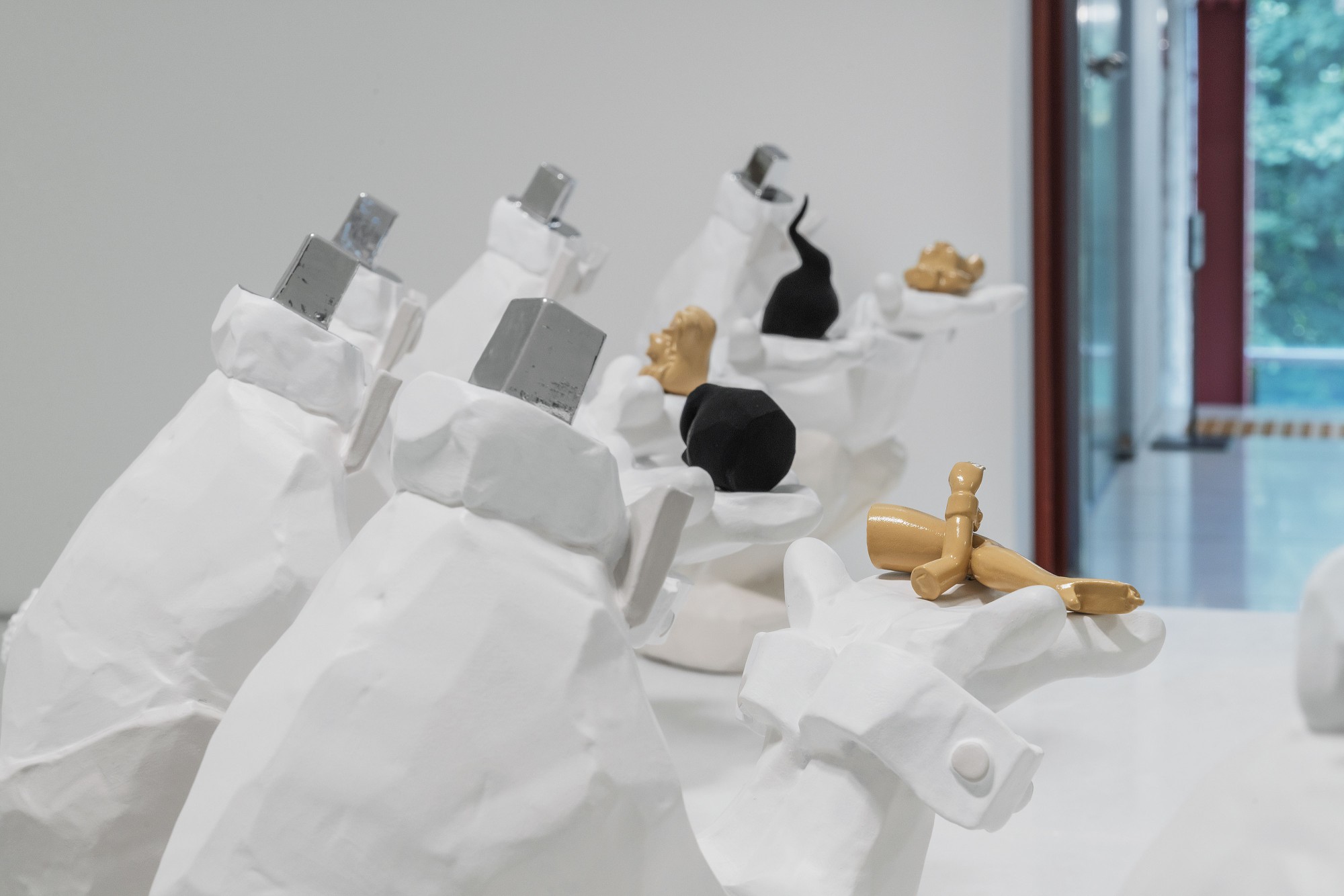
In some cases, there is nothing but a machine such as a game console or firearm, while other objects are attached that, no matter how much one thinks about them, seem to have no conceivable relationship to a face whatsoever. Among these heads, a low platform rises in the center of the exhibition space, furnished with a comfortable sofa and a television.
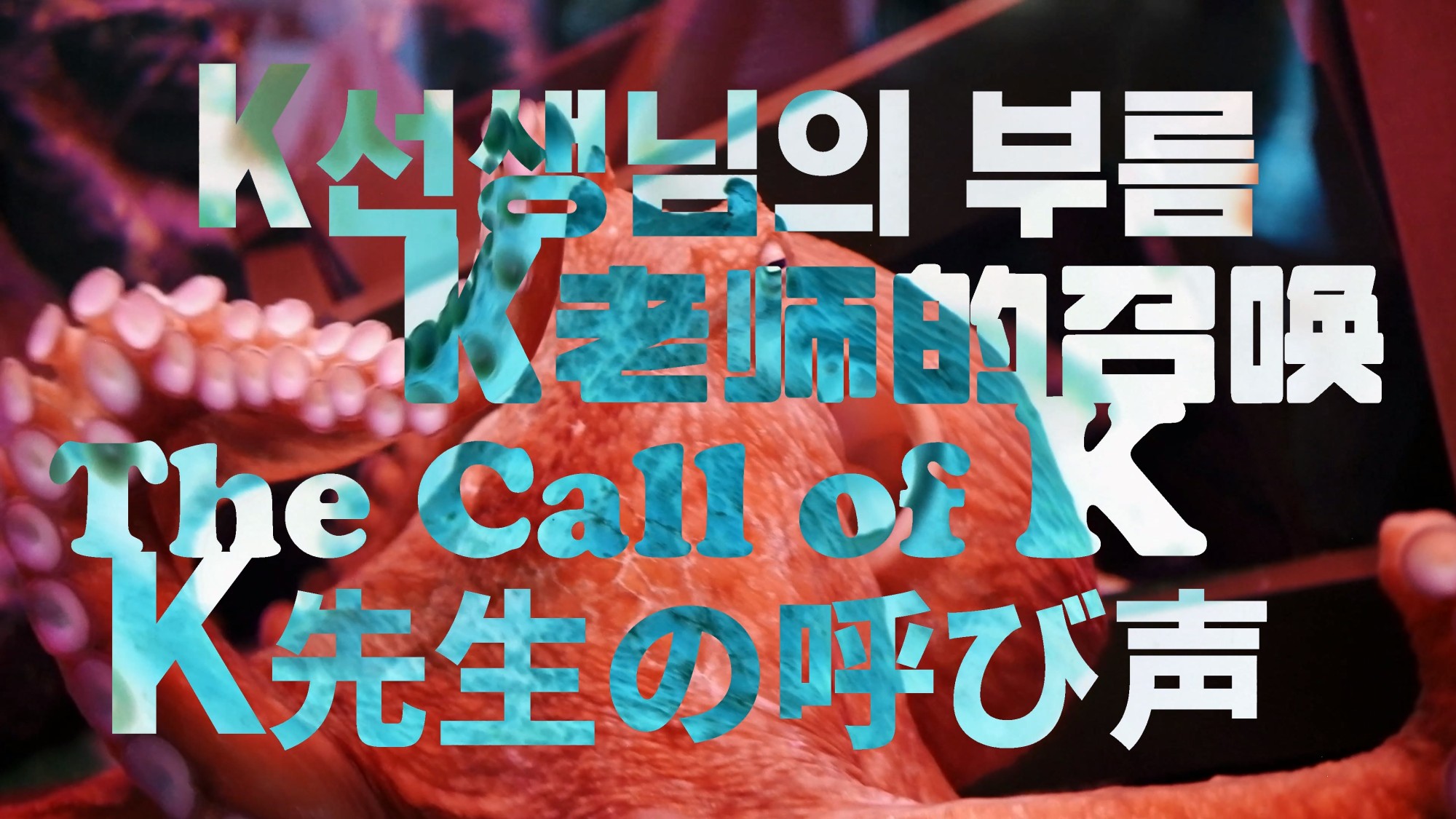
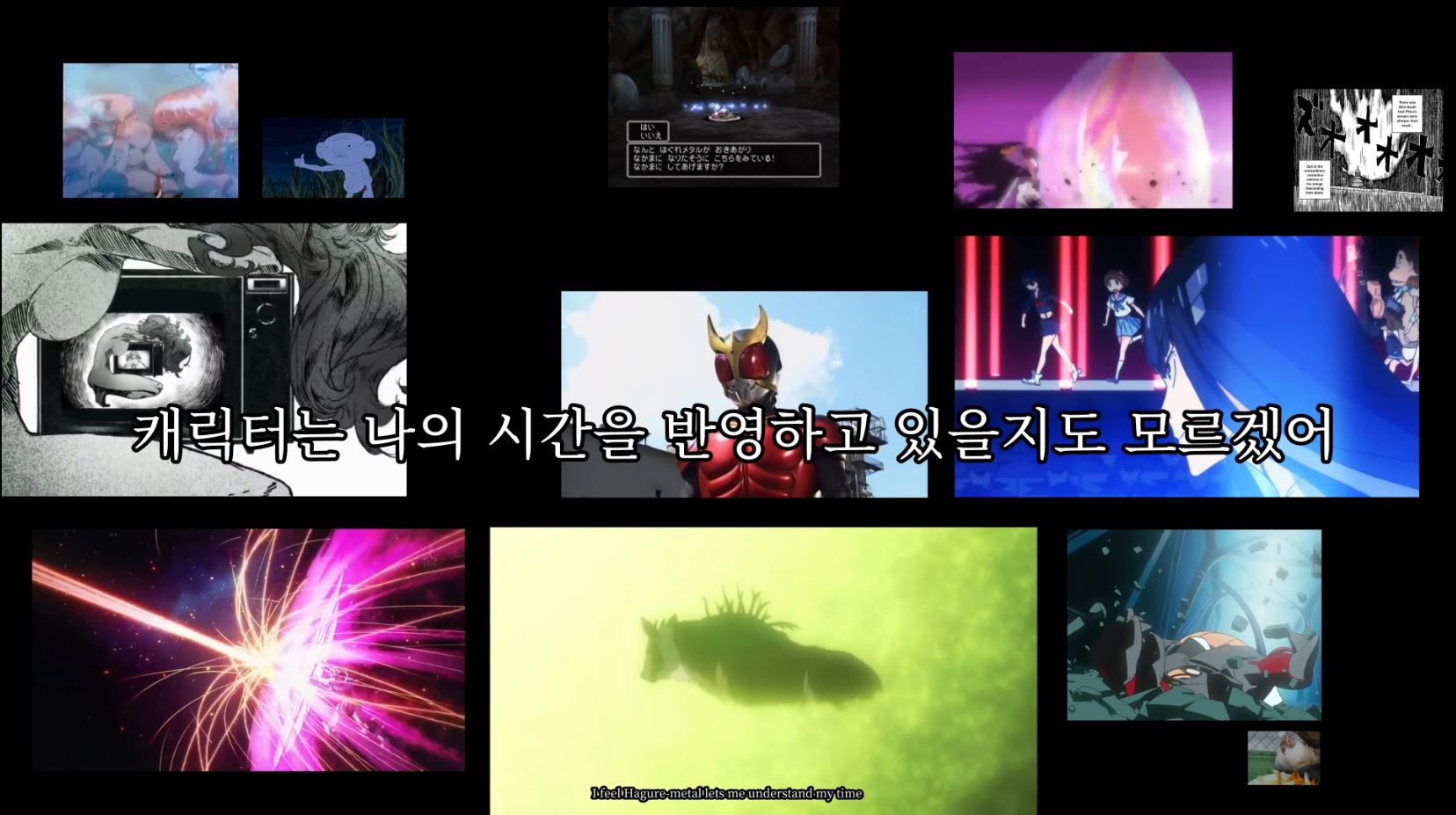
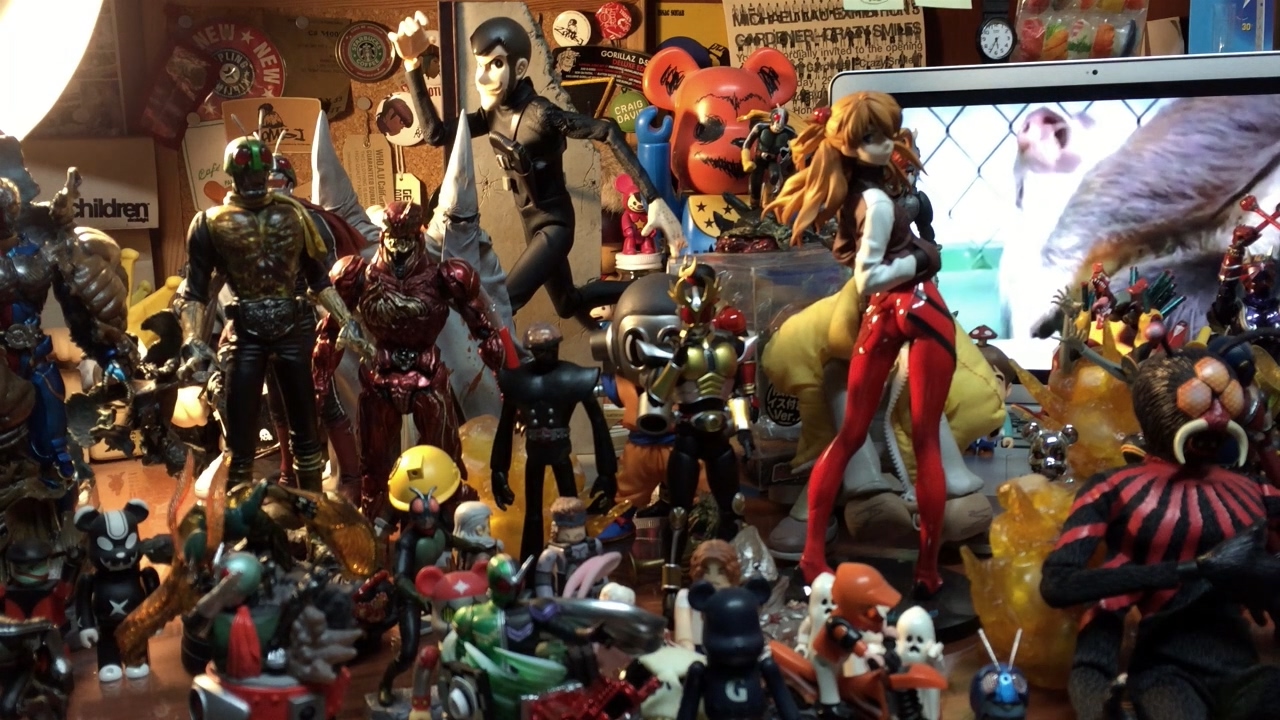
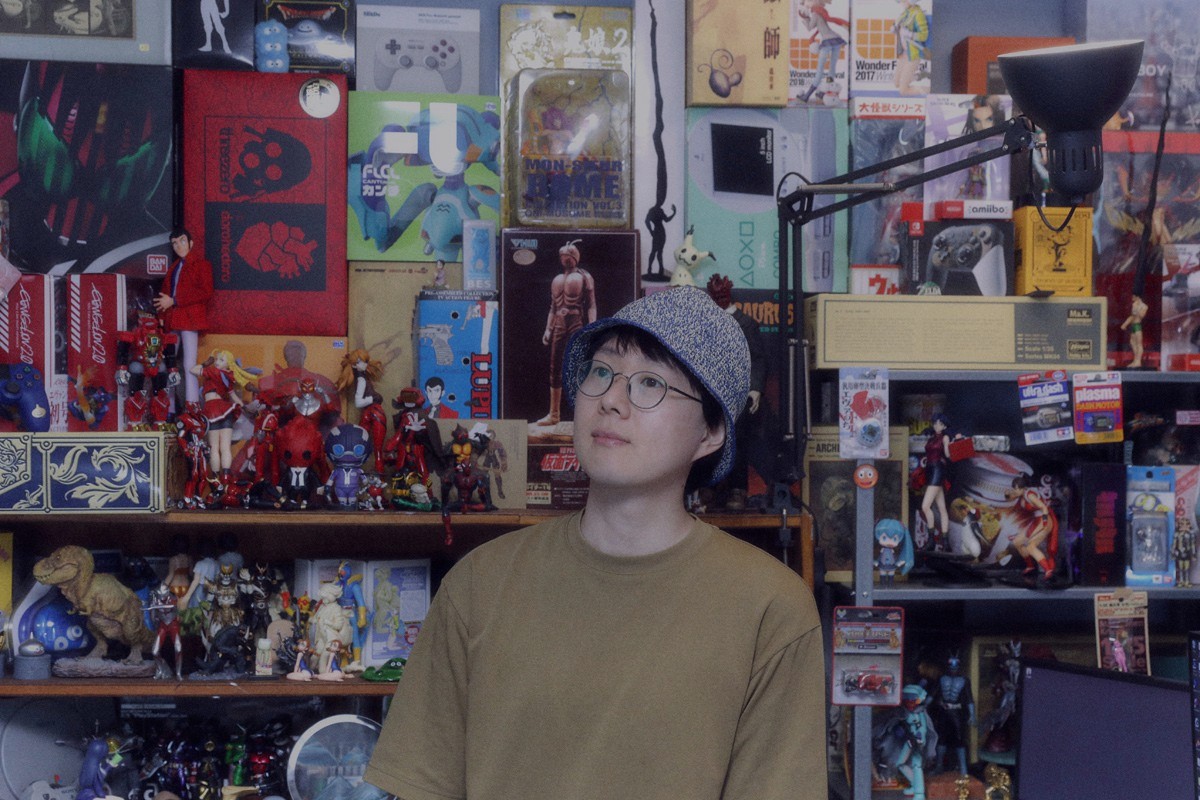
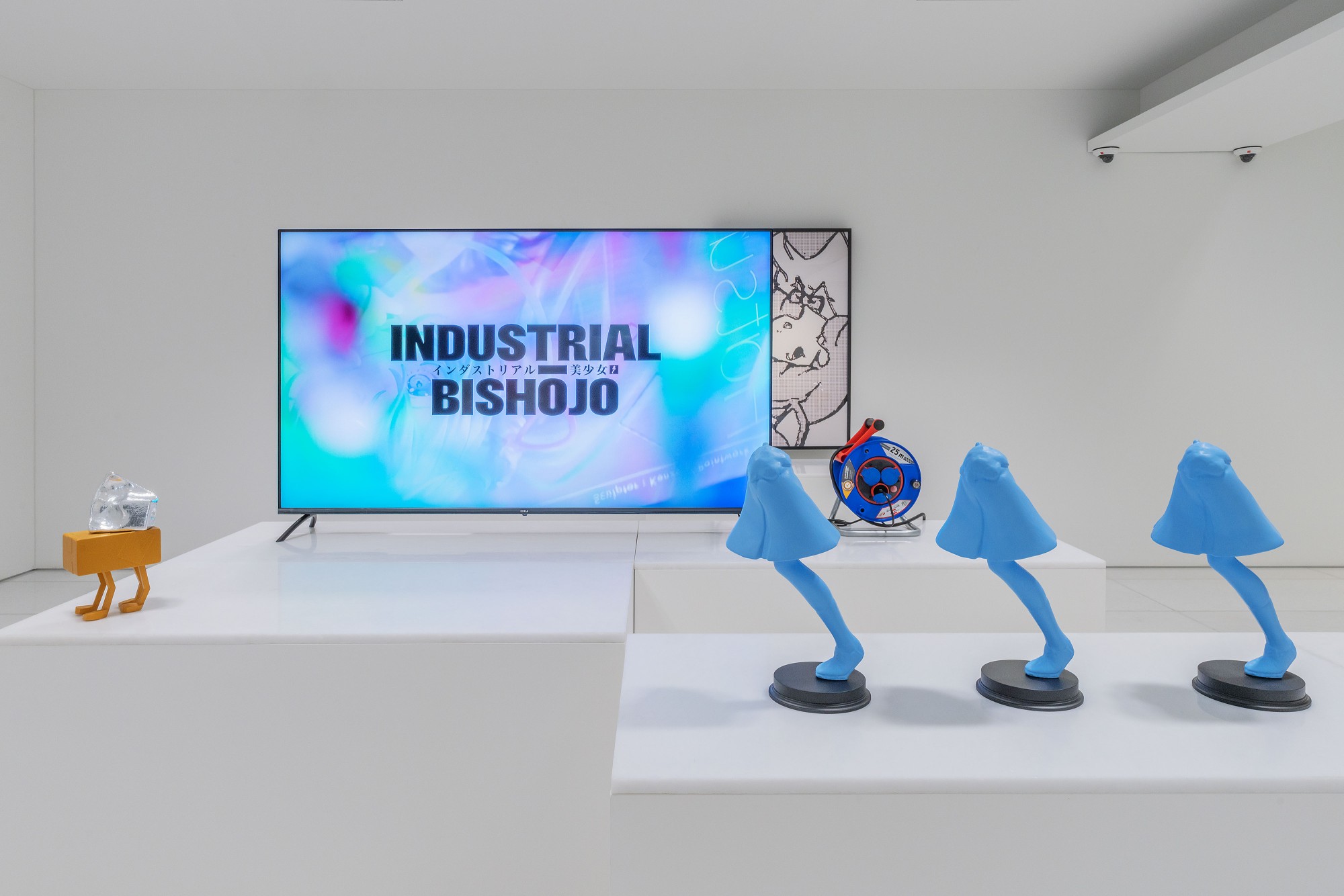
Behind the television is a glass display case of the kind Don Sunpil has frequently used in his previous exhibitions, filled with figures from a wide variety of genres, ranging from Lupin the Third and The Simpsons to Princess Milk, the heroine of NG Knight Ramune & 40, and Death Note. The television plays the video work Self-Introduction (2020), which borrows the screen format of Japanese television talk shows. Since there seem to be plenty of people who can talk about the figures themselves, I would instead like to discuss this video work.
As just mentioned, the way the screen in this video is composed follows the format of Japanese television talk shows, although there seems to be no particular need to restrict the geographical range in which this distinctive format operates exclusively to Japan. Programs using similar screen formats usually place at the center of the screen footage that the MCs and panelists participating in the program, the studio audience, and viewers at home are all expected to watch.
A smaller window in the corner of the screen shows the faces of the MCs or panelists directly participating in the studio recording. What the viewer is supposed to watch is not this small window but the center of the screen: perhaps a reenacted scene, content specially dramatized for the broadcast, or, as in Don Sunpil’s case, a video created to convey a particular message. What, then, is the purpose of the small screen that shows only a face?
This is a screen for faces and expressions. Through it, we are offered provisional options that help us decide what kind of reaction or facial expression we should adopt in response to the video currently being transmitted at the center of the screen. Because the screen is focused on the eyes, nose, and mouth—the elements capable of producing facial expressions—it immediately captures even the smallest and most subtle changes, and so we laugh when they laugh, recoil in shock when they are shocked, and become angry when they become angry.
Elements such as the monotonous yet comfortable tone of the narration, the natural scenery occupying the background, the classical music, and the completely static viewpoint create the impression that the video is making every effort to appear as ordinary and unremarkable as possible. (Perhaps there was a judgment that speaking excitedly or using provocative speech would not be particularly helpful.)
Within this ordinariness—in other words, within this ordinary everyday media environment—we learn how to use faces and facial expressions. Faces and expressions make conversation possible; they make communication possible, or make us believe we are communicating; and they enable an individual to belong to a group.
In that sense, faces and expressions belong to a somewhat more social axis than many other parts of our bodies. The narration in the video says that a person who covers or conceals their face is someone whose identity cannot be known, someone who causes anxiety because they are ambiguous and indeterminate.
Another axis of the video concerns the gap between “myself as an image I have created” and “myself in reality.” A wide range of references is mobilized here, from old paintings and various Japanese animations to films shot with cutting-edge CG, photographs of Hatsune Miku figures, classic games composed of square pixels, and memes circulating on the internet.
As was also mentioned in the exhibition introduction,¹ one can agree that realism, which establishes the relationship between an object of representation and the resulting representation, or the reality inhabited by that represented object, is a central issue here. On this occasion, however, I would like to approach the matter from a slightly different angle.
The question of faces and facial expressions becomes particularly important in connection with recent technologies such as embodied AI and deepfakes. What makes these technologies significant to the face and facial expression is that their emergence increasingly allows us to regard faces and expressions as things that can be manipulated.
The part of Self-Introduction that discusses actors, characters, and acting addresses this point explicitly. The distinction between the outcome of representation and the subject performing that representation has always been problematic. Consider, for example, an actor playing a murderer. In the film, this actor brutally murders people. This is possible only on the basis of a clear boundary between actor and character.
If the actor could not distinguish between himself and the character he represents, and if his personal ethics extended to the character he performs through acting, then he could not kill anyone. (Perhaps method acting is an attempt to make this boundary as thin as possible.) The actor’s face is also an element that interferes with the audience’s complete immersion. We know that the actor cannot completely become the character.
In other words, the actor’s performance must always remain within the realm of realism and can never become reality itself. Yet even today, there are viewers who, upon unexpectedly encountering an actor—usually an actress—who played a villain in an excessively dramatic television series, throw water at them and curse them. The same issue can be found in the gap between actor Park Hae-joon and Lee Tae-oh, the character he played in the enormously popular JTBC drama The World of the Married.
Such an analysis could of course easily be grouped under conceptual terms such as post-truth or, looking further back, Jean Baudrillard’s (1929–2007) “simulacrum” and “hyperreality,” but the easy route is not very interesting. What I have in mind is a situation in which it has become possible for us to manipulate and stage ourselves.
Just as an actor might artificially create several wrinkles between his eyebrows in order to play a murderer, we too stage ourselves. For example, the process of becoming a teacher is a training process for learning to perform the profession of teacher convincingly. To become a teacher, one must complete teacher-training courses, take the teacher employment examination, and undergo student-teaching practice.
Through this process of (acting) training, someone who wishes to become a teacher gradually comes to resemble one. The phenomenon whereby a particular image comes to mind when we think of a particular occupation, visualization training frequently used by athletes, and formulas such as “R=VD,” meaning that vividly dreaming something will make it reality, all support this argument.
In other words, one adjusts and stages oneself toward the image one has imagined of oneself—the image that is to be represented. Social media platforms such as Instagram, Facebook, and Twitter likewise function as stages on which the self is performed. Ultimately, we may arrive at the conclusion that what completes “me” as “me” in our time is myself, my staging of myself, and the resulting representation drawn in the minds of the audience who witnesses that performance.
An advertisement inserted into the video for a company called “Minguhong Manufacturing” adds humor to this argument by introducing the company itself. First, while the advertisement is a video introducing the company, it simultaneously functions as the company’s face or expression, like its brand identity, corporate logo, and slogan.
If one visits the Minguhong Manufacturing website,² whose characteristic concision leaves little room for unnecessary deliberation, one finds a company introduction section containing various rules. These rules describe situations that would hardly ever occur in reality, prompting one to wonder how such things could possibly serve as company rules or what use they could have in introducing a company.
These rules and the advertisement do more than simply promote Minguhong Manufacturing. They define Minguhong Manufacturing. What the company can do is delimited by its rules, and its image is likewise delimited through the advertisement. It is by passing through these representations that Minguhong Manufacturing finally becomes Minguhong Manufacturing.
1.Introduction to Don Sunpil’s solo exhibition 《Portrait Fist》. http://www.artsonje.org/portrait-fist/ (accessed November 29)
2.Min Guhong Manufacturing website. https://minguhongmfg.com (accessed November 29)