Even a novelist of agile prose, capable of writing with a stronger sense of immediacy than most, cannot bring the site itself into a novel. Even when an event occurs at a particular place in what is literally an instant, novelistic description must unfold it sequentially within linguistic space, and the flash of the site often fades between words.
Yet the novelist might respond to us as follows: Isn’t your dismissal of the power of words based on the assumption that the site is bound to temporality—more specifically, to the simultaneity of the elements that constitute an event? After a moment’s thought, we answer: Not necessarily.
A painting may allow us to see all the elements of an event simultaneously when depicting it, but no matter how vivid or immediate a painting may be, the site itself is not there. At this point, the novelist and the painter exchange knowing glances, then suddenly point at us and exclaim almost in unison: From the sound of it, you must be someone who works with photography or film! A scene of humiliation.
Today, even imagining such a scene feels unrealistic. The days when a sense of immediacy was at issue in literature and painting are long gone. The documentary impulses of photography and film, once deeply entangled with the site, no longer cling to it either. There is hardly any scene more charged with immediacy than the display of a smartphone, where letters and emojis summoned by two endlessly dancing thumbs flicker moment by moment.
Goodness, you are far too hasty and cynical! Someone who had been standing behind us, looking in a different direction, cries out. You are implicitly assuming that a sense of presence is a property of the site itself. Without realizing it, you have been caught in the deception of language. But when we are actually at the site where an event is unfolding, we never describe it as having a “sense of presence.”
We would be more likely to say, “This feels just like a movie!” There is no such thing as a site that possesses a sense of presence. A sense of presence is merely an expression that renders an eventful place into the past. The very phrase “sense of presence” turns a place that is a site into a place that was a site. But shouldn’t it be otherwise? Shouldn’t the site, above all, bring an eventful place into the present? Slowly turning around, we ask: Have you ever seen such a site?
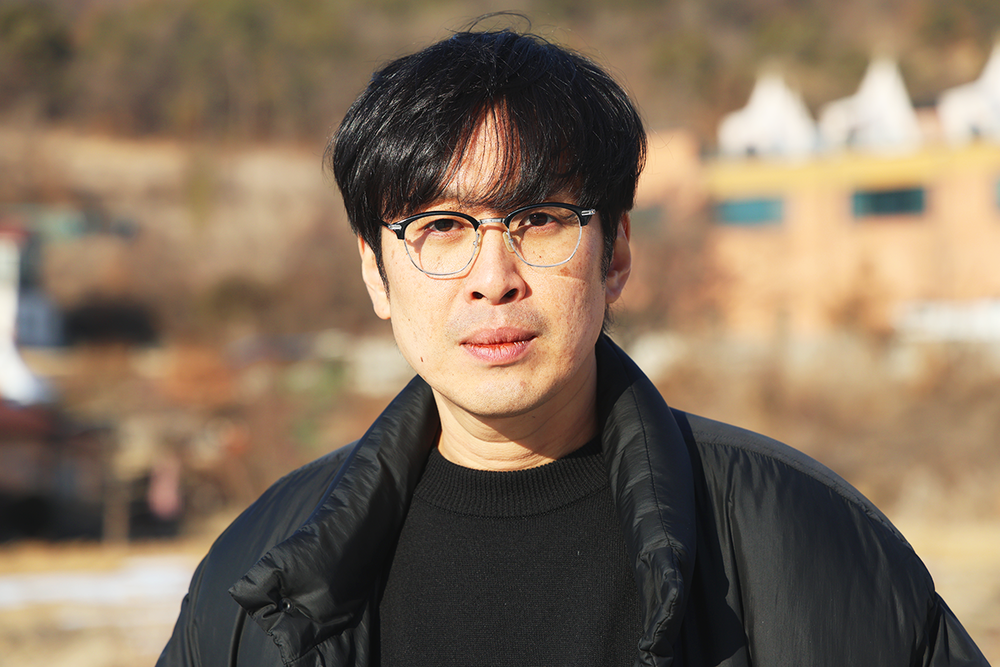
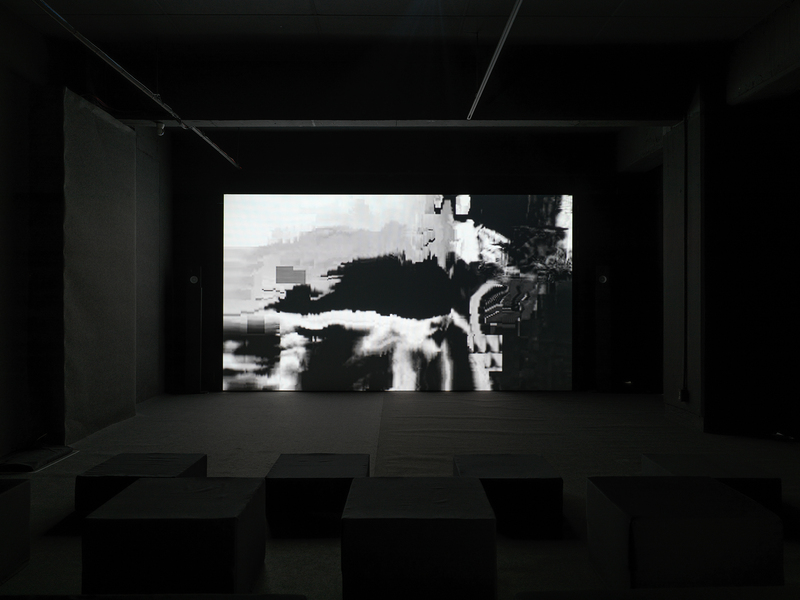
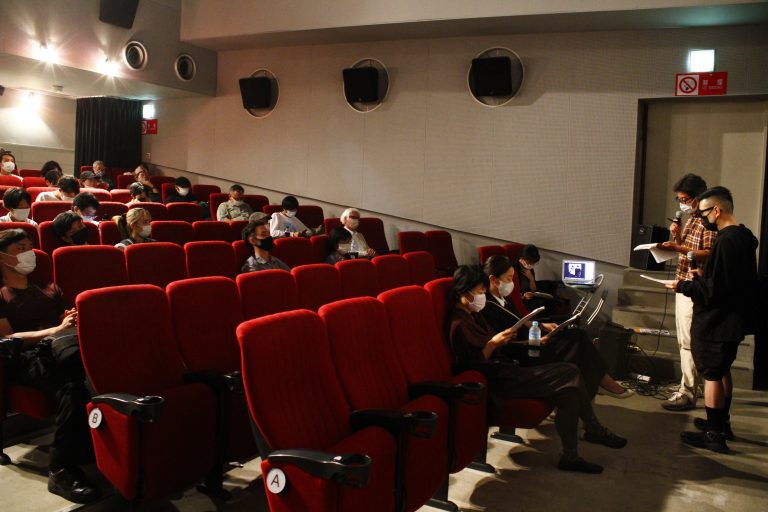
Recently, I was given an opportunity to speak with the artist Hong Jin-hwon, and we spent a little over an hour talking about various things at the Korean Film Archive. It was after a screening of his recent 70-minute video work melting icecream. (Readers with good memories may protest at this point: “Isn’t this different from what you promised?”
If so, they may recall that at the beginning of this series we said, “When speaking about film, we intend to avoid mentioning either the artist’s name or even the title of the work altogether.” My excuse is as follows. Here, I regard Hong Jin-hwon not as a film director but as a photographer, and melting icecream not as a film but as a video work that explores a montage of photographic sensibilities. Furthermore, while reflecting on the places of cinema through the photographic in this way, I would like to set aside the plural “we” for a moment and speak as “I.”)
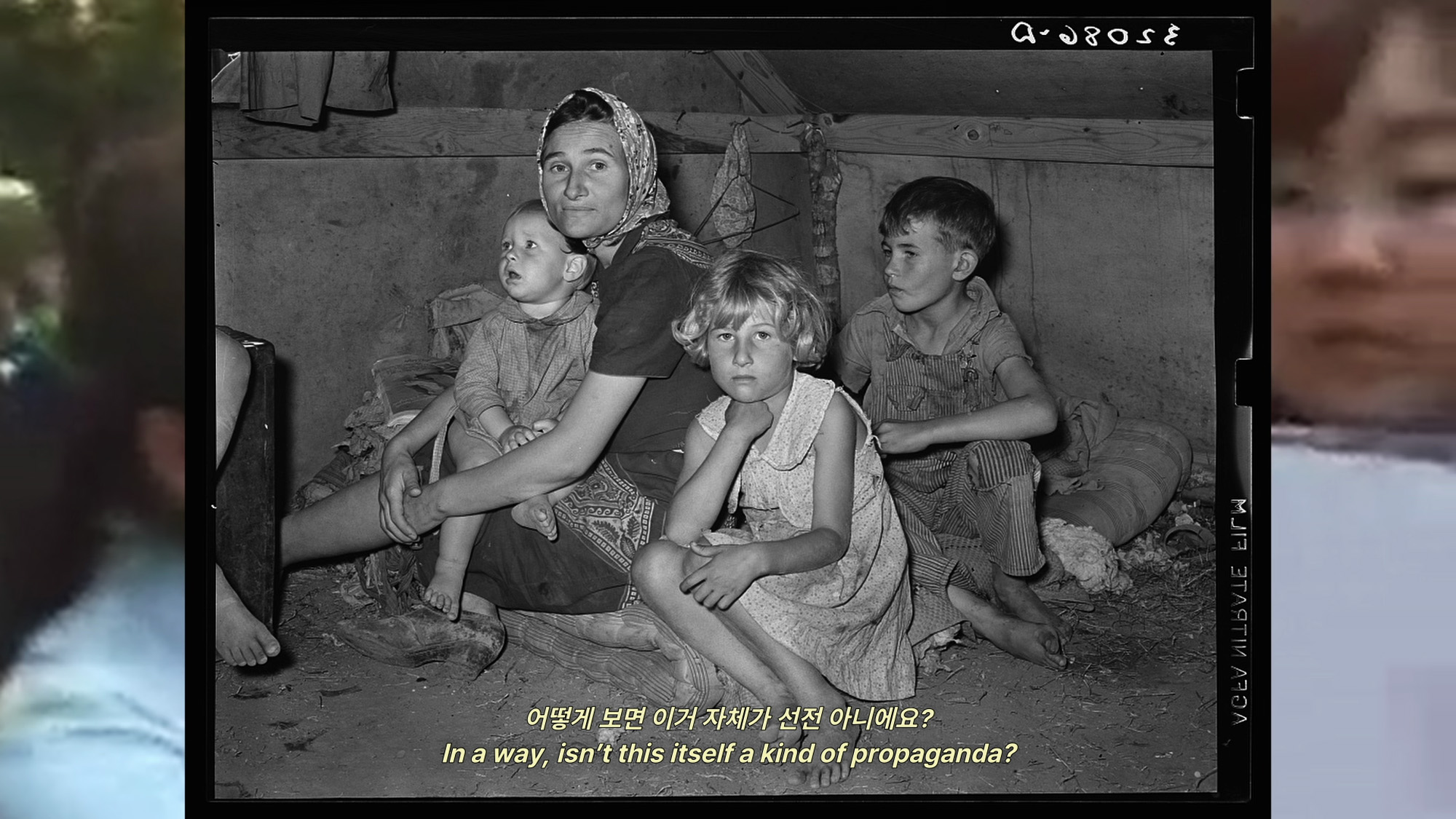
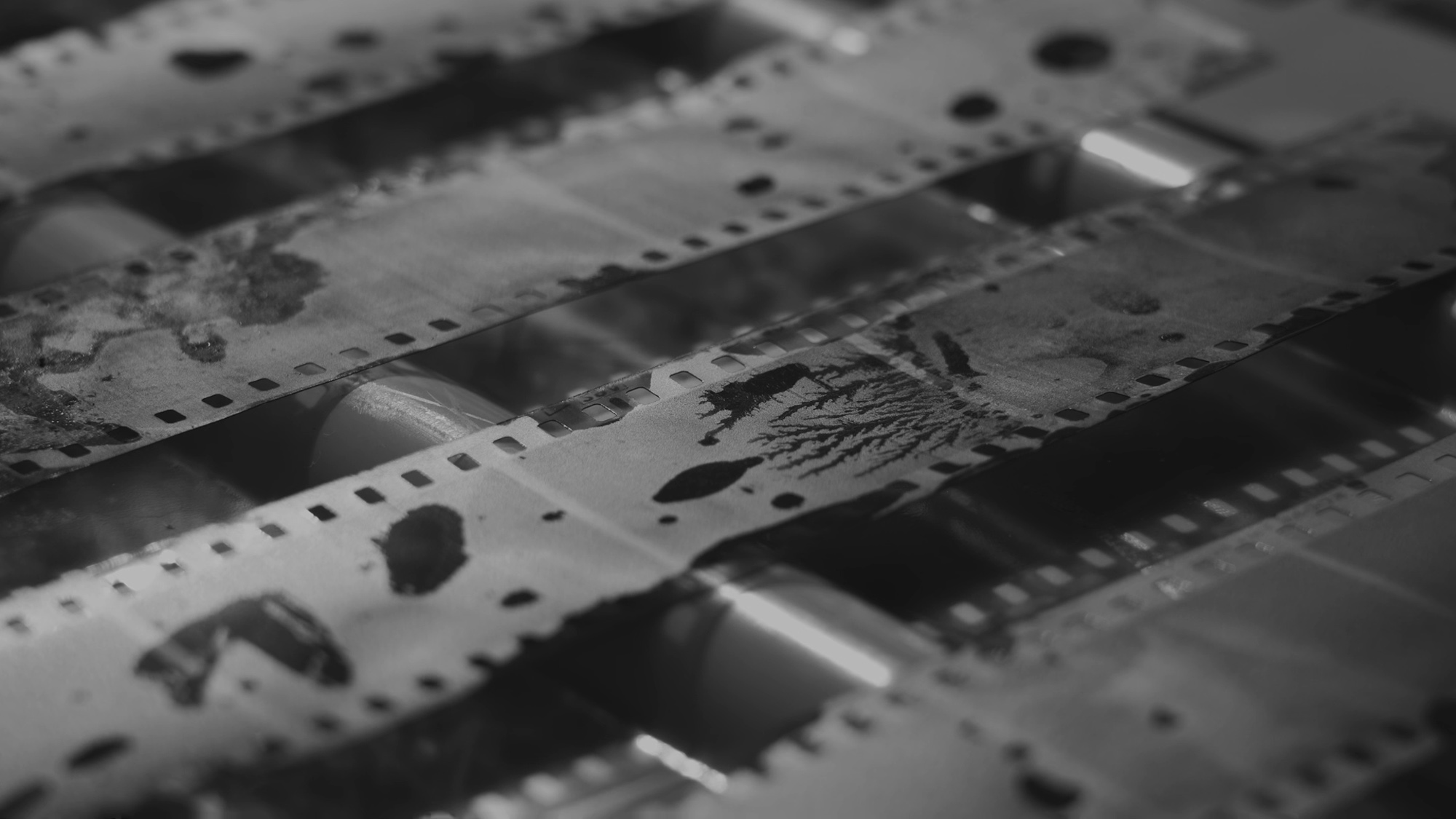
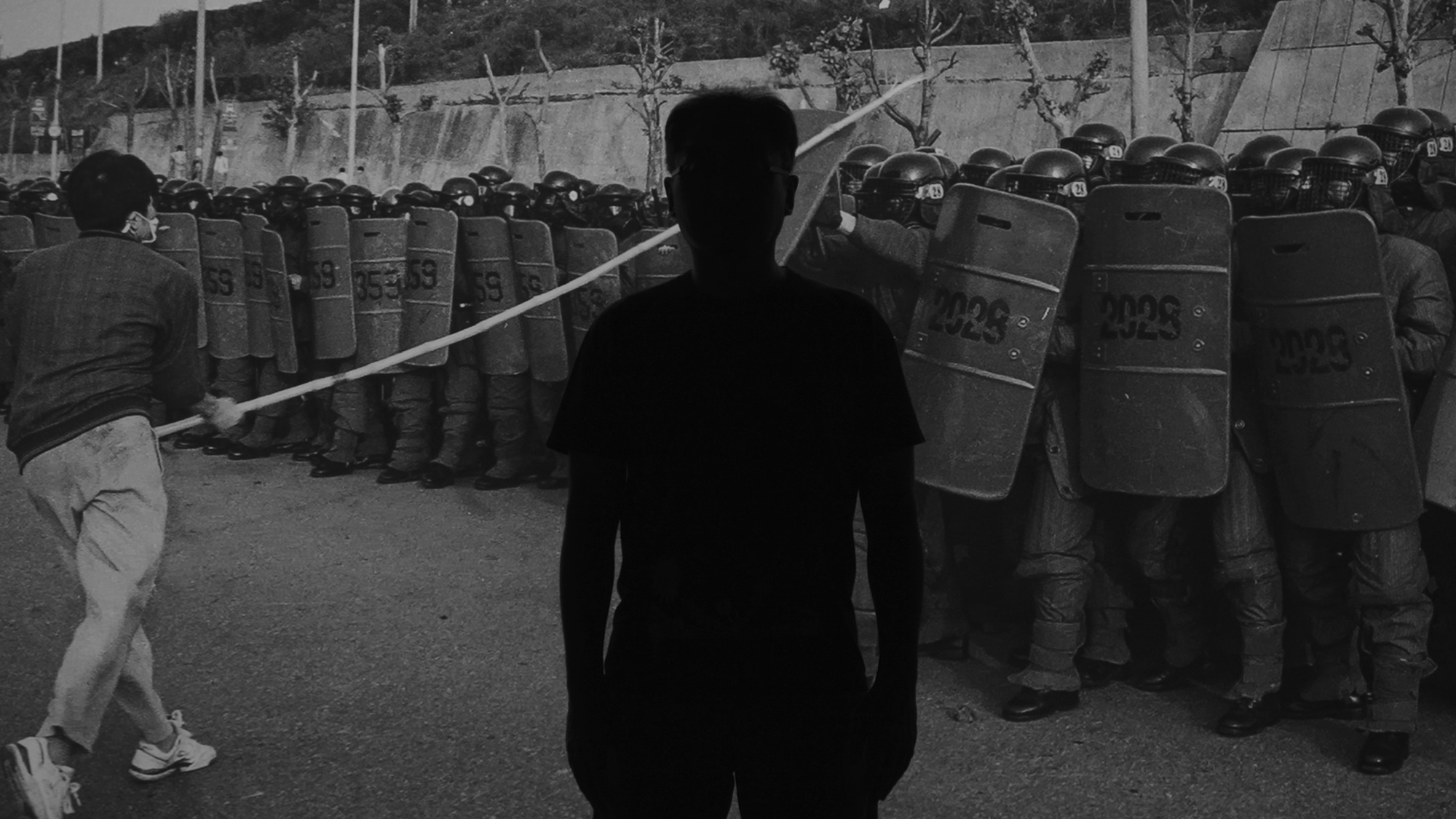
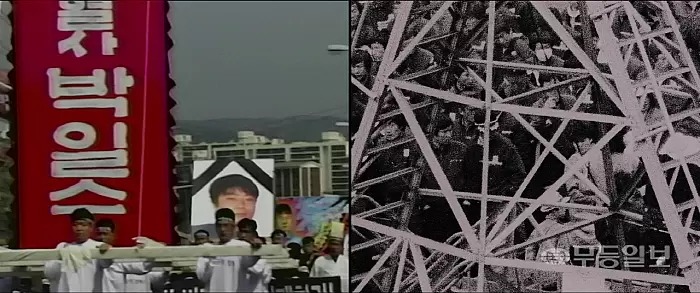
melting icecream began with the discovery, among materials donated to the Korea Democracy Foundation by photographer and poet Park Yong-soo (1934–2022), of heavily water-damaged films presumed to contain records of various struggles from the past.
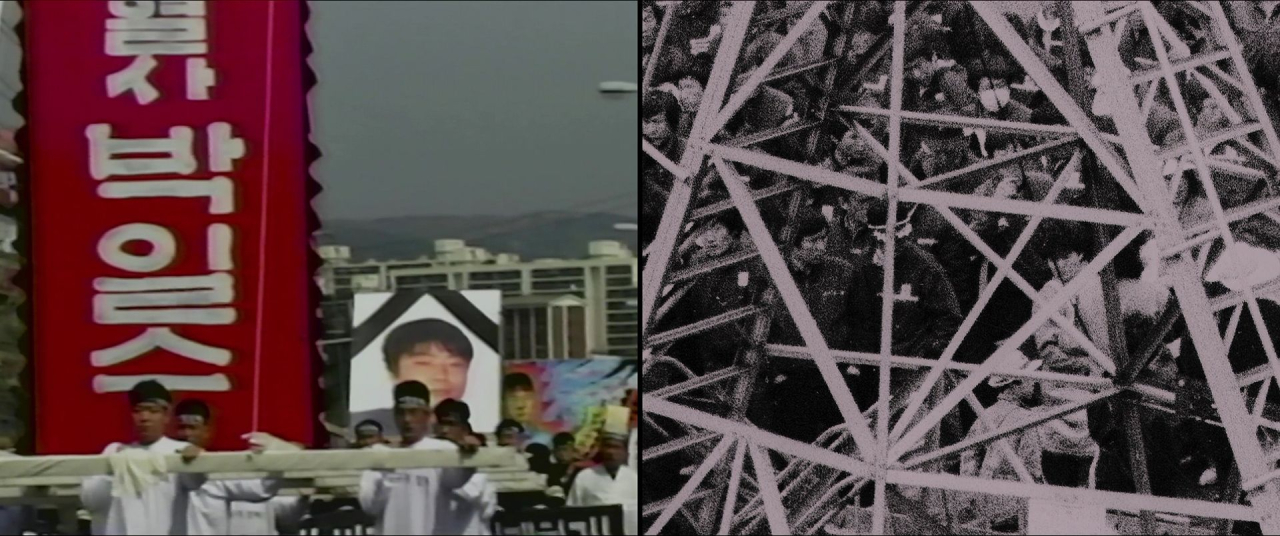
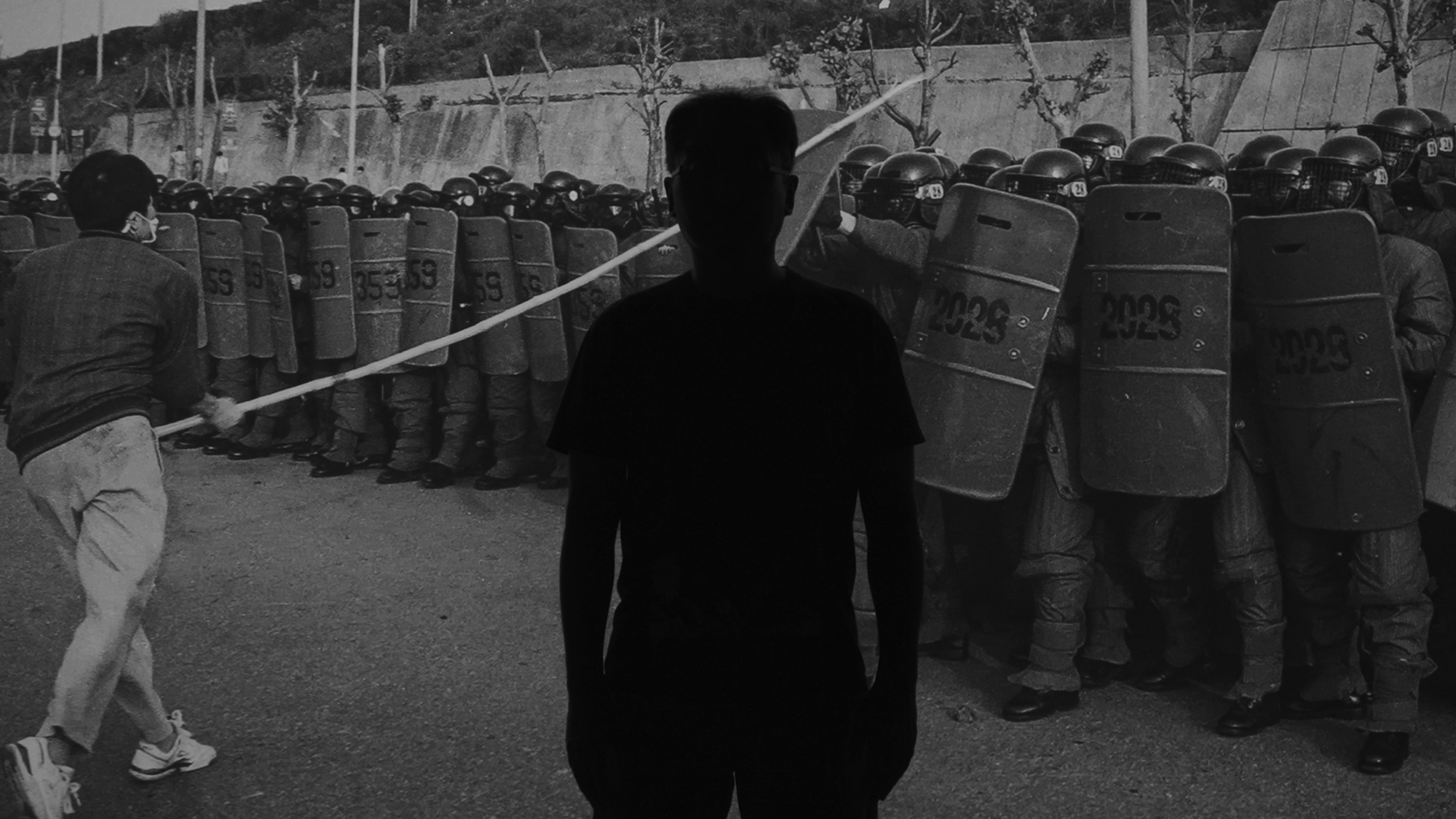
Park Seung-hwa, Park Yong-soo’s son and a member of the Minjok Photography Research Association, expected that these films might contain “A-cuts” documenting the Pan-Korean National Rally of 1990–1992, the funeral of Kang Kyung-dae in 1991, and the strike at Okpo Shipyard, among other events. The project began as an attempt to document the process of restoring the water-damaged film, but the completed work goes far beyond the character of a simple documentary record.
Alongside the depiction of the restoration process, interviews with photographers belonging to the so-called democratization generation form one axis of the work. They include Park Seung-hwa, Lee Jeong-yong, formerly of the Institute of Social Photography, and Seo Young-geol. Their testimonies concern roughly the period from the late 1980s through the 1990s.
This is a time remembered and commemorated by many, a time that is somehow restored even when severely damaged. More precisely, it is a privileged time protected by the ethical imperative that it must be commemorated and must be restored.
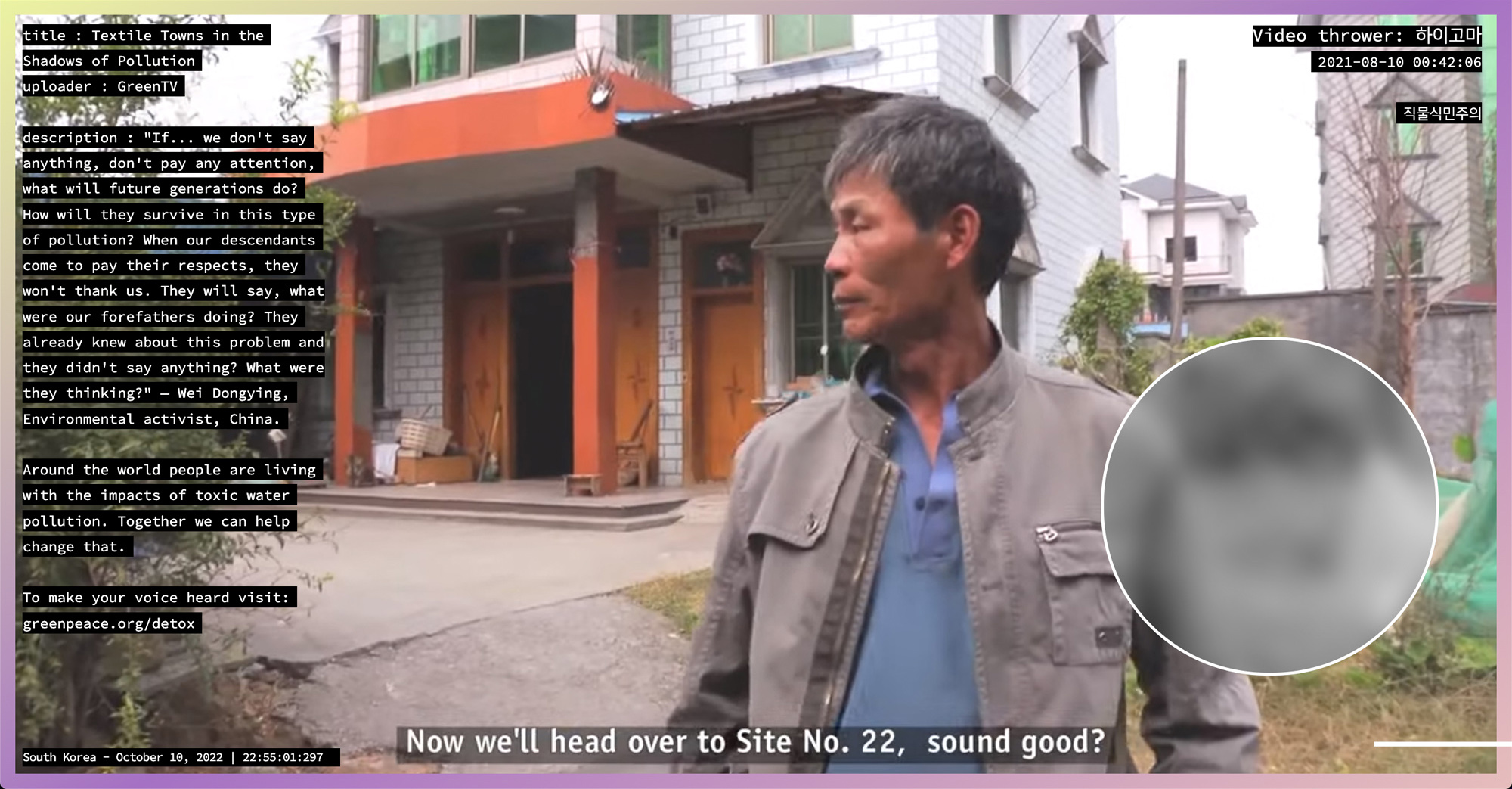
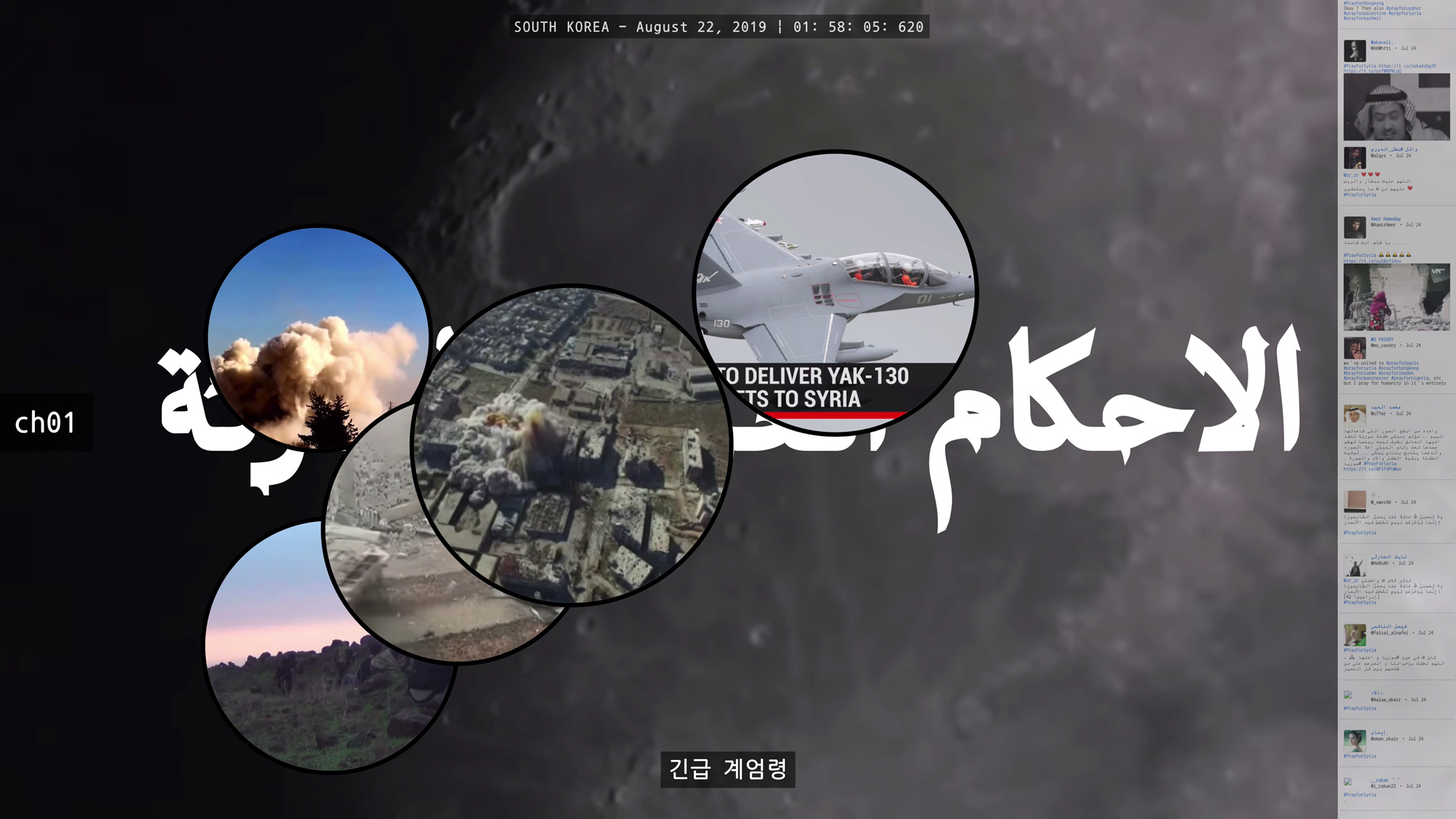
Hong Jin-hwon introduces another axis in order to question this privileged temporality and create a fissure within it. This consists of archival videos collected and posted online by Media ChamSesang, which document struggles by irregular workers and migrant workers under the Kim Dae-jung and Roh Moo-hyun administrations in the 2000s, after democratization. Yet no witnesses from the period associated with these videos appear.
In fact, due to the difficulties and costs of maintenance, all of these videos have now disappeared from the web. Although this time is closer to the present than the temporality indicated by the first axis—what might be called the pluperfect—it articulates itself without present-day witnesses who might lend it authority. The time of uprisings and the time of struggles are differentiated.
The time of struggle is not protected by the ethical imperative that it must be commemorated and restored. Hong Jin-hwon, too, does not take the position of one who commemorates or restores these images of struggle, but remains an intervenor who juxtaposes them, digital glitches and all, with the first axis.
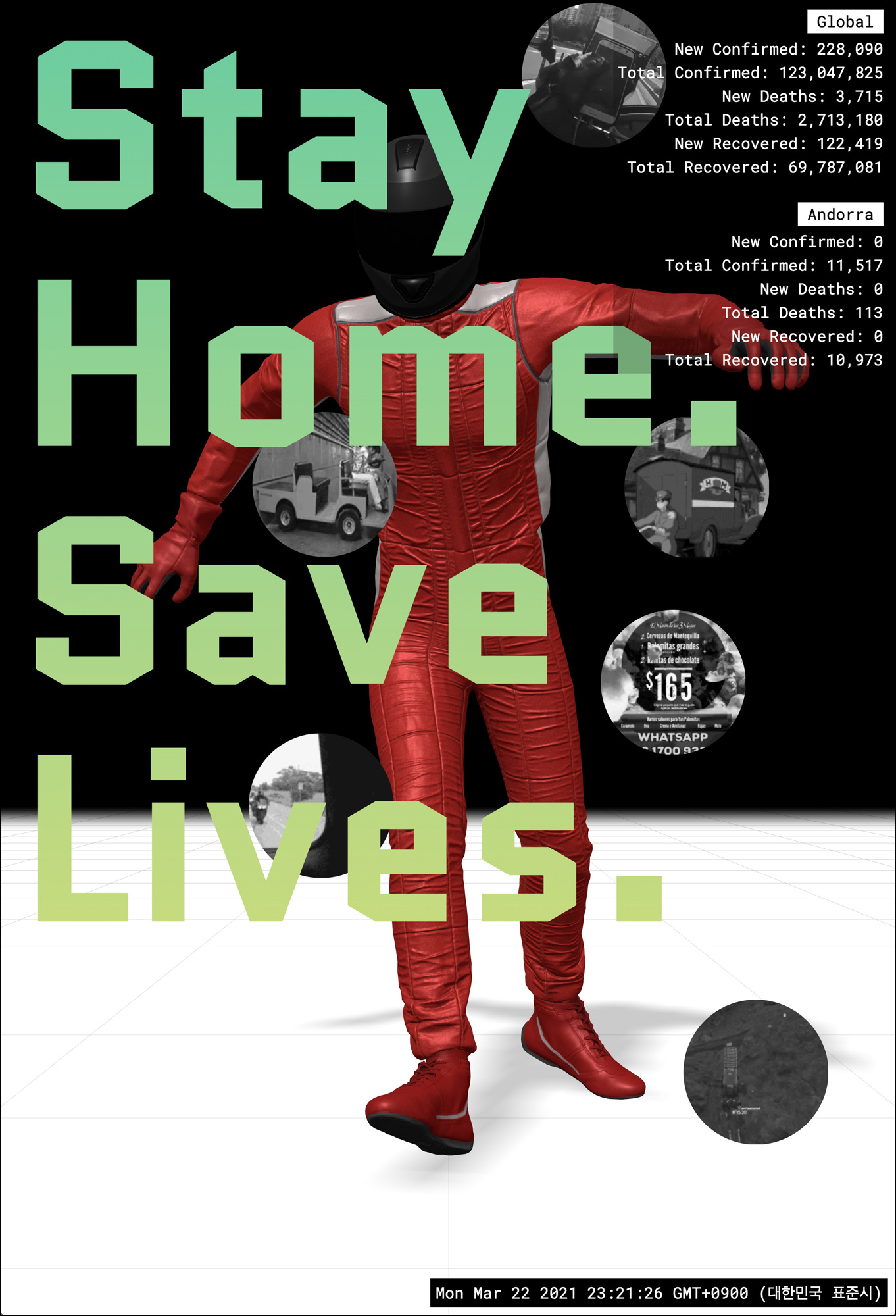
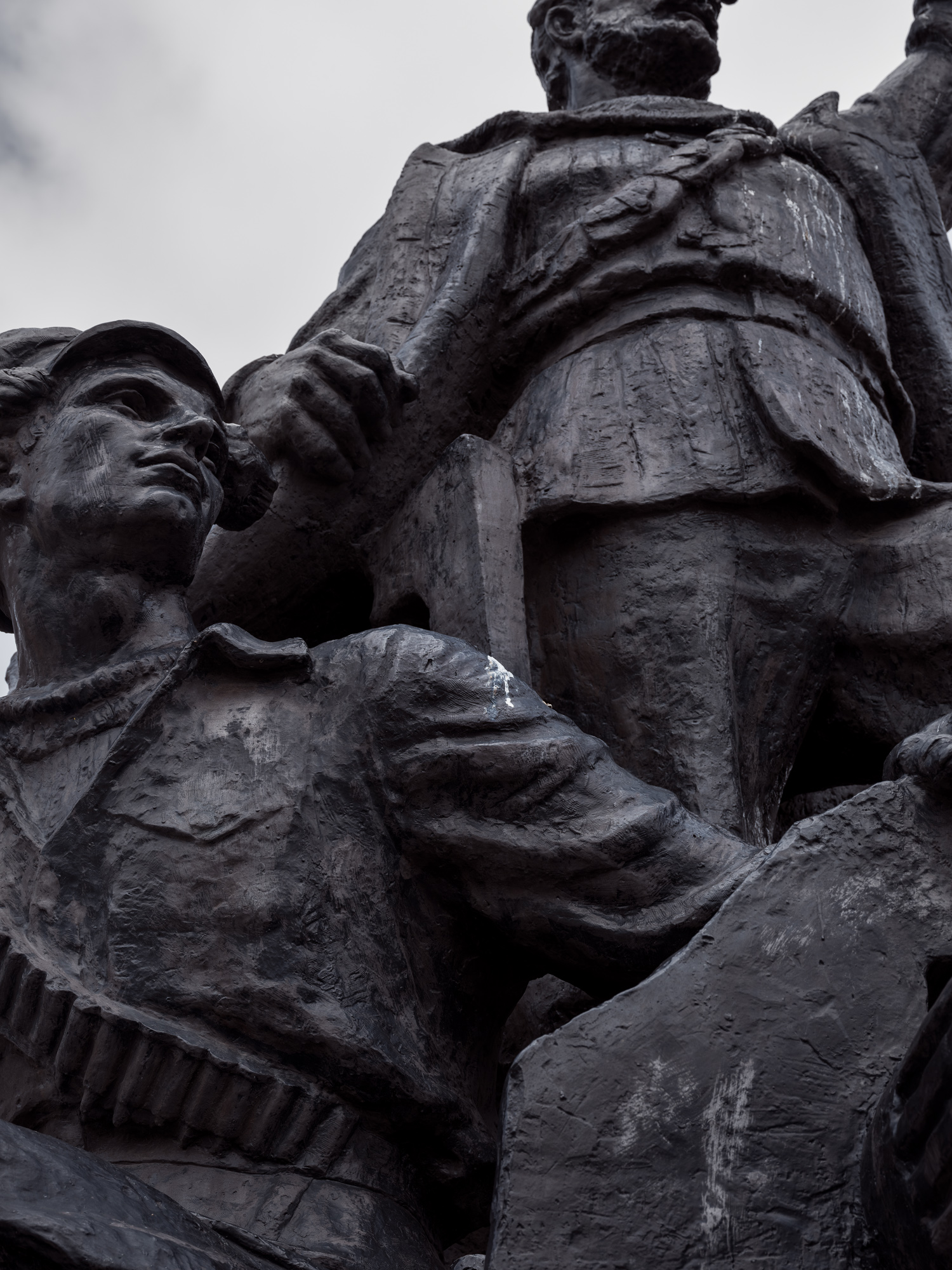
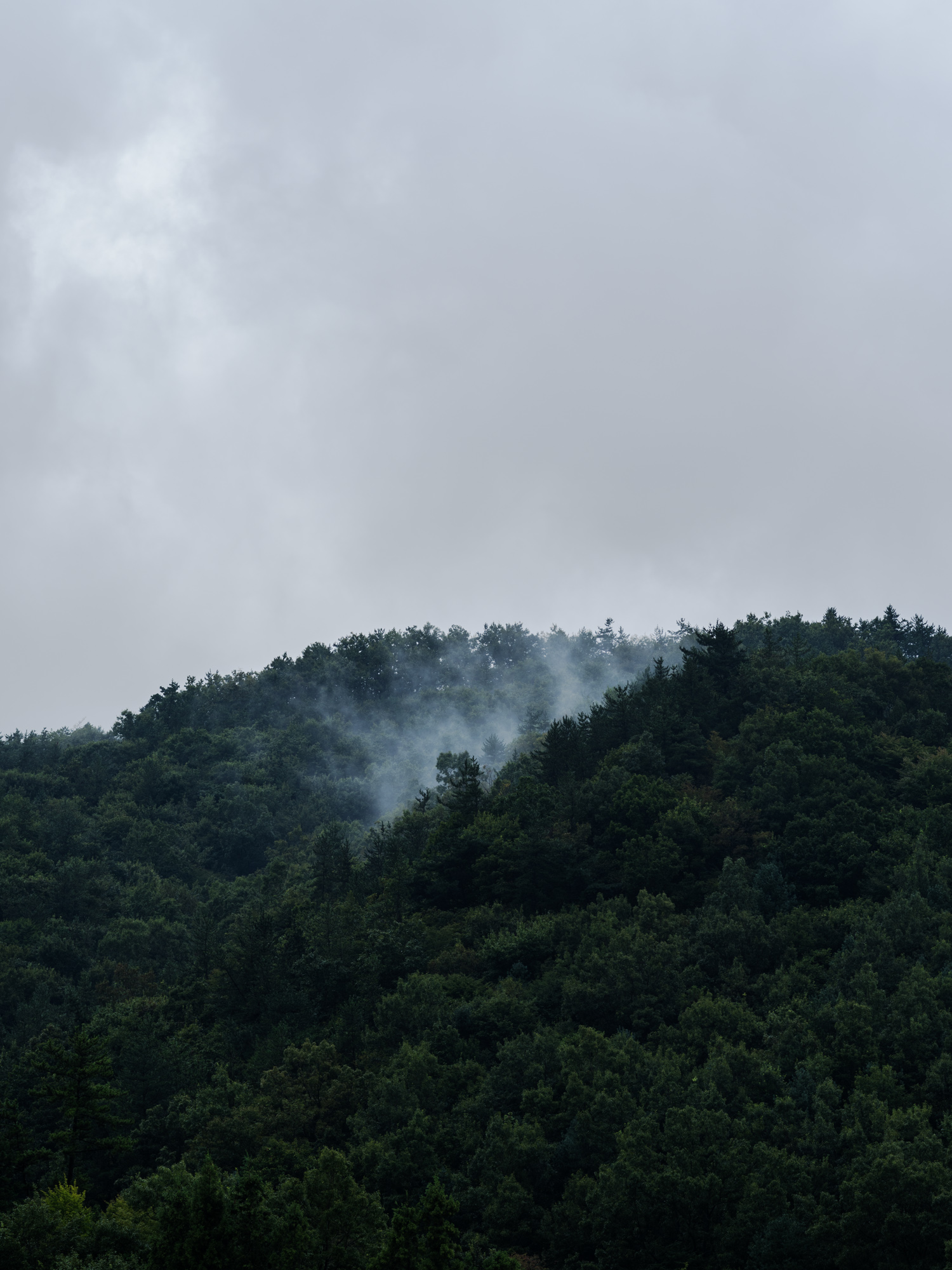
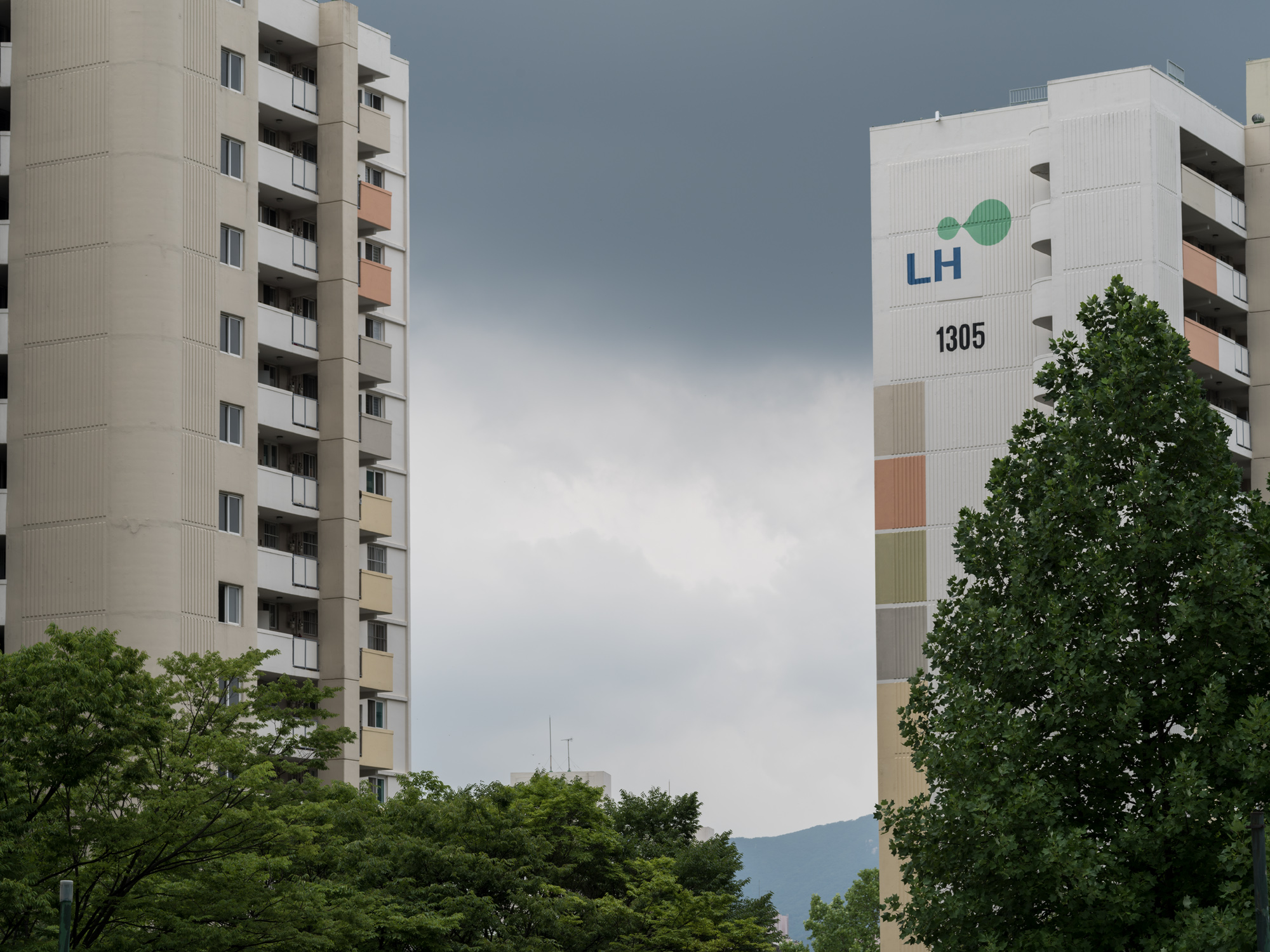
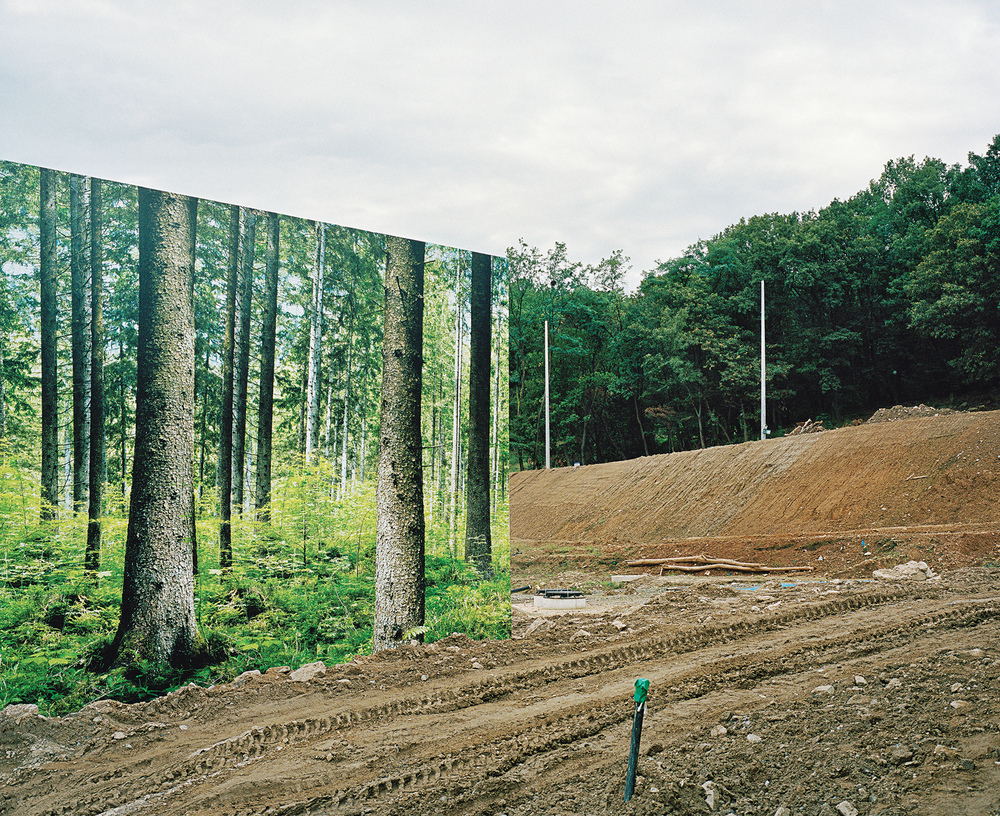
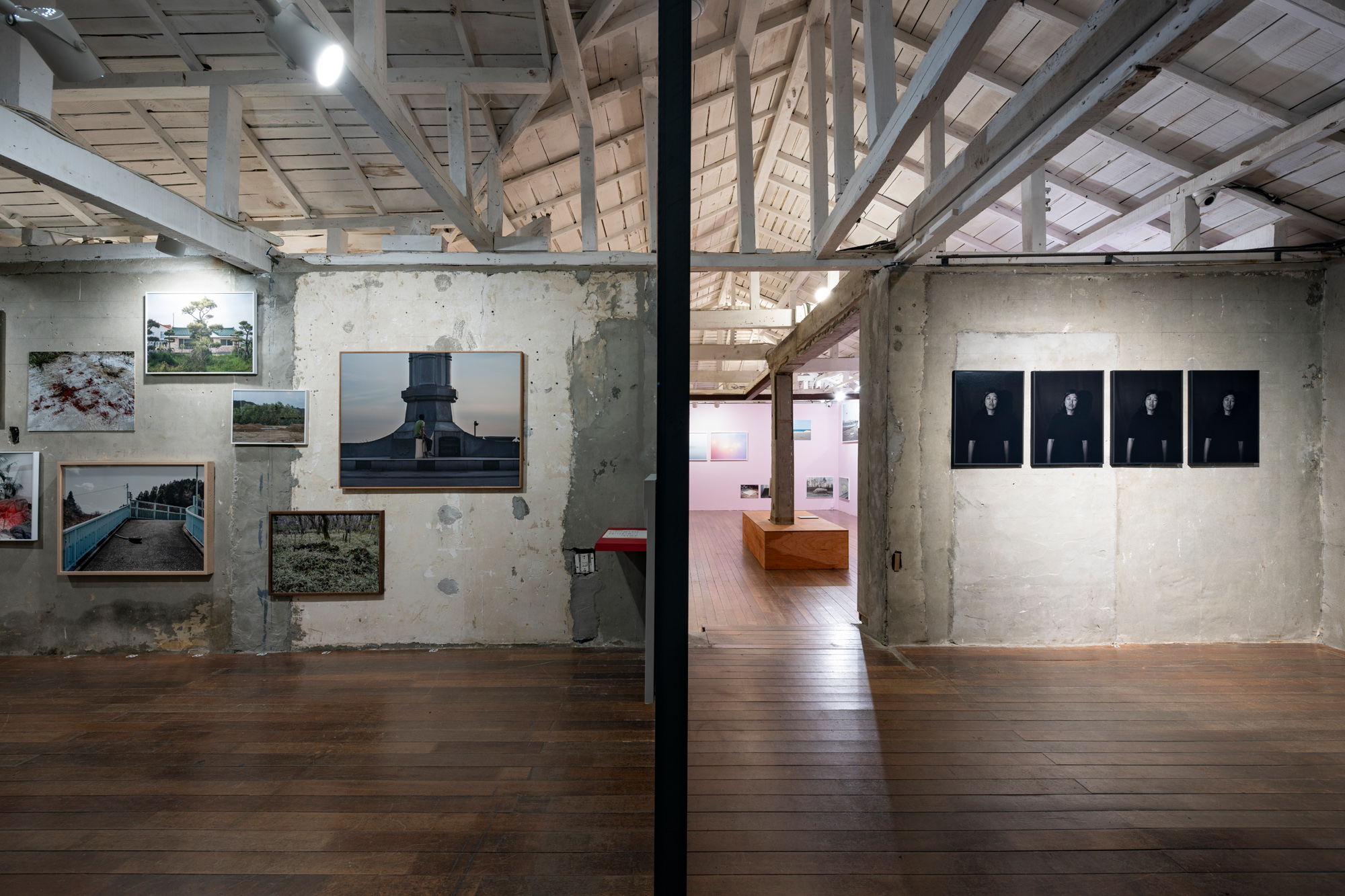
Finally, there is a third axis: landscapes of the present flickering between two temporalities, between testimony and self-articulation, between commemoration and forgetting, between restoration and erasure. These landscapes are often empty, and even when people are present, they do not appear as individuals but merely hover around statues whose faces cannot be seen.
Working with these three axes in mind, Hong Jin-hwon says he was careful not to allow the interviewees’ testimonies to contribute to the mythologization of the privileged memories of the democratization generation. More specifically, he sought to make the archival footage and landscapes function as critical and resistant commentaries on their testimonies.
Anyone who sees the work can sense that this is not an empty claim. Yet it remains questionable how effectively his handling of the three axes functions in moving image, which must inevitably follow a linear flow, rather than in an exhibition or publication that permits nonlinear viewing.
In documentary moving image, the interviewee’s speech tends to occupy an excessively dominant position, making it extremely difficult to place archival footage or landscapes on an equal footing. This remains true even when the archival images and landscapes possess a force that opposes the interviewee’s words. Once juxtaposed with a speaking subject, archival footage often becomes mere “reference footage,” while landscapes become “inserts.”
During our conversation, Hong Jin-hwon candidly spoke of the fear and bewilderment he felt when confronting this danger in the course of making the work. Fortunately, melting icecream, though at times precariously, manages to avoid falling into this trap with remarkable precision. I believe that the mode of audiovisual arrangement he employs—a method clearly acquired through his experience as both photographer and curator—could develop into a powerful methodology of montage and penetrate deeply into cinema.
One question I hesitated to ask the artist during our conversation and ultimately left unspoken: Has making this work changed the way you think about the site? As far as I know, Hong Jin-hwon as a photographer neither fully accepts nor entirely rejects the designation of his work as “site photography.”
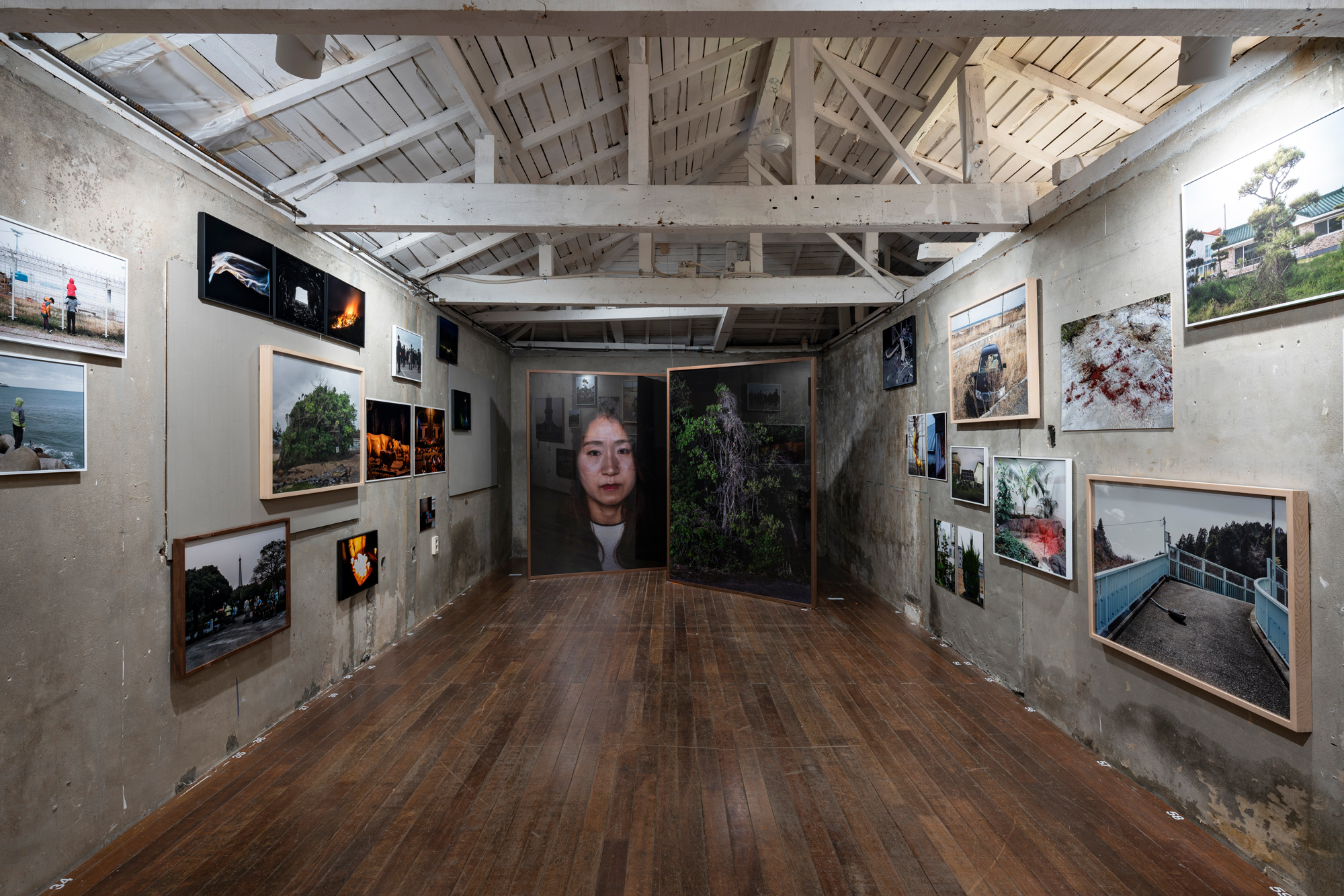
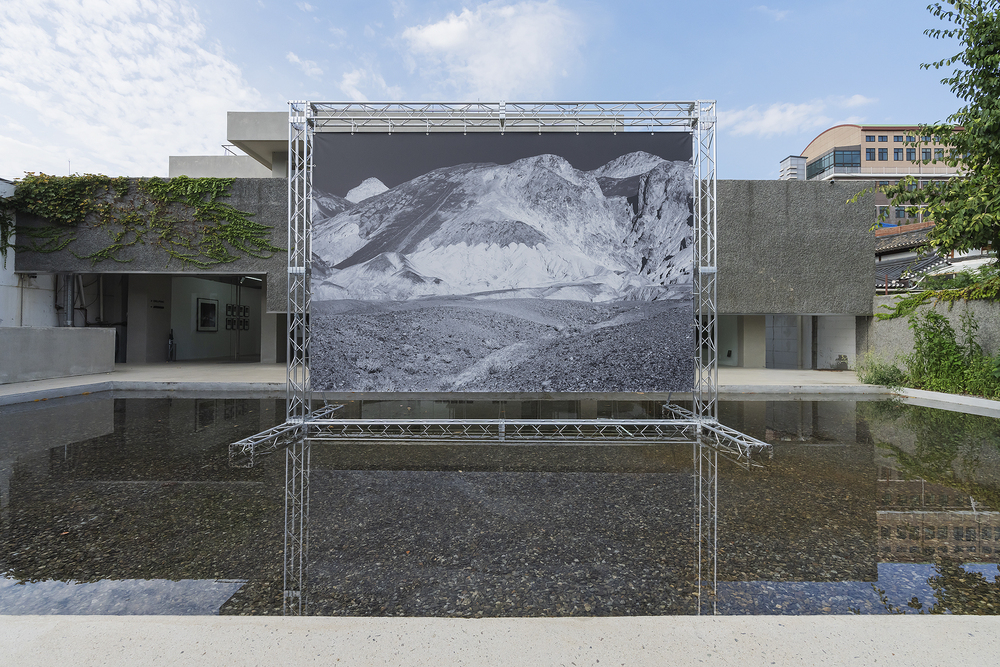
His photographs seem to occupy a strangely ambiguous position. In particular, a photograph he took of the dawn sea at Paengmok Port in Jindo, about a month after the Sewol ferry sank on April 16, 2014, is difficult to forget once seen. Rather than directly asking him about the site during our conversation, I showed this photograph to the audience and spoke about the force of his work, which continually oscillates without settling on either aesthetic composition or social context.
In fact, staring at this photograph for some time can produce a kind of helplessness. It makes one unmistakably aware that unless a photograph continually establishes relations with something else, even an immense tragedy can become aesthetically abstracted. Hong Jin-hwon’s work as both artist and curator has involved exploring various strategies for constructing precisely such “relations.”
Put differently, it means placing photographs within particular discursive arrangements so that they can continually bring eventful places into the present, even when every sense of immediacy has drained completely from the image itself. For him, photography is not indexical in the sense that it contains traces of a direct physical relationship in space and time with an eventful place. In this regard, he offers an intriguing analogy in a letter included in A Conversation on Photography (Hyunsil Culture Studies, 2019), a collection of correspondence with curator Ahn Sohyun.
“For me, there is still something uncomfortable about simply saying that an index points to something—in other words, saying that a photograph points to some reality. So for me, an index is like a finger pointing at the moon. Dawn will soon break, and my first concern is where that finger that had been pointing at the moon will point then.
Could we call these strange situations another kind of ‘physical absoluteness’? A physical absoluteness in which, from the very moment something has been indexed, the index of the present can ‘no longer’ be physically connected to the reality of the present.”
The characteristic of photography Hong Jin-hwon describes here through the term “index” is in fact what Roland Barthes called “deictic” in 『Camera Lucida』. In Korean, the Sino-Korean word for deixis literally means to point with a finger (指) and show (示), and interestingly, Barthes likewise writes, when discussing photography’s deictic quality, that a photograph “points a finger at a certain encounter.”
Deictic signs—such as demonstrative pronouns like “this,” “that,” and “those,” or expressions such as “to your right” and “the following year”—are entirely dependent on situation or context and therefore possess no intrinsic meaning or property of their own.
Specialists in site photography generally try to conceal photography’s deictic character as much as possible while strengthening its indexical character. Their photographs, which seek to testify to “here and now,” aspire, after some time has passed, to become monuments preserved indefinitely as names representing “there and then.”
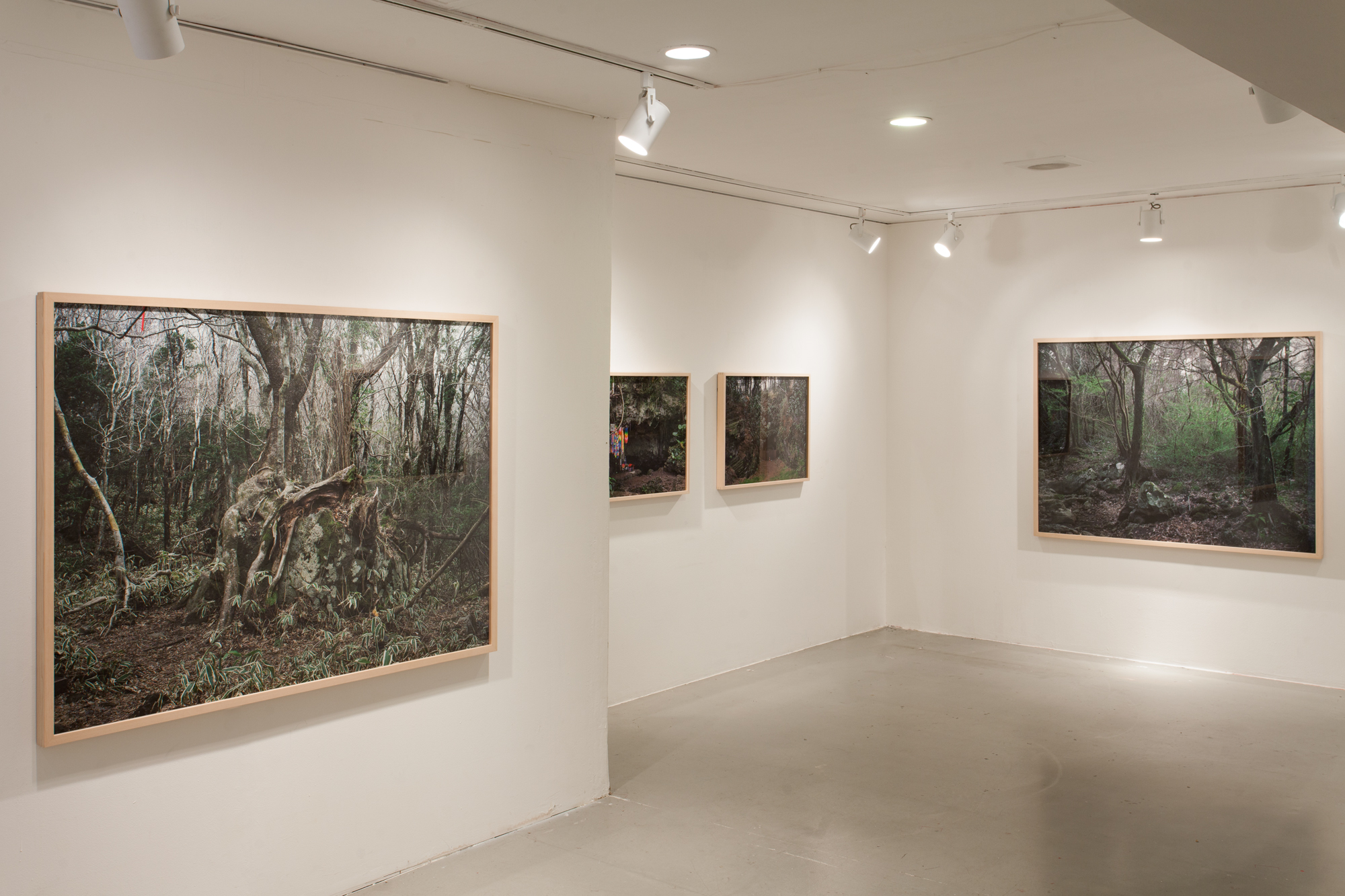
By contrast, Hong Jin-hwon’s site photographs, whose indexicality is exceedingly weak, often push photography’s deictic character to an extreme. Such photographs activate heterogeneous, contingent, and fluid communities composed of those who already knew what they point to, those who wish to know, and those who will somehow come to know.
Unless continually brought into the present through such communities, which never cease assembling and dispersing, these photographs inevitably become abstracted or aestheticized. One might say that only the posed finger remains visible. Photographs of this kind, which Hong himself sometimes calls “proofs of absence,” always point to “here and now” so long as the community remains activated through an appropriate discursive arrangement.
They deliver the eloquence of a site without a sense of presence. Yet the members of that endlessly reconfiguring community will never all gather in one place to listen to that eloquence together. Such photographs therefore need not be monumental.
The three axes that sustain melting icecream—testimony, self-articulation, and landscape—also seem to suggest three different ways in which moving images relate to the site. Yet in moving from photography to moving image, why did Hong Jin-hwon think that landscape alone was no longer sufficient? When attempting to activate a heterogeneous, contingent, and fluid community, why did the discursive arrangement that could clearly remain external to photography now have to be brought inside the moving image itself?
The questions do not cease. But what makes melting icecream truly compelling above all is that it leads us to the following question: if that arrangement succeeds, when, where, and how is the site brought into the present? Or, to put it simply once again: What is a cinematic site?