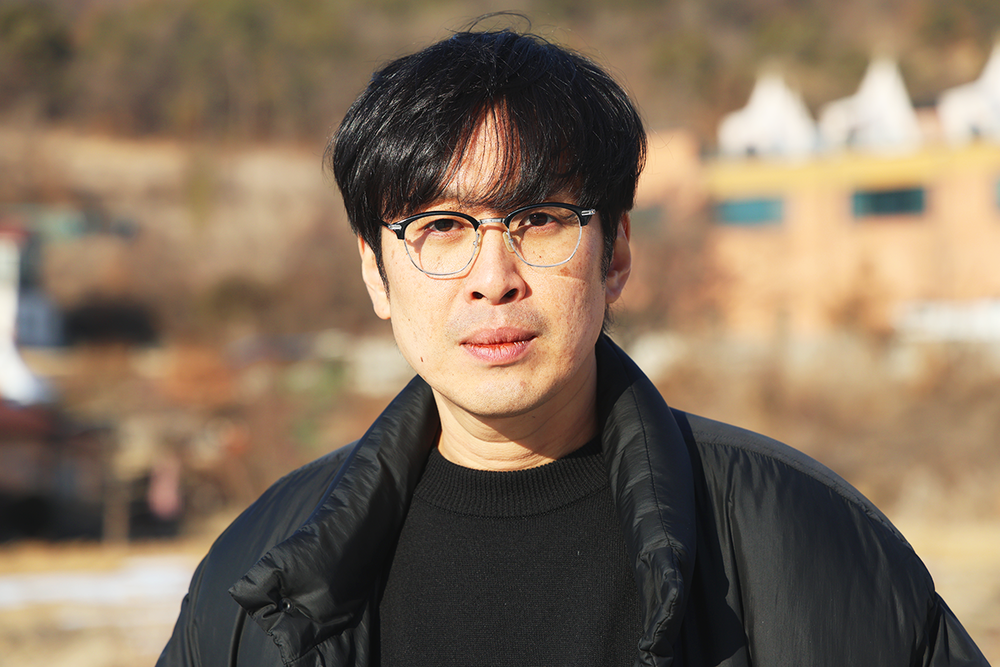
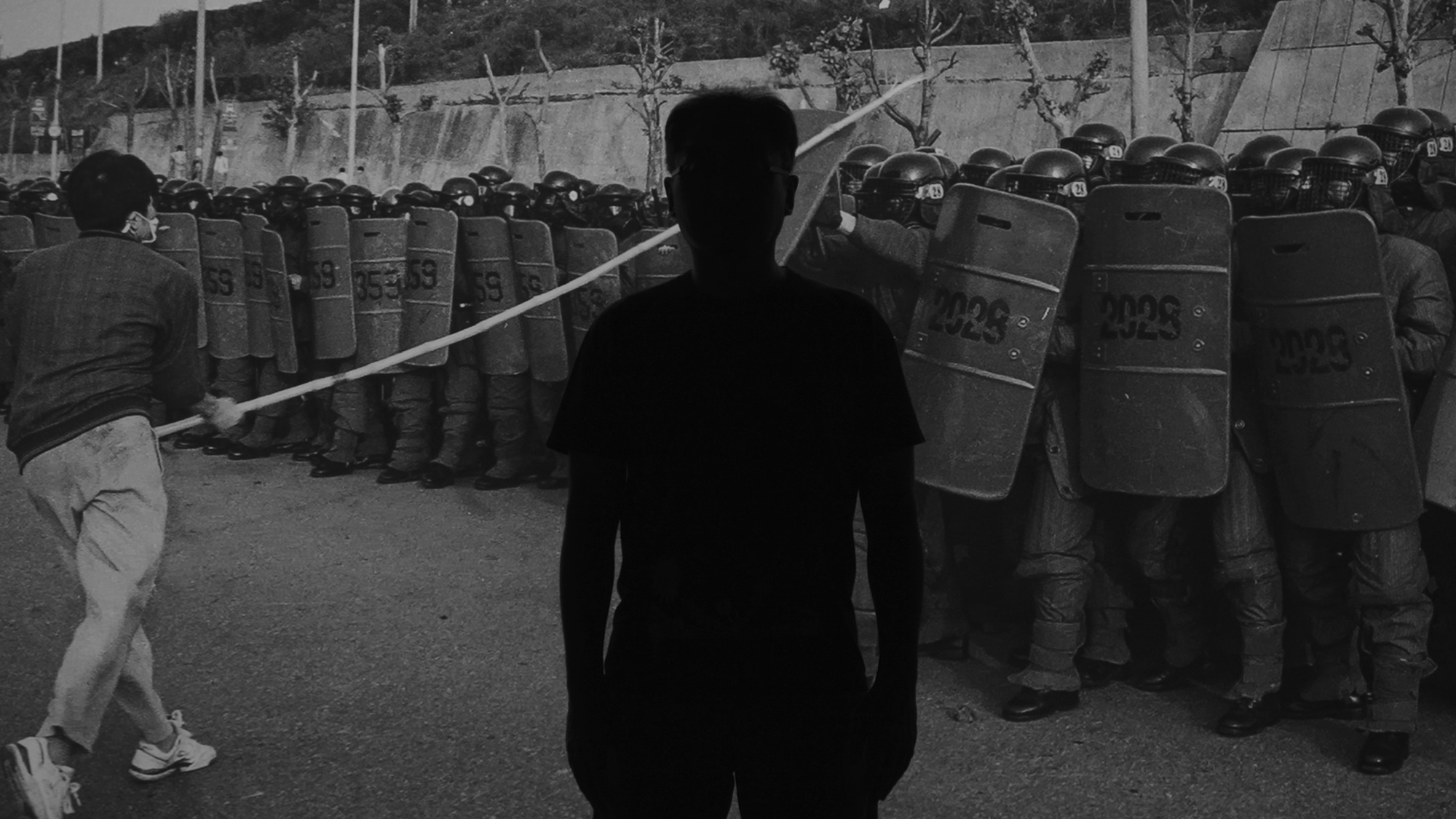
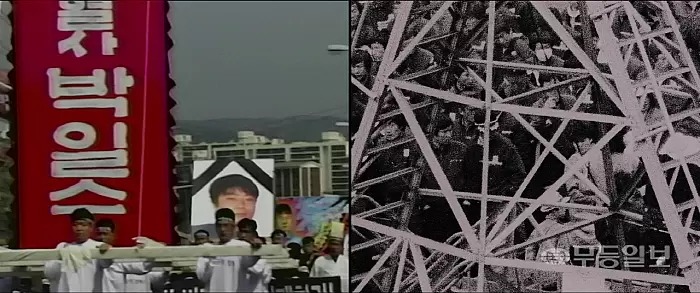
Hong Jin-hwon, who had worked as a photojournalist, came to be recognized as an artist after receiving the Photography Criticism Award in 2009. Despite its rather rhetorical title, Self-toture of Narcissus, the award-winning work dealt with the redevelopment of Yongsan. In the early hours of January 20 that year, five evicted tenants and one police commando lost their lives during a forced police crackdown at the watchtower atop the Namil-dang building in Yongsan.
Hong was at the scene. In journalism, the Korean term hyeonjang—literally “the scene” or “the site”—refers to the place where an event occurs and from which factual reporting is made possible; it is also a familiar, almost colloquial term among photojournalists and documentary photographers. Judging from the title of the work, Hong, as a photographer of such sites, seems to have castigated his own photographic practice—whose usefulness remained uncertain even in the face of violent death—as something akin to a narcissistic or voyeuristic gaze.
Of this self-critical work, the jury wrote that “without fists raised toward the sky or cries of protest [...] it translated the sense of deprivation produced by the institutions and power structures of contemporary society into a sophisticated photographic language.”
This photographic language originated in Hong’s own sensibility, but it was also an honest methodology available to an artist who had recognized the impossibility of conveying objective facts at the scene. Some sites are so horrific that the camera’s eye cannot fully capture them; at others, the horror has clearly passed, yet nothing remains that can be captured. It is at precisely this point that photography’s indexicality inevitably fails.
Site and Landscape, from Place to Thing
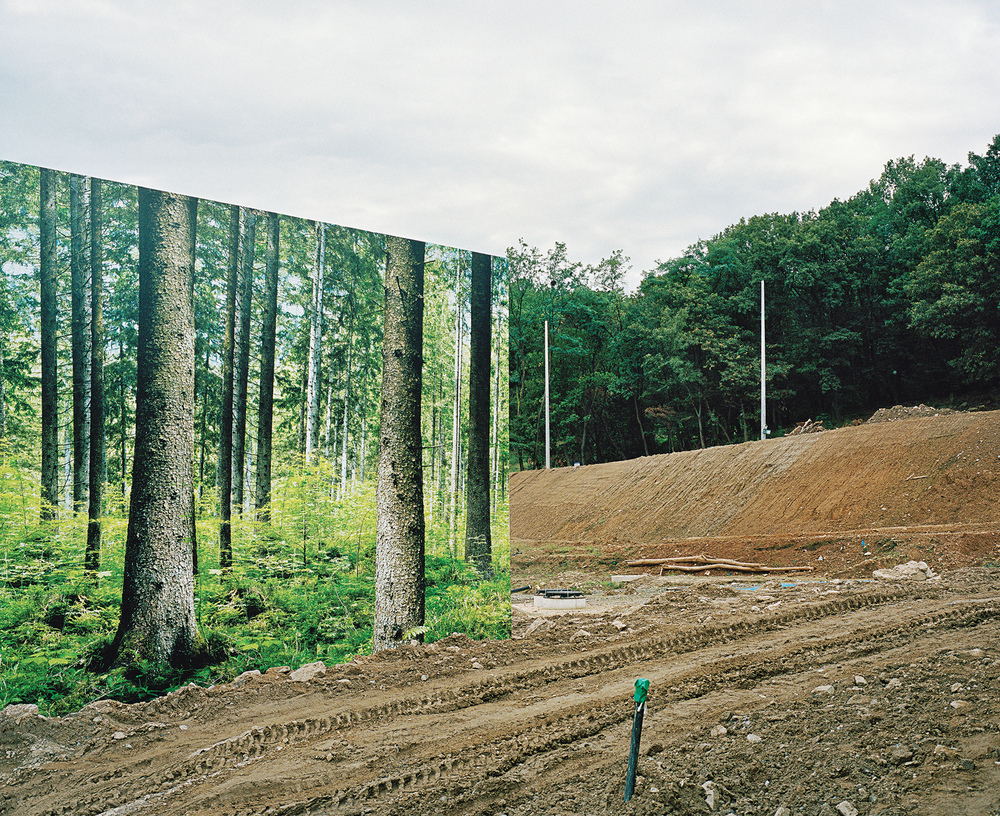
After the Namil-dang incident, Hong Jin-hwon continued to document development sites in Seoul, and his attempt to exclude the informational function of photography became far more pronounced over the years, even within the same body of work. At first, he relied on light entering through windows to reveal the grotesque interiors of buildings awaiting demolition; over time, however, he increasingly presented construction-site barriers in formal terms or turned his attention to artificial landscapes encountered in everyday life.
By photographing primarily on overcast days, the light itself also became progressively more muted. After passing through this process—one that involved considerable variation in subject and form to be called a coherent series, but was likely necessary for him to arrive at his own style—he presented his first solo exhibition at SPACE99 in 2013 under the title 《Temporary Landscapes》.
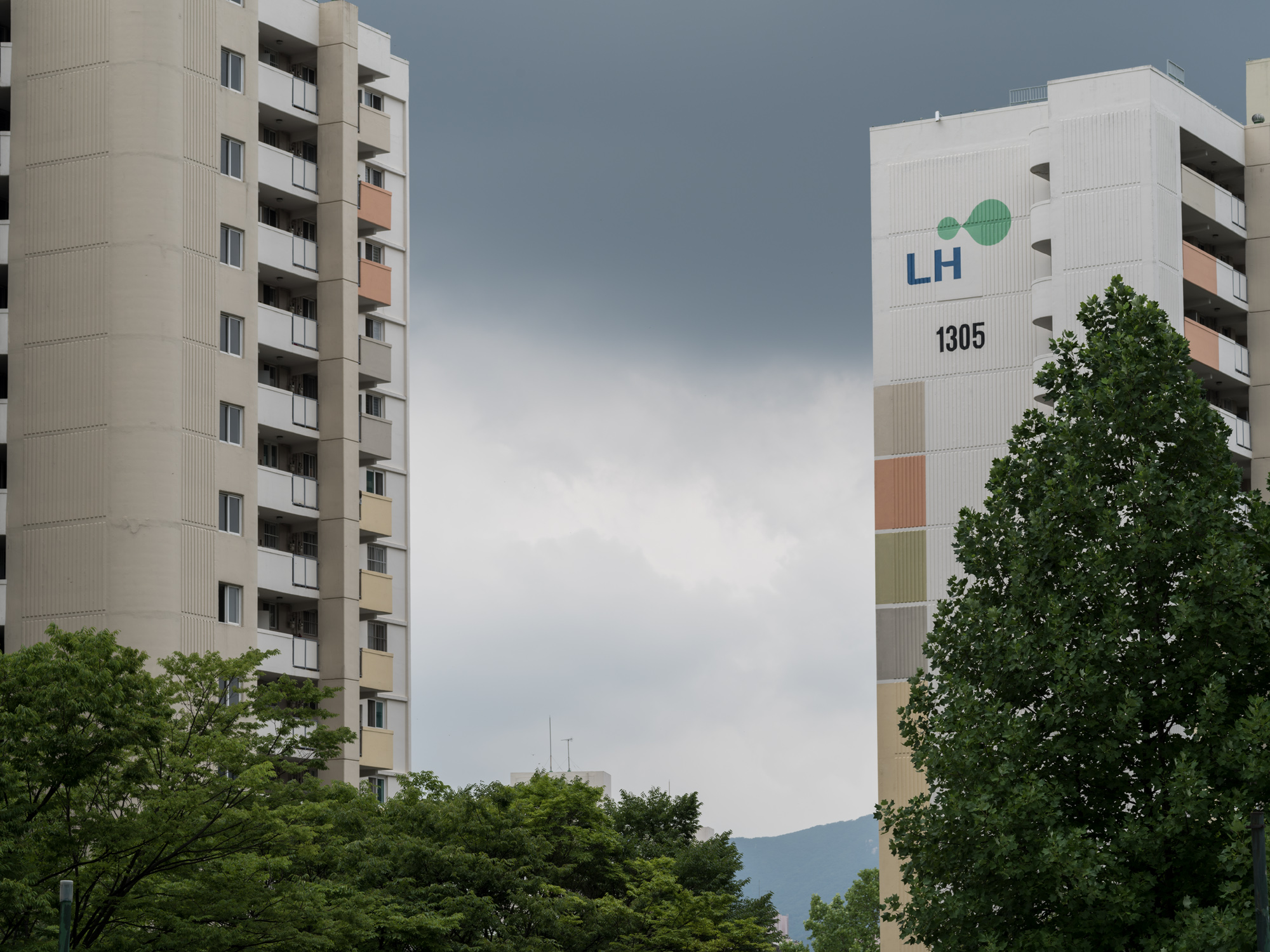
Framed by the proposition that the tyranny of capital and the obsession with development produced by compressed growth create only mutable landscapes in which no one can ever truly anchor themselves, the exhibition contains neither people nor events. Yet if we infer the artist’s intention from the title, although the work belongs to the same trajectory that originated in the Namil-dang incident, here it is the landscape, rather than the photographer as narcissist, that assumes the position of witness.
The helplessness of a photographer who records but cannot intervene in an event resembles the fate of landscape itself, which can only serve as the background or object of an event, never its subject.
If, however, we expand the meaning of landscape beyond the “site” as a spot where an event occurred and instead understand it as the ground and livelihood that must be defended, landscape is reborn not as a mere witness but as the only active subject to survive a struggle against violent time. Hong Jin-hwon describes this quality of landscape as “not a ‘place’ where a historical event occurred, but a ‘thing’ that survived, sedimented as history itself.”
Landscape is therefore more autonomous than the photographer before historical events and possesses a far longer lifespan than the events that take place at a site. When Hong continued to move in and out of such sites while calling himself a landscape photographer, this likely did not simply mean that he made photographs stripped of narrative, but rather that he intended to use landscape to touch the very roots of those narratives.
As a photographer of sites, he does not stop documenting the real world; at the same time, as a landscape photographer, he increasingly flees farther away from those sites, both temporally and geographically. Even when a photograph is taken at the site itself, the scenes he captures and the subjects on which he focuses often fail to establish direct causal relationships that explain the situation.
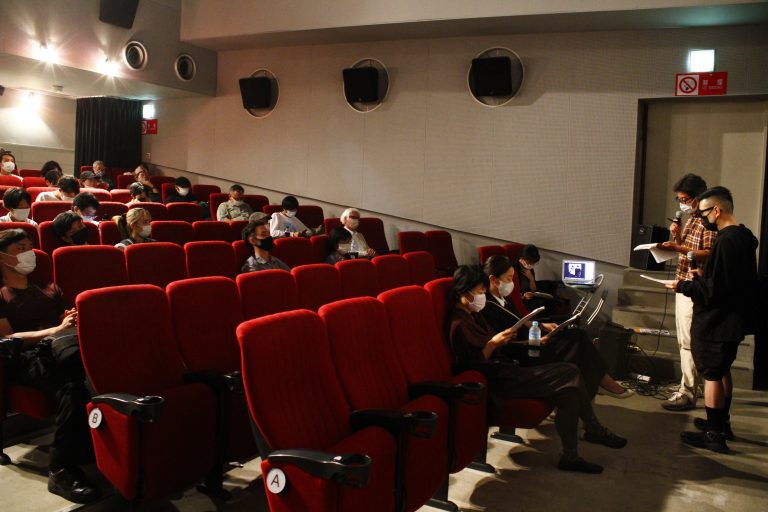
In a “conversation on photography” between Hong Jin-hwon and curator Ahn Sohyun ahead of his recent exhibition 《Random Forest》 at Art Space Pool, the artist referred to this gap—this sense that “this landscape and that fact appear to have nothing to do with one another”—as a “drop.”
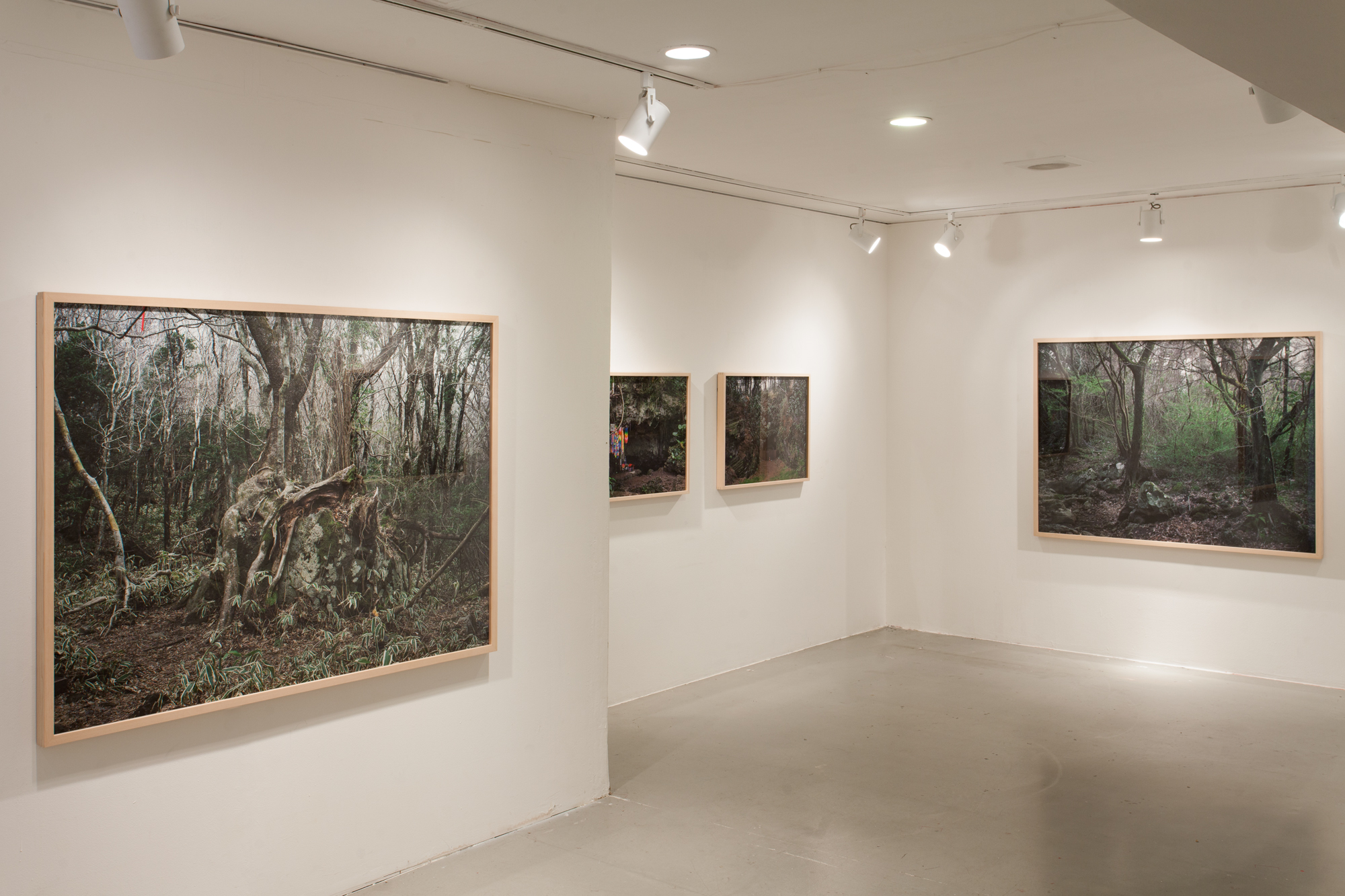
His strategy of creating such a drop—making the apparent meaning of a photograph or exhibition ambiguous and uncomfortable in order to provoke more visual questions—became clear in 《Crimson, Green》, which followed 《Temporary Landscapes》. The exhibition brought together Jeju, scarred by the April 3 Incident; the forests of Okinawa, which bear historical tragedies no less profound than those of Jeju; and the landscapes of Fukushima, devastated by the collapse of the nuclear power plant.
At the time of these photographs, Gureombi Village in Gangjeong, Jeju, was being destroyed for the construction of a naval base, while in Miryang, resistance was intensifying against the construction of transmission towers connected to the Kori Nuclear Power Plant in Busan. Hong was present in both Gangjeong and Miryang, yet this trajectory was omitted from 《Crimson, Green》. Instead, what appears is Okinawa as Gangjeong’s past, and Fukushima as Miryang’s future.
Despite fierce opposition, the naval base that now stands in Gangjeong was given the bizarre name “Jeju Civilian-Military Complex Port for Tour Beauty,” and the very act of attaching desires such as beauty and tourism to a military facility premised on attack and defense is itself violent.
Whether it is the beautiful Gureombi coast, a scene of struggle, or the massive naval base that occupies the site today, no photograph can establish a meaningful chain of connection before such an unreal name; instead, meaning slips away futilely. In reality, then, his photographs have once again been defeated, unable to stand against violence, and the greater the defeat, the more repeatedly he tries to move farther away in search of an even greater drop.
To defend himself against Hwang Hyun-san’s words—“It goes without saying that smashing apart beautiful seaside rocks shaped over countless ages for the sake of temporary profit is violence, but driving down an expressway at 160 kilometers per hour is also violence, and if you think about it, living as though nothing is happening in the world is violence as well”—he can only make photography into something that counts as “nothing happening.”
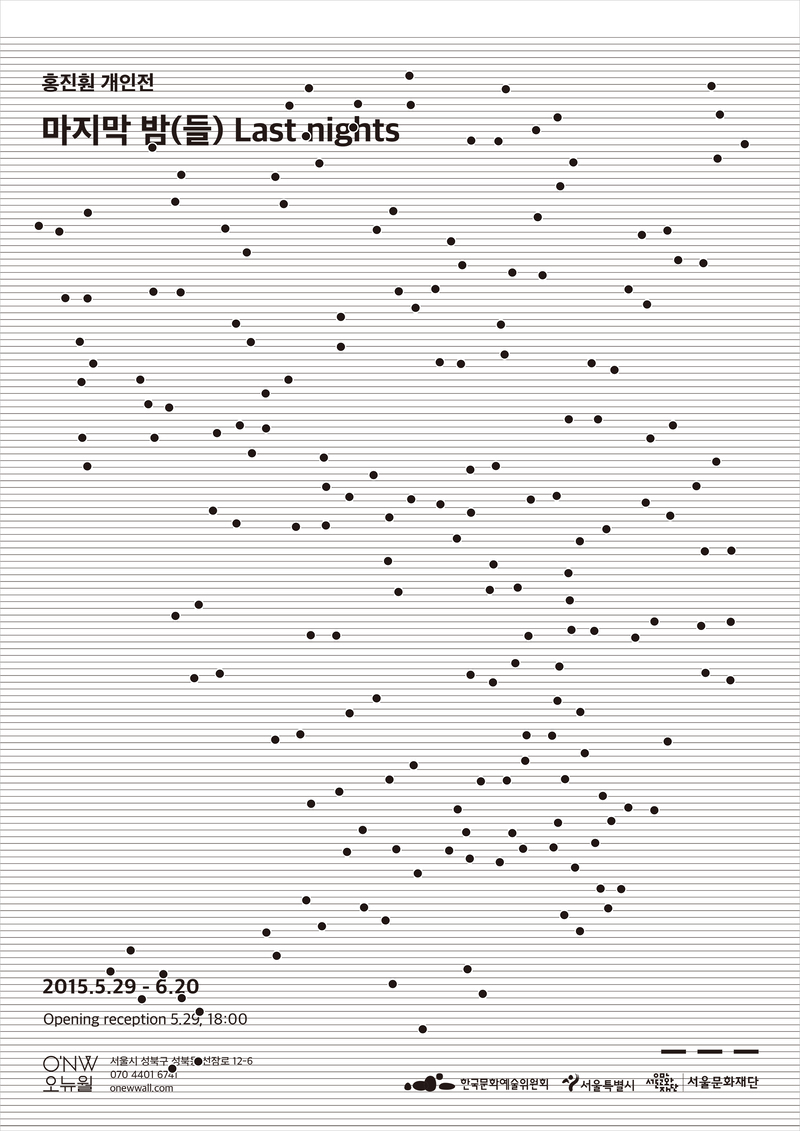
Thus, in 《Write Protect Mode》, he indirectly evokes the construction of the U.S. military base in Daechuri, Pyeongtaek, through the strange new town built in Pyeongtaek; in 《Last nights》, he obliquely metaphorizes the distress signals that may have been sent from the Sewol ferry through the lights of expressway service areas where speed briefly comes to a halt.
The reason he commemorates not a single night but nights in 《Last nights》 is that nights—symbols of stopping, healing, ambiguity, resistance, and fear—are themselves infinitely recurring times and landscapes, and thus “things.” Paradoxically, the more he emphasizes landscape and time, the more clearly the absence of those who ought to have appeared there emerges, like ghosts.
This sense of absence becomes even more pronounced in ‘Nobody answer’, in which Hong Jin-hwon documented the school-trip route that the Danwon High School students aboard the Sewol ferry had been meant to take, as though searching for the final destination of the silence that answered their distress signal. Judging from his usual statements and his actions beyond photography, the Sewol ferry disaster was a tragedy of a different weight for him as well.
At the time, countless photographers questioned the role of photography in the face of a disaster that could not be represented. Because object-dependent photography has no way to prove absence itself, photographs of the lonely night sea off Jindo, the hull illuminated by bright flares, and yellow paper boats were produced again and again. It was not a single photograph that was being reproduced, but an event itself; yet the photograph that could serve as evidence revealing the substance of that event did not exist.
In fact, among the forms of everyday violence that Hong Jin-hwon resists even in defeat, few are as subtle and immense as photography itself. The history of photography is the product of a race to see faster, more precisely, and farther, and it is also one of the most unilateral forms of attack, seizing its subject without allowing time for defense. Today, the random circulation of photographs amplifies that violence further.
His framing moves increasingly farther away from spectacle because nothing is more spectacular than the invisible power that produces violent situations, and at the same time because this movement is a reaction against the violent mode of operation inherent in photography itself. At times, photography and power move as though they were one body.
Through flat, seemingly futile images that are neither documentation nor accusation, he attempts to create fissures in this operation. Precisely because the flat and indifferent are closer to everyday life, they can endure longer with less agitation, with greater persistence and flexibility.
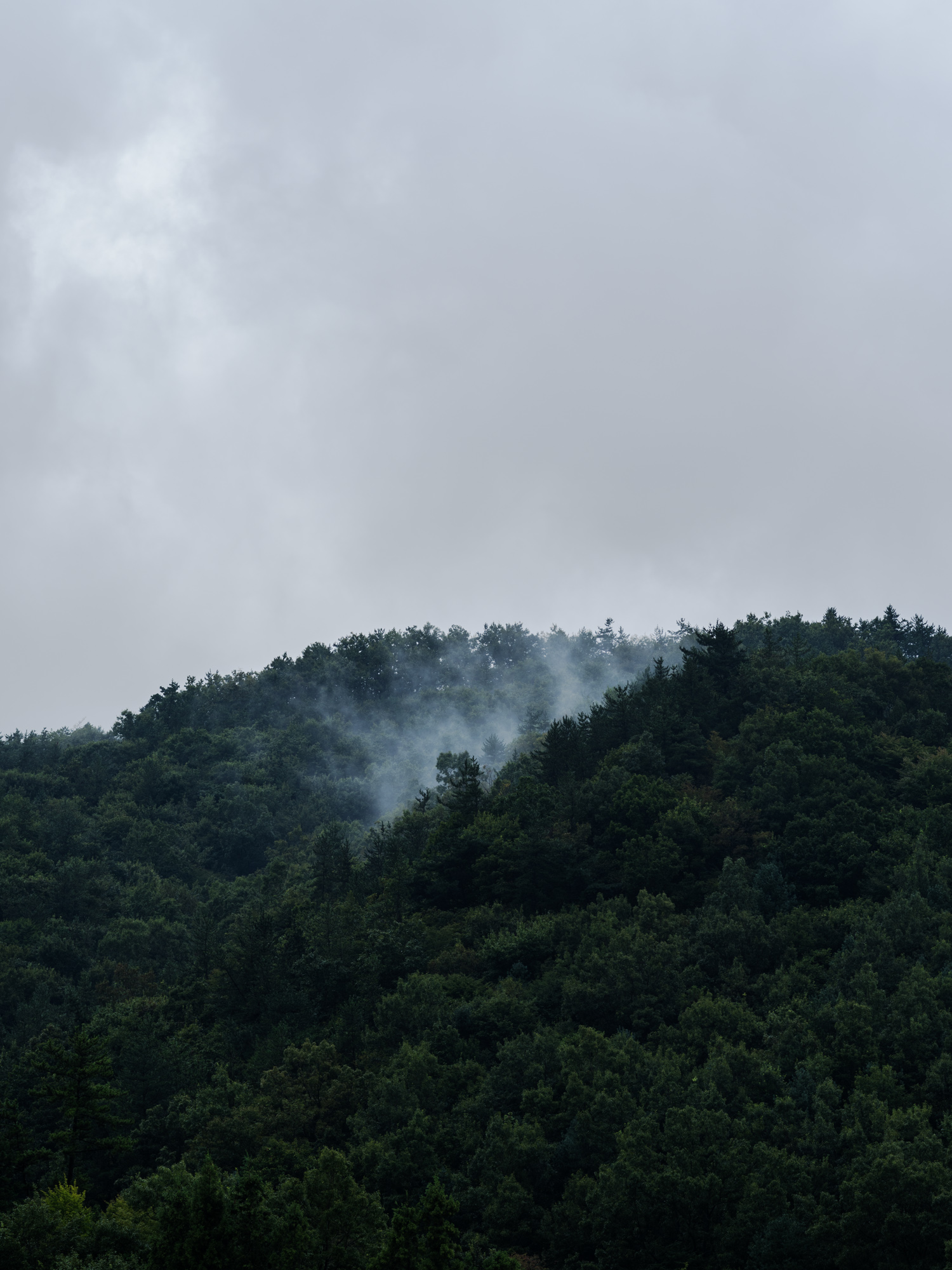
In ‘Nobody answer’, the places in Jeju that the students of the Sewol ferry should have reached are as quiet and composed as the nighttime landscapes of expressway service areas. The weather used as the backdrop for the photographs has become much more overcast and heavy than in his earlier series.
Along with this silence, the theme park the students were meant to visit feels uneasy, as though one were looking at a scene from 《Temporary Landscapes》, while the red flowers blooming in the Hallim Park botanical garden connect, as if through a hyperlink, to the exotic yet familiar landscapes of the Okinawan forest in 《Crimson, Green》.
Data Algorithms as a Drop
How is it possible for the images presented by Hong Jin-hwon to evoke scenes beyond the subjects visible on their surfaces? It is often said that we interpret images through a body of shared learning internalized by a society, or, conversely, that we respond to them through our own highly subjective experiences and wounds.
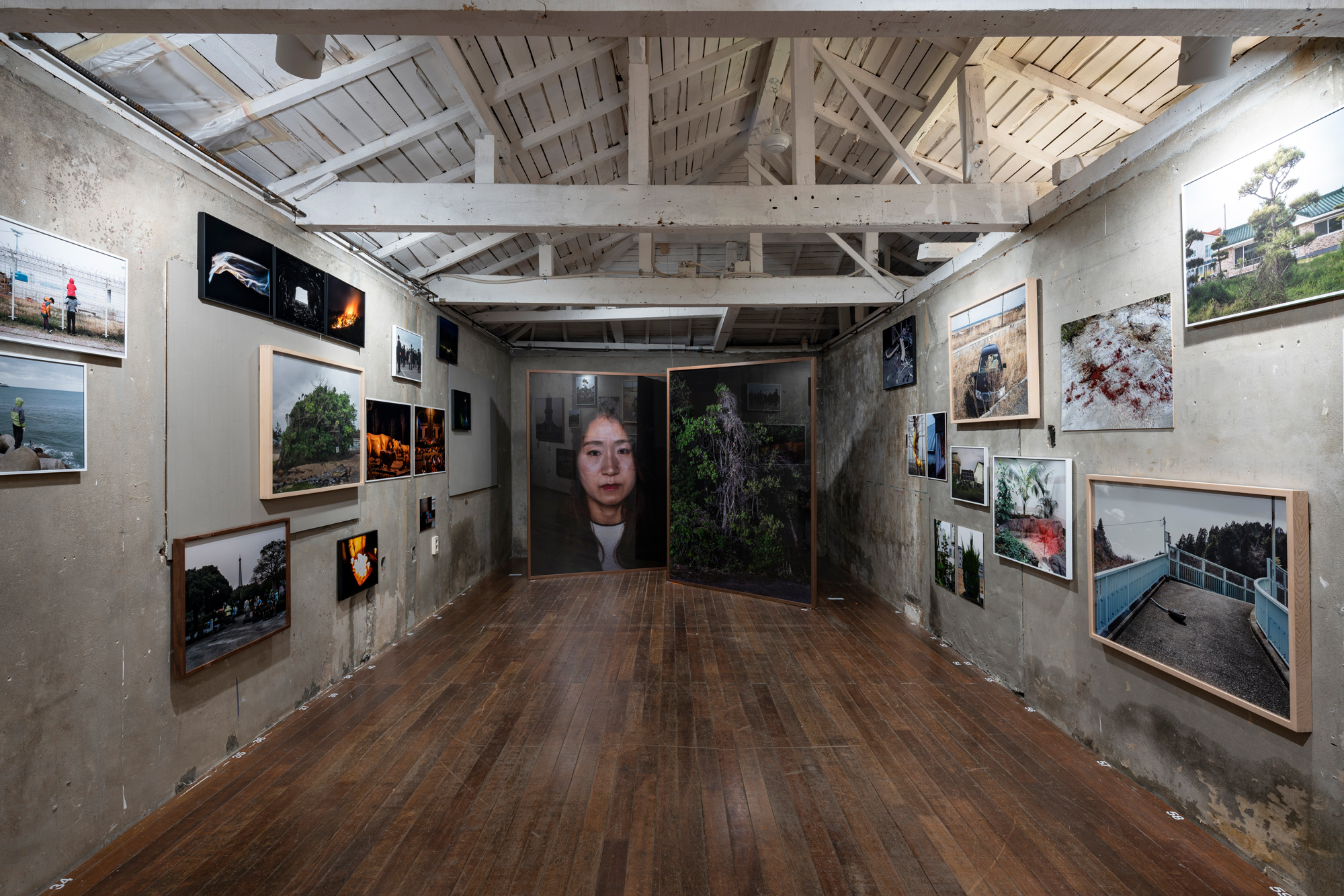
In “A Conversation on Photography,” Ahn Sohyun and Hong Jin-hwon carefully steer clear of these two extremes—the semiotic and phenomenological properties of photography—as they narrow down their respective positions toward the medium. Perhaps the exhibition 《Random Forest》 should be understood as a process of searching for an answer to this question.
According to the curator’s text, the exhibition title refers to a method in machine learning that increases communicative effectiveness through quantitative growth and chance without imposing constraints. In other words, the name likens the process of randomly diversifying the types of trees in an algorithm and increasing their number to achieve greater coherence to individual trees coming together to form a forest.
Until now, Hong Jin-hwon has resisted the correlation between photography and the speed of information gathering by distancing himself from the indexicality of images and delaying the moment at which an event is recognized. With 《Random Forest》, however, he goes further by treating photographs as random data, thereby eliminating the very compulsion toward informativeness that continually attaches itself to photography.
Once information is removed, the ethical compulsions that adhere according to informational value are also loosened. The moment photography escapes this ethical frame, its interpretation becomes far freer. Hong dismantles even photographs previously bound together as series into individual images, retrieving photographs stored on his hard drive, turning them into discrete pieces of data, and attempting to recombine them.
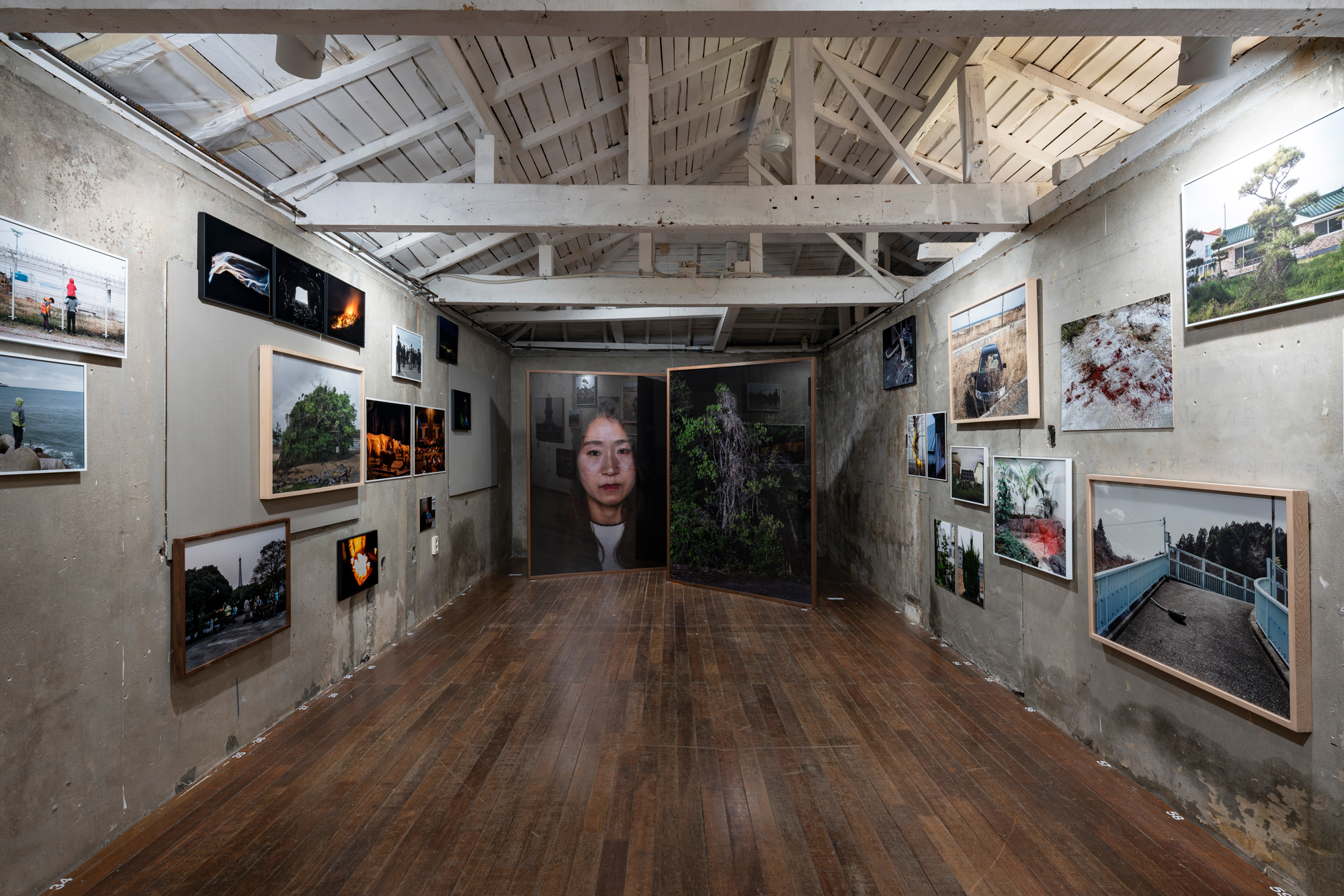
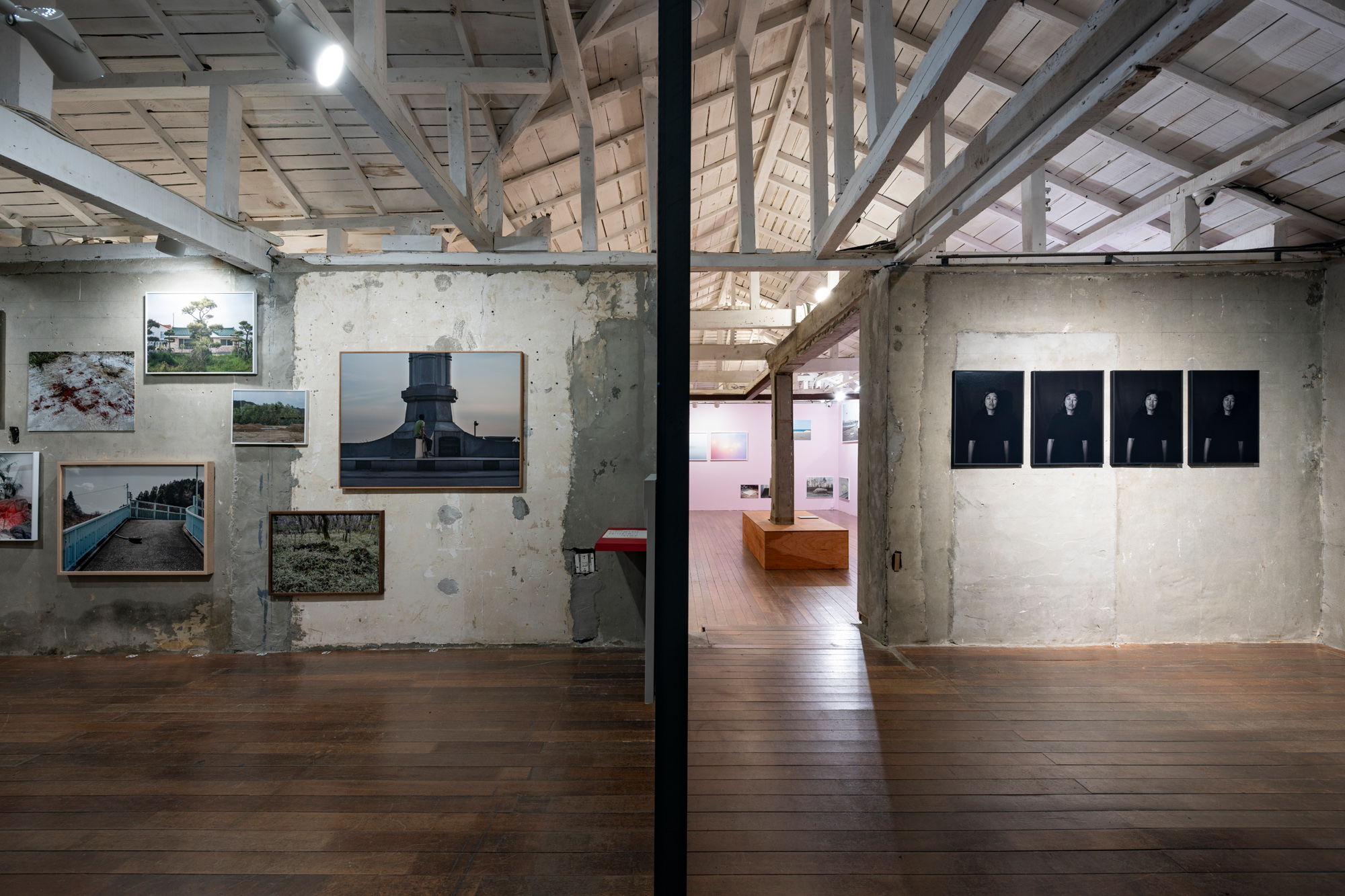
His algorithm resembles a card game: some images are juxtaposed through similarities in color and formal qualities, while others are arranged to maximize an entirely inscrutable ambiguity. As they interfere with and collide against one another in the exhibition space, they ultimately connect like the subterranean world in the film Avatar, forming an organic allegory.
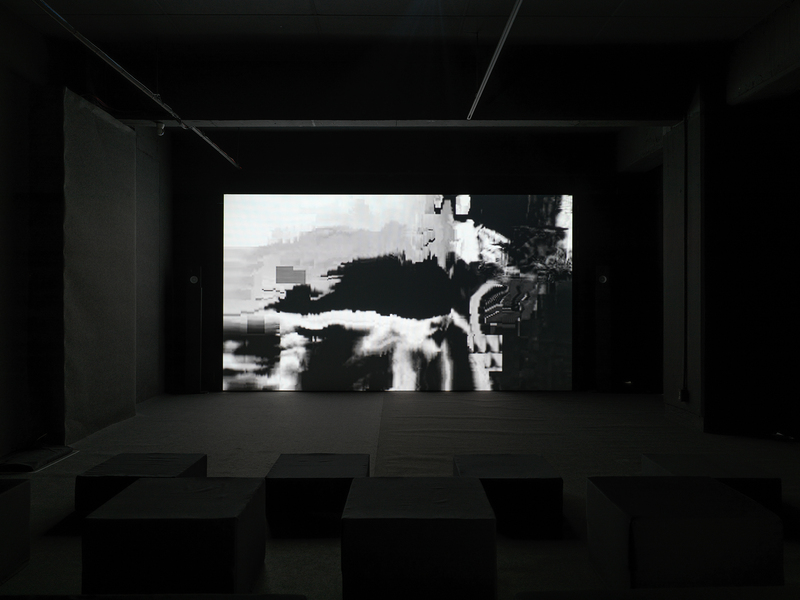
Of course, these processes of connection are not always seamless; at times they crackle like static-ridden radio signals, take intermittent stretches of time as though searching through distant memories, or generate meanings that are completely unexpected.
The default value of the data established in this exhibition cannot be said to be zero. The three rooms of varying sizes each offer clues to the exhibition at different levels, while the digital data that appear to have been selected at random have in fact been chosen through the experienced selection process of an artist highly sensitive to composition, producing a consistent formal aesthetic.
Nevertheless, the exhibition’s nonlinear structure leaves open the possibility for viewers to create new algorithms of interpretation for themselves. In 《Random Forest》, both the way Hong Jin-hwon handles photographs and the way the exhibition presents them realize an intriguing curatorial process by reconstructing time and events and expanding the meanings among images. This is also why I would rather call Hong Jin-hwon a photographer as curator than a collector of images.