CHE Onejoon has explored the scars left by division, modernization, and military dictatorship that run through Korea’s modern history, primarily through documentary photography and film. This year, he was selected for SINAP (Sindoh Artist Support Program) and held his solo exhibition 《InFormation》 at Sindoh Culture Space.
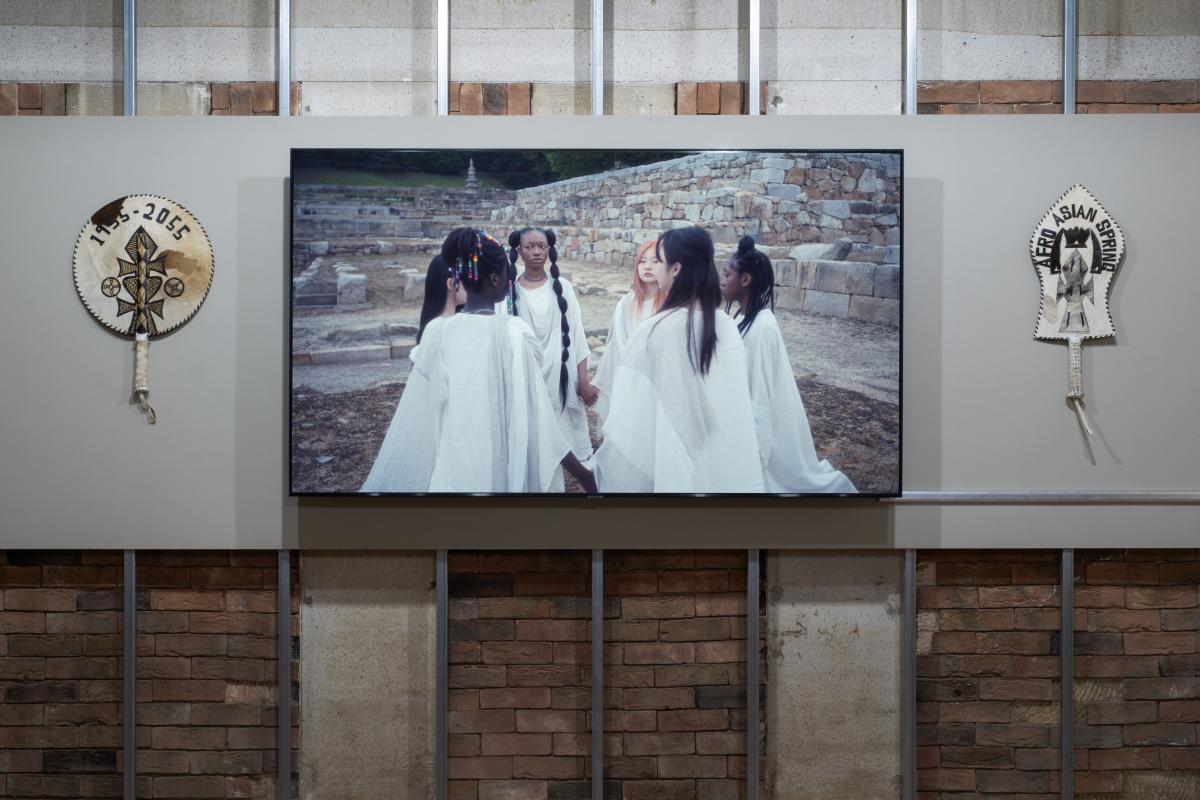
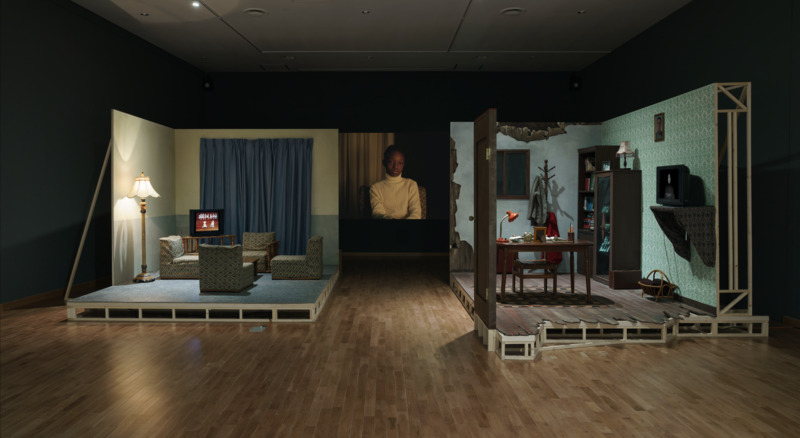
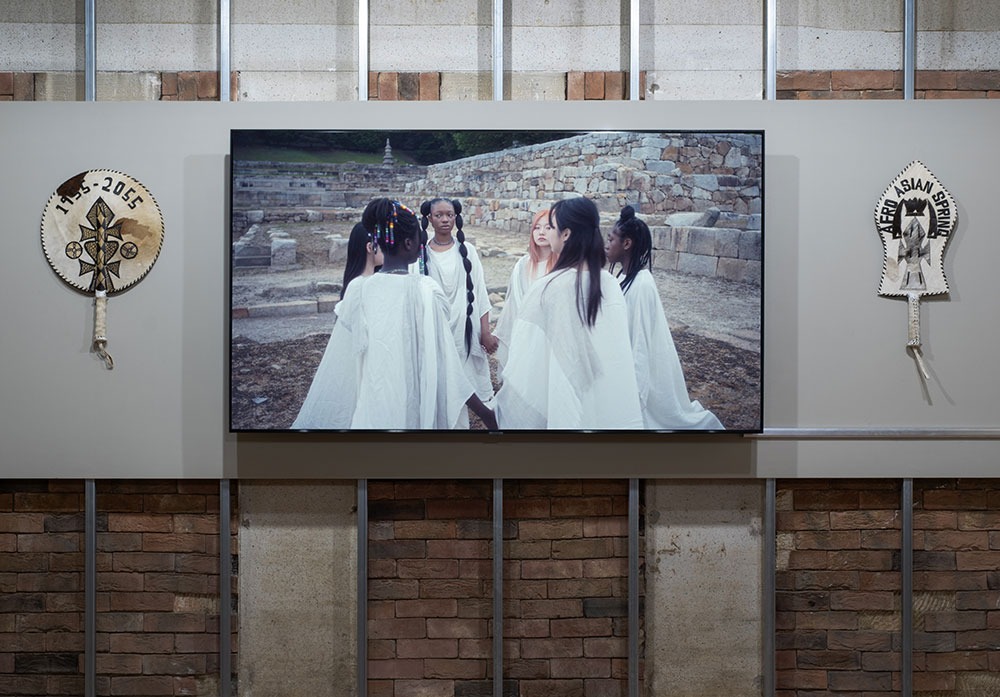
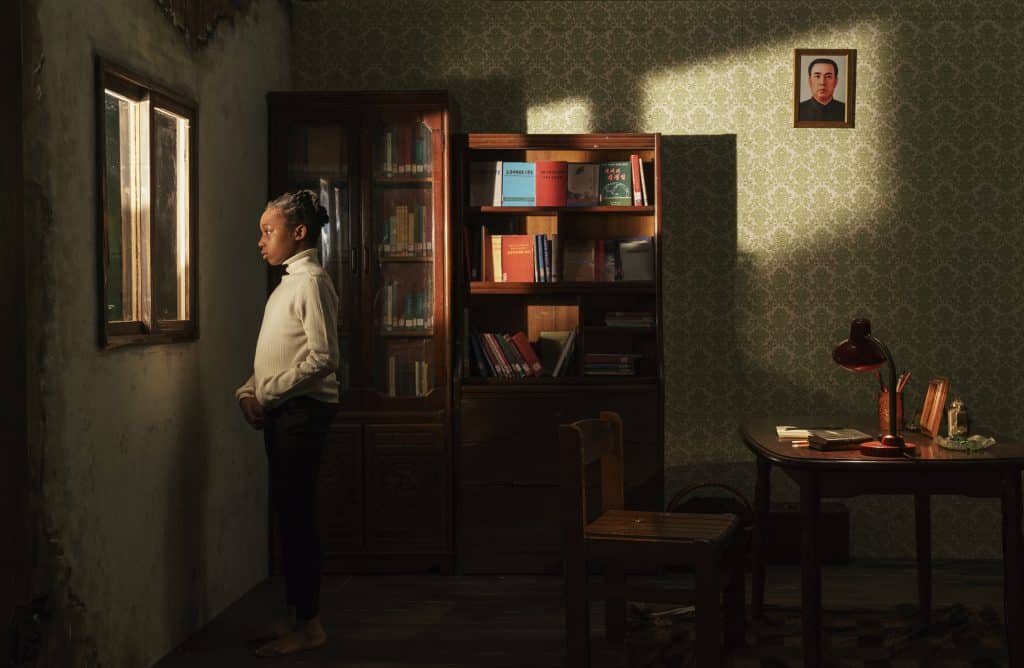
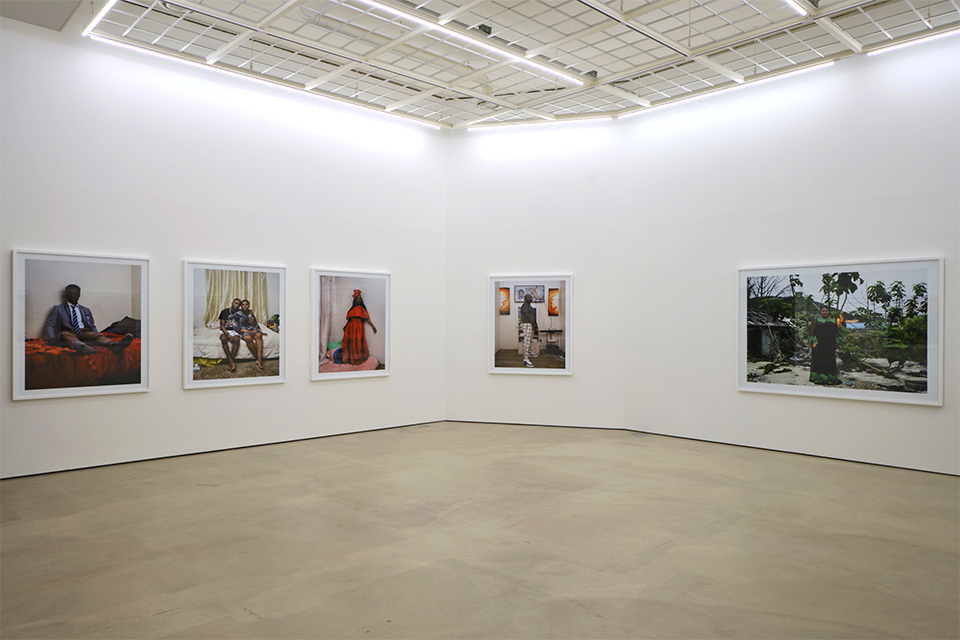
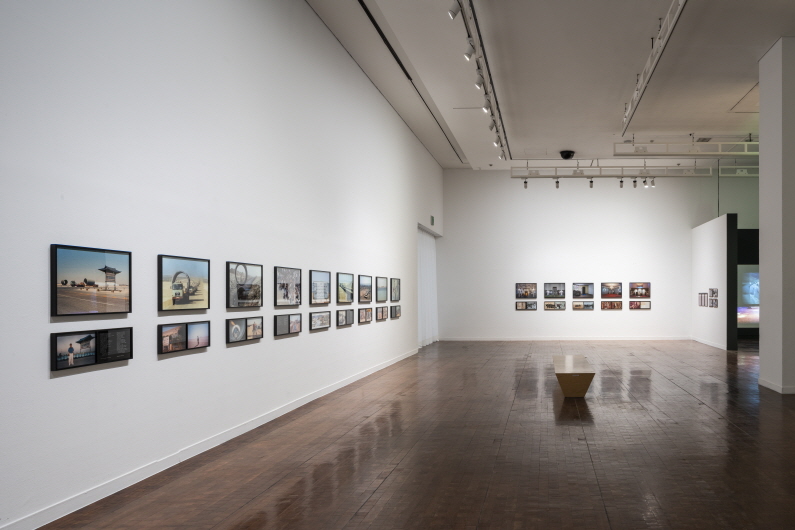
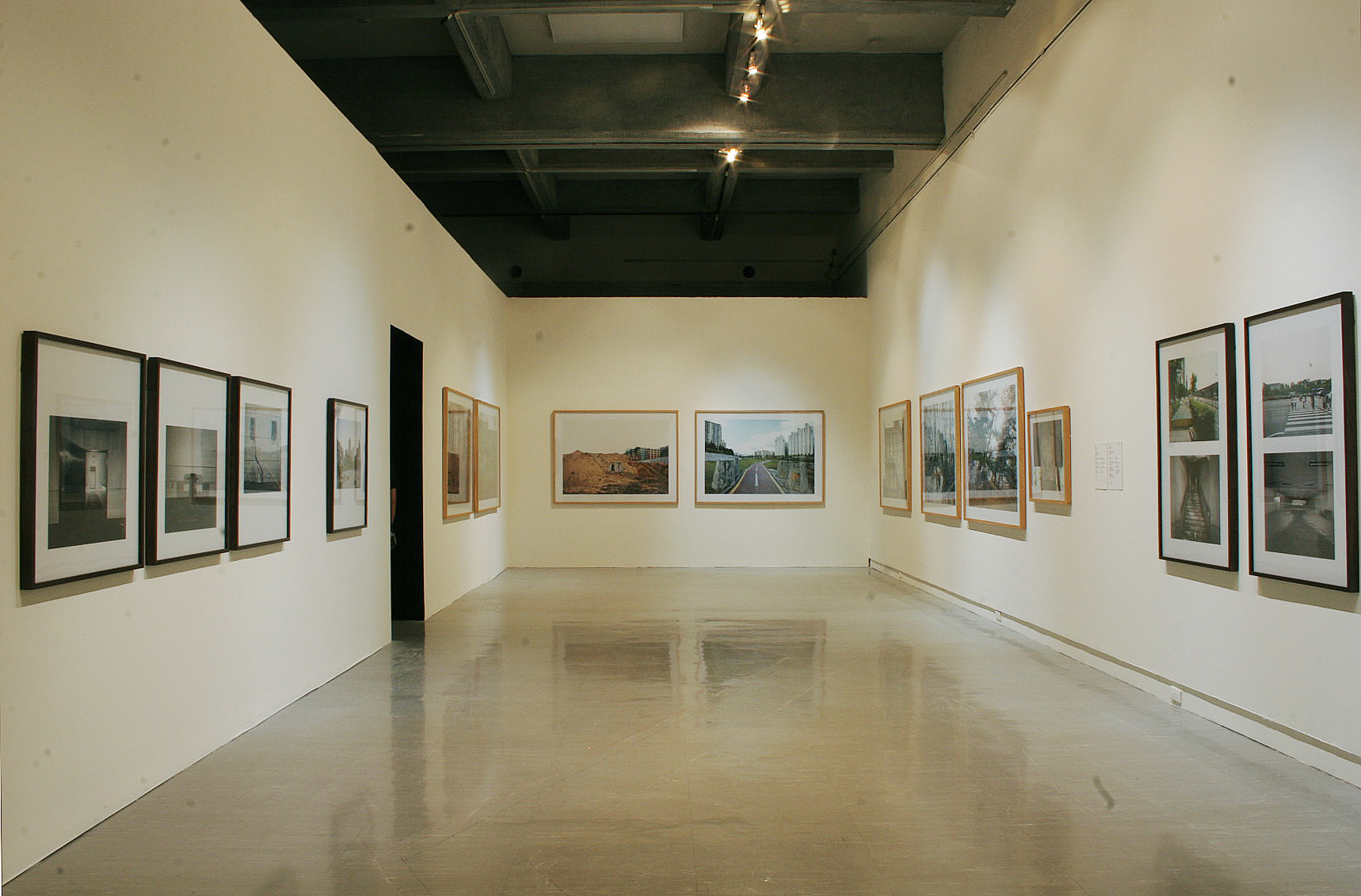
《InFormation》 brought together, in small groupings, most of the series CHE had developed over the past ten years, making the exhibition resemble a compact retrospective. Although CHE’s series were installed with ample space between them, the highly condensed content of each work made the exhibition space feel almost completely filled.
After viewing CHE Onejoon’s exhibition and reflecting on his works for several days, I came across Heo Daechan’s “InFormation In Formation” through the editorial team of Public Art. Heo’s essay showed clear signs of an effort to survey 《InFormation》 as a whole, almost like an aerial photograph, while also identifying the points within it that deserved particular attention.
What I found somewhat regrettable, however, was that in attempting to encompass CHE Onejoon’s extensive body of series within a limited amount of space, the essay was unable to move far beyond a general overview. This sense of limitation led me to think that a broader field of interpretation might become possible if another text could supplement the areas Heo’s essay had not reached.
Accordingly, this essay takes the form of a brief consideration of points that were either not addressed in “InFormation In Formation” or that seemed to require further elaboration. In the process, I also referred, when necessary, to writings by other critics collected on CHE Onejoon’s blog.
Heo Daechan observed that CHE Onejoon’s works “capture scenes that, due to political or social issues, have today been isolated, abandoned, forgotten, and placed outside our field of vision.”
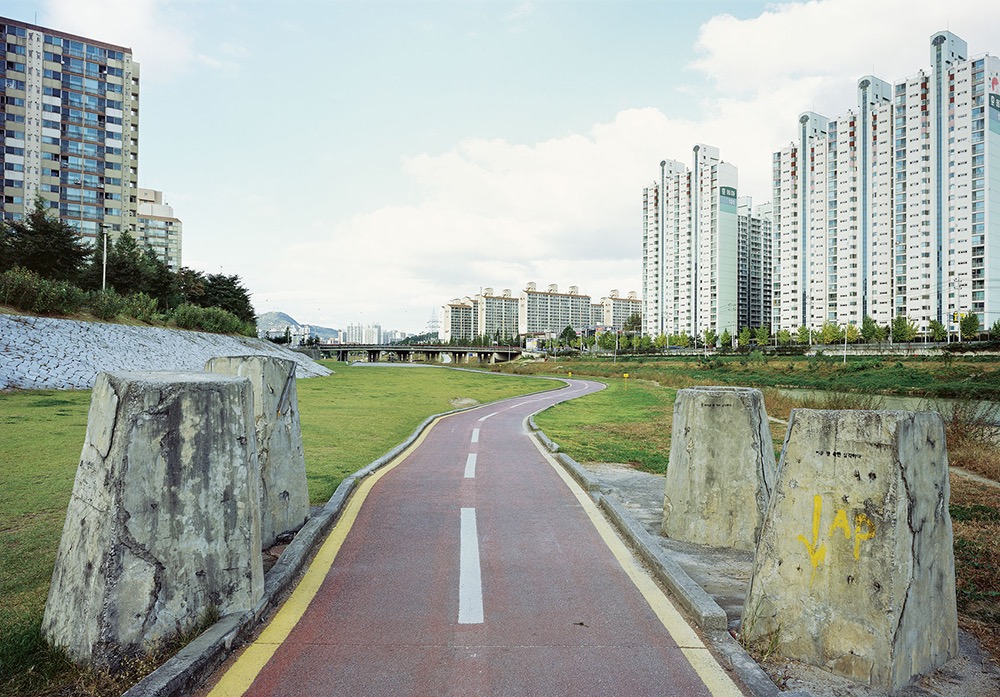
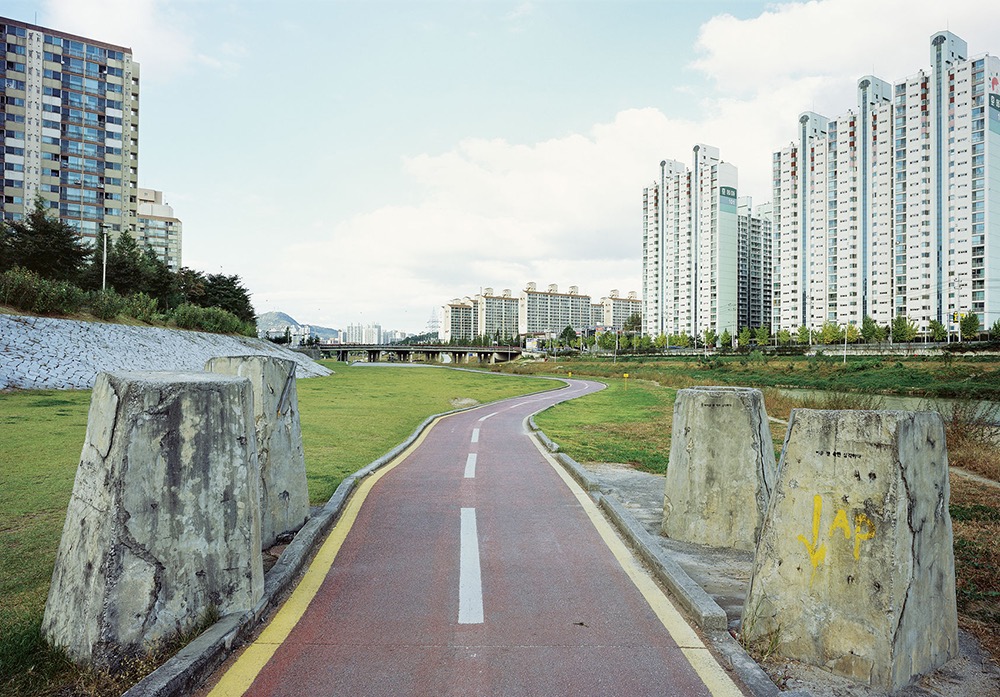
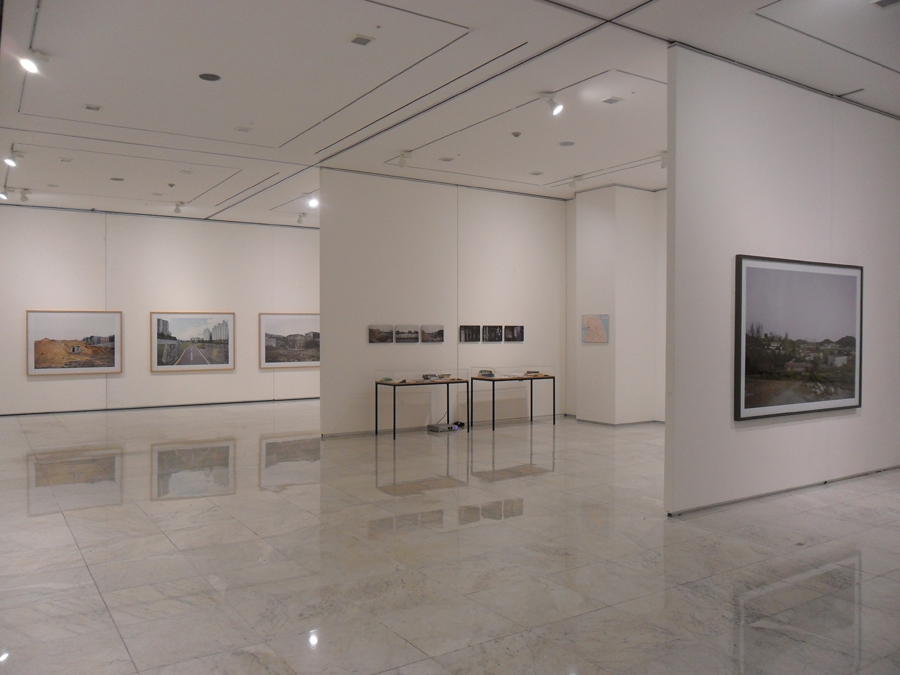
This is an assessment that is easy to agree with when one carefully examines photographs such as 'Townhouse', which depicts the desolate landscapes of former U.S. military sites, or the bunkers in 'Unfinished Project_Island' and 'Undercooled', and the former Korean Central Intelligence Agency building in 'KCIA'.
In fact, the acceleration of democratization and market liberalism that swept through Korean society, which had yet to resolve the task of becoming a unified nation-state, naturally turned spaces of the Cold War era into ruins and surplus.
Thus, Heo’s description of them as “events and places opened up according to a different logic from before and rendered numb” can be understood as referring to a situation in which the logics of nationalism, modernization, and national security dominant in the 1960s and 1970s were replaced after 1987 by those of democratization and market liberalism.
Korea filtered out most of the by-products of the Cold War through the sieve of democratization and market liberalism, but filtering out these remnants did not necessarily lead directly to a better future. As every sphere of society has become swept up in the extreme expansion of economic value, Korean society has developed a pervasive tendency to dismantle even the safety nets intended to sustain a secure society whenever the opportunity arises.
Under these conditions, large numbers of people have become economic animals within a society turned into an arena of survival of the fittest, sinking ever deeper into isolation. We therefore continue to stagger without finding our balance atop ruins that have lost their equilibrium and become dazzling only on the surface.
These dazzling ruins resonate with the by-products of the Cold War that CHE Onejoon has scraped from the filter, transforming them into an apocalyptic present. For example, this apocalyptic present appears in photographs from the 'Undercooled' series, where artificial wartime obstacles and apartment complexes quietly extend side by side toward a vanishing point, or in images of bunkers left desolately abandoned at the edge of New Town development sites.
Does the heavy darkness running through CHE Onejoon’s photographs arise from the fact that his works primarily deal with empty spaces from which human beings—the source of ideology, conflict, and violence—have been excised? Certainly, photographs emptied of human figures contribute to the objectification of space.
Yet, insofar as CHE Onejoon’s photographs stimulate certain sensations in the viewer, it seems that the objectification of the creative process cannot completely prevent the artist’s interpretations or emotions from being overlaid onto the space and the photograph.
Heo Daechan described the empty spaces that draw CHE Onejoon’s attention as “coldly vacant, with the visual elements composing the space arranged in a balanced order … so that they seem to be presented to us as materials rather than assertions,” while Moon Youngmin remarked that CHE Onejoon’s photographs “call to mind a taxonomy of emptied spaces imbued with political and historical characteristics.”
Kang Su-jeong has likewise observed that CHE Onejoon “has consistently captured heavy and forceful subjects through a documentary approach with a dry and cold gaze.” Taking these views into account, CHE Onejoon’s works can be understood as objective materials rather than didactic assertions by the artist, calling forth historical memories that have slipped outside our field of vision and, further, offering clues for reorganizing a fragmented present.
But how can CHE Onejoon’s works, presented as objective materials, call forth historical memory and create room for reconstructing a divided present? The reason lies in the fact that CHE did not remain at the level of objectively recording reality, but also considered a sensory dimension intertwined with formal qualities. Sensation connected to form operates as a metaphor that goes beyond the transmission of information.
It also suggests the possibility of drawing fragments of historical memory scattered throughout our lives to the surface and momentarily overlapping them with the present. Yet when a particular space is represented through the photographic medium, the possibilities for varying its formal qualities are inevitably limited by the distinctive history and texture accumulated within that space.
It is much like the way photographs by photographers immersed in the field often reveal their individual distinctiveness only when discussed in terms of microscopic formal differences. For this reason, Ban Yijung’s assessment of CHE Onejoon’s photographs deserves careful consideration: “Should we read these sites of renovation newly illuminated by the artist with documentary seriousness, or accept them as repetitions of a typological image? When a problematic space is repeatedly captured within a formal composition, viewers often encounter this dilemma.”
Because CHE Onejoon’s photographs fix problematic spaces, detached from a particular moment in time, onto a flat surface through the artist’s intervention, they are results in which the history and texture contained within those spaces have been fragmentarily compressed. Even if a single photograph addresses a space with strong social specificity on the basis of objectivity and sensation, its potential to provide viewers holding diverse positions with new points of departure for thought is not especially great.
This limitation can be partially compensated for by treating photographs as a series, yet a photographic series is ultimately a bundle of different moments gathered together and therefore remains an outcome of fragmentary compression. Moreover, the proliferation of photography in everyday life due to technological development also reduces the possibility that such fragmentarily compressed photographs will offer viewers a point of departure for encountering a reconfigured reality.
Thus, even if CHE Onejoon takes into account the sensory qualities associated with form in his photography, it is inevitably difficult for a photographic work on its own to engage fully with viewers and historical memory.
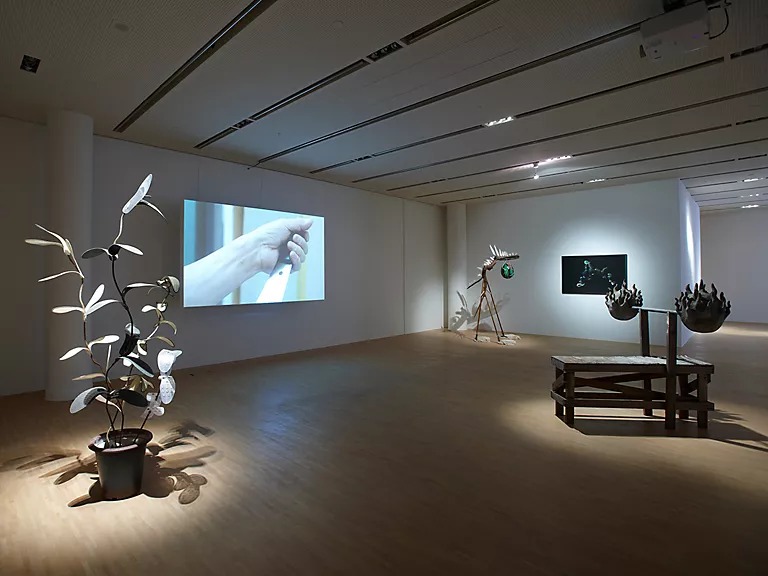
From this perspective, moving-image works in which fictional narratives are interwoven, such as Mullae (Spinning Wheel), serve to supplement areas that photography cannot encompass. In “InFormation In Formation,” Heo Daechan also drew attention to Mullae (Spinning Wheel), observing that perspectives rooted in Korean modernity became entangled with the visible and invisible histories of Mullae-dong, generating friction.
The history of Mullae-dong to which Heo refers includes the fact that the Sixth District Command bunker was the site where Major General Park Chung-hee’s May 16 military coup began, as well as the area’s designation as a steel manufacturing district that enjoyed an industrial boom until the 1980s. As for the perspectives of Korean modernity, he pointed to the persistence to this day of the logic of development epitomized by Park Chung-hee.
In fact, the economic growth of the Yushin dictatorship era has been continually mythologized by drawing upon the deepening economic crises that followed democratization, even though that growth was achieved through the unilateral sacrifice of democracy and workers. Within this trajectory, nostalgia for Park Chung-hee materialized in the election of Park Geun-hye as president.
In recent decades, Mullae-dong declined after the 1980s as the industrial structure was reorganized, but artists filled the spaces left behind, giving the area a local character in which industry and art coexist. Accordingly, Mullae (Spinning Wheel) interweaves interviews with metalworkers and artists. While the interviews with technicians in Mullae (Spinning Wheel) are not fictional, the stories involving the sculptor and the director were staged by CHE Onejoon.
With the director’s help, the sculptor succeeds in melting down a bust of Park Chung-hee at a metal workshop in Mullae-dong and turning it into a handgun. For reference, neither the sculptor nor the director knows that the bust represents Park Chung-hee, because it merely depicts a handsome man and does not resemble him. Nevertheless, we are able to identify the bust as Park Chung-hee because it bears his calligraphic inscription, “Modernization of the Fatherland.”
The sculptor who transforms the bust into a handgun conducts a firing test on a mountain containing abandoned military facilities while the director watches, but the gun explodes and he collapses. After the accident, the director returns to the sculptor’s studio and discovers that the bust of Park Chung-hee, which had been melted down and turned into a handgun, has reappeared.
The return of Park Chung-hee’s statue intersects with the Park Chung-hee bust and bunker in Mullae Park, as well as two elderly men peacefully playing Taegukgi Hwinalrimyeo, metaphorically suggesting that Park Chung-hee’s Yushin dictatorship continues to haunt Korean society like a ghost in the present.
Centered on the space of Mullae-dong and mixing reality with fiction, CHE Onejoon’s Mullae (Spinning Wheel) still places importance on neutrality, yet the inclusion of a fictional narrative means that the artist’s subjectivity intervenes more strongly than in his photographic works. The fictional narrative in Mullae (Spinning Wheel) should be understood not as a device for distorting reality, but as one for relocating neglected or disregarded historical memories within the present.
Even documentary moving images without fictional narratives are ultimately products of representation and can never become the objects they record themselves. Just as Robert Flaherty, director of Nanook of the North, used fiction in order to represent Inuit life more effectively, Mullae (Spinning Wheel) should likewise be understood as employing a fictional narrative to reconstruct reality more effectively. This fictionality resonates with the photographic series and staged collections, increasing the possibility that viewers may reorganize historical memory on the horizon of the present.
Although Park Chung-hee’s Yushin dictatorship justified the destruction of democracy and state violence through anti-communist ideology, it has also been evaluated as a decision made for national salvation in order to achieve efficient economic development centered on heavy industry. Amid conflicting assessments of Park Chung-hee, the light and shadow of the Yushin dictatorship remain with us, even after the Cold War era, as unresolved aftereffects.
Could 《InFormation》 have been exempt from these aftereffects? According to the artist, Sindoh vaguely indicated that it was difficult to promote the exhibition because of the content of the works. In fact, among the three artists selected for SINAP, only CHE Onejoon’s 《InFormation》 is absent from the Sindoh Culture Space website.
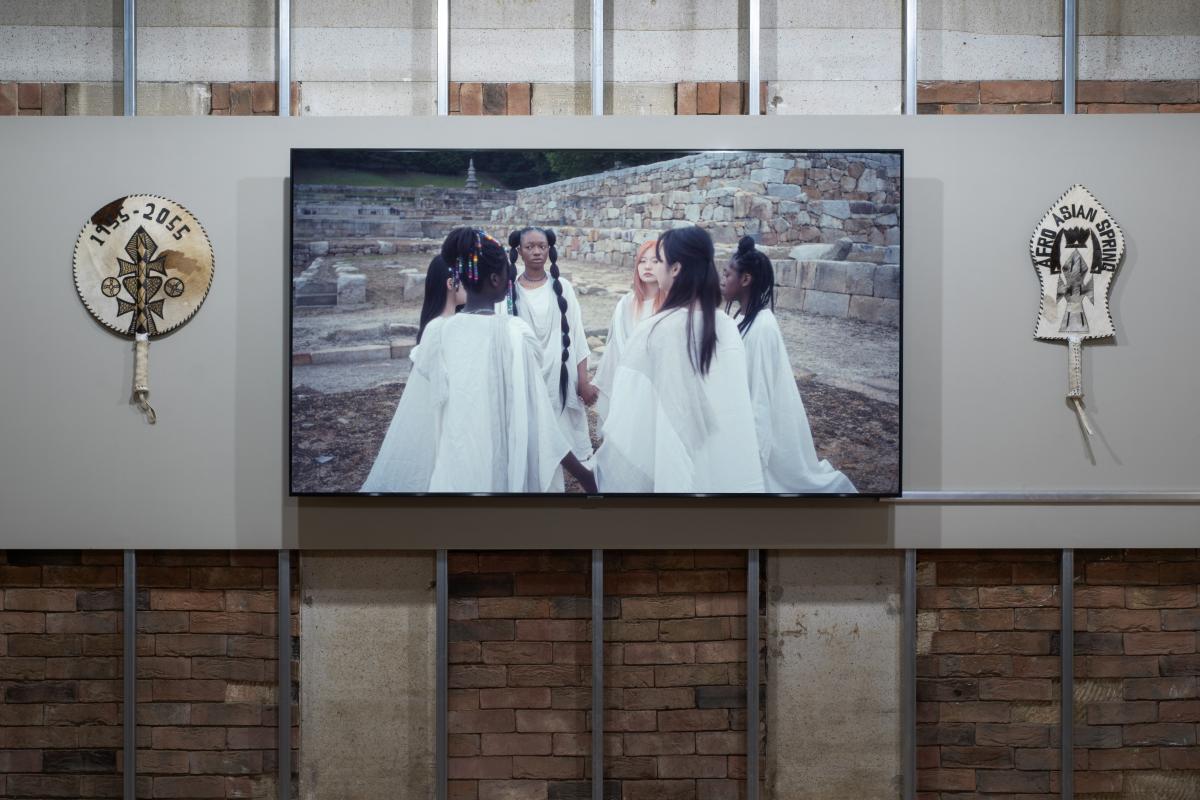
Moreover, on the day I visited Sindoh Culture Space, the archival video Mansudae Master Class was not playing at all, and it appears that the video was also turned off on other days. Mansudae Master Class shows how the political methodologies and cultures sustaining the dictatorships of South and North Korea operate on the basis of collectivism and nationalism.
This homogeneity is also connected to the way ideological propaganda materials from the South and North are arranged along a long vertical table at the center of the exhibition space so that they gradually intermingle. Mansudae Master Class argues that although Kim Il-sung and Park Chung-hee stood in ideological opposition, there was nevertheless little difference between them in aspects other than ideology.
Even if Mansudae Master Class, which overlaps Park Chung-hee and Kim Il-sung within the same context, guarantees a degree of objectivity, it can still readily be treated as subversive today, when the light and shadow of the Yushin dictatorship remain unresolved aftereffects. Furthermore, if Mansudae Master Class is screened at a company such as Sindoh, which maintained close ties with Park Chung-hee and received the Saemaul Medal, it is only natural that management would feel uncomfortable.
In order for us to gradually overcome the aftereffects of the Yushin dictatorship, we need, as Heo Daechan puts it, “an opportunity to view the environment and historical memories of the time from a different perspective.” And 《InFormation》 provided at least Sindoh employees with such an opportunity.
Yet in an era in which Park Geun-hye became president through the extreme sentimentalism surrounding “the daughter of His Excellency” and the continuing economic failures following democratic administrations, the Yushin dictatorship has become more than an unresolved aftereffect; it has become a severe illness. Reorganizing historical memory and confronting the present is never an easy task.
The subtle conflict between Sindoh and CHE Onejoon surrounding the presentation of 《InFormation》 repeatedly demonstrated this difficulty. Human beings can grow only in proportion to the weight of life they have endured. The same is true of society. If the works of artists such as CHE Onejoon cannot circulate in their entirety, that society merely abandons the possibility of moving toward a better future and allows the illness to worsen.