It has been quite some time since we regularly looked at paper atlases, but today we can much more frequently and easily open an application called a “map” in the palm of our hand and check the shortest distance or fastest route to an unfamiliar destination.
While this certainly offers tremendous convenience, no matter how long I look at a map, measurements of time and distance do not necessarily give me a tangible sense of how far I will actually move.
Artist Kim Jung Eun layers this bodily sense onto the map. Using maps as a foundation, she has transformed records of her own physical movements into works through diverse methods including recording, perception, drawing, extraction, modeling, and kinetics.
Across exhibitions incorporating these approaches, “space,” “memory,” “place,” and “movement” have served as major keywords. The term that has appeared repeatedly in her exhibition titles and encompasses her practice as a whole is “mapping.”
Mapping basically means making a map, but in the context of graphic data it can also refer to applying texture or an image onto the surface of an object, as well as to a function that corresponds values from one set to another. This range of meanings bears a certain resemblance to the forms of the artist’s work.
The difference, however, lies in the fact that her content is based on a kind of personal objectivity, and that her own body serves as the unit through which data is extracted. Reflecting this, the artist has explicitly used the term “self-mapping” in her exhibition titles.
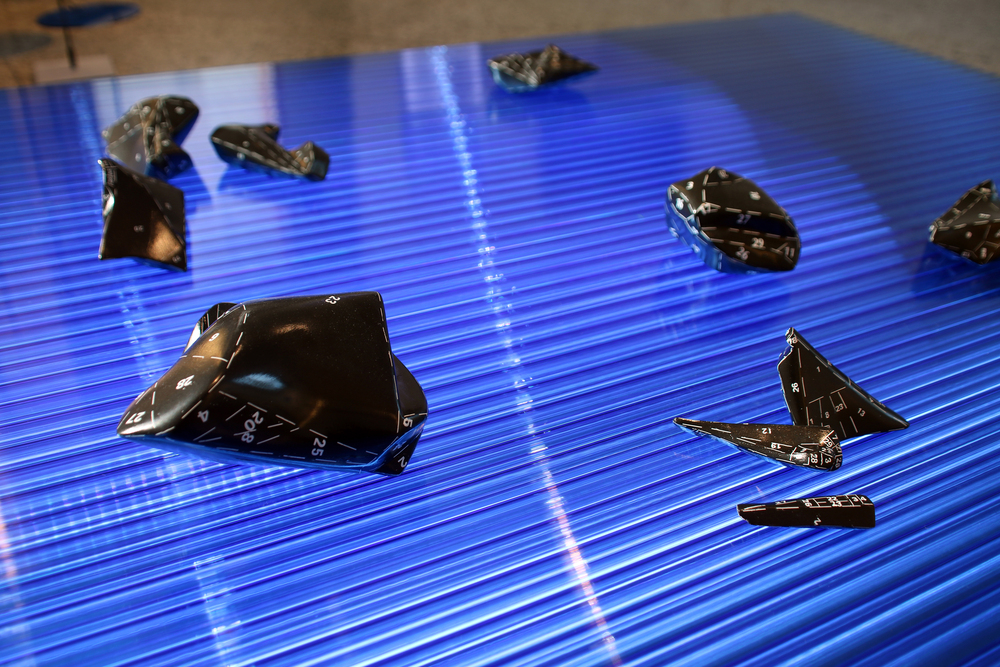
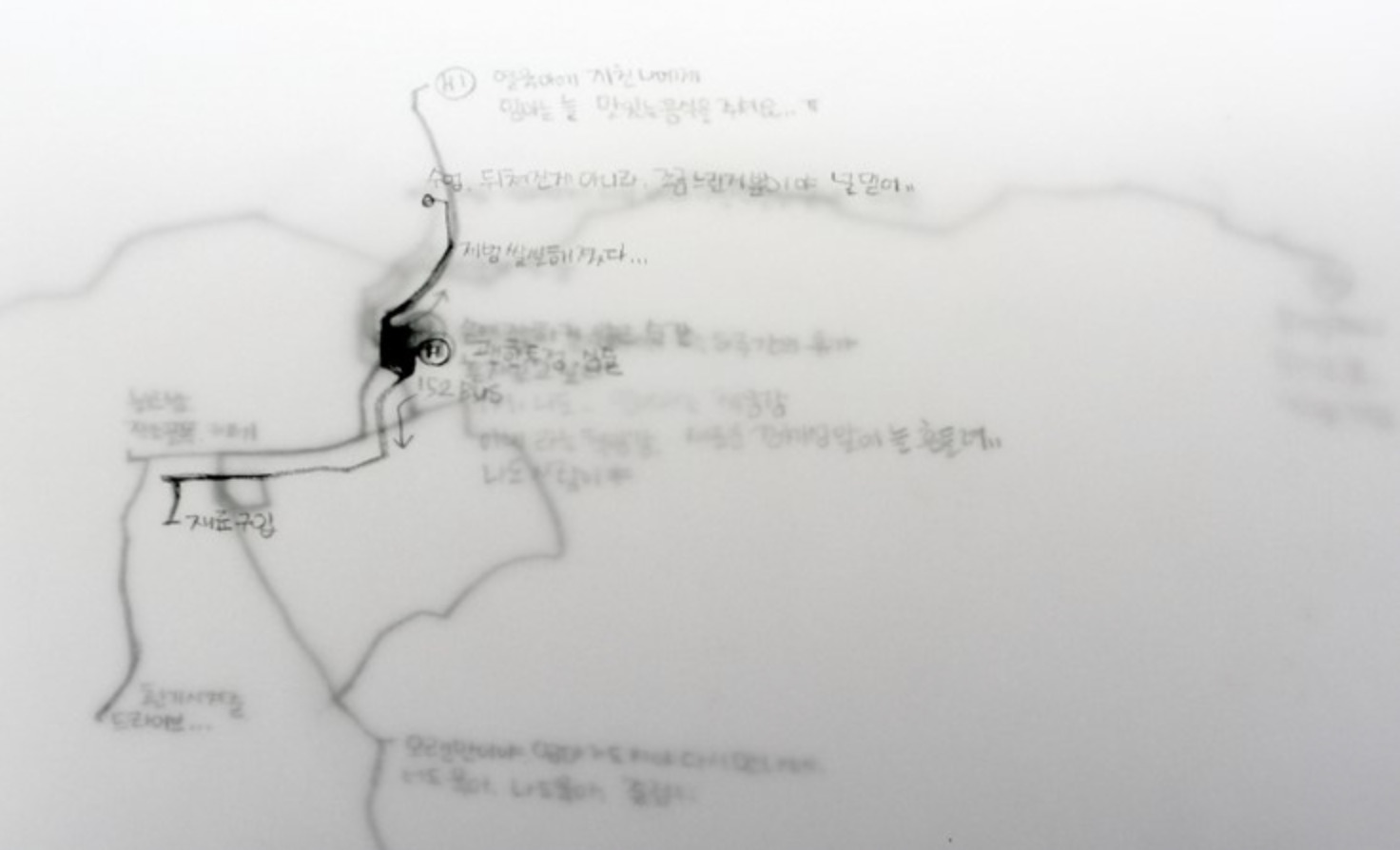
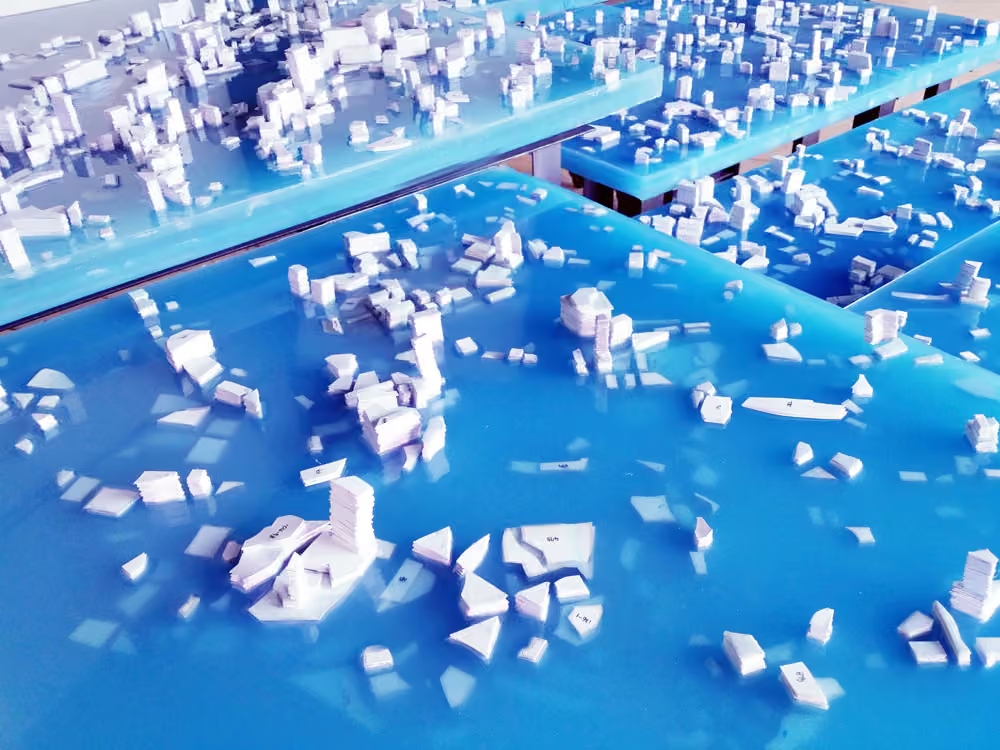
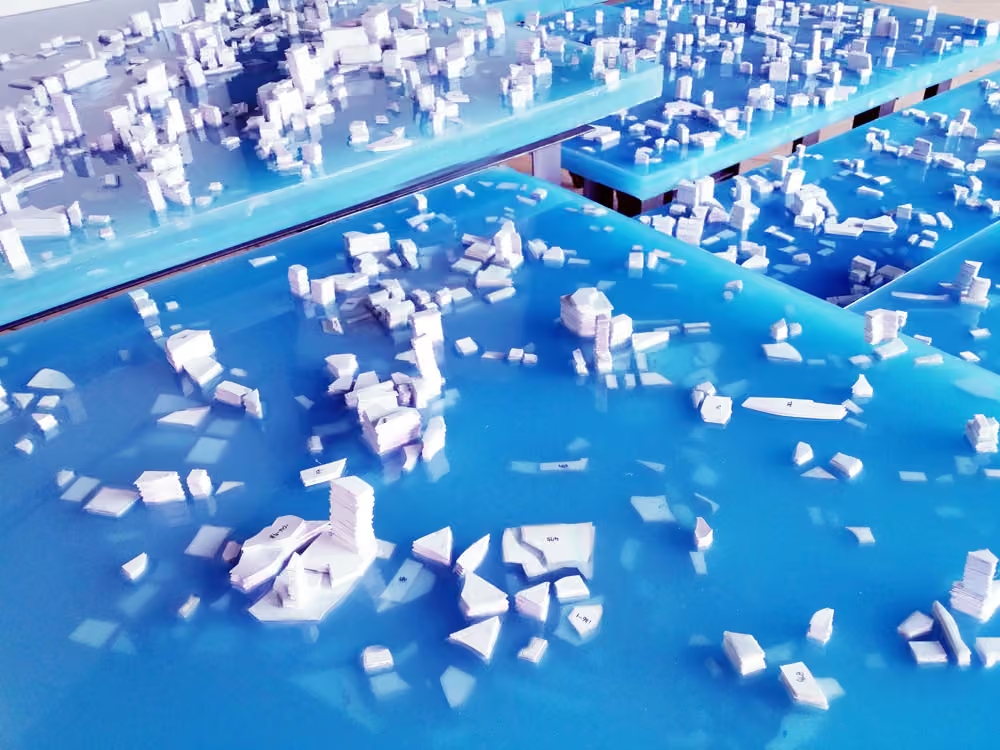
Setting the length of her own stride as the basic unit of measurement and recording the number of steps she takes, rendering buildings along a route she has chosen as small three-dimensional forms, and extracting and recording colors from specific locations are all grounded in fact while taking herself as their point of reference.
Thus, even when she walks the same distance every day, discrepancies arise in the time taken, the places where she pauses, and the number of steps she walks. Perhaps the very existence of these discrepancies is the most truthful result.
The artist has described the characteristics of her practice through Edmund Husserl’s (1859–1938) phenomenological concept of the “lifeworld.” Referring not to a world established through academic knowledge but to the world of everyday life, the term describes a world constituted according to the intentionality of consciousness rather than by the object itself.
Particularly important here is the idea that “consciousness” itself presupposes an object, and that because consciousness exists when the self exists, we come to know objects by directly relating to and experiencing those toward which our consciousness is directed.
This encourages individuals to perceive the world by actively accepting and understanding the objects reached by their own consciousness. The following excerpt from the artist’s note offers a phenomenological way of understanding her work.
“The ‘map’ is a miniature version of a social system and an important medium that reveals the relationship between the world and ourselves. Through such maps, I seek to lessen the gaps in communication that emerge between society and the individual, and between one individual and another. Maps recorded through my own direct movement reveal the city and local community as experienced through personal memory and the body. Geographic imagination added to objective indicators is an attempt to understand contemporary phenomena.”
In this way, by sharing personal experience and time through maps based on objective indicators, the artist creates a space for thinking not only about individual life but also about society and the world.
This perspective forms the central context running throughout the artist’s work and can be clearly sensed in individual pieces. Yet such conceptual consistency does not result in formal uniformity. The artist reveals maps, her own thoughts, movements, and records through a wide variety of methods.
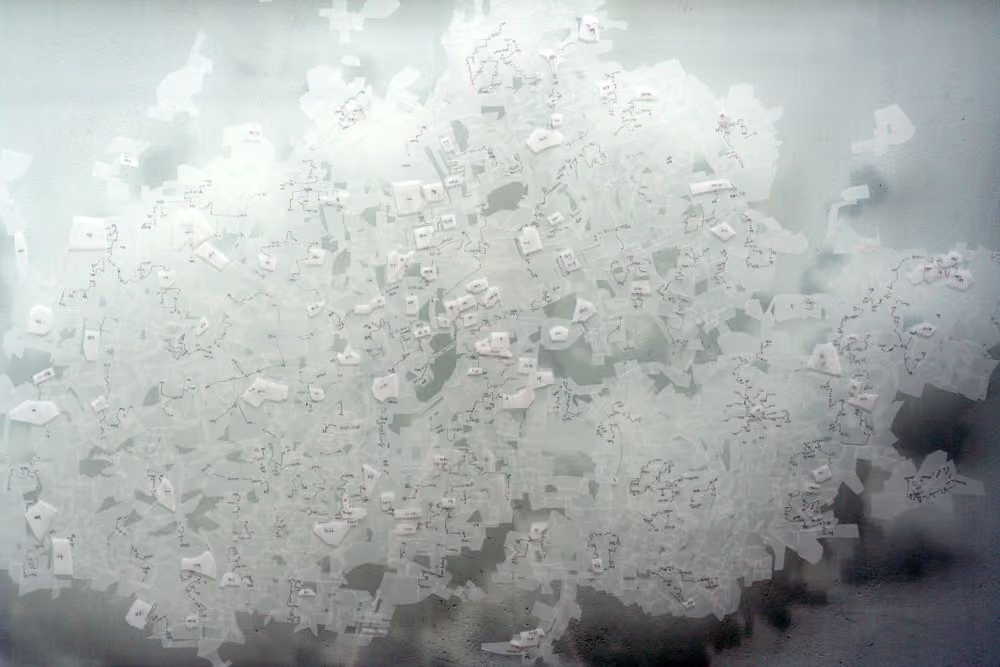
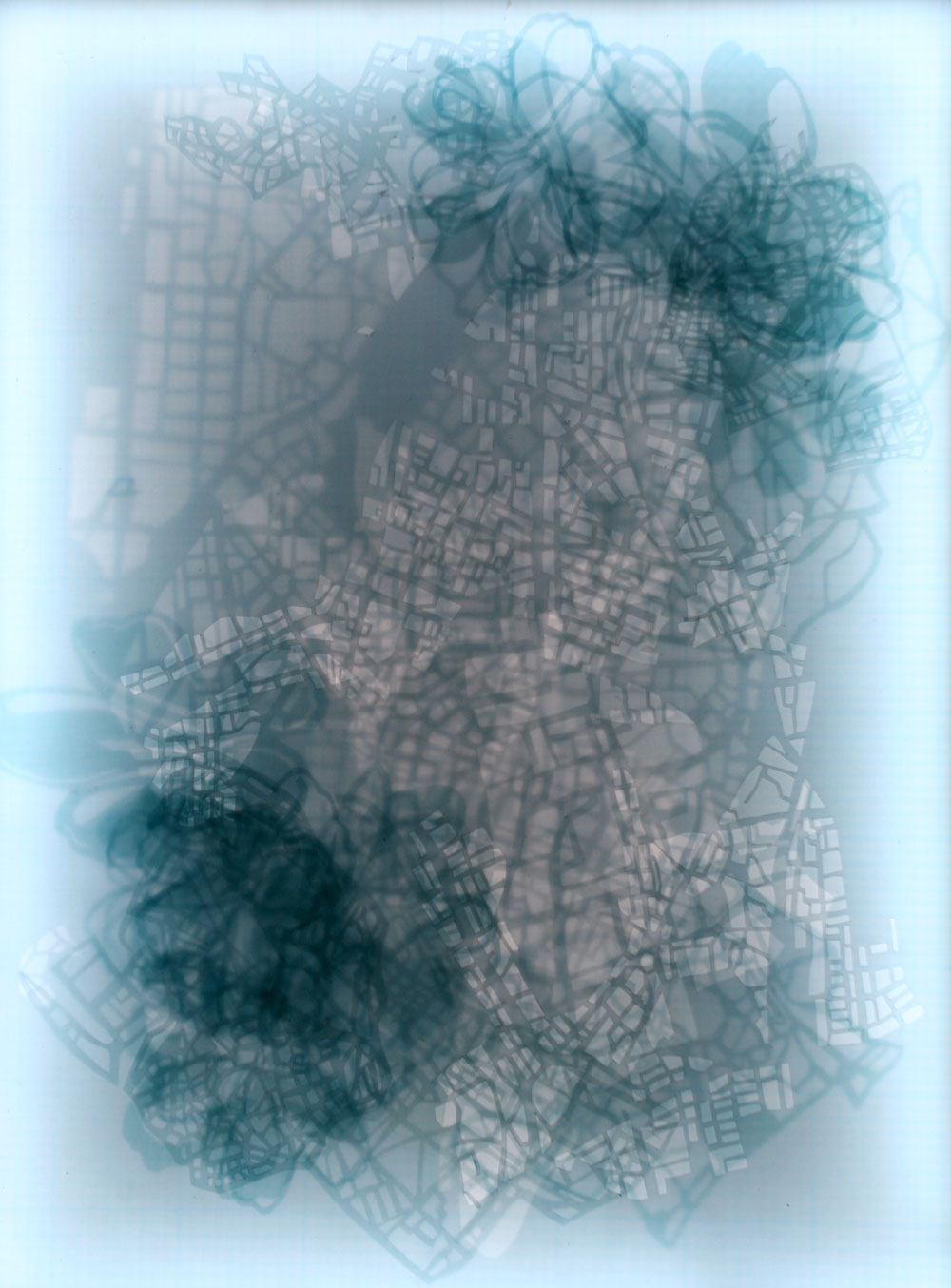
The ‘Where Is Your Destination?’ series, made by erasing all the locations that might once have functioned as destinations from outdated maps that had lost their geographic utility and superimposing only the remaining roads, prompts us to consider our tendency to focus on identifying a route through a map even though reaching a particular destination is supposed to be the goal.
Even when the destination remains the same, our consciousness is reorganized if the route changes or if alterations in the transportation system make certain roads inaccessible. Works such as building growing and Seedling Block draw upon the artist’s experience of living near the boundary of a greenbelt area, where she directly witnessed the transformation of nature through urbanization.
At times, we experience the contradiction of enjoying the convenience and concentrated functions of the city while simultaneously worrying about the disappearance of nature. This becomes especially evident when observing redevelopment zones over time, where one can clearly sense both the tenacity of nature and the violence of urbanization.
By reflecting how the dramatic transformation of an area for housing and commercial development alters every flow and becomes objectively visible in maps from before and after redevelopment, the artist allows her personal experience to reach toward a more universal consciousness.
Works completed through graph paper and hand-cutting gradually evolved from a sculptural beauty that was “revealed” by the inherent forms of maps and atlases themselves toward a sculptural beauty actively “revealed by” the artist. With the addition of lighting, formal beauty was added to the existing meanings, and from the standpoint of viewing, significance beyond mere visual pleasure reaches the viewer with greater density.
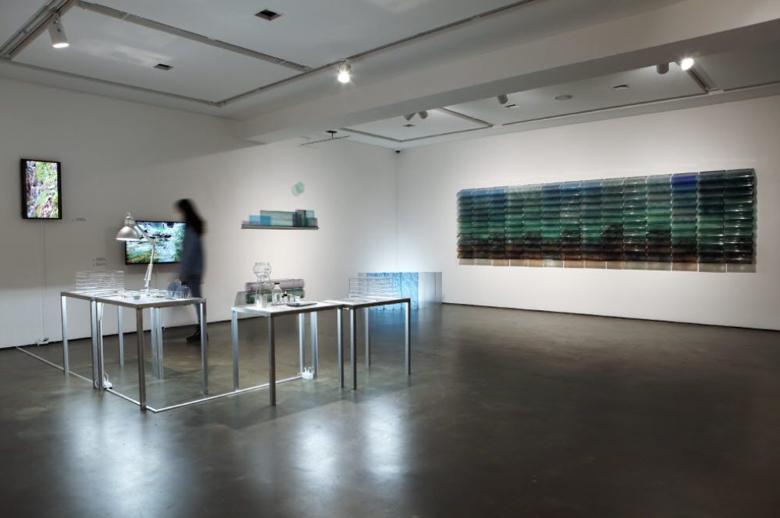
The more buildings and narrower streets are layered, the brighter the light becomes. At times resembling a city center at night, these works present the characteristics of the urban environment at a glance. Within the context of an exhibition, they also function effectively as objects. It was perhaps around this period that the organic relationship among artwork, installation, exhibition space, and artist began to develop more fully.
In an exhibition held in an old house in Seongbuk-dong in 2015, the artist continuously updated the exhibition space throughout the duration of the show, and the installation maintained an organic relationship with her own actions.
Visitors could know how many steps the artist had taken while walking to the exhibition space nearly every day and what kinds of objects she had discovered along the way, while colors extracted from the street gradually filled the exhibition space in the form of tiles.
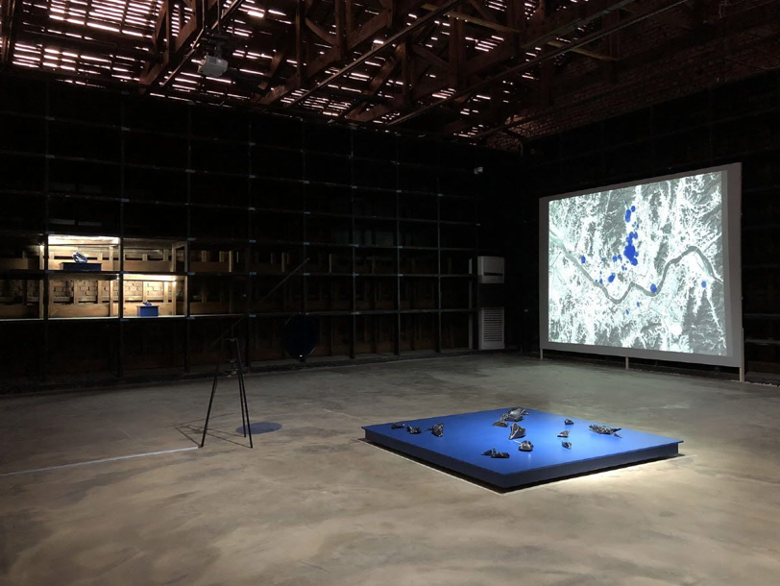
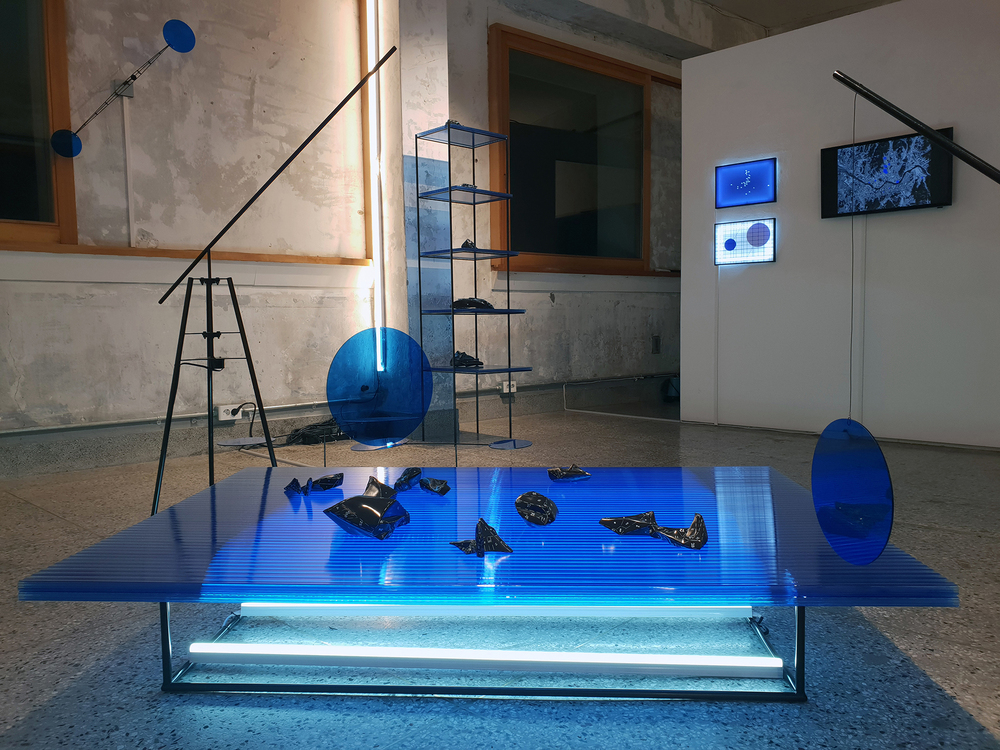
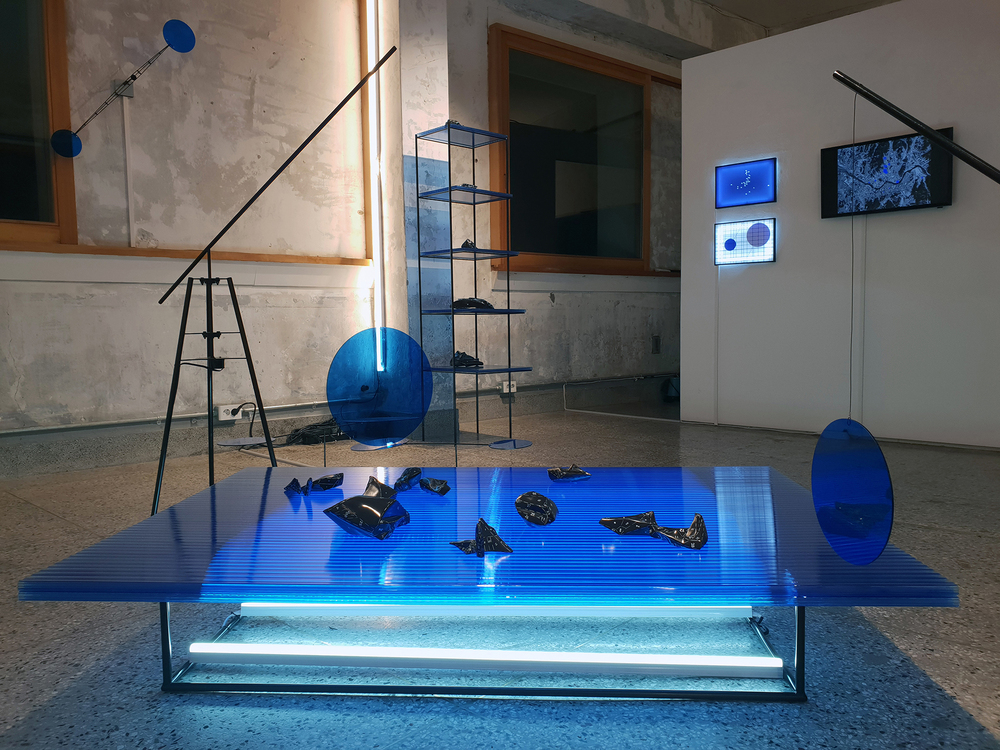
The artist’s records were subsequently extracted and reorganized into new forms. Routes became geometric shapes and then three-dimensional structures, while colors were arranged in sequences and output both on paper and as video. The 2018 solo exhibition 《BLUE DOT》 presented these transformations in their entirety.
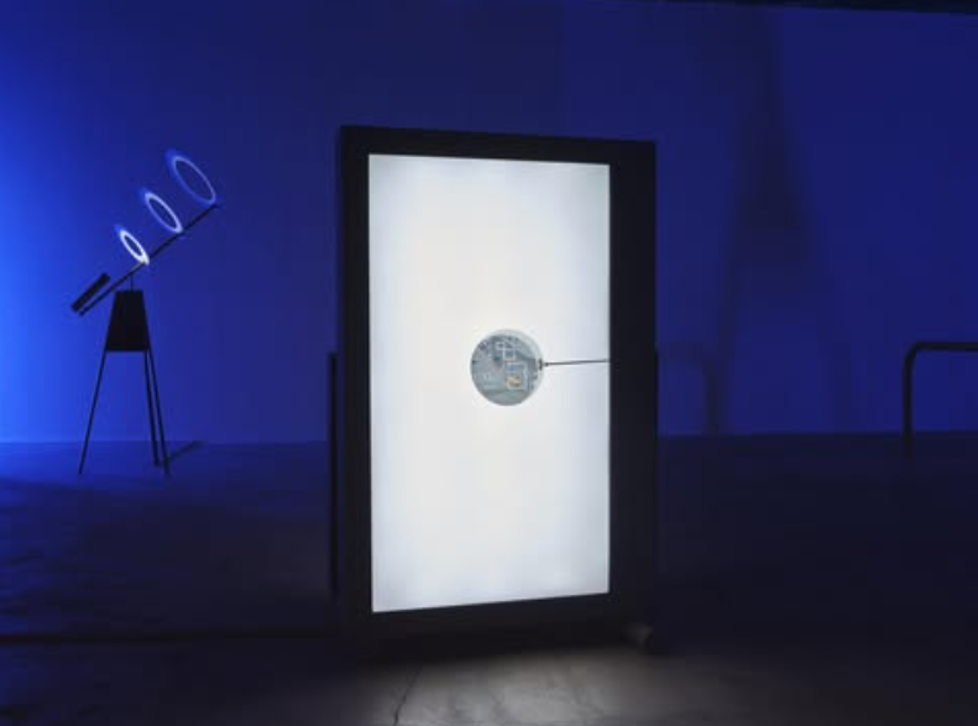
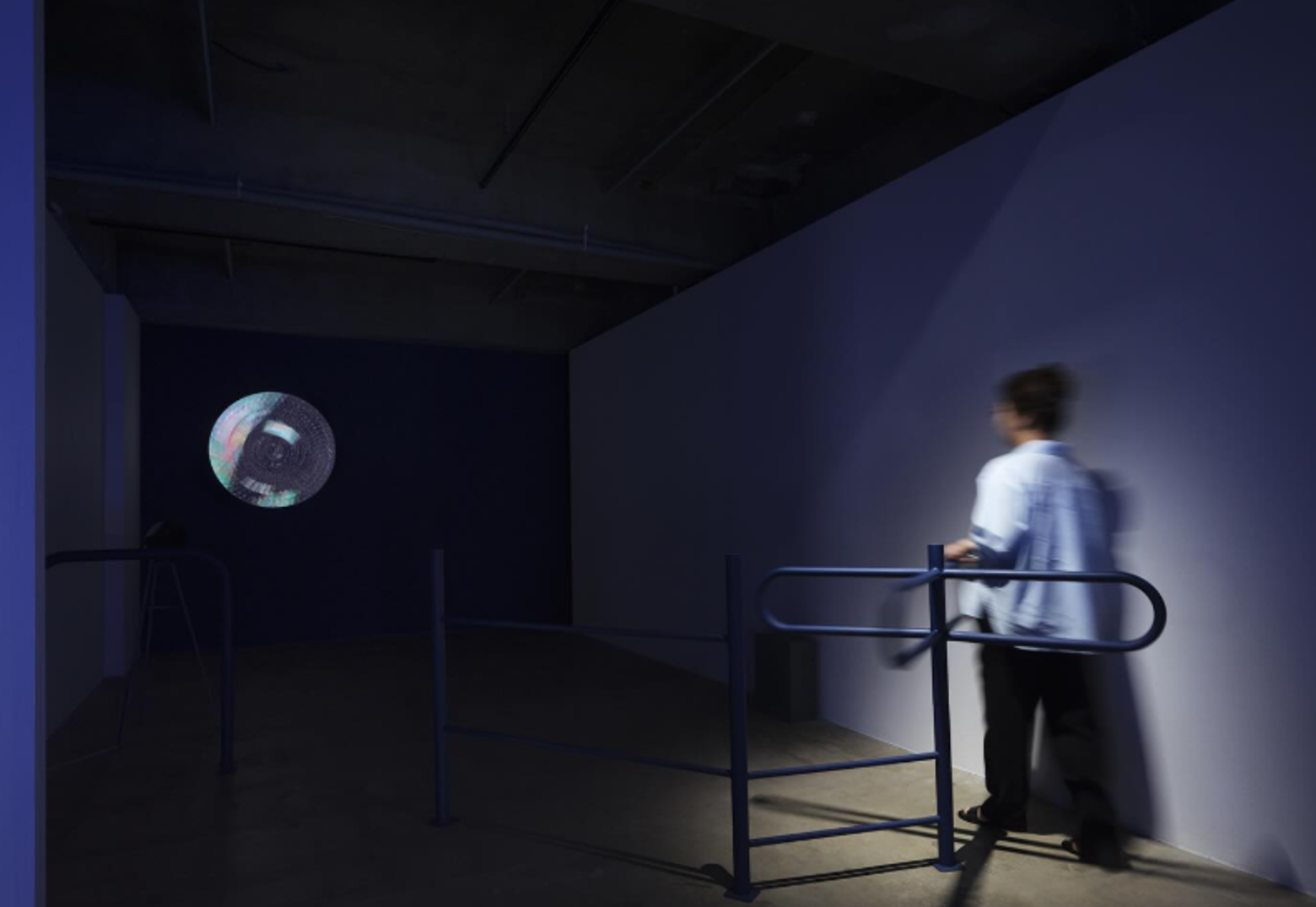
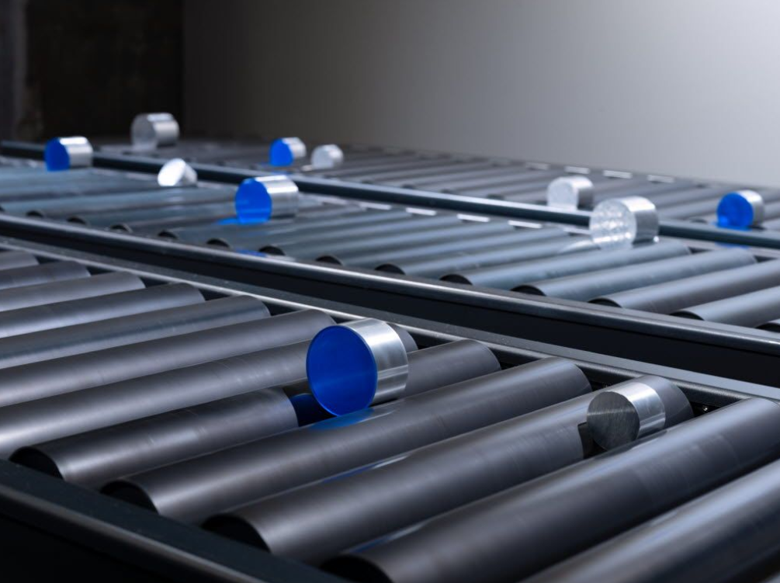
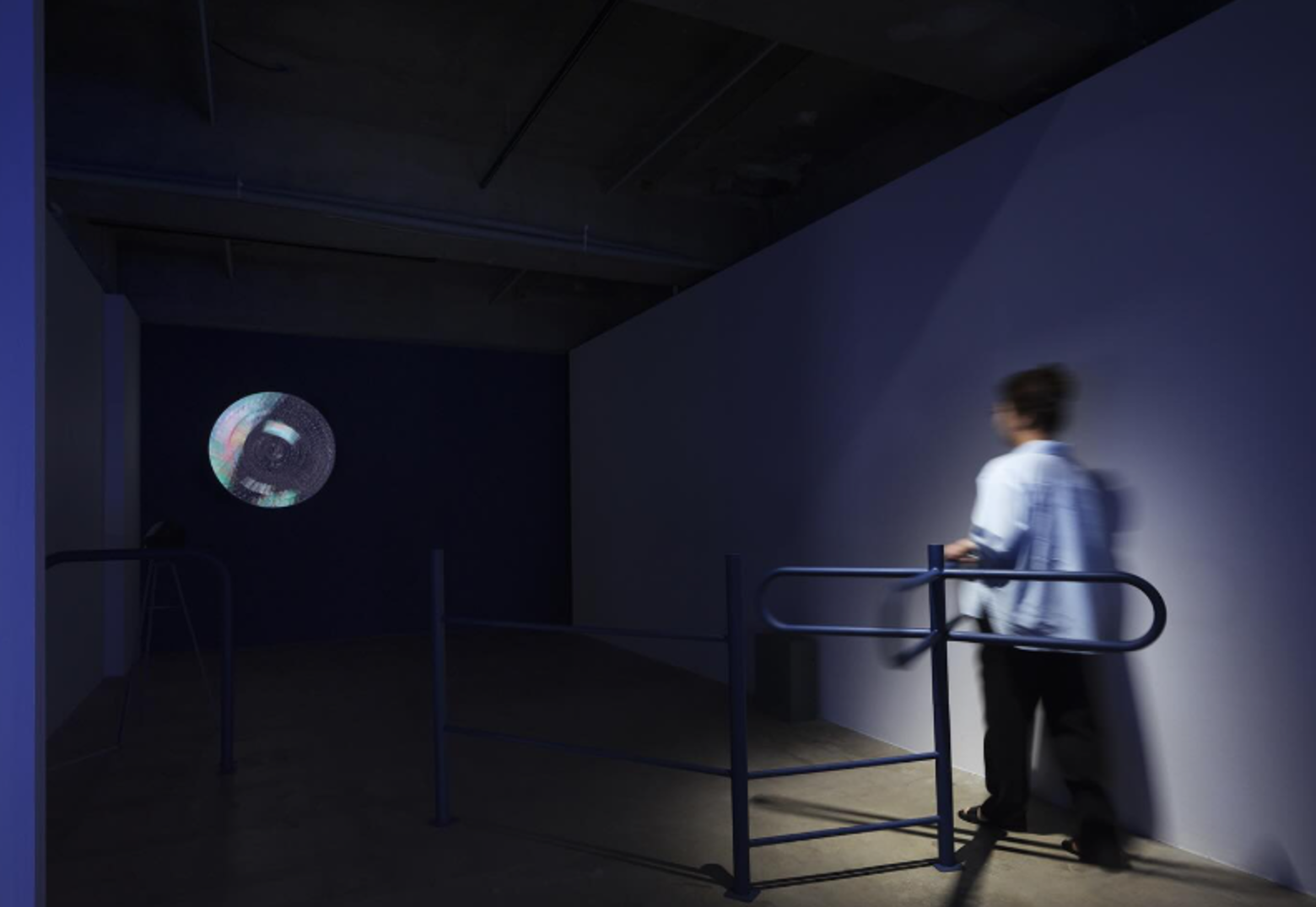
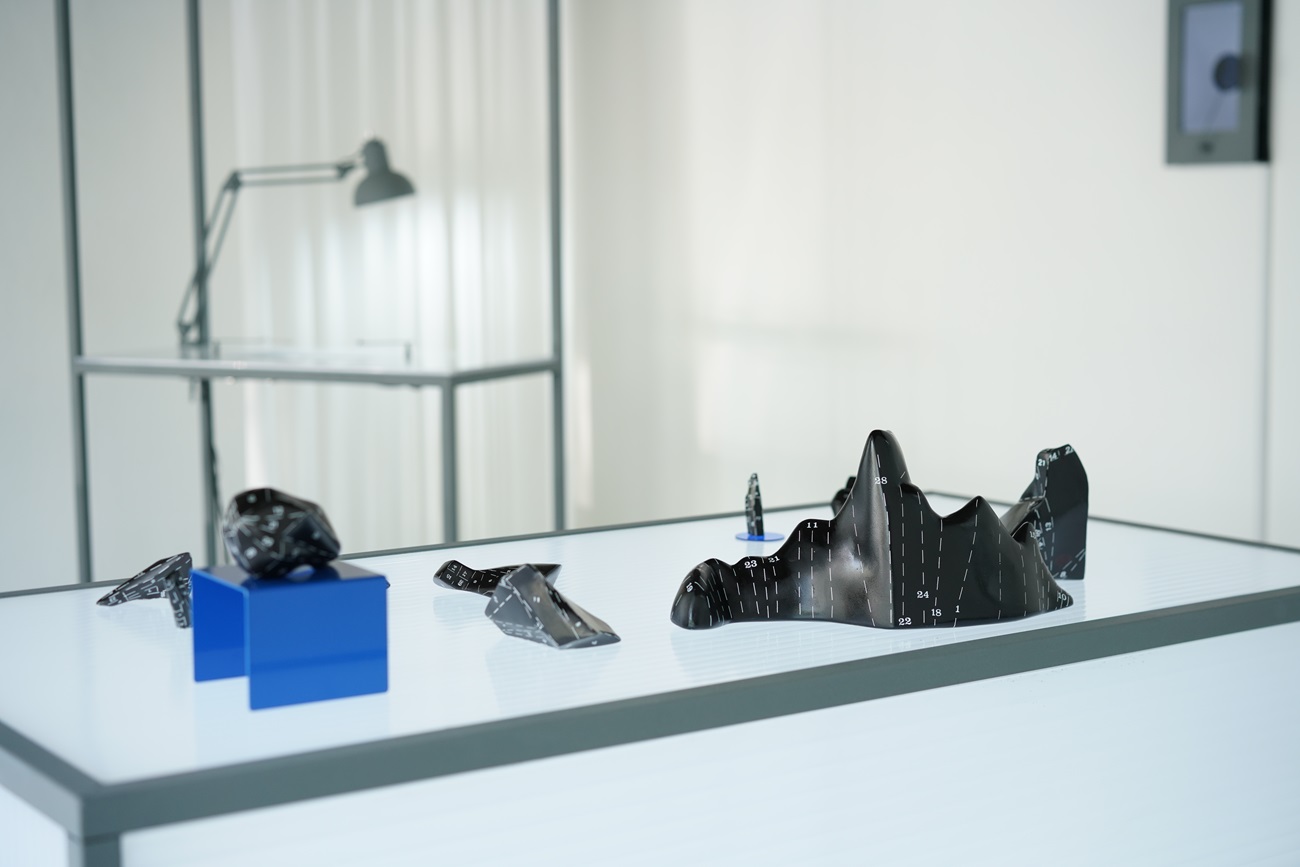
While retaining an archival foundation, video, three-dimensional works, and kinetic elements were integrated effectively into the space, deepening the formal qualities alongside the consistency of the conceptual framework. Three years of movement records were transformed month by month into individual three-dimensional objects, while movements tracked through satellite technology appeared as blue circles of varying intensity and size.
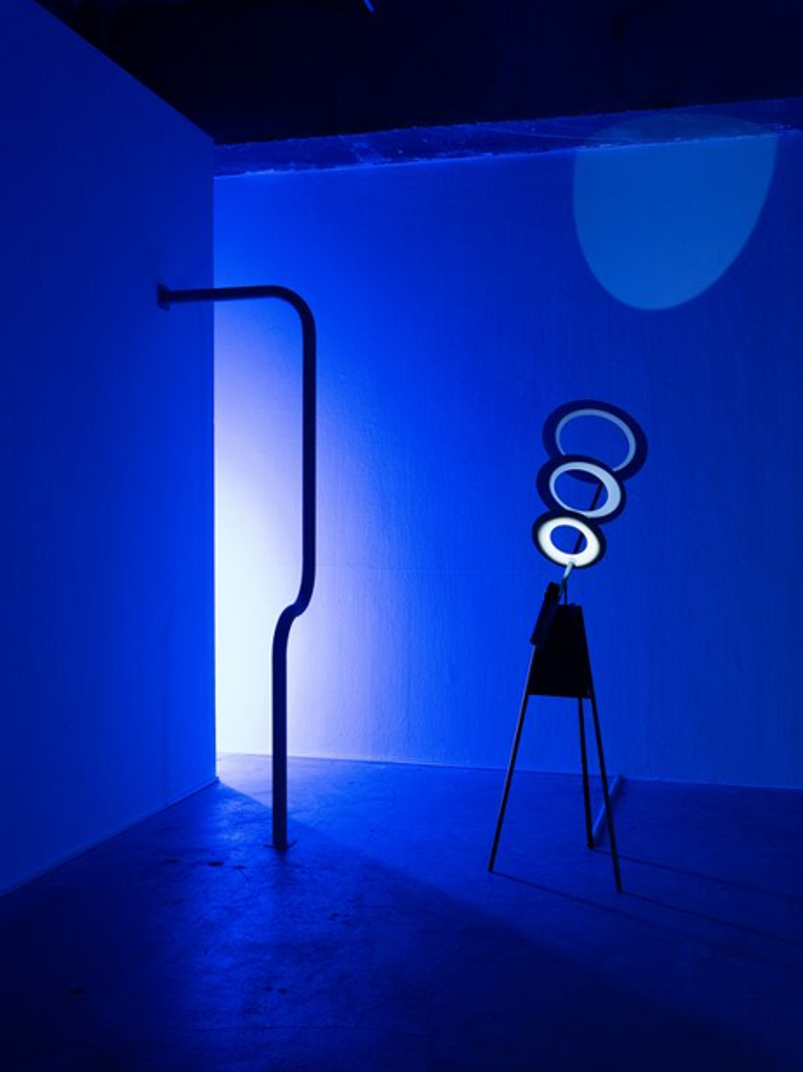
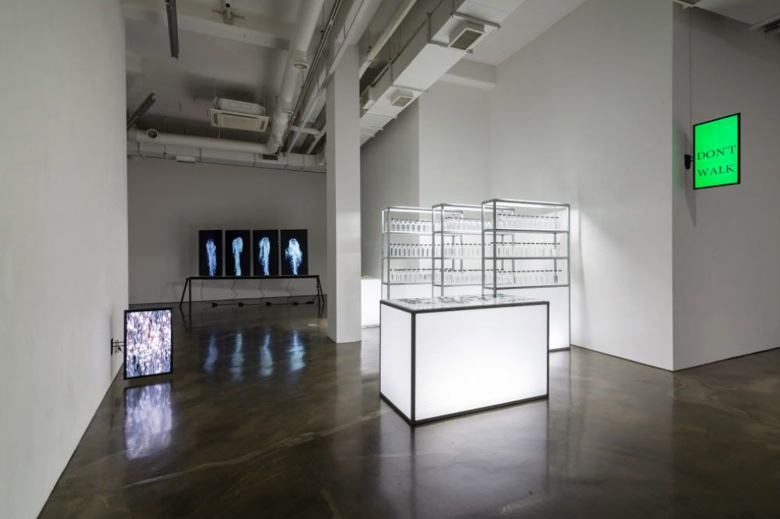
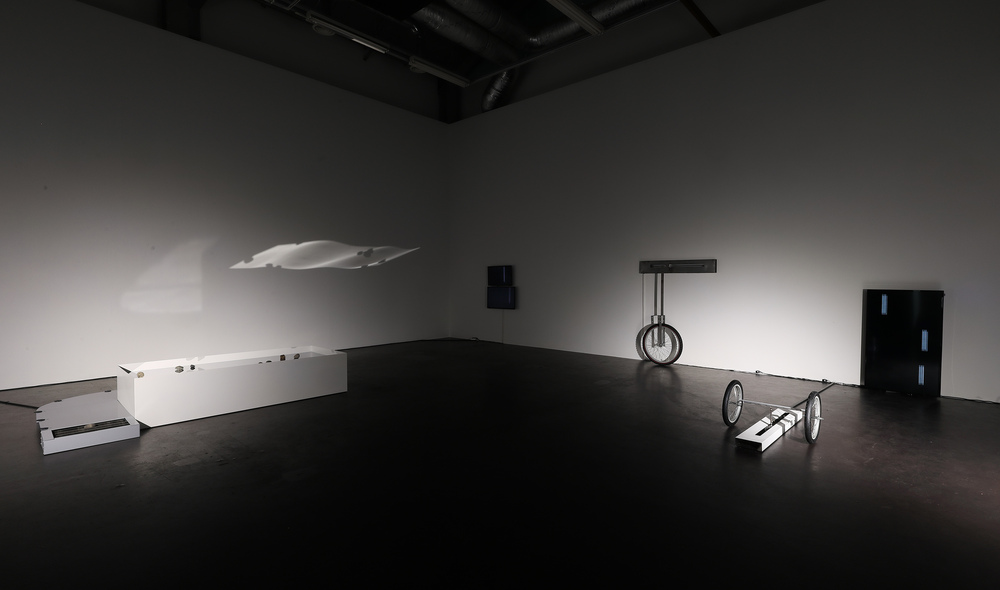
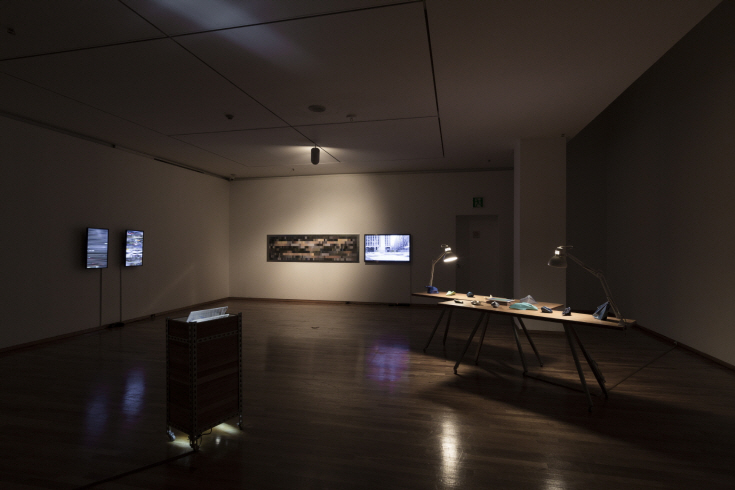
The exhibition 《BLUE DOT 36”》 creates a space transformed through the artist’s own experiences. It is as though information about the city understood through maps has undergone an internal transformation through the artist and emerged as a new sculptural environment. Sound has been added since the previous exhibition, and kinetic elements play a larger role.
Movement introduces temporality into the content of the works, and although differences in speed and scale may initially appear chaotic, rules can be discerned within them. Viewed from another angle, this resembles a society in which people live their lives in diverse ways and on different levels while operating within rules defined by institutions and categories.
Ultimately, the context continues here as well: consciousness and imagination are added to the geographic information of maps, allowing that information to reach our lives through art.
The artist’s “lifeworld” has been expressed through the transformations described above, encompassing both the phenomena revealed by maps and those she witnesses within the radius of her own life. Husserl’s phenomenology, mentioned earlier, later influenced existentialism. This connection can also be seen in the words of Søren Kierkegaard (1813–1855), a precursor of existentialist philosophy, who stated that “truth is not objective and rational, but individual and subjective.”
Through this observation, we come to recognize a certain thread of truth: the artist is not simply presenting personal experiences and records; rather, through an individual and subjective approach, a phenomenon becomes connected to society and the world through the medium of art and then reaches back toward individual people.
We now need to consider that a single experience or moment of consciousness is not merely a fragmentary instant that passes by, but is itself a phenomenon and a world. I hope that 《BLUE DOT 36”》 can become an occasion through which the individual becomes universal.