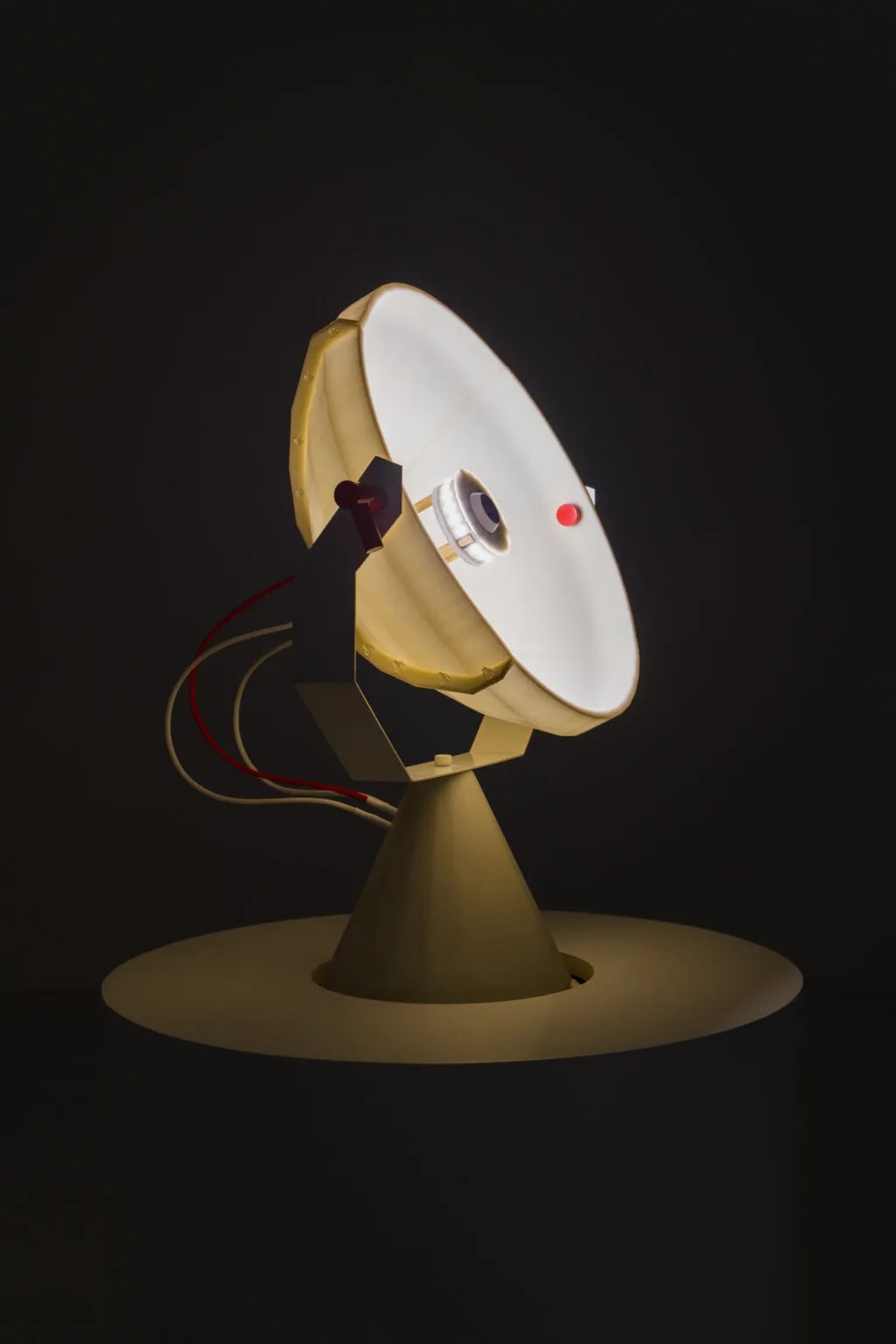
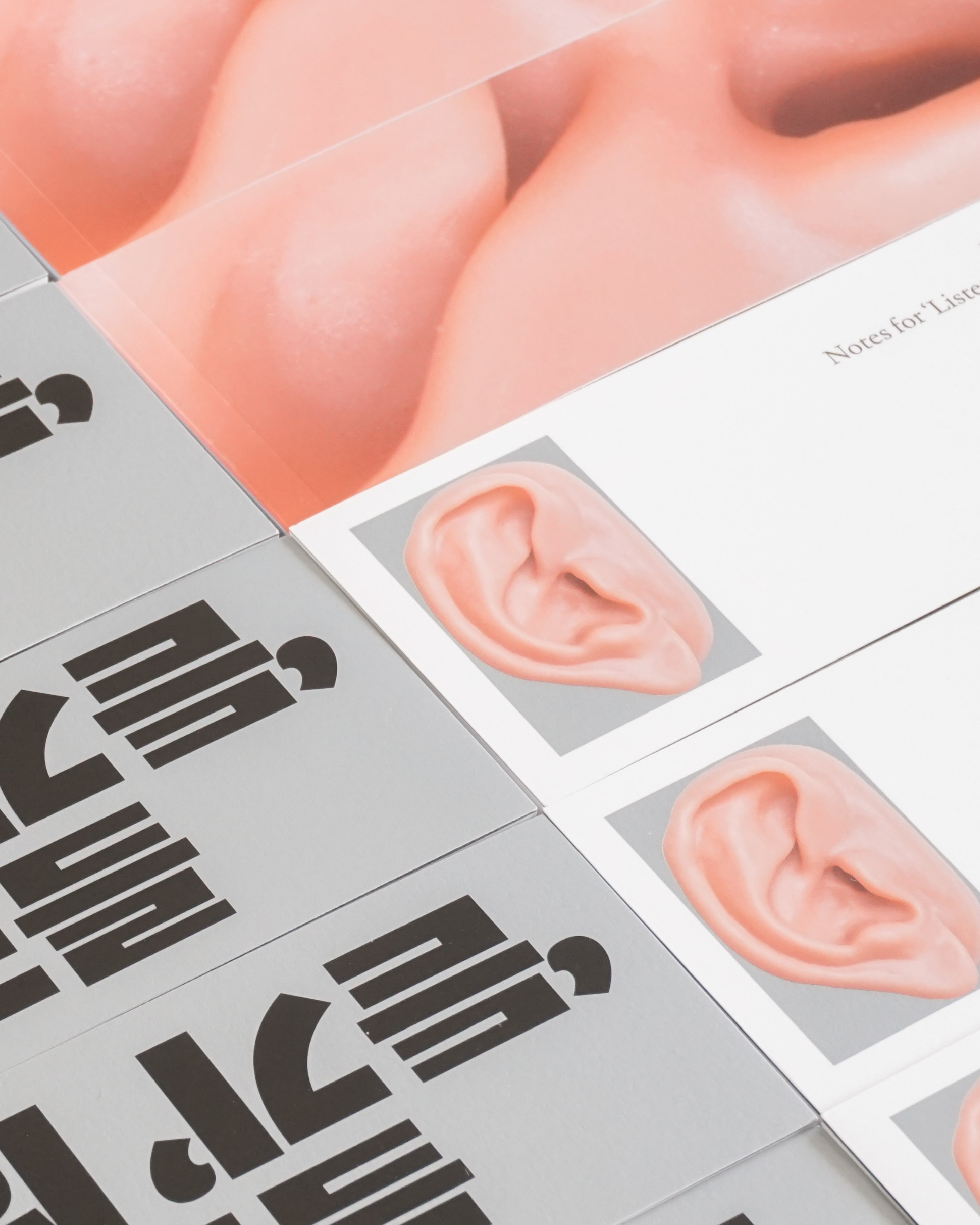
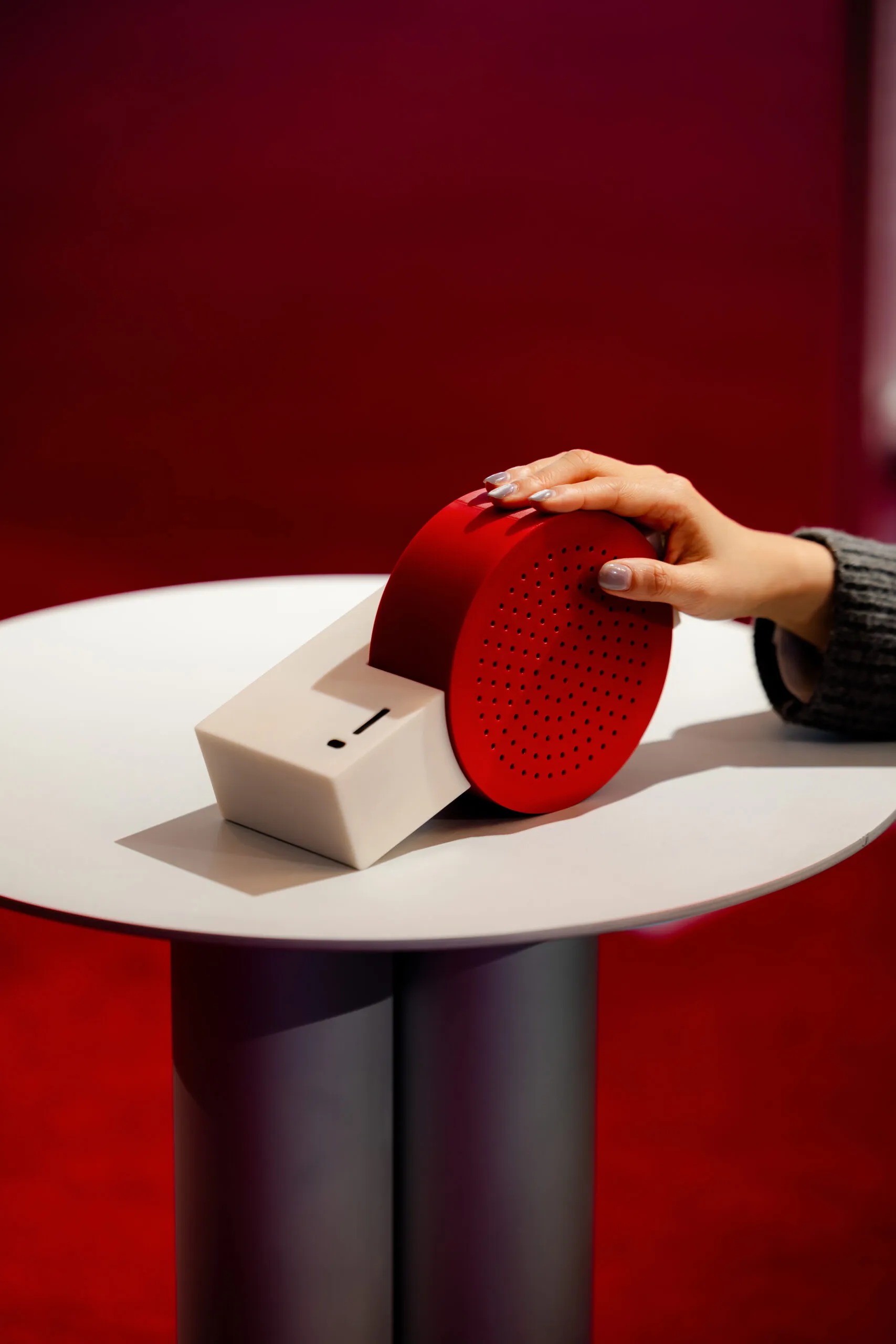
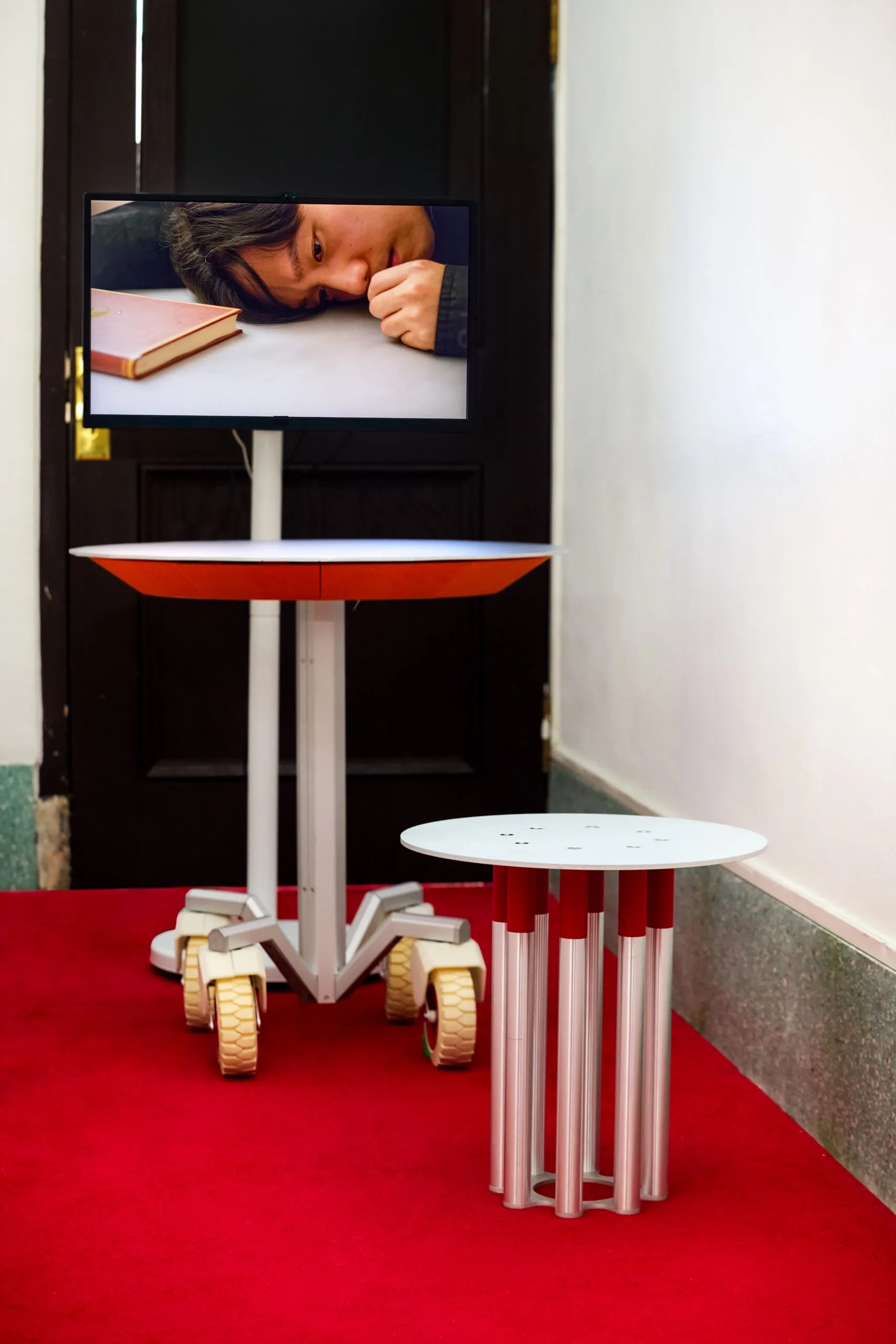
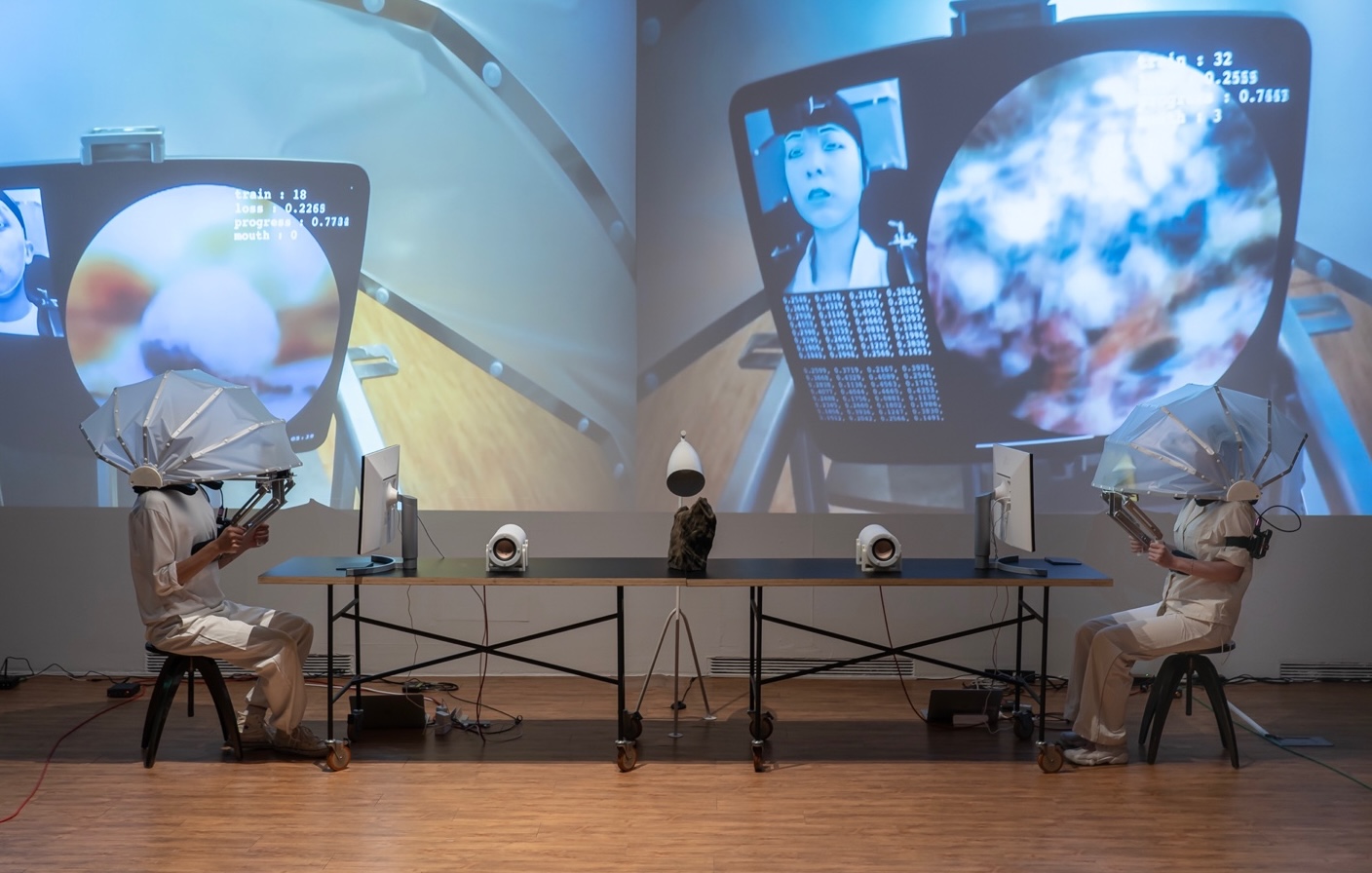
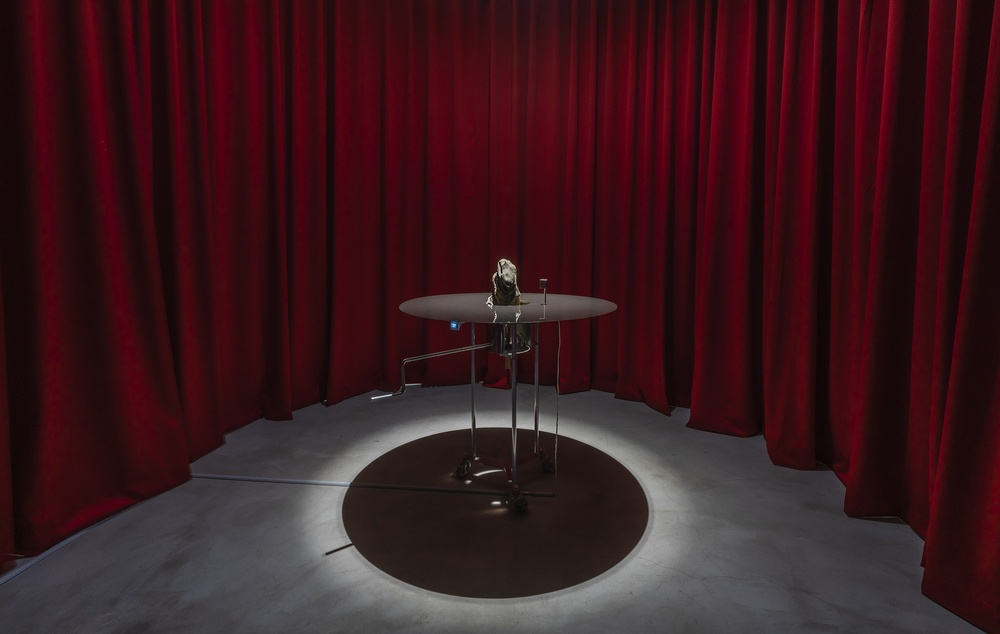
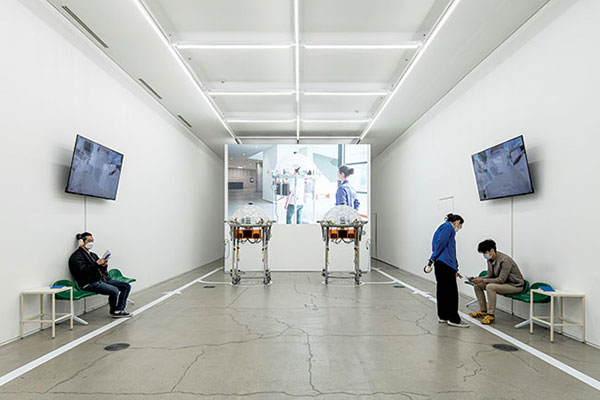
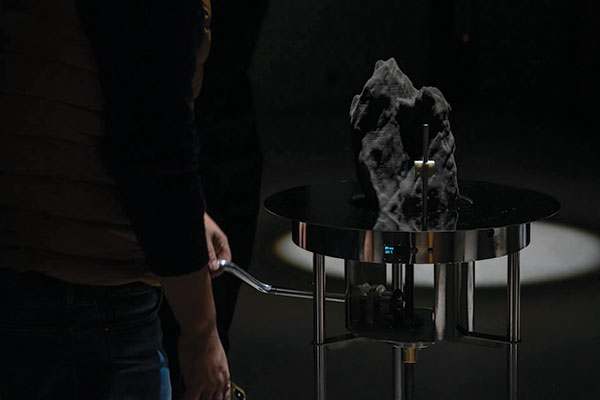
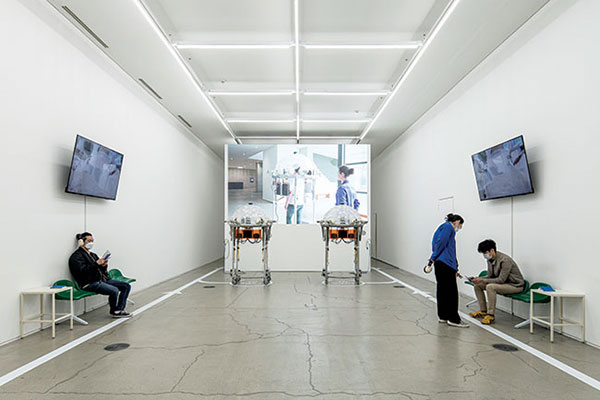
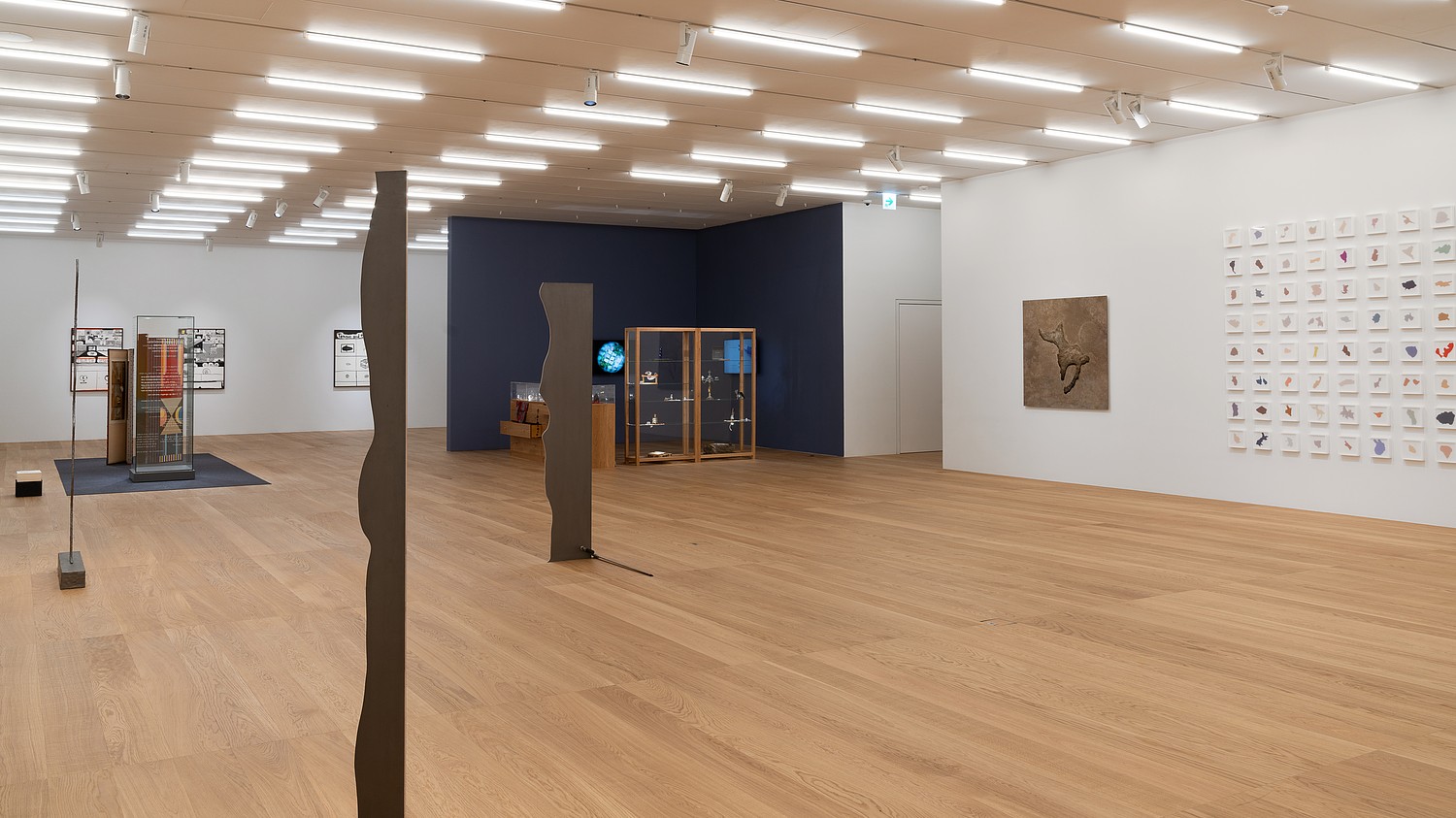
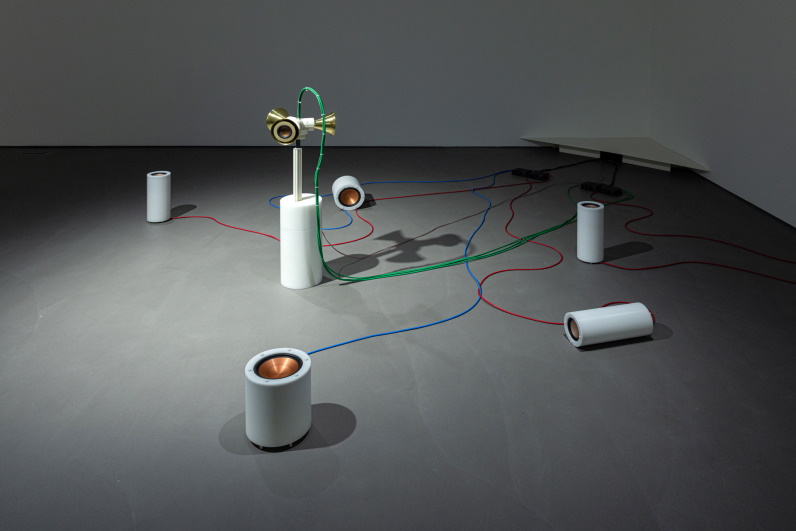
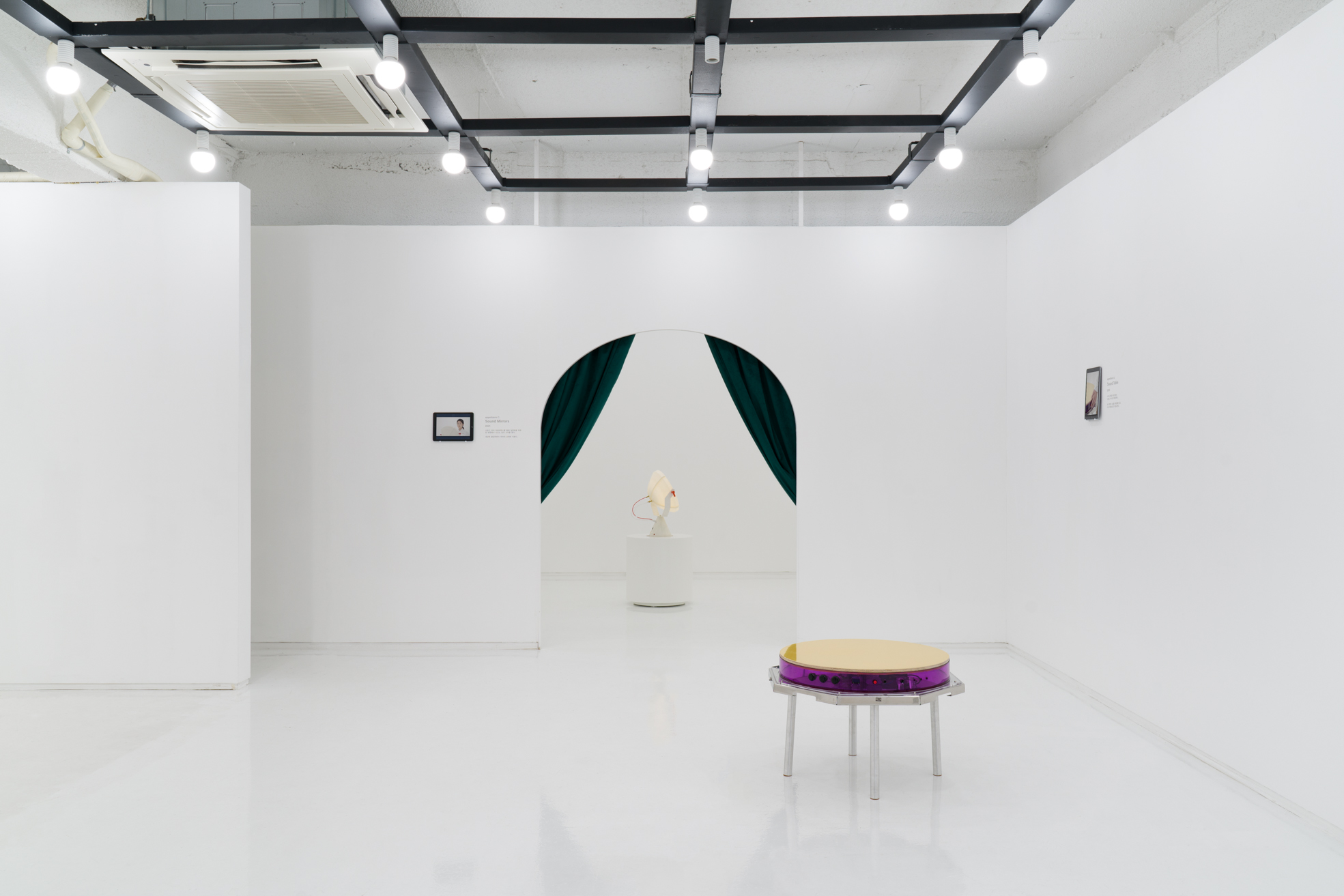
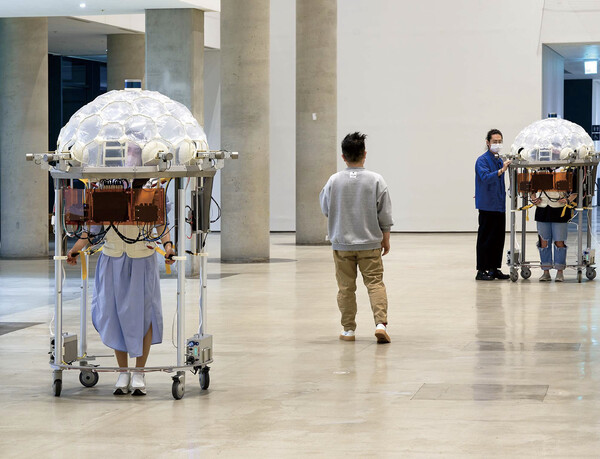
Hoonida Kim, view of the datascape station from Landscape being Decoded, 2021, 2 datascapes, video, sound, books, 4 navigators, installation, mixed media, Dimensions variable © Hoonida Kim

“Digital devices implanted into the senses”
“Reading the landscape through another sense”
“Observation through digital technology rather than through the refraction of light”

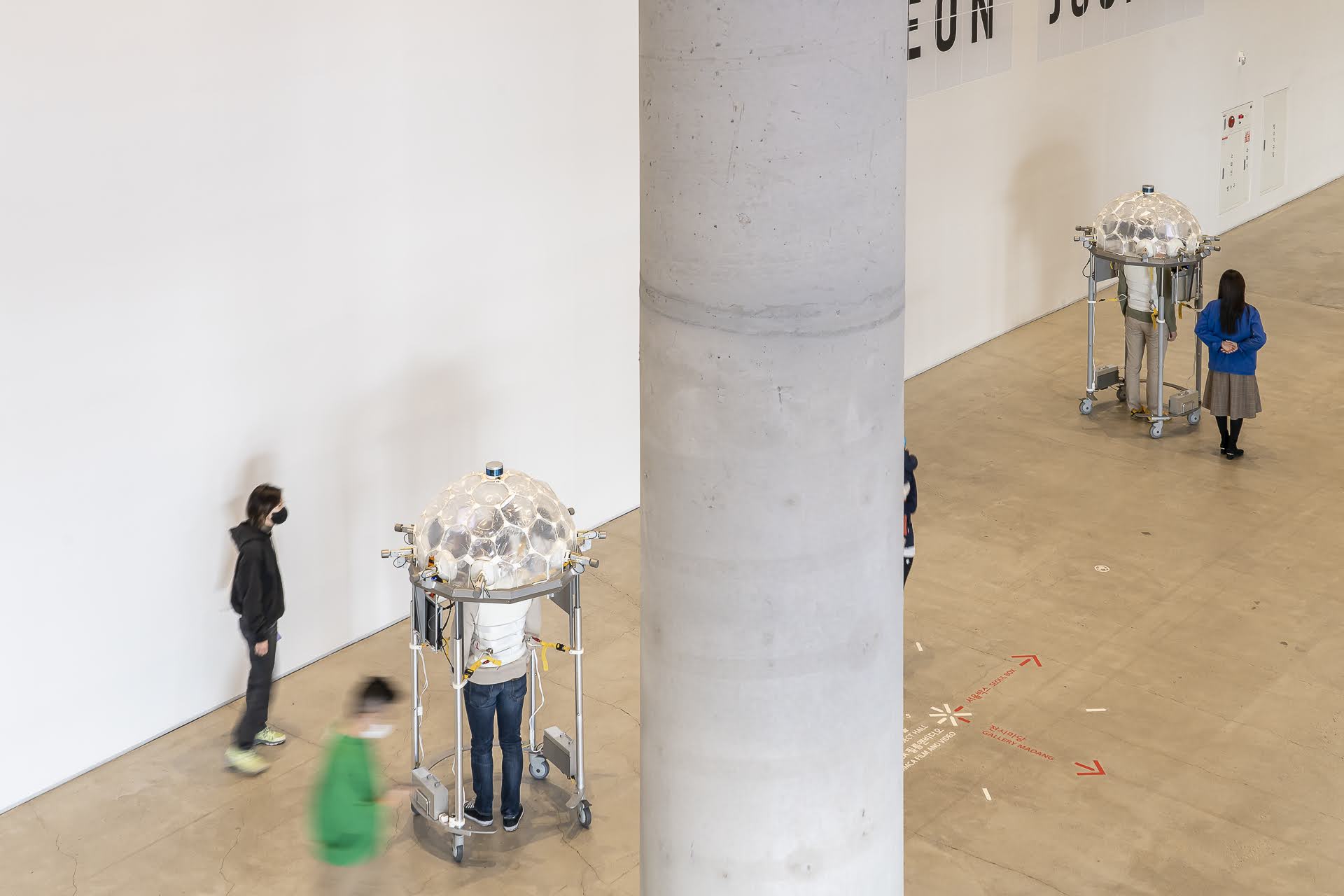
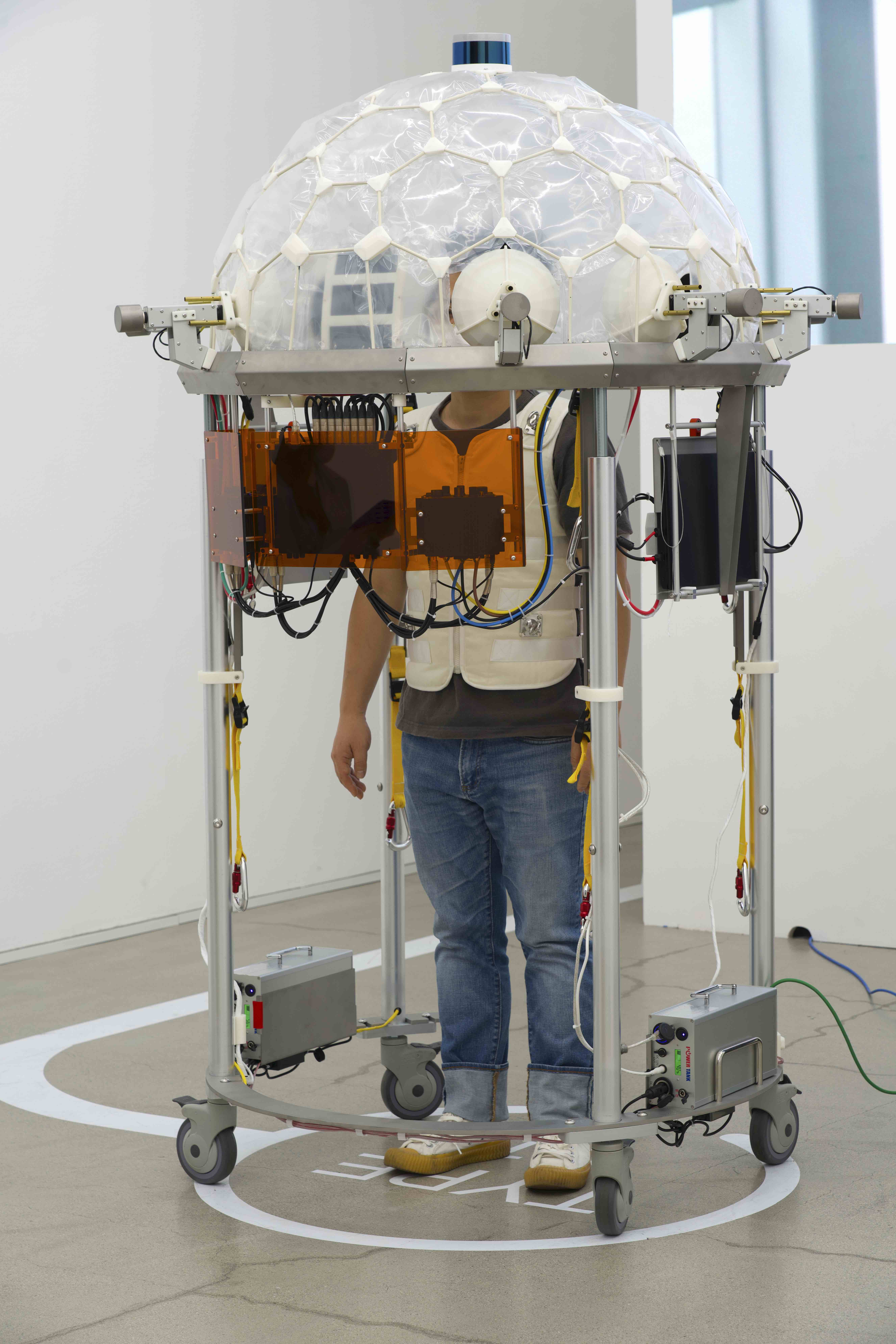
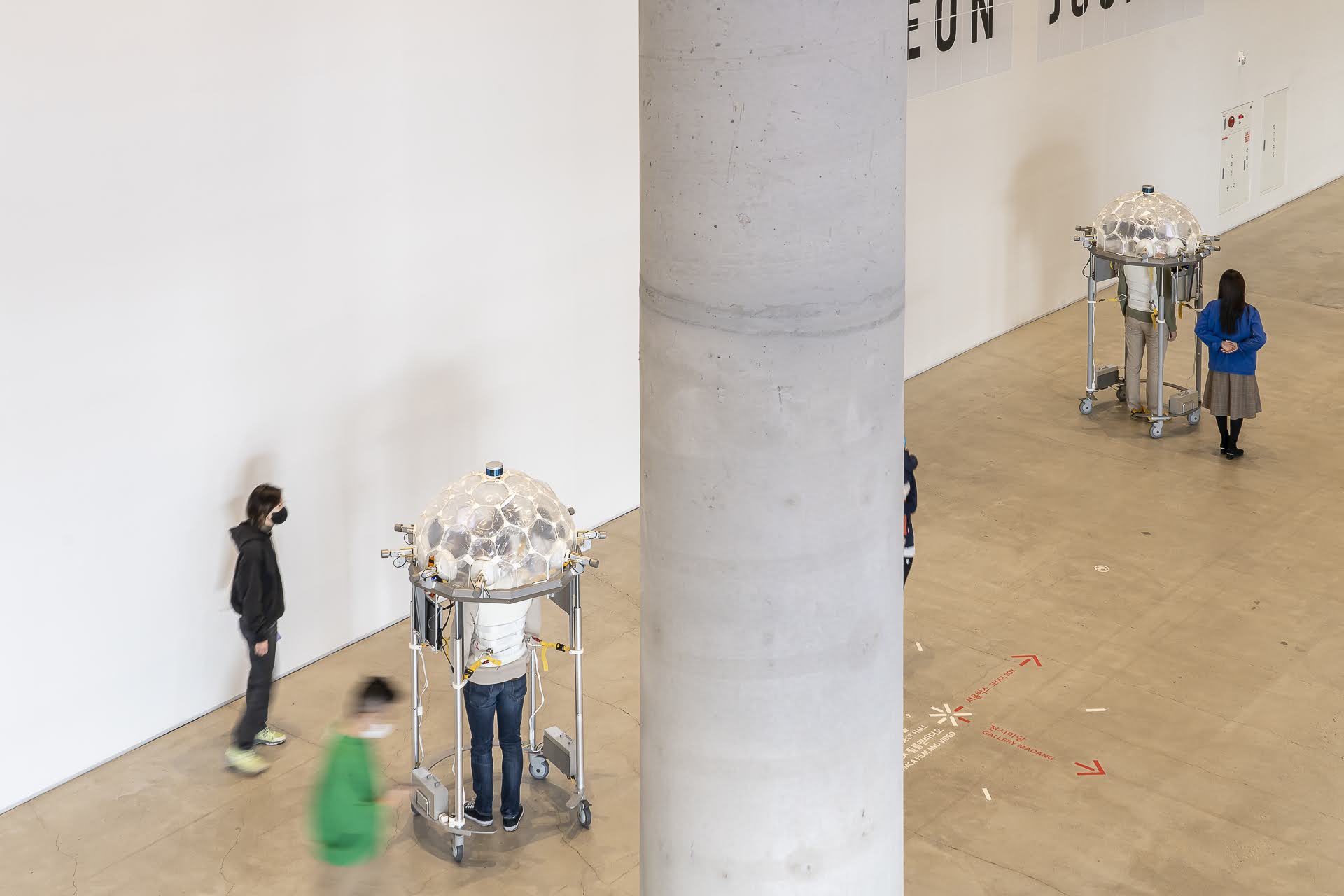
Once this procedure is complete, the viewer puts on a dedicated suit, enters the apparatus, connects to it, and crosses the museum corridor under the guidance of a “navigator.”

The familiar landscape is perceived quite differently through LiDAR, while the final manual, the “navigator,” verbally adds an explanation of this still unfamiliar and somewhat uncomfortable “apparatus for implanting a perspective of thought.” The tone is almost like that of a dentist explaining a prosthetic device to someone receiving one for the first time.

Hoonida Kim’s major 2021 work Landscape Being Decoded is designed to produce two distinct types of observers. One is the viewer who watches moving subjects while remaining outside the “Datascape,” and the other is the viewer who observes those subjects from within the “Datascape.” The two perceive the same situation from entirely different perspectives.

In this work, the “Datascape” functions as a kind of trigger. The artist intended the world it sets in motion to resemble a multiple world containing countless latent possibilities, rather than the singular and fixed world we have long believed in.

In 2019, Hoonida Kim produced a test prototype of an “environmental recognition apparatus” that used a single-point LiDAR sensor to perceive space in 360 degrees and translate it into visual and auditory form. Over the following year and more, he focused on methods of implanting the apparatus into human movement and the body, as well as on translating LiDAR-read data into audiovisual form.

Tests involving suit production and manual design were conducted in parallel. The resulting work, Landscape Being Decoded, consists of the “Datascape,” four manuals, and the “Datascape Station,” a space in which the implantation procedure takes place. At first glance, only the apparatus worn and experienced by the viewer might seem to constitute the work.

In fact, however, the true work encompasses the four manuals—a checklist titled Datascape Operating Guide, two booklets titled Perspective-Implant Manual and Through The Looking Apparatus, and finally the “navigator”—together with the station where the environmental recognition apparatus is implanted, all of which combine to stage a scene resembling a performance.
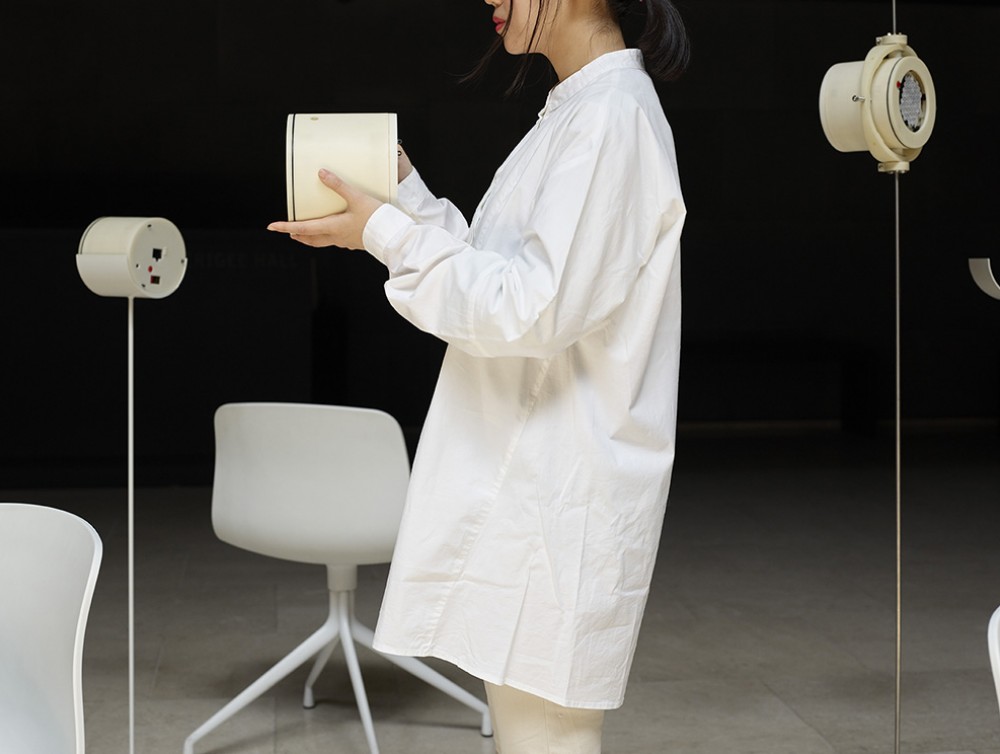

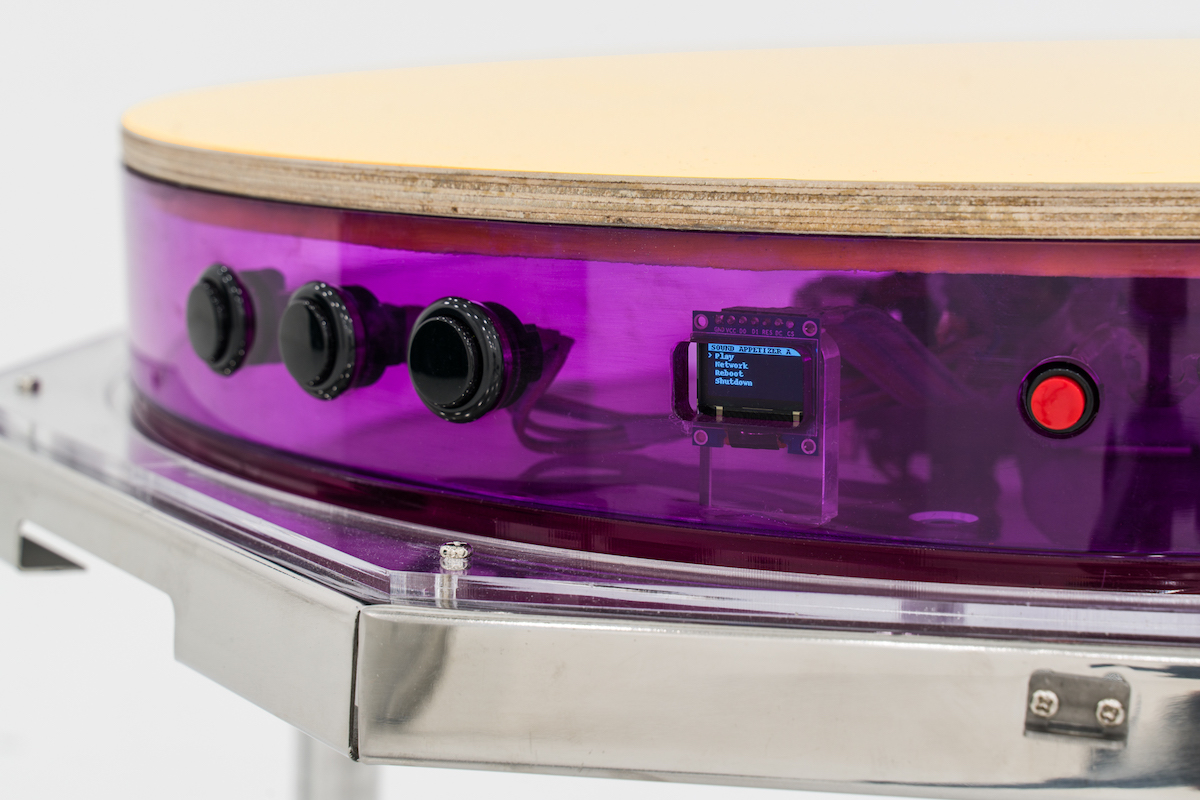
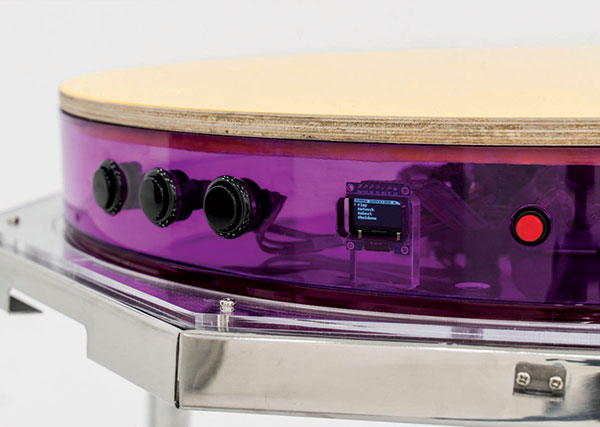
Hoonida Kim, “Appetizers for Indifferent Ears from A”: Sound Table, 2021, Raspberry Pi, electronic components, PCB, speaker, acrylic, wood, aluminum, 70 x 70 x70 cm © Hoonida Kim

The starting point of this unfamiliar and highly sensitive work was the question: “What if industrial sensors could be hacked—not used in their conventional ways, but configured as a set through which humans might sense and perceive objects anew, allowing them to function as environmental recognition apparatuses?”

This soon developed into further questions: “If LiDAR—the eye of an autonomous vehicle and a device that maps its surroundings—were attached to the human body and used to perceive the world, what would we perceive, and how?” and “How would the environment our eyes have read, our bodily sense of distance, and the distances between objects be registered within us?”

These questions led to the creation of the “Datascape,” which proposes an alternative perspective on perceiving objects through LiDAR sensors that measure countless distances between objects and convert physical space into data. The artist emphasizes that this enables us to perceive “not a single, universally recognized landscape, but a ‘phase-shifted landscape,’ thereby questioning what we believe to be reality.”

In the third manual, Through The Looking Apparatus, he lists the questions that form the foundation of the work: “We live within a system in which we can choose how we perceive and feel our environment.

This system leaves us with these questions: What is it that we believe to be reality? Whose point of view is that reality based on? If digital media enables us to see from another perspective, are we then placed in a state in which anything is possible?”


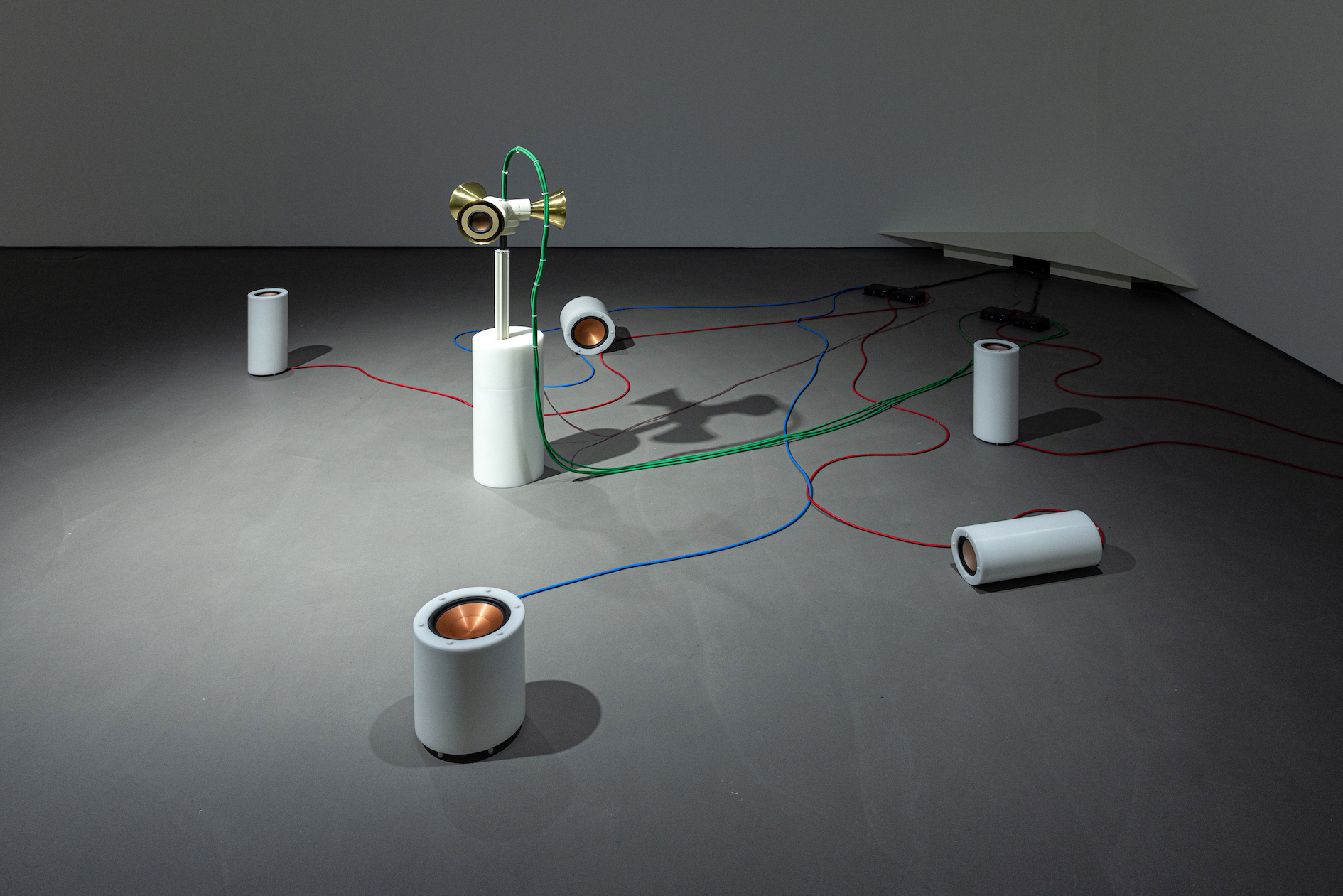
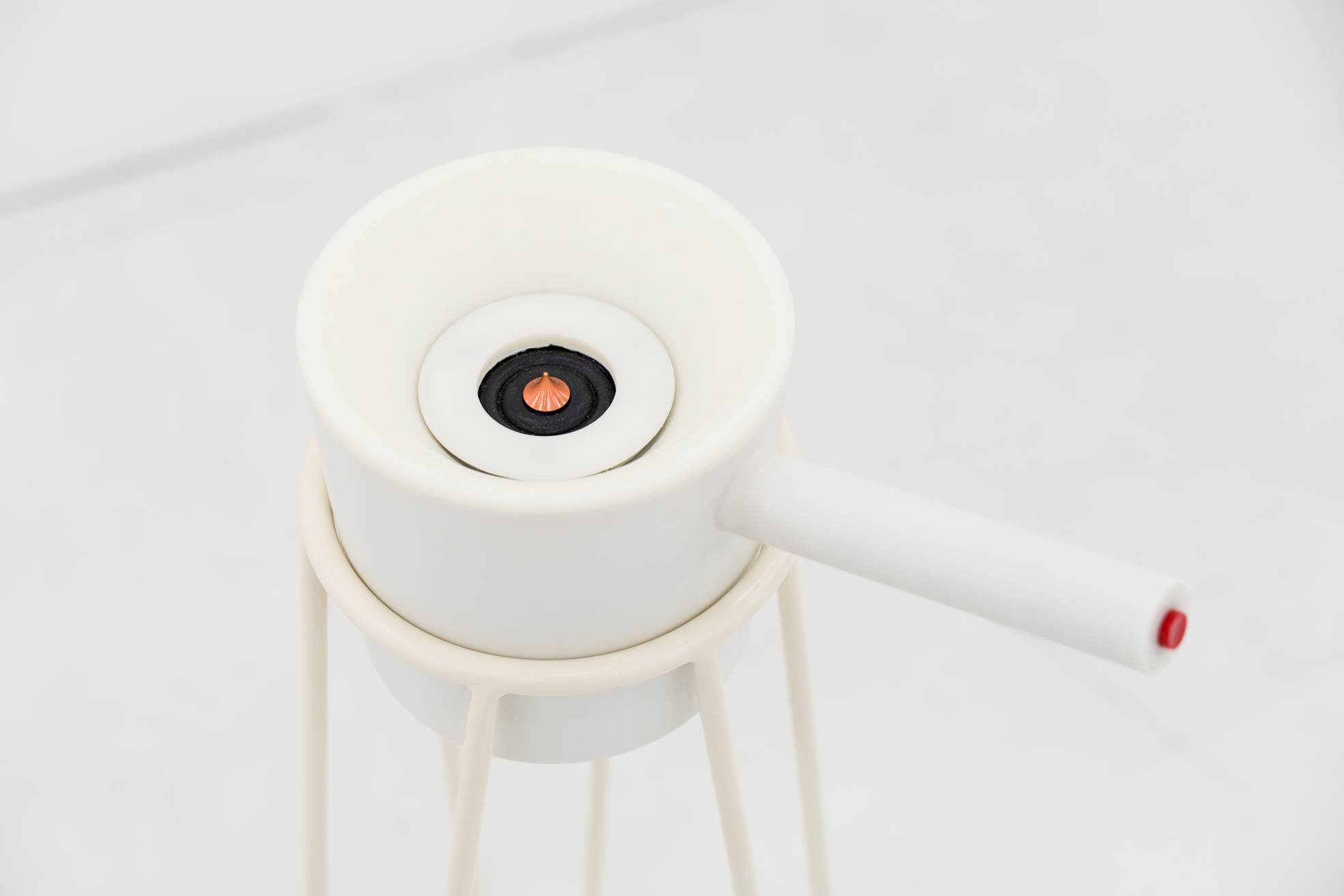
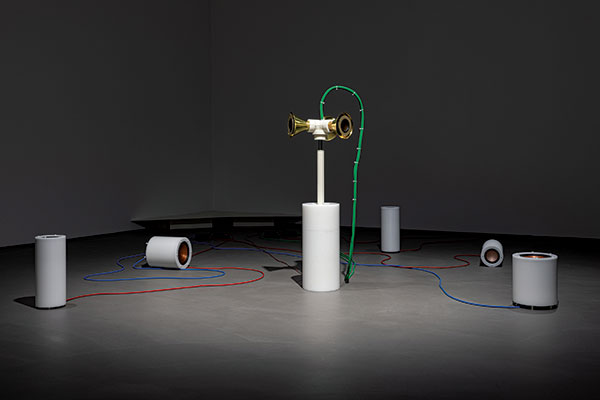
Hoonida Kim, ATTUNE, 2021, GPS smartphone app, computer, amplifier, brass, speaker, plastic, installation, mixed media, Dimensions variable © Hoonida Kim

What message, then, does Hoonida Kim—whose practice focuses on technologies that have deeply penetrated the human ecosystem and the ecological transformations they trigger—seek to convey through his work? “Digital media, which underpins systems across society, and especially the media that produce media—that is, metamedia—continue to generate new paradigms.

At the center of my practice is the balance of our human capacities to sense and receive: the perspectives transformed by the development of digital technology, the things that conversely become dulled, modes of consumption that do not fix objects into stable meanings, and new ways of perceiving through the senses,” he explains.

“Human perceptual abilities and sensibilities struggle to keep pace with the rapid speed of social change and to sense and analyze the enormous quantities of information surrounding us. I therefore create ‘environmental recognition apparatuses’—devices that sharpen the senses—as a way of actively responding to these changes. I also experiment with directly and indirectly implanting these ‘environmental recognition apparatuses’ into humans. Through works that pursue an inevitable convergence with technology, I present transformed modes of perception and sensibility associated with the posthuman.”

Media has long been understood as something that “extends” the senses. Hoonida Kim, however, takes as his starting point the idea that the countless forms of media in the digital age are not merely devices that extend perception, but can also feel like “prostheses implanted within the body.” Accordingly, “implantation” and “prosthesis” have become important elements in his practice.
A prosthesis strengthens the body, but as the muscles gradually come to depend on it, removing the prosthesis later can leave the body’s original strength diminished. Kim argues that our sensory capacity to read the environment is now in a similar condition.

At a time when various input sensors and media used to read physical environments have become integrated into our lives like parts of the body, without any sense of resistance, he emphasizes that we are increasingly removed from situations in which the body itself must remain alert and actively perceive and sense its surroundings.


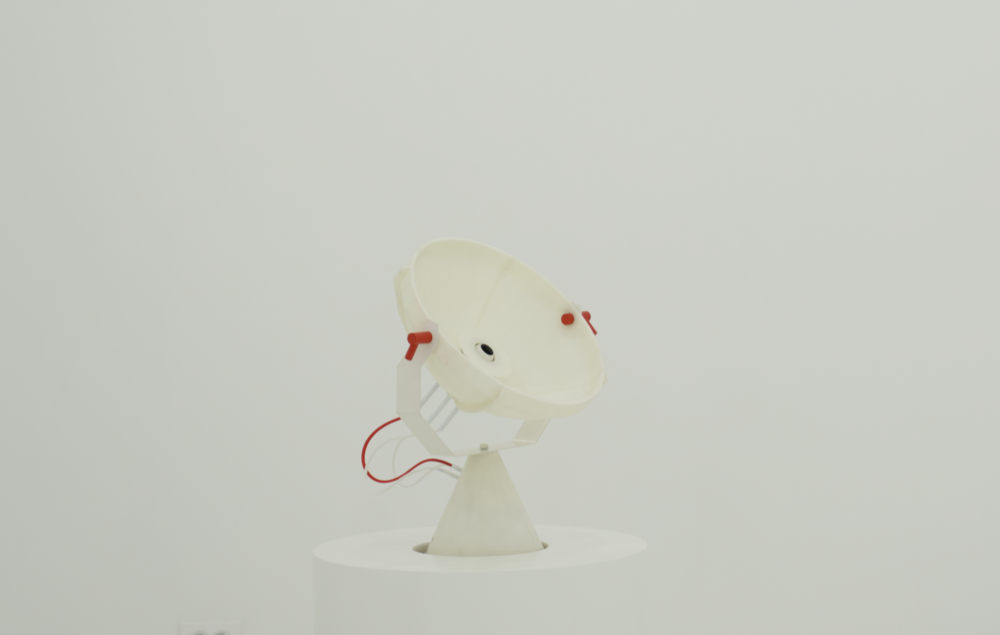
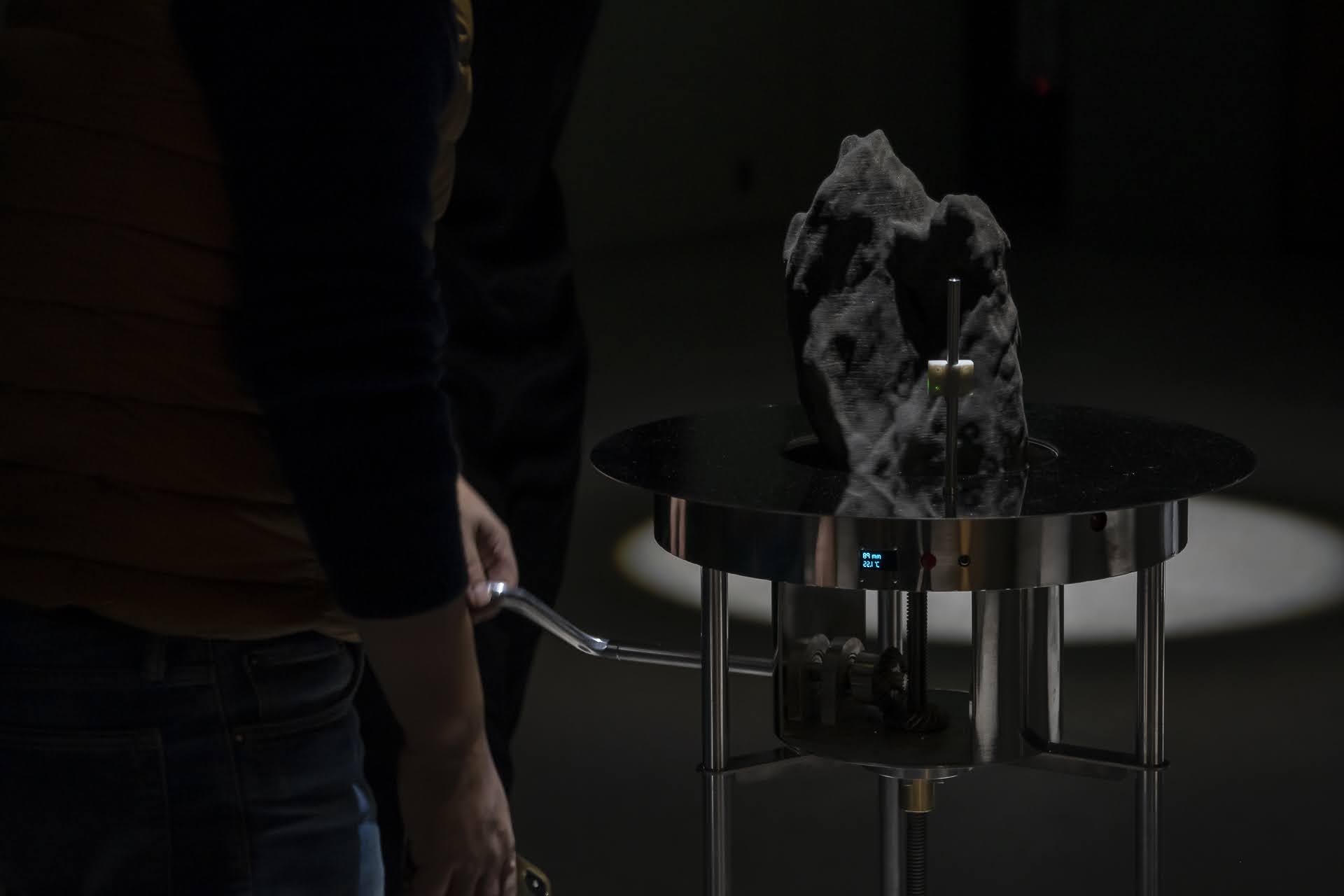
Hoonida Kim, Stone for Decoding #00, 2020, sand 3D printing, 32-bit microcontroller, stainless steel, aluminum, ToF sensor, temperature sensor, speaker, 60 x 100 x 60 cm © Hoonida Kim

Viewing devices such as smartphones—which remain physically separate from the body yet are carried even for the smallest movements—as analogous to prostheses, the artist began enlarging the digital devices that modern people unknowingly carry and have effectively implanted into themselves, making their forms awkwardly oversized.

He connects these devices to the body in ways that make “breathing together” with them distinctly uncomfortable, choosing the term “implantation” to suggest that they are prosthetically attached as devices for alternative perspectives and new modes of thought. While ordinary human vision spans roughly 200 degrees, Hoonida Kim devised the “Datascape” to explore, observe, and read space in 360 degrees from a bird’s-eye view.

His aim was to present familiar surroundings—whether the National Museum of Modern and Contemporary Art, Korea, another external environment, or a space in which one has lived—in unfamiliar ways so that they might be perceived “completely differently” as multiple environments.

Most processes of viewing art begin with “looking,” but Hoonida Kim’s works operate quite differently. In many cases, merely looking is not enough for the narrative of the work to unfold, because he designs his works to reveal more when viewers actively participate and attempt to read them through physical interaction.

Even for viewers accustomed to the interfaces of everyday electronic devices and to certain forms of interaction in contemporary art, exploring Hoonida Kim’s unfamiliar interfaces and discerning their differences is no simple task. For this reason, the artist devotes particular attention to designing the structure of the viewer’s initial encounter with the work.

Rather than simply creating convenient interfaces, he considers how different modes of contact might stimulate shifts in the viewer’s perspective. His recent works have been conceived as declared series. Rather than focusing on new works this year, however, he plans to concentrate on situating his existing works in appropriate contexts and refining these series.
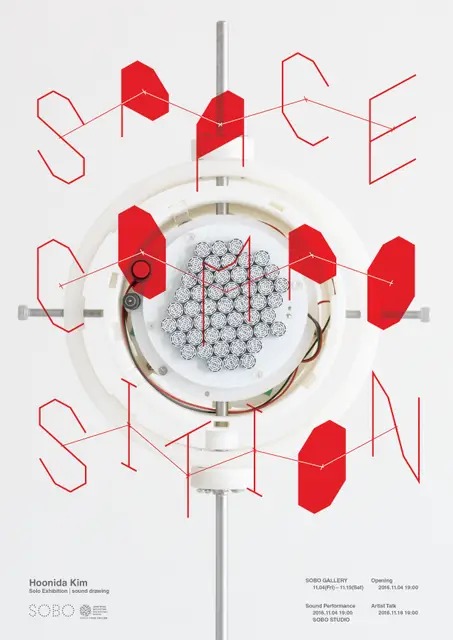
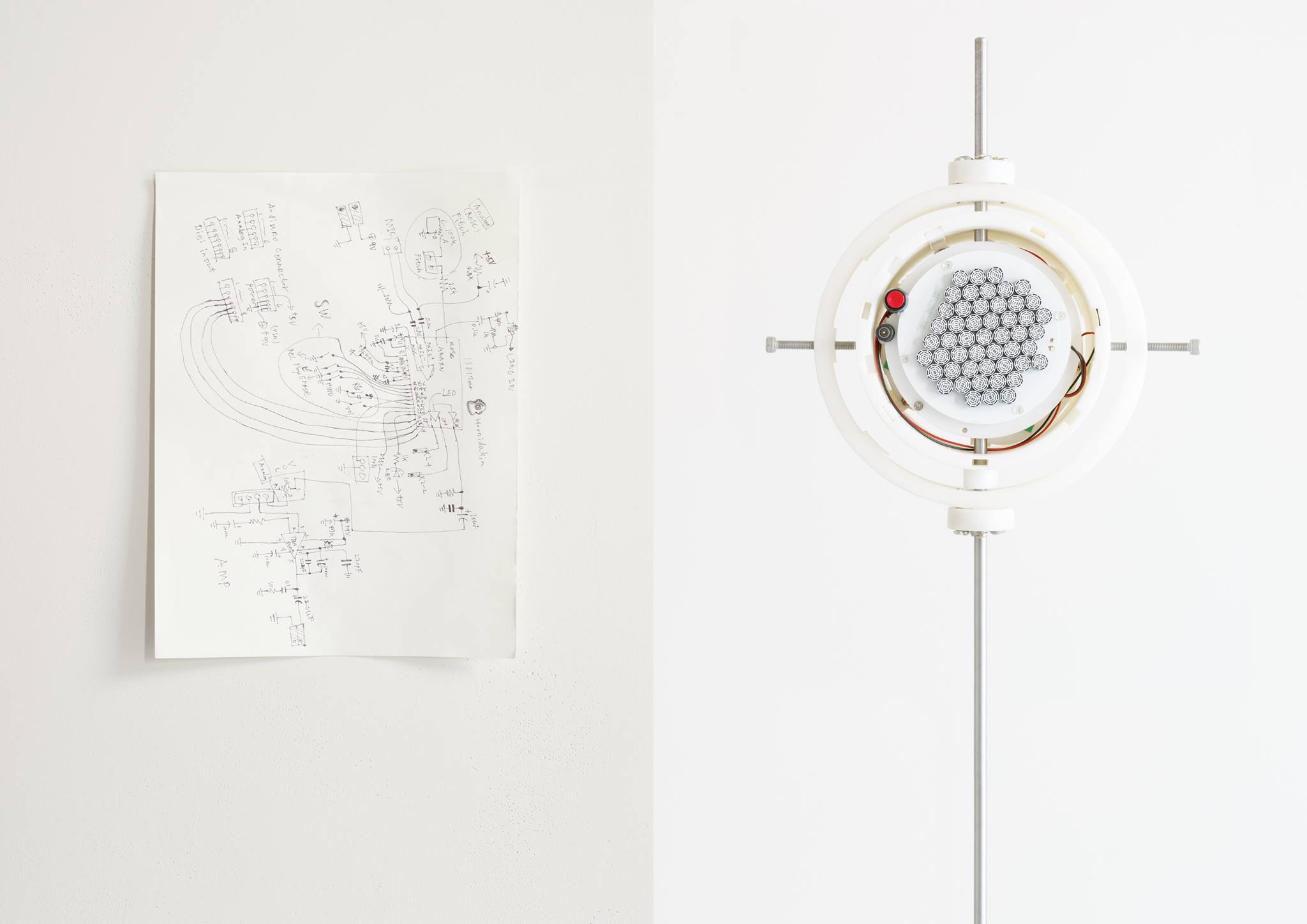
Hoonida Kim, “an artist who addresses changing modes of perception brought about by technological development and the new sensibilities that emerge from them,” is now taking a long breath and looking 75 degrees ahead.

References