Utilizing video as his primary media, Kelvin Kyungkun Park has
perceptively traced the entanglements between Korea’s industrialization process
and various elements and ideas related to pre-modernity and modernity. In Cheonggyecheon
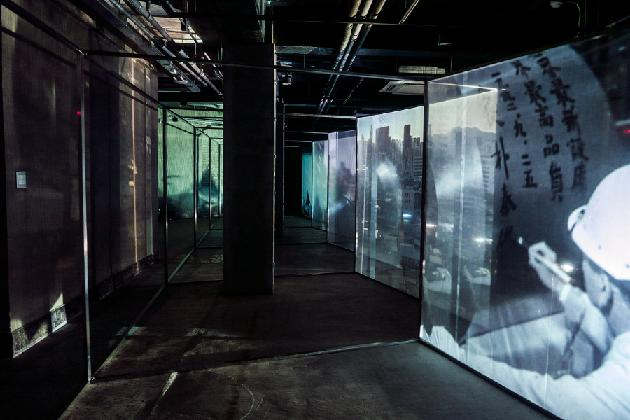
Medley (2010), Park explored the small metal-working shops and
factories clustered around Cheonggyecheon Stream in Seoul, as well as the
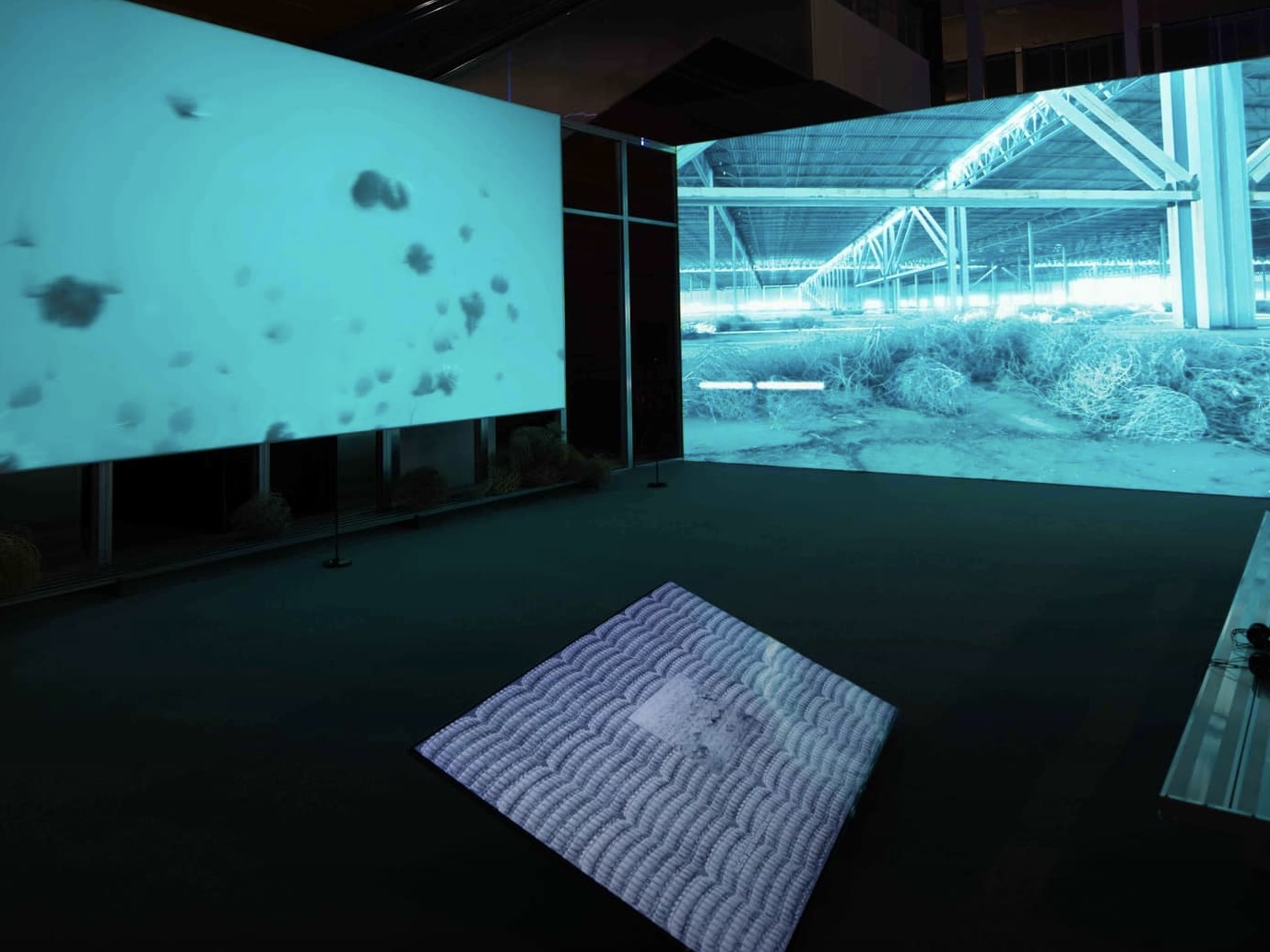
people there. In A Dream of Iron (2014), he used
iron as his context for two of the dominant symbols of Korea’s
industrialization: Posco (a steel-making company) and Hyundai Heavy Industries.
Initially inspired by ancient drawings of whales from the Bangudae Petroglyphs,
which he thought resembled modern-day ships, Park investigated these two
massive industrial infrastructures, both of which are located near the Bangudae
Petroglyphs. In addition to exploring his personal emotions, the film also
contemplates the origins of Korean art and myth and considers the role of
cultural ideology in guiding the country’s contemporary history. More recently,
in 1.6 Sec (2016), Park captured the incessant
large-scale production of an enormous car factory through a dynamic play of
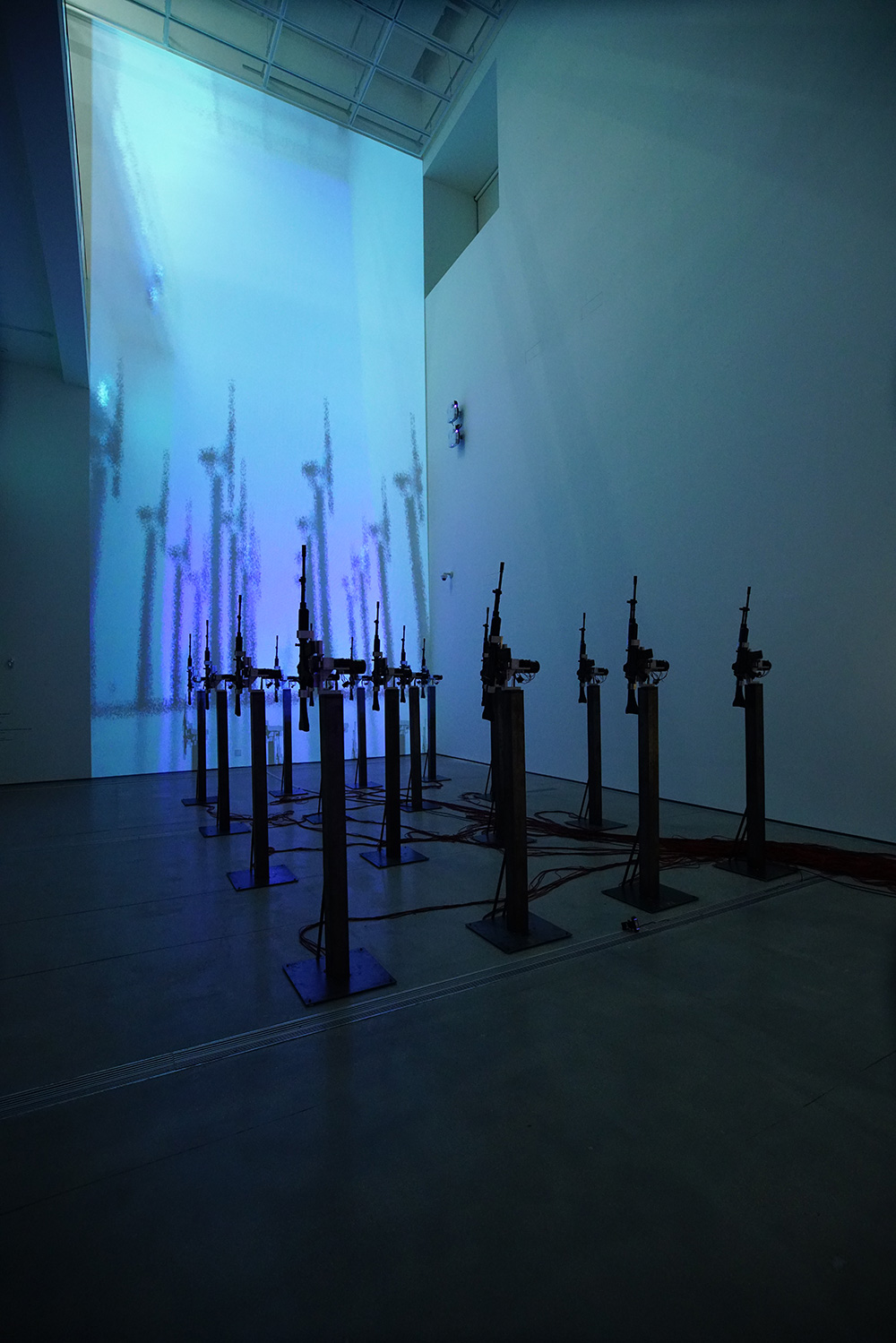
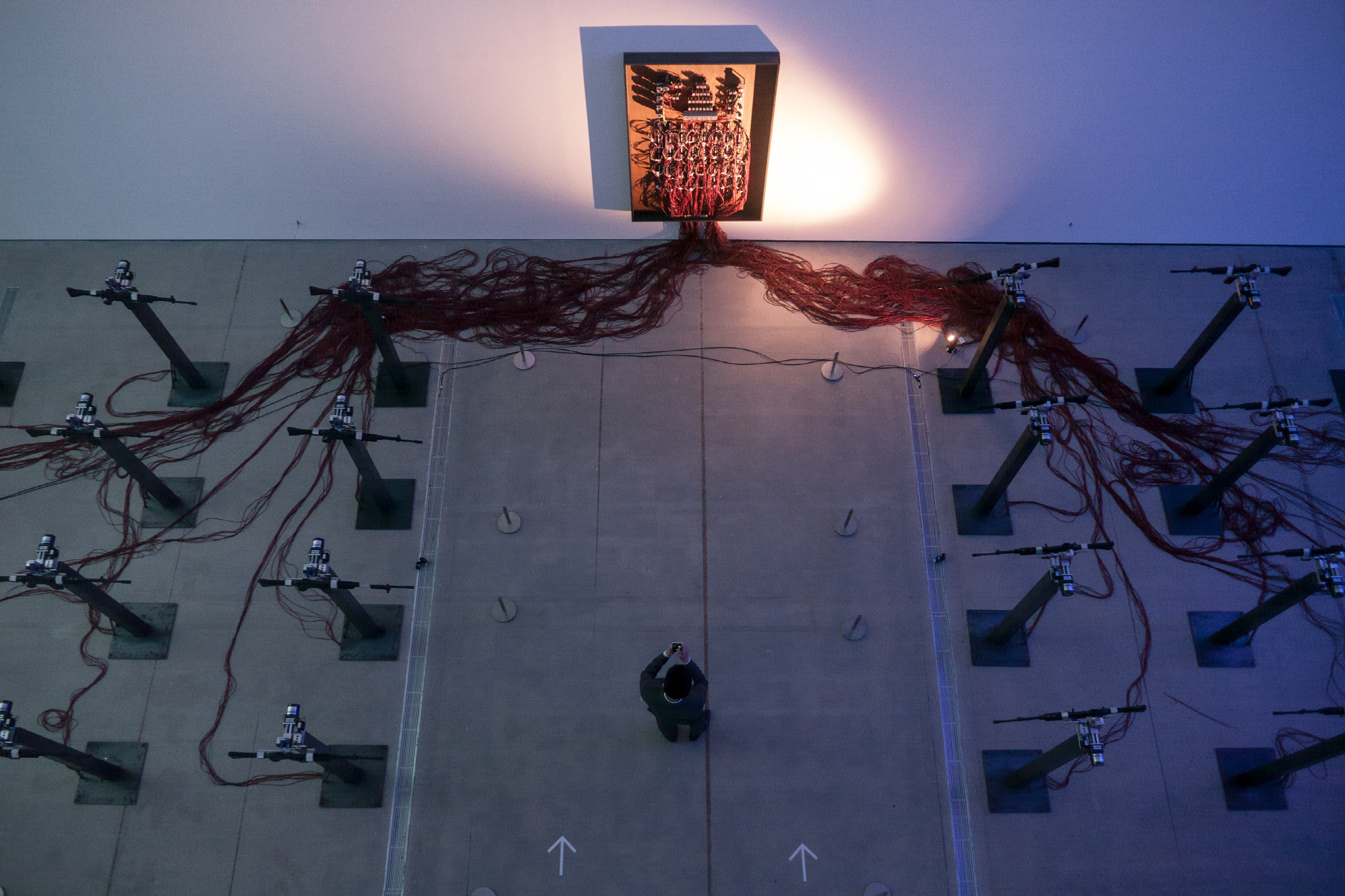
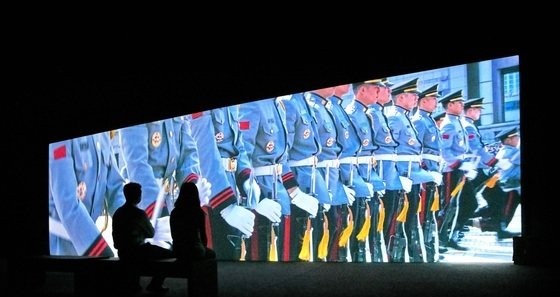
light and air, heightened by the ubiquitous sound of robots. Army:
Portraits of 600,000 (2016) examines how Korean society has been
affected by the army culture experienced by most Korean men, who are subject to
mandatory military service. Notably, in all of these video works, Park
represents the male-centric hegemony of Korean society with a distinct symbol:
iron, cars, and the army. Park uses these elements to unveil the masculinity
embedded in Korean culture, and to reveal the hidden side of his visual
spectacle, in which such culture unfolds.
Park’s most recent work again conveys an incisive critique of society but also
demonstrates the evolution of his critical approach. It is a video and
performance work entitled Stairway to Heaven, which most Koreans know as
the title of a hugely popular TV drama from 2003, rather than as the title of
the Led Zeppelin song. This work involved both pre-produced video and real-time
filming of a performance at the opening of an exhibition, using the entire
gallery as a backdrop. Like the drama, Park’s piece involves four major
characters, and he uses performance to explore and classify the ways in which
people form relationships with one another. Emotions experienced during the
process (e.g., passivity and excitement, hesitancy and eagerness, joy and
regret) are expressed through the faces and gestures of four dancers as they
meet, slide by, and depart from one another. Most memorably, a real-time video
of the live performance was juxtaposed with a previously filmed video that was
projected on the walls of the gallery, thereby disrupting the audience’s
perception of both time and space. Furthermore, two different videos were
projected onto the walls: one video that had been previously shot, and one
video that captured the “real-time” events happening in the gallery (including
the projected video). Notably, Park used the exact same camera angle and set-up
for both videos, thus creating a mirroring effect that made it impossible for
the audience to perceive the subtle time gap between the two projected videos.
The resulting work combines synchronization and asynchronization in the same
space, so that the moment that has just happened, the moment that is now
happening, and the moment that is about to happen are merged in the same video
frame. By visually emphasizing the synchronization, Park actually evinces the
asynchronous and segmented time that usually cannot be perceived with the naked
eye. In his video, time is segmented, repeated, and mixed; continuity
continually gives way to segmentation, and vice versa, as if a digital clock
has been hung in the performance space. Park’s visualization of the spatial and
temporal gap enables Einstein’s synchronization and asynchronization to coexist
on the same screen. Such segmentation might also represent the dislocated and
disintegrating relationship among the performers in the video.
Being set in a digitized time and space, this segmented relationship hovers
around the past, present, and future, eventually eliminating the division
between here and there, and between that moment and this moment. The critical
approach of Stairway to Heaven echoes another of
his earlier works, entitled Spatio-temporal Machine (2015).
Both of these works demonstrate how Park, who started out as a documentary
filmmaker, has begun to integrate elements of film and art, producing his
unique works in parallel with these two fields.