If the word hospitality were to take on a physical form, what might it look like? A flag, a lantern, a welcoming body…
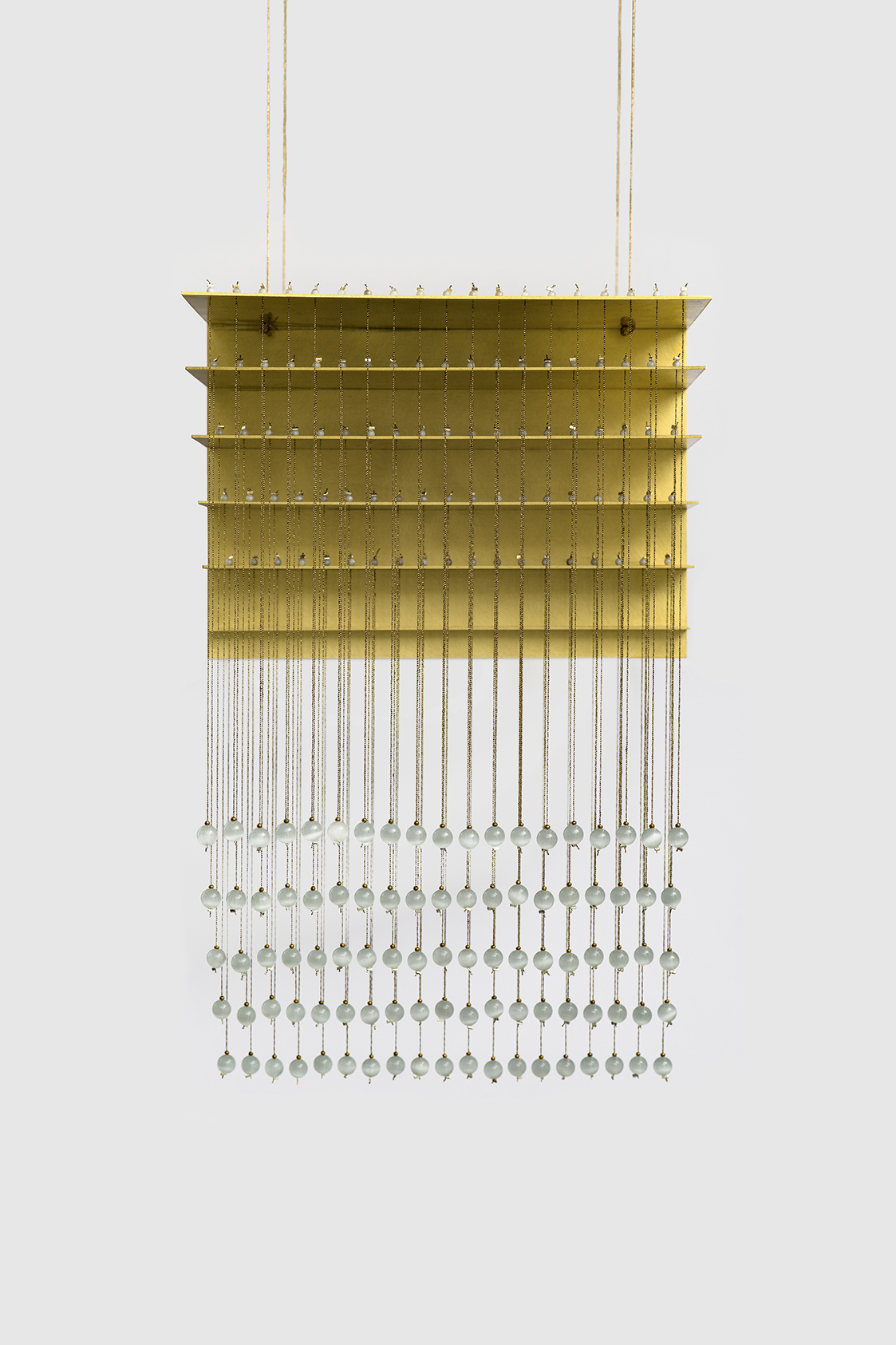
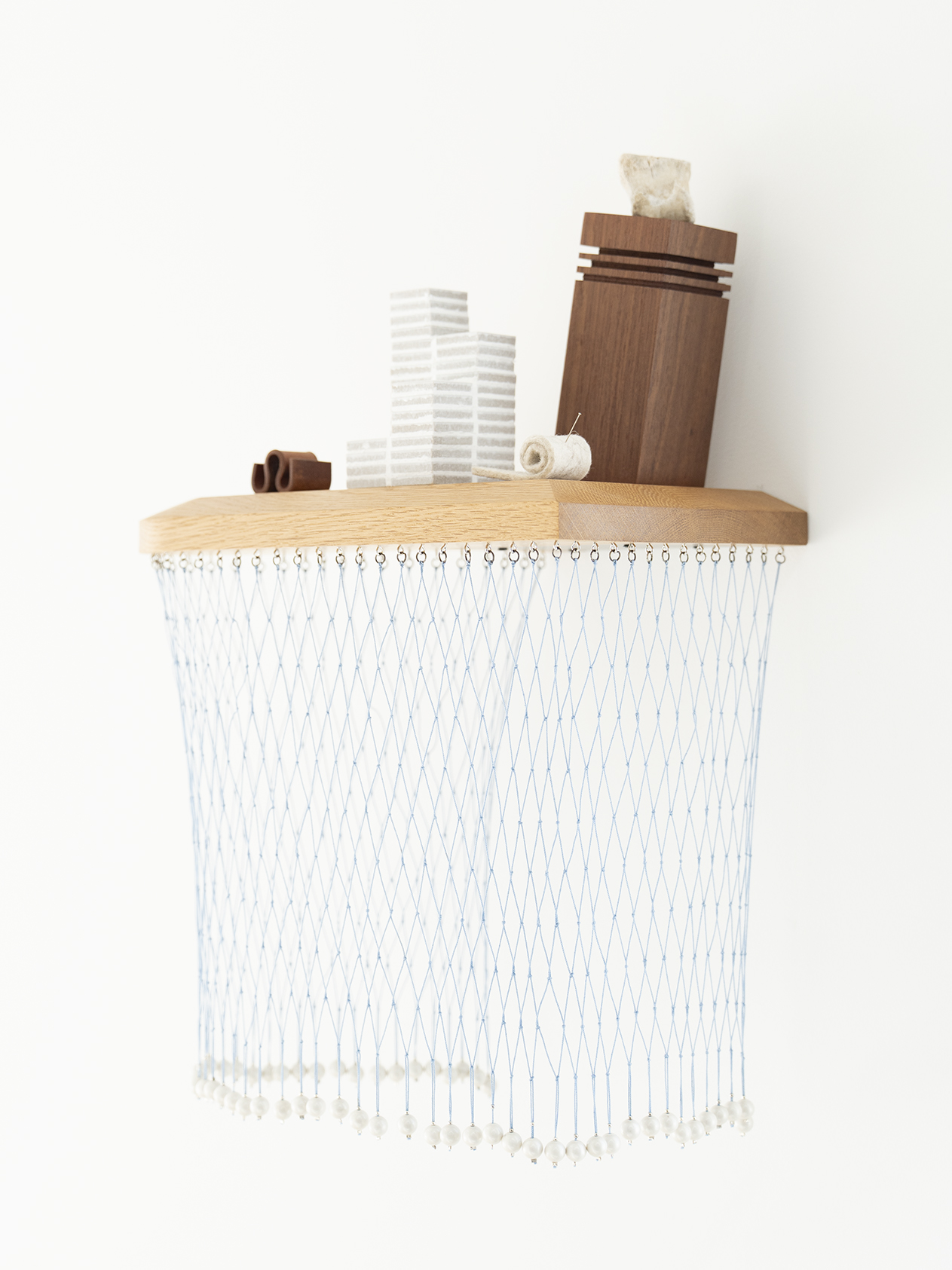
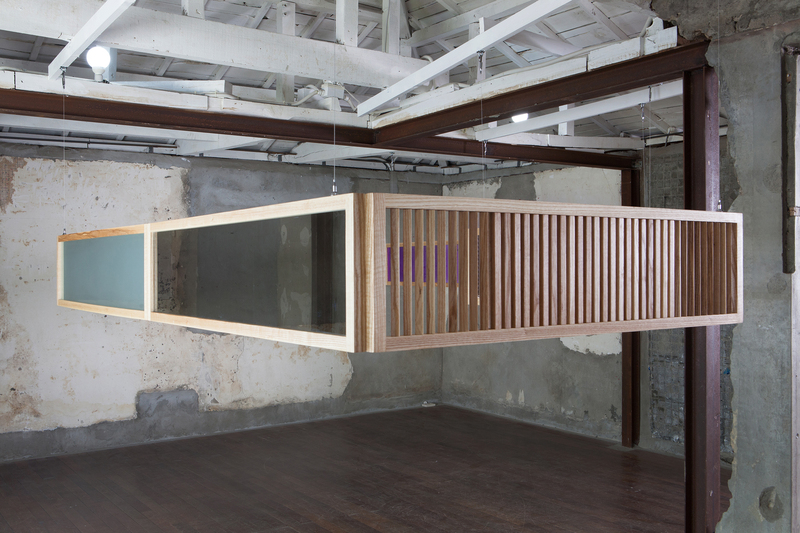
The first object or person one encounters upon entering a space is always special. The experience begins with Upstairs (2025), a work of clean, rectangular form that invites the expectation that within this abstract object lies a certain order, gesture, and material sensation that tenses and heightens the body.
There exists a kind of form recognizable only through abstraction—through the order of intersecting verticals and horizontals, the arrangement of gradual protrusions and recessions, the balance between transparency and opacity. Someone’s coming and going seems to unsettle even the object itself; the positions, directions, sizes, and weights of things shift ever so slightly until they take shape. Within these movements, circumstance finds its way into the object.
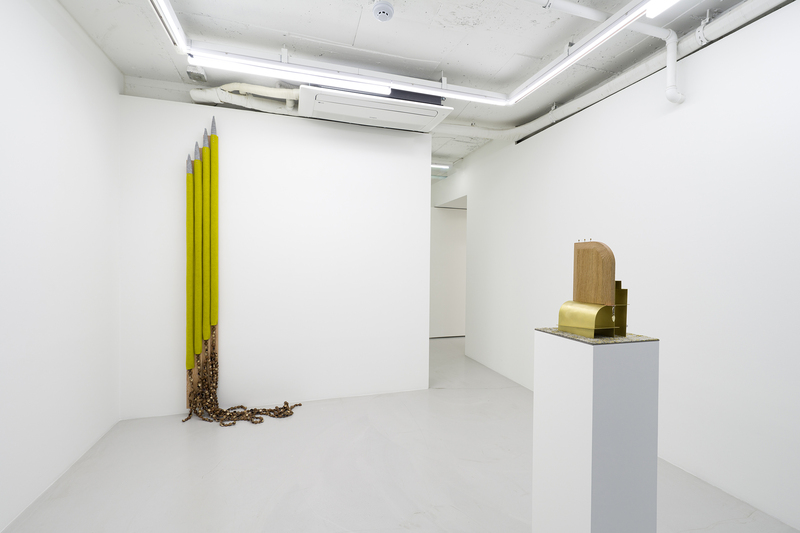
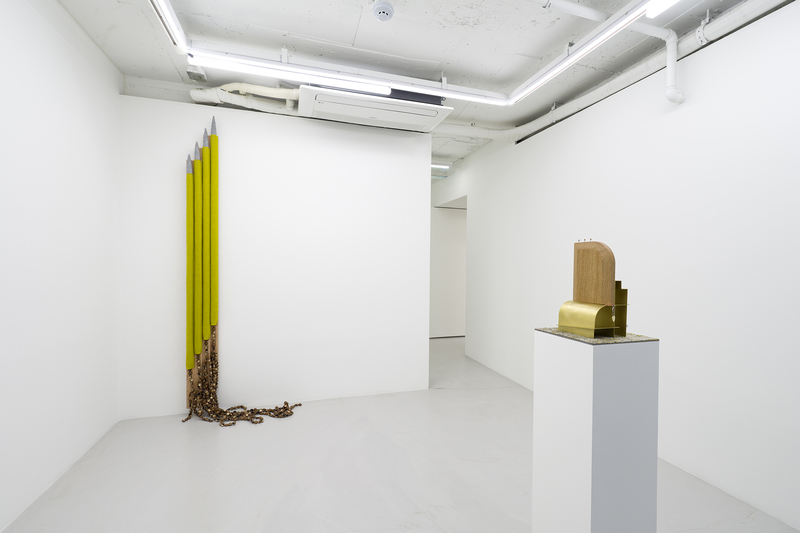
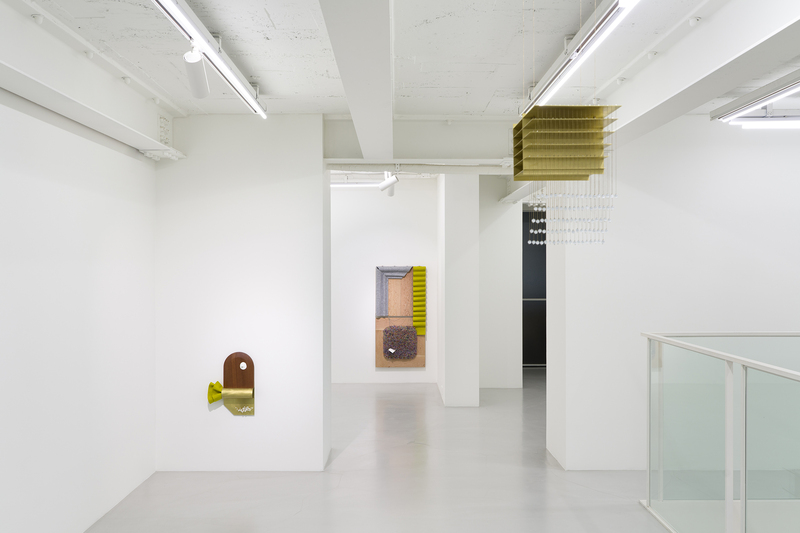
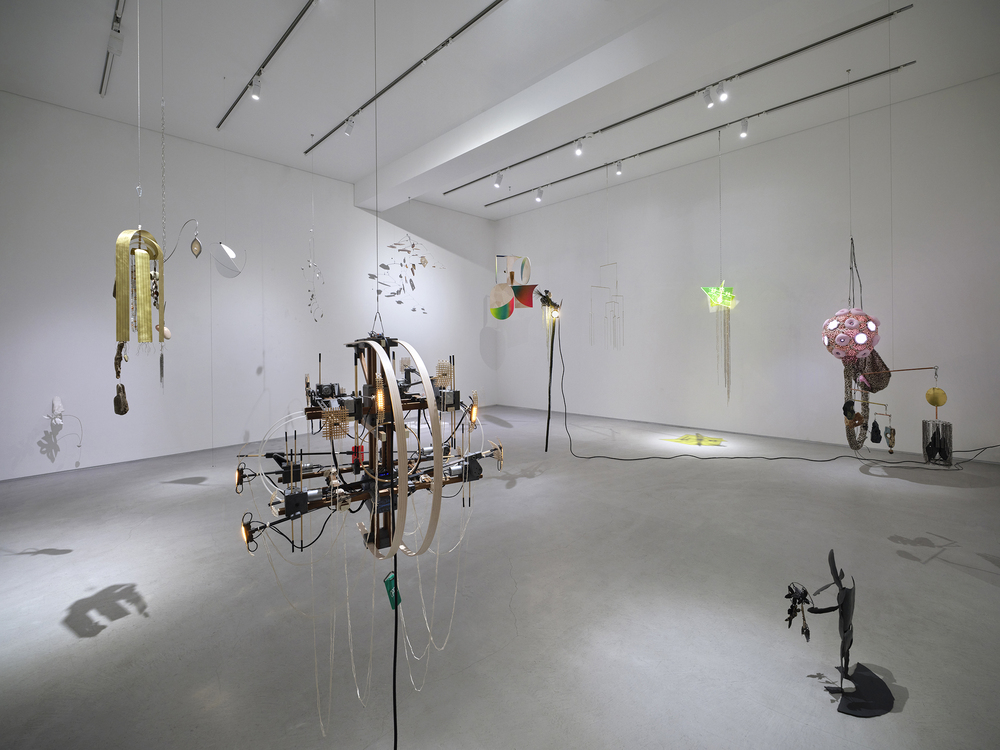
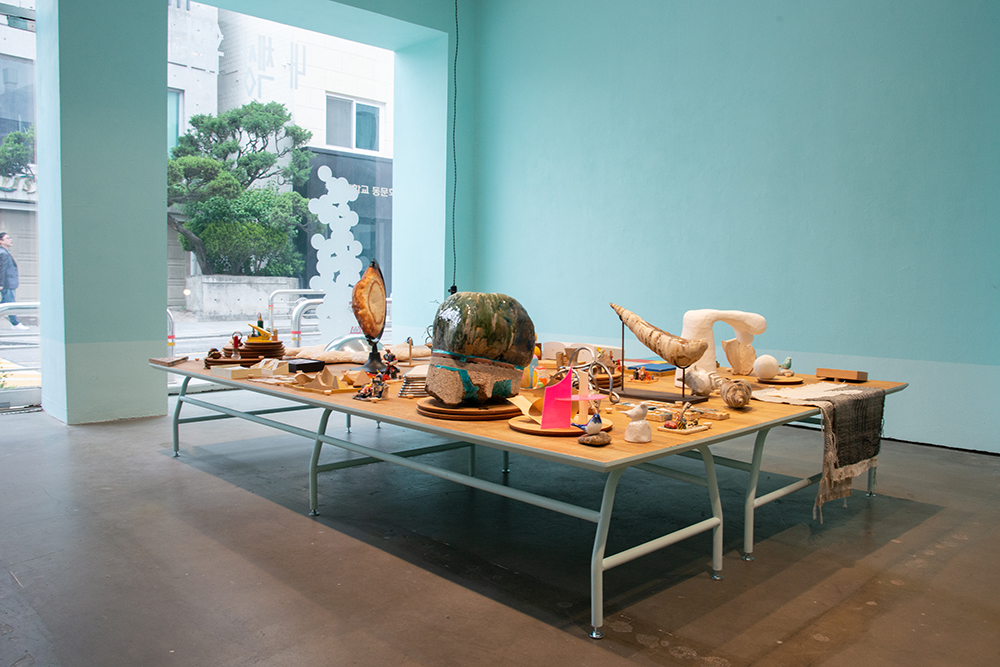
Entering 《Housework》, Eunu Lee’s solo exhibition, with the hospitality of Upstairs, one encounters an interior scene where Lee’s “objects” are carefully arranged on the walls, floor, and ceiling. Among the large and small things—those placed near the knees, those at eye level, and others reaching above the head, even those standing on the floor with shapes and thicknesses that seem to invite an embrace—I begin to imagine the body of a “giant” that has touched every corner of this space.
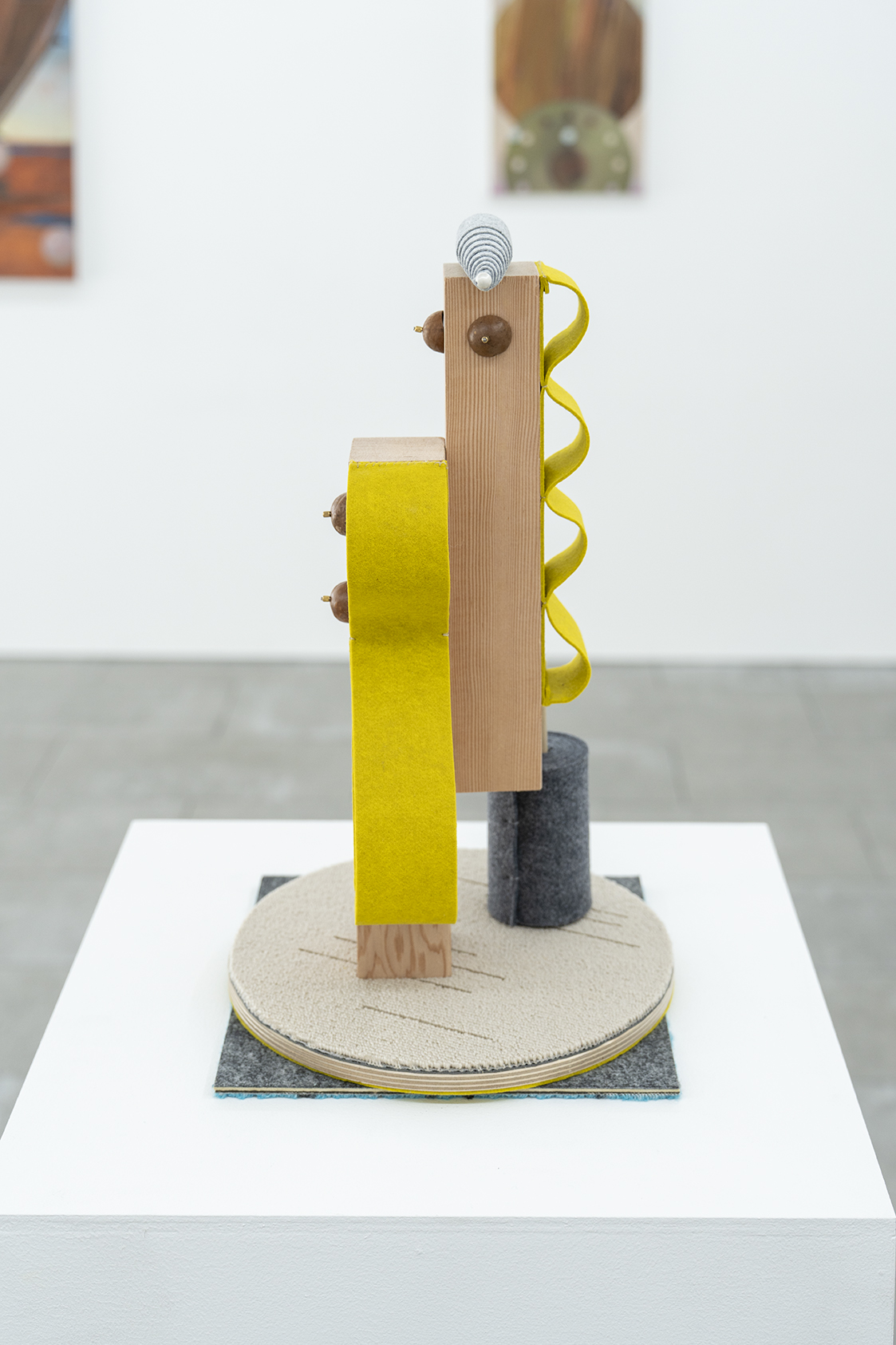
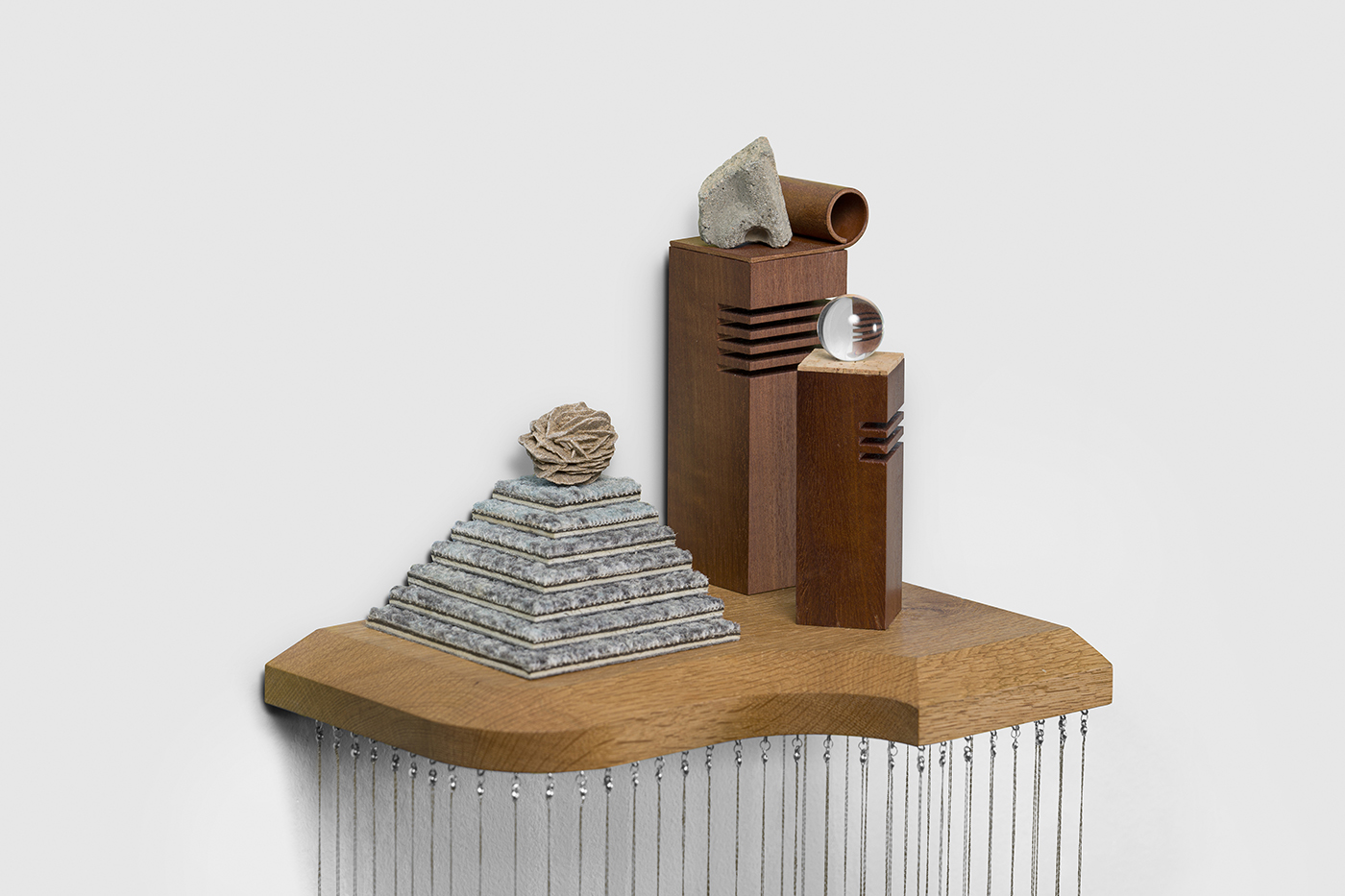
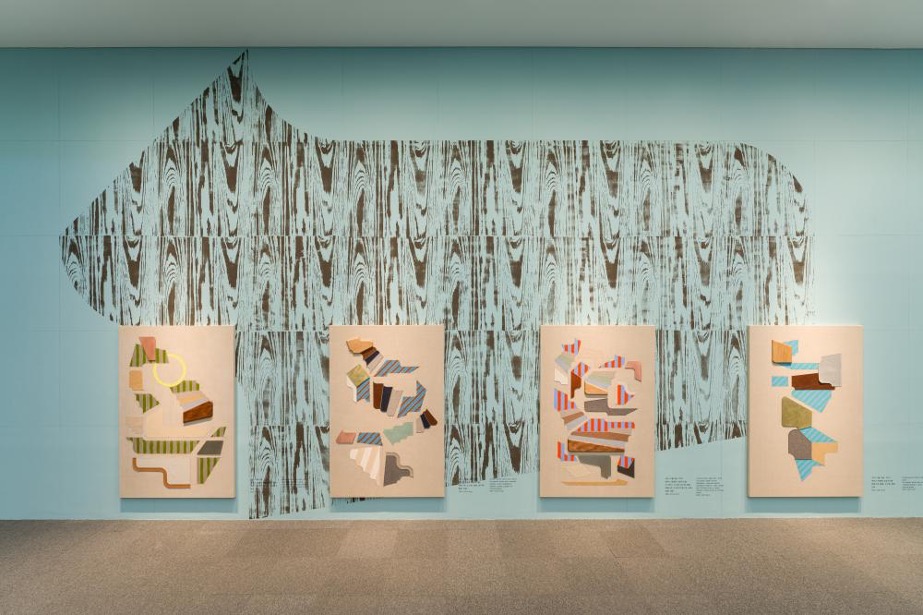
At the far end of my line of sight, perfectly aligned with Upstairs, stands Windowsill(2025). On a well-polished wooden panel, disparate objects are layered, producing subtle differences in depth. Because several panels have been joined, the misaligned wood grains evoke the surface of a floorboard or a piece of solid wood furniture.
Lee’s actions—attaching two colors of felt, a metal chain, and stitched embroidery—appear deliberate and precise. Like a decorative molding curve, she cuts gray felt diagonally, bends it at varied intervals, and neatly covers one edge of the wooden panel. Alongside it, she folds olive-colored felt into regular pleats that fall vertically like blinds, draping over the adjacent edge, and hangs a metal chain to fill the remaining space.
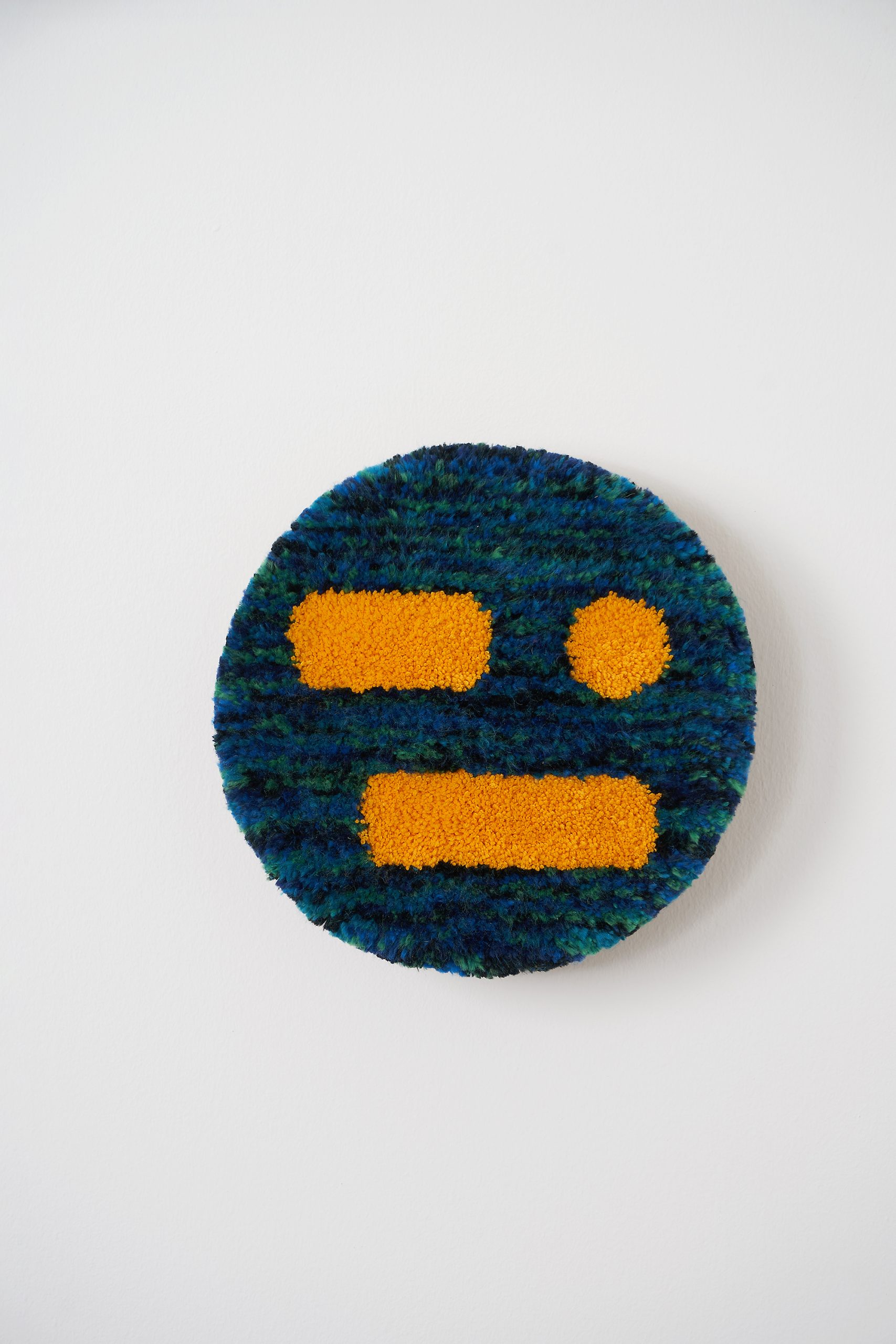
A rounded rectangle of stitched embroidery at the bottom, with its colored threads, recalls the texture of a carpet or rug on a wooden floor. A white envelope tucked between the threads reignites the imagination of that giant’s body.
Between Upstairs and Windowsill—or, more precisely, from Windowsill back past Upstairs and down the staircase by the entrance—the return walk feels unusually long. Perhaps because what I’ve seen demands that I also imagine and recall more than my body’s mere movement. The “objects” I have just turned away from seem to be neither functional forms nor those pursuing constructional structure; even as I stand apart from them, I keep trying to gauge how they came into being.
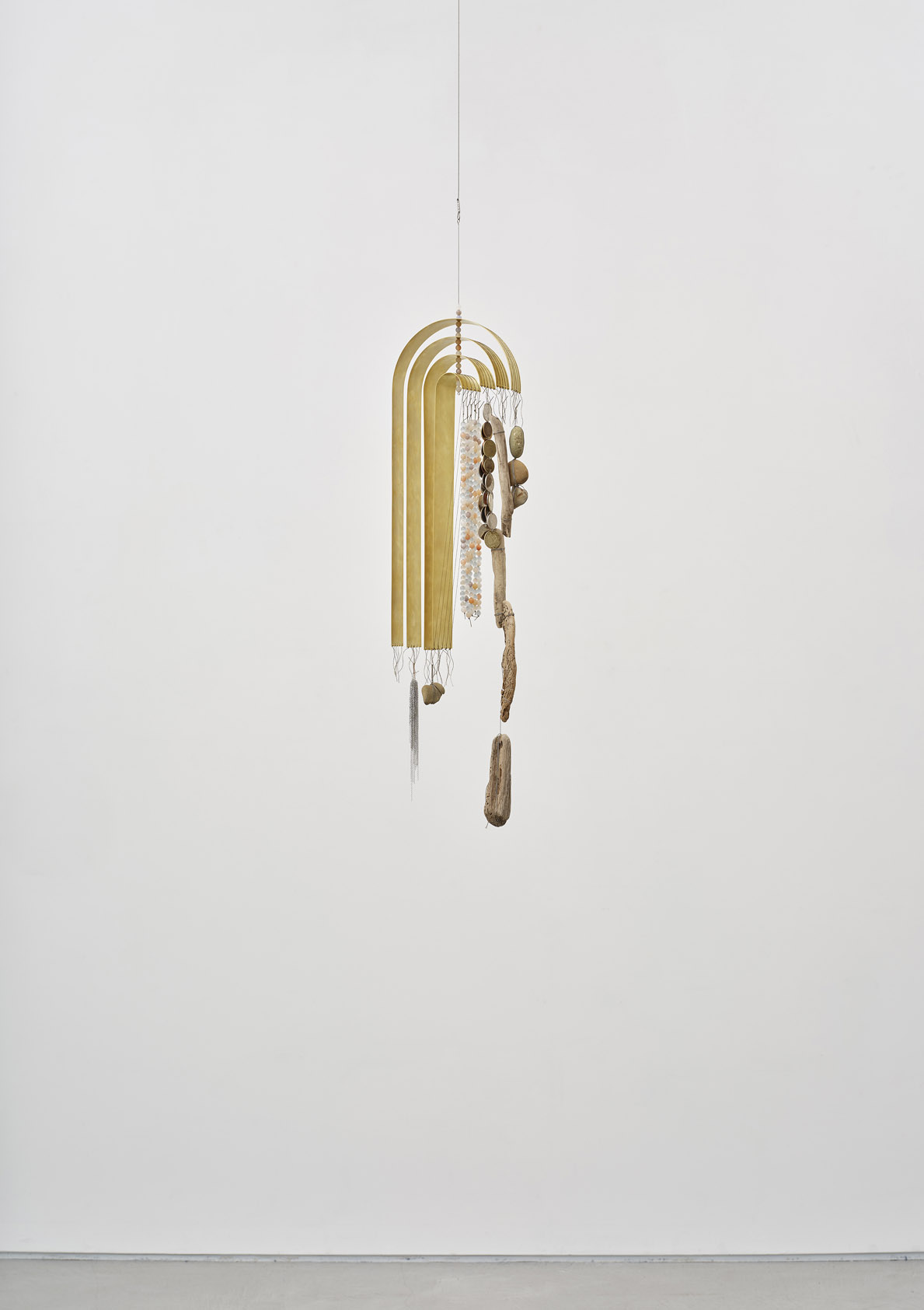
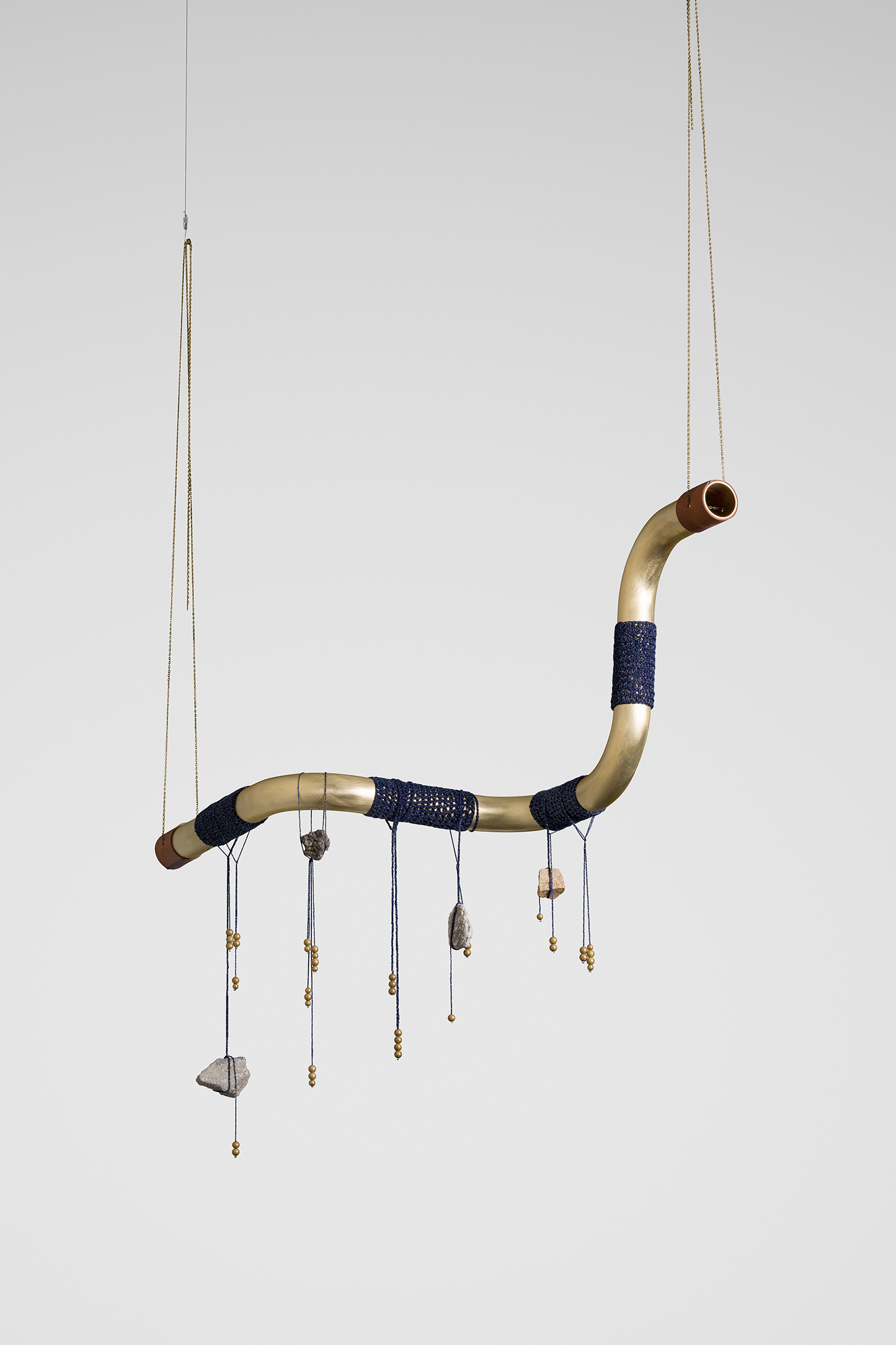
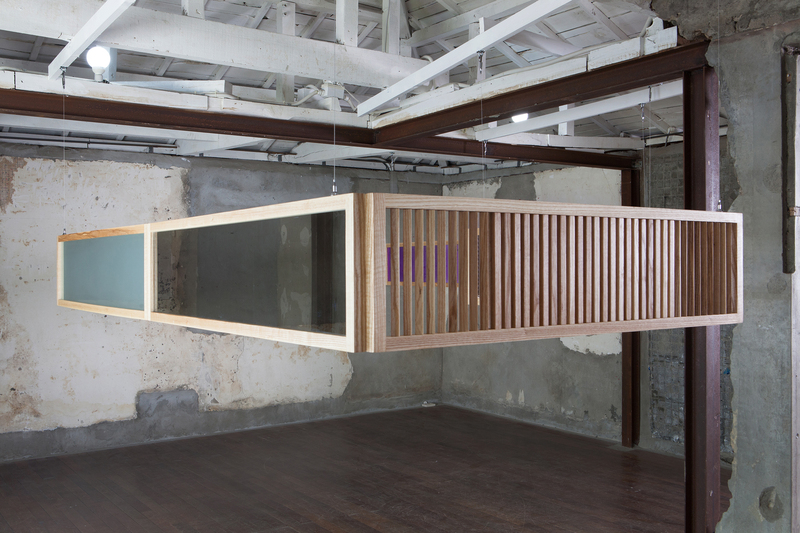
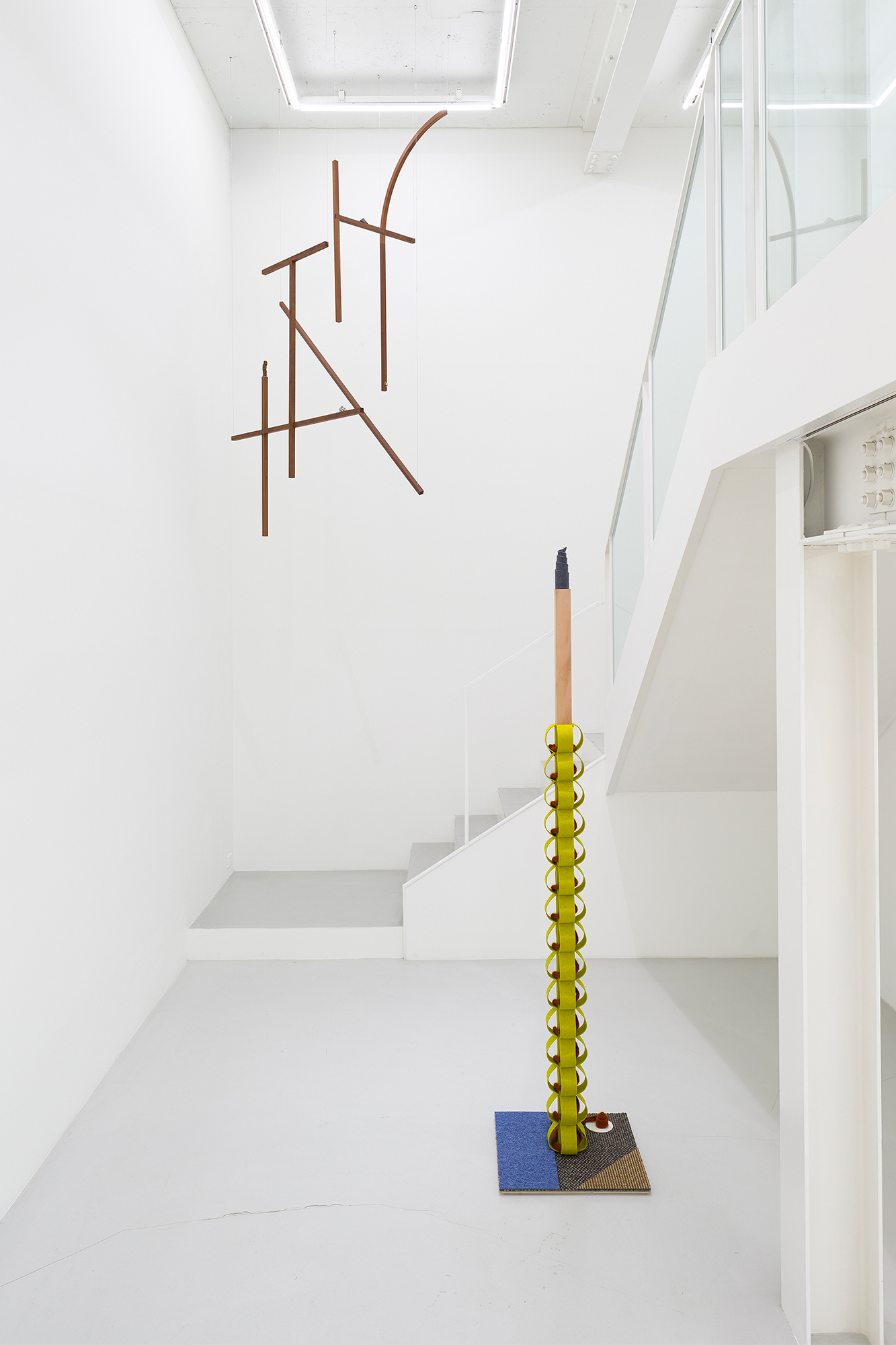
Lee calls this undertaking “housework.” Before House (2025), balanced delicately with wooden rods, and below it, I move closer to the circumstances of these things. Midway down the stairs, between ceiling and floor, she suspends a wooden rod structure that nearly reaches head height. Hanging in midair like Upstairs, House recalls the (ancient) role of sculpture that once visually filled the empty corners of architecture throughout human history.
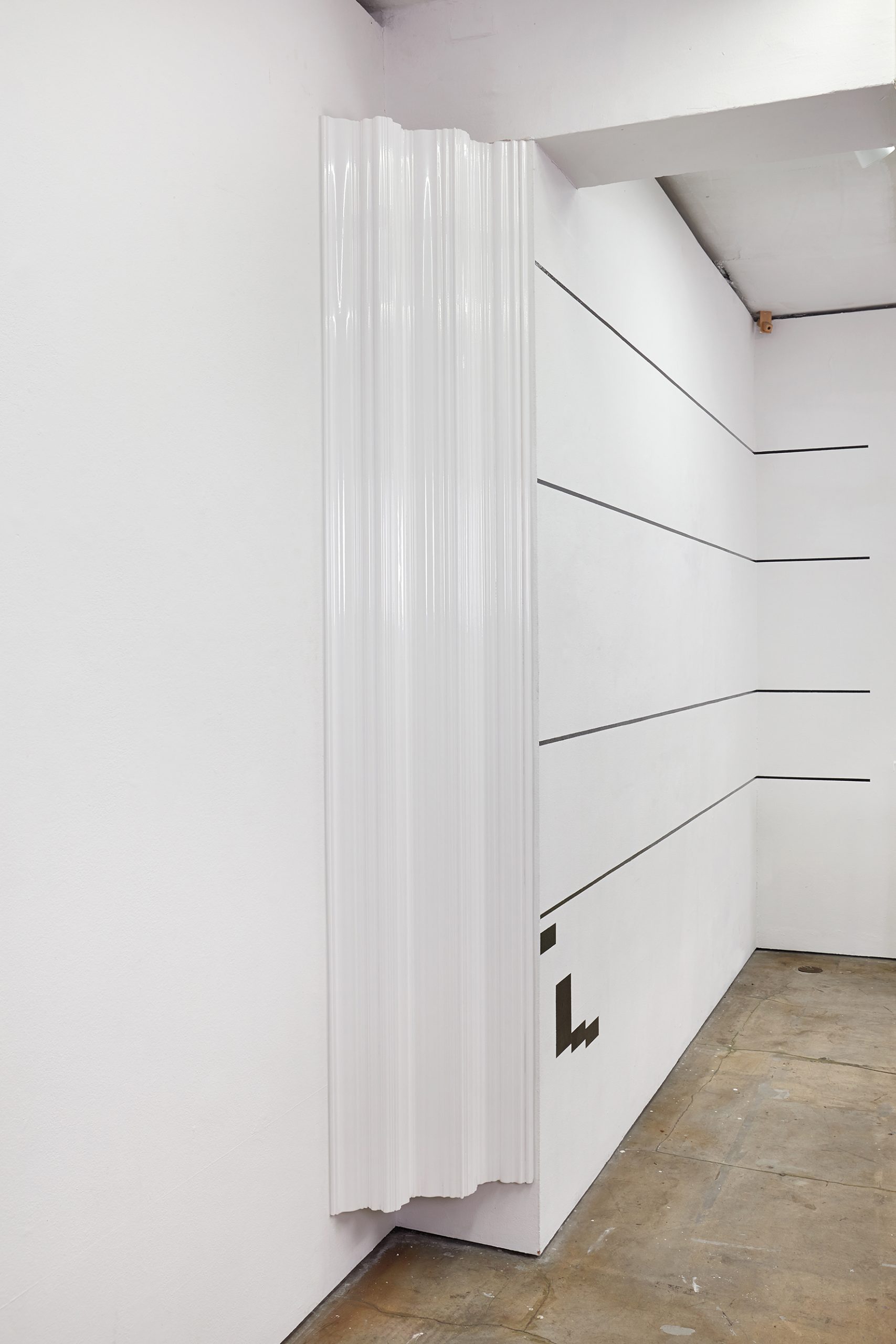
As I reach the landing, a pillar-like form stands beside a white steel column, sustaining this thought. The emergence of this “column-sculpture,” though long detached from its architectural function, gathers the eye toward its verticality through its relation to adjacent structural elements. Using felt, Lee accentuates this verticality decoratively, much like ancient architects and sculptors once did.
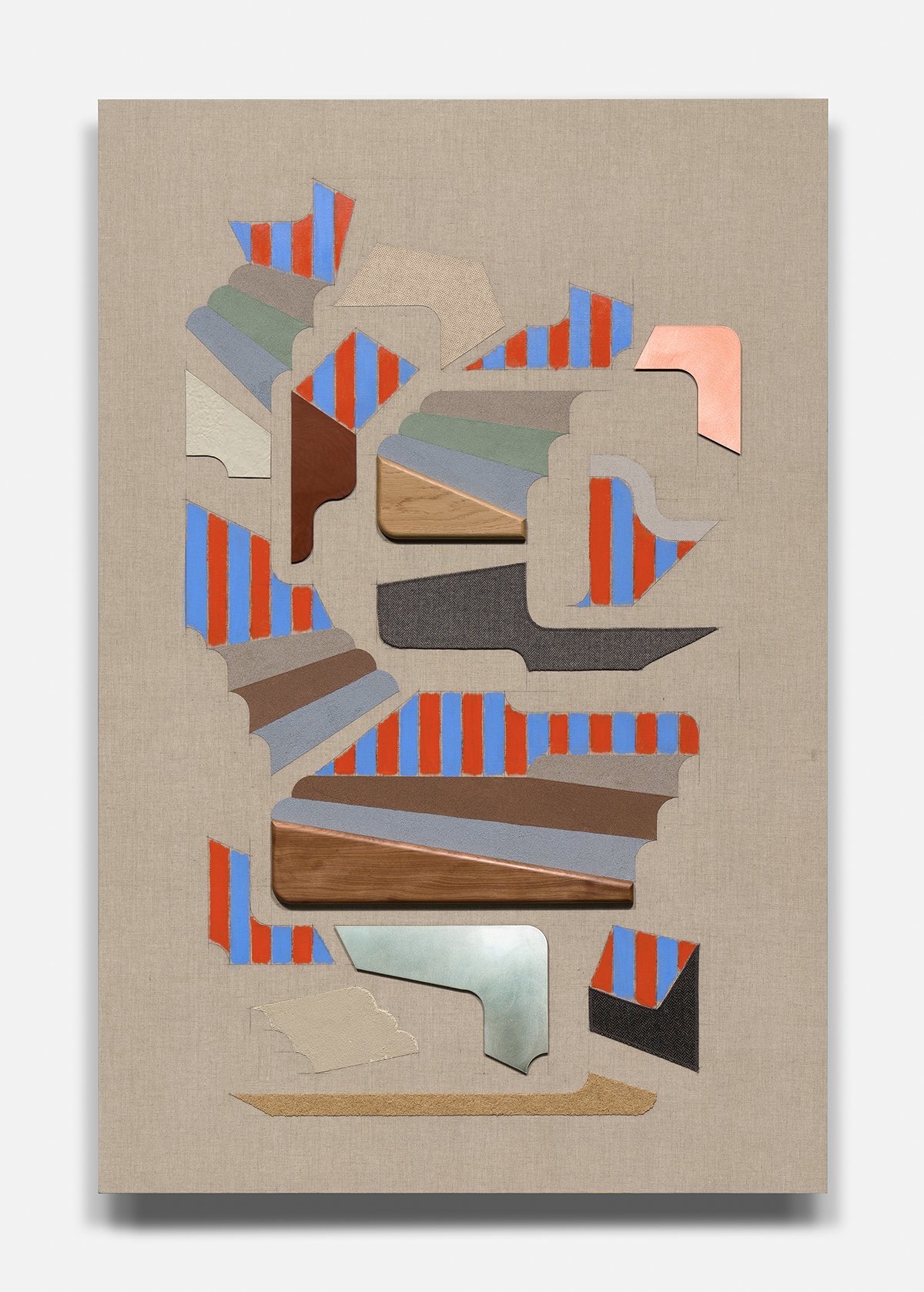
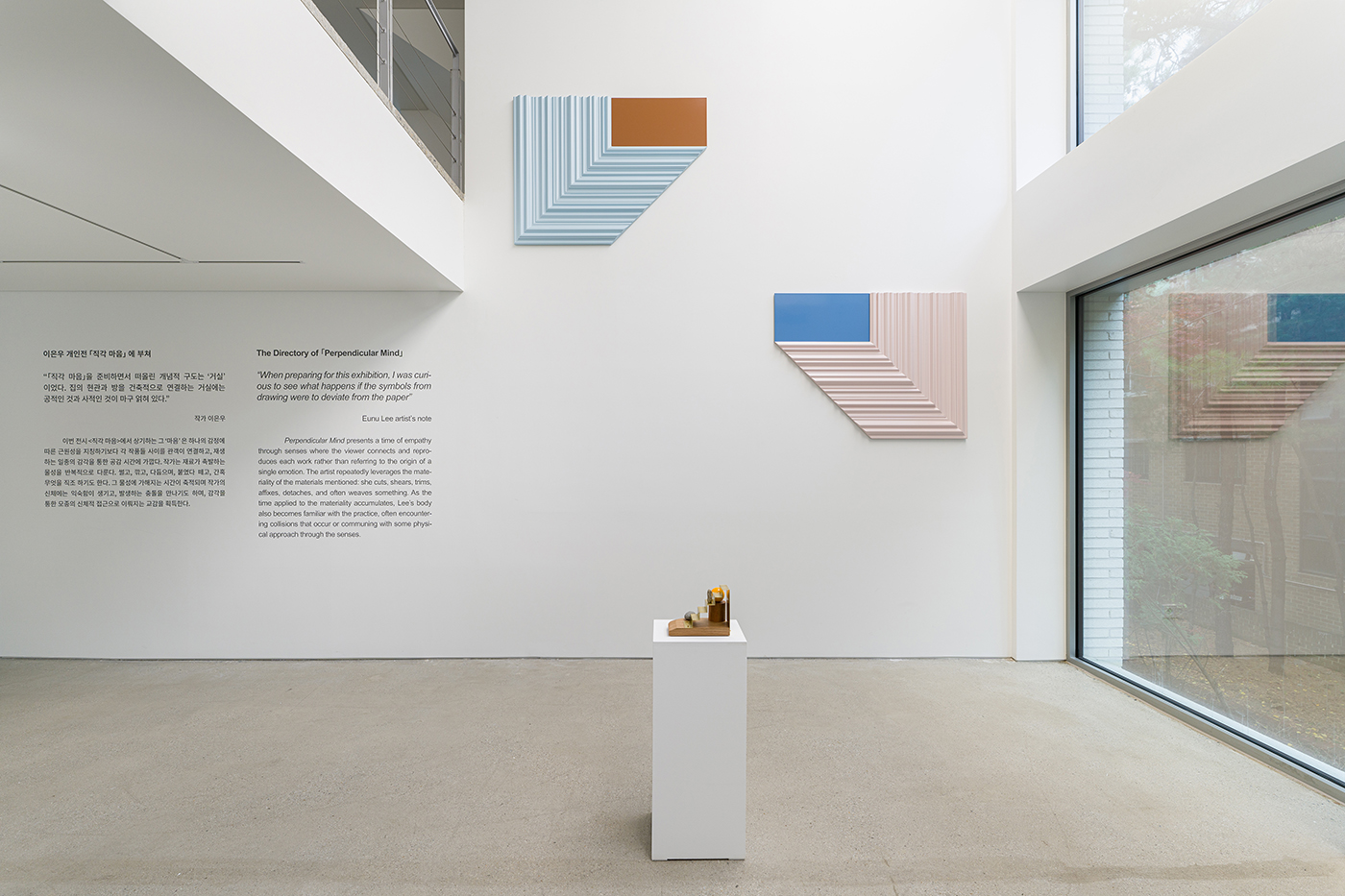
And then, the door. From Rodin’s The Gates of Hell (1880–1917) and Ghiberti’s Gates of Paradise (1403–1424) to triumphal arches in public squares and even sarcophagus lids, how many doors have assumed the role of sculpture—as hollow supports filled with meaning? Lee places a pair of rectangular wooden panels side by side against the wall, and through this simple gesture, she evokes the architectural presence of a door.
By recalling moments in sculptural history where doors mediated between architecture and sculpture, she reconfigures that relationship: her own sculptural approach remains architectural. On wooden panels that serve as door supports, she assembles formal elements associated with the door, creating low-relief sculptures of “doors” themselves.
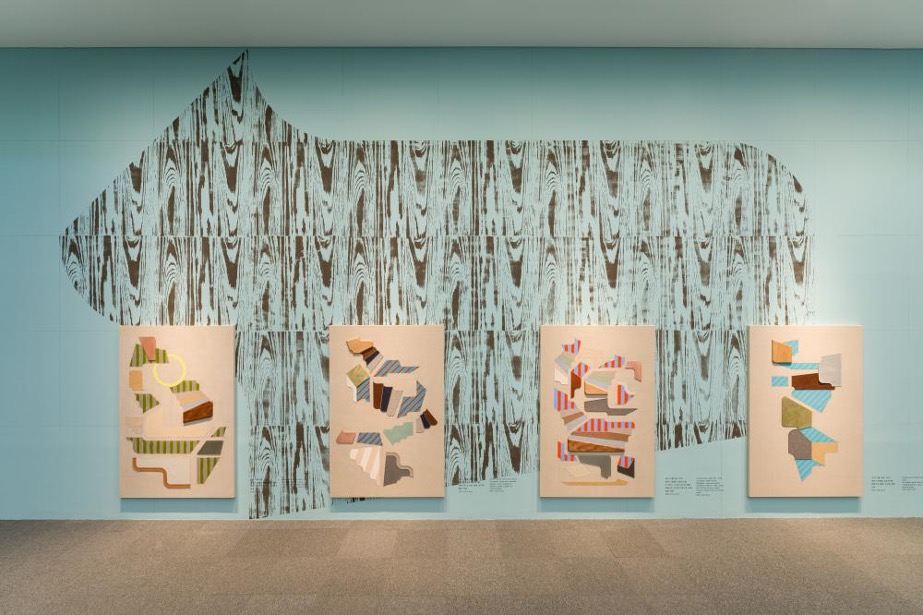
In This Room (2025) and That Room (2025), one can see how multiple shapes have been gathered to establish the autonomy of the “door-sculpture.” I am reminded at once of Vladimir Tatlin’s relief Selection of Materials: Iron, Stucco, Glass, Asphalt (1914), in which the constructivist principle—that the essence of form derives from the properties of material—was demonstrated through the combination of architectural materials of his time.
Material-based form: this was the constructive outcome pursued by Tatlin’s “selection of materials.” The association arises because, in This Room and That Room, Lee seems to arrange formal elements visualizing the form of a door upon its frame, resulting in reliefs “true to form,” extending the lineage of historical “door-sculptures.”
Weaving cords, hanging curtains or blinds, placing small objects that signal sound or movement, positioning things above the line of sight to let space grow—Lee calls these acts “housework.” Even without invoking chores like washing dishes or doing laundry, the repetitive nature of “housework” shapes daily cycles, seasonal shifts, and the rhythms of life and death.
Furniture is moved with the seasons, curtains regulate light, fabrics cover the floor. Vertical things are hung where wind passes; objects accumulate in deep corners, filling voids year after year, life after life.
That such acts might ultimately form sculpture from architectural elements is perhaps because sculpture itself was once born of the domestic sphere. Unlike painting, which sought to bring nature and landscape indoors, sculpture—reflecting the human figure—has, since the time of caves, tended fire, spun fiber, replaced the body of the dead, occupied space, and steadily grew its form within it.
The acts of building, weaving, and placing that Lee calls “housework” resemble these ancient sculptural gestures through which humanity imagined form from the materials of nature.
Lee emphasizes sculpture as a form belonging to housework—a constructive shape that allows space to grow. Embracing materials that range from the everyday and architectural to the industrial and natural, she revisits the sculptural acts of carving, molding, assembling, and arranging within the vast spatiotemporal dimension of domestic labor.
The suspended House, balancing in air, stands in striking contrast to the classical illusion of sculpture—anchored to a pedestal, resisting gravity in a single outline. It instead recalls the lofty sculptures precariously set atop cathedral spires, urging the gaze to extend endlessly toward the world’s edge. Toward the subtle void between vertical and horizontal, Lee stacks stones and hard nutshells into a tower.
In Windowsill, the unopened envelope we never manage to read is not a letter meant to be read but a written object meant to exist upon that surface. A spent letter, casually wedged on a shelf or by a window, transforms through this intimate act into a new spatial gesture.
Poet and novelist Rainer Maria Rilke, in his 1903 monograph Auguste Rodin, wrote of the movements and expressions within “sleeping stones.” He recalled that where a bird once alighted, “the sky had grown from it and lingered around, and in each feather of the bird lay folded layers of vast space that could, if spread open, become immense.”
His words evoke the quiet presence and motion of a bird resting in midair—where stillness resides. Returning to the beginning, the form of Upstairs, suspended from the ceiling by four thin cords, endures gravity and gives rise to space within emptiness. It stretches and folds, conceals and reveals, resting quietly while foretelling a great movement to come.