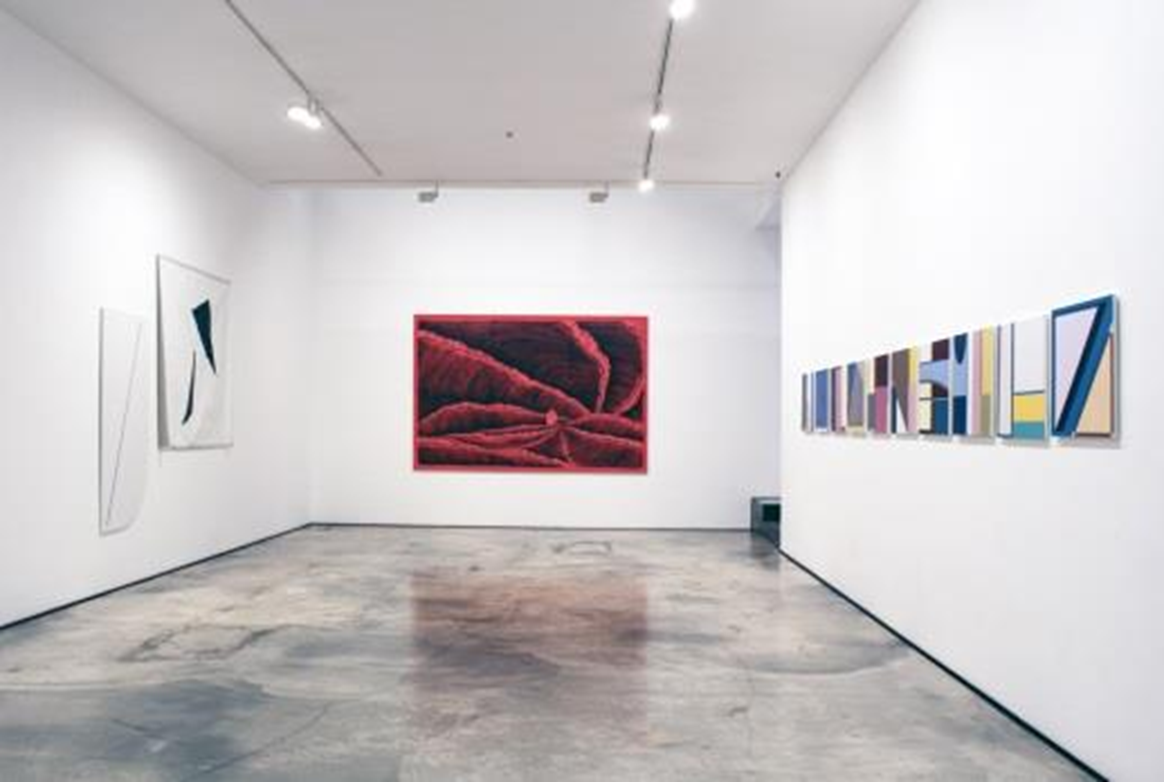
There is an expression often used in English: “to keep someone at arm’s length.” It is used when one keeps a distant relationship in a situation where greater closeness would have been possible. Taken literally, an arm’s length is a very short distance. Yet this close distance can sometimes feel as far away as an unrecoverable stretch of time.
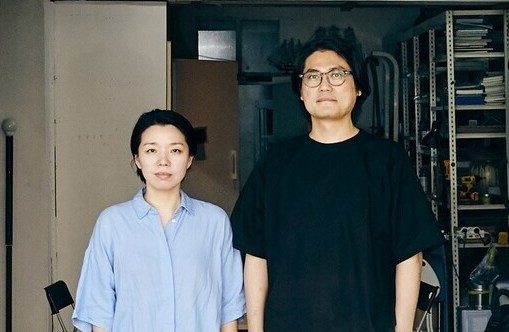
RohwaJeong’s exhibition 《Within Arm’s Length》 is about the distance surrounding work and exhibition. Distance is the degree of space between two points. Physical distance is quantified and marked, but what we experience more often is perceptual distance, which is difficult to quantify. Perceptual distance may have a strong correlation with physical distance, or, like an “arm’s length,” it may have little correlation at all.
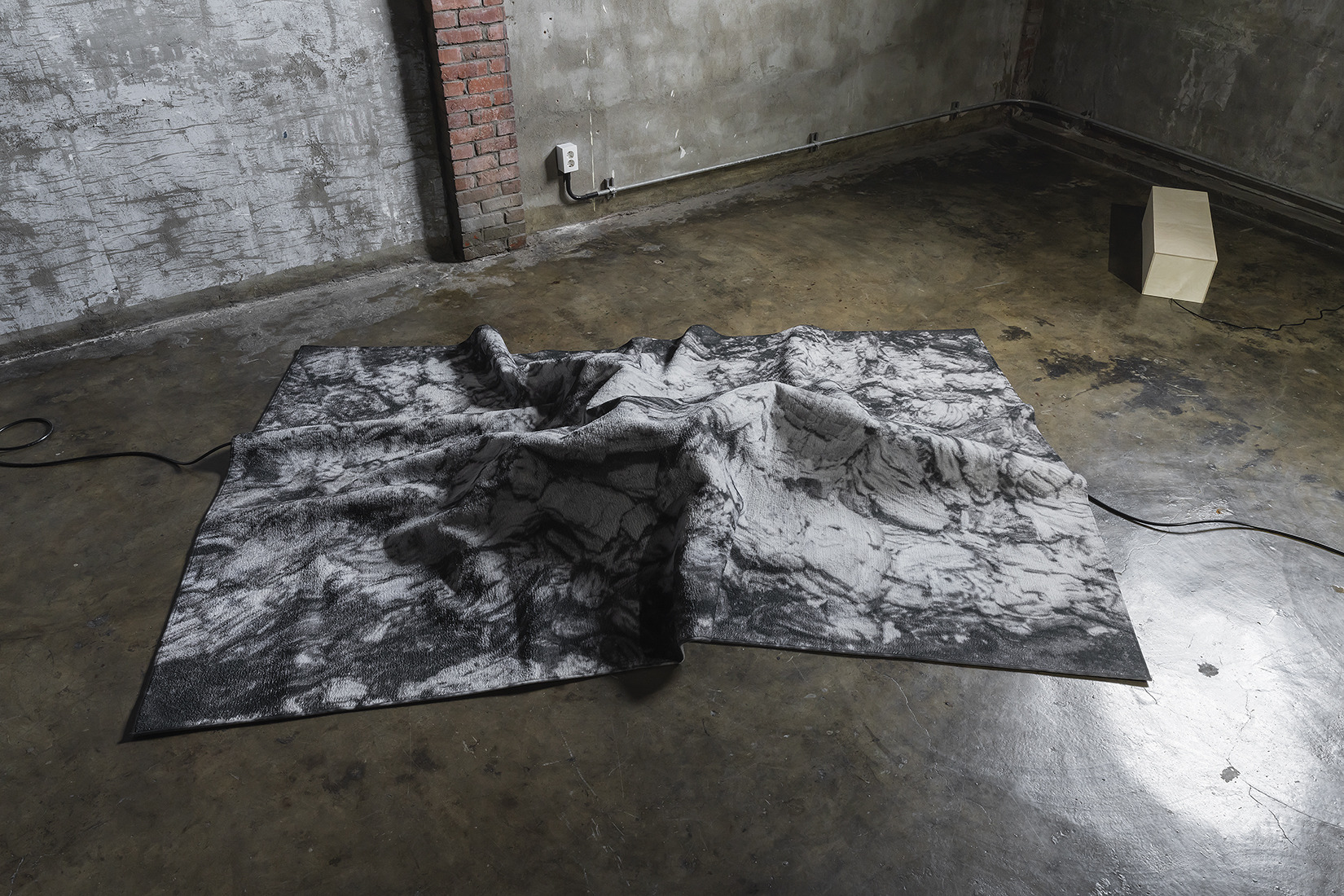
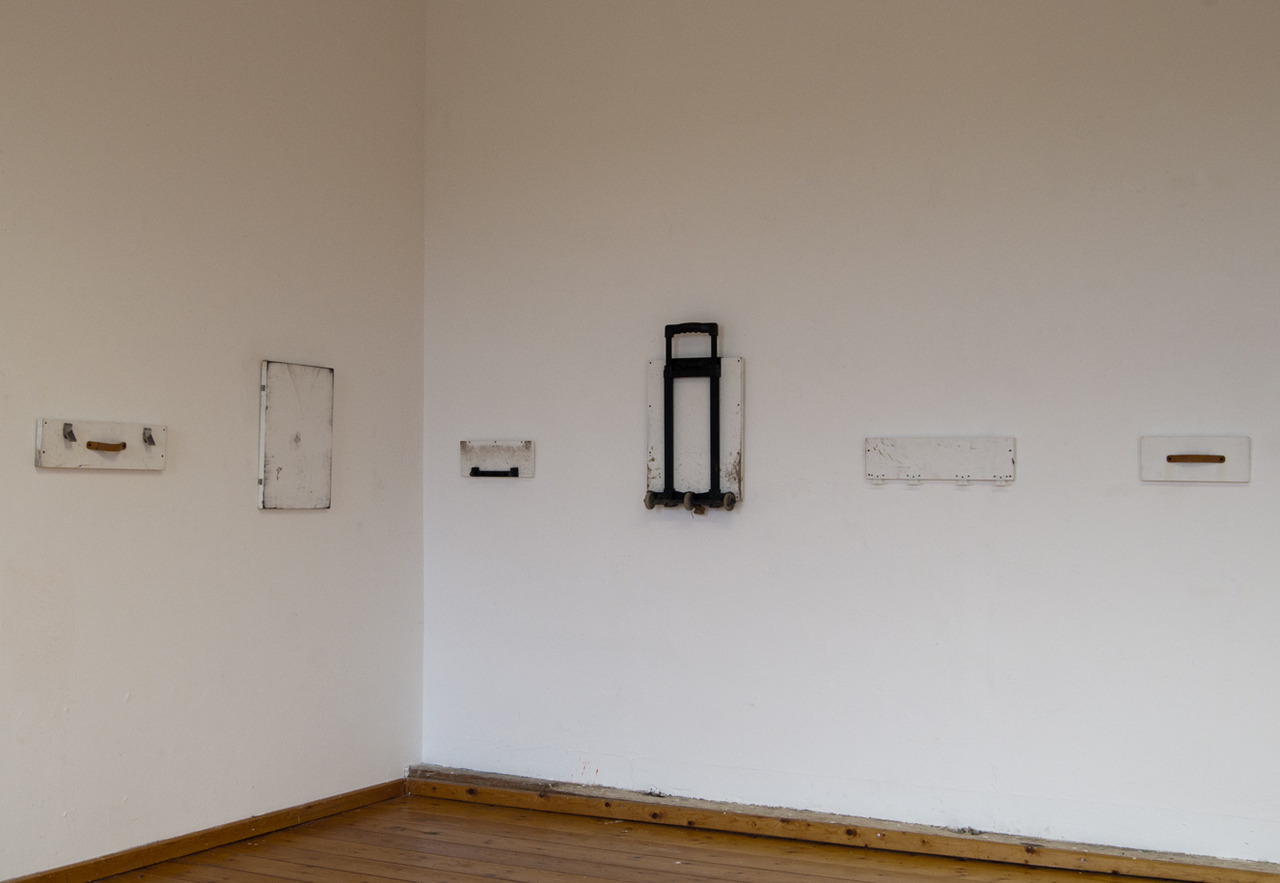
To take an extreme example, the front and back of a painting—the front side and the reverse side—have no distance between them. They are different sides of the same body. Yet once a painting is hung on a wall, its front and back become as distant as beginning and end. RohwaJeong thinks about the reverse side of the exhibition, the back side of the painting.
A painter is, after all, someone who paints the front of a painting, but as if making a joke, the duo decides to paint the back of a painting. Each artist then chooses a canvas size they like and paints the back of the canvas that the other is painting. Interestingly, this creates a situation in which the two face each other and paint each other’s portraits.
Why the back of the canvas? The back is the exclusive reverse side of the front, and also its disclosure. The front does not consider the back, and the back cannot take responsibility for the content of the front, yet front and back secretly communicate with one another from the closest possible place. If the front side of an artist’s working life is the exhibition, then the back side would be the process of work and the studio.
The artist’s studio has long been a subject of painting. In fact, RohwaJeong is said to have been inspired by Velázquez’s studio painting when conceiving Rearview. In Las Meninas, Velázquez painted the peripheral scene surrounding the situation in which he is painting a portrait of the king and queen. The young princess and her ladies-in-waiting, a guard, a dwarf, a dog, the court painter… and the back of the canvas.
Two mirrors play an important role in this painting: one, outside the painting, reflects the painter and his canvas; the other, inside the painting, reflects the king and queen. In [title omitted in source], RohwaJeong becomes a mirror of each other(and of each other’s work), reflecting the back view of the other(and the other’s work) exactly as it is.
Like a mirror that reflects one’s back view(in Magritte’s Not to Be Reproduced, a mirror that reflects the back view actually appears). Here, rather charmingly, the two make each other’s field of vision proportional to the size of each other’s body. In other words, Roh Yoonhee cuts off the 30-ho canvas as if it is too large to fit into her field of vision, while Jeong Hyunseok includes the surrounding scene in his canvas as if the 20-ho canvas is too small.
Containing RohwaJeong’s characteristic self-mockery, this work is ultimately a portrait of their “studio,” of their working process. Here, front and back meet on a single plane, and the artists and the studio seem to become equivalent. In the end, these two paintings may be RohwaJeong’s self-portraits.
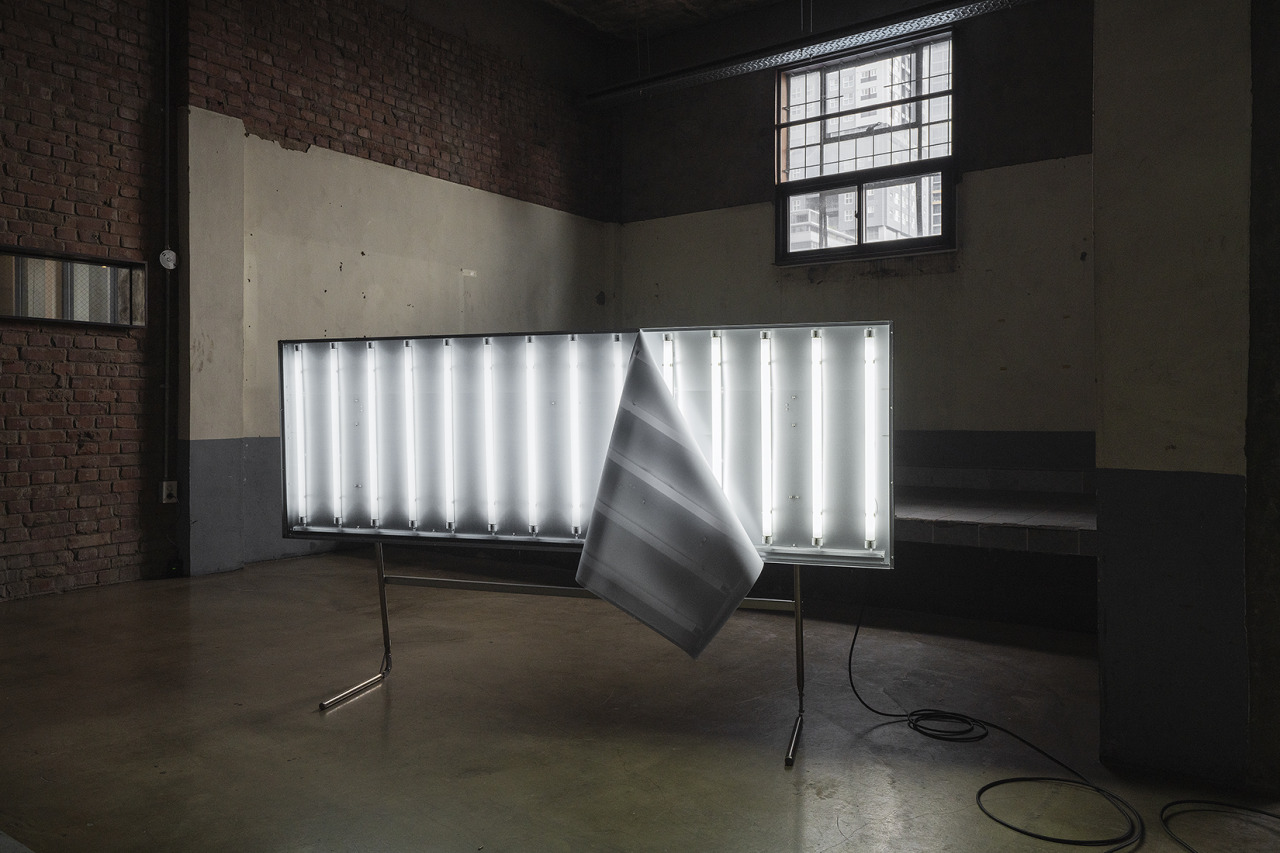
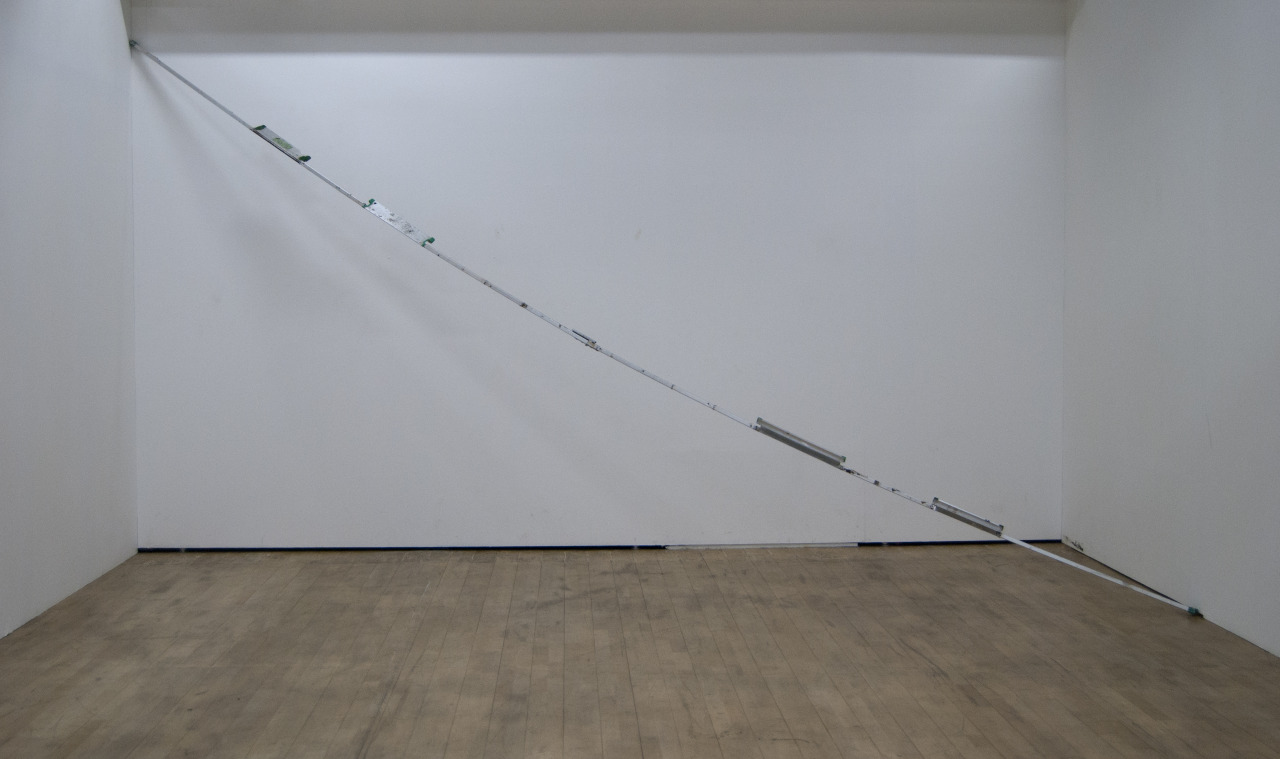
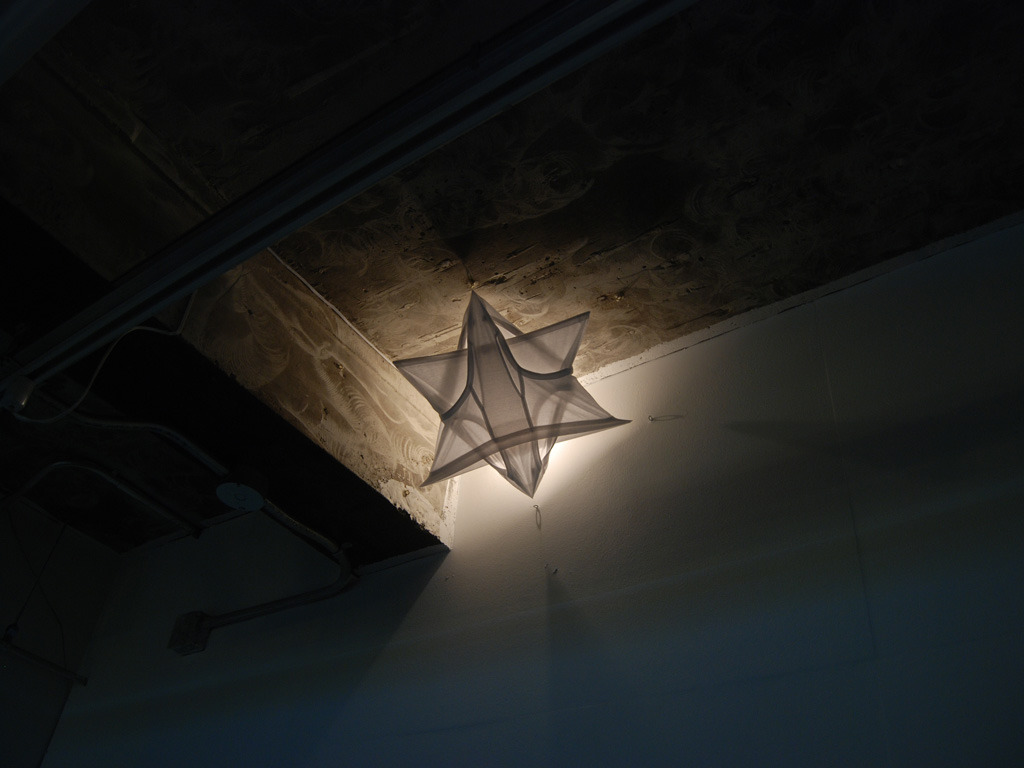
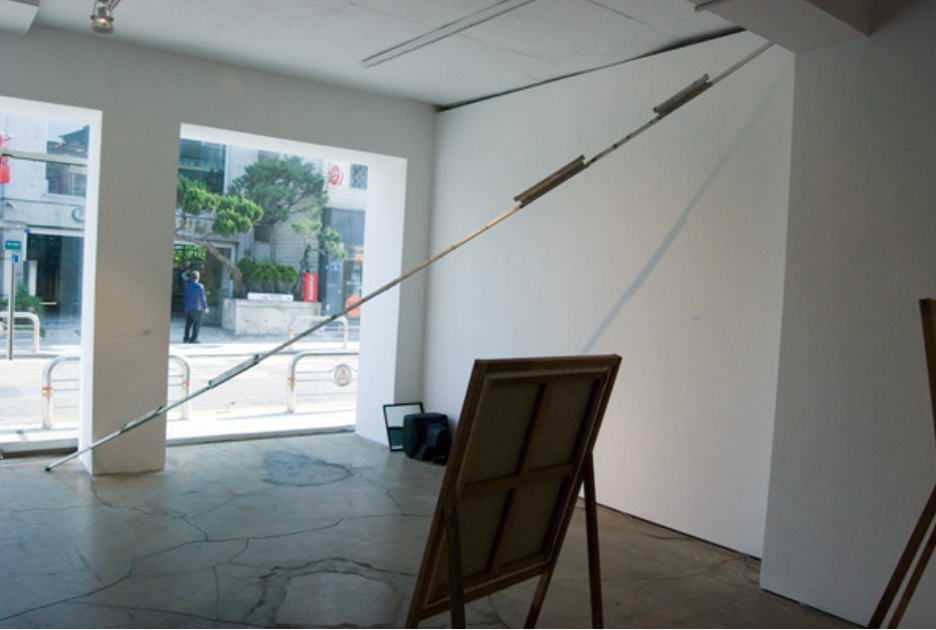
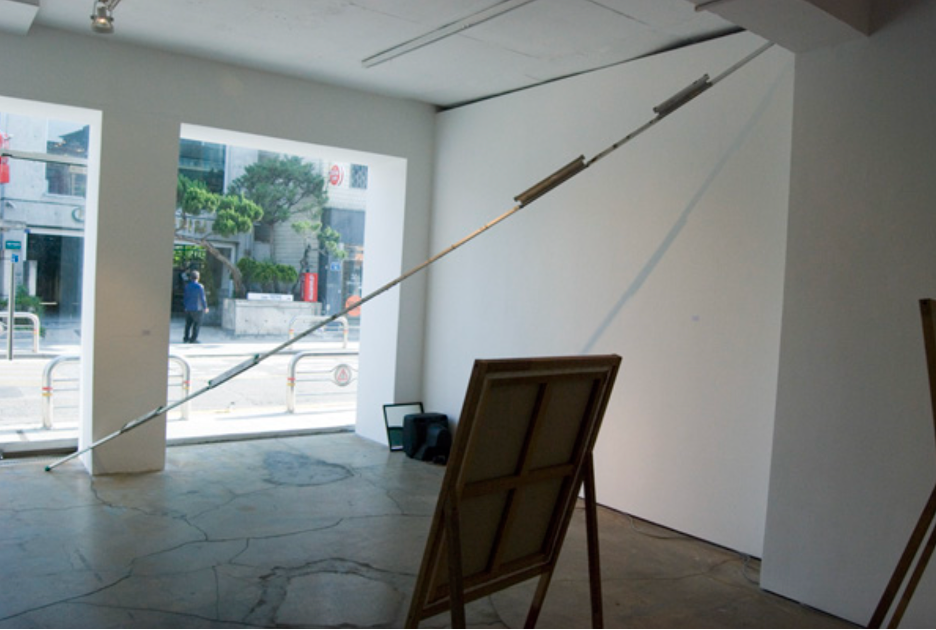
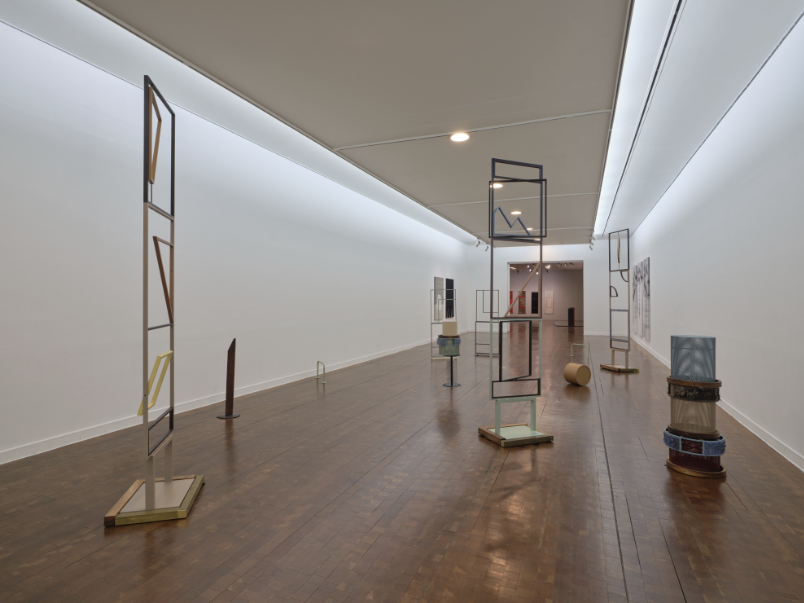
It was through Yoko Ono that the ladder became famous in the exhibition space. Even then, however, the main protagonist was Ceiling Painting, an installation work on which the word “Yes” was written in small letters, while the ladder served as an auxiliary object for it. In this exhibition, the ladder seems to have become a more central part of the exhibition. Doubled Distance is a structure reconstructed from parts of a ladder.
It preserves all the elements of the ladder while transforming its form. A ladder is originally a tool for reaching a high place beyond the reach of one’s hand, narrowing the distance to a target point. Here, the ladder loosens the structure that once served its function and stretches to more than twice its original height.
Transformed into a straight line of about six meters, the ladder has lost its original function, but it has become the shortest distance connecting one point in the exhibition space to another. What is interesting is that this long structure consists of two almost identical bodies. Because the structure folds in the middle, the two bodies can also touch each other. If one focuses on both ends of the structure, they may meet at a single point or form opposite poles.
Did RohwaJeong, sympathizing with the identity of the ladder, transform their own body inside the exhibition space like the Hulk? The result of this transformation is two bodies coldly distanced in opposite directions. Yet they have become more inseparable than ever, taking the form of a single horizontal line(一).
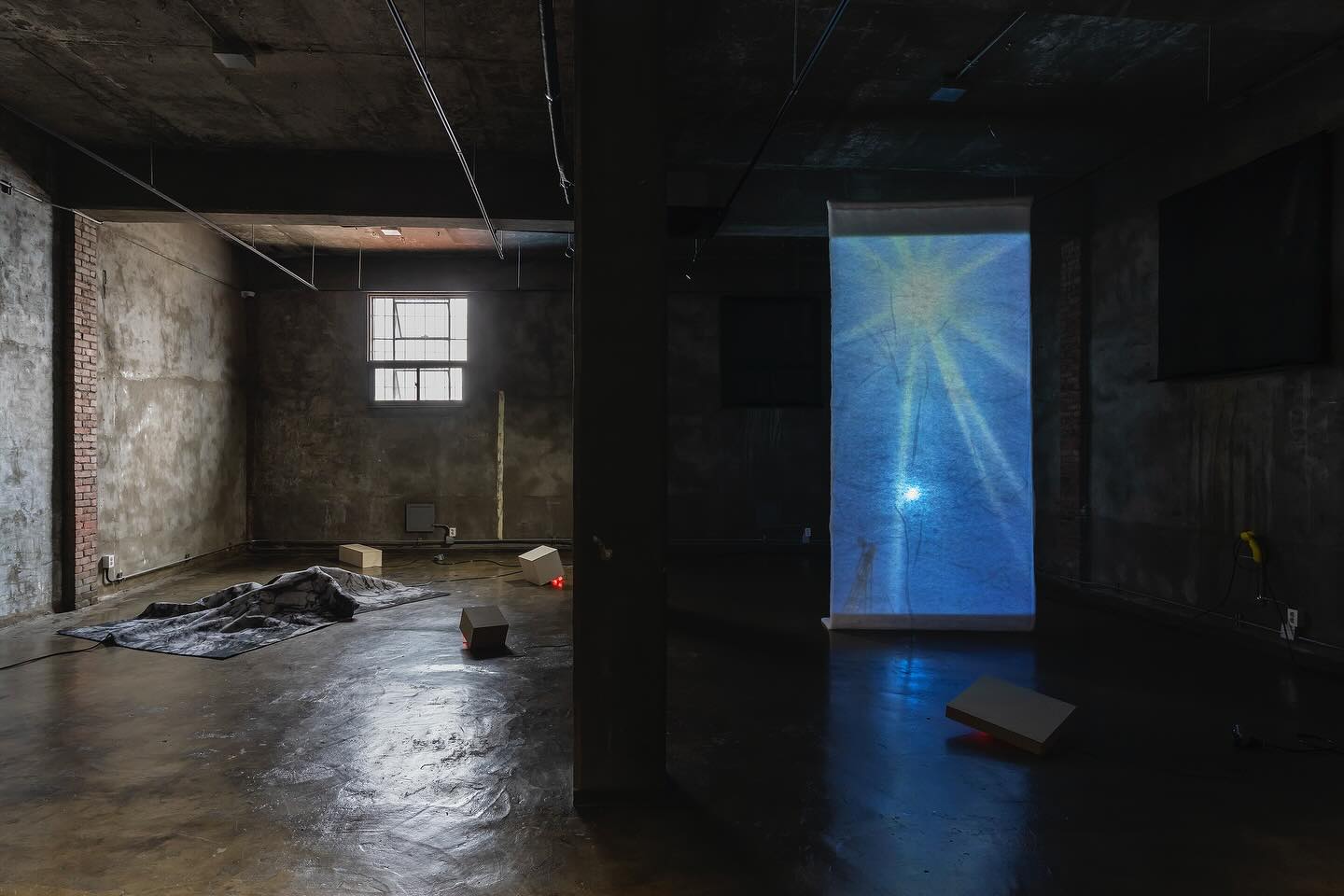
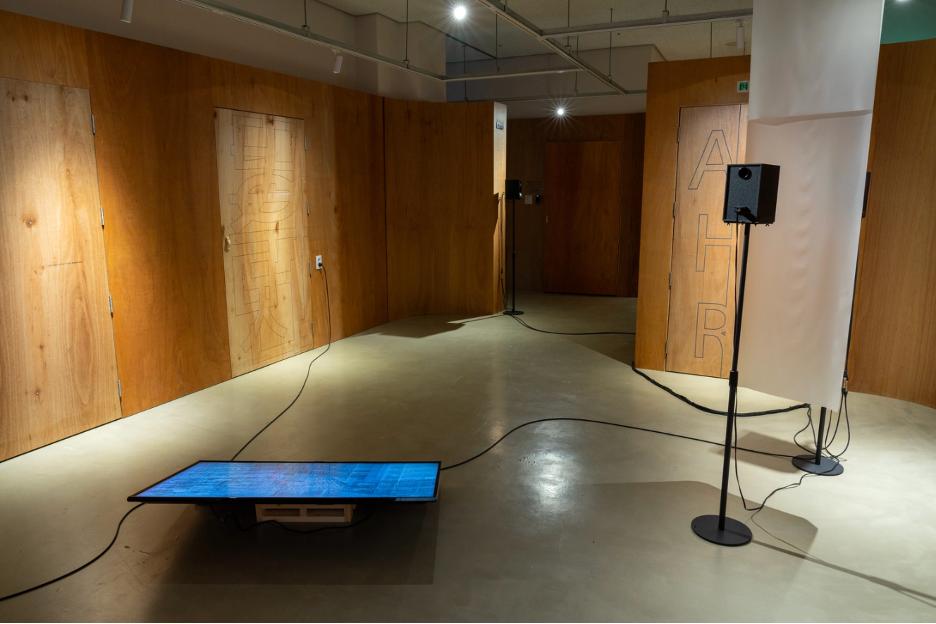
In A Meticulous Operation, we see an empty space. Over it, a conversation between two people appears as subtitles. It is unclear whether the empty space is an exhibition space or a new house. What we can infer is that they are planning something, and that the plan has something to do with space. Perhaps Francis Ford Coppola’s film The Conversation comes to mind. In that film, we overhear a conversation between a man and a woman.
The overheard conversation leads to a tremendous misunderstanding, and we arrive at the conclusion that what is seen and heard is not everything… Is the act of viewing an exhibition about misunderstanding, or about understanding? Will the conversation between these two people help our understanding, or only amplify misunderstanding? Between the artist and the viewer lies a distance equal to the exhibition space.
As we look at the empty space and read the conversation, we still find ourselves placed alone upon that distance. Distance is inevitable, and at times it feels suffocating, like the spatial model in the video that blocks our view. Yet beauty cannot be achieved without distance.
When viewers appreciate a work, they take a step back and maintain an appropriate physical and emotional distance; artists also keep a distance from the aesthetic inspiration that stimulates them. Painters of the past extended one arm to measure the size of their models. The stick used at that moment became a standard for measuring the proportion between model and picture plane.
RohwaJeong seems to extend an arm to measure the distances, proportions, entanglements, and degrees of empathy among the things around them. Lamenting the inevitable distance between two points, they attempt to measure the possibility of beauty that may lie within it.