The National Museum of Modern and Contemporary Art, Korea (MMCA), in partnership with the SBS Foundation, presents 《Korea Artist Prize 2024》, featuring four shortlisted artists.

Among them, Jane Jin Kaisen presents seven interconnected moving-image works under the title ‘Ieodo (Island Beyond the Sea)’. Across these seven works, Kaisen expands her exploration of time-based media by intersecting visual storytelling, performativity, sound, and oral narration.

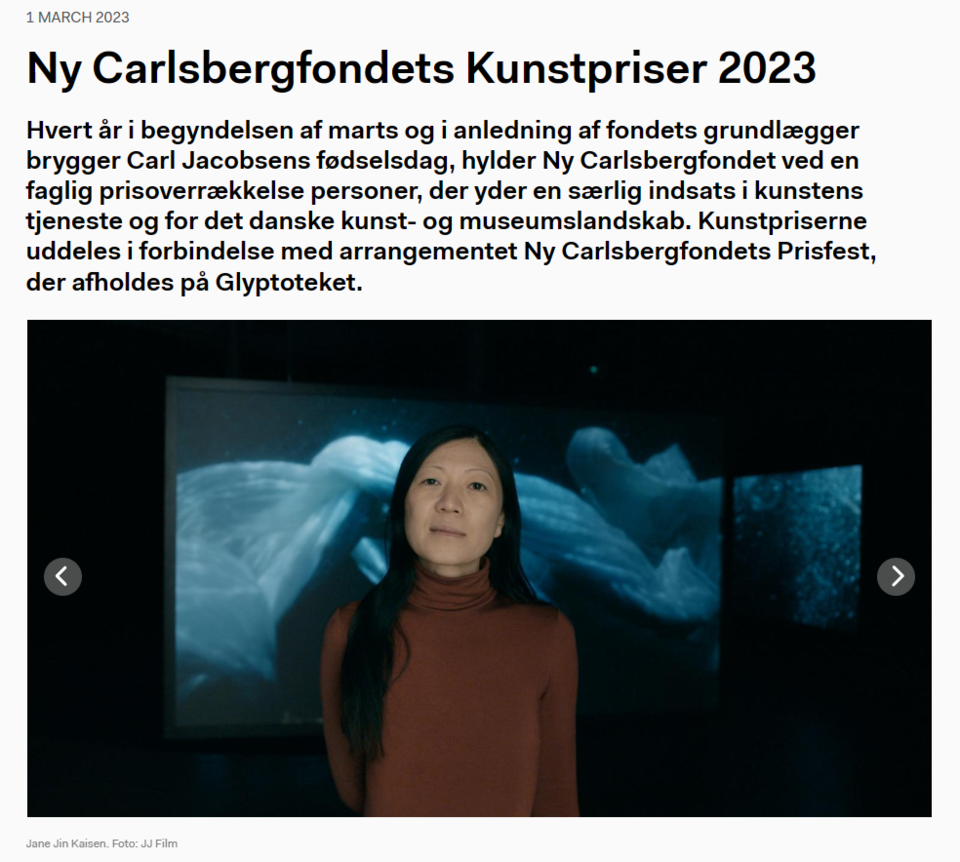
Born in Jeju and adopted to Denmark, Kaisen is known for her poetic and performative moving-image works distinguished by their powerful visual language. Situated at the intersection of personal experience and political history, her practice addresses themes of memory, migration, and borders.

Comprising seven moving-image works, the series ‘Ieodo (Island Beyond the Sea)’ brings together the artist’s multilayered research into Jeju’s nature, history, culture, and contemporary issues, grounded in her longstanding collaborations with local communities.

Kaisen participated in the Korean Pavilion at the 58th Venice Biennale and presented the solo exhibition 《Community of Parting》 at Art Sonje Center in 2021. This text introduces the world of Jane Jin Kaisen as seen through the works presented in 《Korea Artist Prize 2024》, together with a conversation with the artist.


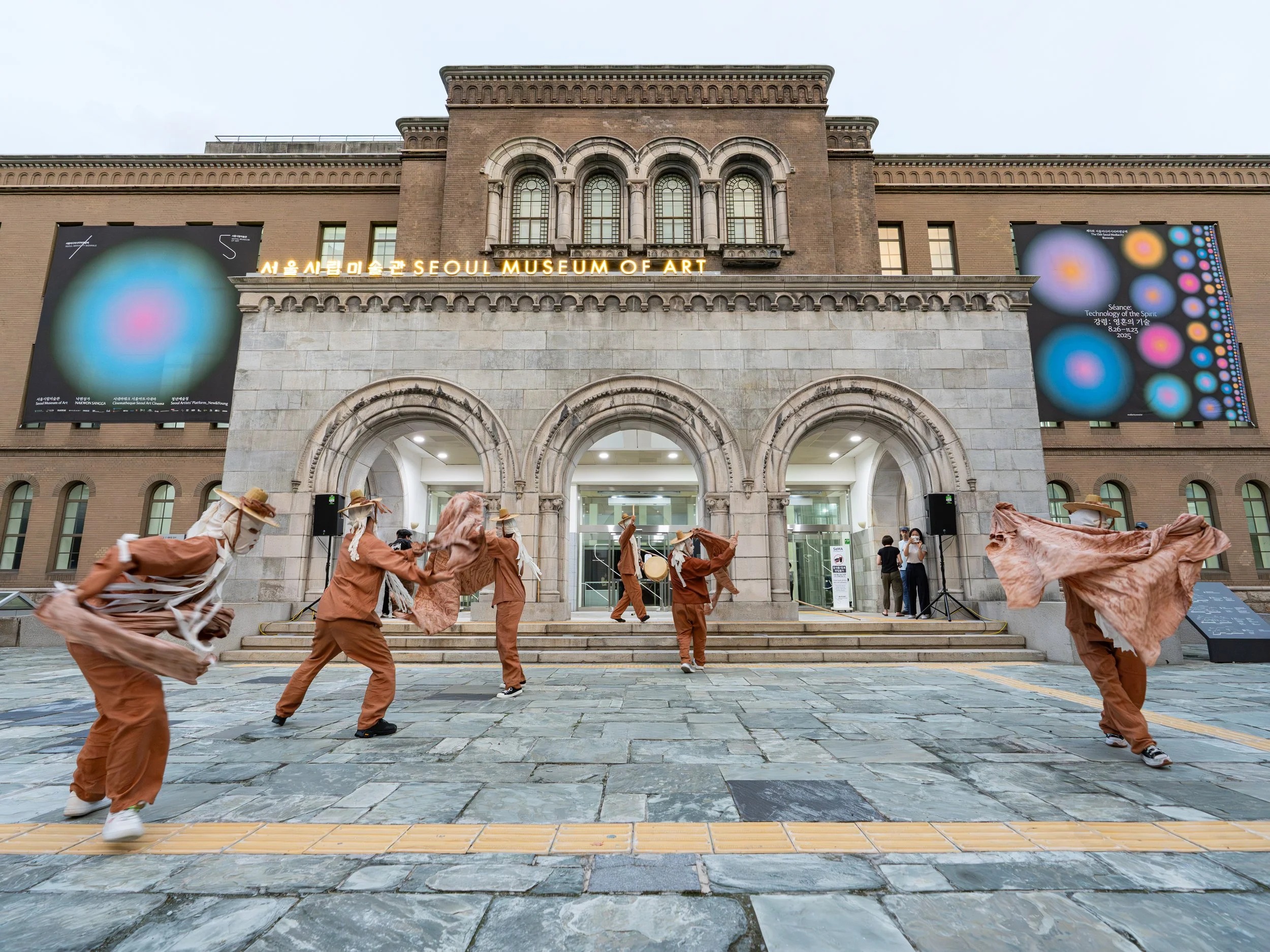
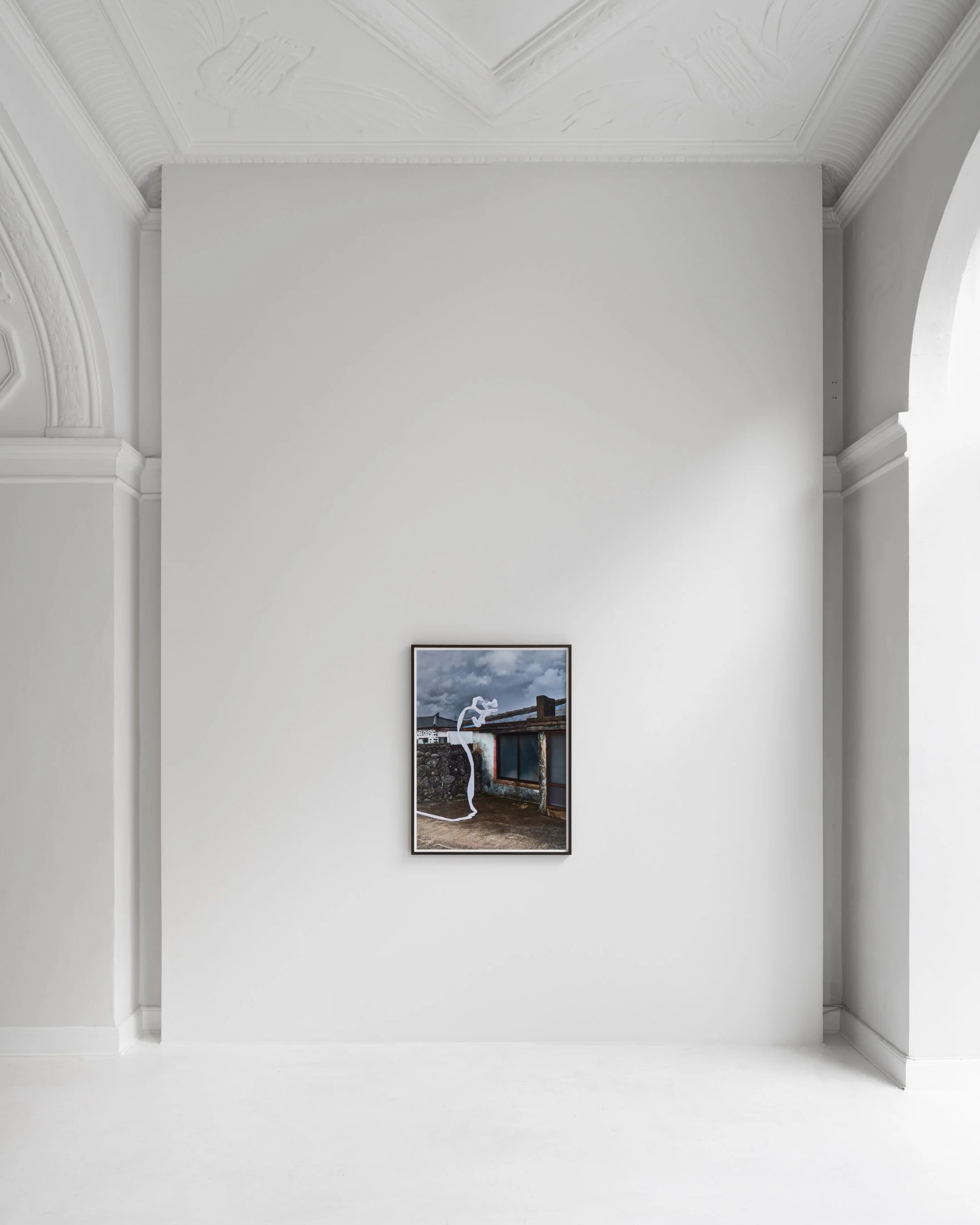
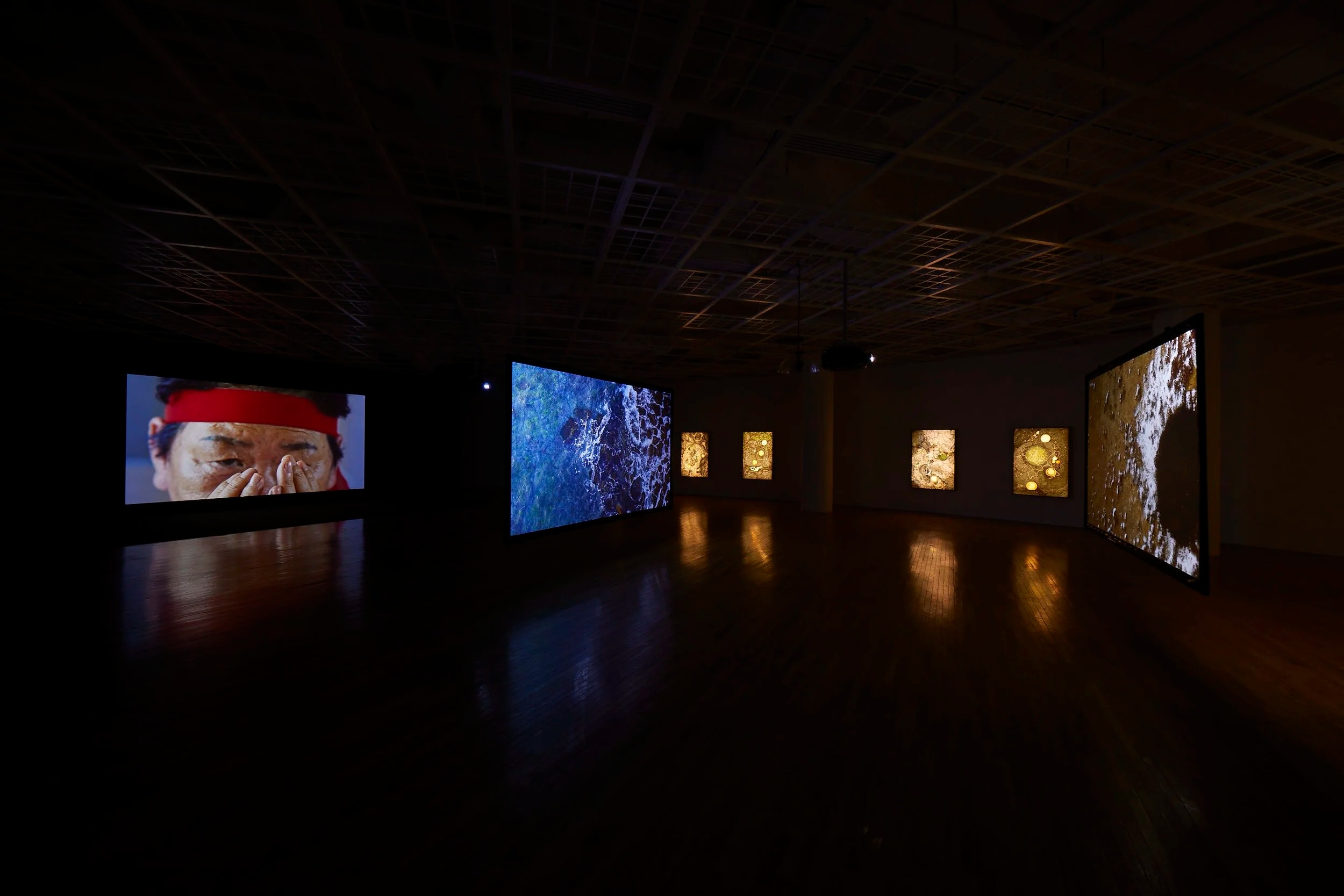
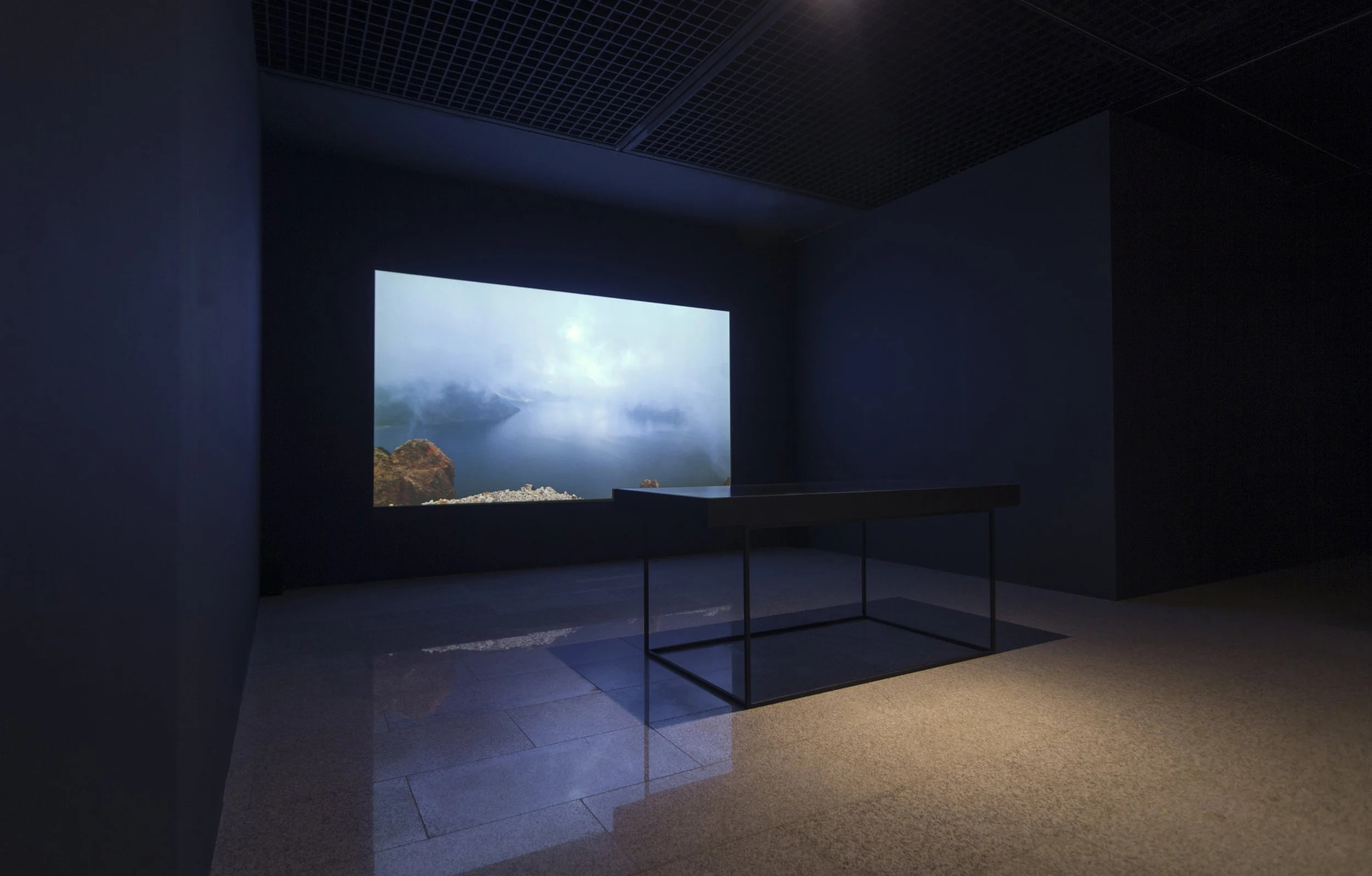
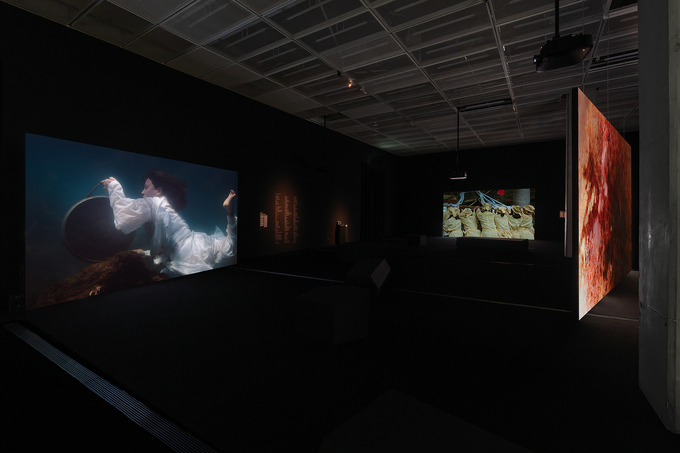
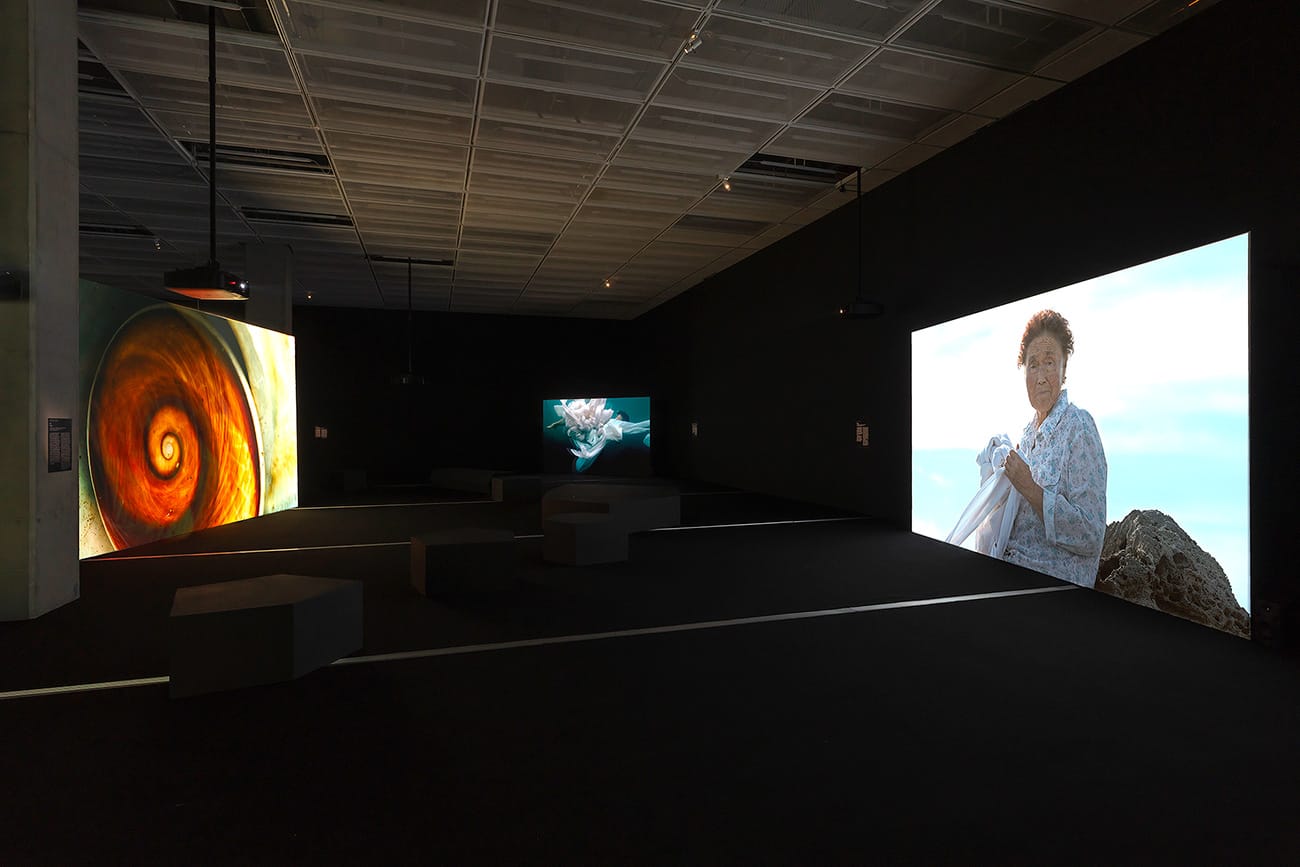
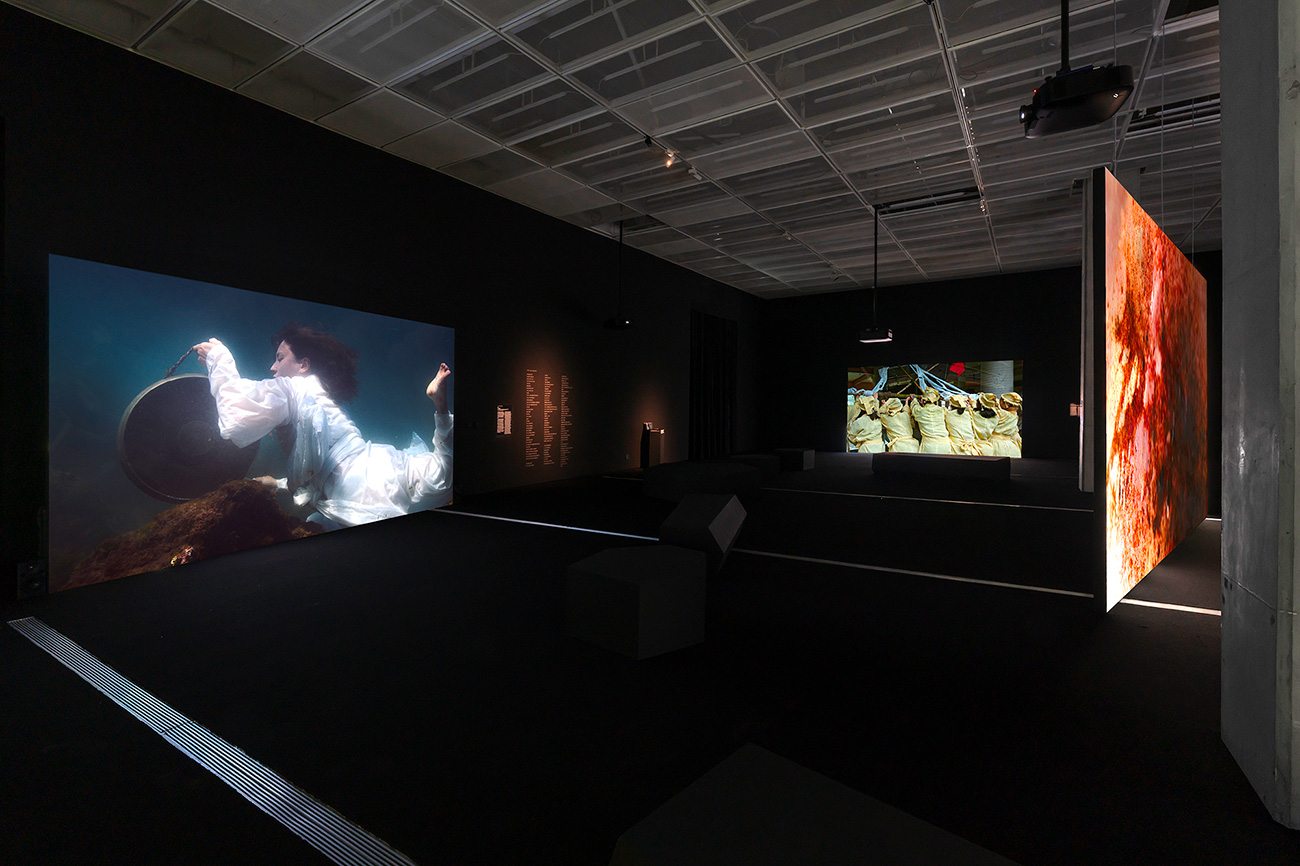
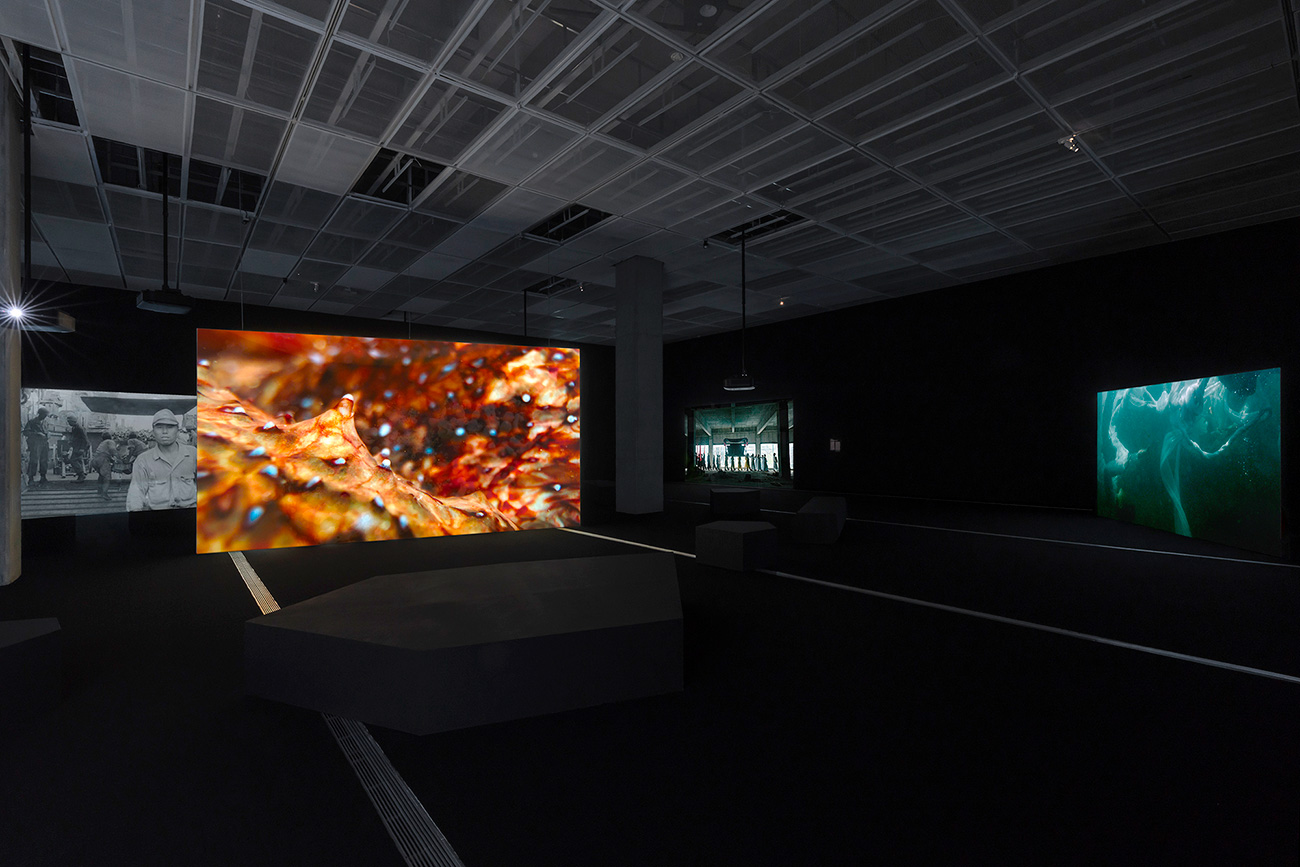
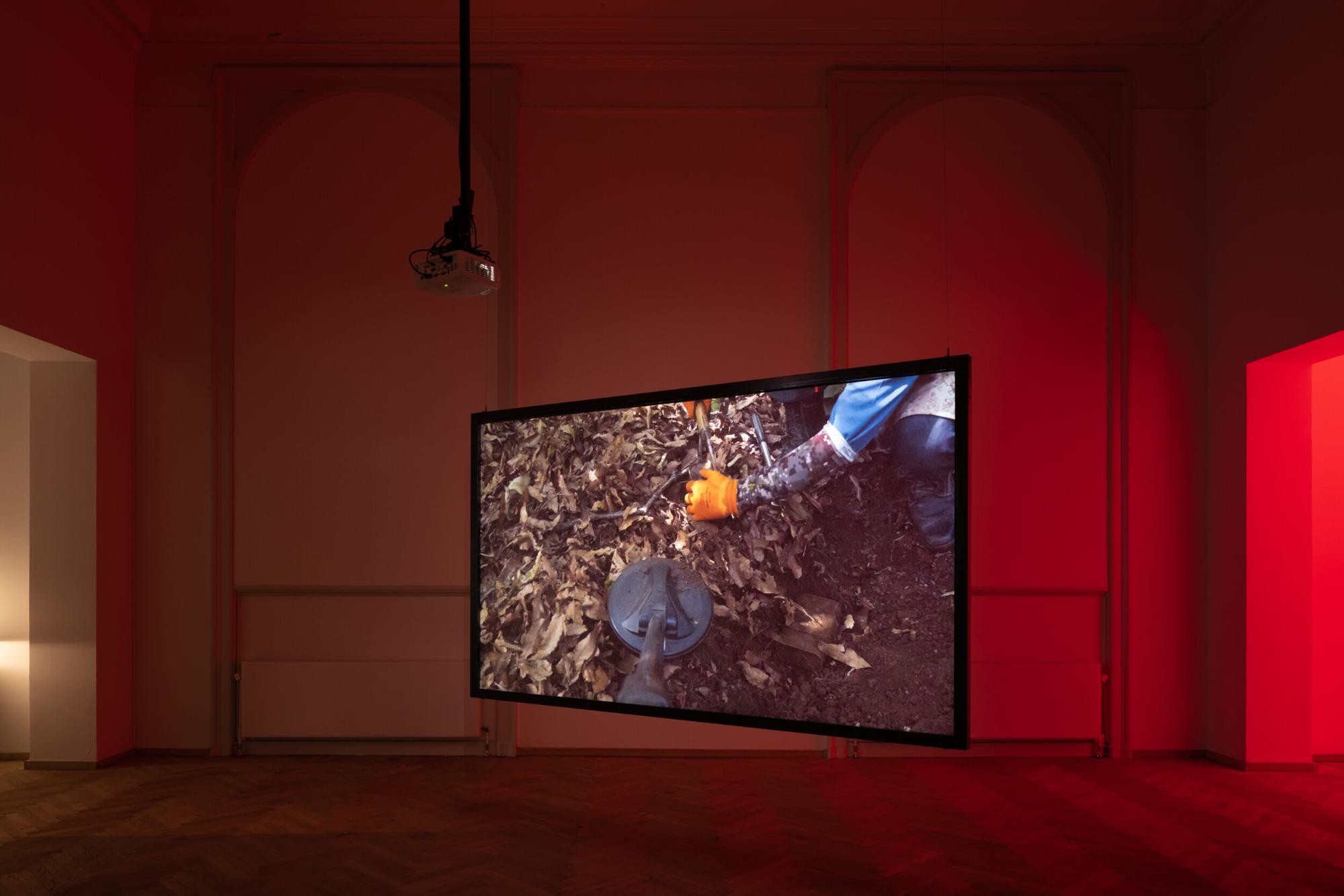
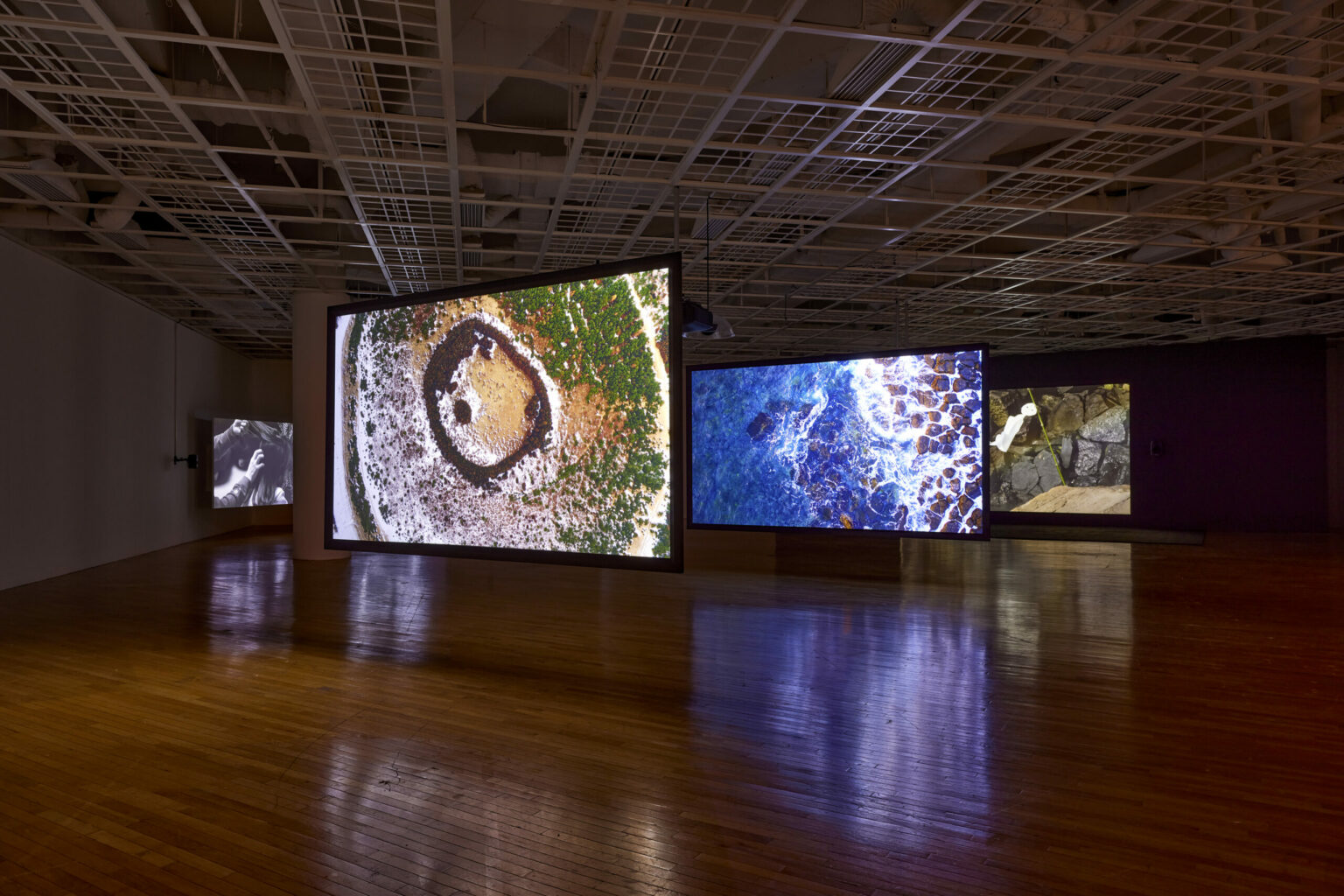
Installation view of 《Korea Artist Prize 2024》 © MMCA

“I call matter the aggregate of images, and perception of matter these same images referred to the eventual action of one particular image, my body.” — Henri Bergson, Matter and Memory

Jane Jin Kaisen, whose highly performative practice has traversed the history, nature, and mythology of Jeju Island, presents seven short films in this exhibition. Each film is projected onto its own screen. The series ‘Ieodo (Island Beyond the Sea)’ (hereafter ‘Ieodo’) is an imaginary island composed of seven smaller islands—or screens.

In the Jeju dialect, Ieodo refers to a liminal space that belongs neither to the world of the living nor to the world of the dead, an island embedded in the collective imagination of the people of Jeju. How, then, might we describe this place: an exhibition space, and at once a transformed cinema, in which ‘Ieodo’, an accumulation of images that reconstructs an imaginary island through seven short films, is continuously replayed?

Michel Foucault identifies the theater as a form of heterotopia, a space that “brings onto the rectangle of the stage, one after the other, a whole series of places that are foreign to one another.” Calling forth primordial memories that extend beyond history, Jane Jin Kaisen reconstructs ‘Ieodo’, the island beyond the sea, as a counter-site—a heterotopia that connects with the strata of time.

Attempting to arrange the spiral narrative of ‘Ieodo’ into chronological order would be a difficult, and perhaps misguided, undertaking. Instead, the traveler through Ieodo might attend to the bodily actions that traverse each screen and to the structures produced through those actions.

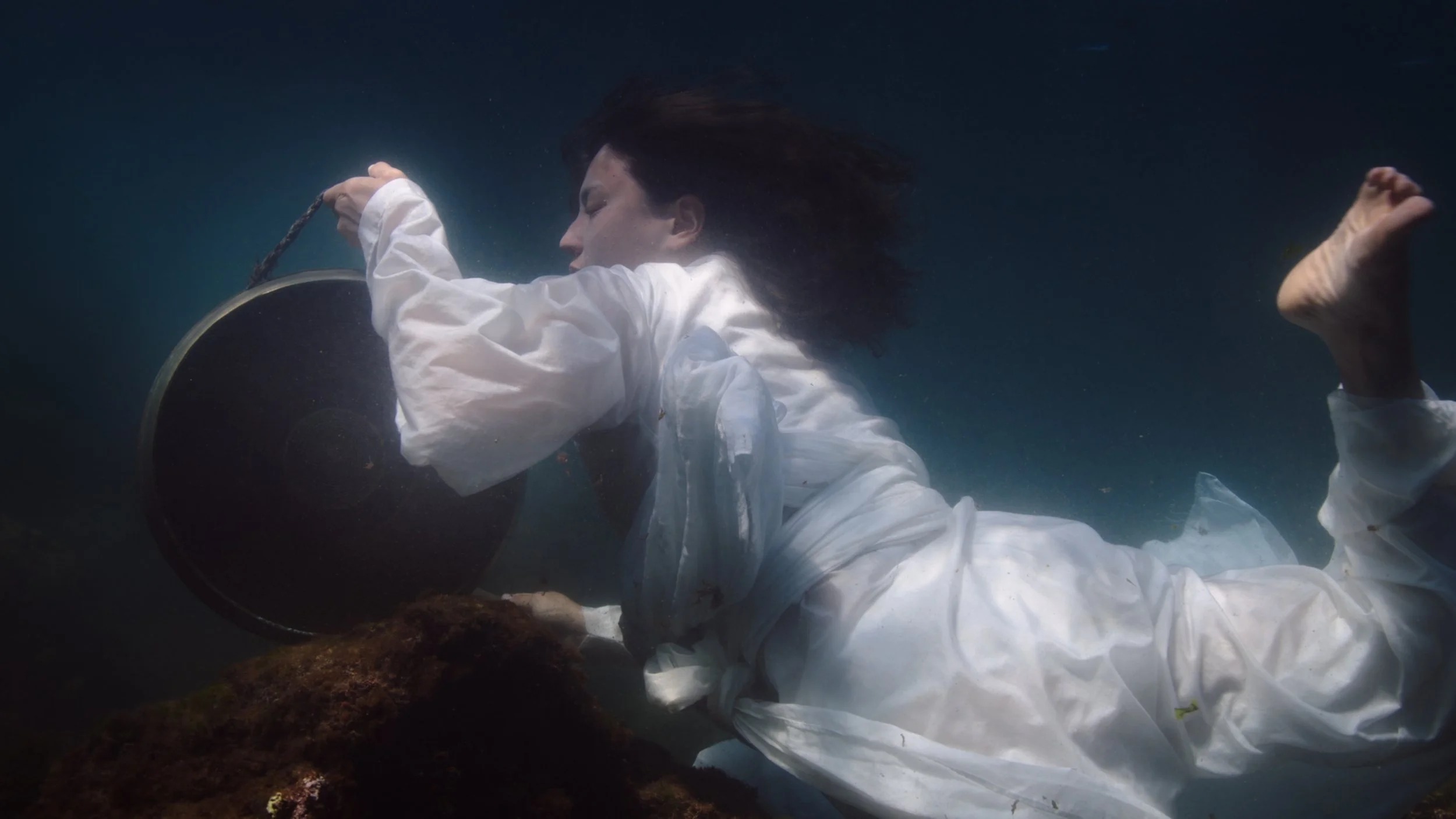
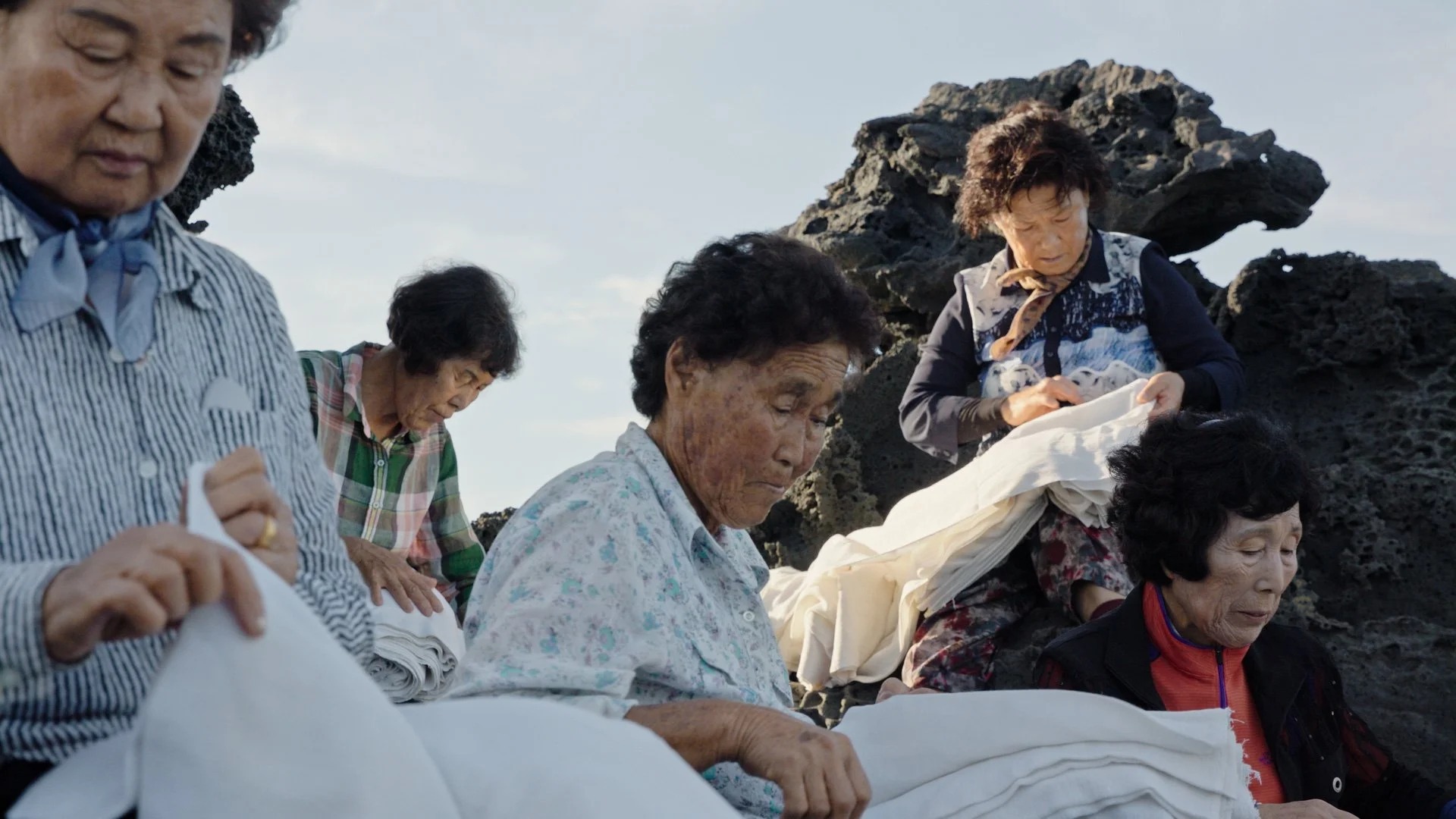
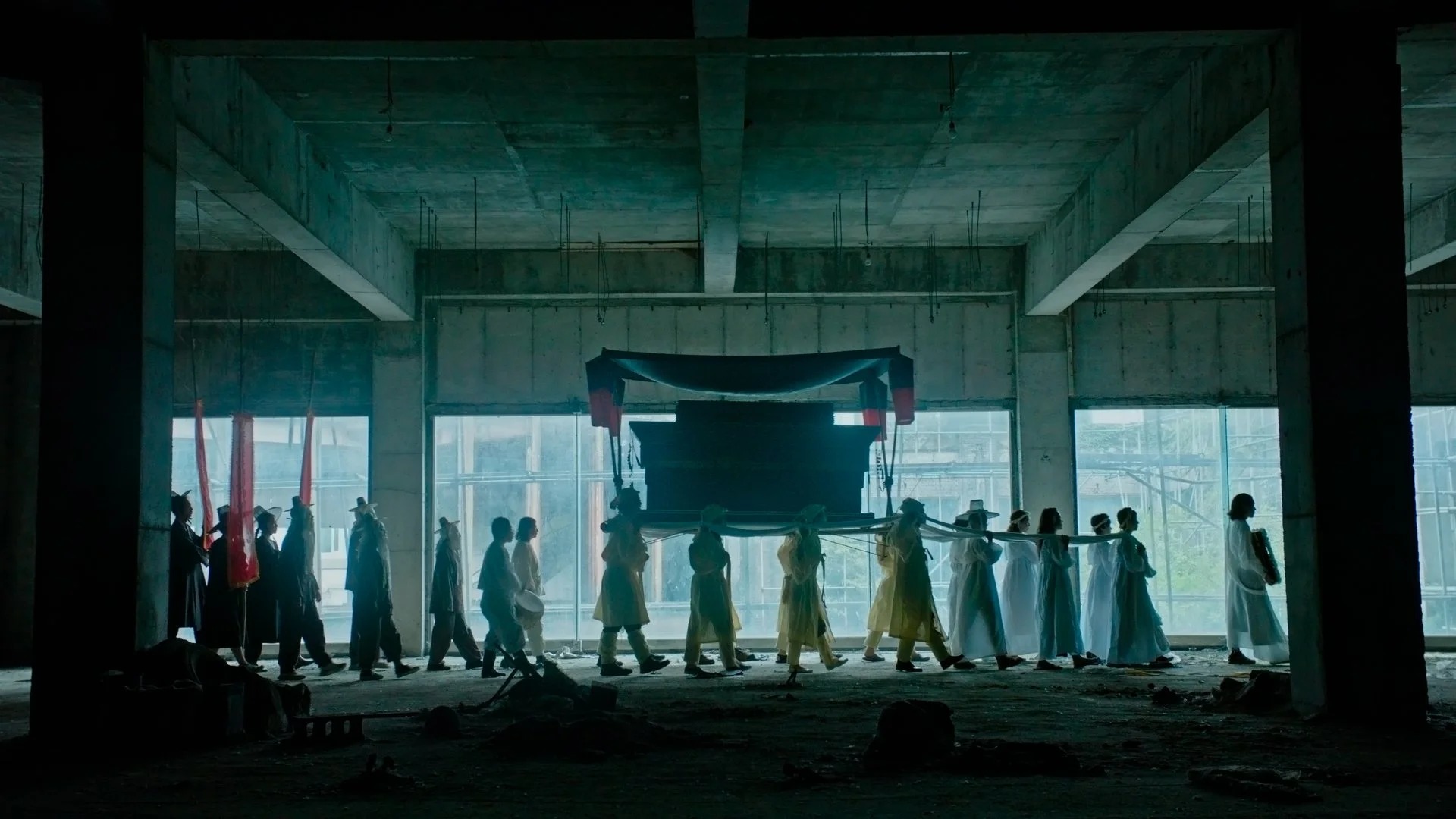
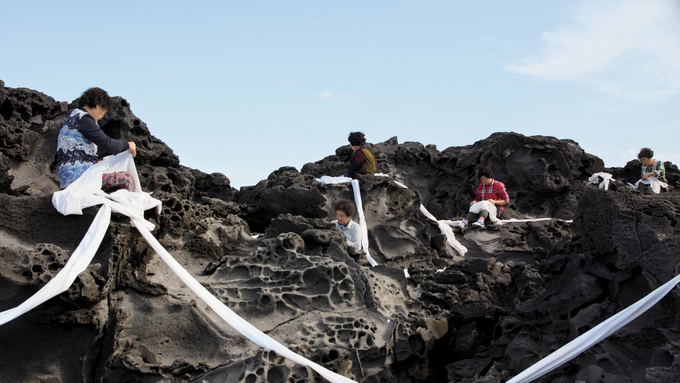
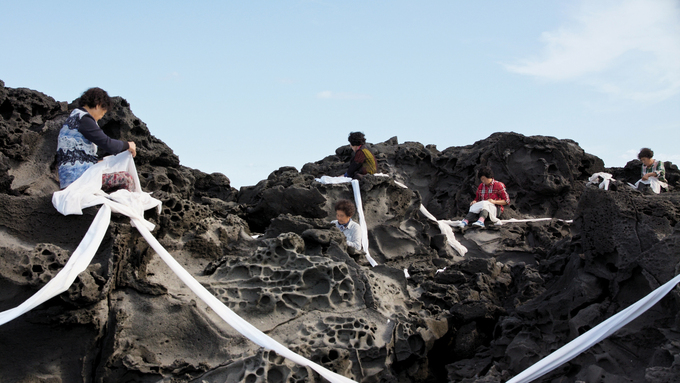
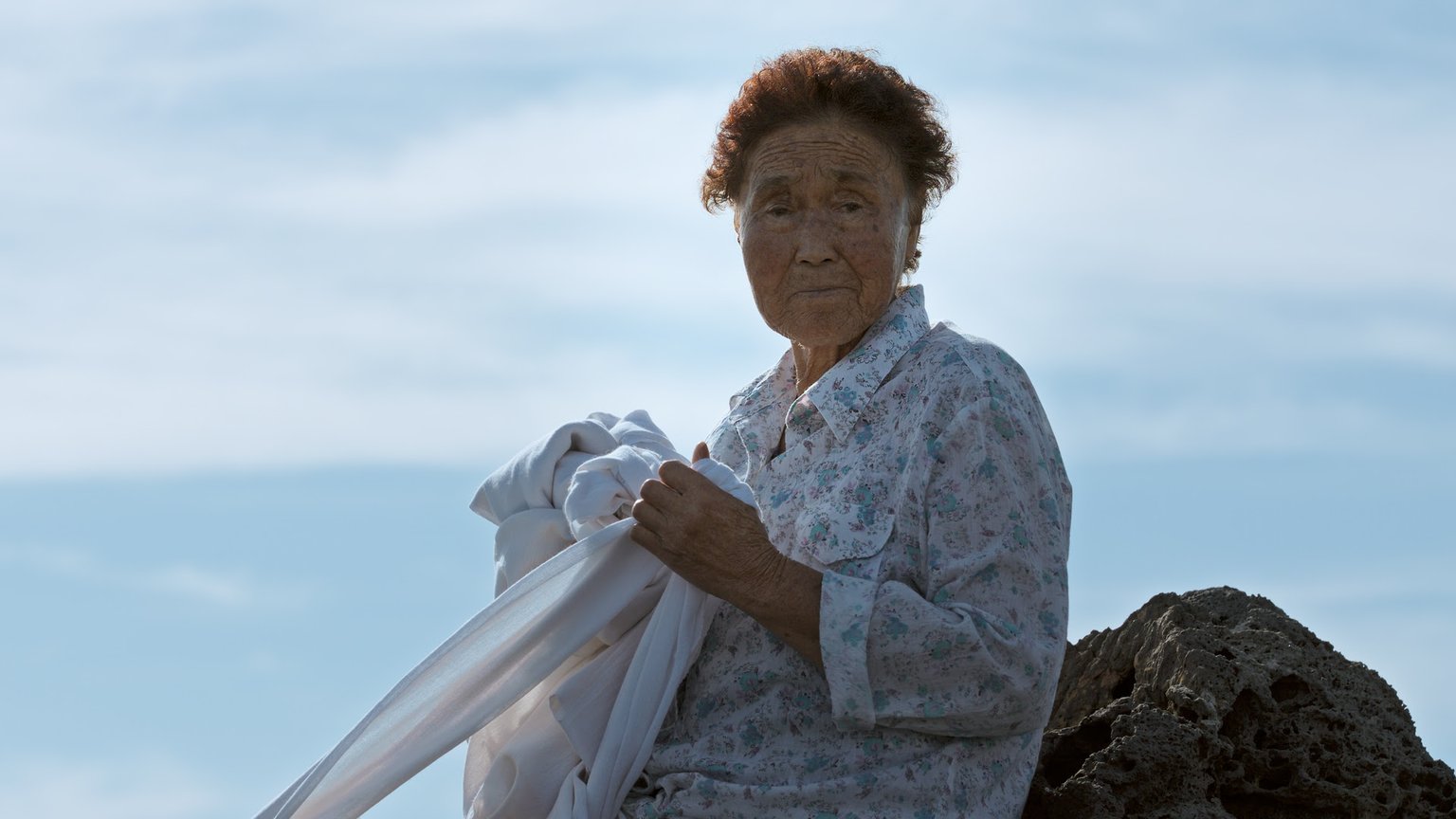
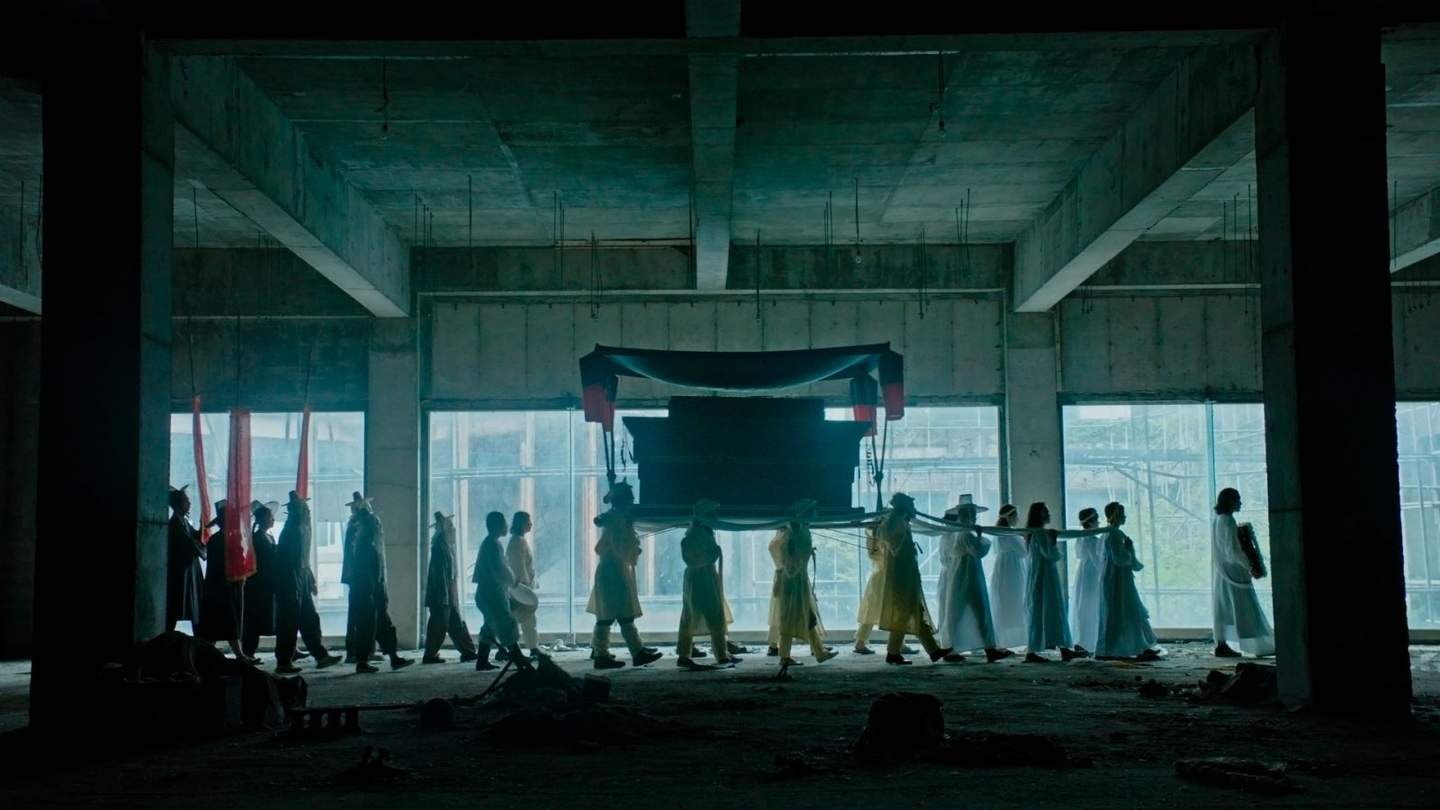
Haenyeo divers plunge into the sea to gather marine life; people reenact a funeral procession while resisting established conventions; women perform an underwater ritual for those innocently killed during the Jeju 4·3; freedivers descend beneath the surface of the water. Situated at the threshold between life and death, these figures bind and connect lengths of white cloth known as sochang.

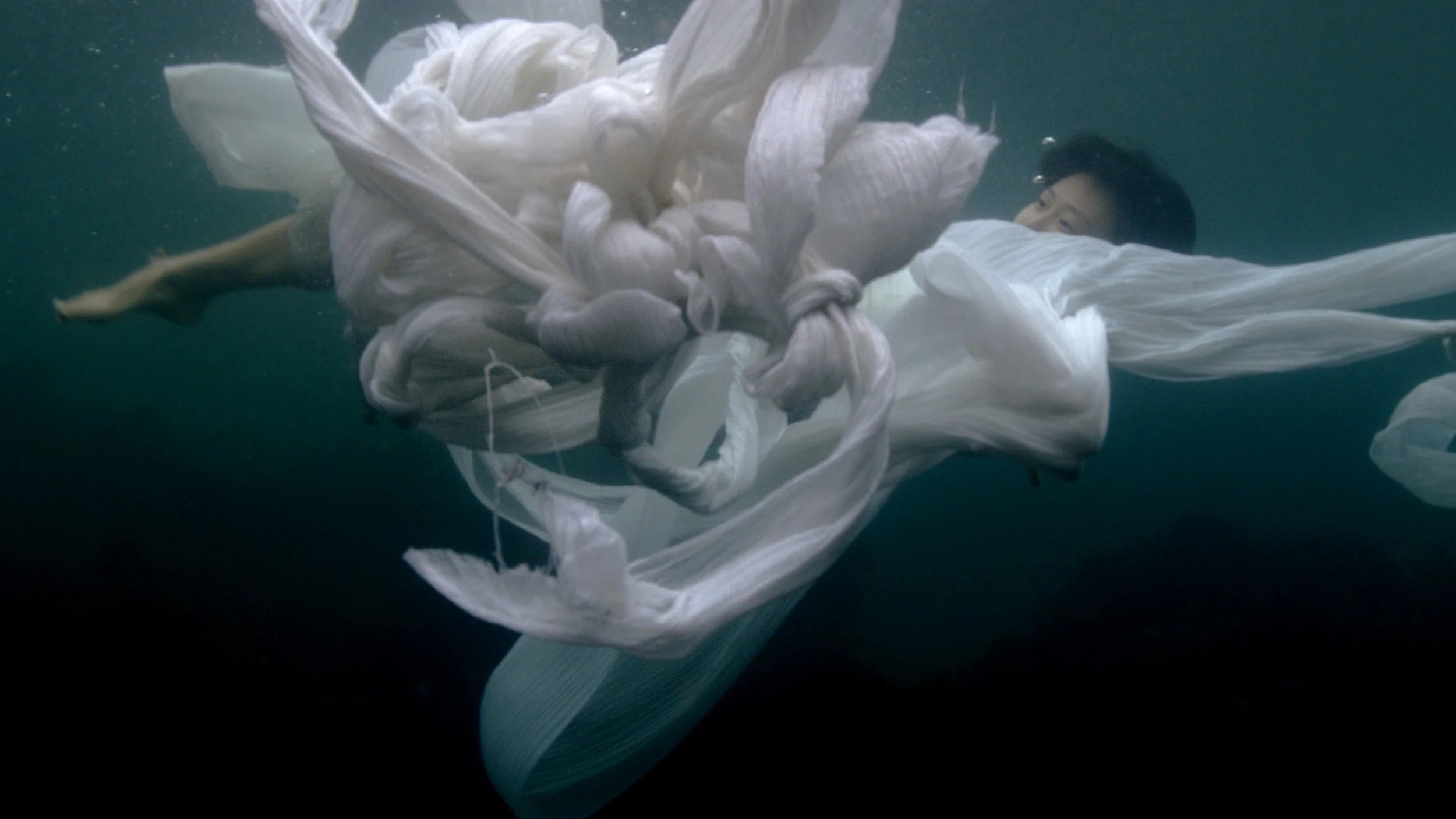
A traditional textile, sochang was used throughout the human life cycle, from diapers for newborn infants to the cords used to bind a coffin. Recurring across several works, sochang binds together figures who, separated by individual screens, can never physically meet. At the same time, it reveals an infinite spatiotemporal realm embodied by the unfathomable depths of the sea, where the distinction between life and death ceases to hold meaning.


Jeju’s History Reconstructed as It Rises in the Form of an Oreum


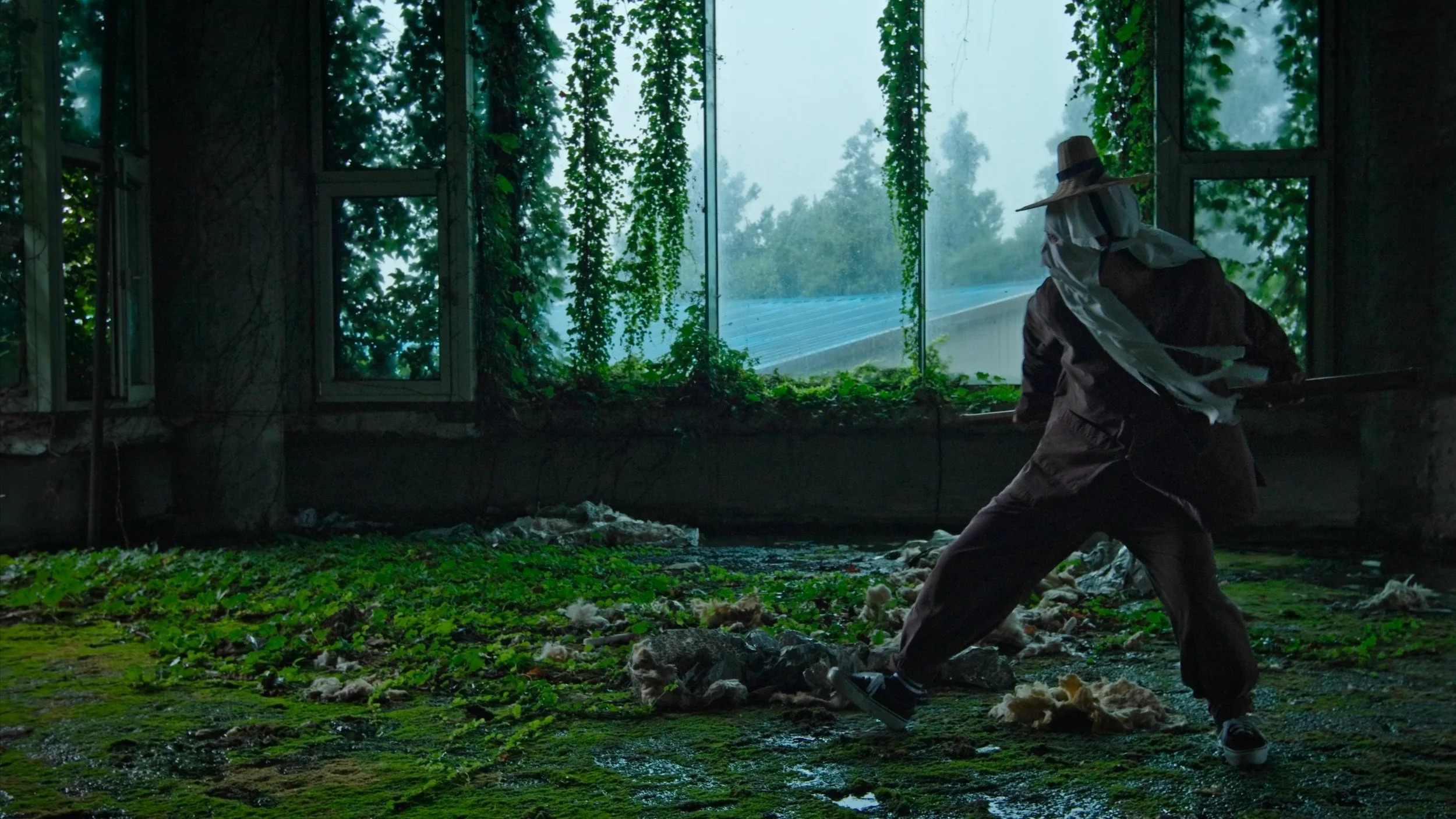
Jane Jin Kaisen, Halmang, 2023, Single-channel 4K film, color, stereo sound, 12 min © Jane Jin Kaisen

In Wreckage, footage from a propaganda film produced by the U.S. military is juxtaposed with scenes of an underwater ritual commemorating the victims of the Jeju 4·3. In footage filmed in 1945, the U.S. military disposes of large quantities of weapons and artillery shells left behind by the Japanese army by dumping them into the sea.

Only two years later, the Jeju 4·3 began, and into the same waters of Jeju where cold weapons had once poured, the bodies of innocent people were also submerged.

The video does not directly depict the atrocities of the Jeju 4·3, yet in the underwater ritual that follows, as fruit and grains of rice offered in mourning fall toward the sea in place of artillery shells, one is inevitably reminded of the victims who, no longer alive in this world, cannot partake of the food.

The sea into which haenyeo divers plunged to sustain their lives; the sea where weapons symbolic of war were buried; the sea of death into which innocent people were cast; and the sea into which shamans, holding their breath, threw themselves to commemorate the souls of the dead.

As things fall endlessly from above and accumulate beneath the surface, are the debris of war and the grief of those whom history has turned away from all that has been deposited there?


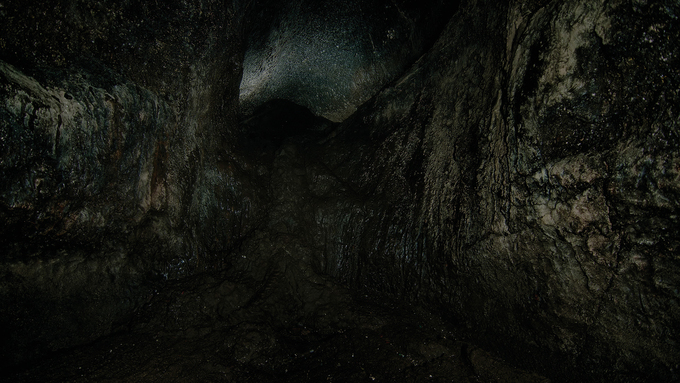
Jane Jin Kaisen, Core, 2024, Single-channel 4K film, color, stereo sound, 12 min © Jane Jin Kaisen

Positioned back-to-back at the center of the exhibition space, the two videos Portal and Core evoke the bottom and furthest reaches of Ieodo, where the wreckage has settled, as well as the creation myth of Jeju Island.

Portal
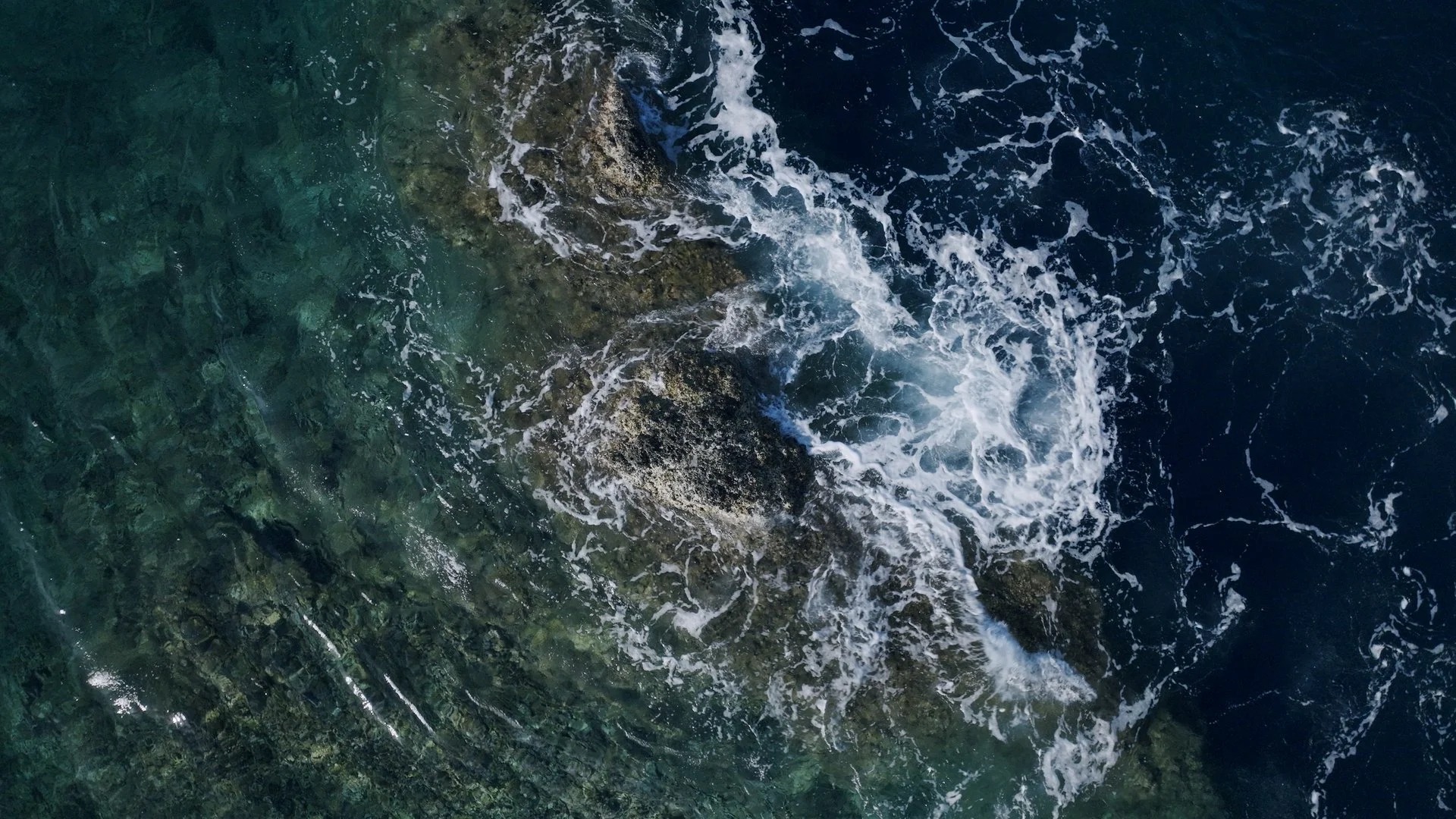
, a montage of extreme close-ups of marine life, fills the screen with minute movements almost imperceptible to the human eye, portraying Ieodo as a primordial site teeming with ancient images, a place where infinite time is continually created anew. These raw images may at first appear visually similar to those in Leviathan and De Humani Corporis Fabrica.

Yet unlike the attitude of those two films, which can seem enthralled by the camera’s power to penetrate and record places inaccessible to human sight, Kaisen’s moving images convey the humility of an observer who watches and embraces primordial beings with generosity. Quietly and almost imperceptibly writhing, these images resemble the heart or engine that sets Ieodo in motion.

They reveal primordial times preceding the sorrowful memories and remnants of tragic history sunk in Jeju’s deep waters, as well as the primal vitality of a sea brimming with the energy of life. Core, filmed inside a lava cave at a depth of 700 meters, functions in a similar way.

The rough and densely accumulated textures of the cave interior evoke an immeasurable span of time, gathering into a single formation the multiple times and stories that had been dispersed amid the surging waves. It recalls the jungle that serves as an archetypal space in the films and moving-image works of Apichatpong Weerasethakul: a place where Thai myths are reenacted, shameful histories abruptly surface, and the living, the dead, and animals freely connect with one another.

Through primordial images of the sea and caves, Jane Jin Kaisen encompasses myth while inviting us to reconsider Jeju not simply as a geographical island formed by volcanic eruptions, but as a conceptual island composed of infinitely accumulated strata of time. What kind of time, then, can Ieodo create anew?

Guardians
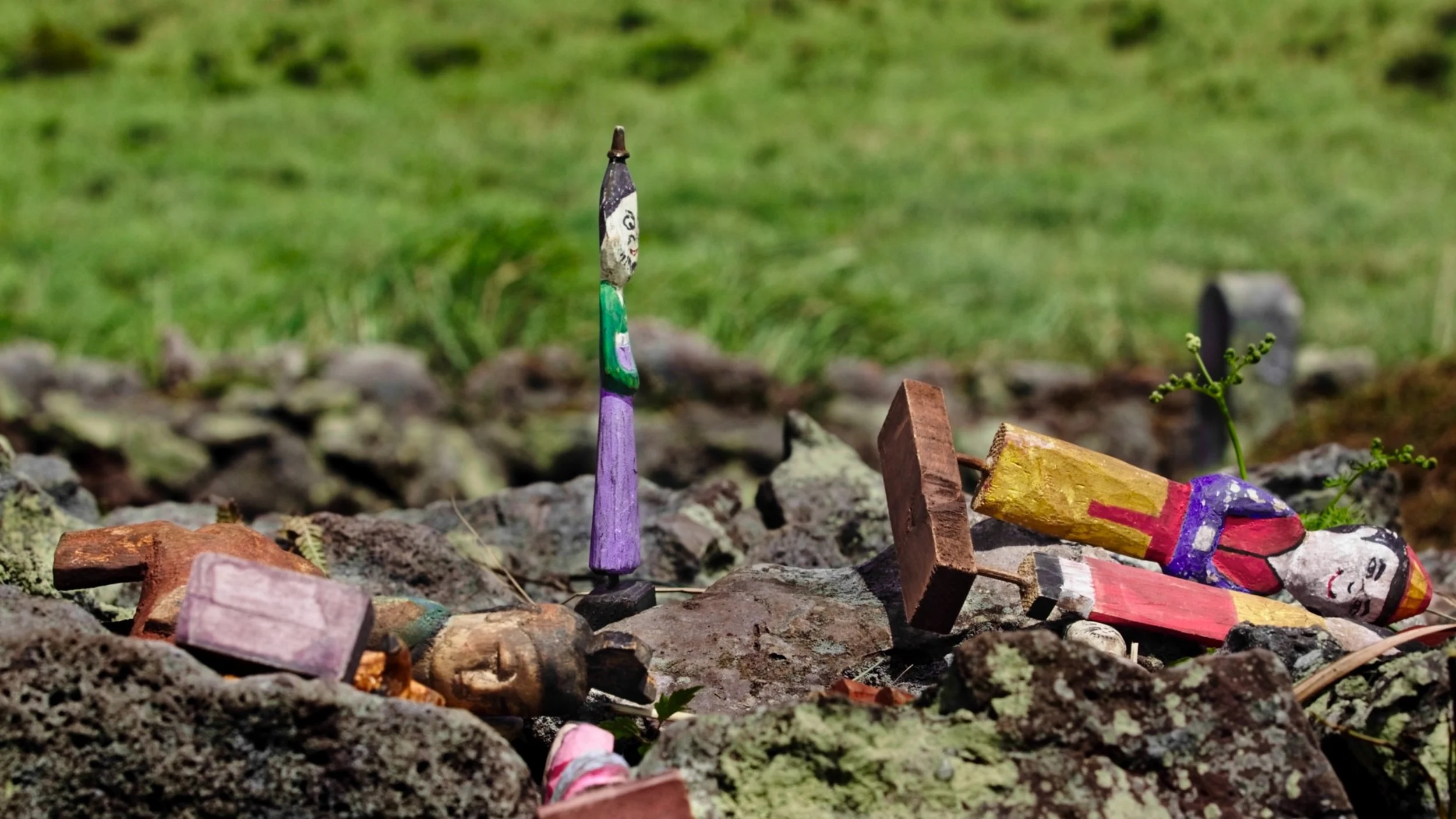
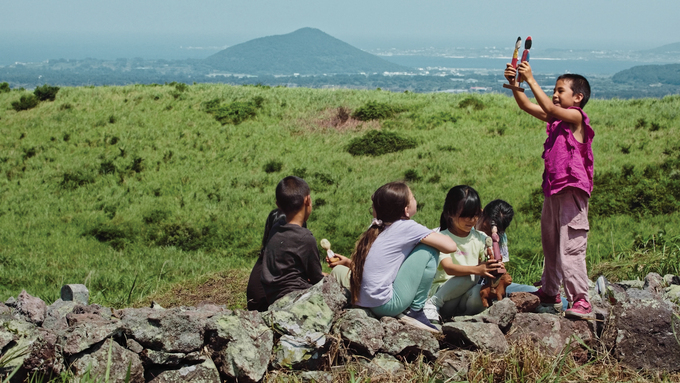
, which depicts children running freely across an oreum, portrays time no longer sinking beneath the water but rising above the ground in its own form. Do the innocent faces of these children, seemingly untouched by tragedy or the sorrows of life, symbolize a new era that will continue in Ieodo? Yet the children hold wooden figurines called kkokdu in their hands.

Traditionally used to decorate funeral biers with the hope that the deceased would arrive safely in the afterlife, the appearance of kkokdu alongside the children on screen evokes both a newly germinating time in Ieodo and a time of mourning that circulates and repeats alongside it.

In the final chapter of Film Fables, Jacques Rancière discusses Jean-Luc Godard’s Histoire(s) du cinéma, arguing that cinema was found guilty because it was absent from Auschwitz, while what Histoire(s) du cinéma sought to achieve by citing the faces and gazes of children from neorealist films was atonement and the resurrection of the image.

By placing the faces of children upon a history marked by violence, Jane Jin Kaisen’s ‘Ieodo (Island Beyond the Sea)’ arrives at healing through the cyclical movement of time.


The Tourist Wandering Between the Pure Present and Latent Memory


Jane Jin Kaisen, Guardians, 2024, Single-channel 4K film, color, stereo sound, 12 min © Jane Jin Kaisen

Now, having entered ‘Ieodo (Island Beyond the Sea)’, the viewer becomes a tourist who wanders among and observes the seven fragmented stories distributed across seven screens. Listening simultaneously to two separate melodies—the funeral lament sung by shaman Koh Sunahn for the deceased and the song haenyeo divers used to sing together before entering the water—they become active subjects capable of reconfiguring the two into a single round.

At the same time, they mediate an encounter between the present that those sacrificed by history never reached and the pulsating images of the deep sea untouched by the hands of the haenyeo, thereby creating new circuits of time. When the tourist’s gaze rests on one screen, the images projected on the others become latent images and memories.

Yet when their gaze shifts to another screen—to the virtual—the images embedded within the strata of time re-emerge as a vivid present. Through these countless exchanges between the actual and the virtual, ‘Ieodo’ becomes a place where the seemingly fragmented creation myth of Jeju and the dismembered memory and body of Seolmundae Halmang are sutured together by the innocent tourist.
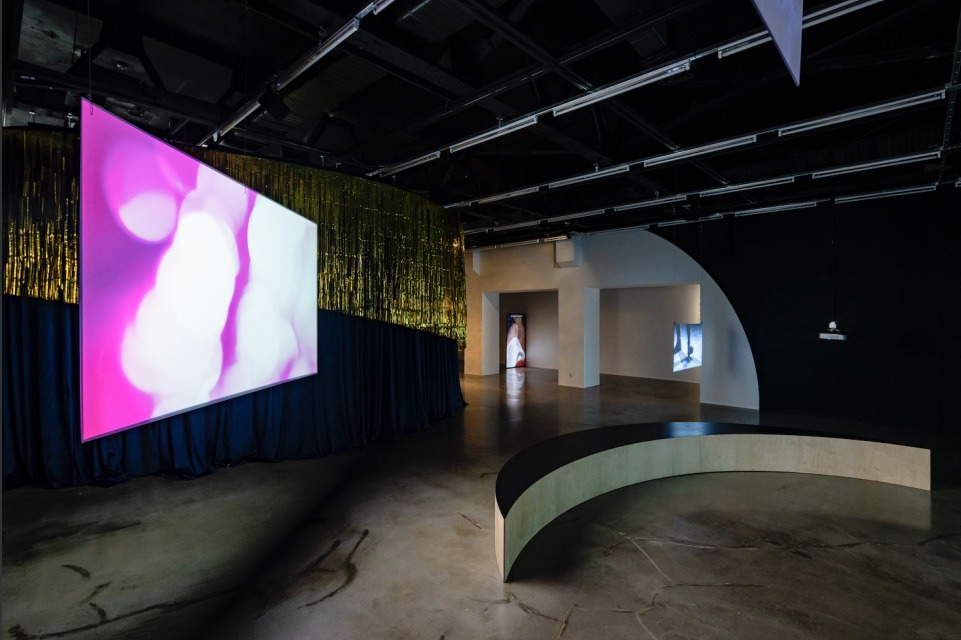
It is also a new site in which exchanges of images are continuously produced by the tourist’s footsteps as they wander through and fill the off-screen spaces and gaps between narratives, while ever-new mises en abyme are continually deposited.
References