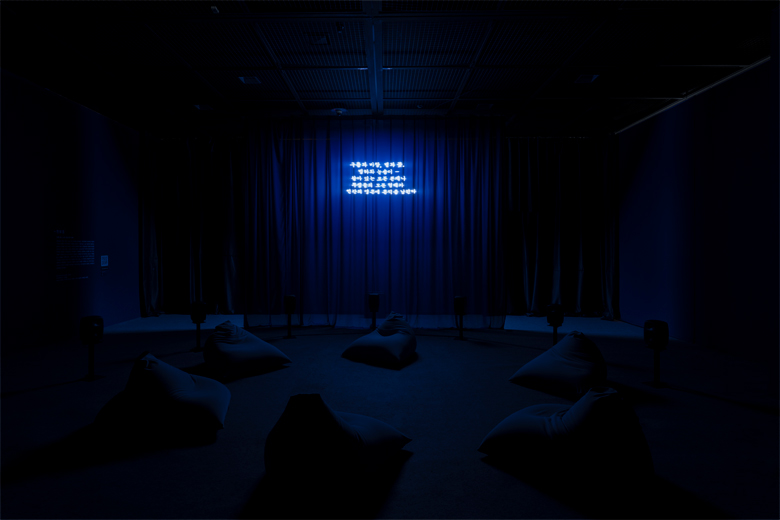
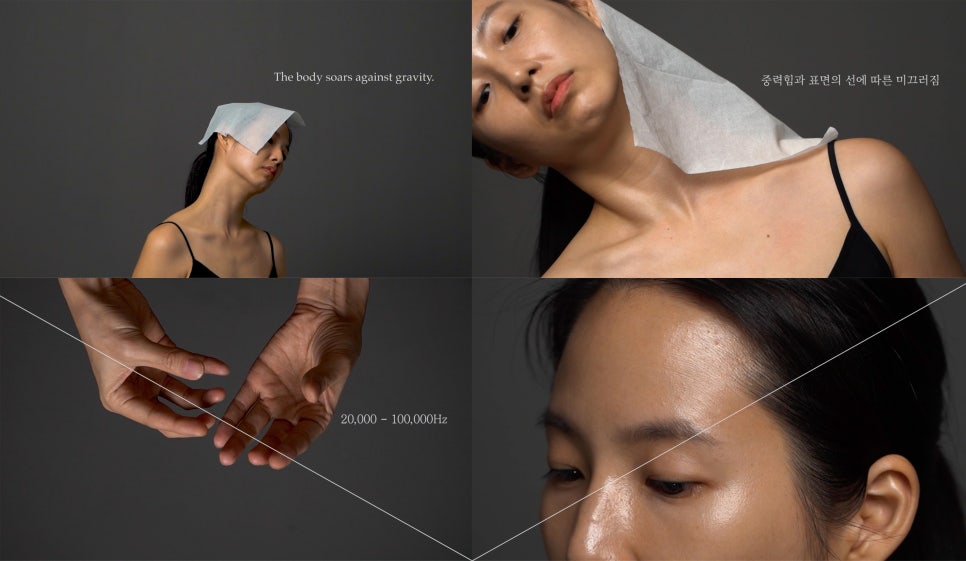
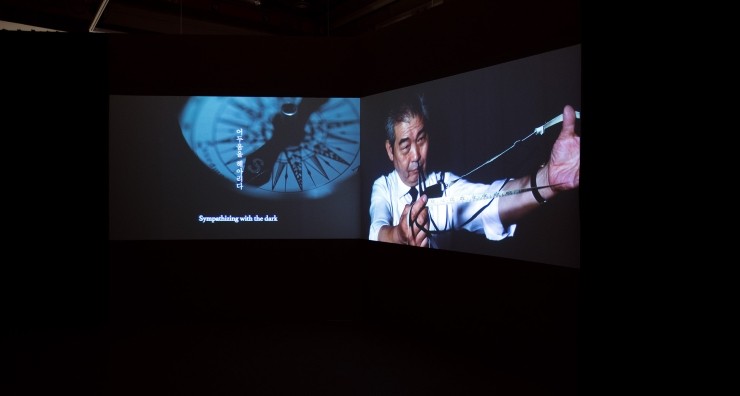
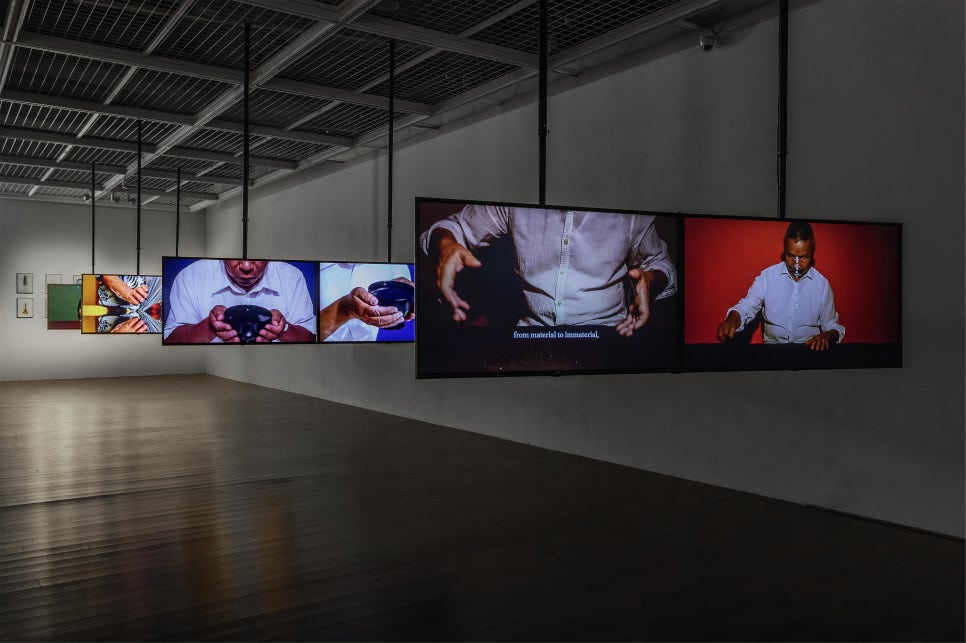
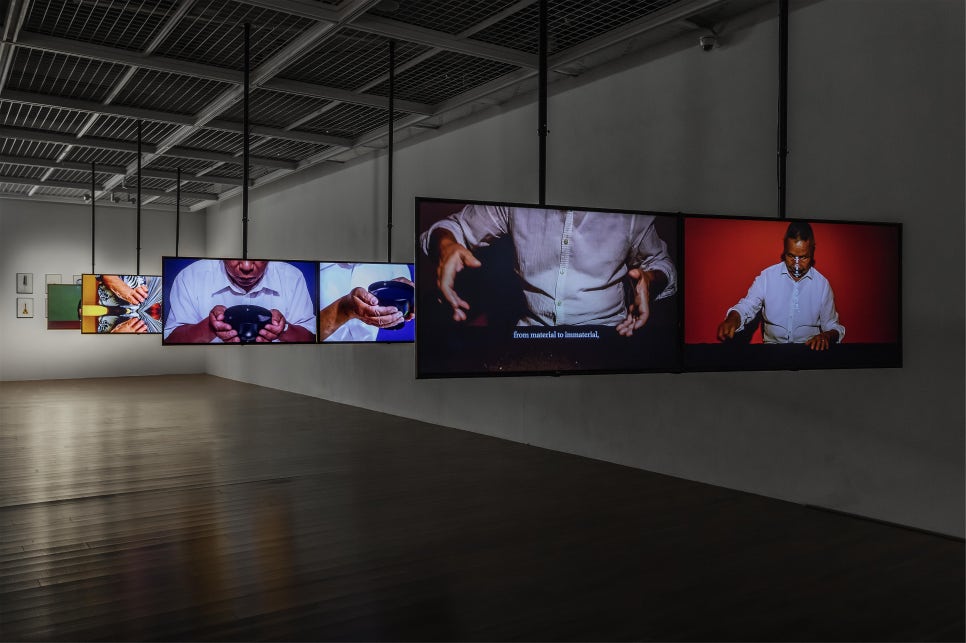
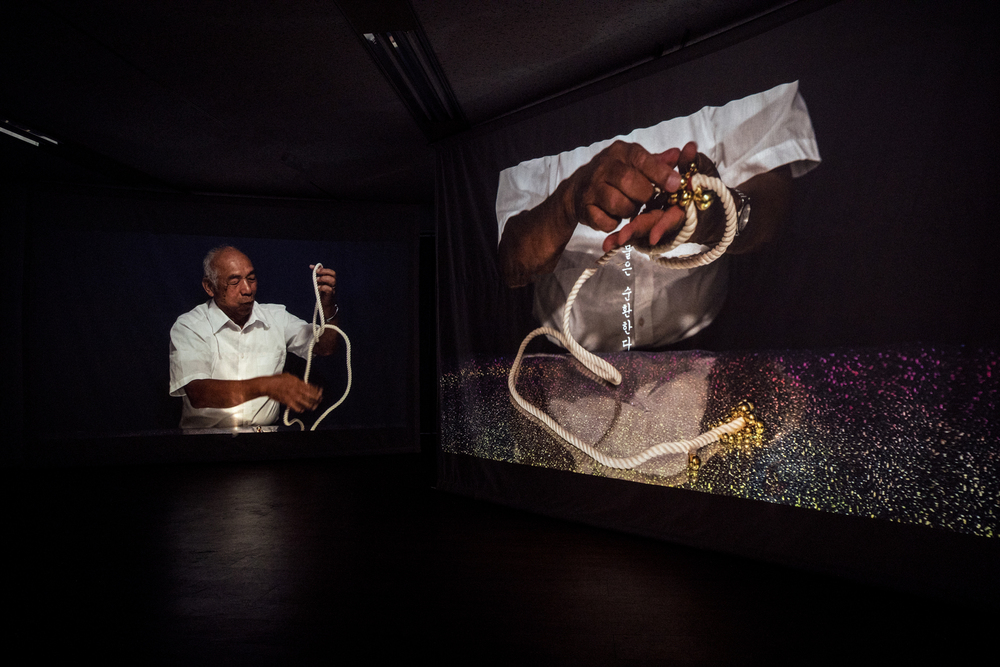
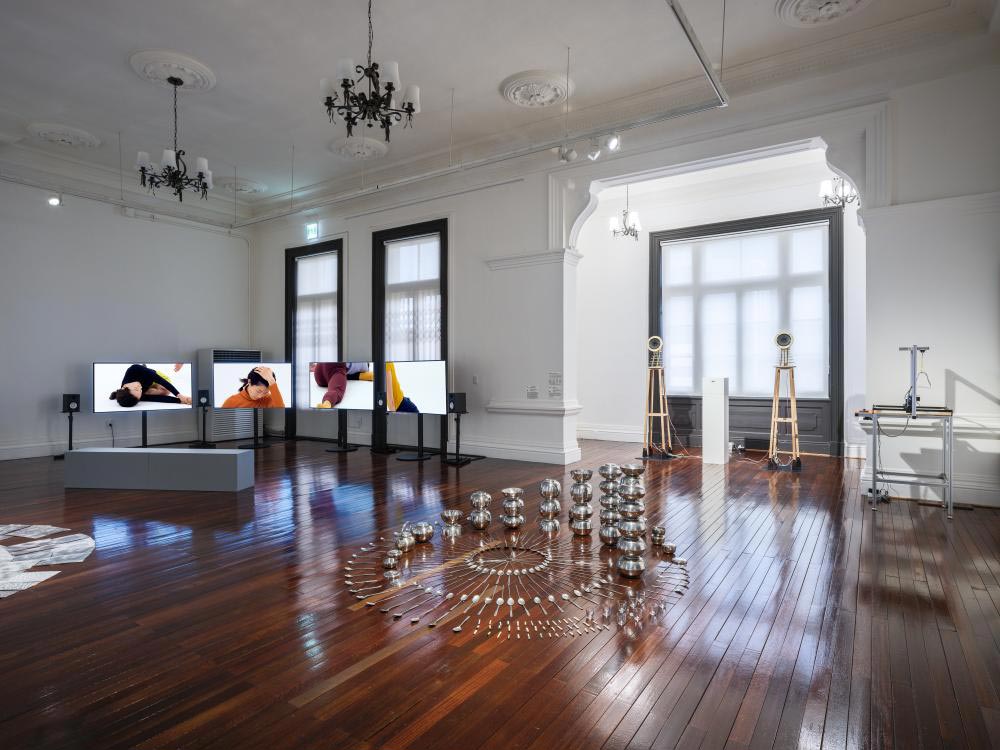
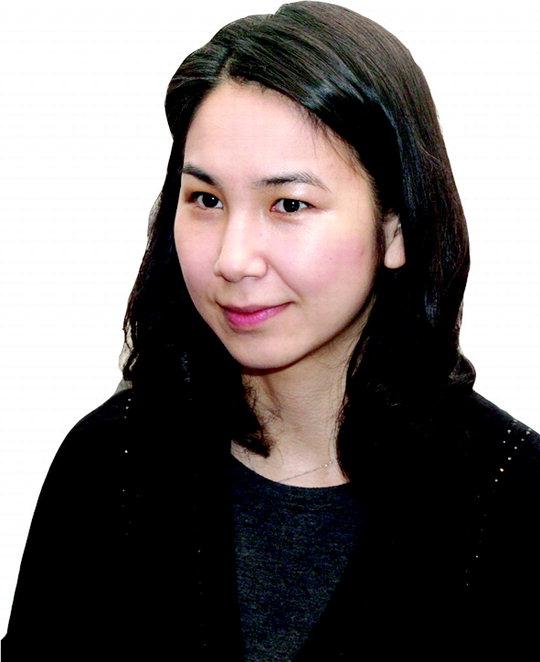
Bokyung Jun, Lapis Philosophorum, 2017, 2-channel video with sound, 9 min 30 sec © Bokyung Jun

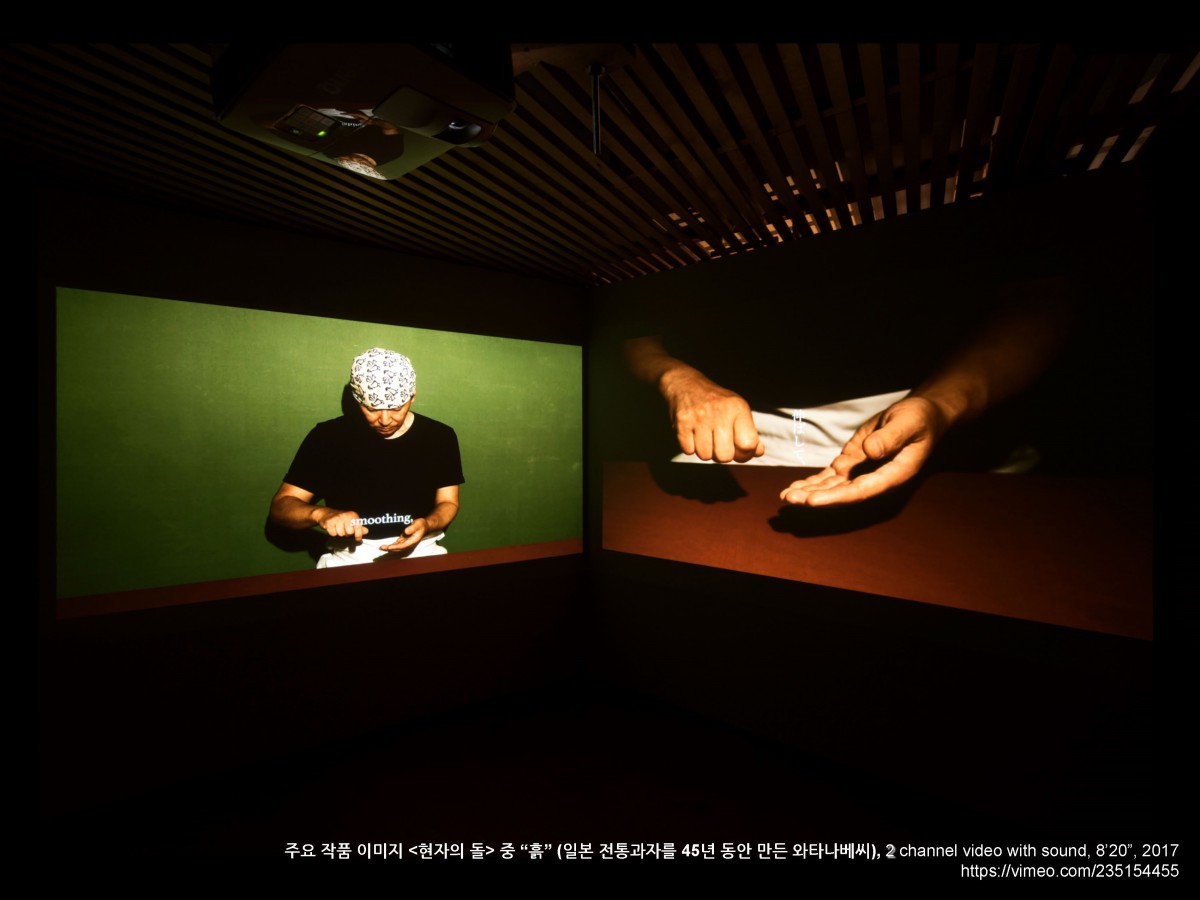
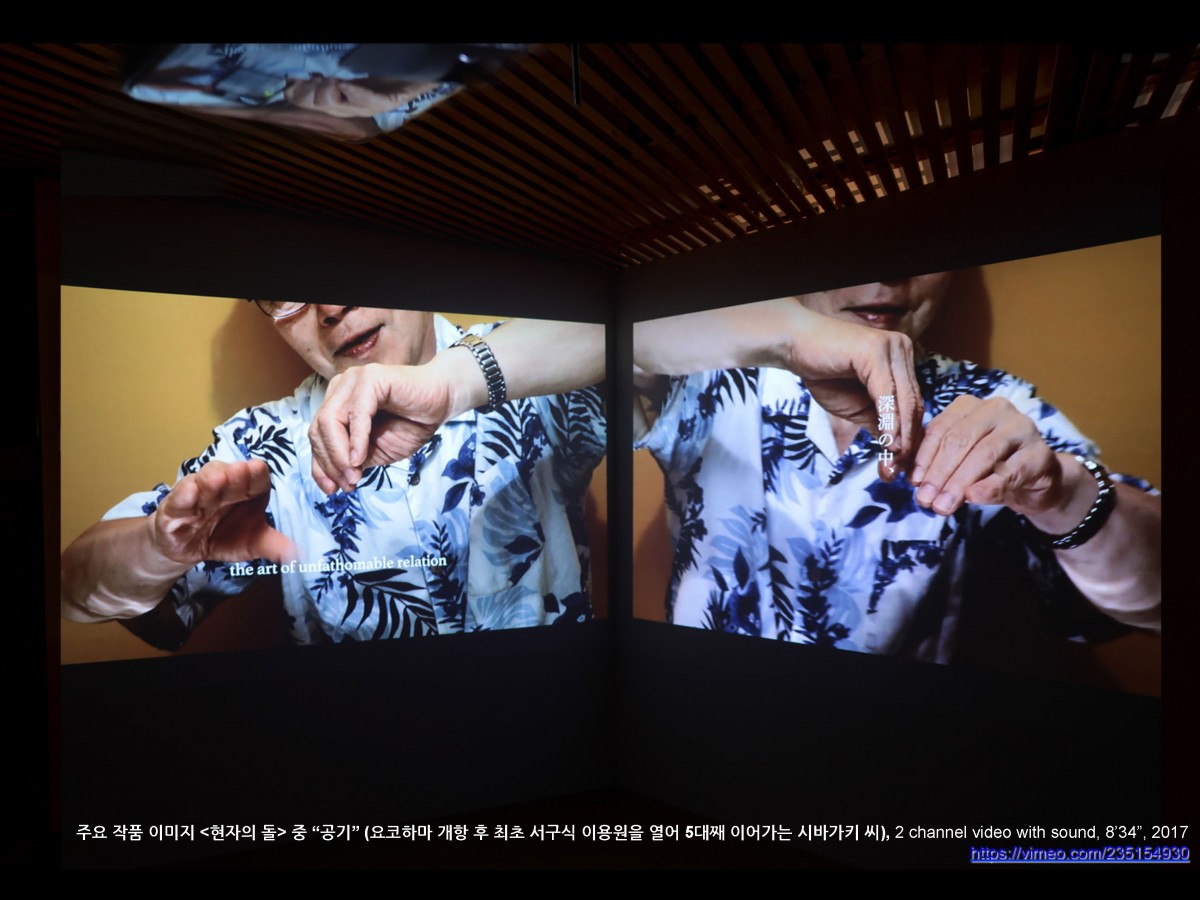
Since 2017, Bokyung Jun has sought out skilled workers and craftspeople, collecting the gestures and words inscribed in their bodies and reconstructing them in the form of books, videos, and installations.

These works, which attempt to locate values, meanings, or forms of beauty in the movements of working bodies that cannot be reduced to the products of their labor, were brought together this year in the exhibition 《Sonnet Not Written Yet》 (Soorim Arts Center, 2020).

As the title suggests, rather than presenting a clear vision in which labor and beauty are reconciled, the exhibition foregrounds the questions that arise as these two categories are drawn into closer proximity.

Why is the working body beautiful? In the industrial age, it was often regarded as an embodiment of the strength and productivity that sustained the world. It was valued because it could be hardened like steel and made to operate like, or alongside, a machine. Yet the people Jun brings into the exhibition space are not beautiful in this sense.

The movements they have repeated throughout their lives retain clear purposes and remain fully functional—in other words, through gestures long ingrained in their bodies, they can still roast delicious confectionery or cut hair neatly—but such skills can no longer easily sustain a world, a family, or even a single individual as a livelihood.

Confronted with efficient, up-to-date technological systems, the bodies of skilled workers practicing outdated techniques are branded as relatively unproductive and gradually lose their place.

By separating the gestures of skilled workers from the processes of production and repositioning them within mythical, biographical, and historical narratives, Jun seeks to restore these individuals not as obsolete means of production but as complete beings, each shaped through interaction with their surrounding environment.

Here, the working body is depicted as fundamentally no different from the artistic body, insofar as both devote themselves sincerely to forms of activity that cannot simply be reduced to utility or profit. What, then, can the work we do actually be said to be, and toward what might it aspire?

In 《Sonnet Not Written Yet》, both the skilled workers and the artist who gives them form are conceived as mediators or transformers who attune what is already given in the world in order to draw forth something that was not previously inherent within it. When they properly carry out their respective forms of work, the result is expected to be harmonious and beautiful.

Ultimately, the purpose of such work is to move beyond the economic totality of a world devoted to blind production and to activate a generative, or perhaps poetic, dimension inherent in life. In a sense, Jun resembles the protagonist of a Bildungsroman wandering through the world, meeting different people and learning from each of them, little by little, what it might mean to be an artist.

Underlying this is a persistent belief or hope that beauty can be found not only in the achievements of artists preserved in art history, but in the vivid lives of people living in the same era as oneself, and that such beauty might provide a clue for approaching the unknown territory called art. In observing reality while ultimately wishing to see beyond it, Jun is closer to modern painters than to sociologists or anthropologists.

Yet what she brings into her work takes shape not primarily as an object of visual representation, but as an example of the diverse ways in which human beings interact with the world.

《Sonnet Not Written Yet》, for instance, brings to the fore not only the distinctive traces of life embodied by each individual but also labor itself as a mode of life shared among them. Their lives are oriented toward productive labor upon the world, yet are also revealed to contain forms of unproductive interaction that cannot always be justified in economic terms. In the lives of craftspeople, these two dimensions are effectively inseparable and integrated as one.

Yet if we truly believe in beauty—often described as a “promise of happiness,” or as a fleeting encounter with something transcendent akin to a manifestation of the divine in this world—then beauty must be understood as something heterogeneous that inhabits labor rather than as its direct product. In other words, it remains embedded within the enigma of non-production.

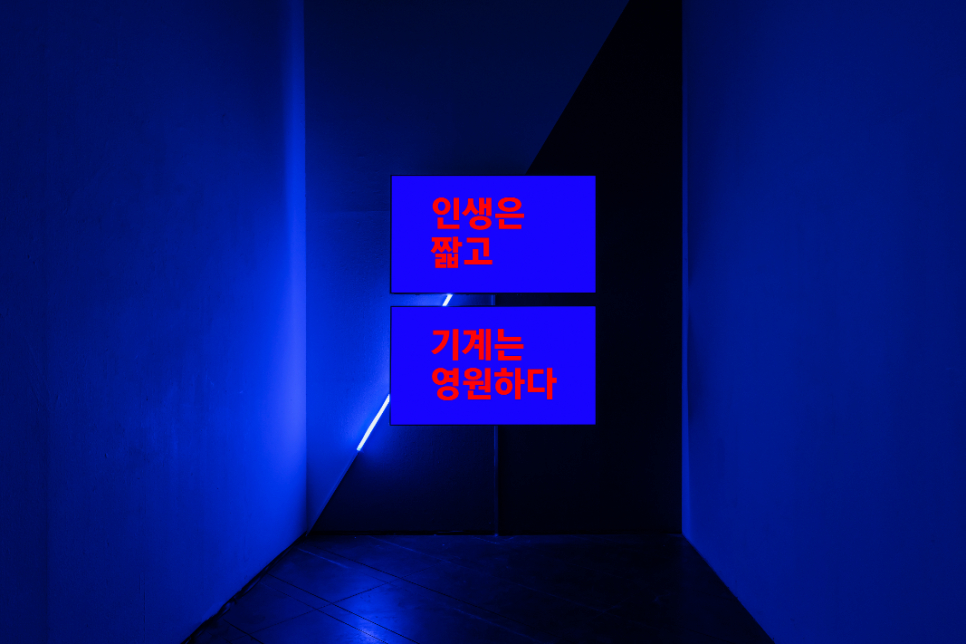
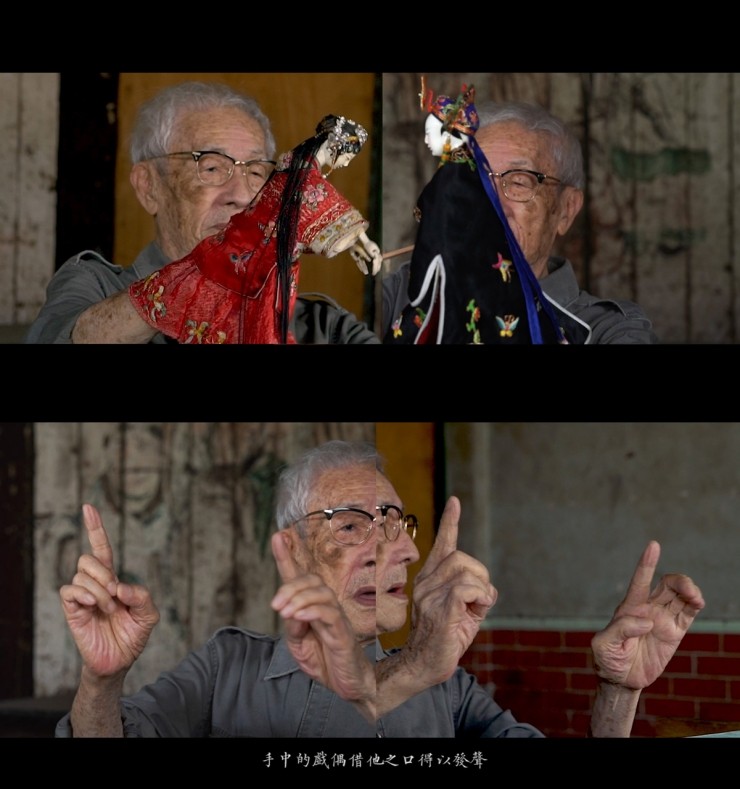
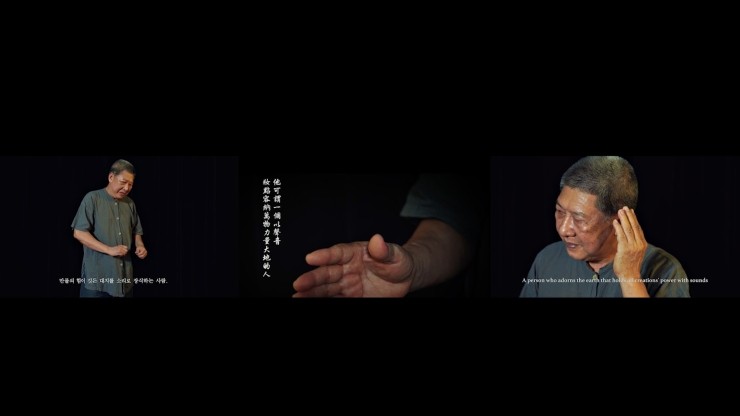
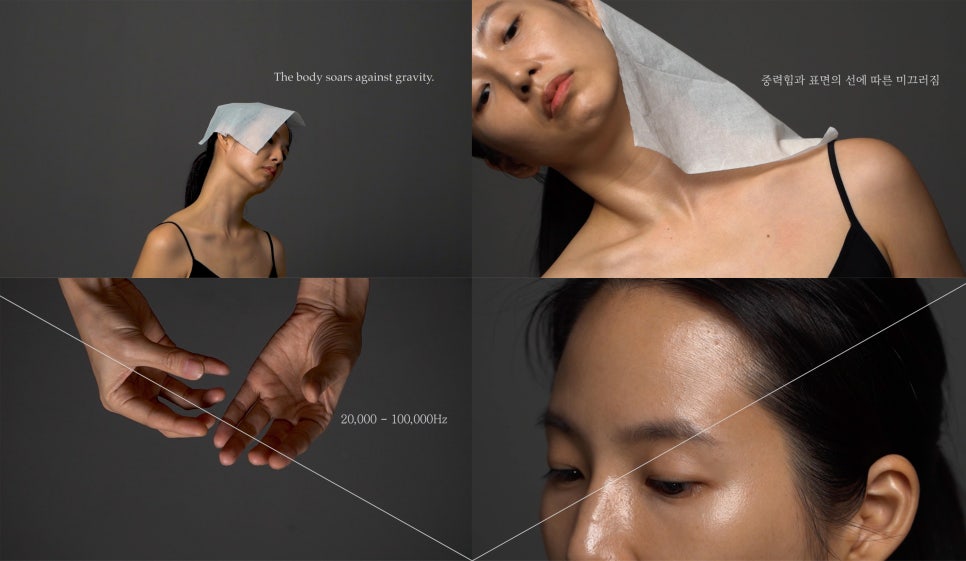
Bokyung Jun, Air Becomes Ears, Ears Become Eyes, 2020, 2-channel Full HD video, color, stereo sound, 8 min © Bokyung Jun

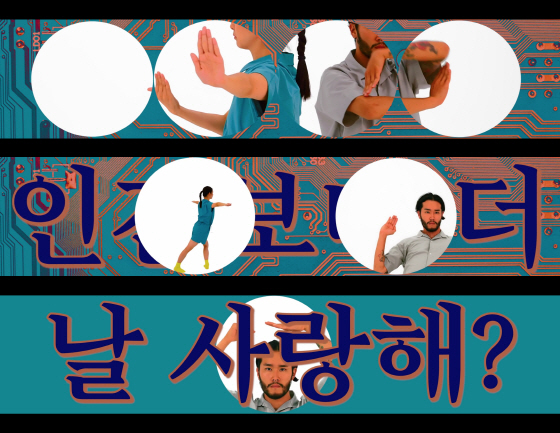
Jun’s recent works focus on this non-productive dimension while forming new relationships with other artists, particularly dancers, whose practice is often regarded as standing at the furthest remove from productive labor. Air Becomes Ears, and Ears Become Eyes (2020) brings together a visual artist who seeks to learn from others, a deaf visual artist, and a dancer who uses the body as an artistic medium. Together, they activate the body as a device of pure sensation and movement, sharing their respective sensory experiences with one another.
To perceive and express sound as tactile vibration—as a series of movements passing between one’s own body and those of others, and further between bodies and inanimate objects—is, strictly speaking, neither a natural phenomenon nor a form of labor. It neither becomes an instrument serving an external purpose nor objectifies something other than itself; rather, it possesses its own orientation while responding to stimuli from outside.

By accepting the sensory-motor configuration of the disabled body, often regarded as non-productive, as another particular mode through which a being in the world interacts with its environment, and by investigating it together, the three artists experience a gradual expansion of the horizons of their respective lives and practices.


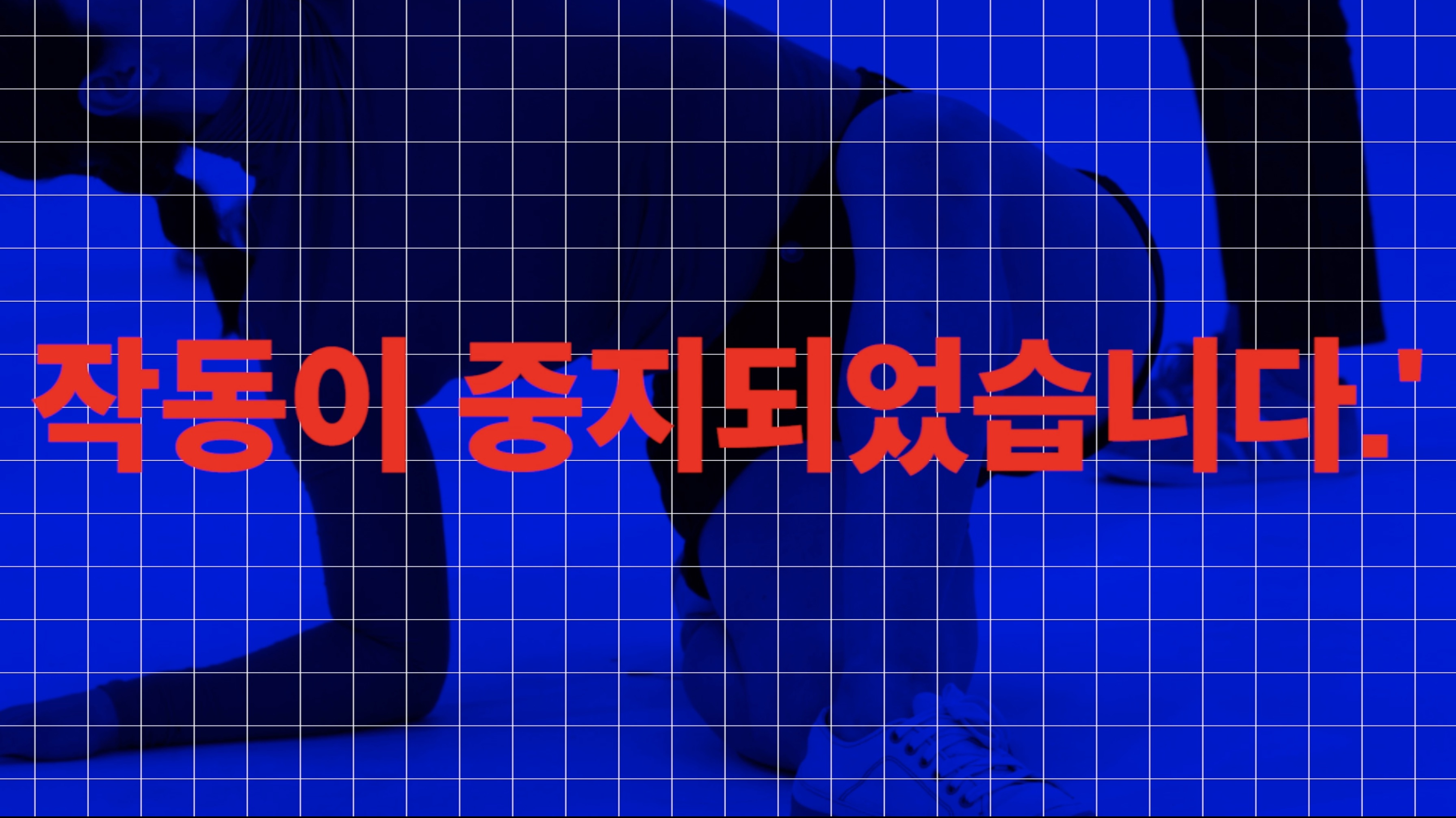
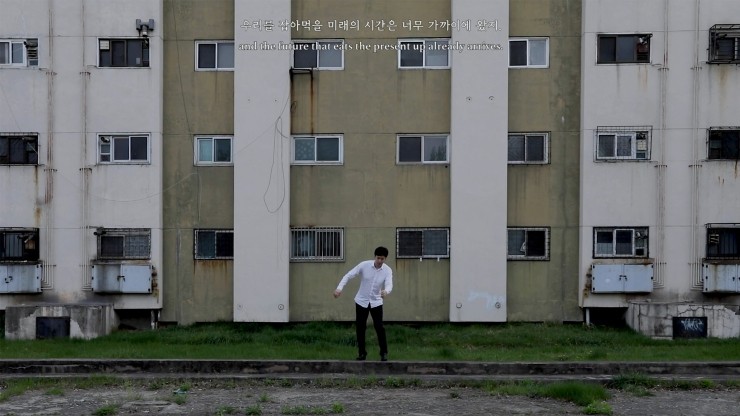
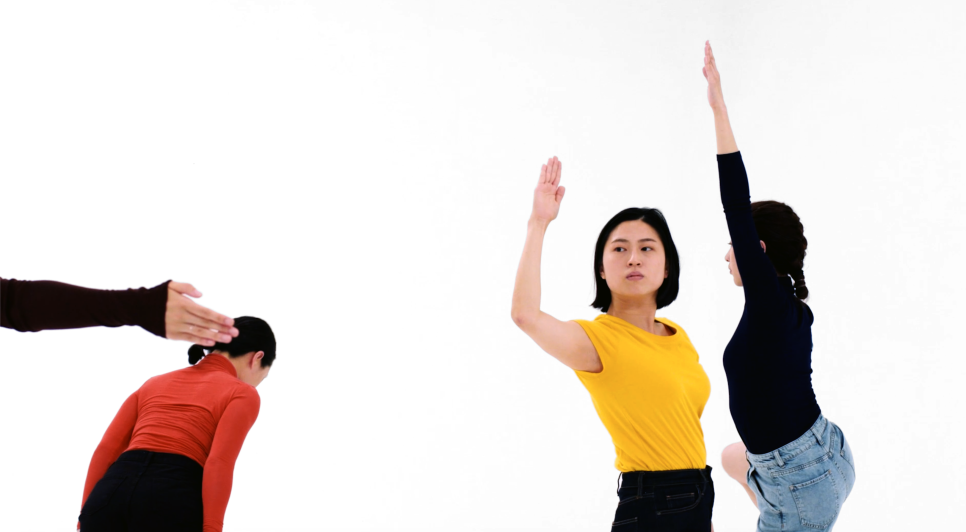
Bokyung Jun, Zeros: Operation Errors, 2020, Single-channel Full HD video, color, stereo sound, 10 min © Bokyung Jun

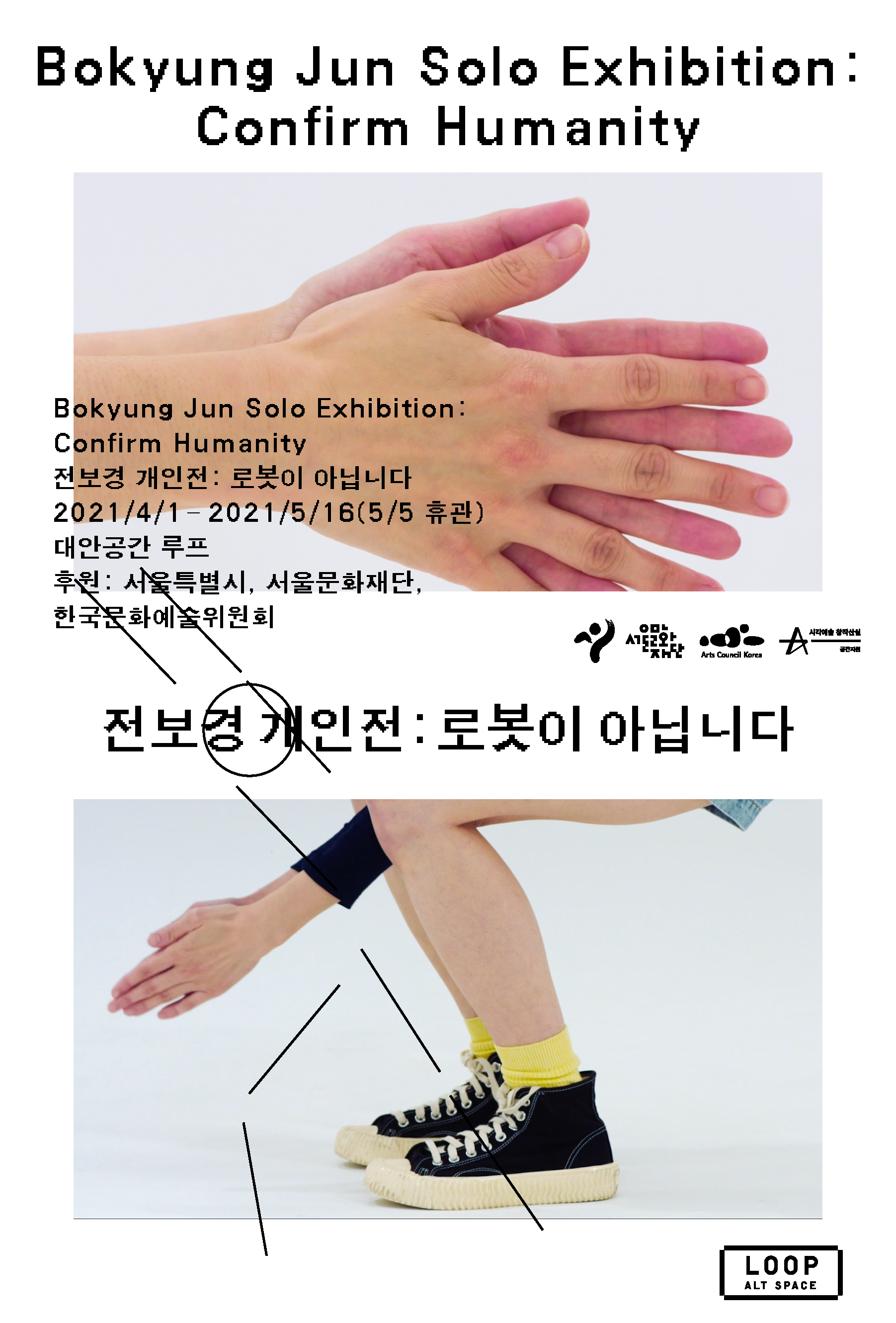
Zeros: Error Movement (2020), developed in collaboration with another group of dancers, observes and imitates the movements of robots optimized for productive labor while amplifying the non-productive movements of the human body that deviate from them. Here, Jun returns to her interest in the boundary between productive labor and non-productive activity, or in the point at which any precise distinction between the two begins to blur.

Yet life and art are redefined not as realms that can ultimately be unified, but as two poles that activate one another by simultaneously attracting and repelling each other. Precisely because Jun’s work is grounded in a belief in beauty, it is persistently accompanied by the suspicion that it may ultimately be impossible for human beings to distill and objectify a purely universal form of beauty.

This is also why she continues to search not within the sanctified realm of art, but among objects and within people’s lives, for something that glimmers and can be brought into her work. Such an undertaking resembles less a form of labor than an inquiry whose purpose cannot be definitively fixed.

Beauty tends to be implicitly regarded as an anachronistic category insofar as it remains entangled with intimations of transcendence. Yet for that very reason, it continues to function as an imaginary anchor beneath the surface, holding in place the equally anachronistic thing we call art.

In a self-destructive world where the last century’s worship of productivity has resulted in the overproduction of capable yet unusable people and things, what might be the dimension beyond that art is still capable of summoning, and how might we gain access to it? It is not a question that can be answered easily, but neither is it one that should be readily abandoned.

References