Stones, Objects, and Beyond
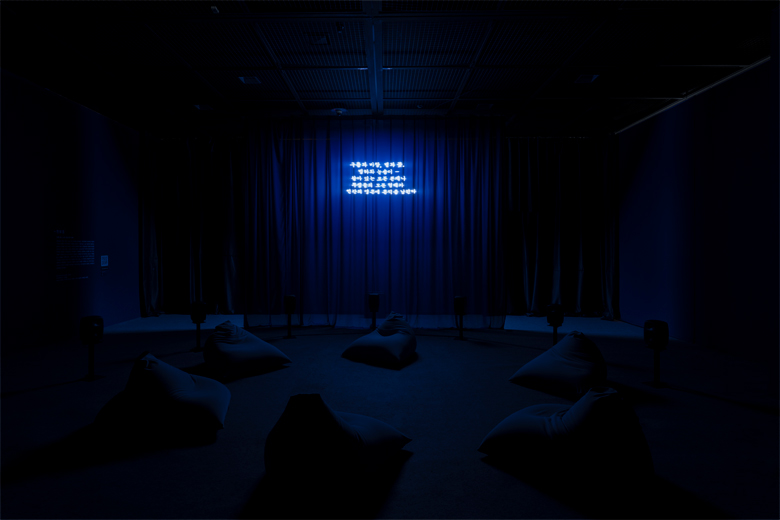
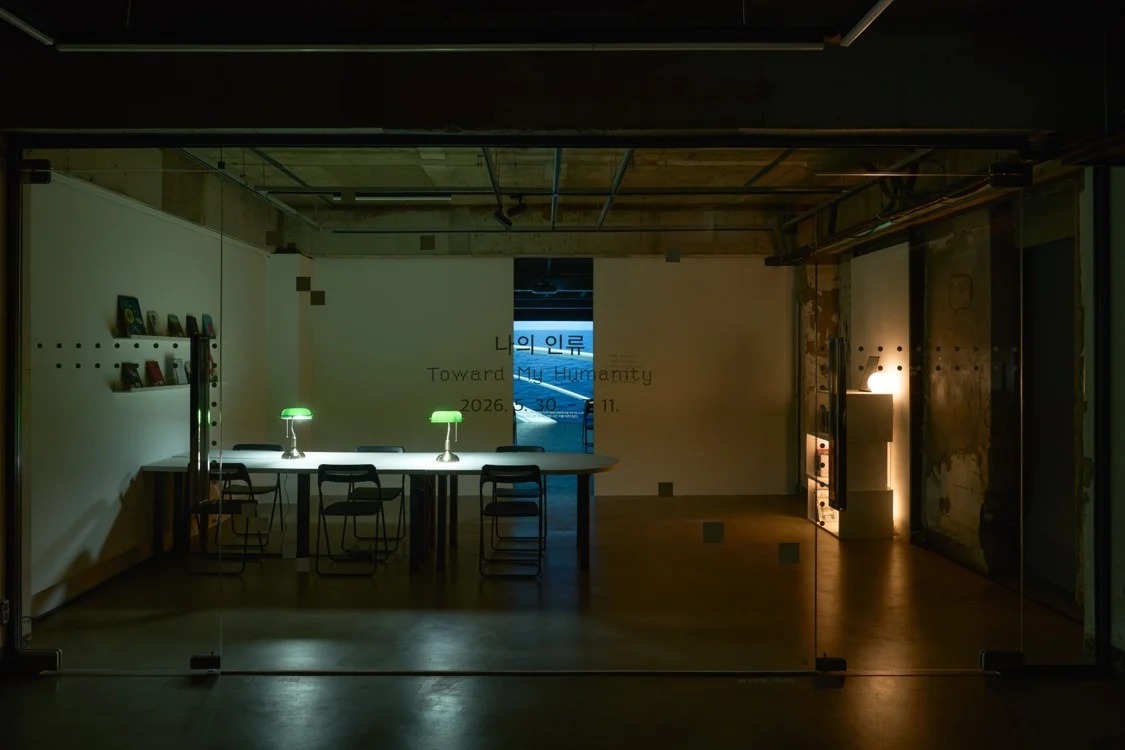
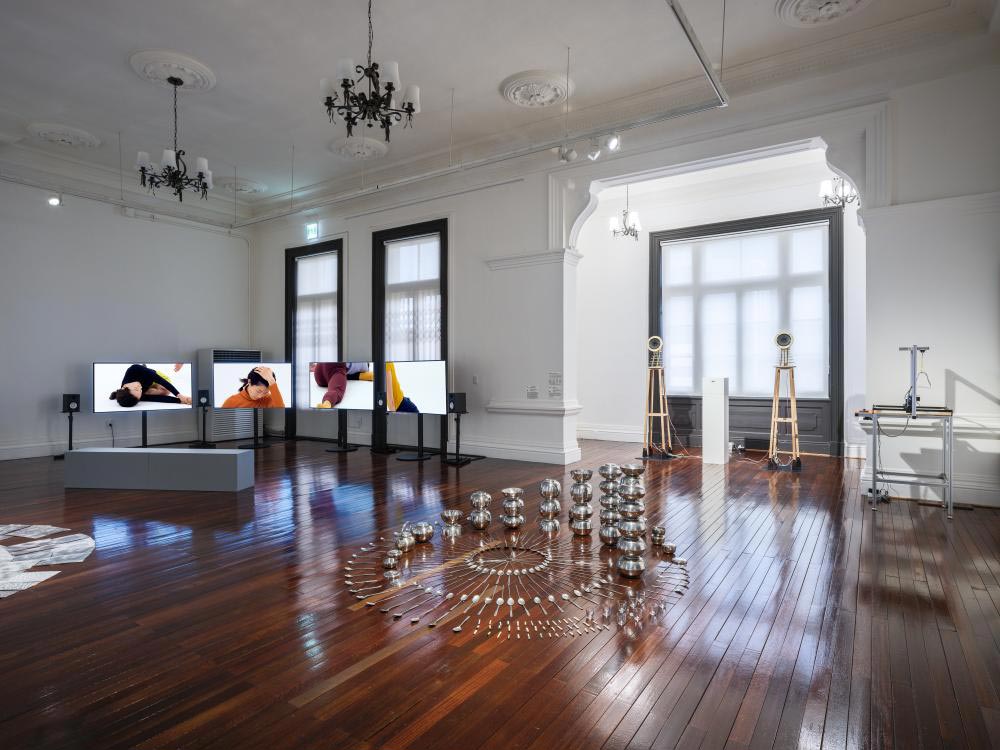
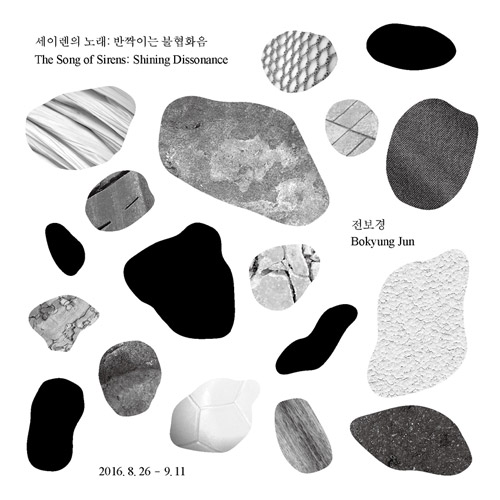
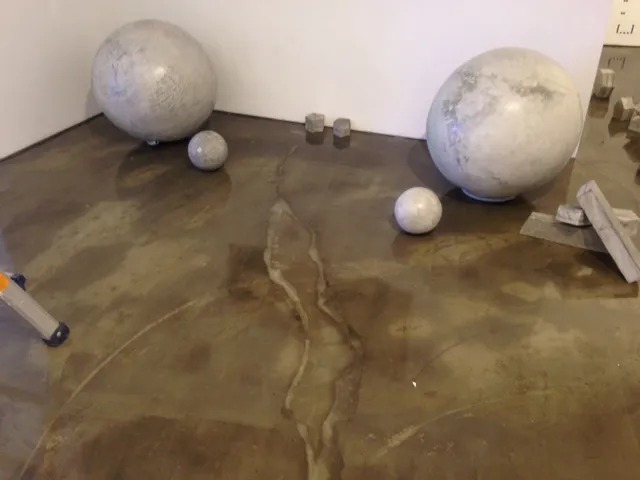
Around ten stones of various shapes are arranged throughout the space. They resemble the philosopher’s stone invoked in the exhibition title. Though somewhat small in scale, the stones nevertheless possess an unreal sheen and transparency. There is also a photograph of a golden stone alongside grains of rice, while brooms and mops are inserted upside down into a porous rock, recalling a witch’s broomstick.
Other objects resemble a globe and a fan, and there are implements that appear to belong to shamanic rituals, such as hand bells. It soon becomes apparent that the artist is drawing upon shamanism and folk belief as motifs. Videos are screened among these strange objects. Considering that moving images themselves were once perceived as ghostly apparitions, video and these uncanny objects seem particularly well suited to one another.
The philosopher’s stone (lapis philosophorum) is, in essence, a metaphor rather than an actual stone. It is also known as the Philosopher’s Stone or the Sorcerer’s Stone. It has been represented as gold, and related narratives include the tragic story of King Midas, whose touch turned everything to gold, as well as legends concerning elixirs of youth and love potions.
Its significance lies not in literally producing gold, but in symbolizing the attainment of the ultimate goal of mysticism or alchemy. At the same time, it can refer to knowledge of the world and divine wisdom that were secretly transmitted and shared as a means of approaching such a goal. Possession of this knowledge would allow an ordinary human being to transcend humanity and approach the divine.
The philosopher’s stone thus represents both the highest achievement and the ultimate objective of alchemy. Religious belief, the pseudosciences that developed from antiquity through the Renaissance, and modern science all branched from overlapping roots. After all, did modern chemistry not emerge in part from medieval alchemy?
Bokyung Jun’s objects are less sculptural or aesthetic objects than a collection of mysterious instruments associated with Hermes and the mystics. Human beings enter the divine realm through symbols and metaphors. Because we cannot encounter the divine directly, we approach it through things that resemble or come close to it, and the philosopher’s stone emerges as one such symbol.
It may also recall the stone tablets upon which God inscribed the Ten Commandments for Moses. Egyptian hieroglyphs, too, were carved into stone. In any case, letters and language engraved in stone evoke a sacred aura. Iron rusts and disappears, whereas stone, barring extraordinary natural disasters, is among the natural materials capable of enduring for the longest periods of time.
The philosopher’s stone metaphorically signifies metaphysical wisdom and knowledge of the mind, spirit, or soul. Just as those engaged in spiritual cultivation stack stones while seeking purification of the mind, the objects in the exhibition that resemble stones are something more than stones and cannot be confined to their material substance.
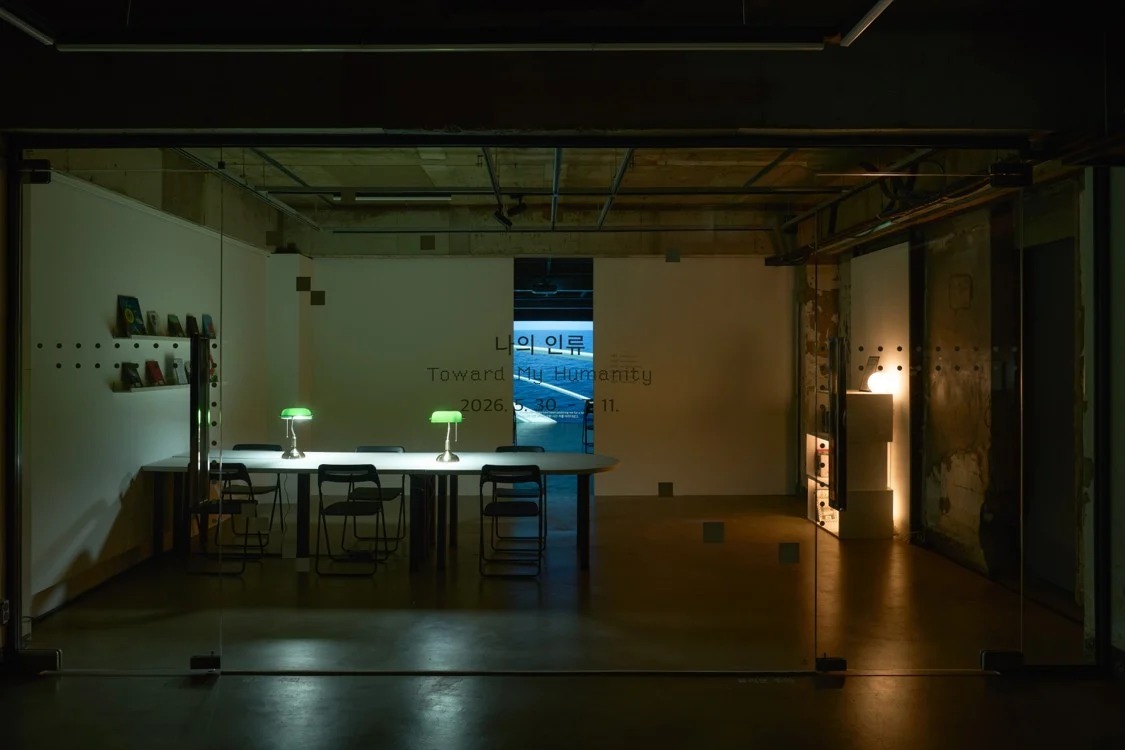
The philosopher’s stone can be imagined as a plaza or library in which minds and knowledge connect, as well as a sanctuary. The exhibition title and the objects distributed throughout the space leave us uncertain whether we have come to see an exhibition of contemporary art or have instead been invited to a secret gathering of some mystical society.
Homo Artisticus, or the Wisdom of Labor
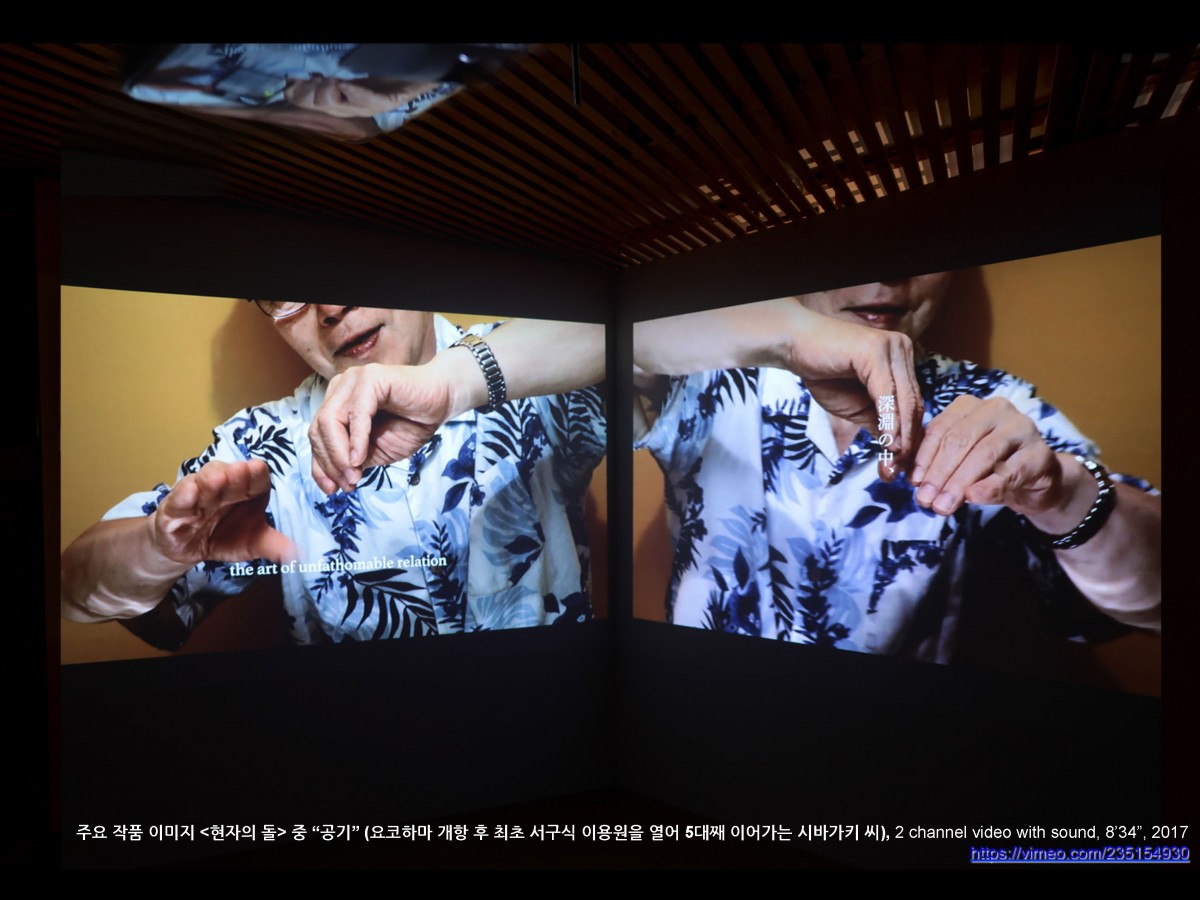
The idea for this project first emerged in 2016, after the artist met an elderly worker who cut adhesive sheets by hand and invited him to collaborate on a performance at a museum. Later, during a three-month residency in Koganecho, Yokohama, in 2017, she filmed interviews with practitioners who had worked in their respective fields for forty or fifty years or more.
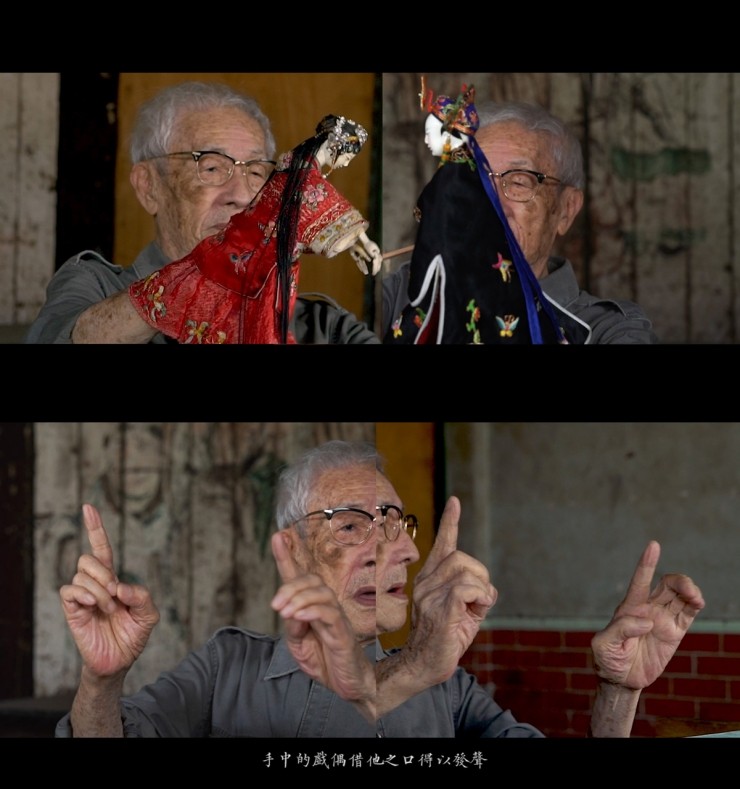
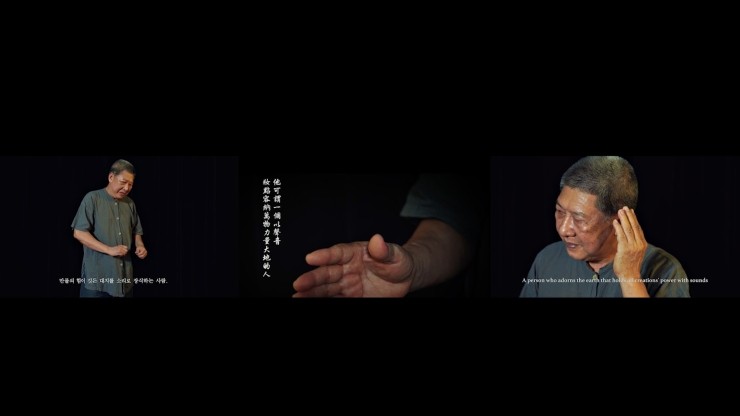
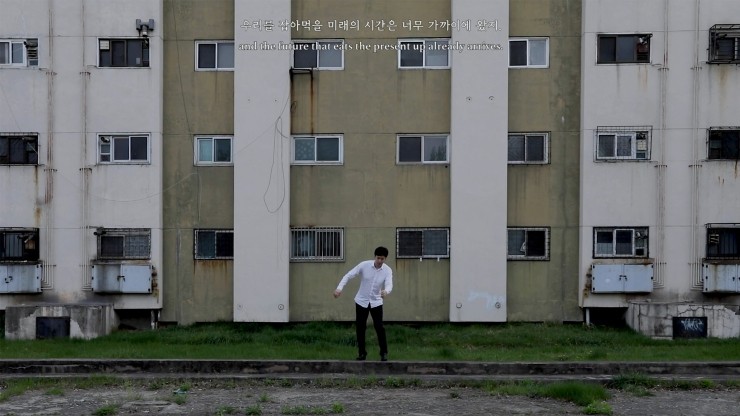
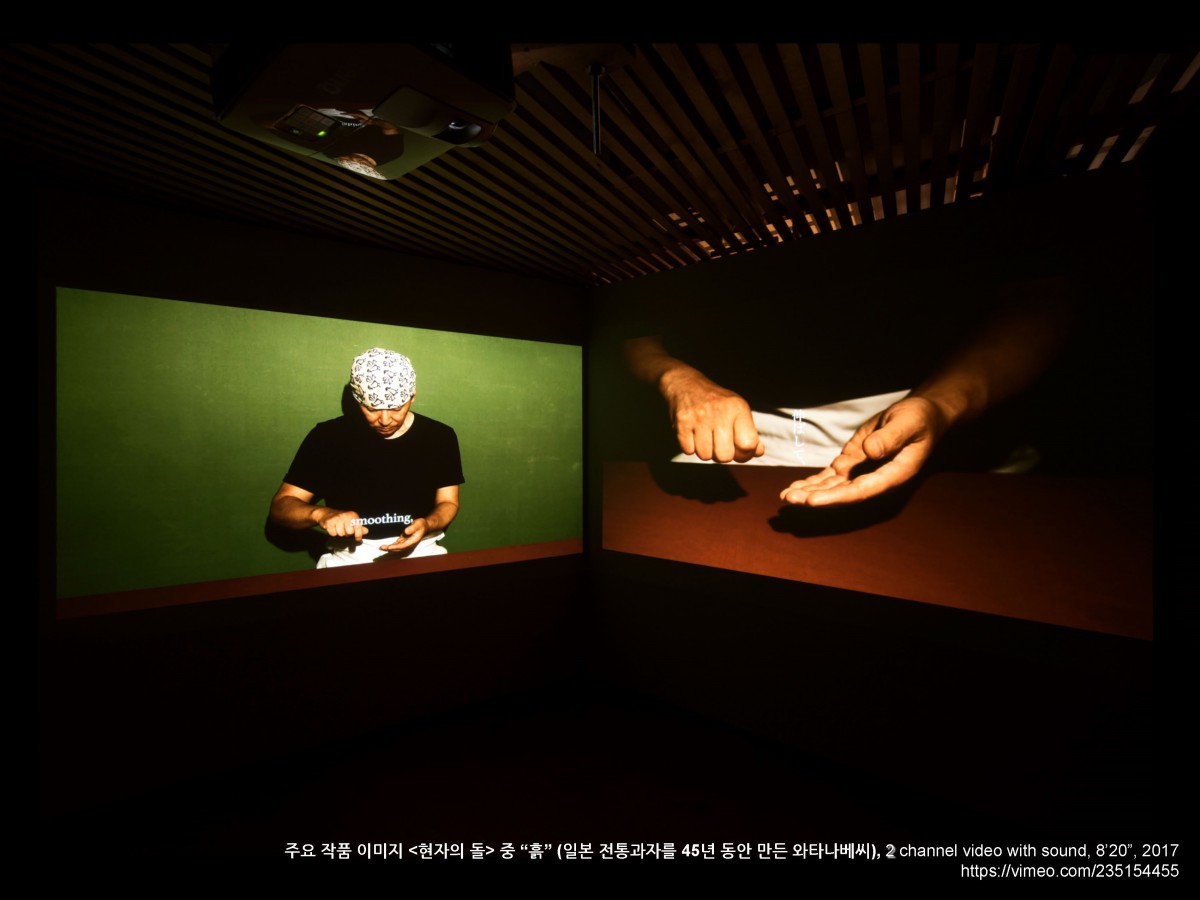
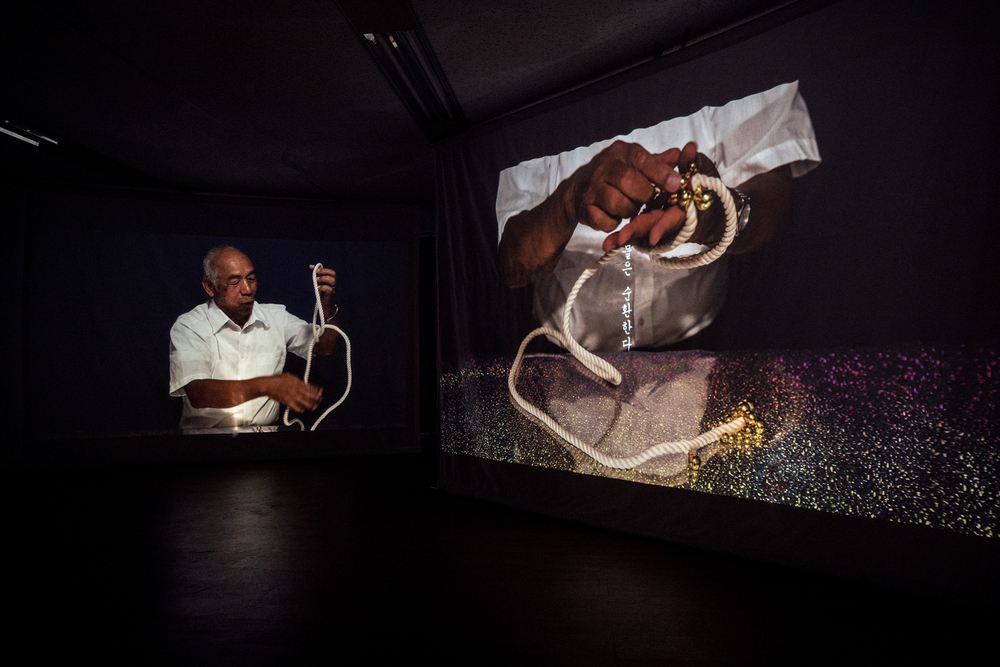
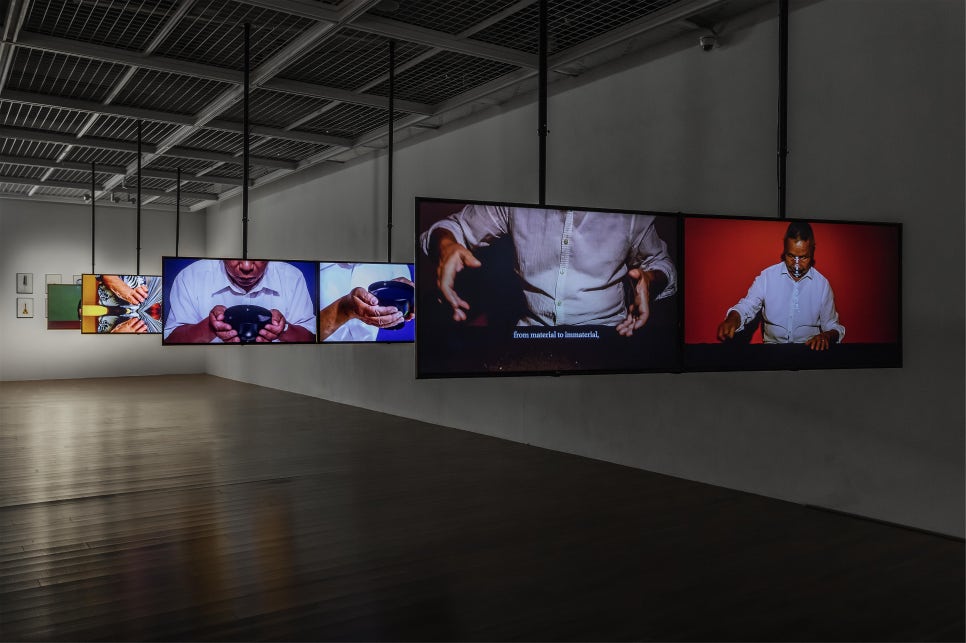
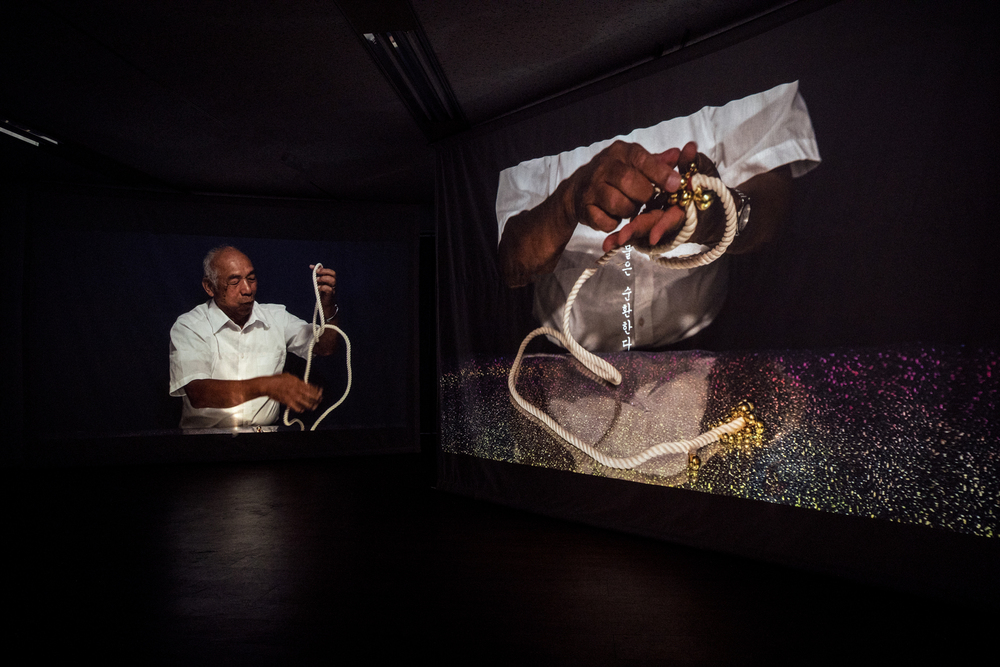
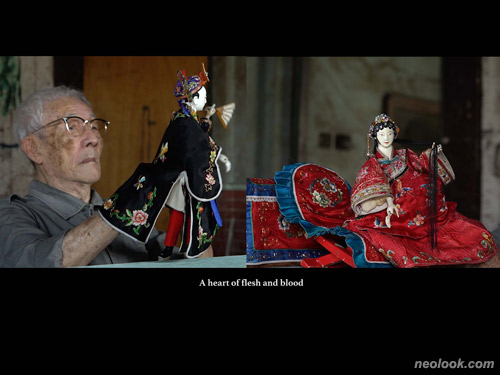
She sought out elderly people engaged in manual trades: a man who roasted peanuts to make confectionery, makers of traditional Japanese sweets and refreshments, a boat operator, and veteran barbers. These interviews, however, were not simply intended to document or communicate their stories. Jun filmed their working processes, interviewed them, transformed their everyday lives into poems, and asked them to devise movements in response to those poems.
These gestures were drawn from the movements they had repeated through decades of labor. From this process emerged the works presented in the exhibition, in which moving images, rhythm, bodily gesture, and conversation converge. They are staged as though the lifelong experience and wisdom of these elderly masters are to be heard not with the ears but with the mind.
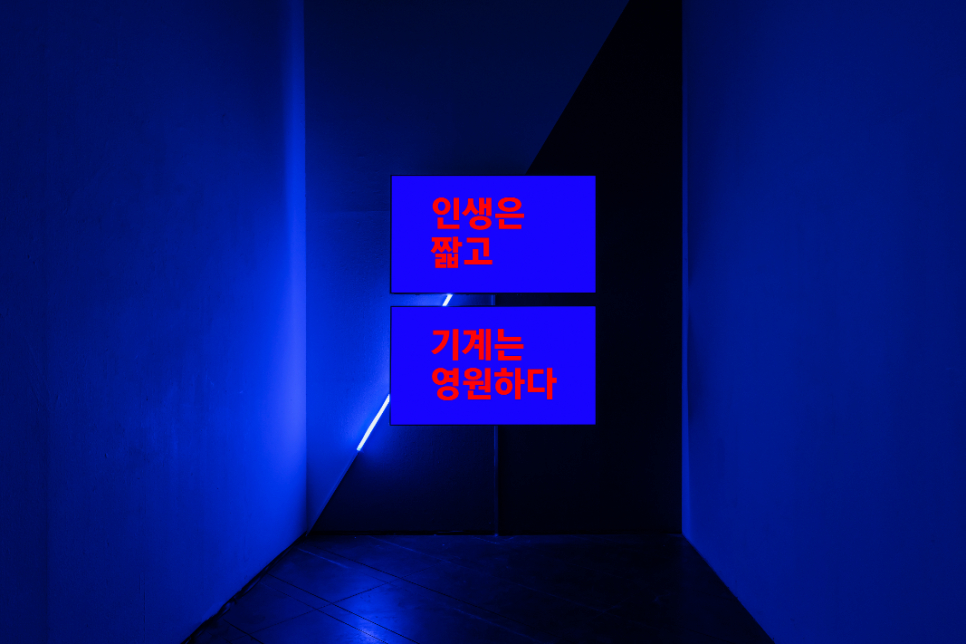
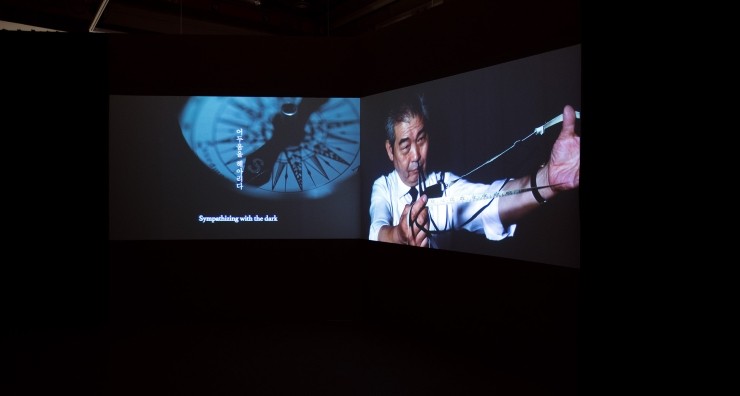
Rather than merely recording their daily routines, the works present their reflections on their professions and accumulated experience as if they were poems or monologues. The deep voices of the elderly participants resonate throughout the exhibition space, while the various objects described above form a landscape between the moving images.
Like the uncanny stage of Samuel Beckett’s Waiting for Godot, the space flickers in dim, hazy light as quiet monologues unfold. With no tools in their hands, the participants reproduce the gestures associated with their trades, precisely and meticulously articulating the skills and knowledge accumulated through a lifetime of work.
Had the artist not revealed their backgrounds, they might easily be mistaken for seasoned actors: relaxed and composed, controlling their emotions with assurance as they speak slowly but precisely. Perhaps with age, even those who have never worked as actors acquire the ability to perform themselves—and their own lives—with a presence surpassing that of a professional performer.
Taking into account differences between generations and fields, Jun developed the project from her reflections on the origins and historical separation of labor and art, and subsequently on the question of labor itself. Observing these workers, she came to imagine them as alchemists, an association that informed the title of the exhibition.
Their gestures appeared to connect with another dimension, something removed from the secular world; though they are not shamans, the movements of their aging bodies become metaphors for mysterious alchemical gestures. This process also prompted the artist to reflect upon the aesthetic and cultural capital produced through her own artistic education, the position of the artist, and the sources or origins of aesthetic sensibility.
Art and labor have long been intertwined subjects for artists. Jun sought out elderly practitioners who had devoted their lives to a single skill or form of labor, engaging them in conversation, persuasion, mutual understanding, and extended performances. What distinguishes the results of a lifetime of labor and technical expertise—and the aesthetic sensibility embedded within them—from the sensibilities presented and recognized within the museum?
When the aesthetic sensibility of these elderly workers encounters that of the established art world, new questions arise. These questions turn toward the similarities and differences between art and labor, and ultimately toward the possibility that the two may share a fundamental identity.
Above all, Jun focuses on the creativity of these individuals, and it is through creativity that similarity and equivalence begin to converge. Their creativity may differ somewhat from the creativity involved in producing works of art, yet fundamentally it still belongs within the broader category of creative activity. The creativity and aesthetic sensibility of these elderly practitioners are not those institutionalized and conventionalized by the art world.
In them, Jun discovers the notion of the “artistic human,” or homo artisticus, which she seeks to consider through the lens of labor. In doing so, she attempts to expand the domains of artistic sensibility and creativity that have been built up like an ivory tower. Through forms of handcraft and manual labor that are now disappearing, she also reflects on the boundary between utility and uselessness imposed by modern industrial society.
In a capitalist world where everything is reduced to exchange value, she seeks to reveal forms of value that remain outside such systems of exchange. Through the labor and testimonies of these elderly people, who have devoted their lives to work and come to resemble alchemists, they are transformed into figures who stand closest to the philosopher’s stone.