Daegwallyeong is a mountain pass of ninety-nine bends. In a broad sense, it connects Yeongdong and Yeongseo; more narrowly, it connects Gangneung and Pyeongchang across the Baekdudaegan mountain range.
There is also an amusing interpretation of its name: because the pass was so rugged that people would “roll and tumble” while going up and down, the word Degullyeong, meaning “a pass where one rolls and tumbles,” was phonetically transformed into Daegwallyeong. Yet Daegwallyeong is an old road. Unless one specifically has Daegwallyeong as a destination, people no longer cross this pass.
They either use the Daegwallyeong section of the Yeongdong Expressway, which passes over 33 bridges installed 90–98 meters high across valleys and through seven tunnels piercing the mountainside of the Taebaek Range, or take a train that runs straight for 21.755km, 400 meters beneath the Baekdudaegan. It became an old road because people began using new roads.
Humans make roads. A path made by footsteps through the form of nature is a road, and so is the act of steadily layering each step through the given time of life.
While walking together through the alleys of Gangneung Jungang Market to look at swallows’ nests, Gosari told me that she had grown up in Ulsan hearing the saying, “Send horses to Jeju Island, and send people to Seoul,” but that when she came to Gangneung, people used the expression, “If you were born, you must cross Daegwallyeong at least once.”
As someone born and raised in Seoul, I can only guess that the road from the southern coastal region up to Seoul, and the road from a village facing the eastern sea over the ninety-nine bends of Daegwallyeong, must both have been far from easy. Even so, certain thoughts about “hands” and “feet” gathered in my mind, and the feeling became even clearer when I encountered Gosari’s works exhibited at Gangneung Myeongju Art Center.
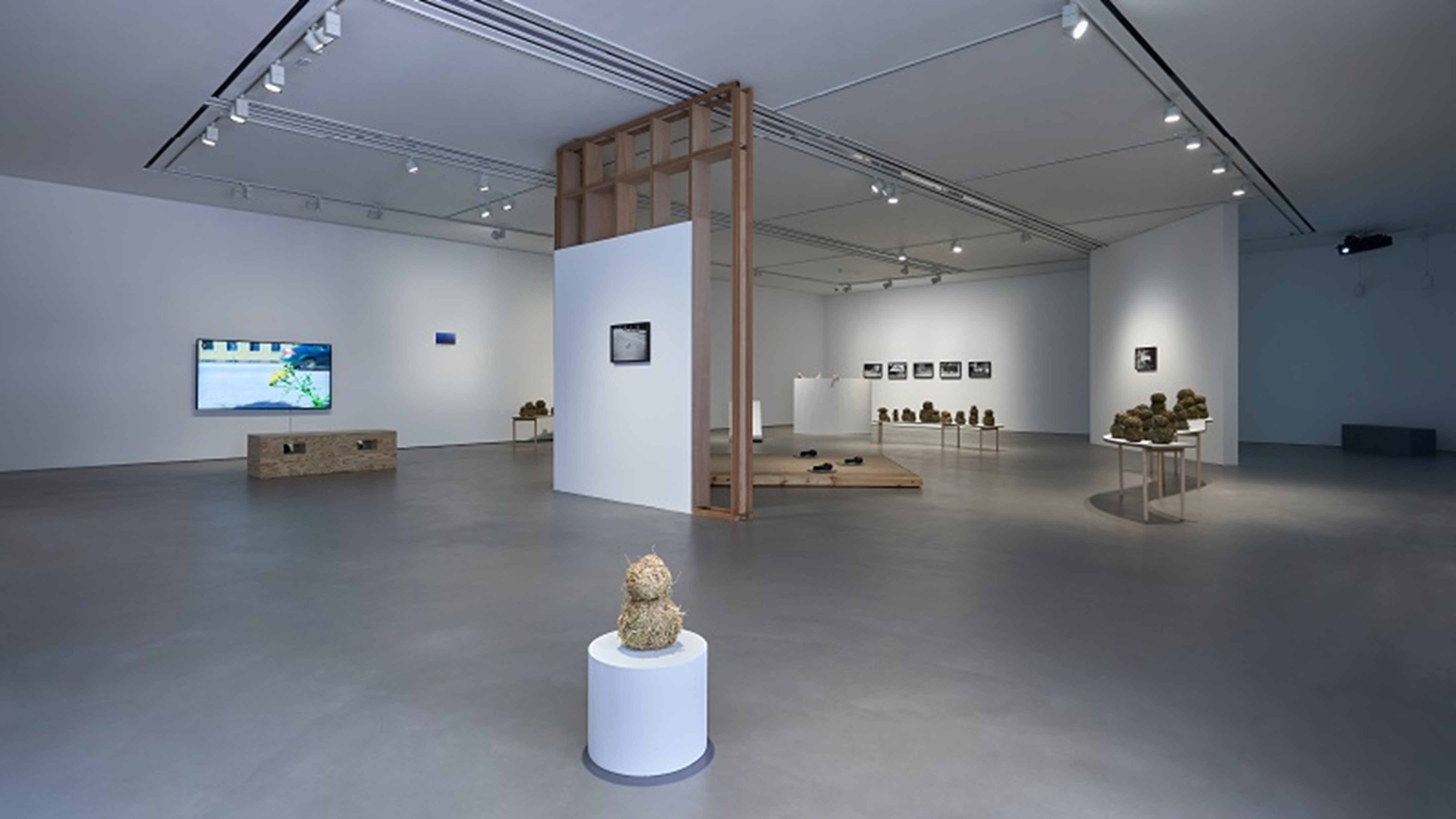
Barn Swallow Seat, Barn Swallow Pass, Barn Swallow Milky Way, Barn Swallow Story. As the titles of the works suggest, Gosari devoted the eight or so months she spent in Gangneung to observing swallows. It seems likely that, for a while, the swallows will not let go of the artist’s mind, but even so, she presented works that condense that period of time.
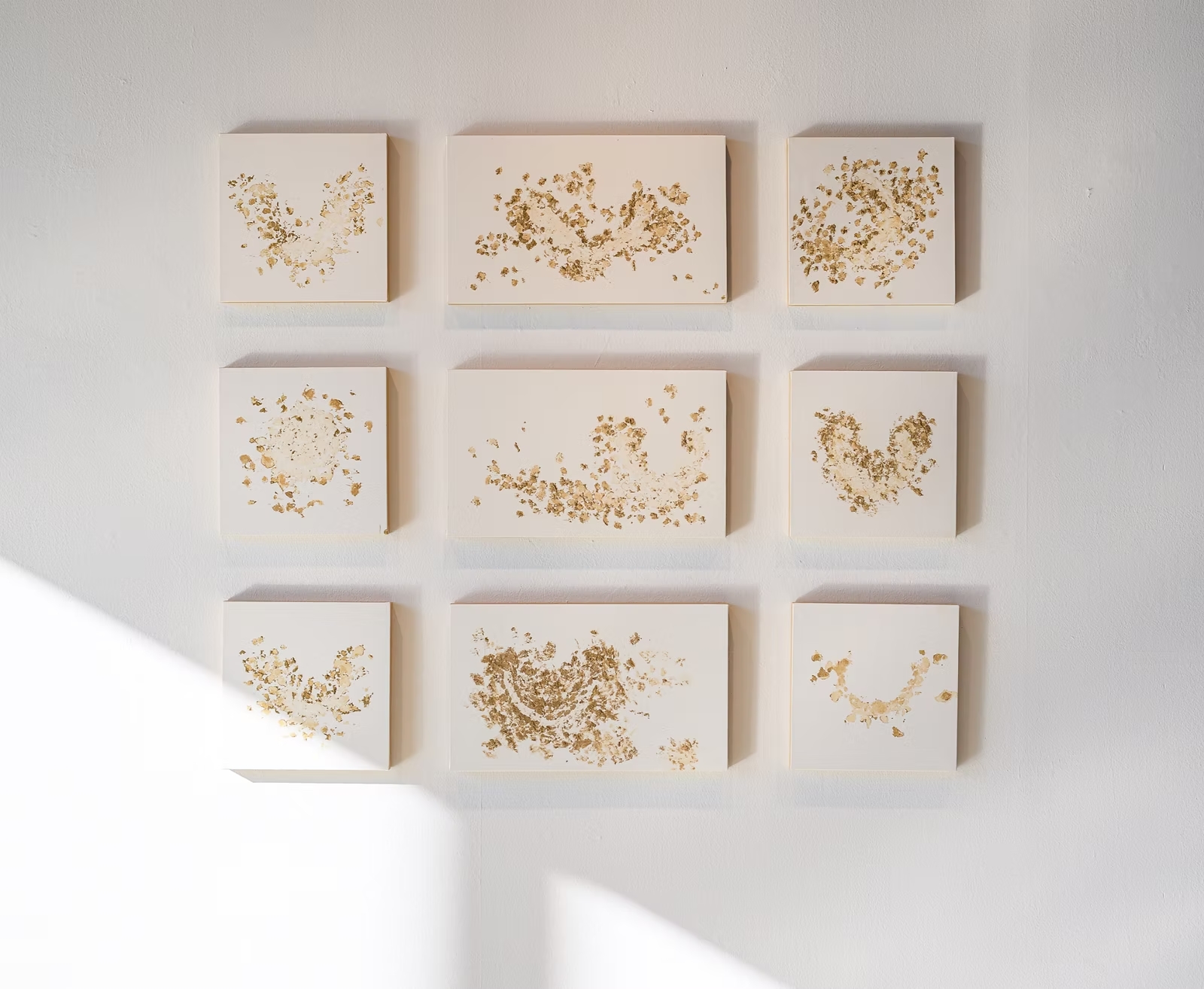
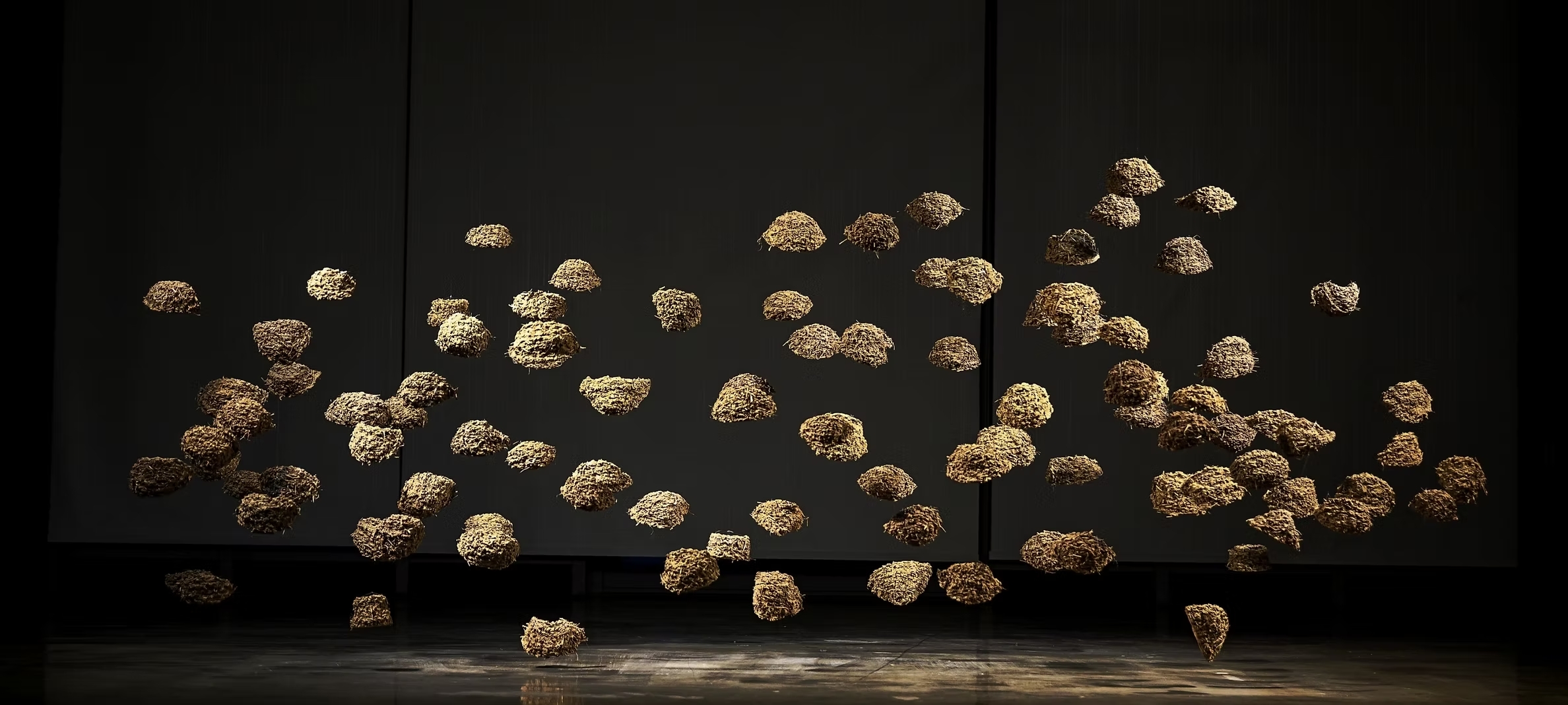
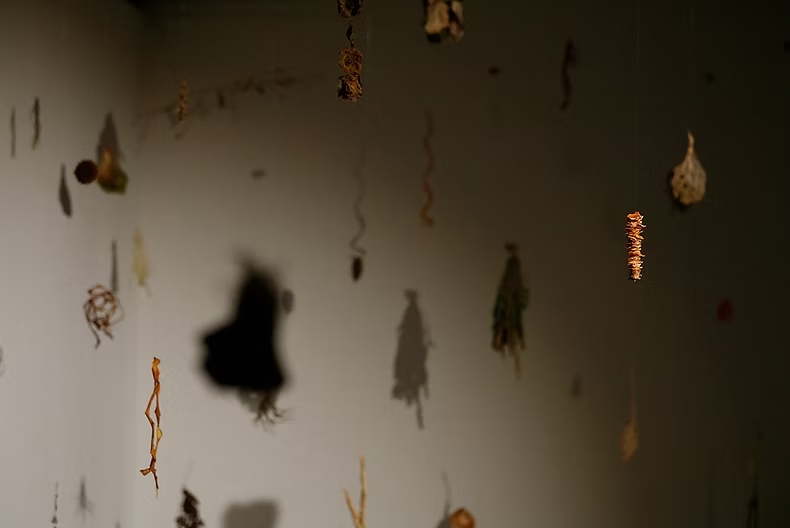
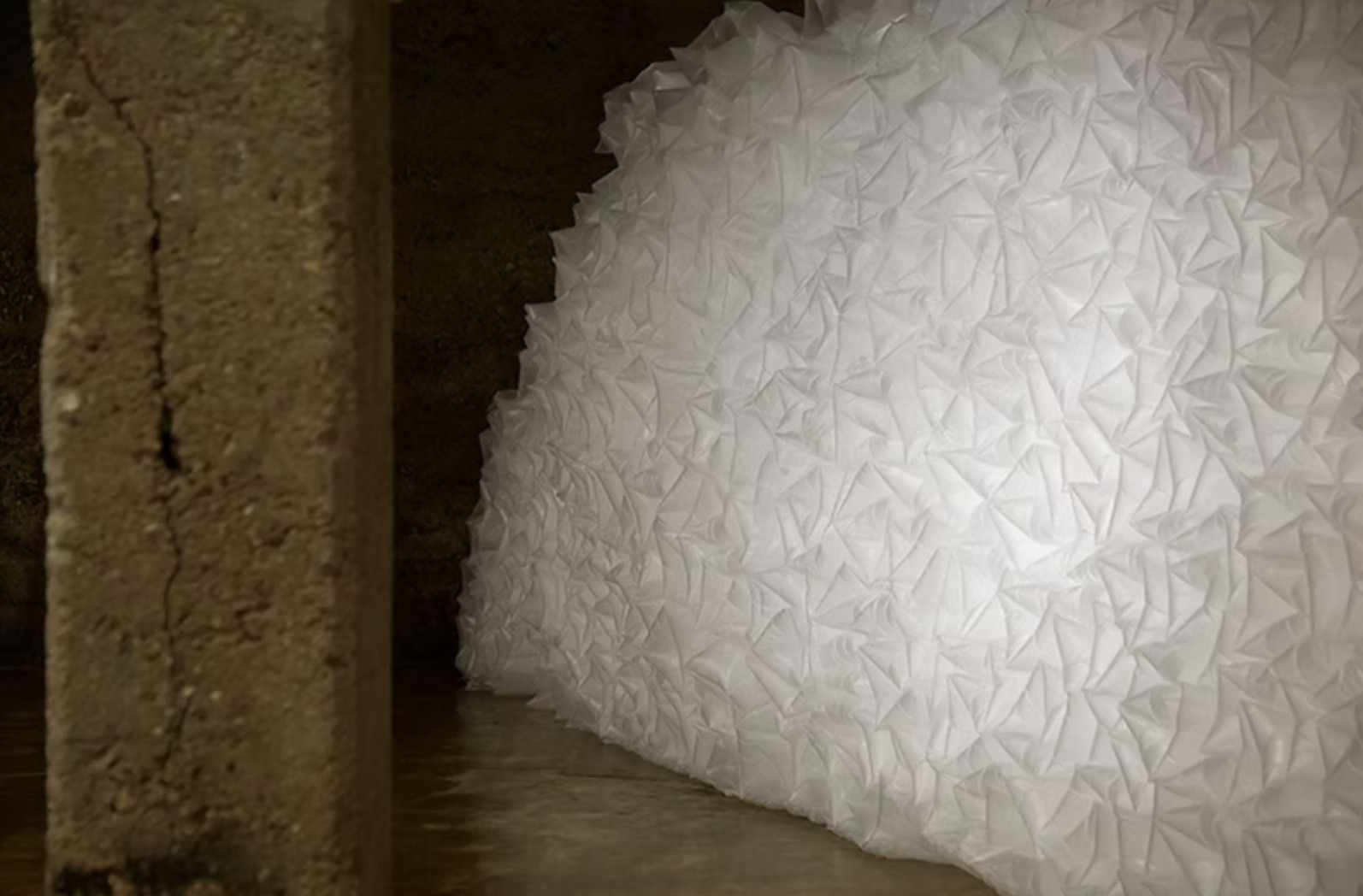
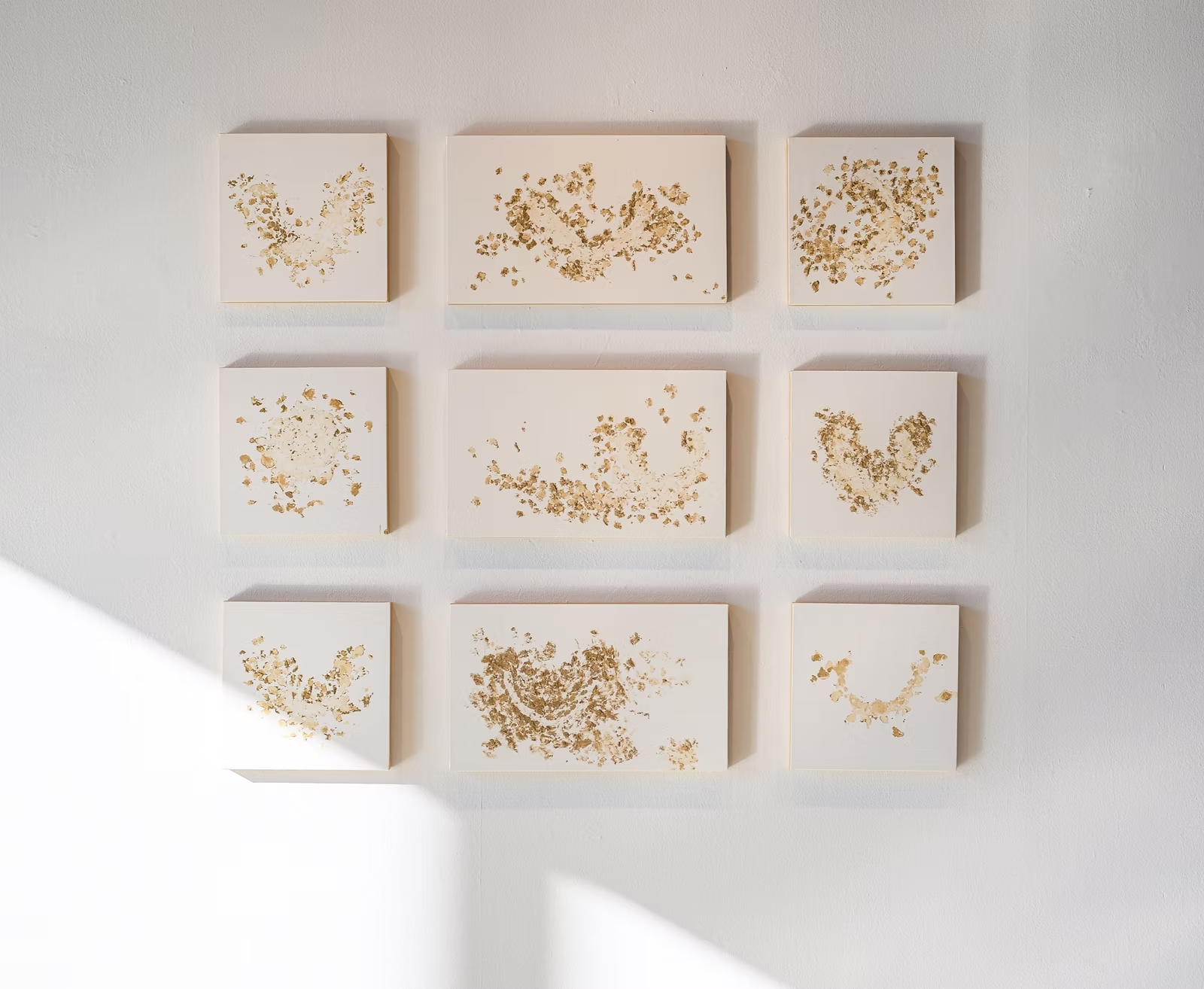
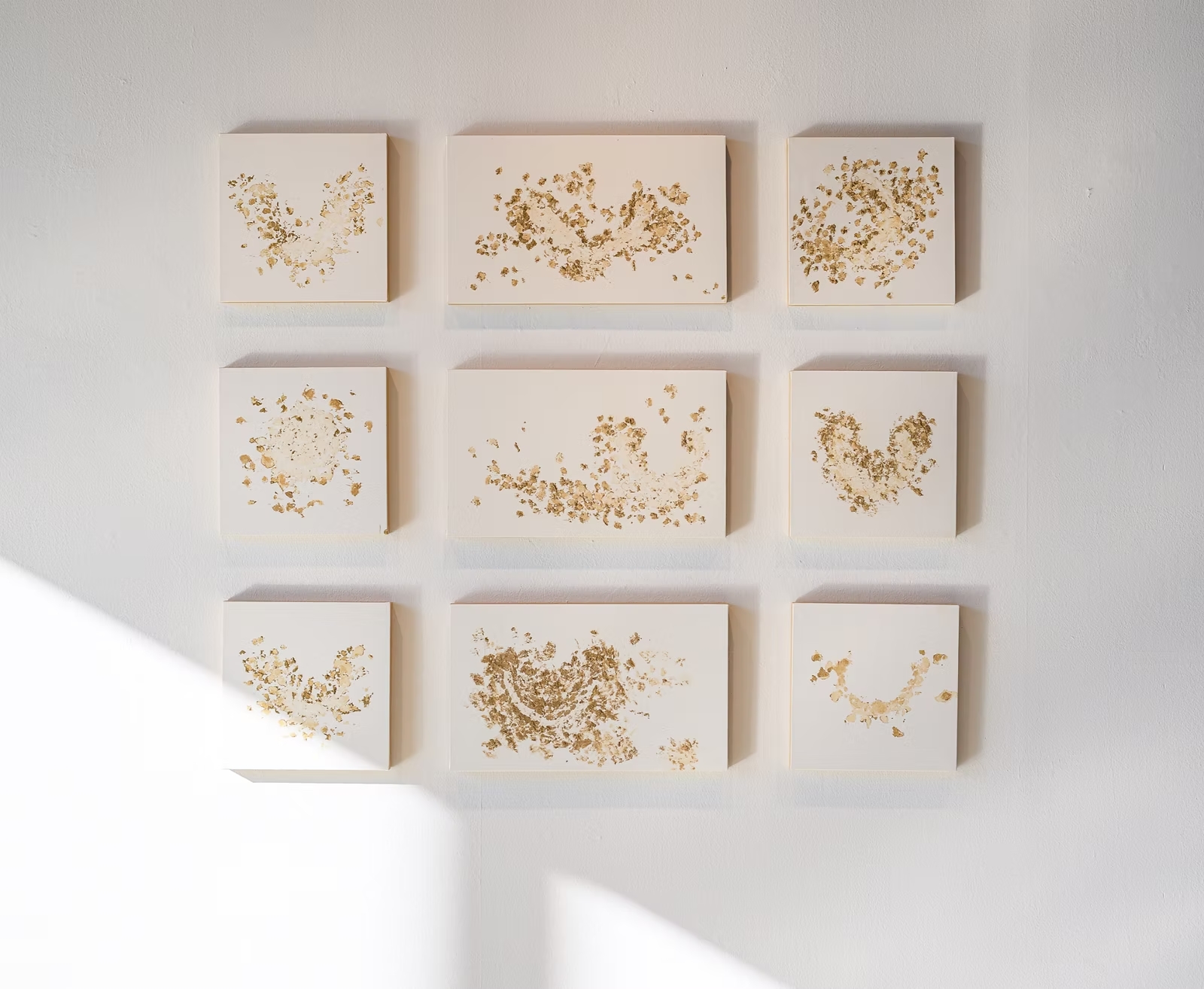
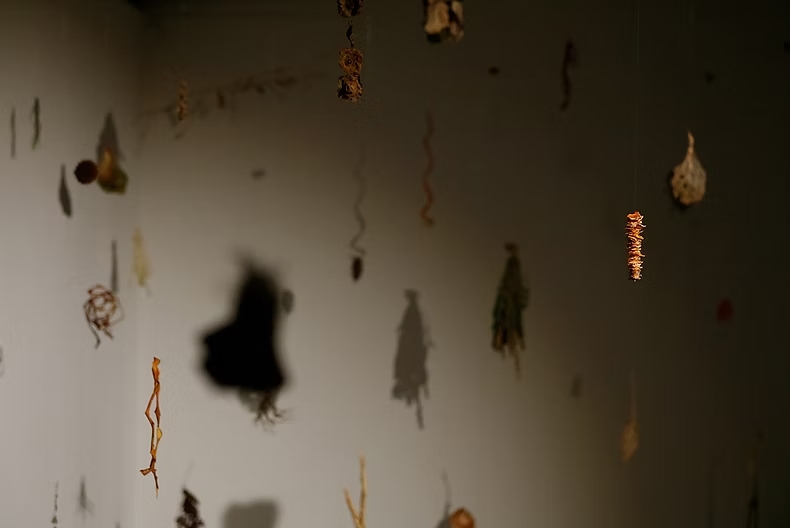
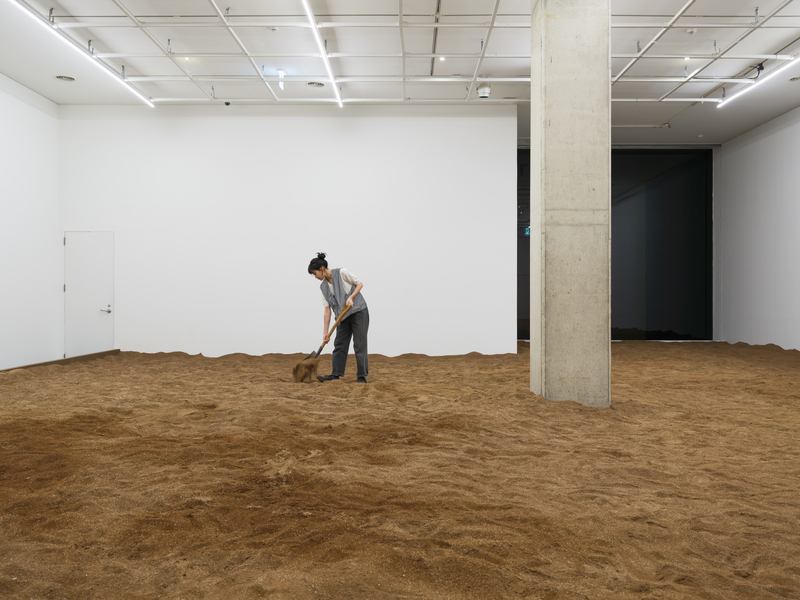
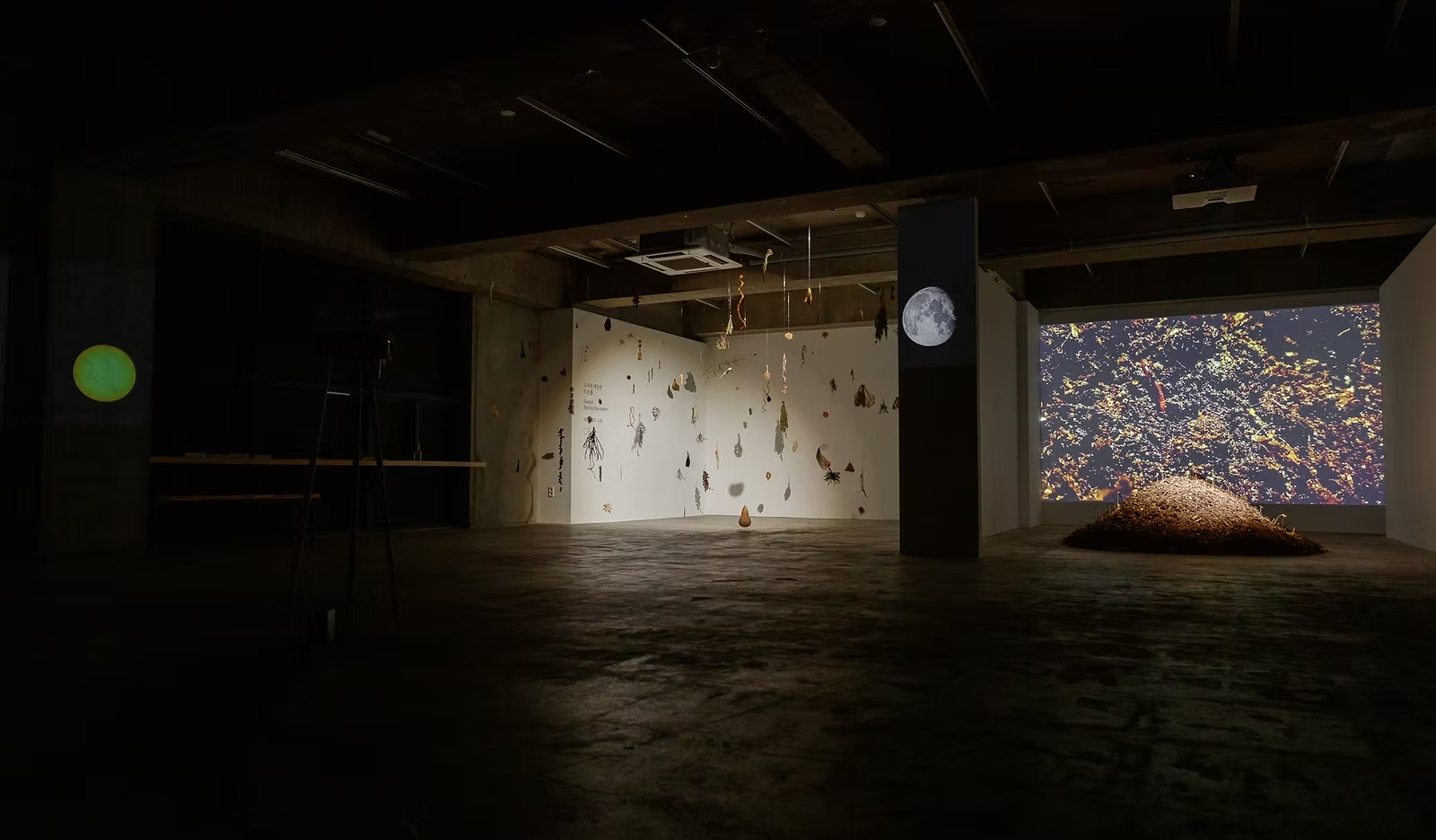
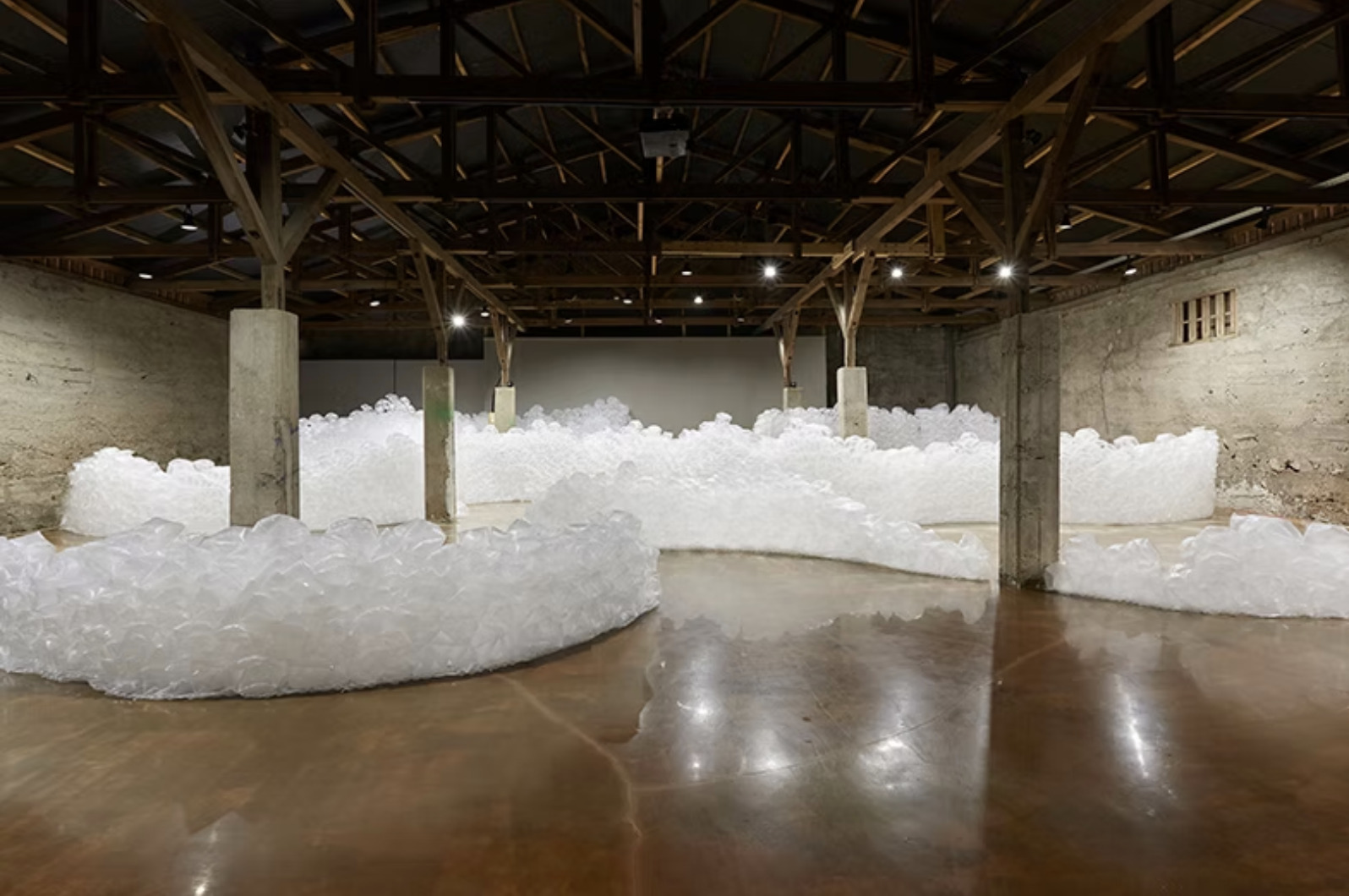
To explain briefly, Barn Swallow Seat is the trace left on hanji as she made swallows’ nests by molding mud and straw brought from Namdaecheon Stream in Gangneung together with sticky yellow earth. Barn Swallow Pass is an installation in which ninety-nine swallows’ nests, corresponding to the number of bends in Daegwallyeong Pass as it curves, twists, turns, and seems to move forward by circling back, are suspended from transparent fishing lines.
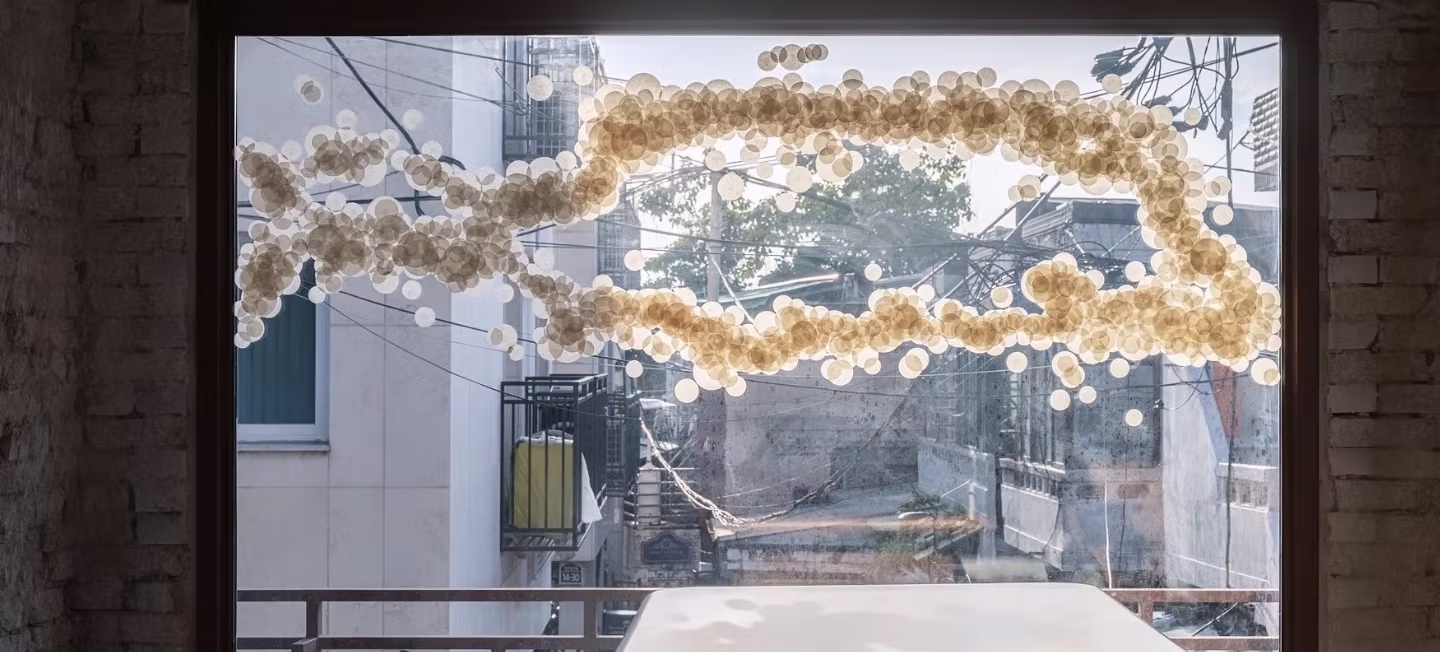
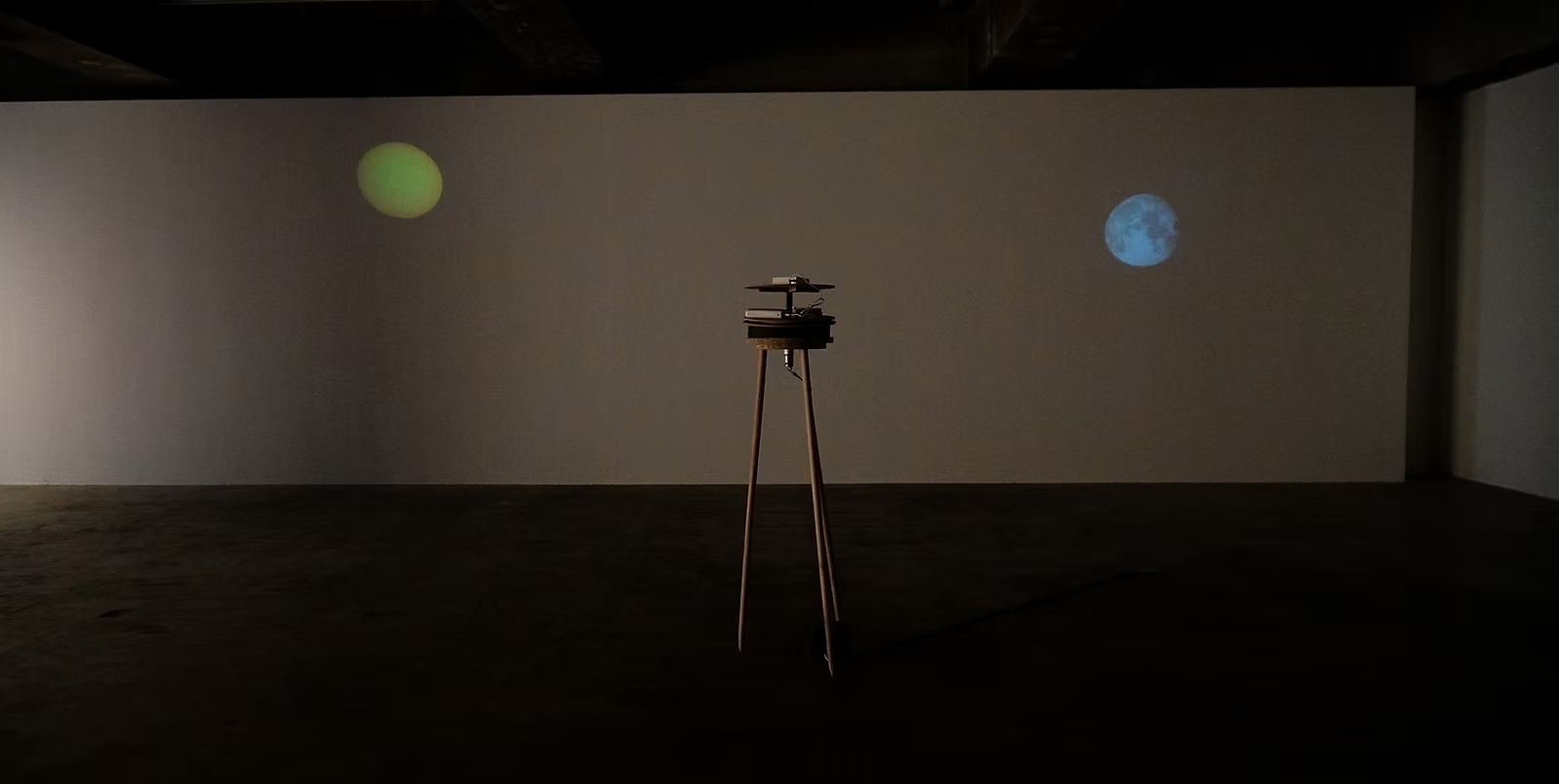
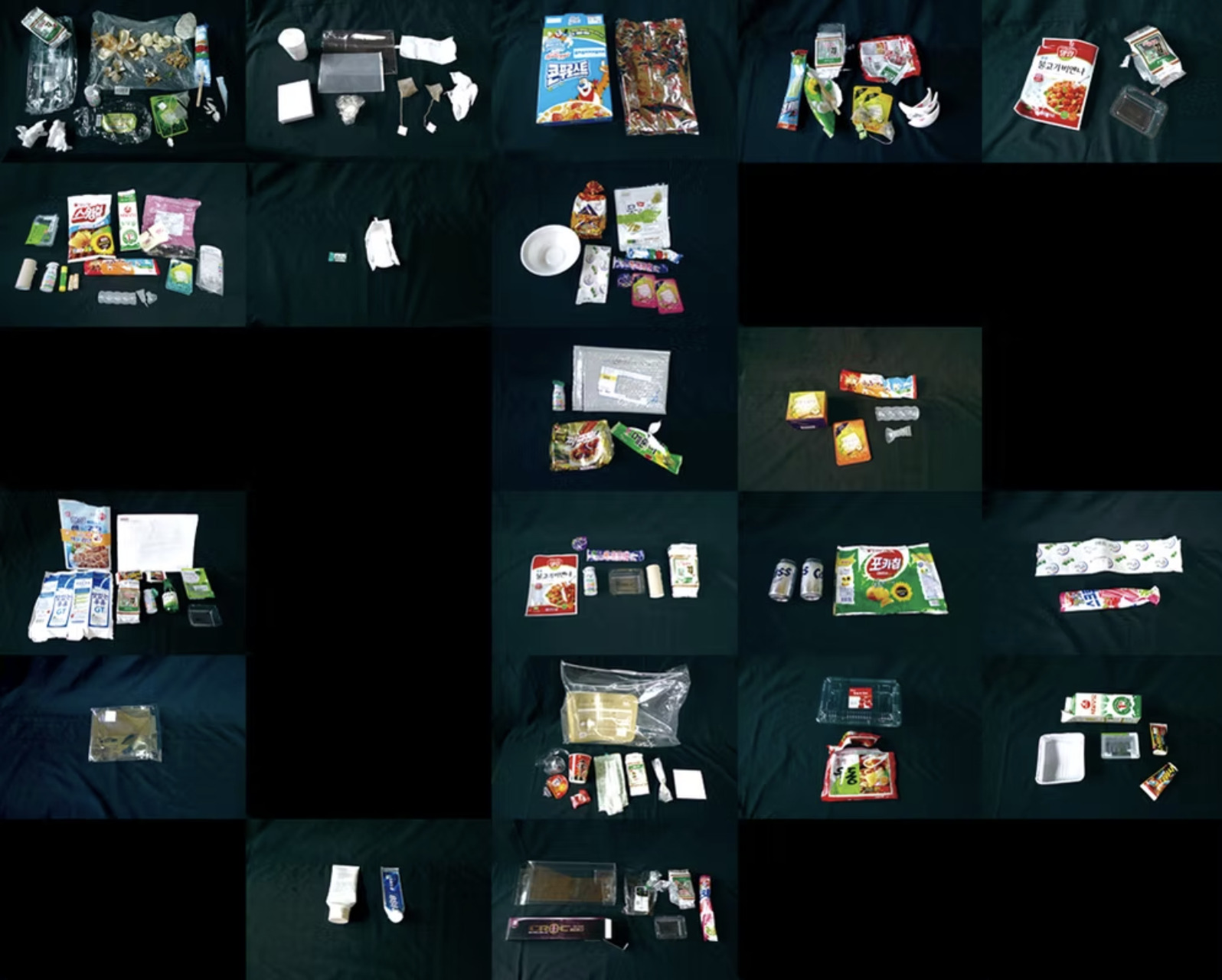
Barn Swallow Milky Way marks, on the front glass window of the exhibition space, the ornithological migration routes and flock sizes of swallows—birds that, according to old sayings, arrive on Samjinnal, the third day of the third lunar month, and leave for Gangnam on Jungyangjeol, the ninth day of the ninth lunar month—using circular pieces of cut hanji. Barn Swallow Story consists of archival materials about the ecology of the swallows that nested around Gangneung Market and the shopkeepers who lived alongside them.
The swallow is a human-friendly species that comes near human dwellings, stays for a while, and then leaves. While ordinary wild ecosystems compete and conflict with places inhabited by humans, the swallow, though a wild species, comes into human places and tries to remain nearby.
Because of this characteristic, many folk tales related to swallows exist in the human world: “A place good for swallows to live is also good for humans to live,” “If swallows raise many young, the year will bring a good harvest,” or “The kinder the household, the closer to the eaves the swallows will build their nest.” The pansori Heungbujeon may be a representative example that combines the folk view of swallows—that if humans offer care, swallows will return it with abundance—with a human ethical system of rewarding good and punishing evil.
Today, however, the swallow is a “climate change biological indicator species” on the Korean Peninsula. The swallow of modern people has pushed the swallow of old people too far away. I do not intend to tell a grand story about how, in June 1972, the United Nations held the first “Conference on the Human Environment” in Stockholm, Sweden, and issued the “Declaration on the Human Environment,” urging global awareness of ecological crisis.
Instead, I want to think about the human road that seems extremely ordinary and everyday, yet at some point, when we look back, has become far too misaligned with the road of the swallow. The disappearance of swallows from our field of vision is not only due to the climate crisis. It is also because the way humans live, the spaces humans have created, and the nature of the relationships humans form with surrounding nonhuman beings have all changed quite considerably from the past.
Swallows have a characteristic tendency to make their habitats in human dwellings near agricultural land, low vegetation or grassland, riversides, or streams. This is because it is easy to procure materials for nest-building, catch food, and ensure safety in reproduction. In particular, because swallows are sensitive to humidity and wind, they prefer single-story houses with walls and eaves where nests can easily adhere, and where they can protect themselves and their young from bad weather.
Yet most landscapes in which the human species lives today are occupied by high-rise buildings finished with reinforced concrete, steel, and glass. (We call places where such buildings gather on a massive scale cities.) Vertically soaring buildings take isolation from the outside as an important function and therefore prefer smooth surfaces.
Smoothness, having no bends or twists, has no play of going in and out between inside and outside, no hands that welcome and send off. Since there is no interstitial space between self and other that can connect through “giving” and “receiving,” “coming” and “going,” there is no occasion to welcome one another or exchange gifts. In this way, swallows, weather, seasons, nature, and neighbors are being blocked off from human dwellings, from the city.
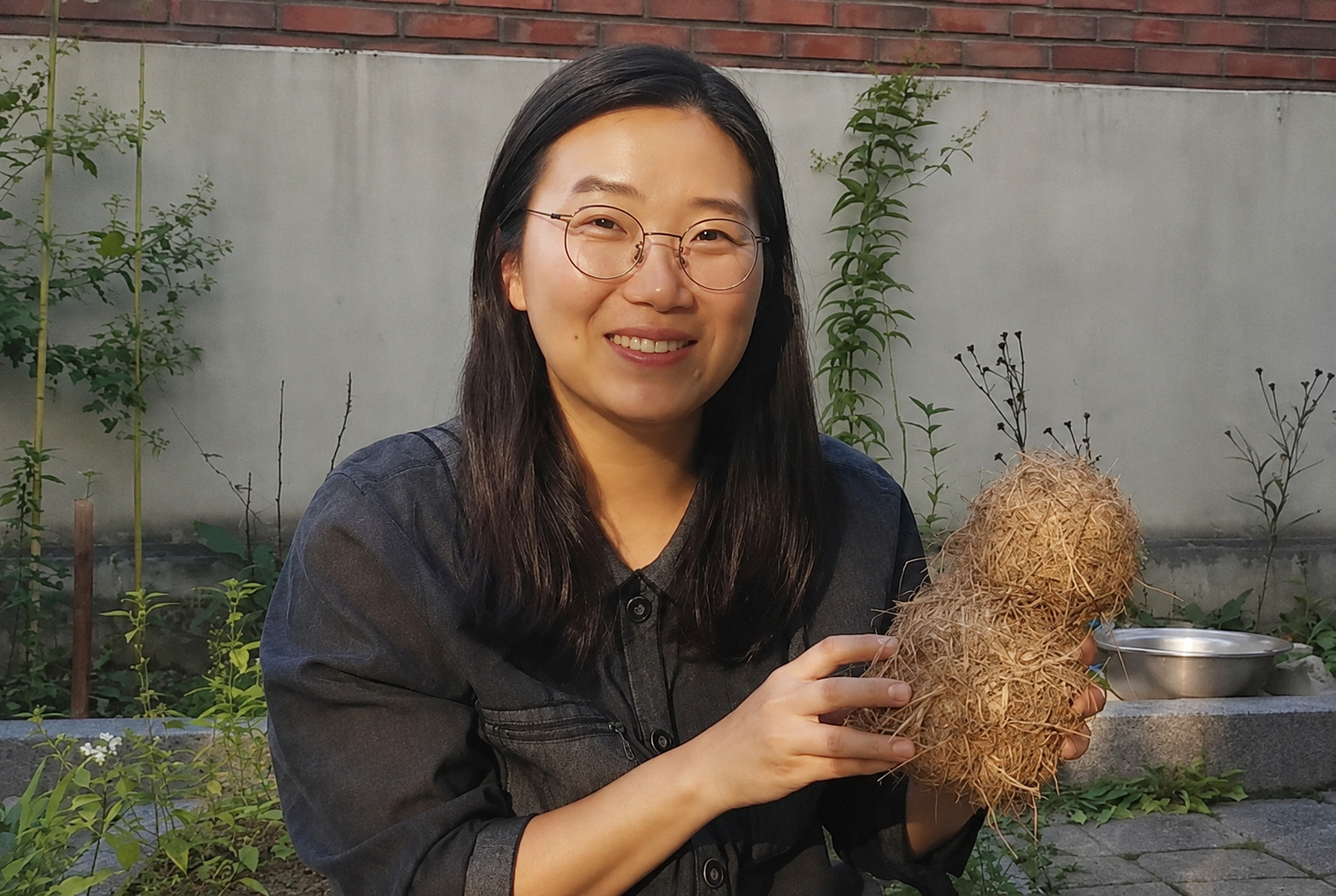
Gosari gathered fine mud and straw from Namdaecheon Stream, a little over a ten-minute walk from Gangneung Jungang Market, and made swallows’ nests. She followed the way swallows brought mud and straw from this place hundreds of times or more in their tiny beaks and built nests under the awnings of market shops, on top of lights or CCTV equipment, and even above shop signs tucked deep inside alleys.
Because she could not roll saliva inside her mouth like a swallow to add viscosity to the mud, she mixed in earthenware clay used for ceramics, and in Barn Swallow Story she wrote that when she “molded and mixed” the mud and straw, “a pungent smell arose.” It is an expression that could never have been written without the senses of the eyes, nose, and hands meeting the materials.
For a swallow, a nest cannot be reduced simply to materials. The swallows’ nests at Gangneung Market are homes where eggs are laid and brooded, where hatchlings are raised, and, after two rounds of laying and after all the young have grown, where the birds return the following spring after leaving together for the south on the warm monsoon winds.
For swallows, nest-building is labor for the birth of new life, an experience, a memory, and an event in life. The sensations of Gosari’s hands and body, which must have moved by following the swallows, participate in the world of swallows precisely by engaging with these materials. To put it somewhat grandly, one could say that the old mimetic impulse engraved into the origin of art attempts to “symbolically” connect the swallow’s life with the artist herself. For Gosari as well, mud and straw are not materials that compose the work.
Materials and objects are different. Materials exist as themselves within the world and are known by an acting subject through the senses. Objects, by contrast, are projected with human instrumental interpretation; they are grasped through qualities and properties and can be used as available resources.
Just as the swallows of Gangneung Market build nests in their own forms according to the optimal conditions and environments allowed to them, Gosari molds swallows’ nests not according to appearance or form, but according to the sensation of the hands and the affect of emotion. Therefore, for both beings, there are no swallows’ nests with identical sizes or shapes, as if bricks had been stamped out from a mold.
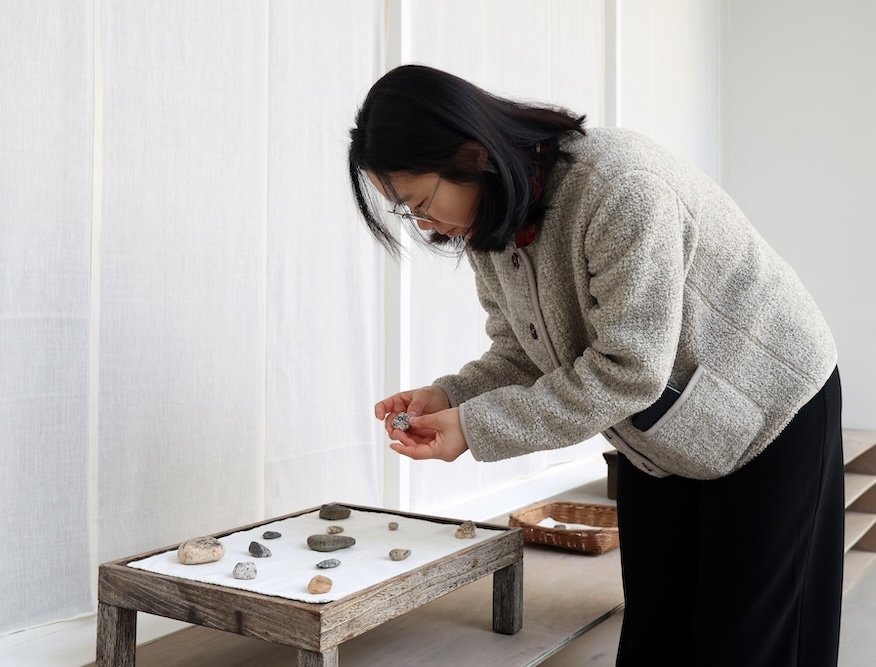
Hands that know labor, hands that sift out rough pebbles and gather only fine mud, hands that find straw dry enough to absorb moisture yet soft enough to bend sufficiently, hands whose palms enjoy the “pungent” smell as they mold. Gosari’s simple and tender hands stand in continuity with the bodily sensations she has calmly accumulated in previous works.
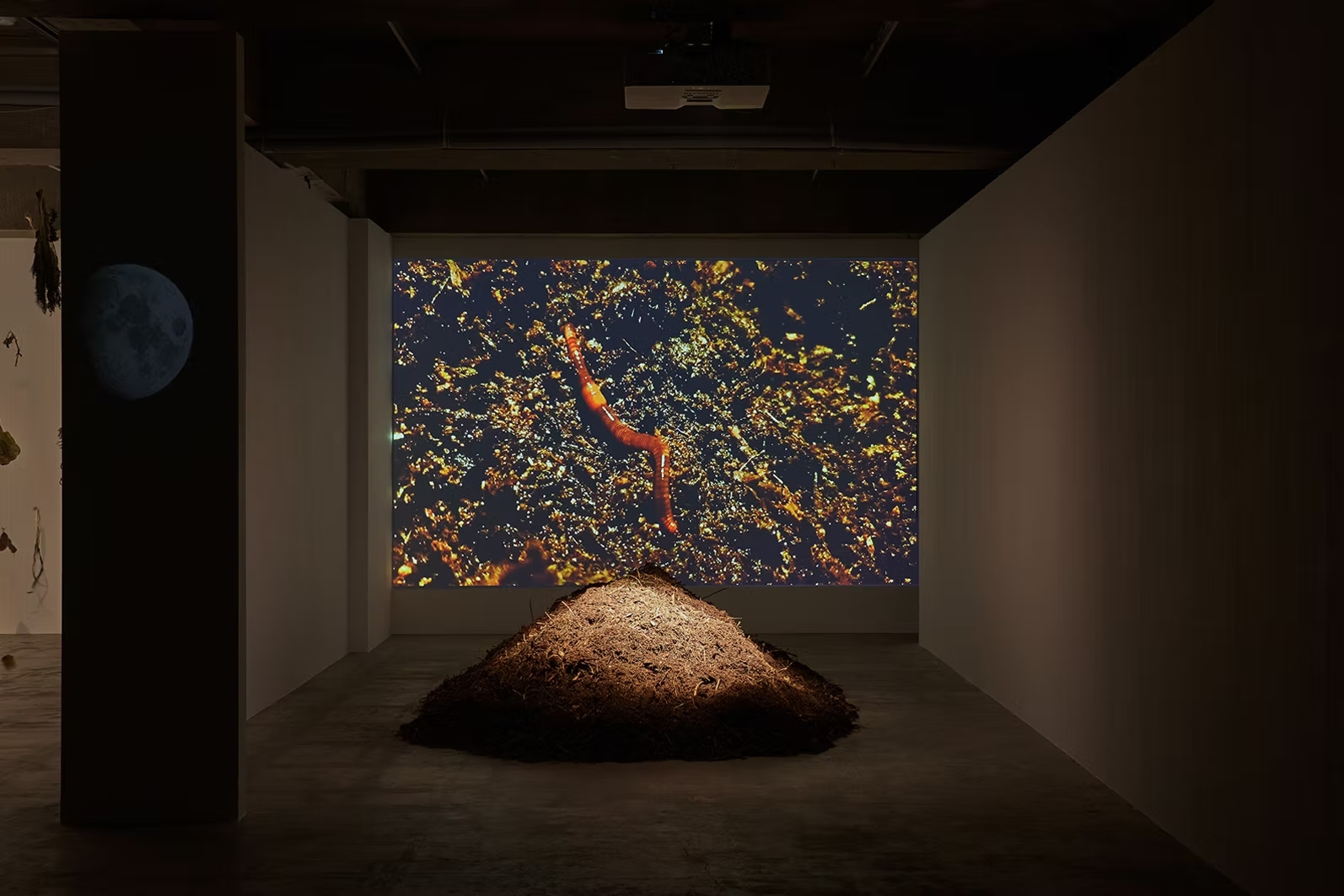
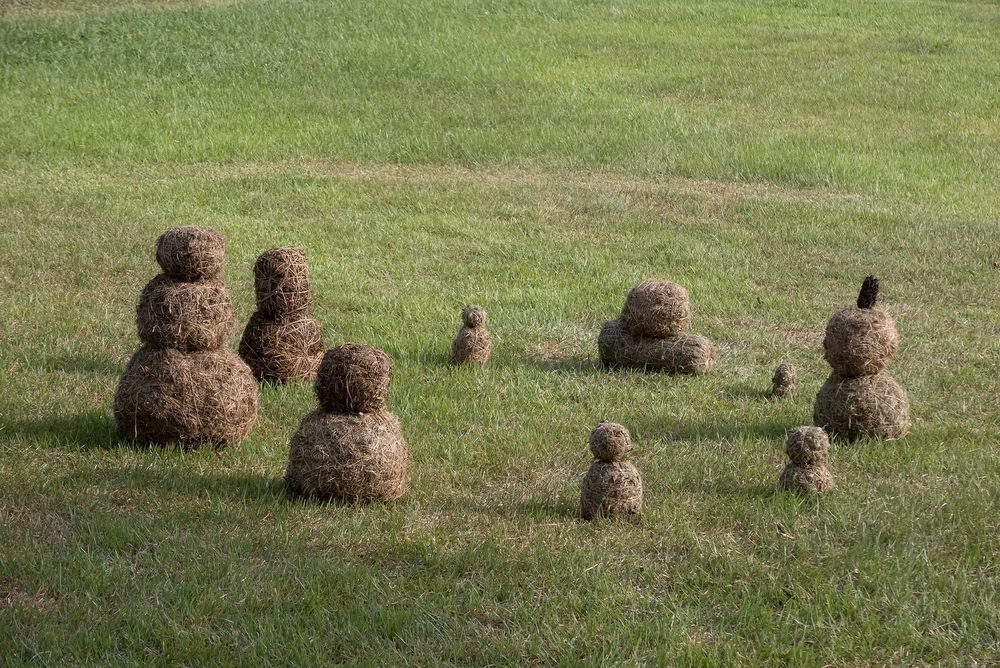
The sensation of gathering weeds cut from a lawn, rolling them together, and granting them a new mode of existence; the sensation of watching that being return to the earth through weather and seasons(Grass Person(2021)); the sensation of touching soil, preparing fields, growing, harvesting, and drying crops such as chili peppers, tomatoes, and corn(Earth Star(2022), Earth Star, Weeds(2024)); the sensation of welcoming seeds, worms, and insects that emerge from compost made by mixing leftover food and excrement into a mound of earth(Compost Hill(2022)); and even the sensation of playing with small, modest things nearby—tree bark or leaves shed from trunks, pinecones, moss, stones, and even eggshells(As Balsam Dye Spreads(2022)).
The human hand is called a tool of sociality because of its ability to interlace fingers, to grasp, and to connect oneself with what is not oneself(others). In our body, the hand is the first to approach the other, sense its unfamiliarity, touch it, accept it, and offer itself. “Things do not just exist.” Anthropologist Tim Ingold says that the dwelling worlds of living beings welcome things and others through ways of creasing, wrinkling, and folding.
For him, a thing is not a noun but a verb, and living beings bring forth their own worlds through sensory perception: touching, hearing, and seeing those very things. In Sapiens, Yuval Harari wrote that when humans lived as hunter-gatherers, they could commune not only with stones but also with plants, insects, worms, and animals, and treated them as spiritual beings.
Totemism and animism are concentrated forms of such ancient perception, meaning that natural beings—or, in today’s terms, nonhuman beings—were understood as beings entangled with human lives in relations of correspondence. Yet as we know today, in modern civilization, nonhuman beings(stones, plants, animals, and so on) have fallen into possessions captured by a value system of usefulness.
Borrowing the words of the ancient Greek philosopher Aristotle, who said that true friendship is possible only among equals, humans have lost friends who had long stayed by their side. Along with the way to converse with those friends.
Eduardo Kohn, a Canadian anthropologist who studied the relationship between Indigenous peoples of the Amazon River basin and the forest, says that if we do not project human systems of understanding onto the natural world, we come to realize that our bodies belong to a “vast ecology of selves.” Humans are not the only selves in this world. Nor does a single self exist.
All life is selves that can be called agents, and each self constitutes itself and brings forth its own existence in connection with other selves, that is, in relation to selves that are not itself. The selves of things and nonhuman living beings, and of things and human living beings, form relationships by weaving threads of feeling or emotion like warp and weft.
What the hands create through the basic movements of winding and unwinding is also relation and connection. In this sense, what the artist’s hands have made by molding mud and straw can be called a conversation and a knot extended toward another self we had forgotten.
It is not only our hands that can create connections. Feet also create connections through walking. The word “road” has both a physical and metaphorical role of joining. The road of Daegwallyeong with its ninety-nine bends is neither flat nor homogeneous like an asphalt road. It winds on, responding to the surface of the earth, like the slanting slopes of ridges, hills, and mountains, protruding rocks, and curved streams of valleys that make roads toward lower places.
Roads on which cars run pursue straight lines, but roads on which humans walk submit to the earth. Human walking is affected by the organic growth and decay of the earth and the nonhuman selves that share it, and corresponds to the cycles of weather and seasons.
That is why the winding of Daegwallyeong resembles the winding trails of seaside snails that come up onto the sand during the intertidal time between the ebb and flow of the tide; it resembles the zigzag, staggering paths of ants busily moving food; and it also resembles the paths made by flocks of swallows that travel some 9,000 kilometers in response to weather and wind, repeatedly gathering and dispersing.
One person’s footprints make an individual path, and the collective walking of many people makes a public road. People’s footsteps made a road, and because the road exists, people walk. “Coming” and “going” are, in fact, the same phases from the perspective of the road. Yet for humans, and for swallows as well, the two states(coming-going) are never the same. Perhaps this is where the metaphorical meaning of the road begins.
The road from the southern coastal region up toward Seoul and the road from a village facing the eastern sea over the ninety-nine bends of Daegwallyeong both have certain social and cultural directions. Human life requires symbolic indications, and so it establishes modes of behavior that can be regarded as superior.
Yet beyond a human, all too human, frame of perception, we can come to know that the practices of every moment are never repetition, but new beginnings. We may also learn how to listen to the other selves entangled with our lives, how they have made us into us, and what the “we” we will make in the future ought to be.
The swallows of Gangneung will return next spring to the nests they made at the Gangneung Market site beside Namdaecheon Stream. Yet their next year will surely be a new beginning, different from this year.
Just as Gosari’s path, which has not avoided touching and smelling soil, compost, leaves, and weeds or the labor of care, moved forward in Gangneung into a path of meeting swallows and making swallows’ nests. Through my entanglement with Gosari, I, too, accustomed to urban life, was able to learn a little about how to read this world filled with other selves.