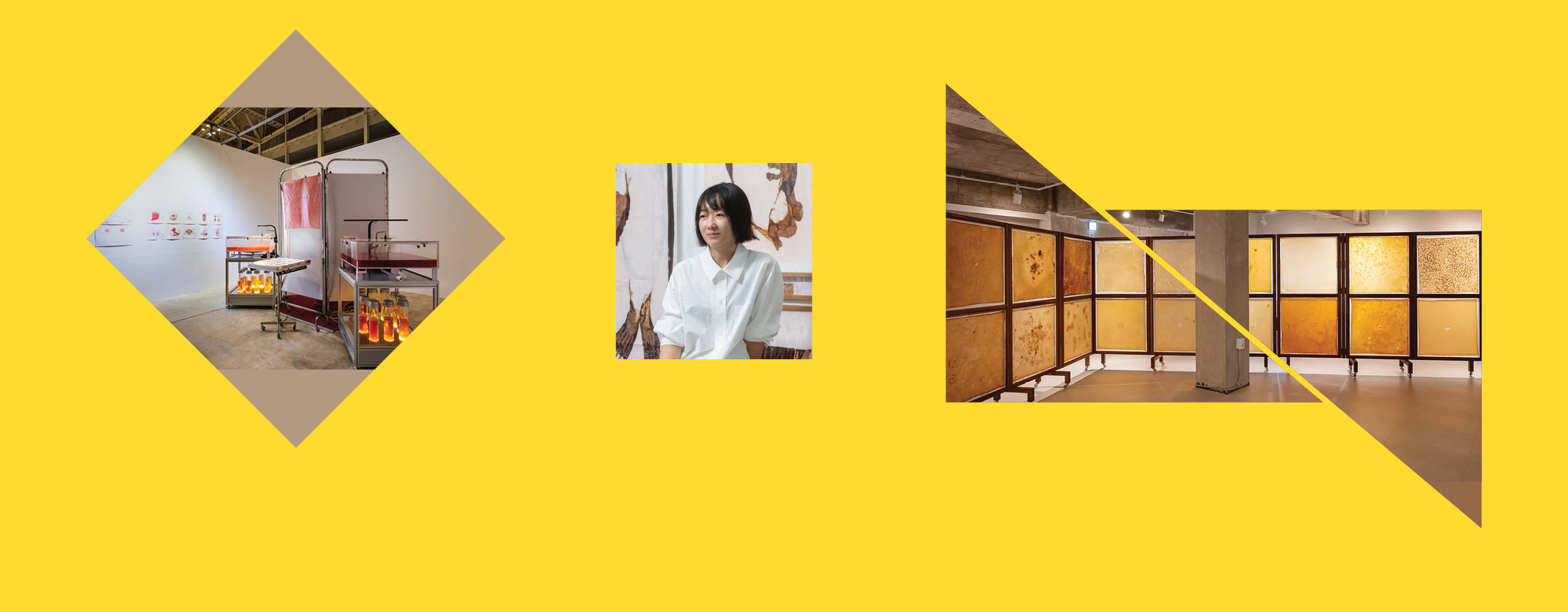
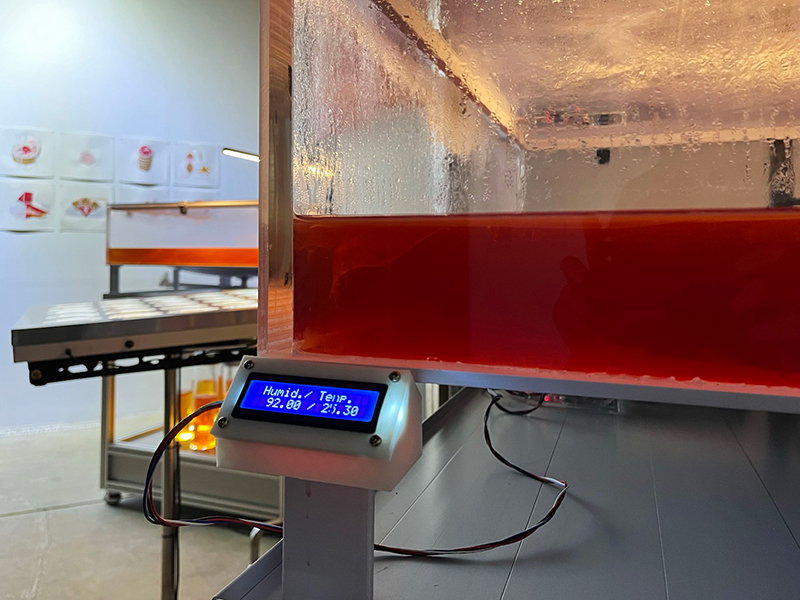
Soh Boram cultivates what is popularly known as “tea fungus”. Strictly speaking, this organism is not a true fungus, but a symbiotic culture of yeasts and bacteria that feed on sugars in tea—known as SCOBY (Symbiotic Culture of Bacteria and Yeast). Smart Skin Farm(2023) is an experimental project that harnesses this microbial colony—typically used in kombucha fermentation—to produce personalized synthetic leather.
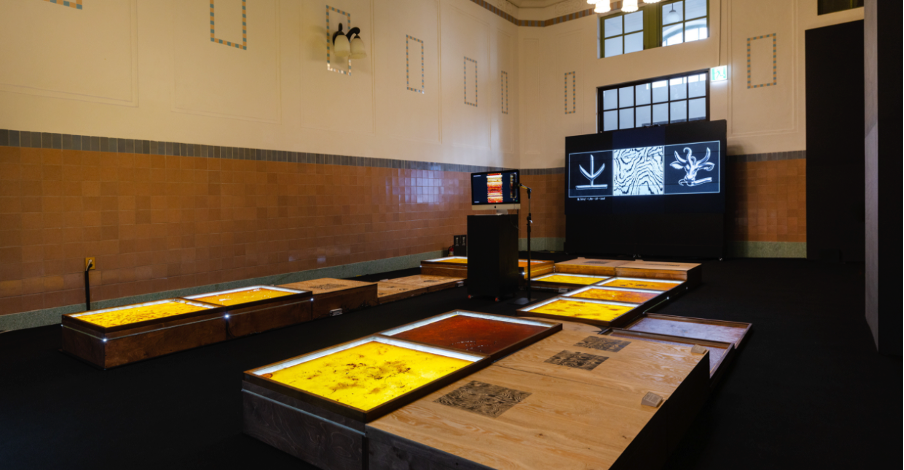
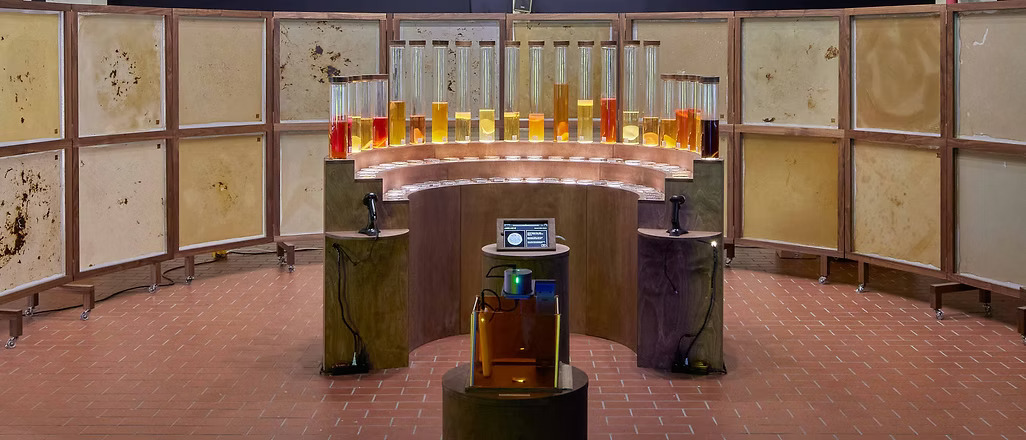
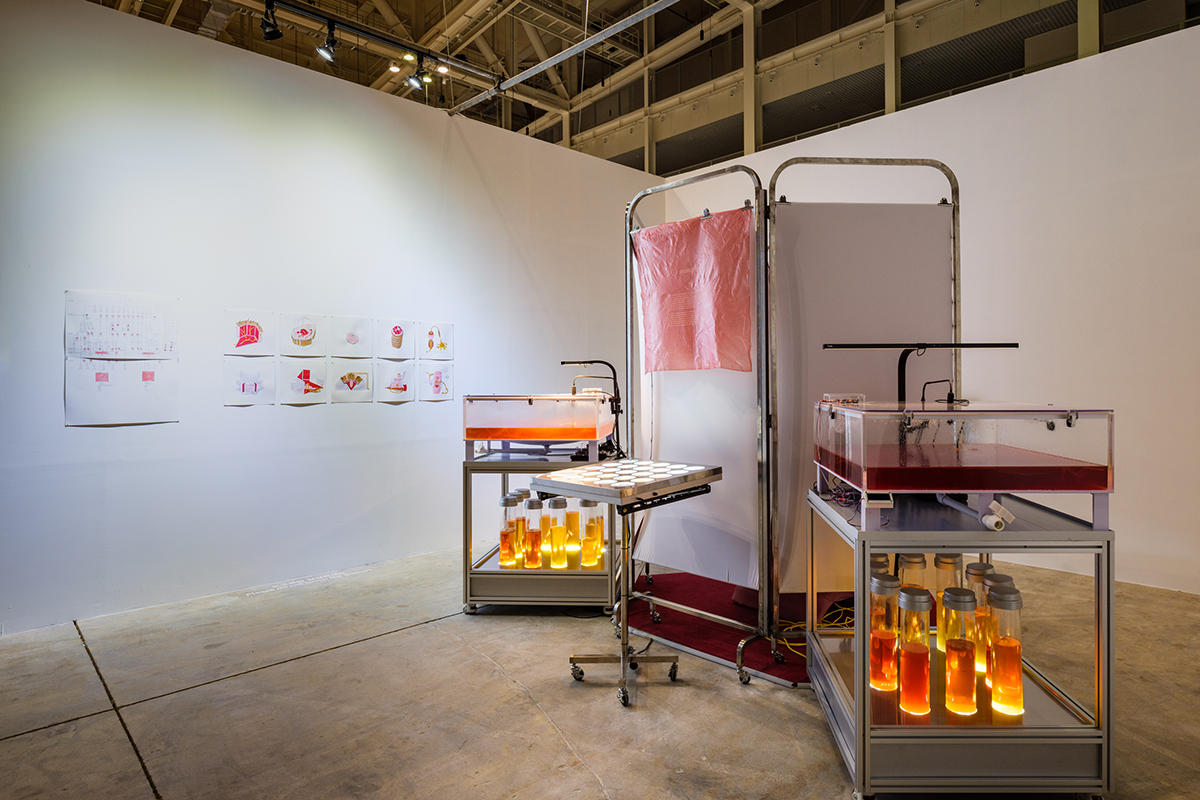
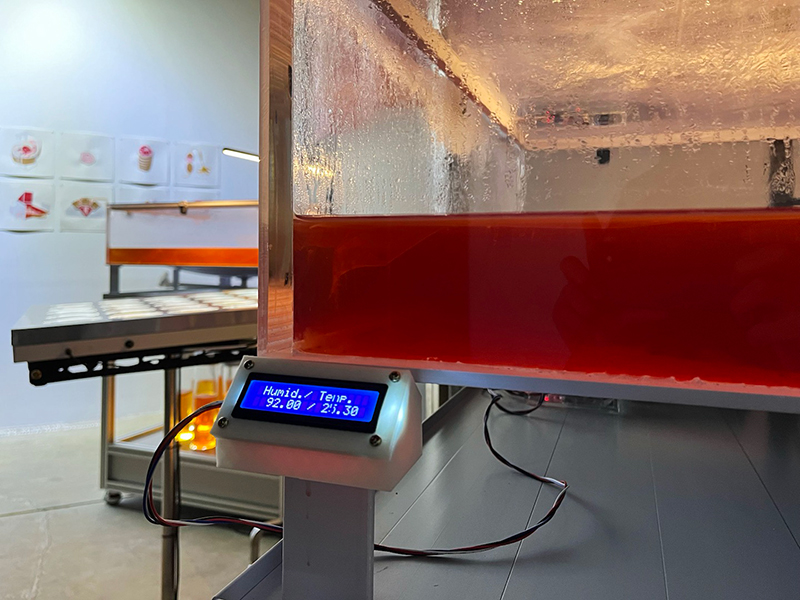
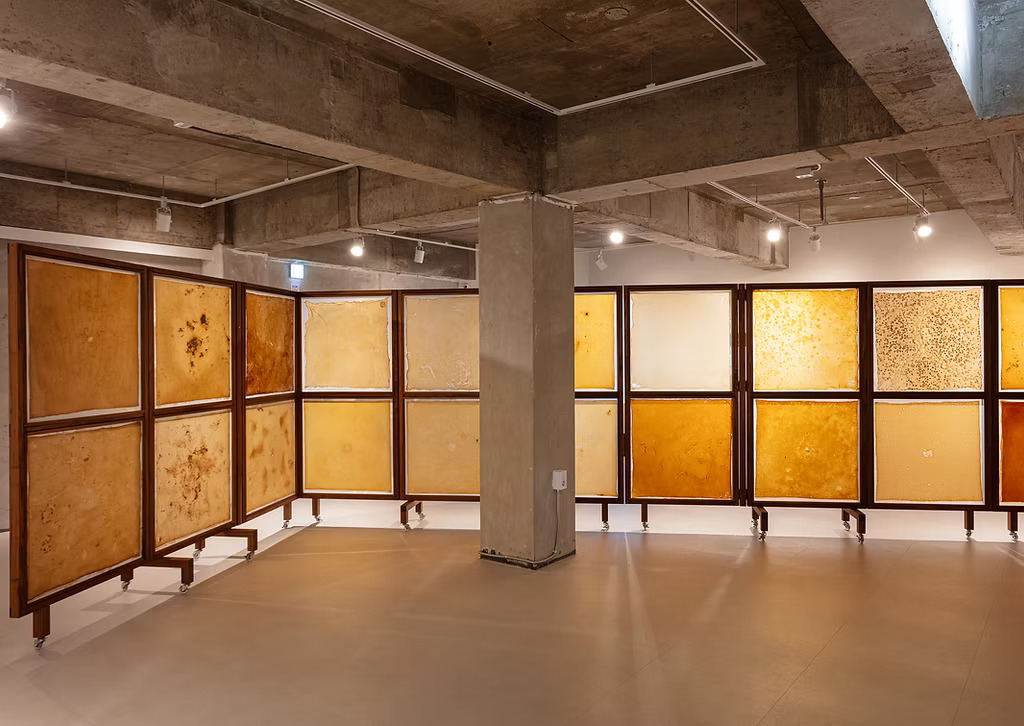
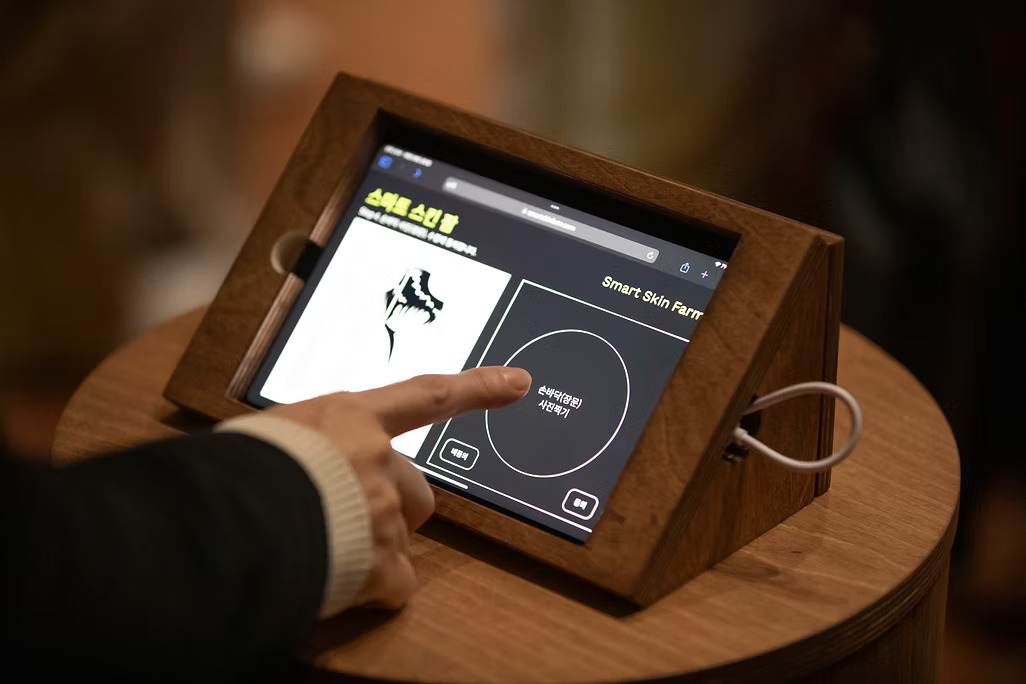
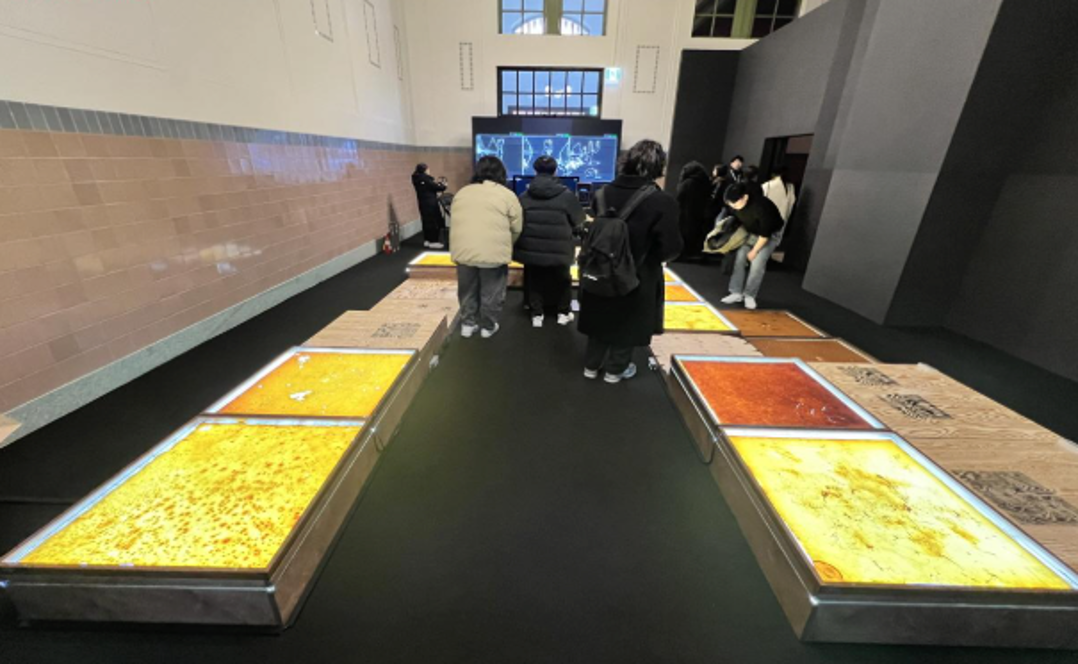
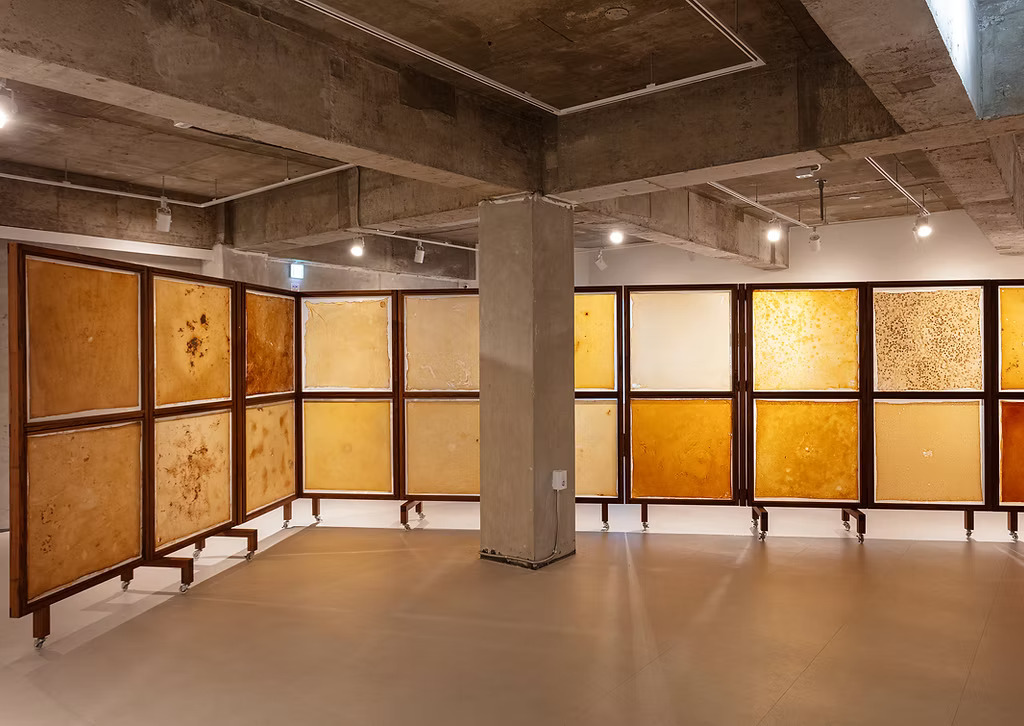
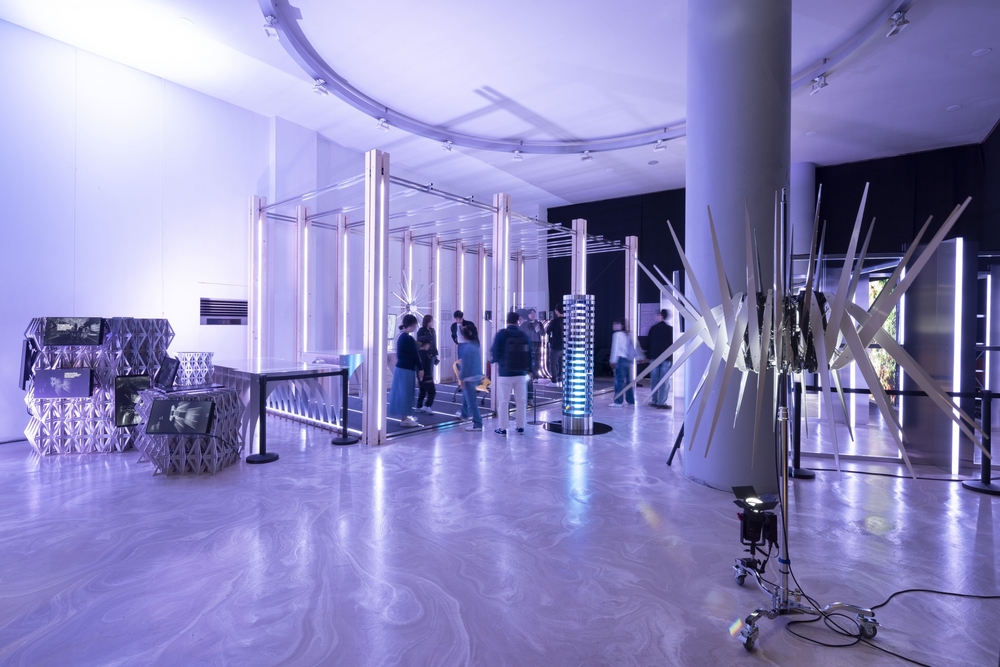
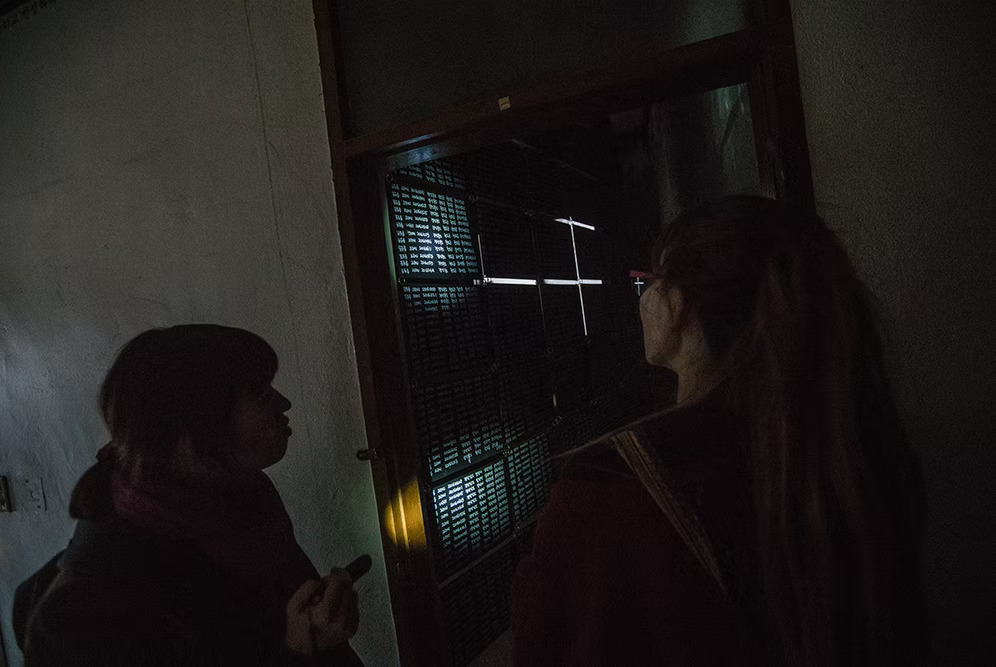
In the exhibition, raw SCOBY floating in nutrient liquid is presented alongside leather samples dried to parchment-like, thin sheets. A digital screen introduces the project and invites visitors to submit their personal information in exchange for a custom leather sample. The installation evokes not so much a conventional farm as a prototype laboratory or a cutting edge biotech workshop.
How should we categorize a farm that grows skin? Leather alternatives made from microbial cultures are, broadly categorized as “plant-based” in that they cultivate skin without slaughtering animals. In fact, plant extracts are fed to the microbes, and cellulose—harvested as a metabolic byproduct—produces a material that is compositionally similar to plant matter.
Yet microbes inhabit a microscopic biological realm where the conventional binary between plant and animal dissolves. They constitute the “dark matter” of the biosphere, accounting for nearly one-fifth of Earth’s biomass—while plants make up the majority of the remaining biomass, and animals do less than only one percent.1)
Before the invention of the microscope, microbes were understood only as mysterious agents of spoilage, disease, divine punishment or a curse. Even today, despite scientific advances, they remain a sinister presence—unsettling contaminants lurking in water, air, soil, even within the human flesh and viscera.
The biochemical activity of microbes erodes the boundaries between self and other—boundaries long upheld by human symbolic orders—and opens pathways to alternative histories that resist anthropocentric assimilation. In Soh Boram’s work, microbes function as mediators of such speculative storytelling.
An inevitable gap persists between the way microbes live, how we live, and how we perceive them. It is within this dissonance that imagination is sparked. The living SCOBY is soft and gelatinous, resembling animal skin.
Though not a single organism, this amorphous colony consumes nutrients, exhales carbon dioxide, and grows. Soh has named this material-fictive entity “C-Flex” (Carbon Dioxide Flexioni), nurturing it across several generations. The term first appeared in Porous Matter Conversion I: Carbon Dioxide Reservoir(2022), where C-Flex was described as an unknown microorganism discovered in a subterranean carbon capture facility beneath Lake Geneva in the year 2050.
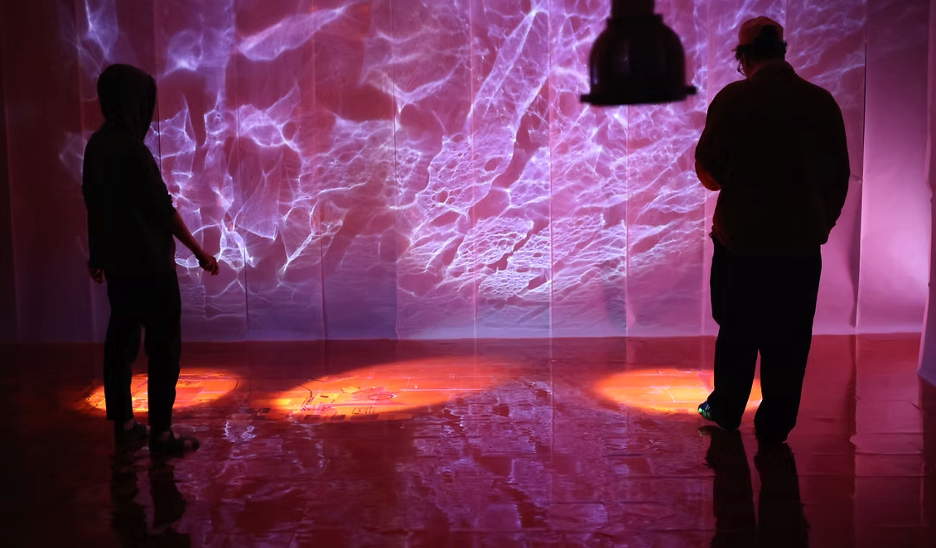
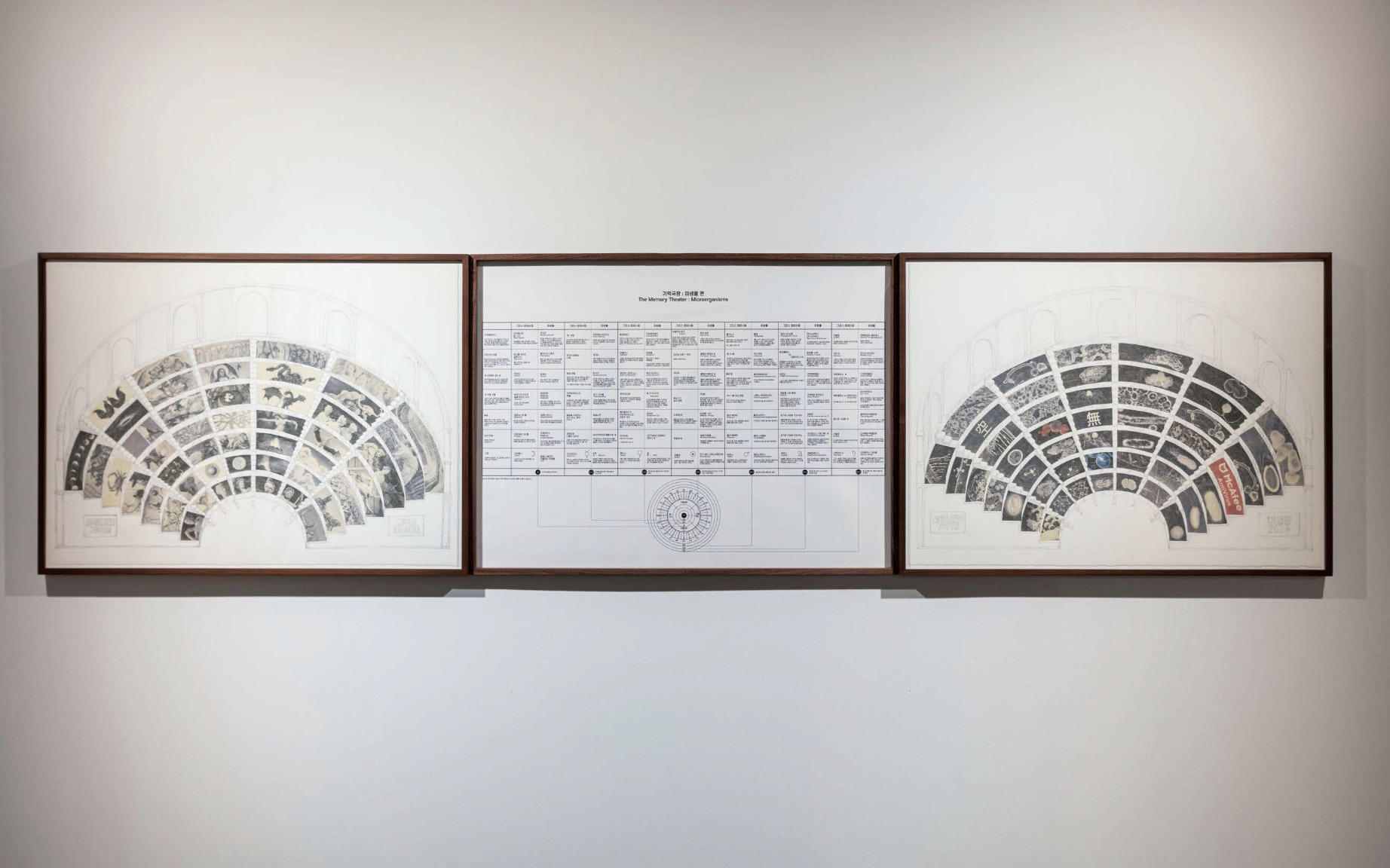
Dwelling in the oxygen-deprived depths of the lake, it emits oxygen which helped new imaginaries of the planetary of habitability. Porous Matter Conversion II: C-Flex Incubator (2022), on the other hand, presents a microbial bioreactor modeled after primordial Earth, when anaerobic and aerobic microorganisms once coexisted. The project maps out microbial evolution—marked by cycles of extinction and adaptation under unstable atmospheric conditions—against the backdrop of the contemporary climate crisis.
The story of C-Flex does not unfold in a straight line; instead, it branches into multiple fictional universes where recurrrent themes are reimagined through subtle variations. How might a world—currently anthropocentric and spiraling toward catastrophe—be otherwise? In the first narrative, humans remain protagonists (the role of problem-solvers) with microbes positioned as subordinate assistants.
In the second, however, the deep-time history of microbes—whose temporal scale vastly exceeds that of humankind comes to the fore: organisms that have reshaped planetary habitability through their adaptive capacities. Through the long-term cultivation of SCOBY, Soh encounters a dynamic state where boundaries begin to blur—among habitat, inhabitant, and the materials left behind by their interactions.
This experience is, in turn, woven into a new chapter of the C-Flex narrative. The latest iteration, Smart Skin Farm, begins with an observation that the color and pattern of SCOBY change according to its growth conditions and feed. As a way of tracing the genealogy of this living material and cultivating its diversity, the project collects personal information—which is then fed to the microbes.
In return, the human receives a piece of personalized leather, and in doing so, also becomes a kind of tailored nutrient for microbial life. Beneath this exchange lies a desire to break free from the isolating arrogance of the human species—through a trans-species sharing of materialized memory. Yet embedded in this gesture is also a darker impulse: to return the human to an ecological condition of mutual consumption, where life is sustained by eating and being eaten.
Soh Boram’s work has consistently explored the ways humans raise, kill, consume, and discard animals. The cultivation of SCOBY began as an act of remembrance for deer lost to human activity. In The Taxidermist’s Waiting Room (2021), this gesture took the form of imagined taxidermy made from microbial synthetic leather.
A year later, in the Porous Matter Conversion series, it evolved into a sticky membrane formed from a blend of real and imagined culture fluids—a space where animals of the past and future are imagined to die, decay, and reemerge in altered forms. What is at stake is not preserving life in its current form, but the preservation of its capacity for renewal.
If earlier works gave fictional form to this longing for regeneration or reincarnation, Smart Skin Farm shifts its focus to the material realm, positioning SCOBY as a medium for interspecies contact and transformation. Whether this marks another episode in the story of C-Flex or a turning point where speculative storytelling leads to an actual biochemical lab remains unclear. For now, the work remains open-ended, and perhaps for this reason, its narrative and structure remain soft, porous, and indeterminate, like SCOBY itself.
Can the future be guaranteed? Unlike pure yeast, dried SCOBY cannot reliably return to life once placed back into its culture medium. Its texture—resembling tanned leather—inevitably evokes death and aging. Bacterial cellulose, produced in a similar way to SCOBY, is already used medical and cosmetic applications, such as burn dressings and face masks.
Its soft membrane is also considered as an ideal material for artificial skin—supporting regeneration by nourishing and structuring new skin.2) But Smart Skin Farm promises no magical time reversal. Time moves—fast or slow—toward death, within an irreversible temporality where decomposers take over. Somewhere within that process of devouring, ecological justice and restoration beyond our comprehension may yet emerge.
Though it resembles a biotech startup, the project is shrouded in hazy twilight—uncertain whether it signals a new dawn or an ending. We do not yet know what kind of exit, if any, Soh Boram’s work might offer by extending the shadows of the present across deep time—into the distant pasts and futures. Yet one question may persist: can there still be hope for the human, this self-contradictory being, both animal and not?
1) Bar-On YM, Phillips R, Milo R, The biomass distribution on Earth, Proceedings of the National Academy of Science no.115, vol.25 (2018):6506-6511. http://doi.org/10.3390/biology13020085.
2) Ahmed Amr and Hassan Ibrahim, Bacterial Cellulose: Biosynthesis and Applications, Next-Generation Textiles (London: IntechOpen, 2022), http://doi.org/10.5772/intechopen.107021.