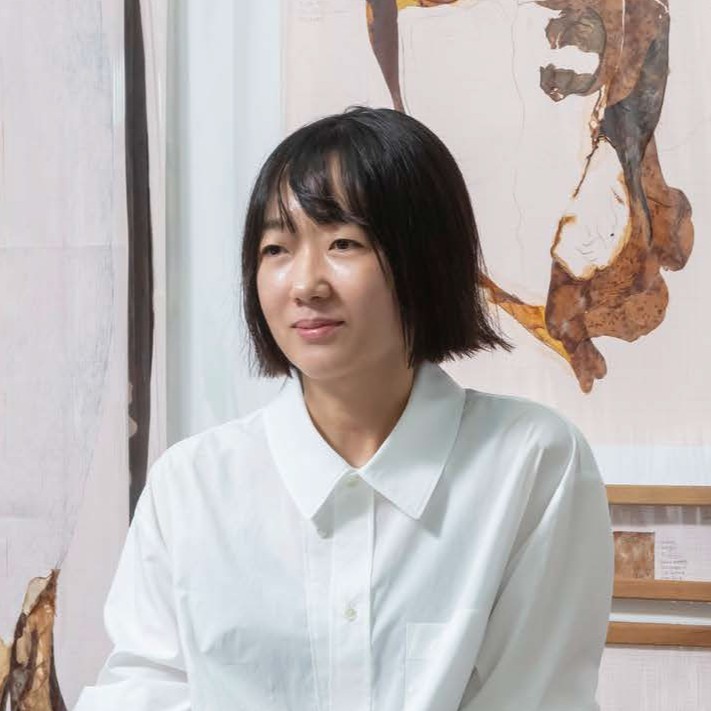
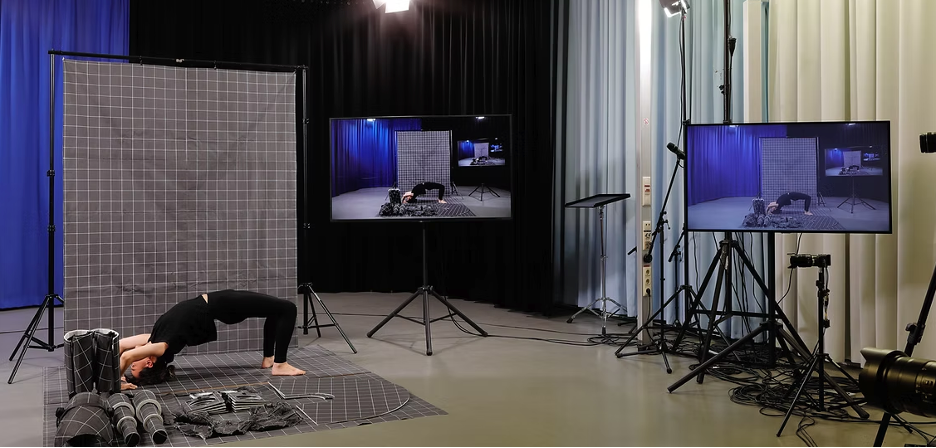
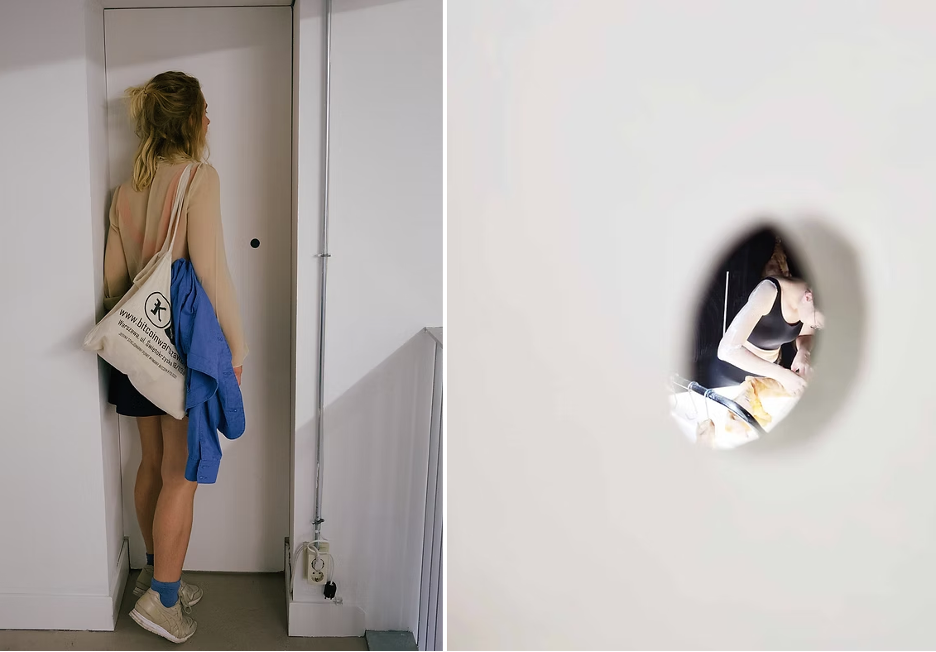
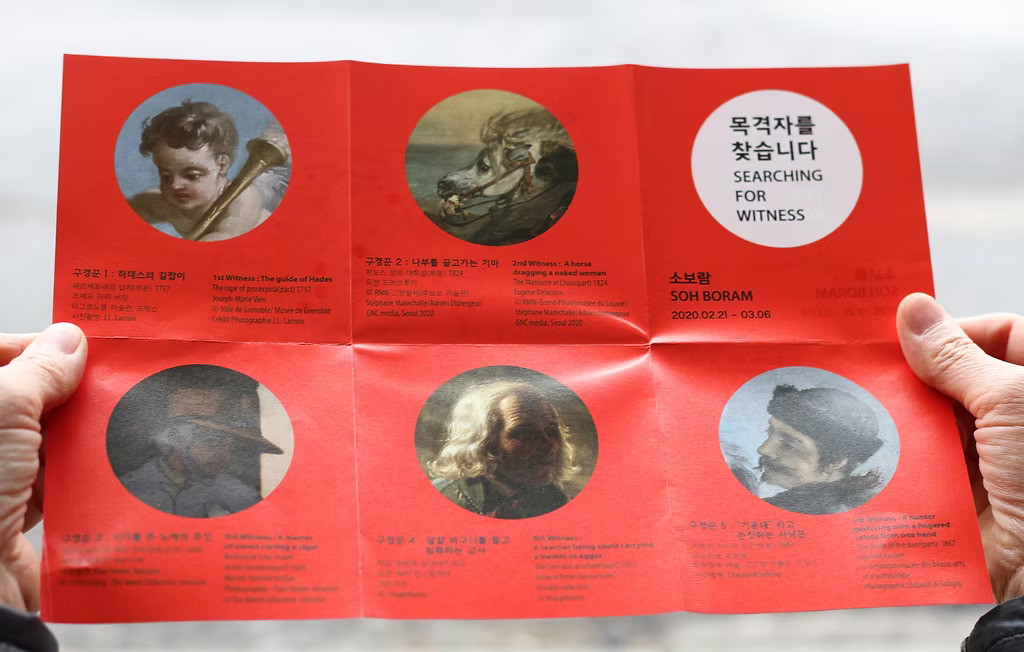
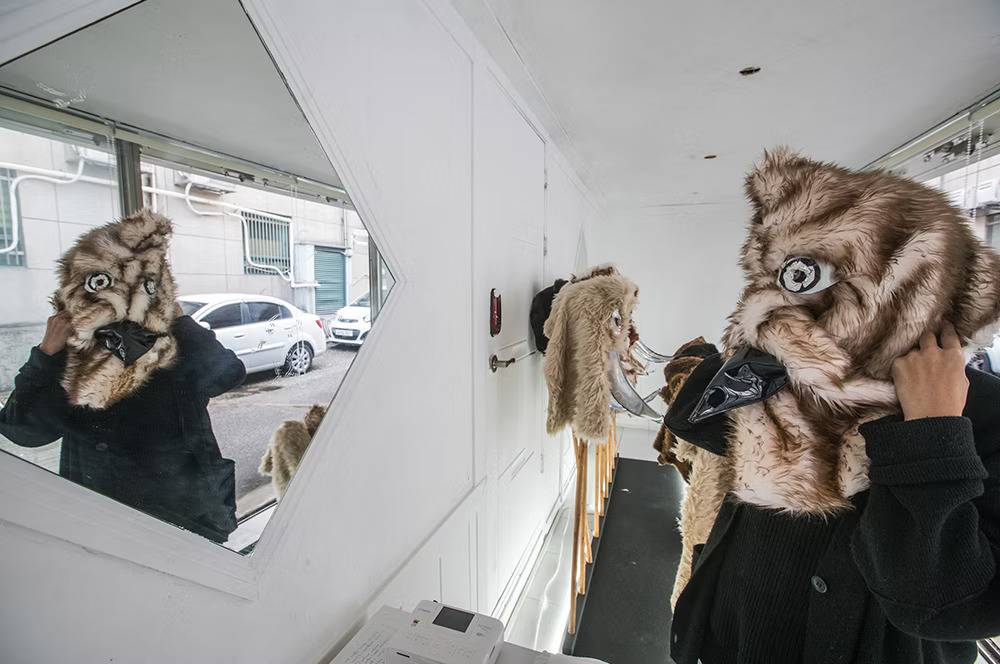
Soh Boram is a devoted “Speaker for the Dead”.1) A Speaker for the Dead is one who summons the dead into the present, so that more response-able ways of living and dying might become possible in a future yet to come. Soh’s works arise through a process of “becoming-with” the spirits they summon. Donna Haraway refers to this kind of generative process as symanimagenesis.
While symbiogenesis describes a mode of co-creation between living beings, symanimagenesis names a process in which the spirit of the dead plays a decisive role in acts of making. The spirit Soh calls forth is not of human, but that of a small deer killed in a road accident years ago. Known as gorani in Korean, water deer is relatively common across the Korean Peninsula.
Because it frequently damages crops, it is considered a nuisance species. It is legally hunted in designated seasons—and remains the wild animal most frequently killed on Korean roads.
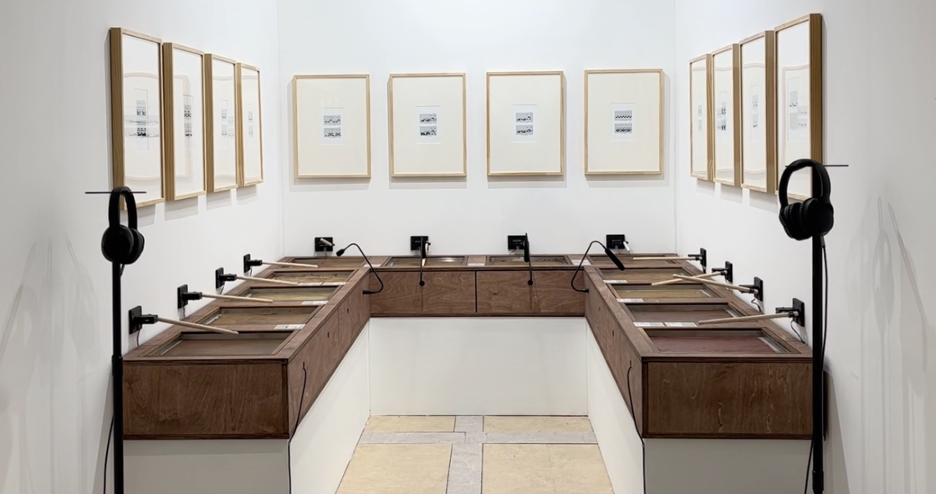
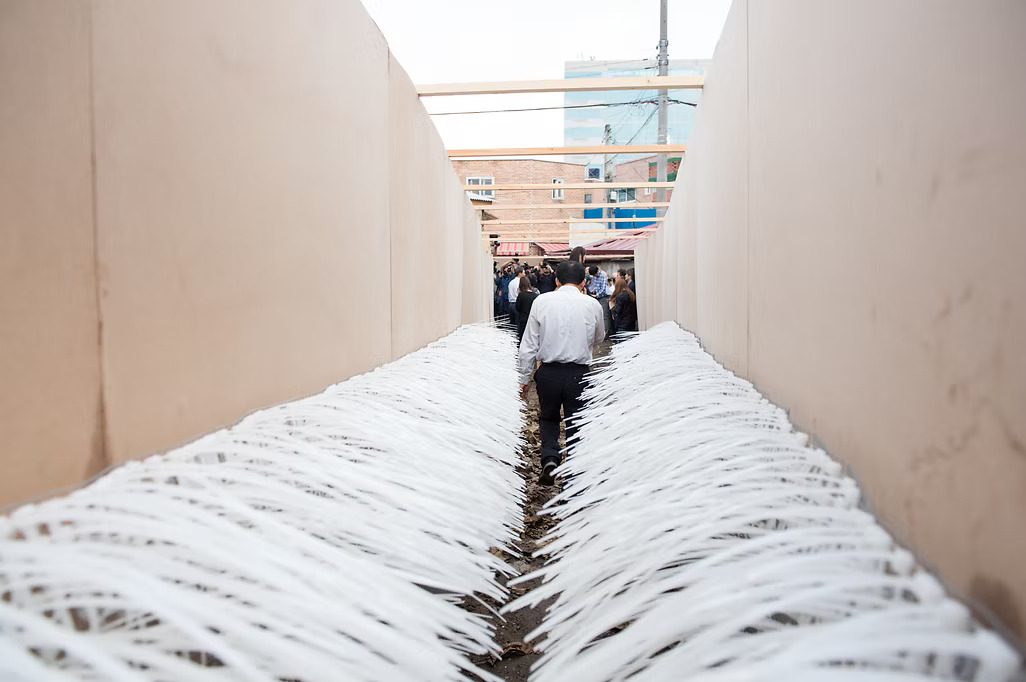
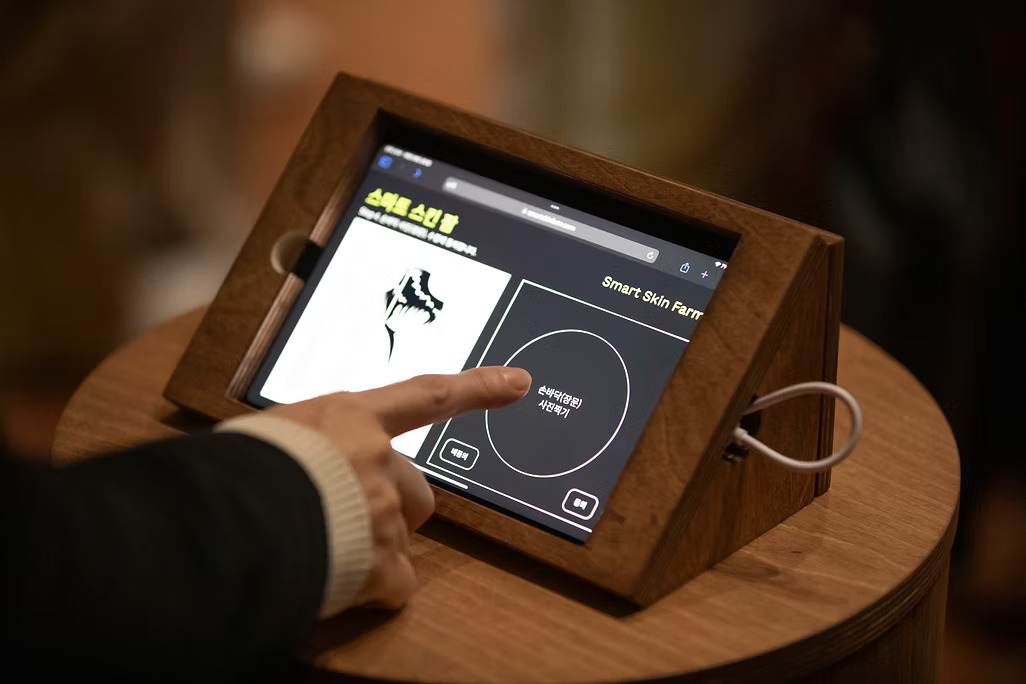
In Dear My Deer, Soh Boram traces the life-and-death trajectory of the water deer, engaging in acts of remembrance and mourning. To mourn is to live with loss—and to reflect on what that loss asks of us. The current status of the species is mapped using a seven-color pixel gradient, ranging from “vulnerable” to “extinct.” The phrase my deer echoes the English my dear a term often used for a romantic partner or a significant other.
Donna Haraway uses this expression(significant other) to describe the deep relationships between humans and their companion animals—beings who have spent a lifetime learning how to care for each other.2) Yet for Soh, the deer became “significant” only after its death. Until then, it had been merely another wild animal depicted on a roadside warning sign: distant, indifferent, invisible. Ironically, it was in that encouter that it became a he—a being worthy of care.
This uncanny encounter opens onto layered histories: the history of civil engineering that reshaped the land for human use; colonial campaigns that nearly eradicated large predators from the Korean Peninsula; the accelerated timeline of urbanization; and deeper evolutionary histories—such as the development of deer hooves for softer terrain, or their instinctive responses to predators.
Soh’s acts of remembrance begin with a search—one that stretches across the Korean Peninsula and reaches into Europe and the Americas—tracing the overlapping, buried histories embedded in the lives and deaths of animals in the deer family (Cervidae).
Species within the deer family have largely gone extinct due to the indiscriminate hunting. While humans have used animal skins for centuries, the disruption of species continuity is a far more recent phenomenon—one that dates back only two to three centuries. It began when hides ceased to be used merely for sustenance and instead became commodities of trade. Deborah Bird Rose calls this “double death.”3)
It is not just the death of individuals—it is the erasure of a species’ continuity, of time yet to come. On the map featured in Dear My Deer, black pixels—signifying this double death—cover most of the screen. Soh Boram does not stop at mourning—she extends remembrance into action, reconstructing the flayed skins of these herbivores and summoning the memory of my deer.
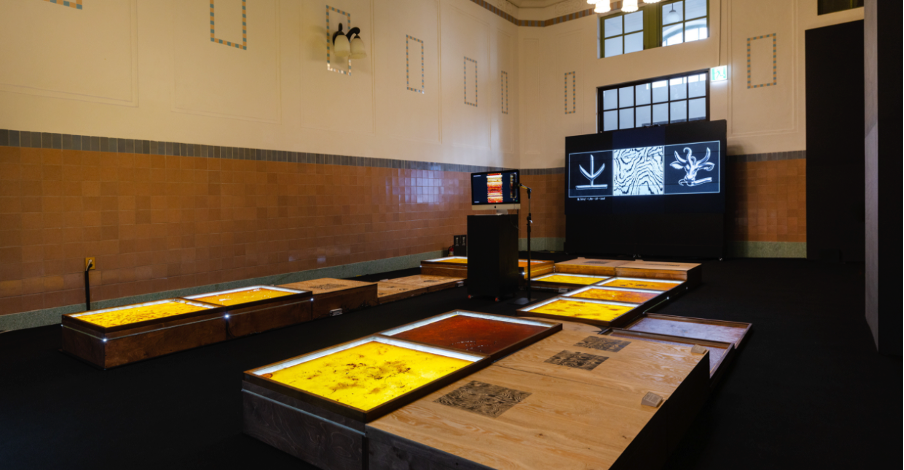
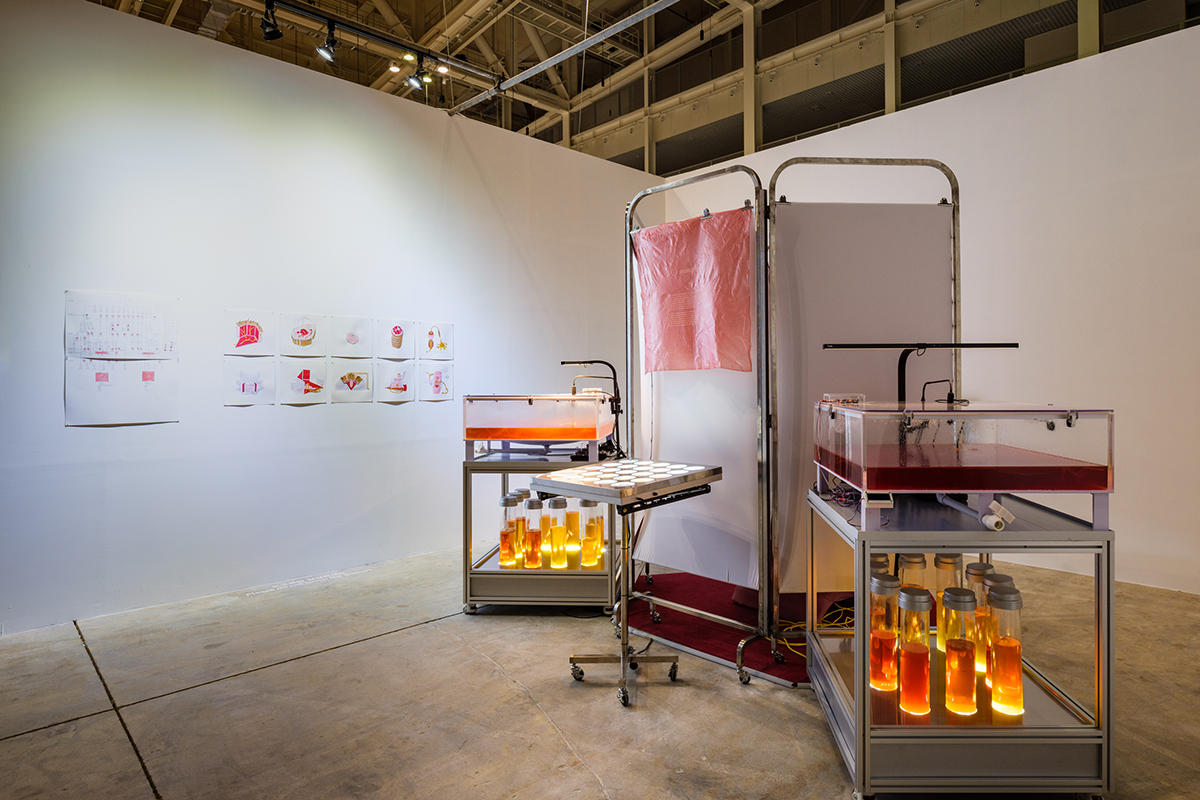
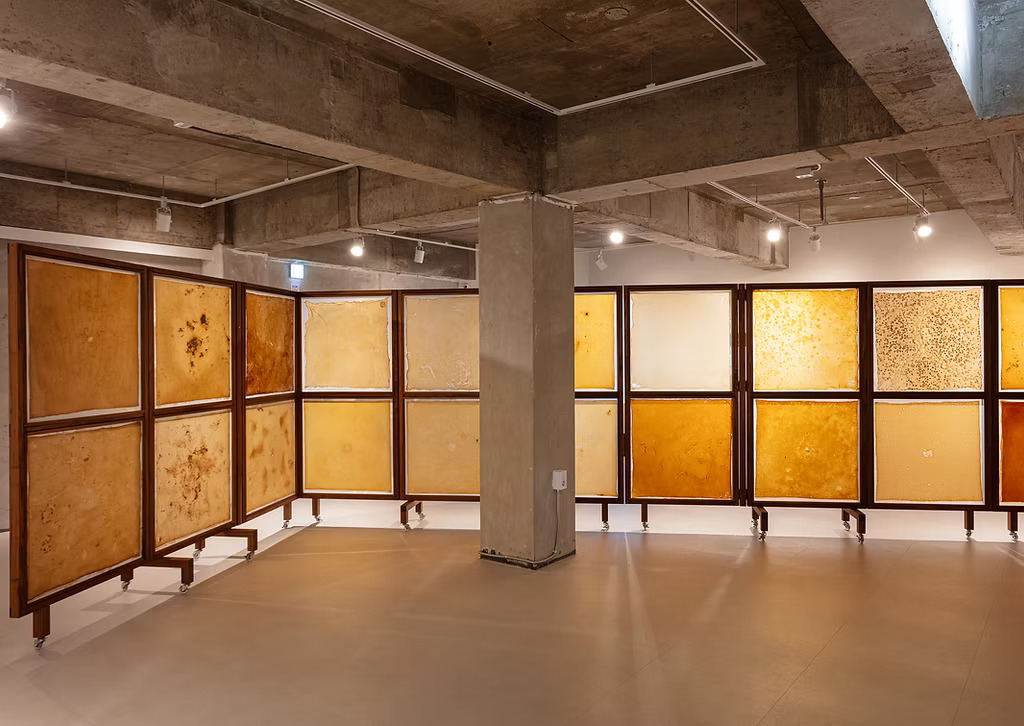
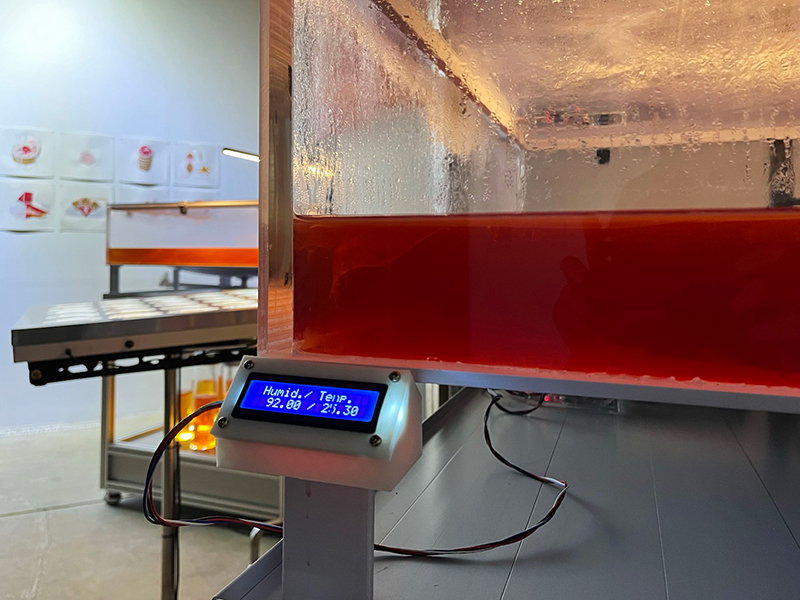
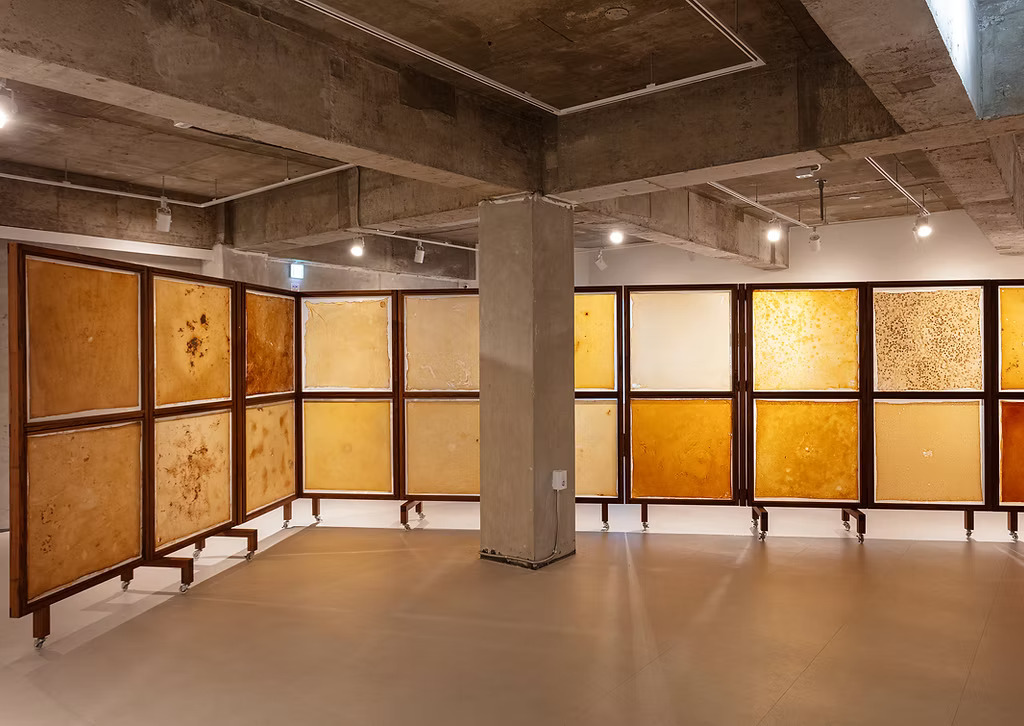
In From Twenty-Four of Your Bodies, leathers are formed by drying SCOBY4), alternative leathers cultivated using more than forty types of teas and sugars. True to its name, this leather is born of a collaboration between bacteria, fungi, and air. This is what we now call “plant-based leather.” But even herbivore hides—formed through grass digested by microbes—begin to blur the line between plant and animal.
The leathers created by Soh Boram are not imitations of deer hides, but uncanny, symanimagenetic skins—forms that could not have emerged without her acts of mourning and remembrance.
Long before animals or plants appeared, bacteria and fungi were the ones shaping this planet. Their bodies carry knowledge—inscribed across deep time by the slow labor of life. We tend to think of knowledge as a tool for living. But for bacteria and fungi, life and knowledge are inseparable. If “having a mind” means knowing what to accept or avoid—whom to befriend or keep at a distance—then microbes, too, have mindful bodies.
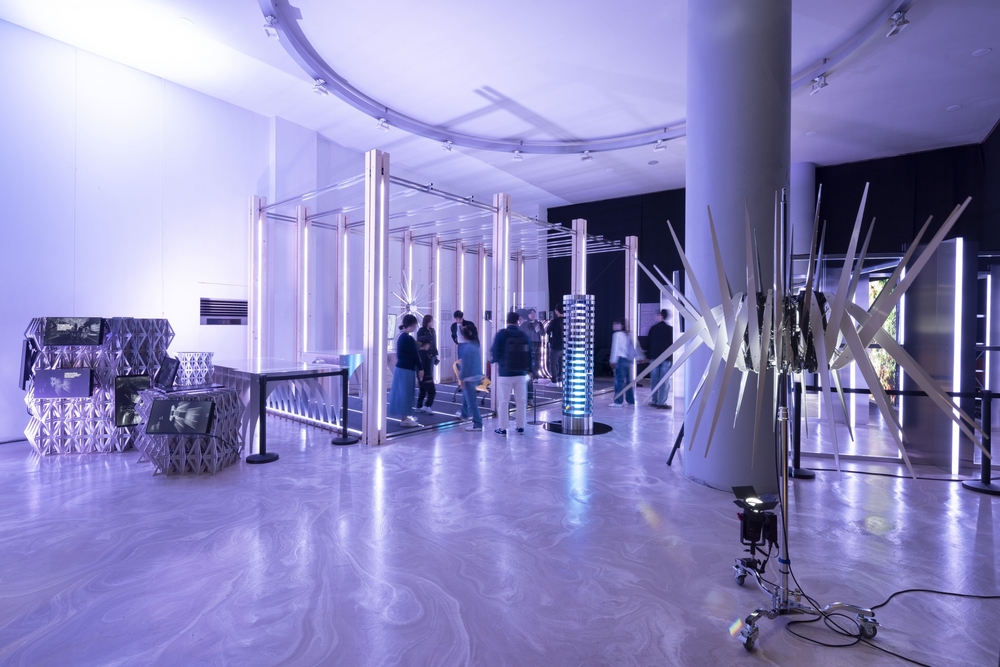
So mind is not exclusive to humans. All mortal bodies carry mind; it is what lets us work, eat, play, and love with others. You Swallow Yourself captures the movement of these mindful microbial bodies. They clash, consume one another, play, and dance. Biologist Lynn Margulis called this the “intimacy of strangers,”5) observed in the act of one microbe engulfing another.
Symbiogenesis describes how beings once radically different became intimately connected—not through dominance, but through failed consumption: through indigestion. DNA analysis reveals that the human body, though a mammal, is composed of a staggering diversity of microbes. In mourning the dead deer and what its loss signifies, Soh Boram begins to see that the deer was never a singular being—and that both she and the deer are entangled in the vast world of microbes.
Since the beginning, the biological classification of life has relied on vision. The word species comes from the Latin specere—to see. Sight has long been the dominant sense through which difference is perceived, named, and classified. Before the rise of genetic analysis, every taxonomic system—from Carl Linnaeus’s eighteenth-century model to Whittaker’s five-kingdom structure in the twentieth century—was built on visible traits.
Linnaeus divided the world into plants, animals, and minerals, leaving fungi and microbes outside any formal category. For women who brewed alcohol, aged cheese, or fermented sauces, the peculiar nature of fungi—neither plant nor animal—was passed down as embodied, practical knowledge, from mother to daughter. But that knowledge rarely left the kitchen.
To those in power—usually educated men—microbes were nothing more than blurry, indistinct bugs, invisible to the naked eye. It was not until the invention of electron microscope—5,000 times more powerful than its optical predecessor—that fungi were finally recognized as something else entirely: a kingdom of their own. The fungal kingdom is vast. Over 90 percent of its species remain unnamed, gathered now under the term dark fungi.
Soh Boram has developed a speculative taxonomy based on the fungi the artist has cultivated and collaborated with. Classification is how we make sense of the world—how we recognize patterns of similarity and difference. But why must that always follow the logic of comparative anatomy? Every mortal being on this planet—human or otherwise—might perceive the world in completely different ways, guided by criteria numbering in the thousands.
Fungus–Plant–Animal Hybrid Dictionary I is just one way of imagining such an alternative system of knowing. For example, the color of [F02] Rosemary—its seventh generation, cultivated for 69 days—is placed alongside the head of a mantis, a fully bloomed cotton boll, and a piece of calcite. And perhaps some beings on Earth—like color-shifting animals—are already using taxonomies not so different from this one.
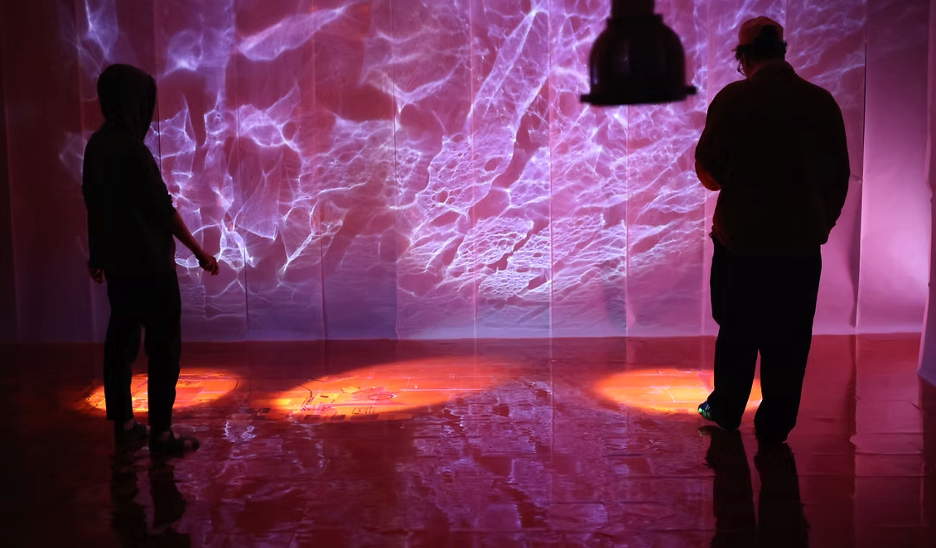
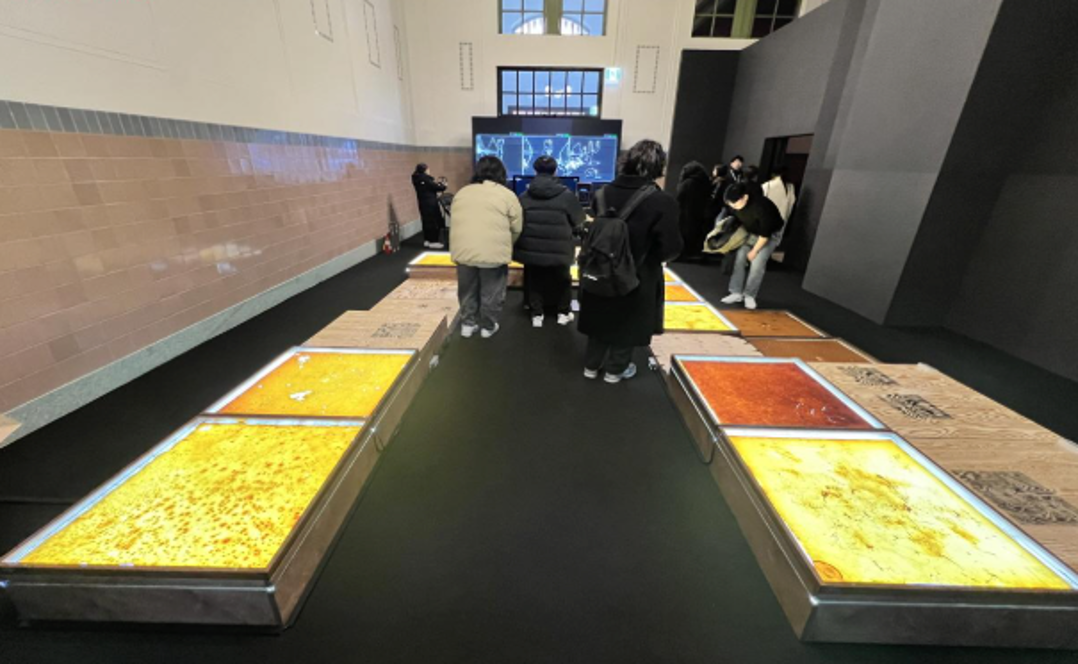
The classification method in Fungus–Plant–Animal Hybrid Dictionary II is even more intriguing. Instead of focusing on individual species, it draws on what Soh Boram calls the “ontological choreography”6) of companion species—their patterns of movement and mutual becoming. Take the jebi-dulgi Order. Its name doesn’t refer to a pigeon but evokes the tumbling motion of bodies in midair.7)
The Starlight jebi-dulgi, for instance, “ripples with motion, as if microbes fond of apple and cherry juice had feasted on hinoki tea. A 1 cm-wide gas trail fans out, like a star exploding.” The Dragon jebi-dulgi twists with “a surface pattern like a dragon in ascent, formed by microbes drawn to jasmine juice and rosehip extract.” These are no single species, but symbiotic collectives—fungi and bacteria united by taste.
Their movements are anything but random. From the moment they appear, they tumble in rhythms shaped by the world around them. Soh tracks these movements with uncanny precision, letting a new taxonomy quietly take form.
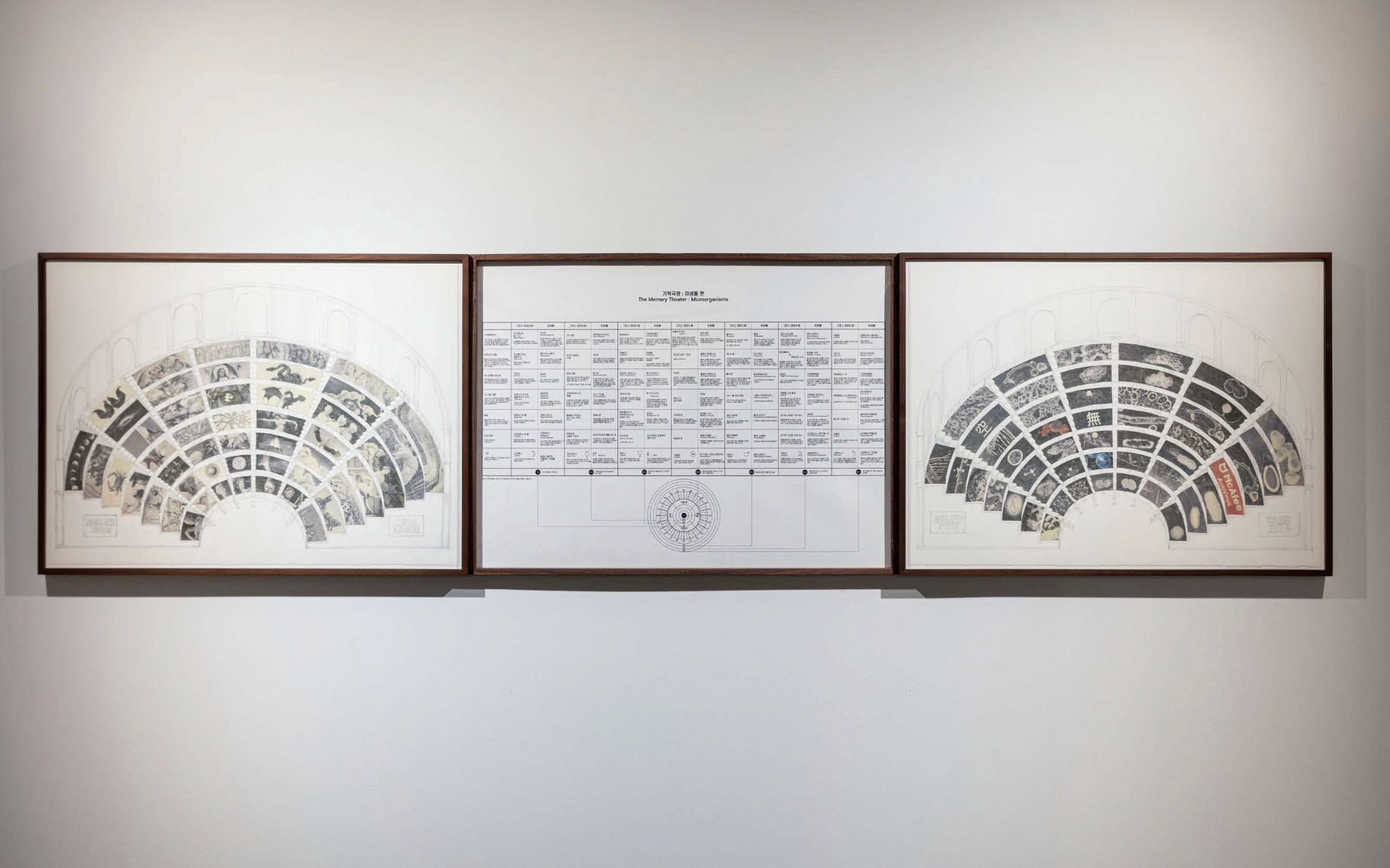
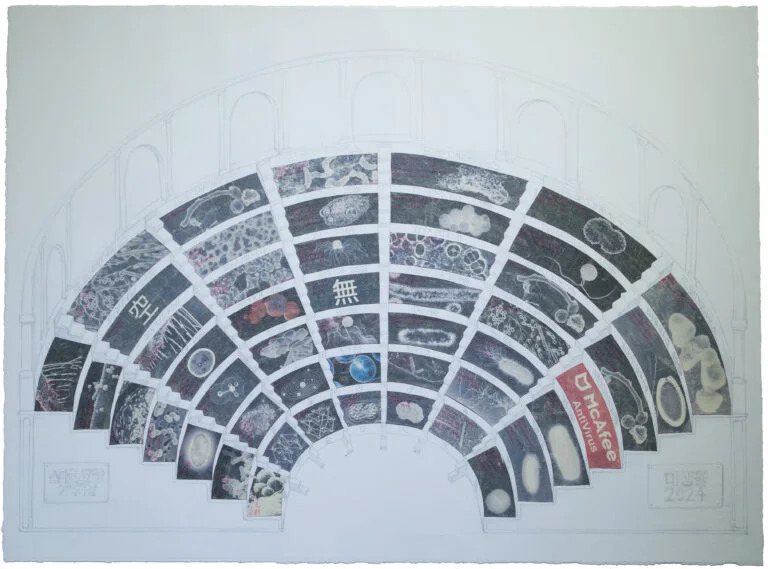
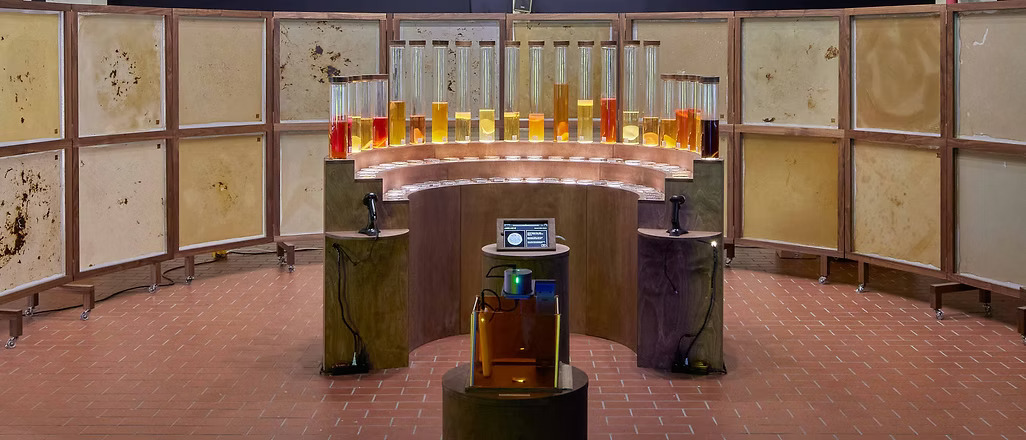
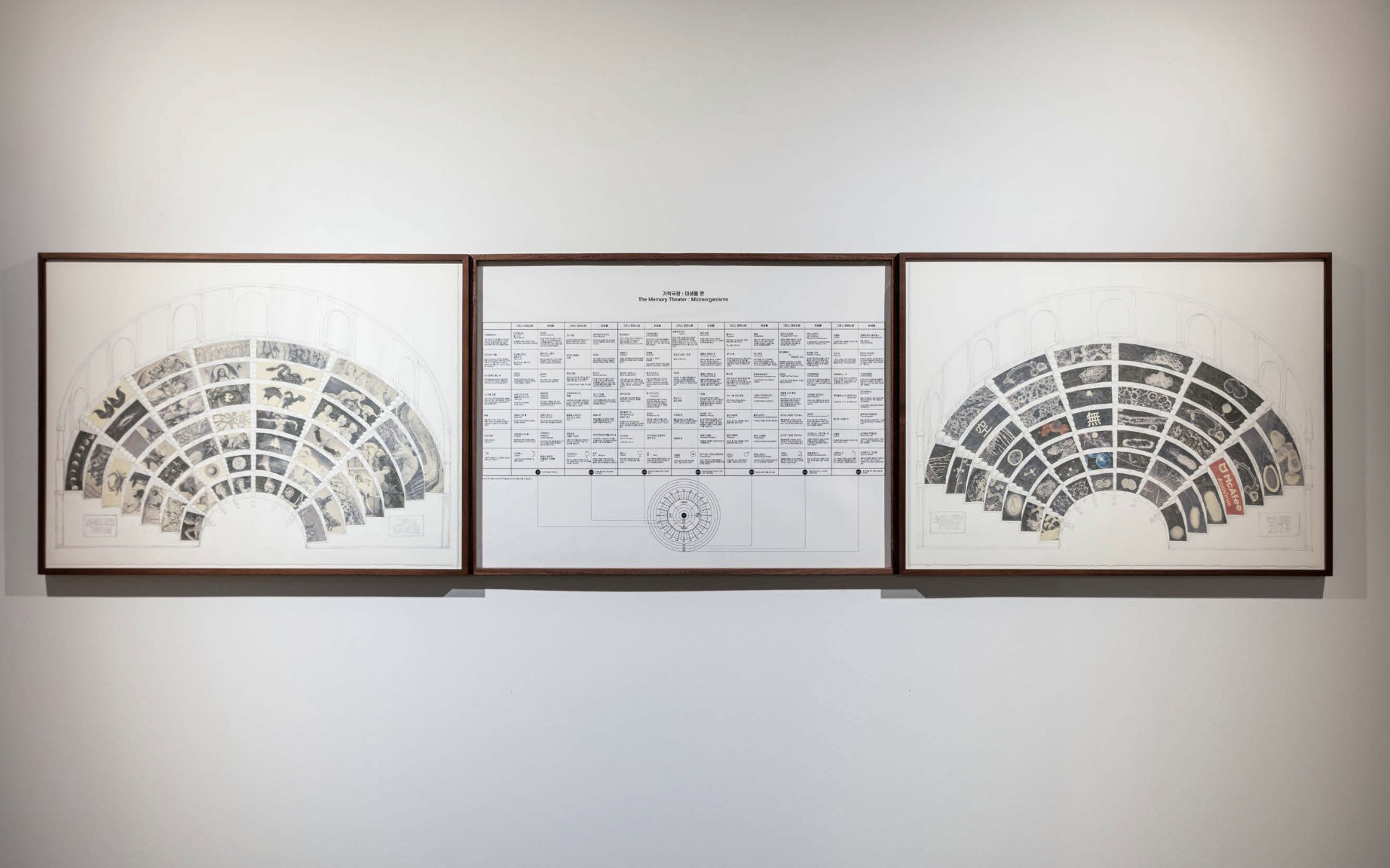
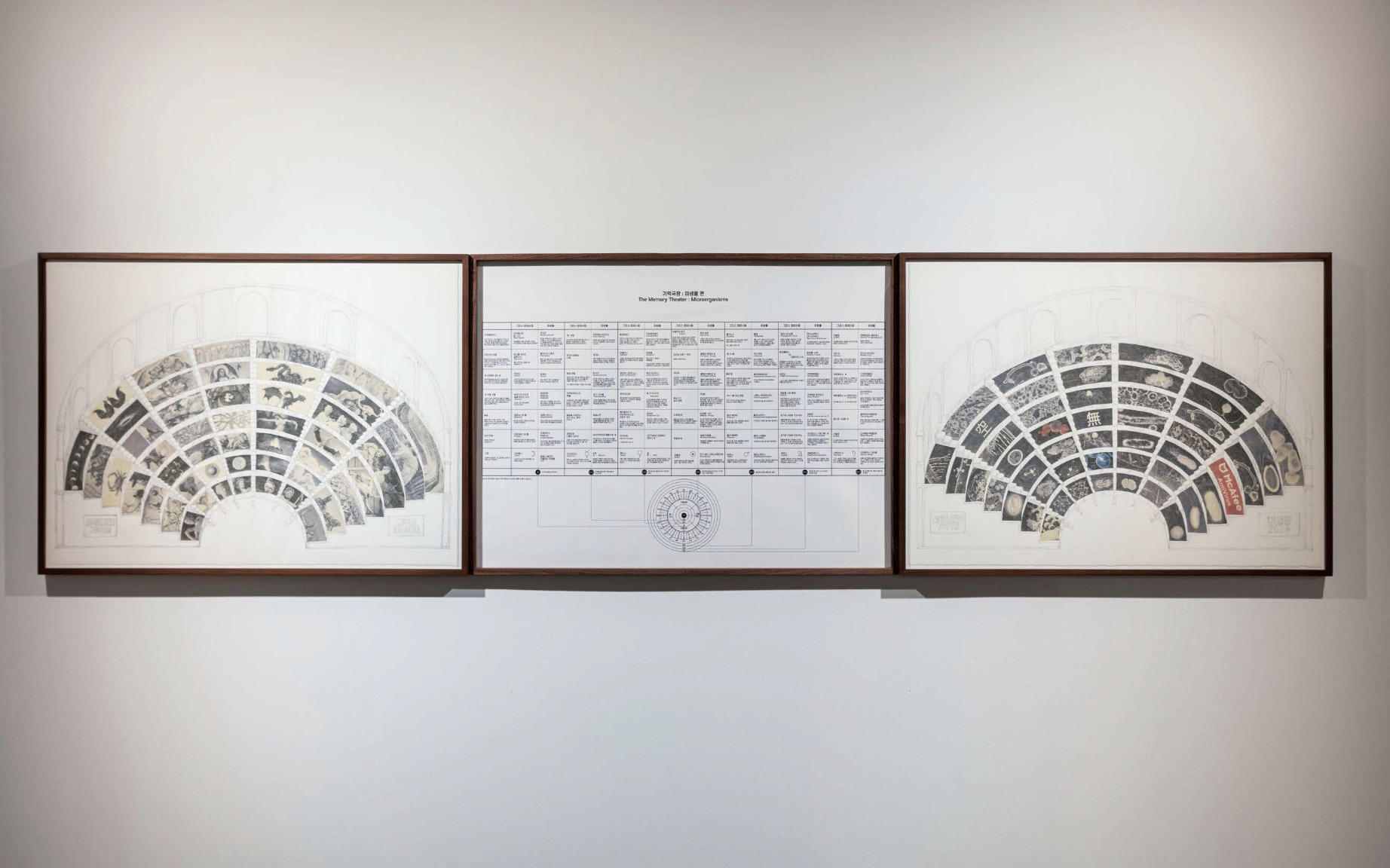
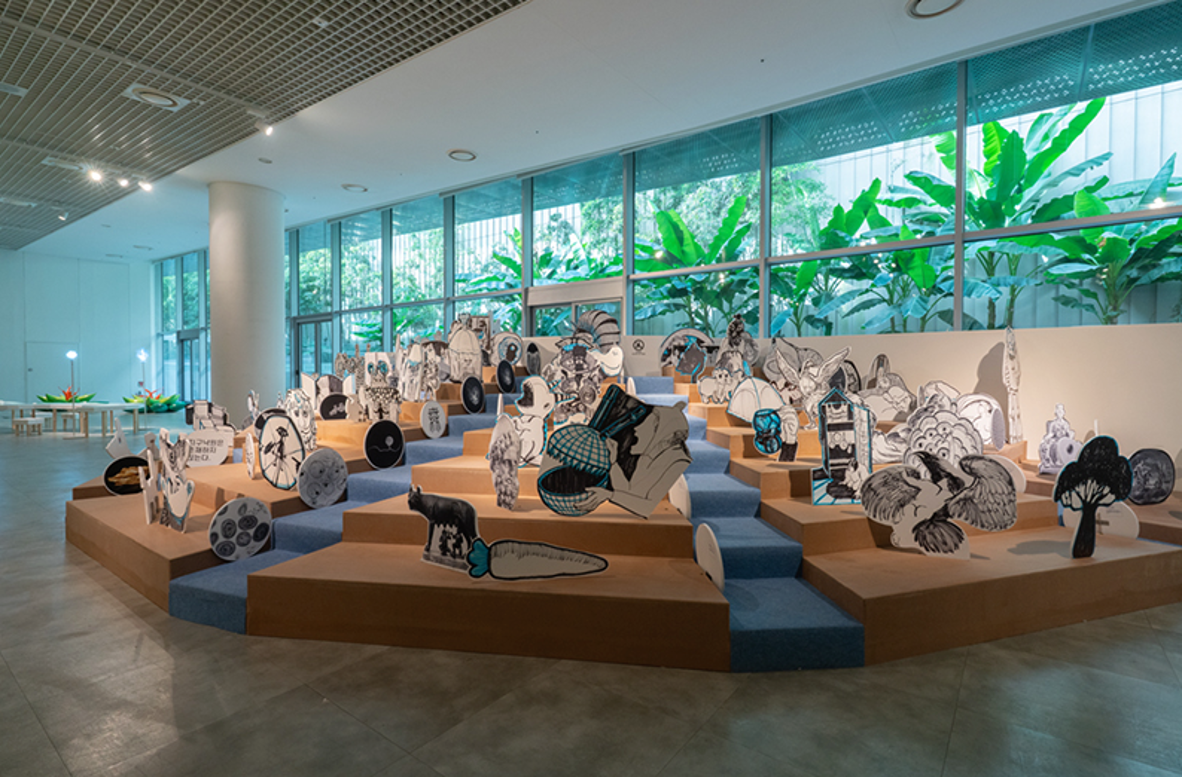
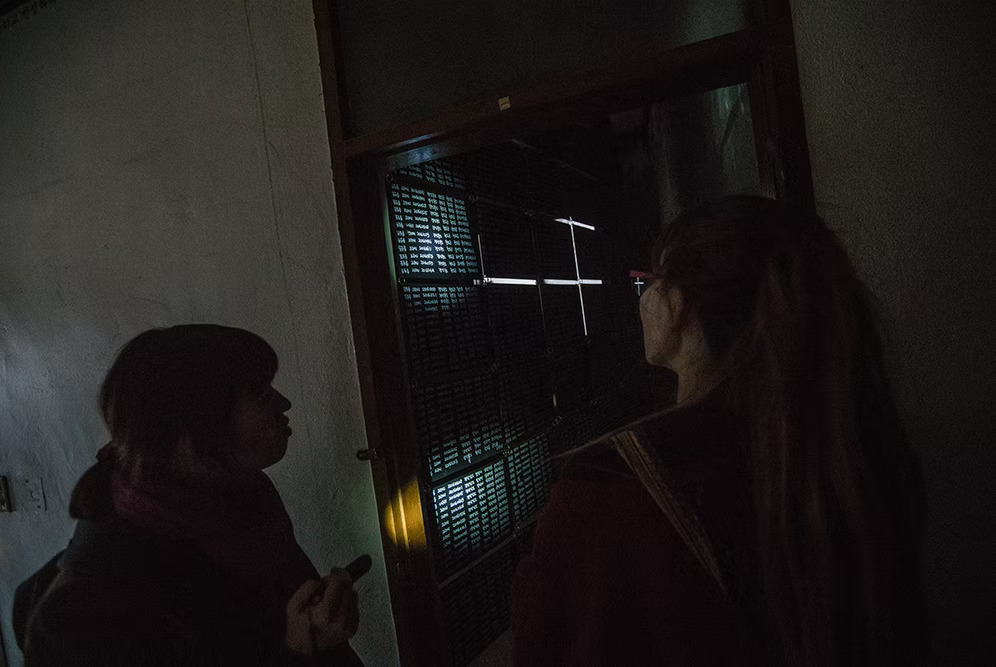
Theater of Memory: Greco-Roman Mythology & Theater of Memory: Microbes I, II are works based on an imaginative reconstruction of Giulio Camillo’s Theater of Memory. Camillo, a sixteenth-century Italian philosopher attempted to store all of human knowledge and express the organic interconnections among those knowledges within a grand cosmology.
Camillo’s Theater of Memory was never completed. One of its prototypes was exhibited, but the blueprint for the final version remains only as a written form. Soh Boram adds microbes to Camillo’s theater—forms of knowledge that were absent in sixteenth-century. The first person to observe microbes was Antonie van Leeuwenhoek, a seventeenth-century textile merchant and inventor of the microscope.
Van Leeuwenhoek scraped the inside of his own cheek, using a low-magnification lens he made. He then observed tiny wriggling creatures and named them animalcules (little animals). Technology has since advanced rapidly, from the transmission electron microscope to PCR techniques that allow rapid DNA analysis, gradually revealing the vast world of microbes.
According to contemporary biology, immense microbial populations make up the majority of life on Earth—and the majority of the human body as well. Contemporary biology is also unraveling the very concept of the individual organism. An upheaval is underway in our systems of knowledge. Soh’s Theater of Memory is its twenty-first-century version.
While preserving the original structure of Camillo’s Theater of Memory, Soh cautiously—yet playfully—introduces microbial names into the arrangement. In the seventh and final row, next to Prometheus—whose liver was eternally devoured by an eagle—Soh discreetly places Bacillus anthracis, the bacterium that causes anthrax. What, then, links Prometheus and anthrax?
If Prometheus brought fire to humans, Bacillus anthracis makes the leap from animal bodies to human ones. The species name anthracis derives from the Greek word anthrakis (ἄνθραξ), meaning “coal.” In a sense, it is the charcoal left behind by Prometheus’s fire. Fire, after all, did not bring only good. Anthrax is also one of the most studied agents in the development of biochemical weapons.
Next to Mercury’s winged sandals, Soh places the plastisphere—a microbial ecosystem found within floating marine plastic debris. Just as Mercury’s sandals opened flexible paths through the air, this microbial collective develops resilient strategies for survival—even in oceans damaged and saturated by plastic.
Reading Soh’s texts on microbes, Camillo’s precisely ordered Theater of Memory—with its rigid, geometric 7×7 structure—begins to ripple and shift into something trembling and alive. Soh hasn’t changed the structure at all, yet it feels as though the microbes themselves have done so. Microbes are, after all, masters of connection—where difference arises not before, but through, connection itself.
The soul of the deer compels Soh to follow the trail of the animal’s death and commodification, to create leather in collaboration with microbial life, and to recognize the vast microbial world churning beneath the civilization sparked by Prometheus’s fire.
To Soh, the soul of the deer acts as a kind of daimon—akin to those in Philip Pullman’s His Dark Materials.8) This entangled becoming is symanimagenetic. And it is this becoming that holds us in anticipation of what Soh Boram will bring forth next.
About the Author
Choi Yu-mi is an independent researcher working in philosophy, science studies, and feminism within the knowledge community Suyu Nomo Parang. Also a research fellow at the 99 Ecofeminism Research Center The Moon and the Tree, Choi has co-authored Philosophy of the Earth and Materialisms of Affects and Art, and authored Haraway, Thinking of Com-Commune. Korean translations include Donna Haraway’s Staying with the Trouble and When Species Meet.