“Like something made by melting
a very small
world
like a fragment of another world
heavy
with a weight that cannot escape
its center
in the sand that tangles boundaries” 1)
Excerpt from Kim Riyoon, “Inside the Black Stone,” 2023
Introduction
The exhibition 《The Black Stone and the Iron》(This Is Not A Church, 2023) began from the memories of Woongcheol Lee’s father in his youth. Although it starts from a personal anecdote, behind it is loosely connected the story of overseas workers who served the nation for Korea’s national land development plans in the 1970s and 1980s.
While recuperating for treatment, his father happened to hear news of Saudi Arabian Crown Prince Bin Salman’s visit to Korea, and the time and space that had been dormant only in his father’s memory were summoned. In addition, his father held a reasonable suspicion that his illness originated from the difficult life he had lived in the Middle East.
In this way, his father’s stories of the Middle East became the foundation of the work. His father arrived at a construction site in Iran in the late 1970s, but presumably returned to Korea when the Iranian Revolution broke out, and then moved his workplace again to Saudi Arabia in 1980. The unbearable heat and sandstorms frequently appeared as different landscapes, and fear was like entering a tomb.
His stories from that time were mostly about psychological changes and daily life discovered through various differences. In fact, the dispatch of Korean workers to the Middle East has continued from the construction boom in the Middle East in the 1970s to the present. In particular, the Middle East construction boom played a decisive role in constructing Korean modernity through industrialization.
However, the relationship between the Middle East and Korea is limited to an exchange between their economic power and our labor and technology. The lives and voices of Korean workers in the Middle East seem to have been obscured mostly by a nationalist narrative achieved on the basis of citizens’ sacrifice.
Here, the noble sacrifice of the head of household for his family reflects without reserve the idea of the time that identified men with the nation. Even so, Lee’s work does not directly deal with the relationship between the state and the individual. However, when one traces back his father’s life through his memories, the relationship between the crises of life and death that one cannot help but encounter and Korea’s industrialization is inevitably a passage that must be crossed.
The exhibition title “The Black Stone and the Iron” is a sign representing the era and is like a trophy of the harsh time endured by Middle East workers at the time. In other words, it could be called a kind of “exhibition value” exchanged for the physical act of labor.
The Middle East as Non-Place
His previous work did not foreground concrete signs or symbols. Yet a kind of commonality can be found: for example, the fact that the backgrounds of his videos are mostly landscapes carries a link to painting, while the repeatedly appearing soil, stone, and iron can be inferred as materials connected to sculpture. 《The Black Stone and the Iron》 does not restore or recall the past, but further turns the Middle East into a “non-place.”
A brief personal anecdote senses a certain danger, yet it can be grasped as having a considerable distance from the reality of the Middle East. This applies not only to his father’s personal perspective, but also to most narratives about Middle East construction projects, which focus on the process of winning projects in competition with English-speaking countries and on the trust built by successfully completing them. The situation at the time is described as follows.
“The construction boom in Middle Eastern countries at the time was tremendous. With overflowing oil dollars, they poured resources without hesitation into social overhead capital such as roads, ports, and airports. For Korea, which needed some new breakthrough after the end of the ‘Vietnam special demand’ and the experience of the oil shock, the Middle East, flush with oil dollars, was ‘a message from heaven.’
In 1973, Samwhan Corporation won a highway construction project in Saudi Arabia, announcing the beginning of Korea’s entry into the Middle East. Backed by the full support of the Park Chung Hee government, companies rushed to the Middle East. Construction orders, which had amounted to only 750 million dollars in 1975, increased more than tenfold to 8.2 billion dollars in 1980.
During this period, 85.3% of Korea’s foreign currency earnings came from oil dollars. The number of workers also surged. From 6,000 in 1975, it approached 100,000 in 1978, and at one point reached 200,000.” 2)
Kyunghyang Shinmun, “Those Days Seen through Kyunghyang: The Middle East Construction Boom of the 1970s–1980s,” entered 2015.04.21 21:09
Due to the surge in oil prices in the 1970s, Korea’s industrialization was bound to be delayed, and in order to overcome this, the government staked its survival on entry into the Middle East. What Korea could put forward was the technical skill and diligence acquired through the Vietnam War. Workers had to work in three shifts without rest in order to shorten construction periods.
What allowed them to endure the suffering was the responsibility of the head of household and, above all, relatively high wages. It is said that their monthly salary at the time would amount to around 15 million KRW in today’s terms.
Korean workers provided their labor power for family, nation, and future, but were relatively separated from the Middle East. If so, a space in which only the exchange of labor power and goods exists connects to the concept of “non-place.”
French sociologist Marc Augé saw the life of the new human as moving away from traditional foundations and forming closer relationships through autonomous movement, consumption, and networks. Here, non-place refers to a dehumanized space in which only transactions and contracts exist in the absence of existence, and therefore a space in which close relationships are absent.
In short, even a metropolitan village bus that connects residential areas and public transportation is an object that has become non-place. A village should be formed through organic relationships, supporting education and economy mutually and dreaming of symbiosis rather than competition. Of course, demanding such commercial morality has become awkward under a liberal competitive system.
A village bus semiotically claims to represent a local community, but if the village itself is evaluated only by the value of real estate, then that place has become a non-place, and the village bus itself is absurd. Let us connect this line of thought to the lives of Korean workers in the Middle East. Around the 1970s, the Republic of Korea government demanded the sacrifice of citizens for the nation.
Through miners and nurses dispatched to Germany, corn-growing laborers in Mexico, participation in the Vietnam War, and more, Korea accumulated wealth and was able to achieve national industrialization through it. Afterward, from around the 1990s, as overseas Koreans living abroad for various reasons were accepted as part of Korea, diaspora studies naturally began.
This was a political gesture that included overseas Koreans as pan-Koreans. As time passed, the voices of the people concerned, rather than the call of the state, slowly began to create a murmur. It evolved into anthropological research dealing with the identity of the next generation. Yet what must be noted here is that the voices of Korean workers in the Middle East have been almost erased and are difficult to find.
Meanwhile, Park Wan-suh dealt in her novels with Korean workers who participated in the Vietnam War and Middle East construction, and here too, rather than the voices of the people concerned, she sharply criticized the annihilation of humanity bred by developmentalism and mammonism through the consciousness of the time that took for granted the sacrifice of male heads of household who lived abroad for the nation and family.
However, in this process, the Korean father, represented by patriarchal authority, becomes an object of sacrifice and service for the family and slips outside discourse.3) The voices of the people concerned have still not been actively addressed to this day. The reason is clear. It is because we still view the Middle East as an object of development.
Recently, as several Korean companies cooperate on the Neom City project being built in the desert near the Red Sea in northwestern Saudi Arabia, expectations are rising for a second Middle East construction boom.
Middle East studies are also to some extent closely tied to this tendency, and compared with topics such as human rights, religion, political geography, urban studies, and construction, it is difficult to find research that reveals the subjectivity of Middle East workers themselves. In the end, we once again confirm the common sense that issues of diaspora and labor are also produced by the economics of scale.
See Shin Sujeong, “The Ethos of Families of Middle East Construction Workers: Focusing on Aspects of Complicity and Rupture in Park Wan-suh’s Fiction,” Urimalgeul, vol. 2070, Urimalgeul Society, 2016.
Material and Immaterial
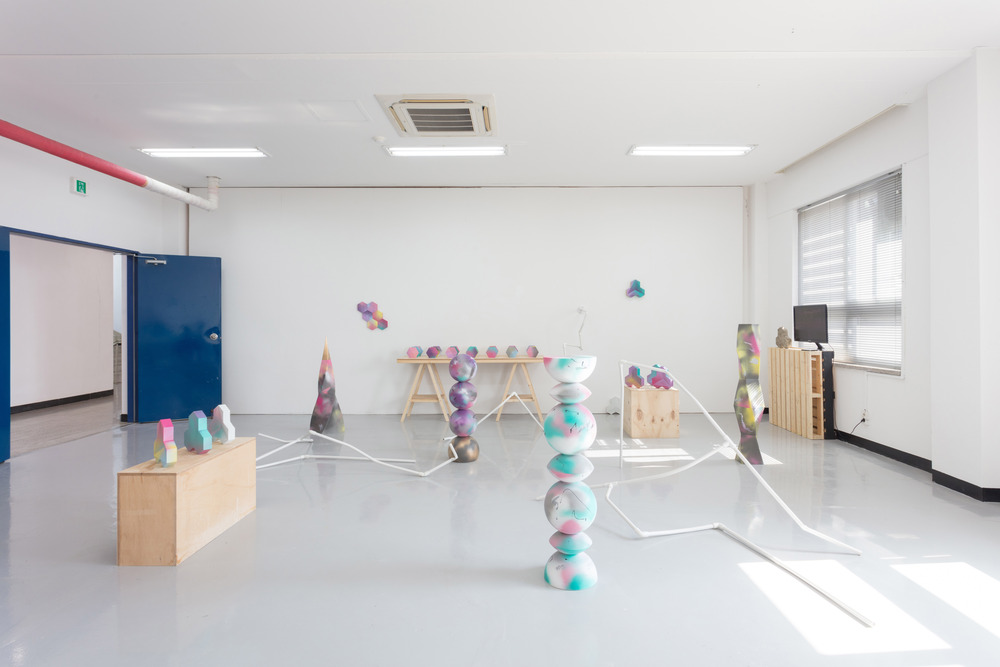
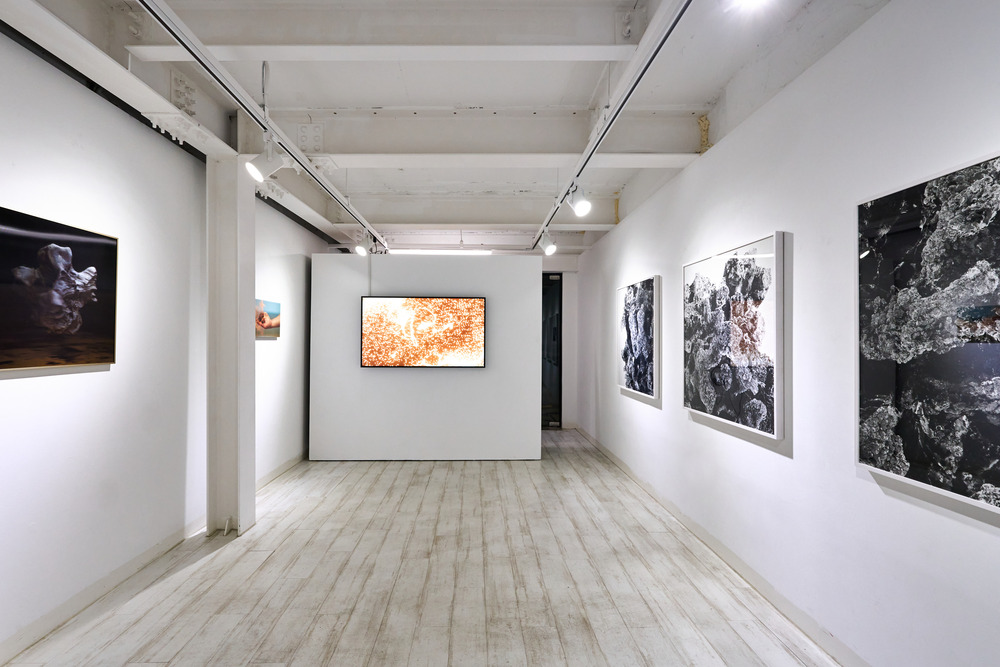
Until now, Lee has continued to ask questions about material and immaterial through experiments that mix traditional media such as painting and sculpture with the virtual world. By 3D-scanning existing objects, reproducing them as sculpture, and applying them to the virtual world to present a world in which the boundary between reality and the virtual is ambiguous, one can see that he is exploring the relationship between visual perception and reality.
As is well known, Arthur Danto declared the “end of art” after seeing Andy Warhol’s Brillo Boxes, noting that there was no visual difference between actual commodities and artworks. What Danto discovered at the time was that philosophical thought was necessary through the obvious fact that visually indistinguishable identical objects were actually different.
Michel Foucault also raised questions about visual sameness and difference. Through René Magritte’s work This Is Not a Pipe, he reexamined the relationship between image and text. Magritte was a painter, but he did not think that an object must necessarily be painted to resemble its outward appearance.
Foucault’s concern similarly pointed to the typological classification inherent in the method of morphology, which classifies similar things as a specific object. In other words, it refers to the early Western anthropological attitude that fixed race, language, culture, and so on by classifying similar things as identical.
I speculate that Lee’s way of corresponding traditional media with the virtual world as its counterpart may be an attempt to erase the hierarchy that exists between material and immaterial, reality and the virtual, reality and fiction. How one reads Magritte’s This Is Not a Pipe will depend on the perception of the person who sees it.
Ultimately, countless differences will occur between the act of seeing and its interpretation, and therefore fixing it into a single interpretation and meaning may not have suited the nature of art from the beginning.
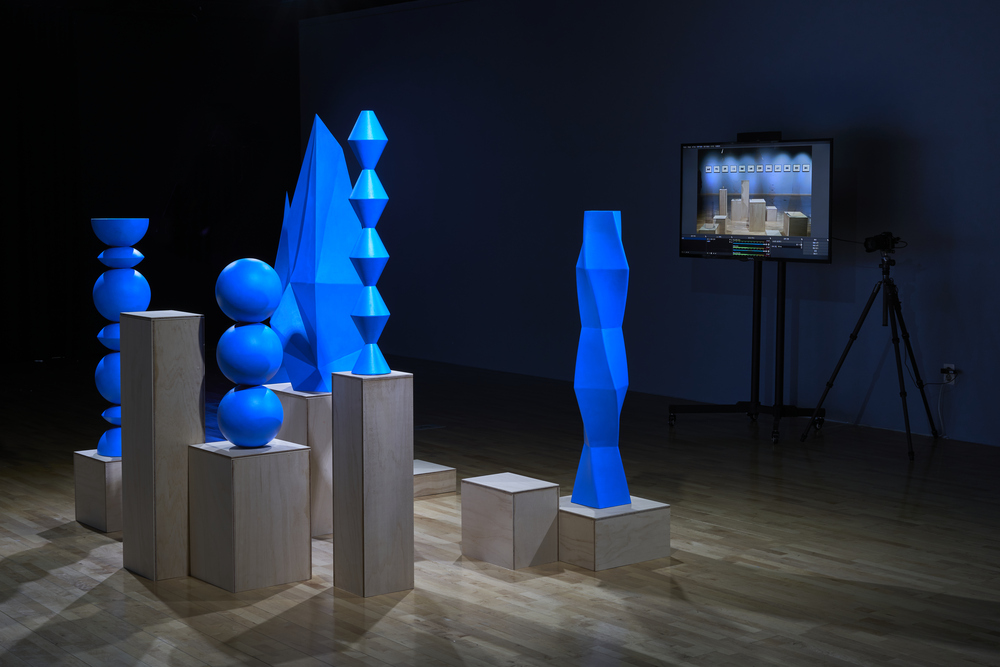
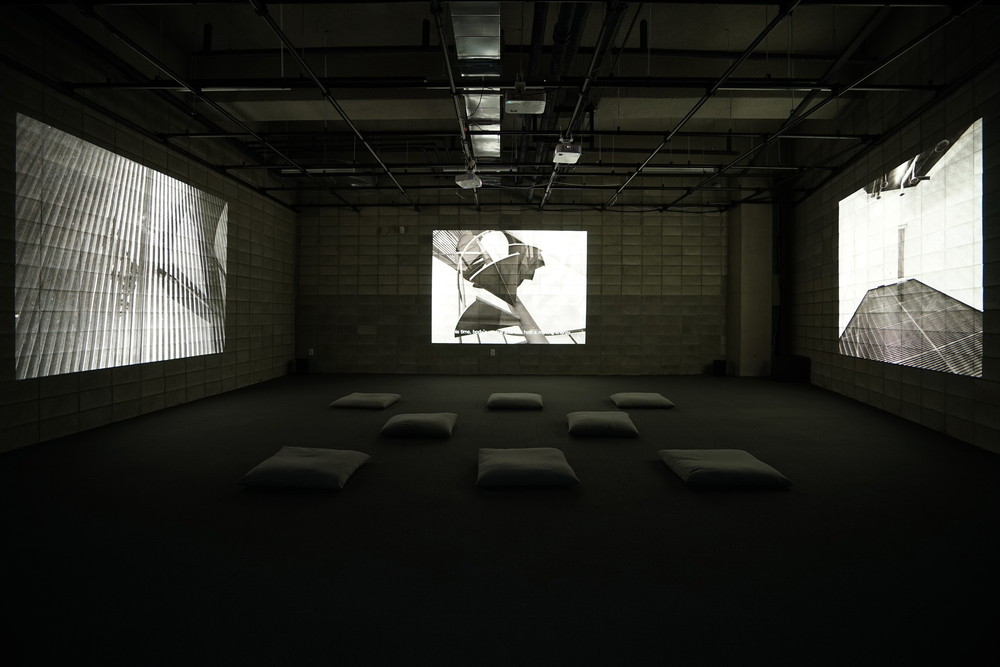
《The Black Stone and the Iron》 departs from the framework in which Lee had until now focused on new media work, and through a plural method combining video, installation, poetry, sound, and performance, attempts to traverse between Korean modernity and the contemporary by intersecting public memories of the 1970s and 1980s, the period of Korea’s industrialization, with the private memories of his father.
The work begins from looking back on the life of the artist’s father. His father left for a faraway foreign land amid the Middle East construction boom formed by the power of oil dollars in the 1970s and 1980s. His father’s memories introduce anecdotes based on his own experience rather than describing the situation at the time concretely.
The memory of the Middle East, which had been the most meaningful time, was both a scar and, paradoxically, a medal, and through the father’s recollection of that time, the work crosses Korean society during the period of industrialization, when capital was accumulated on the basis of citizens’ sacrifice.
This work is also an attempt to recover memories of modernity that were rapidly forgotten due to the social time that accelerated after the 1990s, in a process of finding a certain common denominator between father and son, across different generations, different times, and different experiences. However, it seems necessary to state that this work is not composed with the intention of representing or replaying the father’s memories.
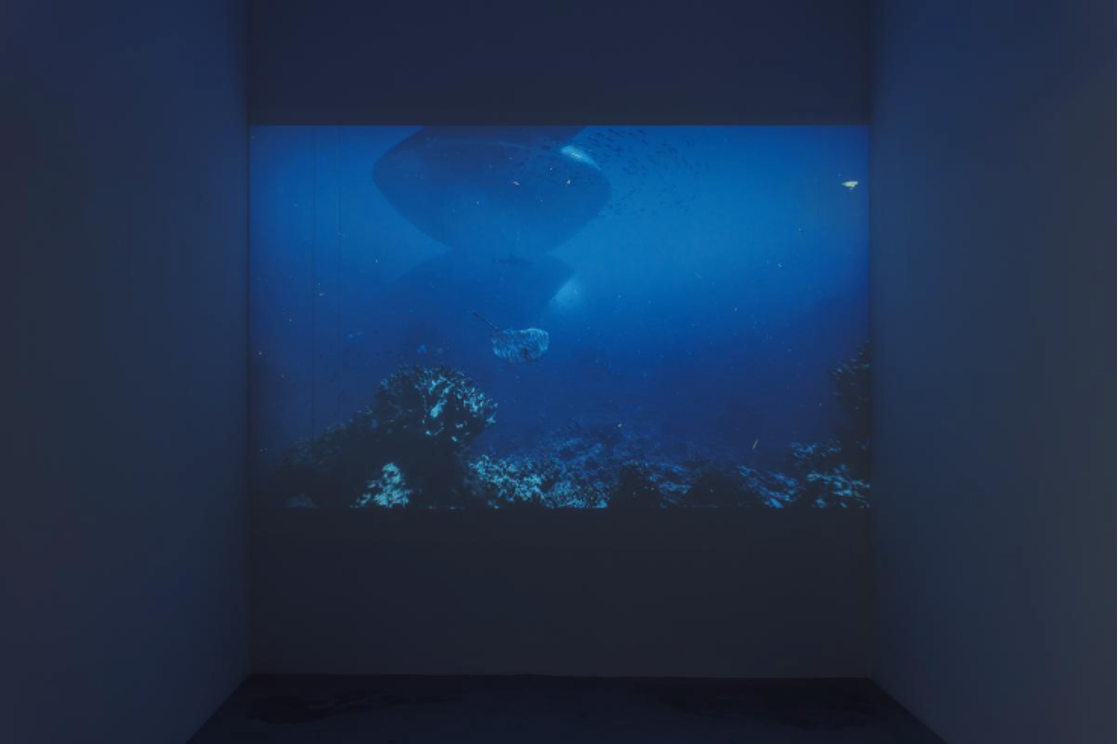
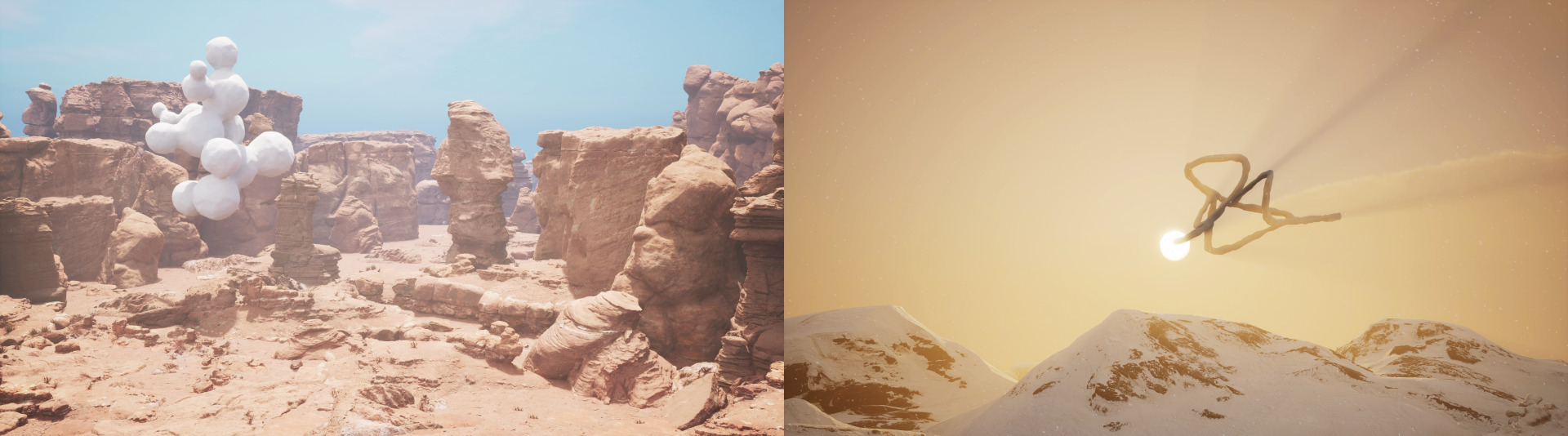
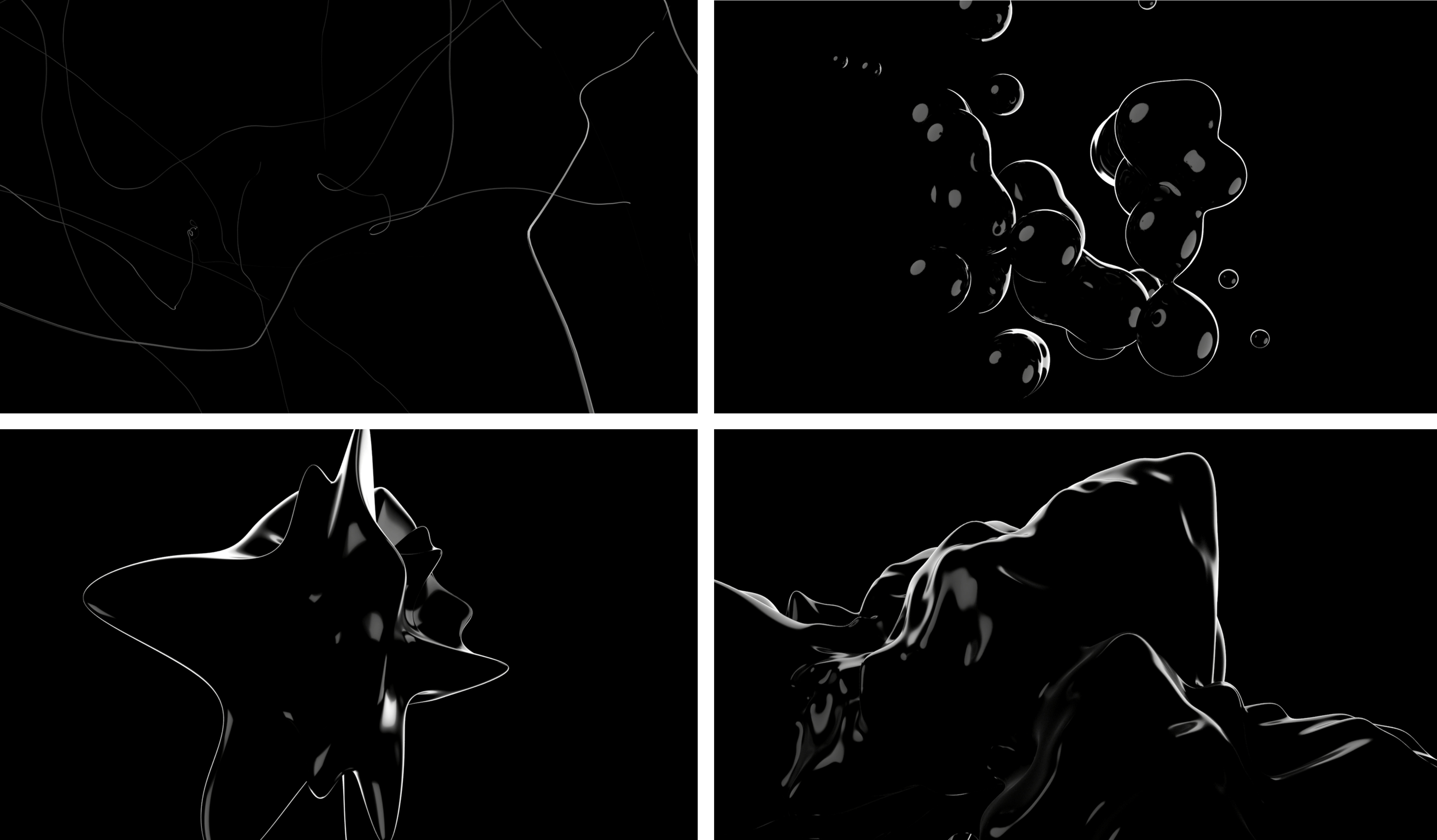
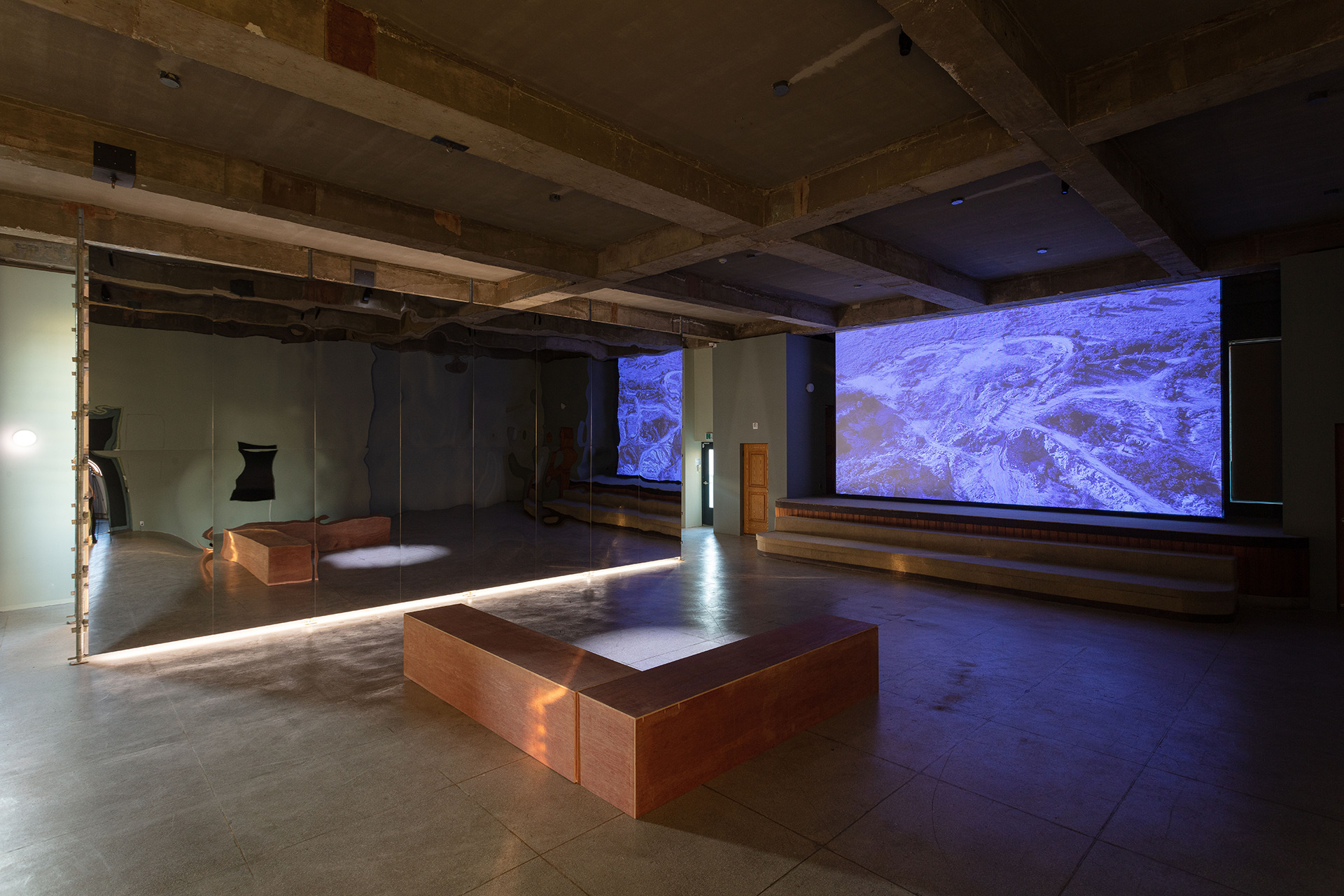
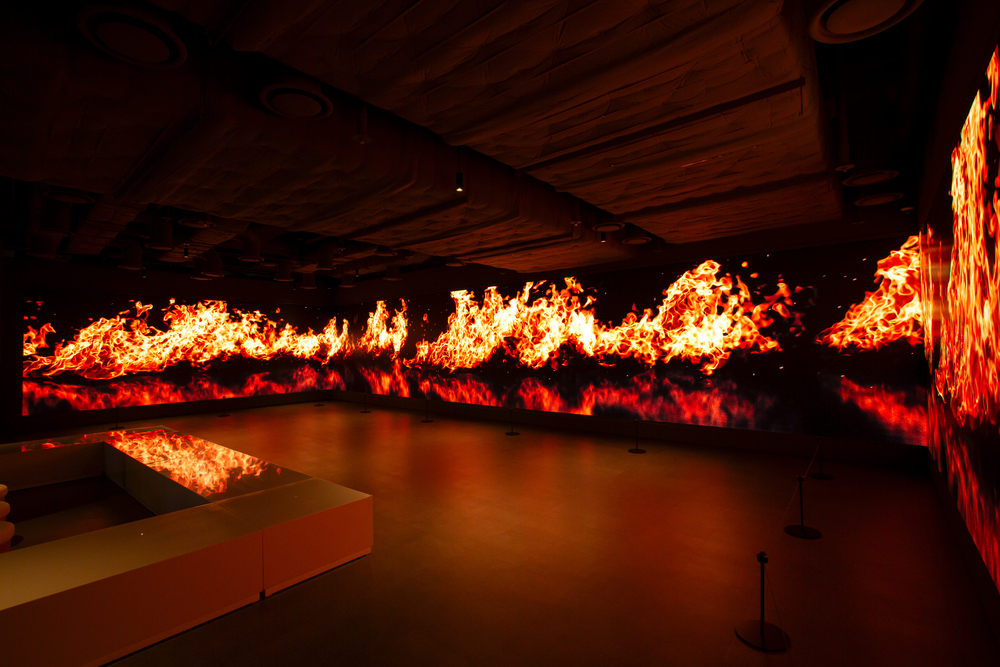
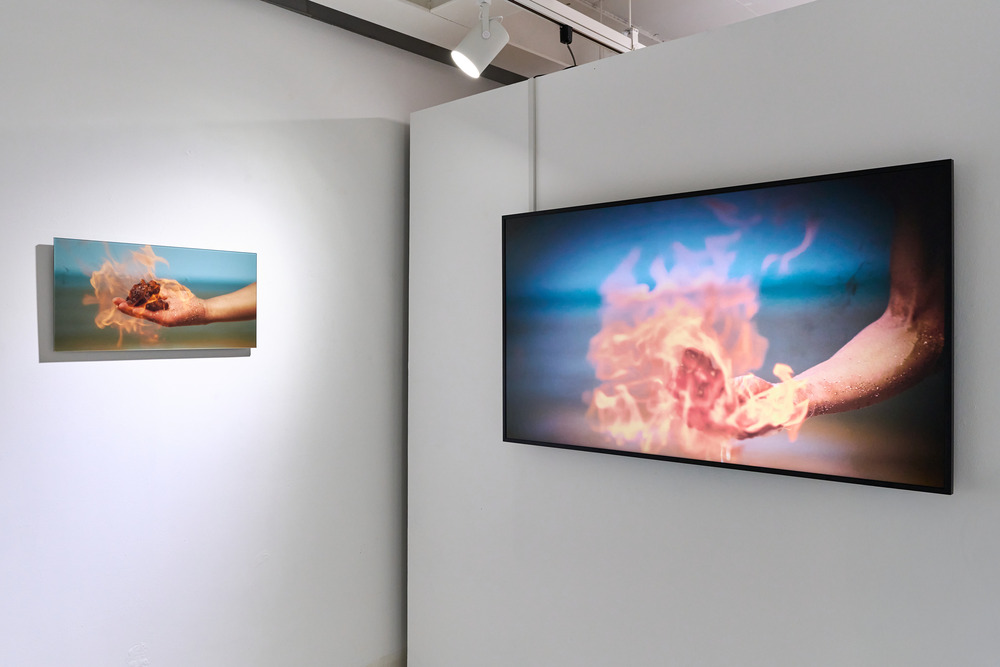
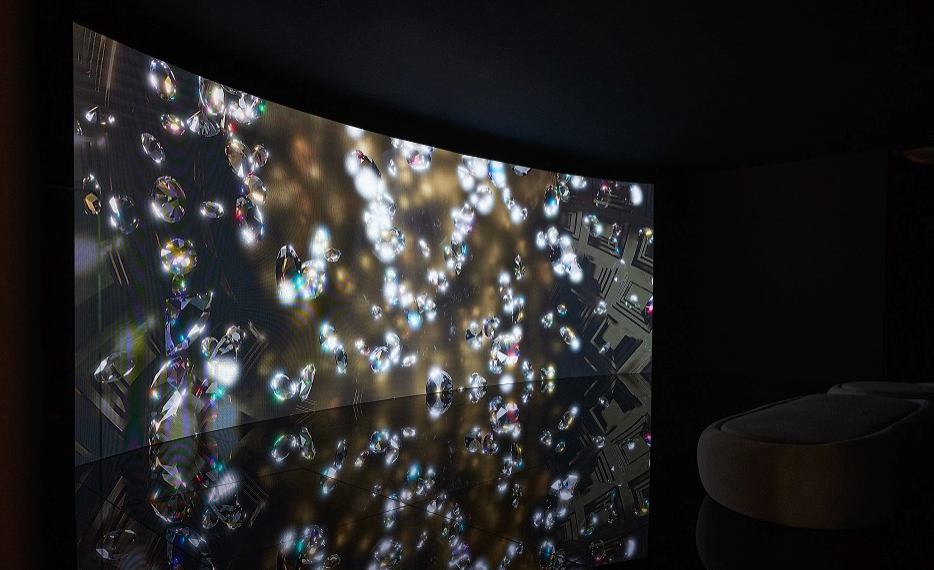
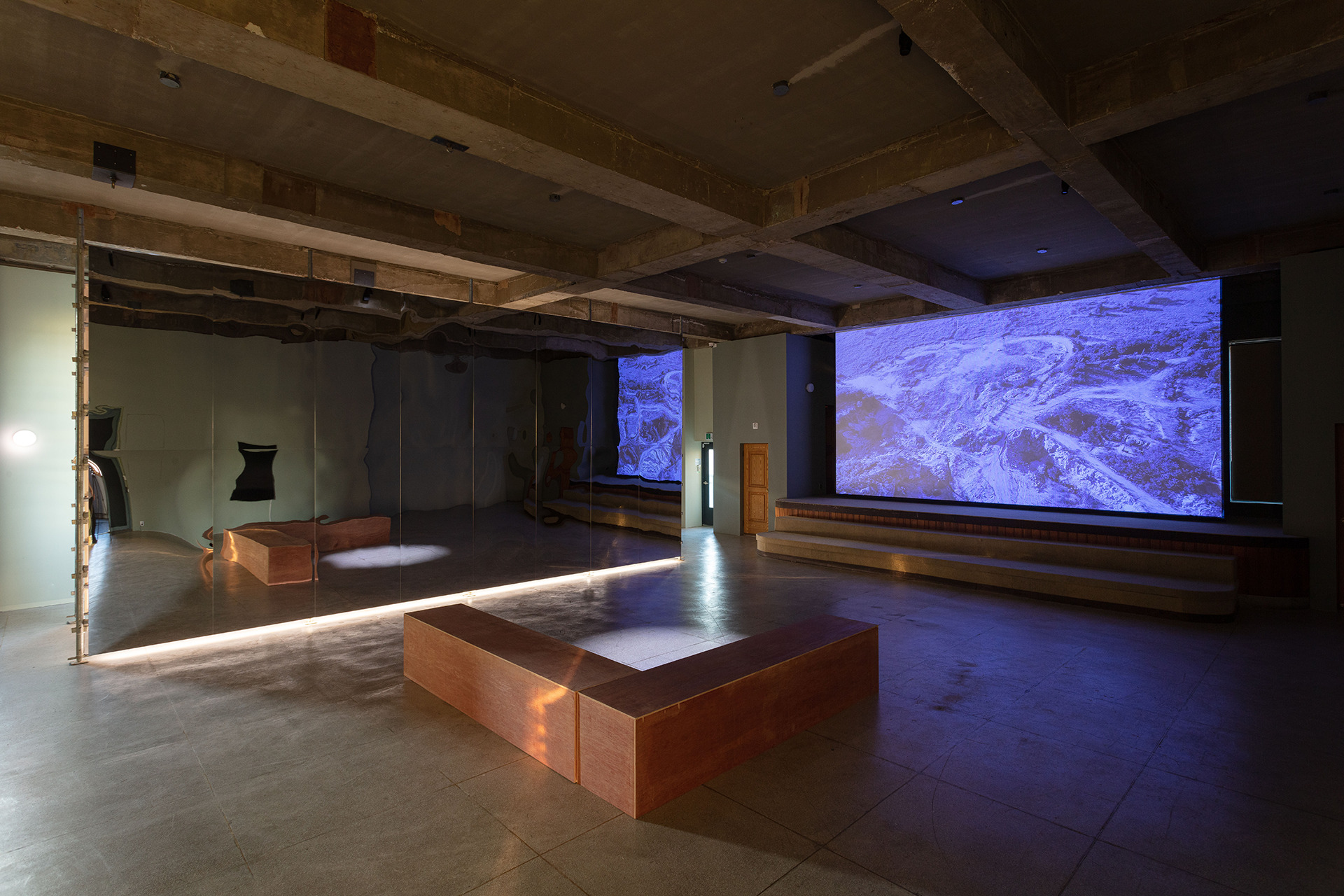
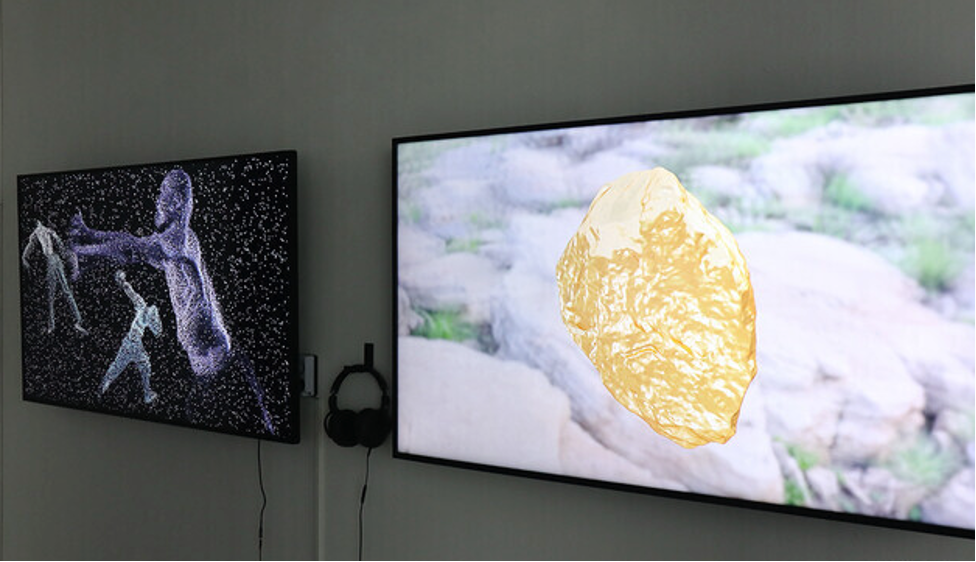
In other words, although the work originates from the father’s experience and memory, it is difficult to find the retrospective narrative character we generally expect. Rather, in Prospect(2023), Lee induces the viewer’s affect through molecular “abstraction,” rhythm, speed, and intensity instead of concrete description or narration. A golden sun slowly appears as if powdered, and then a black viscous liquid emerges.
Soon after, the metallic sound of hammering follows, scaffolding is erected in the middle of the desert, and immediately a mass of sand forms, while a golden stone appears in the air and then instantly becomes black liquid and falls. As this chapter ends, an iron appears and opens a new chapter. After passing over raw land filmed from the air, the rising sun changes like a rusted Earth and decomposes in all directions.
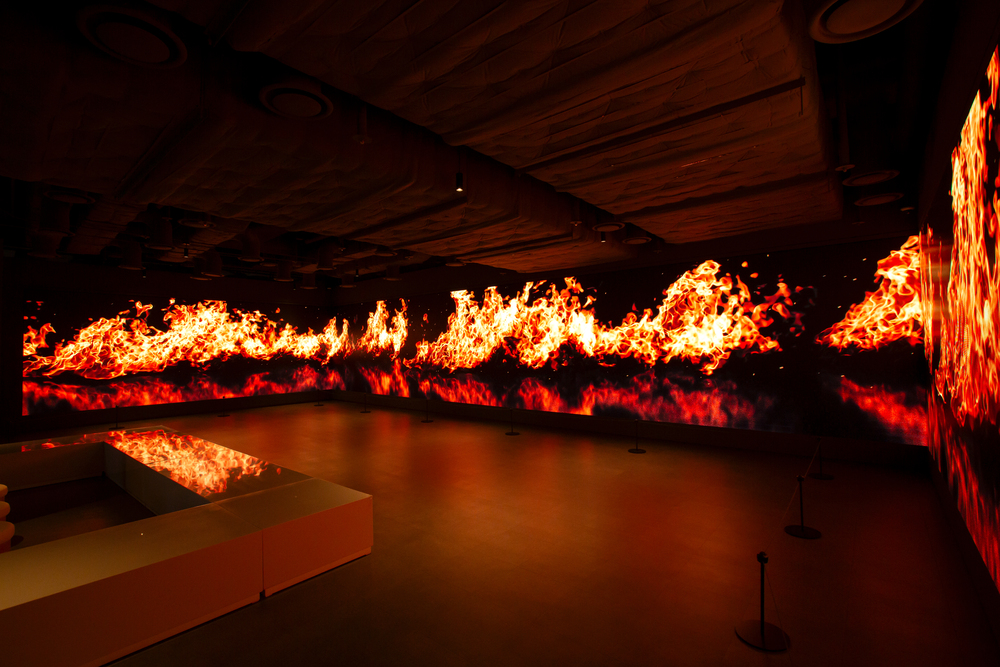
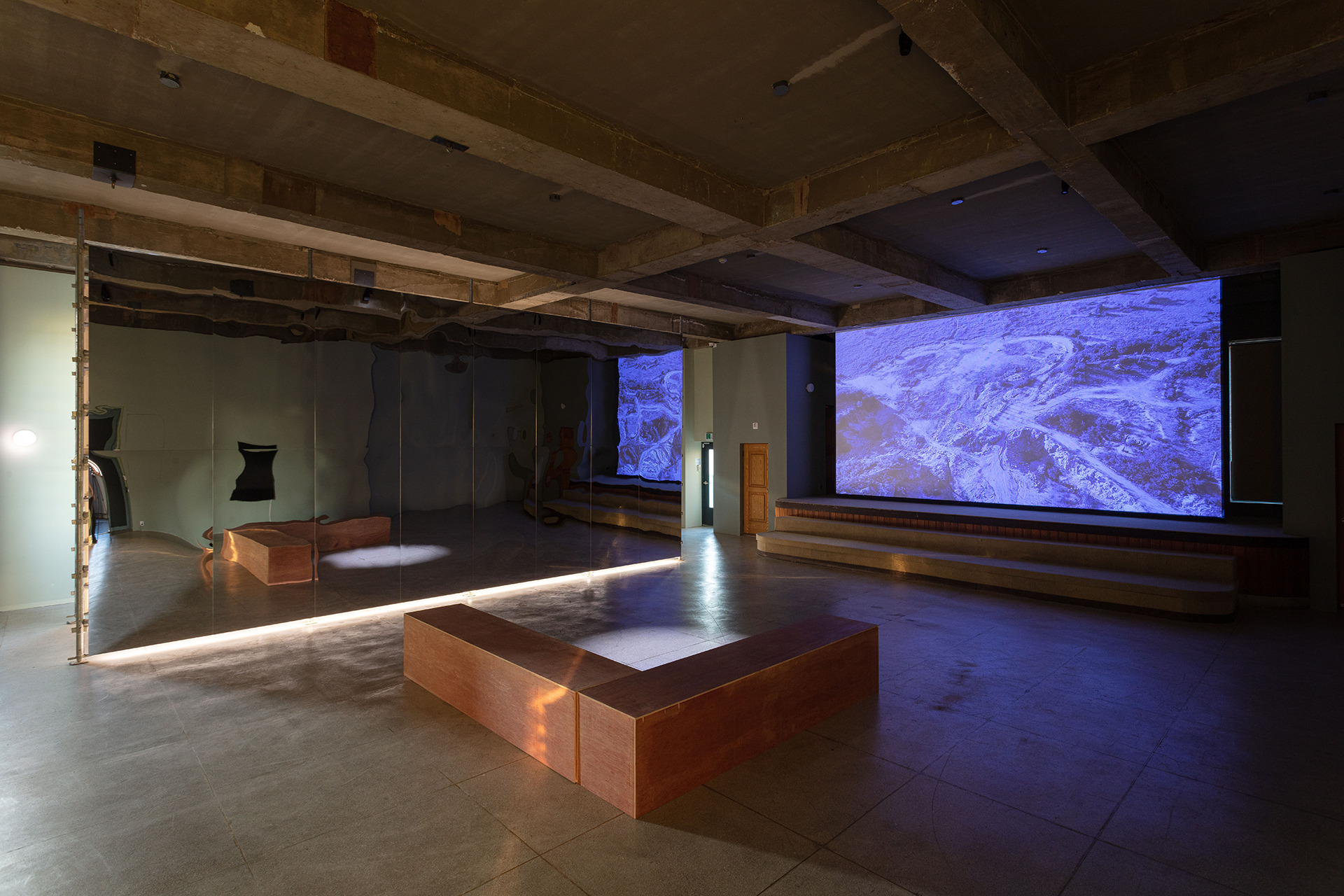
Finally, an unidentified rectangular golden plate appears in a golden valley, and the work ends. The exhibition space This Is Not A Church is a complex space converted from a former church building, and structurally, the altar occupies a significant place. Prospect uses the wall where the altar is located as its screen. Thanks to this, the video conveys a feeling like a mythic Genesis or prequel.
Let us go a little further here by connecting the thoughts on material and immaterial in Lee’s work with the memories of his father. Is it possible to represent labor, a bodily act, and the capital value attached to it? Unlike the performativity of artists, labor has mostly been represented through socialist ideology.
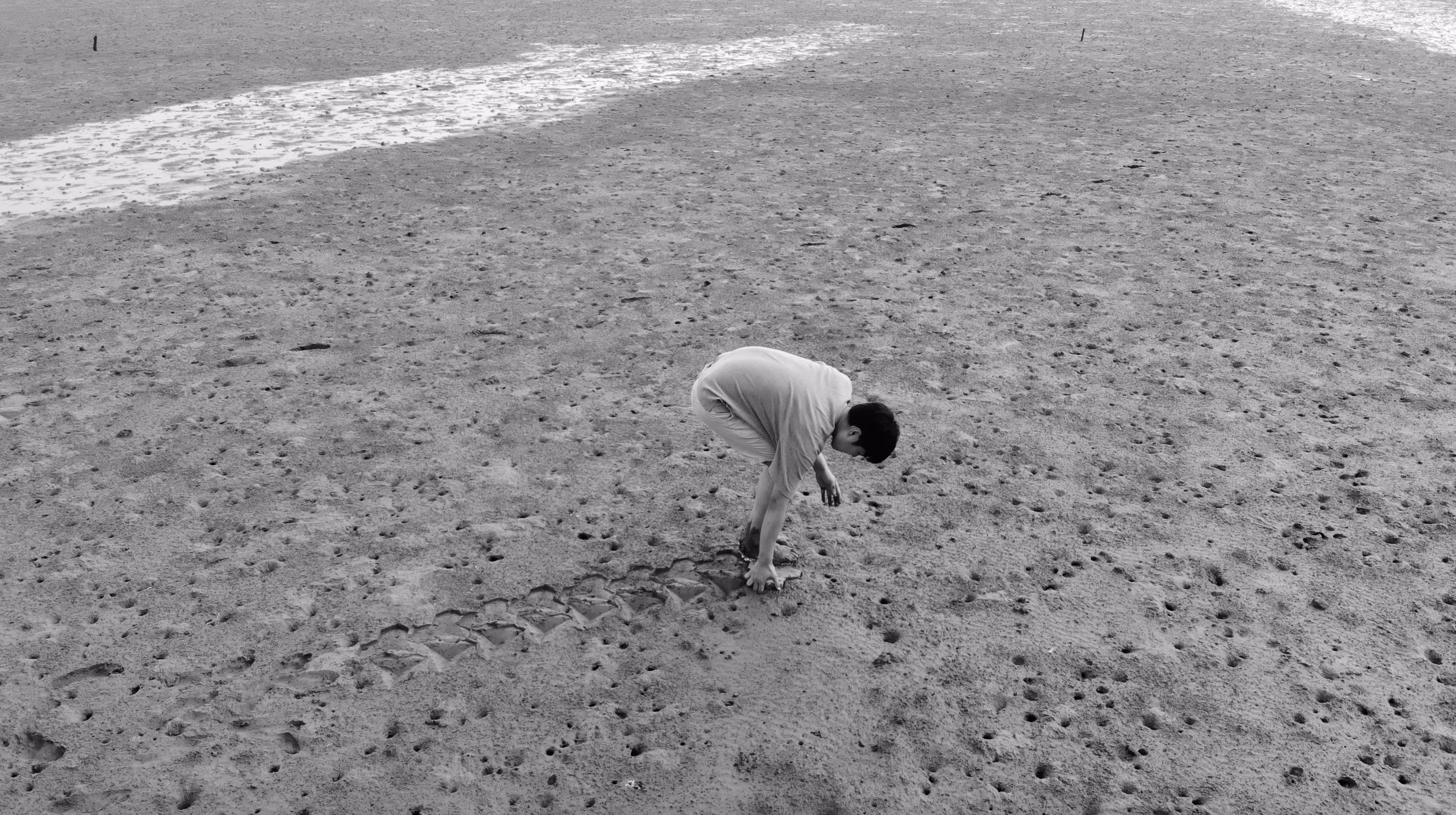
Meanwhile, in Prospect, rather than representing his father’s memory directly, Lee turns it into sensation through ambiguous elemental movement and sound, through his collaboration with poet Kim Riyoon, Inside the Black Stone(2023), and through Kim Seokjung’s performance on the scaffolding installed in the exhibition space, thereby inducing the relationship between body and sensation to appear.
He traces in an elemental way how invisible state power governed individuals. The element here could be called one aesthetic method by which Lee senses the world. The artist reveals his father’s ambiguous identity by placing his father’s experience and memory at the boundary between material and immaterial.
The Black Stone and the Iron
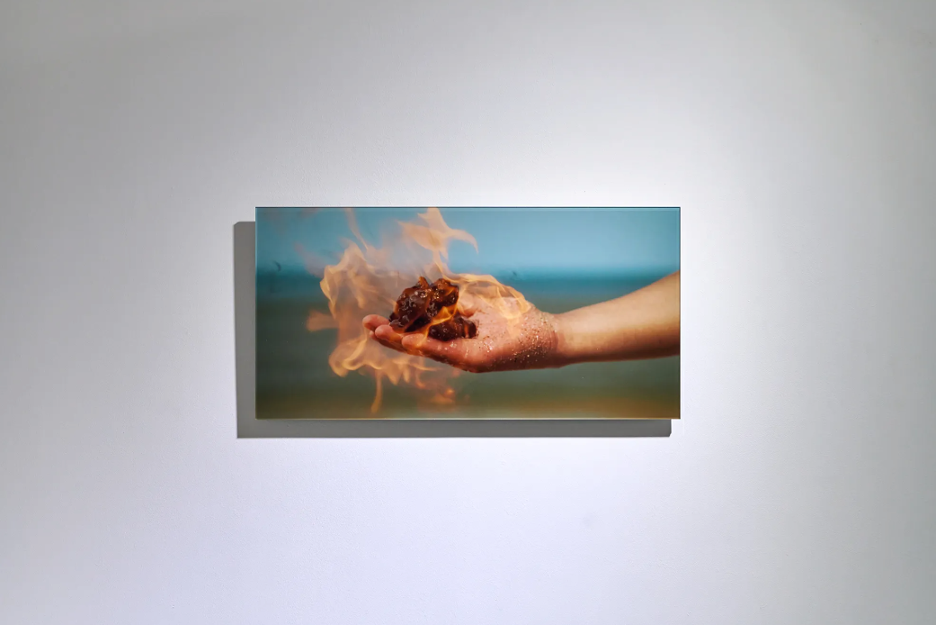
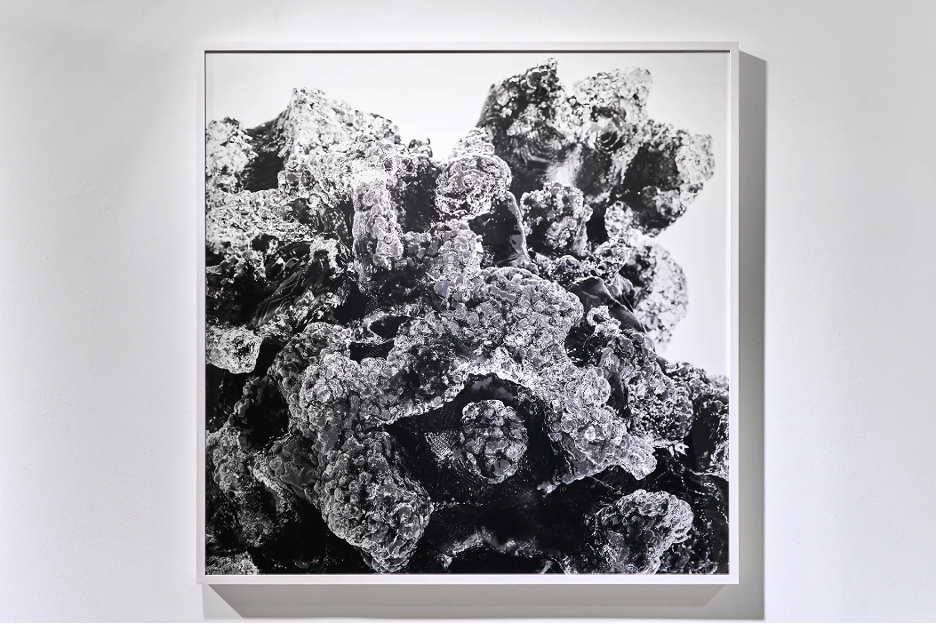
His father accidentally found a black stone. Seeing that it was not easily cut, the belief that it was a fragment of a meteorite hardened over time. The iron was one of the most preferred home appliances at the time. Overseas workers brought various electronic products as gifts whenever they returned home. If one goes to Hwanghak-dong, one can see that irons from the 1970s are still often traded.
On a secondhand trading site, I noticed a product description emphasizing that an iron brought back by an uncle who had participated in the Vietnam War was vintage.
This trophy, purchased with money earned by leaving for a battlefield in a foreign country at the cost of youth and life for the nation, now seems to have been reappropriated as commodity value that recalls vintage, retro, and memories of the time, becoming part of subculture. From another perspective, the object called the iron seems to have survived through the emotional immateriality of memory or “rare item.”
Then what about the black stone? In fact, in the father’s memory, the “black stone” lies outside the signs of the era. It is the most unreal object from his stay in the Middle East. This is because it operates as a shamanistic object stripped of worldly value and as an object of certain belief. Perhaps greater meaning was assigned to it because it was an object discovered in the surreal place called the Middle East.
The black stone is the only material and sign that tells us the Middle East is an existing place, and paradoxically becomes an object containing immaterial meaning. It becomes an unidentified symbol. In fact, the mysteries of humanity have begun from such insignificant pebbles, after all.
Therefore, the black stone and the iron are reduced to elemental things like their archetypes of stone, iron, and soil. Kim Riyoon’s poem is written backward on an acrylic mirror, which is intended to sense the directionality of Arabic, thereby doubling its abstraction.
Here, the sight of dancer Kim Seokjung slowly crossing between vertical and horizontal movements through the scaffolding makes us ask, through bodily movement, what labor and survival are. 《The Black Stone and the Iron》 opens a passage for imagining the Middle East by intersecting memory, material, and immaterial, with the father as narrator.