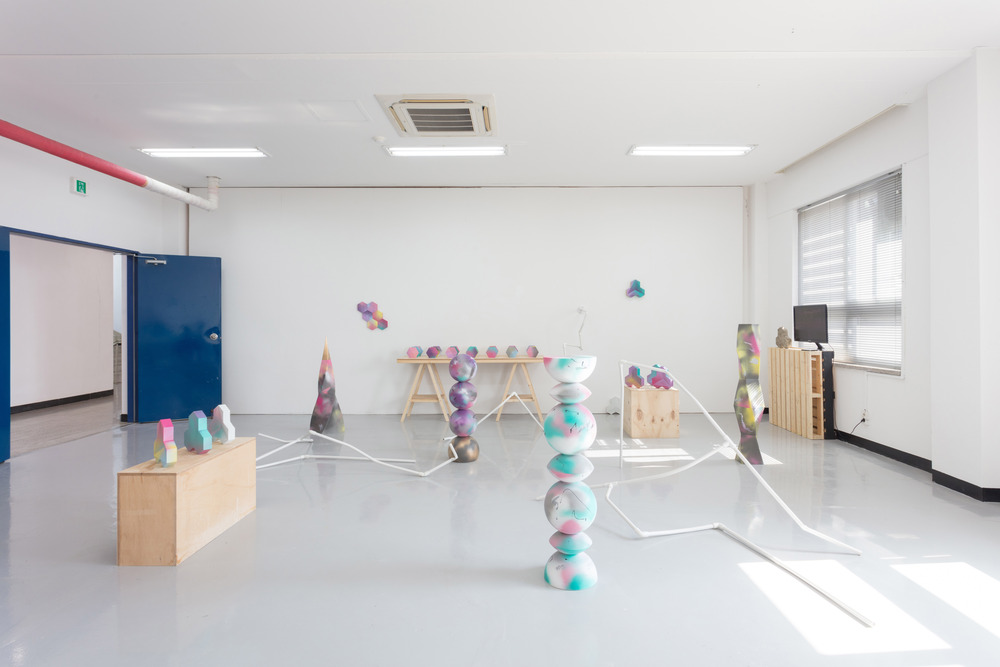
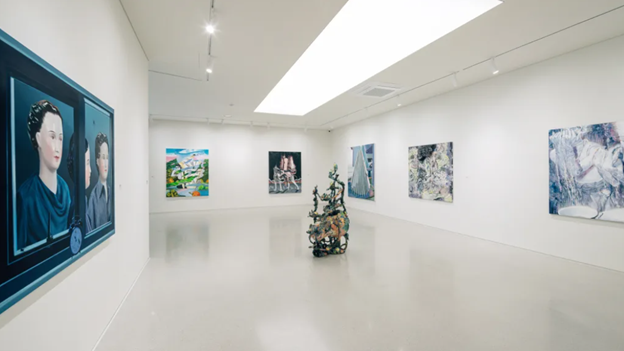
In 2017, while attending graduate school in the Department of Painting, Woongcheol Lee, who had majored in sculpture as an undergraduate, produced the ‘Pathology of Numbness’ series, three-dimensional relief paintings composed of geometric forms. Seen from the front, they appear flat, but when viewed from a front-side angle or from the side, their three-dimensional forms are revealed, adding physical thickness to painting.
From the attitude of news reports that cover globally shocking events, the artist recognized a fragmentariness and incompleteness that fail to reflect the multilayered aspects surrounding an event, and reduced this to the relationship between flatness and volume. The mosaic-processed screen represents images of specific events through a process of abstraction.
Viewers may appreciate the work by combining each element painted on the surface while pursuing aesthetic pleasure. Yet upon reading the title, they come to recognize the tragedy hidden behind the comfort of the surface, and connect it to sculptural volume. The sensory depth that is not easily perceived from the front leads viewers to see the truth hidden behind the event.
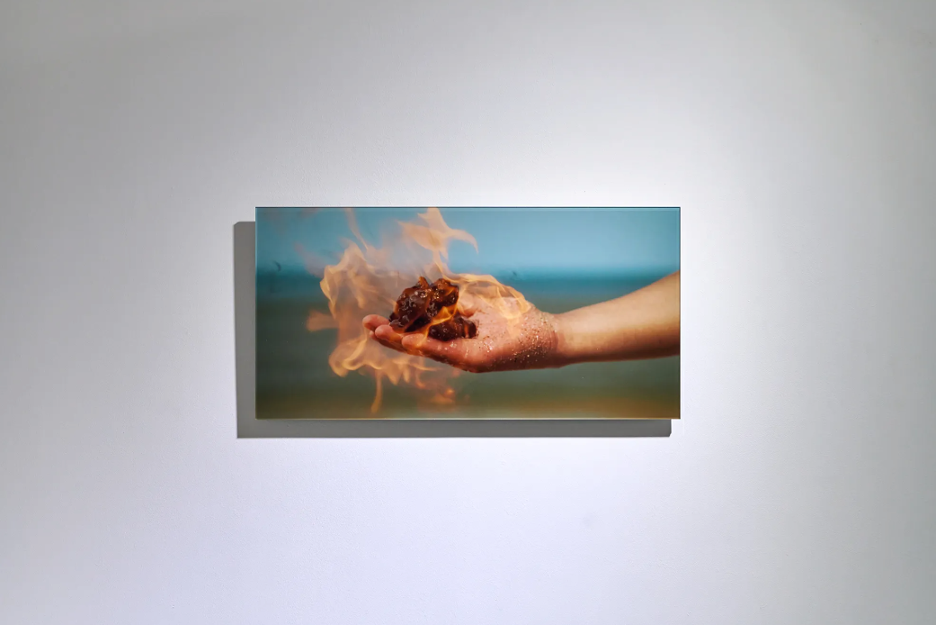
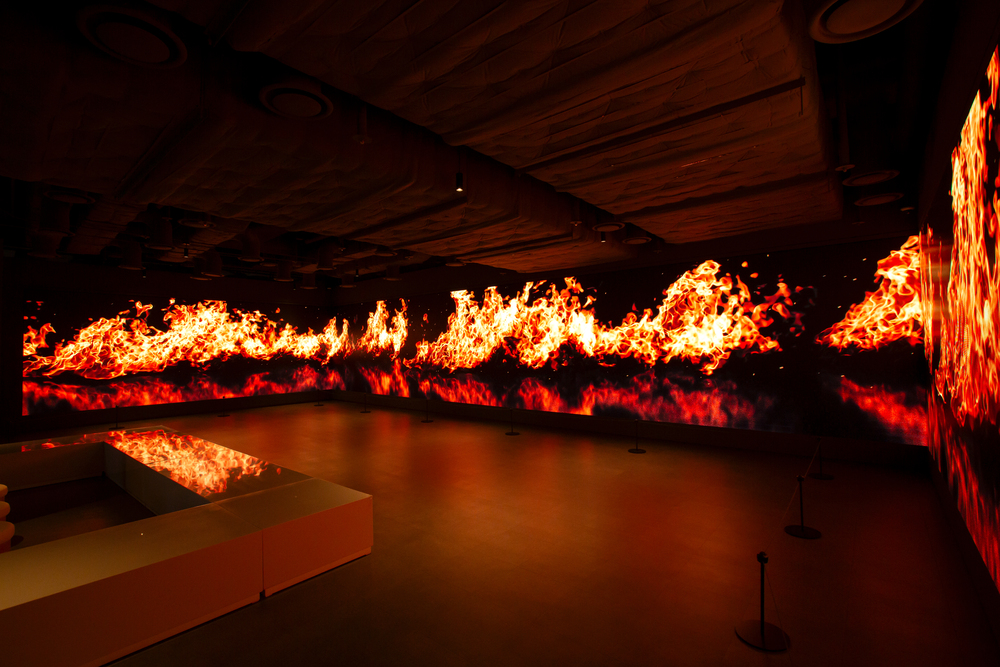
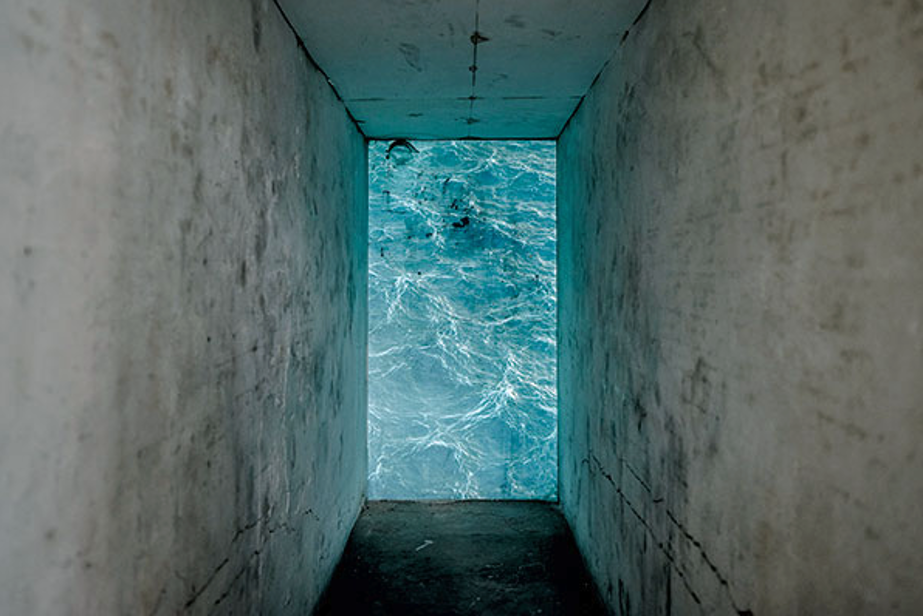
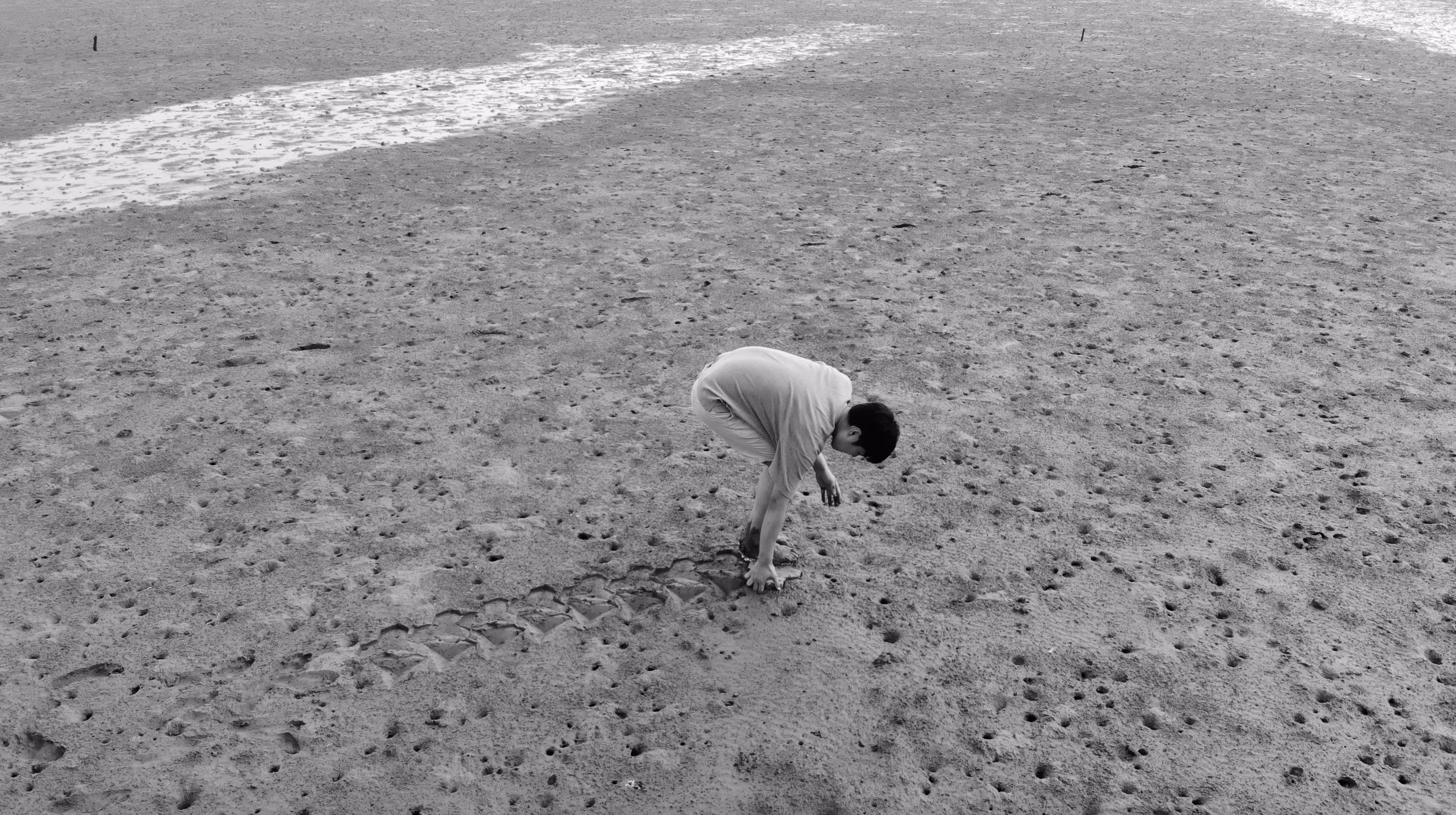
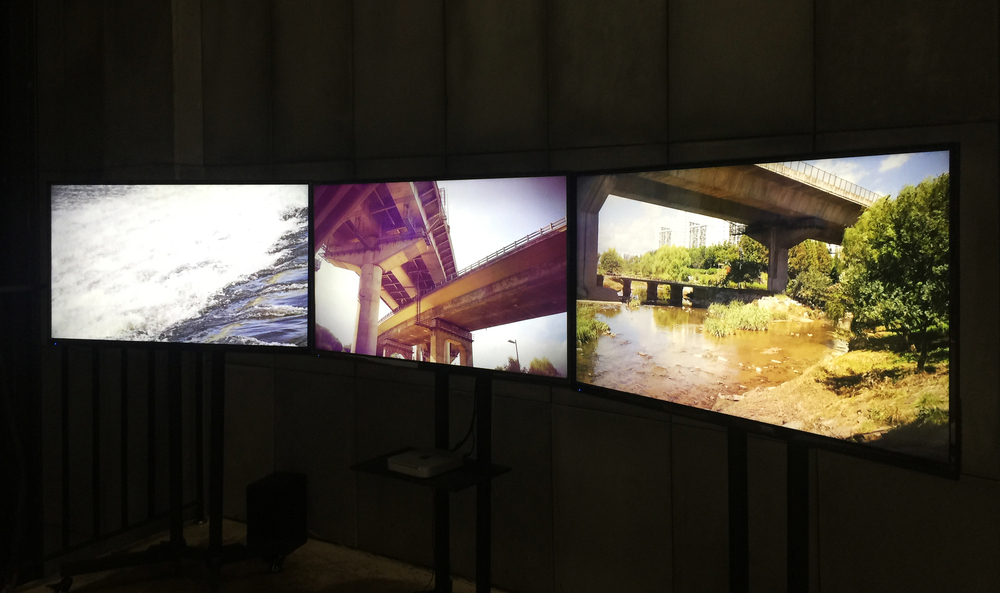
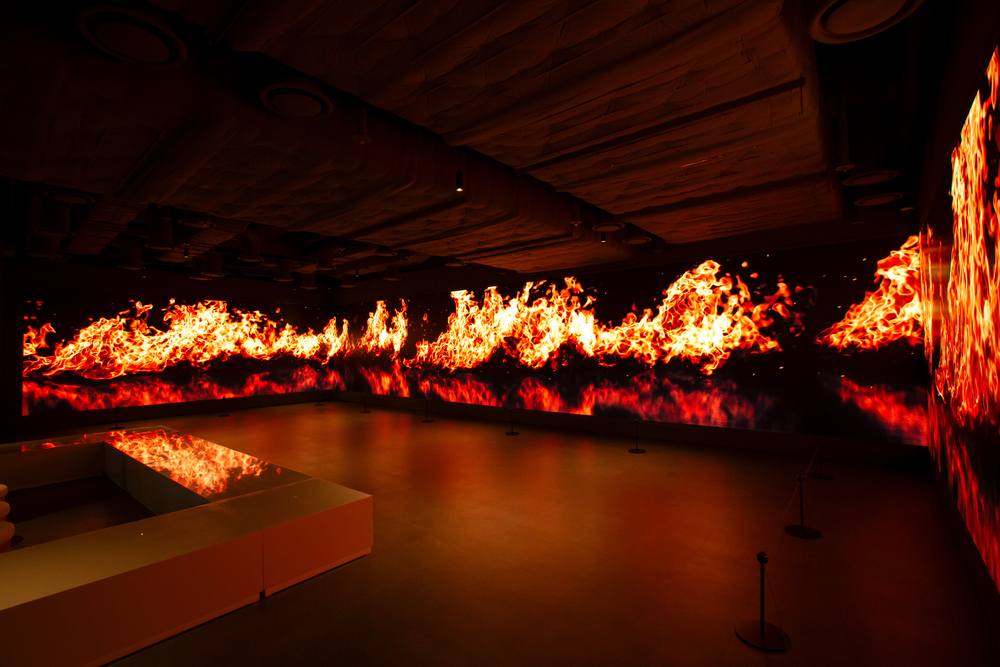
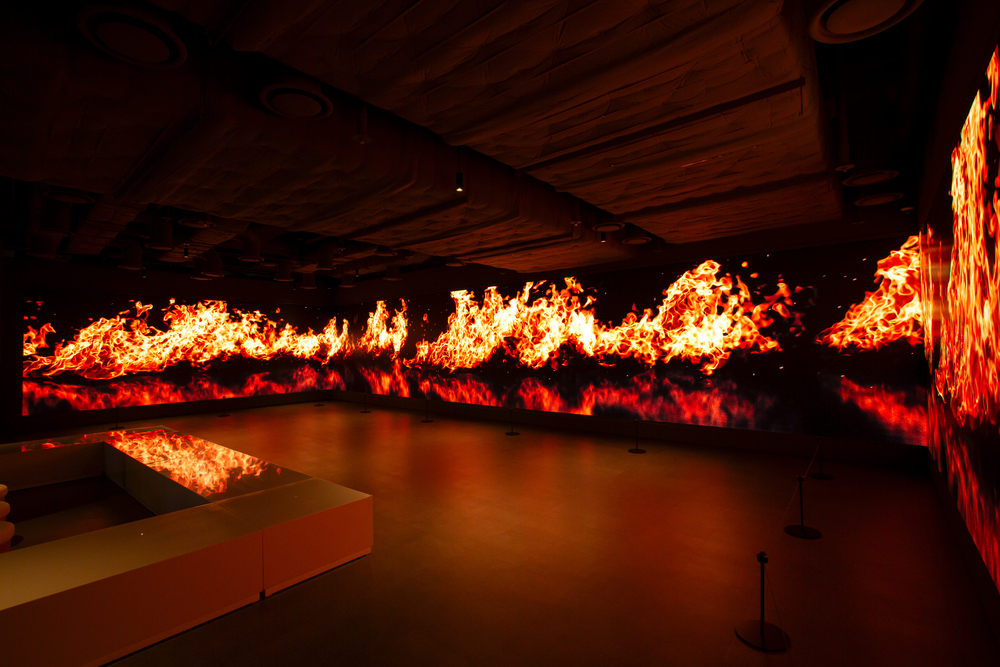
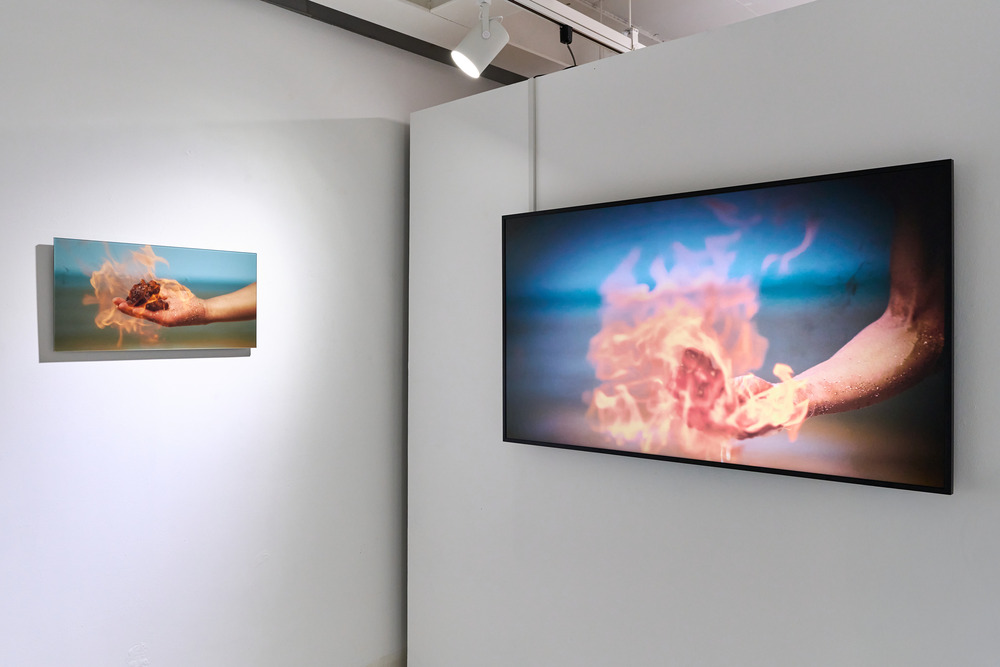
The video works Surface of Water(2020) and Surface of Fire(2021), which use digital technology to realize fire and water, reveal various properties of the virtual. Surface of Water, which embodies the movement of waves in the process of the sun rising and setting in the middle of an ocean whose beginning and end cannot be grasped, at first glance appears to have actually filmed its subject.
However, the speed of the ocean waves and the speed of the sunset reflected on the surface of the water are misaligned, revealing that the landscape does not exist in reality. Surface of Fire is a video work in which fire burns rather slowly across a horizontally spread three-channel screen.
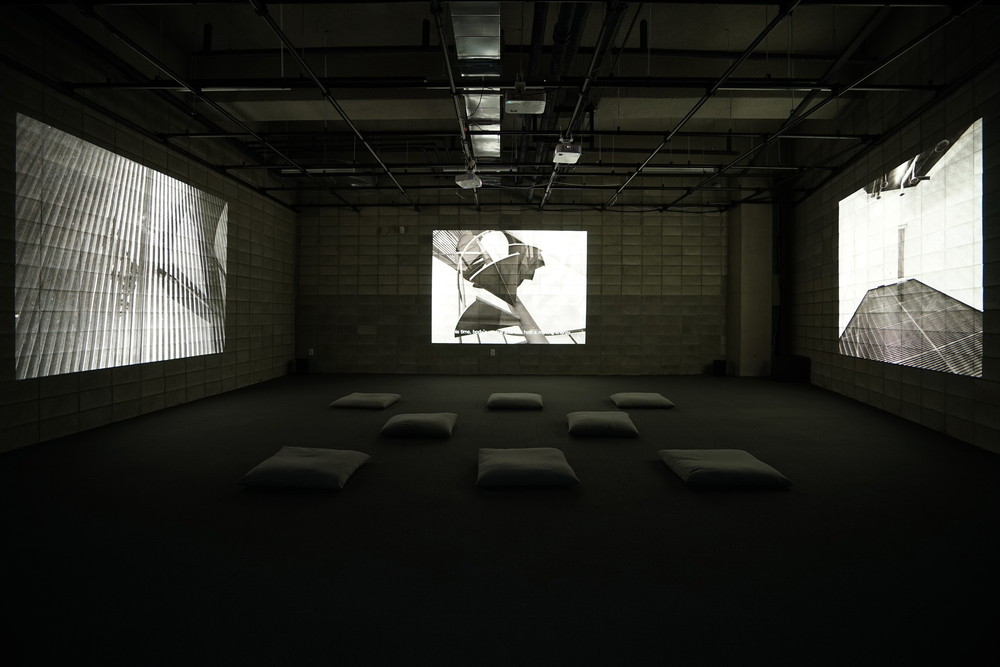
The screen gradually moves toward the underside of the fire, but only the form of the fire is reflected on the floor, while no fuel that causes the fire is visible. As viewers recognize this fact, they realize that the screen they are watching is virtual, and experience a misalignment between the virtual and the real.
The attempt to imitate actually existing matter is successfully demonstrated through a video that closely realizes it, but at the same time, by showing a situation that cannot occur in reality, it momentarily moves away from the real. In this way, Lee takes a double gesture toward the virtual. He appropriately uses the ambiguity and confusion that distinguish reality from unreality at the level of perception.
This soon expands into the relationship between sculpture and video. The experiment he had pursued in the ‘Pathology of Numbness’ series, exploring the relationship between reality and the virtual through the relationship between sculpture and painting, is transferred into sculpture and the moving image.
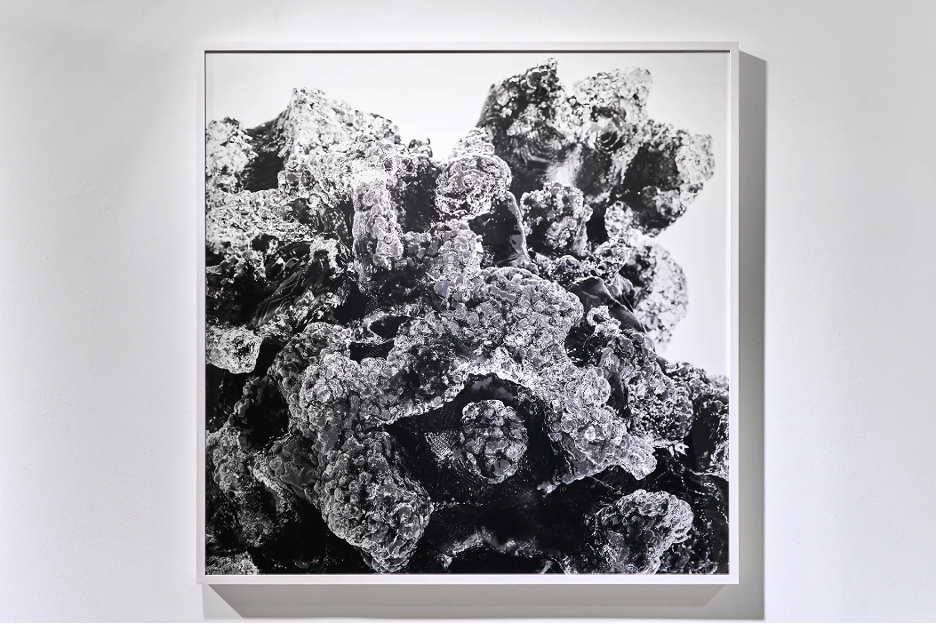
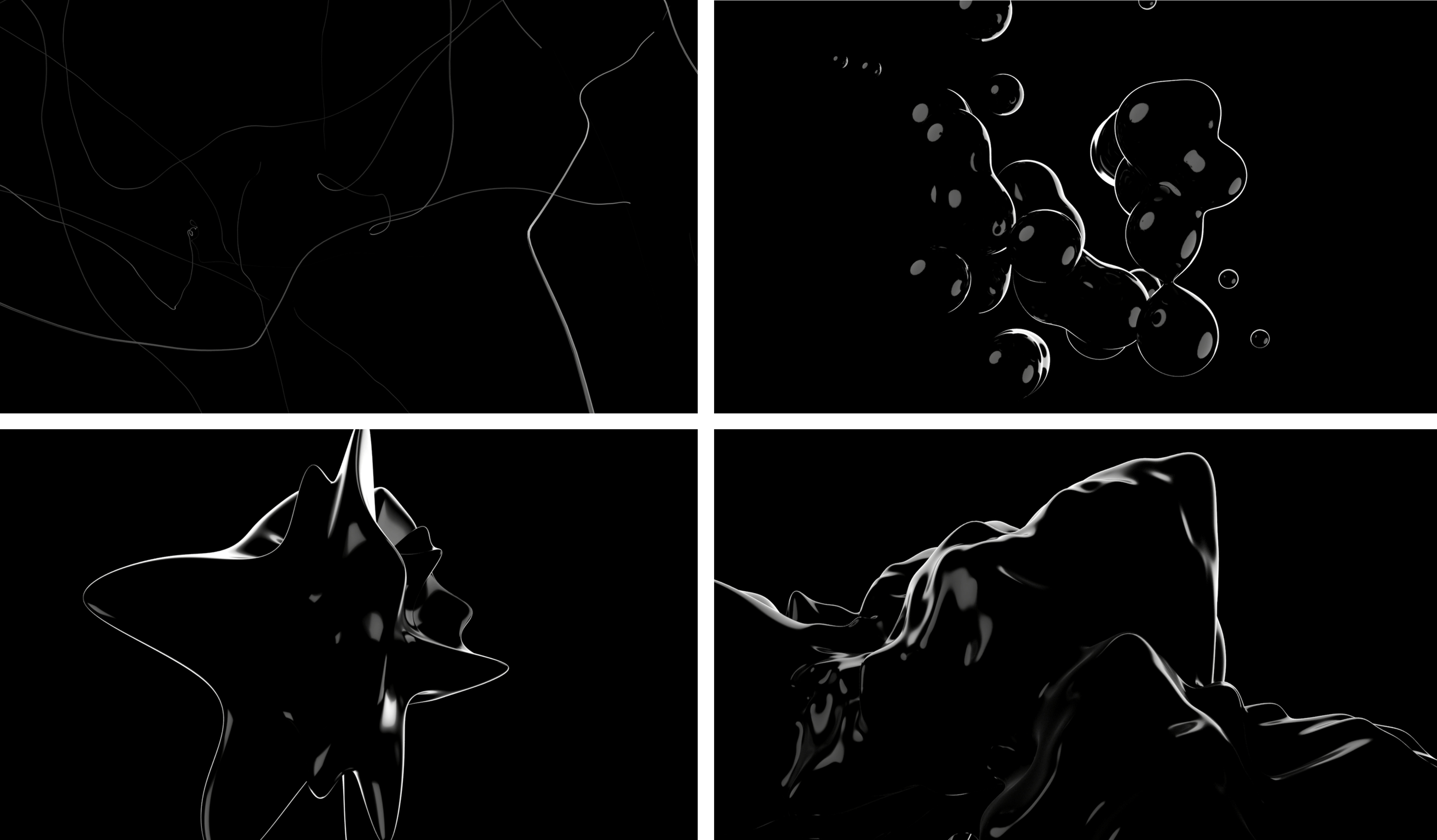
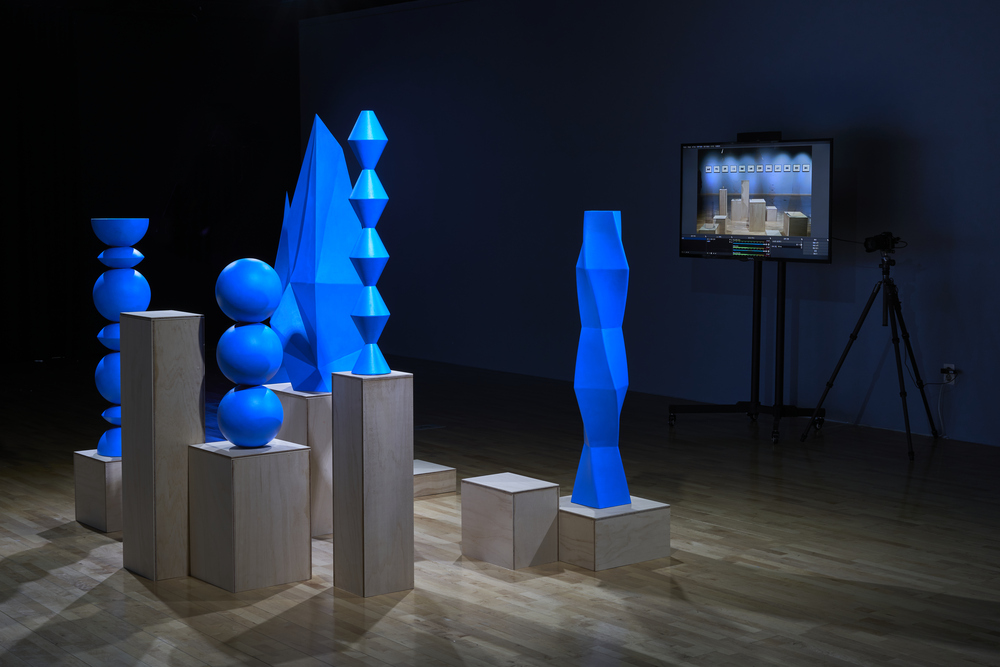
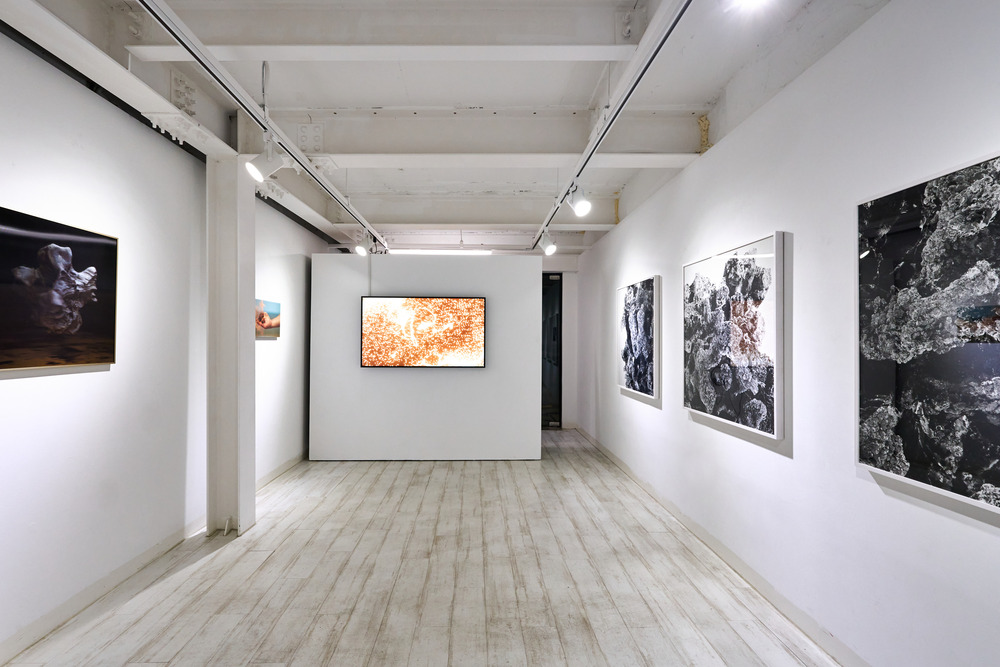
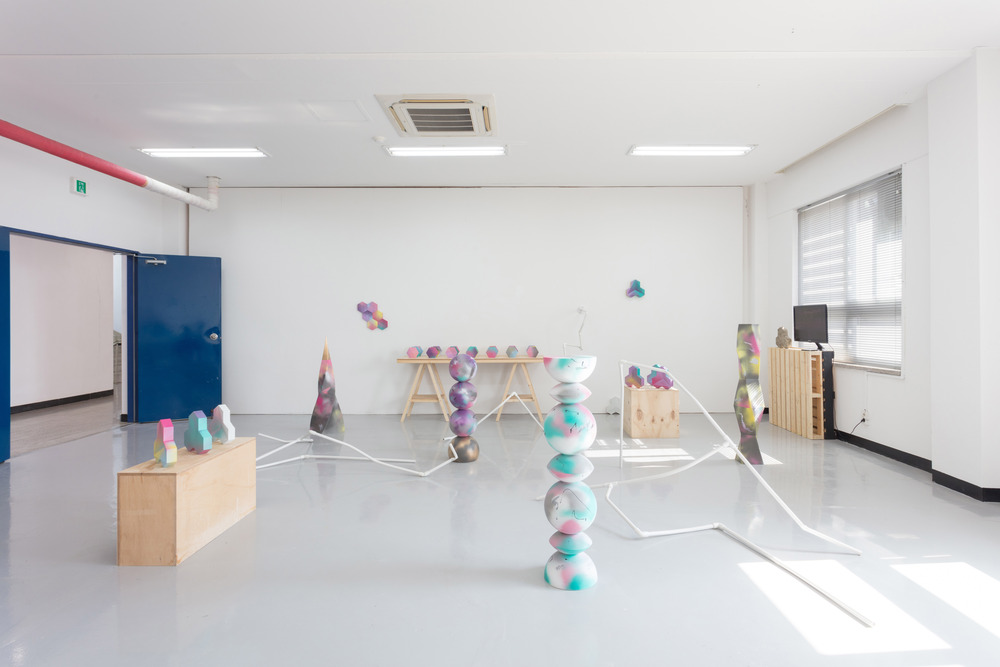
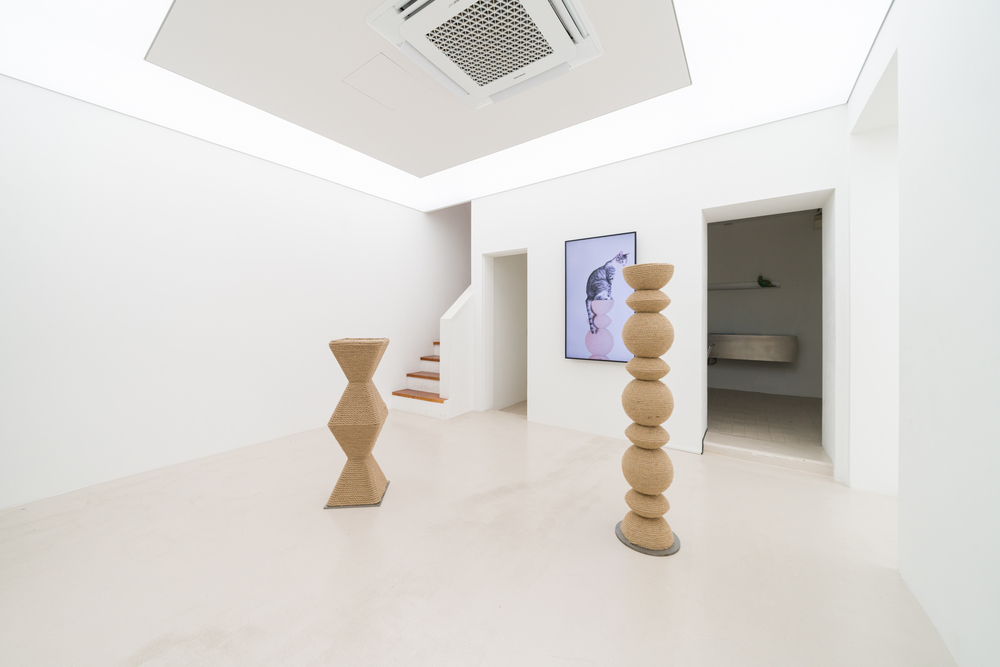
After Effect(2021) is a work in which video and sculpture form a pair. Using a generative design program, the artist creates a video that slowly explores a certain material moving irregularly and nonlinearly, then captures one moment from it and produces a sculpture realized in three dimensions. Video cannot be sensed by the body, while sculpture cannot contain temporality and cannot reveal its interior without the aid of a mechanical device.
Conversely, sculpture can be sensed by the body, while video can supplement the interior of sculpture that cannot be viewed by the human eye and the temporal changes that sculpture cannot contain. Based on their mutual incompleteness and supplementary relationship, the work disturbs the relationship between sculpture as the original of the real world and video as the copy of the virtual world.
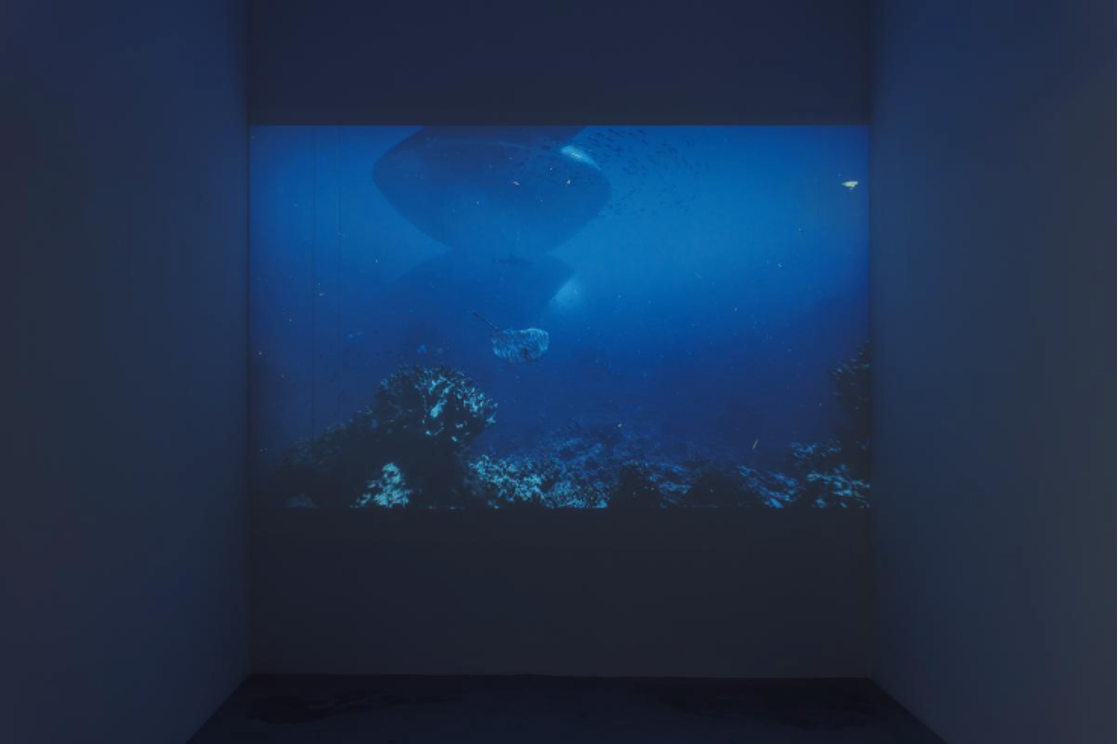
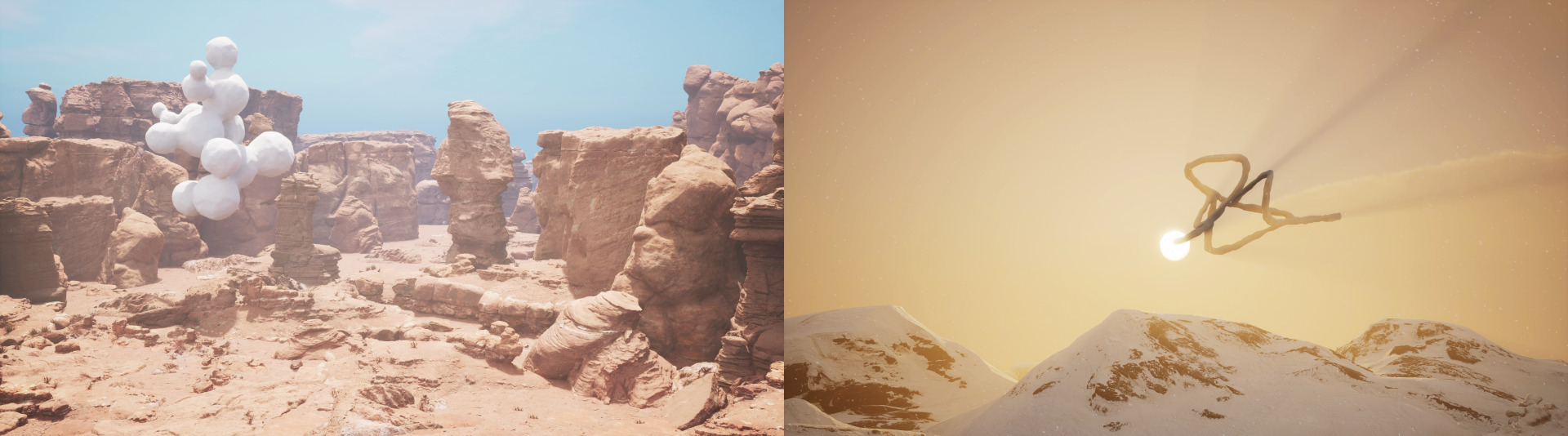
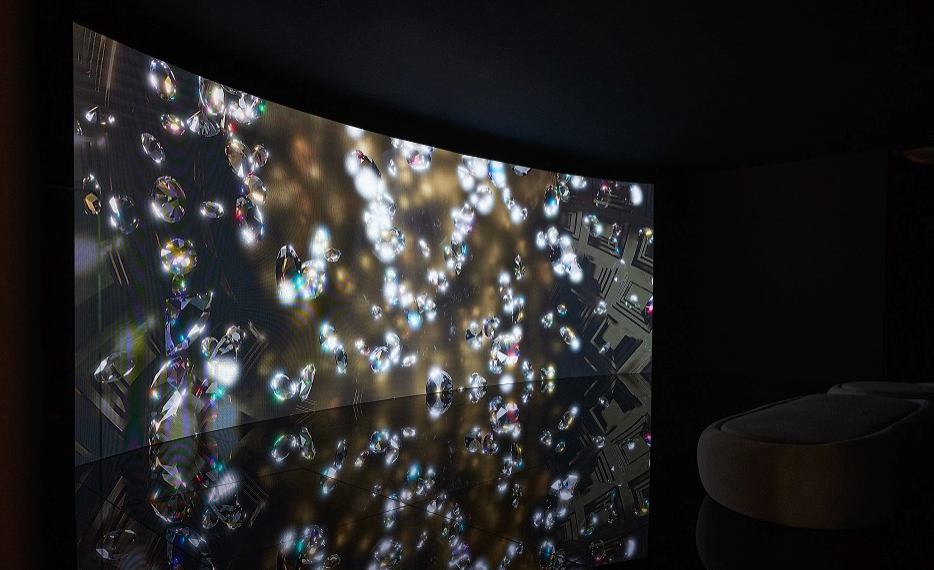
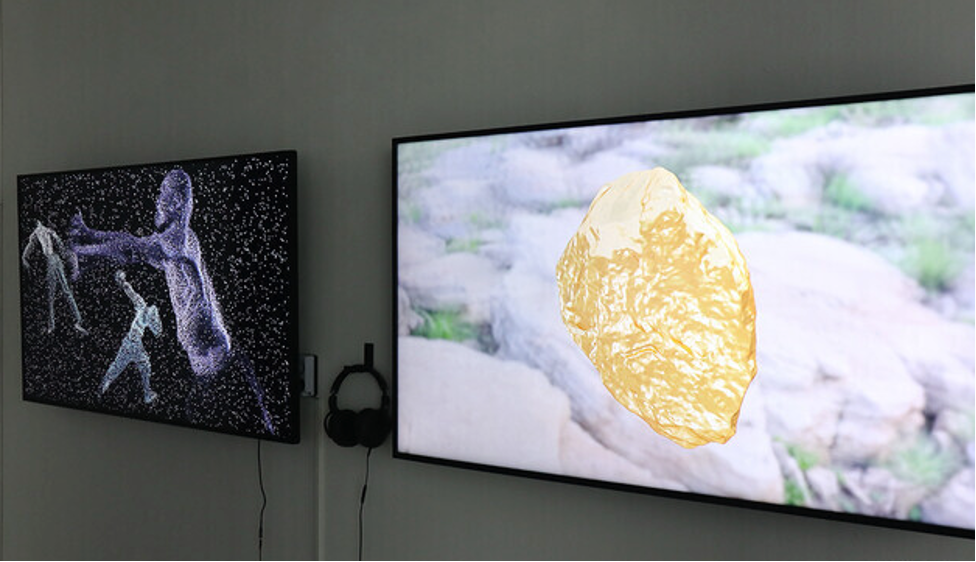
These attempts become more pronounced in recent works. Representative examples include Perforated Sculpture(2022) and Strange Garden(2022). Perforated Sculpture is a video in which a three-dimensional sculpture is scanned in 3D and made to rotate slowly within a pleasant artificial space that imitates natural objects such as trees, grass, and stones, as well as natural light.
The scale of the original sculpture is modest enough to be held in two hands, but the sculpture in the video easily exceeds its actual scale, appearing, when judged against cliffs and trees, to be about the size of a medium-sized vessel. The incomplete sculpture, whose every surface has not been perfectly scanned, floats in its insufficiency.
As a result, the weight of reality is erased. In addition, the sculpture, rotating more slowly than the speed at which sculpture is viewed in an exhibition space, is liberated from the gravity that constrains it in the real world.
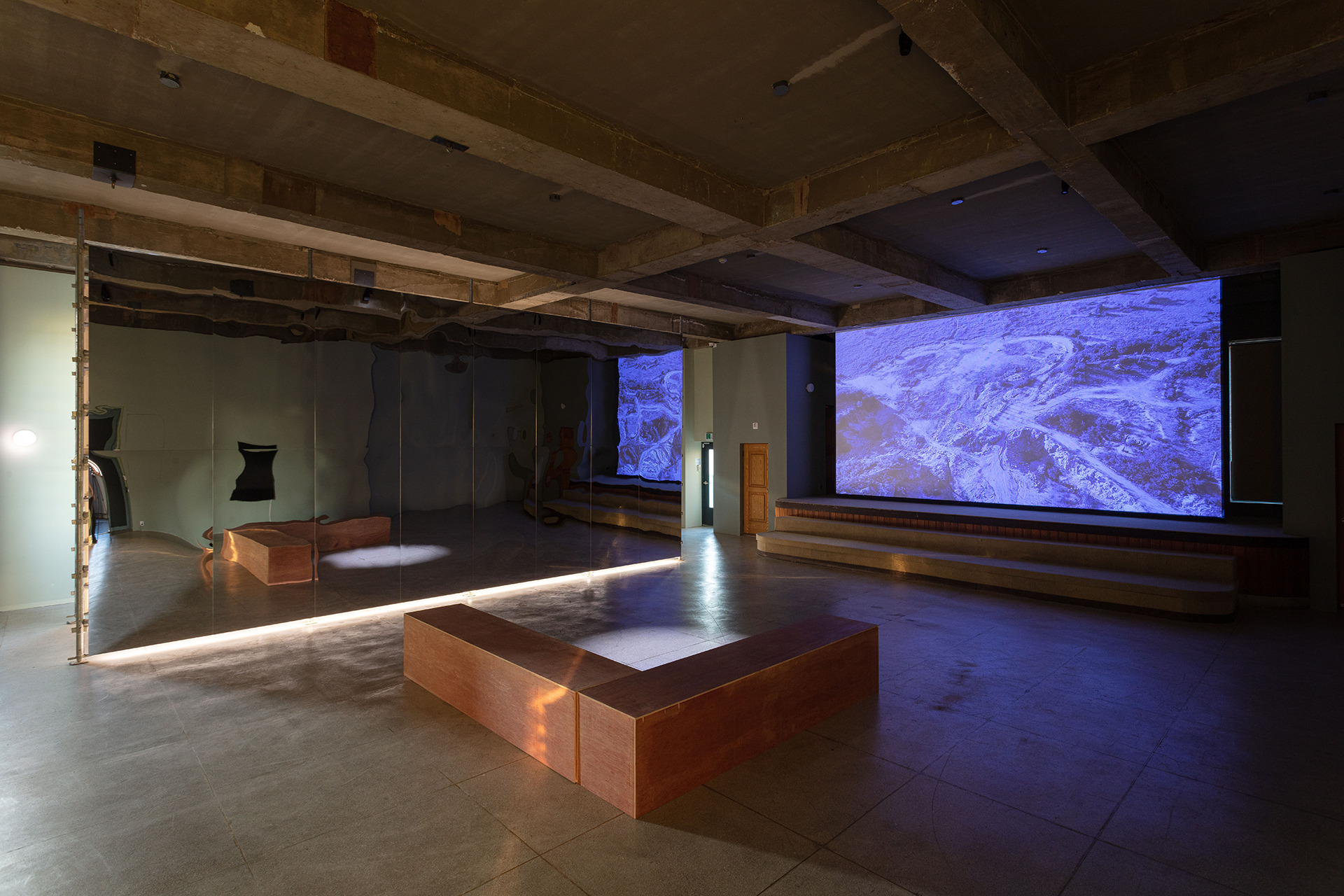
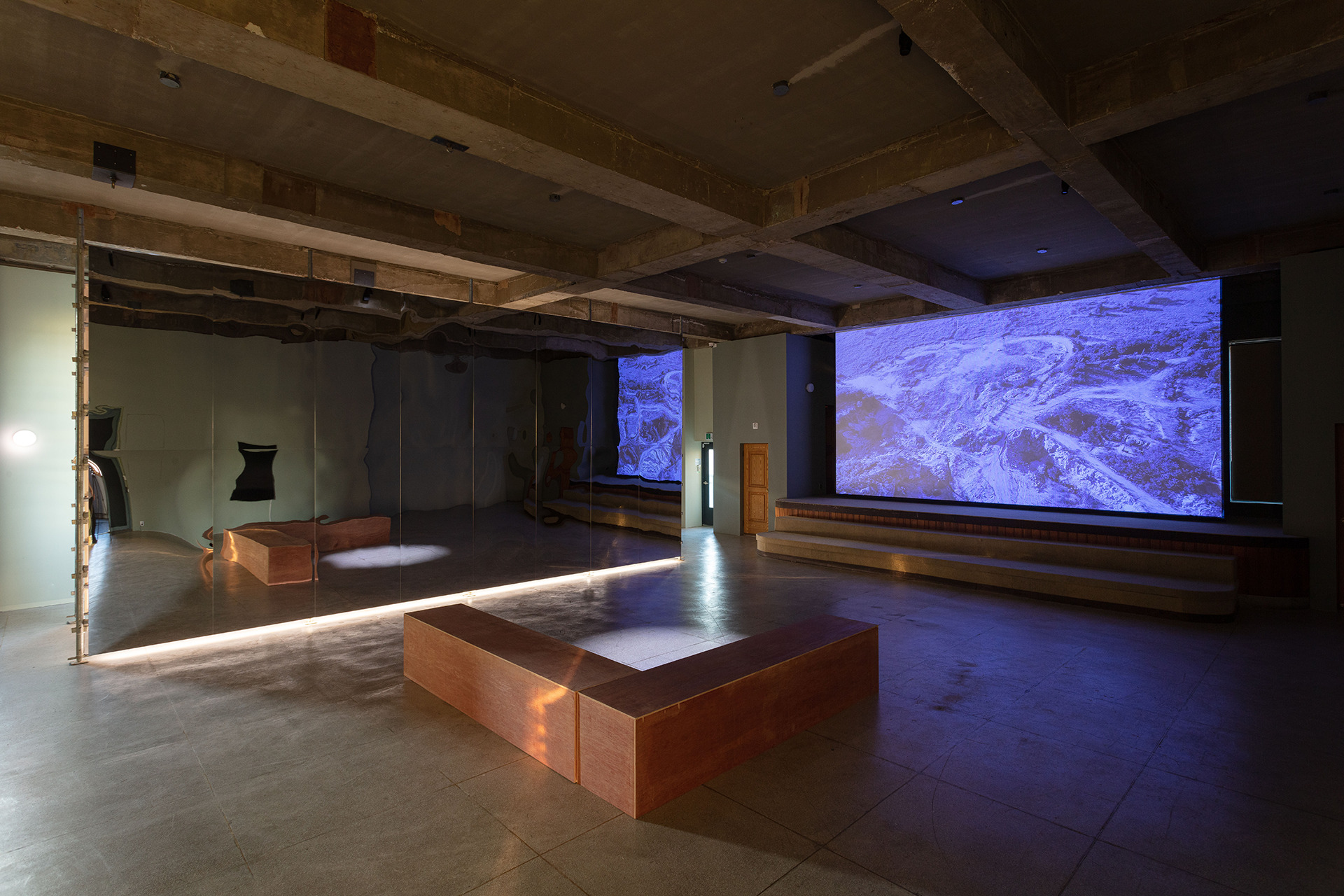
If the previous work absorbed an existing sculpture into video, Strange Garden conversely summons into reality sculptures and environments built in the virtual world. In Perforated Sculpture, the scale of the natural objects composing the world inside the video was consistently arranged, but here, the background with geometric patterns, stones and trees, bushes, and the human body all have different scales, creating a sense of confusion.
The sculpture, generated and transformed according to the algorithm of a computer program, gradually changes from black to white, and from a linear form into a mass. In the installation version corresponding to this work, a sculpture is placed at the center of a stage that borrows the environment of the video.
The smooth surface of the sculpture after its transformation is complete reflects the surrounding environment, producing another virtuality different from that of the video.
In Of Grammatology, Derrida criticizes the logocentrism of Western metaphysics, which has asserted the superiority of spoken language over written language, and deconstructs binary distinctions such as speech and writing, truth and falsehood, original and copy. Speech and writing are inseparably contaminated, and because they influence and change each other, it is impossible to distinguish and hierarchize them.
Writing instead supplements the limits of speech by using the characteristics that writing possesses. Derrida explains this through the concept of supplement(supplément). For Lee, sculpture is a medium that represents the empirical world of human beings, while painting or video represents the virtual and fantasy.
For this reason, it seems as if reality is distinguished as the original and the virtual as the copy, naturally establishing a hierarchy of truth and falsehood. Yet in his practice, sculpture and video supplement each other’s incompleteness, and are not reduced to a relationship of original and copy.
The artist combines the virtuality of two-dimensional media such as painting or video with sculpture, supplementing the limits of three-dimensional sculpture, and at times video even precedes sculpture. Therefore, here the distinction between original and copy is meaningless, and within their mutual relationship, the possibilities of sculpture and video media are further expanded.