*This essay was written as part of the 2019 Creative Residency Artist Advisor Program at the Gyeonggi Creation Center.
What kind of state is numbness? Today, the state of numbness that individuals experience in everyday life is more likely to be a state in which perception has become dulled(indifference) amid an omnipresence of sensory stimuli, rather than a state of absence in which sensation has been removed. In other words, it is more often caused by excessive exposure to the outside than by symptoms arising from isolation from it.
The city, a special social space saturated with the world, demands from individuals an endless chain of sensations, and this becomes a factor that accumulates fatigue toward stimuli. Woongcheol Lee has remained wary of the stagnant condition produced by this excess, and has built his own strategies to offset it through his work.
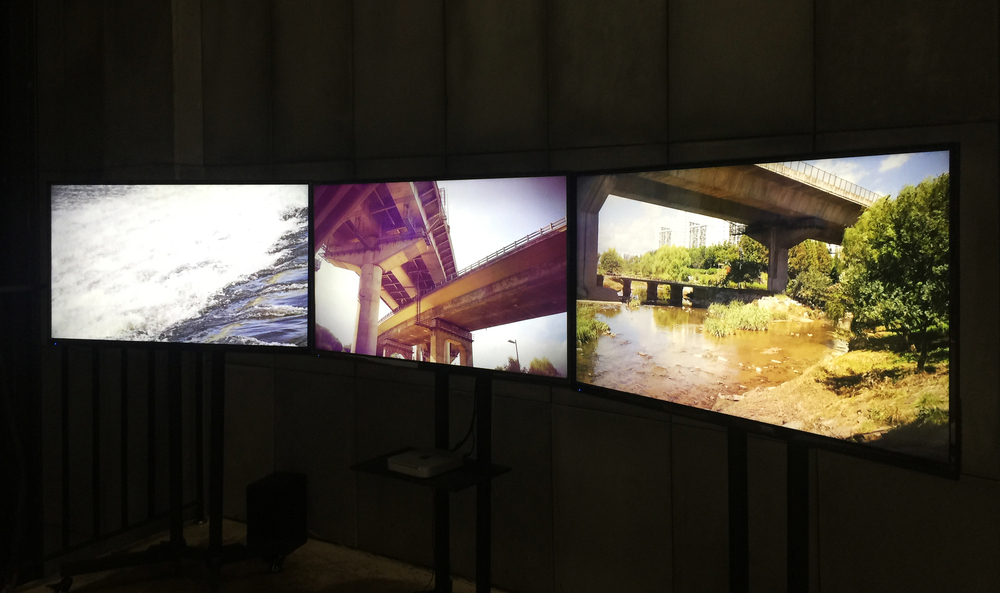
His previous works mostly began from recognizing the reality in which he found himself. They require an effort to closely examine the surrounding spaces that have been taken for granted, or to perceive what lies beyond visible objects. As someone who observes the mass, texture, and structure of the city, one of the urban characteristics that he has consistently pointed out throughout his practice is the repetitiveness of systems.
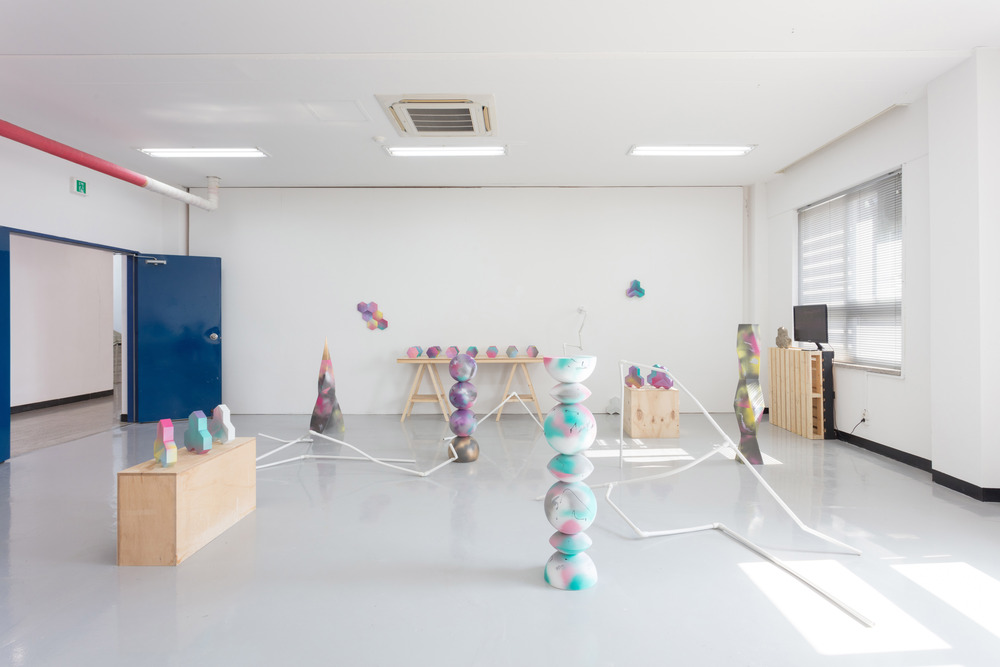
The same products and cultures are replicated and consumed, and the movements of bodies occupying residential or office spaces designed with efficiency in mind internalize the replication of standardized modules. Lee’s early works mainly involved observing the properties of this system from a critical perspective, then extracting, transforming, and recombining arbitrary architectural modules to create objects.
Both Geometry of Reality(2017) and Color-field Relief(2018) have formats that are completed while hung on the wall or standing upright. In these works, the process of intervention is somewhat concealed, while the consequential image organized by the artist is prioritized. The artist also seemed to understand his own actions as a kind of construction technique.
This is probably because many of his works begin from media that become architectural materials, such as concrete, pipes, and tiles, and because he performs arbitrary architectural acts through the process of arranging and combining modules. It is true that architectural materials frequently appear in Lee’s work, and they can efficiently represent the structural characteristics of the city.
Yet might it not be necessary to read his work more three-dimensionally, without remaining within the fragmentary diagram of urban system–architectural material–dismantling and reconstruction, and to consider the subtle differences and practical actions that underlie it? And I cautiously predict that the artist’s bodily sensations, which accompany him as a body open toward the world, may become such a breakthrough.
In this context, his recent experiments actively deal with the artist’s bodily experience of sensitively capturing monads as the basic units that constitute the city, while also detecting the subtle variations within them, in order not to be buried in the repetitive rhythms of everyday life. For this reason, unlike the early tone that attempted to lead the subject through neutral language, the work comes to reflect more personal and concrete materials or events.
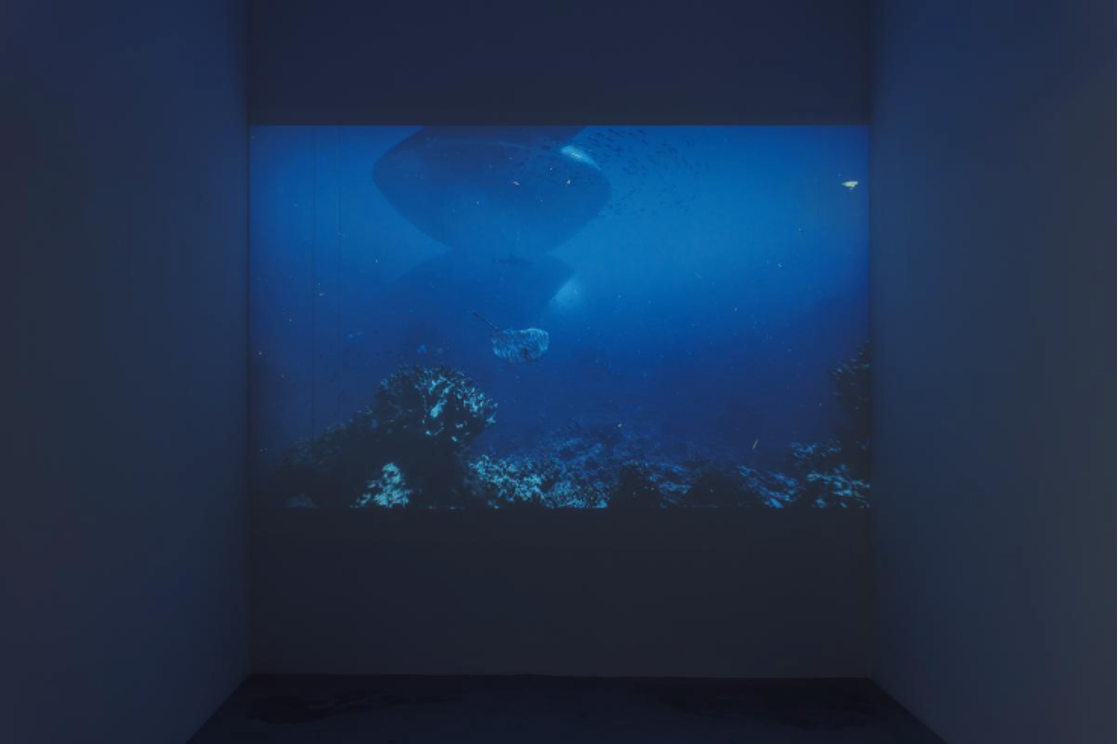
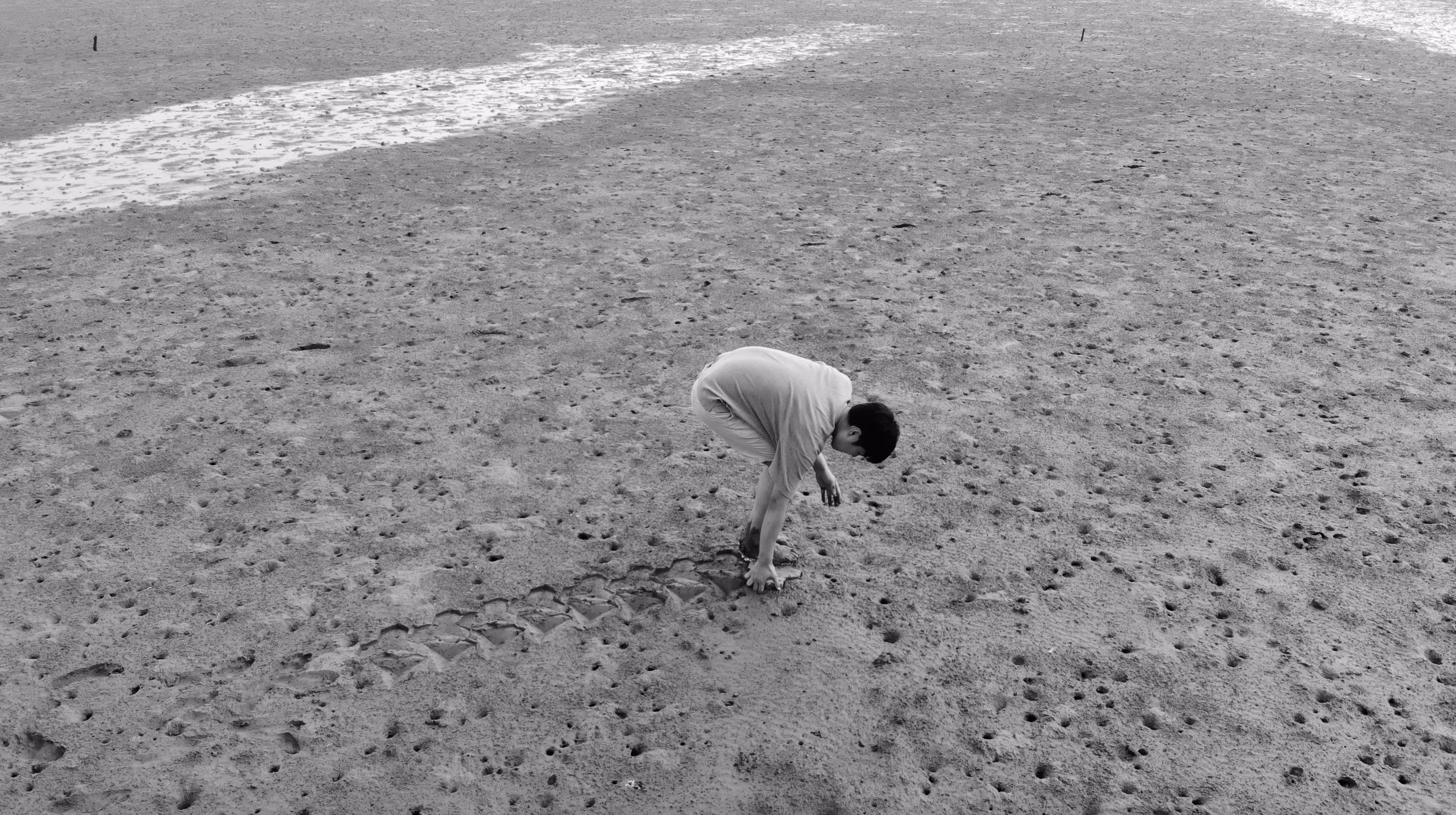
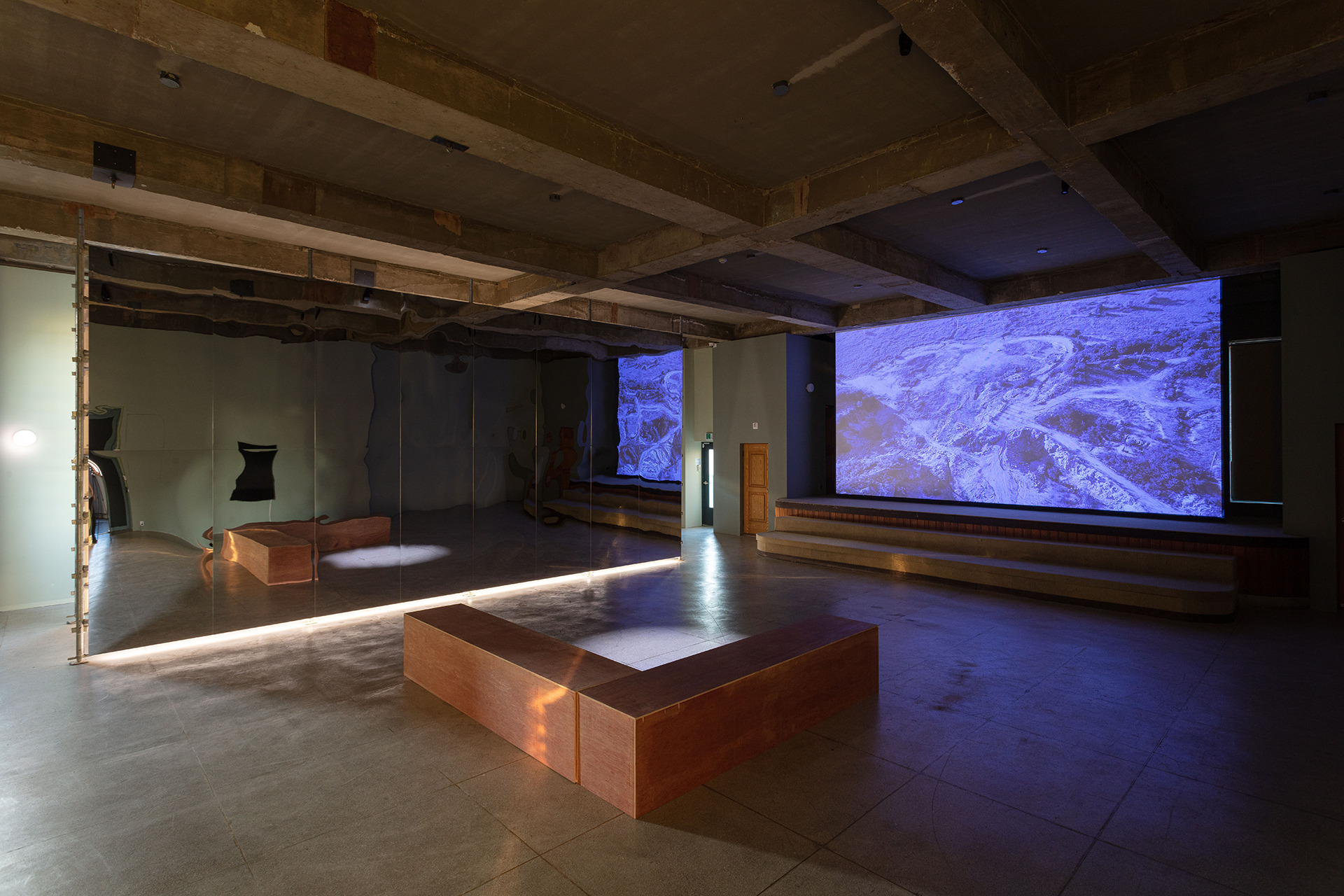
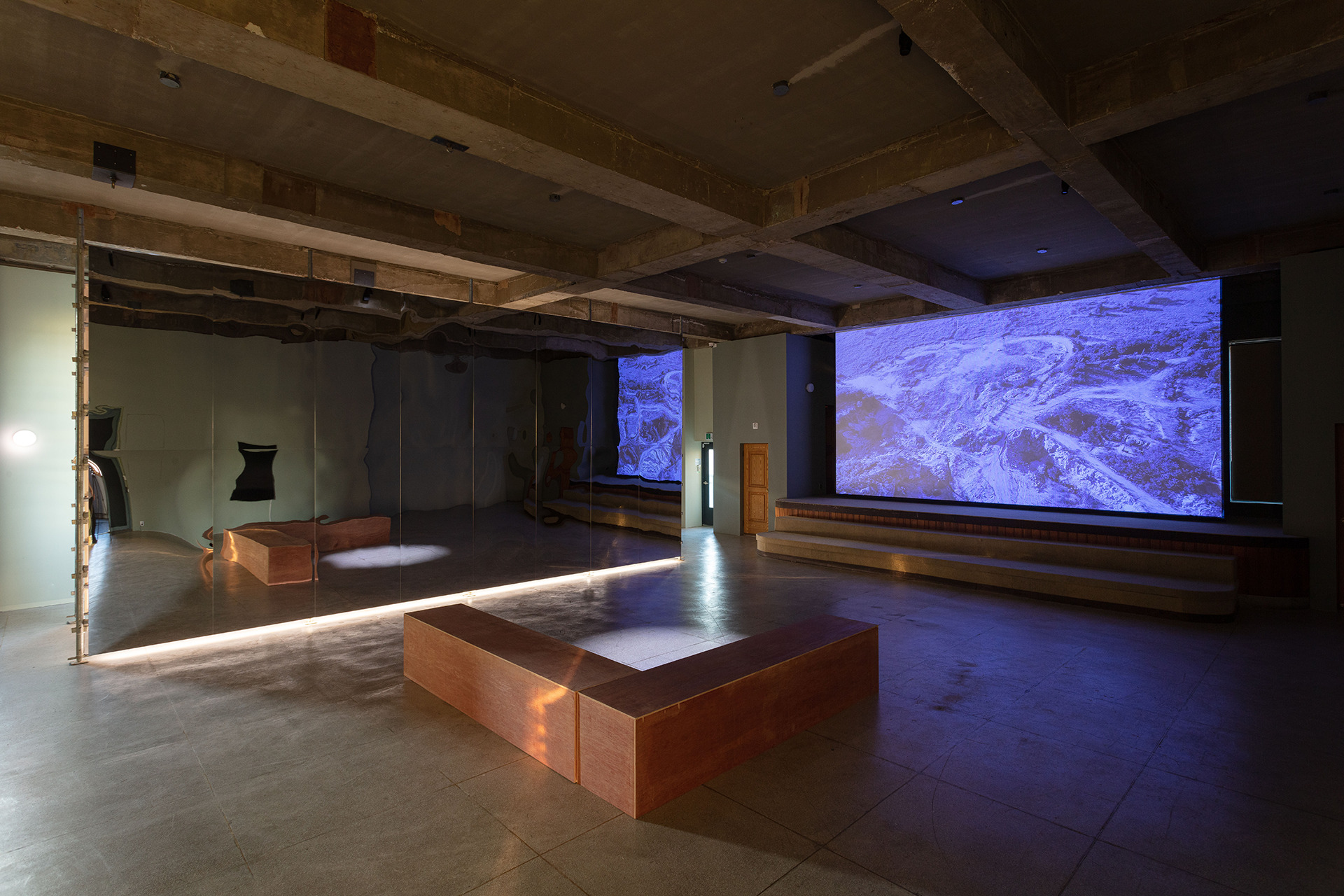
The experiment of visualizing the practical movement of the body and the traces that emerge from it is especially emphasized in video works such as Land Path(2019). On the mudflat near Tando Port in Ansan, not far from his studio, Lee moves forward by using a single-module concrete panel derived from the structure of the city as stepping stones.
Slowly but steadily, swaying gently, a fragment of the city comes into contact with the surface of nature. Through a sustained action, the artist becomes a performer who temporarily joins two heterogeneous environments. Through this process, the body is positioned as part of a repeating system and as another monad that operates it.
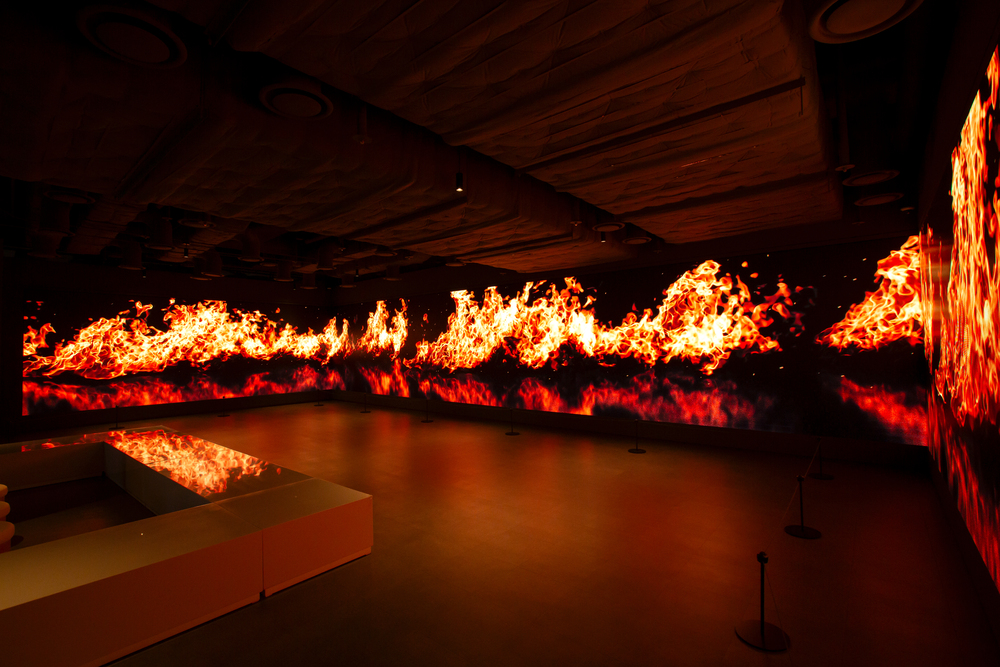
Furthermore, beyond the repetition of units inherent in the physical structure of the city, he expands the spectrum of sensation into light visual and bodily experiences that arise from systems based on digital interfaces. He joins or juxtaposes the weight of physical structures with the ambivalent and fragmentary situation in which objects and landscapes that once existed in reality dissolve on virtual platforms, and contact with images woven from pixels becomes part of everyday life.
This gradually reveals that the breadth and depth of Lee’s sensory field regarding the city are multiplying. A gradual change in perception immediately affects his approach to media as well. Digital tools such as drones and 3D printers are defined as new boundaries that extend the realms of the hand and the eye.
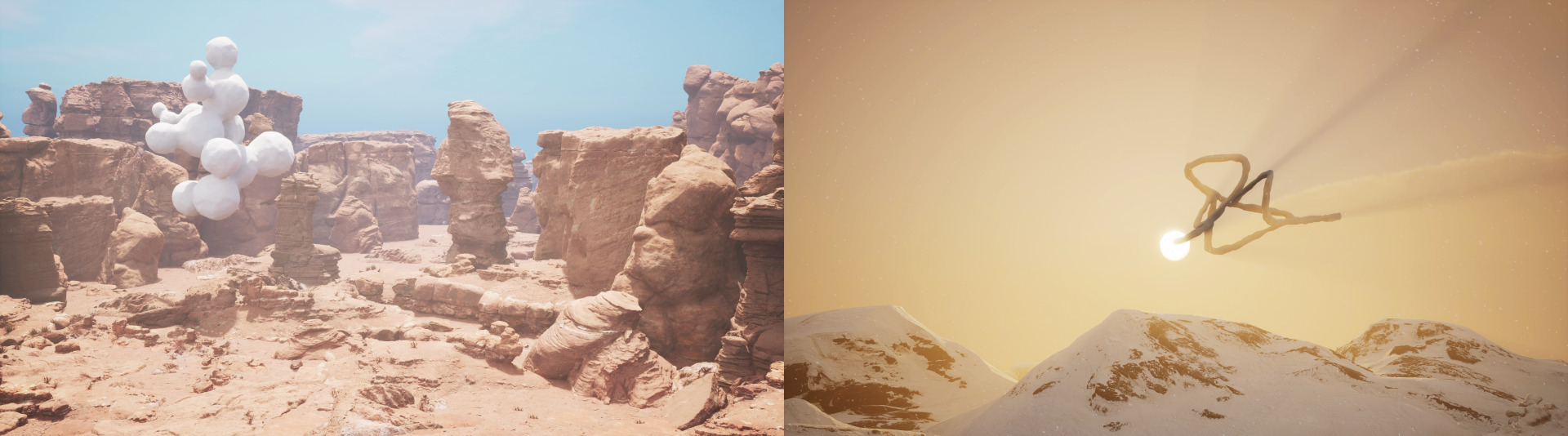
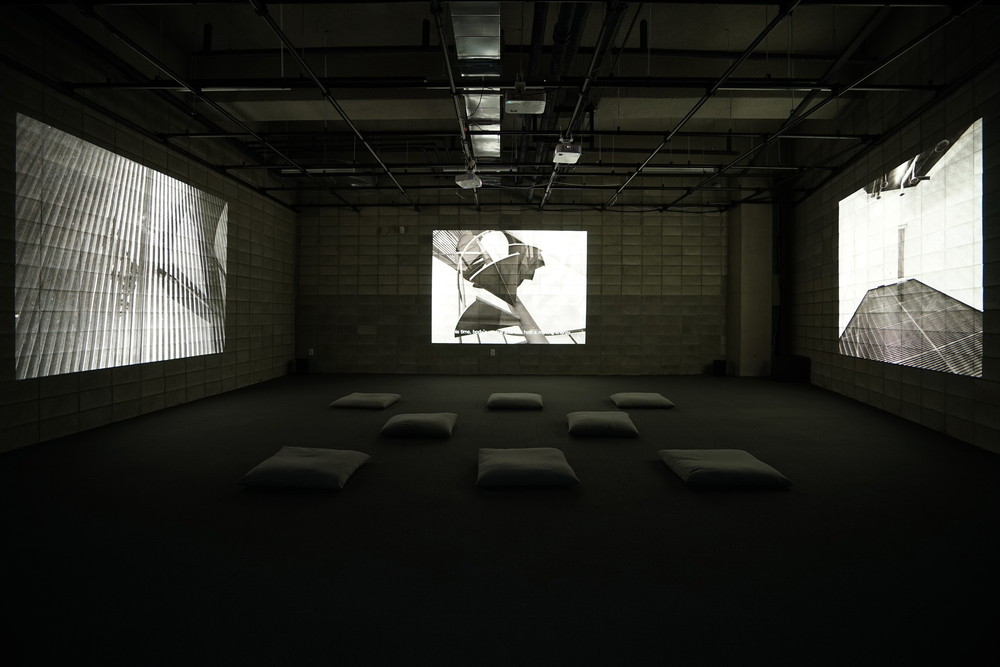
Machines devised by humans perform functions such as automation and remote filming, while also leaving behind errors and unexpected effects, and the artist regards these as three-dimensional experiences that can be obtained from the operating principles of the digital interface. In videos filmed by drones, buildings are transformed into chains of floating images from which gravity has disappeared, becoming virtual landscapes that seem unrelated to any external temporal or spatial change.
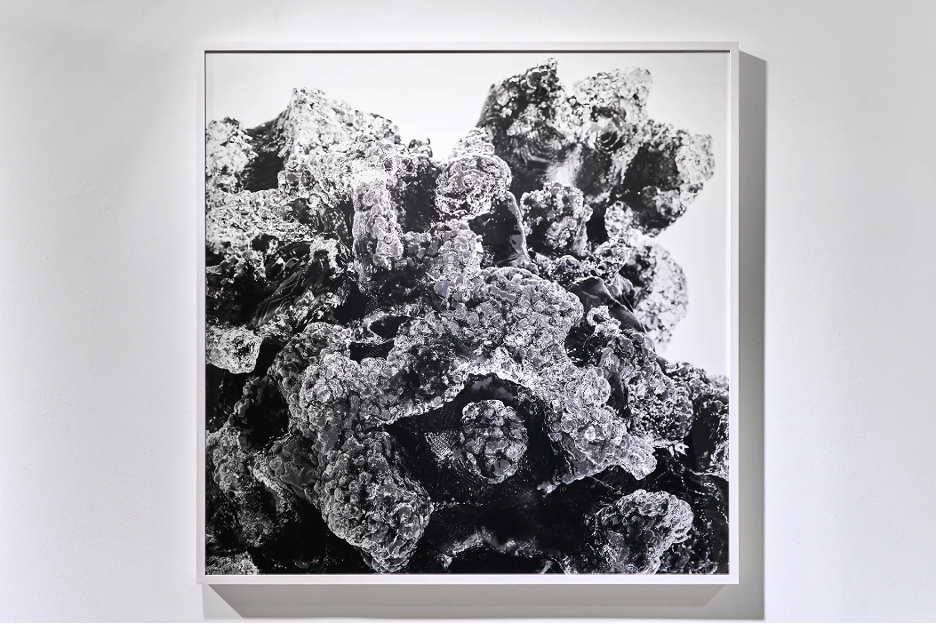
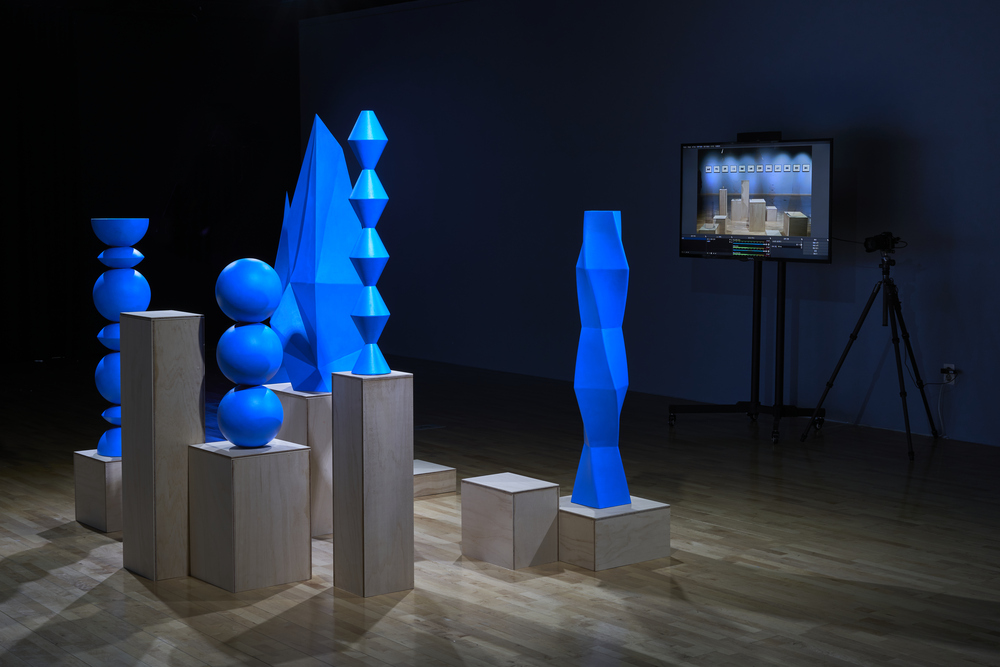
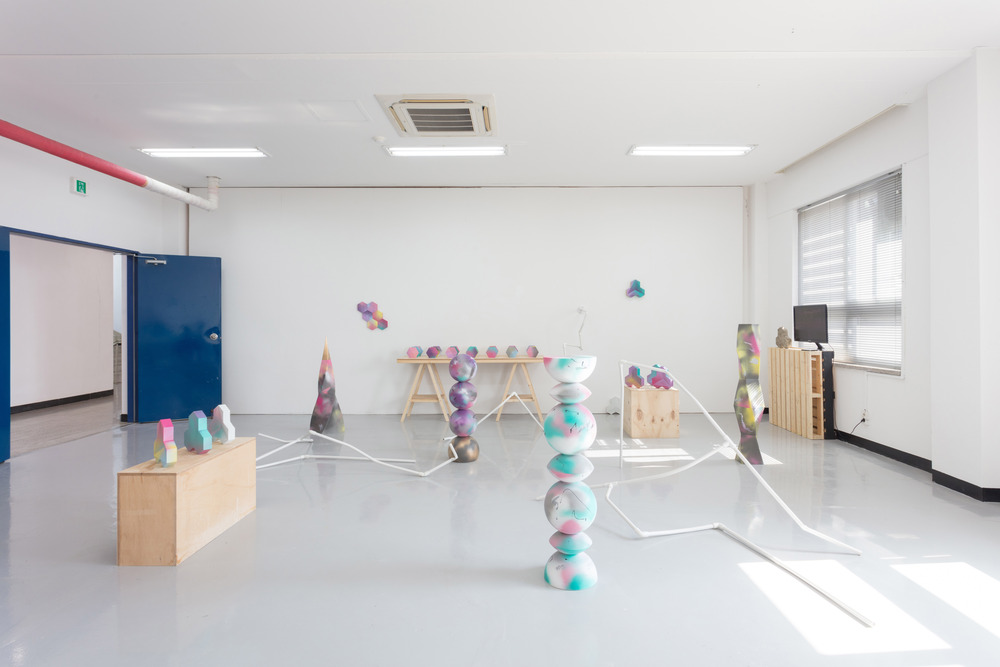
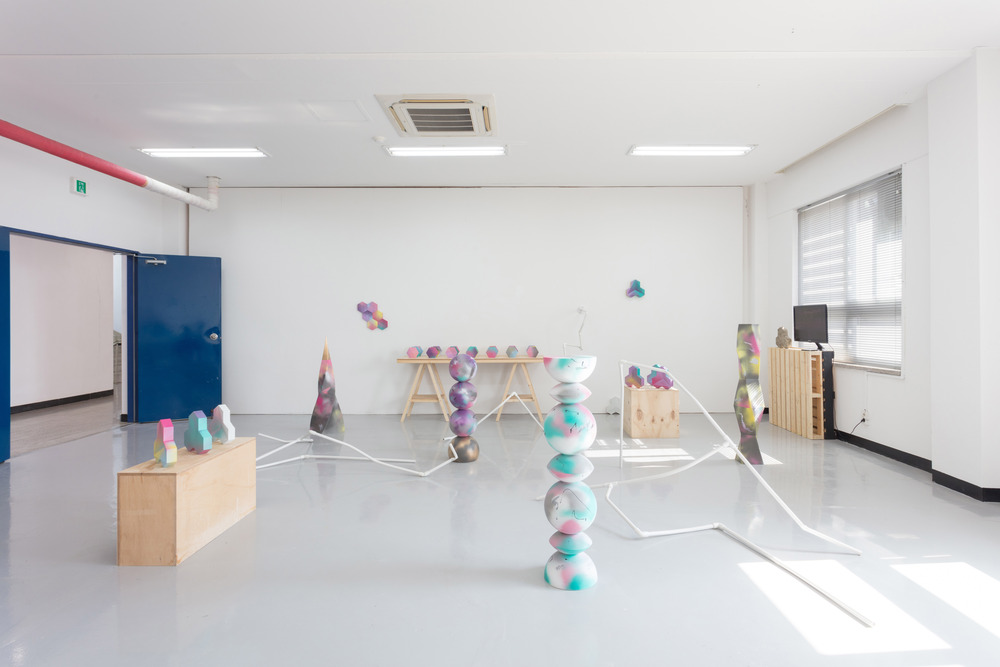
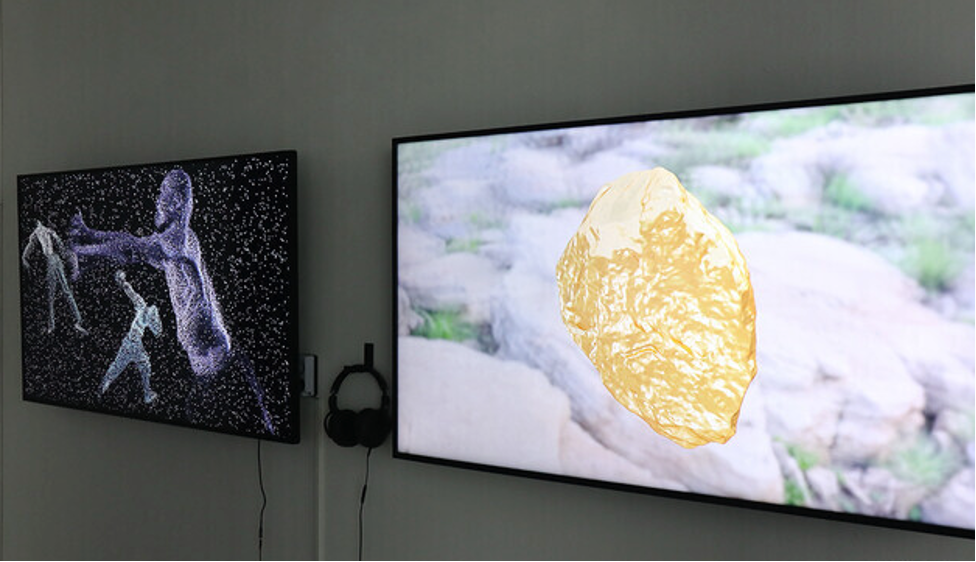
In the process of outputting the shapes of units the artist has discovered in reality according to input numerical values, the 3D printer inevitably produces errors and creates forms different from what was originally intended. The artist regards these as a kind of variation discovered in the gaps of serial structures, and completes light sculptures by repeatedly stacking them.
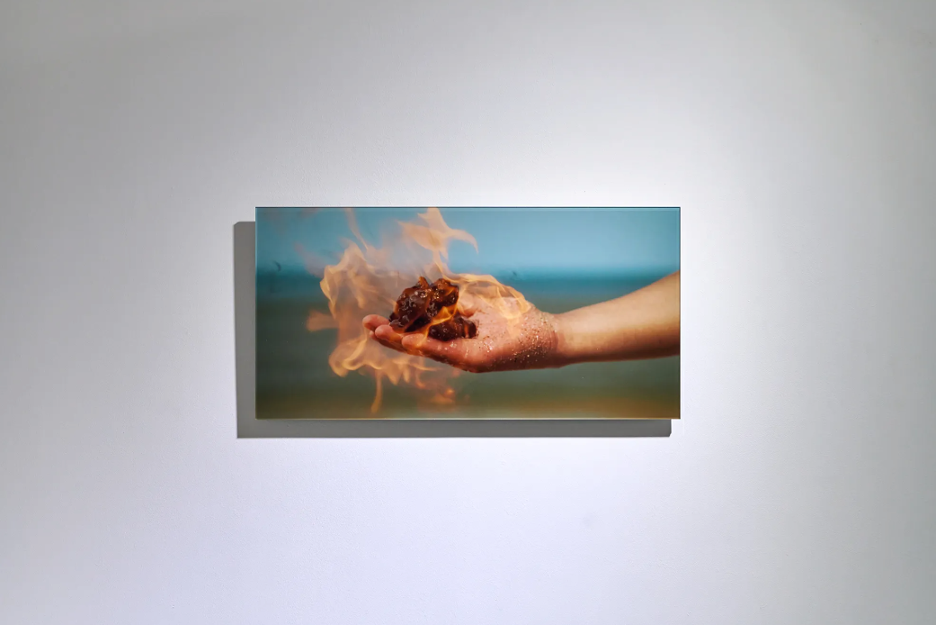
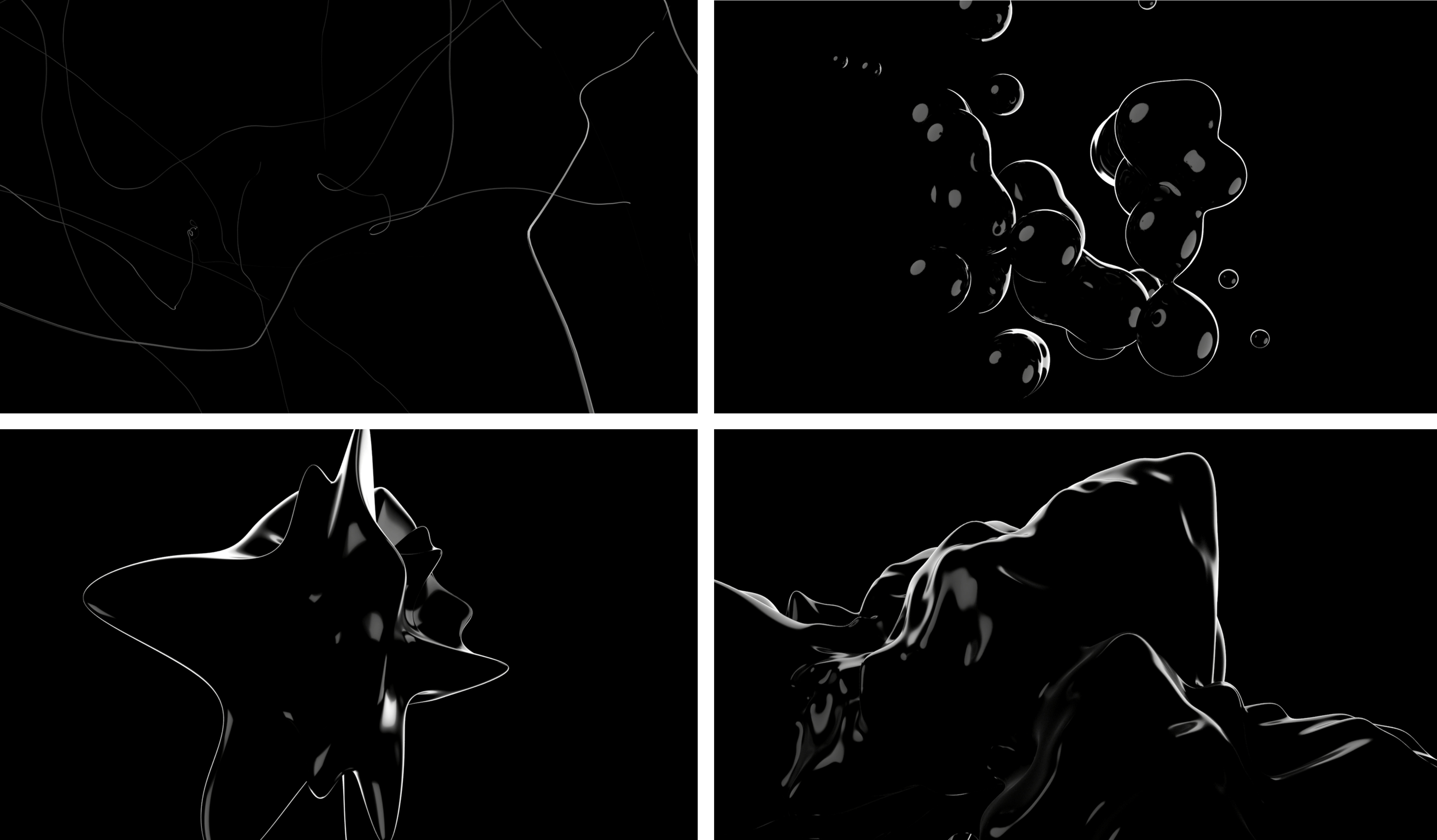
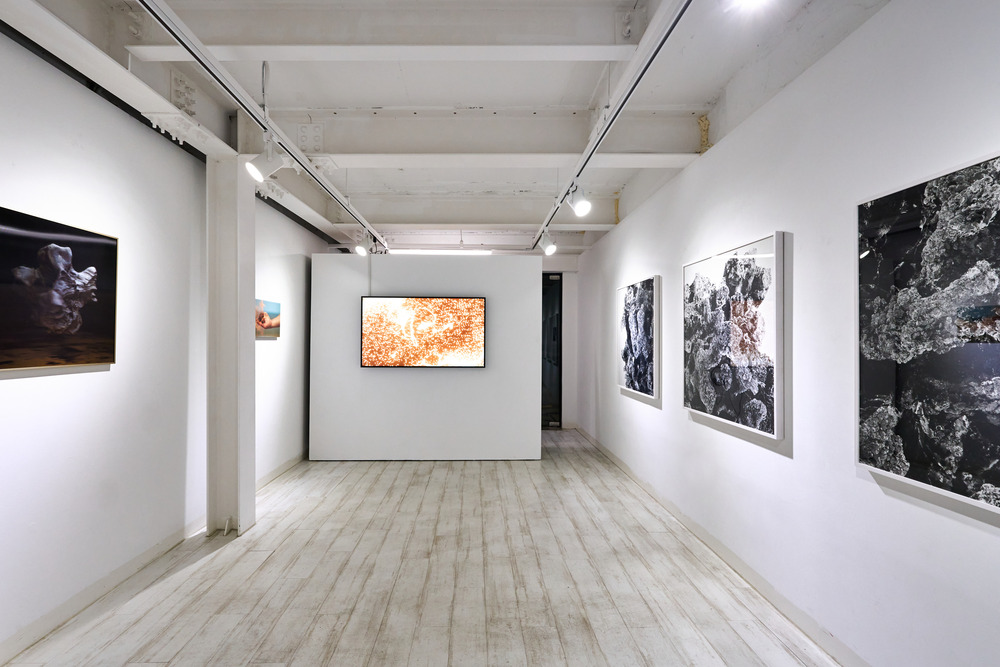
Ice-cream concrete(2019) is a work that mixes and arranges such failed entities born from the process of replicating a single unit. Onto the surfaces of these entities, the artist overlays images from “Satisfying Videos,” graphic moving images circulated on the web and produced with the aim of bringing psychological comfort and satisfaction. The sequence of undulating, irregular images symbolizes the drifting, fluid sensation of virtual reality.
As the artist says, “one must maintain bodily sensation with good receptivity,” our bodies, as individuals already exposed to urban environments, are already another monadic existence that internalizes the system of the city. Therefore, the movement of the body that flexibly crosses between place and object, system and structure, and finds elements within them that can awaken dulled sensation, is both inevitable and essential for him.
When we look more closely at the contact and circulation between human and human, human and place, or human and system that occur along the boundaries of the body, might Lee’s construction technique gain energy as a language that continuously amplifies the sensation of subtle differences within repetition, rather than extending toward another singular monumental structure?
I look forward to soon being newly offered another sensory field submerged throughout the city, drawn out by his eyes, hands, and body.