“Overtone”
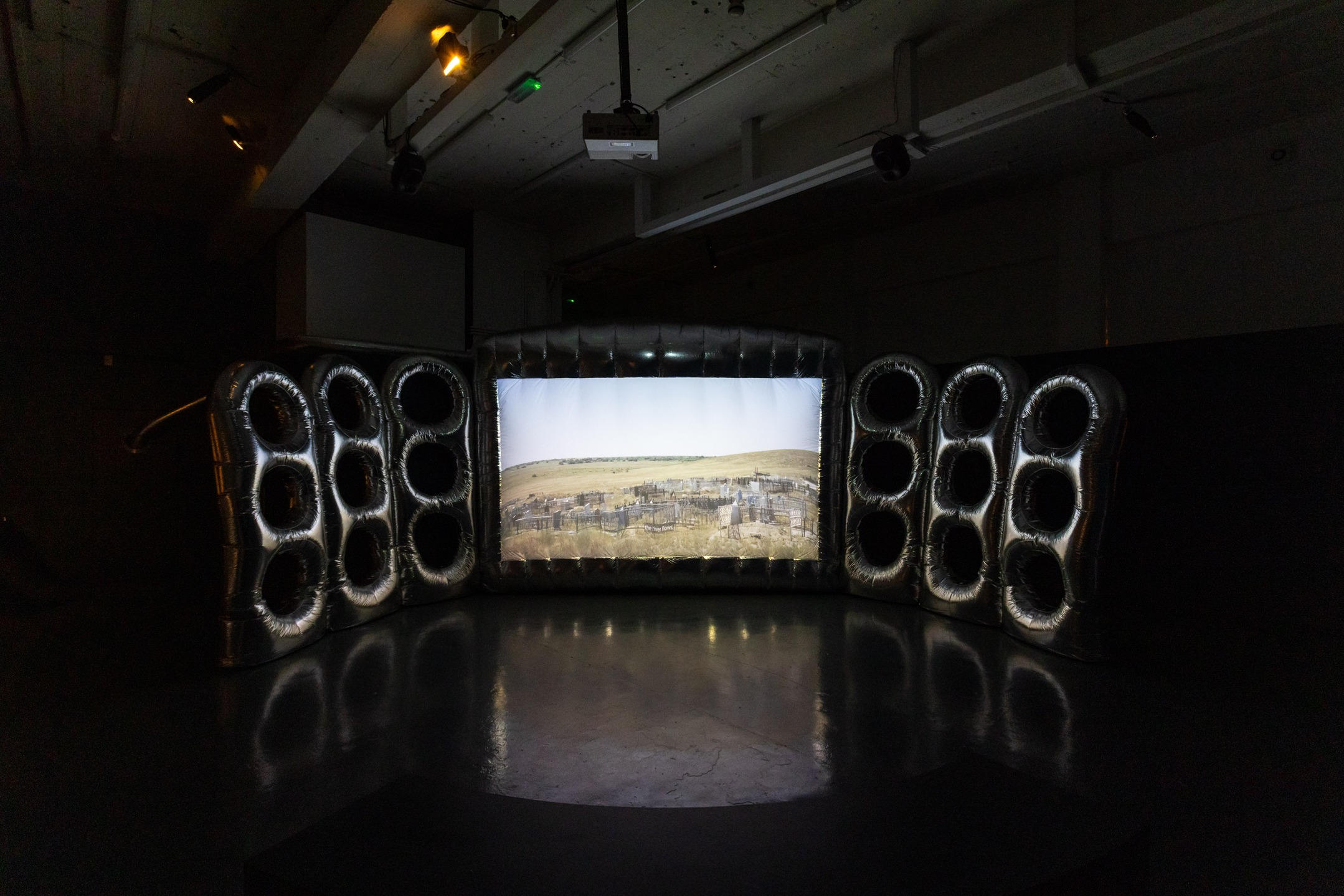
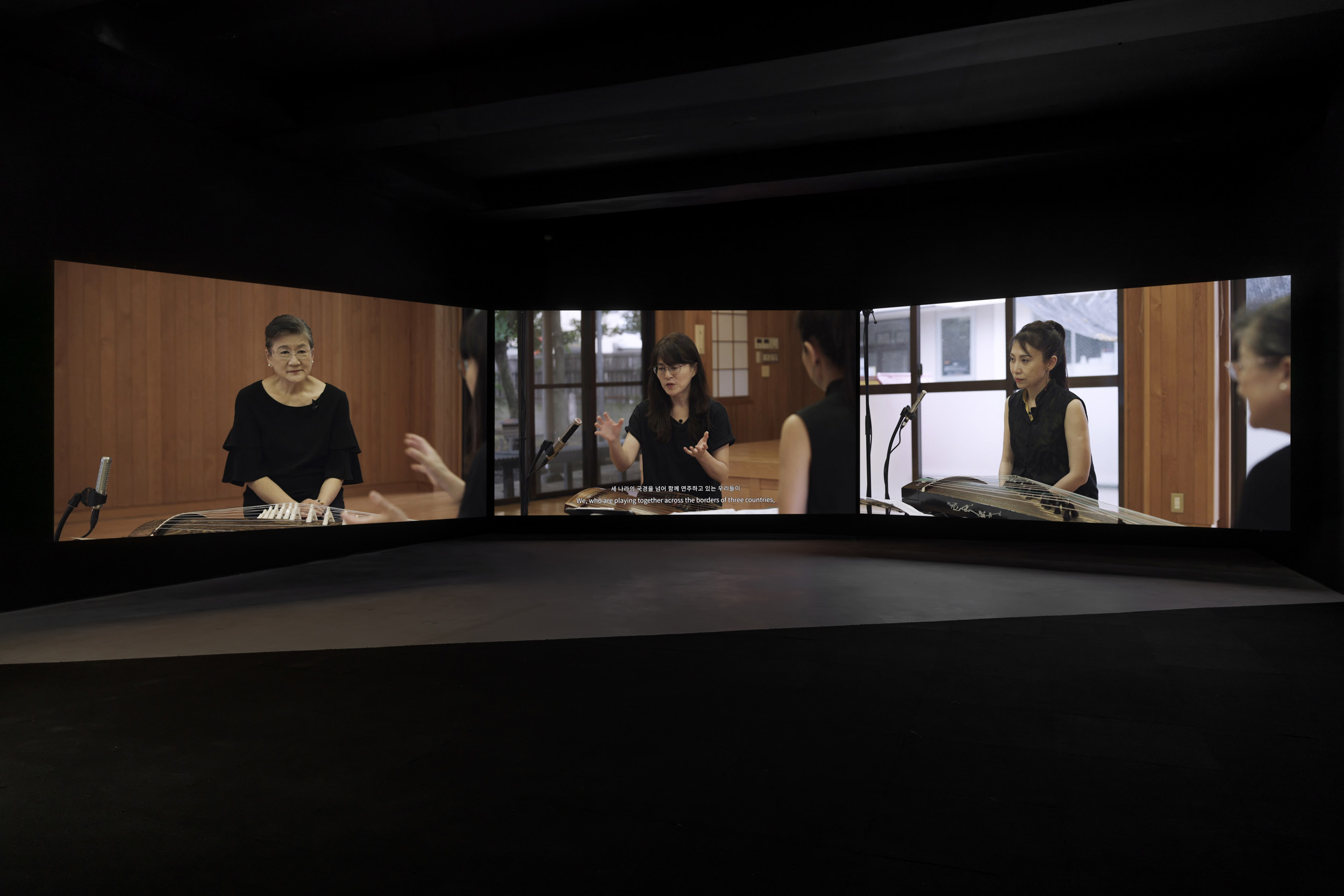
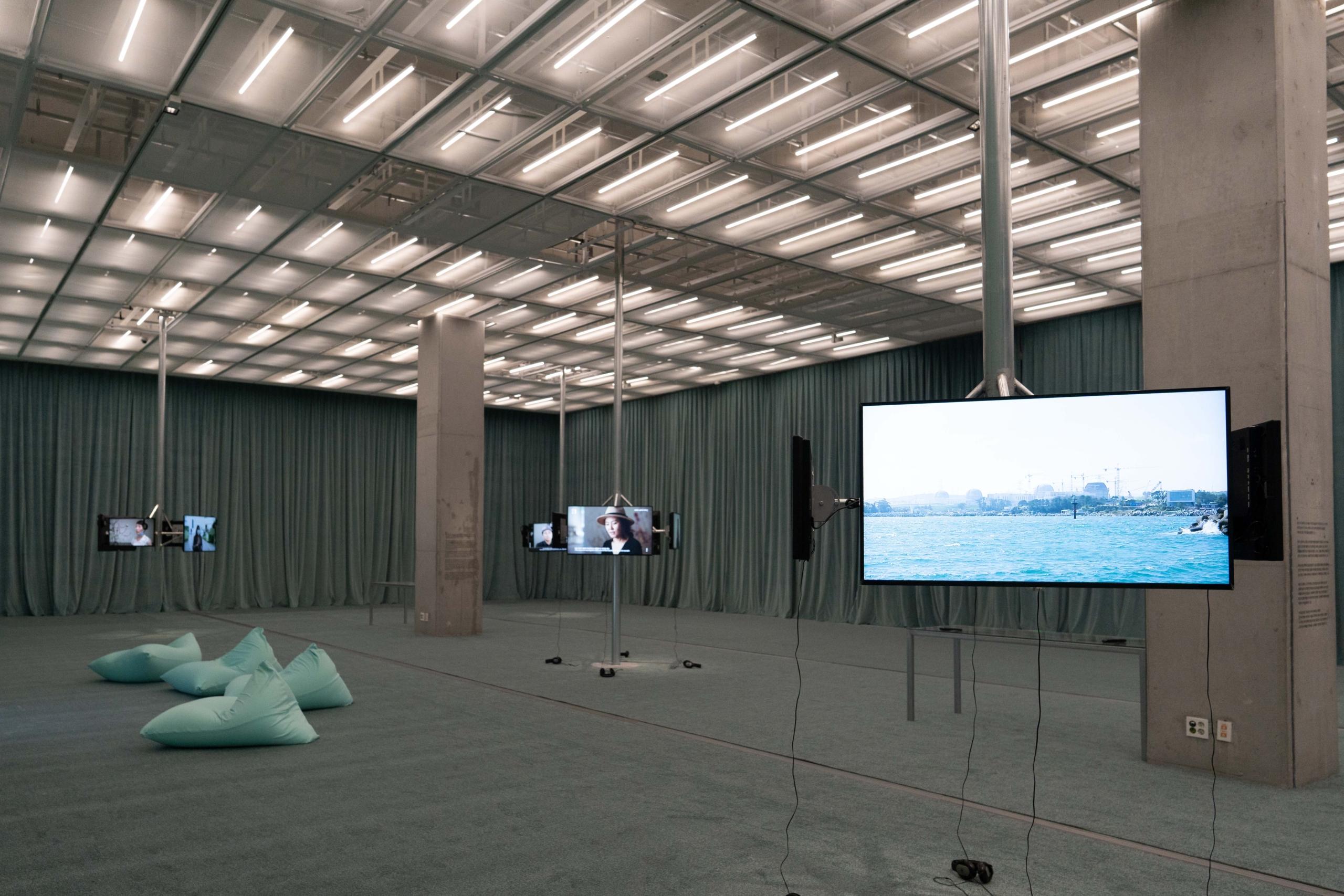
is the title of Sojung Jun's first solo exhibition and her new three-channel
video (2023). It is a musical terminology that describes the harmonic series
that collide and blend around and above a fundamental note to create a coherent
musical tone. The term is closely related to the overtonal
montage’ coined by Sergei Eisenstein (1898-1948), a film director who
left behind many studies on Soviet montage forms and experiments.
Explaining overtonal montage using the principles
of music, Eisenstein noted that primary artistic elements work together with
various secondary components to create a dominant impression or unity.
Therefore, he argued that overtonal montage not
only evokes a consonant atmosphere or feeling but also elicits physical
perception; it triggers a holistic experience, including emotional and physical
reactions. Thus, Sojung Jun’s Overtone enables an immersive
experience of multiple sensations through time and space as harmony is found
within the dissonance between the instruments of Korea, China, and Japan.
Probing
into Sojung Jun’s ongoing investigation of ‘sound,’ the artist
launches syncope for the first time, an AR application developed
especially for her first solo exhibition for Barakat Contemporary as an
extension of the new film presented at the National Museum of Modern and
Contemporary Art (MMCA), Seoul for the 《Korea Artist Prize 2023》. Featuring a new
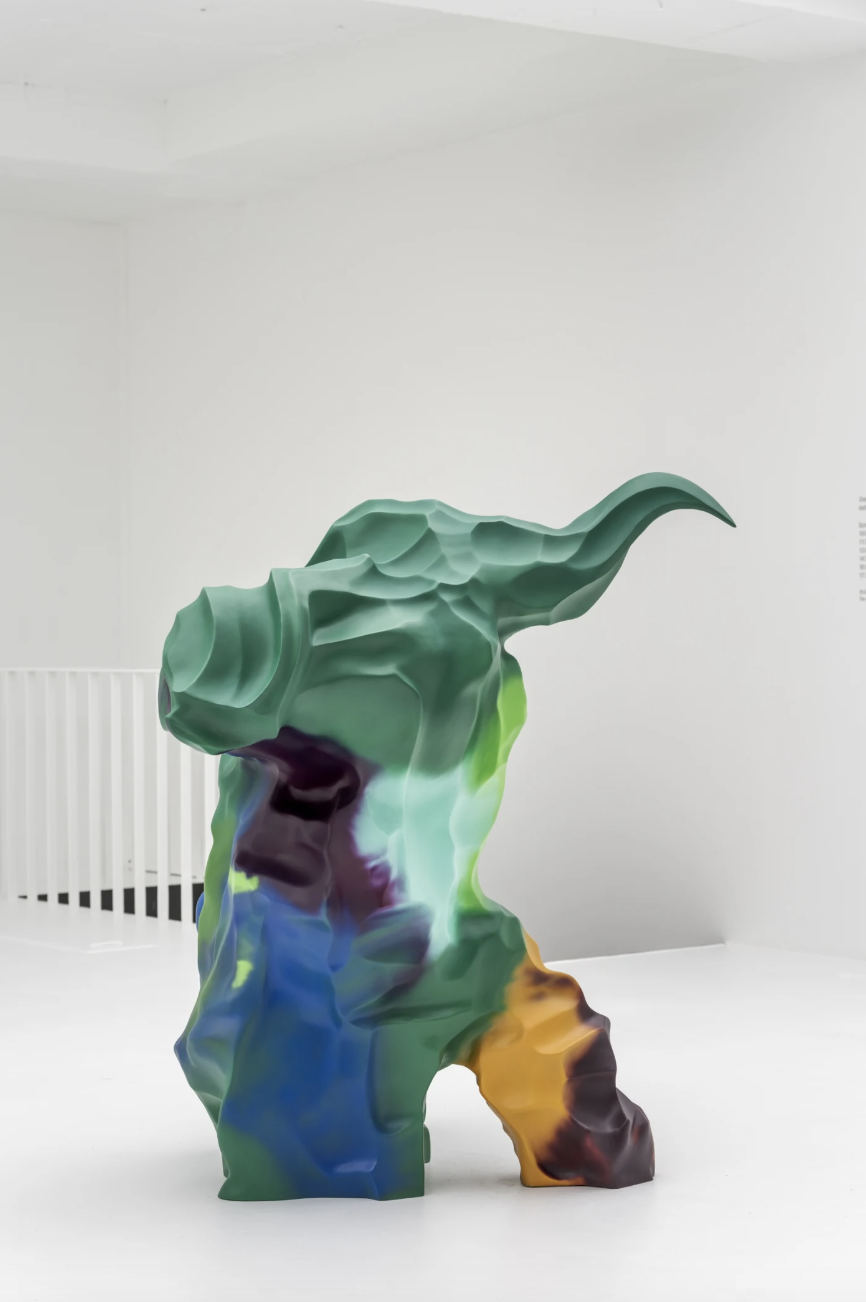
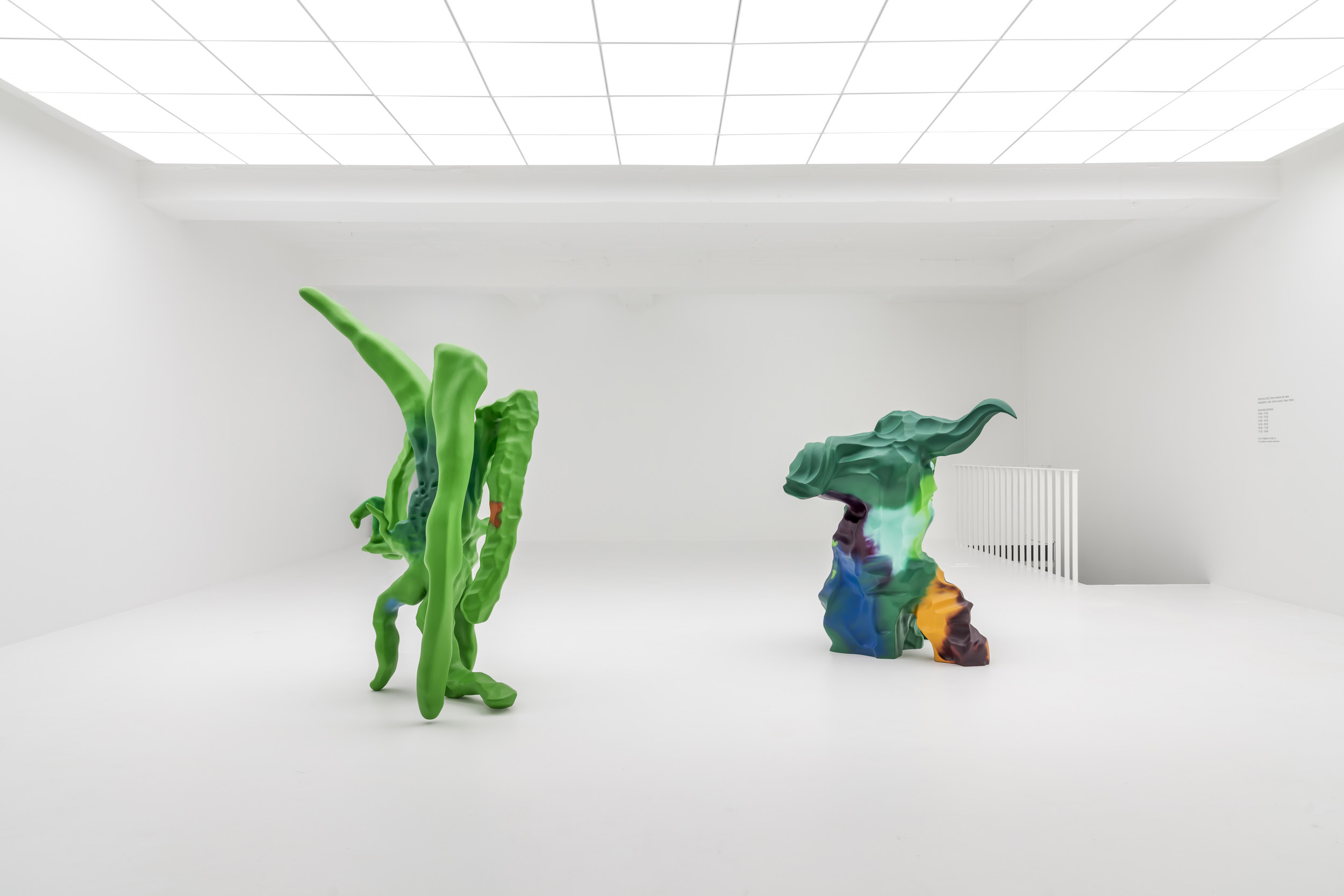
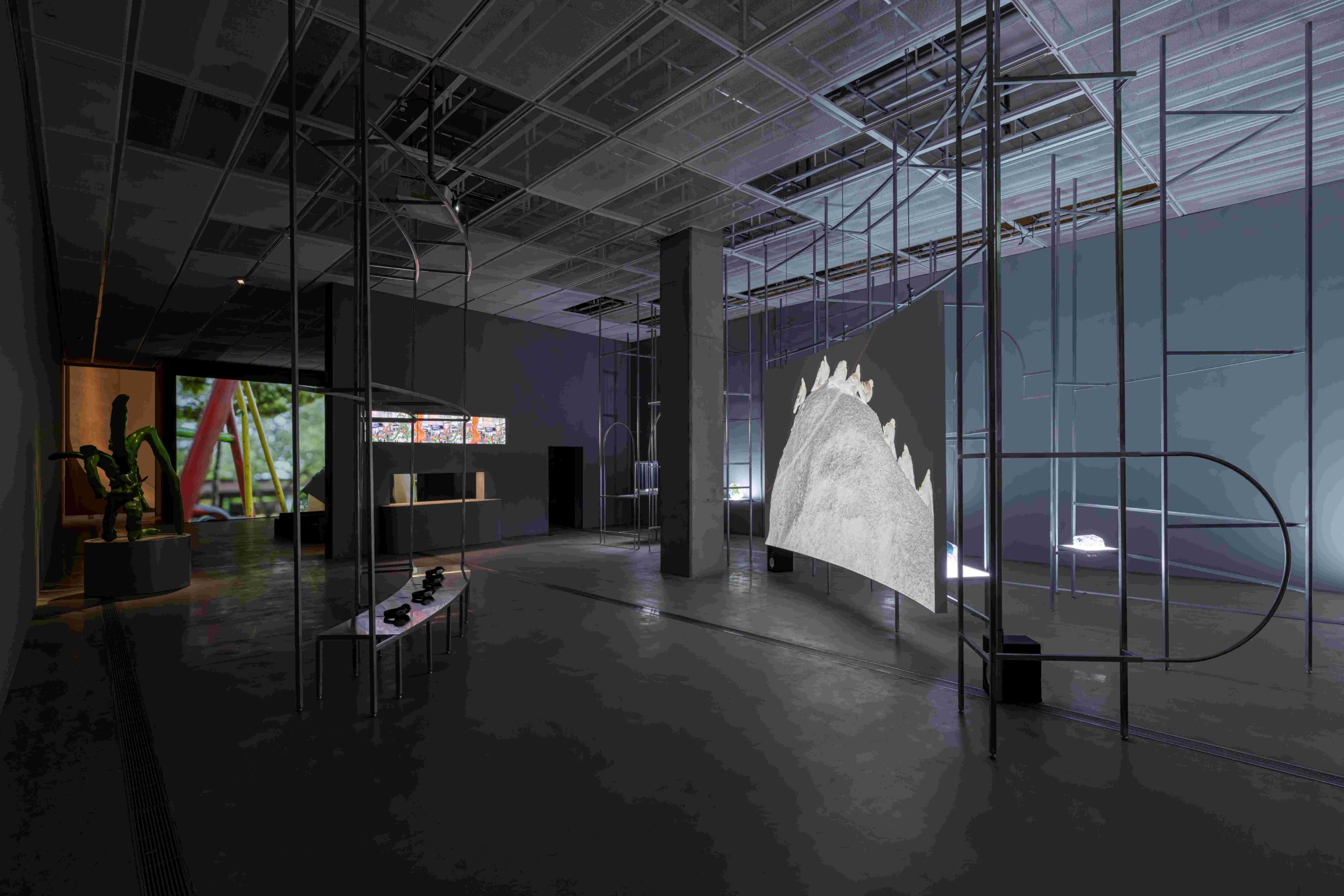
series of sculptures entitled Epiphyllum I (2023)
and Epiphyllum III (2023) along with the new
three-channel film Overtone, Jun proposes an
interesting perspective that enables an organic web of relationships between
sculptures, video, and digital data that transcends time and space, and the
real and virtual.
Amidst
the rapidly changing pace of modern capitalism, there are still those who are
creating a new world in their own ways. For instance, Sojung Jun has been
asking, “Can video really shed light upon the invisible? Can it render the
invisible visible or audible?” In this context, it was important for the artist
to evoke all types of sensations besides the visual sensation. Through the
newly presented three-channel video work, Overtone, she attempts to “trace
‘tangible/physical sound’ and ‘tone’ within the narratives and solidarity of
Asian women by overlapping them with the speed of bodies, plants, language, and
data that cross borders.”
In
preparation for the exhibition, Jun often spoke of the characters, Snow Woman
and Princess Bari, who appear in Kim Hyesoon’s I Do Woman Animal
Asia (2019). Princess Bari, a mythical woman who took it upon
herself to guide the dead between this world and the afterlife, created an
evolving and ‘ever-becoming’ identity by constructing a visible world
within an invisible world. Like the Snow Woman and Princess Bari who constantly
alter and expand their identities, the artist seeks after sound to discover
countless matters that abide in this world without hierarchy and unknown
origins.
Jun’s
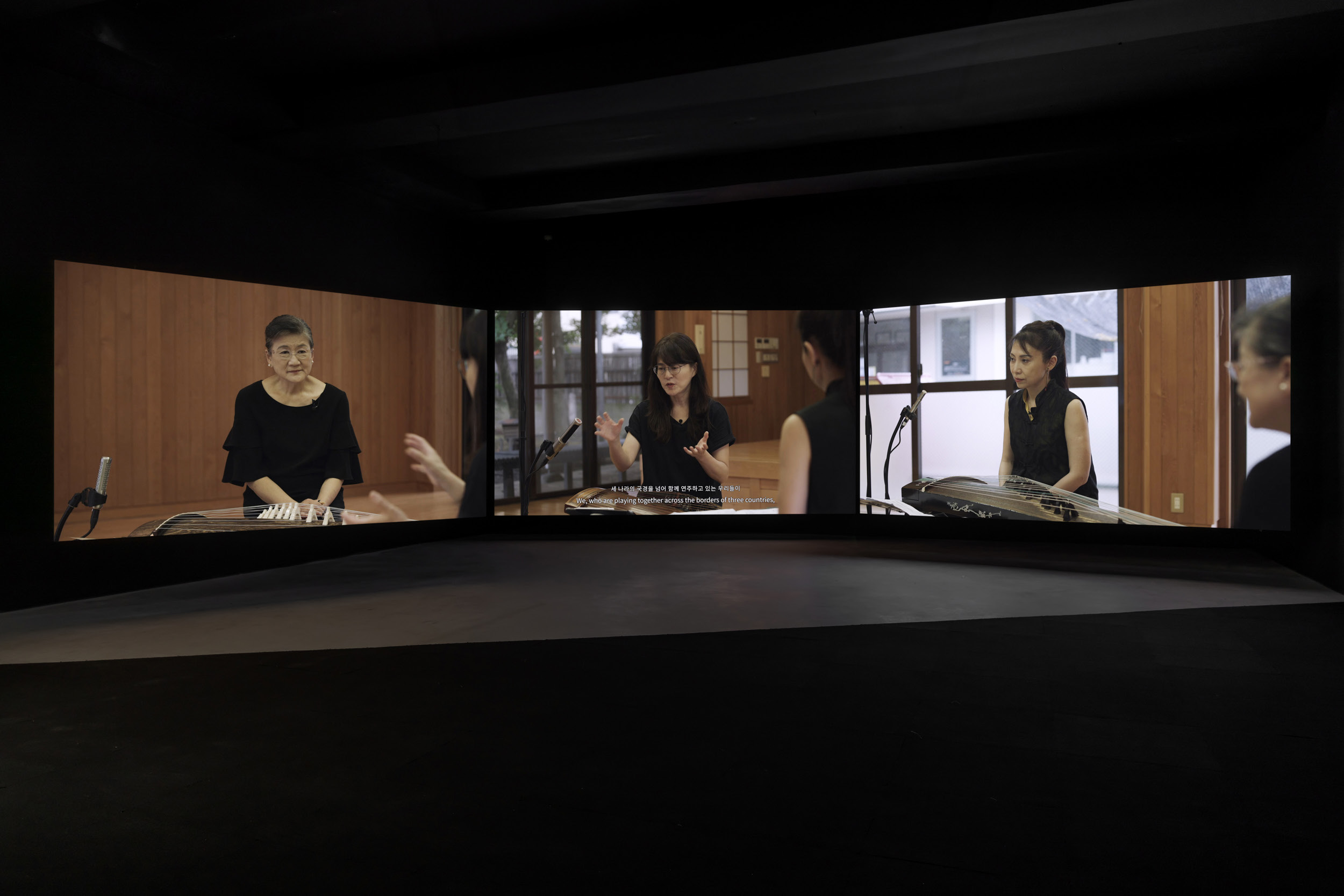
new film, Overtone, revolves around the journey of Soon
A Park, a gayageum player who has traveled across North and South Korea tracing
sound. For the production of the new film, three composers from Korea, Germany,
and Guatemala collaborated to compose three songs, with predetermined length
and tempo each for gayageum, koto, and guzheng, which are performed in unison
by KOTOHIME, the Korean-Chinese-Japanese zither ensemble. This long
journey in which three composers and three performers connect and communicate
in different places to create music captures the materiality of sound and tone
that pass through the three countries under the large theme of Crossing
Borders, which comes to an end with a video of their performance done in
unison. The process is akin to experiencing harmonious counterpoint through
sound.
Composed
of three main parts, Overtone begins with a solo
performance by Nobuko, the Japanese koto player on the theme of “Melodies
of Transit”, followed by the Korean North Korean gayageum player’s solo
performance on the theme of “between” or “traveling”. Finally,
the video ends with a solo performance by Xiaoqing, the Chinese guzheng player
performing on the theme of “wave”. In this sequence, the audience can
appreciate the differences in techniques, tone, range, and sound between the
Korean, Chinese, and Japanese qín (琴) instruments. Their performances were filmed using a long-shot
camera technique.
In
the second part, the three performers sit apart from each other in a triangular
configuration and have in-depth conversations about the structure of each
instrument, the tools they use, and their techniques to arrive at
a harmonic performance. An interesting point in their conversation
about the music to be performed is not only found in the differences between
the three instruments, koto (13 strings), North Korean gayageum (21 strings),
and guzheng (21 strings), but also the interaction between the performers as
they share their concerns on improvising with the cultural elements of the
Korean, Chinese, and Japanese musical traditions embedded into each song under
the composer's guidelines.
For
example, they include instructions such as “use the
Korean nonghyeon (弄絃) technique,”
which is not used for the Japanese instrument koto, or “play the North Korean
gayageum (21 cash) with a pick in certain parts,” when it is not originally
played with a pick. For playing the Chinese guzheng which has traditionally
been played to make resonating sounds, they included instructions such as “use
the muting technique commonly used with gayageum.” Through discussions like the
above, the players practice the first, second, and third movements to slowly
find harmony in the dissonance, incorporating experimental elements that
reflect different musical elements. Moreover, Jun’s interest in
the appropriation of media is exposed especially in this part of the
film.
What
is particularly interesting about their conversation is the techniques and
tools they use for their performances are different. The tone varies depending
on multiple factors such as the materials and shapes of the pick, the angle of
pressure on each string, whether one plays bare-handed, the thickness of the
string, and the method of handling body weight and gravity onto the
instruments; all of these factors demonstrate the materiality of sound.
Communicating these differences, performers work together as an ensemble
through a laborious process of fine-tuning and learning with each other.
In
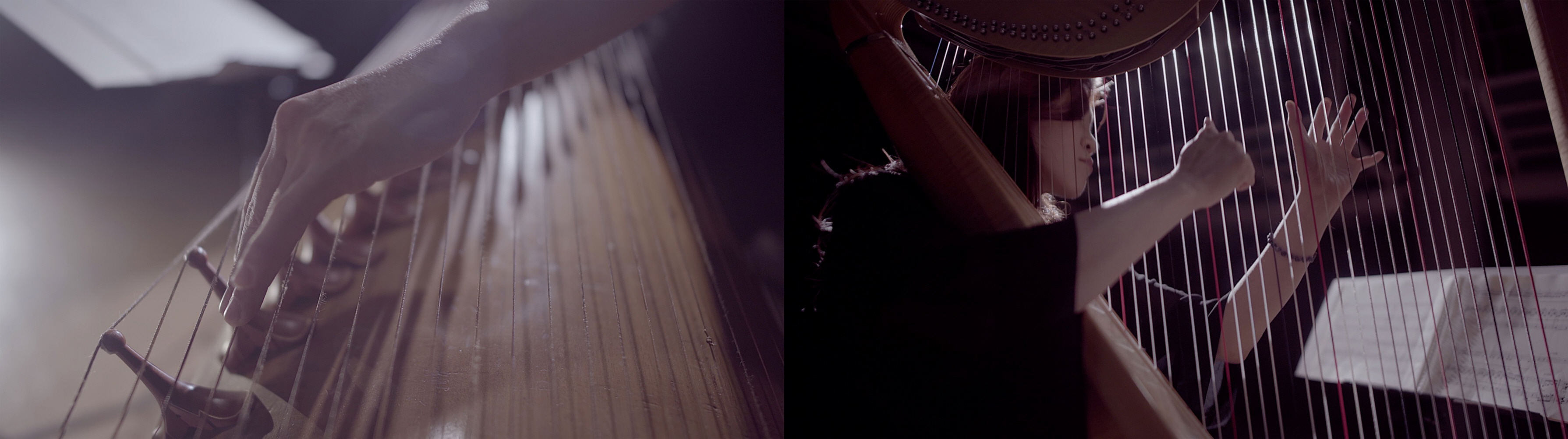
the last part of the video, a scene of improvisation over a long, slow period
is shot through a super-telephoto lens. Jun uses close-up shots to not only
capture the sounds but also the performers who pluck, rub, and press the
strings, the friction between their hands and the strings that intermittently
pause, as well as the sheet music and the hand that turns it, showing the
materiality of the “instrument - hand” _as an extension of the body and the
physical properties of the instruments, evoking an intense sensory collision.
In this sense, sound is not only an audiovisual experience but also one that
accentuates the material senses, its vibration, and the movements of the
bodies. Performers remain silent for some parts of the music, change the
dynamic, add or omit things to make the other performer shine and create a
sound that even they cannot predict from the given song, the creative
substance. Perhaps the medium of heterogeneous and fragmented dissonant sound
was captured through the camera lens, and the artist intended to follow the
movement of the sound and lingering reverberation not even on the score and to
reflect the different angles, shooting speeds, and breathing of each performer
and the cinematographer. This is the moment when complete medium appropriation
occurs via sound. Overtone, which unfolds in “long shot - medium shot -
close-up shot,” _brings a strong immersive experience toward the climax of the
performance through gradual development in its filming techniques.
“In
Japan, there is the word ‘AUM (_阿吽)_:_ _breath of beginning and end of all things,’ _and I felt
something like that. If we can create a world beyond borders within that
breath, the next world… I felt something really profound like that, believing
that could be possible. ”7 In its own way, Overtone creates a new world through
sound.
In
the intermission of the video Overtone, one can find a clasp
between shots that is somewhat different from the previous chapter. This change
is because, contrary to the slow, long-winded sounds of traditional
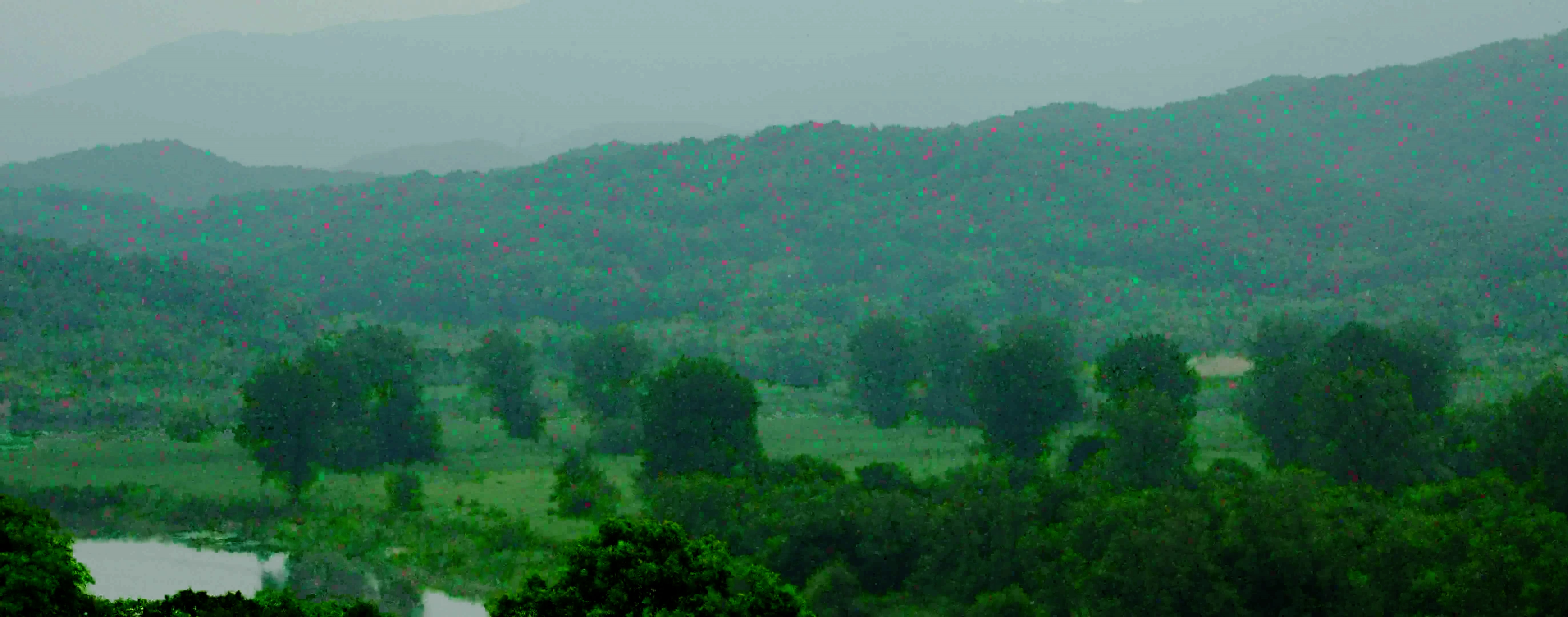
instruments, the landscapes of modern cities and forests pass by at high speed
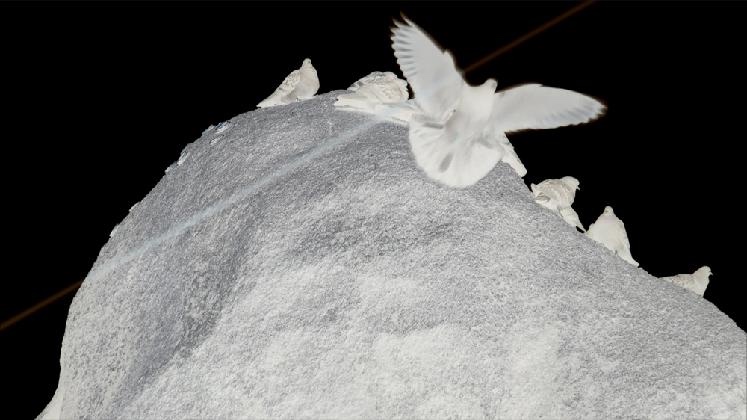
while heterogeneous “human-plant 3D sculptures called Epiphyllum” appear
overlapping in different spaces. At first glance, they all seem unrelated such
as accelerated technological advancements and the resulting changes in human
life, the movement of humans, plants, data, and sound. But they are the
subjects of change and movement, whether voluntarily or not. The “human-plant
sculpture” created by the artist is a being with an identity that is capable of
transformation, making its body unrealistically large or extremely small. These
virtual sculptures that can move quickly are seed data – image cuts that the
artist planted in the AR application, Syncopy, as the data
seed of the sculpture she created in a 3D virtual space.8 Sculptures in the
real world with nomadic identities such as “movement,” “transformation,” and
“transfiguration” allow anyone who downloads the Syncopy
application to enlarge or reduce the size of the sculpture and place it with
their fingers and bodies in their own space.