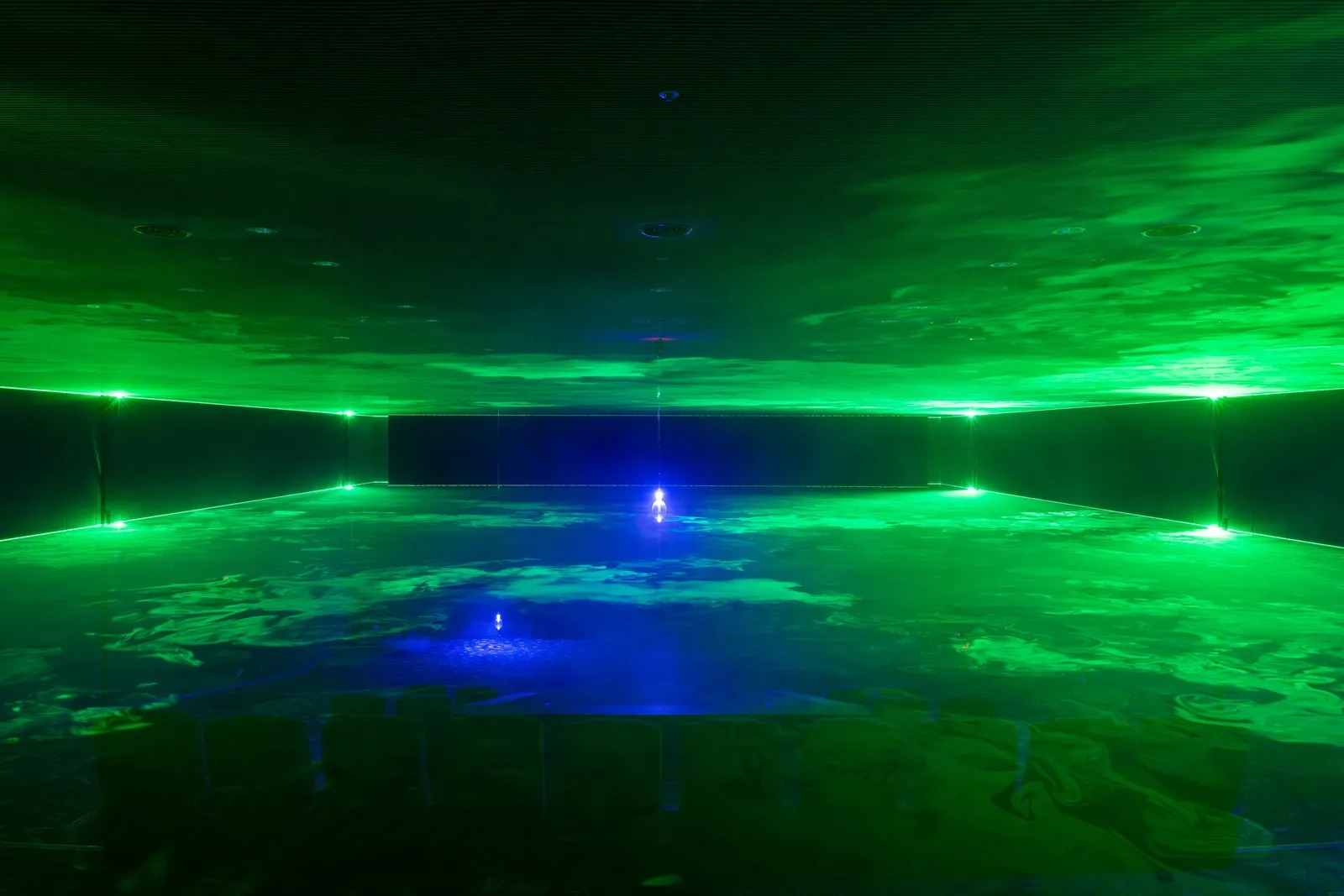
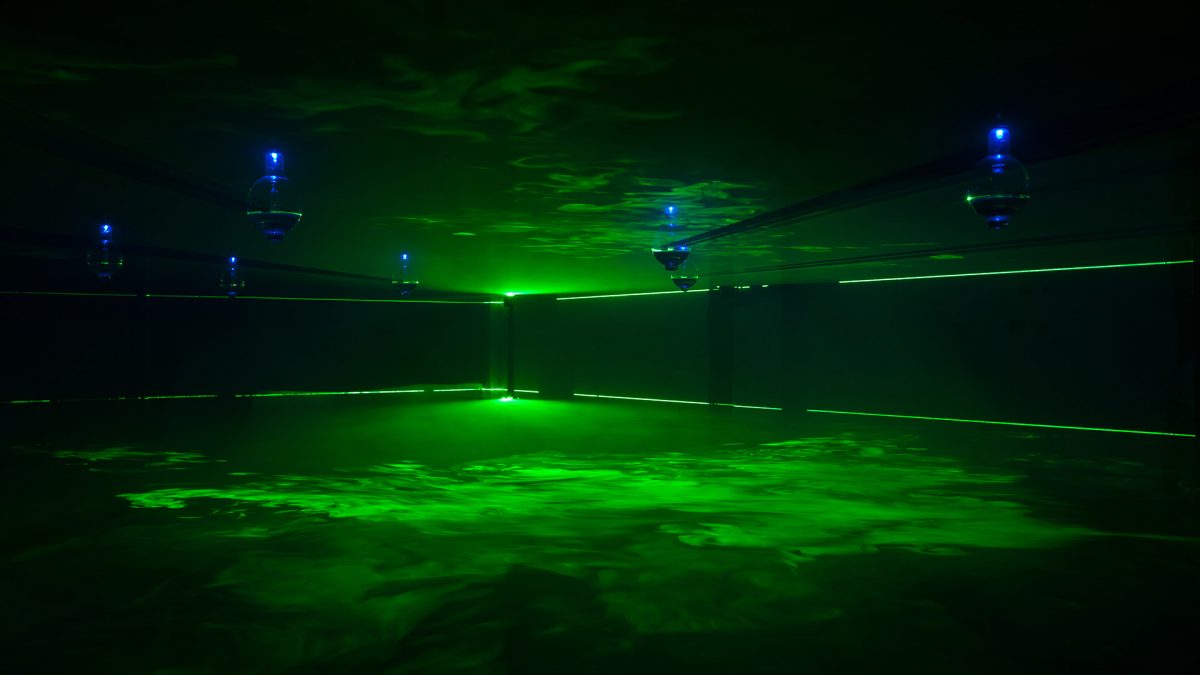
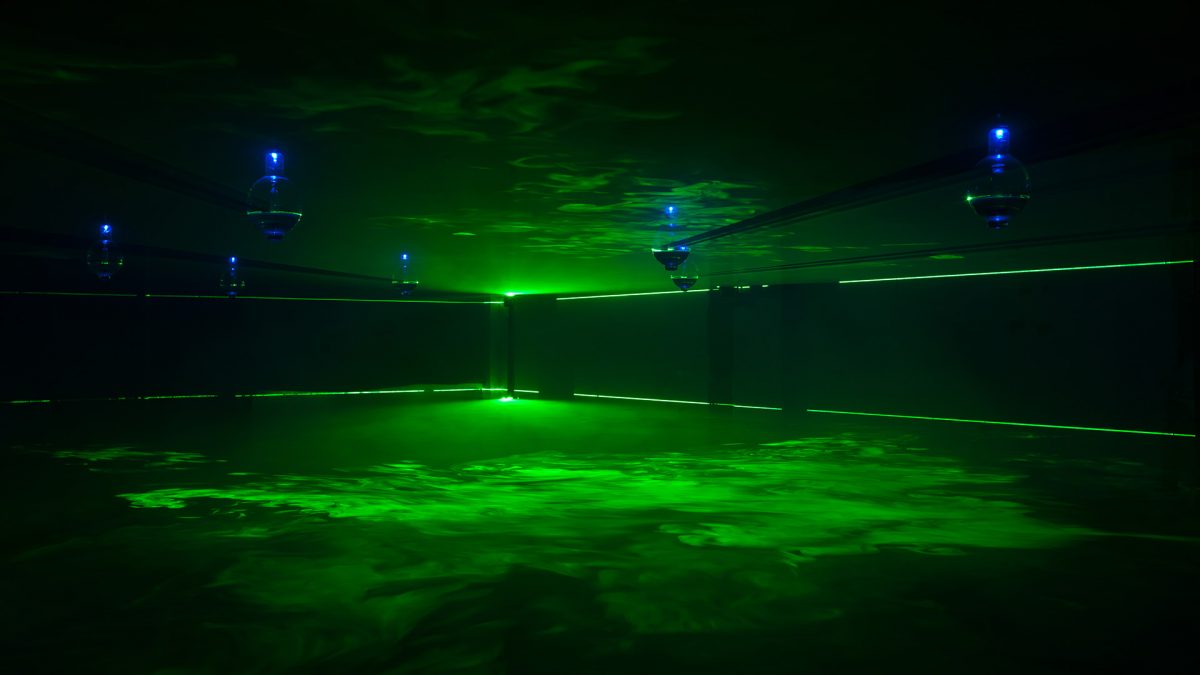
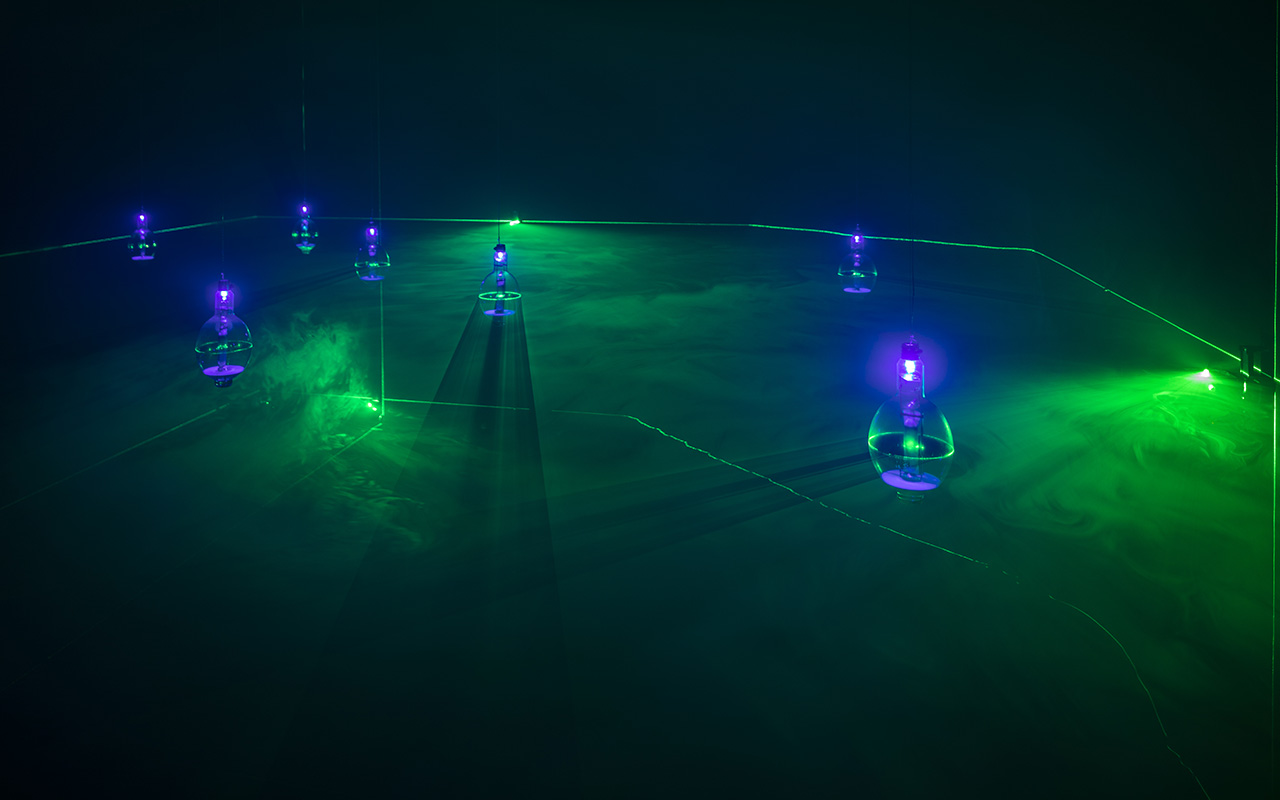
As I opened the gallery door and stepped inside, what first met my eyes was a pitch-black darkness. It was as if the exhibition hall itself were a solid mass made of darkness. By the time my eyes gradually adjusted, I could see green beams of light cutting straight through that dark mass. They were lasers. And then I saw heads. Here and there, the heads of viewers emerged.
They looked as though they were floating on water, or like sleepwalkers drifting through a thick fog. As the space gradually grew brighter—or rather, as my eyes became more accustomed to the darkness—I was finally able to see the people and the space itself.
What had just moments before seemed like a watery surface or a veil of mist turned out to be fog released by a fog machine hidden in one corner of the gallery. The fog encountered the laser beams and formed a plane crossing through the space. It was created through the combined action of light and darkness, haze and space.
Upon that newly formed plane appeared unreal and dreamlike images, constantly changing like moving ink paintings, then vanishing as fleetingly as they had emerged.
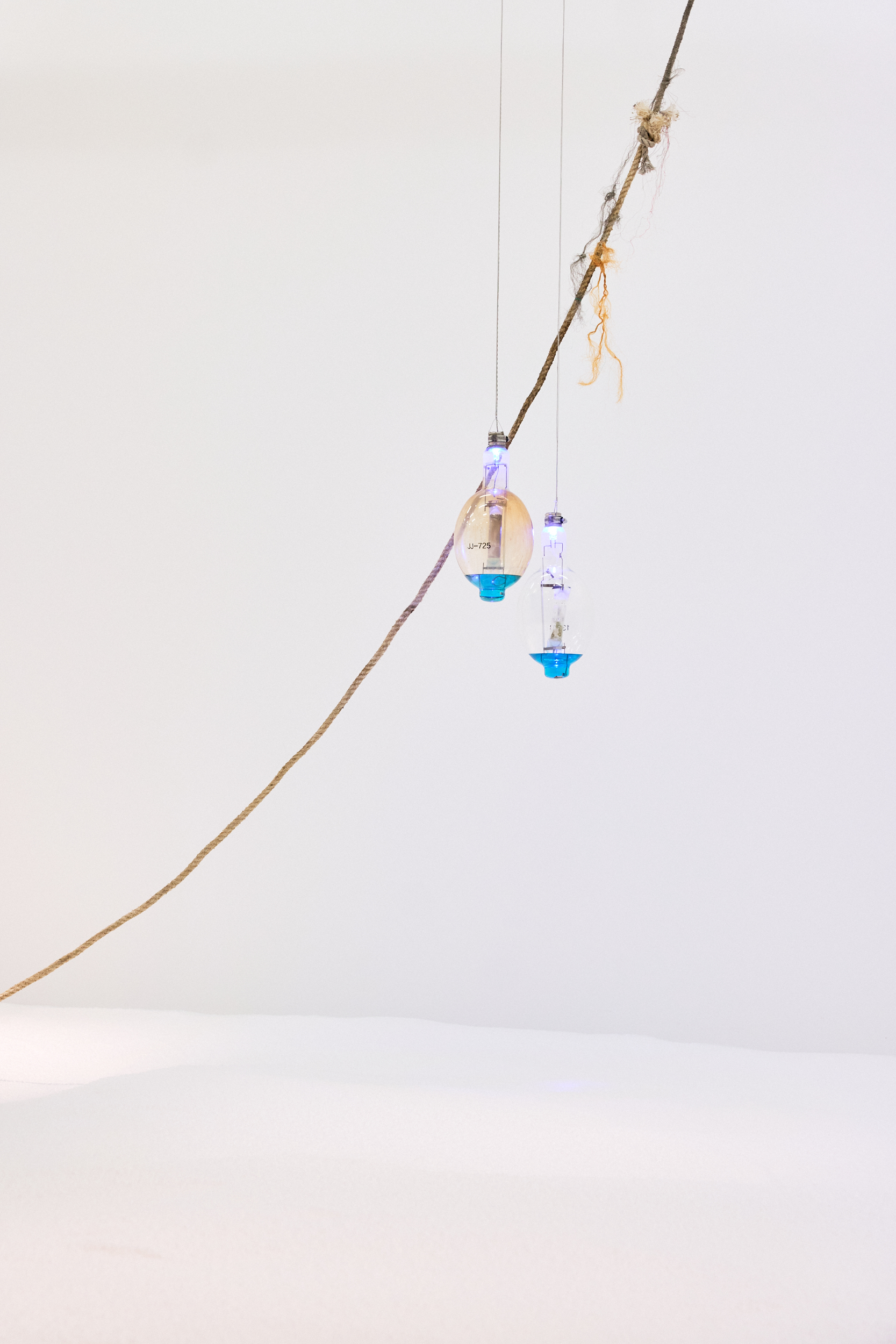
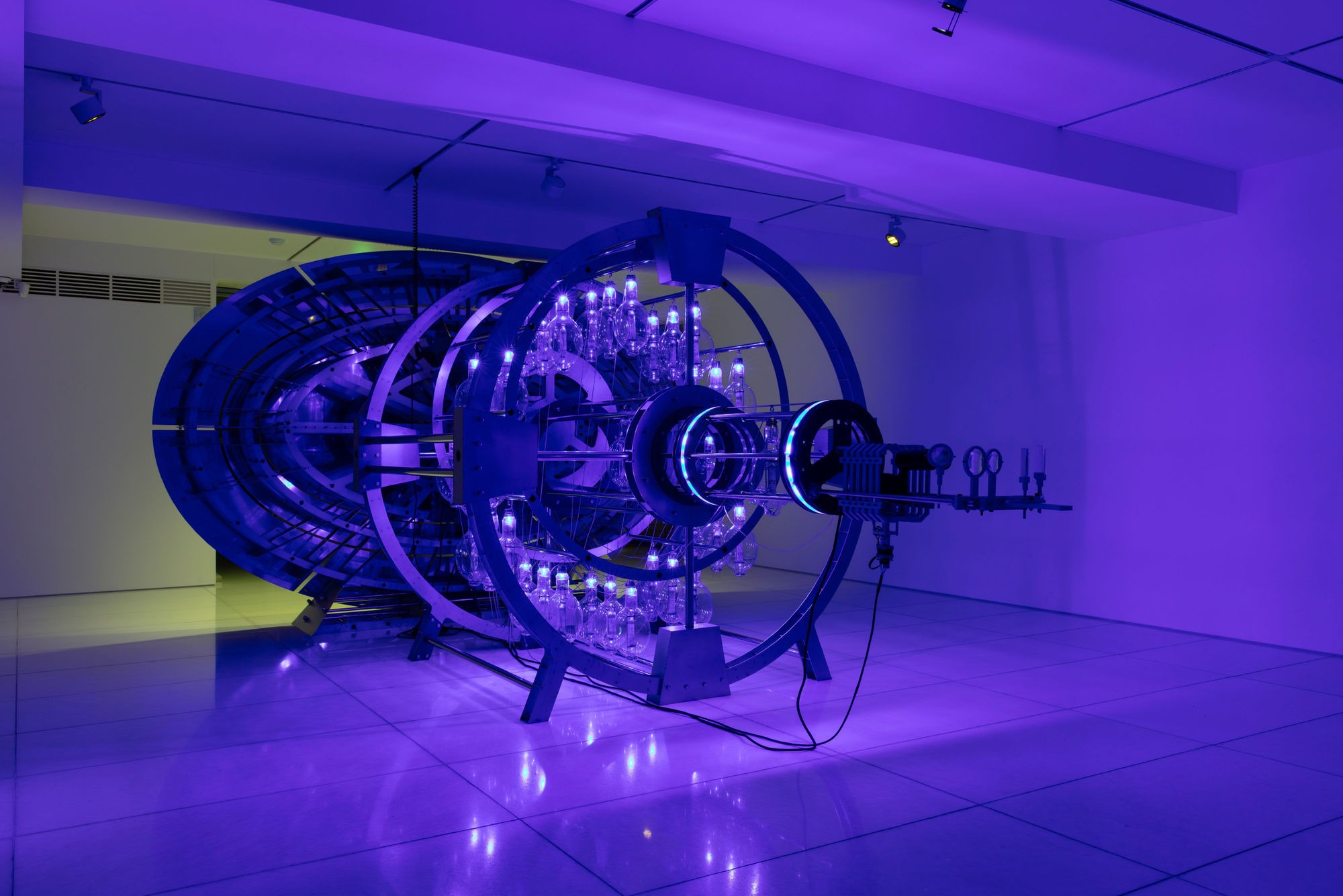
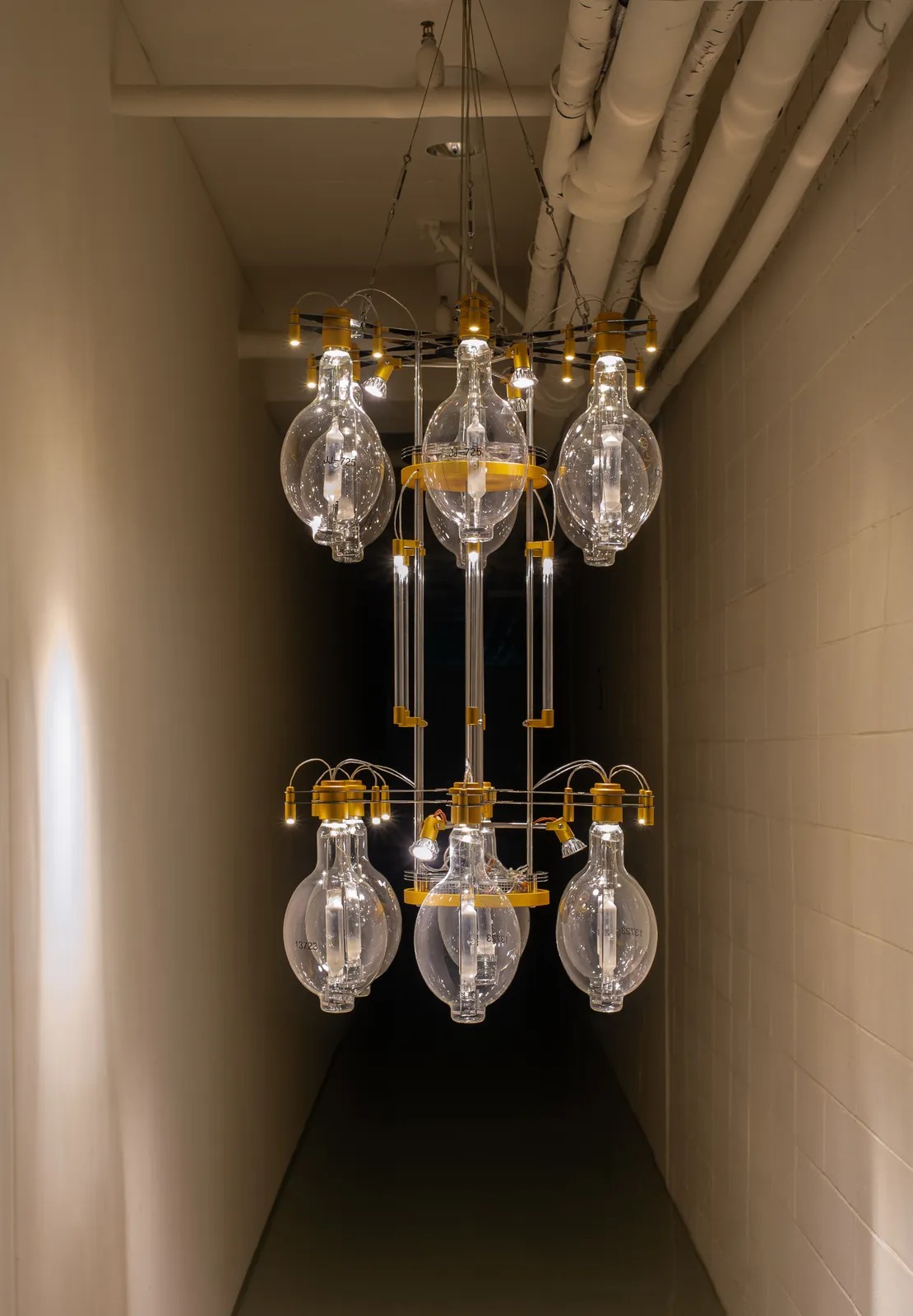
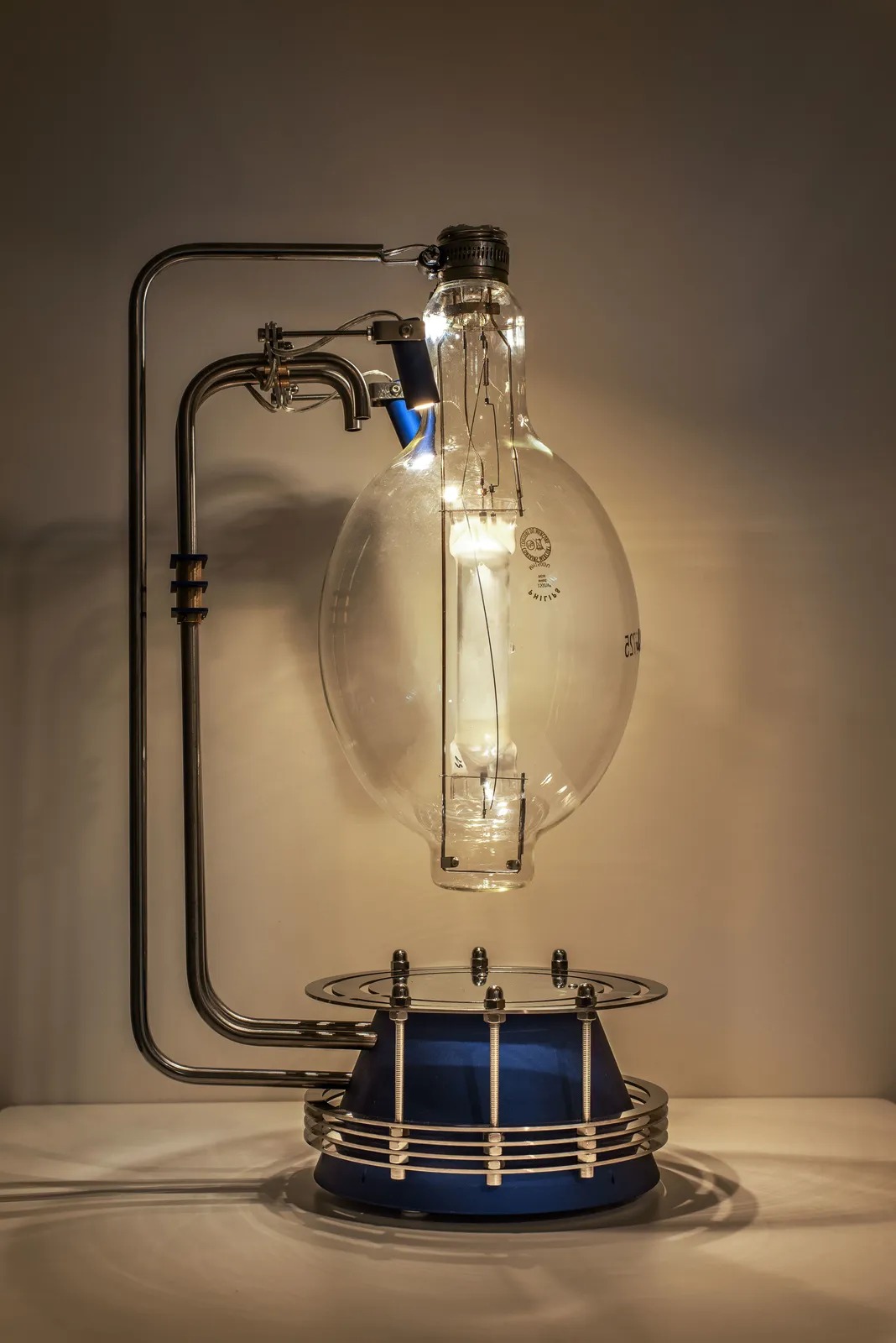
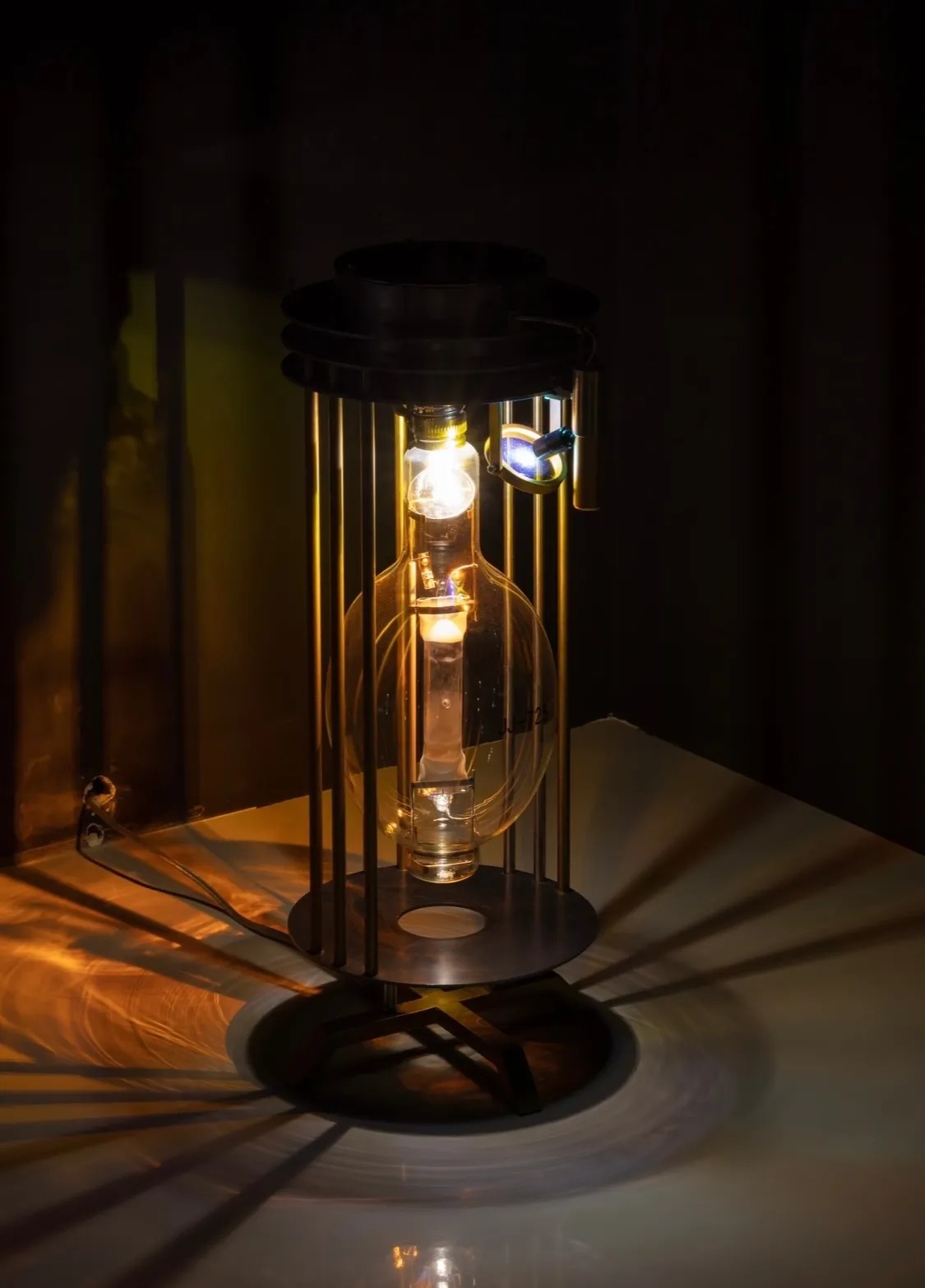
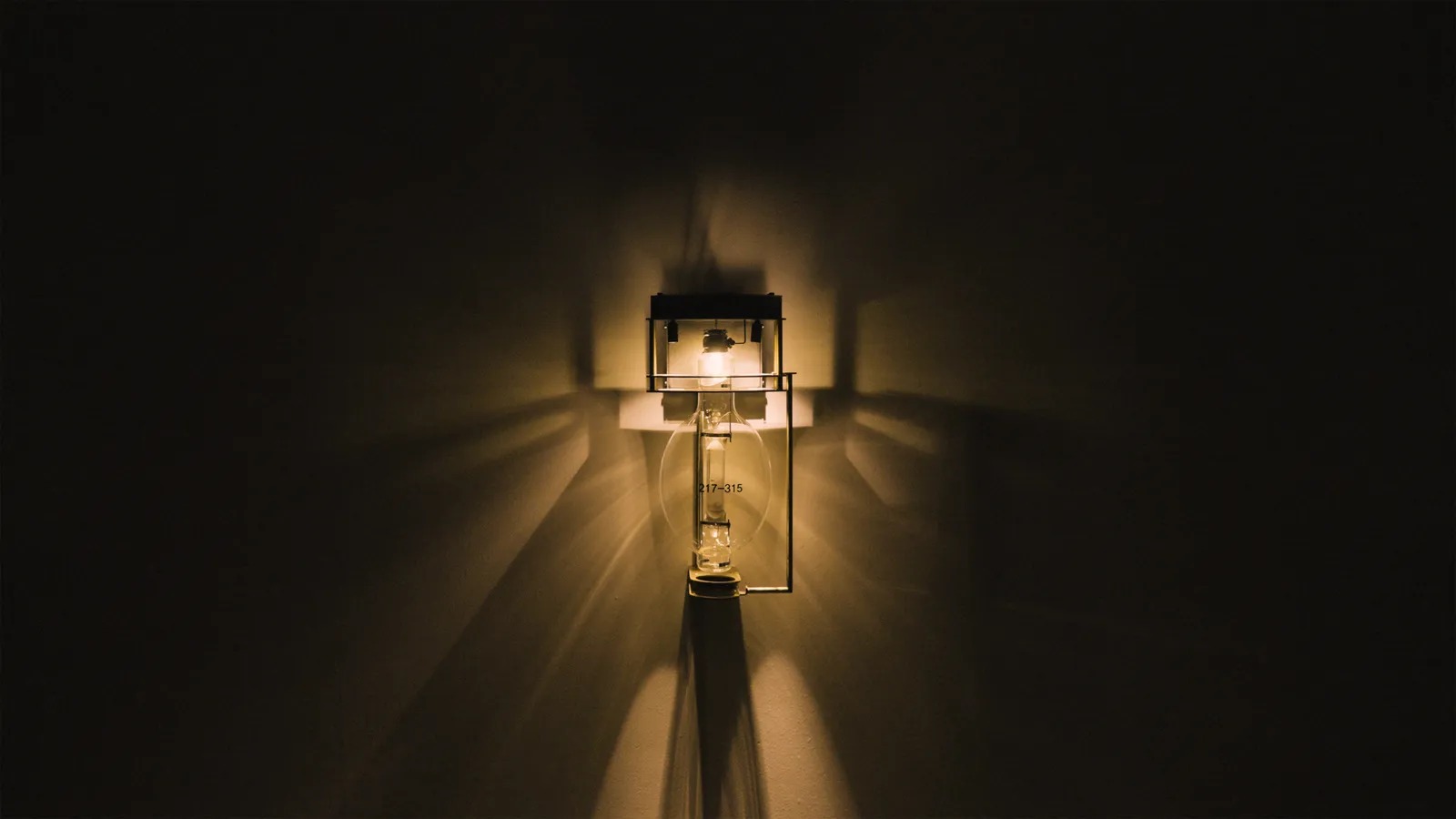
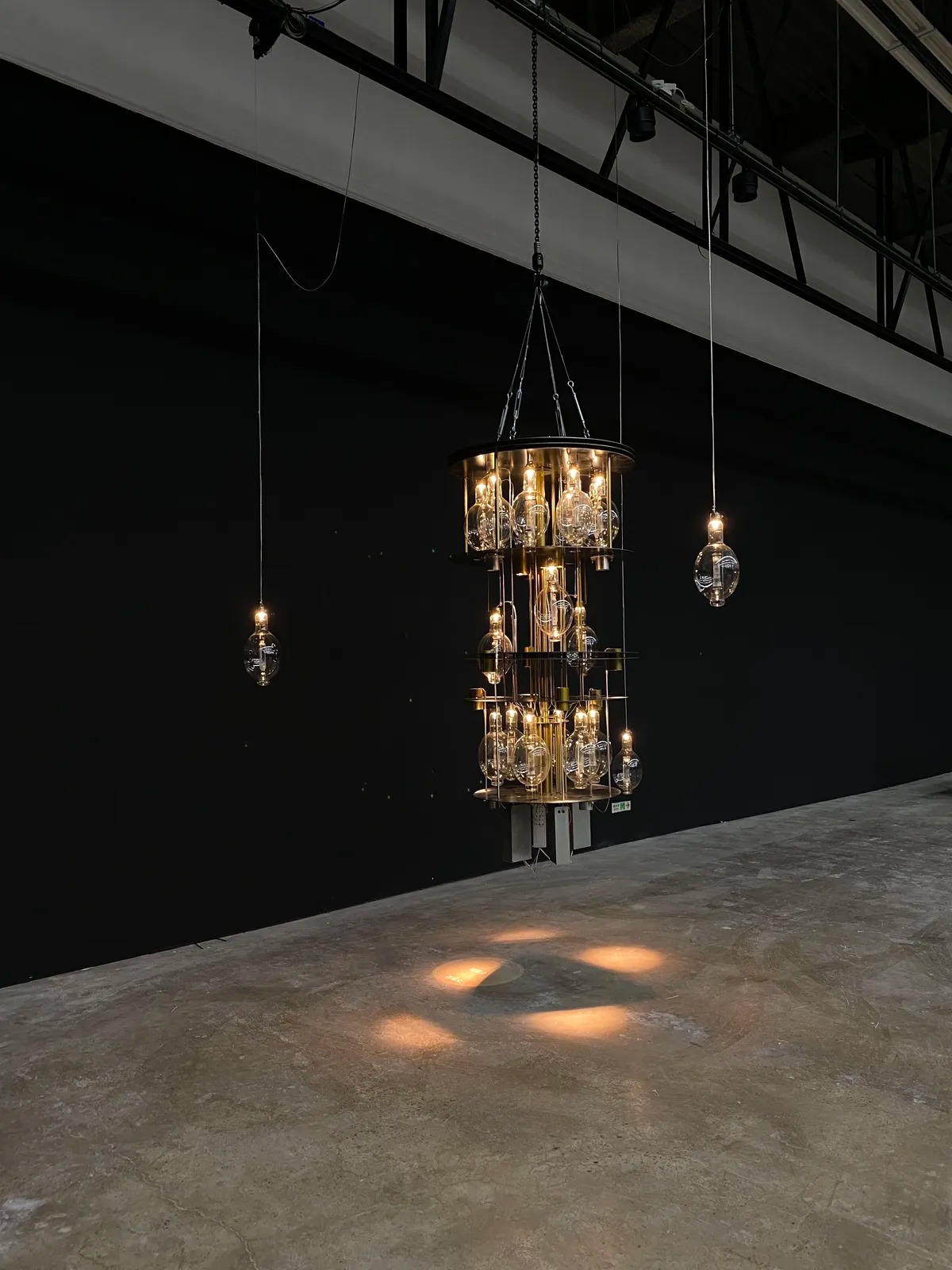
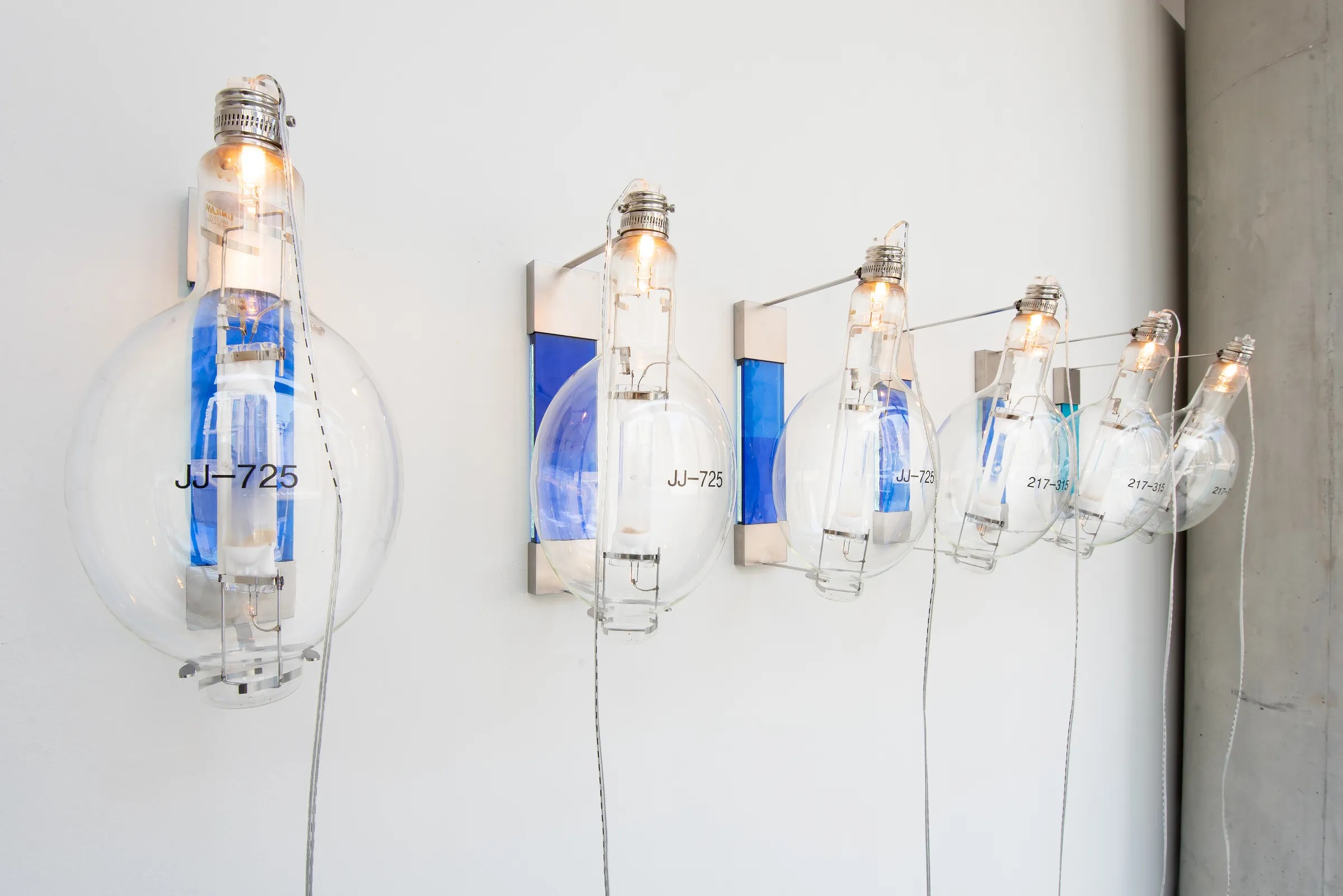
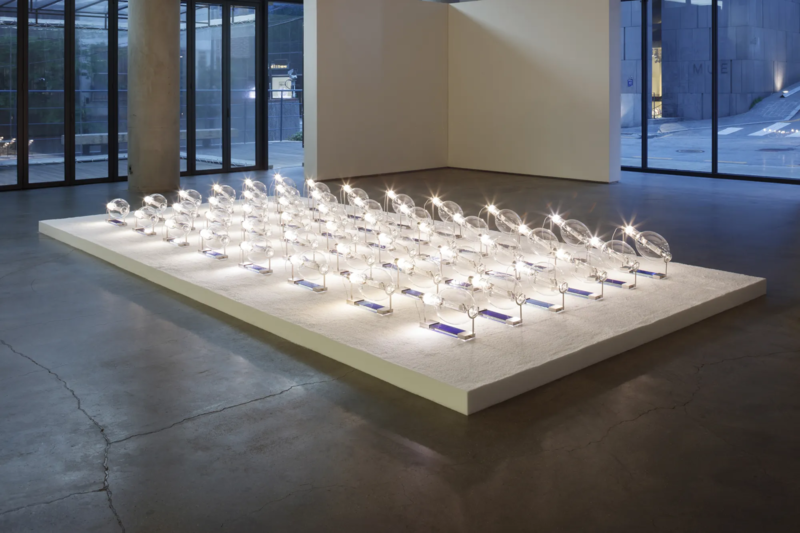
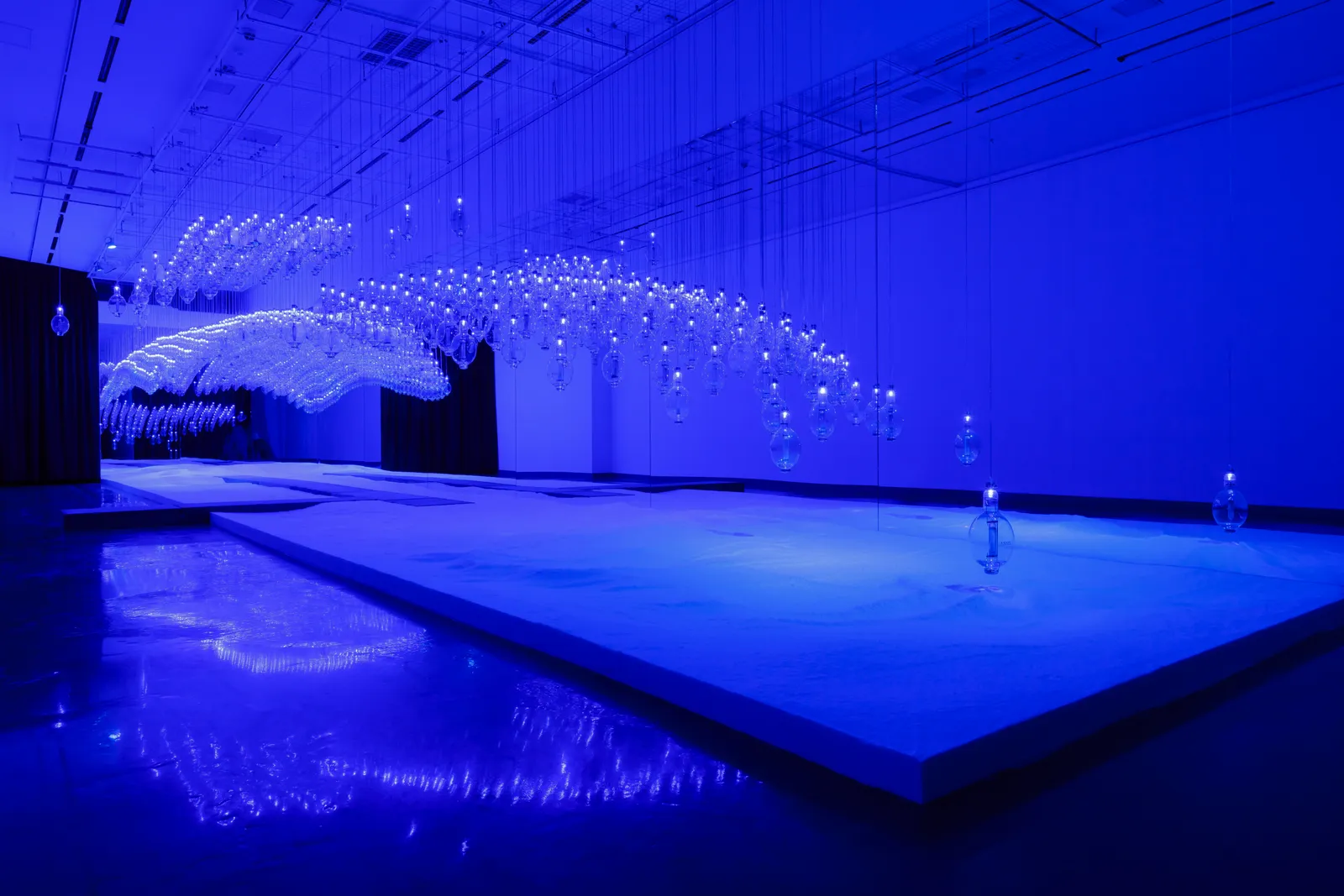
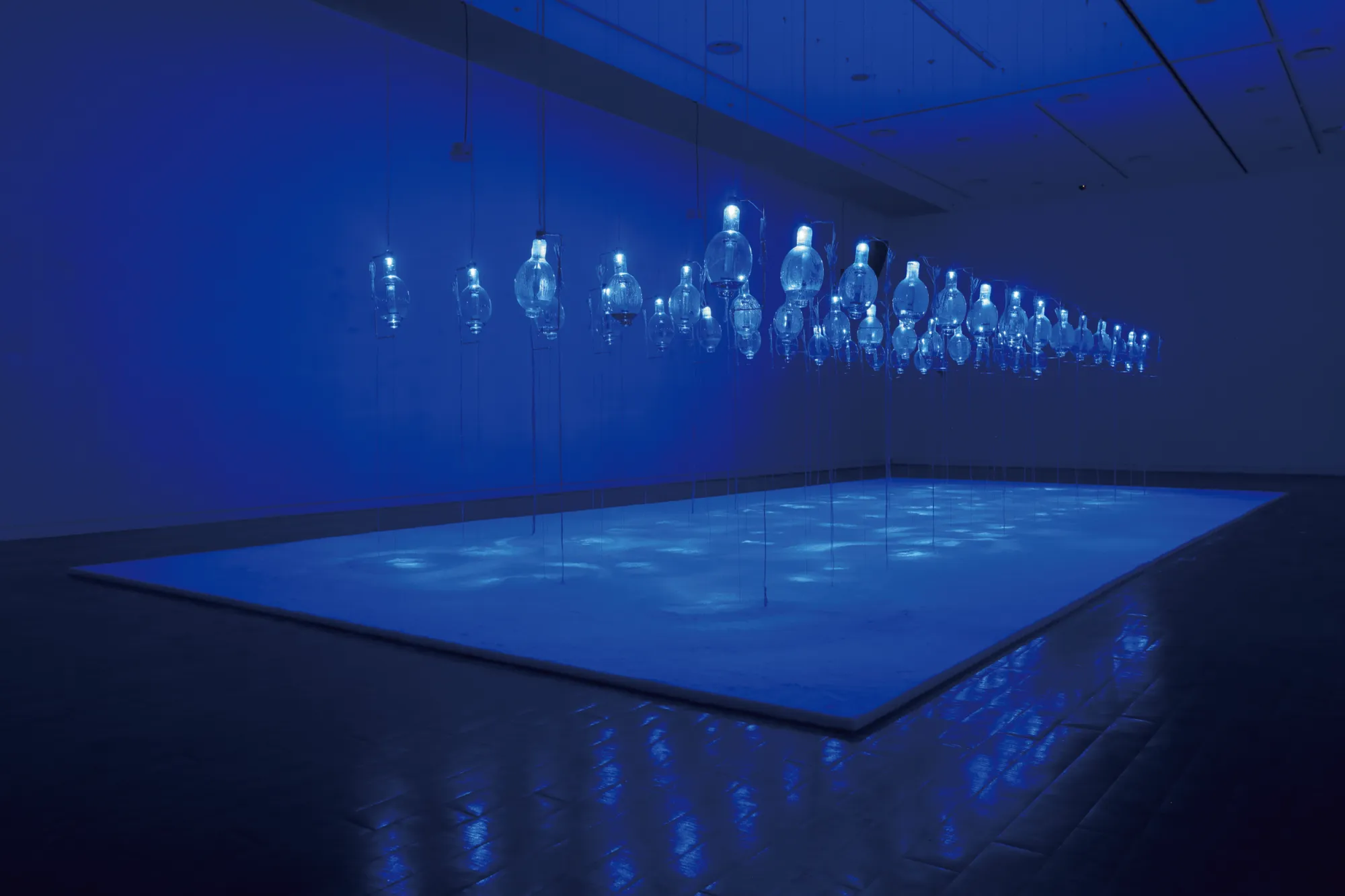
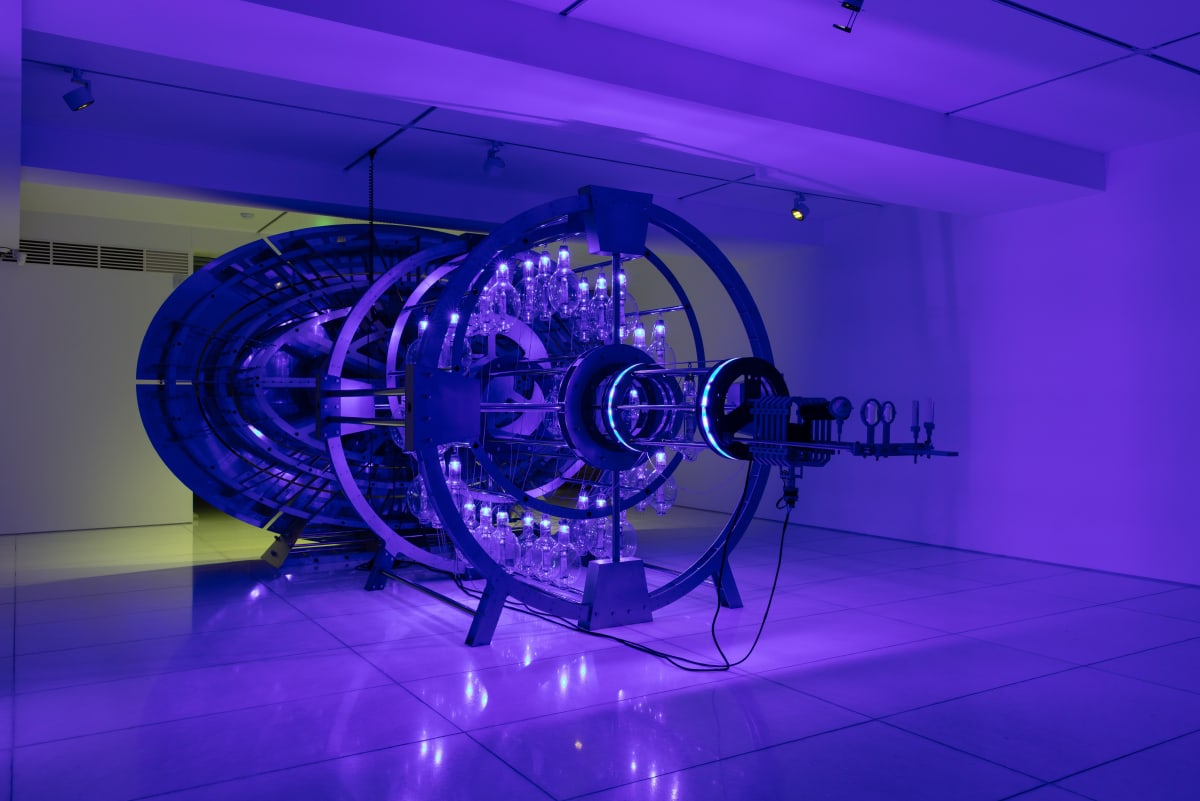
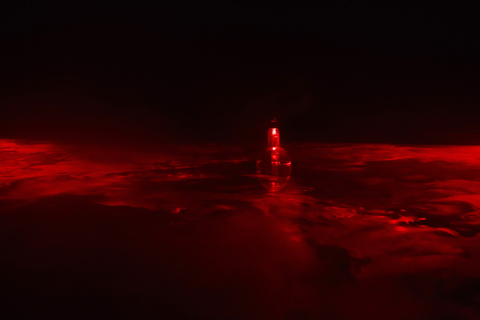
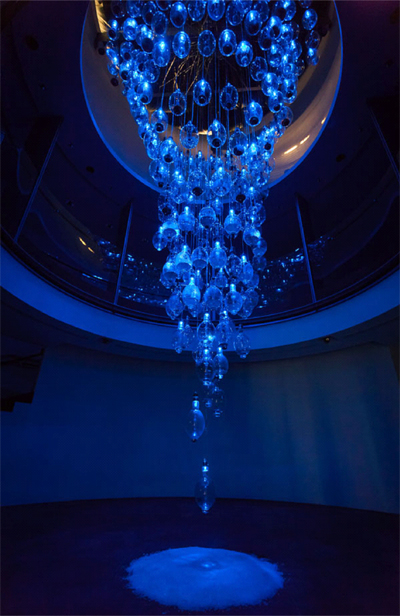
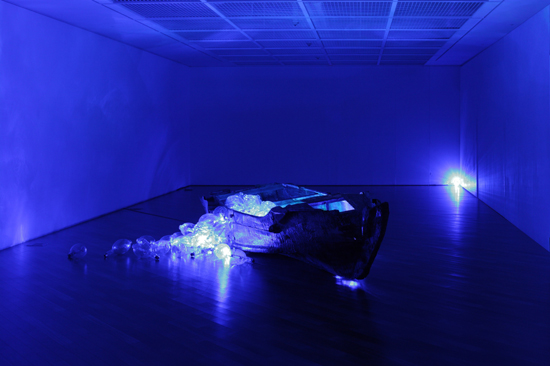
Then I began to see the fishing lamps suspended in the air along with the people, the space, and the haze, as well as the abandoned boat occupying the gallery. Before turning to lasers, the artist had first begun making spatial installations using fishing lamps. She believed that the faintly flickering fishing lamps seen far out at sea in the middle of a pitch-black night recalled a lost home, and thus the archetype of existence itself.
To this, she added the sound of waves collected from the sea, heightening the nostalgia and longing evoked by that lost home. And as for the boat: originally, the artist printed images of boats on the surfaces of the fishing lamps, but recently she has replaced them with an actual object.
In this way, the gallery became a kind of quasi-sea: a place with sea, sea fog, fishing lamps, and an abandoned boat. This quasi-landscape calls to mind not so much a narrative grounded in reality as an unreal narrative akin to a distant legend, which likely resonates with the feelings of nostalgia and longing summoned by a lost home and, therefore, by the archetype.
In doing so, the artist transforms herself into a stage director of space, a manipulator of time, and a tuner of emotion. We are told that 《A Dialogue With》 is the exhibition theme. It likely refers to an unexpected encounter, confrontation, and dialogue with a lost home, and thus with an ontological archetype.
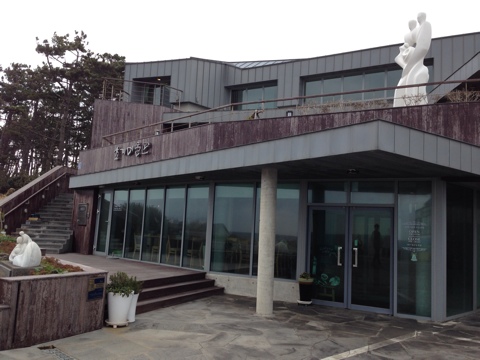
In a white-cube setting such as Whanki Museum, spatial direction is relatively easy because the environmental conditions are stable and the system is closed. In other words, unless something unexpected occurs, the work proceeds according to the initial conception. Once outside the museum, however, the situation changes.
One becomes exposed to unforeseen variables, and in the process of responding to them, the staging of space becomes indeterminate, variable, and unpredictable. For that reason, repeated site visits are essential, and the installation itself must be carried out thoroughly on site. In the course of that process, the original plan is continually revised, and a mode of spatial direction suited to the site gradually takes shape.
It is a spatial installation and a site-specific work. A completed work is not transplanted into a site after the fact; rather, the site determines the work. When the site changes, the work changes as well. Without the site, there is no work. In this way, the work shares its fate with the place. And as the site encounters the work, it transforms like a many-colored bird, and the character of the space is redefined.
Yeoncheon Art House, where the exhibition was held, offered an ideal environment for experimenting with this kind of site-specific practice as an alternative space or multidisciplinary cultural venue affiliated with the Gyeonggi Cultural Foundation. Originally a brick factory, it had long since closed and now remained in ruins.
Accordingly, sections of the brick walls had collapsed, and the slate roof was partially broken, revealing patches of sky through the openings. Beneath one of these holes stood a fairly large tree, apparently grown from a seed that had drifted in by chance, silently conveying the transience of time.
Flowers and grasses had also pushed their way through cracks in the cement floor, testifying to the vitality and regenerative power of nature. Inside the building, rainwater and soil had formed sedimentary layers that seemed liable to collapse underfoot. Long kilns, each about the length of a small tunnel, stood on either side, while rails ran along the floor between them, presumably once used to facilitate the movement of freight carts.
The place struck me as a house of time in the image of a ruin, and also as a sanctuary of ecology. It also brought to mind the recent exhibition trend of introducing contemporary art into such houses of time. One could not help but think that the imagery of ruins, the house of time, and contemporary art—especially ecological art—formed an unexpectedly compelling harmony.
It was also easy to understand why the exhibition organizers had invited the artist. Because Yeoncheon is located near the DMZ, they may have expected an interpretation of the site in relation to the DMZ. Rather than an ideological reading of the reality of national division, they may have hoped for an ecological interpretation in which halted time begins to flow again, or dead life is revived.
Such expectations are also suggested by the exhibition theme, 《Relighting》. The word means to illuminate again, or to reignite. Through the symbolic meaning of light, it suggests the regeneration of an abandoned site as a space for contemporary art, while also carrying ecological, symbolic, and practical implications: illuminating an ideologically dead—and thus rigid—place with light, the very lifeline of life itself, and bringing it back to life.
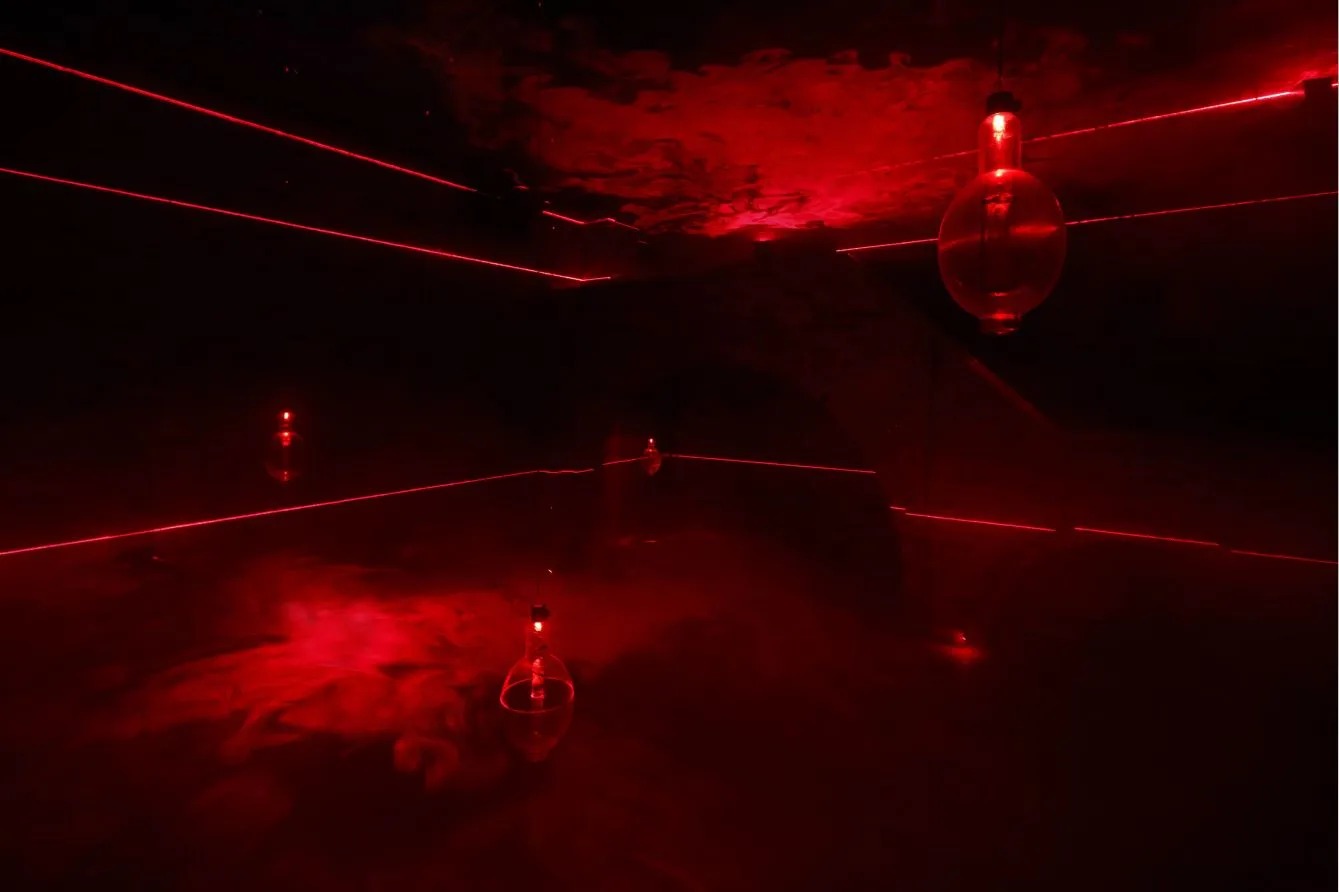
The problem was darkness. For an artist who works with light as a medium, darkness was essential. Light can exist only when there is darkness. Yet there was too much light in the space to obtain the darkness she needed. Efforts were therefore made to block out as much light as possible, though some leakage remained unavoidable. Then the full installation began. Fishing lamps were brought in, lasers were introduced, and fog was added.
The tall tree growing almost to the perforated ceiling was left untouched. Rather than removing it, the artist preserved it and incorporated it into the work. It would play a decisive role in relation to the ecological dimension of the piece.
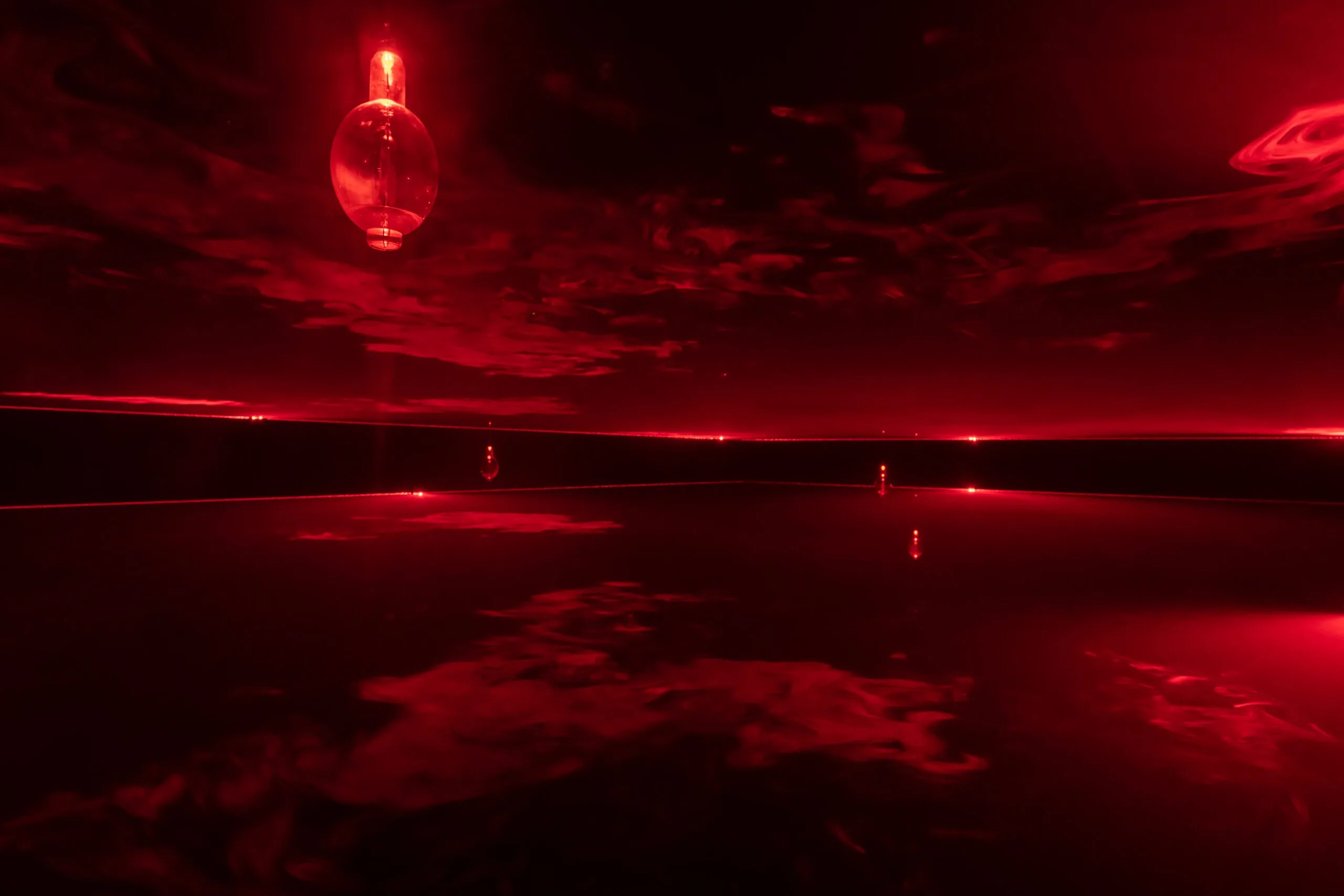
In a white cube, the intensity of light and the degree of darkness can be controlled, allowing a stable spatial environment to be maintained. Here, however, that was impossible. The complete darkness available in a white cube could only be experienced here late at night. As a result, the work appeared different by day, by night, and at midnight. It changed again at sunset, when the space was enveloped in reddish light, and again at blue dawn.
The spatial environment shifted constantly. Time thus entered the work as a medium and came to play a decisive role. Insofar as time becomes crucial, the work can be understood as time-based art; insofar as the spatial environment changes from moment to moment, it becomes process art. In this way, the artist draws the two fundamental axes of visual art—and perhaps of existence itself, time and space—into the very core of her practice.
Speaking of space, the artist refers to the premise supporting her work as ultimate space. This likely means that her work is, ultimately, a practice of spatial staging. Yet the meaning of this term differs considerably between her fishing-lamp works and her laser works. As discussed earlier, her spatial installations using fishing lamps evoke a lost home, and therefore an ontological archetype.
In this sense, ultimate space may refer to the ultimate state of existence, or ultimate being, encountered in the process of being led toward a spatial experience in which one comes face to face with that ontological archetype.
In the fishing-lamp works, then, the emphasis in ultimate space falls less on “space” than on the “ultimate,” as in ultimate existence. In the laser works, by contrast, the center of gravity shifts away from such ontological meaning toward the formal logic of space itself. What does this mean?
As is well known, the fundamental formal elements of visual art can be reduced—and therefore limited—to point, line, and plane. Points joined in succession form a line, and lines extended together form a plane. All forms become possible through variations of such planes.
Applying this formal logic to the artist’s work, the laser itself corresponds to a point, or a point of light. And as we know, a laser travels in a straight line, thereby producing a line. When lines overlap and intersect, a plane is formed. Yet this plane is an empty or virtual plane: it can be perceived as a plane, but cannot itself be physically sensed. Fog is therefore introduced to fill this empty plane.
And as discussed earlier, moving landscape-like images, fleeting as apparitions, become visible upon it. In this way, the laser in the artist’s work can reveal the hidden structure of an existing space, add another structure onto the existing one, or introduce an entirely independent structure into the space from the outset. Through these operations, the spatial environment is expanded and intensified.