Fishing Lamps, Shimmering Like a Dream
Certain sounds, scents, and images summon memories of childhood and evoke nostalgia for one’s hometown. This is known as the Proust effect, named after Marcel Proust, author of In Search of Lost Time, widely regarded as a pioneering work of modernist fiction. At times, one can see distant lights flickering through the pitch-black darkness of the night sea.
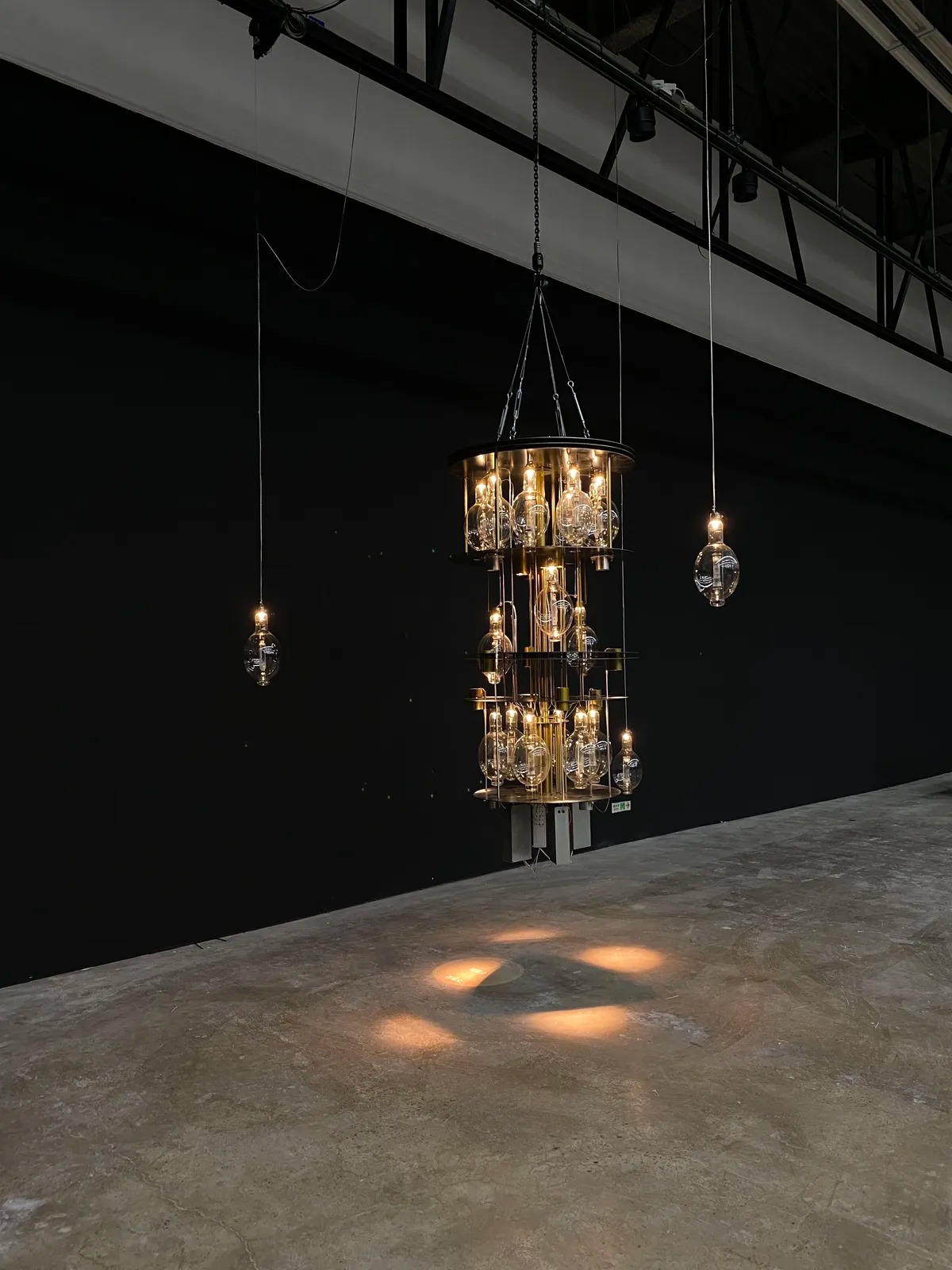
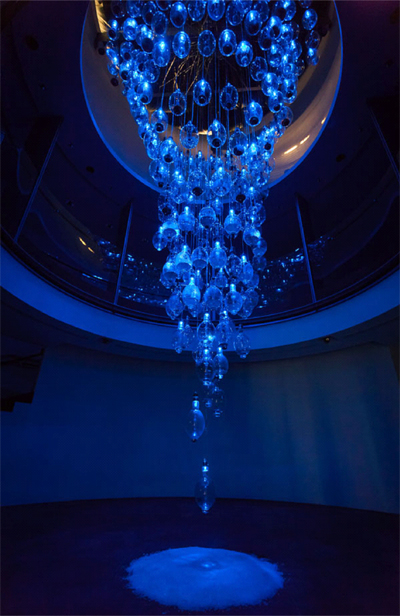
These are fishing lamps lit on boats to attract squid drawn toward the light. To an artist whose hometown lies by the sea, the sight of fishing lamps seeming to float and flicker dreamlike in the darkness must have recalled long-forgotten childhood memories and brought to mind a lost home.
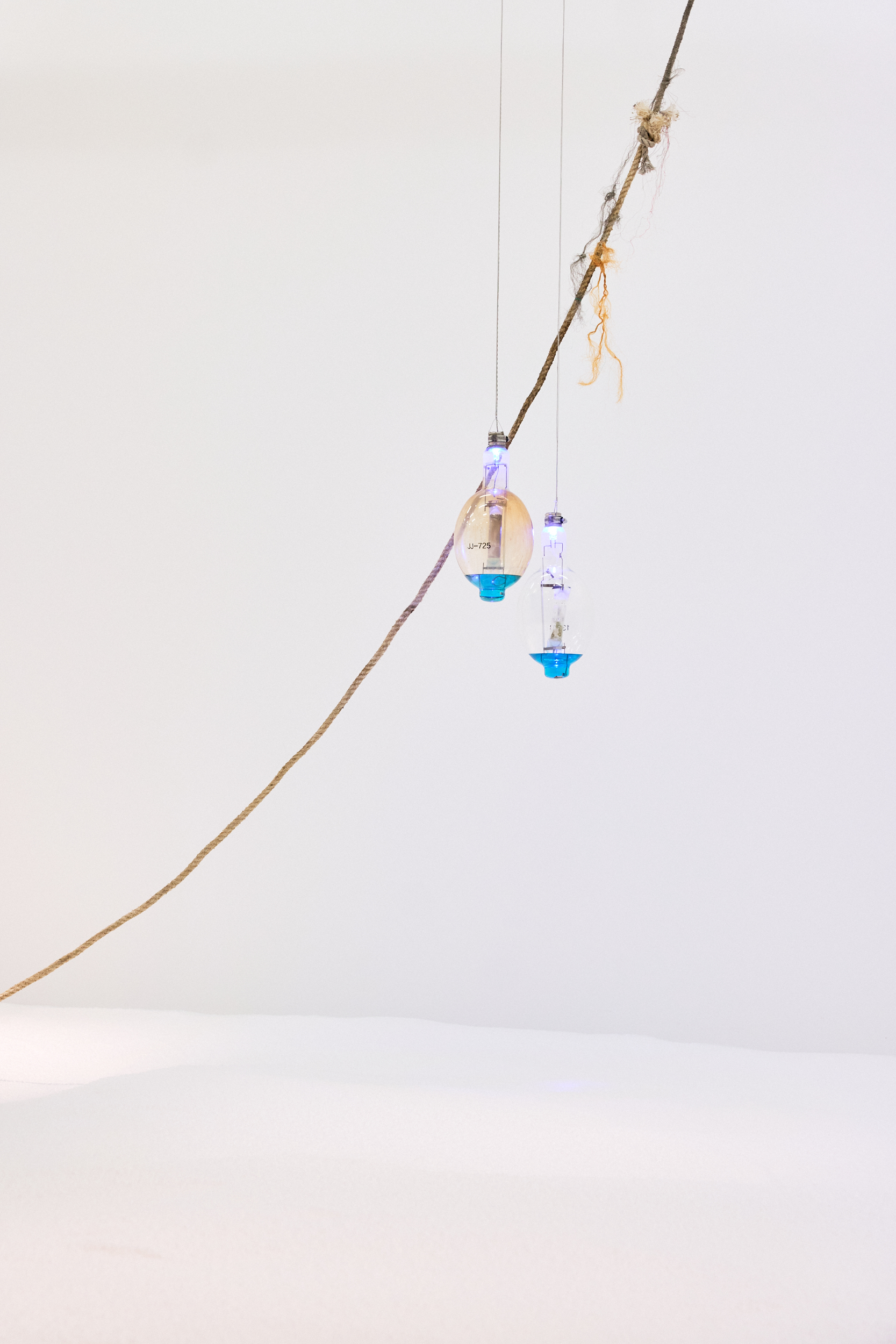
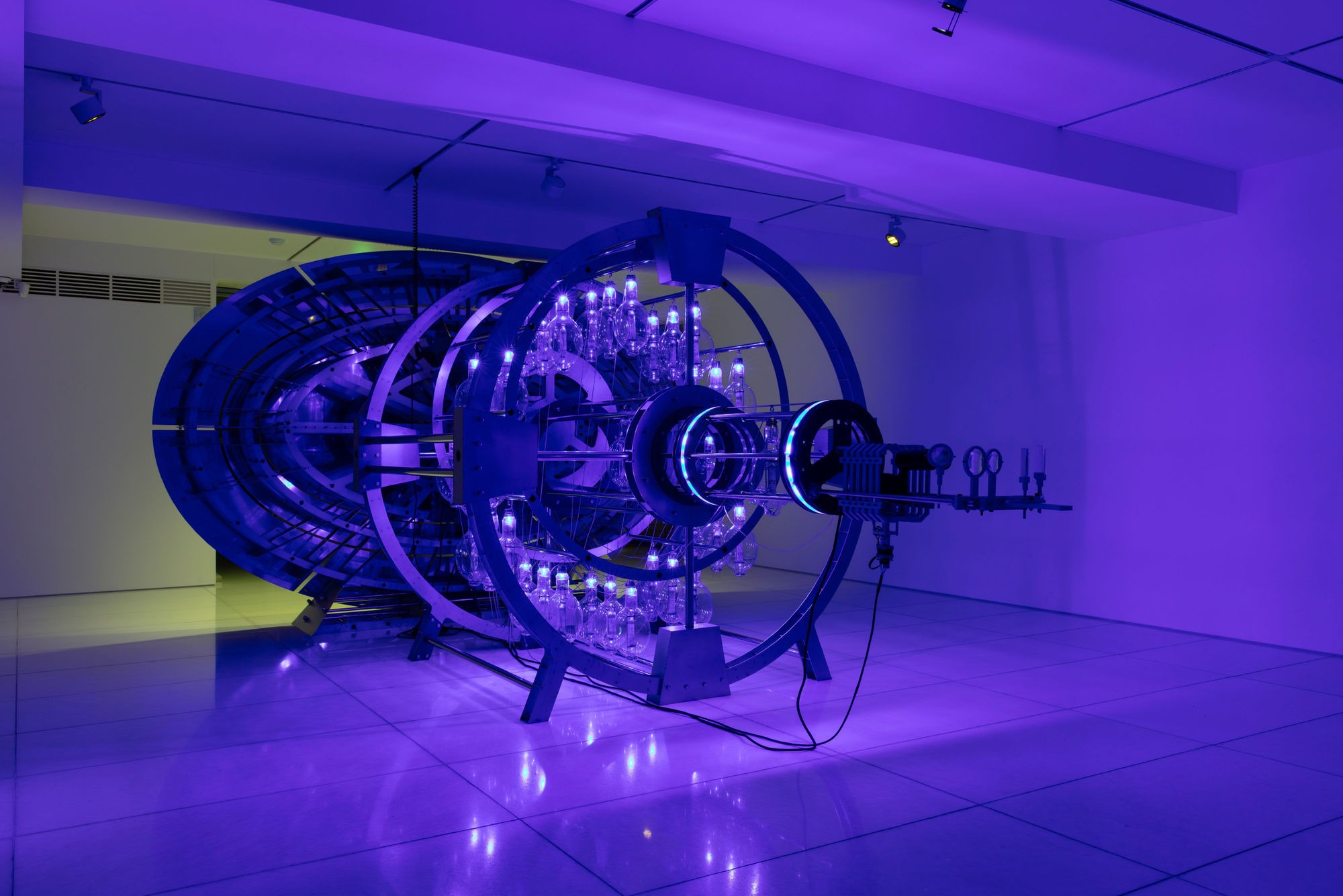
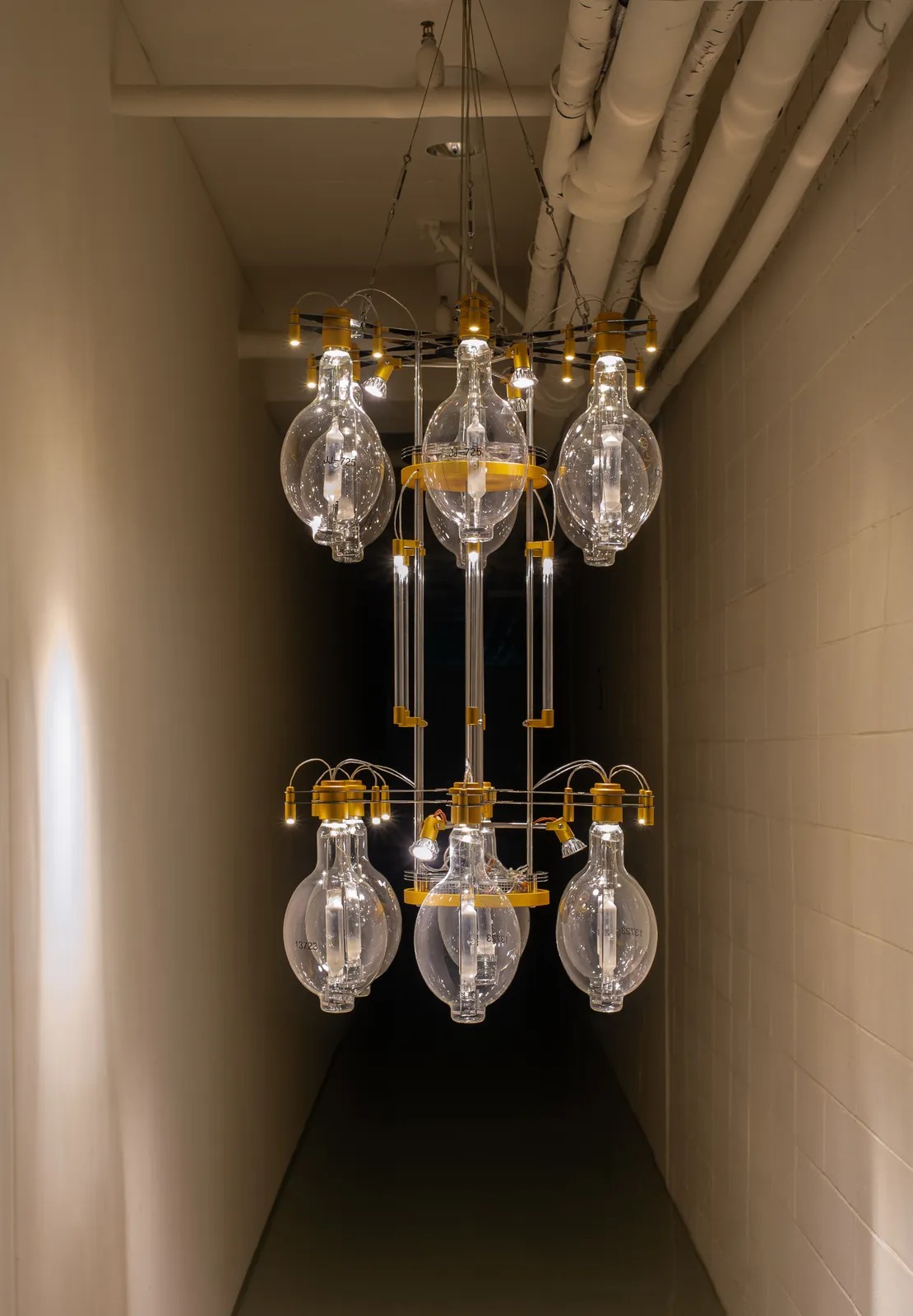
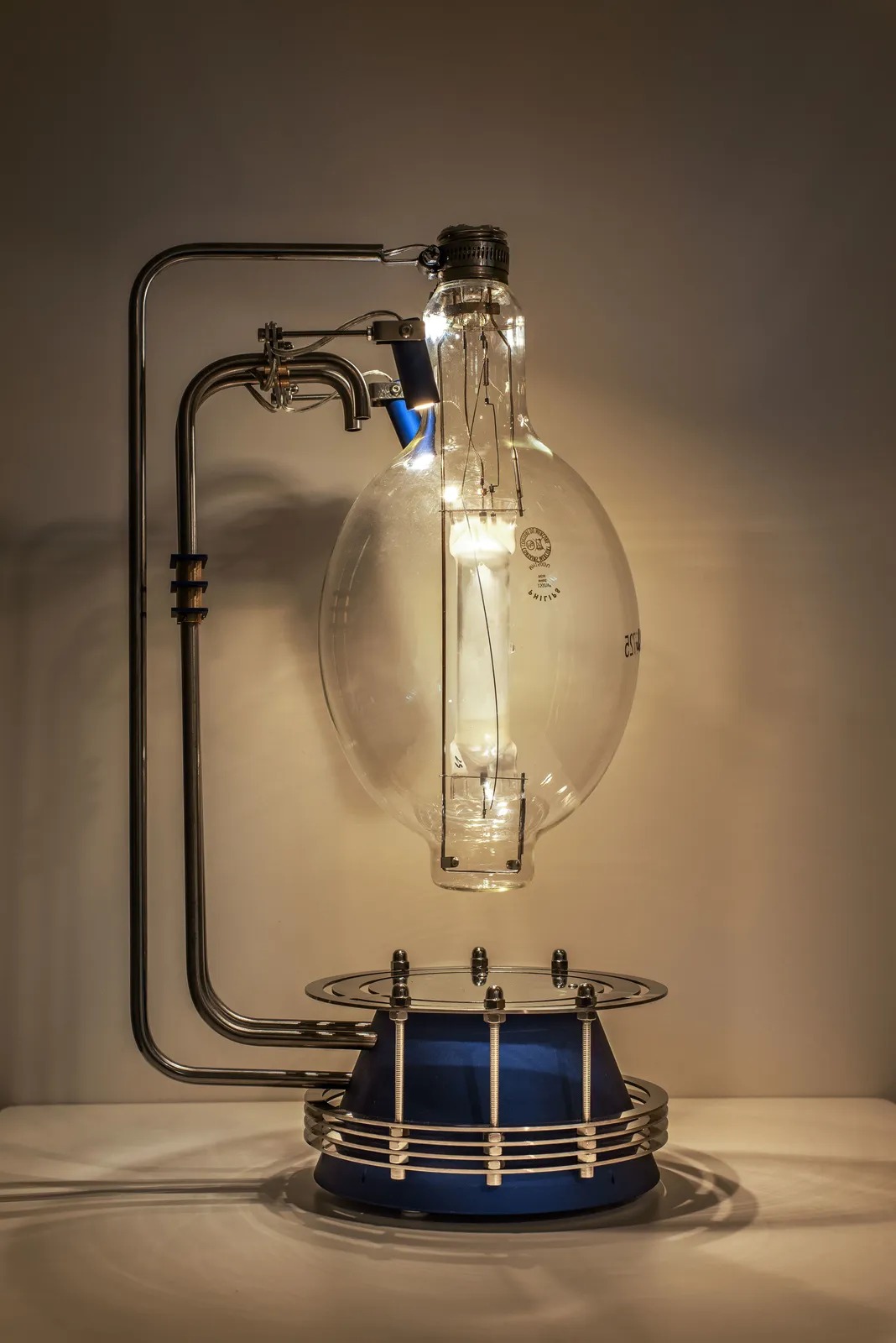
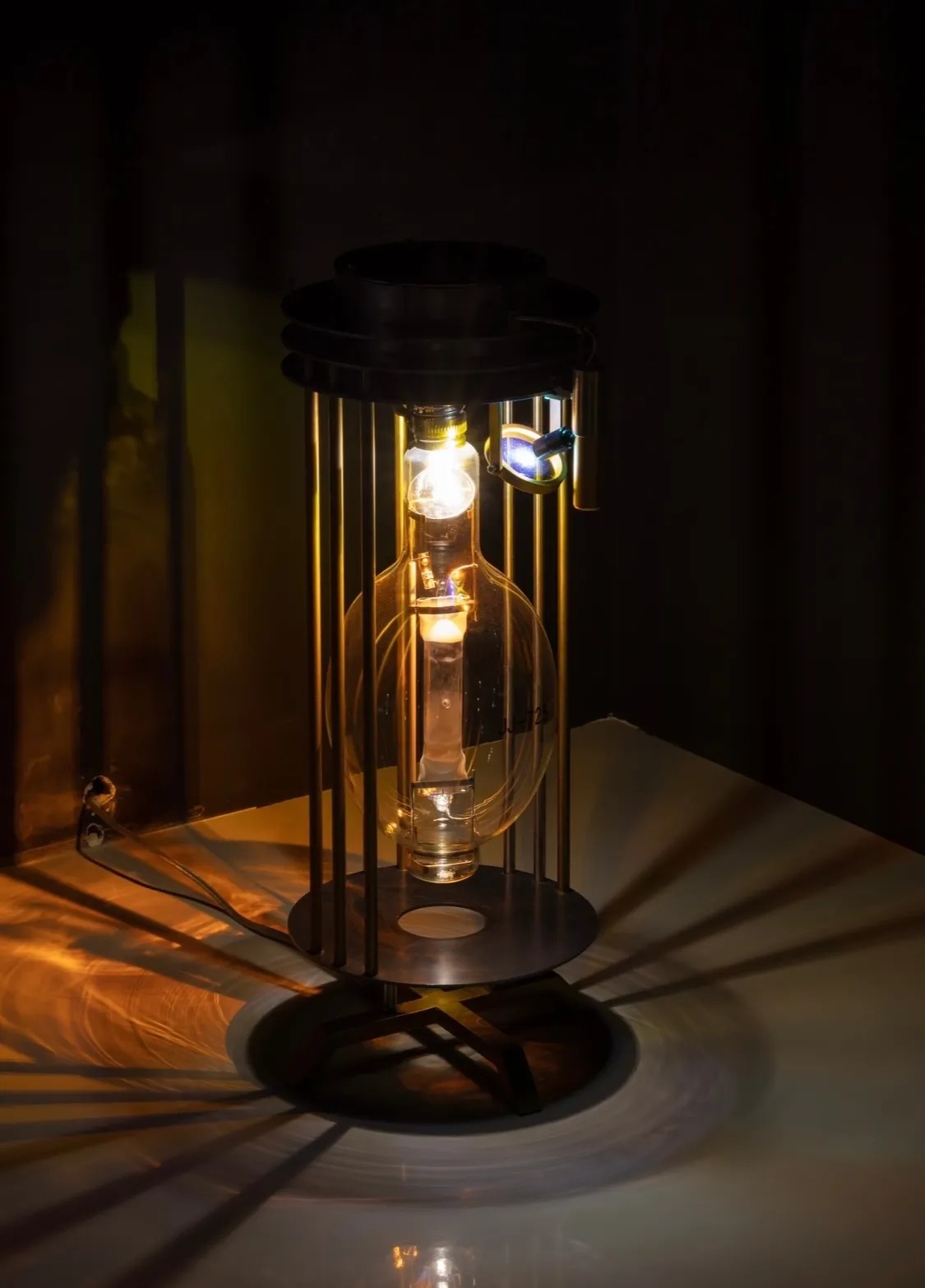
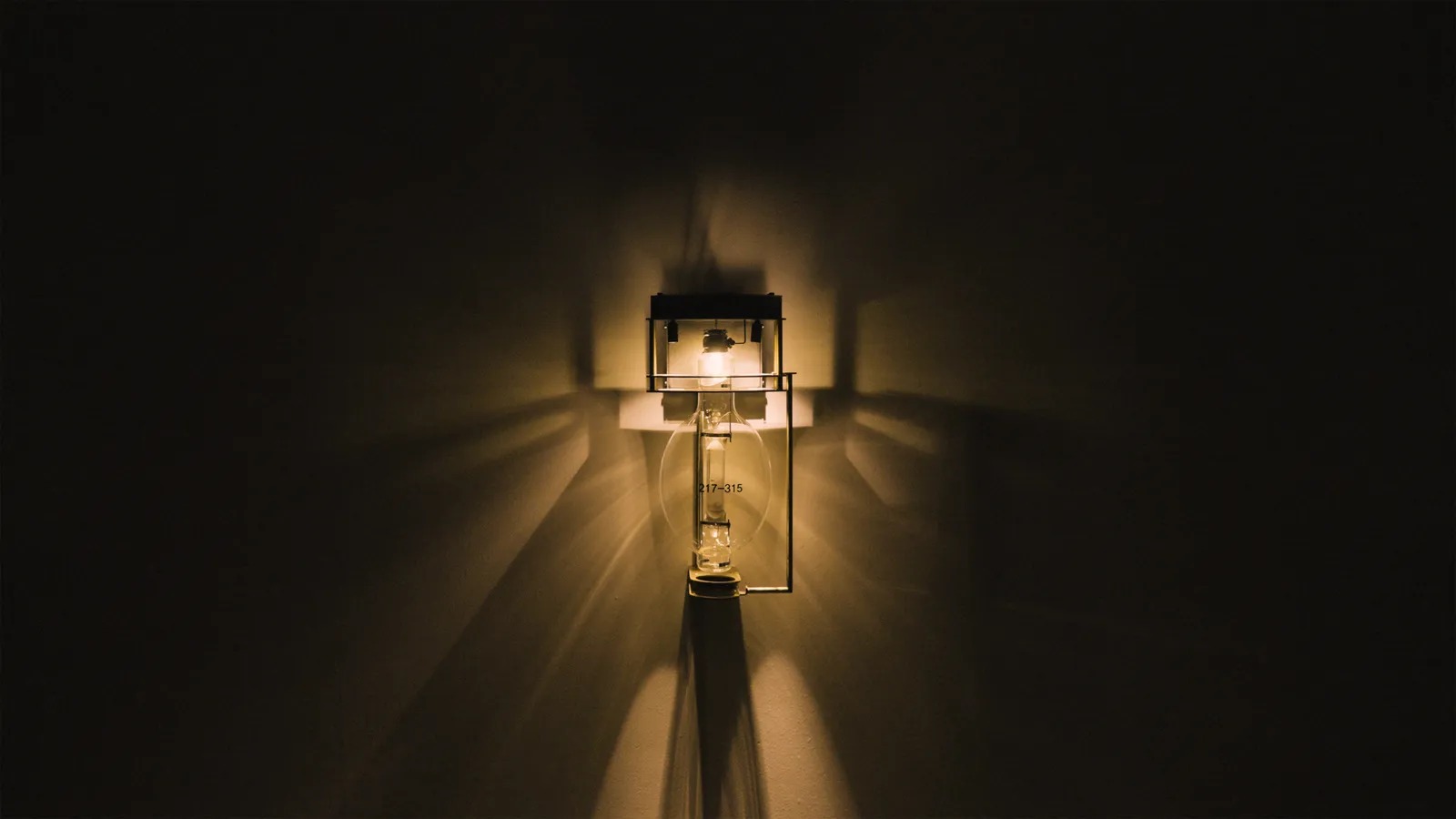
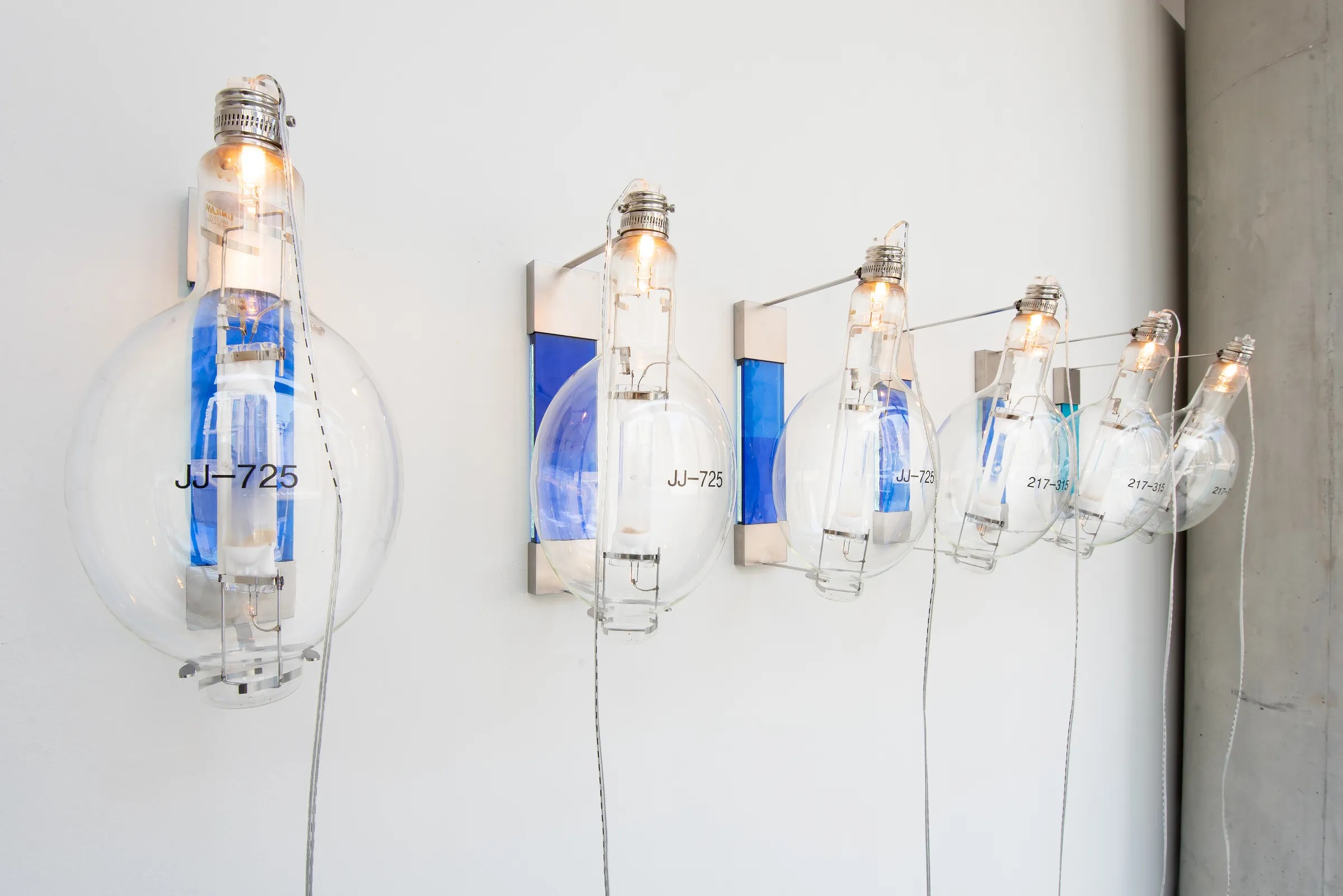
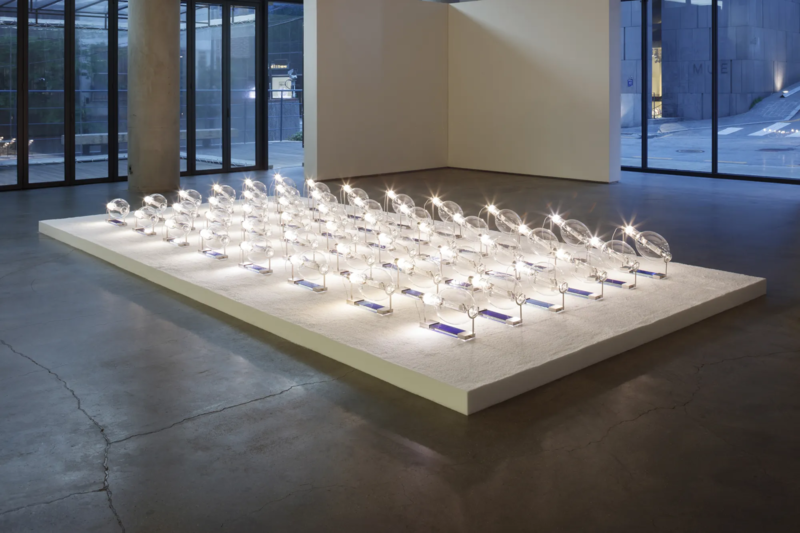
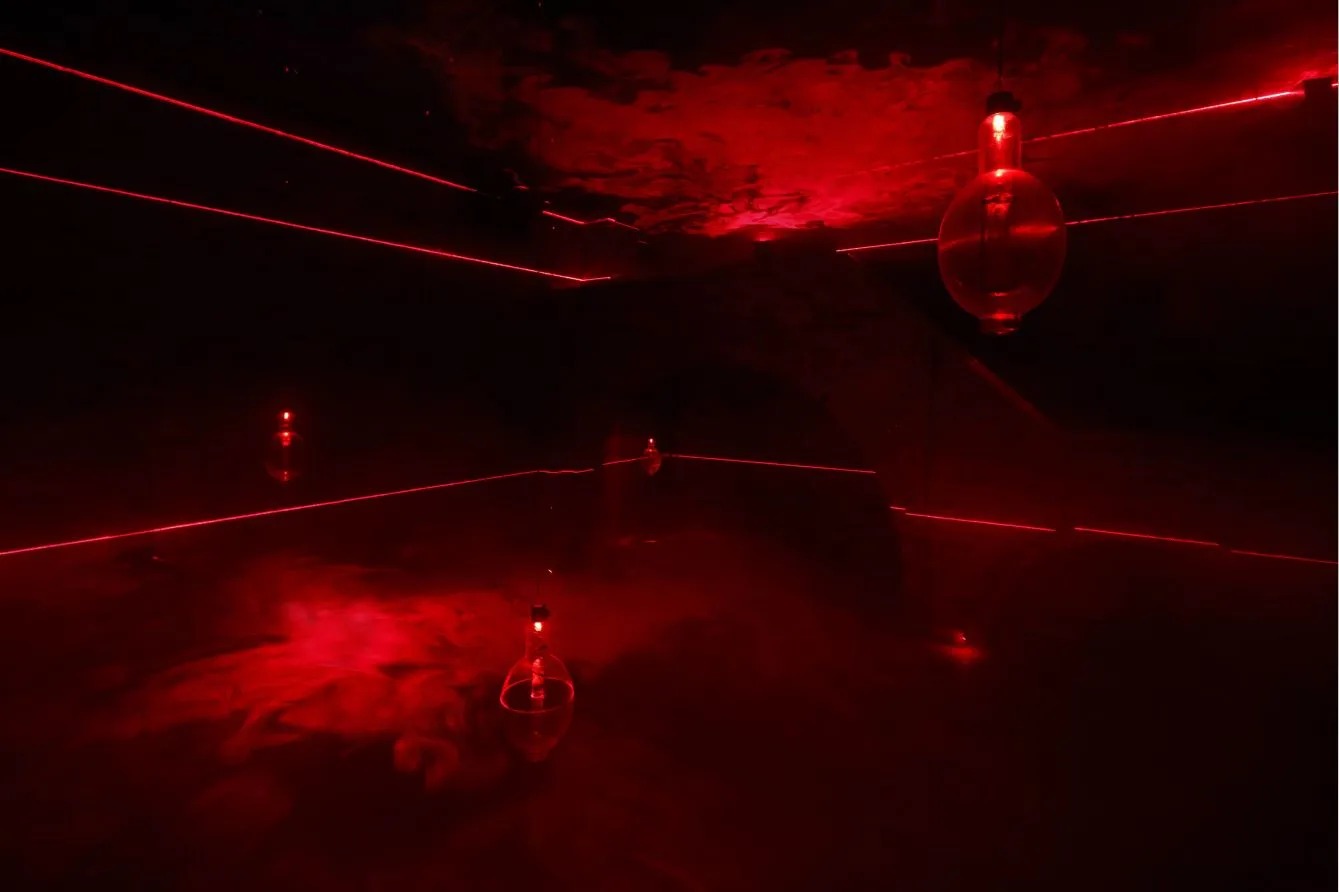
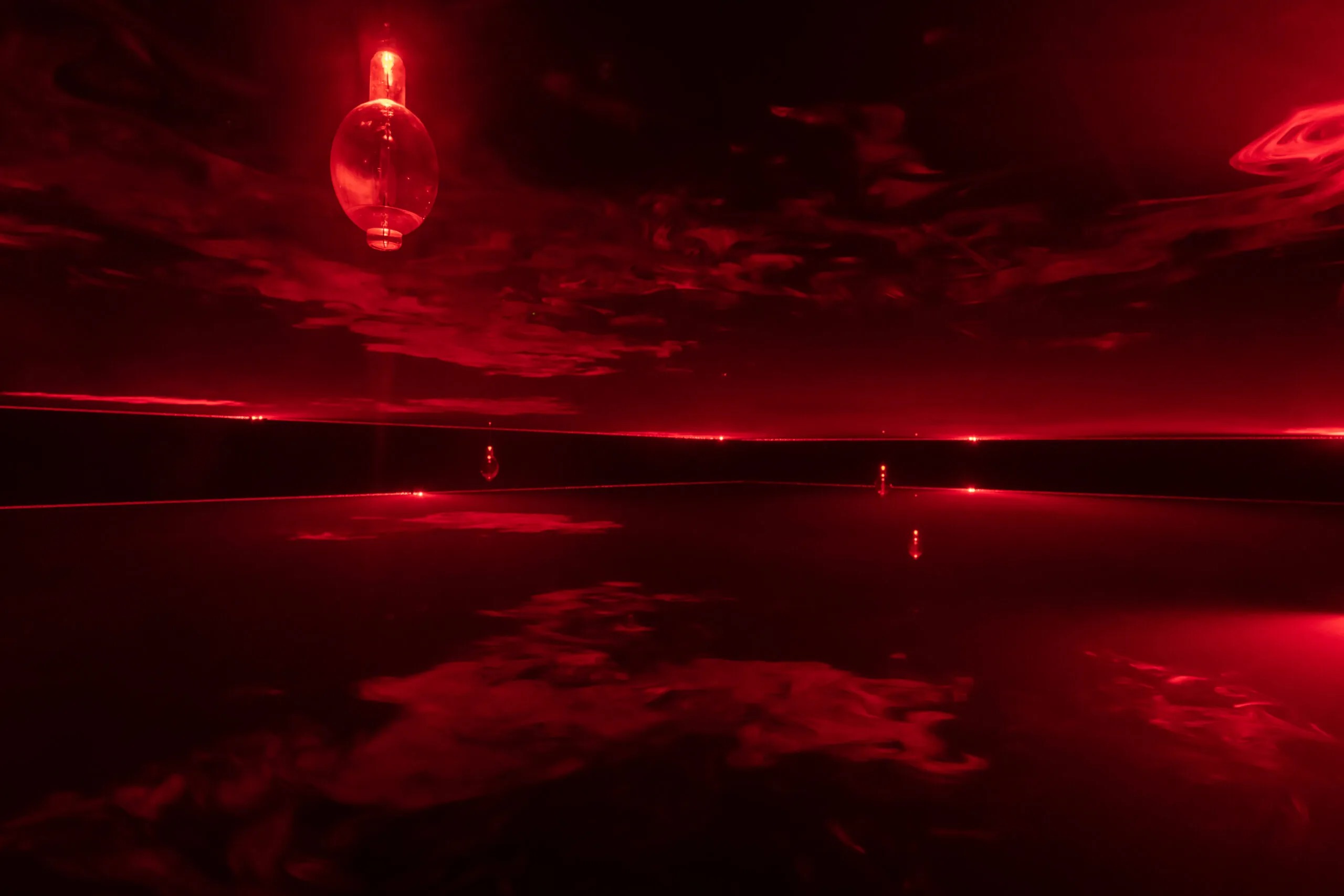
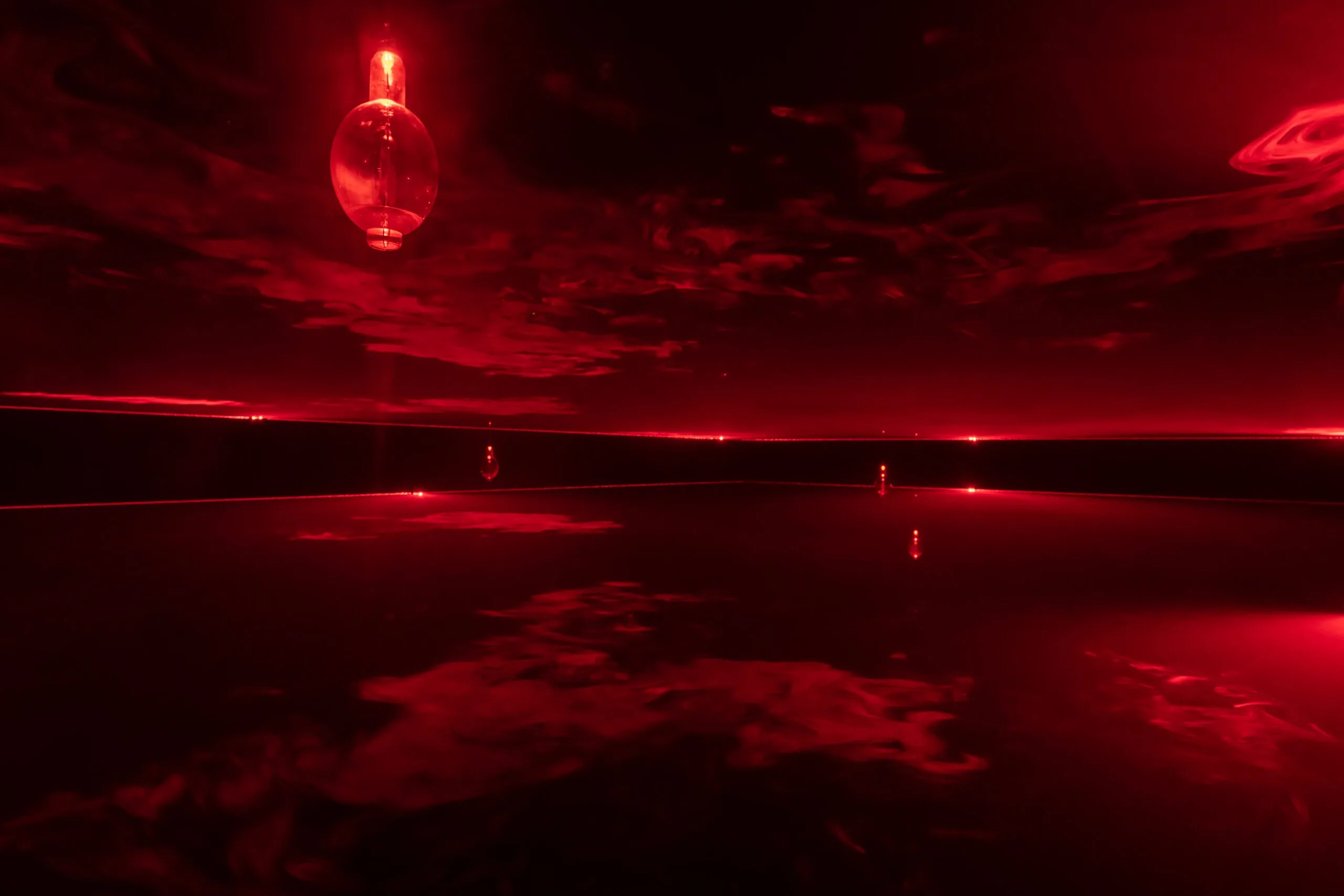
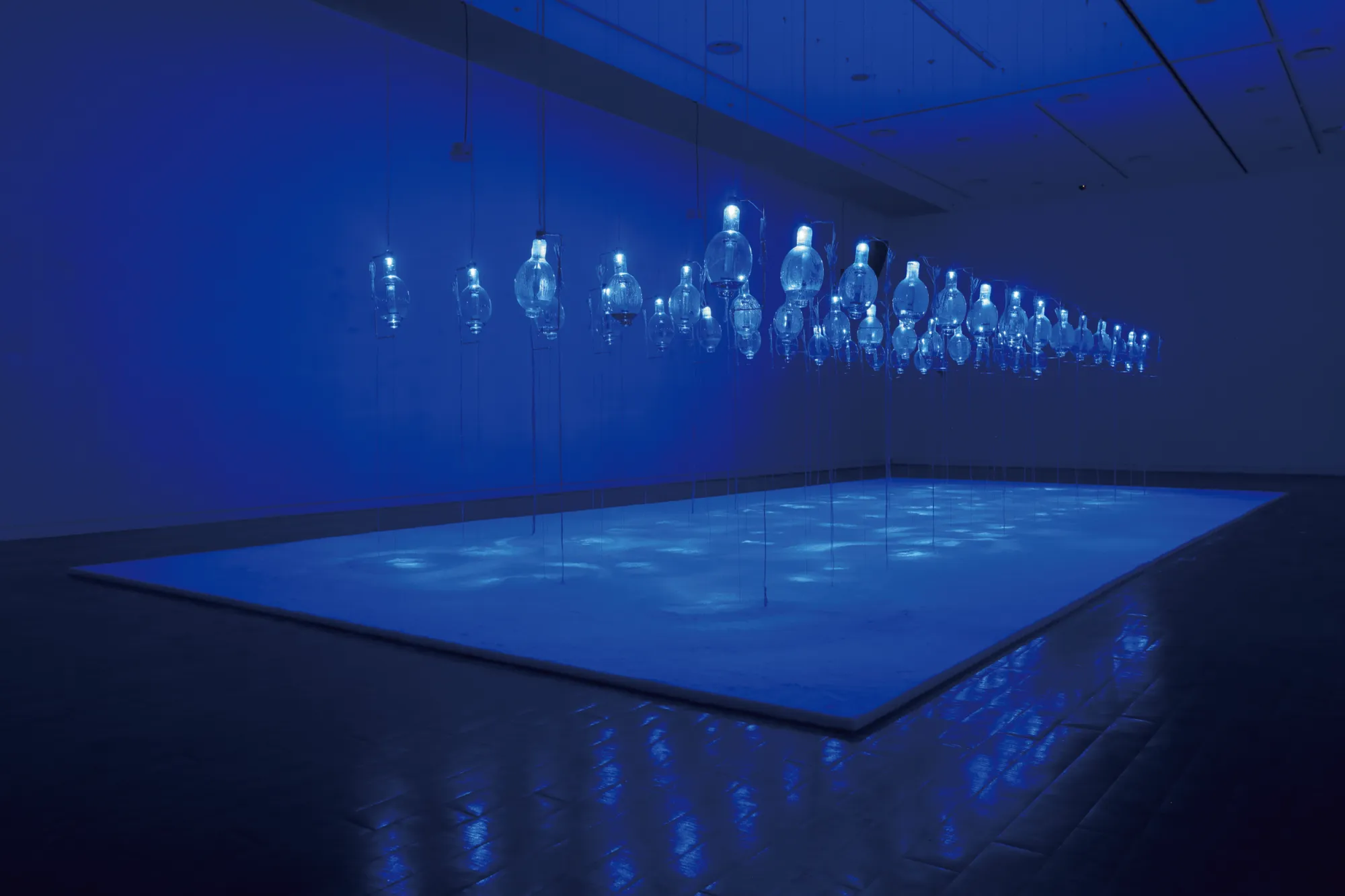
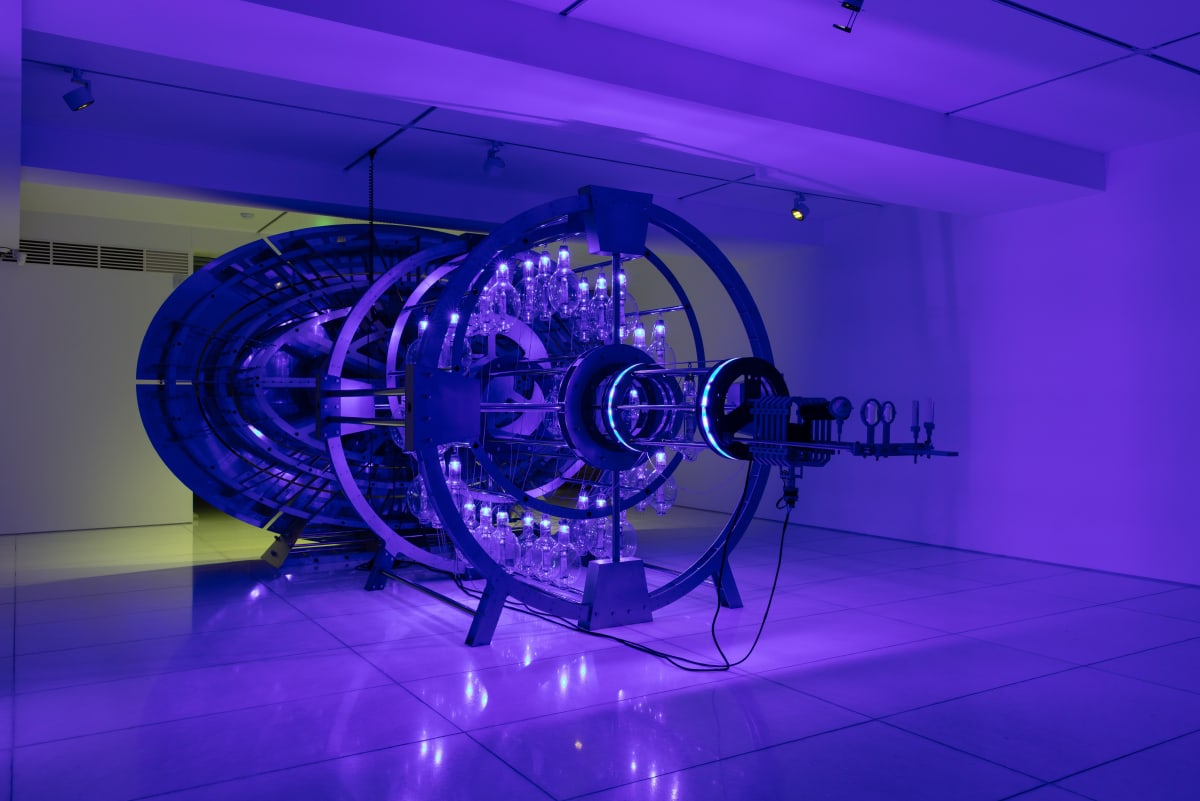
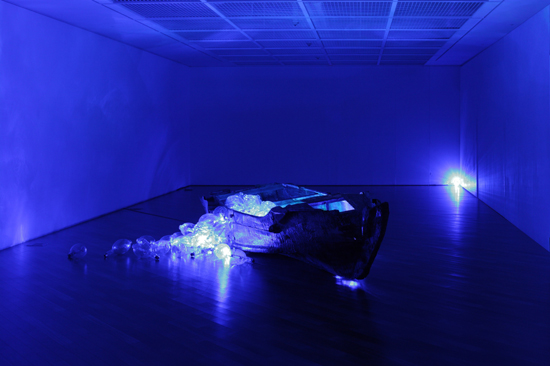
In this way, fishing lamps entered the artist’s practice. Yet the kind of fishing lamps she saw as a child, and the particular form she sought, are no longer manufactured and therefore cannot be obtained. Instead, the artist acquires discarded fishing lamps and revives their extinguished light by fixing small LEDs inside them.
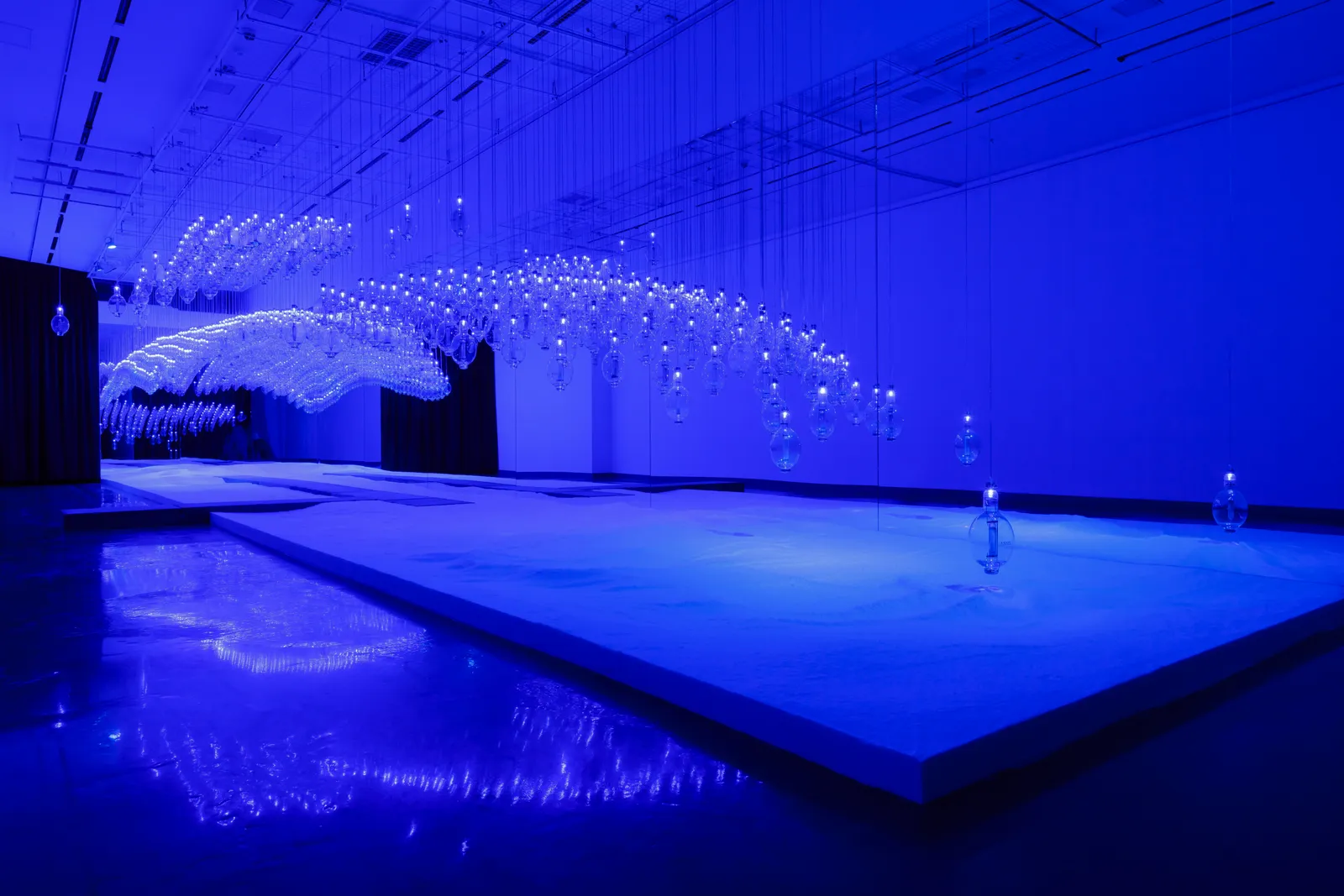
Darkness is essential for drawing with this light. In the artist’s installations, darkness thus provides the environment in which light can draw images, while at the same time evoking the pitch-black sea itself.
When mirrors are installed within the space, the reflected images of the fishing lamps expand in every direction, creating an unreal and dreamlike atmosphere. At times, the artist also incorporates sounds of waves recorded at sea, producing a synesthetic experience in which visual and auditory images become mutually interchangeable.
In her early works, she sometimes placed images of boats on the surfaces of the fishing lamps—more precisely, printed them—but over time her practice became typified by presenting the fishing lamps themselves more directly. This tendency toward installation was further reinforced when actual abandoned boats began to appear as objects in place of depicted images of boats.
The artist’s installations using fishing lamps thus evoke a lost home. Here, “lost home” refers not only to a geopolitical place, but more importantly to an intangible place: the archetypal site from which existence originates, and therefore an ontological archetype. Put somewhat dramatically, modern people suffer from a sense of having lost this ontological archetype.
In this sense, the artist’s work may be understood as serving to console and heal the sense of loss experienced by contemporary people who have lost both their home and their ontological point of origin.
Laser, Cutting Through Darkness, Reconstructing Space
In this way, the artist draws within darkness. To draw in darkness, there must be light. Only when light and darkness are placed in contrast can either acquire meaning through its existence. Light, then, becomes the artist’s sole material for drawing.
At first, the source of that light was the fishing lamp. As her attention gradually expanded toward other materials, she encountered a form of light that travels in a straight line: the laser. In this sense, the shift in her material of light from fishing lamps to lasers may be understood as a natural progression.
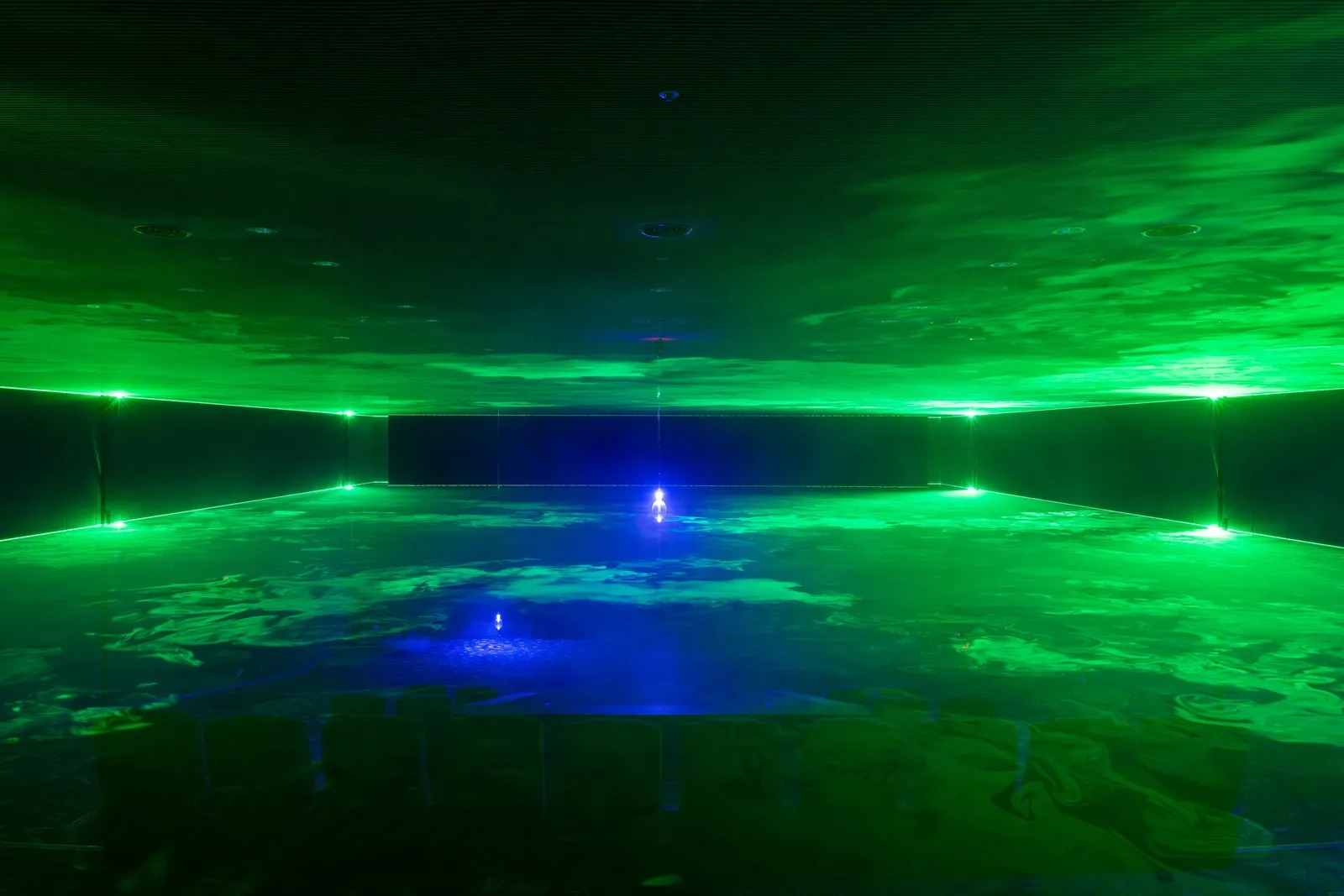
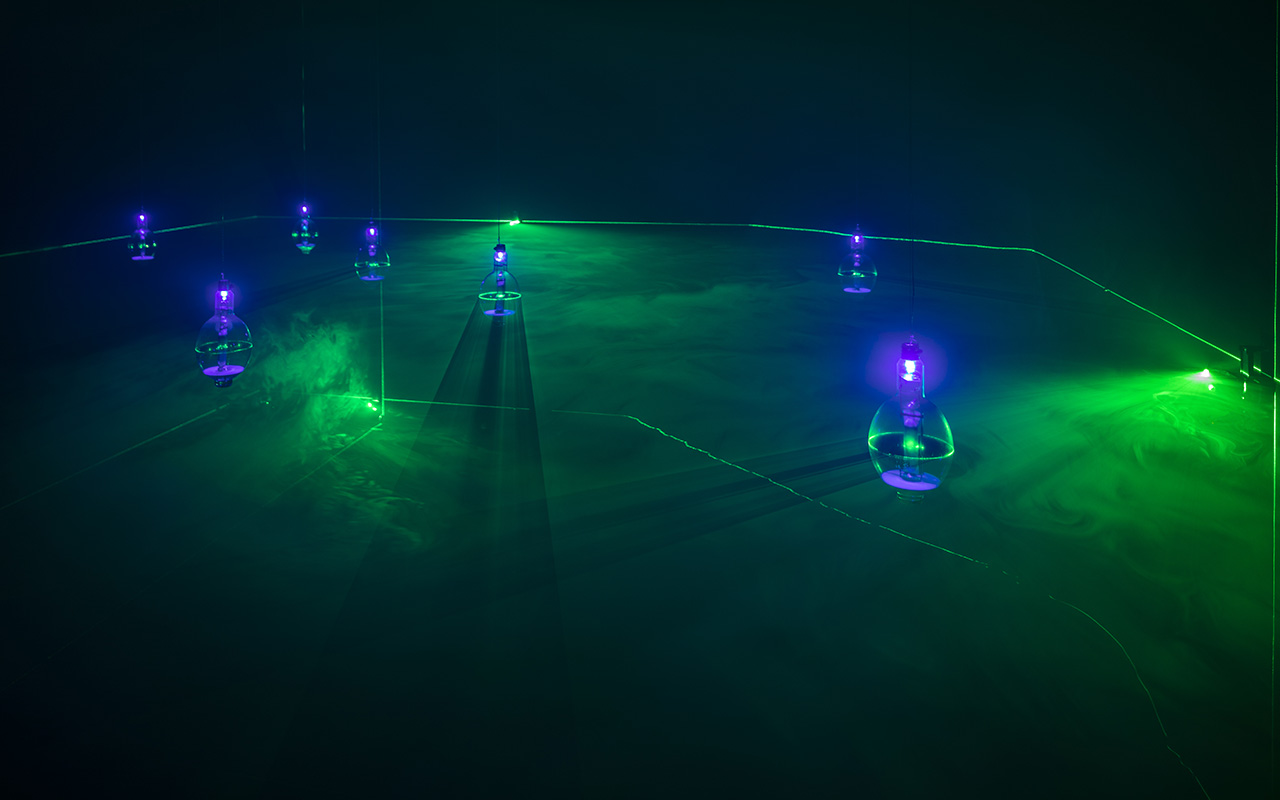
The artist has said that she draws in darkness. What, then, is this darkness, which functions as the canvas or pictorial surface itself? It is space. By projecting lasers into a pitch-black space, she draws with light. Because lasers travel in straight lines, geometric forms emerge, and the convergence of these forms produces yet another sense of space.
Within an actual space, which generally possesses a geometric structure of its own, the artist superimposes another geometric, virtual space constructed from light as material. Hence, ultimate space. This is the theme and conceptual framework the artist arrived at after recognizing that her work with light ultimately concerns the staging of space, the presentation of virtual space, and the induction of another kind of spatial experience.
Ultimate space, therefore, serves as a premise underpinning her practice. It provides a humanistic, psychological, and emotional background. In this sense, the artist’s work may be defined as proposing and varying diverse forms and types of spatial experience through light as a material.
How, then, does the artist construct this ultimate space? What does ultimate space mean to her? And toward what kind of alternative spatial experience does the ultimate space she presents lead the viewer? As is well known, the fundamental elements of visual form are the point, line, and plane. A point creates a line, a line creates a plane, and all forms can be reduced to combinations and variations of such planes.
In art history, Cézanne believed that all forms in the world could be reduced to geometric structures of this kind, which is one reason he came to be regarded as a precursor of Cubism. Had he lived longer, he might perhaps have produced paintings whose clearly defined geometric forms appeared abstract on the surface.
It is also well known that reducing all possible forms to minimal formal elements such as points, lines, and planes constitutes one of the premises of the modernist paradigm. Insofar as the artist experiments with this premise through light as material, her work may also be seen as reflecting a modernist sensibility.
Again, then, how does the artist put this premise into practice? Here, the laser itself is a point: a self-luminous point, or a point of light. And because a laser travels in a straight line, projecting it produces a straight line. Where one laser-generated line meets another, a plane is formed. Yet the plane produced in this way is not a complete plane.
It is perceived as a plane, but cannot itself be physically sensed; it is an empty plane, a virtual plane. How, then, can such an empty plane be made perceptible? At this point, the artist introduces fog, or haze, as another medium. When fog is released through a fog machine, its particles disperse and create a membrane through which light passes, a kind of screen.
The light-permeated membrane, or the screen itself, is thereby perceived as a plane. Although the viewer’s gaze is drawn to the straight beams of light, the light was in fact already flowing through the space; the artist simply makes the materiality of that light, scattered and suspended in space, visible as form.
An intriguing possibility emerges here. By exploiting the rectilinear nature of the laser, the artist can construct virtual spaces within an actual space and induce spatial experiences distinct from those provided by the physical environment itself. Light flowing through space becomes visible only when it encounters fog, allowing latent space, space as potential, invisible space, and perhaps even space that is otherwise absent in itself to be rendered perceptible.
In this way, numerous virtual spaces can be produced within a single physical space, creating an illusionistic effect. The viewer may experience the sensation of being immersed in haze, or of seeing a head submerged within it—an unreal and surreal sensory experience that can at times feel strange or grotesque. One might say that the work expands both the quality and range of sensory experience itself.
As is also well known, fog particles drift and flow. This movement becomes visible only through their encounter with light, and upon the virtual membrane or screen formed in this way, fantastical illusions unfold.
It can feel like watching an ink painting in motion, or like witnessing an ephemeral apparition that lingers briefly before disappearing. This may be precisely the point at which the rhetorical expression of “drawing through installation” acquires a literal and tangible meaning.
Abandoned Brick Factory, Site-Specific
And here there is also a site-specific work. As a form of installation, it shares its fate with the place in which it is installed. The work does not possess autonomy in itself; rather, it acquires its substance only through the site in which it is situated. Without the site, there is no work.
Since a particular place takes the place of the canvas or pictorial surface, such work is characterized by variability and fluidity, changing each time according to the conditions of the site in which it is installed. Boo Jihyun’s practice, in which she draws with light as a material and reconstructs space, operates in precisely this way. Her work can therefore be understood as an interpretation of the space—and of the place—in which it is installed.
How, then, does the artist interpret the exhibition space and the site itself? The interpretation of space and the interpretation of place differ considerably in character. If the former is primarily formal and spatial, the latter concerns the political, historical, social, and ideological background and reality of the site.
Although these two modes of interpretation may appear distinct on the surface, in practice they should be understood as permeating one another and becoming synthesized within the work.
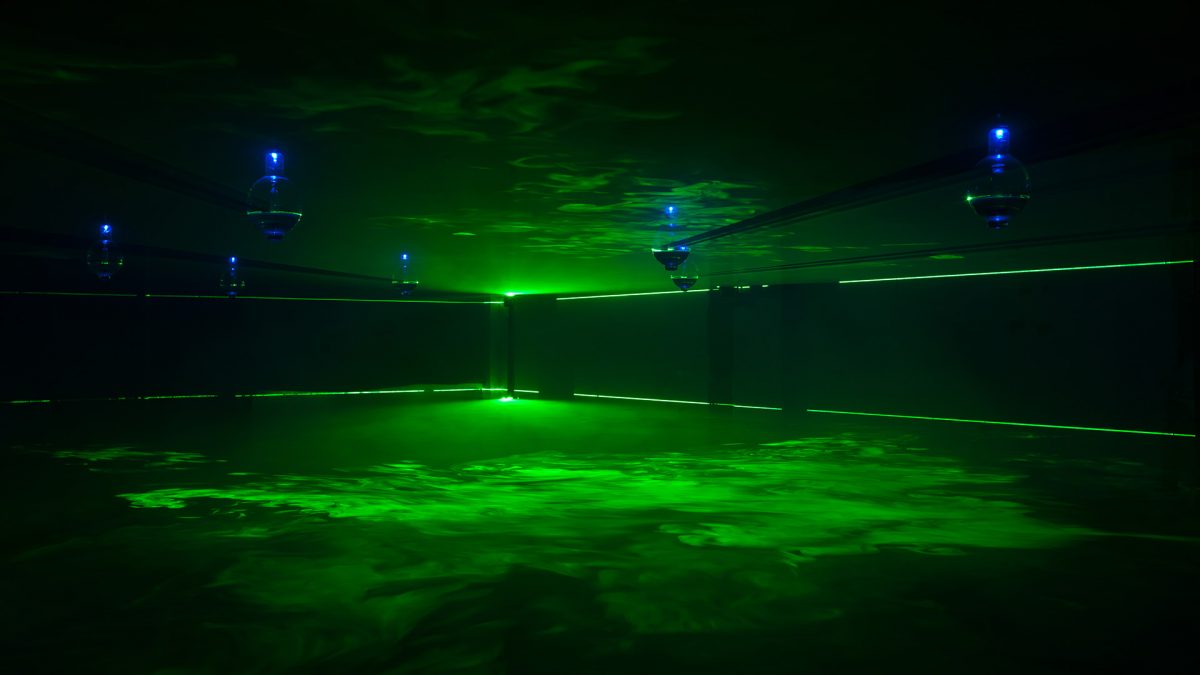
The space, or site, in which the artist installed this work is an abandoned brick factory in Yeoncheon. Although it is now operated as an alternative art space affiliated with the Gyeonggi Cultural Foundation, it is in fact a place that closed long ago and had been left neglected, with scarcely anyone visiting it. As a result, sections of the walls have collapsed, while the slate roof is punctured with numerous holes.
In one area, a tree that appears to have taken root from a seed blown in through one of the larger openings had grown tall inside the building, silently testifying to the passing of time. Elsewhere, unidentified flowers and wild grasses had sprouted through cracks in the concrete floor, bearing witness to the tenacious vitality and regenerative force of nature.
Inside the factory, layers of sediment formed by rainwater that had likely flowed through holes in the roof seemed ready to give way underfoot, while the small iron doors once attached to openings used to inspect the interior of the kiln had fallen away, leaving the holes fully exposed. The high ceiling, the kiln stretching almost as long as a small tunnel, and the rails laid across the floor, presumably once used for pulling carts, evoked the image of ruins sleeping in darkness.
It brought to mind a recent exhibition trend in which derelict spaces are combined with contemporary art as a form of urban regeneration: fashion shows, concerts, and experimental art inhabiting ruins that are themselves houses of time, producing events of an entirely different character.
It seemed perhaps the ideal place for the artist to unfold her work. Yet before fully installing it, there was something she first had to do. A dark space acquires its substance only through light, and light becomes possible only in the presence of darkness. She therefore sealed off the collapsed and perforated walls and roof to create a dim environment.
Within the resulting darkness, she then released a spectacle of light produced by fishing lamps and lasers, while incorporating the tall tree growing inside the space as part of the composition, even if it could barely be seen in the dark.
Because of the long summer daylight, the work could only be seen in its entirety after around eight or nine in the evening. The artist said it appeared different again at midnight or before dawn, when the surroundings became completely pitch-black. In this sense, the work can also be read as an ongoing form of process art whose atmosphere changes continually according to the intensity of light.
Upon entering the darkness, one first needs a little time for the eyes to adjust. Once they do, the lines created by the lasers begin to reveal the skeleton and structure of the space. The straight beams of laser light expose the spatial framework and at times delineate the structure of a virtual space.
The fog filling the interior makes the space appear as though it has been severed horizontally, with heads seeming to float above the divided plane, almost as if suspended in zero gravity. Suddenly, the image of a divided space evokes the reality of national division. As is well known, Yeoncheon lies in a border region, and the dilapidated brick factory, abandoned for so long as though time itself had stopped, begins to resemble an allegory of the divided reality of the Korean Peninsula.
At the same time, the tall tree growing within the ruins recalls the tenacious vitality and regenerative capacity of nature. The ruin itself might thus be regarded as a kind of womb containing ecological art within it, and in this sense it can also be understood as performing a symbolic function of healing and restoring the wounds caused by division.
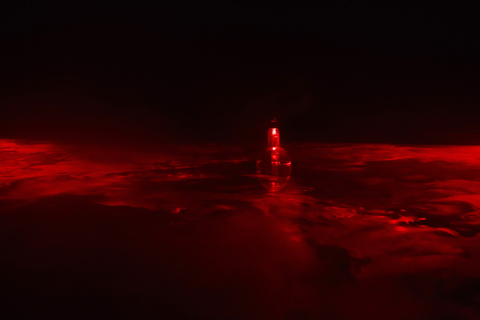
In this way, although a site-specific work may remain materially the same, its meaning changes according to the place and context in which it is situated. In other words, meaning is determined less by itself than by context. Outside context, there is no meaning at all. The color of the light is likewise tied to such differences. If red light evokes anxiety and violent reality, for example, the green light seen in this exhibition may carry a symbolic meaning of healing and consoling that violence.
It is also compelling to see the image of a moving ink painting flowing across the fog illuminated by green light merge with the atmosphere of sea mist revealed by the blue glow of the fishing lamps, opening onto a fantastical scene.
If ultimate space, the premise underlying the artist’s practice, reveals the structure and skeleton of space, whether actual or virtual, then her process of drawing moving images with fog and rendering the invisible visible also suggests another painterly possibility: that even within installation, one can still paint. Boo Jihyun’s work contains this kind of sensory pleasure—the feeling of plunging into a fictional sea or losing oneself in an imaginary forest.
The Sea, Archetypal Memory
Strictly speaking, the artist’s hometown is not by the sea. She lived in Seoul as a child and moved to Jeju around the age of twenty. Since then, she has continued to move back and forth between Seoul and Jeju. Yet this fact is neither particularly important nor decisive in itself.
As noted at the outset, what the artist seeks to address extends beyond a literal hometown or a hometown understood as a geopolitical place. Her focus lies instead on a sense of home that perhaps all of us have long forgotten or lost—in other words, on a consciousness of home as an ontological origin.
Carl Jung called memories that extend beyond the level of individual consciousness the collective unconscious, and he referred to the recurring symbols that emerge from such memories as archetypes. These may be understood as memories of the origin, source, or ultimate ground from which existence derives. Such memories—archetypal memories so remote that they can scarcely even be called memories—give rise to nostalgia.
Standing by the sea, standing before the pitch-black night sea, and seeing a distant light flickering from afar, one can be overcome by an inexplicable sense of longing. The sea, then, may preserve within itself the archetypal memory of where humankind comes from, where existence comes from, and where the self comes from. The artist, too, may have had such thoughts, and may have embodied them in her installations using fishing lamps.
By contrast, the laser beams cutting straight through the darkness evoke less the emotional resonance of distant and indistinct nostalgia than psychological situations marked by anxiety and urgency, or ideological realities charged with latent violence.
In this sense, nostalgia that summons archetypal memory and a reflective, participatory consciousness that confronts violent reality may be understood as the two principal axes running through the artist’s installation practice.