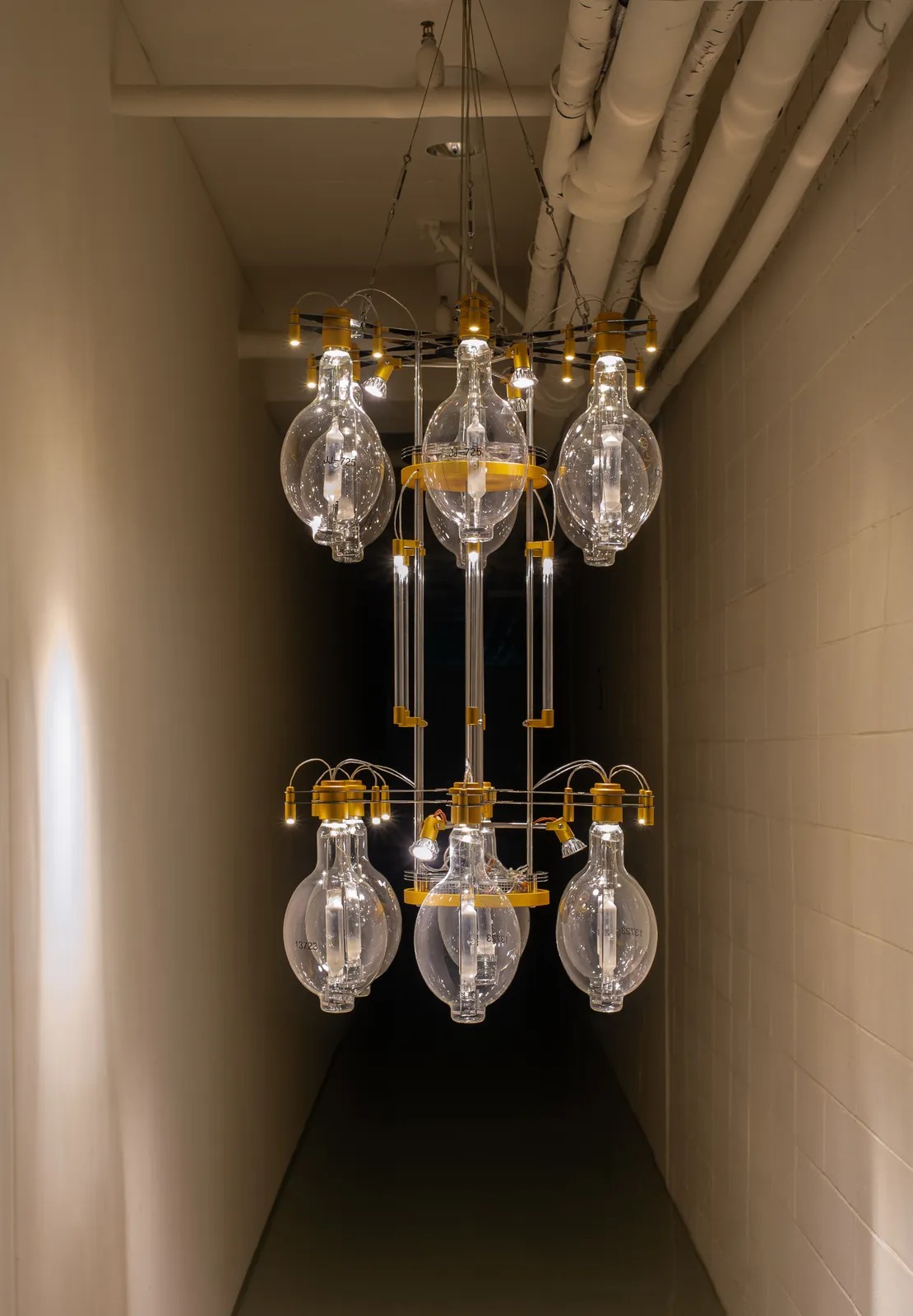
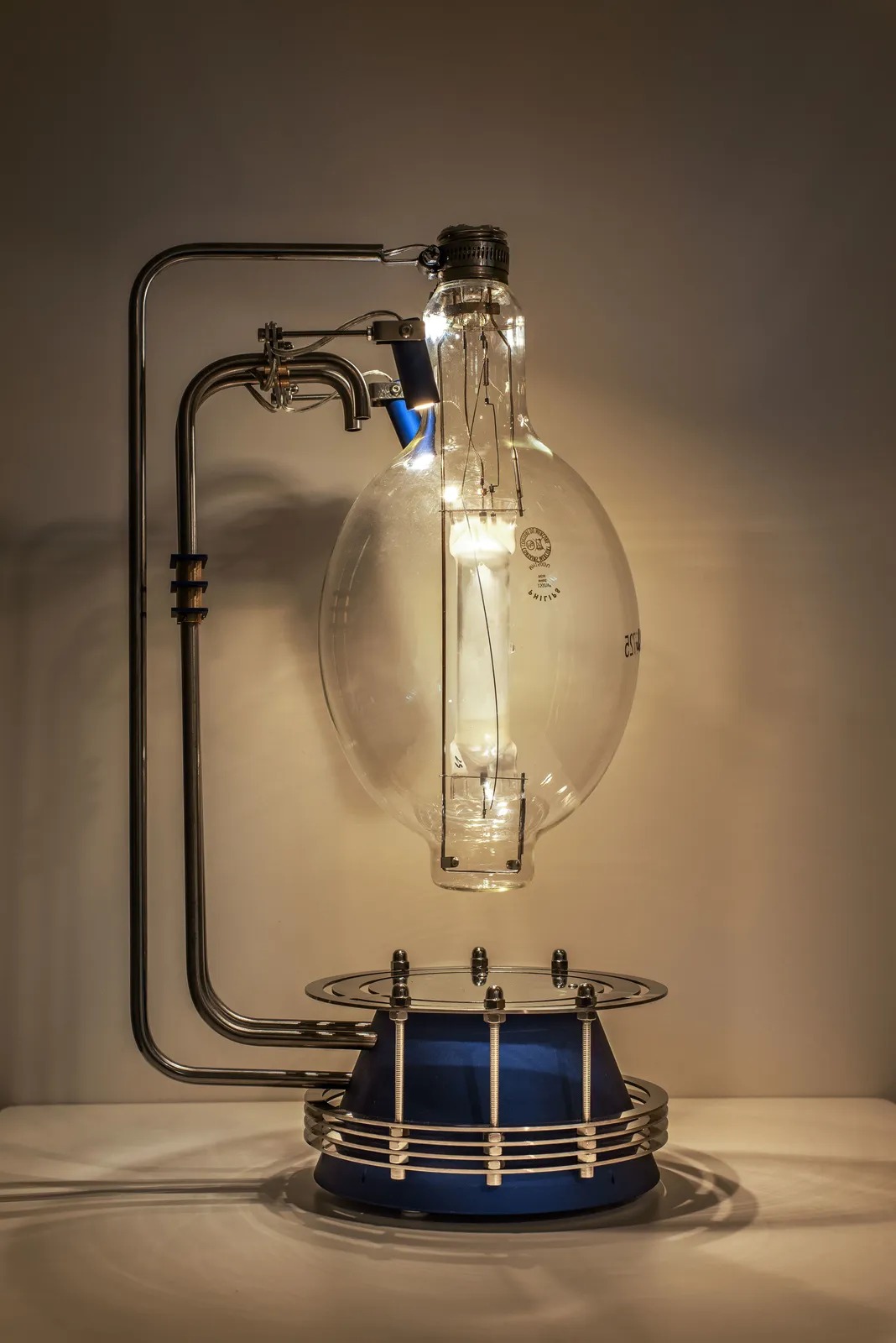
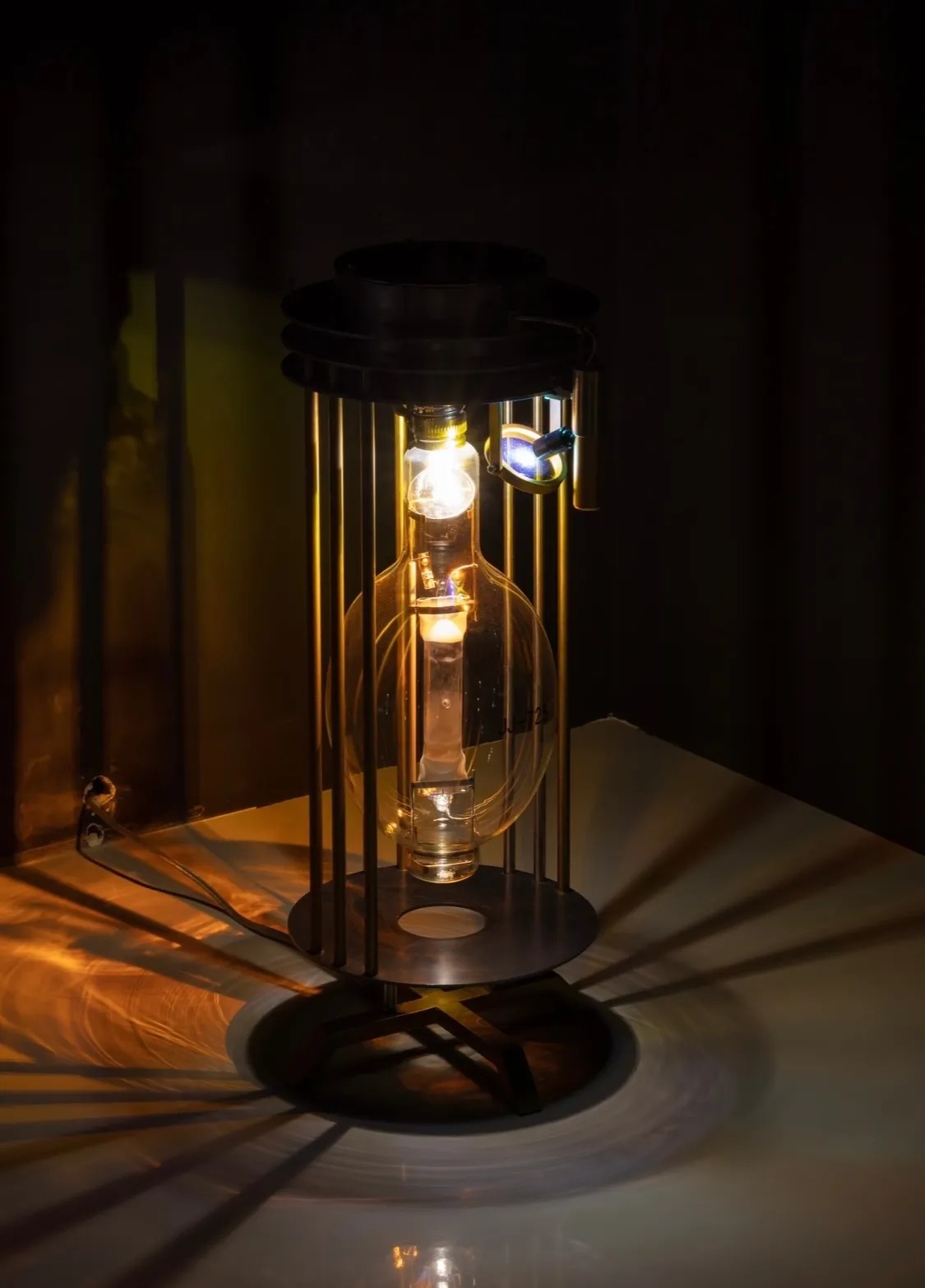
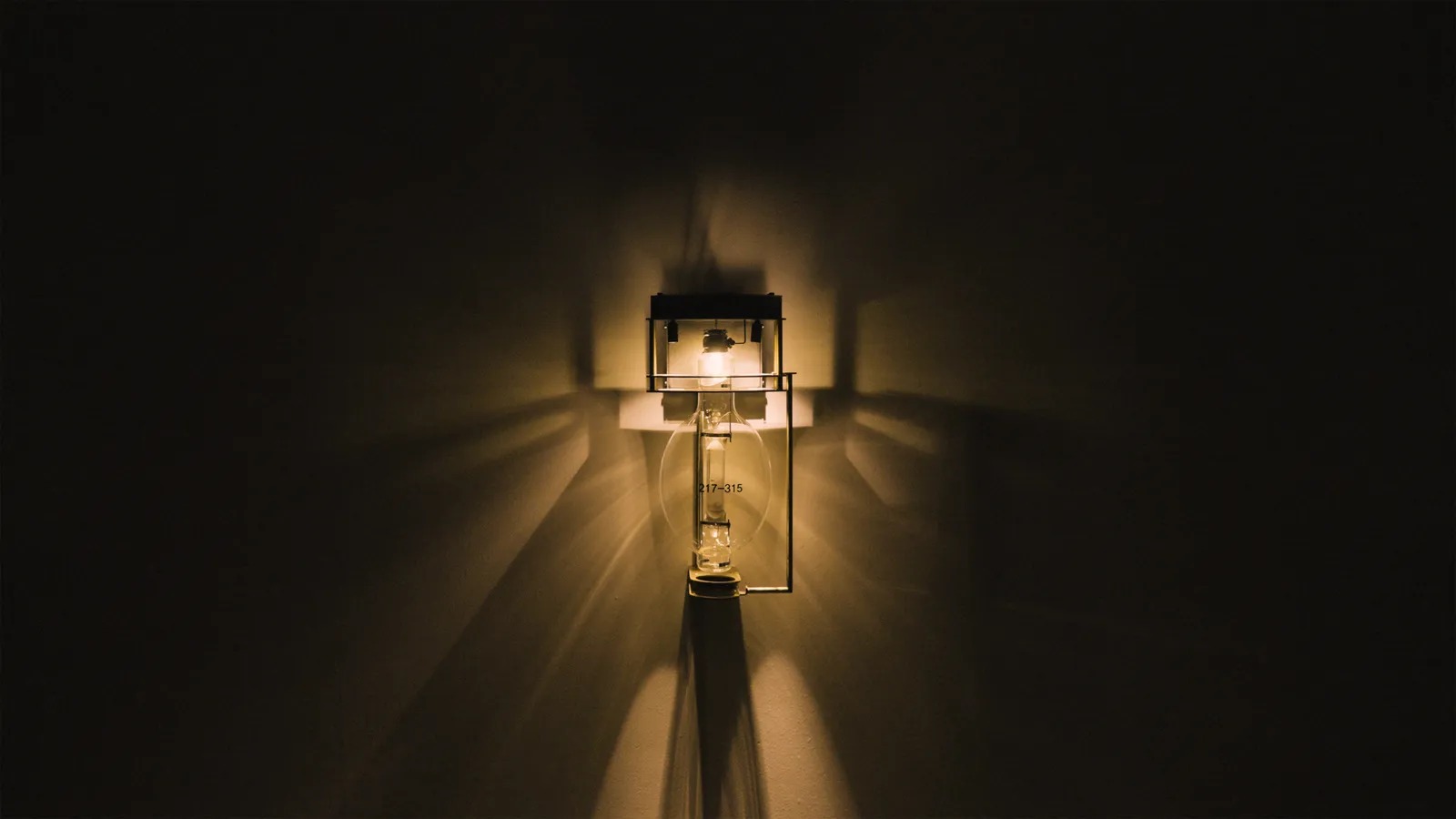
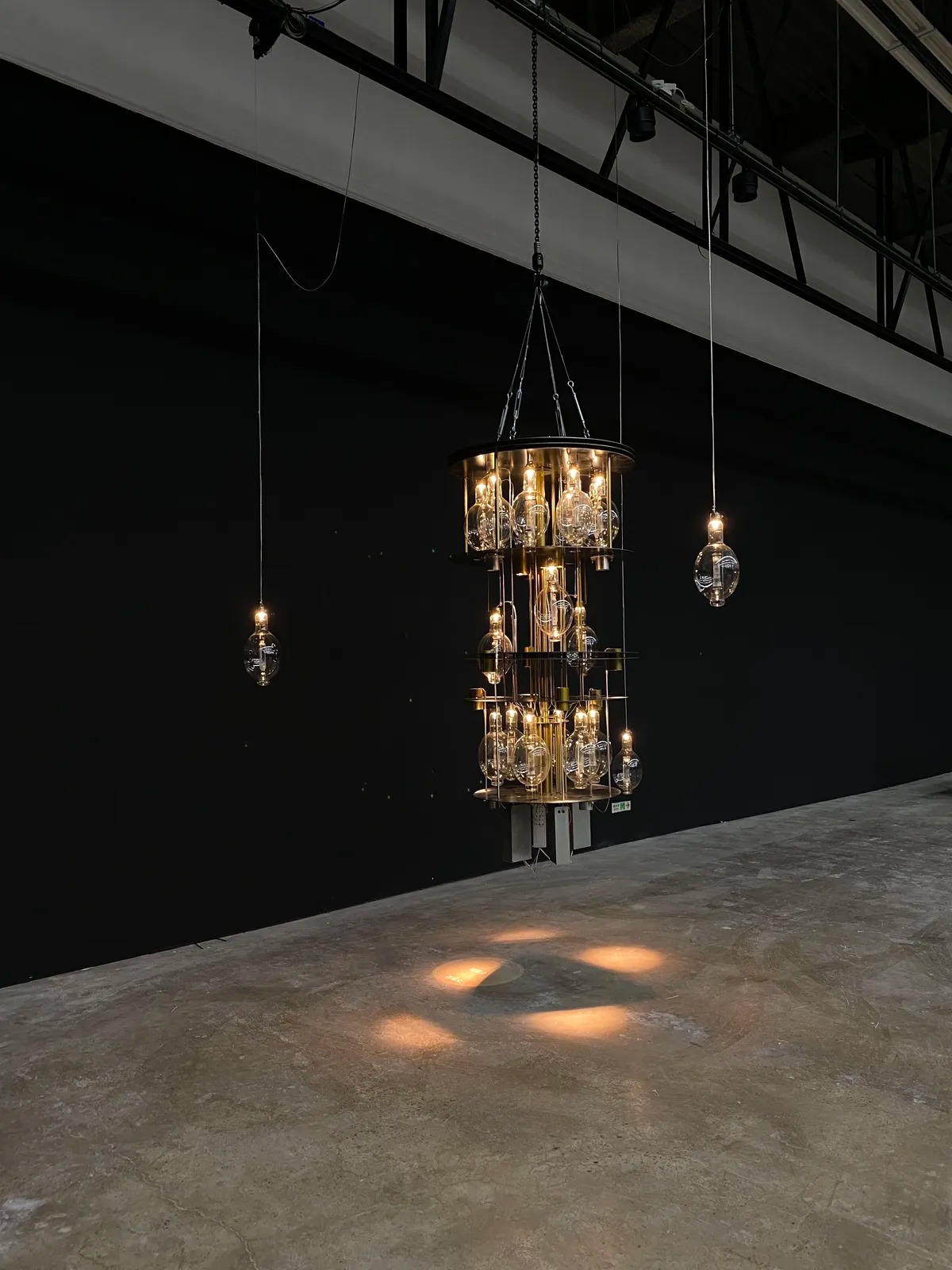
Have you ever seen the fishing lamps of squid boats illuminating the distant horizon across a dark night sea? The desperate struggle of those who risk danger to make a living can, from the distance of an observer, appear almost romantic.
Perhaps this is why Boo Jihyun’s fishing lamps became “stars of the sea,” and vessels containing a sense of “restraint.” With a composed attitude, the artist has transformed the fishing lamp into a form of “expanded printmaking.” Let us now illuminate it.
Baudelaire once observed: “It is much easier to declare that ‘modern society’ is entirely ugly than to devote oneself to uncovering the mysterious aesthetic elements that may exist within it, however slight or insignificant they may be.” The artist’s task of discovering something eternal amid transience might be described as finding, within an unbeautiful reality, a clue as thin as a single strand of thread, and then making a garment from that thread.
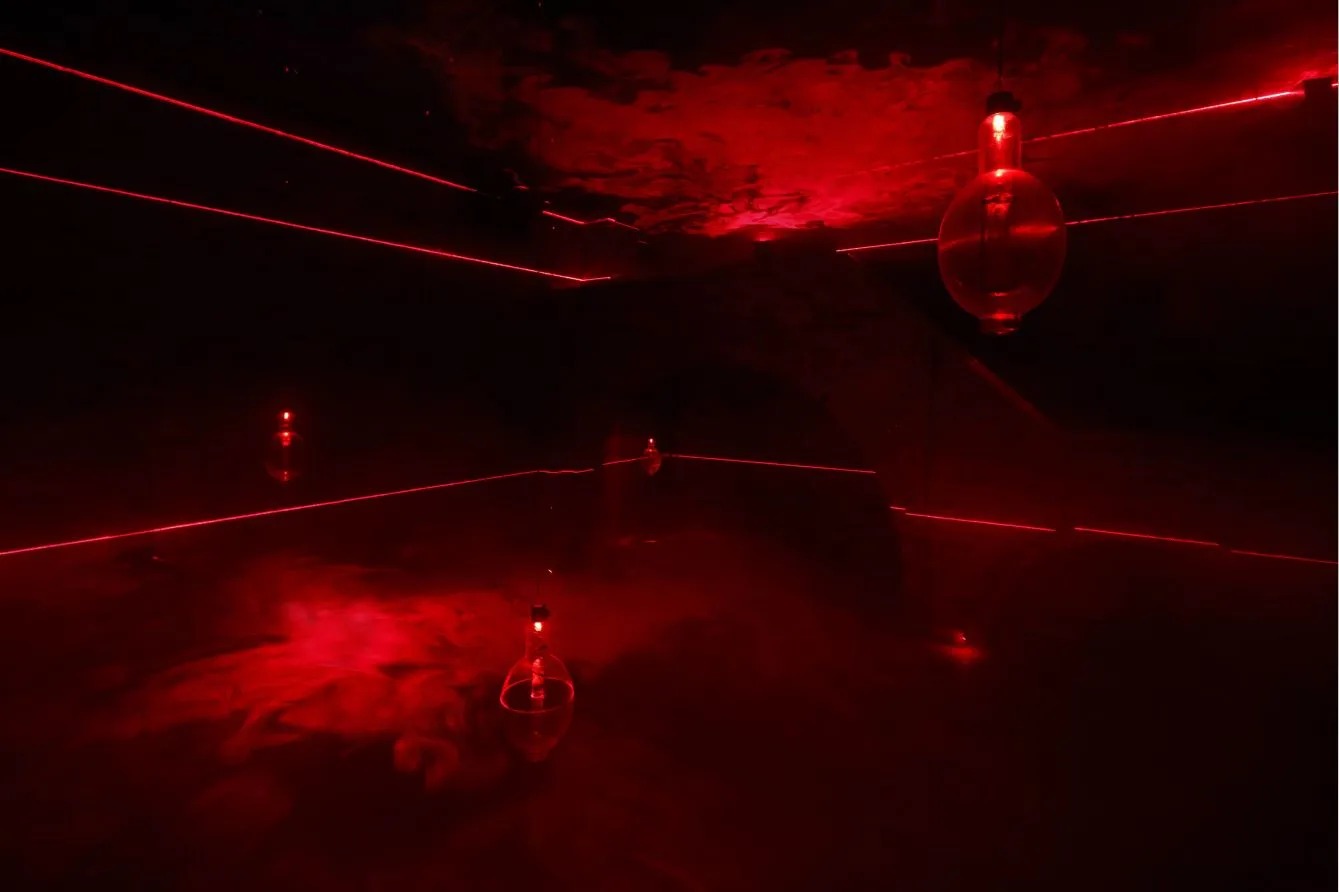
There is a season when the night sea becomes exceptionally beautiful. It is the season when squid-fishing boats head out to sea. Seen from land as they haul in nets filled with squid while keeping their distance from one another in the open sea, the boats appear to form a straight line along the horizon. The lamps lit aboard the squid-fishing boats connect sky and sea. Known as fishing lamps, these functional lights take advantage of the remarkable condition of being set simultaneously against both sky and sea, blazing brilliantly for a brief season.
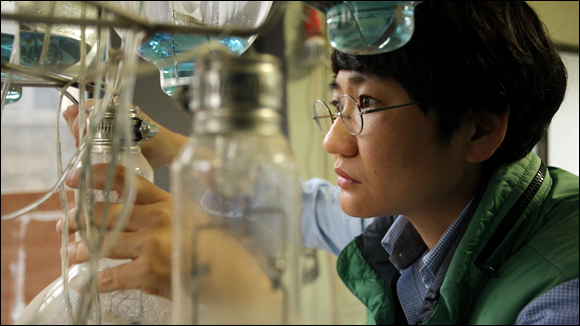
Boo Jihyun became interested in fishing lamps as mediators between nature and humankind. She was captivated by the sculptural form of this tool, designed to attract fish with positive phototaxis. To her, the fishing lamps appeared as “stars of the sea.” Some may find the shift bewildering: an artist trained in printmaking, who had primarily produced printed images of fishing boats since 2003, moving in 2007 toward installations using fishing lamps.
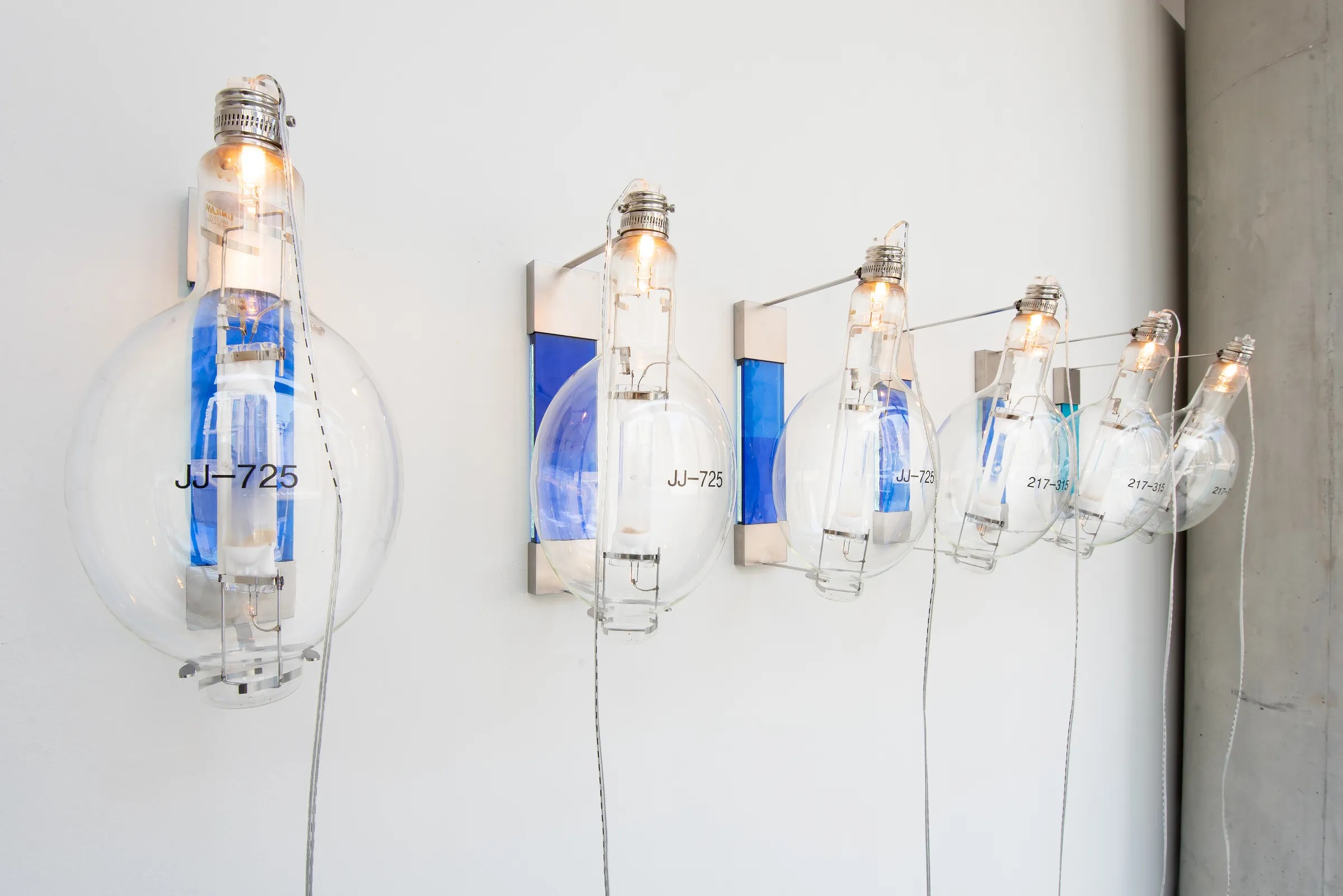
Yet there was an intermediate stage between the period when she depicted fishing lamps in etching and the later installation works, during which she printed images of boats directly onto the lamps themselves. In her early installation works from 2007, each fishing lamp carried an individually editioned image of a fishing boat.
After 2008, she focused mainly on installation using discarded ready-made fishing lamps themselves, yet these industrially manufactured objects already bore serial numbers, almost like prints. In a sense, all mass-produced goods resemble printmaking insofar as they are “impressed” or reproduced from a mold. In the artist’s own words, they are “three-dimensional prints in an expanded sense.”
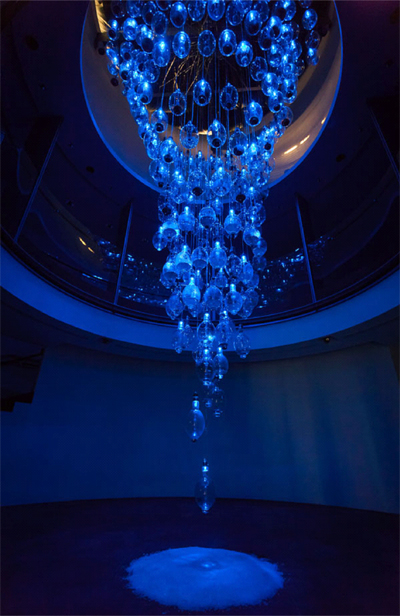
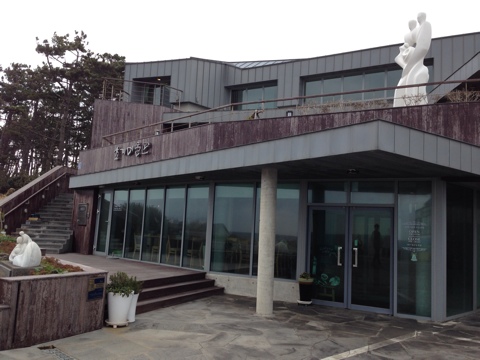
Beginning with printmaking and naturally becoming part of installation, the fishing lamps have repeatedly expanded into mysterious environments through encounters with wind, water tanks, sand, salt, LEDs, and other materials. I first encountered her work in the summer of 2013. On a sweltering day, I stopped by Gallery Nori, one of the relatively rare white-cube spaces in Jeju.
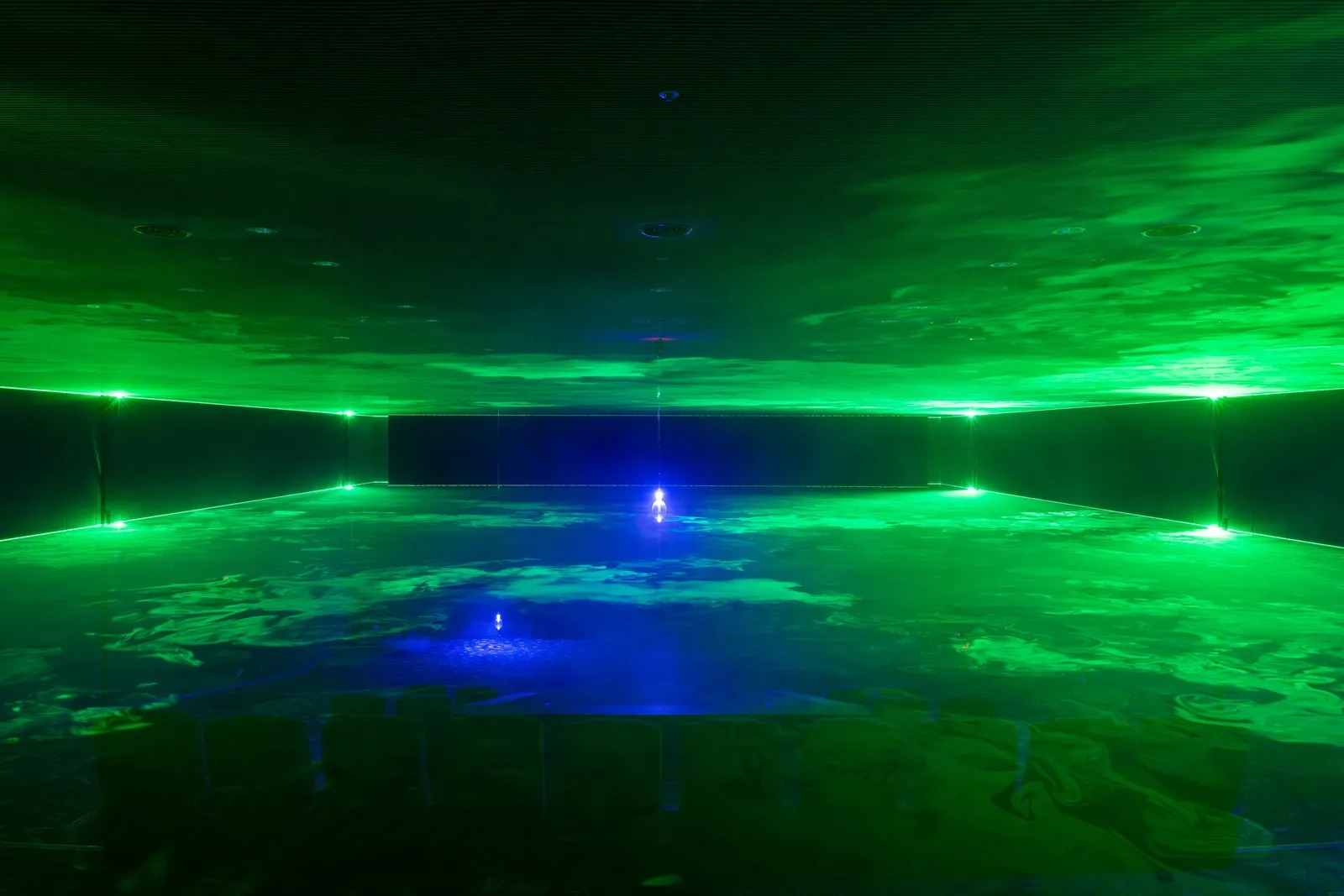
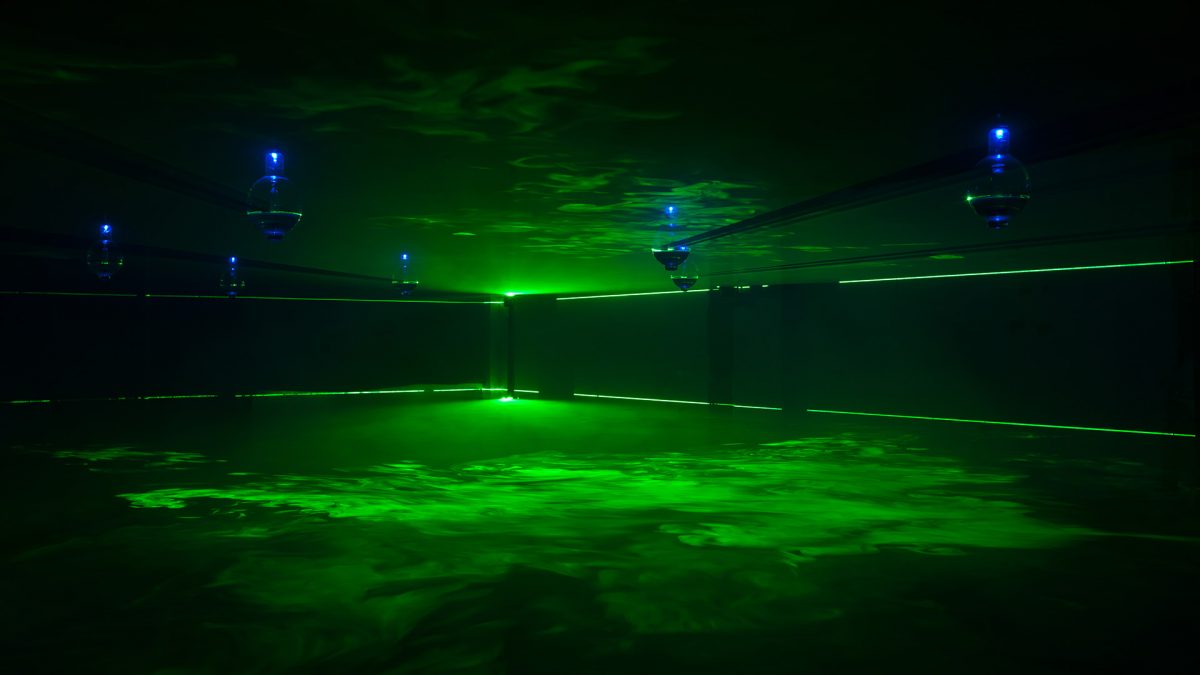
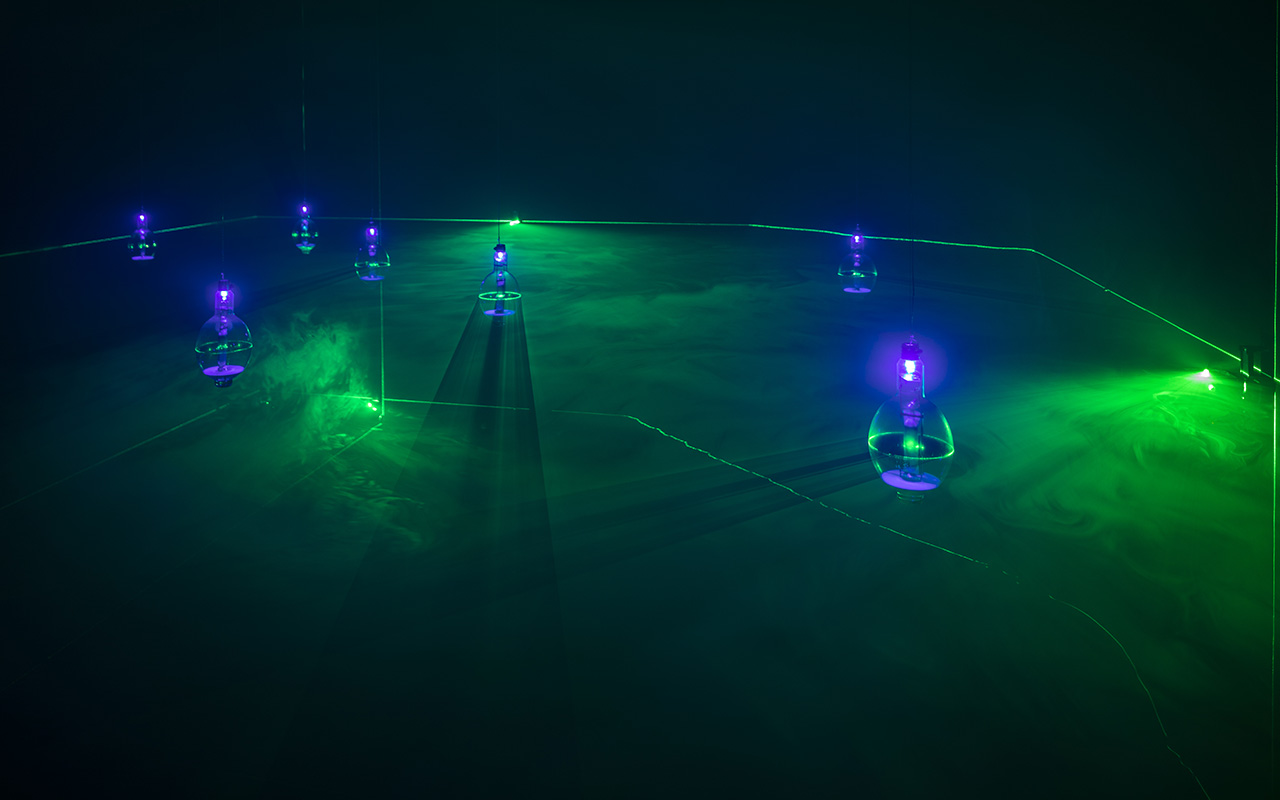
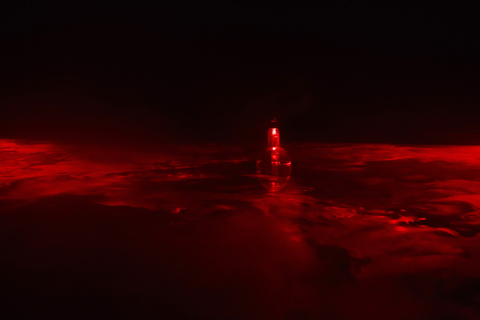
Passing through the door into the box-like gallery, I found the space beyond a transparent partition filled with mist from a fog machine. Through the haze, a line of fishing lamps emitting a faint bluish glow gradually came into view. Just as the mist seemed about to clear and visibility improve, another cloud of fog was released. A cool breeze blew, and the lamps repeatedly faded into obscurity and returned to clarity.
Within that narrow, enclosed space, an expansive nocturnal seascape unfolded. Her work resembles an idealized vision of the sea. Yet neither the sea nor the fishing lamps are ever simply peaceful or beautiful. To quote the artist again, for those who work aboard fishing vessels, “the light is an object of suffering because it is extraordinarily bright and gives off intense heat.”
It is difficult to find in Boo Jihyun’s work the imagery of laborers enduring that heat as they haul squid from a sea that is at once a workplace necessary for survival and a space that threatens their lives. If one were to draw a distinction, her work is less concerned with conveying the emotional reality of labor embedded in the actual site of the sea than with pushing to an extreme the artificial beauty that harmonizes with the natural environment of the sea.
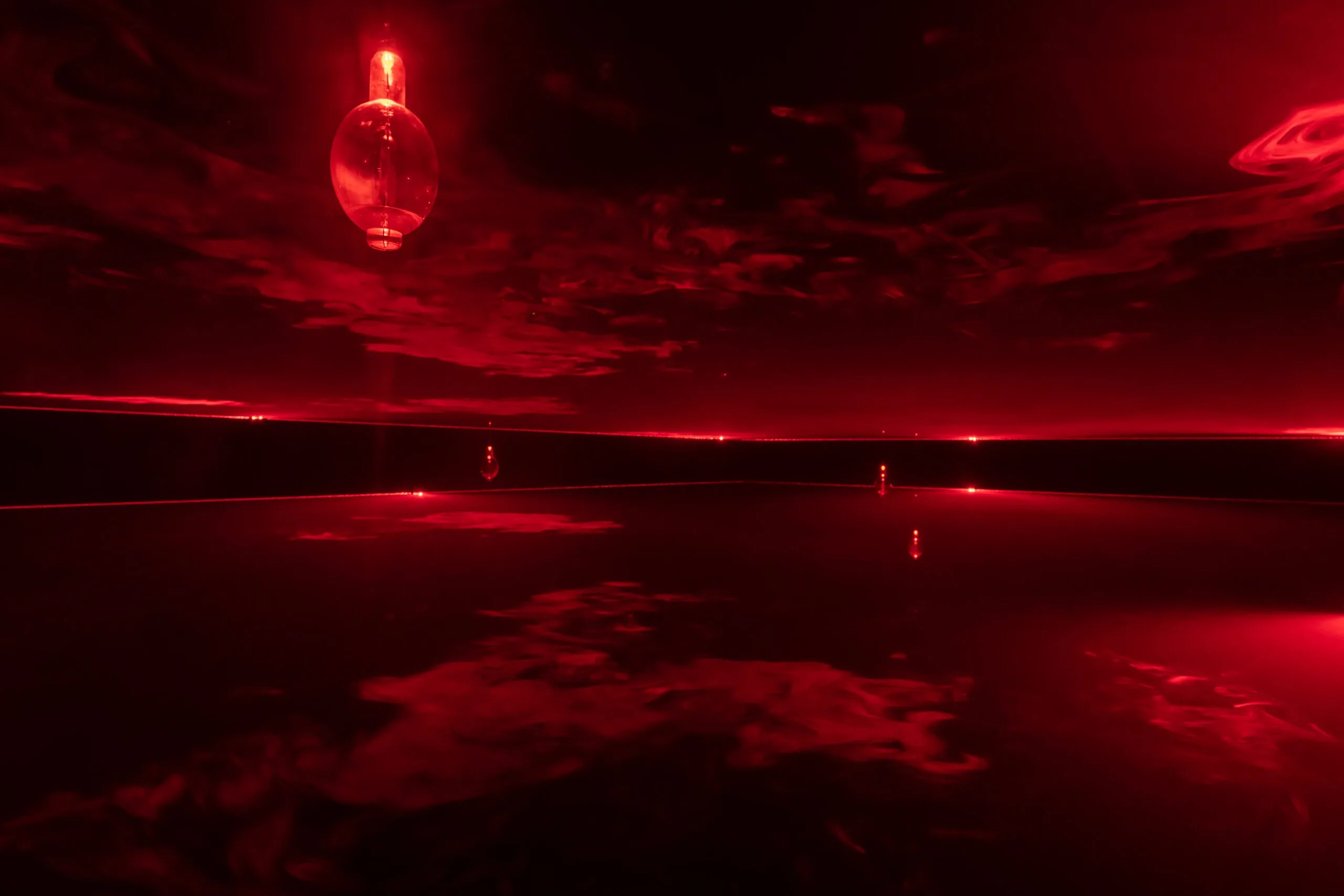
To reveal this duality, the artist introduces mirrors. If a mirror, which reproduces an image exactly, is understood as an object that can make an illusion appear real, then the reflected image of the fishing lamp’s beautiful surface becomes a device that prompts reflection on what lies behind it. Moreover, a mirror is also an opaque and enclosed material: whatever happens behind its reflective surface remains unseen.
Even the mirror, introduced with serious conceptual intent through this irony, remains outwardly beautiful. Yet it is more than sufficient to draw viewers a step closer and encourage them to look deeper into the work. Fishing lamps may be Boo Jihyun’s signature material, but many artists have also worked with mirrors.
Representative examples include Yayoi Kusama’s Mirror Room and Kimsooja’s To Breathe – A Mirror Woman. Compared with these artists, who create fantastical environments by emphasizing the spatial expansion and repetition offered by mirrors, Boo’s use of mirrors is more conceptual. Photographer Daniel Kukla’s The Edge Effect and installation artist Alyson Shotz’s Mirror Fence are closer to the way mirrors function in Boo Jihyun’s practice.
Quietly Stirring Emotion
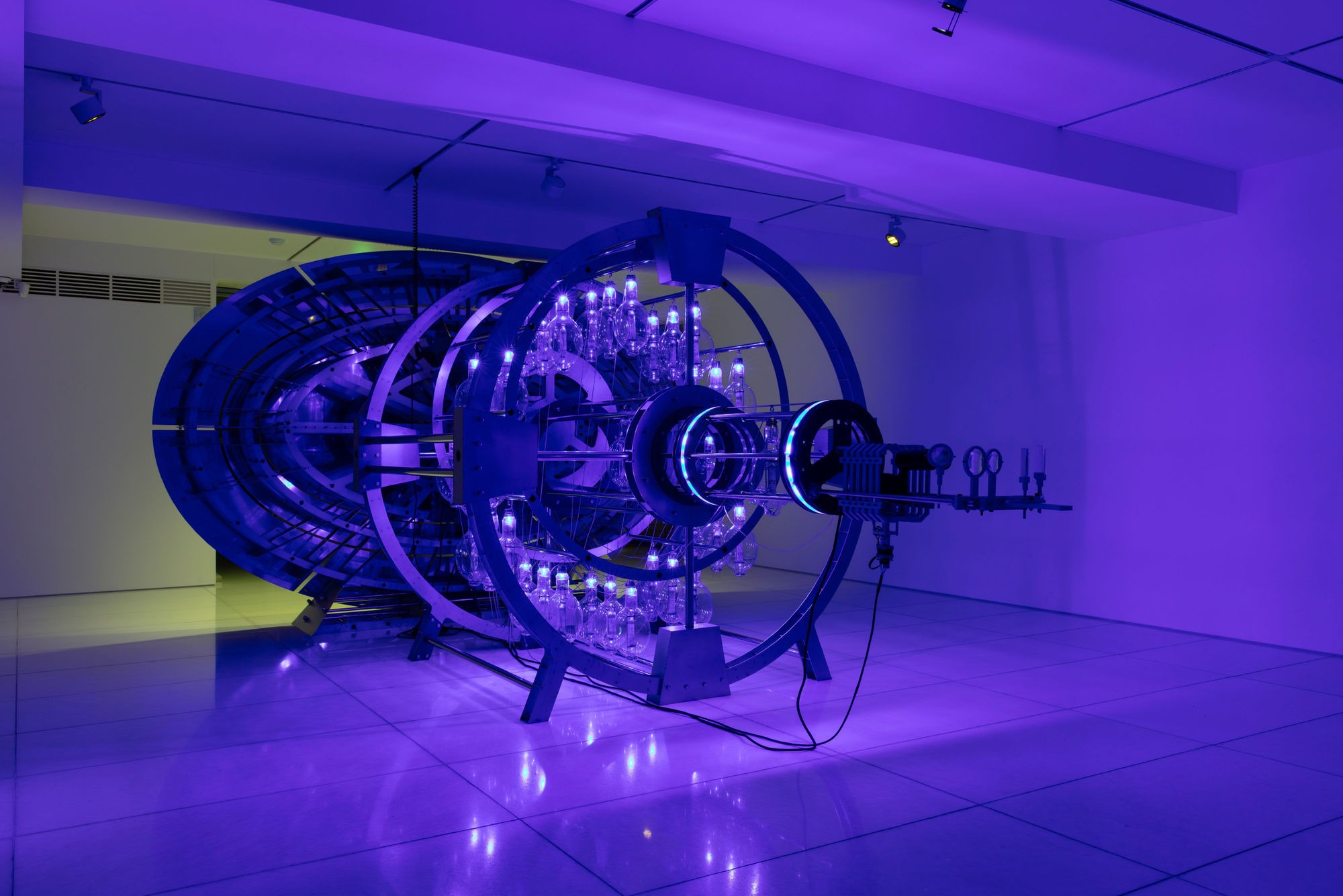
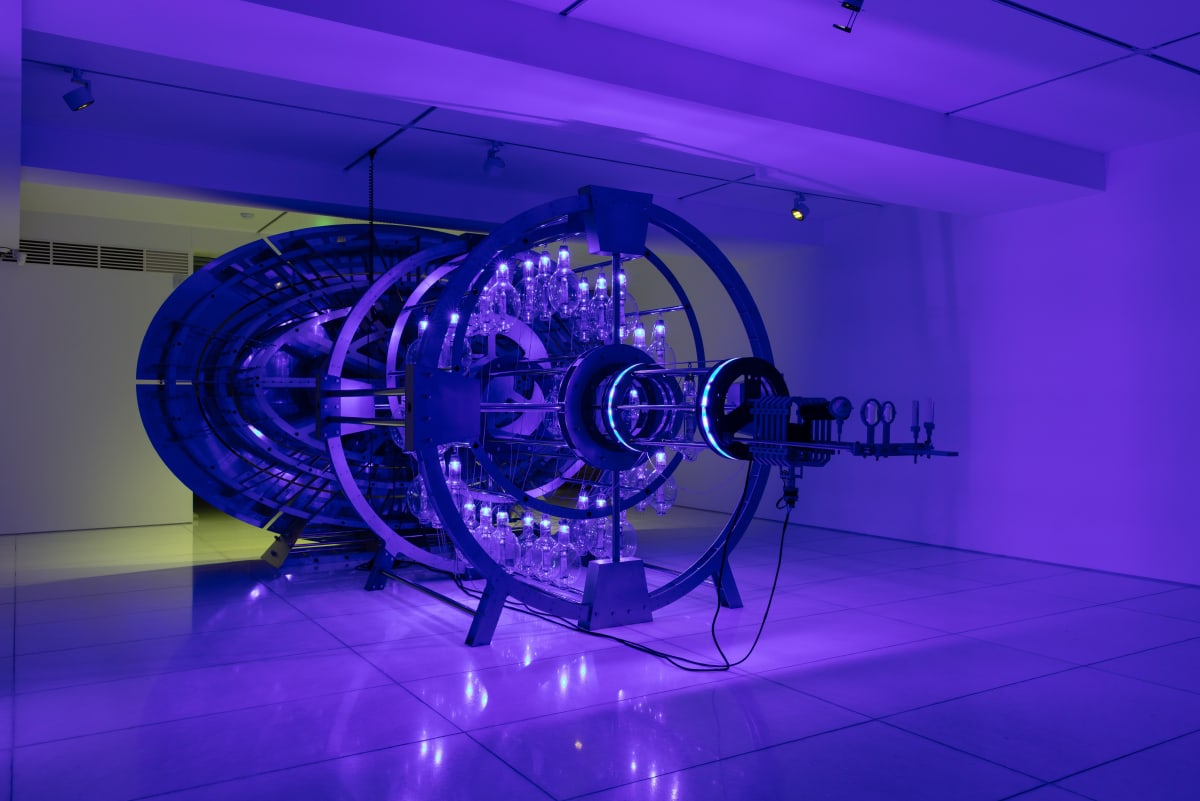
A mirror reflecting nature turns us back toward what lies behind nature itself. Acrylic mirrors also appear in the 'Net-Being' series, begun in 2013. Water, light, mirrors, glass surfaces, and numerous other shimmering and reflective elements reflect, move, illuminate, and emit light, affecting one another in turn. Through the artist’s orchestration of these subtle and complex relationships, a single delicate space comes into being.
In considering the mirror as a device for creating a mysterious space, one can once again find a close affinity with the mirrors of Kusama and Kimsooja. This, in turn, brings to mind Indra’s Net, in which a jewel hangs at every knot of an immense net, each reflecting all the others: nothing in the world exists without connection to something else, and nothing exists without exerting influence.
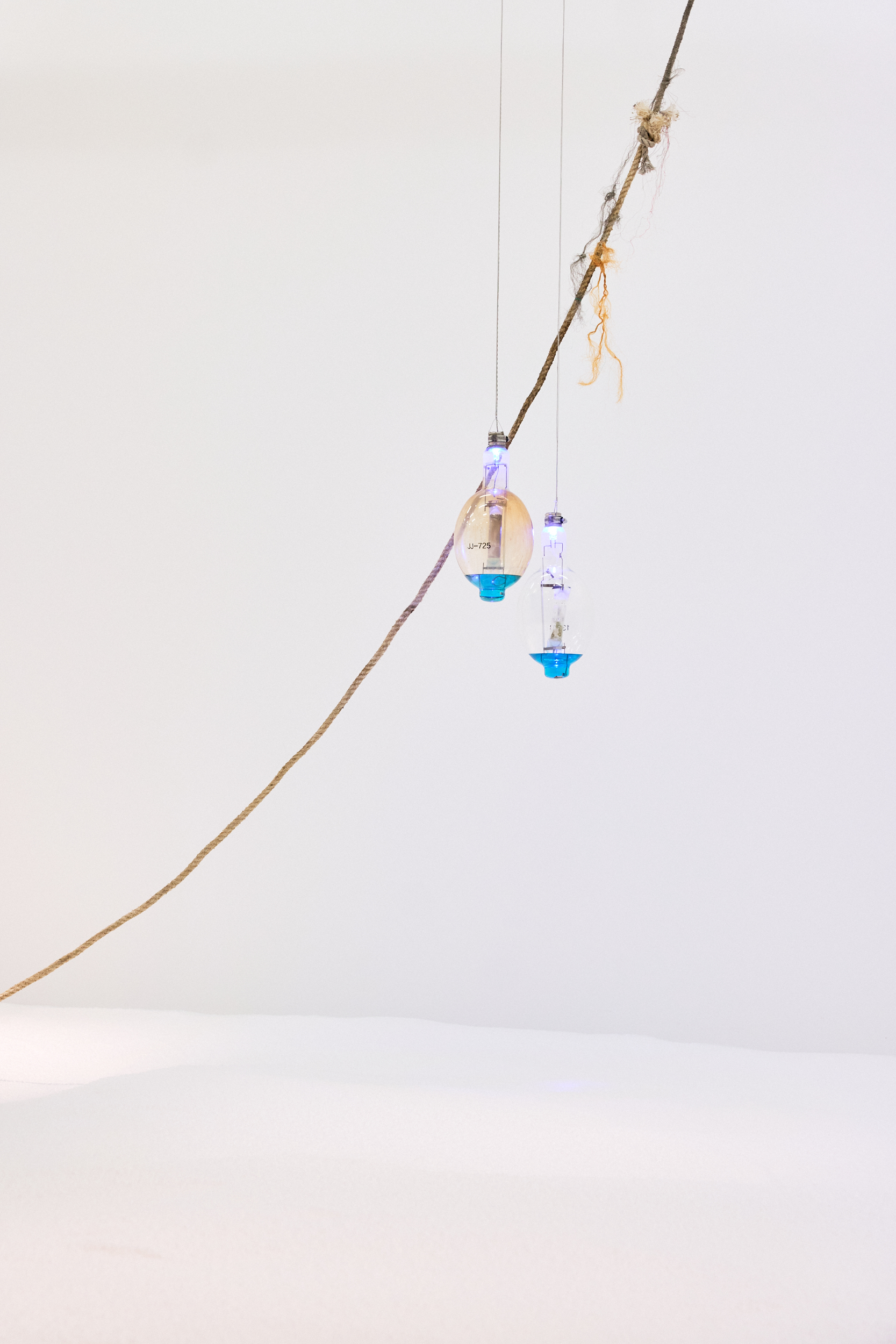
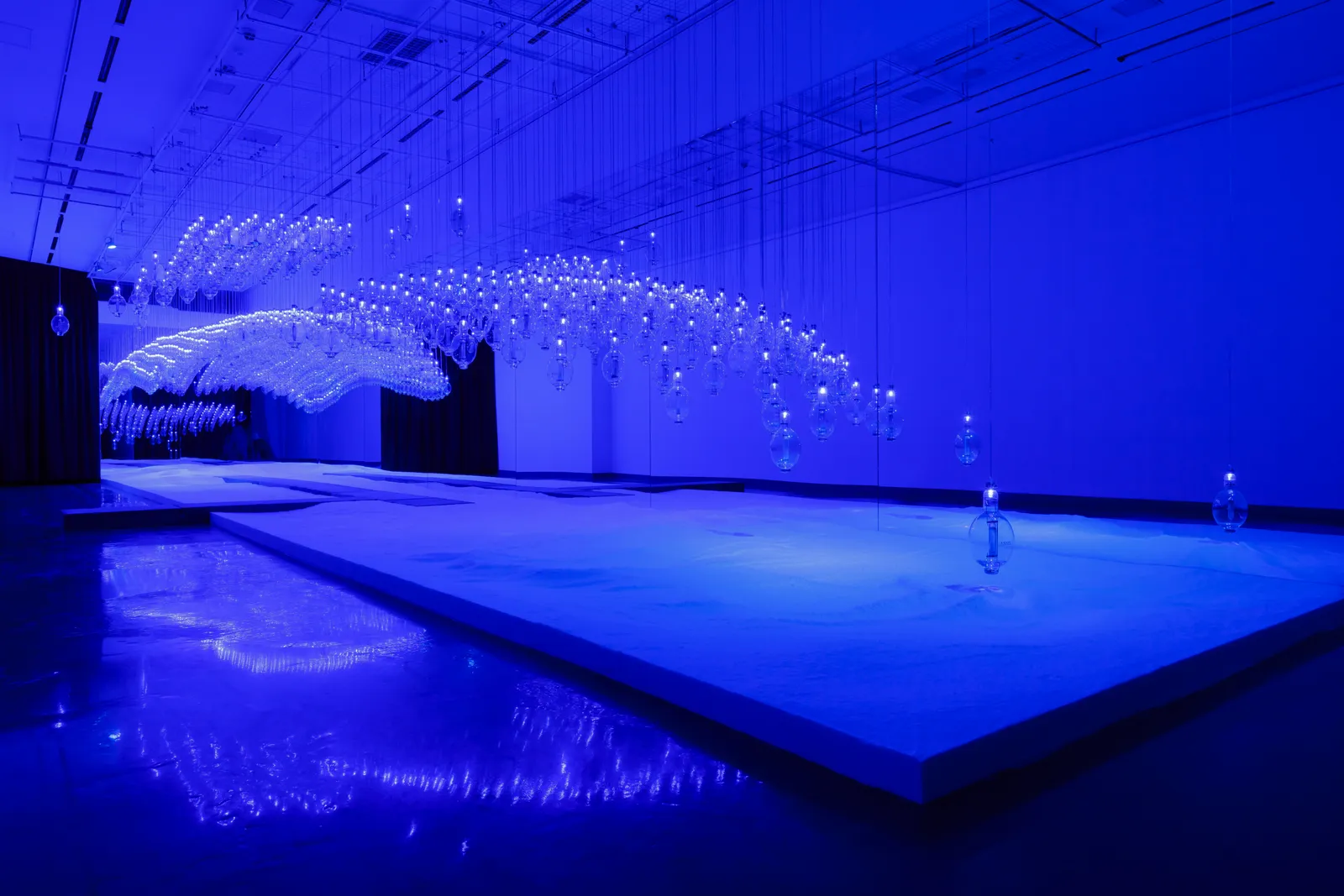
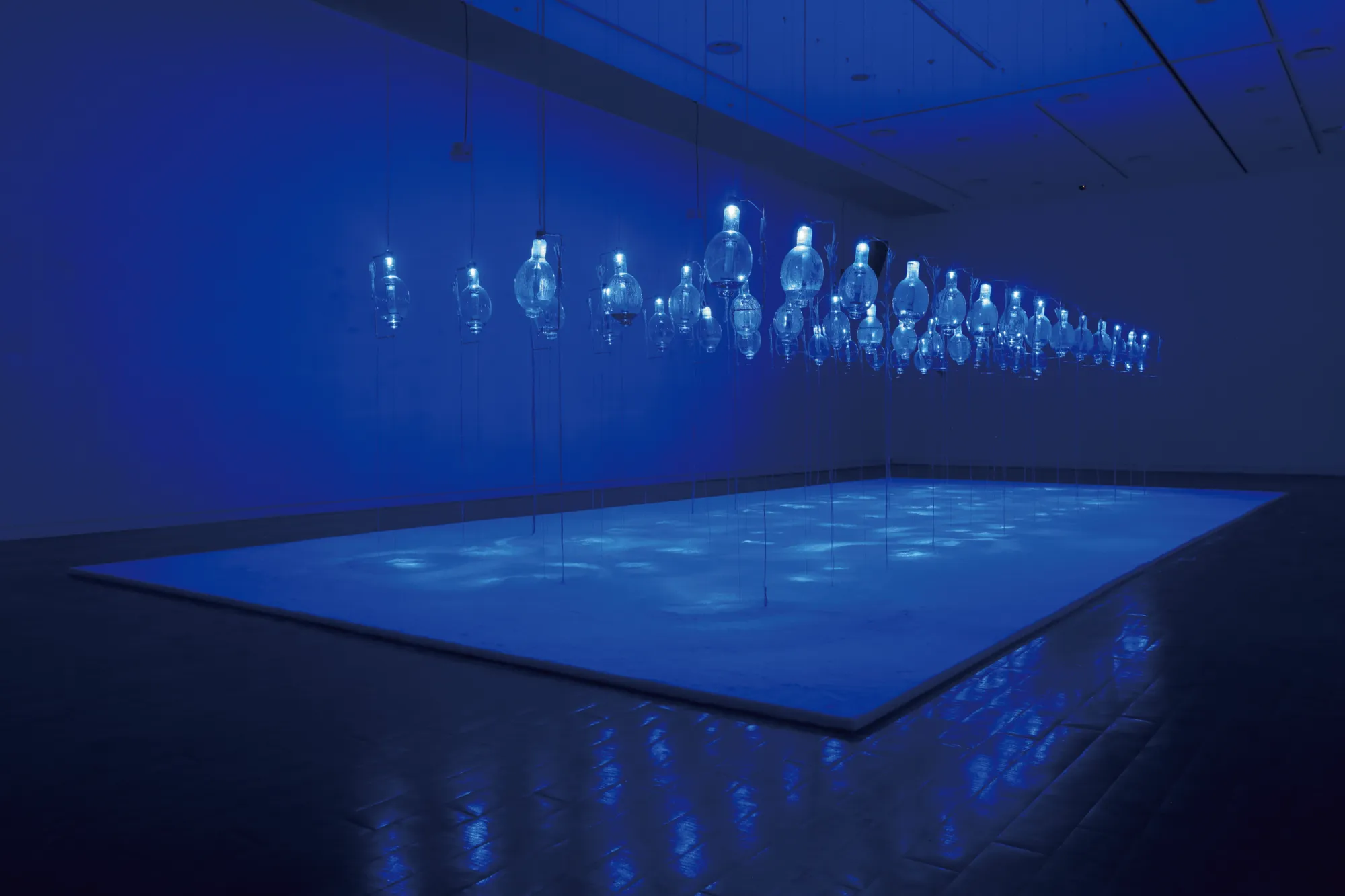
In February 2016, the artist presented two installation works at the Jeju Museum of Contemporary Art. Both extended the 'Net-Being' series. In a gallery connected by stairs, the entire broad floor was filled with white salt, leaving visitors no space to step inside. Two fishing lamps filled with blue windshield washer fluid appeared to hang forlornly from ropes descending from the ceiling—although the lamps were in fact attached to separate wires suspended from above.
The combination of slender lines, faint blue light, and blue liquid against the expansive white floor produces an image of remarkable order and clarity. “Minimal” would not be an inappropriate description. It may call to mind Felix Gonzalez-Torres’s string-light work Untitled (North), while also revealing a considerable departure from the artist’s earlier works, in which numerous fishing lamps were meticulously aligned and arranged.
It even evokes the feeling of encountering a single brushstroke by a master who has reached the point of emptying everything away. After all, the artist has spent well over a decade persistently investigating the fishing lamp as a material, both inside and out; when it comes to fishing lamps, perhaps it would not be unreasonable to call her a master.
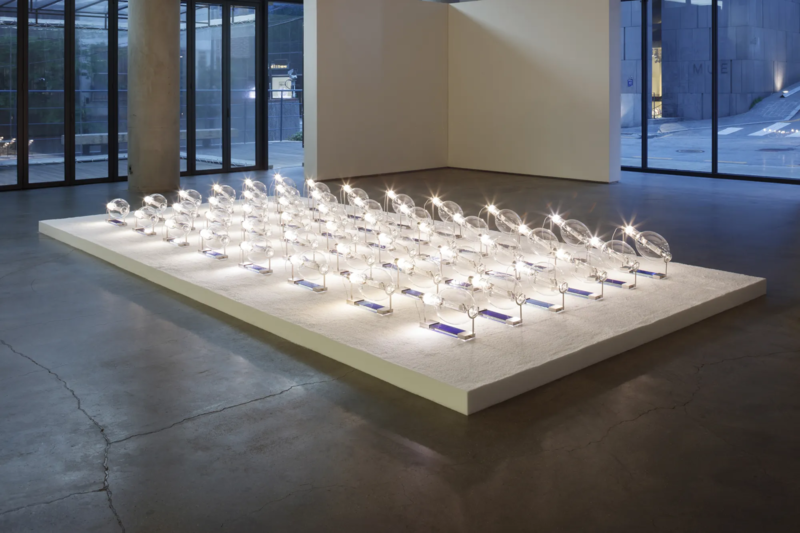
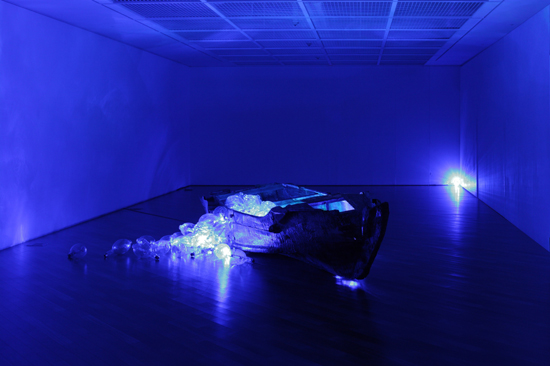
In fact, this installation follows the same trajectory as Resting (休), presented at Gallery Doll in 2010. Salt covered the gallery floor so that viewers could not enter, while a grave-like pile of fishing lamps was stacked in the right-hand corner. Natural light illuminated the fragile structure, whose faint blue glow seemed on the verge of fading away.
Viewers observed the mound of fishing lamps from a distance, as though looking out from land toward the faraway sea. Once again, the formal qualities may recall Gonzalez-Torres’s Untitled (Portrait of Ross in L.A.), yet they are joined by a distinctly Korean, and specifically Jeju, lyricism rooted in nature. Although the finished work itself may appear cool and restrained, concealed within it is an intention to reveal precisely this lyricism.
For an artist born and raised in Jeju, who works with materials inspired by Jeju and continues her practice from the island, giving sculptural form to the emotions she experiences in her hometown has long been a central concern. Negative elements—the sorrow of an island separated from the mainland, the hardships of an unforgiving life, the suffocation of isolation, and the threats posed by nature—are never revealed directly.
Instead, those emotions are hidden faintly and calmly, like fishing lamps submerged in fog. Because they remain concealed, they provoke curiosity; because they possess an orderly restraint, the works are beautiful, and for that very reason they become all the more dramatic. Recently, Boo Jihyun’s interests seem to have expanded beyond fishing lamps and mirrors toward questions of how to work with sound and salt.
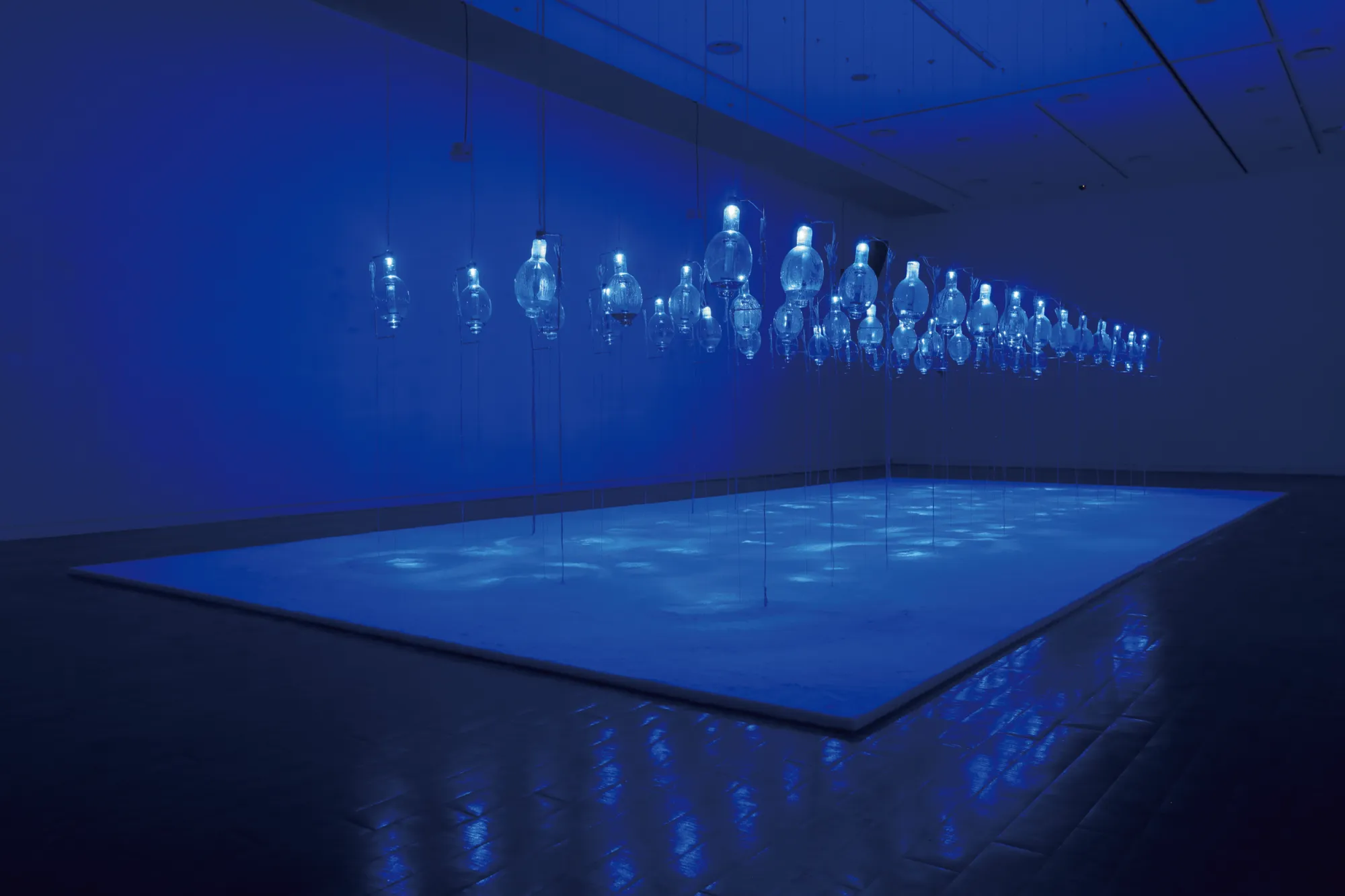
Another installation presented at the Jeju Museum of Contemporary Art brought together virtually every element she had employed in her practice to that point. Fishing lamps fitted with blue LEDs were aligned in rows above a framed bed of salt laid out with precise edges and a defined volume. A soundtrack combining the sound of haenyeo breathing, waves, and wind spread throughout the space.
It was a place in which the sensation of “rest,” a recurring motif attached to many of the artist’s works, seemed to enter the body itself. Temporarily forgetting one’s connection to the outside world, simply contemplating the beauty before one and listening to a sense of ease, what I felt in that space was reassurance.
My mind somehow relaxed, and perhaps because I had let go, I found myself easily moved by the neatly formed ridge of salt and the blue light. Perhaps the lyrical atmosphere the artist sought to convey reached me, a fellow native of Jeju, with particular intensity. The presence of the white salt, maintaining its thickness and sharp edges through moisture alone without any additional supporting device, appeared all the more beautiful because of its precariousness.
Sounds that were at once familiar and unfamiliar further amplified the emotional range of the work. And for the first time in a while, I found myself thinking about what it means to depict a landscape through emotion. Read only as words, the phrase “imbuing landscape with emotion” can sound like a stale piece of commentary from the age of Impressionism.
Yet Boo Jihyun genuinely translates her impressions of landscape into the language of contemporary art. One finds oneself searching busily for a new term to move beyond and replace Neo-Impressionism. Here is one possible suggestion: how about “Installed-Impressionism”? I intend to go back to the sea near where the artist’s impressions first began and think about it more deeply.
I have already given away the clue: the sea she has watched and the sea I have watched are the same Jeju sea. Squid-fishing season will soon begin, and all that remains is for both Boo Jihyun’s eyes and mine to become a little more delighted.