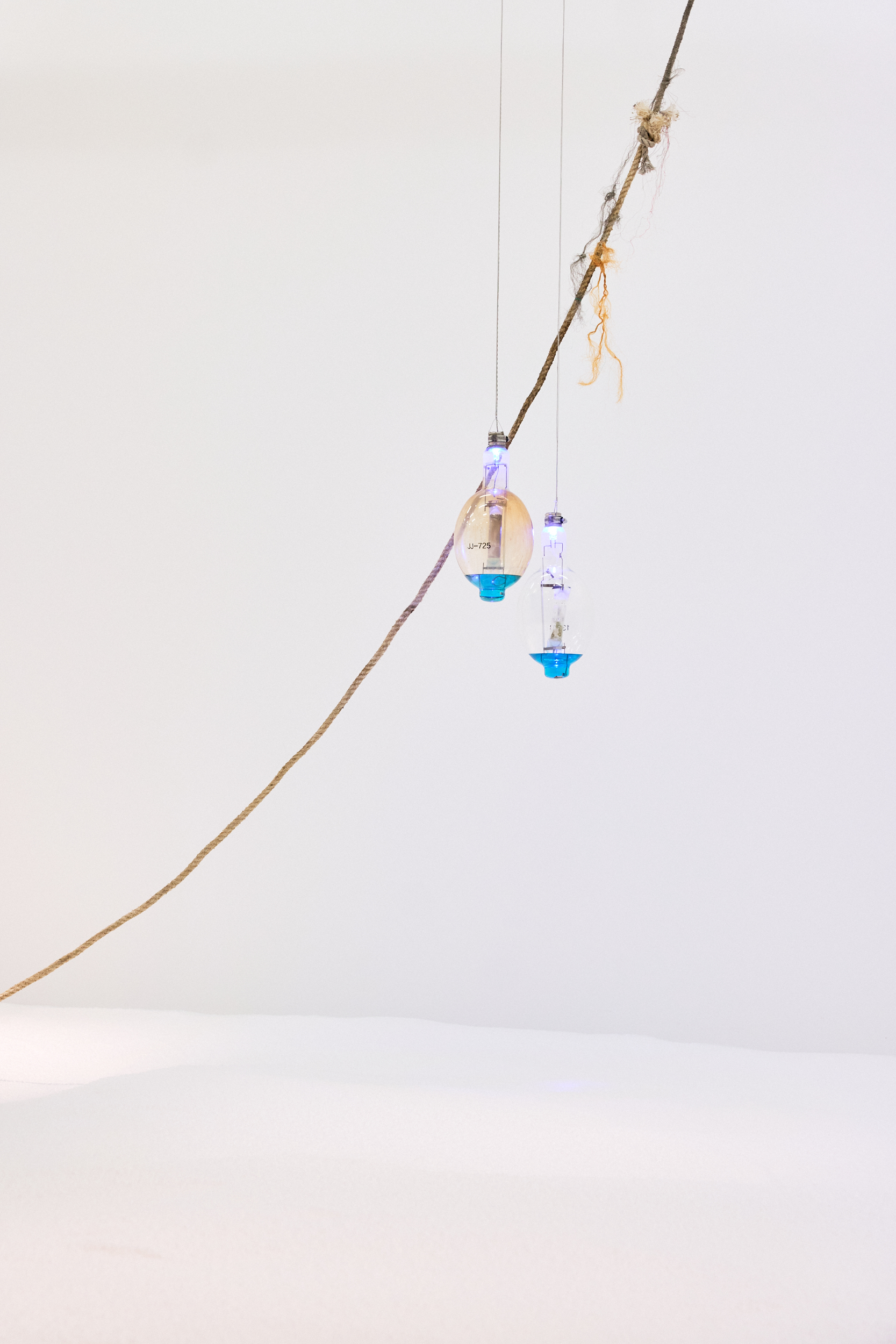
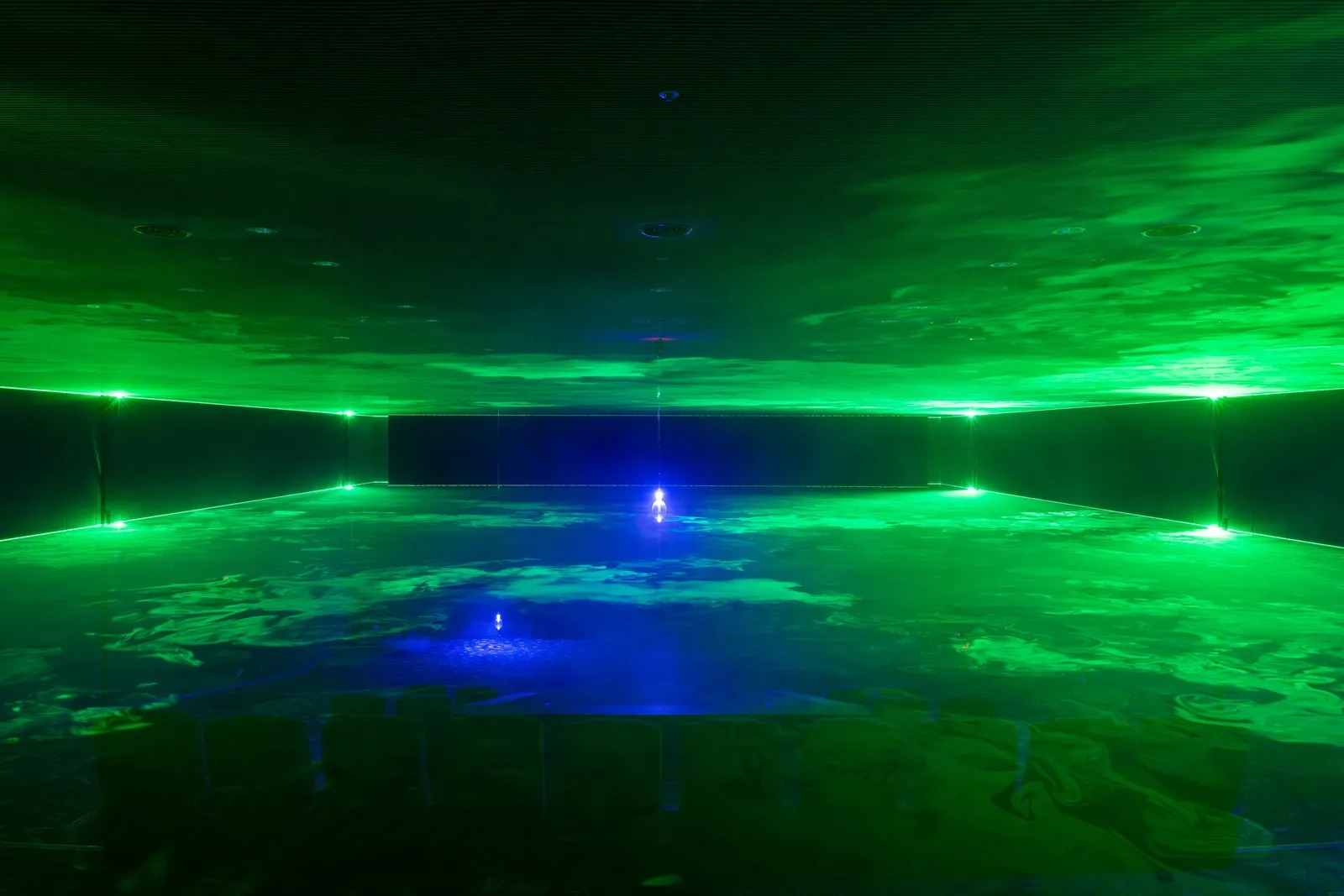
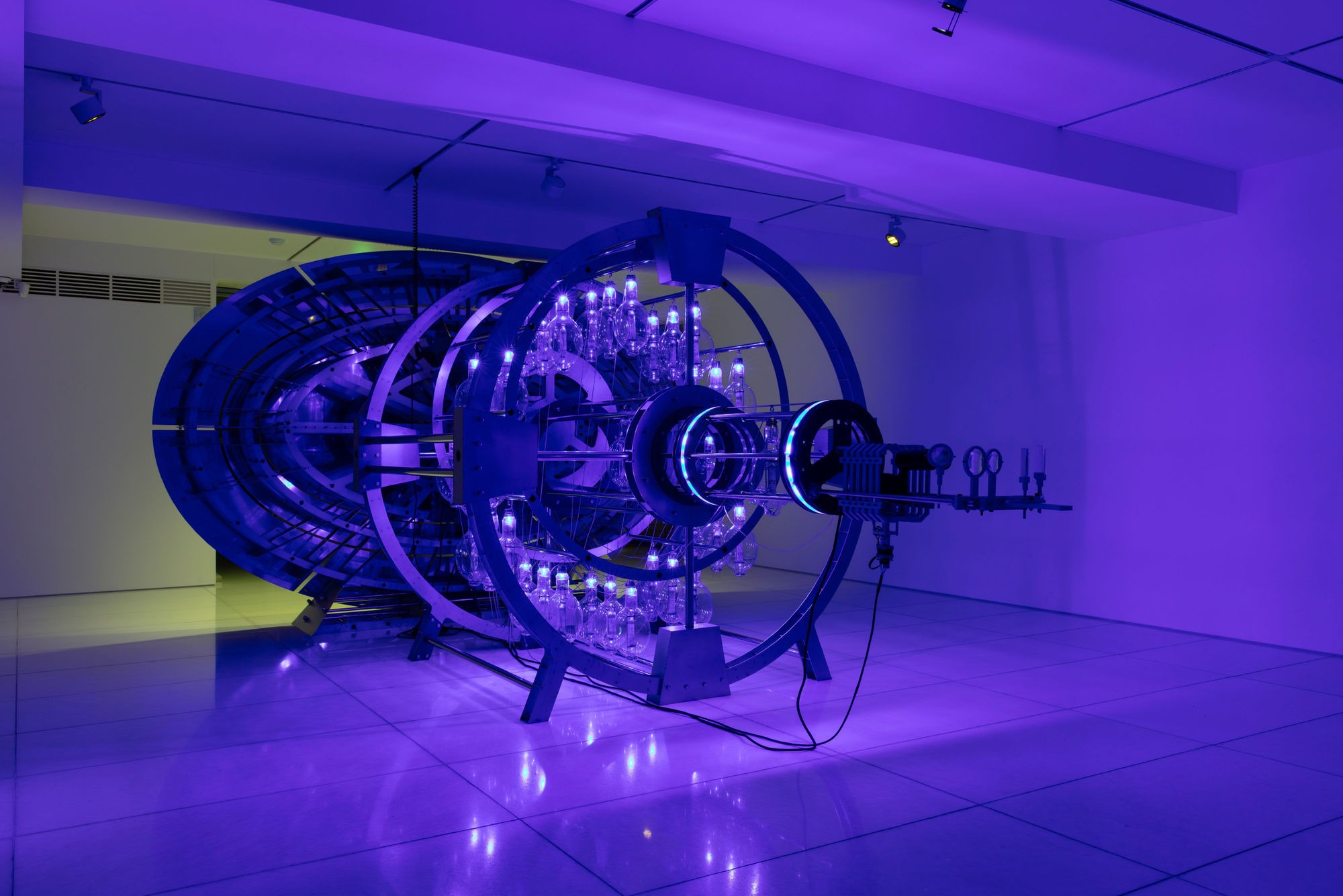
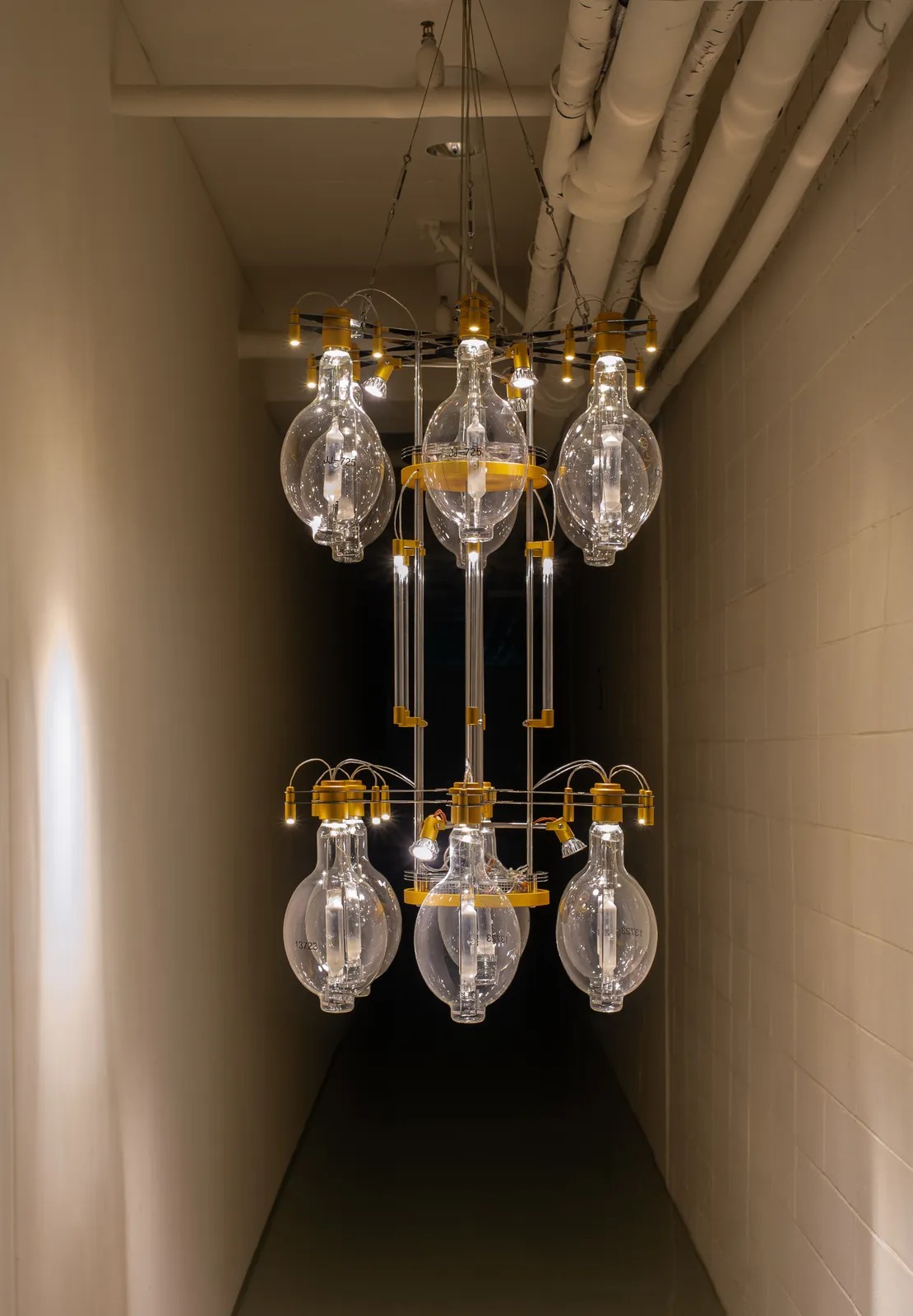
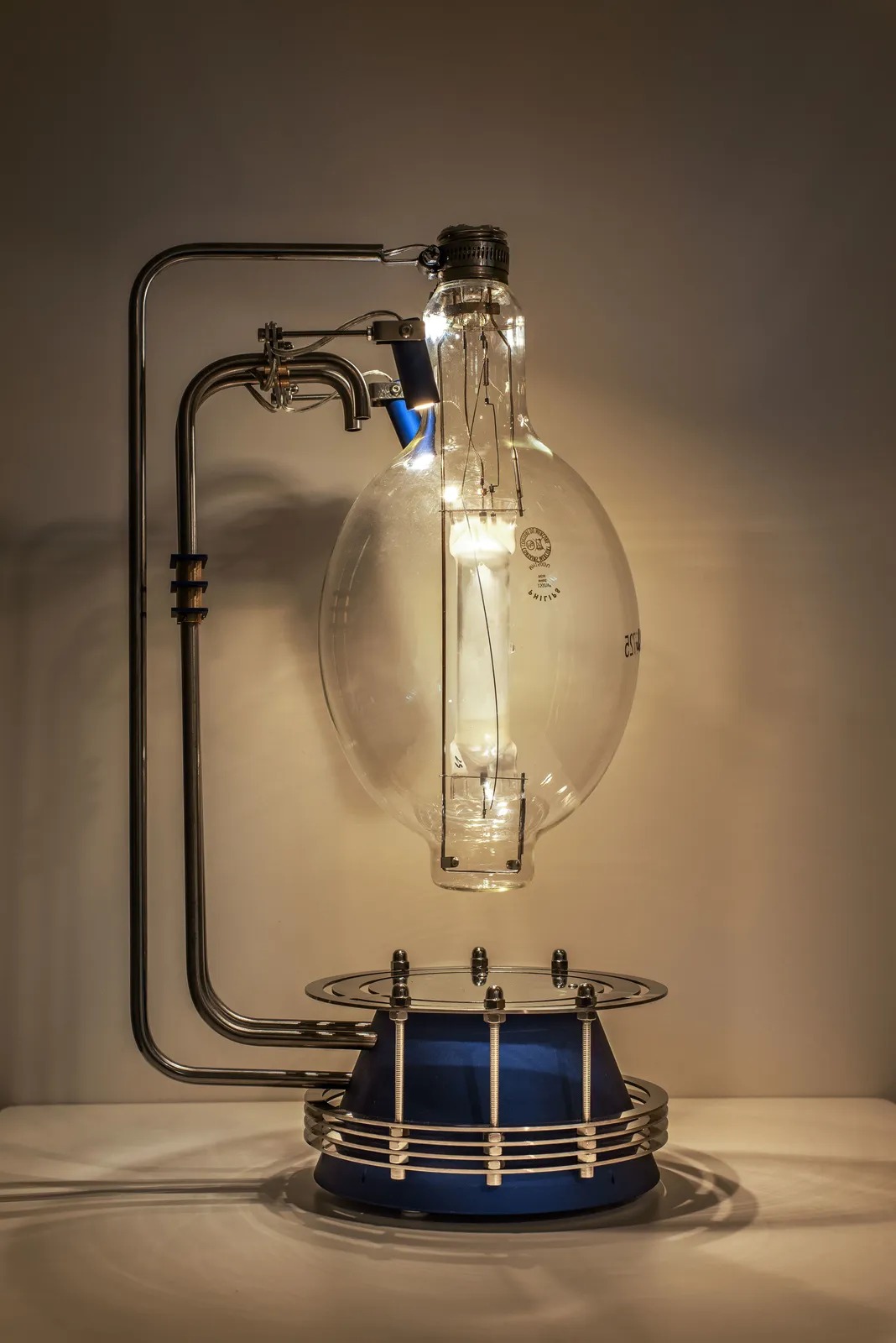
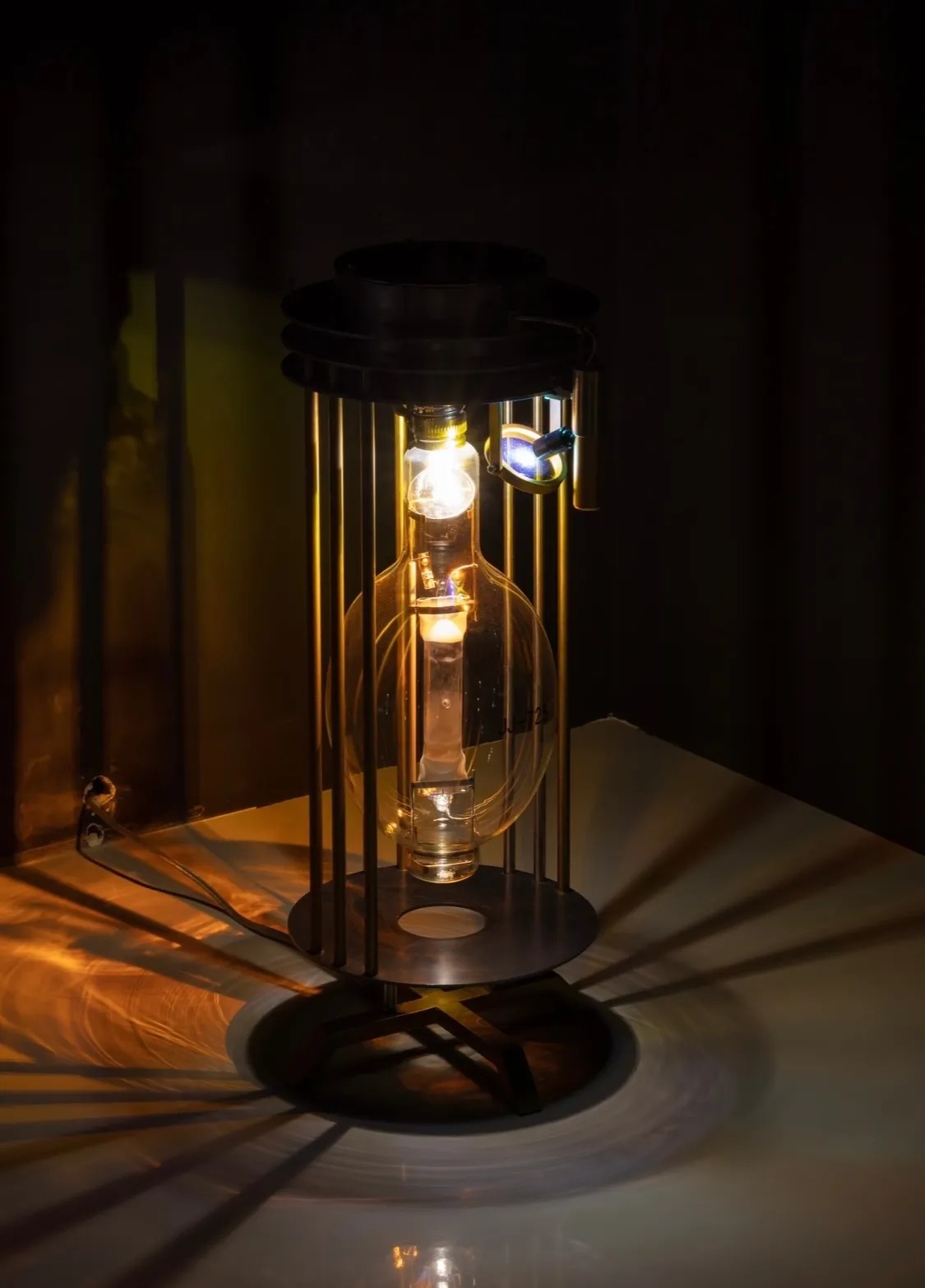
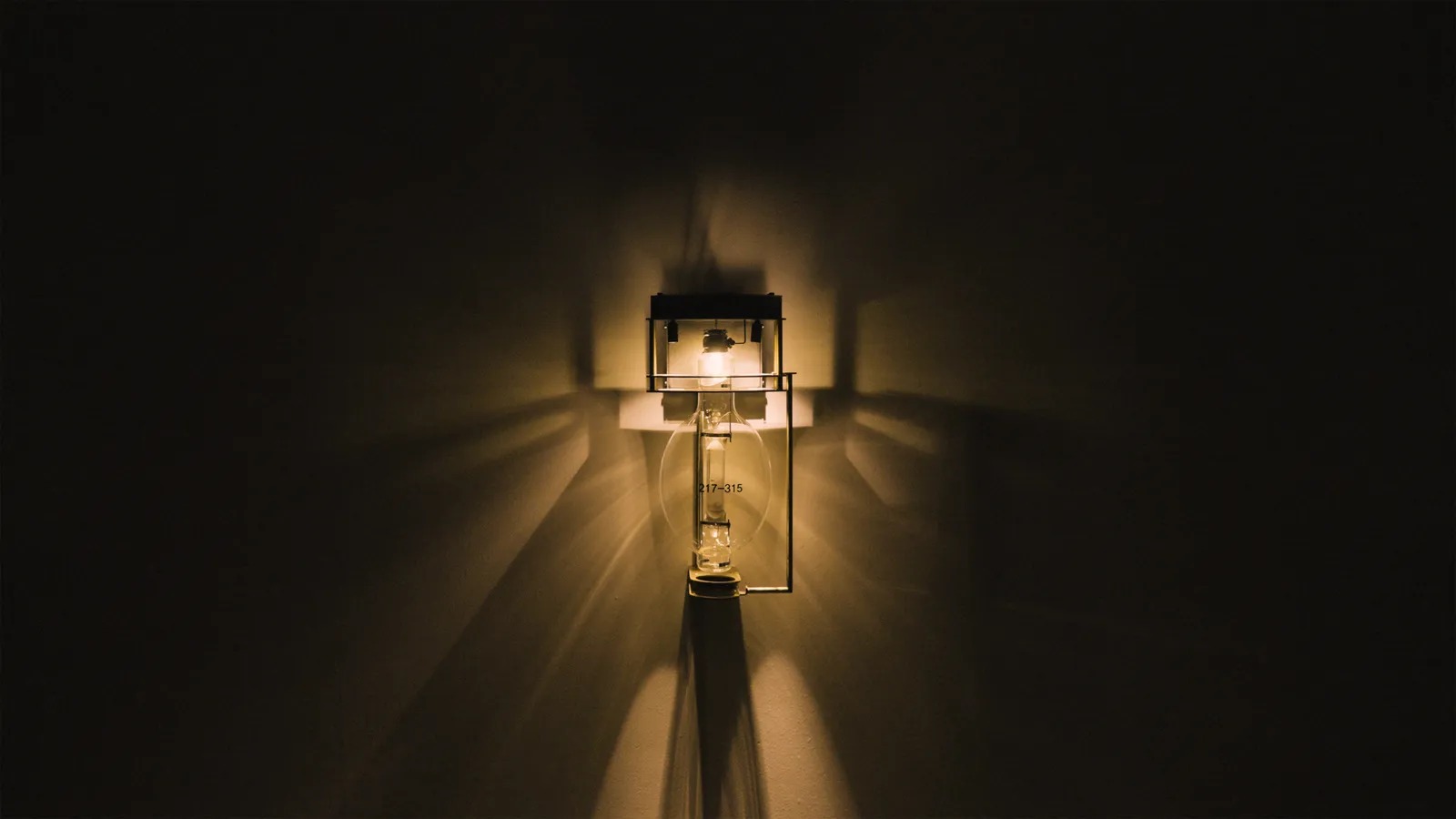
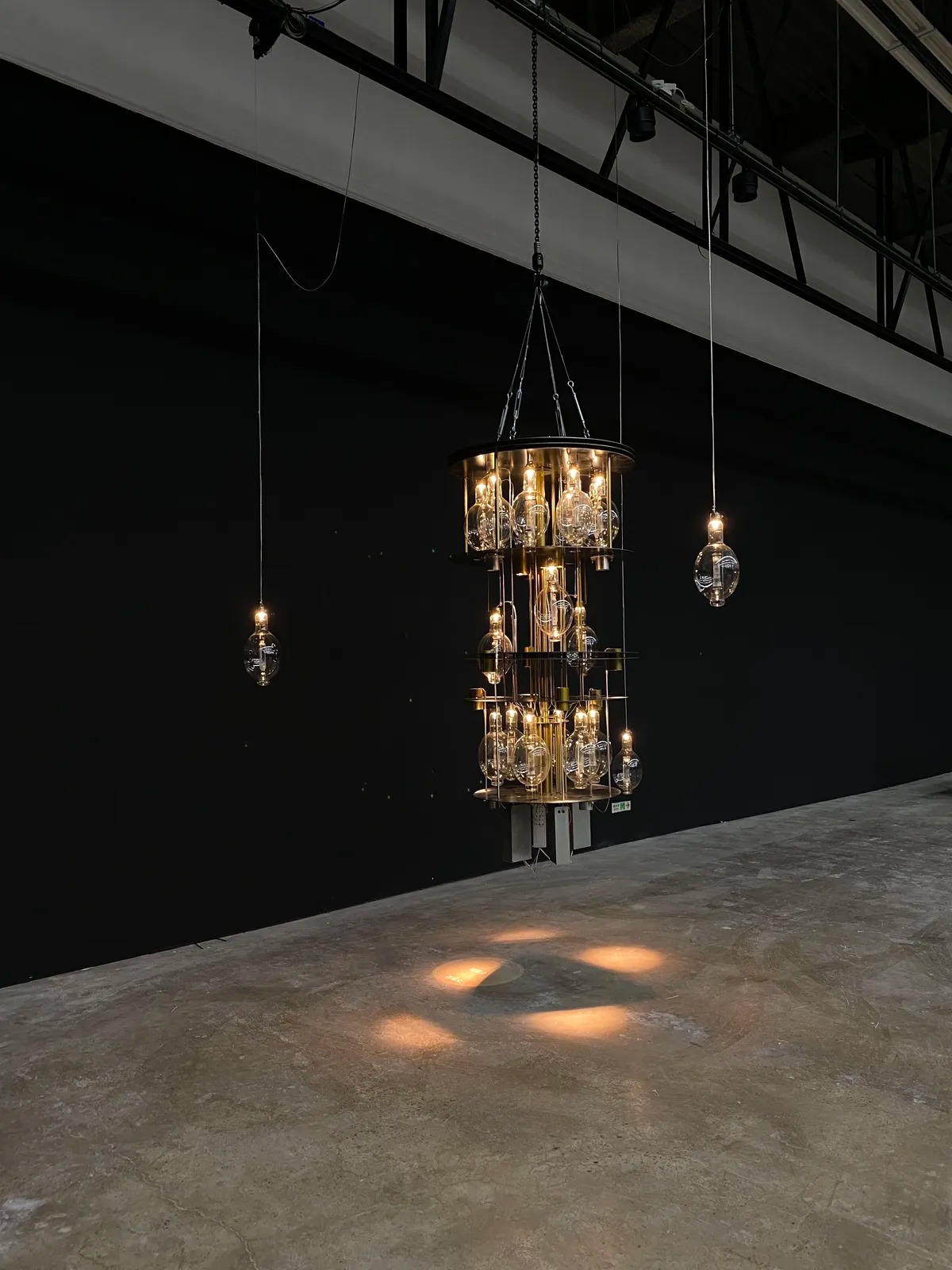
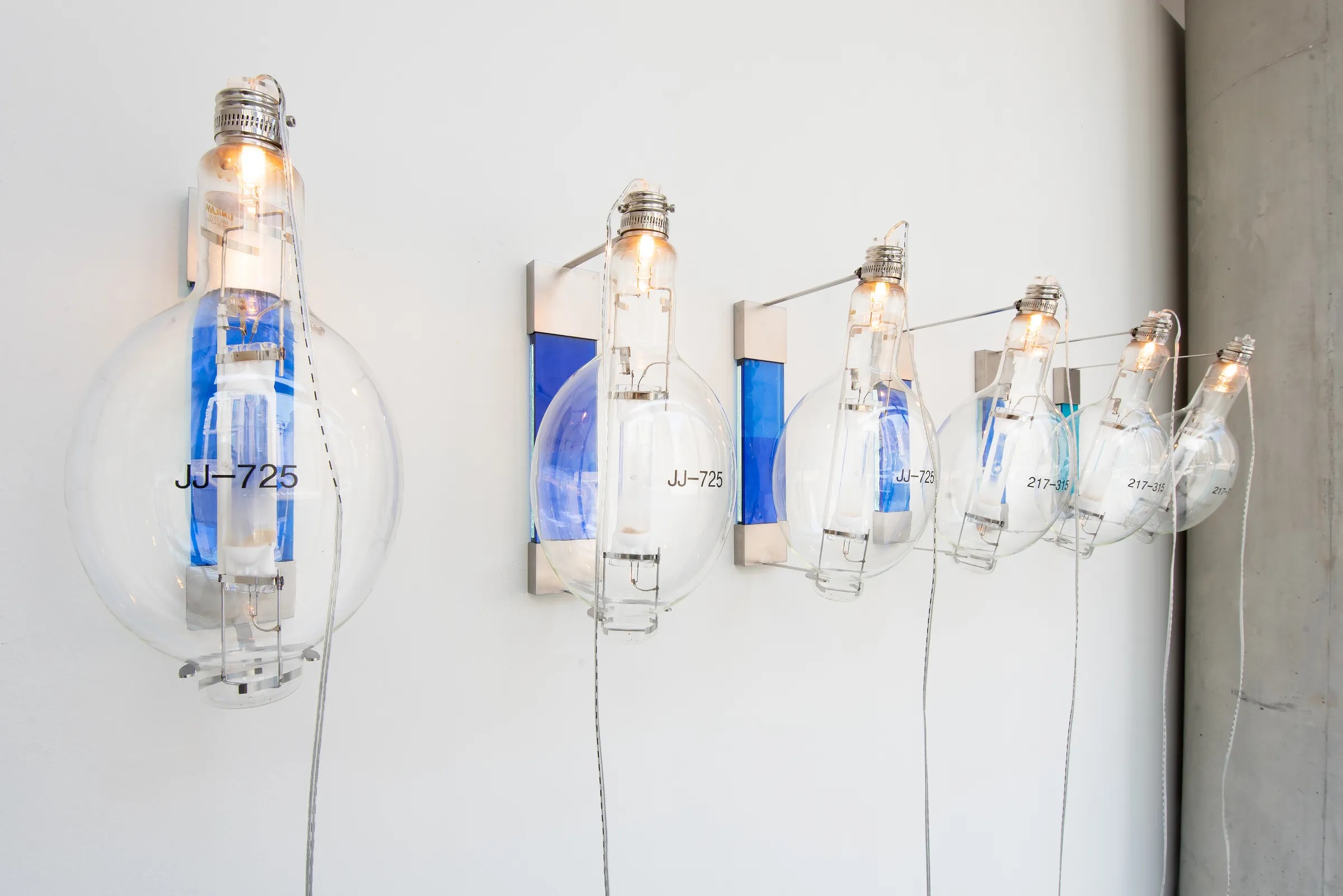
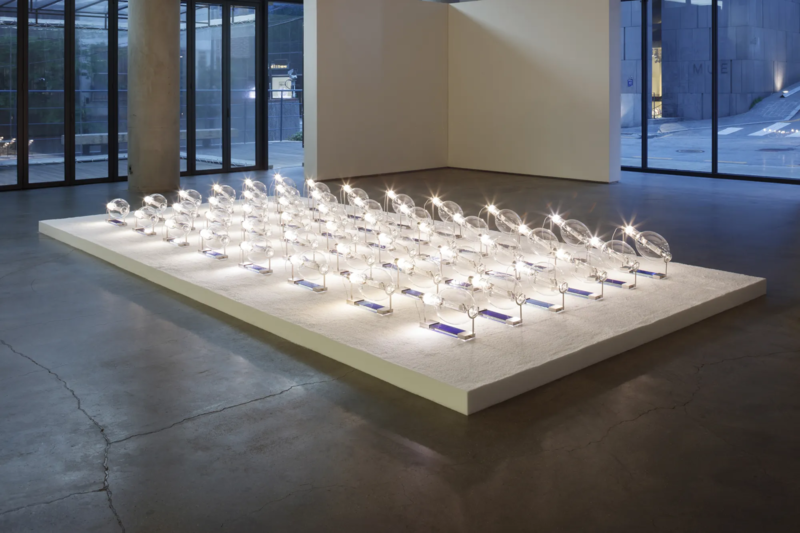
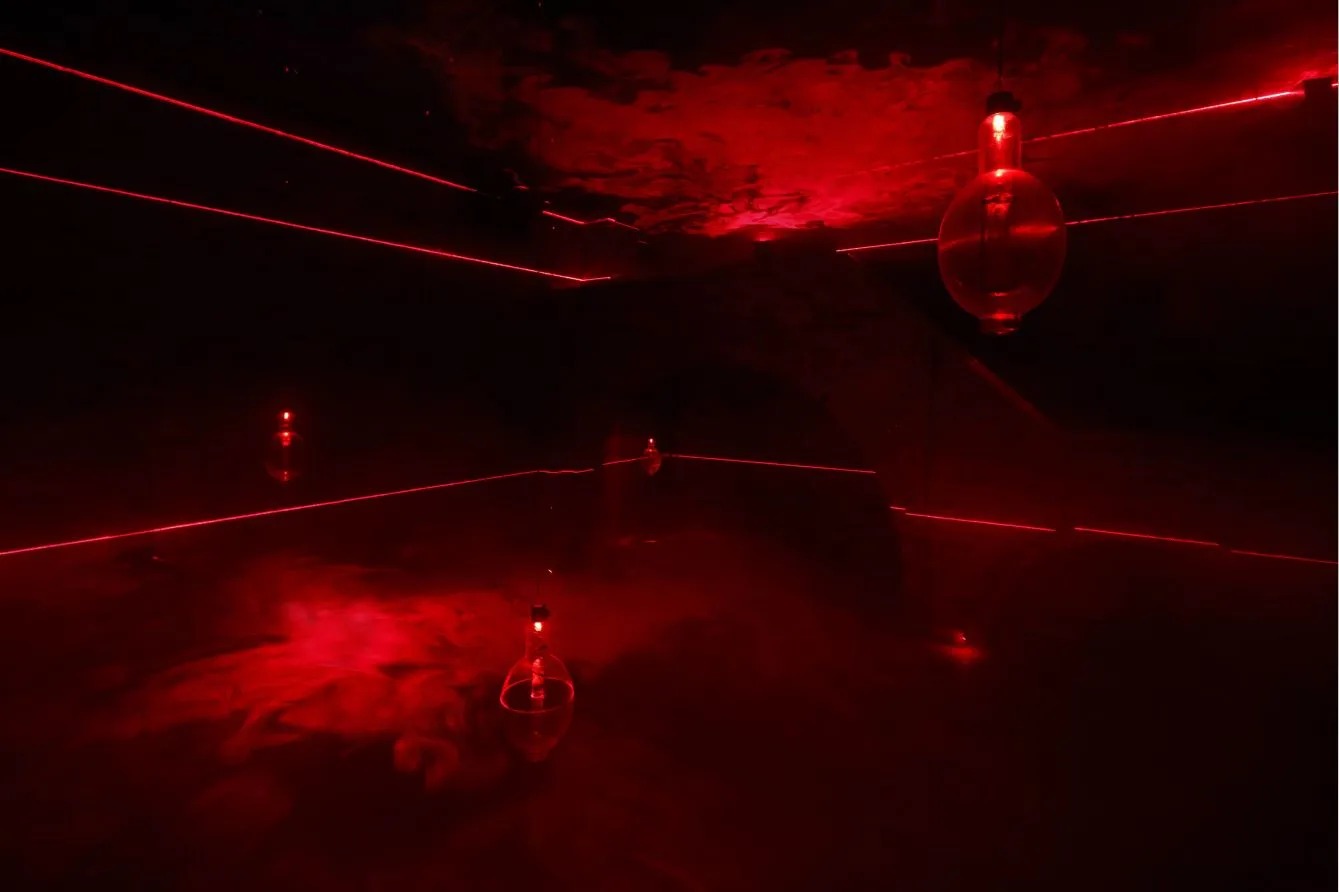
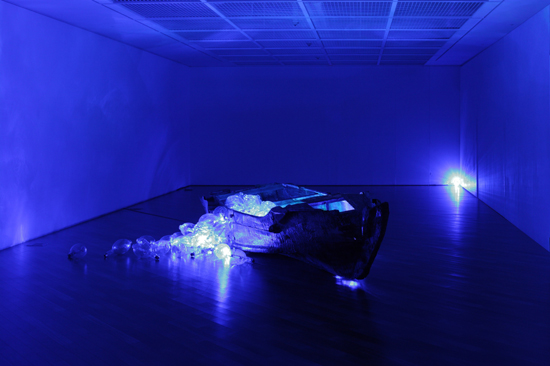
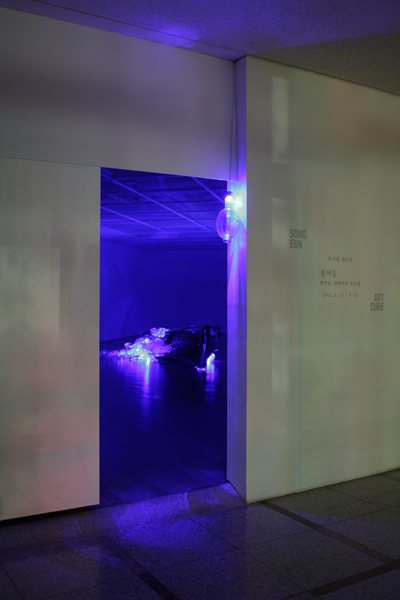
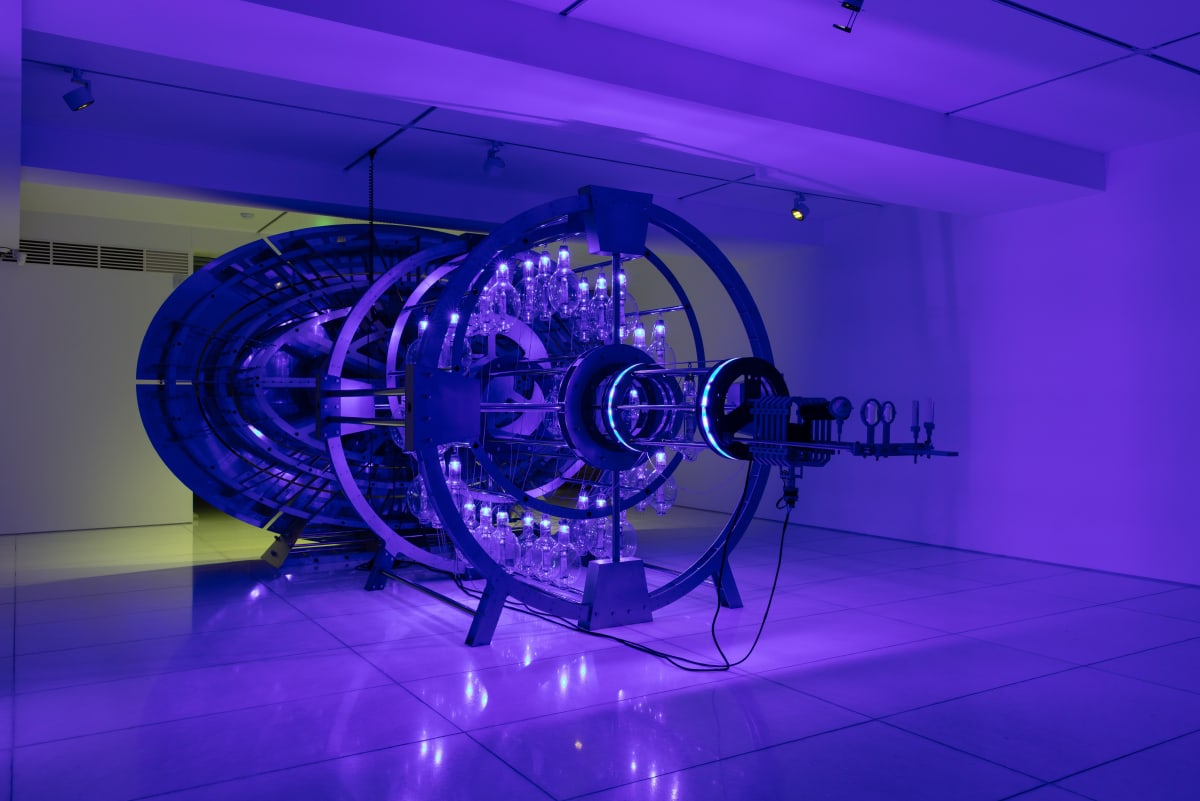
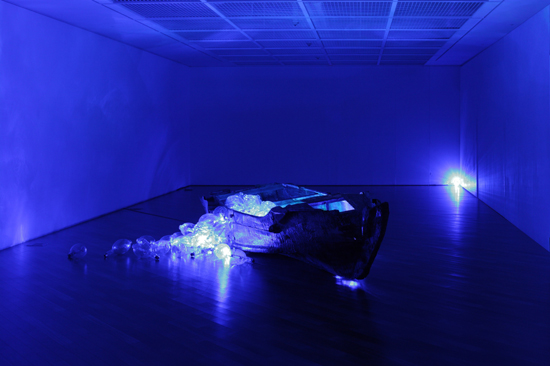
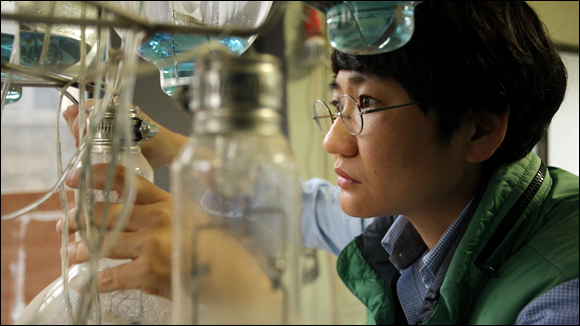
In the pitch-black night, the points of light scattered across the sea are fishing lamps. As the name suggests, these are lights used to gather fish: mackerel, hairtail, squid, and other marine species swimming beneath the surface are drawn toward their glow. Boo Jihyun collects discarded fishing lamps that have reached the end of their lifespan and can no longer emit light, giving them new life through installation.
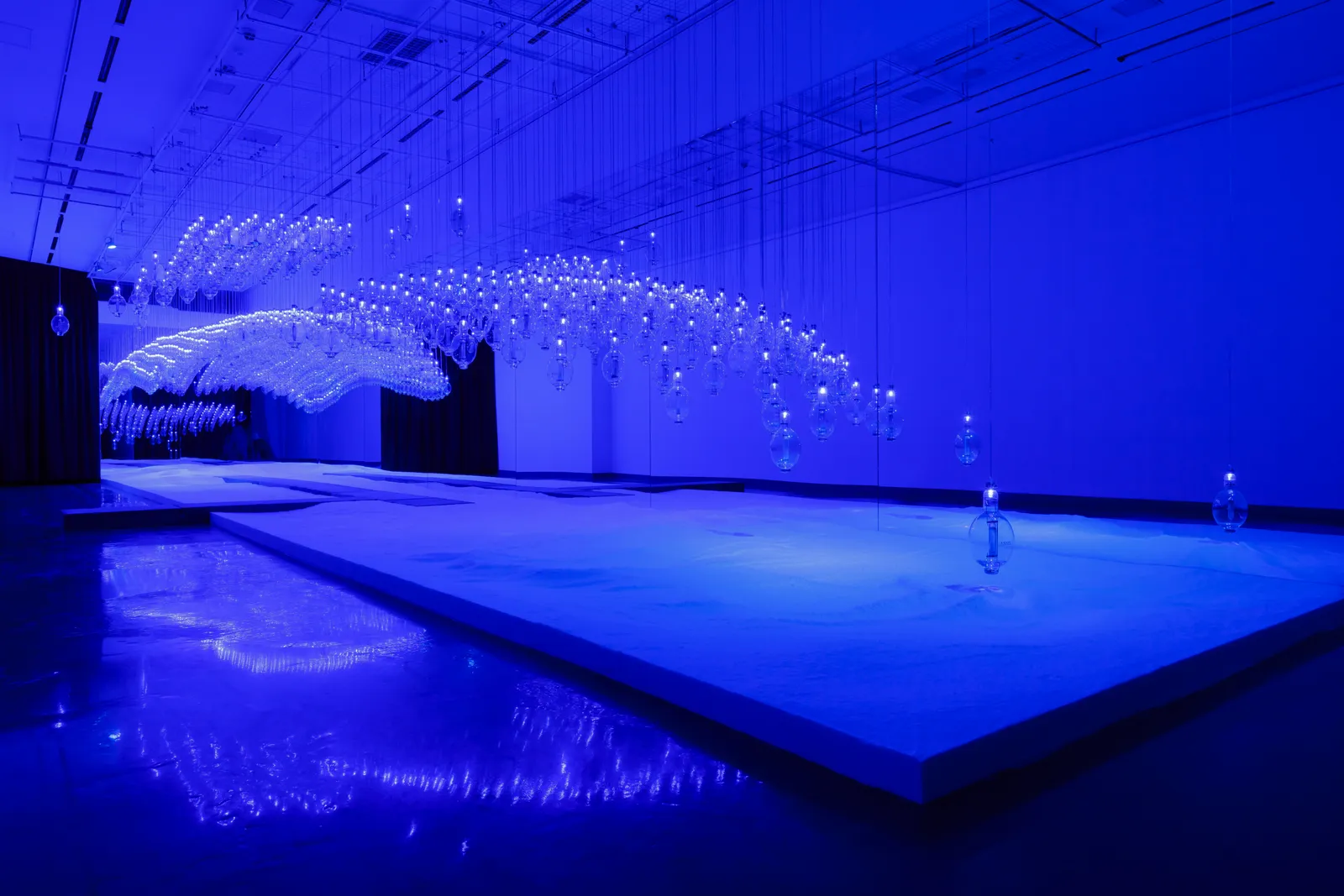
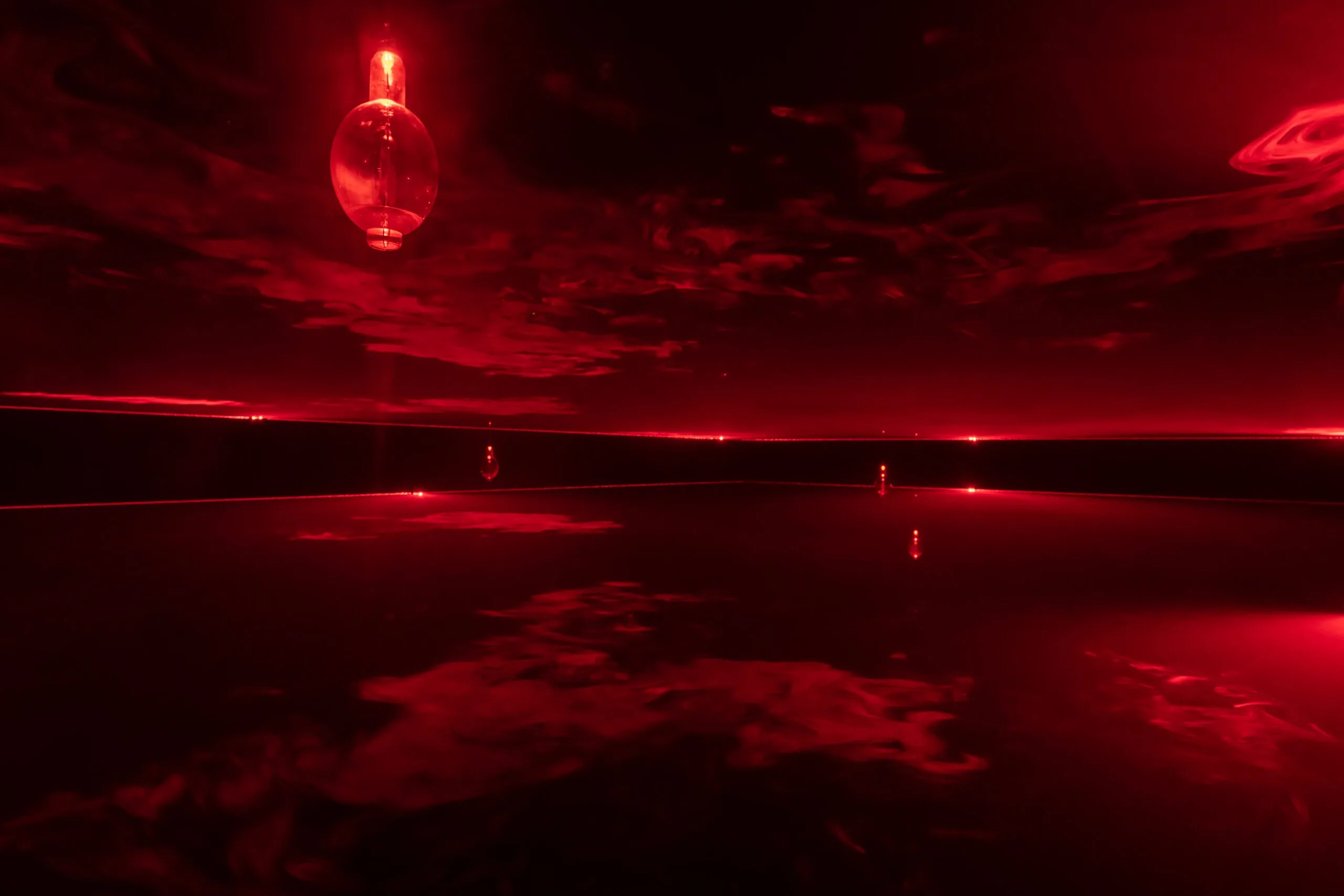
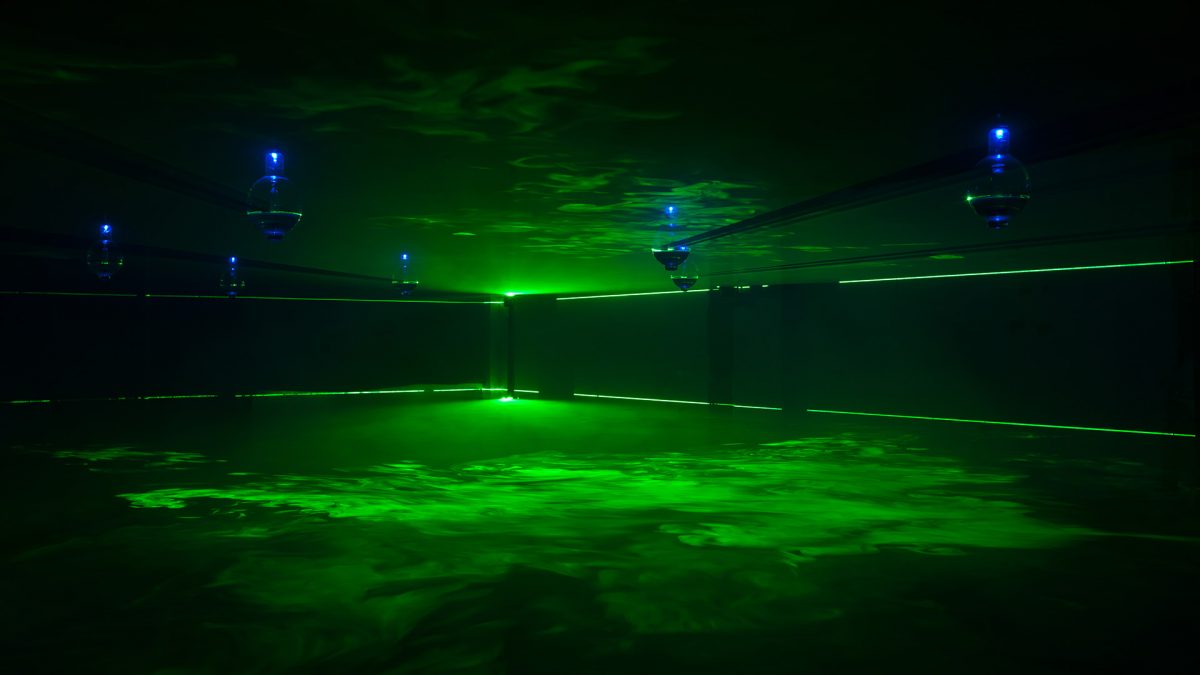
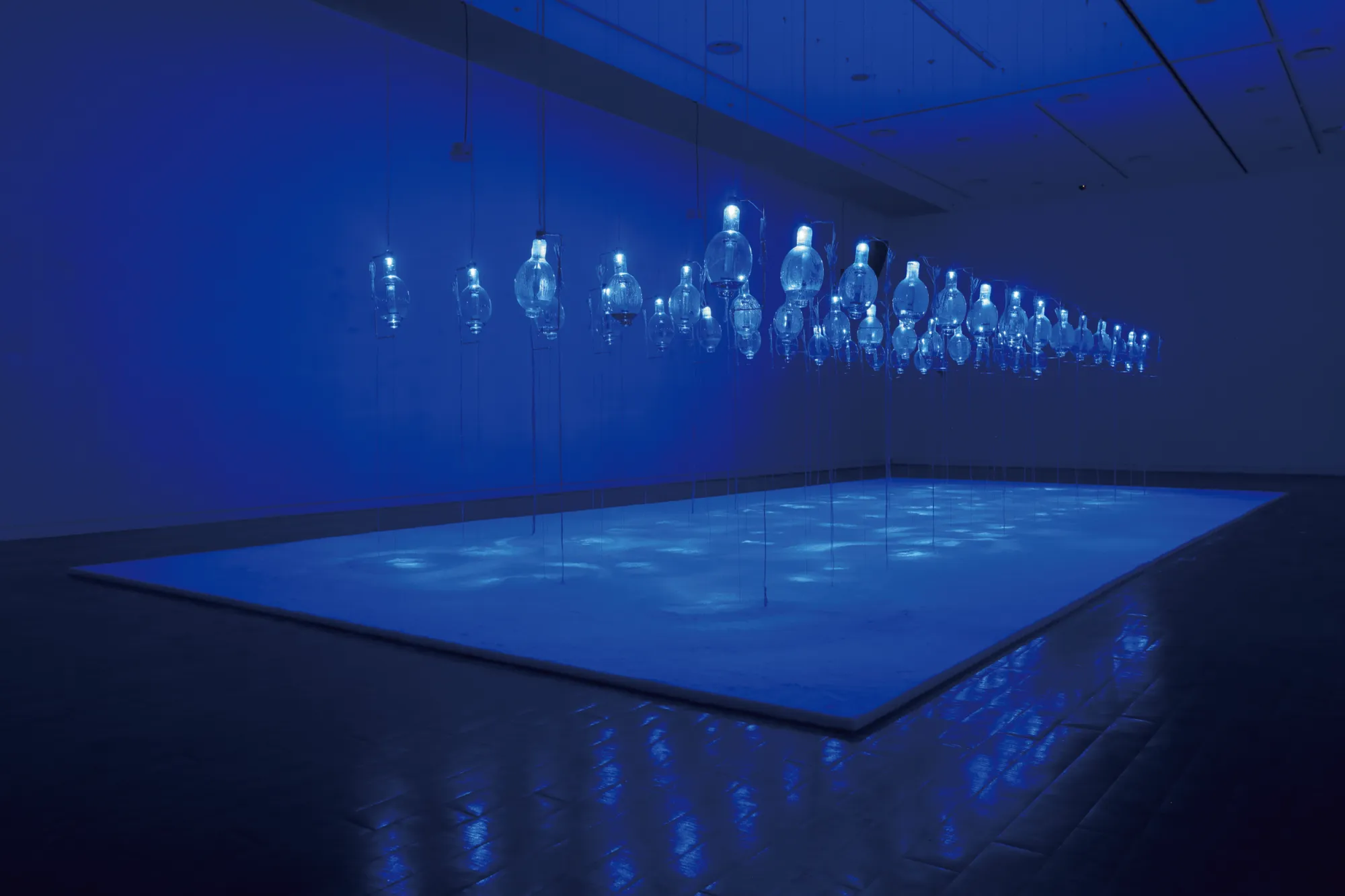
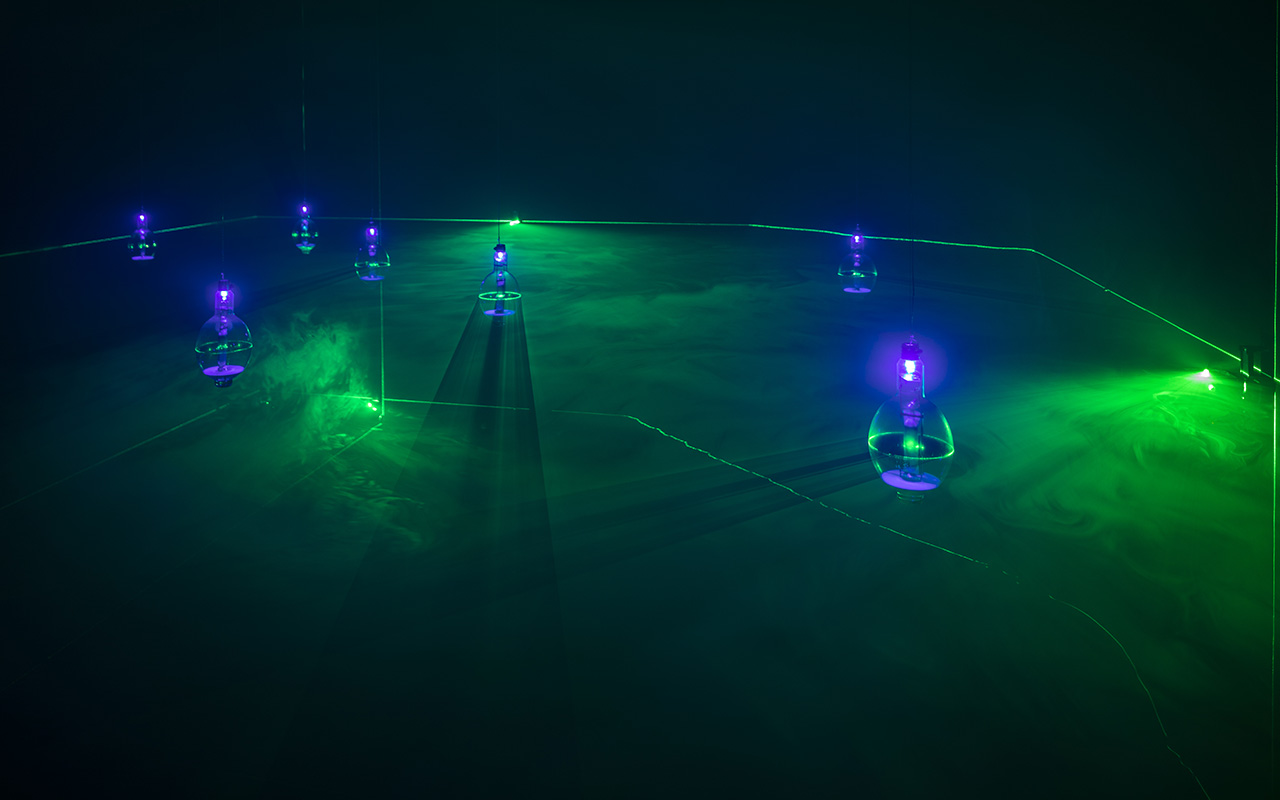
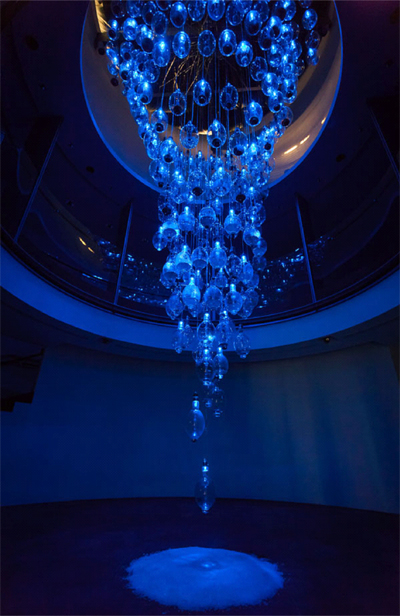
Using slender wires, she suspends 500 fishing lamps from the ceiling of the exhibition space and places an equal number of rectangular mirrored boxes on the floor so that the hanging lamps are reflected below. Lighting is then installed to cast the shadows of the lamps onto the walls.
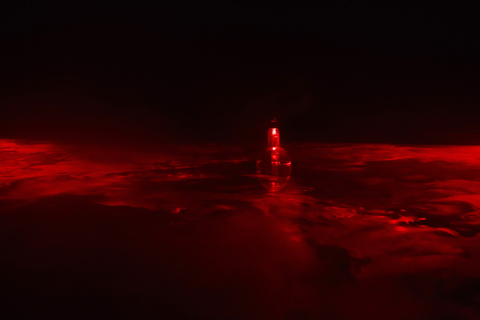
The transparent glass lamps, their mirrored reflections, the illumination, and the shadows on the walls come together to create a fantastical effect resembling a dazzling yet delicate feast of light. Although the fishing lamps themselves can no longer produce light, the artist creates an analogous environment through the indirect use of mirrors and illumination, making it appear as though the lamps themselves are glowing.
The resulting brightness falls far short of the intense light once produced by the fishing lamps in actual use, yet this subdued illumination instead conveys the slightly unreal and hazy atmosphere of seeing fishing lamps from afar across the night sea. Moreover, as one gazes at the points of light flickering across the surfaces of the glass lamps, the lamps seem to blink as though dreaming.
Though they have lost their own light and been discarded, they are reborn through that very state of abandonment as a kind of dreaming object, an aesthetic object that evokes a hazy poetic sensibility. Underlying this transformation is a process of aestheticization: the object discovered by the artist and the object interpreted by the artist.
In other words, what takes place is a kind of esoteric, alchemical, and magical event in which the artist revives—or returns—the light the fishing lamps have lost, light that might be compared to the spark of life, transforming an everyday condition—the discarded fishing lamp—into an aesthetic condition—the dreaming object.
At first, the artist reportedly struggled to obtain discarded fishing lamps one by one, until she eventually found a place resembling a junkyard for automobiles, where she could acquire large quantities of them with relative ease. Such junkyards and scrap yards are, needless to say, places where discarded industrial products that have exhausted their usefulness are finally gathered and dismantled—a kind of graveyard.
One might call them graveyards of civilization. As is well known, the Nouveau Réalists were fascinated by such graveyards of civilization and opened a new chapter in art history. They came to be called Nouveau Réalists because of their new interpretation of realism.
In other words, they believed that the reality of modern society, shaped by highly developed material civilization, should be sought in the countless manufactured goods that have taken over everyday life, and especially in industrial products that have been discarded after serving their purpose.
Furthermore, alongside this redefinition of reality, such industrial waste also made possible the artistic appropriation of the everyday. The moment a manufactured object is discarded, it undergoes a transformation of identity. Having accumulated the strata of time spent with people and the traces of human life left upon it, the object is reborn as a kind of aesthetic object that feels familiar while evoking particular emotions.
Art, in turn, is deeply connected to the production of such aesthetic objects. It is well known that assemblage, in which objects are stacked or arrayed, and installation art, which elevates such methods to the level of exhibition design, significantly expanded and transformed the methodologies of artistic expression.
In this sense, the artist’s work may also be regarded, in more colloquial terms, as an example of recycling, since it reuses what would otherwise be considered waste. At the same time, while newly manufactured fishing lamps fresh from the factory may look identical, no two discarded fishing lamps appear exactly the same when gathered together.
On closer inspection, among those that seem relatively intact are lamps stained with oil, marked by dents and scratches, containing broken bulbs, or bearing rusted filaments; some retain water inside, others bear traces left after moisture has dried. Even the thickness of dust settled on their surfaces differs, as does the degree of soot produced when each bulb burned for the last time.
The process each fishing lamp undergoes from the moment it leaves the factory—its cradle—until the moment it is discarded—its grave—closely resembles the course of a life. Though they resemble one another when first produced, by the time they are discarded no two are alike, suggesting that each lamp must have undergone different events along the way.
Their fractures, scorch marks, and ruptures analogically testify to the traumas of life, to the traumas of existence. And just as fishing lamps of similar form contain different events and scars, everyday life may appear to consist of the same days repeated over and over, when in fact each day is different. It might be described as repetition that contains difference within itself. In this way, these fishing lamps function as metaphors for life and the everyday.