Repetition is an act of will. An individual who trains in sports or practices technology acknowledges the subtly different settings and possibilities of coincidence, embodying different shapes of force in the same motion. Within it, one constructs limited structures and rules, finding balance. Here, repetition is, most of all, an act of will that experiences and engraves the world onto one’s body.
Waking up with improved abilities after tedious recurrence of repeated practices is an experience that each and every one of us has had. Although nothing seems to change at first, the experience that passes through one’s body and soul lingers around, making a difference with the past. Such differences layer upon one another and compose an invisible form, which one day becomes a visible reality.
An act of repetition is an attempt to change the future, by sensing the present at the point where the past is layered. Such is not an obsessive replication, but a willing recreation. In the interval between these repeating acts, the potential for the future lies hidden.
The act of drawing is the same. The artist moves one’s hand within the constraints of reality and self-imposed limitations, and such an act holds the experience of practices, layered from the past. The traces of this act – embracing the possibility, and potential of coincidence – flow into the future, searching for the completed artwork, viewers to be encountered, and a world to be changed.
In this instance, these indefinite options do not immediately refer to freedom. Rather, the artist can find freedom within his constraints and limitations. Vilém Flusser, in Gestures (2018), said that “the painter does not have freedom, he is in it, for he is in the gesture of painting,” and to be in freedom is to be truly within.
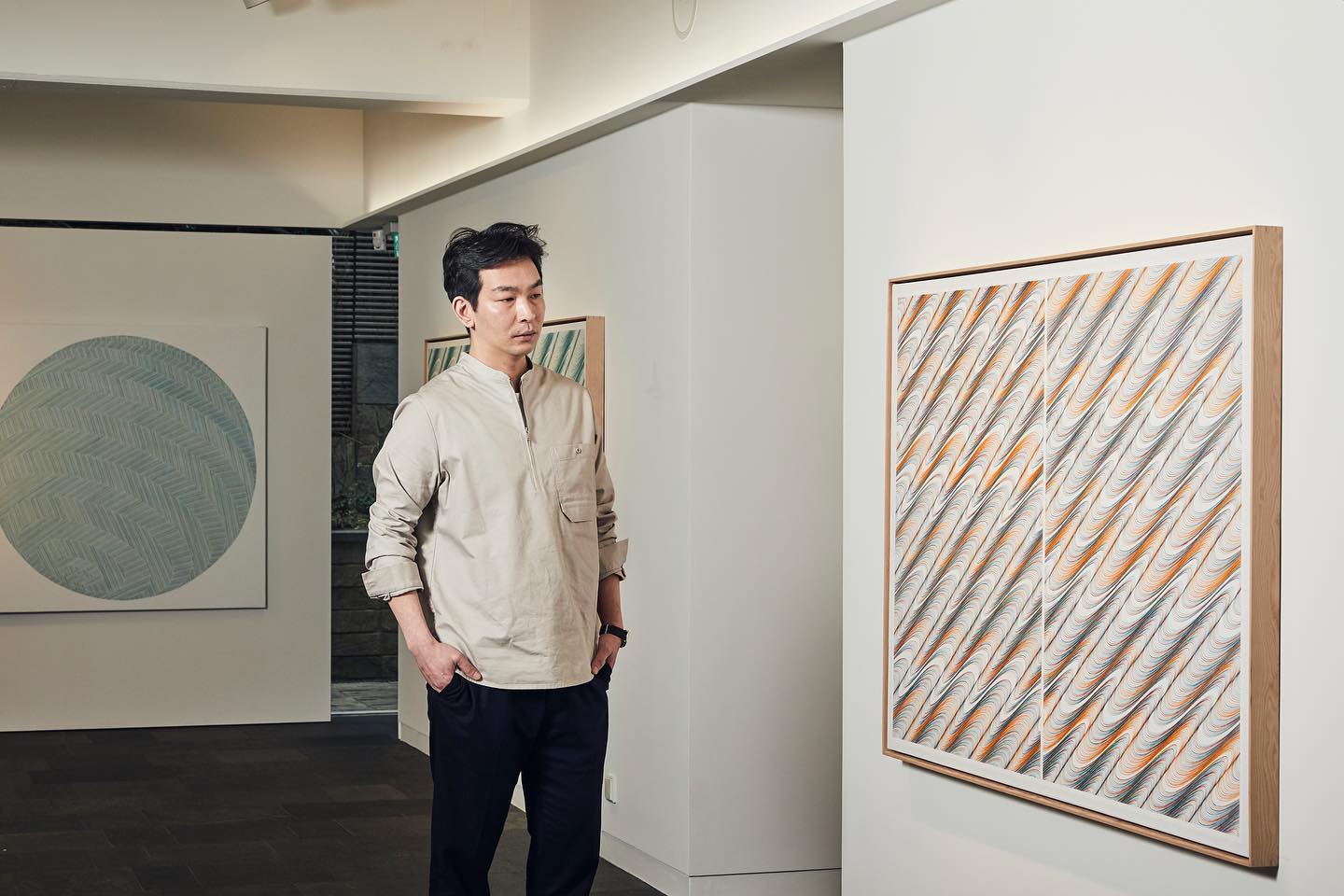
Thus, in the act of drawing, which flows from the past to the future, the artist is present. Such is the story I want to tell in front of the lines drawn by the artist Keun Wook Ji.
Ji’s artistic worldview began with the movement of particles. Our world, as explained by physics, is different from what we see. Everything that makes up the world is composed of equal little particles: the air and wind, and even the electro-magnetic fields in between galaxies. Each particle, according to its own rules, vibrates and floats around, revealing itself only when it collides and interacts with other particles.
In other words, our universe is an ocean of grand possibilities filled with particles, and this vibrating ocean continues to expand, as it has been doing for millions of years.
Such is how the artist peels off the surface of the world that we see through our eyes, drawing one that is abundant, despite being seemingly void. Like the universe, in which all beings are composed of equal particles, in this place, everything is equally replaced by the lines and directions. In his world, our individual existences are only lines, too. In such an alternate picture screen, I see the world rather clearly reflected.
Here, I ruminate on Vilém Flusser’s words that even the future is embedded within the gesture of drawing. What kind of future is the artist’s lines and his act of making them heading towards? Where is that world expanding to?
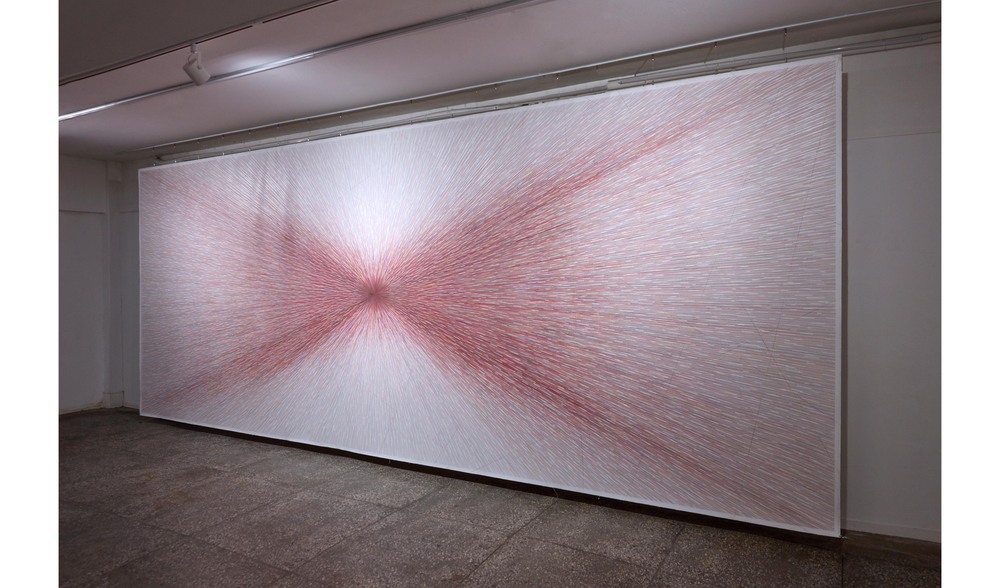
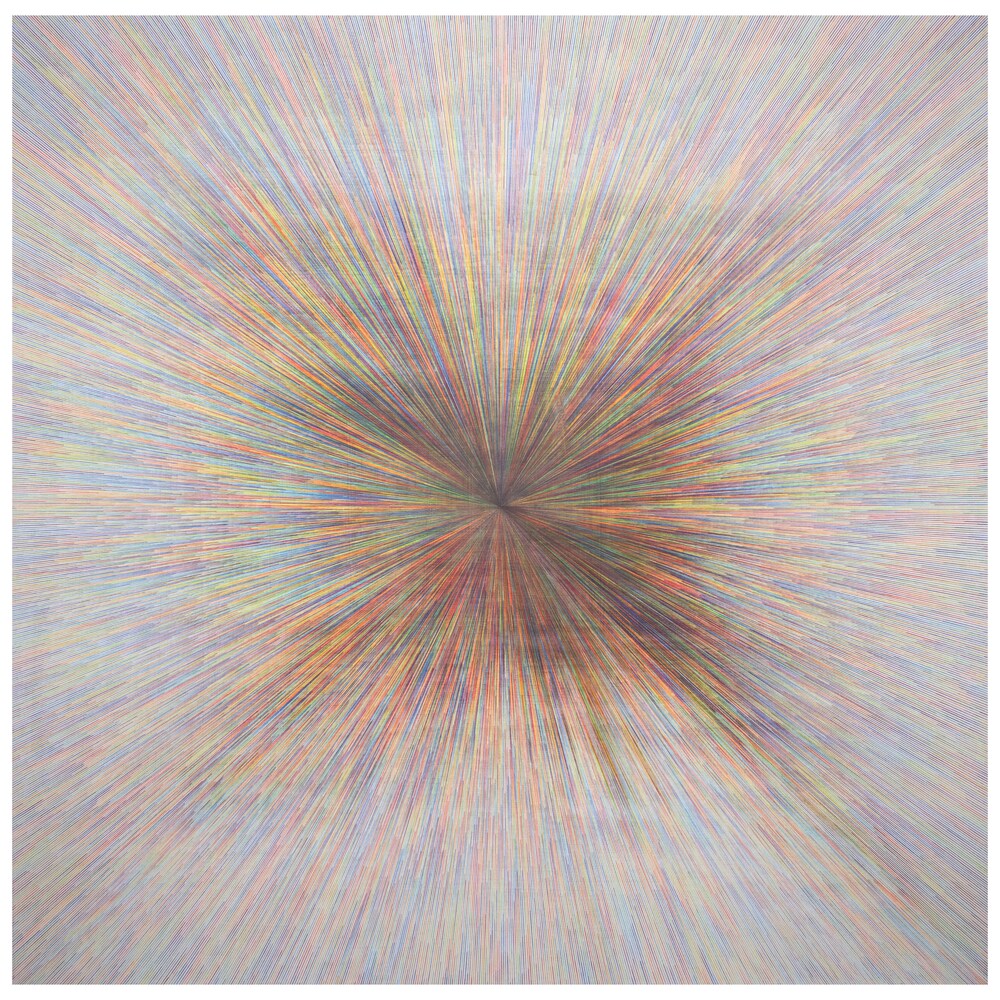
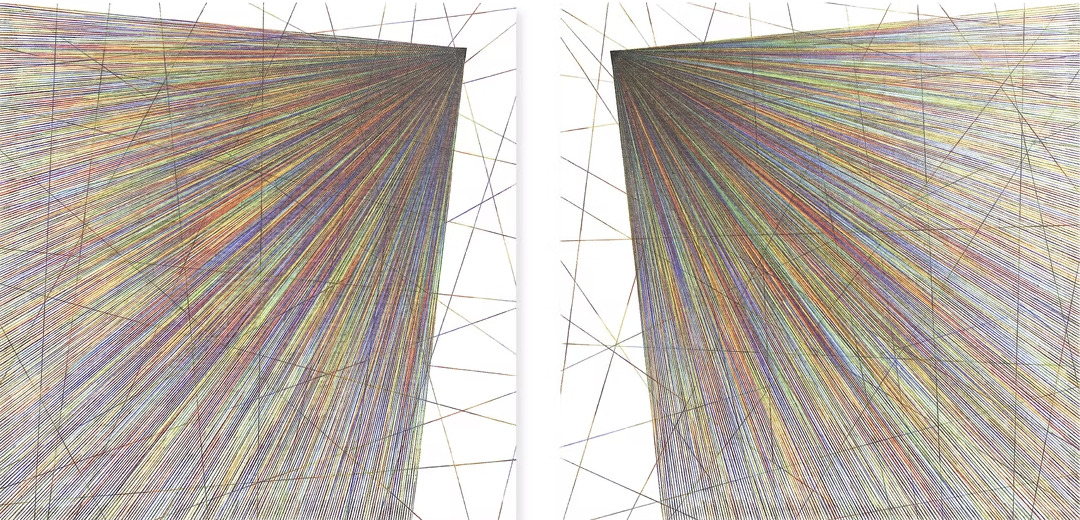
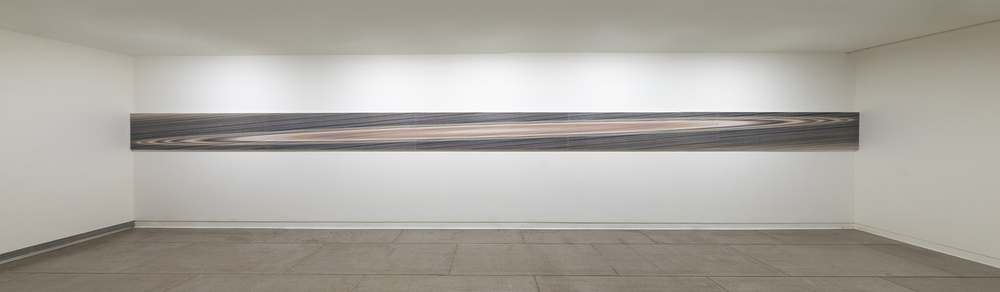
On the surface level, the artist’s making of lines is a repetitive performance expressing the world of particles, aiming to reach the abstract. On the other hand, the act of drawing lines, one by one, eventually becomes an effort and an attempt: to create meaning, visualise the world seen by oneself, and reach somewhere.
Like how particles are made visible through coincidental interactions – after moving accordingly to each of their rules – the artist draws countless lines within his self-imposed limitations, fabricating a language to reach the world outside the canvas. Interaction is, after all, a relationship. And drawing is a language of someone’s. His gesture of drawing is thus a way of ‘training’ to reach you, the viewer, with his own language.
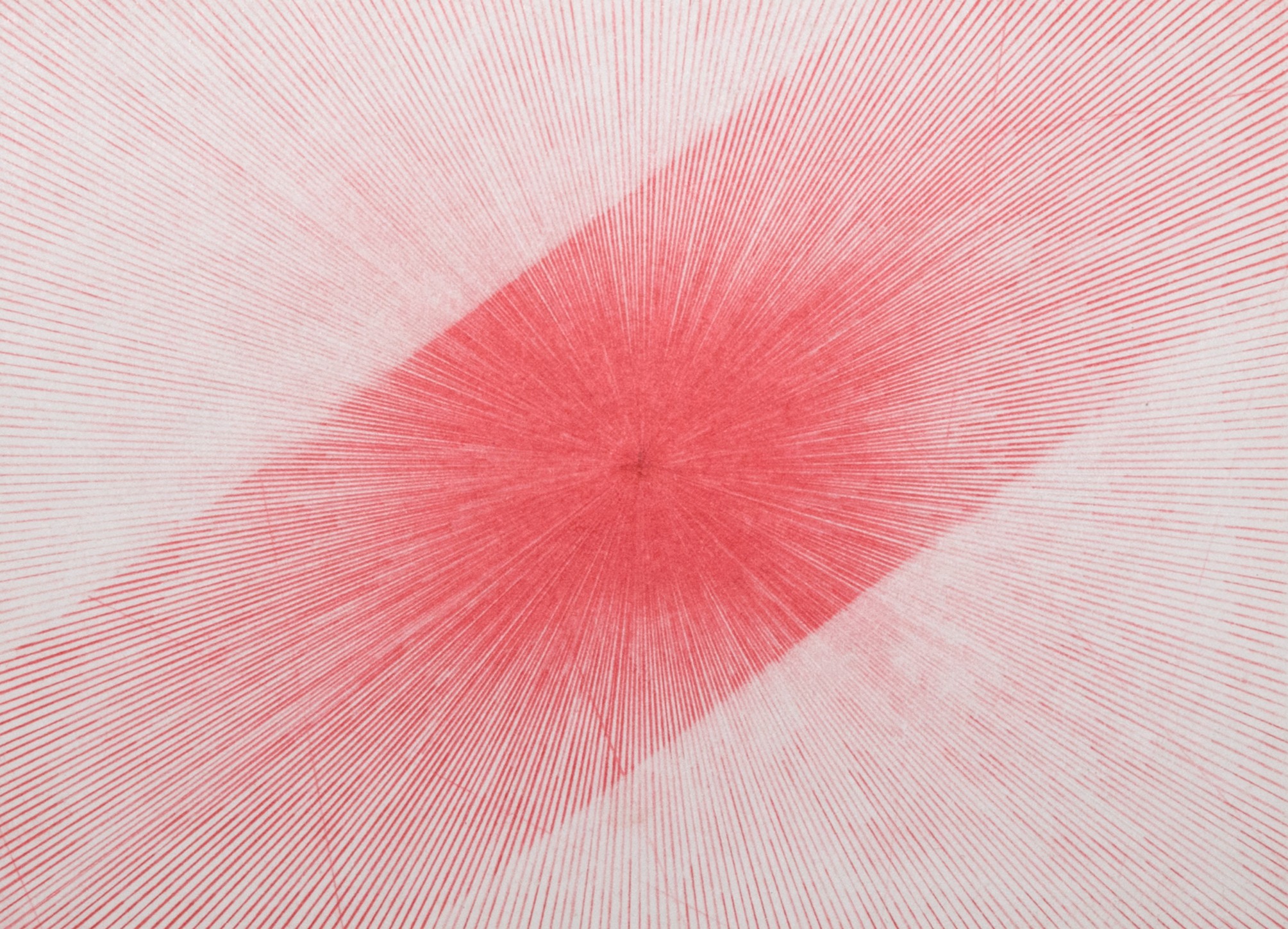
The repetitive act of drawing is not only recorded through the lines on the canvas, but also on the artist’s body. Despite the fear of failure, the repeated experience – of drawing thin lines by holding one’s breath and keeping one’s balance – becomes potent within the artist’s hands and the picture screen.
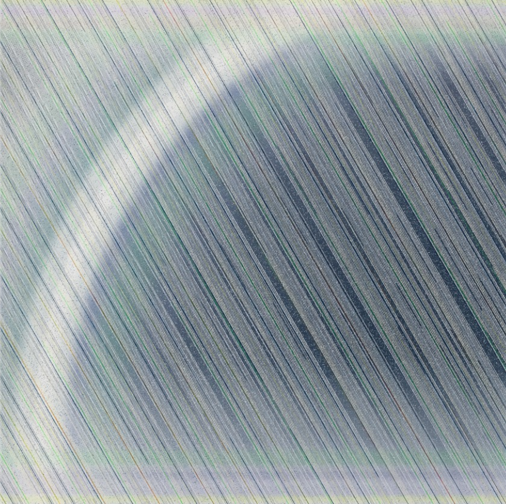
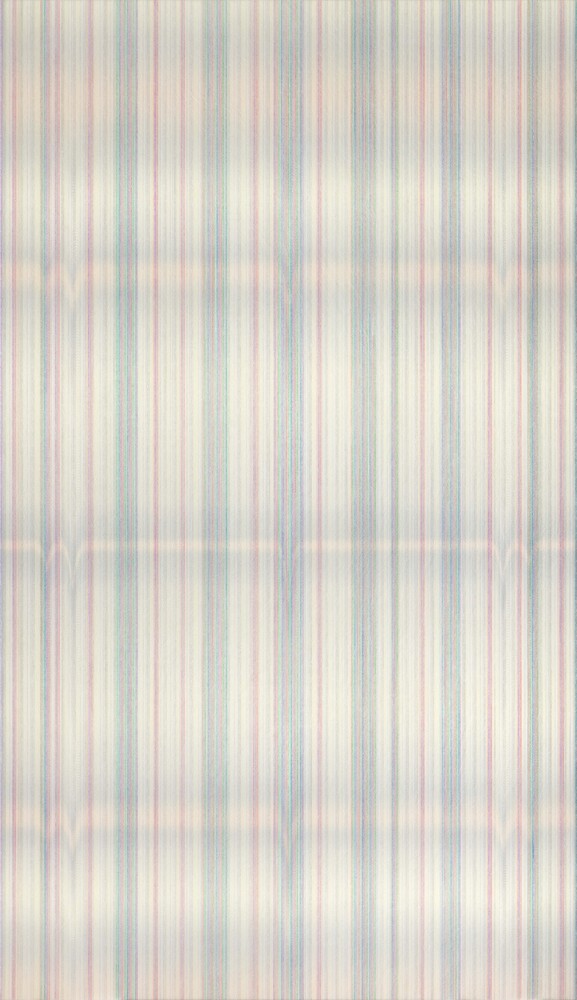
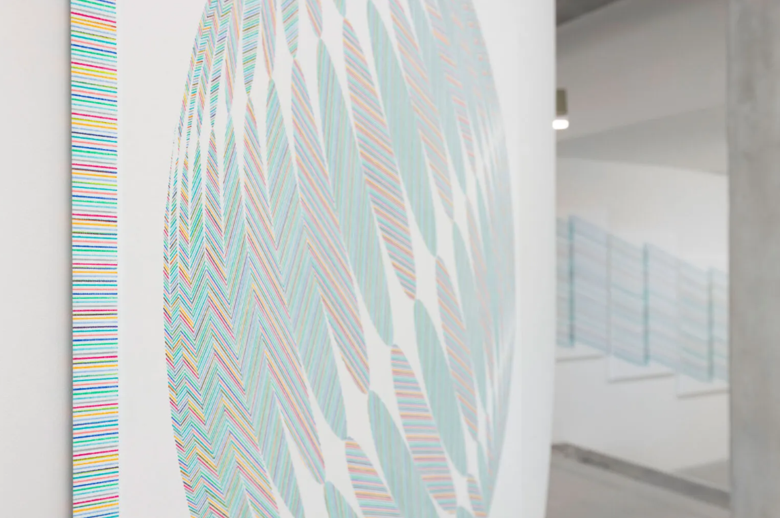
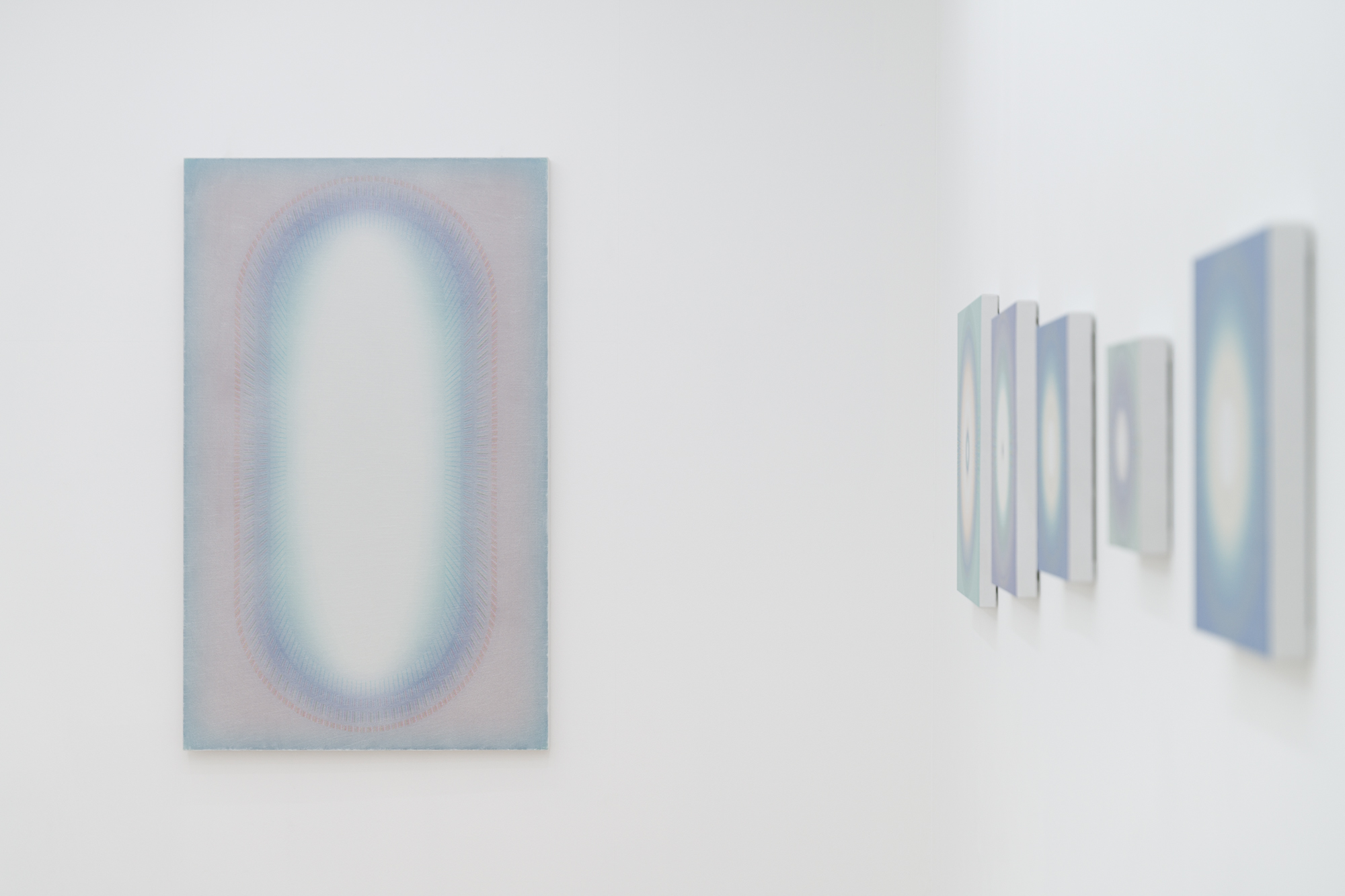
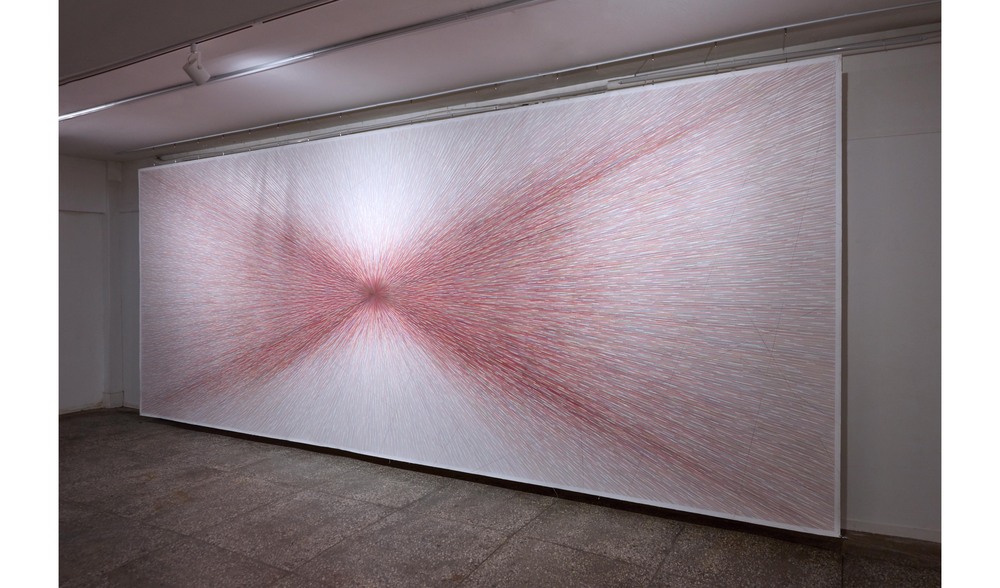
As we have to challenge and overcome our limitations through new ways of training so as to improve the body’s motor abilities, peace has to be broken in order to trigger our potential. The line, thus, is an attempt, yet a destruction and fracture. Upon a smooth picture screen repeatedly painted over with gesso and then sanded, the artist holds a colour pencil and a ruler – both quite ‘analogue’ materials – to draw lines.
He makes each line with a new mindset, creating a fracture where he stands. The artist builds regularity within the irregularity of this process. And that is how new things are created within the cracks.
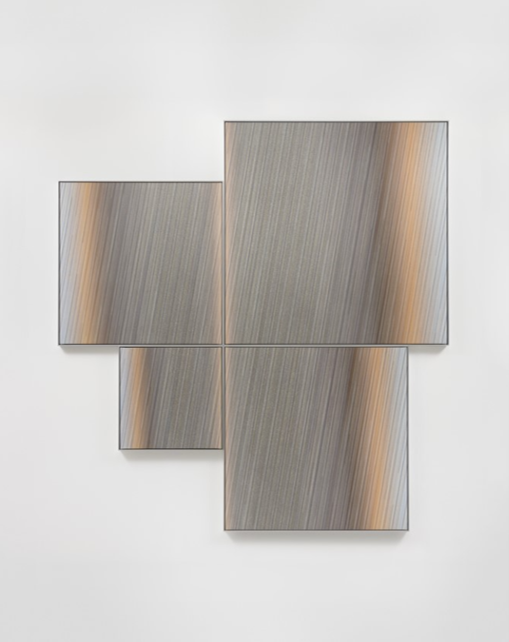
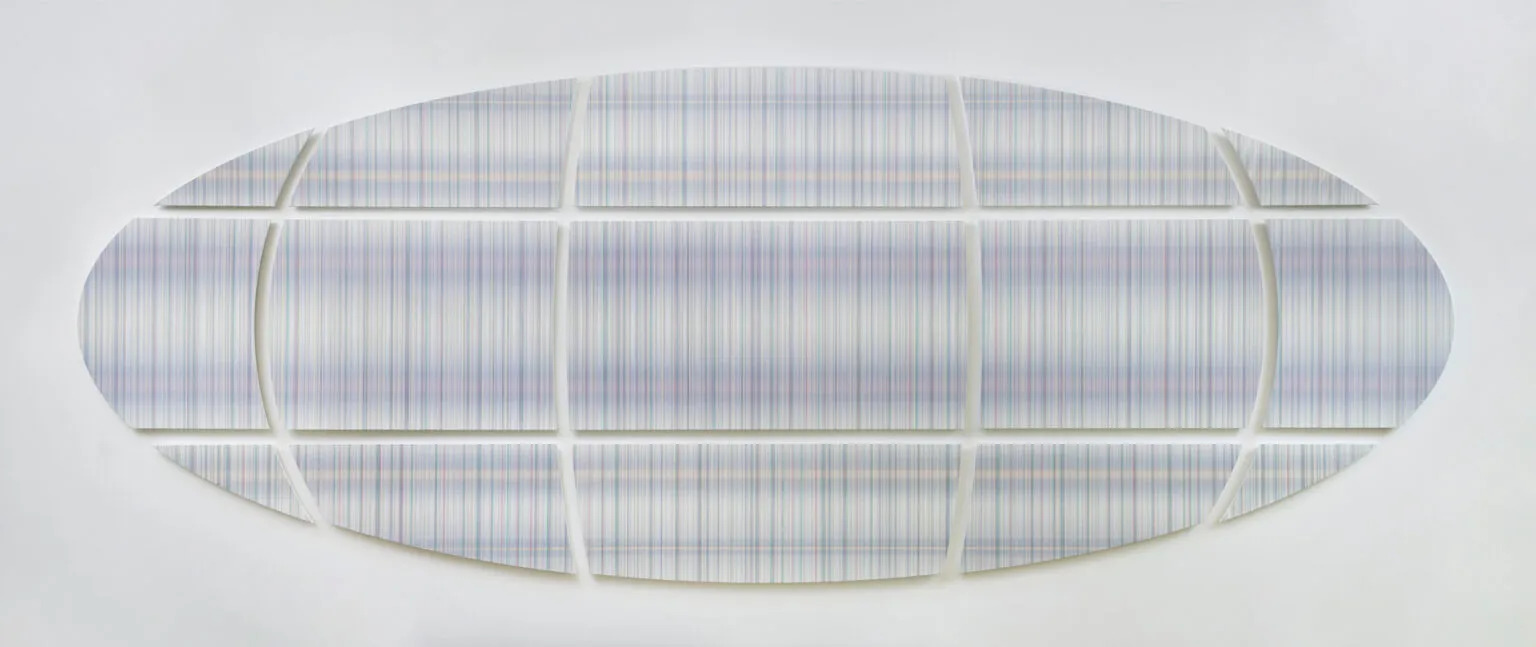
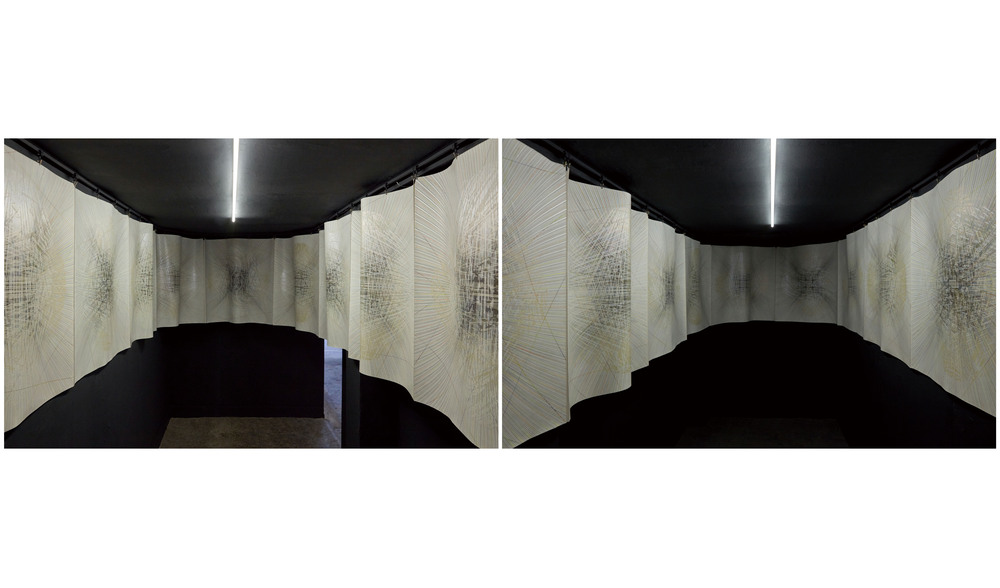
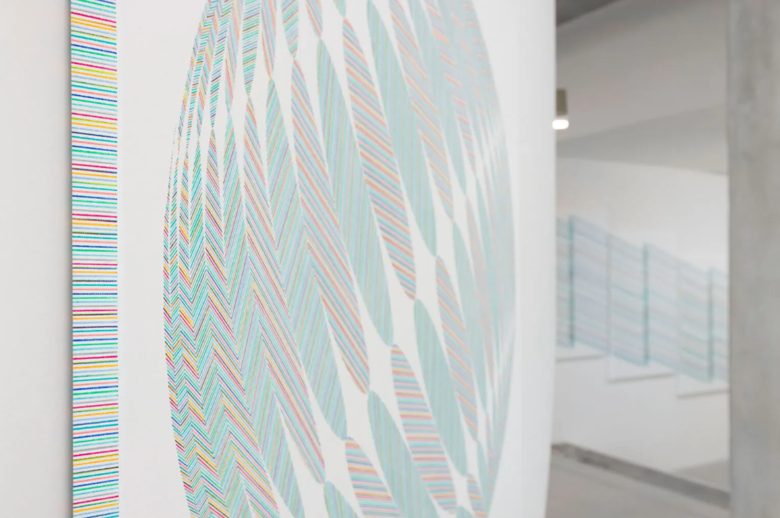
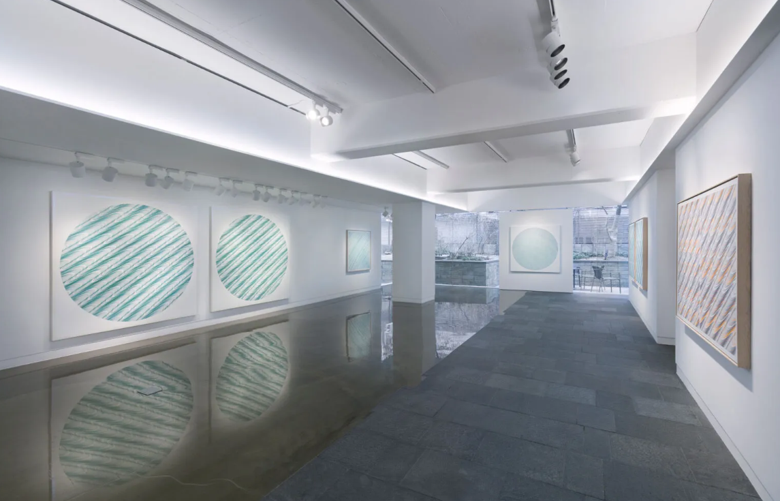
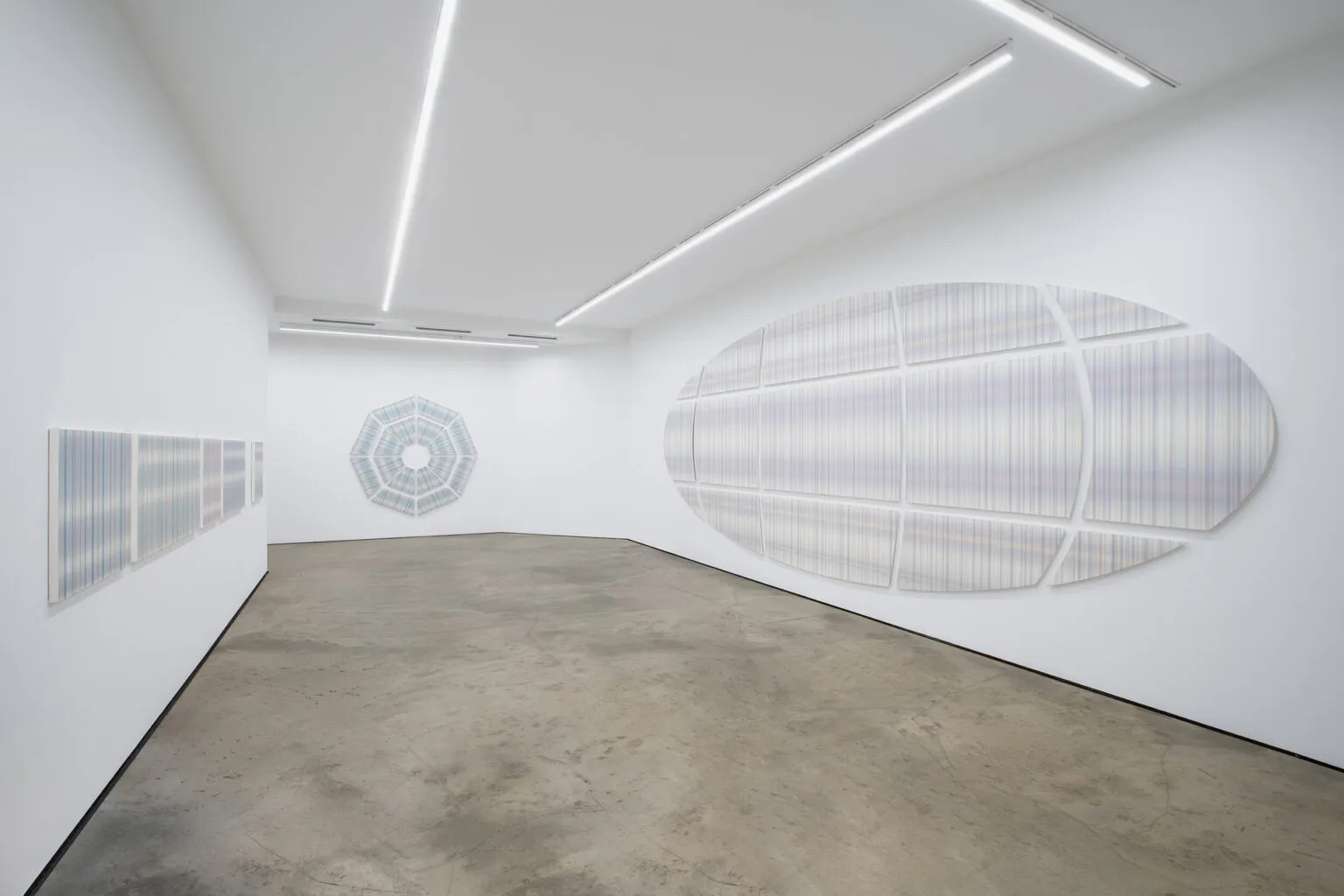
The artist, through the multi-dimensional forms unfolding in his new artwork, attempts the language of various figurations as if to escape from his preconceived knowledge of rectangles. The particularly short lines stand out in such a new form, and the act of drawing more short lines may refer to greater chances of experiencing failure. The artist actually said that short lines require much more time to be drawn than long lines.
Still, the afterimage of the experience of performing the intervals between lines and creating a toughened picture screen is left imprinted on the artist’s hands and the picture screen.
As the attempt of approach – regardless of the repeated failures – creates one narrative, the traces of the artist’s repeated lines forge a relationship, and such accumulated relationships organise the pictorial rules and forms of an expanding world. Although invisible, it is an intrinsic world created by the artist’s every attempt to push the limits.
The artist draws a line – and with the residual traces of coloured powders unpredictably deposited through this independent movement – takes us to the edge of the world of his own creation. Like his lines, it is a way of approach that is metaphorical, yet created through persistent repetition.
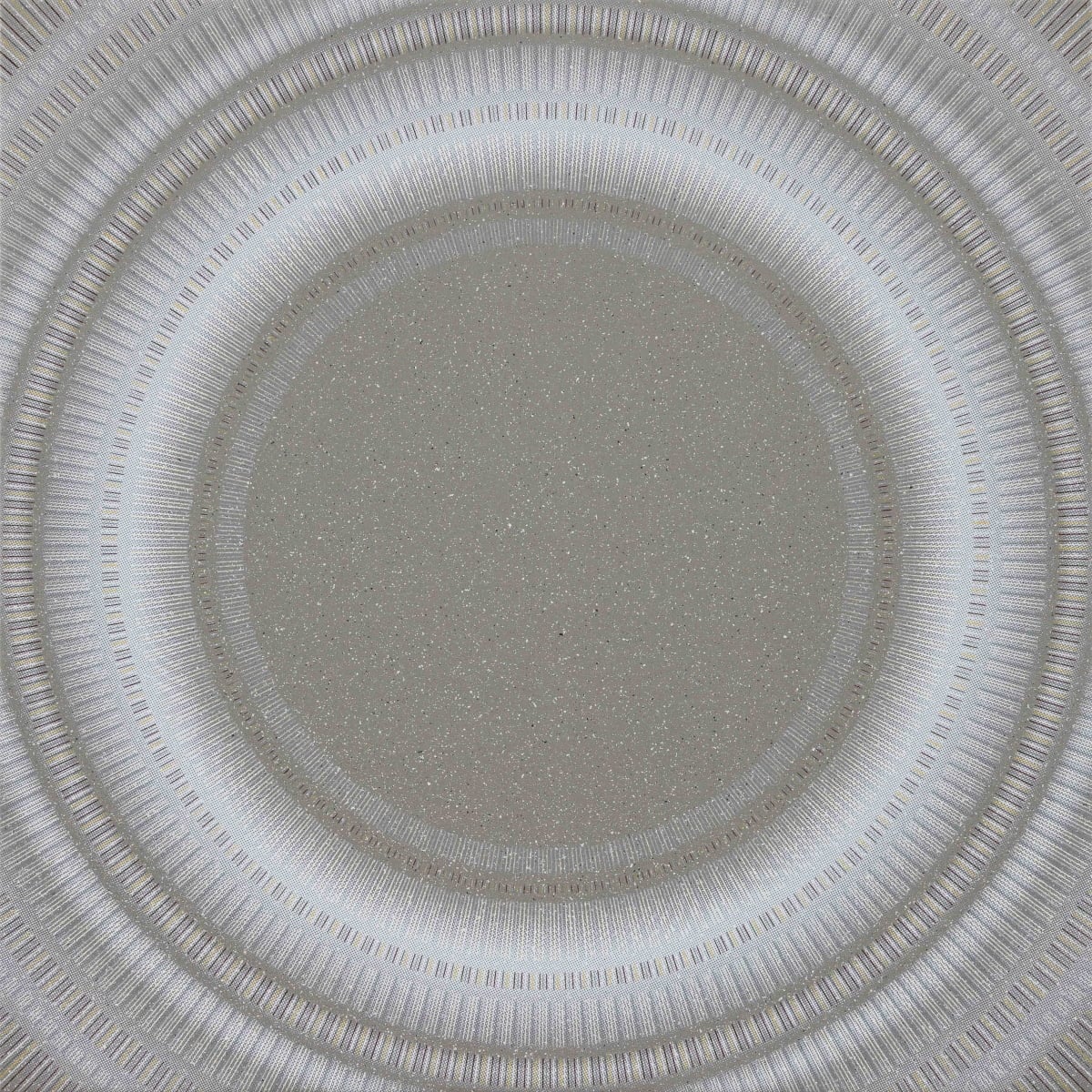
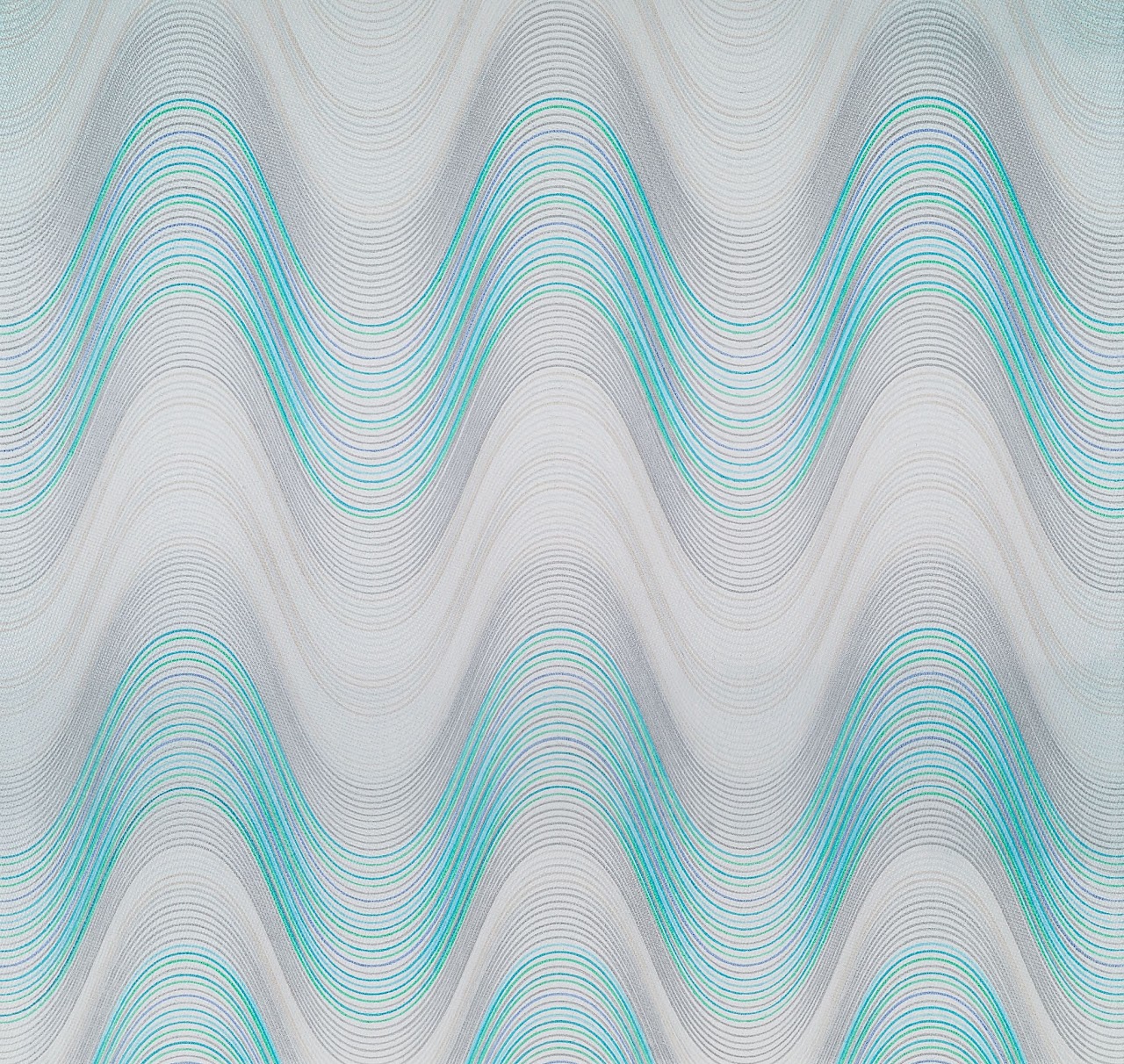
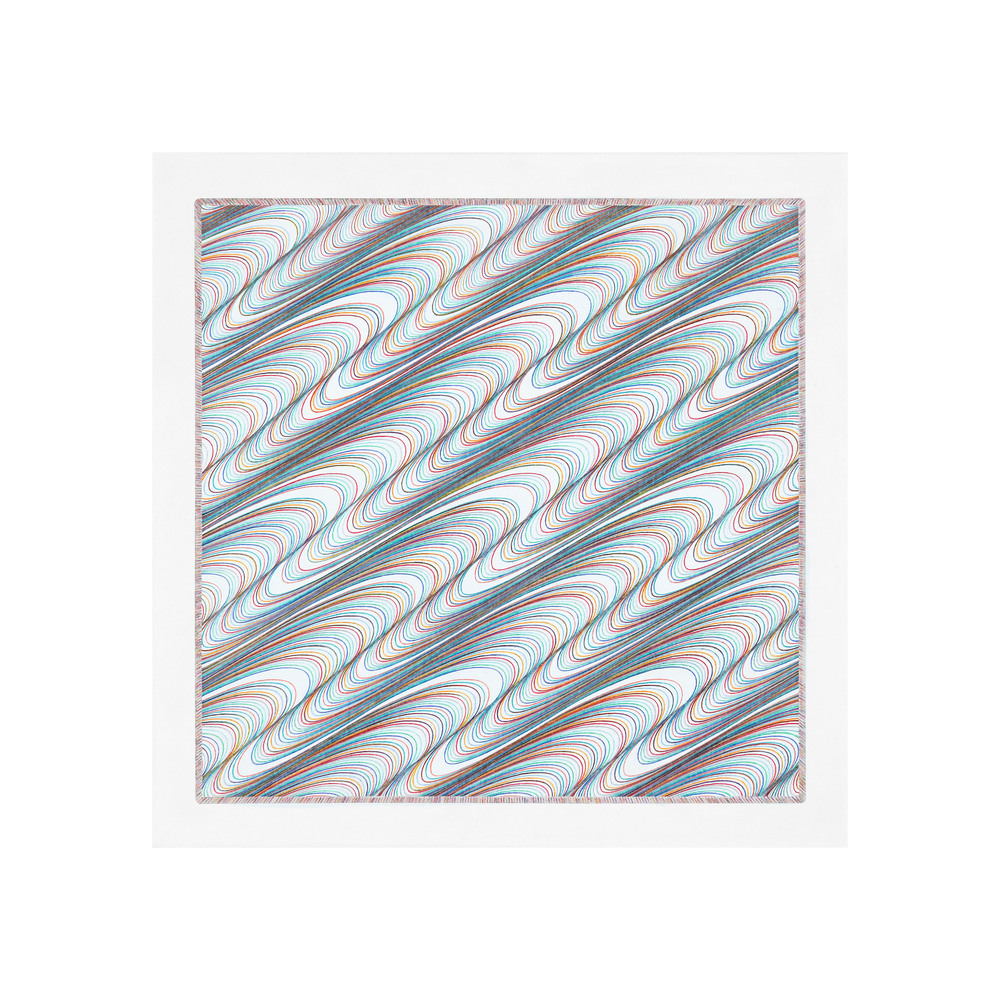
Therefore, I sense the heat between the intervals of such neat lines. Only when the refined surface of the canvas is observed in proximity can the individual lines be seen. Looking at the minute differences between the colour pencil smudges and their residual powders spread around the lines, I imagine the heat of friction between the canvas and the lead of these pencils.
That is why the artist’s energy can be felt just by seeing the artwork in front of one’s eyes. We are all made up of particles, and like the interval between the lines, the interval between the artist, artwork, and us is filled with such particles. Vibrating, with the possibility of encounter. Seen through this perspective, we too can be connected via this language.
In his book Tremor and Resonance (2018), the physicist Kim Sangwook said that ‘the universe is filled with tremors.’ In using the word ‘tremor’ rather than the conventional descriptor of ‘vibration’ to explain particle movement, the universe becomes a romantic space of resonance. As such, I want to use the ‘analogue’ word of tremor instead of vibration in discussing Ji’s artistic world.
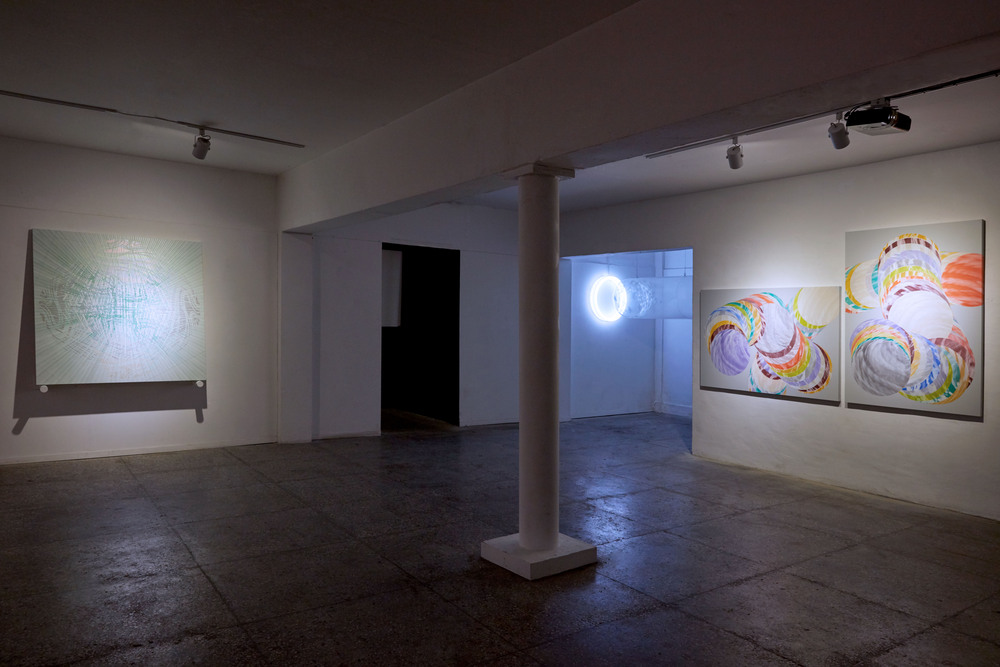
In front of the artwork expressing the traces of tremors through countless lines, I think of the implied experience of these lines passing through. The ones that have passed through do not easily fade away, but permanently inscribe themselves. The artist’s creation of the afterimage of these experiences connotes the hope of reaching out to others, through the attempt to expand beyond one’s own world and the use of his intrinsic language.
We meet at the edge of such an expanding world, interacting, and creating a world visible to the eyes. The point where Ji’s artwork goes beyond the optical illusions of Op Art reveals the potential of this process.
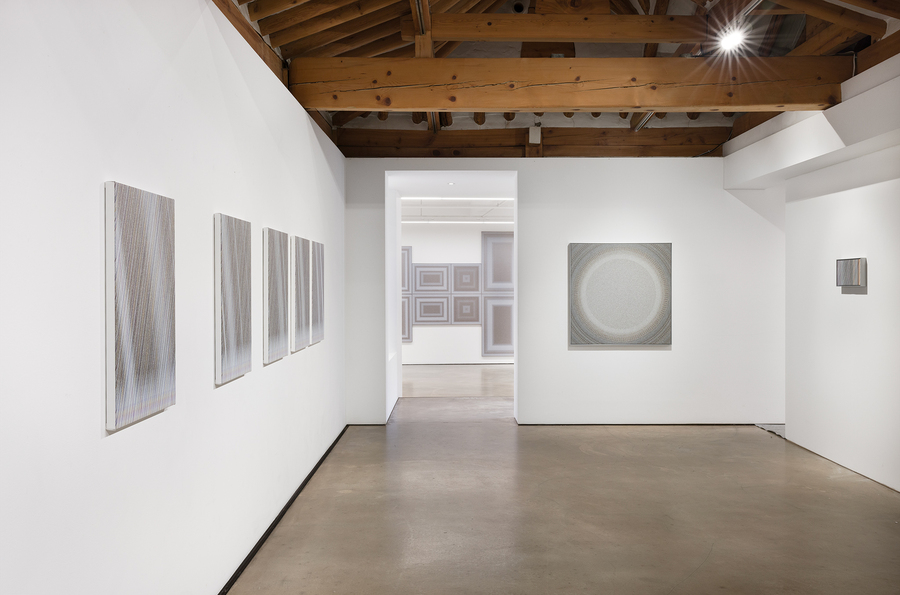
The point where the sense of romance stands out within the abstract is like the beauty of a poem that sings within the refined language and rules of its genre. Like the imagery found within the inconspicuous, the viewers can also experience a sense of imagination and expansion within the formative language composed within the artist’s rules.
The role of the artist is to create fracture between the other and himself, and to deliver his own language. Not all fractures connect to creation. An attempt is always accompanied by the possibility of failure. Yet, I see the sincere traces of tremors left by Ji. That, is the will to embrace each and every possibility of failure in making and touching the lines in between the dense intervals.
Even as far as the place resonating with the world outside of the picture screen, the expansive minds live. Although invisible to us, the artist is truly present within the gesture of drawing behind the artworks.
So here, in this seemingly distant world of the universe and physics, or the world of persistent performance grounded in the repetition of the intricate interval of lines, I, ironically, think of the person whom I want to reach the most. That, despite the fact we cannot meet or are far from each other, we are connected through these particles and the tremors flowing through them.
Despite the impossibility of it happening in the present, our worlds will eventually reach each other, intertwine, and finally be created anew like the world expanding beyond the picture screen.
Translated by Lim Hannuri