Contemplating the universe is akin to becoming a dot oneself—a process of recognizing oneself as a trembling coordinate within infinite space, a speck of dust yet possessing a mysteriously distinct mind. Imagining the blankness beyond the azure sky transforms all unseen forms into geometry.
As one gazes into the distance, the pale stars in the dead of night form a vast galaxy, eventually becoming luminous territories of their own. This is no different from a myriad of dots forging a line, numerous lines forming a plane, and ultimately suggesting an illusion of volume.
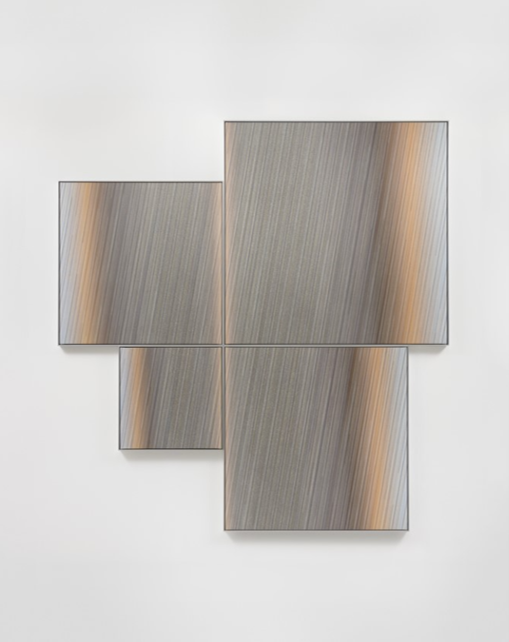
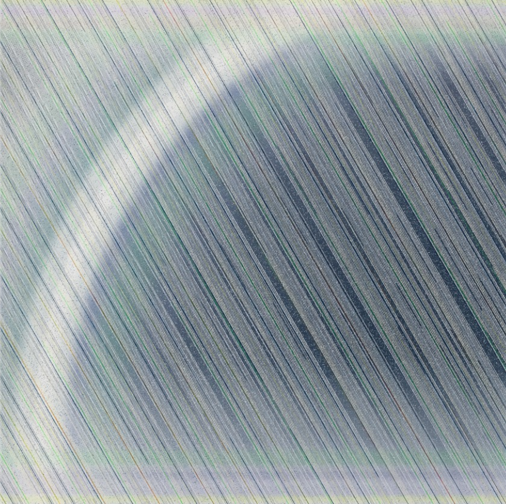
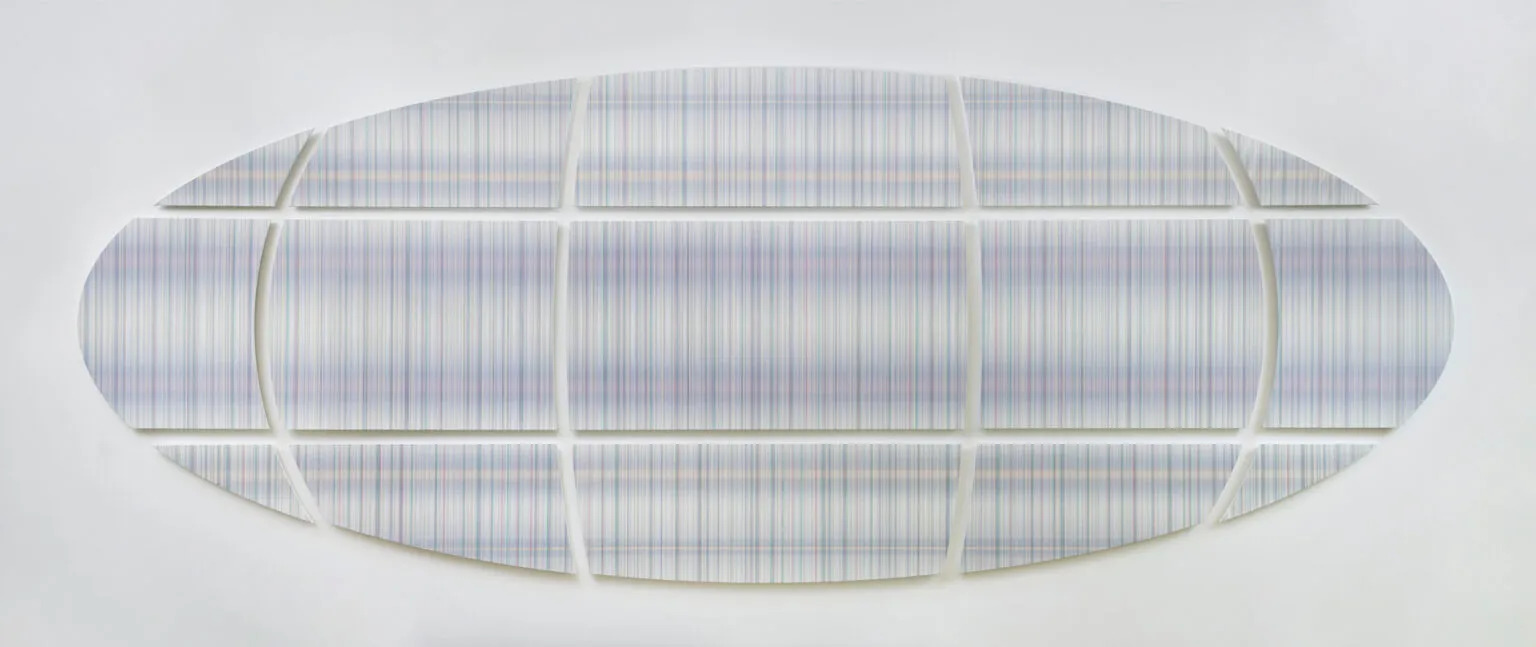
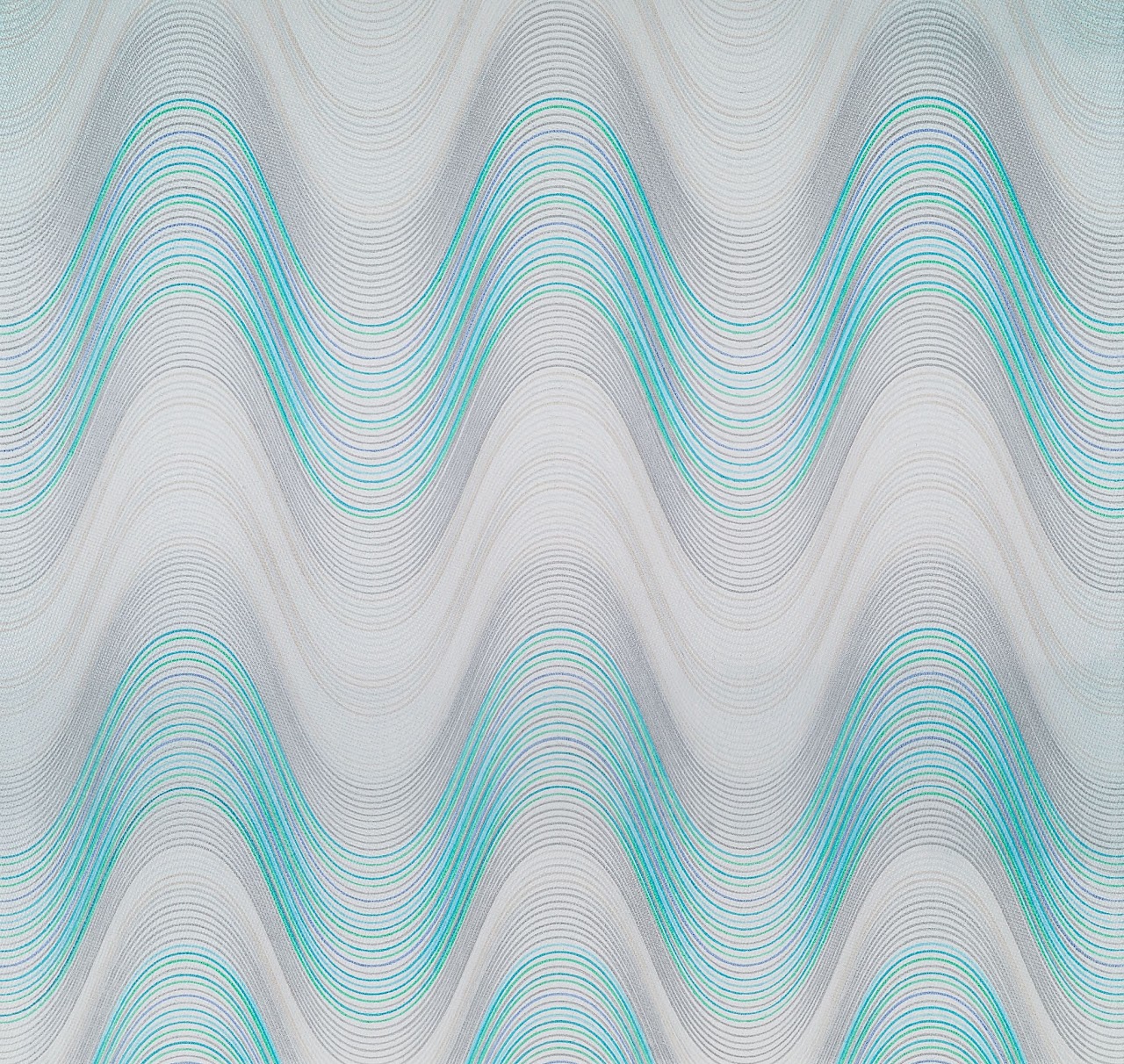
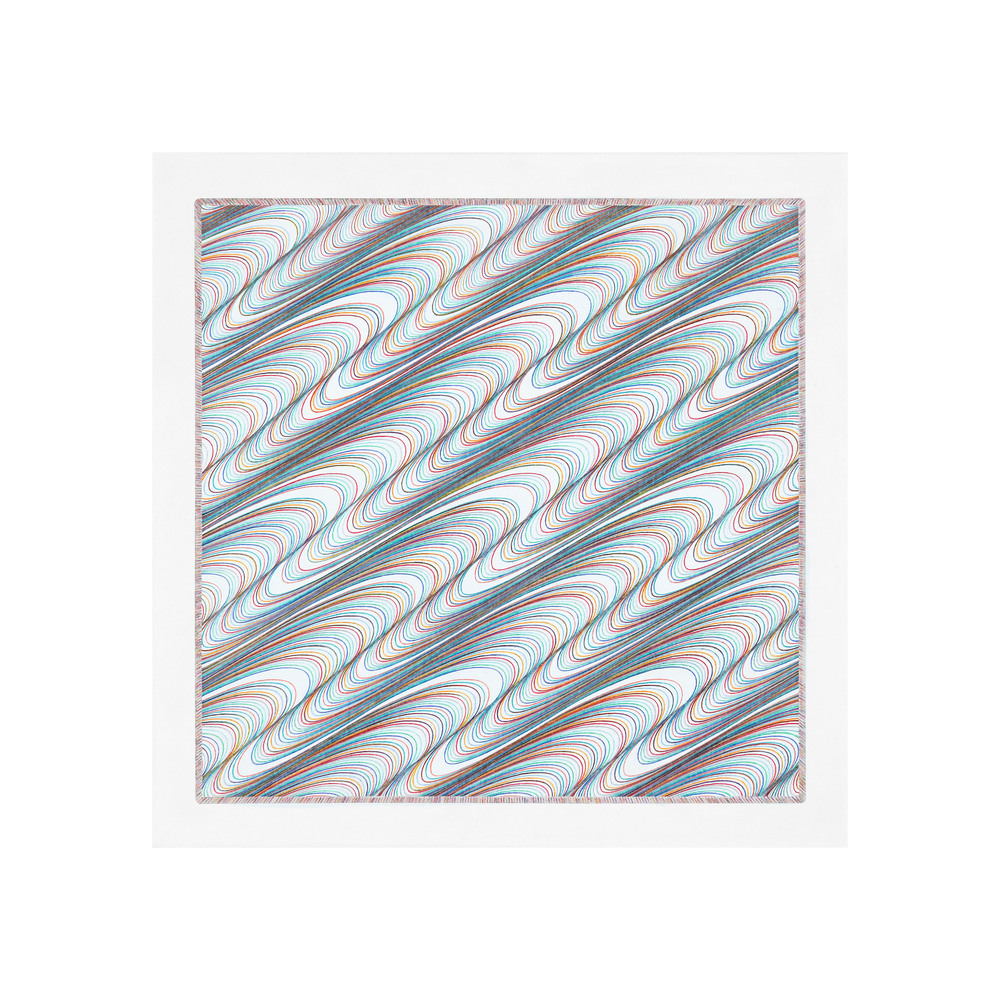
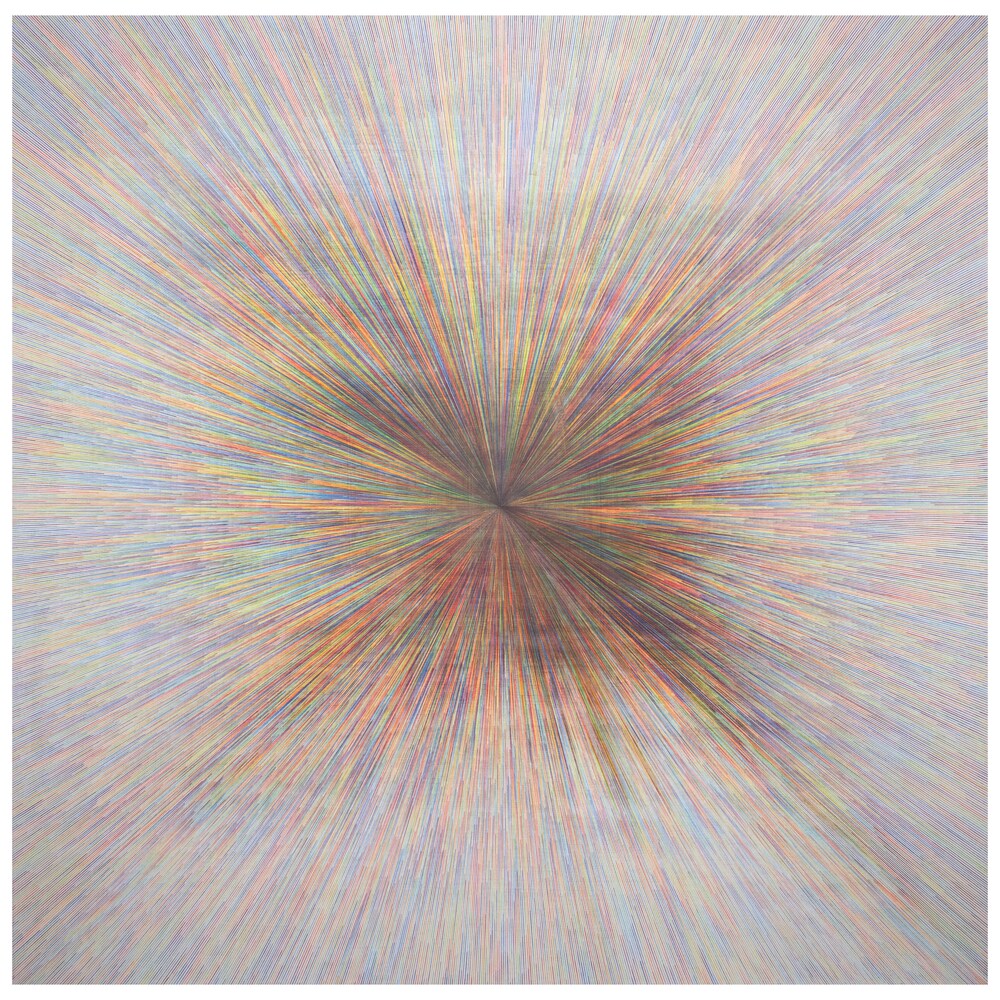
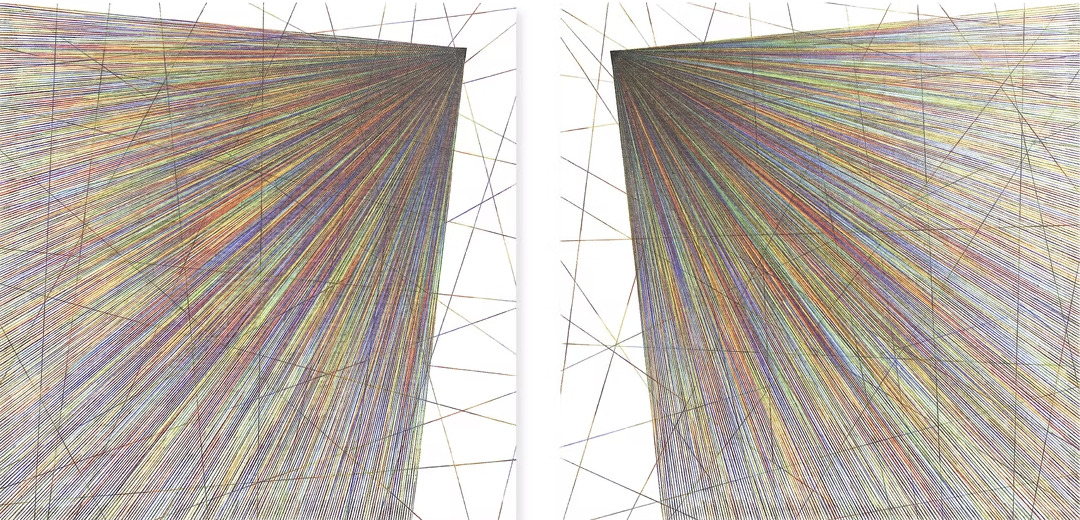
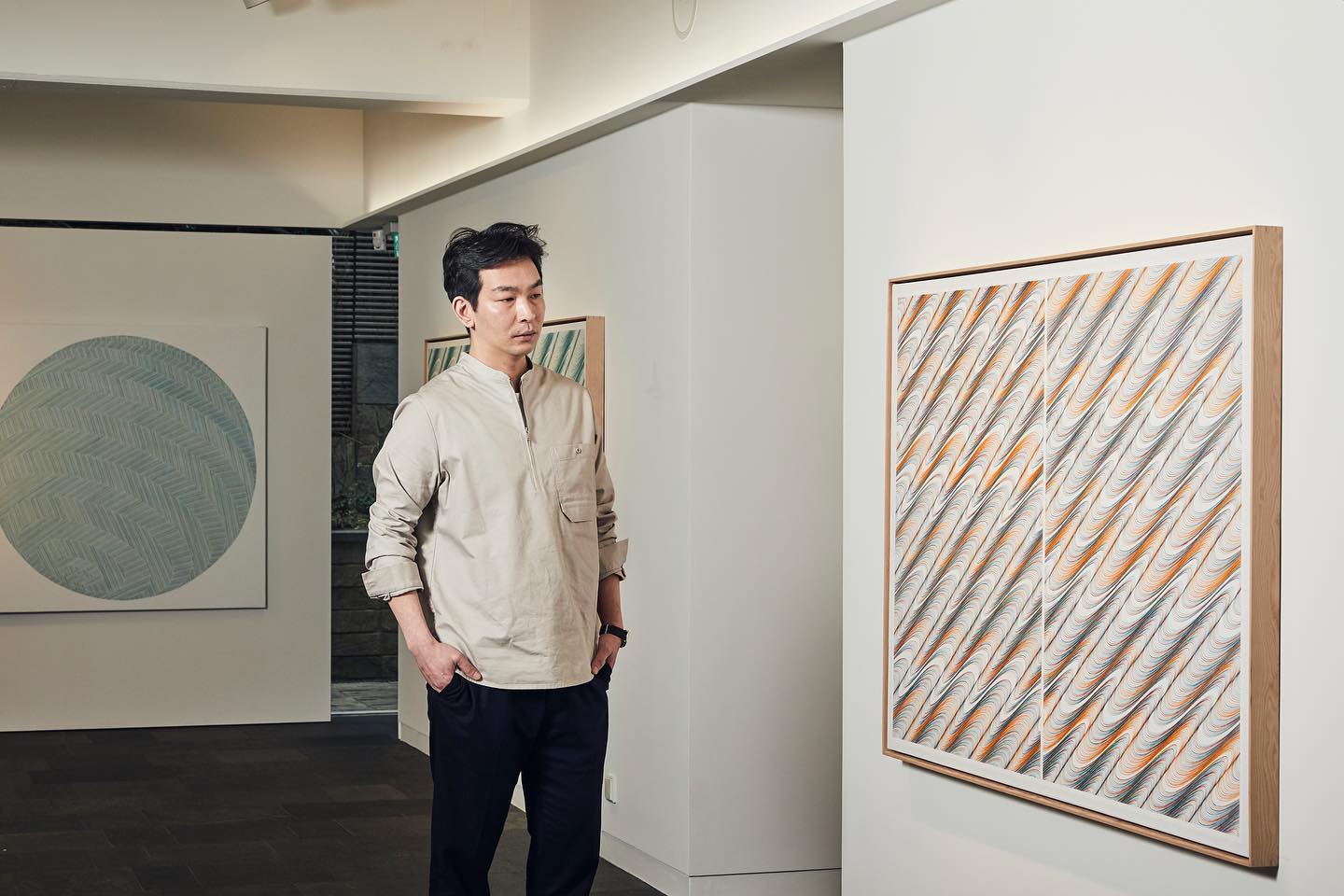
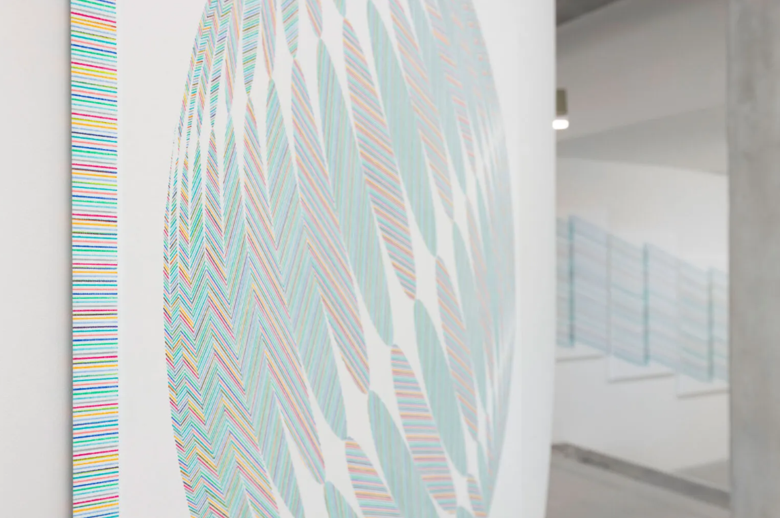
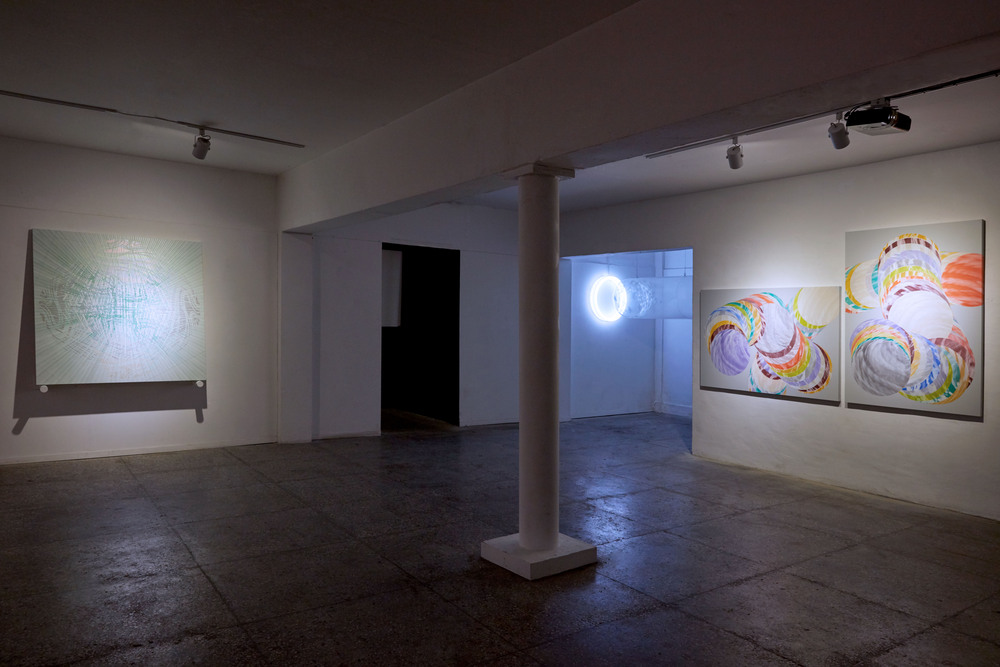
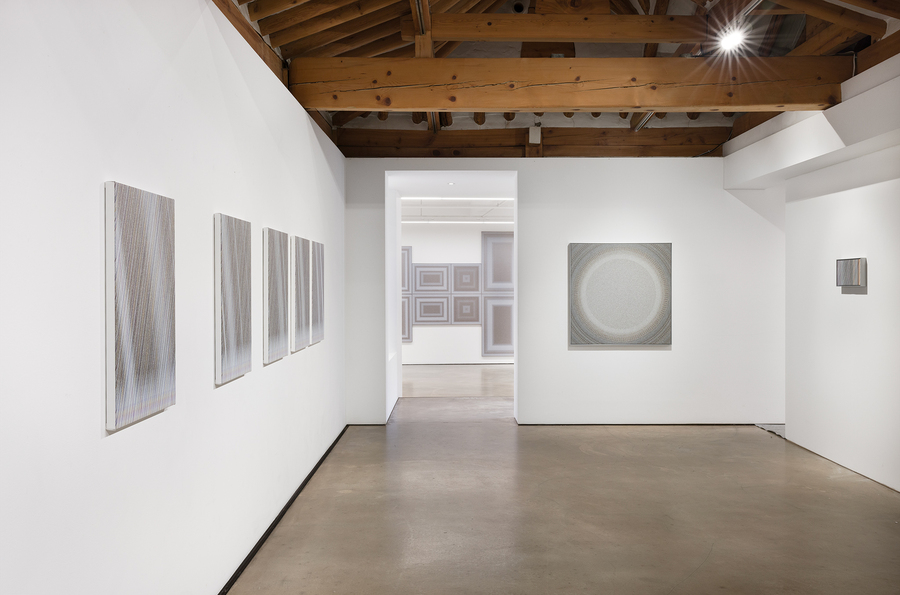
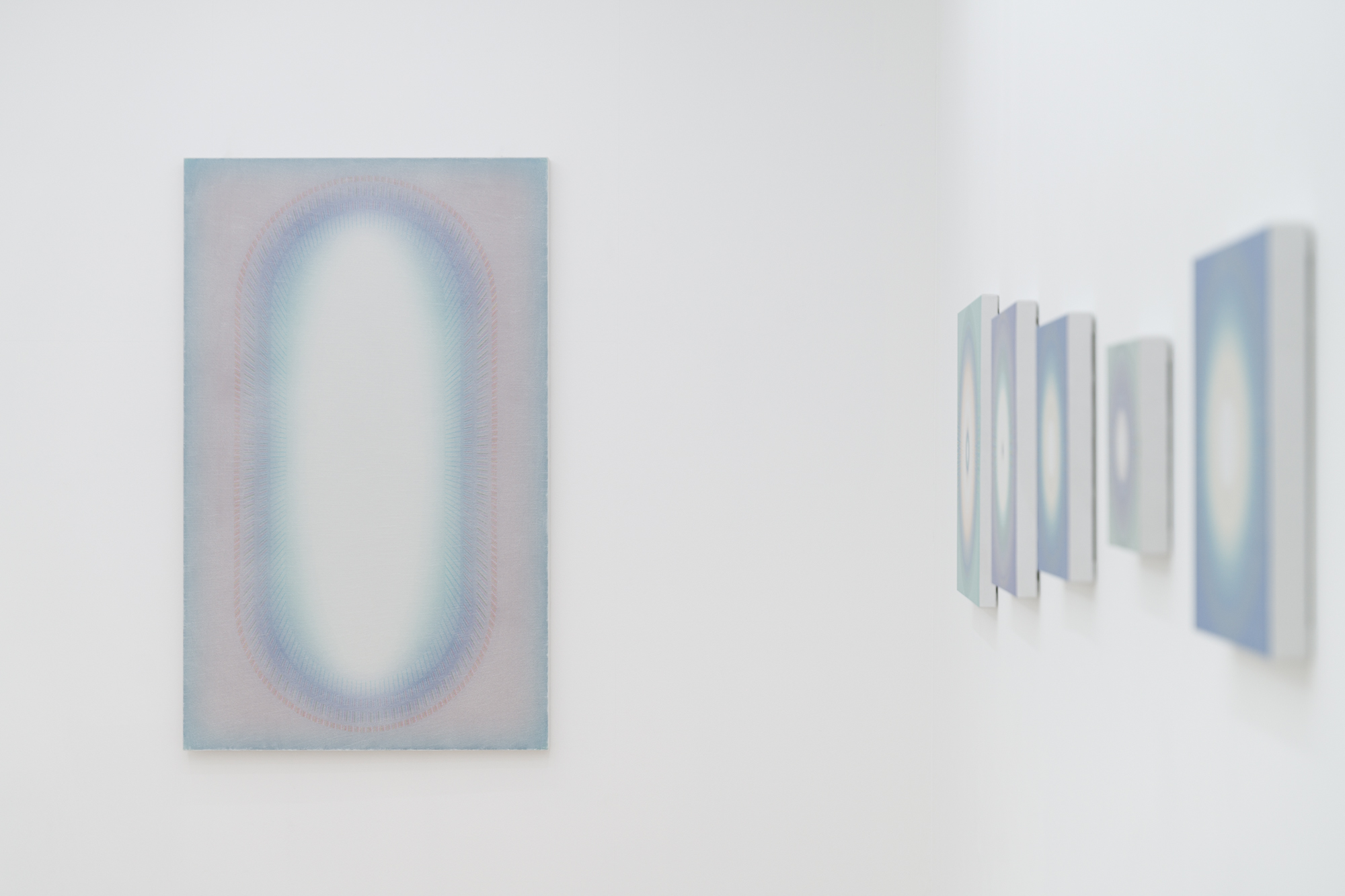
As you tilt your head, following the dots scattered along lines falling like rays of a meteor shower, colors trail behind like an afterimage. Keun Wook Ji’s paintings, executed with meticulous processes of scattering droplets of paint on top of layers of straight colored pencil lines, drawn over color fields composed of halftone dots, conjure diverse cosmic landscapes.
Like planetary rings formed by fragments of stars drawn to one another, the remnants of materials crushed upon contact with the canvas create distinct shapes. His lines sometimes resemble the shapes of distant galaxies and, at other times, evoke the microscopic view of living organisms observed as profoundly as possible. The gaze directed toward the farthest reaches inevitably returns to the nearest: the universe within oneself.
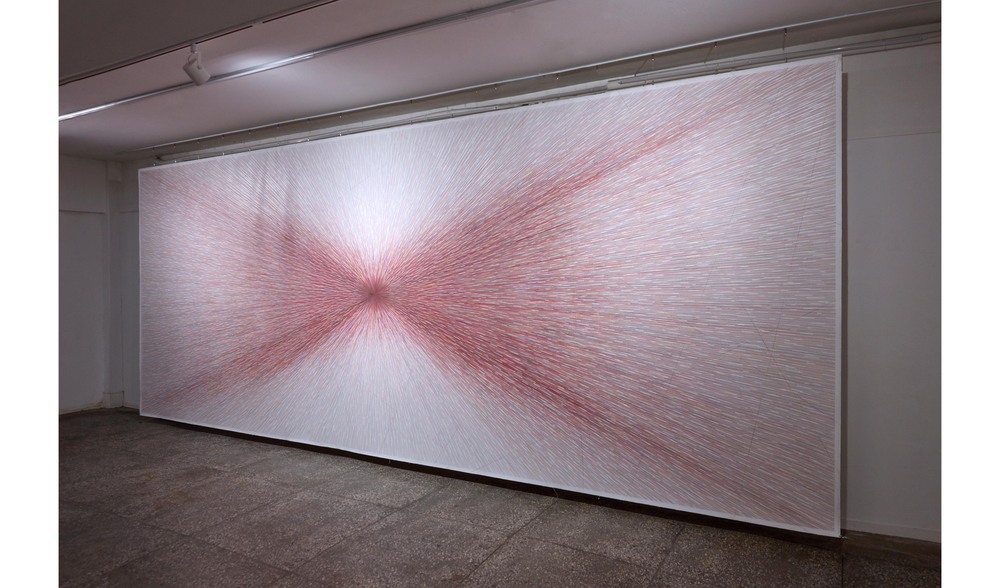
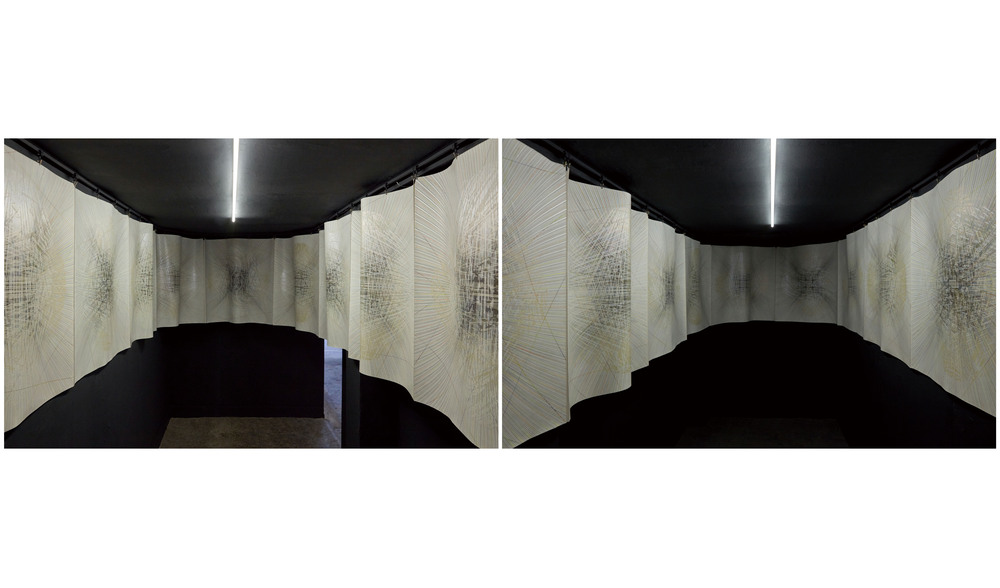
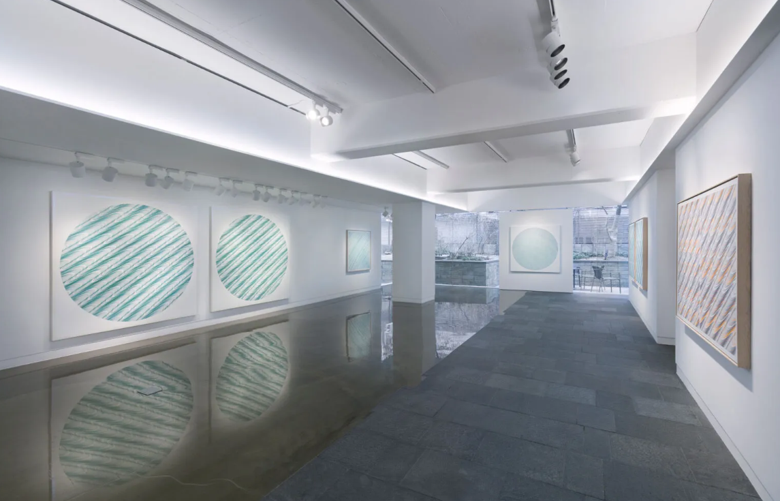
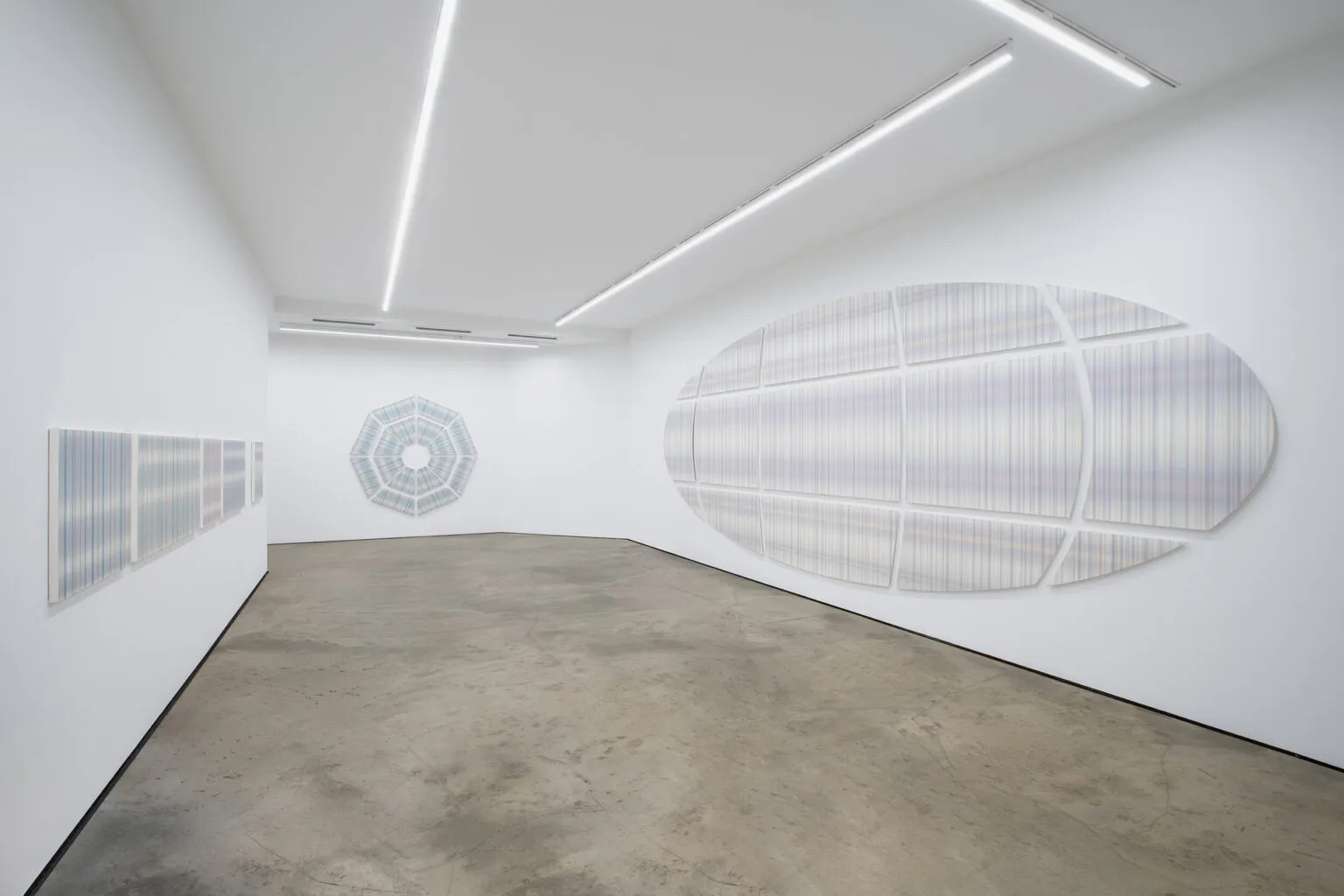
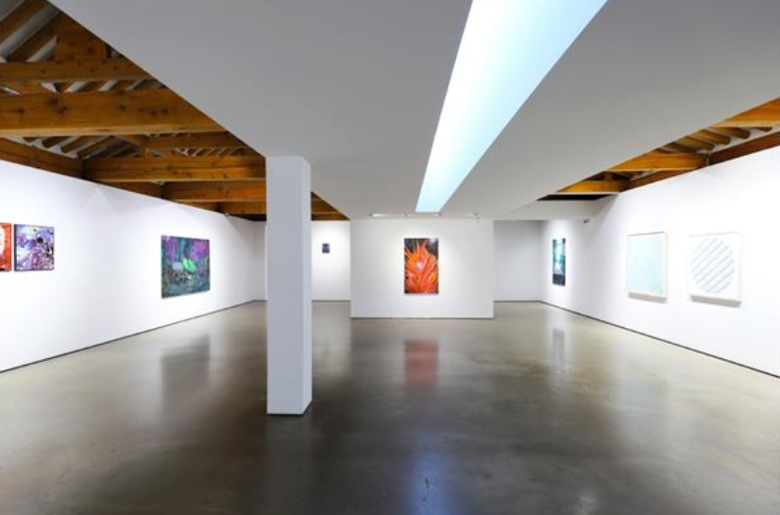
His solo exhibition, 《Qua-o-ar》, is centered around large-scale paintings evocative of a vast night sky. Before the expansive canvases of the ‘Space Engine – Dust’ (2024) series, which fill the towering exhibition space, the exploring eyes of the viewers become minute black dots. The canvases, fragments of a relatively larger scene, are intricately connected to the physical scale of the exhibition space.
The layered trajectories of lines suggest an extension into realms beyond the boundaries of the canvas. The scope of vision shifts according to the size and placement of the blank spaces both within and beyond the canvas. Quaoar is a dwarf planet orbiting Neptune, distinguished by its system of rings, much like Saturn. Its most striking and enigmatic feature is the significant distance between the planet and its rings, with the gravitational forces sustaining this unusual structure still unknown.
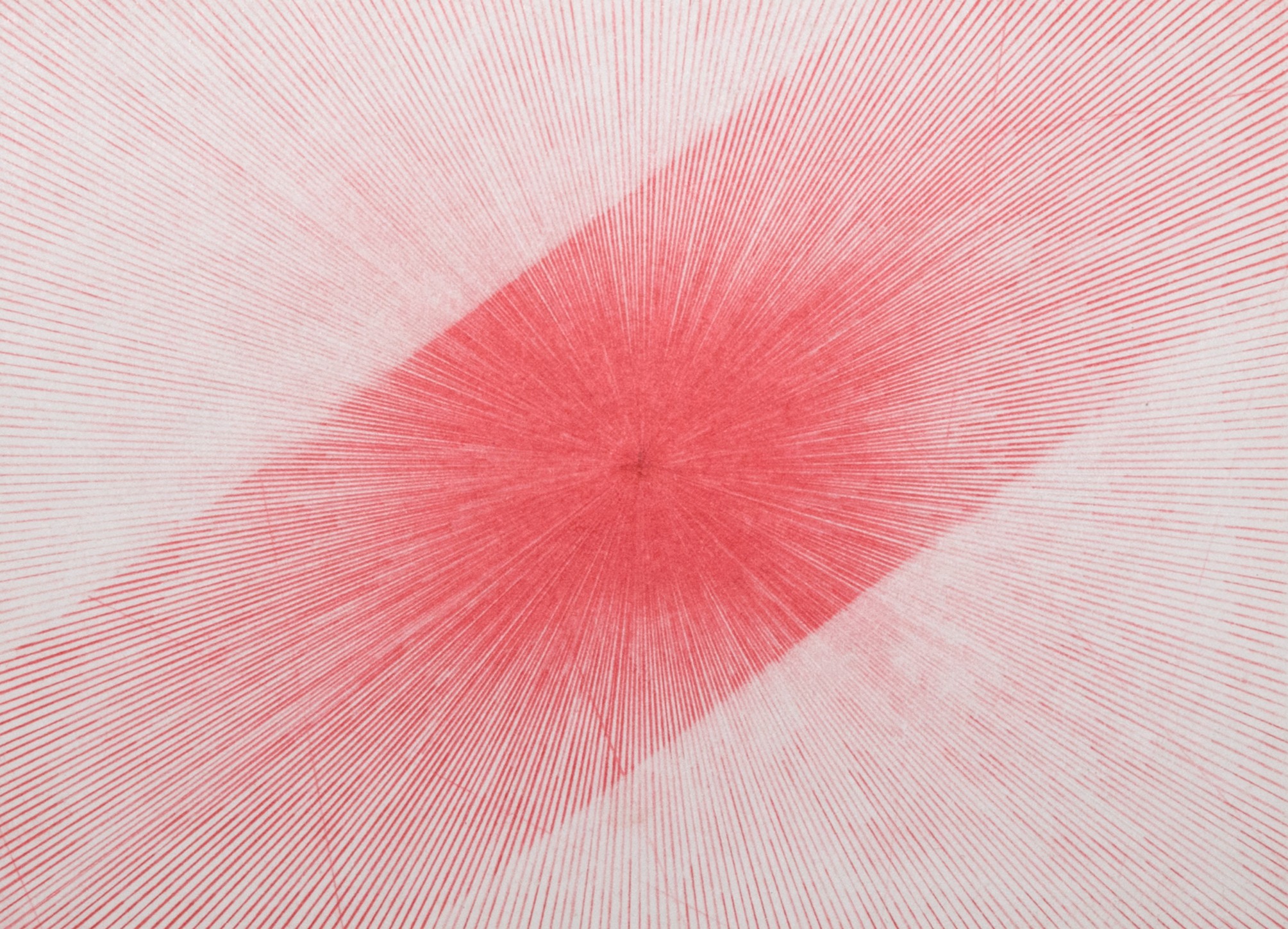
At the exhibition’s entrance hangs 50000 (2024), created through mezzotint engraving technique, depicting the observed image of Quaoar. Due to its extreme remoteness, only a fragmented contour of the planet is visible. Nonetheless, this faintly glowing presence in the abyss—a colossal reality reduced to a mere point across the cosmos— exists distinctly, undeniably there.
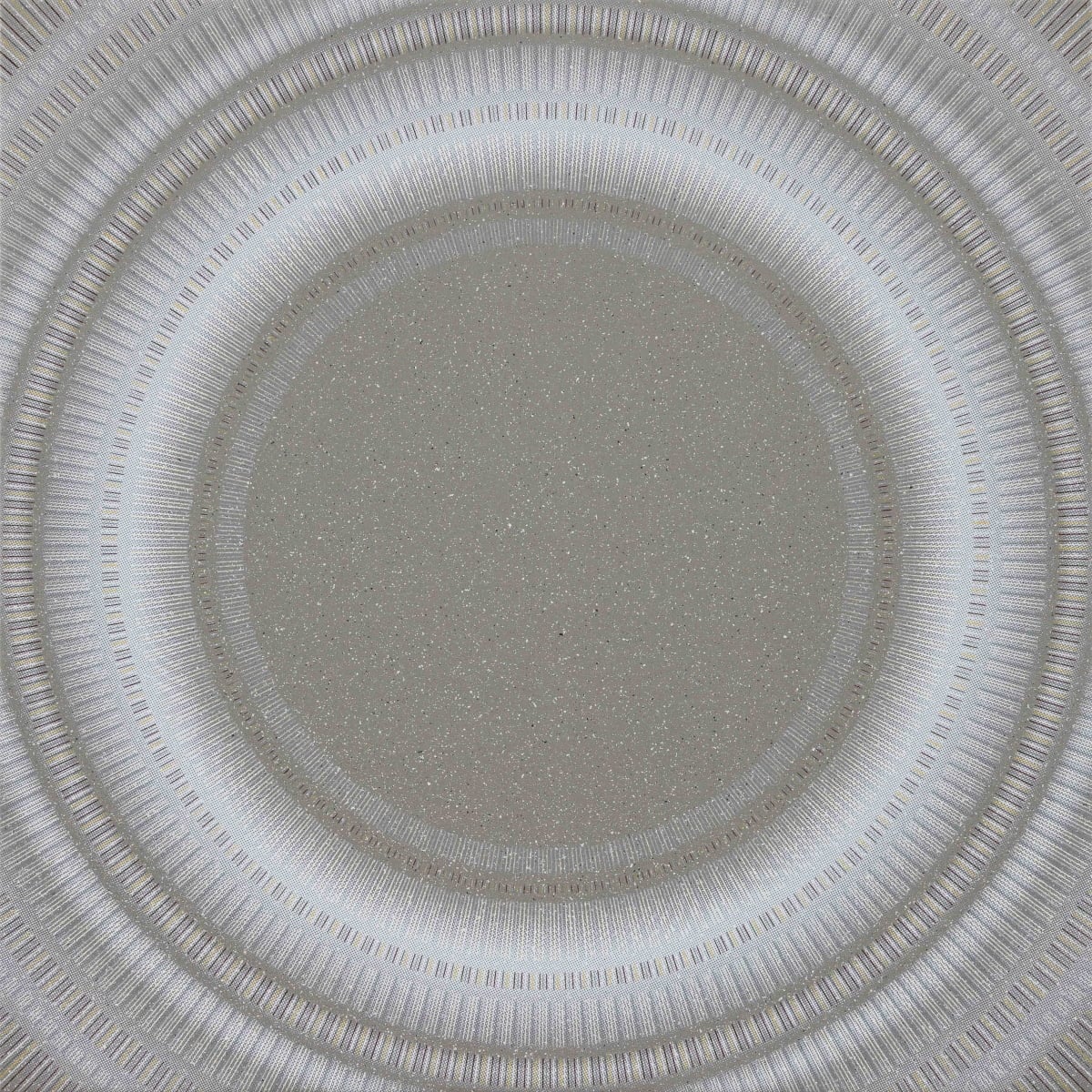
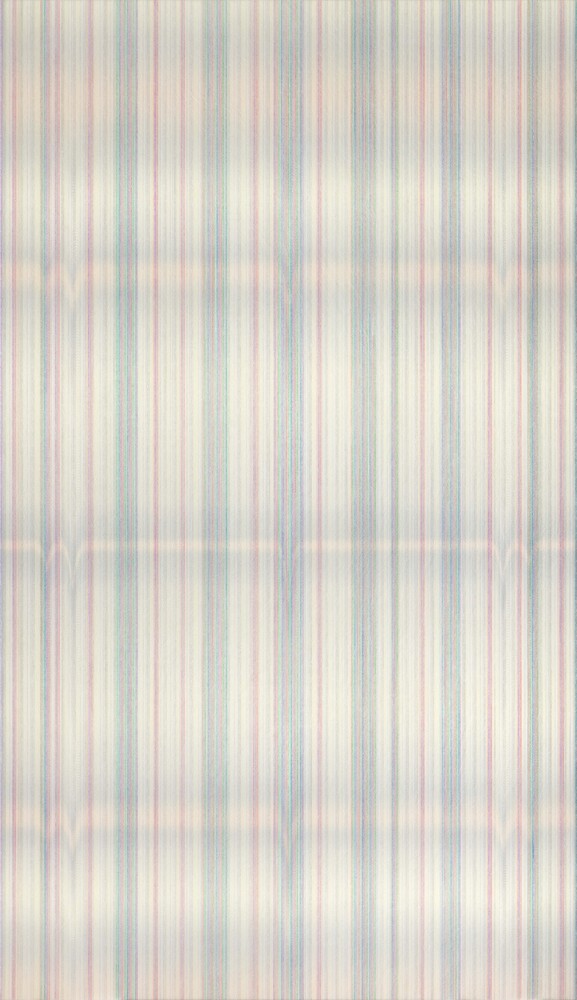
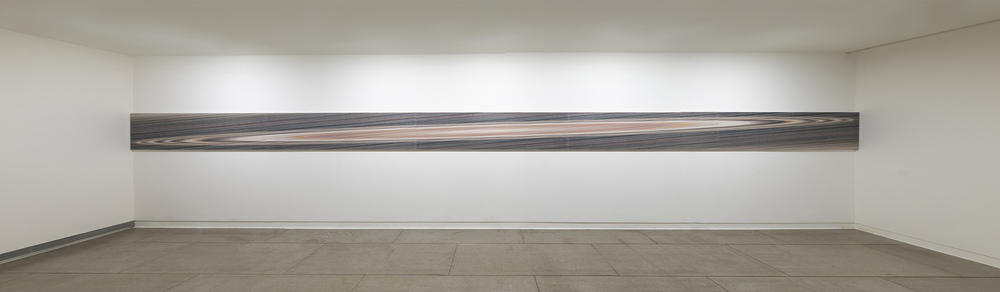
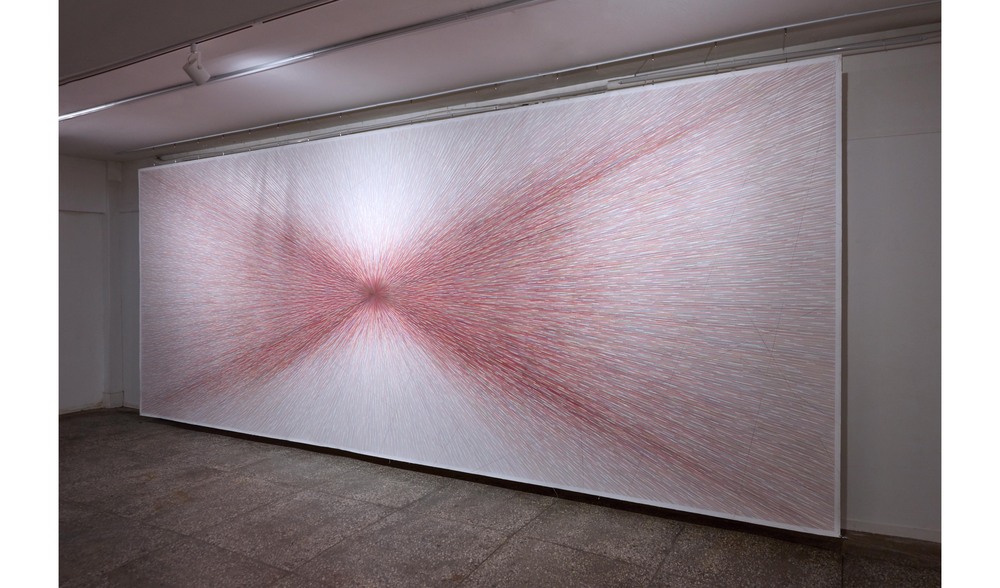
In truth, the rings of a planet are never indeed rings in and of themselves. Instead, they are merely thousands of particles—dots, moving along their orbits while maintaining a certain void within a given gravitational field. Space Engine – Disc 001 (2024) captures the illusion of a circular ring created by the overlay of innumerable halftone dots and lines. The elongated canvas, designed to fit horizontally against both corners of the wall, induces an uncanny visual experience.
The picture screen resembles a virtual cosmos intruding upon the physical wall, reconfiguring ordinary perceptions. At every intersection of lines, dots, and colors, unfamiliar illusions emerge. Meanwhile, Space Engine – Disc 002 (2024) holds a black circular form at its center. Short, linear strokes radiate in circular trajectories, forming layers of concentric bands.
Some of these bands are overlaid with translucent acrylic medium, creating the illusion of a hazy yet solid protective shield—much like our ambiguous yet resolute reality. I stare into the black pupils on the canvas, overflowing with particles of light. Like a black hole in the universe, the pupil absorbs all light without releasing it, adjusting the field of vision through the dilation and contraction of the iris.
The motion of light—endlessly concentrated or dispersed farther—passes through the retina of life, unlocking a gateway to the visual world. Once again, those who imagine the universe ultimately become luminous dots.
As a minuscule entity flickering within the infinite void, clarity resides solely in the mind. Pupils that gaze upon the world with refracted perspectives set stars afloat in their respective cosmos —each one a valuable halftone dot, a fragile yet radiant soul.
Translated by Cho Yoonsung