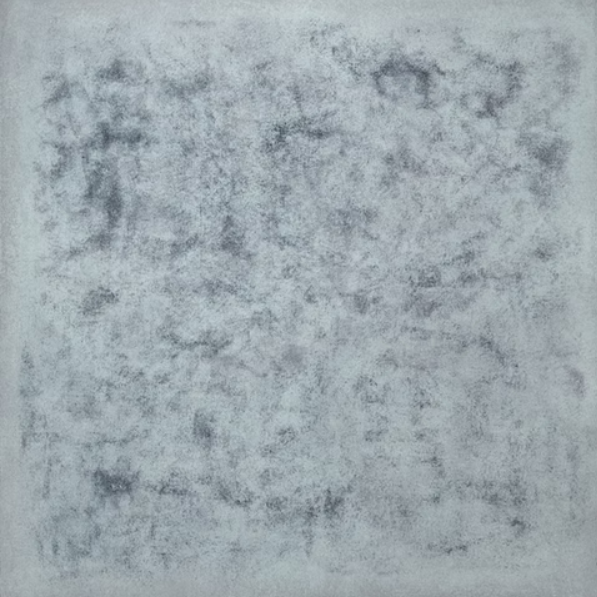
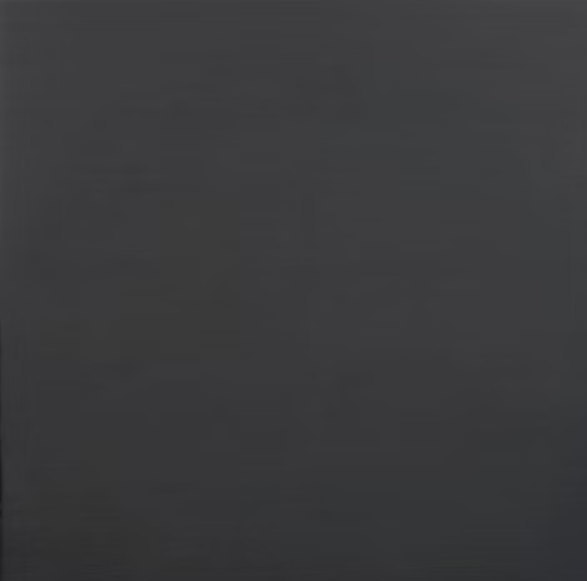
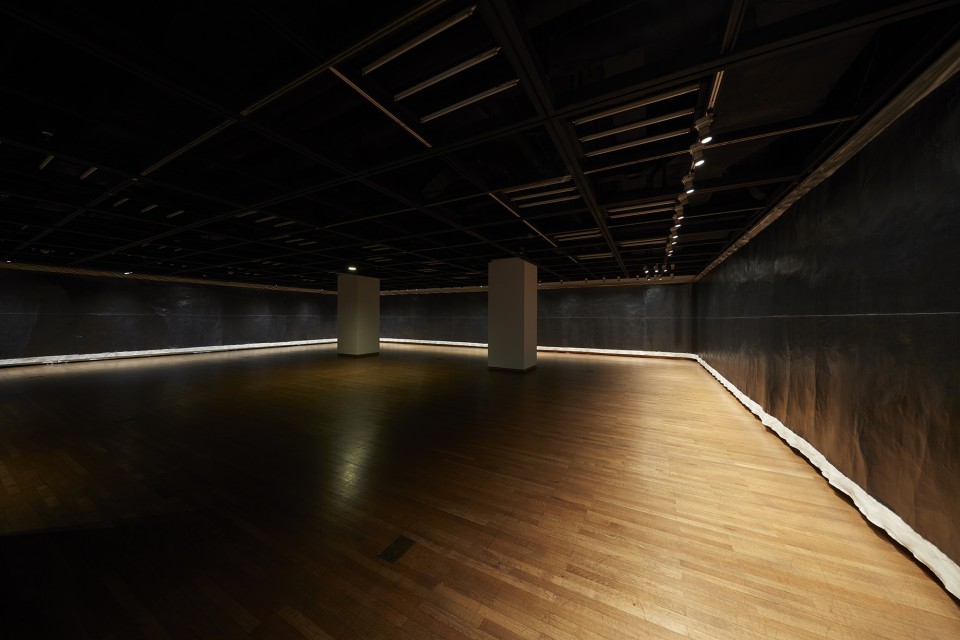
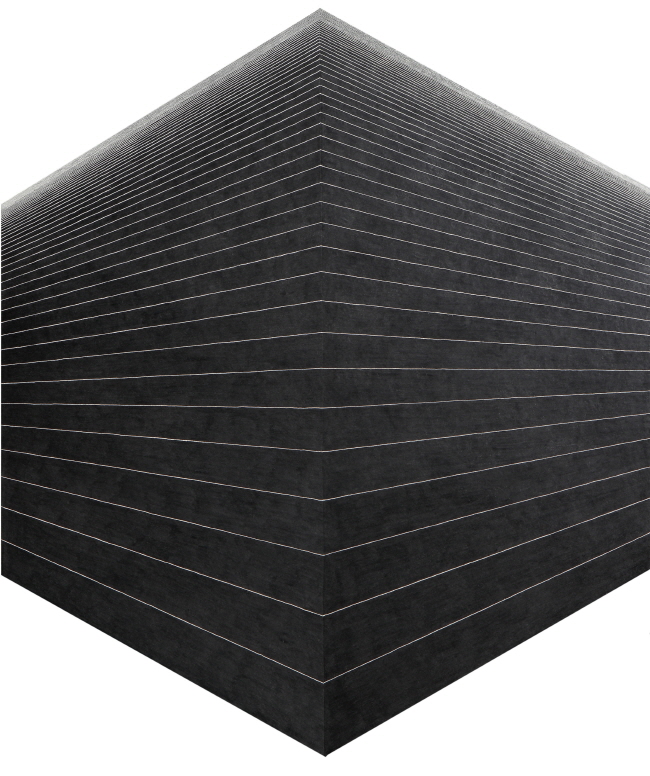
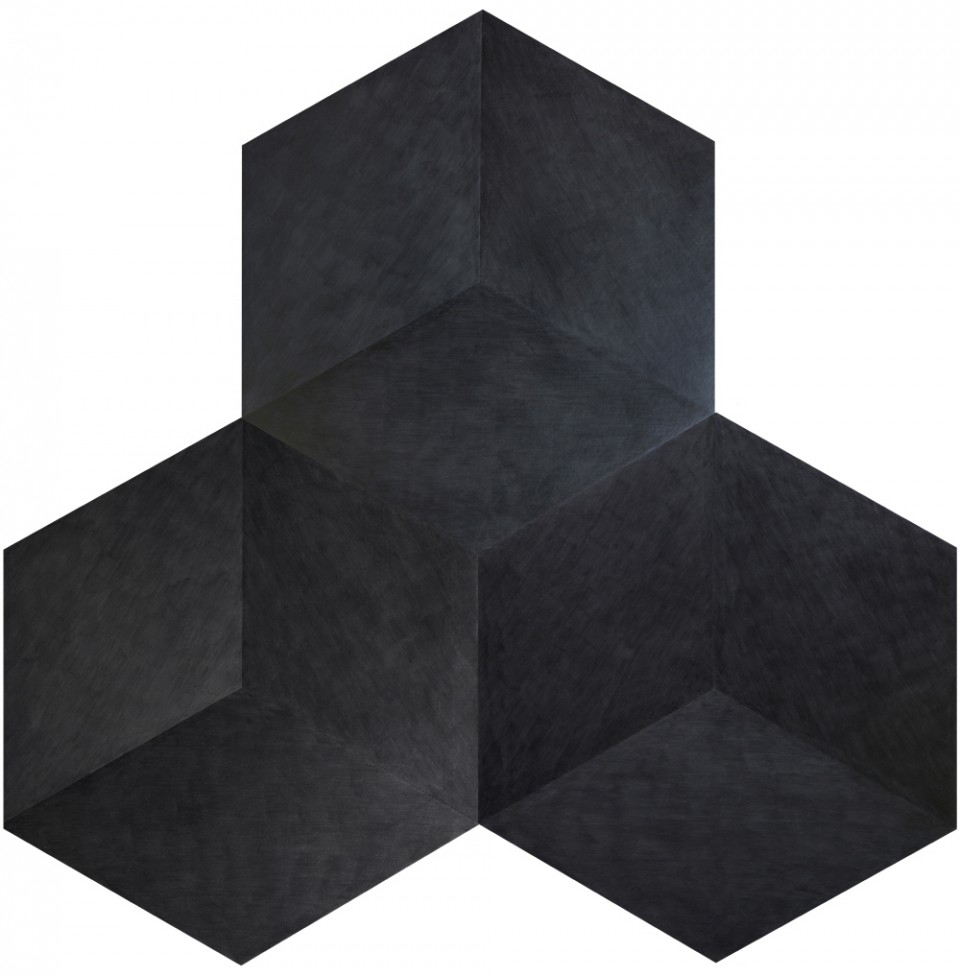
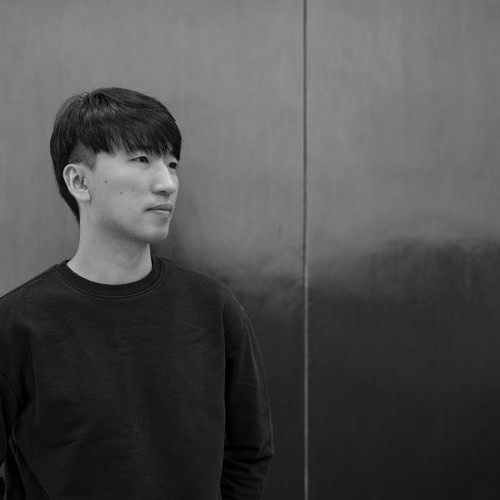
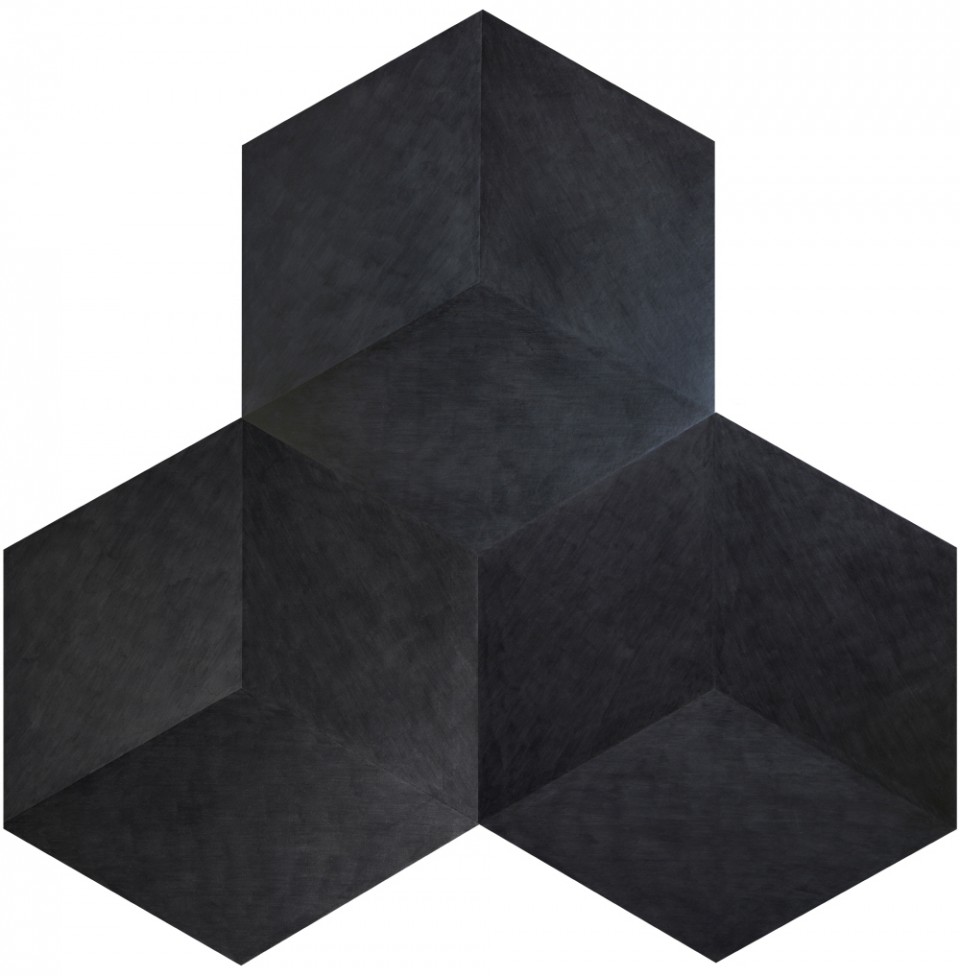
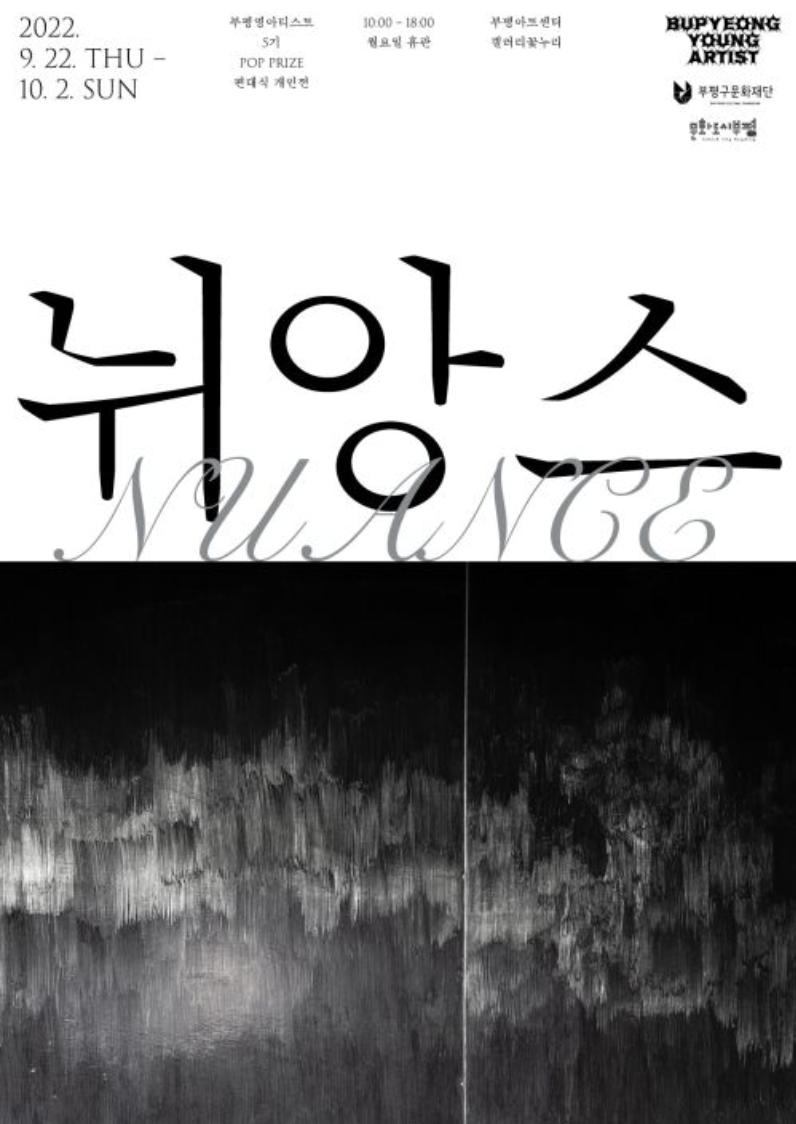
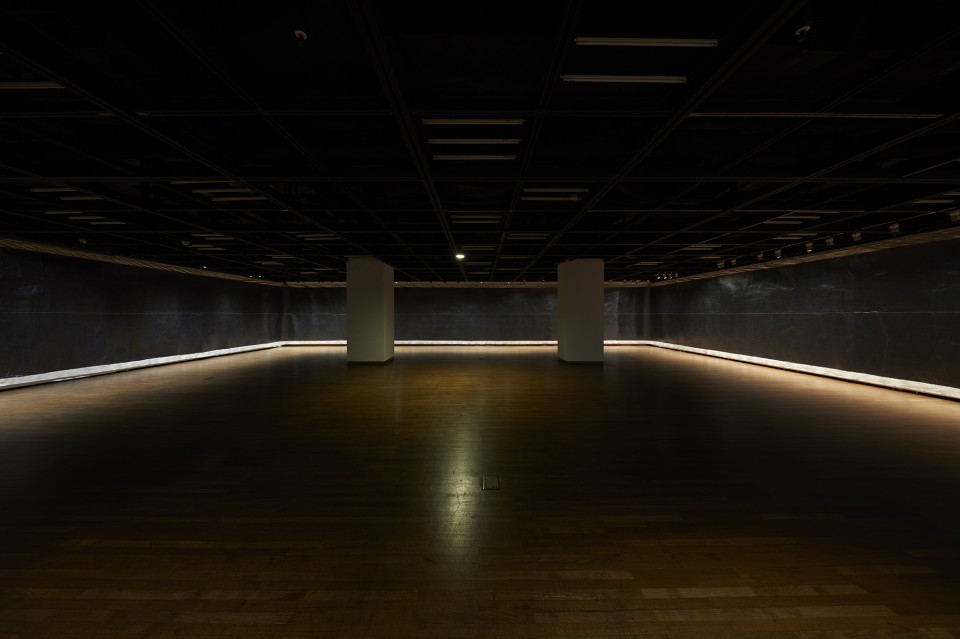
Pyoun Daesik draws geometric patterns using the analog tools of hanji and pencil. His paintings look realistic and precise like digital images, but when examined closely, uneven lines become visible. Even though the entire surface of the paper has been blackened with pencil, there are still whitish areas remaining here and there.
These are errors that inevitably arise because the work is made by human hands, yet they do not become flaws in the painting. Rather, they remain as natural parts that constitute the overall picture plane. For contemporary viewers accustomed to flashy and stimulating images, his paintings offer a time of reverent meditation on existence through a beauty that is simple yet intricate.
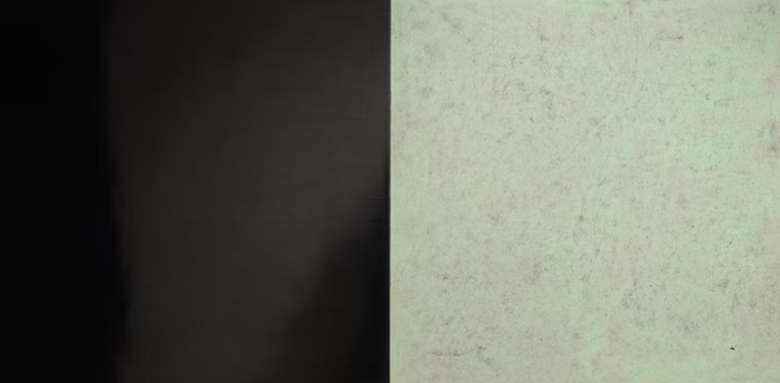
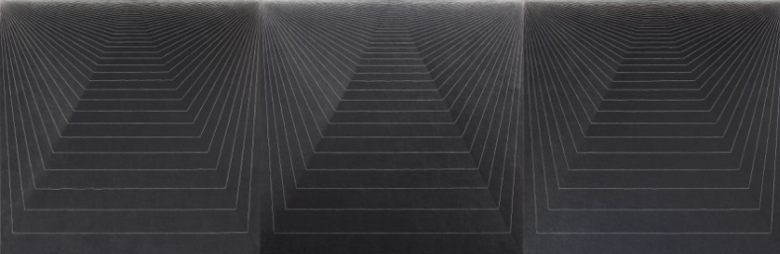
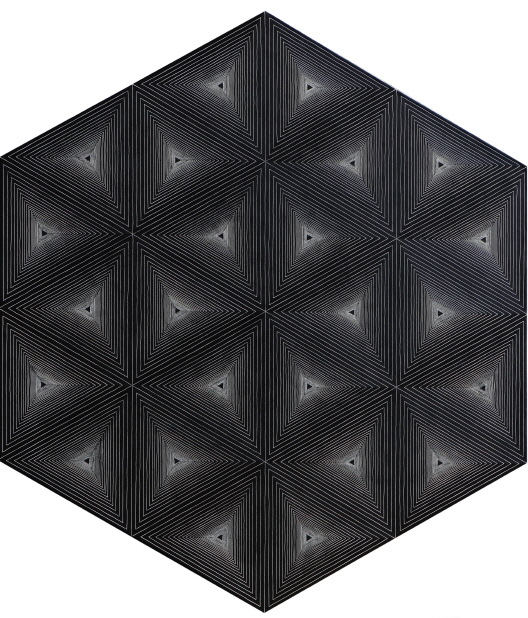
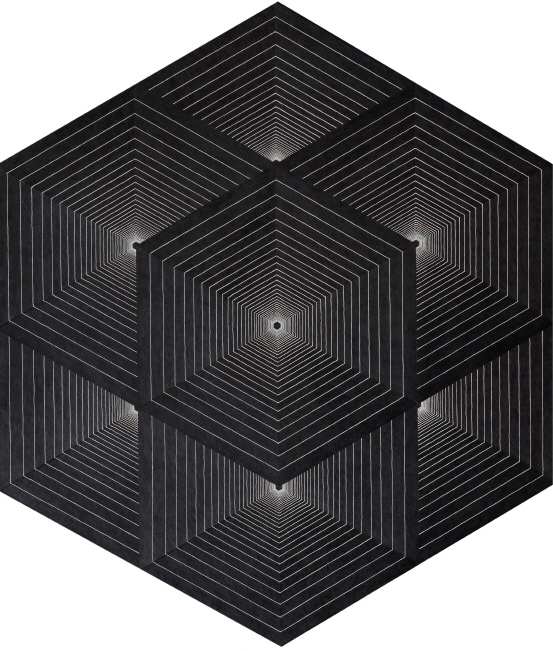
The line and geometric painting practice that Pyoun began in 2010 creates purely visual illusions through geometric forms on a flat surface and the contrast of black and white. The monotone palette of black and white is well suited to forming a conceptual and restrained picture plane that invites deep thought. He draws various motifs and patterns, such as the overlapping hexagons in Untitled(cube No.14)(2011) or the intersecting lines within a rectangle in Untitled(valley).
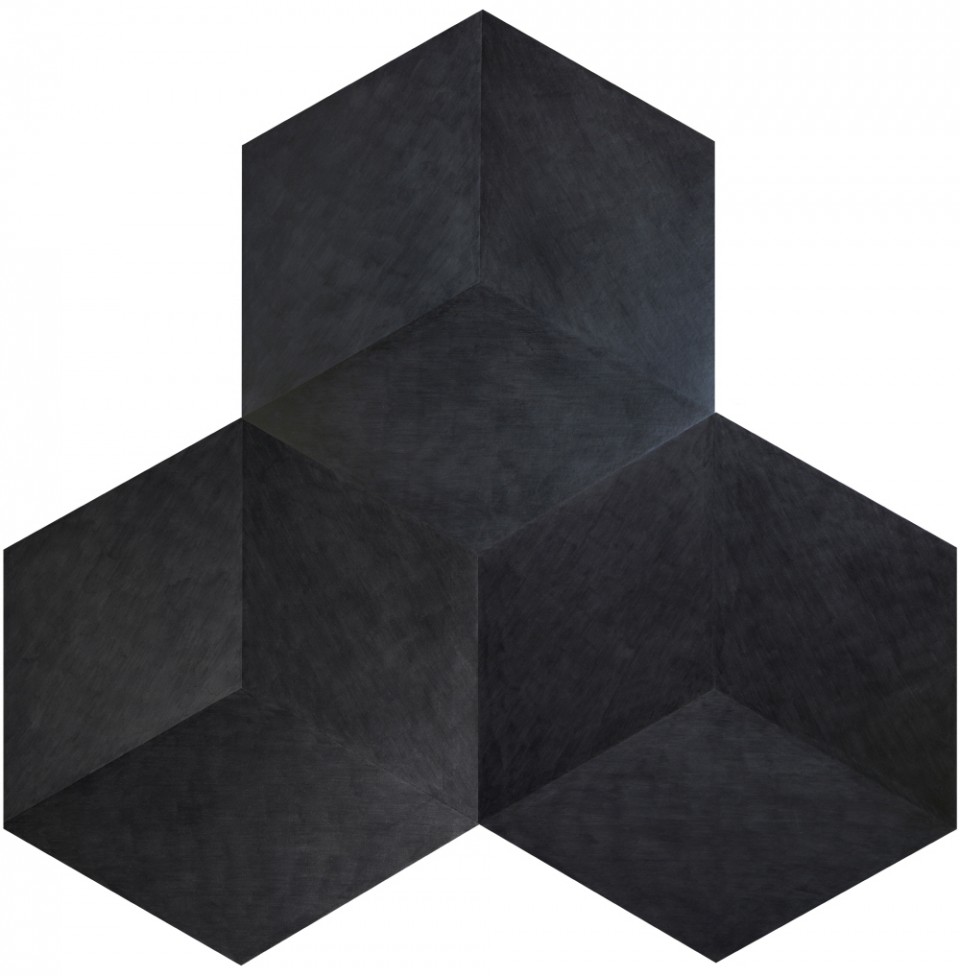
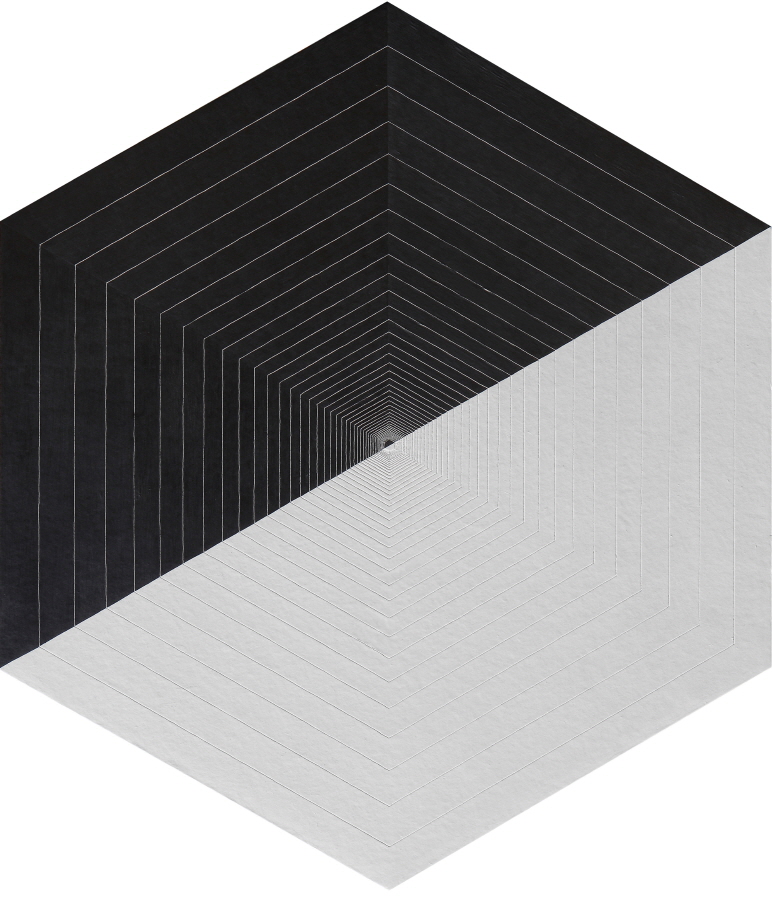
At times, he also presents only winding lines or a simply blackened surface, as in Untitled (vacant cube)(2012). In the case of Untitled(cube No.8)(2011), although the same lines are drawn, the black-and-white areas are filled differently. When seen as intaglio, the blackened surfaces appear to open outward, while when seen as relief, the work appears as two pyramids facing each other head to head. In this way, the artist induces various visual illusions that are impossible in reality.
Pyoun, who conceives forms through drawings whenever he can and goes through a meticulous preparatory process of mathematically calculating the lengths of lines and areas, completes a work only after adding labor to labor, and then labor again. To describe the working process again: first, he constructs a wooden panel and mounts thick hanji, called samhapji, in five layers.
He then covers it with vinyl, draws the diagram of the form with a ruler, and presses along the lines with a pen to engrave them. After removing the vinyl, he blackens the entire surface with pencil, and the work is complete. Since the mounting process also requires drying time, it usually takes about ten to fifteen days to finish one work.
The fine lines crossing the completed surface and its multiple layers produce a three-dimensional illusion, making the flat work appear to have spatiality and depth. This clearly shows the limits and distortions of vision. The same can be said of the trembling of the lines, which inevitably occurs because the work is handmade and because of the uneven characteristics of the paper.
From a certain distance, the lines look like firm straight lines, but when one approaches closely, one can see that they are imperfect in places. By revealing the characteristics and limitations of vision, the artist raises the question of whether what humans see with their eyes can truly be trusted.
What the artist ultimately seeks to address through visual illusion is an awakening to existence. Having mentioned that the form of his work resembles his own life, Pyoun says that, just as personal reflection and inward contemplation take place during his working process, he hopes viewers will also examine the value and meaning of existence, and further, their own fundamental emotions through his paintings.
For him, the straight line symbolizes the standards that exist within him, whether they have been accumulated through learning or formed by his surrounding environment. Just as one tries to draw a perfectly accurate line without gaps, human beings also try to live as complete and perfect individuals while conforming to the various moral values and ethical norms of society.
Yet depending on the situation, greed may arise, and there are times when one thinks first of one’s own convenience rather than consideration for others. The imperfect line represents this imperfect aspect of human beings.
At times, the slightly or heavily disordered line also resembles human life, which does not always flow in the desired direction because of unexpected variables. Seen only in this way, it may seem as though the artist views existence with a cynical and skeptical gaze, but this is not the case. Pyoun Daesik conveys compassion for the imperfect nature of human beings, who can never be perfect, while also offering the positive message that because human beings are imperfect, they are able to see and experience more.
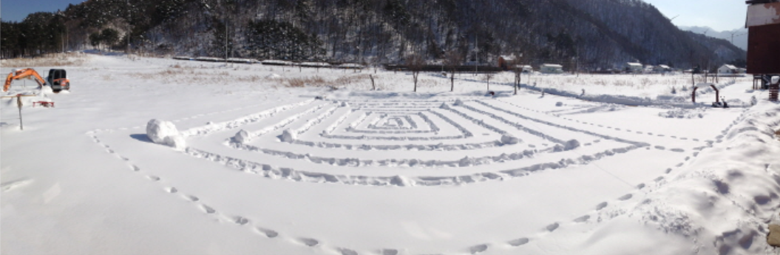
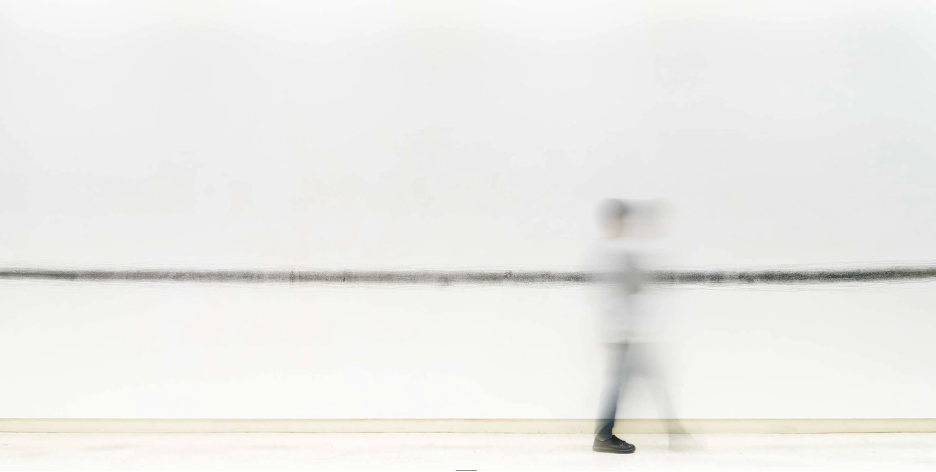
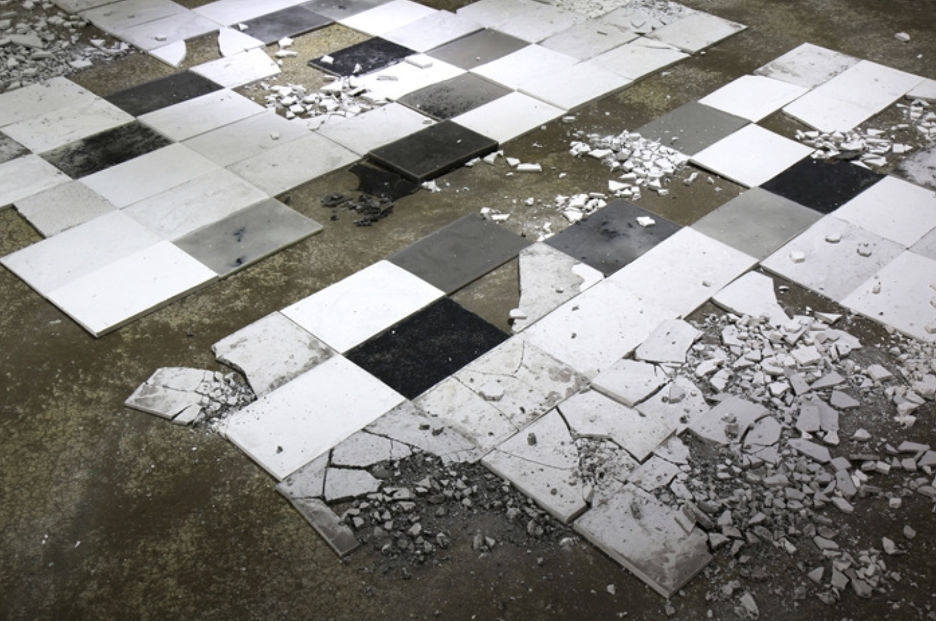
Since the theme he has placed in his work is somewhat difficult to express and abstract, the artist produced the video work Rolling Snow(2014) to help viewers understand it more easily and approach it more familiarly. The video shows snow being rolled along lines calculated according to the width of footsteps, and it conveys the same message as his earlier paintings.
A small ball of snow rolls well at first, but once it grows beyond a certain size, it becomes too large and heavy to roll alone. This symbolizes difficult and painful situations. The artist says, “Human life is the same. When doing something, there are times when we face hardship. But even so, continuing to move forward—that is what I think the meaning of life is.” The aluminum installation work Untitled(variable cube)(2014) was also designed so that viewers could engage with the work with interest without finding it difficult to understand.
Pyoun’s paintings, which create fantastical scenes where three-dimensionality and flatness intersect, are not works that deal only with visual effects. For this reason, if one looks at them only briefly and passes by, it is easy to miss their essential message. This is why his paintings need to be viewed over time.
The imperfect elements within the paintings, and the illusions they create at certain moments when gathered together, offer viewers visual pleasure and further make possible an inquiry into and awakening to the essence of human existence. By placing the essence of life within painting, the artist tells us that although we human beings are imperfect, we live while overcoming hardship, and because we are imperfect, we can continue the journey of life with hope and courage.
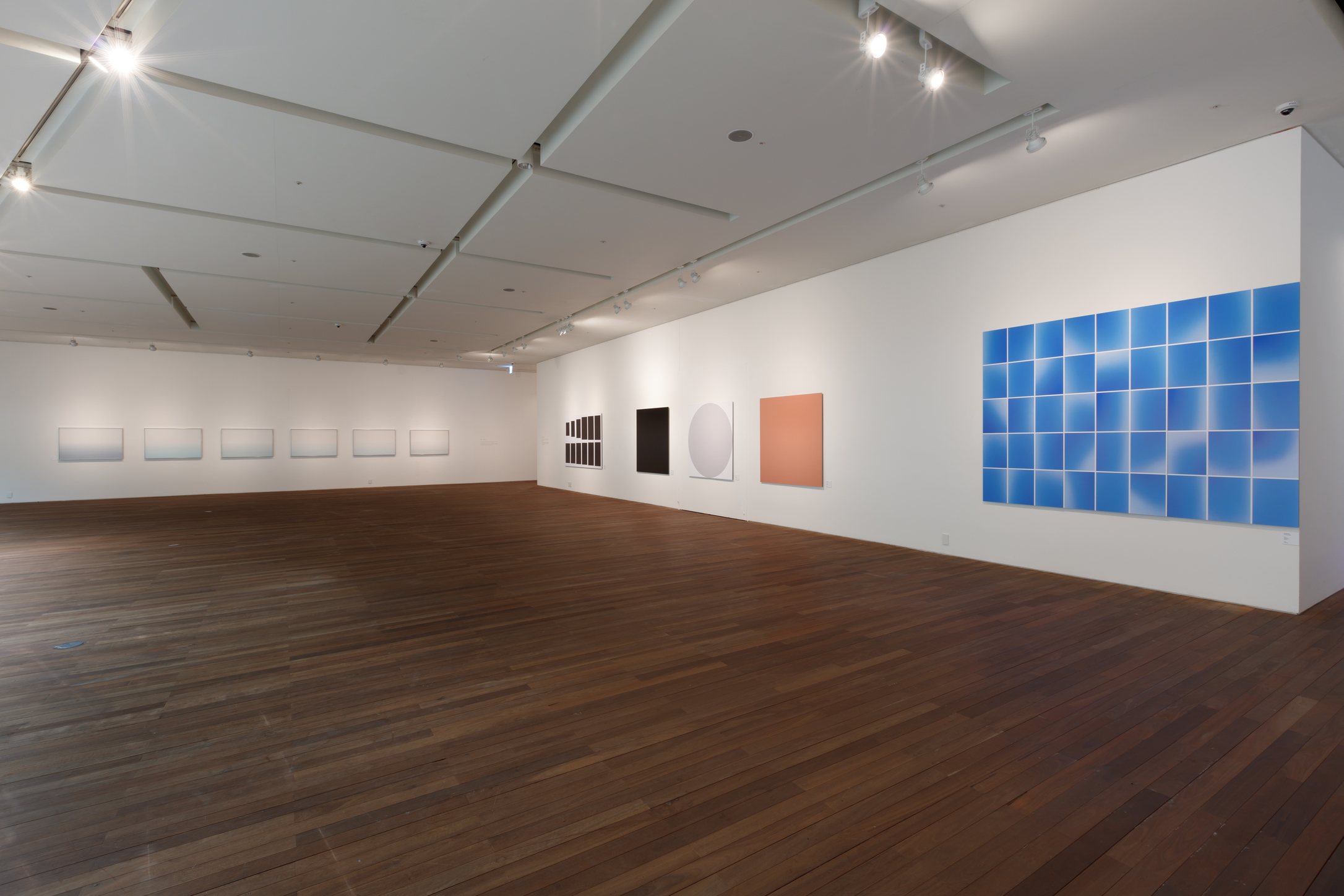
In the future, he says he plans to try work that is somewhat different from what he has done so far. Pyoun is conceiving a modular work in which approximately 300 small works with different motifs and patterns are combined to form a single image, and in which different methods and directions of arrangement create new illusions. How he will use the attention currently directed toward him as a springboard remains in the artist’s hands.