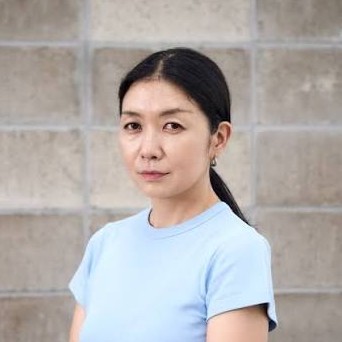
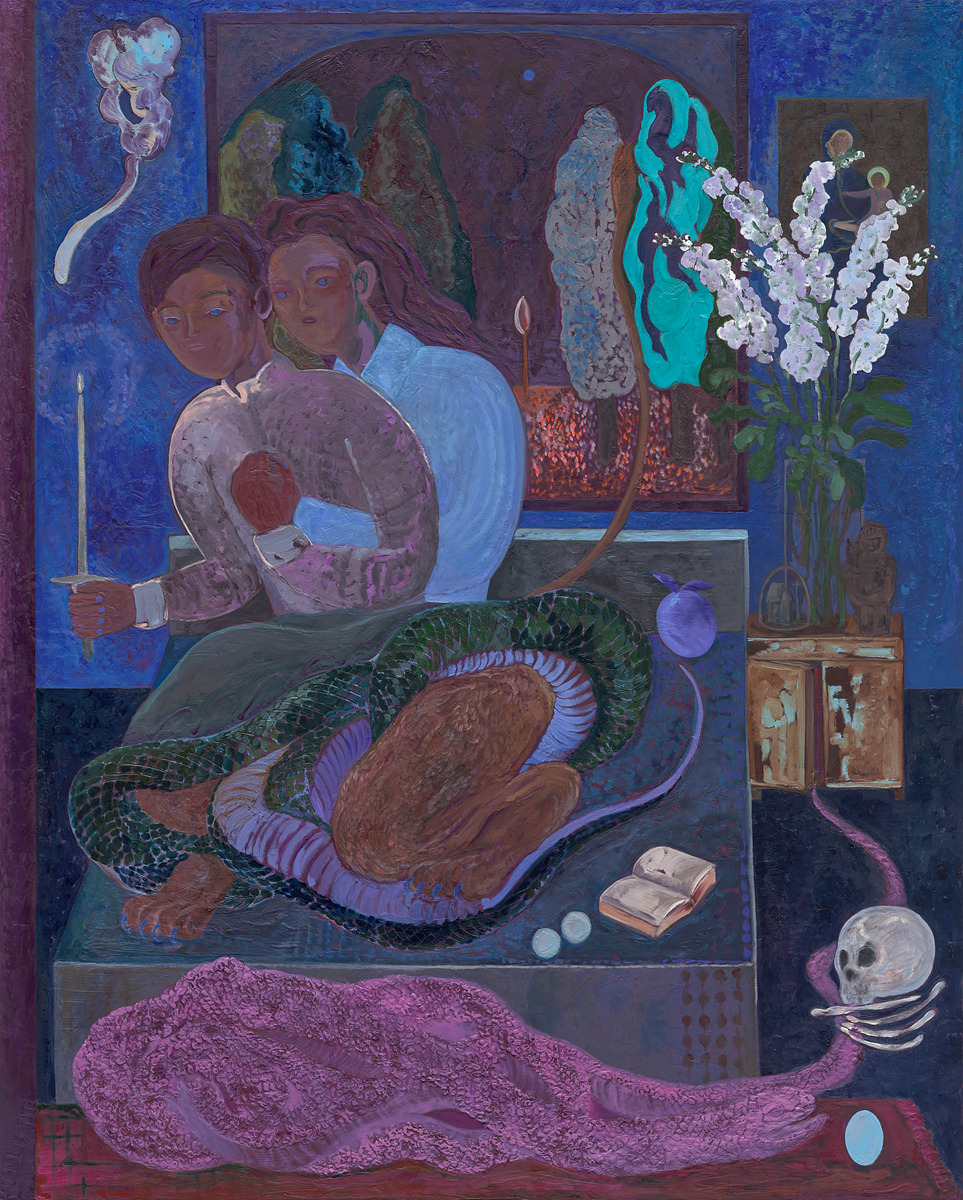
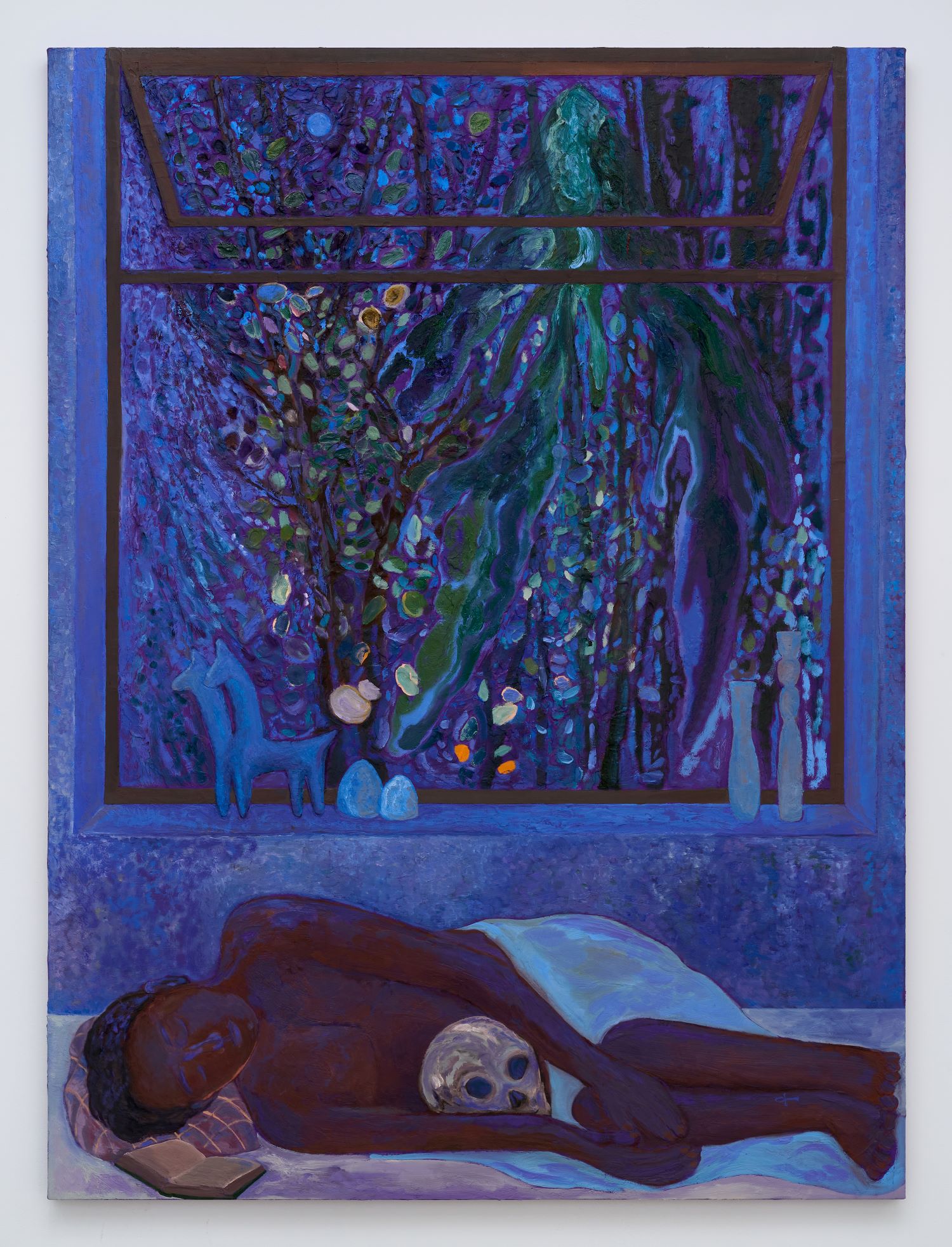
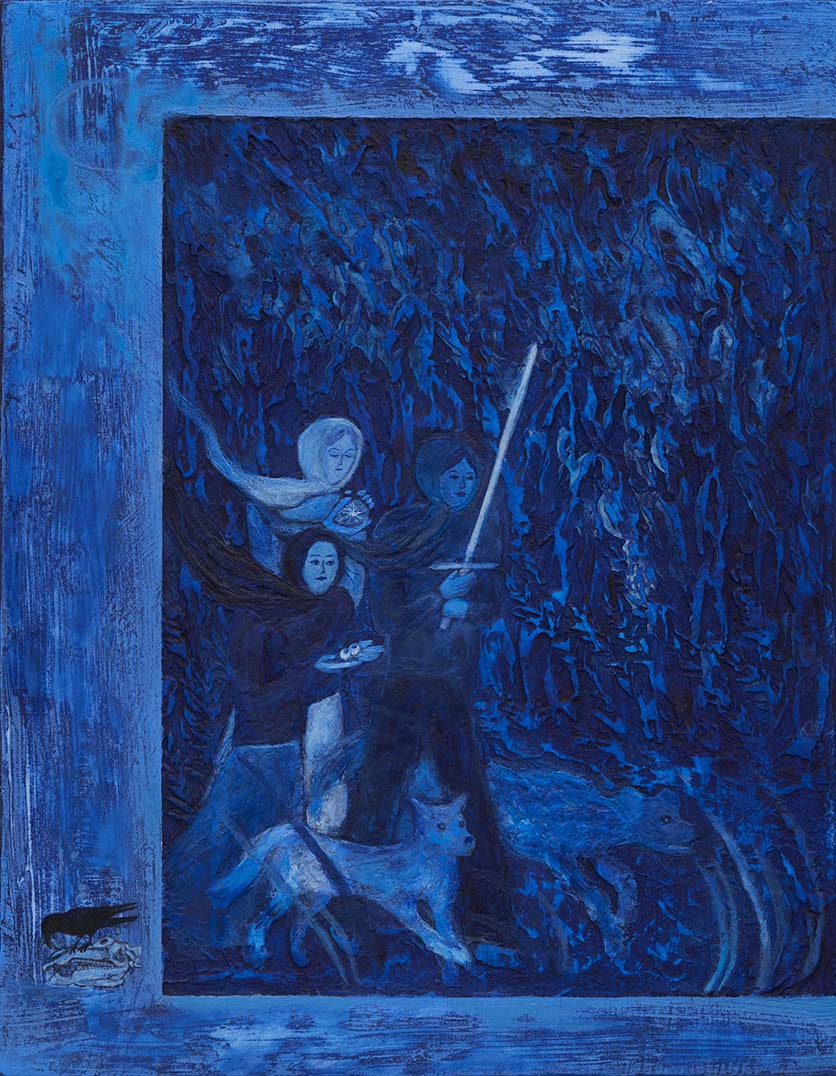
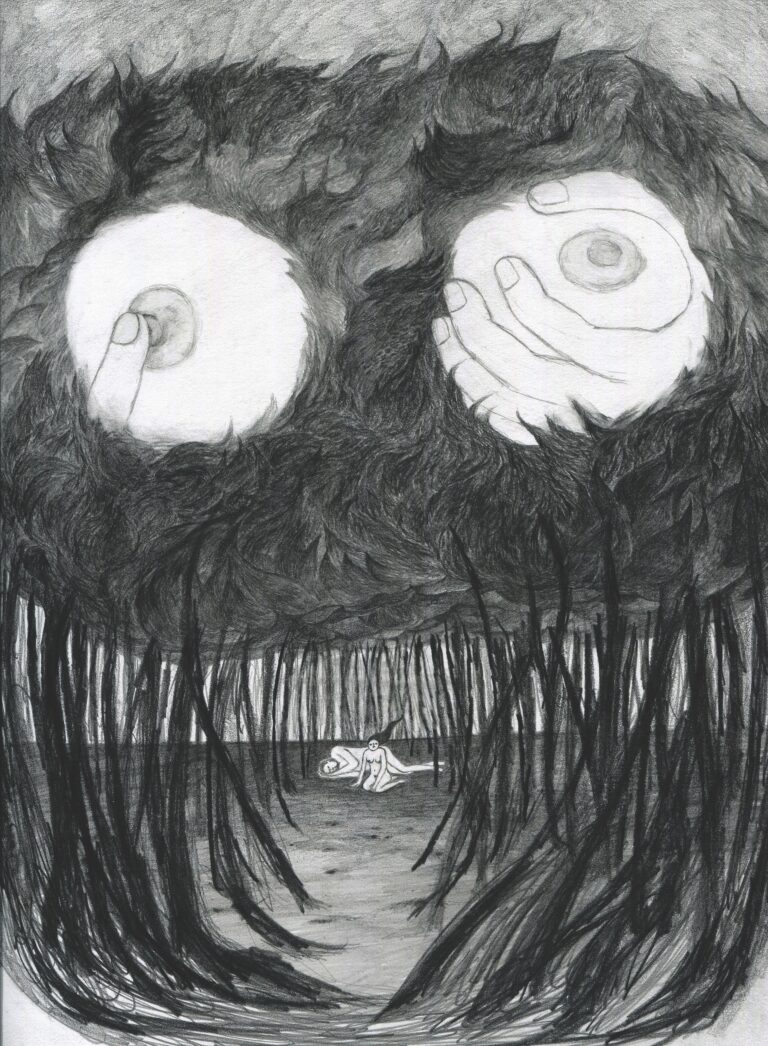
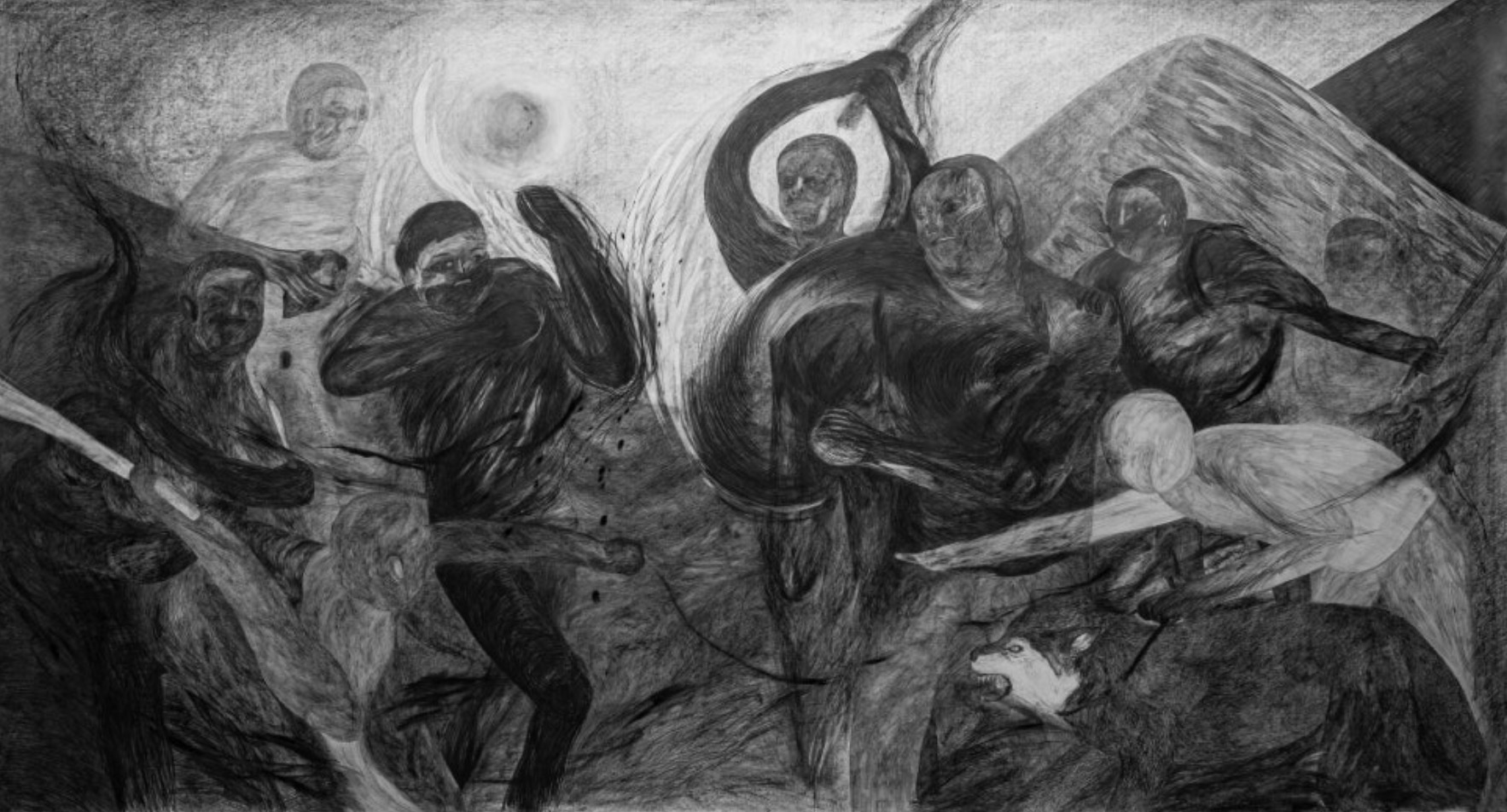
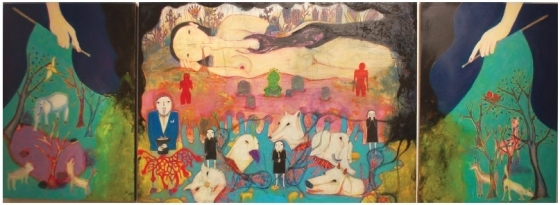
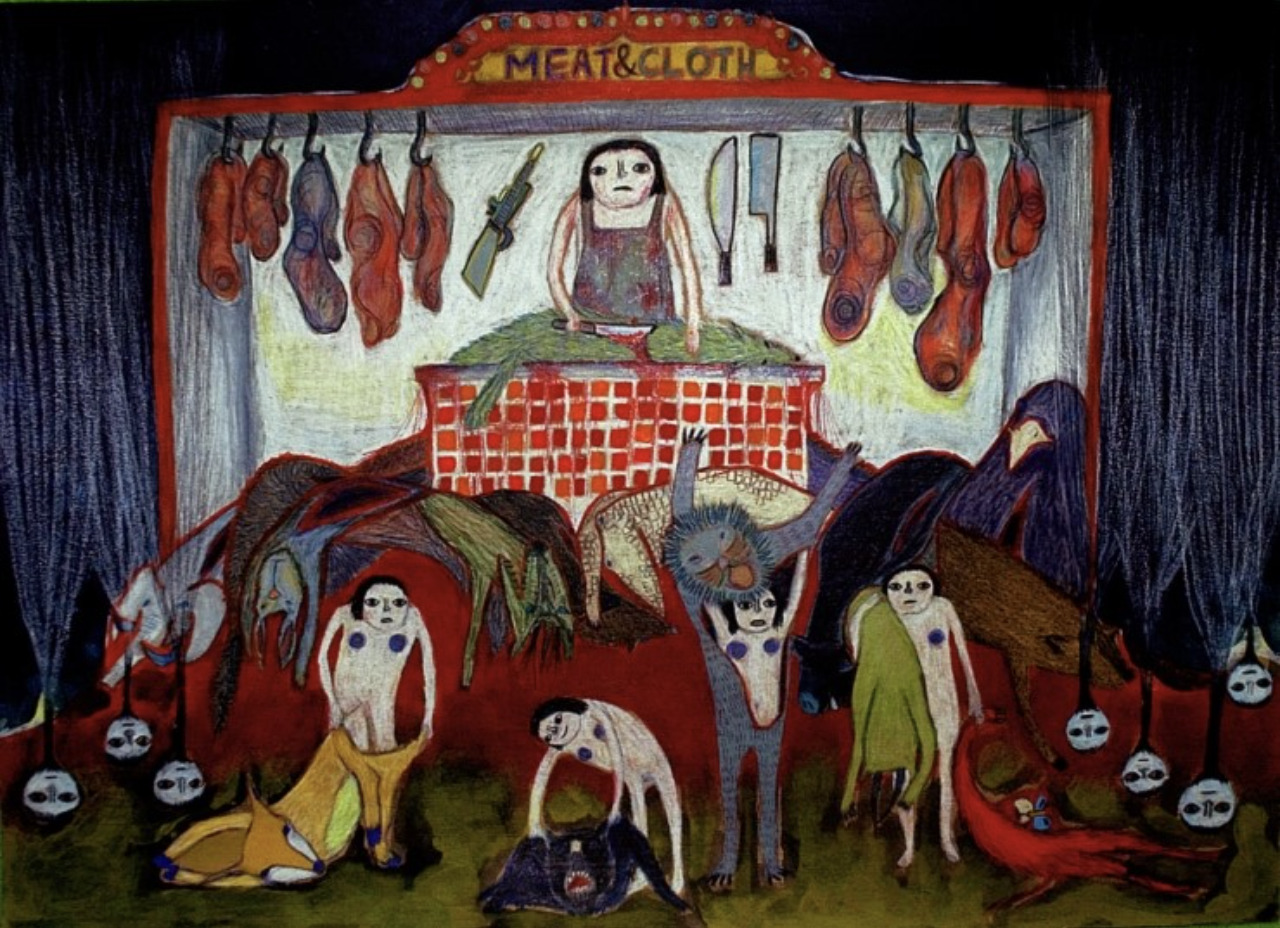
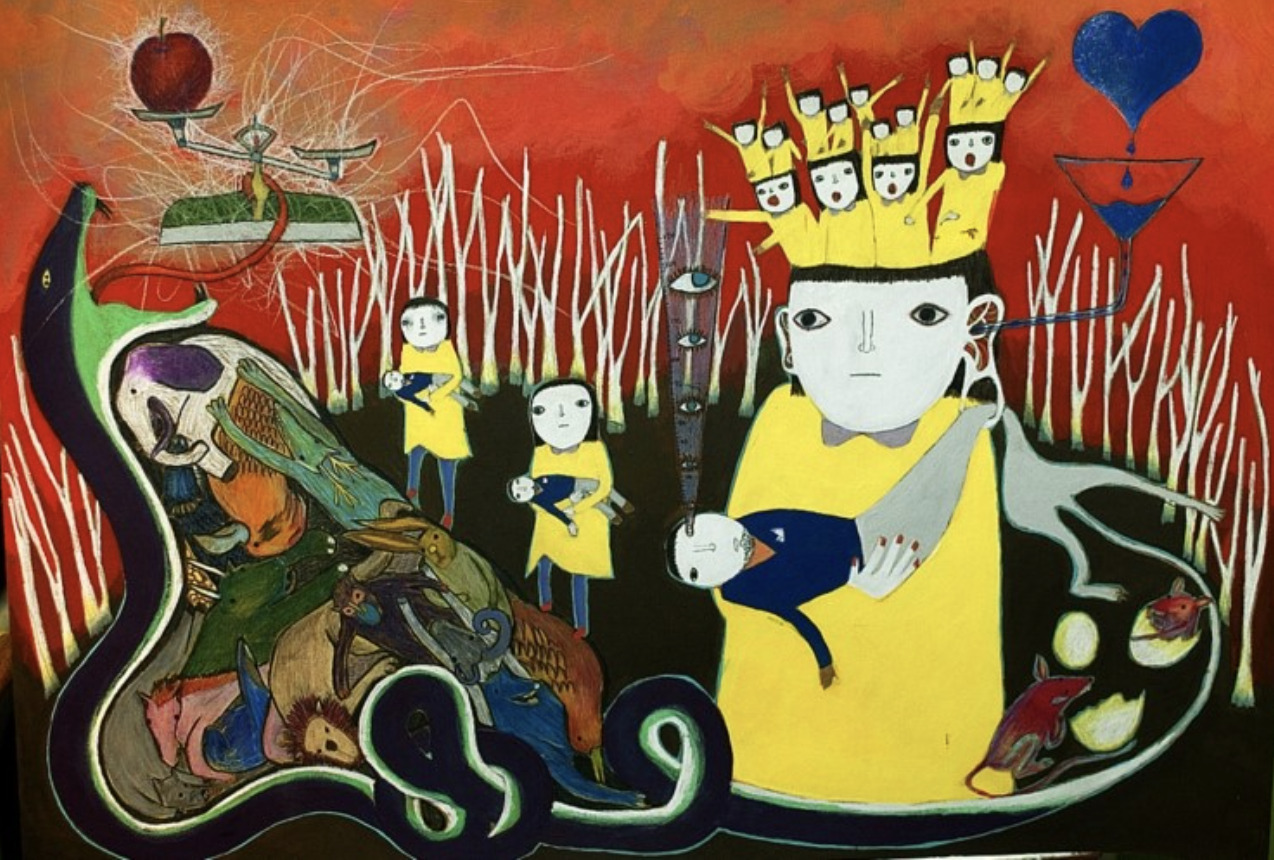
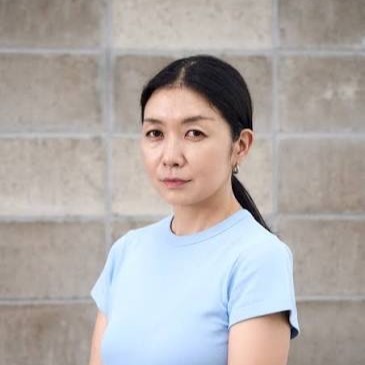
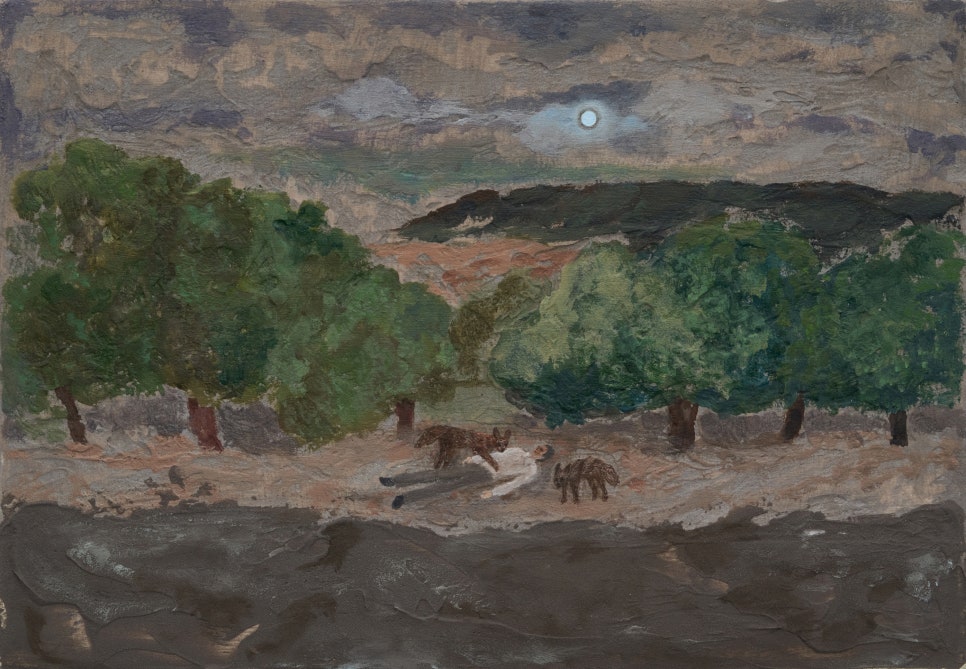
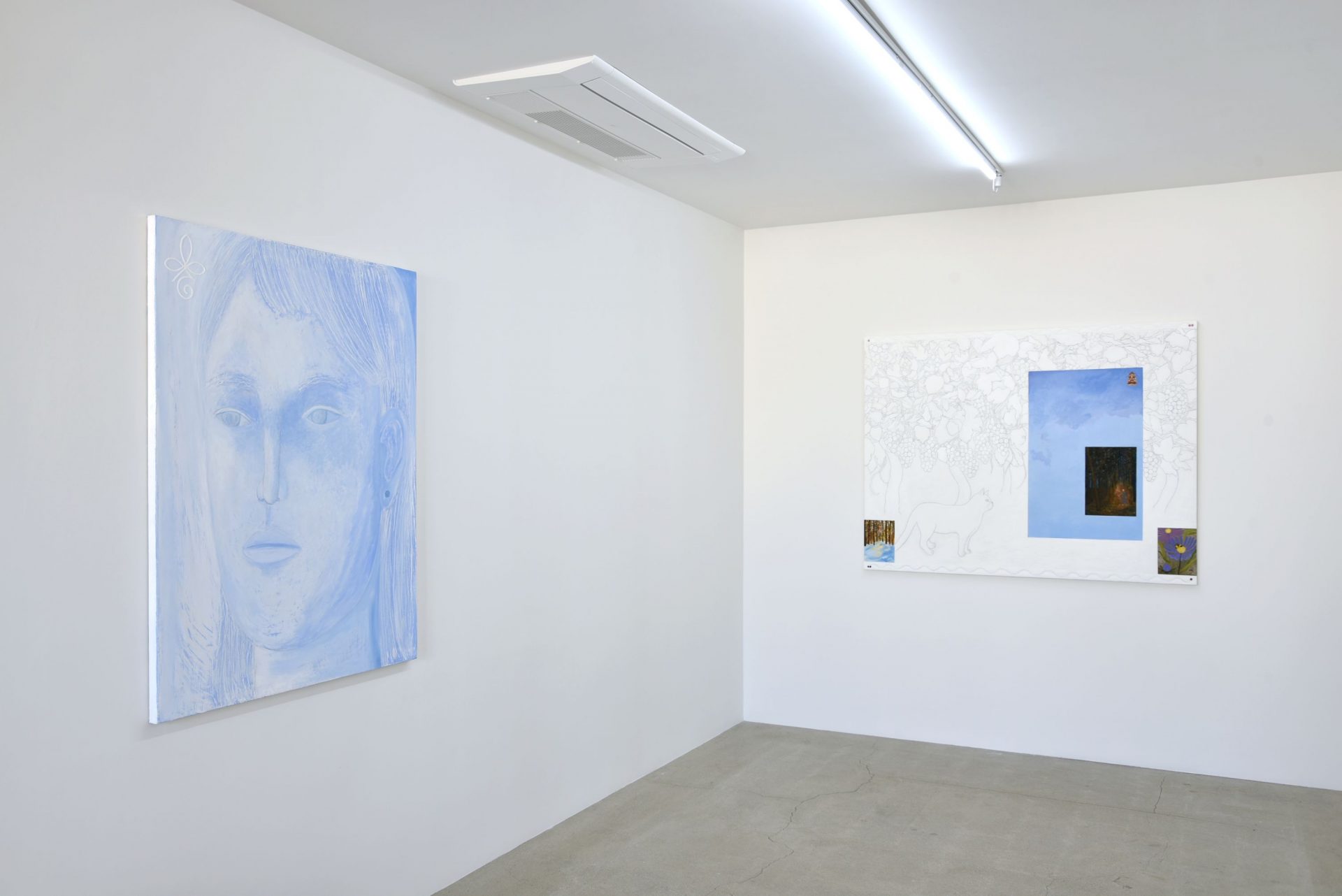
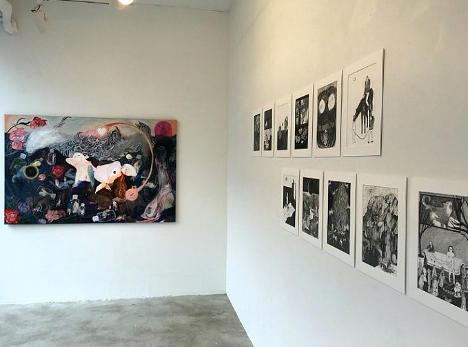
The originality of Safranski’s work lies first in its point of
departure. The artist, who studied German Language and Literature rather than
fine art, began creating from her personal experience of illness, and treats
the body not as an object of representation but as an ontological place that
experiences and undergoes itself.
In particular, the fact that she has thought
through heterogeneous events such as labor, sex, and violence within a single
framework of “traces carried by the body,” and that she has consistently
pursued this inquiry while moving from drawing to painting, installation, text,
and sound, forms a clear axis of her practice.
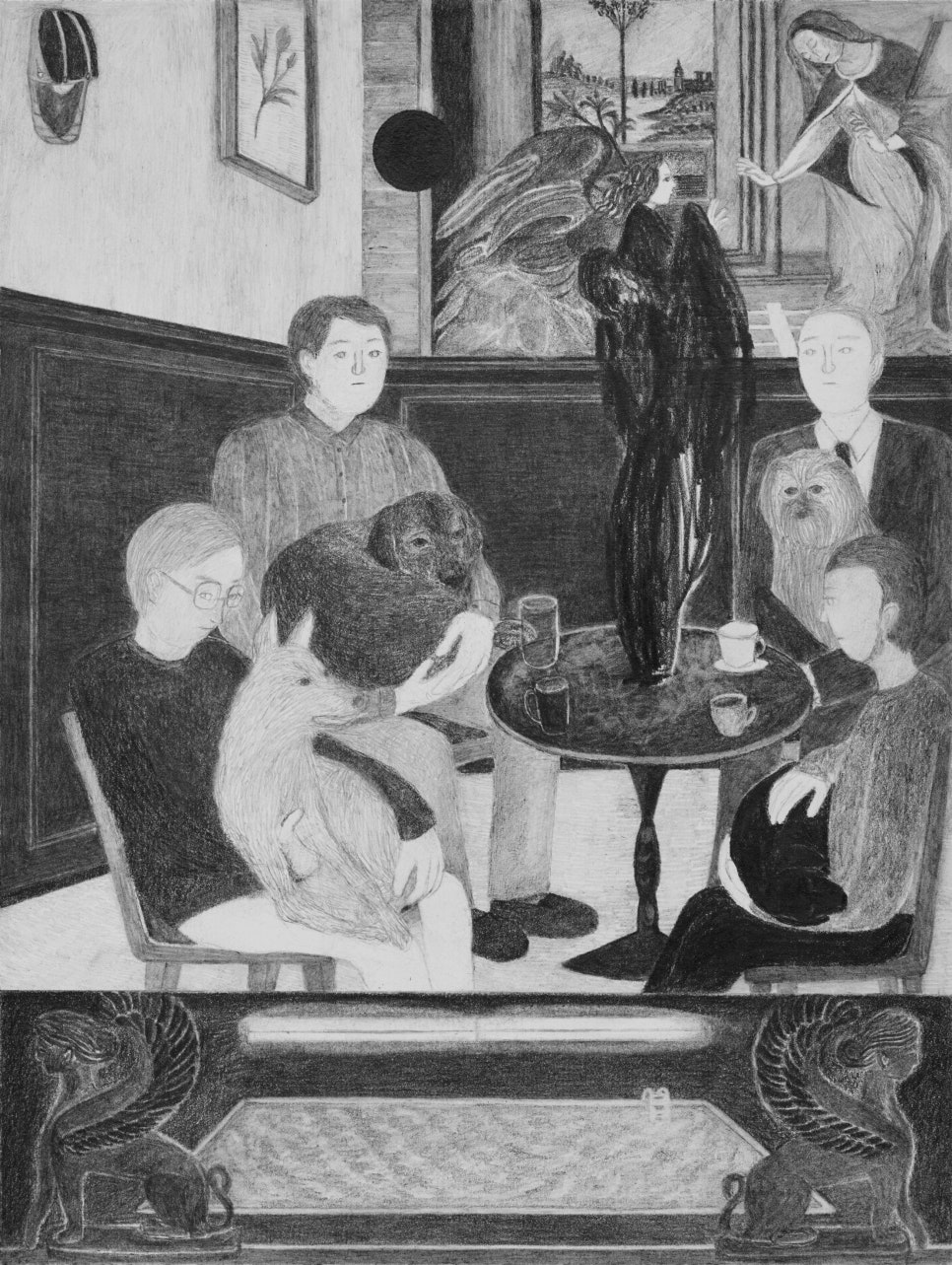
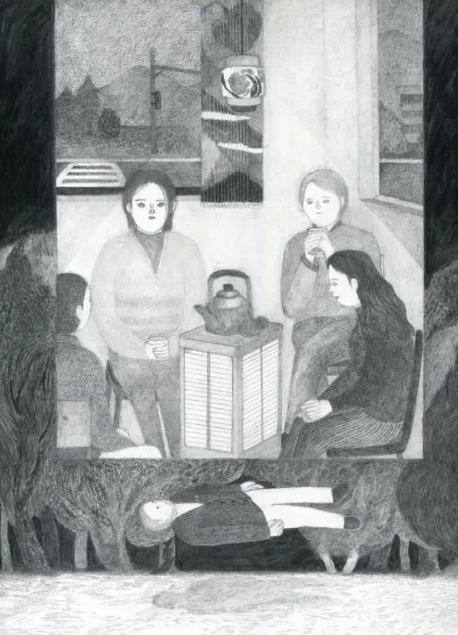
The artist’s career traces a trajectory that has widened from
personal narrative to social narrative, and then to historical and documentary
narrative. Beginning with Olympia’s Vomiting, which dealt
with her own experience of illness in 2008, and after holding her first solo
exhibition 《Laughing, Red Silence》(Sogul Gallery, Seoul, 2008), she addressed the laboring body and
the relational body through 《Labor Song vol.1
Waitress_Landscape of Survival》(Gallery SUKKARA, Seoul,
2014), 《Romance of Anxiety》(Corner
Art Space, Seoul, 2015), and 《Accident of Flesh》(SOMA Drawing Center, Seoul, 2017).
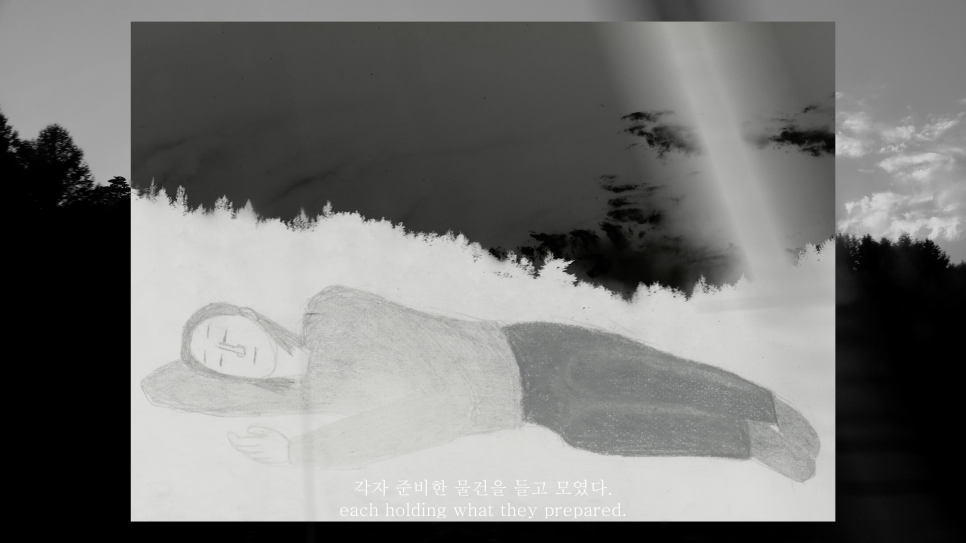
Later, in 《Room Tone: room, stain and sounds for the sequence》(A-Lounge Contemporary, 2024), she incorporated medical-historical
materials from nineteenth-century hysteria studies to reconstruct the history
of the gaze surrounding women’s bodies. Even as the temporal and geographical
scope of her materials has expanded, the fundamental concern with the body and
subjectivation has remained consistent.
This body of work has received steady recognition from
institutions in Korea and abroad. Beginning with her selection for 《Young Korean Artists 2008》 at the National
Museum of Modern and Contemporary Art, Korea, she has participated in major
residency programs including Goyang National Residency(2010), Incheon Art
Platform(2016-2017), SeMA Nanji Residency(2021), and Seoul Art Space Geumcheon(2023).
Her works are held in the collections of the National Museum of Modern and
Contemporary Art, Korea, the MMCA Government Art Bank, and the Seoul Museum of
Art. Internationally, she participated early on in the three-person exhibition 《Asian Young Artists》(Gumsan Gallery, Tokyo,
2009), and later expanded her activities through 《VIA
Animation Festival》(Viborg Museum, Viborg, 2019) and 《Hexed, Bexed & Sexed》(West Den Haag, The
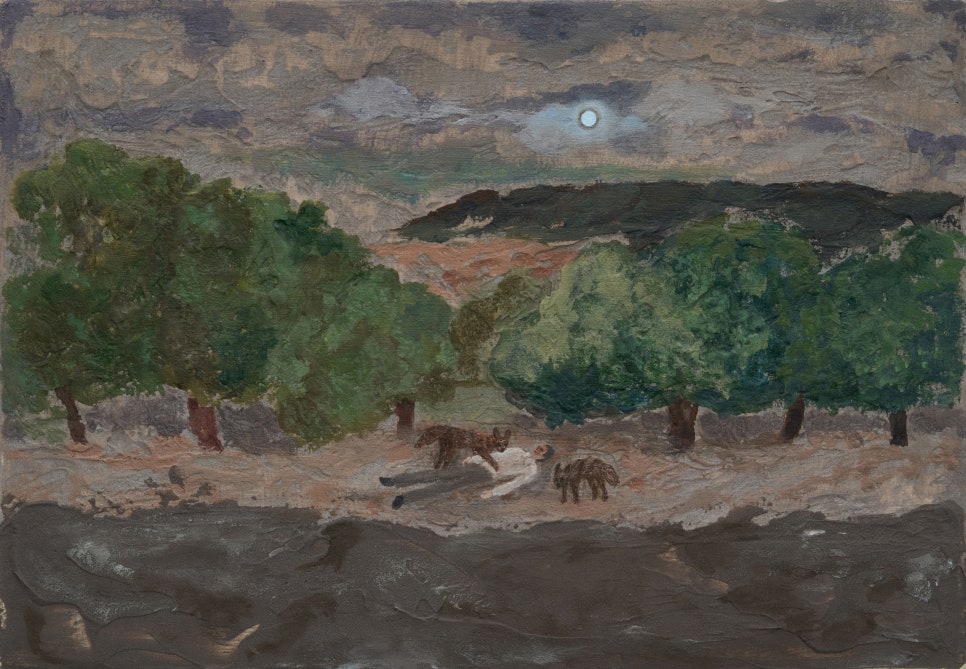
Hague, 2023). In 2025, she participated in 《Next
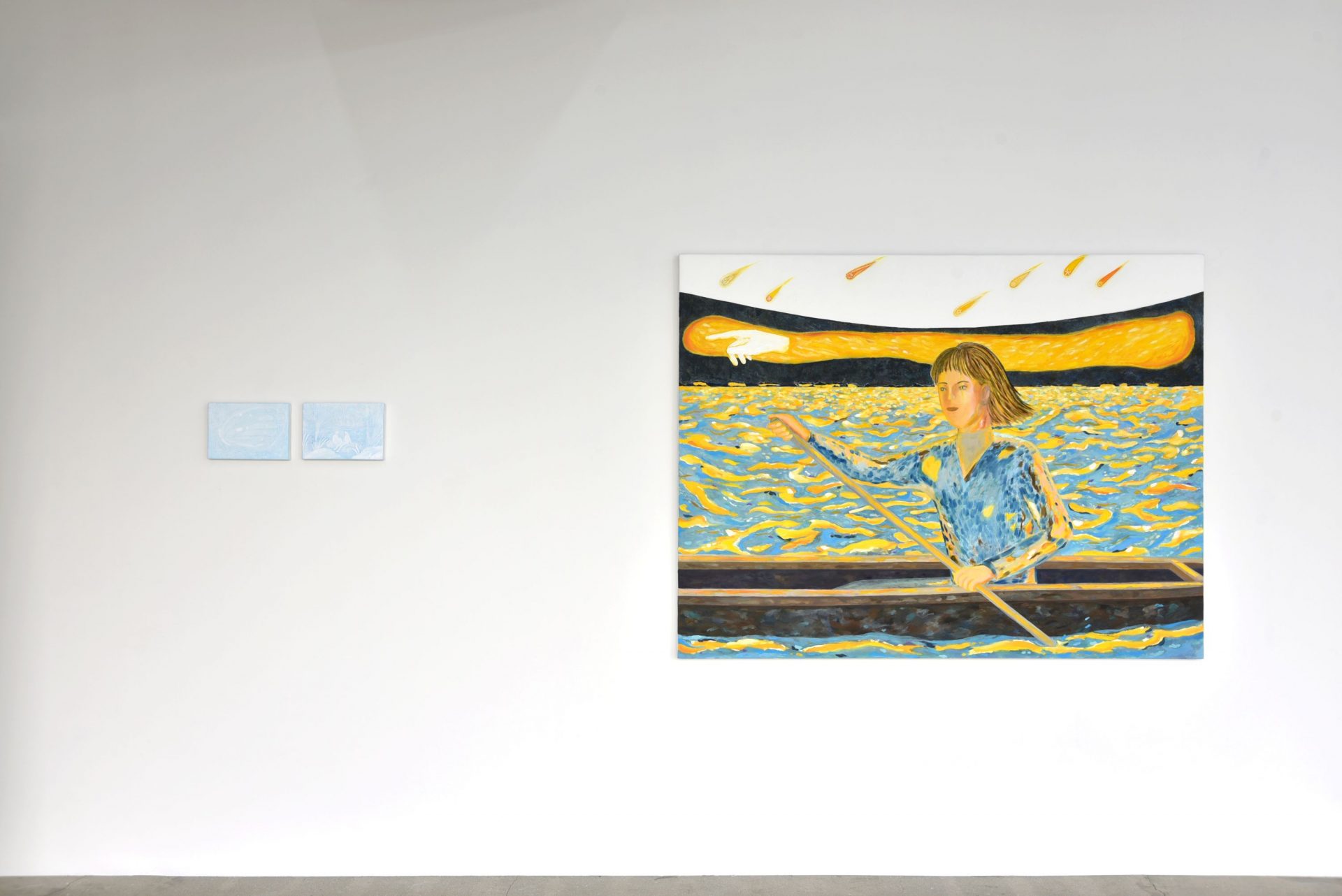
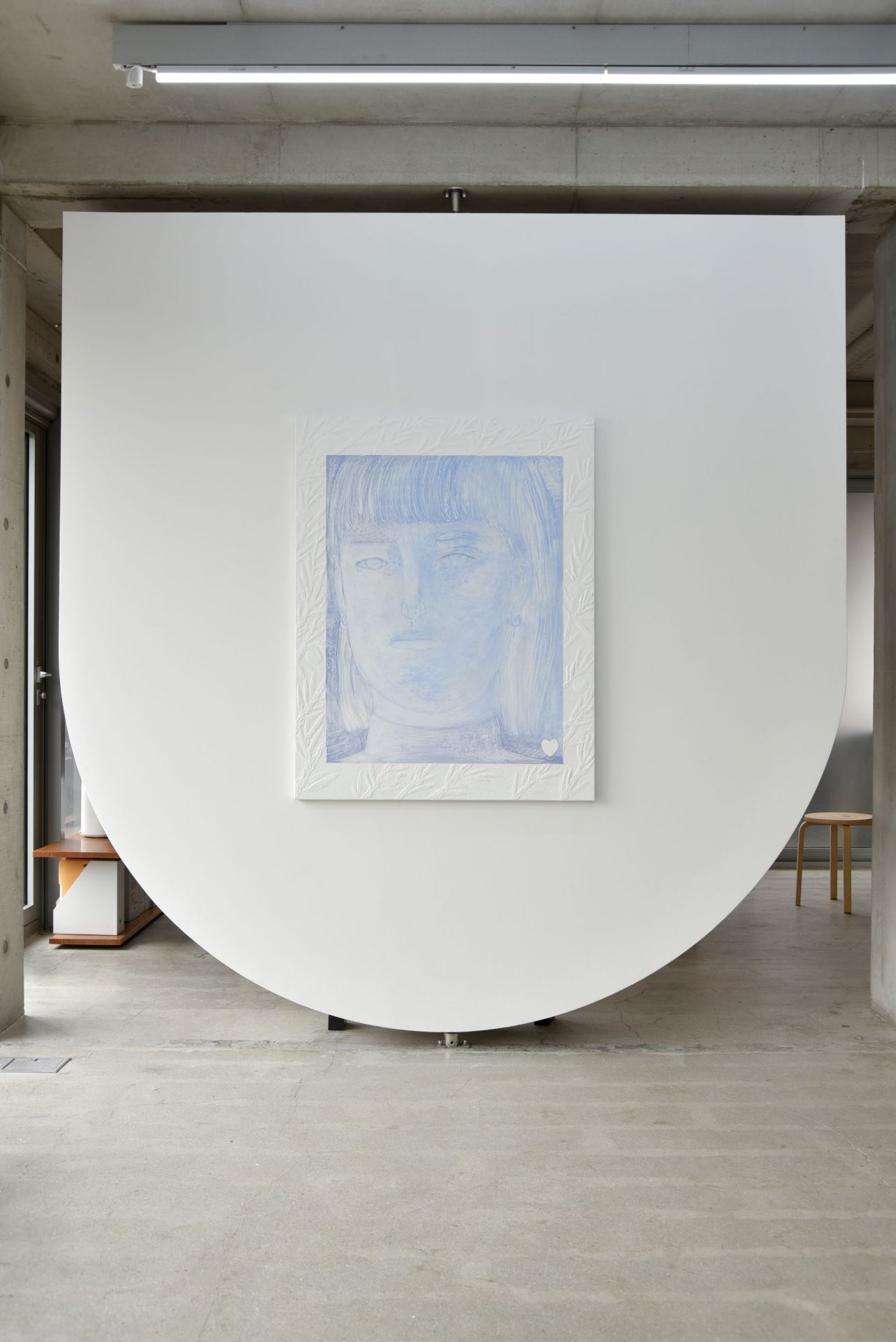
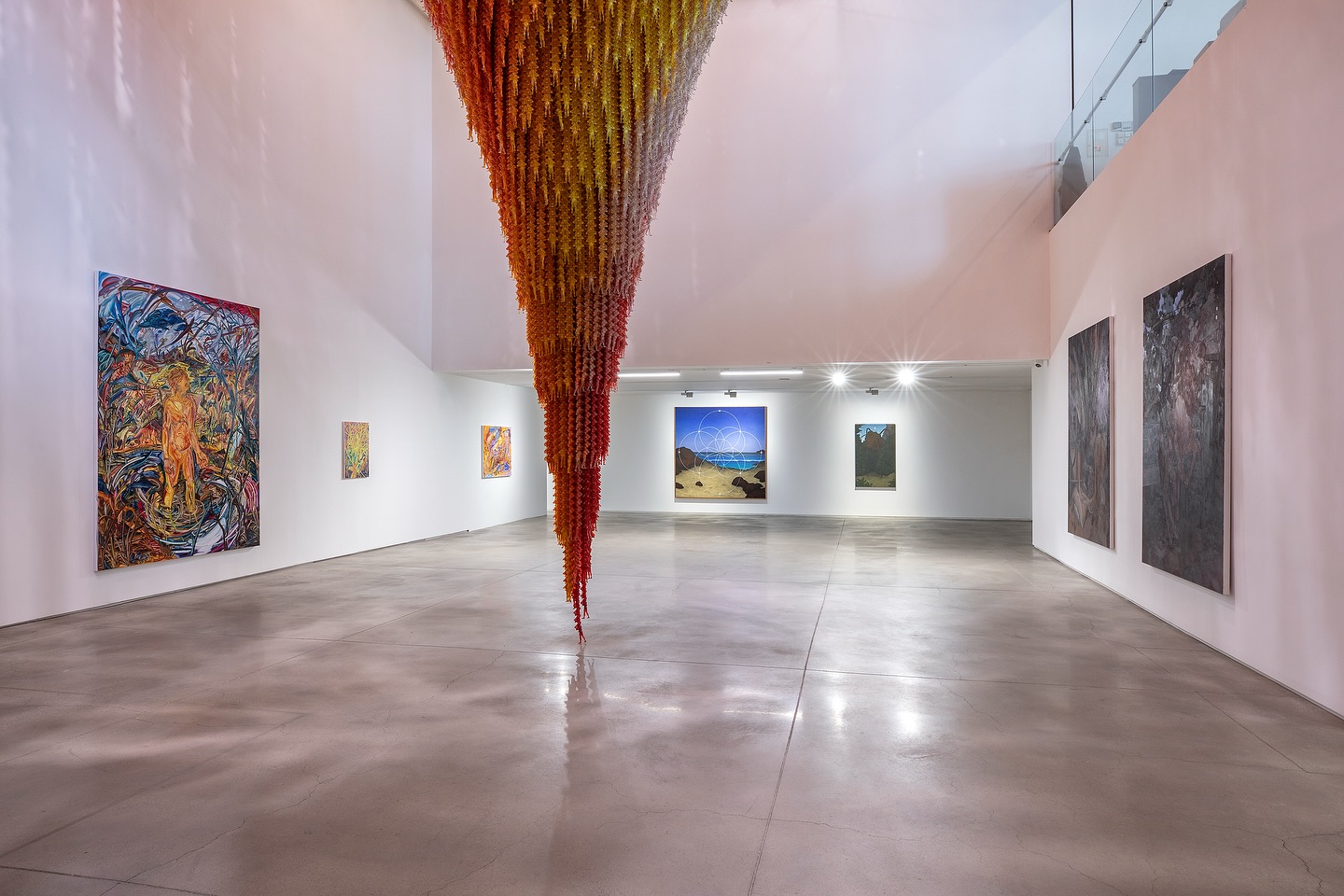
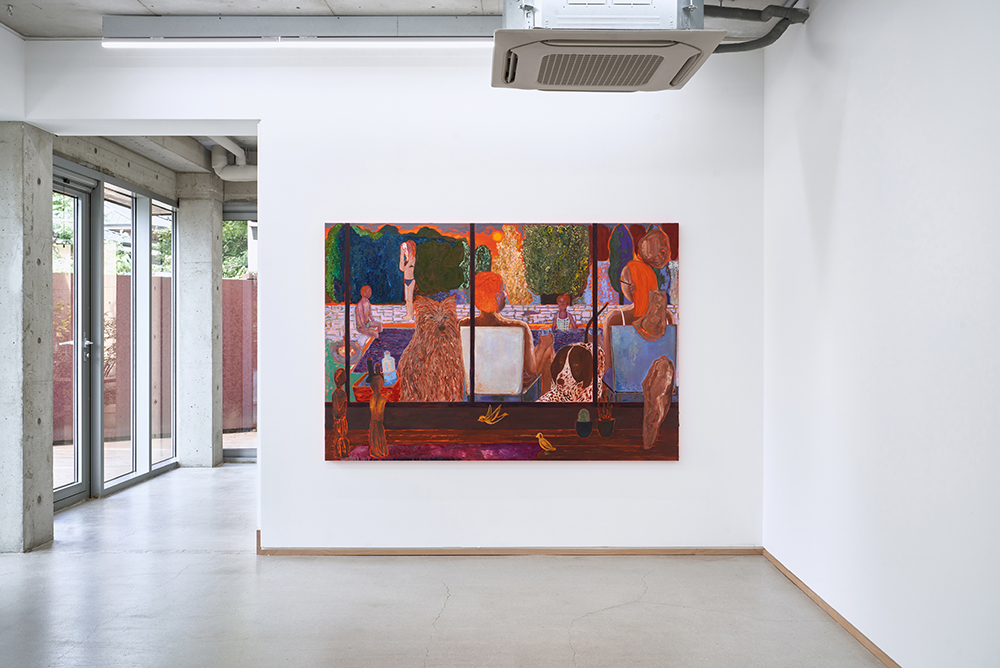
Painting: As We Are》(Kukje Gallery, Seoul, 2025),
presenting the direction of her work after its painterly expansion.
Having begun with drawing, the most personal and immediate medium,
and expanded her language into painting, installation, text, sound, and video,
Safranski’s work moves flexibly across media while holding onto questions of
the body and subjectivity. Her attitude, which begins from personal wounds and
embraces labor, violence, and the gaps in historical records, functions as an
important axis for reading her work as it encounters different regions and
audiences.