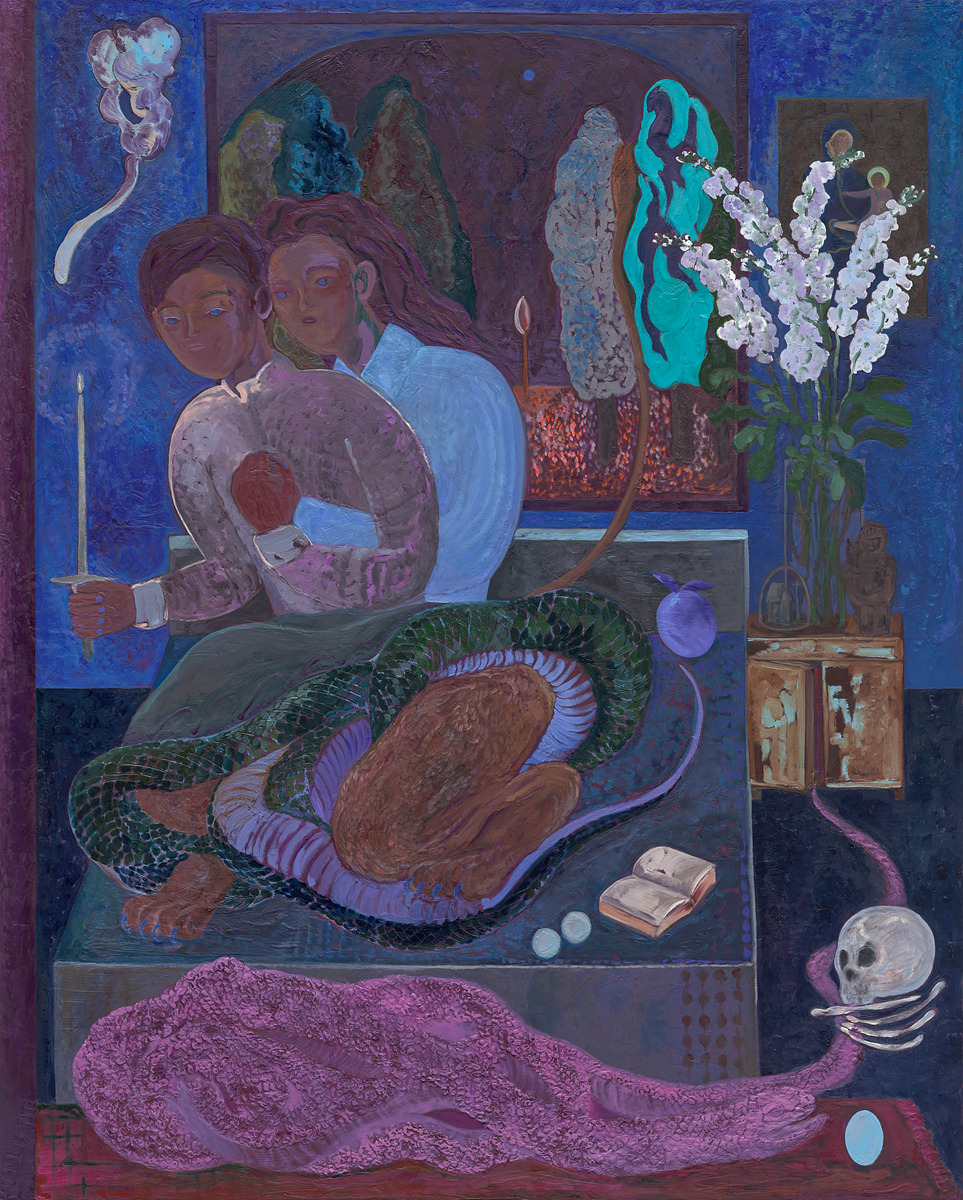
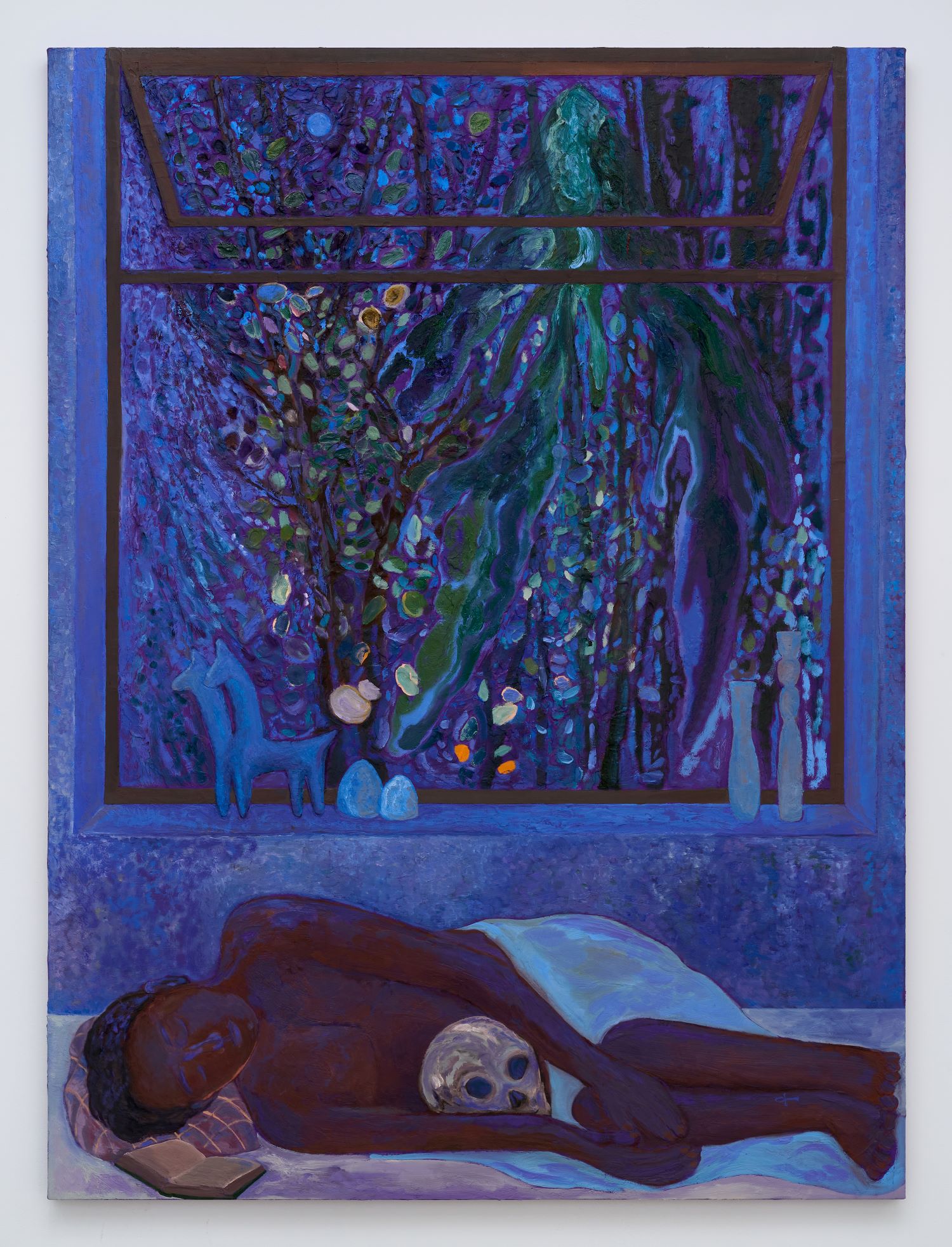
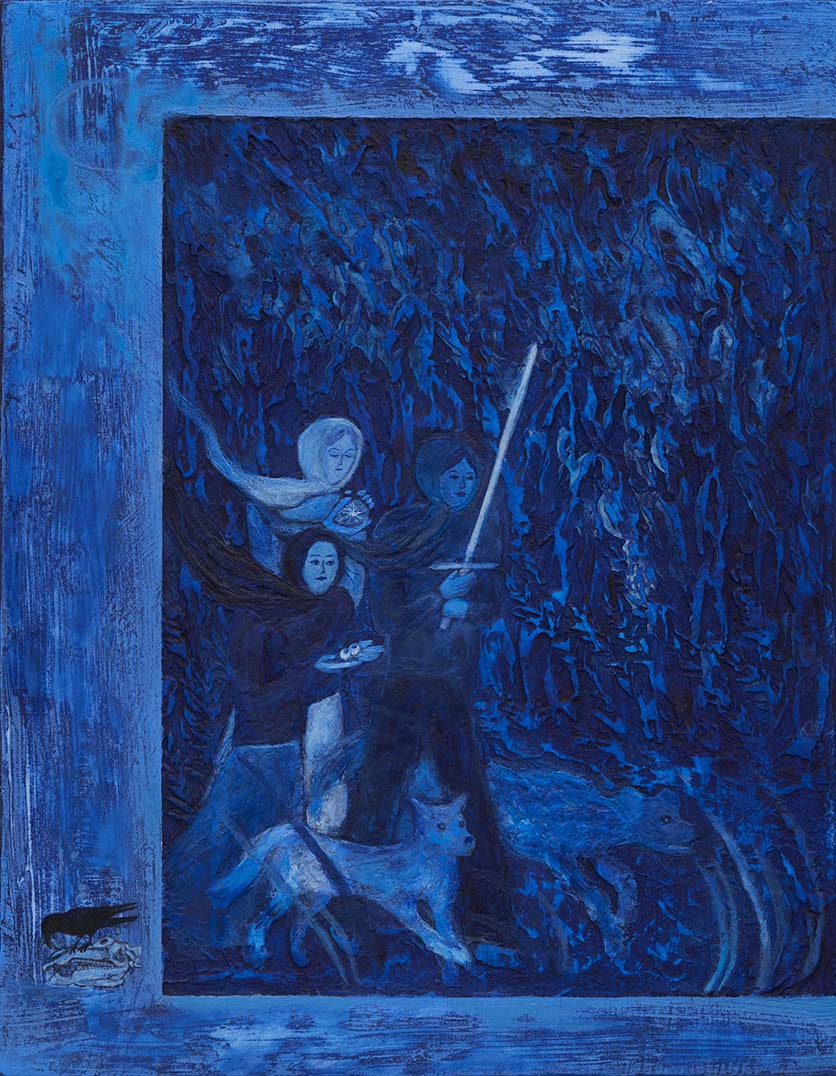
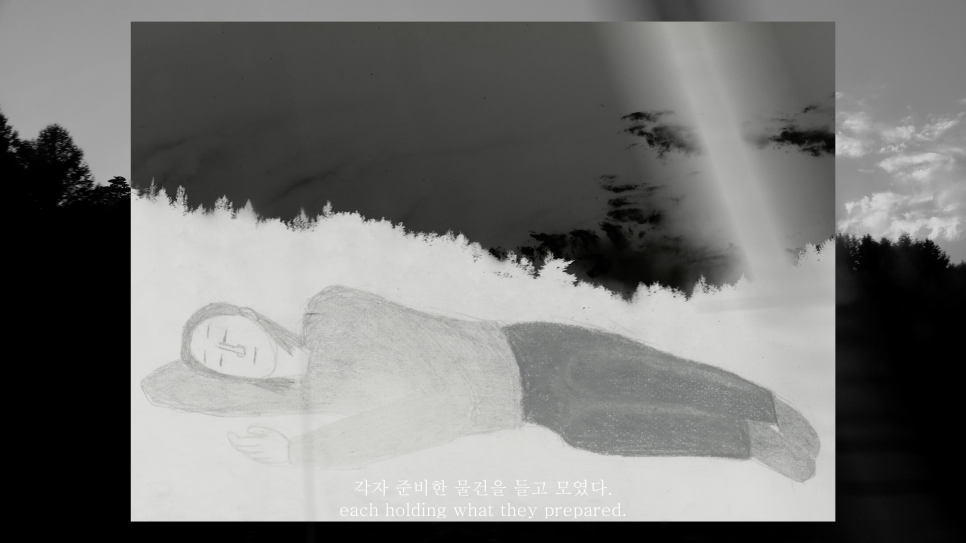
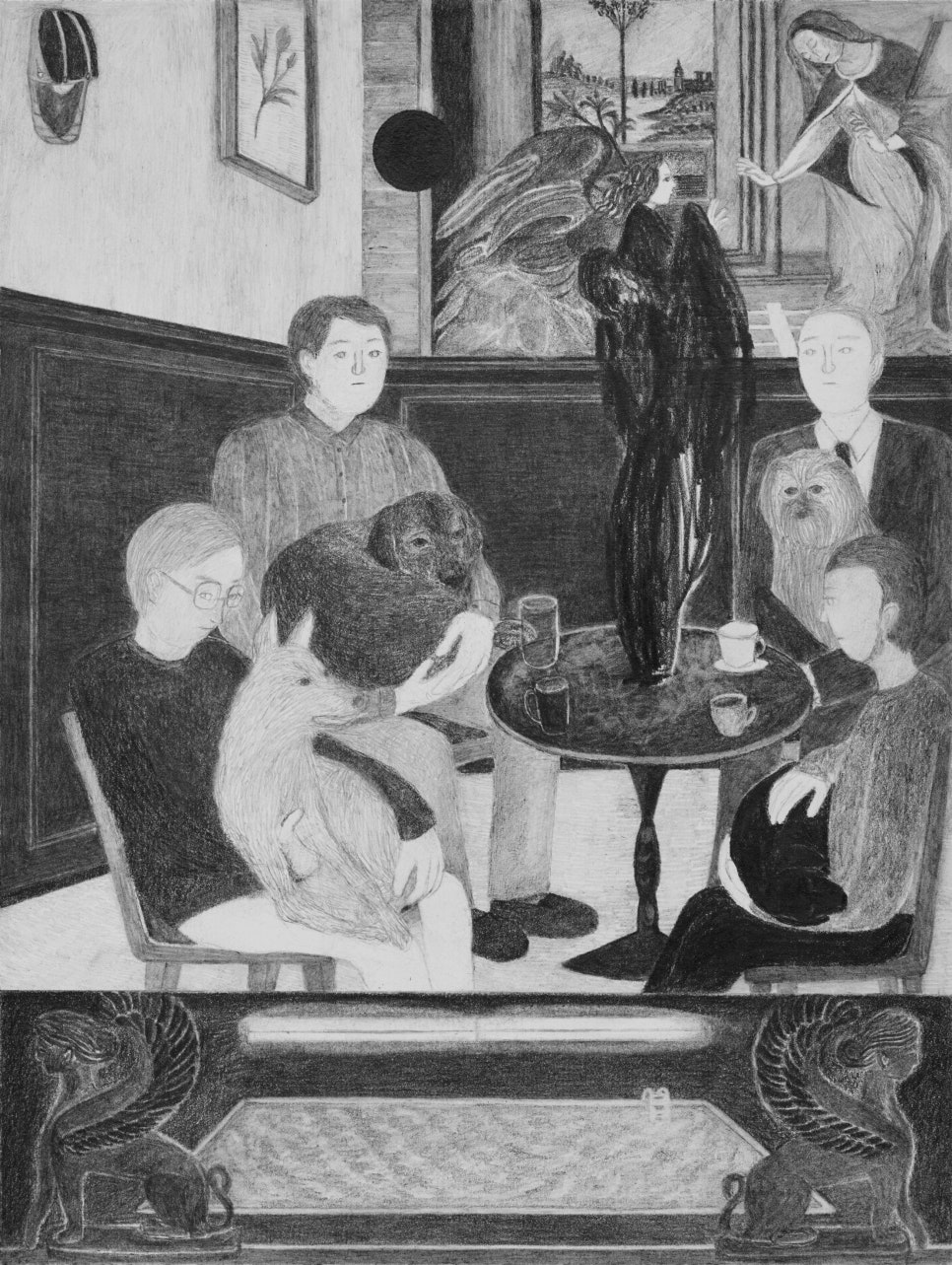
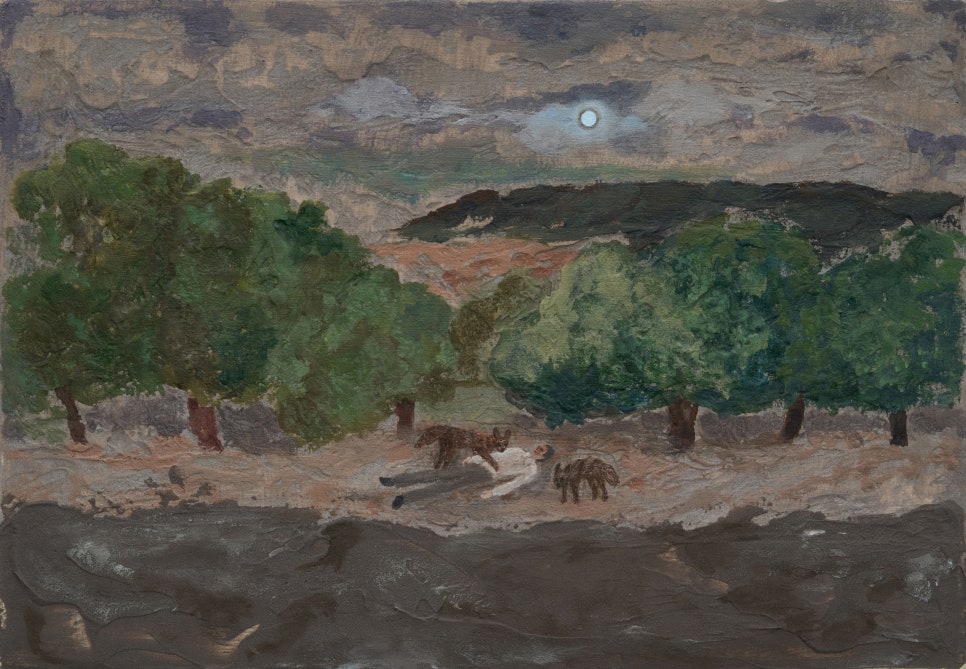
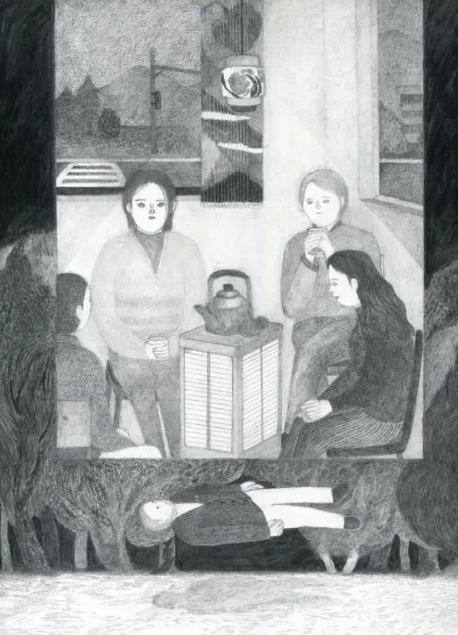
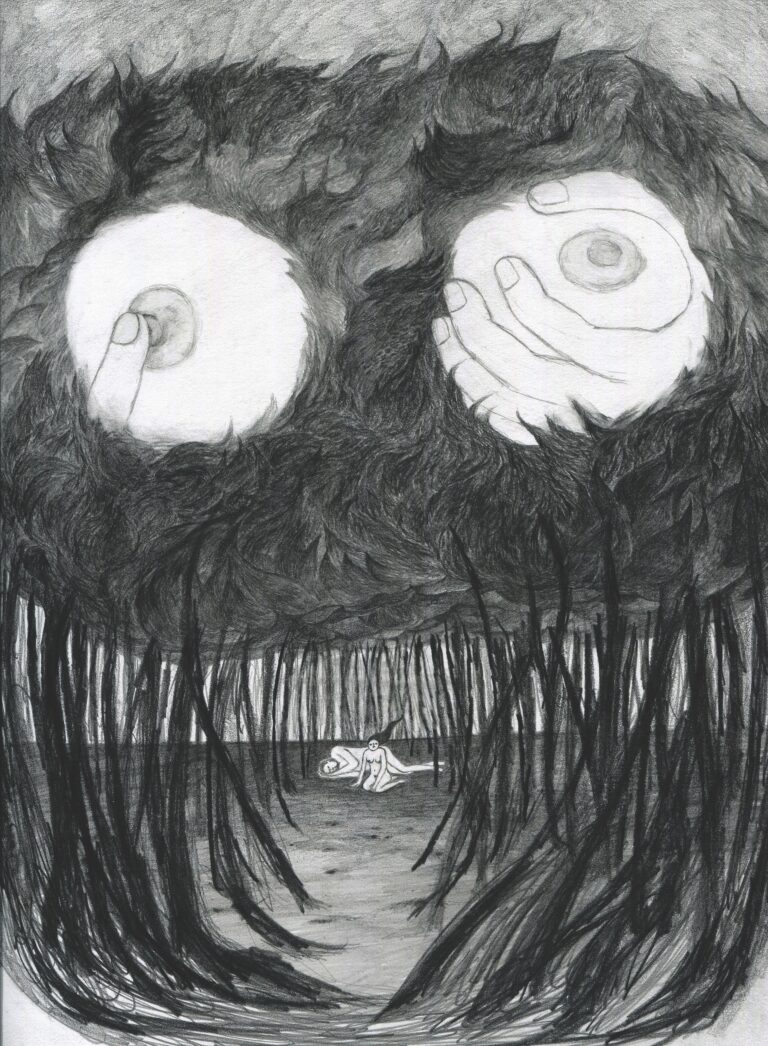
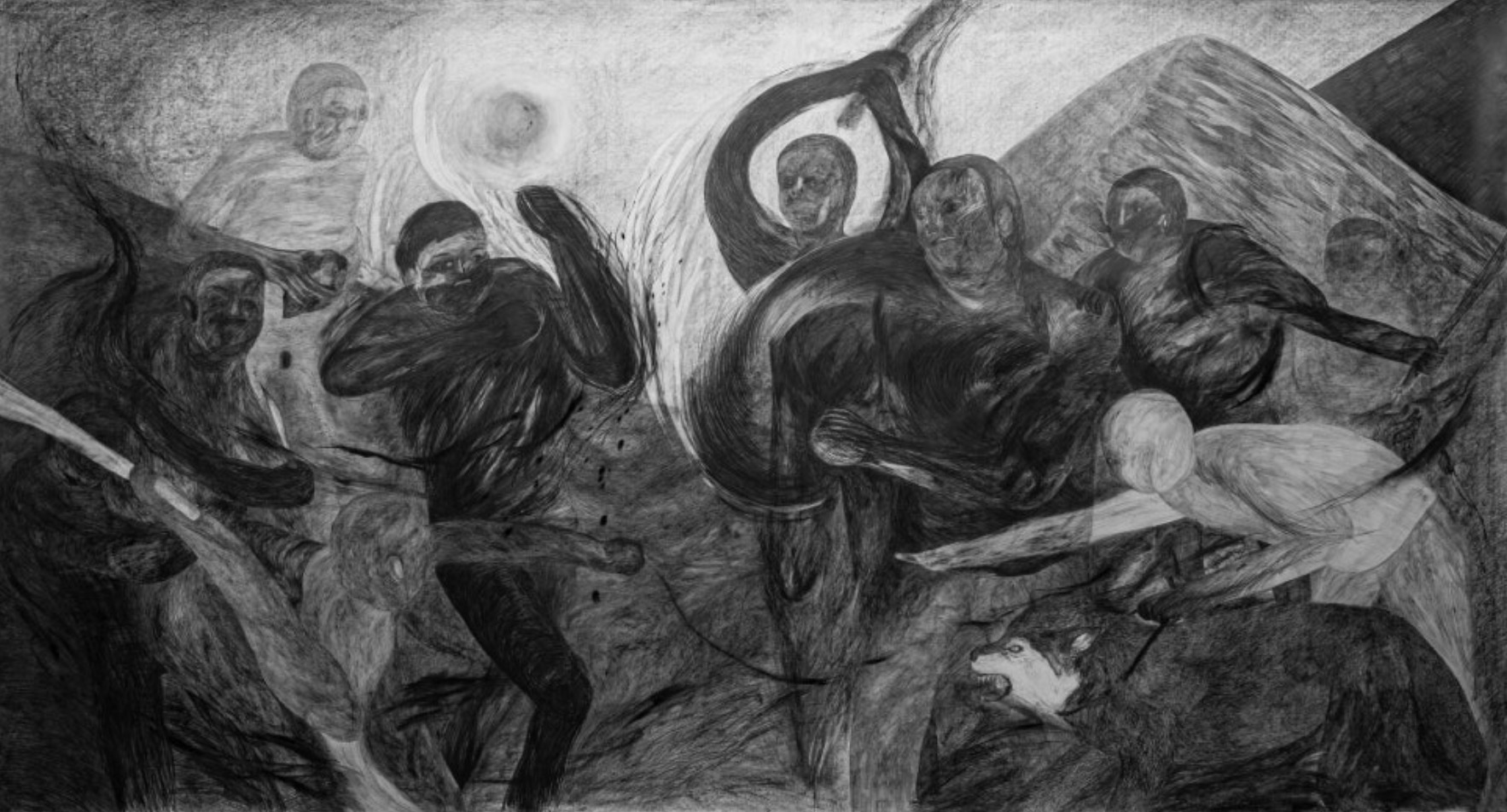
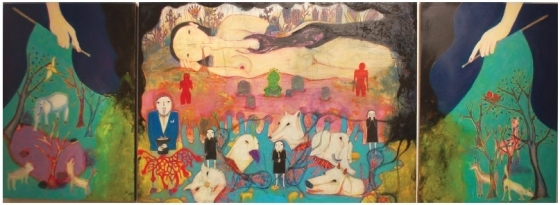
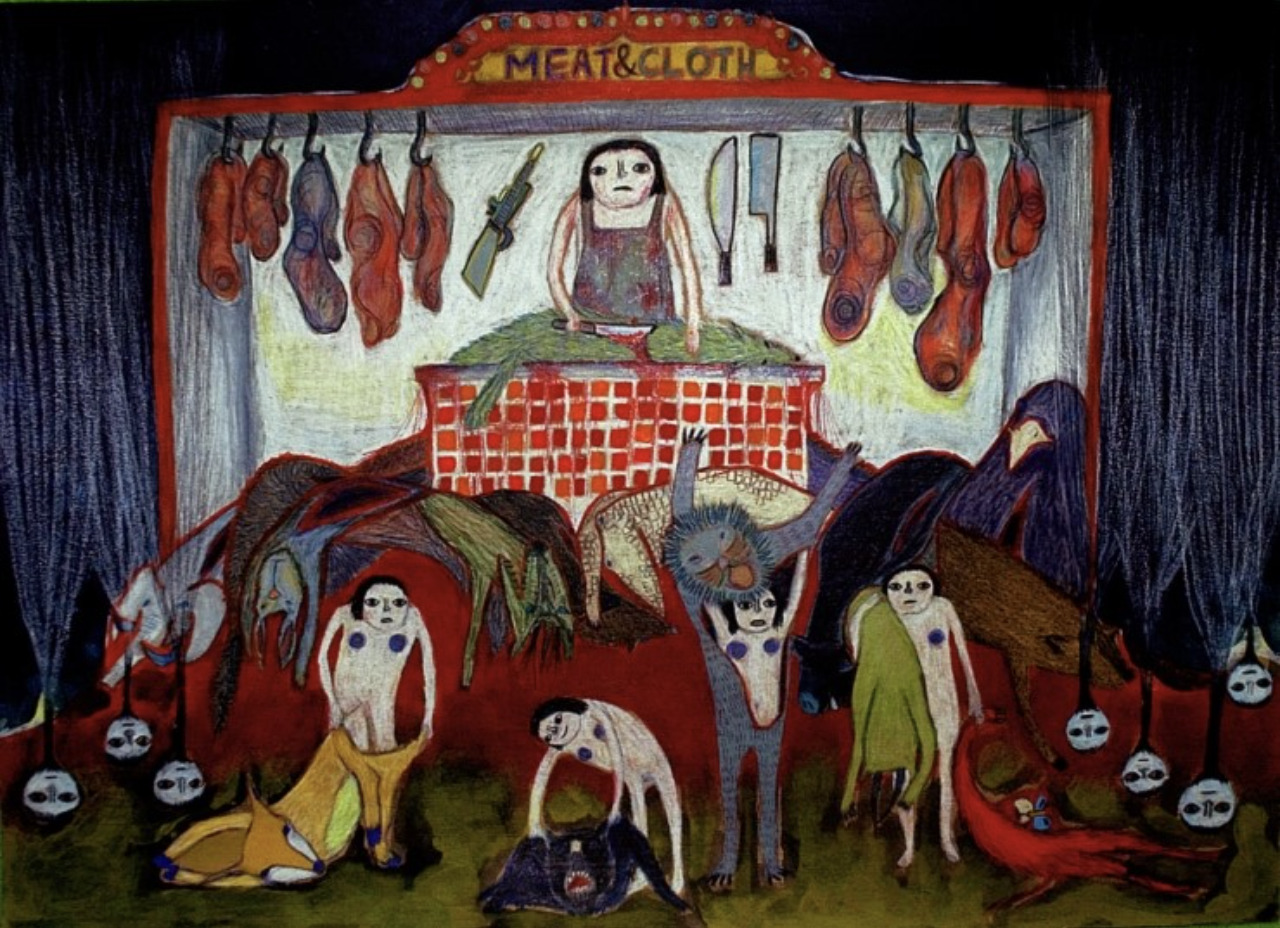
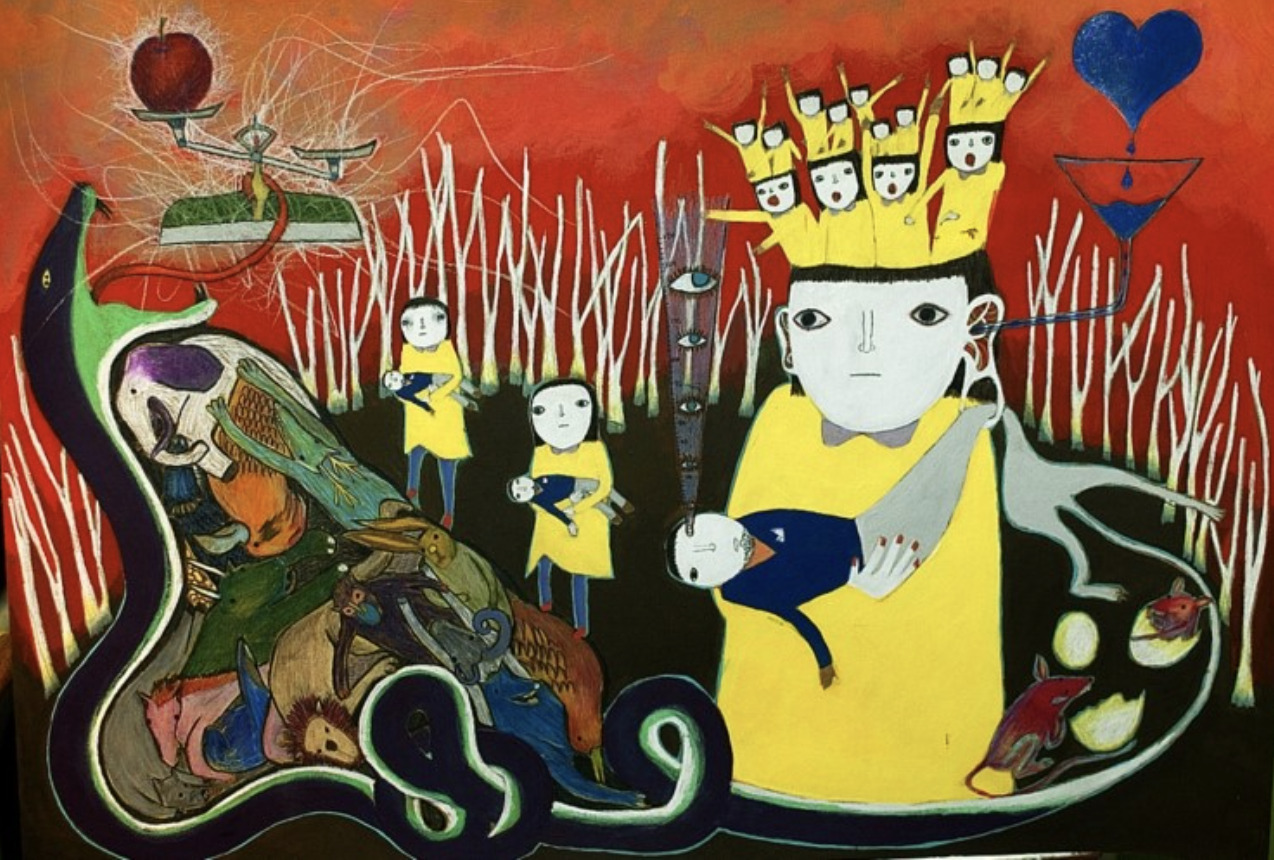
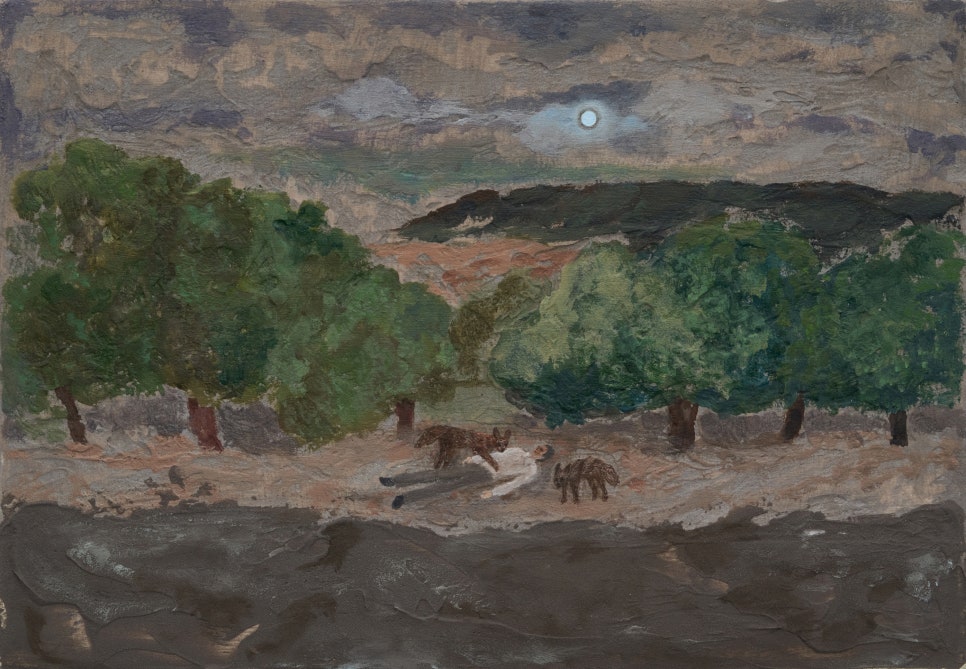
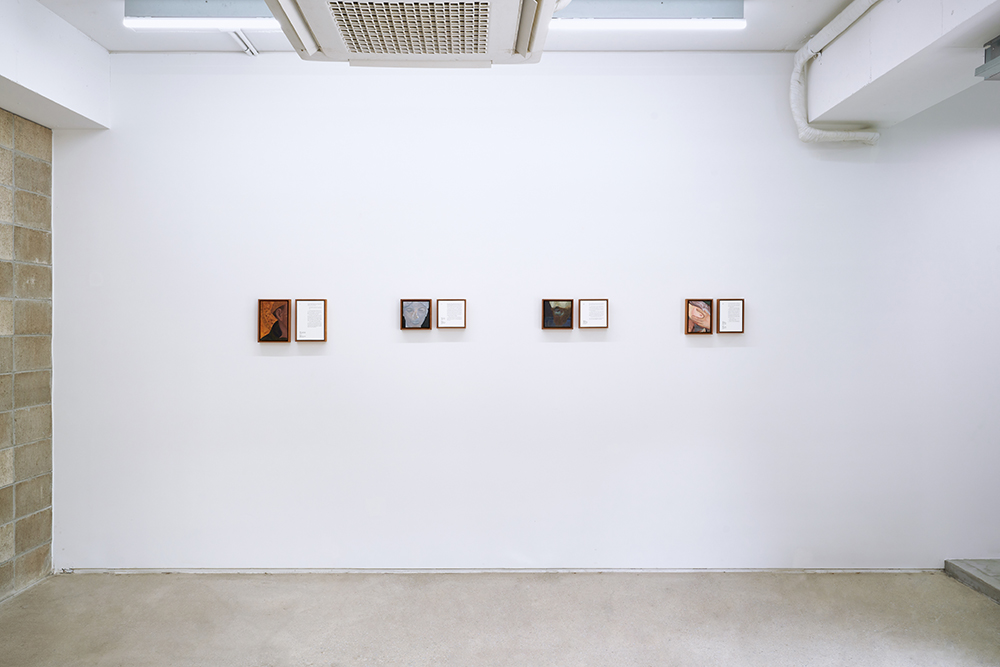
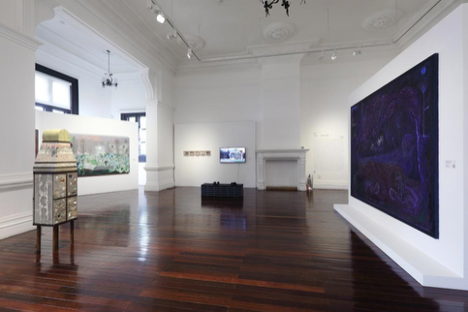
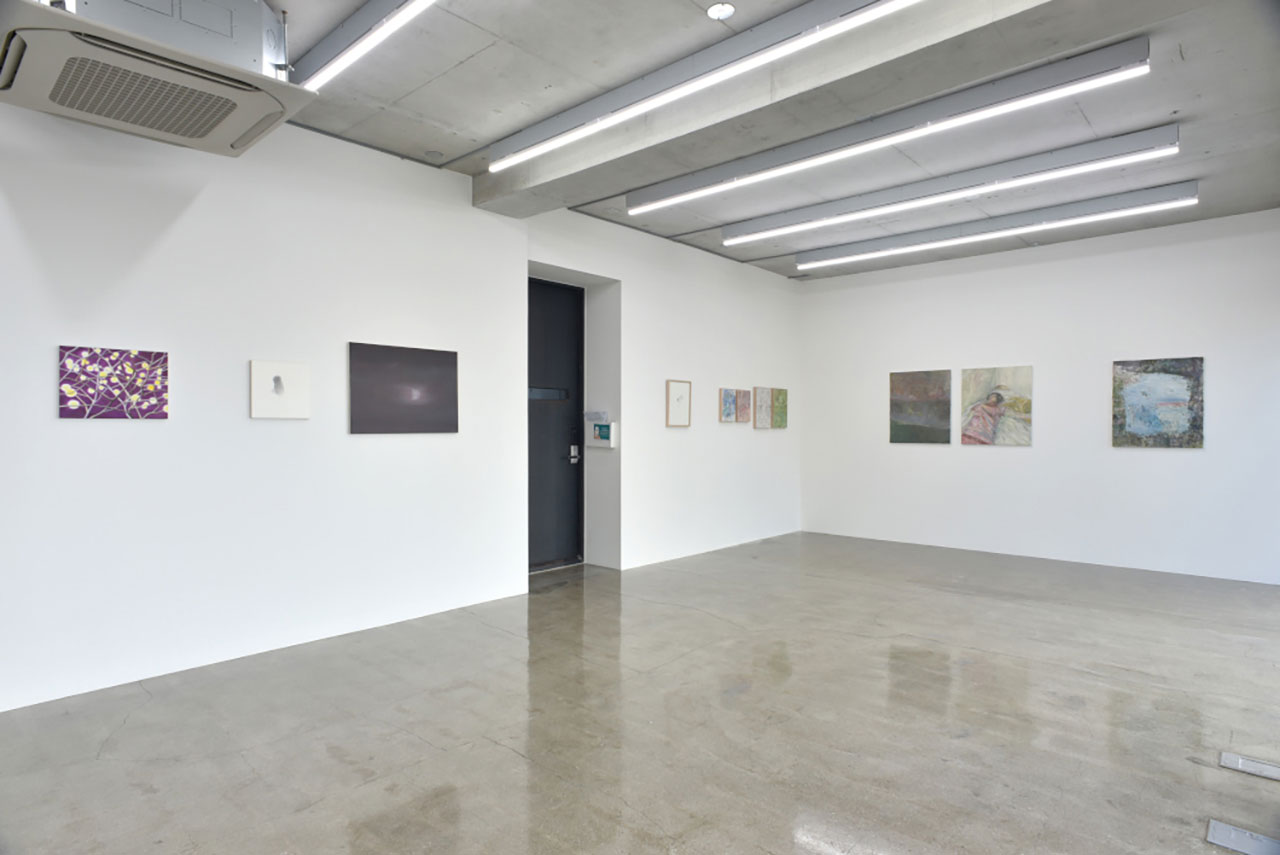
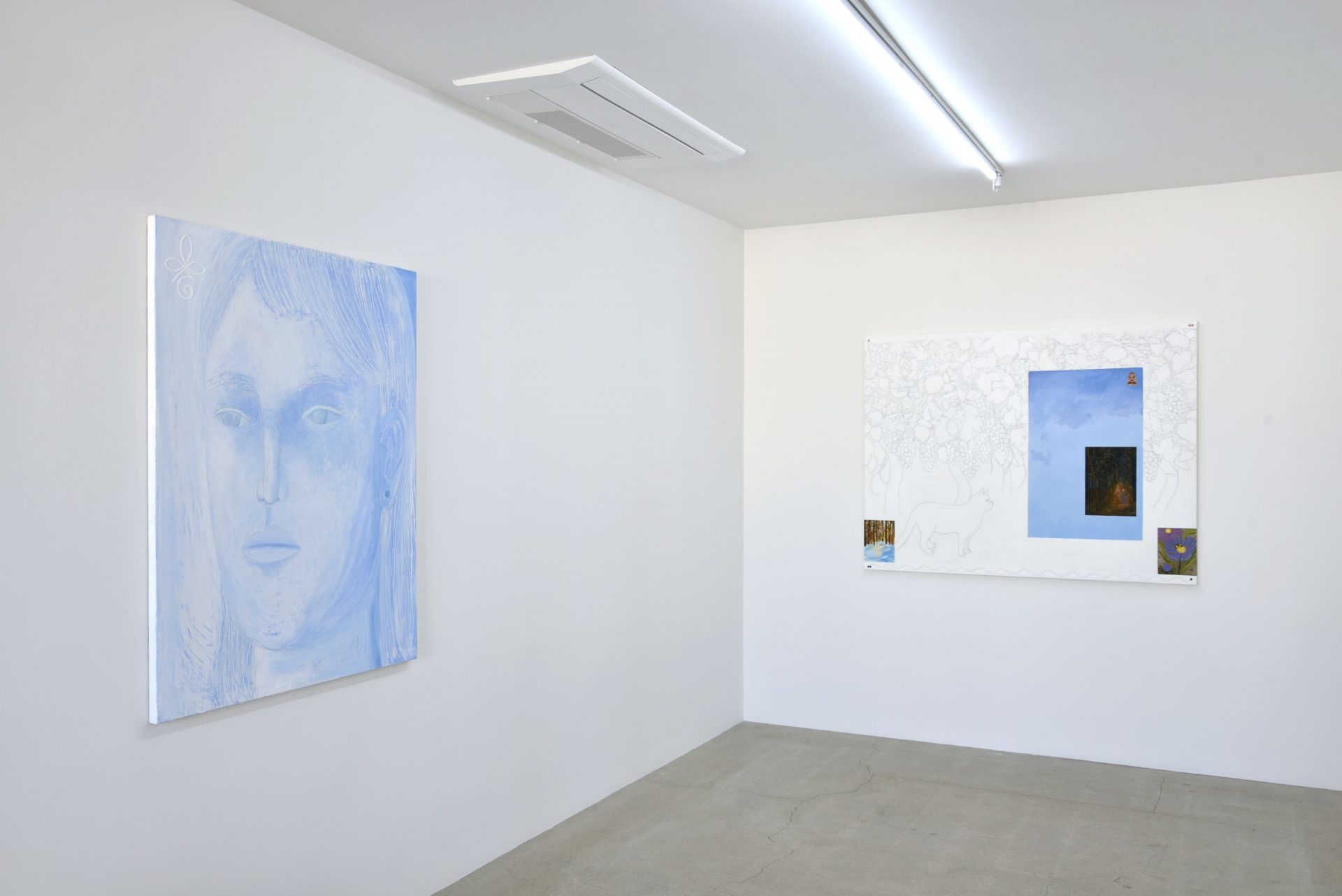
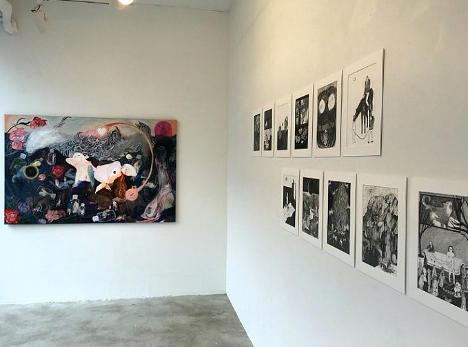
Installation view of 《Room Tone: room, stain and sounds for the sequence》 (A-Lounge Contemporary, 2024) © A-Lounge Contemporary

Stains accumulate and begin to form a single image,
and once a certain point is crossed, the stain loses that image.

When images that are difficult to bear often come rushing in, I quietly close my eyes so as not to see what is not in front of me. Then, for a while, everything closes, and the room is placed inside a darkness filled with warmth.

If a beak and feathers, fins, a tail, a thick shell, three horns, scales, and thick fur still remained on my body, my mind would be very different from how it is now. In the room, I think about my fragile surface, and lying in the room, I recall my body from beginning to end.

After quite some time has passed, I surrender my body to the sleep that comes over me. The surface disappears, and only countless stains remain in the room.

A few years ago, in the video work DHAK(2022), I evoked incident, trauma, and physical and emotional symptoms through images of lightning and the sound of thunder. After the occurrence of an incident(lightning), the sound of thunder(symptom), carrying the vibration of the air and circling in empty space before being heard, summons the incident once again, and it becomes not merely a memory but trauma, existing in the present as reality.

Some traumas appear in the body as if erupting as symptoms, but in other cases, trauma does not manifest on the surface of the body; instead, it lives together with that body with a certain degree of tension. The more clearly I tried to recall a memory, the further I sometimes moved away from it, so I tried to reach the time of memory through poetic language, and that linguistic construction created another space that is close to memory, yet also different from it. And it seems that an inexplicable tension and anxiety exist in that space.

Symptoms are not completely cured as easily as one might think; after a certain degree of treatment is over, some residue remains in sensation or the mind, like a scar left on the brain or psyche. After treatment, the body must live together with that residue or afterimage. I wondered whether there might be a separate space in the mind where such residues or afterimages remain.

A space where tension and anxiety that are not fully resolved, that cannot be resolved, continue to live. I wondered whether there might be a nonverbal, abstract space within the mind.

Perhaps that space is like MacBook system data, a space that gathers data generated while operating the computer’s system. I wondered whether there might also be a space in the mind where sensations that were not directly necessary while going through an incident, and that did not become memory, accumulate. Through fragmented narratives and bodily images, I create this abstract space, like a black hole left behind in the mind.

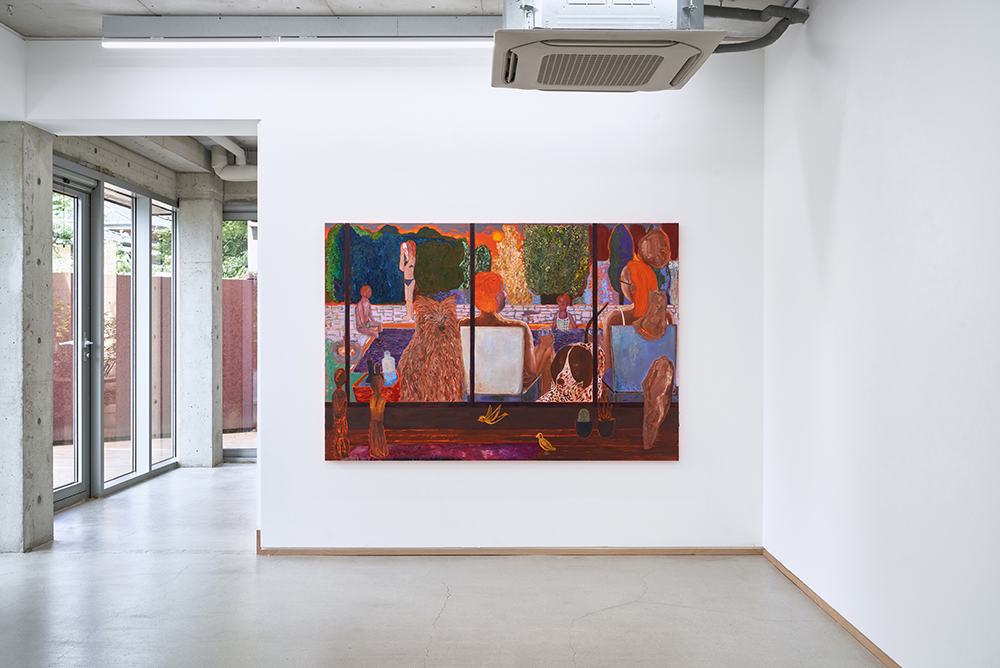
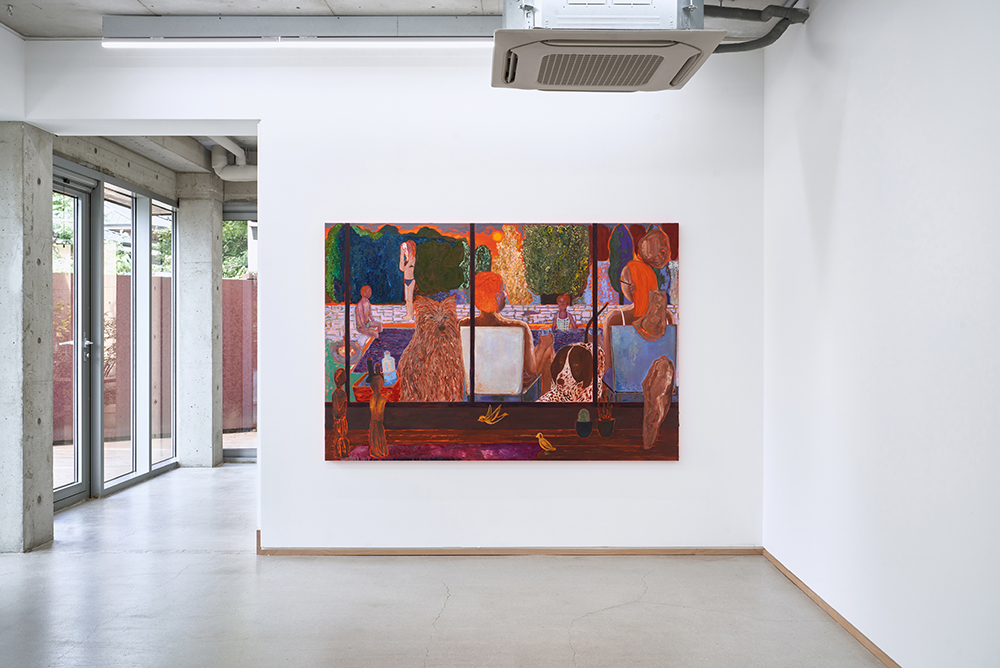
Installation view of 《Room Tone: room, stain and sounds for the sequence》 (A-Lounge Contemporary, 2024) © A-Lounge Contemporary

Room Tone

When I make video works, I draw around 100 to 300 drawings and make the video by placing those drawings on the timeline of an editing program. In video work, when images made through drawing become moving images, sound(auditory image) concretizes the scene and gives materiality to the image.

I often create images within the form of fantasy in order to give materiality to my anxiety, and I think this has a similar structure. It also expands into a method for connecting parts of the body. At this moment, the narrative becomes clearer and closer to reality.

Last year, while working on sound myself, I searched sound-effect websites for sounds suited to my videos, and while listening to various room tones for the final scene of an interior space, I imagined the bodies placed inside that room, that interior space. The various room tones containing the state of a space concretized the space through sound images, and I imagined the space through sensations in memory.

A room is one person’s body, a space of memory, an interior space, and also a space for a dead body. Each landscape of the room gains new meaning around the body, and receives light simply as a phenomenon or moment. Just as parts of the body do, the landscapes of the room cannot form one complete room, but I worked on a phenomenal room tone that is continuously in progress.

In the room, one body looks at its earlier body, and another hopes for salvation in life through the medium of a divine image. And within the room, it continually generates a surface for the hysteric and creates energy for life.

In the late autumn of 2021, because of COVID-19, the open studio of SeMA Nanji Residency expanded into spaces across Seoul. I spent a day in a hotel room and held an open studio through a work that livestreamed on YouTube, for 16 hours, the sound images occurring inside that room. I think I believed that while staying in the room, I could open and share bodily images through the sounds made by the body.

The sounds formed in the room that day were not recorded and evaporated through YouTube, but I made the sounds of memory that occurred while staying in that hotel room into visual images, and the work on room tone seems to have begun from there. Could the sounds that were not saved and were livestreamed for one day have become the surface of bodily images?

In 1894, the women in Albert Londe’s photographs stood in front of the camera for the study of hysteria, and Londe and Charcot tried to photograph the surface of the mind for their study of hysteric specimens, but they could not obtain the images they had presumed. The images of these women that I can see online are images read as being in a hysteric state. Chronophotographic technology gained an opportunity to develop along with their movements.

That day, they must have taken many photographs other than the ones we can now see, and there must have been omitted images in which hysteria was not expressed well enough. Imagining those omitted images, I drew the women standing before the camera. I cannot know whether they were in a hysteric state, but what was she thinking in front of the camera? Looking at their photographs, I recalled the landscape photographs I had taken in the hotel that day, when I was making the surface of bodily images through sound.

That day, I stayed there. In that place, I ate dinner with food ordered through a delivery app, took a shower, watched television or looked at the night view outside the window, and then fell asleep.

Imagining the surface of the room inside the room, I spent the night that way.

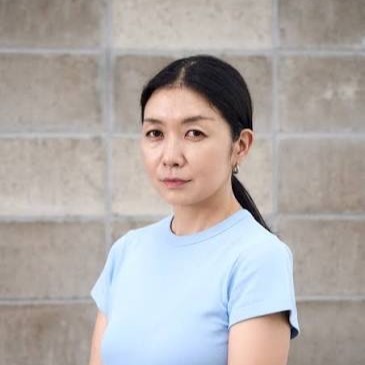
Text / Mackerel Safranski(Artist’s Note)

References