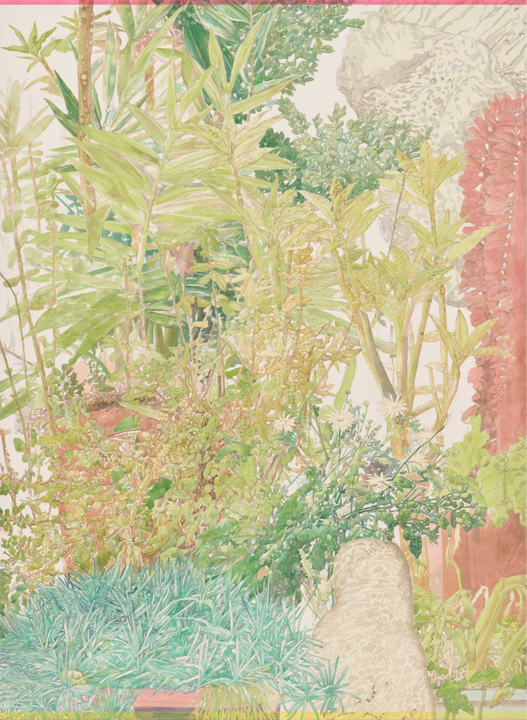
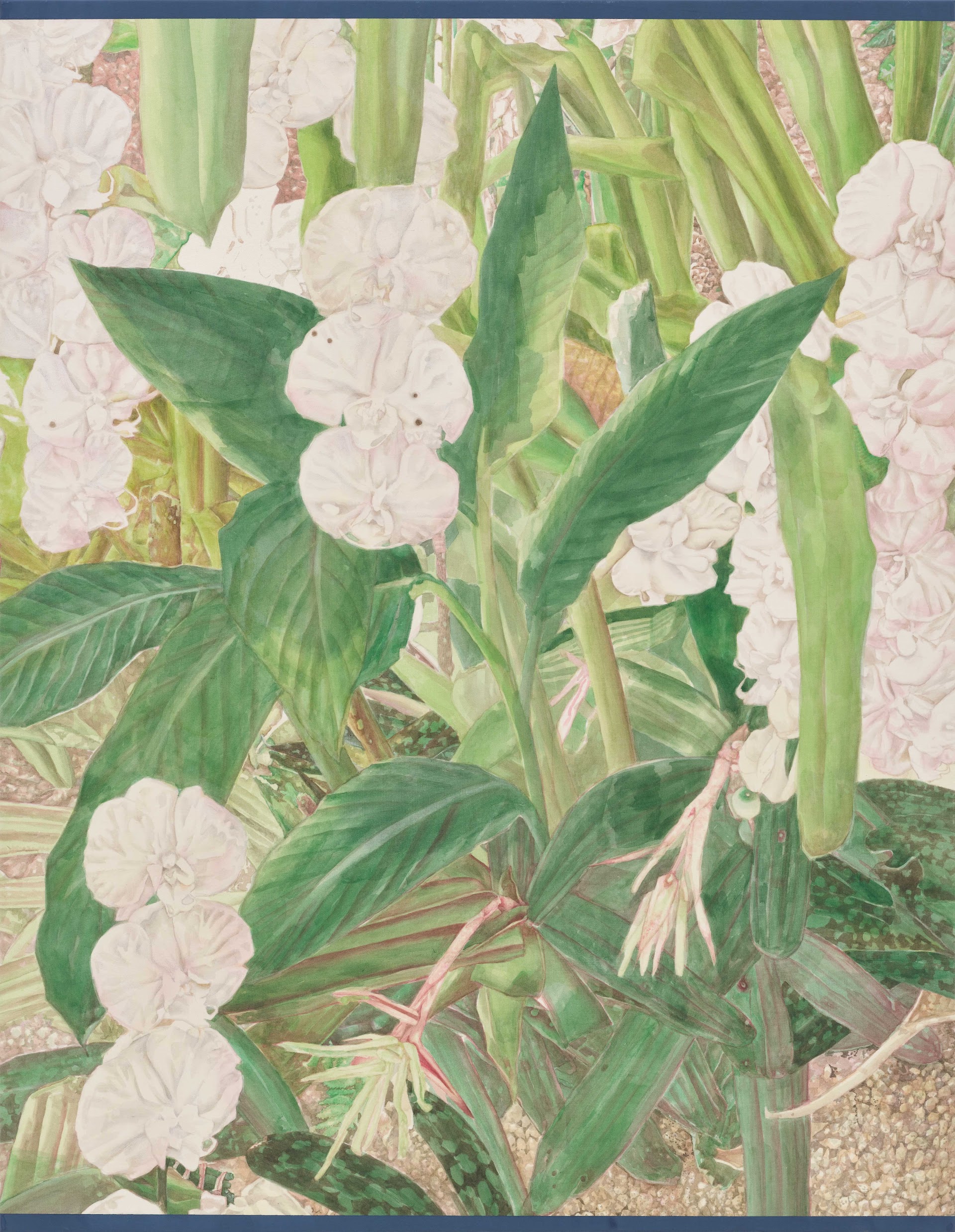
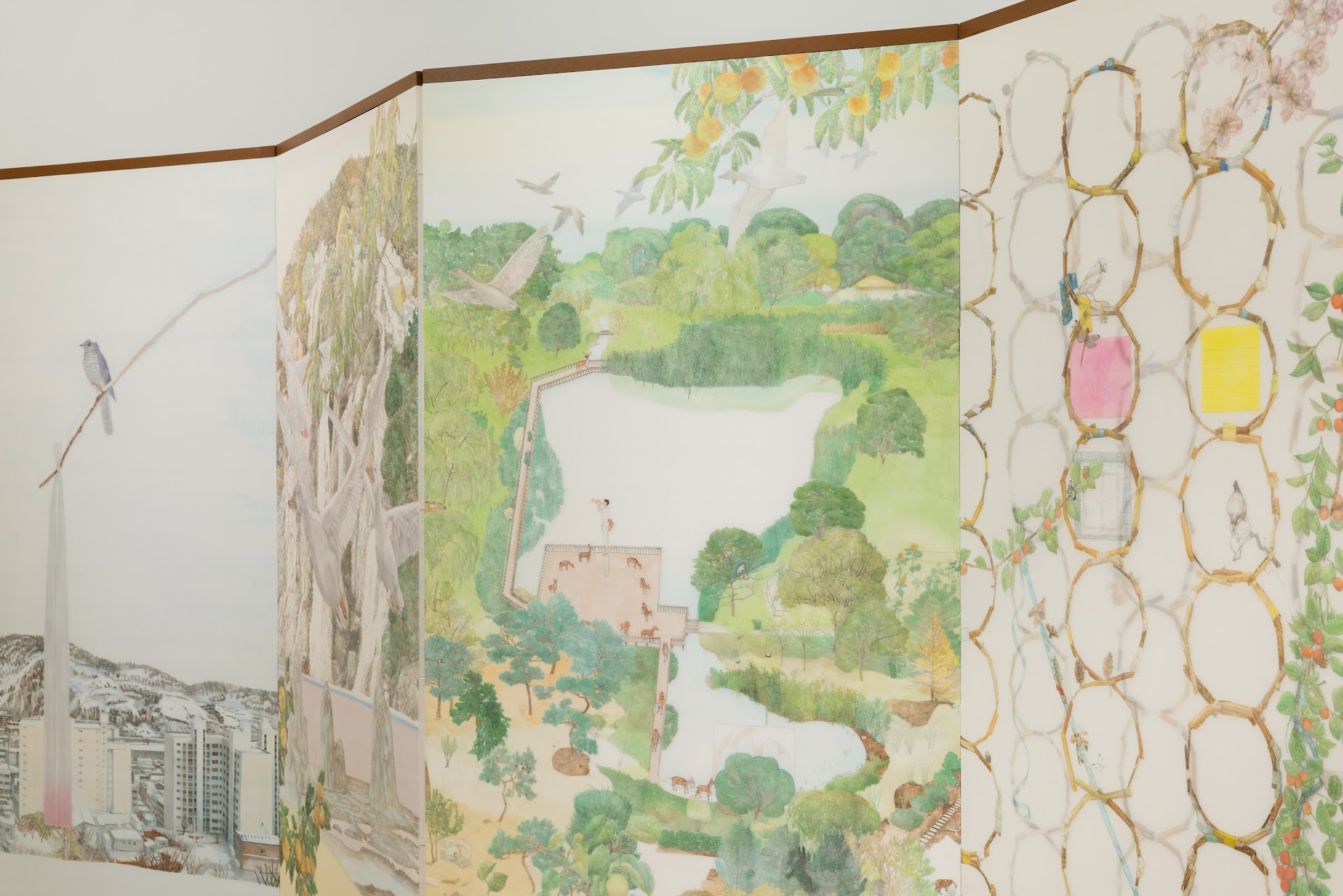
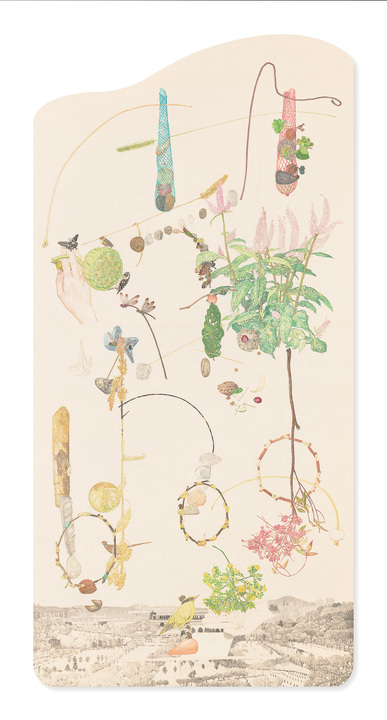
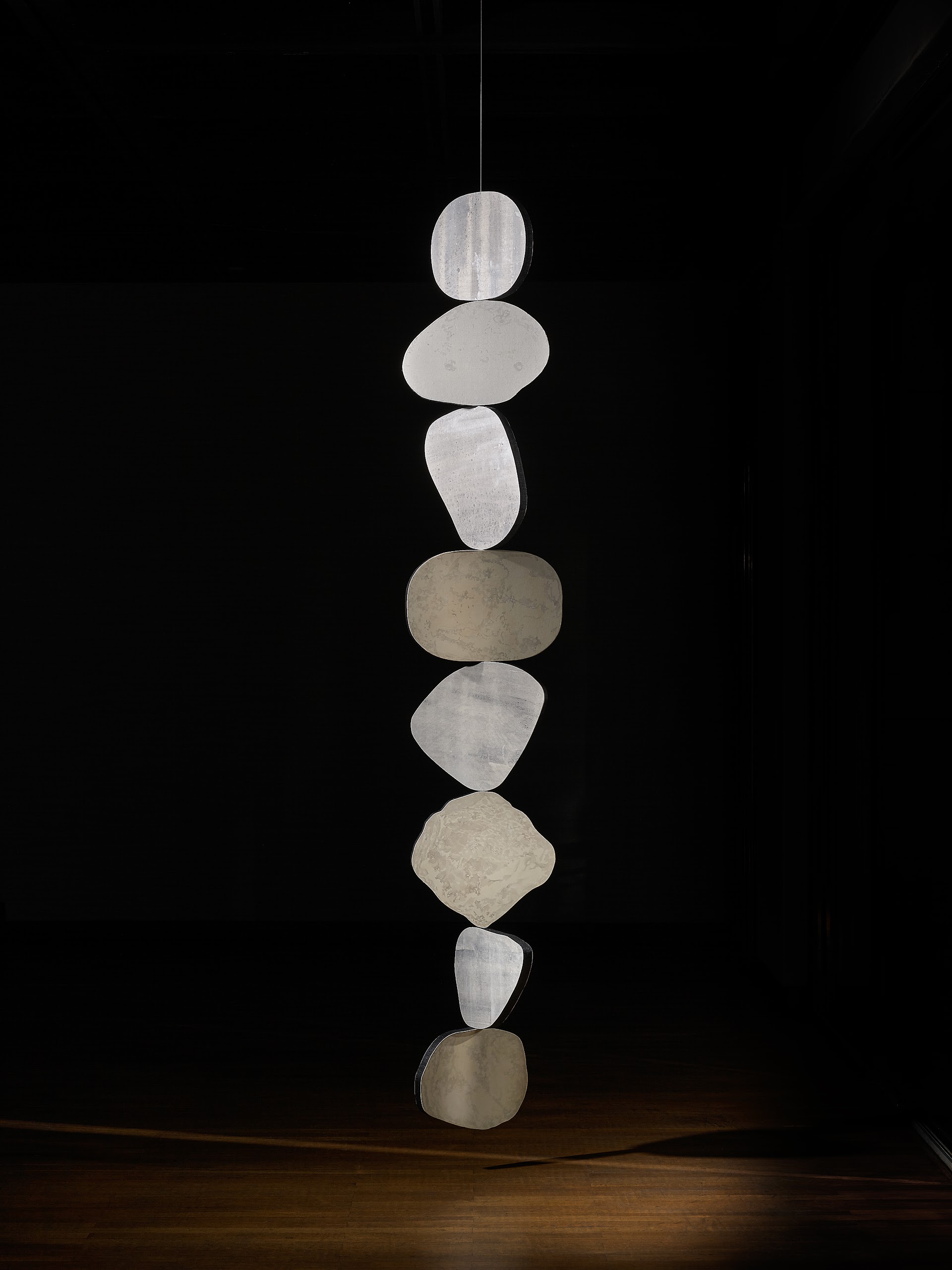
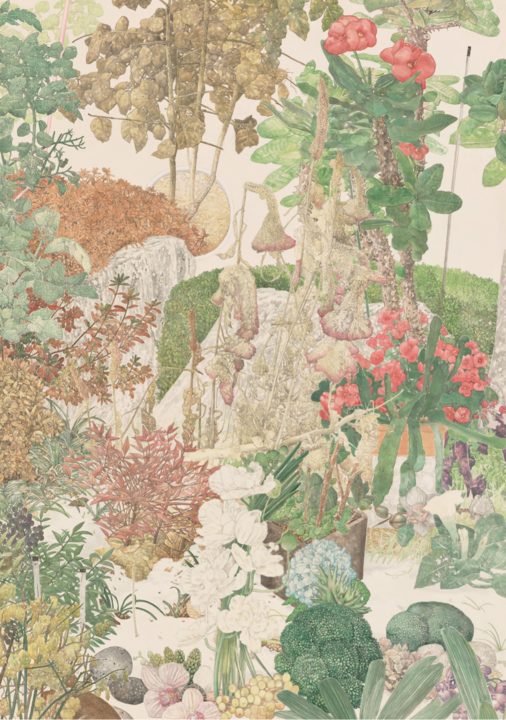
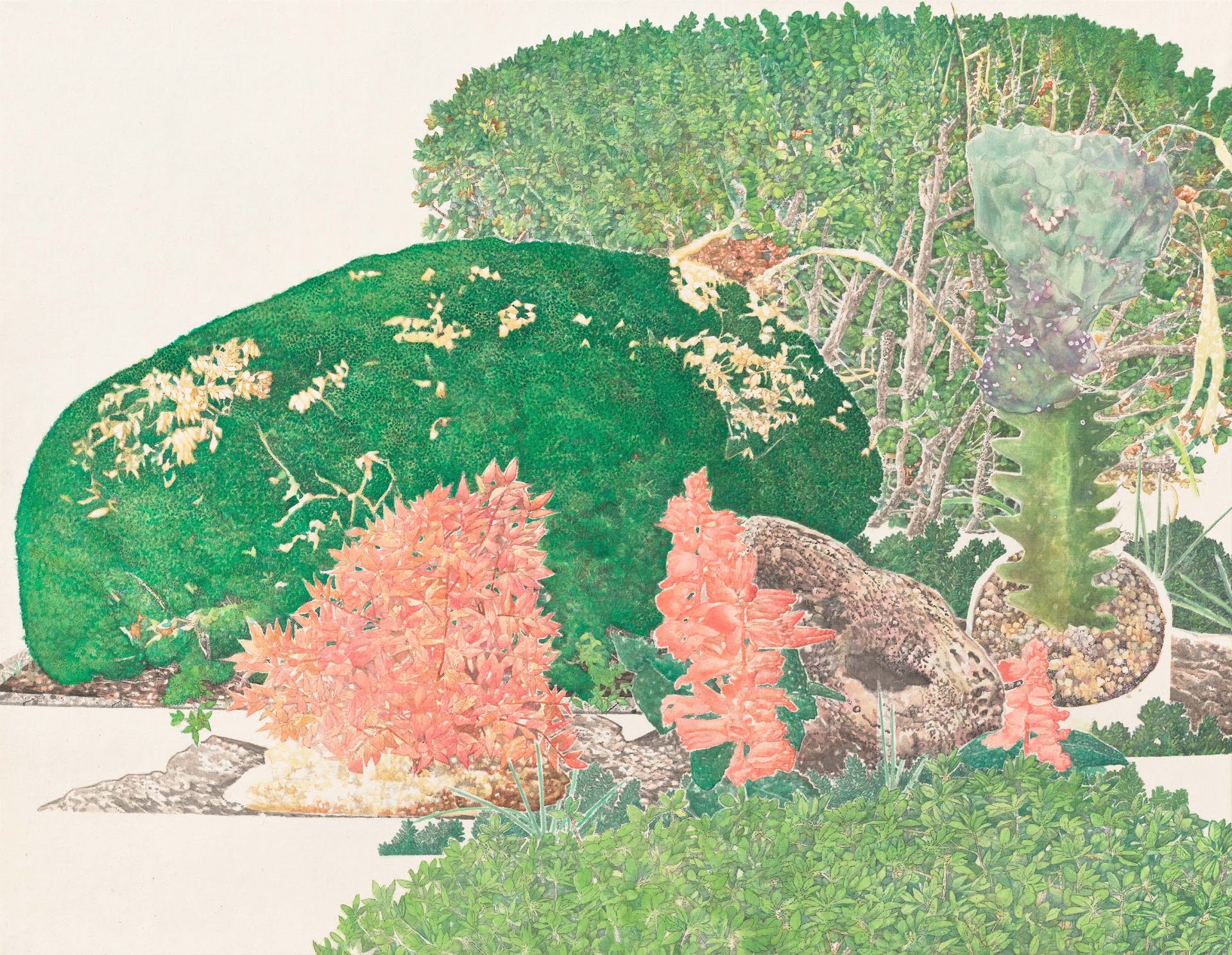
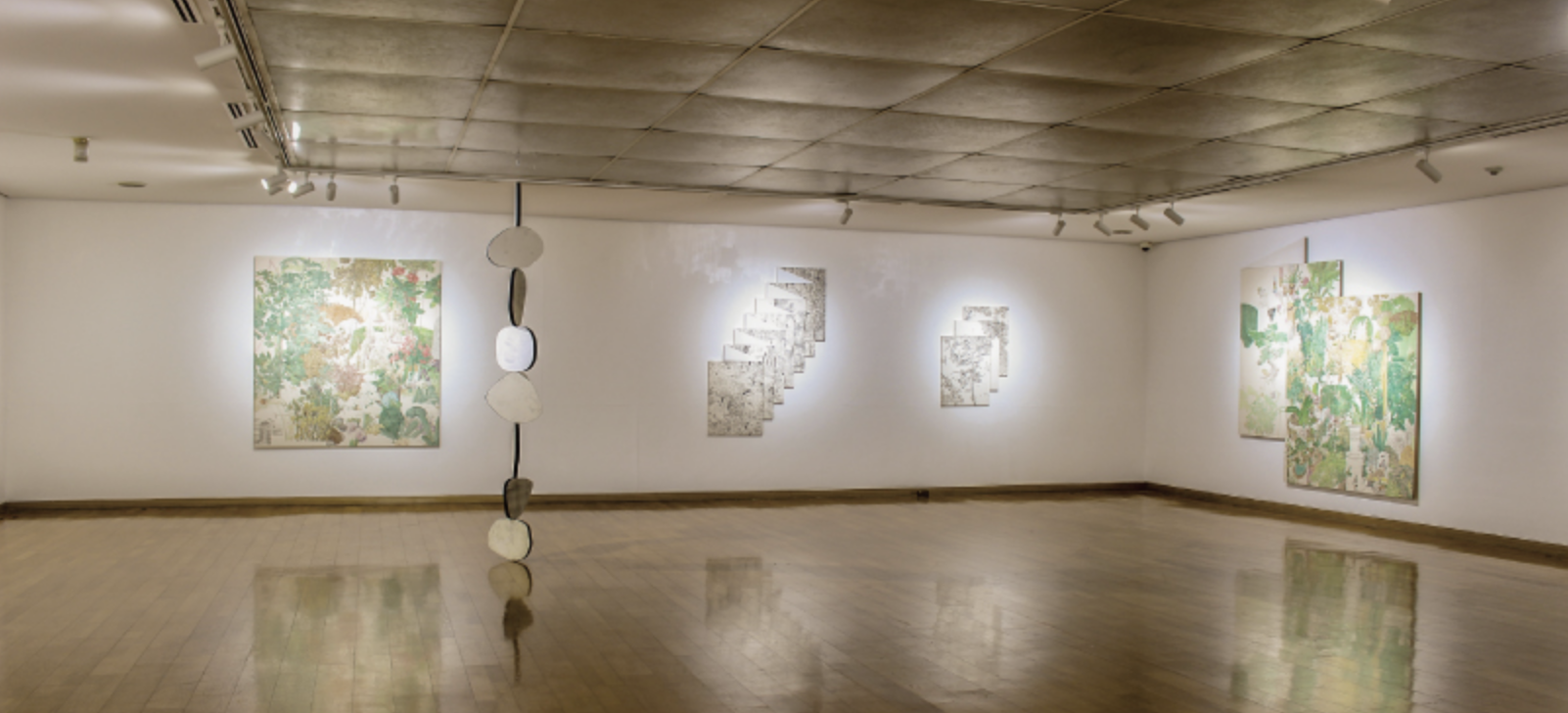
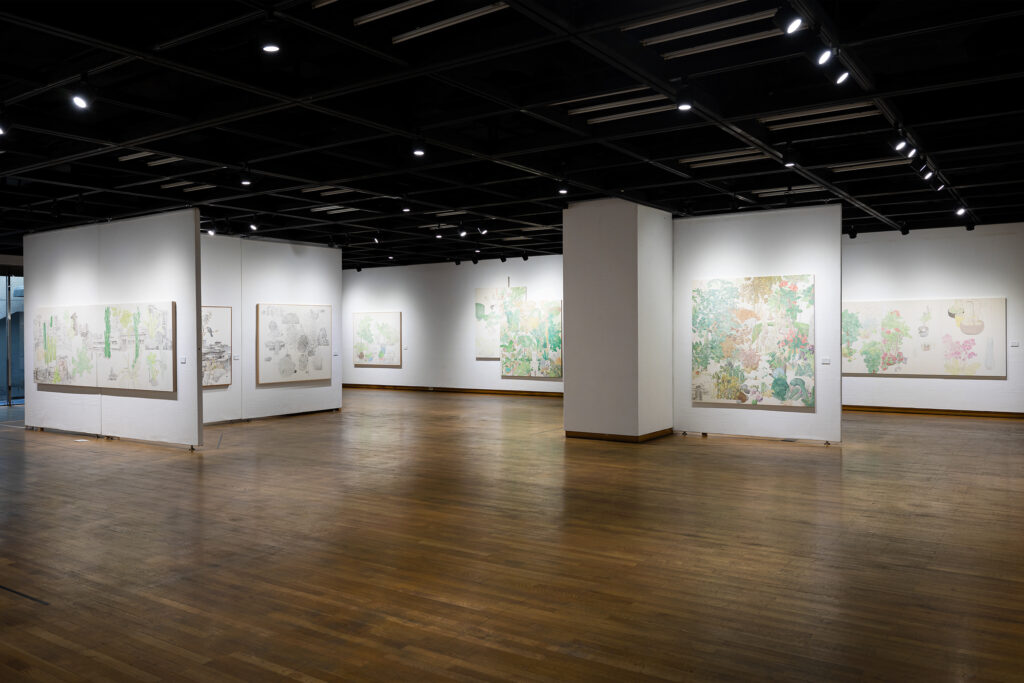
“At present, I gradually fill the pictorial surface while working through the contradiction between my desire to depict an endlessly expanding world of emotion, adding one thing after another as though overwriting each new experience, and my desire to calmly transfer the visual information of the world I have observed.” (JIN Minwook, artist statement, 2017)
Considering JIN Minwook’s systematic creative process, in which she repeatedly applies color to both the front and back of silk before completing a work, the word “desire” may initially seem inappropriate. “Desire” is more commonly used to describe work that is unrestrained or spontaneous. Yet the artist’s own use of the word likely derives less from the spontaneity it evokes than from the intensity of her inner deliberation.
Admittedly, it would be difficult to classify, explain, or define desire and impulse. Nevertheless, expressing one’s emotional response to a subject and observing that subject from a rigorously positivist position, then meticulously recording the result, require entirely different artistic selves and attitudes. The use of a forceful word such as “desire” may therefore serve to convey more vividly the artist’s internal conflict between these opposing methodologies.
Two contrasting approaches can also be detected in JIN Minwook’s How to See a Plum Blossom and Wild Birds. The title and composition of the traditional “plum blossoms and mountain birds” motif originated in the celebrated painting style of Emperor Huizong of the Song dynasty, while the Southern Song school became renowned for depictions of the mist-filled atmosphere and snow-covered villages of the low mountains and water-rich landscapes of southern China.
The Southern Song academic style, characterized by meticulous observation and faithful representation of nature, has therefore been distinguished from purely conceptual landscape painting devoted to predetermined images. At the same time, the natural beauty emphasized in Southern Song painting also differs from purely realist and positivist approaches to landscape, insofar as it ultimately seeks to express an image of nature impressed upon the mind of the viewer.
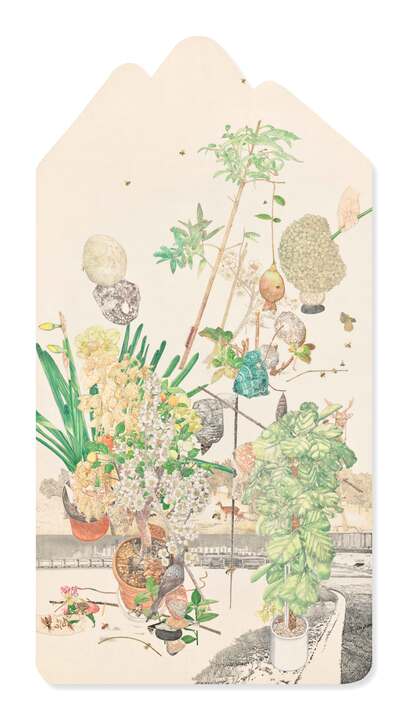
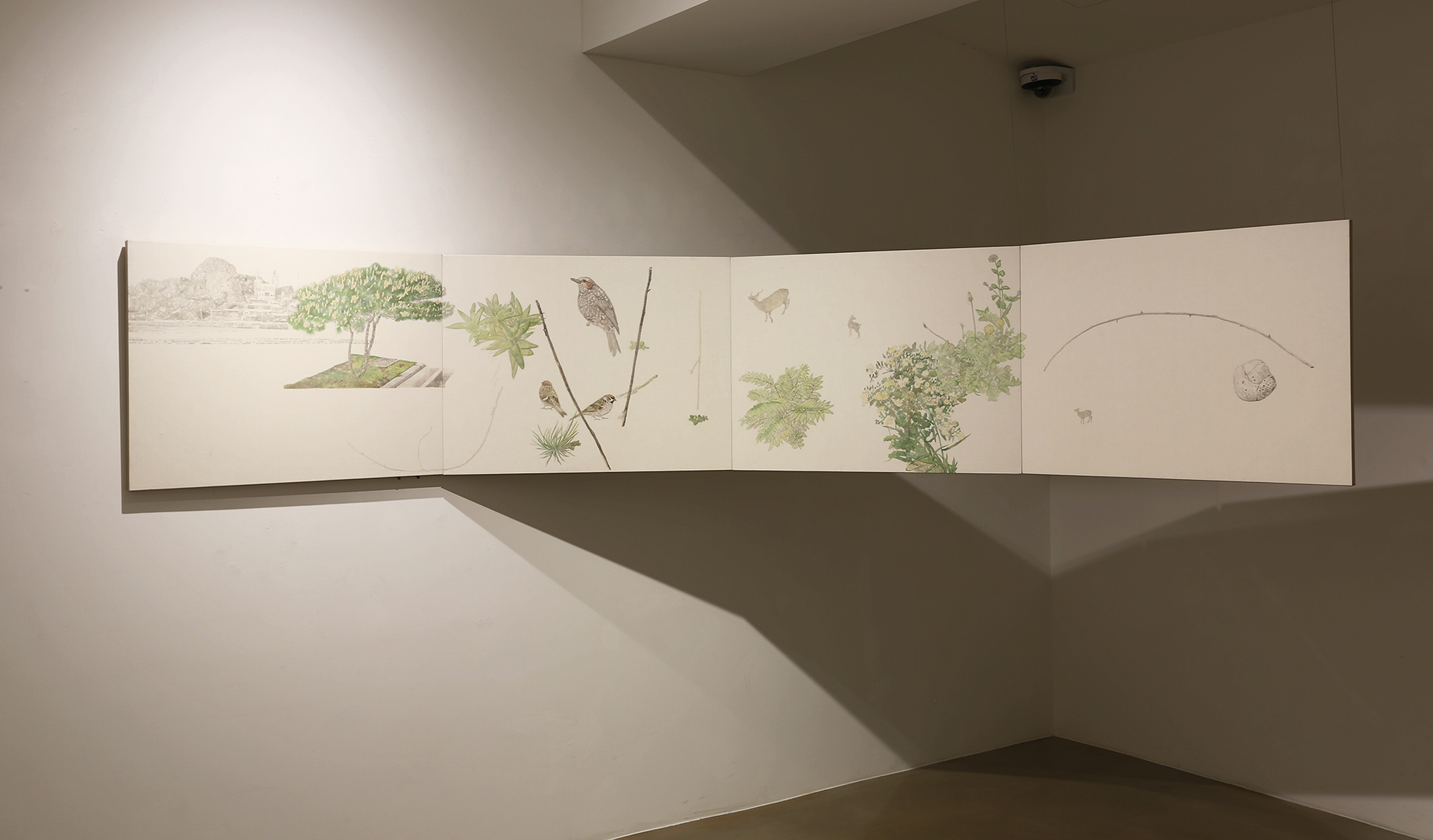
The ‘How to See a Plum Blossom and Wild Birds’ series may be understood as an attempt to intensify and examine some of the fundamental concerns of East Asian painting. The artist stores on a computer drawings and photographs documenting birds and plum blossoms observed at different moments and in different places. This may be seen as a method of thoroughly overcoming the incompleteness of memory.
Nevertheless, through her mode of display, she also seeks to maximize the variability of the viewer’s perception. Just as Southern Song landscape paintings clearly imply a human presence moving through and observing nature, JIN Minwook attempts to reveal without mediation the temporal progression that intervenes when the human body encounters the natural world. In doing so, she approaches a question that has troubled artists across East and West, past and present: What does it mean for an artist to see?
How to See a Plum Blossom and Wild Birds: “Viewing While Walking (步步觀)”
“In January and April 2017, I visited the Mancheophongmae plum tree at Changdeokgung Palace twice and walked around it repeatedly, observing it from various angles. In doing so, I discovered new forms beyond the conceptual image of plum blossoms in my mind and began attempting to overcome the limitations of a flat surface that presents a fixed subject from only one direction.” (JIN Minwook, artist statement, 2017)
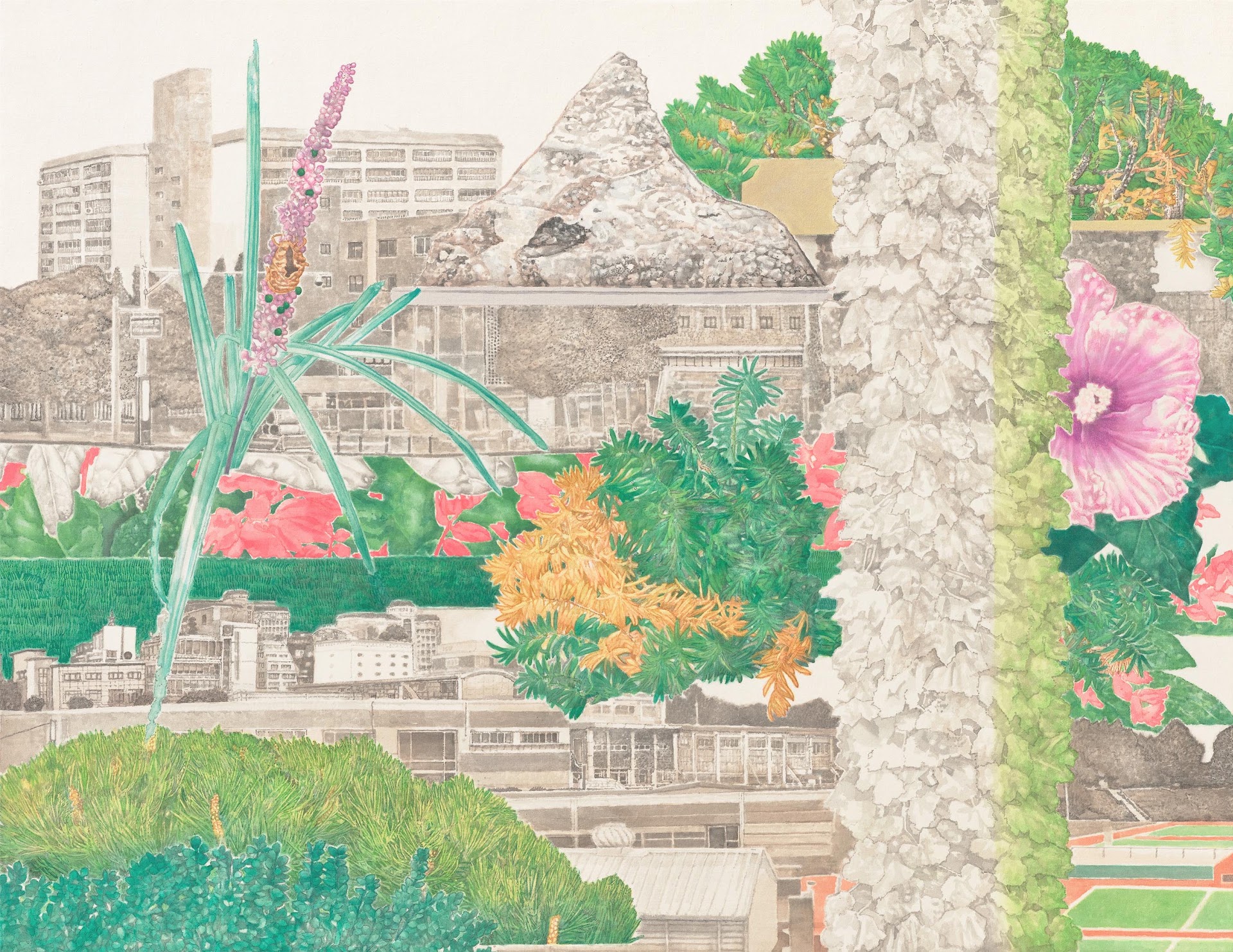
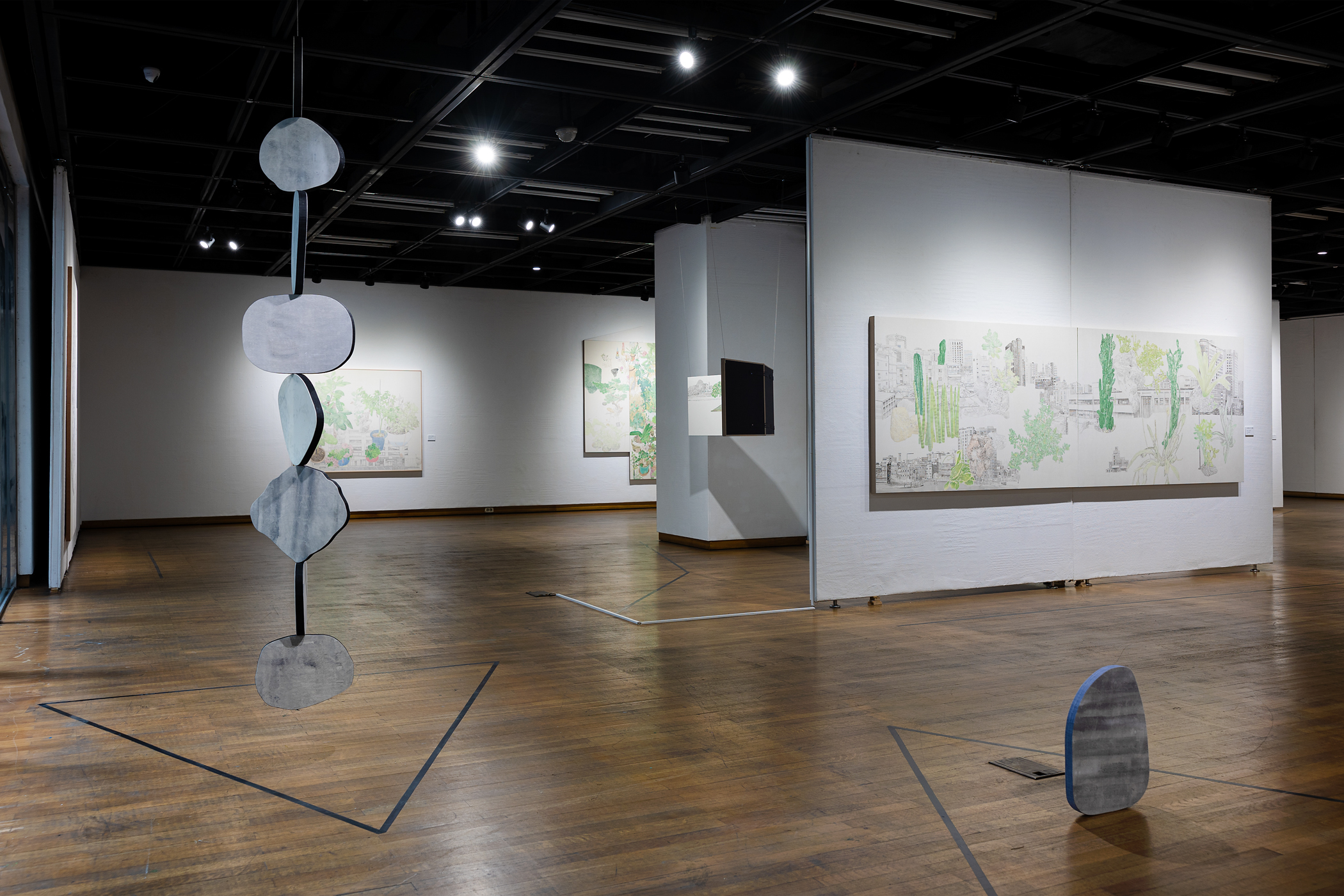
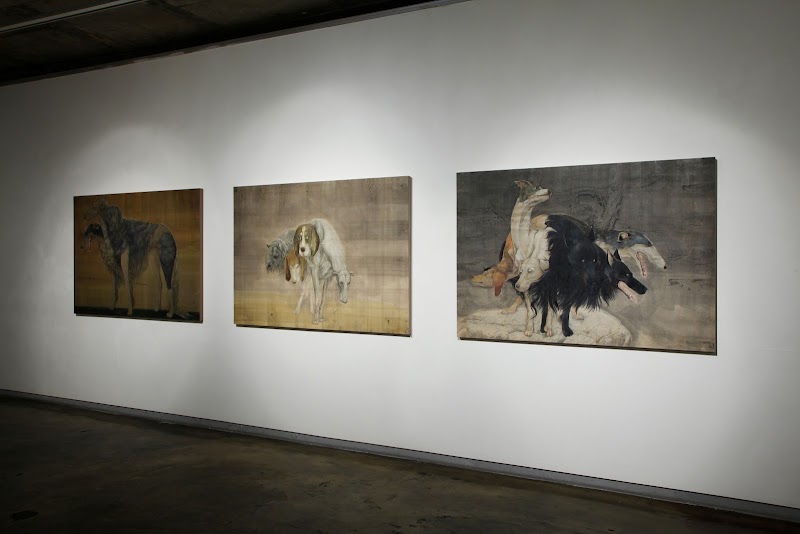
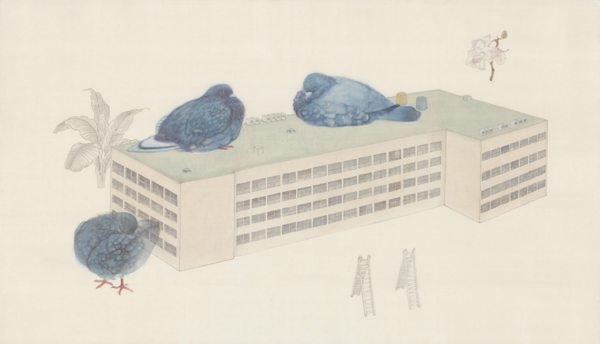
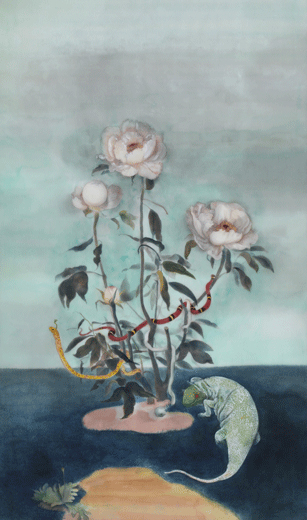
The contrasting modes of “realism” and “transformation” reflecting inner imagery have coexisted in JIN Minwook’s work since the beginning of her practice. As indicated by the title of her 2011 exhibition 《A Boundary Between Dream and Reality》, in which she transformed the forms of animals, the artist depicted animals at extremely close range with a fine brush while arranging distant and foreground views with a radicality unimaginable within Western perspective, thereby severely distorting the conventional scale of animals and landscapes.
Befitting the word “dream” in the title, the animals—merely individual beings within nature—appear excessively large in comparison with the distant urban landscape and buildings.
While the animal series of 2011–2012 may be said to reveal the influence of Southern Song painters who sought to “see with the mind’s eye,” or, in an entirely different context, of the Surrealists who attempted to expose the repressed unconscious lying beyond the phenomenal world, JIN Minwook’s recent How to See a Plum Blossom and Wild Birds places emphasis on the very process of observing and comprehending the phenomenal world.
The act of seeing itself has become the artist’s principal concern. An interview with David Hockney by the artist and writer Martin Gayford, which JIN Minwook recently read, likewise expresses the sustained interest in phenomenology and the act of seeing that emerged in Western Europe in the early twentieth century.
After moving from Britain to California, Hockney’s paintings gradually shifted from languid scenes of everyday Californian life toward classical questions of Western painting. Having relocated from Europe to the United States, Hockney became increasingly immersed in a thoroughly phenomenological investigation of the essence of objects, a concern shared by European naturalist abstractionists and Cubist painters in the early twentieth century.
JIN Minwook likewise moves beyond the conventional understanding of sketching and contemplation, or positivist and emotional approaches, as two distinct but naturally balanced axes through which objects and the natural world are perceived. Instead, she pursues a fundamental question that has troubled artists across East and West: How should we see?
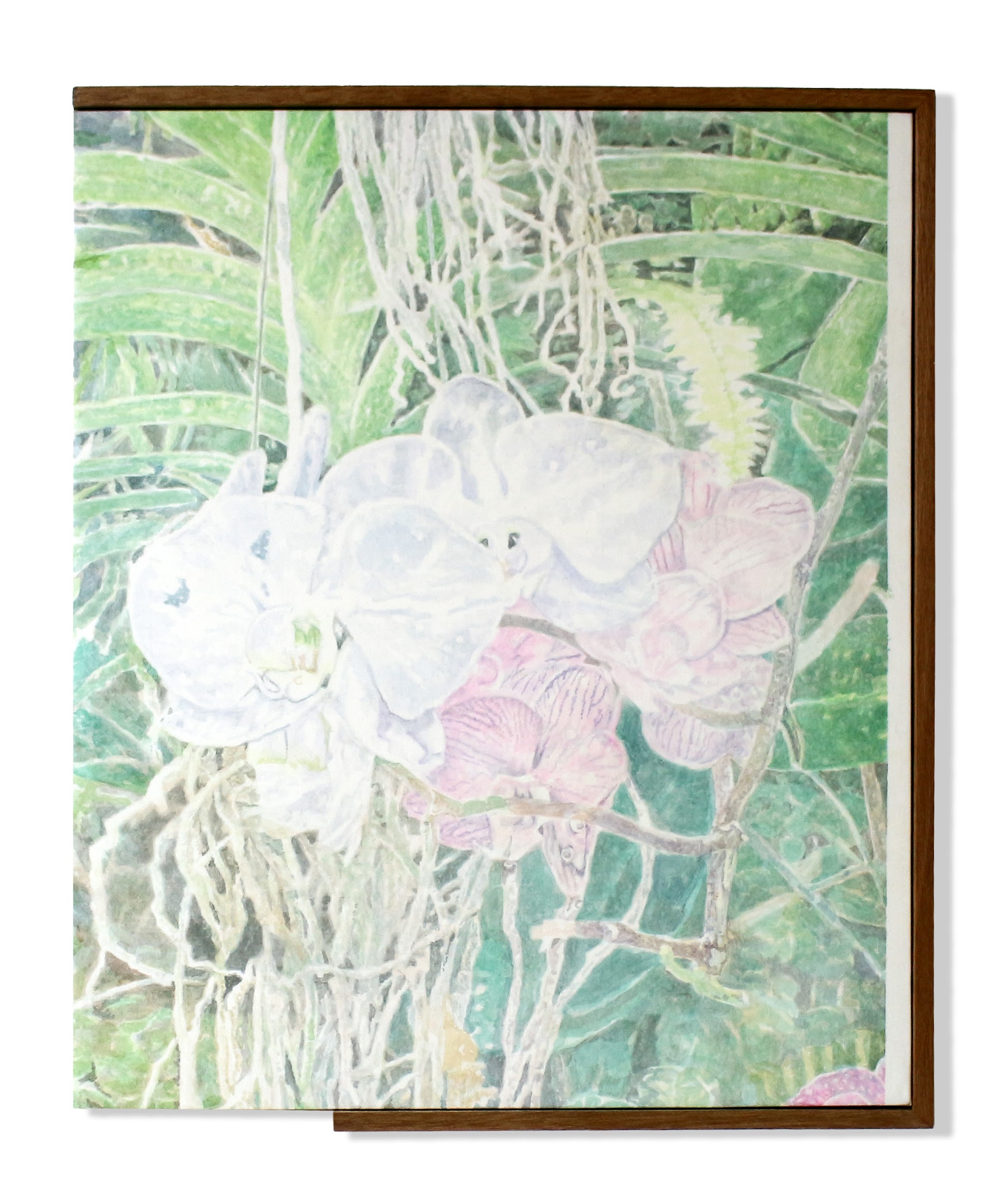
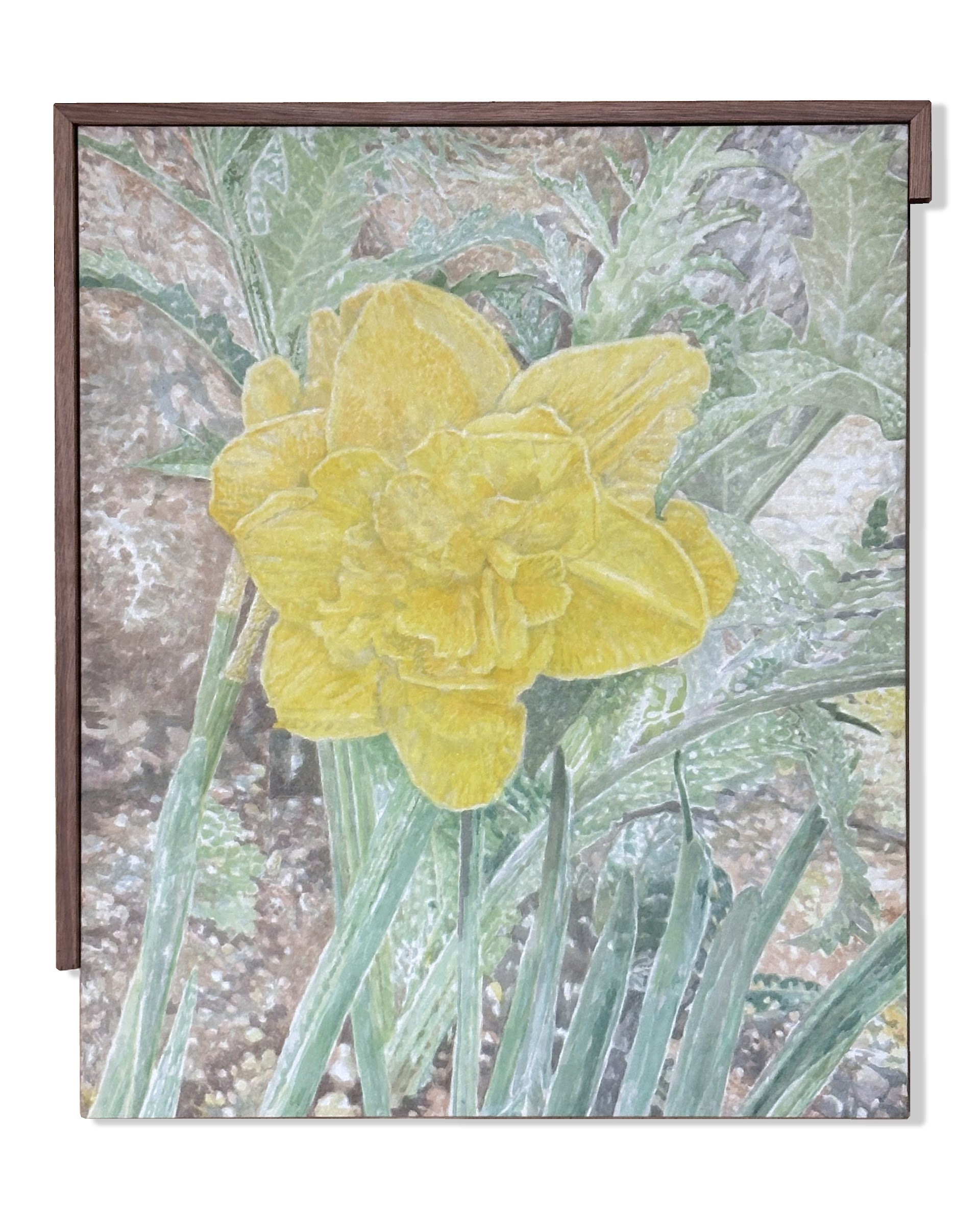
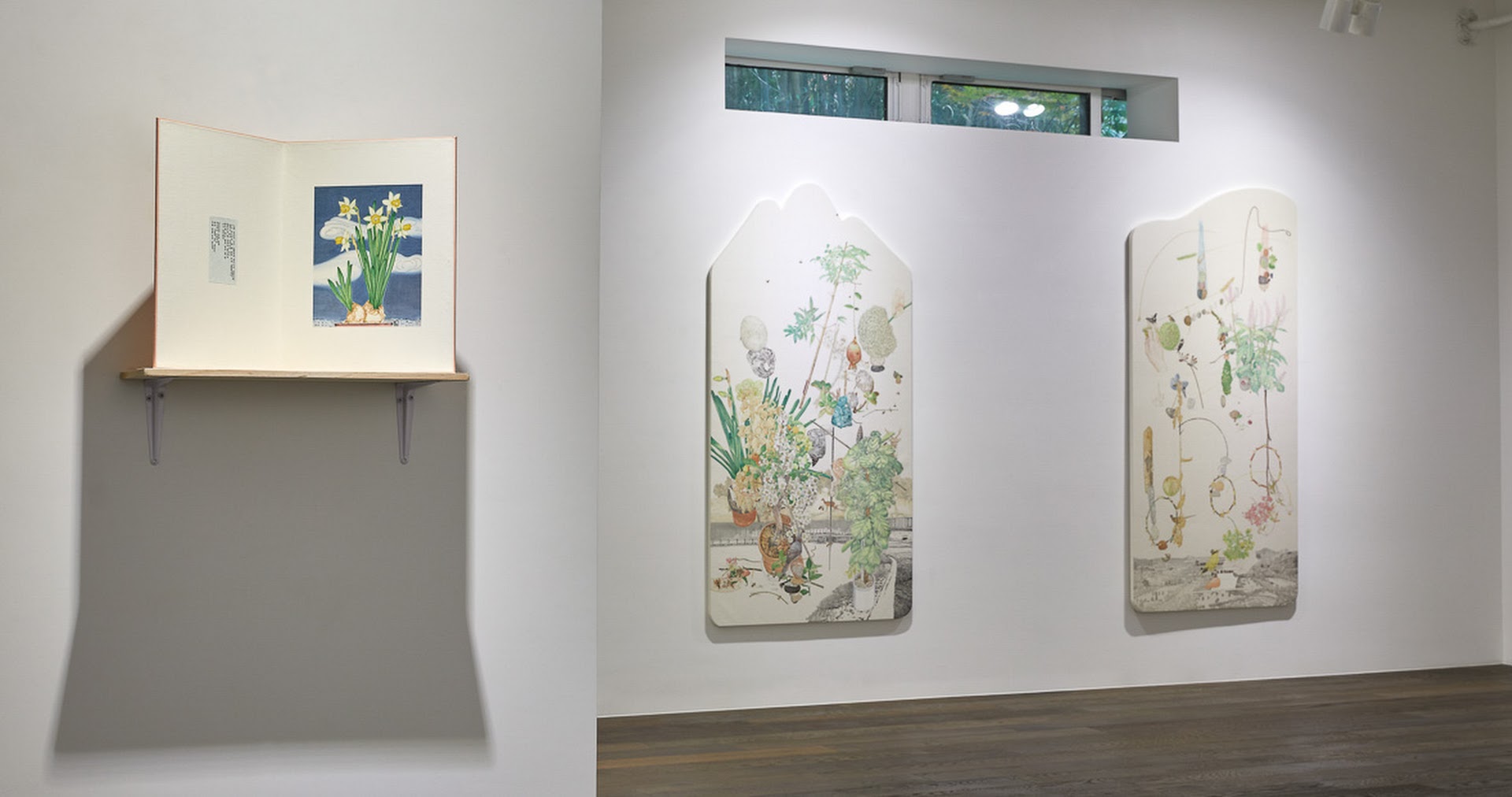
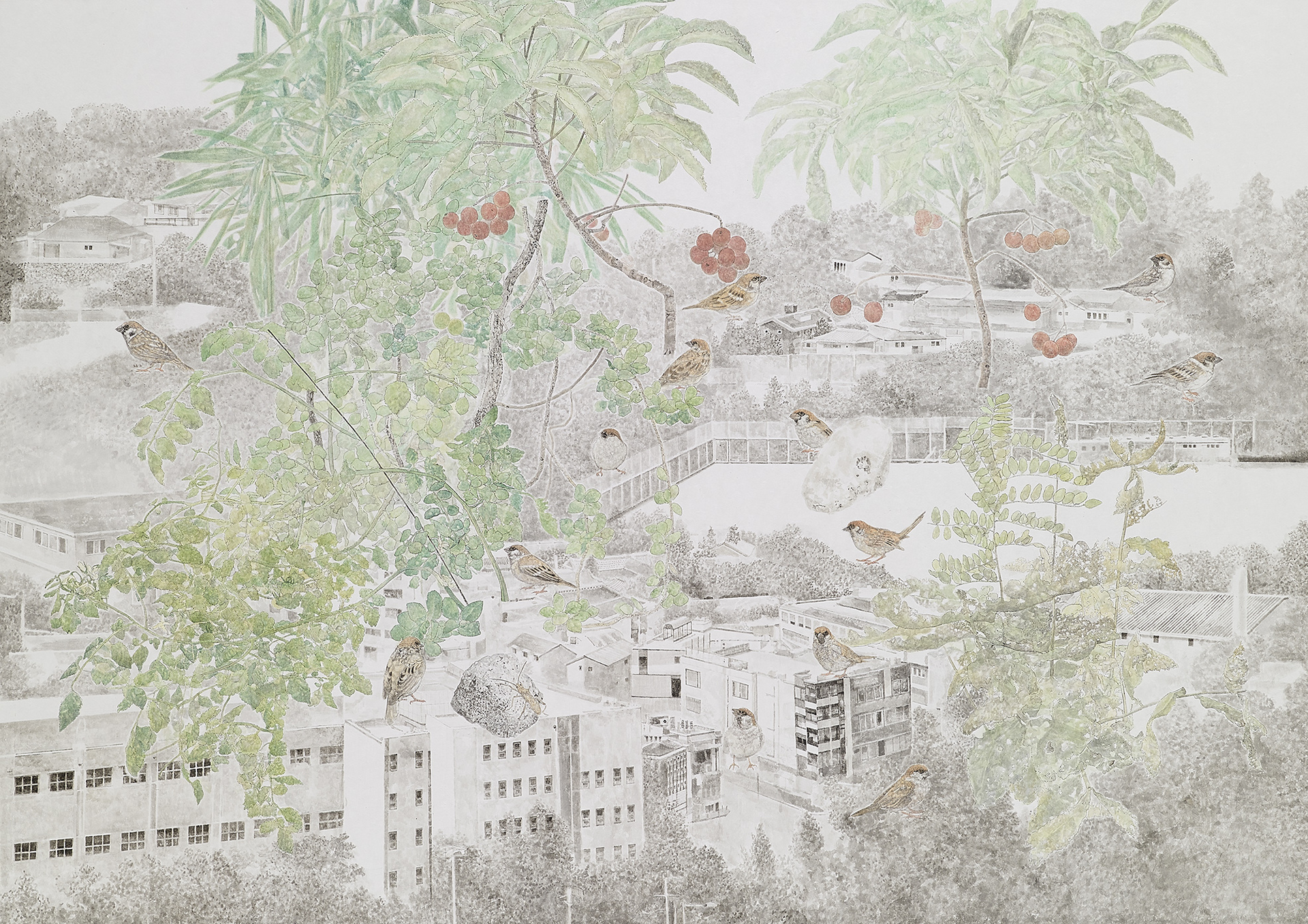
The materials JIN Minwook has collected over the past two years are extensive. In works such as Plum Blossom and Holly Hock in Itaewondong and Plum Blossom and Magpie, Brown-eared Bulbul in Yeonhui-dong, she has named each work after the area she observed and recorded its flowers and birds with almost biological precision.
While preparing How to See a Plum Blossom and Wild Birds, she also walked repeatedly around the Mancheophongmae plum tree at Changdeokgung Palace during two visits in January and April 2017, examining it from multiple angles. This was a process of overcoming the “conceptual images of plum blossoms and birds lodged in her mind.”
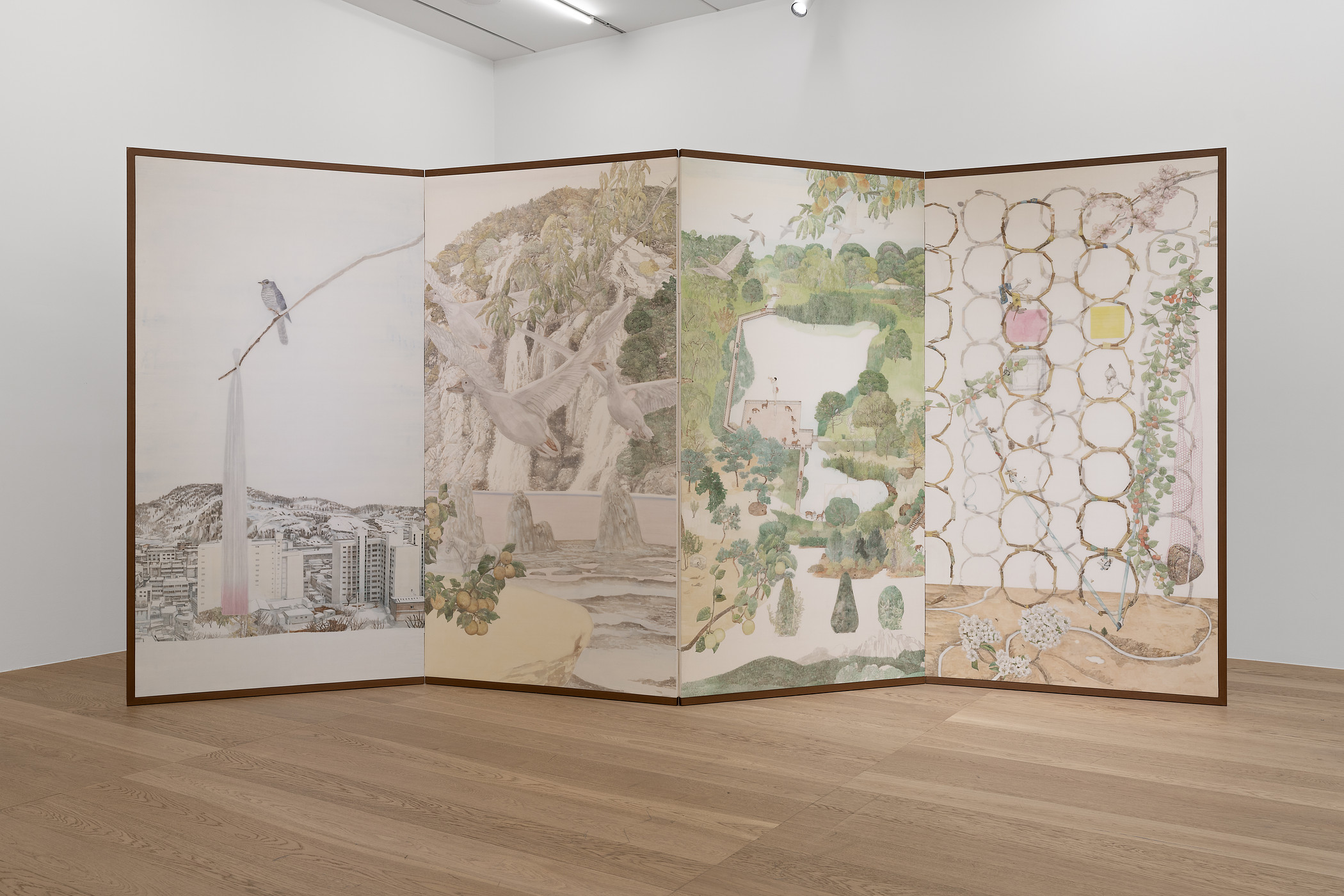
The artist also placed images of birds collected from different areas of central Seoul along the same branch or connected individual small paintings, allowing mountain birds observed at different places and times to coexist across horizontally extended pictorial surfaces.
Just as Hockney has spent the past thirty or forty years consistently documenting the everyday spaces surrounding him with a camera and layering their fragments onto a single surface as though assembling a collage, JIN Minwook accumulates birds and plum branches observed from multiple rather than fixed viewpoints within a single pictorial field in How to See a Plum Blossom and Wild Birds, as suggested by the notion of seeing while walking.
Of course, the fixed viewpoint is an unwritten rule specific to Western perspective. From this standpoint, East Asian painting has long defined the viewer’s position more loosely. To communicate information more effectively or to embody a subject in its most ideal state, the observer’s viewpoint has always been free to shift fluidly.
What is interesting in JIN Minwook’s work—or, in a similar sense, in Hockney’s—is that the coexistence of multiple viewpoints remains visible to the observer rather than being concealed by seamless transitions. The several panels depicting birds perched on plum branches are connected to some extent through the forms of the branches and their relative distance from the subjects, but they were never produced through a continuous horizontal movement from a single viewpoint.
Strictly speaking, “viewing while walking” refers not merely to the simple movement of viewpoint, but to the rejection of the privileged observer’s position and the deliberate emphasis on the observer’s fluid presence.
What Does It Mean to Deconstruct Conceptual Landscape Painting?
Finally, I would like to discuss JIN Minwook’s work in relation to phenomenology as it appears in the history of Western aesthetics. As is widely known, the phenomenology of Maurice Merleau-Ponty in the 1940s and 1950s was employed in the interpretation of Northern European sculpture and painting in the 1960s and, looking further back, in theorizing how modern art—from Paul Cézanne’s highly analytical yet intuitive disassembly and reconstruction of objects in the early twentieth century onward—corrected misunderstandings about human visual experience and expanded its scope.
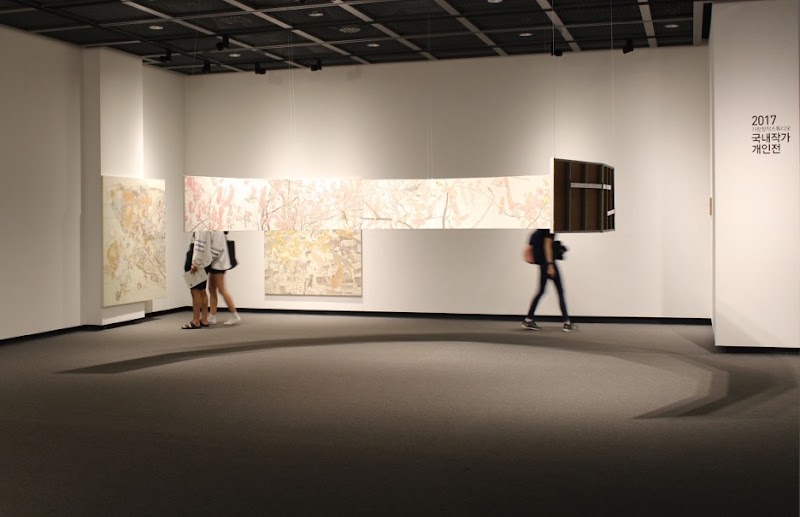
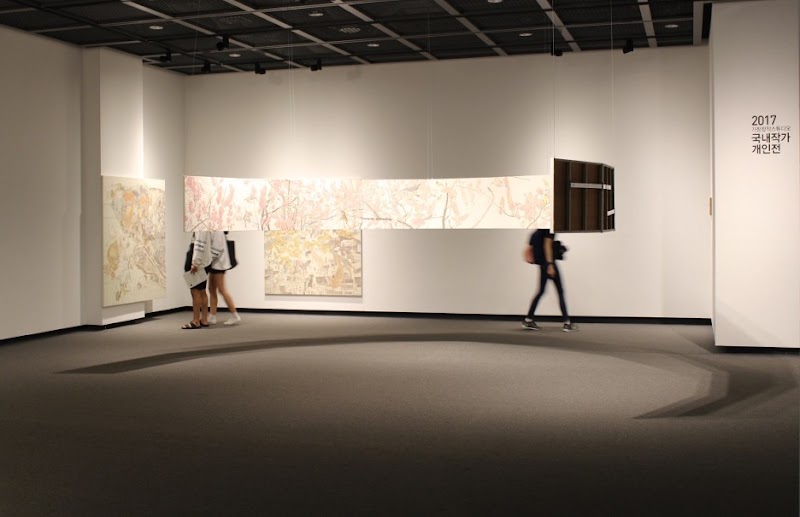
In her recent works, JIN Minwook has also focused on the process through which nature and human beings enter into a more fluid relationship. For a curated exhibition held at Space EMU in 2017, she planned an installation in which multiple pictorial panels were joined together as though surrounding the viewer, encouraging visitors to take time and move laterally along the works as if watching a film.
This format is intended to prevent the limitations that arise when a given subject is perceived only conceptually or conventionally. JIN explains that this approach applies to everyday subjects the observational method of true-view landscape painting, in which a mountain is depicted as an aggregate of views observed from multiple perspectives while moving through and around it, as in the late-Joseon painter Jeong Seon’s Complete View of Geumgangsan Mountain.
Such an attitude was also developed in Merleau-Ponty’s phenomenological theory, which emphasizes intimate, concrete, and fluid encounters with objects. Merleau-Ponty likewise regarded conceptual understanding of an object as a problematic habit that frustrates attempts to comprehend it bodily within actual space.
To correct the error in Western philosophy of treating human consciousness as the fundamental means of acquiring knowledge, he emphasized the importance of the body in the process of perceiving the world. In this connection, he described science as a field that privileges conceptual and objective experience, while characterizing art as one that foregrounds variable and subjective experience.
To what extent, then, does JIN Minwook’s work contribute to redefining the relationship between nature and humanity in East Asian painting? If Merleau-Ponty sought to expand Western philosophy’s understanding of human experience, what aesthetic significance lies in JIN Minwook’s attempt to dismantle the conceptual approach to landscape painting?
The artist states that her aim is not to approach the subject from a thoroughly positivist position, but to continually expand fixed ways of seeing through her work. With some caution, I would therefore like to raise the question of the relationship between the tradition of literati painting and contemporary women artists. Are there gender-based differences in the perception of nature? It may sound far-fetched, but it is an intriguing and exhilarating question even to contemplate.