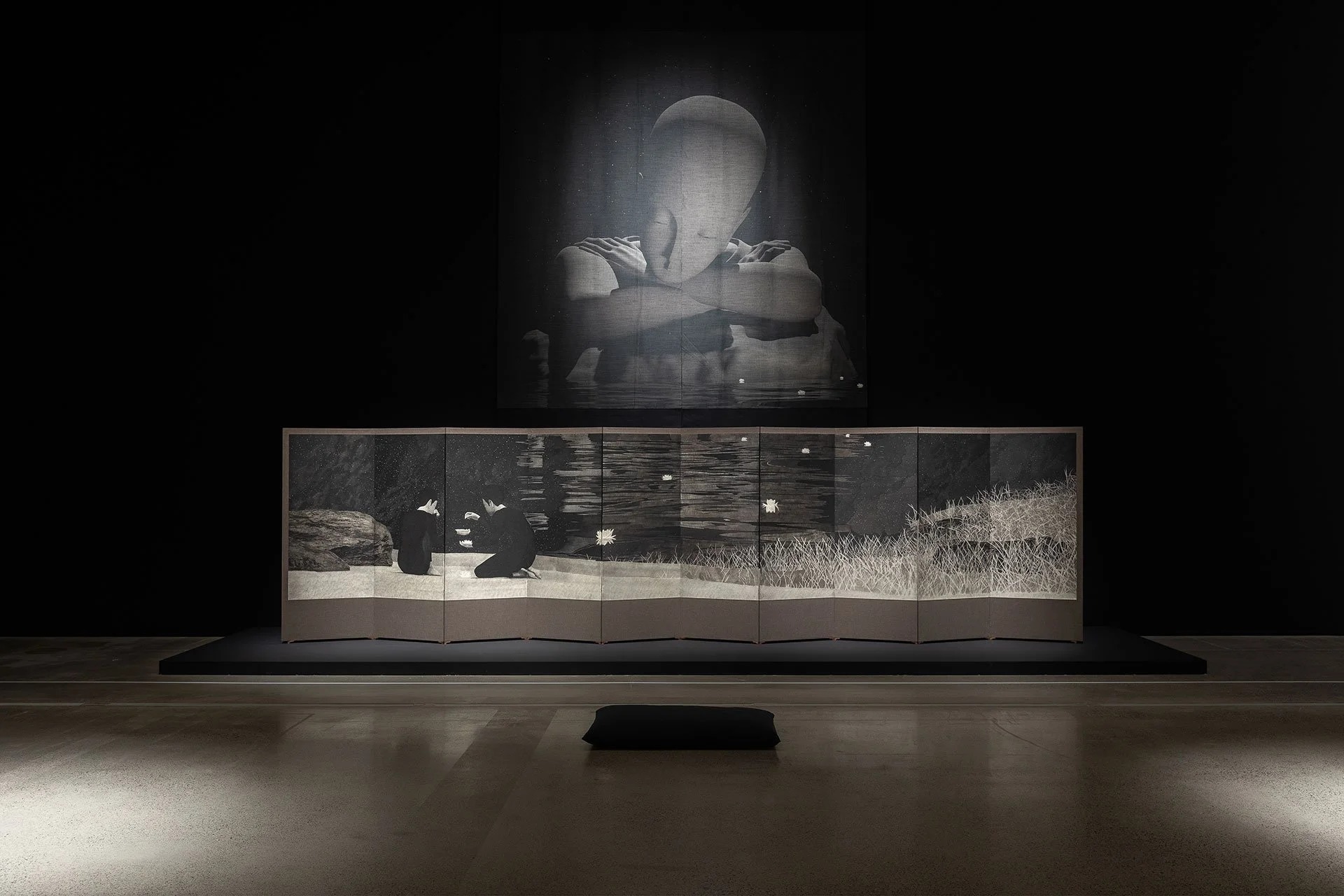
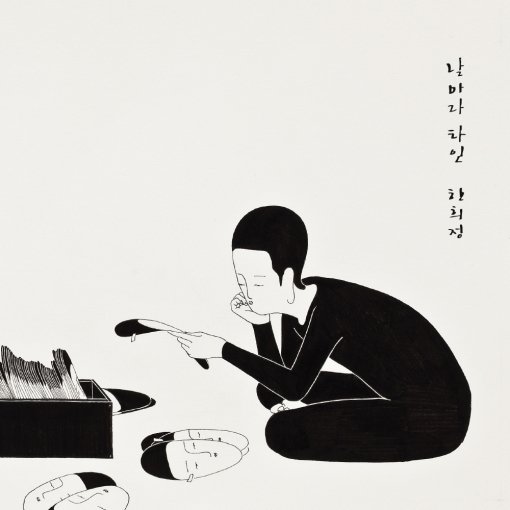
Against a field of deep black ink appears a figure whose expression seems at once legible and elusive. The quiet darkness evokes both tranquility and unease. This is the world of the self and its surroundings as rendered by artist Moonassi. His solo exhibition is currently on view at Space K in Magok-dong, Seoul.


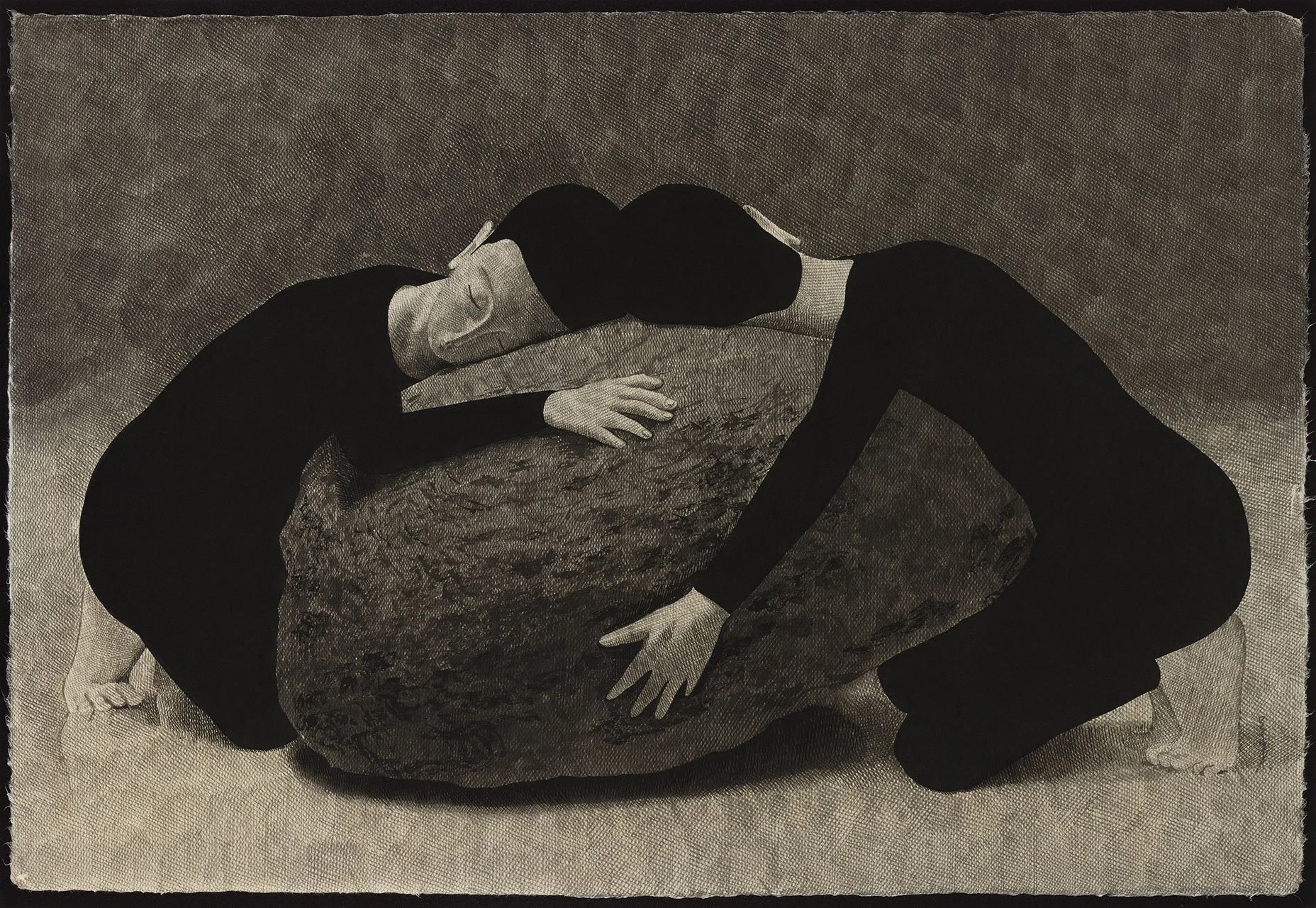
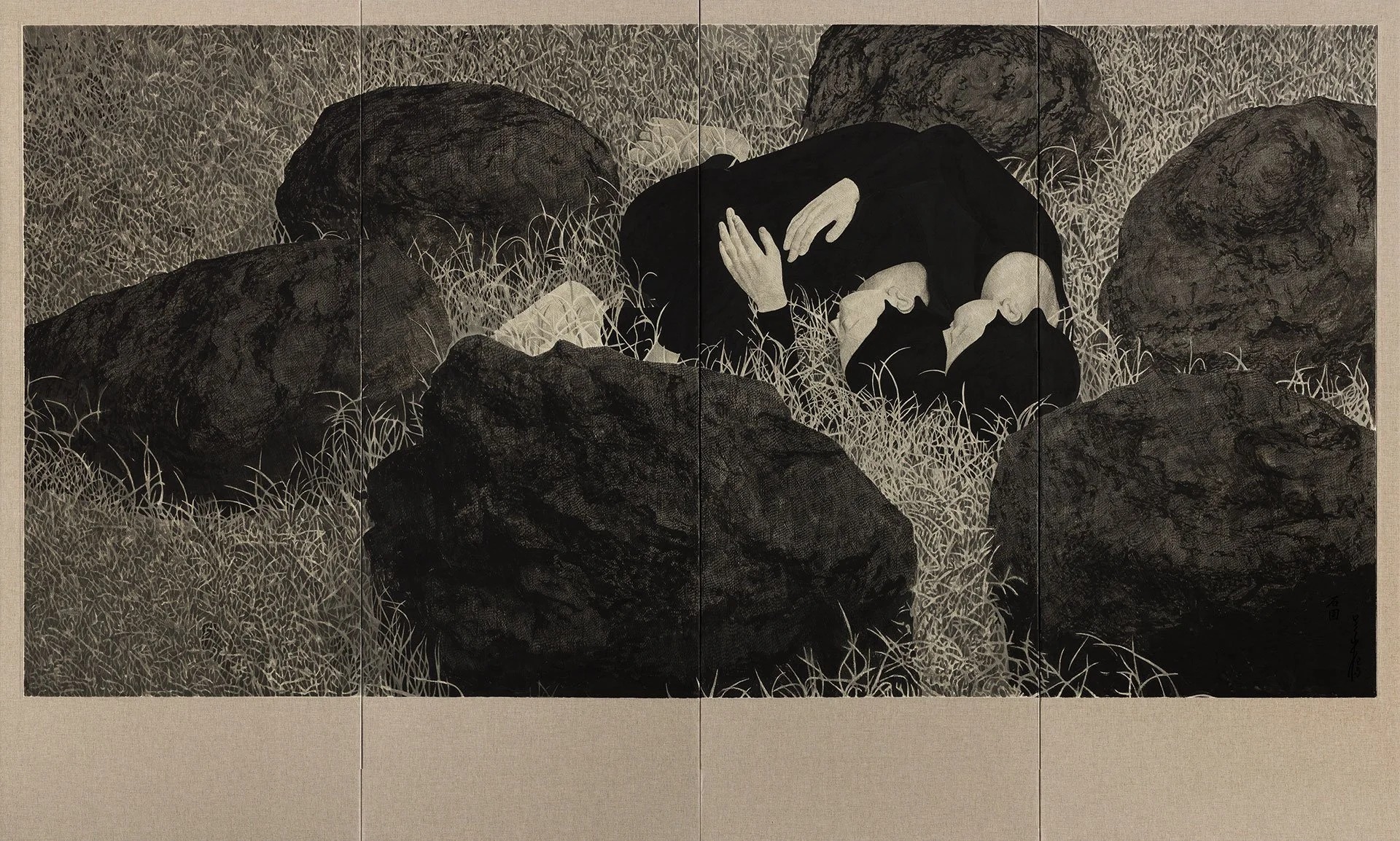
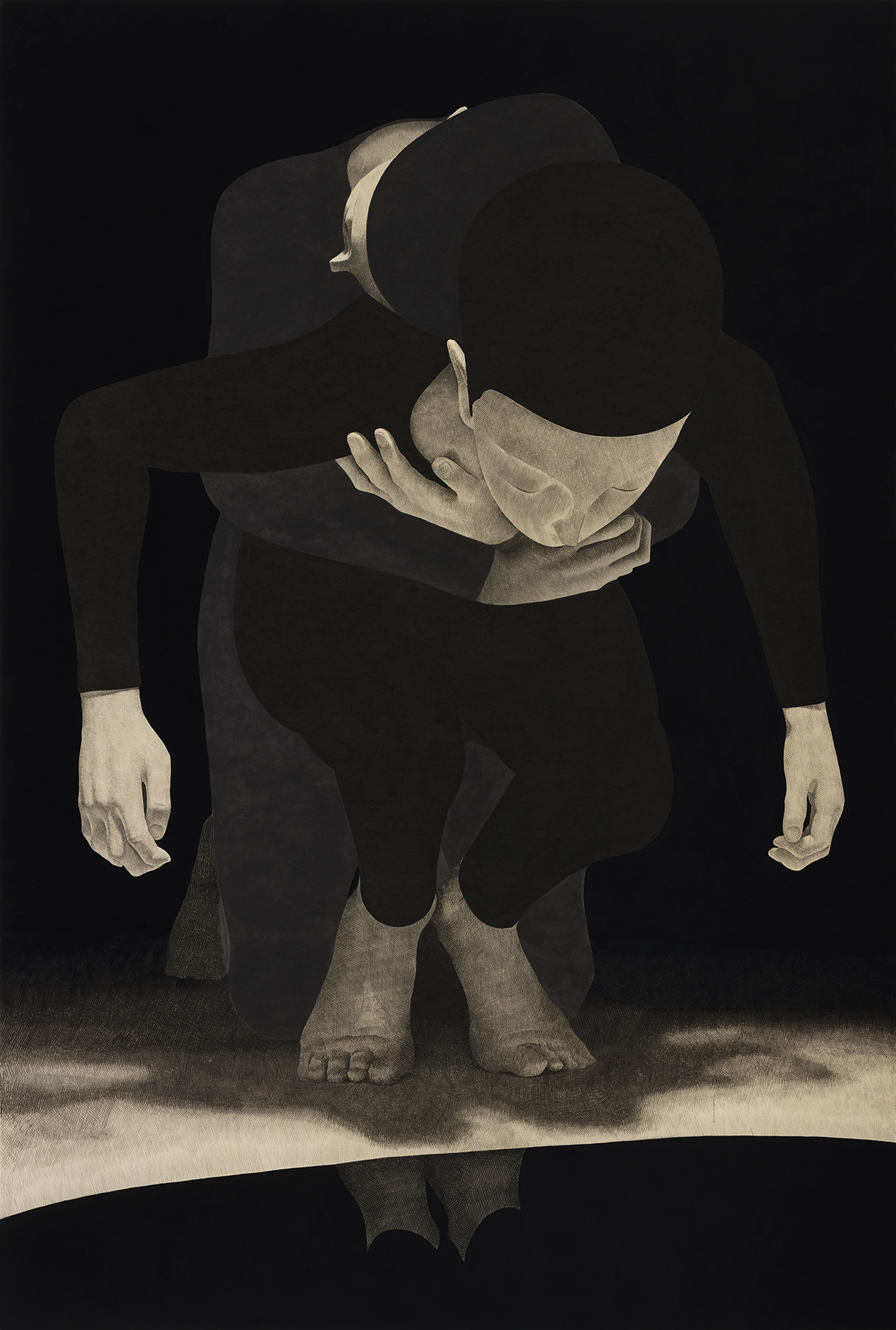
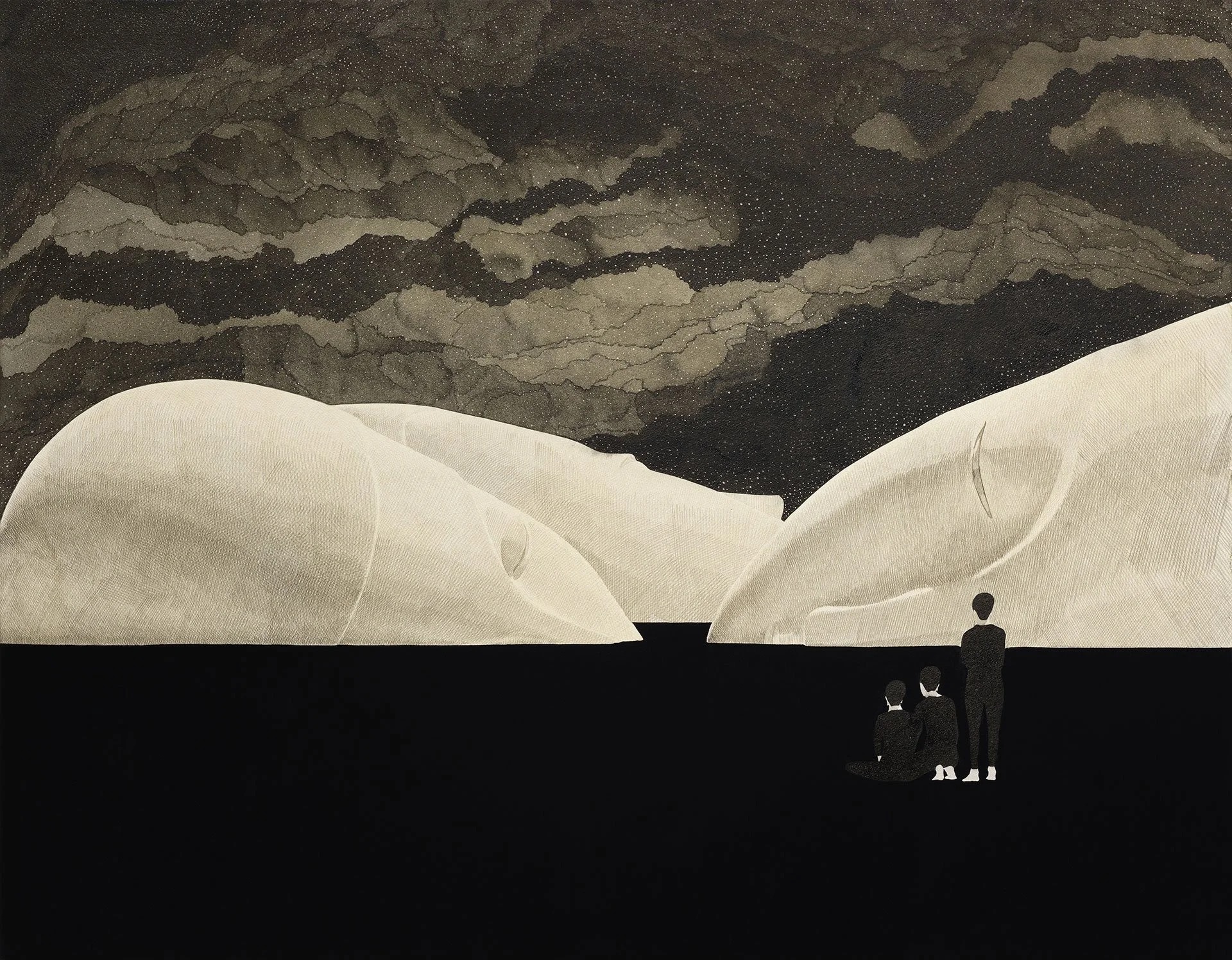
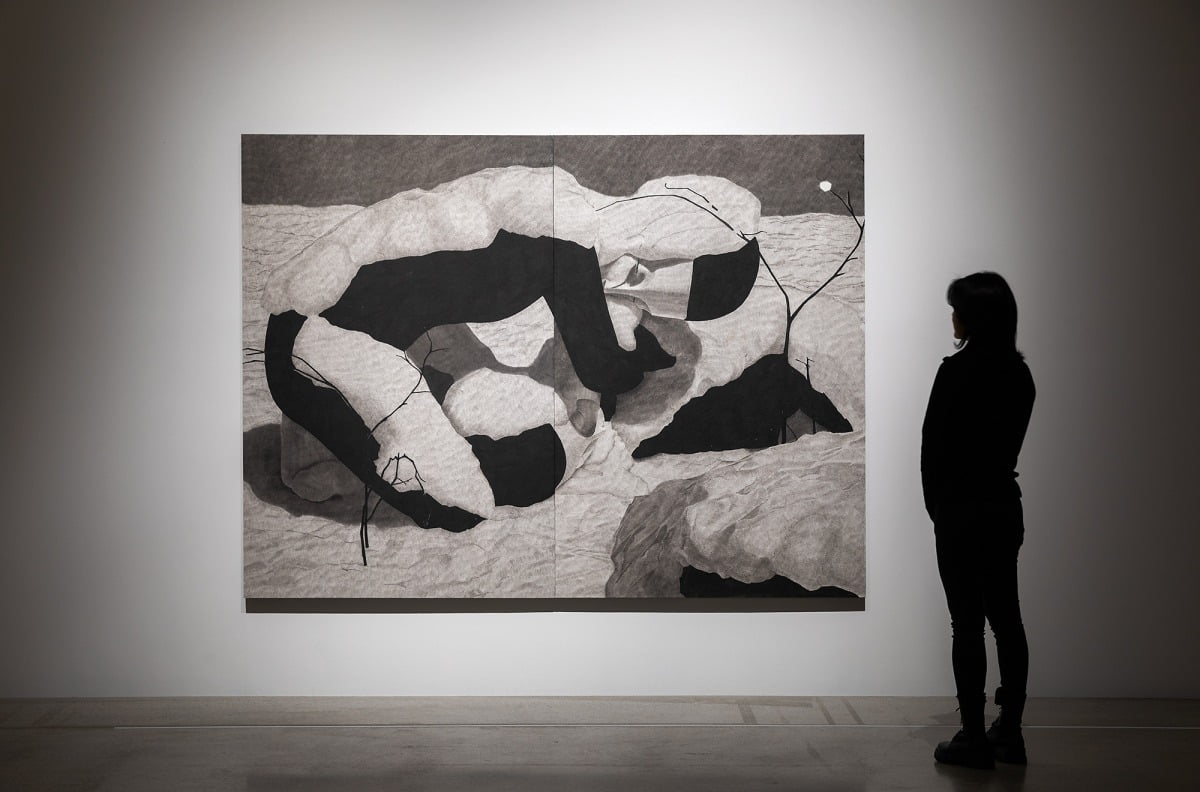
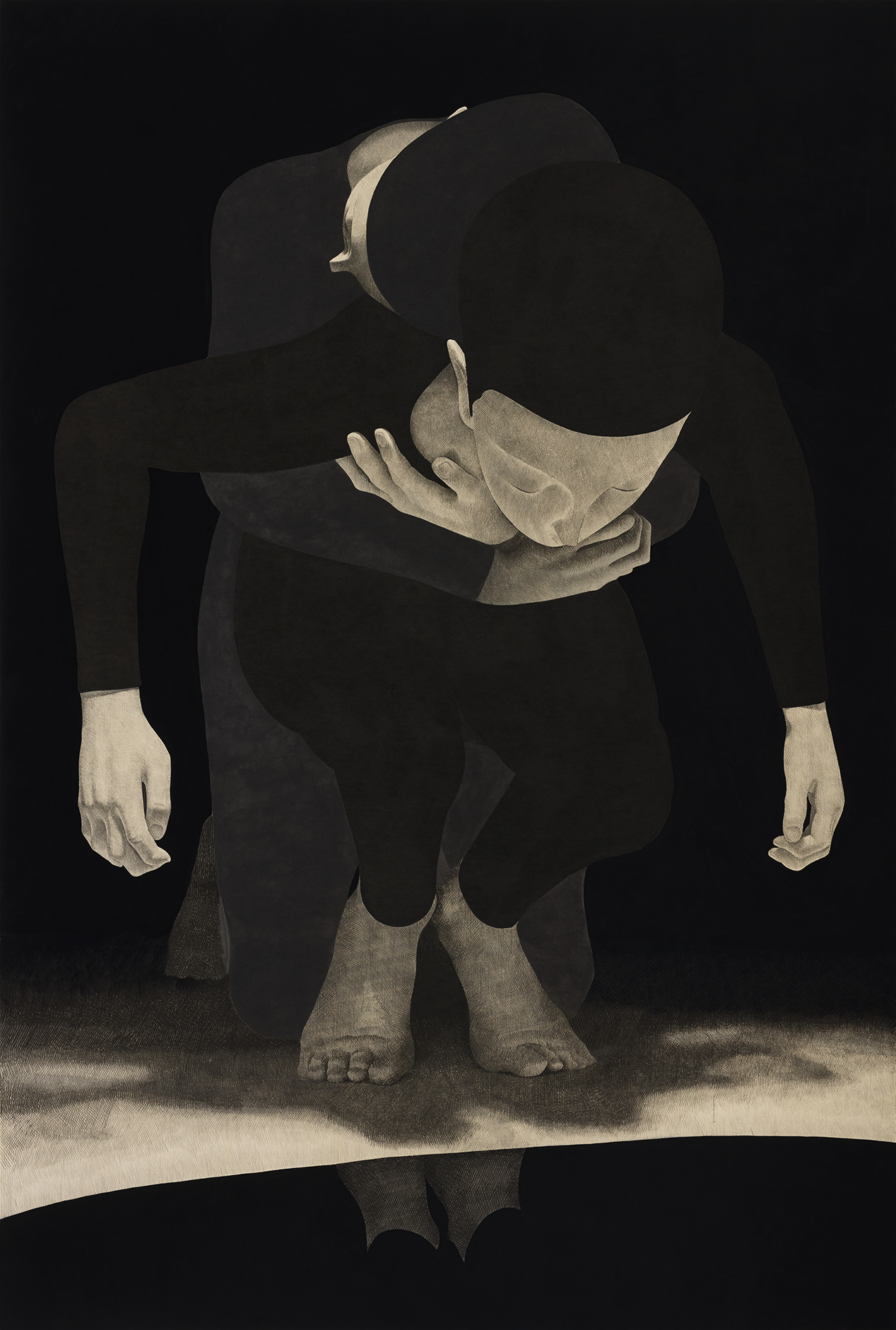
Moonassi, The Season We Fade Away, 2025, Ink on Korean paper, 193.9 x 260.6 cm © Moonassi

There is a familiar saying: “We are nothing more than specks of dust in the universe.” Yet if we reverse the perspective, it is also you, me, and all of us who make up this vast universe. This is why everything that begins with the self must be carefully observed and tended to.

Moonassi is an artist who speaks about the self. Using ink, acrylic, and other media on hanji, he depicts the diverse relationships and emotions that surround him. In this sense, the title of his solo exhibition, 《The Season We Fade Away》, carries particular significance.


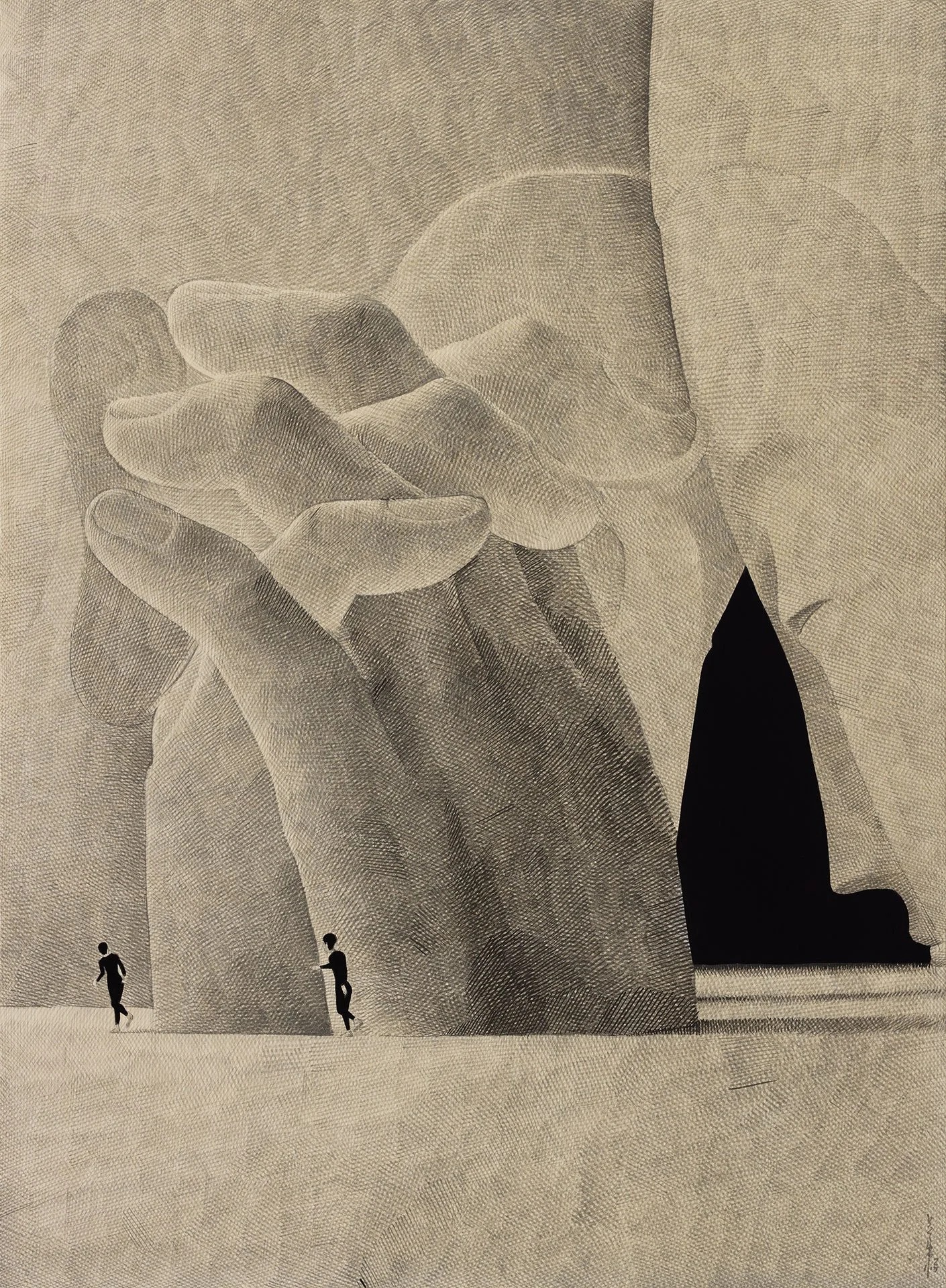
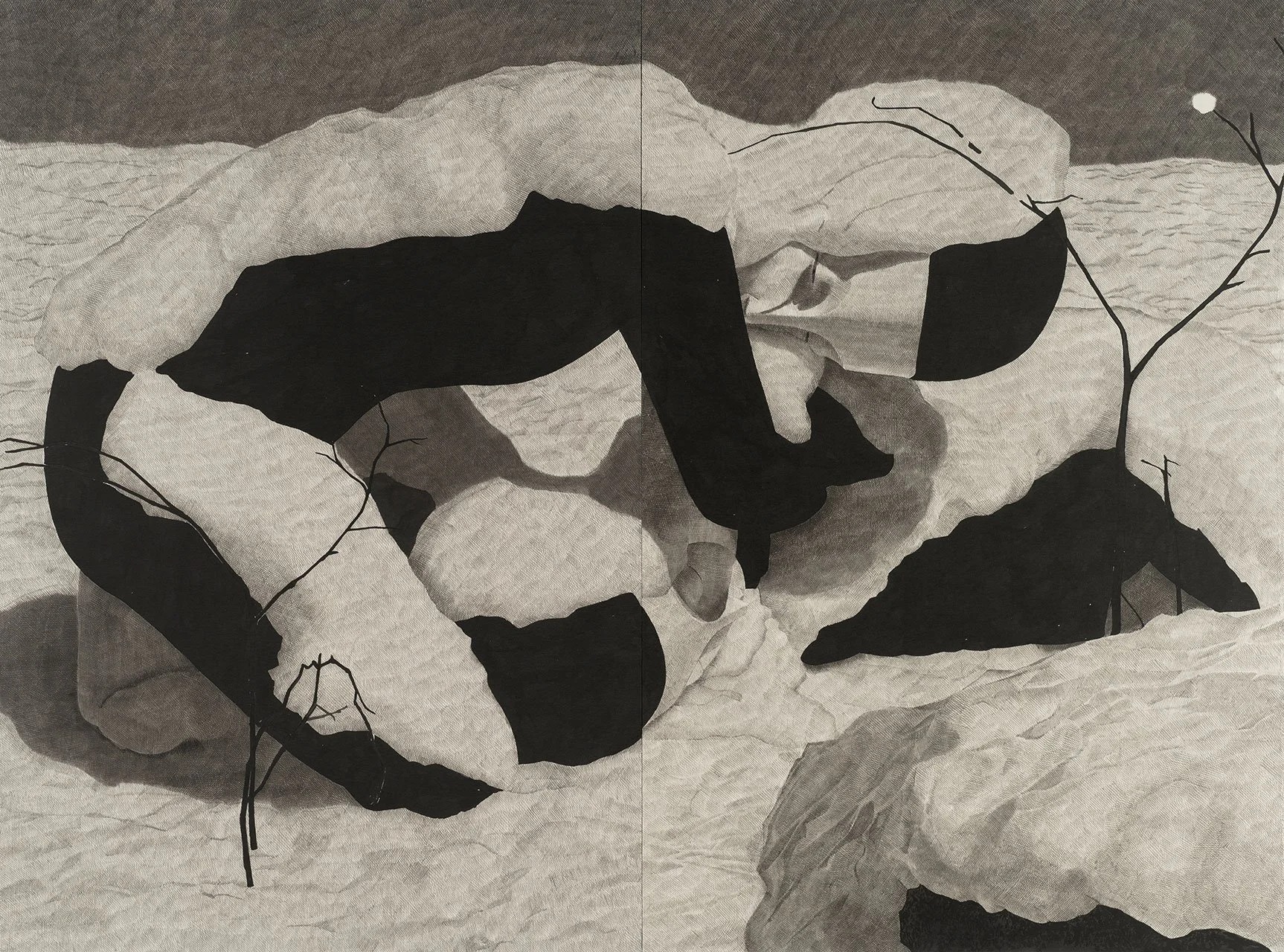
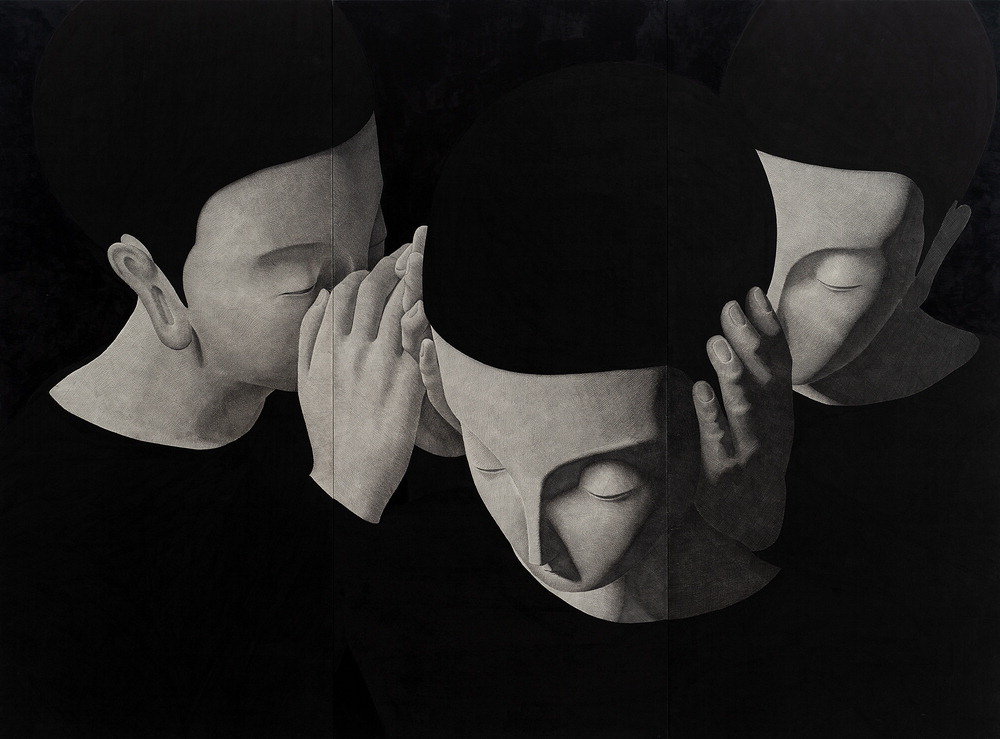
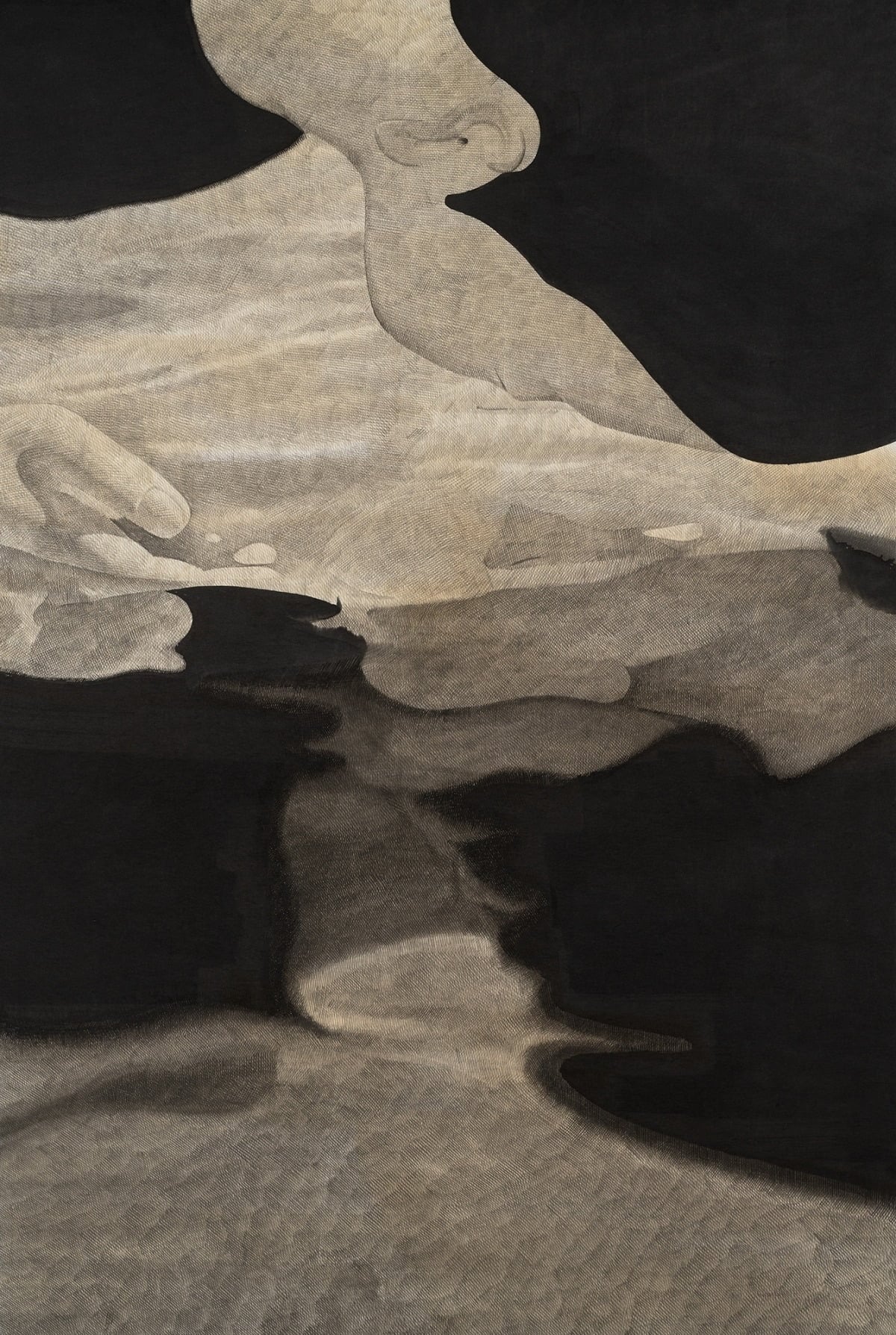
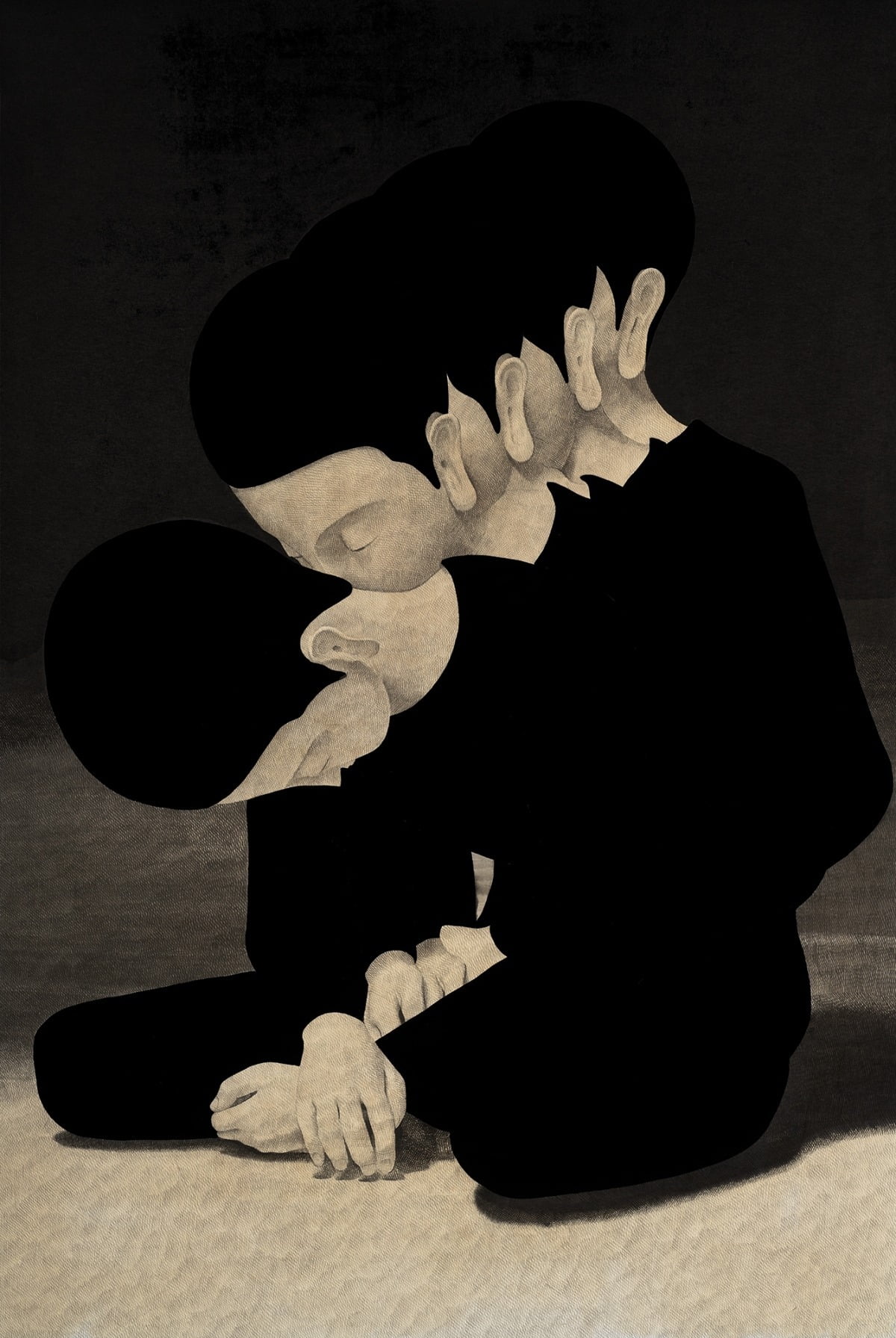
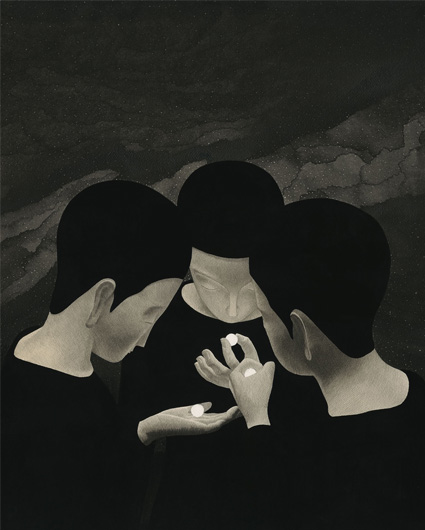
Moonassi, I Am There It Is, 2025, Ink on Korean paper, 193.9 x 130.3 cm © Moonassi

Too Many Selves Within Me

Since childhood, Moonassi has been unable to shake the desire to “disappear.” He has always longed for a quiet solitude. Yet another self—one that did not want to remain hidden—continued to draw him out into the world. As varied as the many versions of himself, these contradictory impulses remained locked in a taut struggle.

He wanted to hide, yet at the same time wished to reveal himself; he was introverted, yet had much he wanted to say. The artist decided to capture this seemingly endless game of hide-and-seek in his work. At first, he did so not through drawing but through writing.

He collected short pieces written in his spare time into a book of essays and even sold it at a café he frequently visited. Speaking at the exhibition, the artist explained that the experience played a major role in shaping the Moonassi he is today.

“At the time, using a nickname was quite common, and I began using the name Moonassi because I wanted to write stories that transcended myself. But once I started selling the essay collection, the café staff began calling me ‘Moonassi.’ At first, I felt a little awkward, but I gradually became accustomed to it. As I gained confidence, the name became a great source of strength in forming my identity as an artist.”


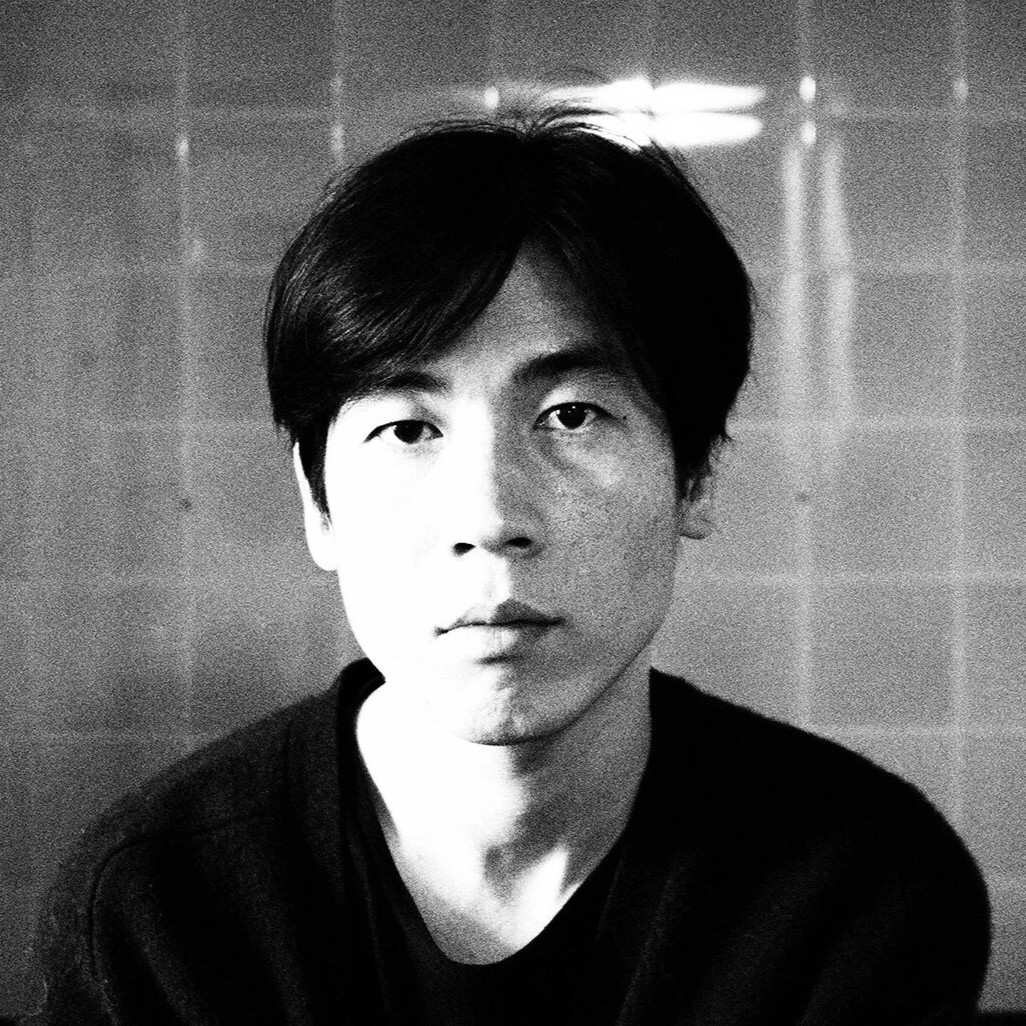
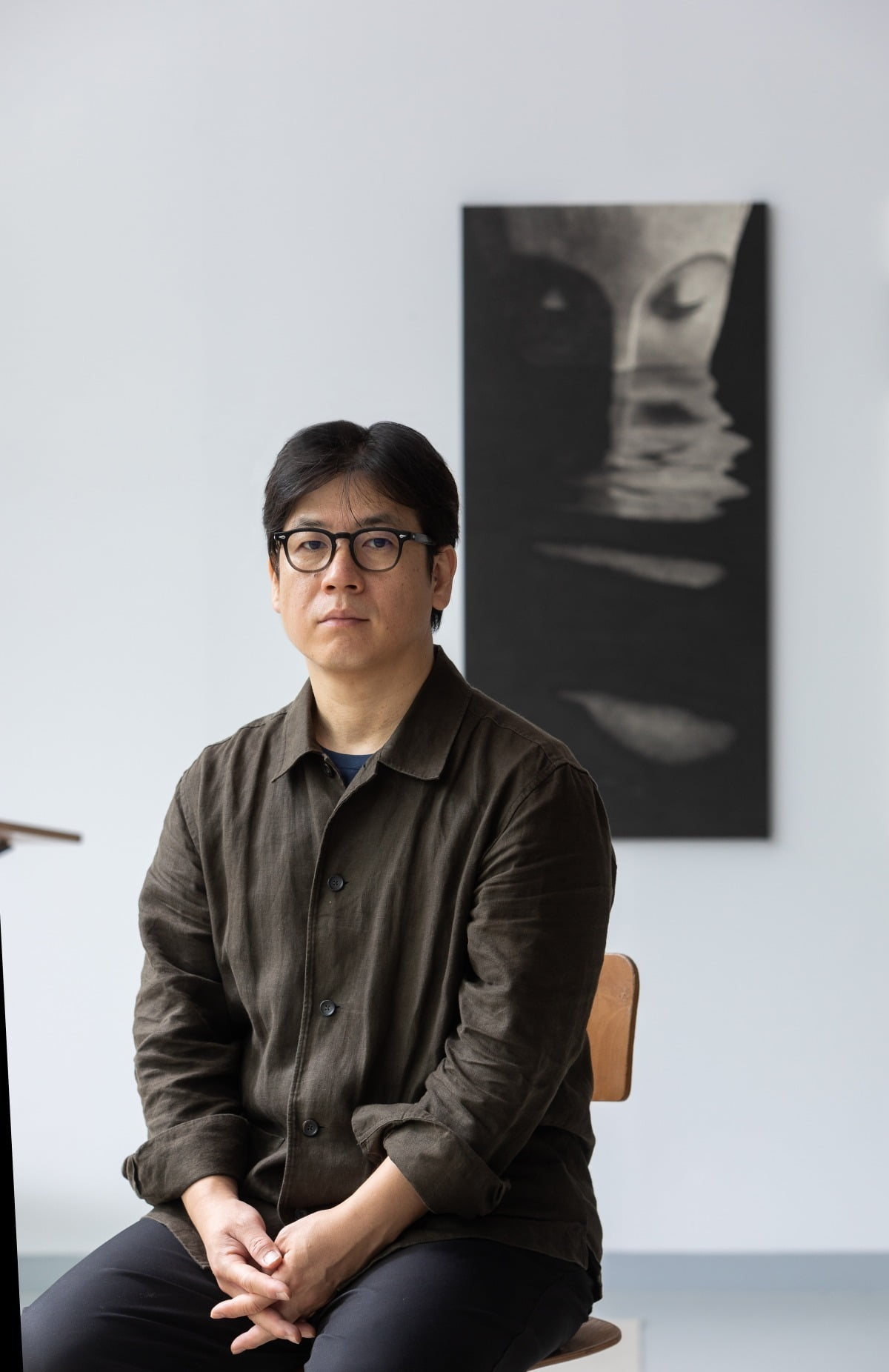
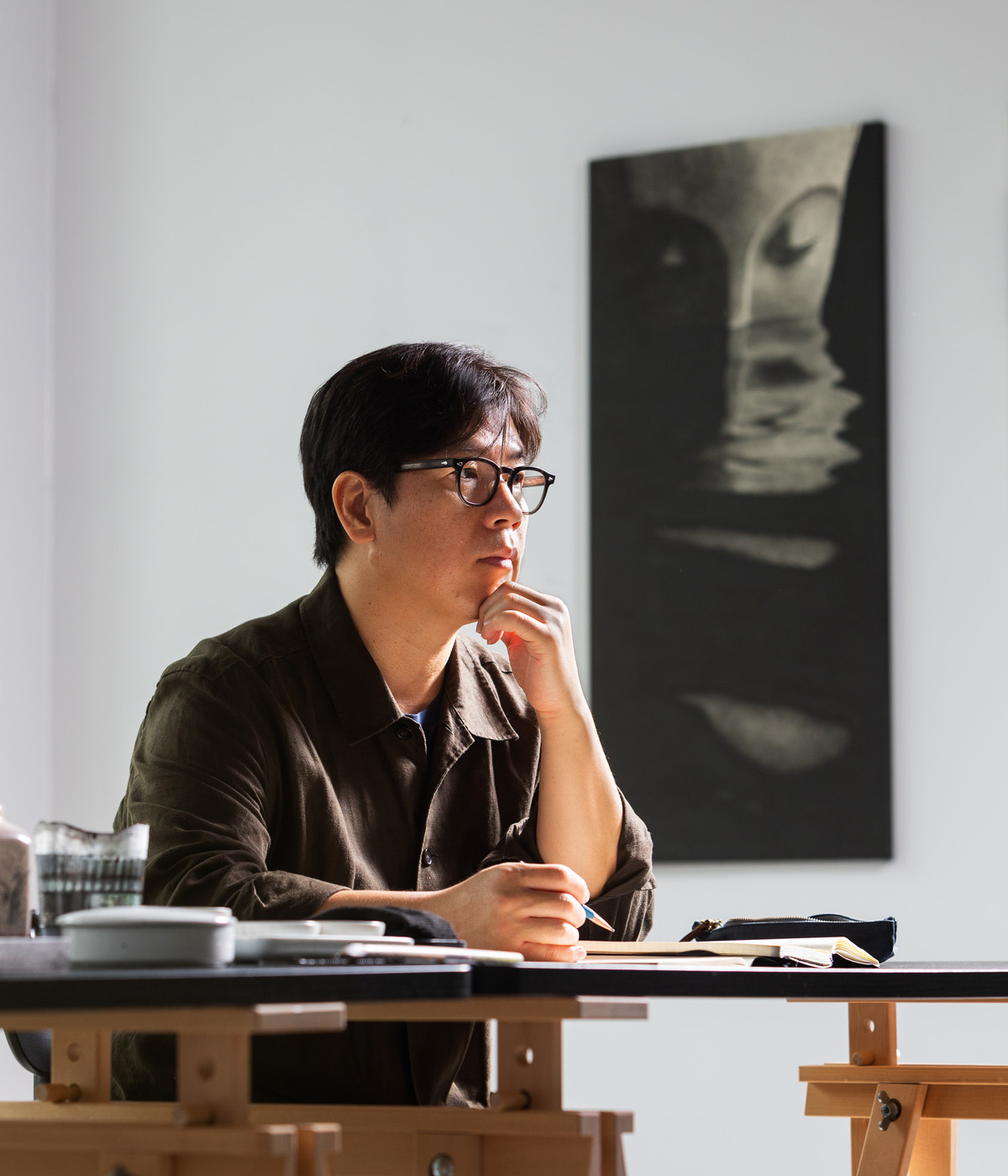
Artist Kim Daehyun, who works under the name Moonassi © Moonassi

The artist’s given name is Kim Daehyun, but he works under the name Moonassi. In Buddhism, “no-self” (無我) means that the self does not exist. Wanting to free himself from the self, the artist adopted the name “mua,” then added “ssi,” an honorific used when addressing another person, thereby turning himself into an other.

Moonassi studied Oriental Painting at Hongik University. Although he majored in art, he says that at the time he wanted to write well more than he wanted to draw well. How, then, did he return to painting?

“When an introverted person wants to talk about themselves, they seem to need either the help of alcohol or somewhere to hide. I also had a great deal I wanted to say, so I began looking for a mode of expression that would let me remain hidden. At first, it was speech, but no matter how much I tried to convey my emotions to someone in words, they only lasted for that moment and then disappeared. Misunderstandings arose as well.

So I began writing, but it was too difficult to explain abstract things through concrete language. I could not write poetry either. With painting, however, viewers can arrive at their own interpretations without everything being explained precisely, and I do not have to impose or communicate a particular message. That is how I came to paint.”


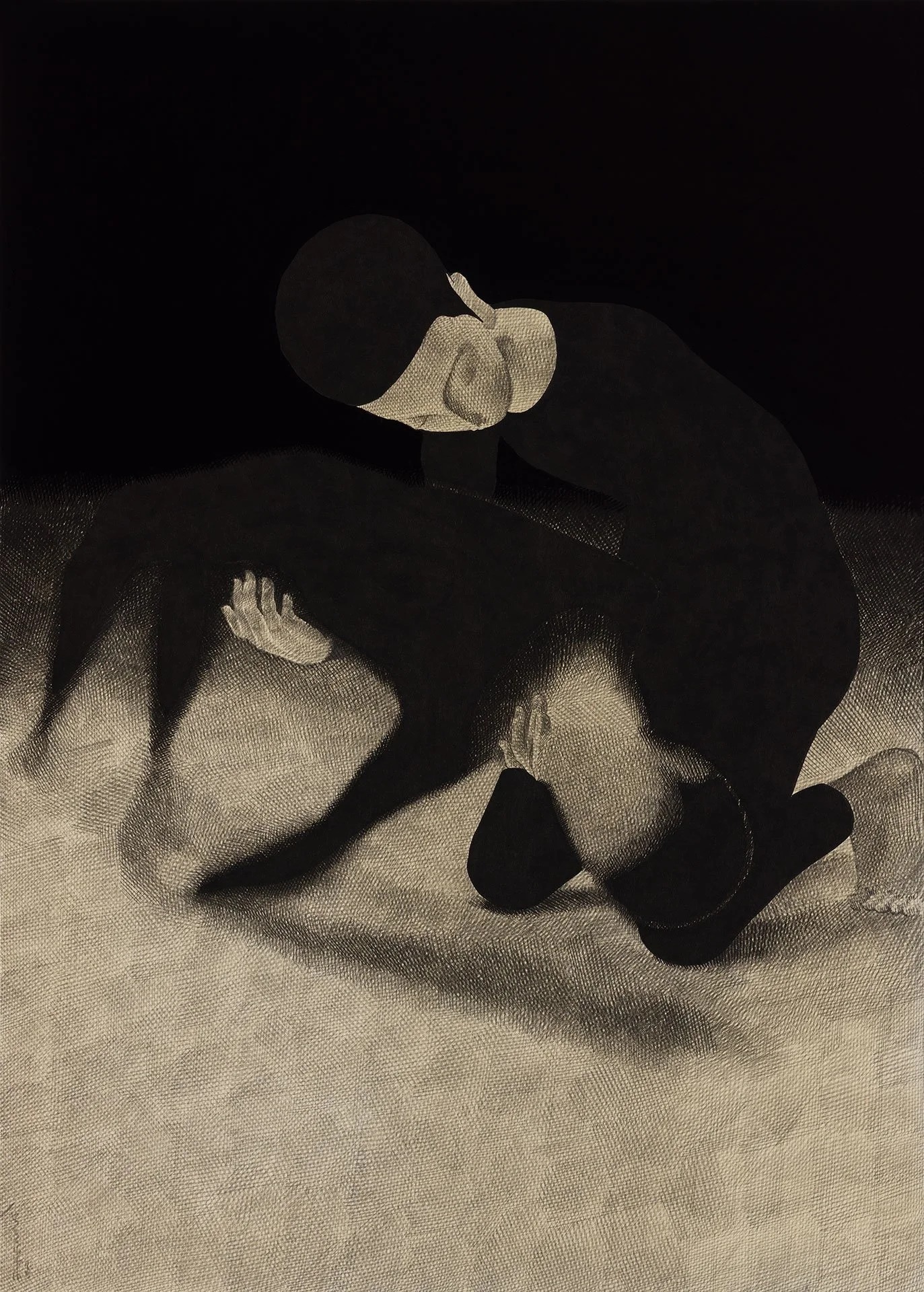
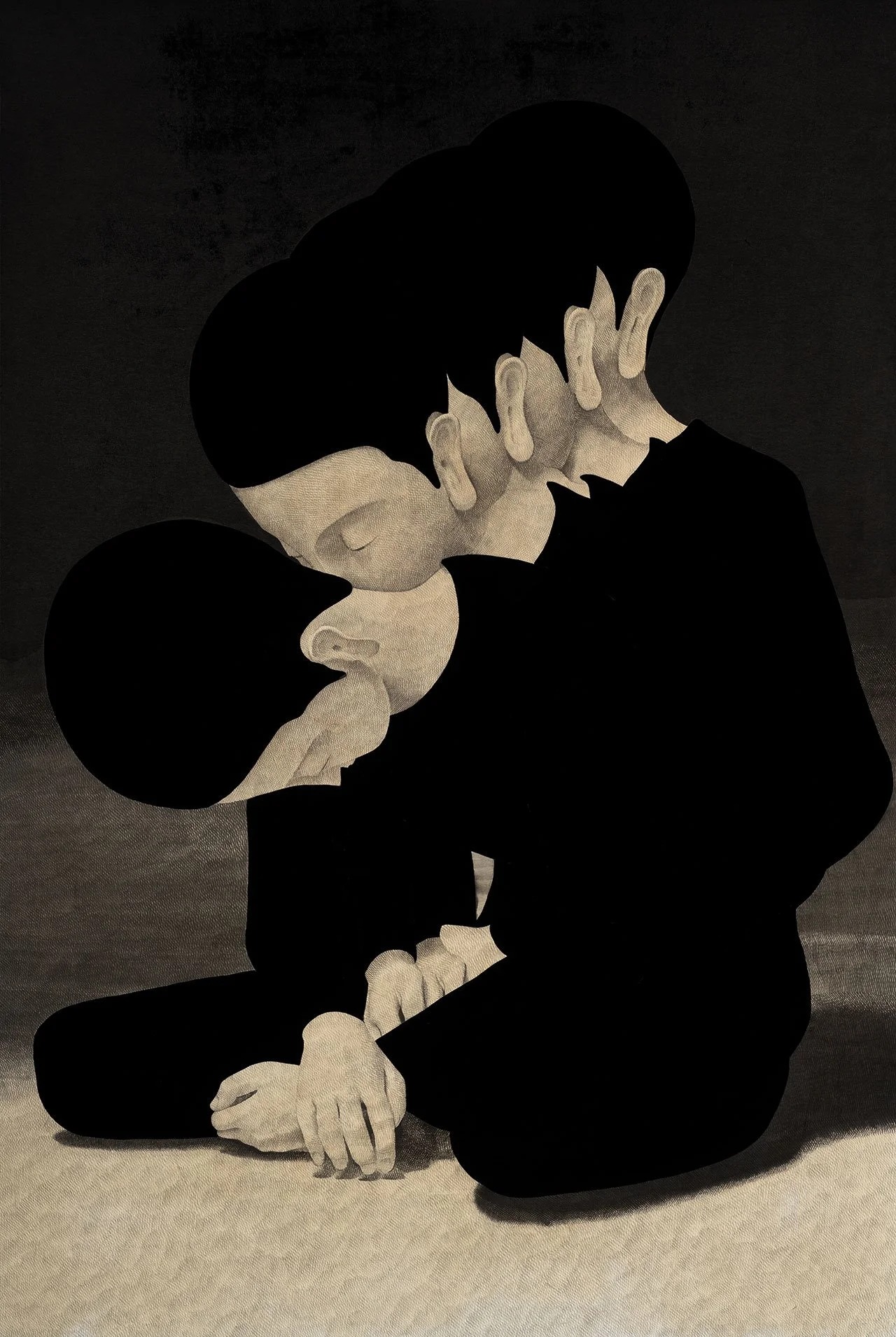
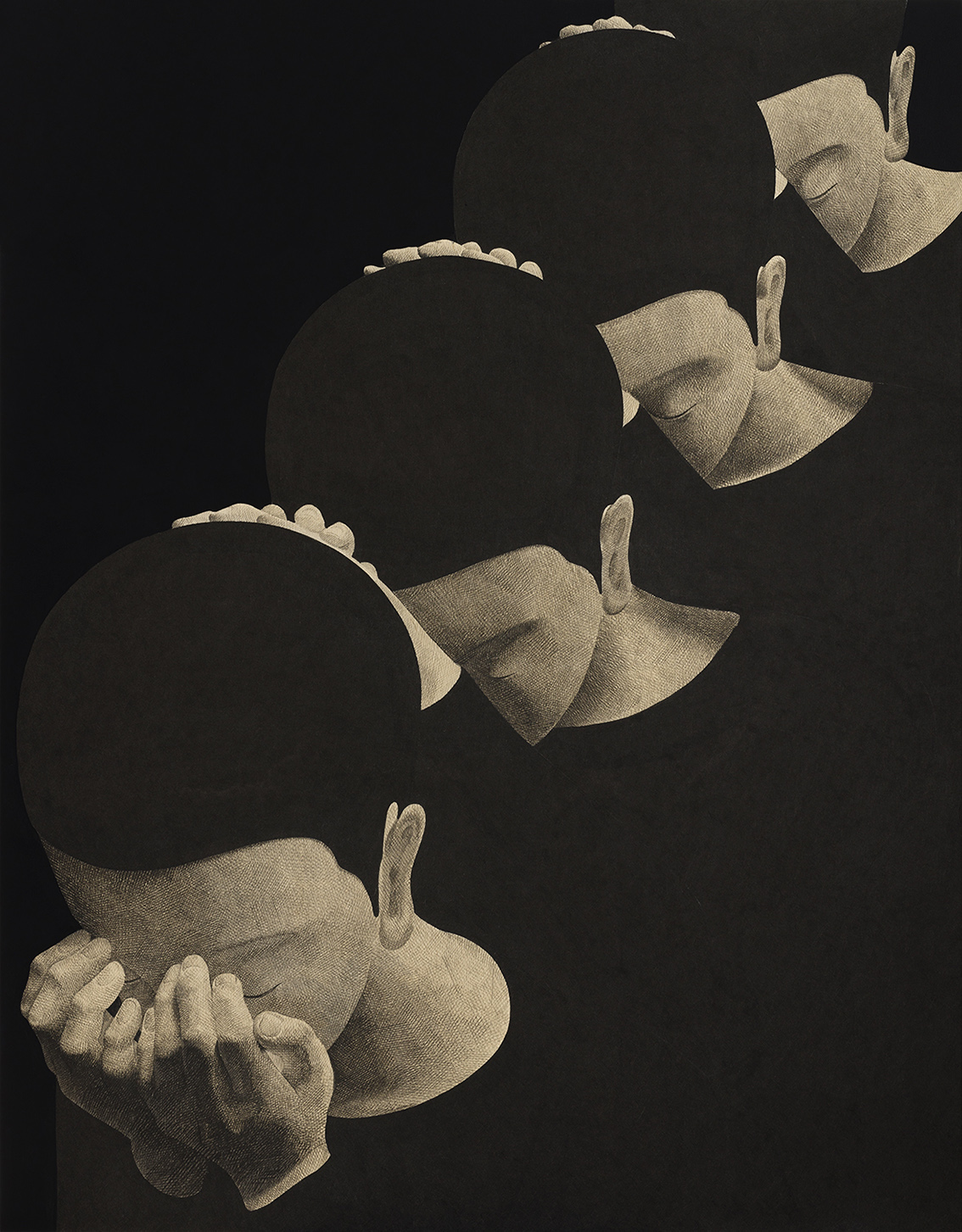
Moonassi, Into the Inner Inside, 2025, Ink on Korean paper, 193.9 x 130.3 cm © Moonassi

Countless Brushstrokes Enduring a Turbulent Mind

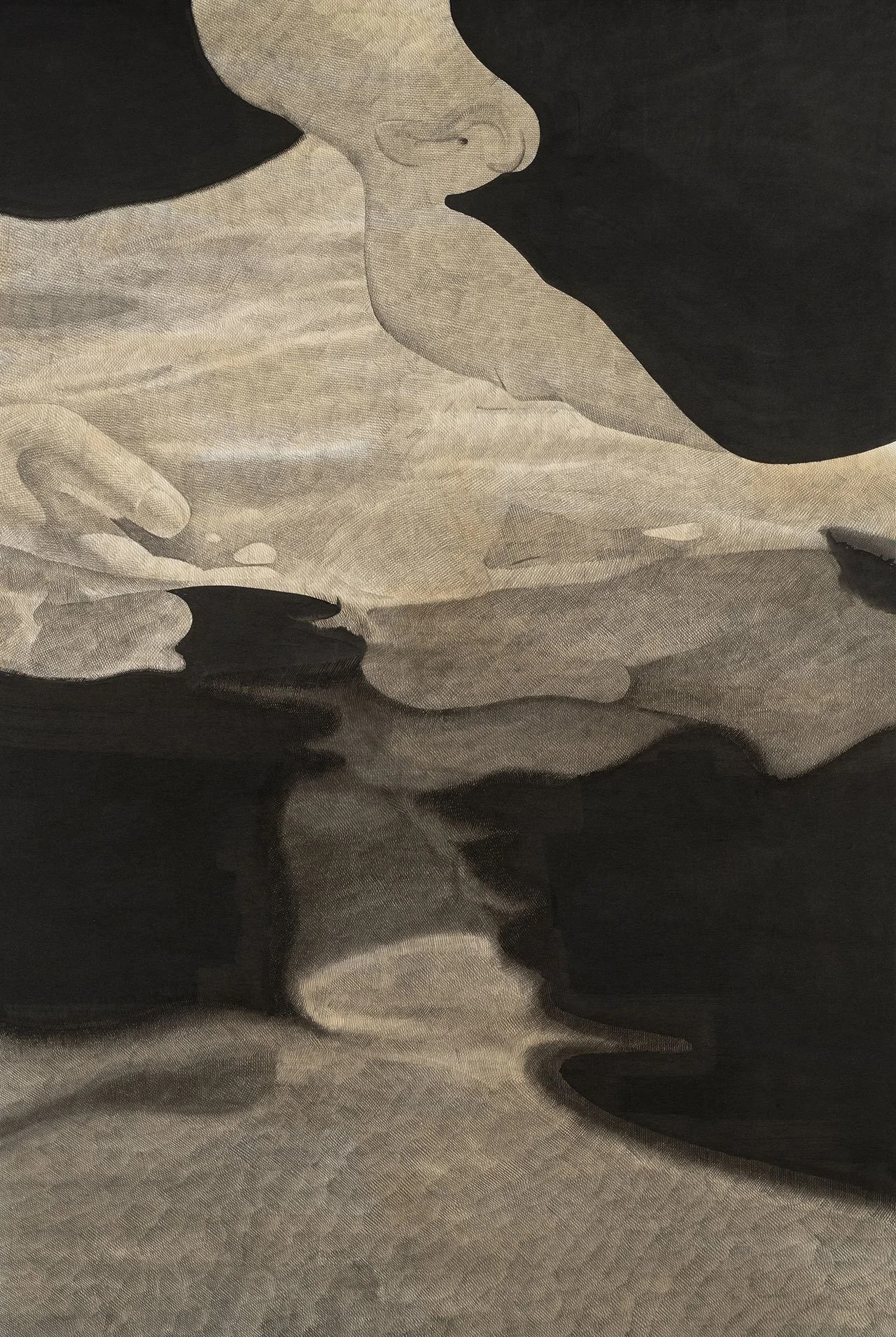
The artist minimizes his materials so that viewers can concentrate more fully on the narrative. Although he now also uses acrylic and ink to create varied textures and tones, he primarily works with hanji and ink, filling the surface with black. Perhaps for this reason, his works evoke the atmosphere of traditional Asian painting, yet the forms and subjects he employs differ somewhat from what is conventionally associated with the genre.

“I disliked the fact that ‘Oriental Painting’ automatically brought ‘landscape painting’ to mind. I found Buddhist paintings from the Unified Silla and Goryeo periods compelling, and I also wanted to create meticulous works that required a great deal of labor. So I chose a labor-intensive method of drawing each line individually with a brush. I wanted to embed more time within the painting.

Once, at the Metropolitan Museum of Art in New York, I saw a stone sarcophagus carved with hieroglyphs. I could vividly imagine the stonemason crouching in front of that block of stone and working for an immense length of time, and I felt an immediate emotional connection. Drawing lines may sound extremely peaceful, but in reality my mind is very noisy.
I hope viewers will look at every line in my work and feel moved by the realization that the artist endured a turbulent mind and the passage of time in order to complete it.”

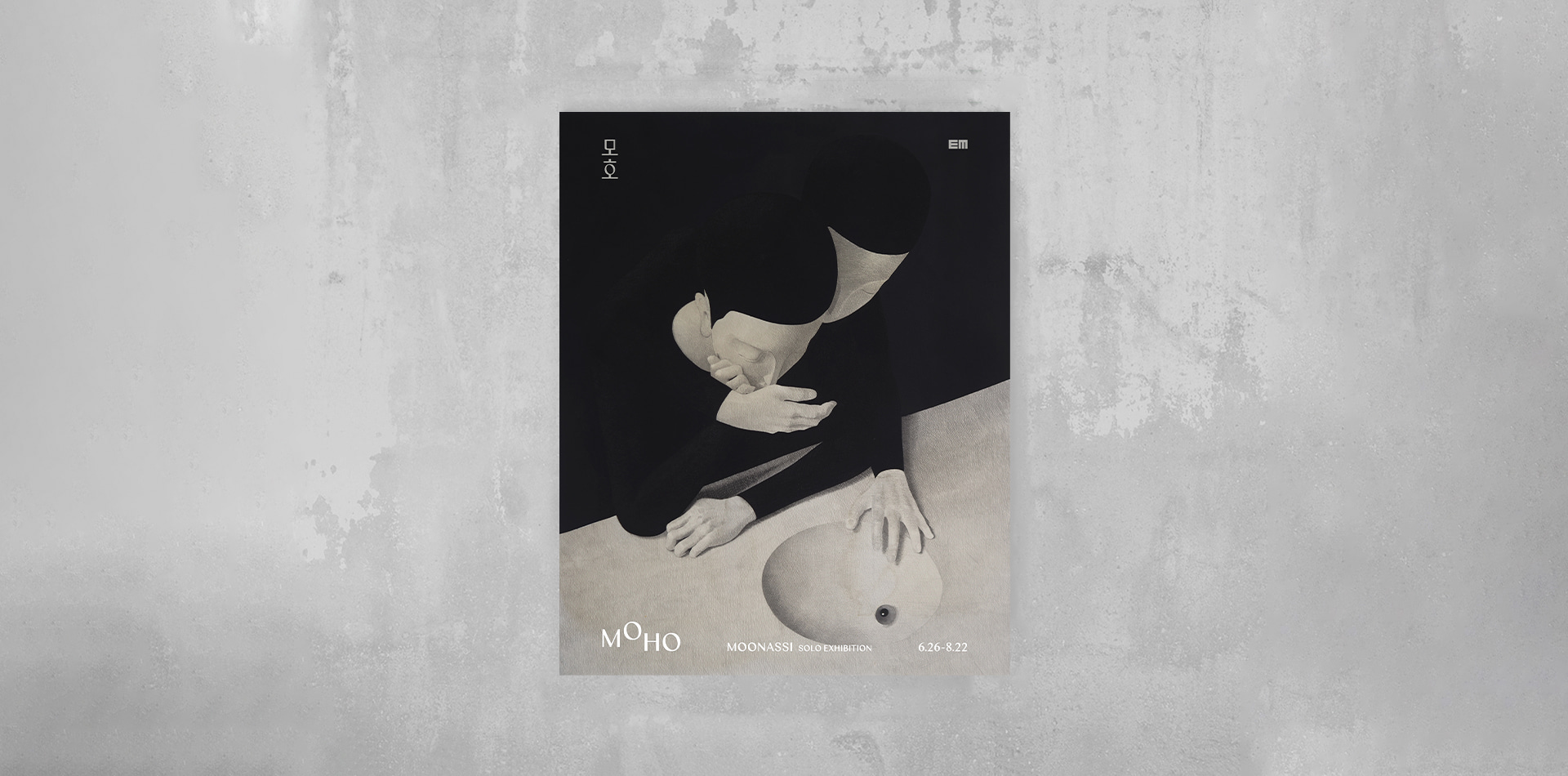
The same figure always appears in Moonassi’s work. Its seemingly expressionless yet gentle face and large, elongated ears naturally evoke the Buddha. Although he has long been interested in Taoist thought and Buddhist culture, he does not wish the content of his work to be confined exclusively to Buddhism.

“When I was young, I became interested in Buddhism after reading Zhuangzi and Tao Te Ching, which were on my older brother’s and sister’s bookshelves. As I traced the origins of Eastern philosophy, I also became interested in Hinduism. But I hope viewers will not see the work solely through Buddhism. I would like them to approach it by projecting their own philosophies onto it.”


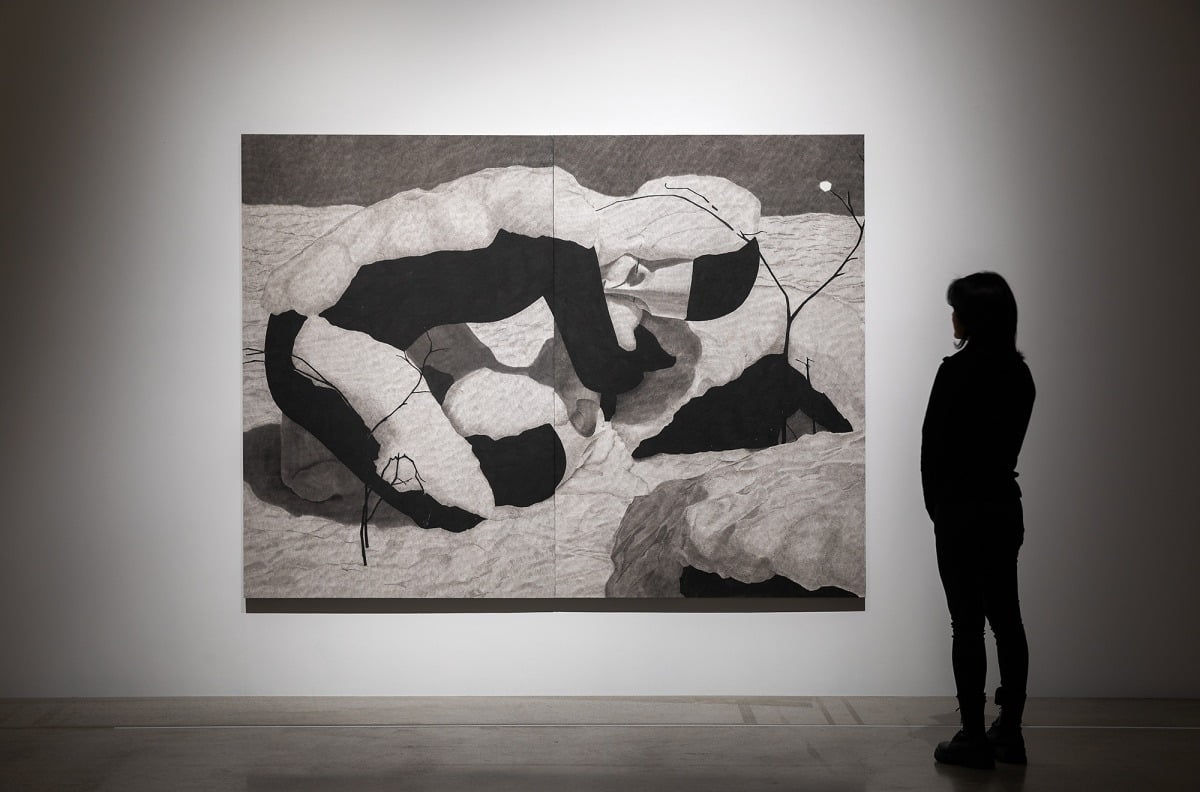
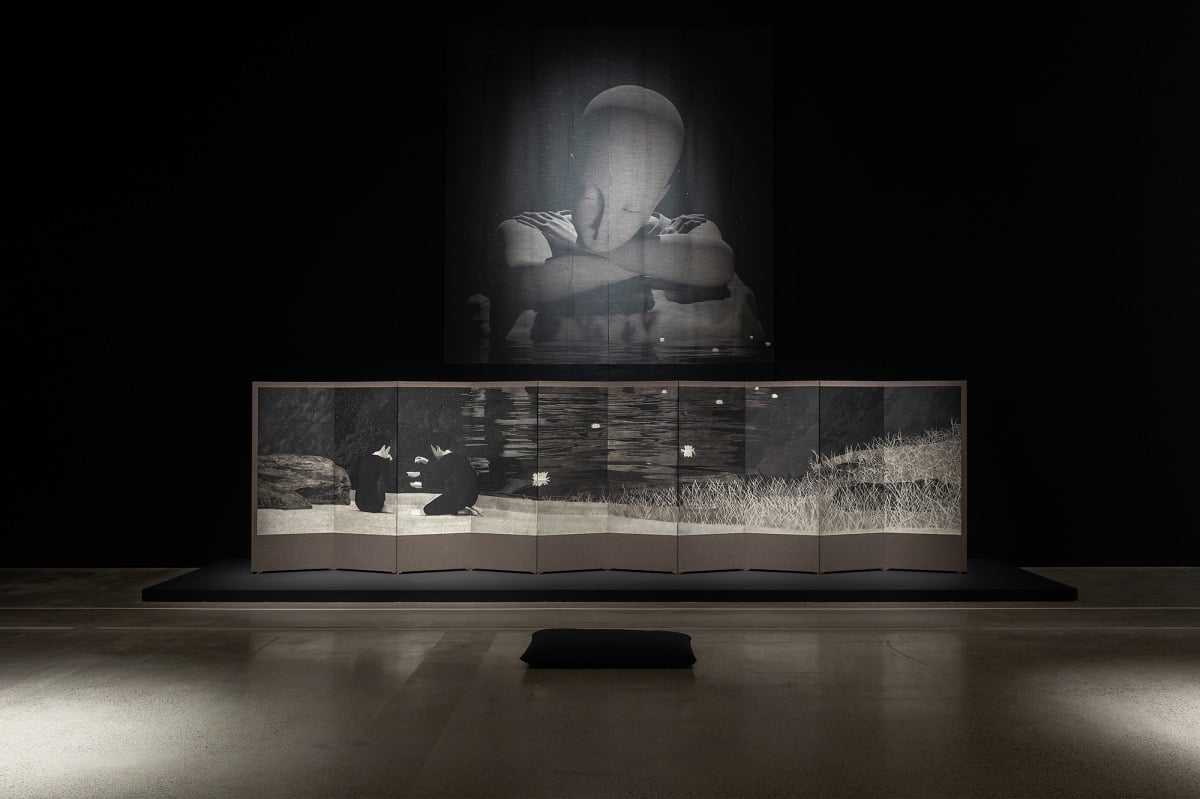
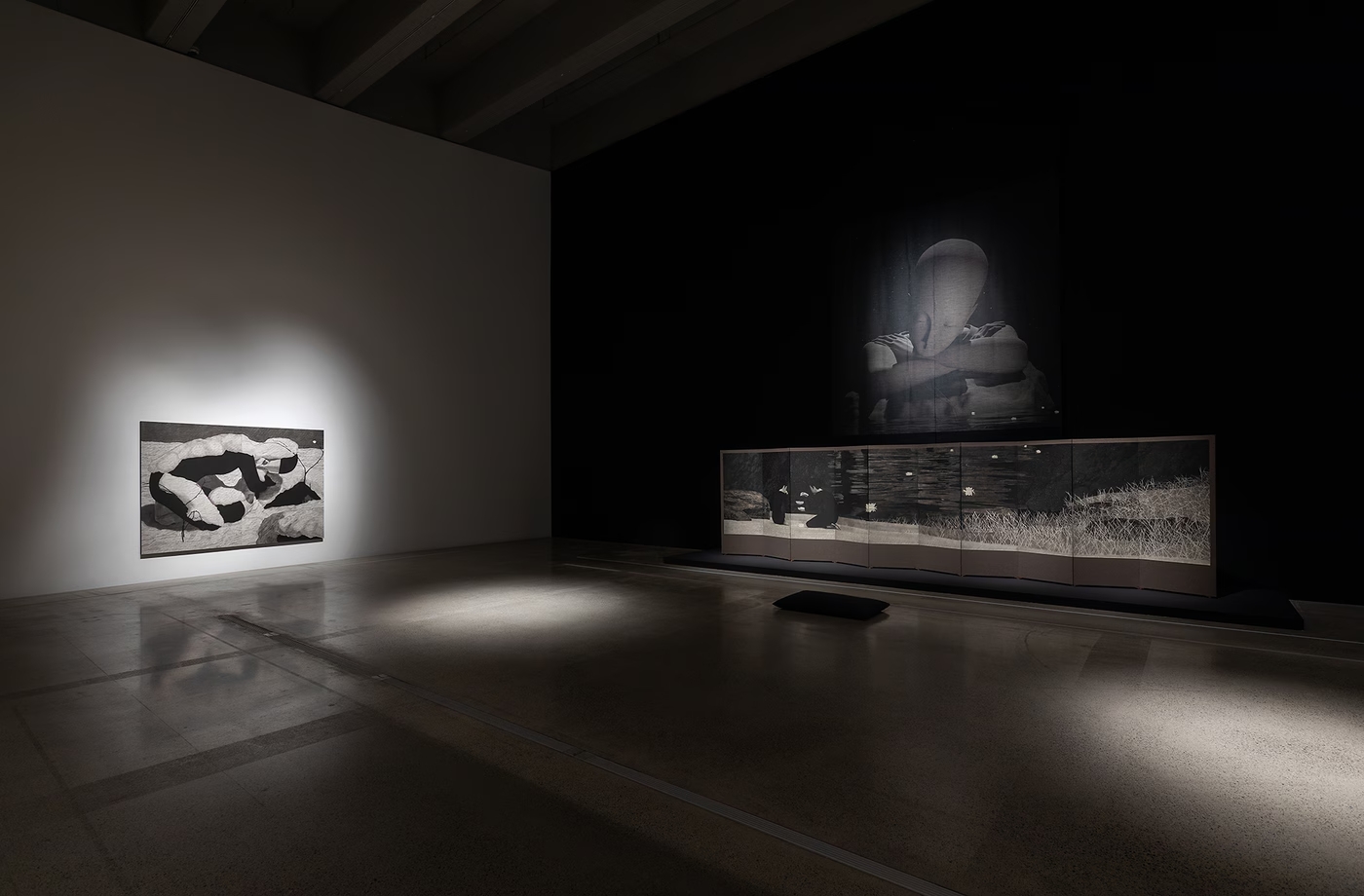
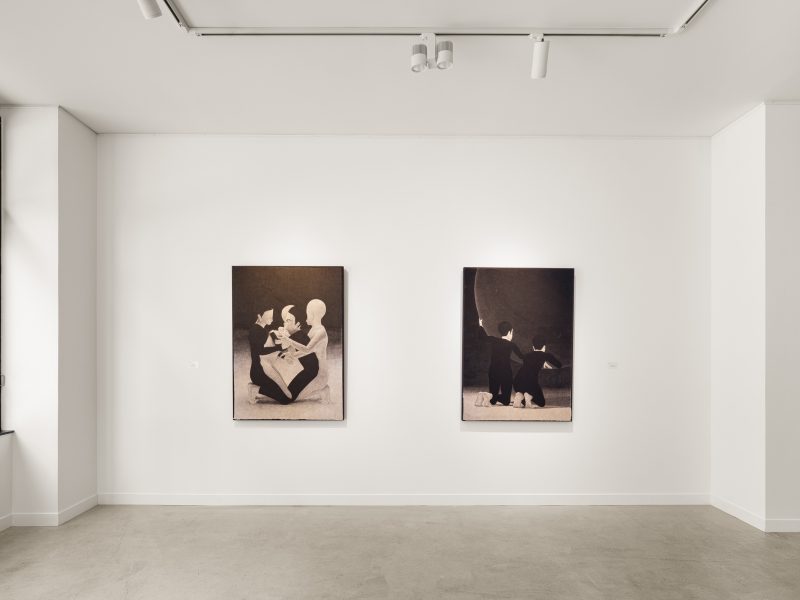
Installation view of 《The Season We Fade Away》 © Space K Seoul

The Freedom That Comes When Boundaries Disappear

This exhibition reveals a shift in Moonassi’s emotional landscape. In the past, the artist primarily drew clear boundaries between himself and others and spoke of freedom found in solitude. More recently, however, he has become interested in blurring those boundaries. Marriage, a turning point in his life three years ago, also influenced this change.

“In fact, having boundaries collapse can be very frightening. Just as we warn people not to ‘cross the line,’ doing so can hurt someone’s feelings or cause them inconvenience. But once those boundaries actually began to fall away, I found the experience incredibly liberating. I wanted to express those emotions.”

One celebrity is almost inevitably mentioned whenever Moonassi is discussed: RM, a member of BTS. Sound of Eternity, which belongs to RM’s collection, is also included in the exhibition. The work was not originally created for sale. It began as part of the artist’s personal practice, but eventually entered RM’s collection.
RM is known to own two works by Moonassi, including this one. After encountering the work at an art fair, he reportedly visited the artist’s home through an introduction arranged by the gallery, spoke with him at length, and purchased the works. The artist was reserved in his comments, saying that he feels both apologetic and grateful that RM continues to be mentioned in connection with his work. The exhibition runs through February 13.
References