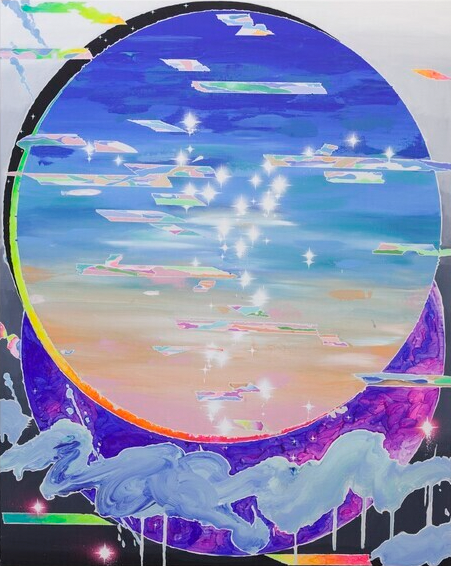
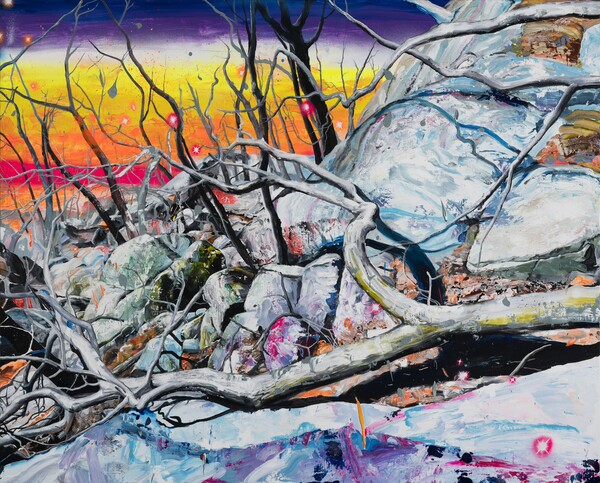
Lee’s
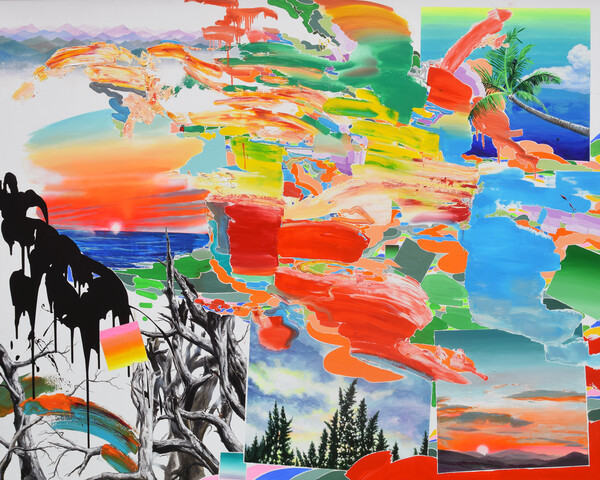
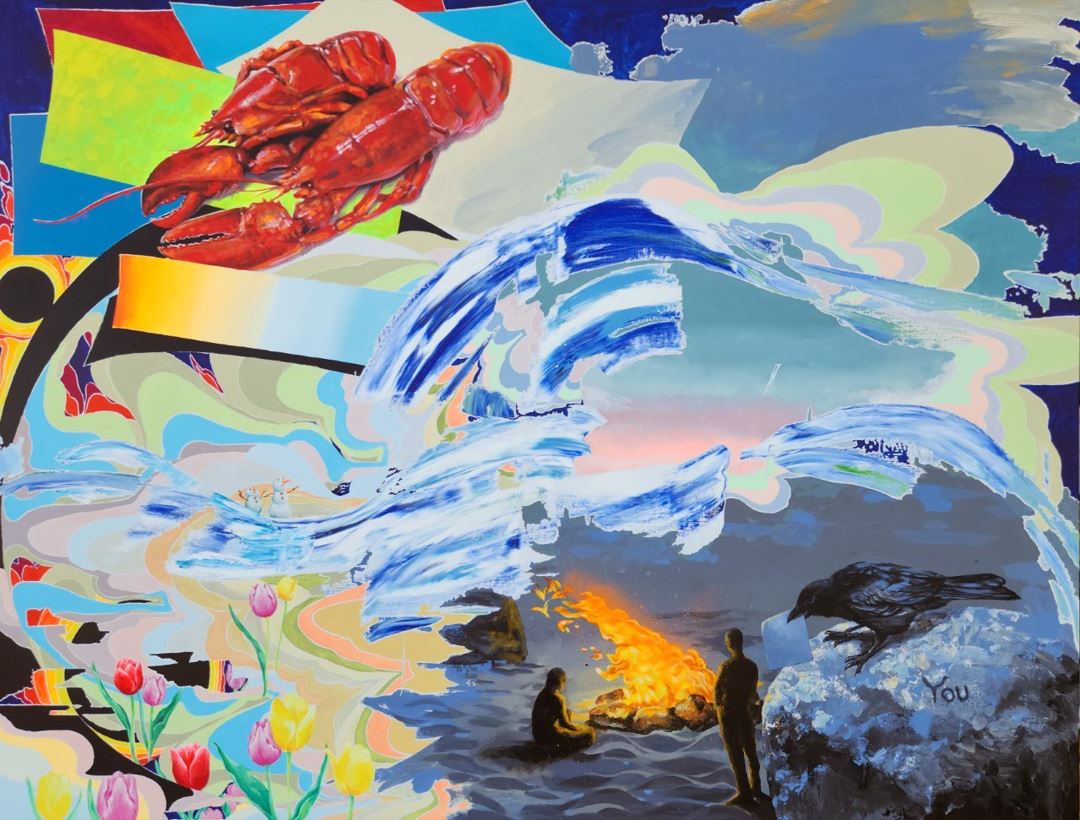
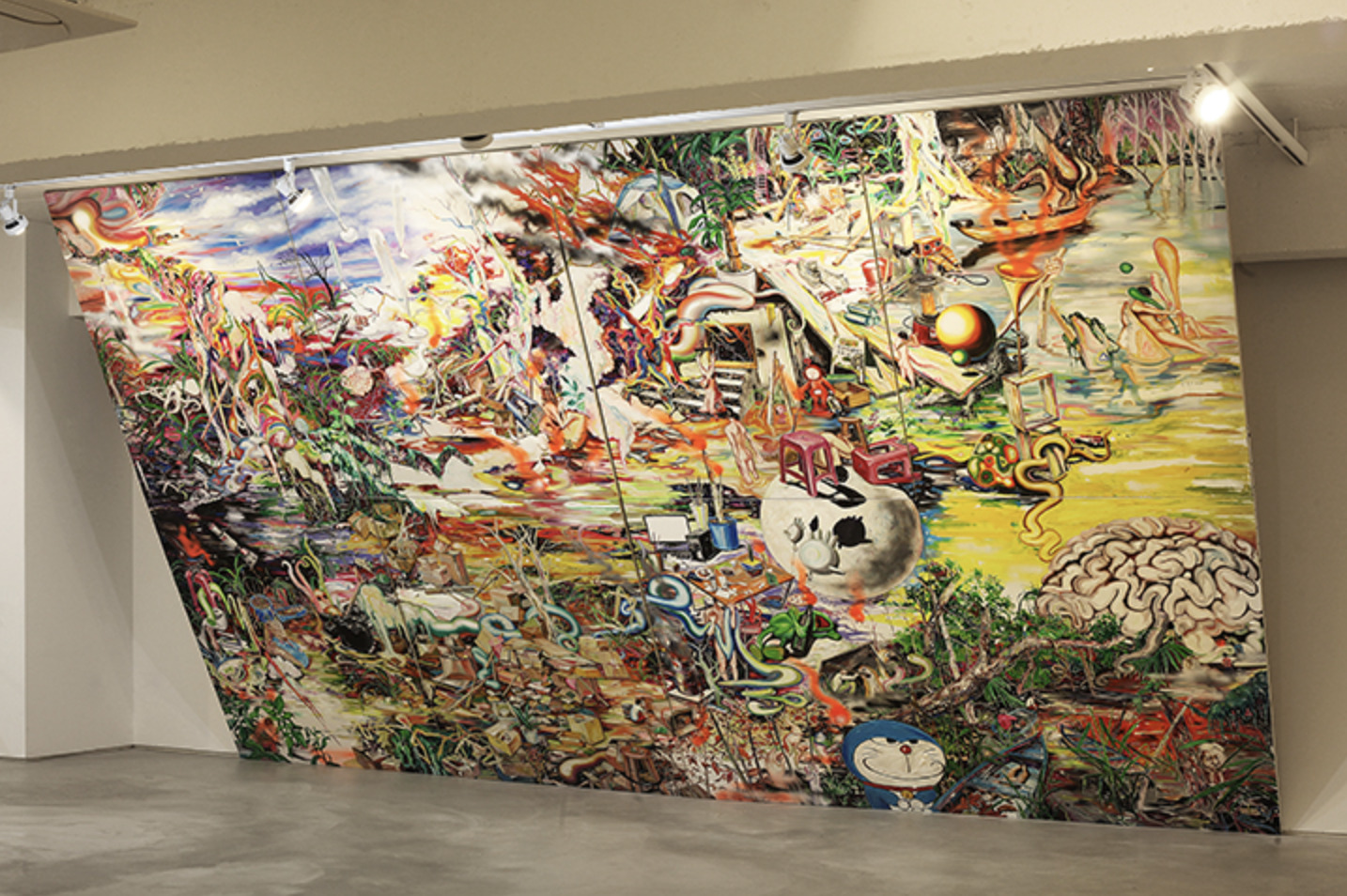
paintings first come into view through intense and bold colors, especially
color fields that actively use fluorescent pigments and primary colors, and
through structures where figuration and non-figuration are mixed within a
single picture plane. Yet his picture planes are not simply collections of
vivid or complex images. The artist places large brushstrokes and small
detailed renderings, accidental traces of paint and deliberately inserted
concrete images together on one surface.
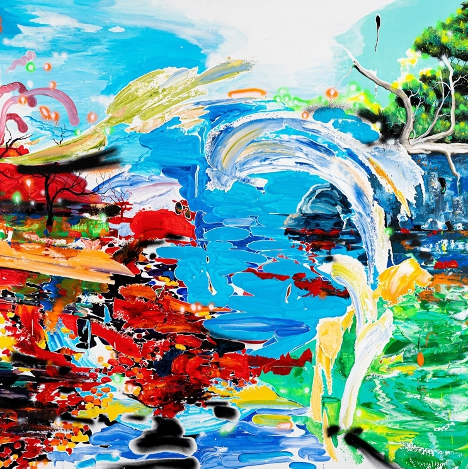
When rough strokes made by squeezing
out and pushing paint sit beside delicate marks rendered one by one at close
range, a shift between different bodily sensations occurs on the picture plane.
The difference between the sense of grasping the overall form from a distance
and the sense of completing details up close—the two modes of looking
repeatedly involved in learning and making painting—is maximized within his
work. This collision is not decorative excess, but a method for making
painting’s embodiment, materiality, illusion, narrative, and ornamentality
operate simultaneously.
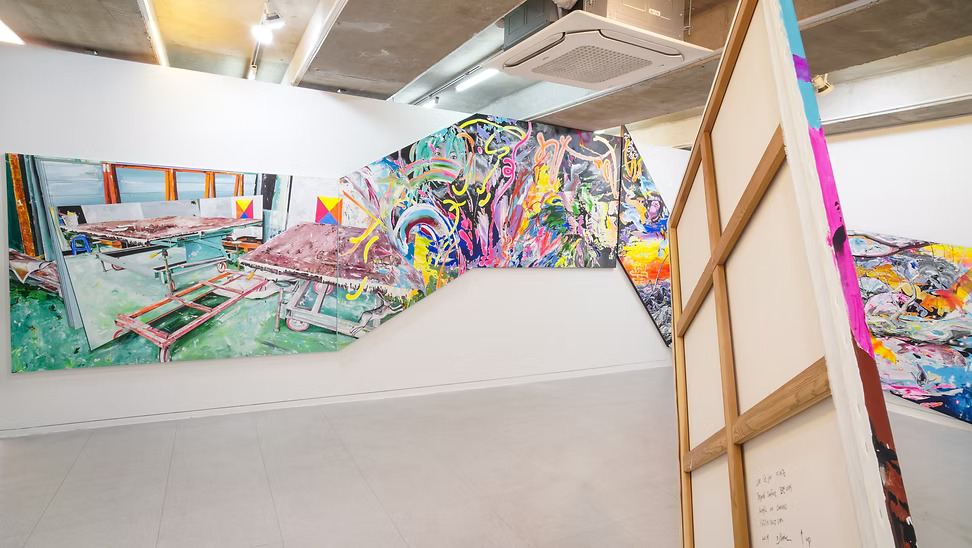
In his
early works, the artist expanded the physical scale and narrative range of
painting by connecting multiple canvases. From his first solo exhibition,
presented through the Seoul Museum of Art’s Emerging Artist Support Program in
2012, he composed large-scale paintings by continuously joining canvases, and
this approach became an important point of departure for his later multi-canvas
works.
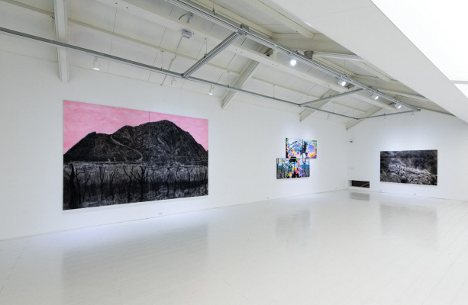
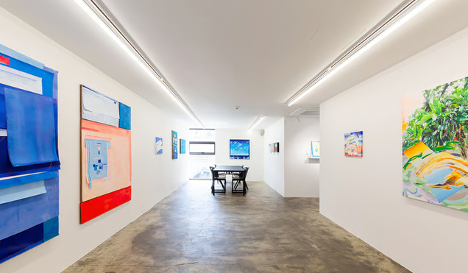
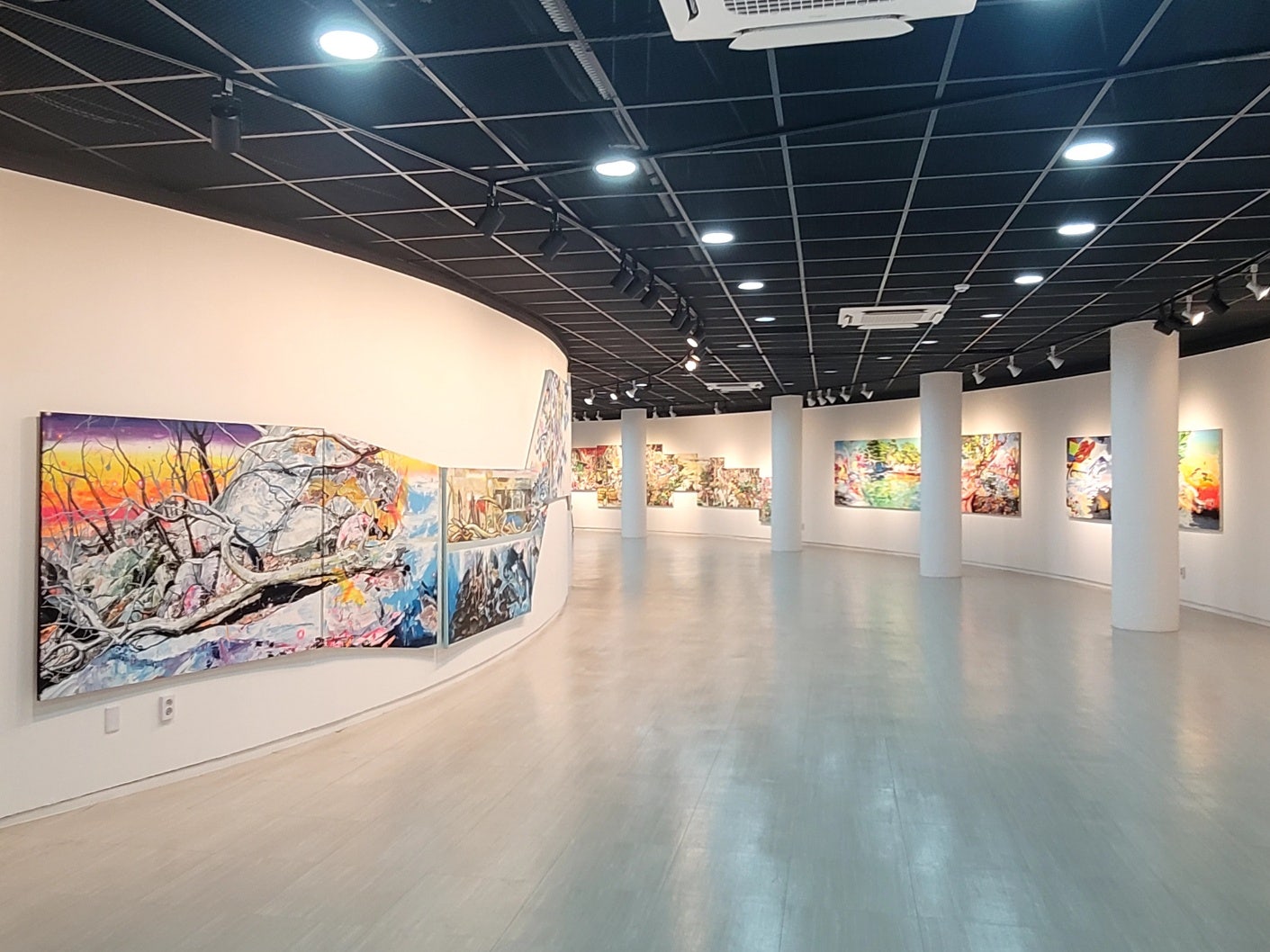
Works composed of multiple panels, such as What Have We
Burned? from 《What will it
burn?》(Space Willing N Dealing, 2015), were attempts to
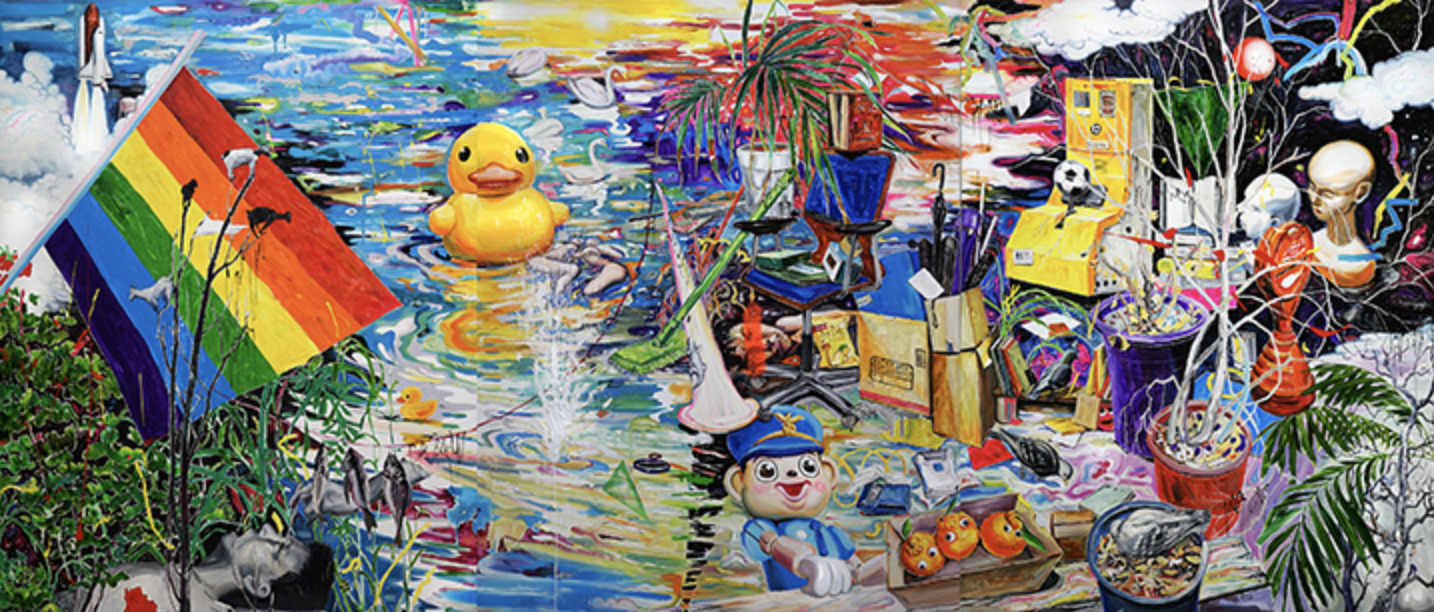
contain the plurality of the world within a single picture plane. Later, in 《Weltanschauung》, actual stickers and painted
stickers, figurative landscapes and abstract brushstrokes, and religious,
mythological, and popular-cultural images operate together.
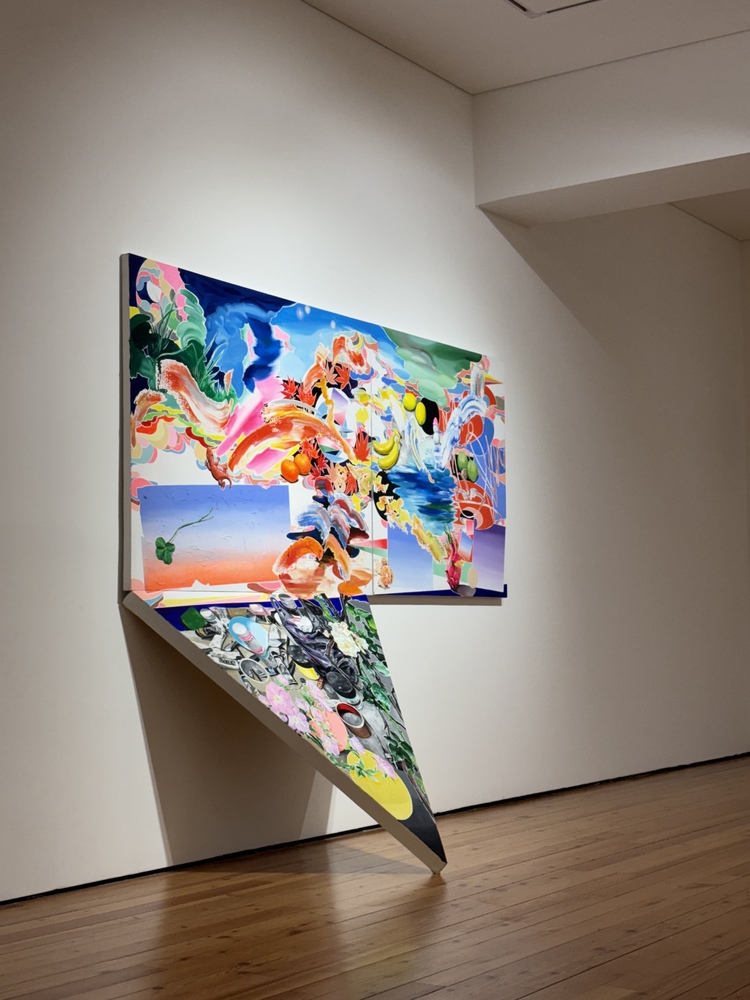
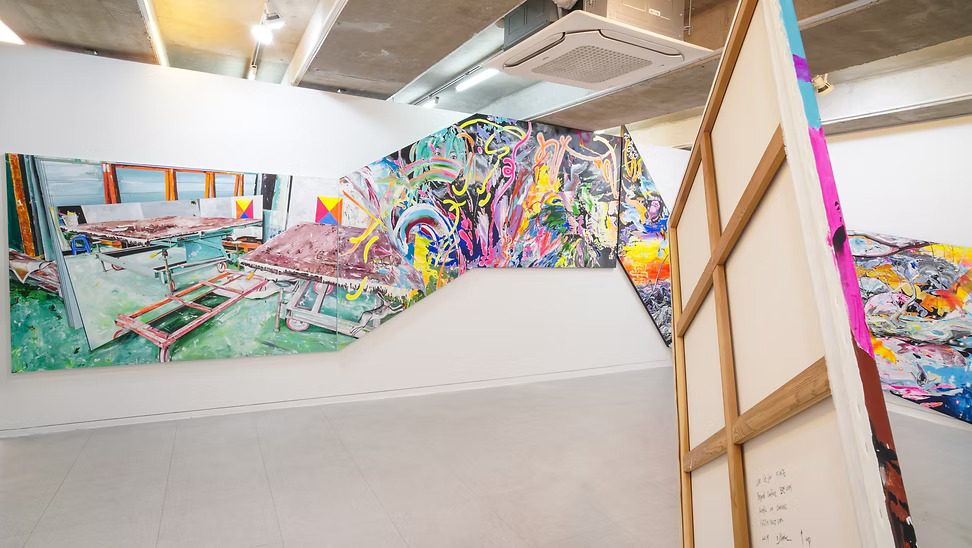
In works such as
With a Crocodile(2019), where the artist paints on canvas
and then cuts and layers it, actual thickness is created as images and layers
conceal and reveal one another, physically expanding the condition of painting
as a flat surface.
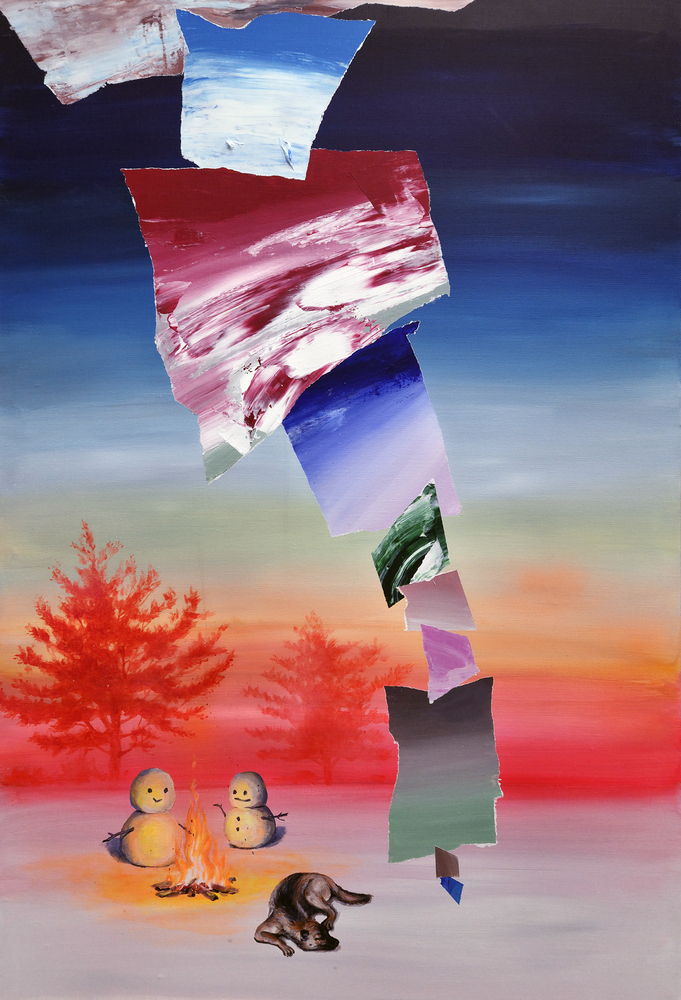
The
‘Bridge’ works, which began in earnest around 2020, extend this visual language
into the problem of temporality. The artist places a new canvas between two
earlier paintings and paints so that the images coming from both sides
naturally mix in the middle. He then repeats the process of removing one work
from the result and inserting a new canvas, causing the original image to
gradually disappear and leaving only traces of the image behind.
The artist
describes this state as something like the “gene of an image.” Between
Seasons(2024) shows a structure in which existing images are
transformed and replaced several times, until the original disappears and only
a genealogy of fragmentary images remains. Circle 1-1(2020-2024)
also arranges images derived from the Bridge works and new canvases in a
circular formation, revealing the accumulation of invisible time in a physical
form. What matters here is less what has been painted than how images move,
derive, and form relationships with other images.
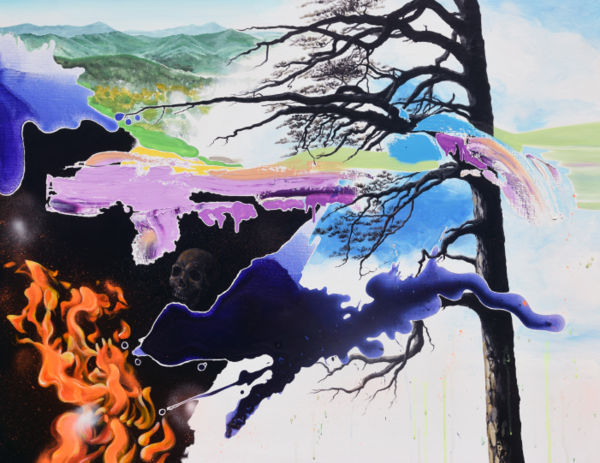
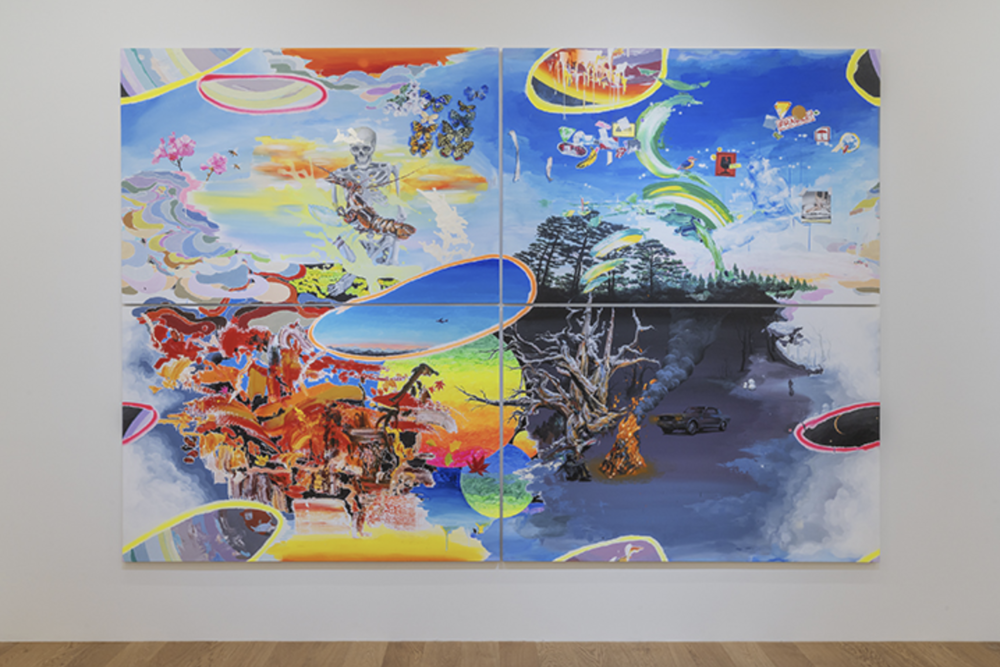
Beyondscape(2022-2023)
and Painted Painting(2023), presented in the group
exhibition 《The 23rd SONGEUN Art Award
Exhibition》(SONGEUN, 2023), push these experiments one
step further. Each work consists of four canvases, and during the exhibition
their positions were changed vertically and horizontally. As a result, the same
work appeared in different compositions depending on when viewers encountered
it.
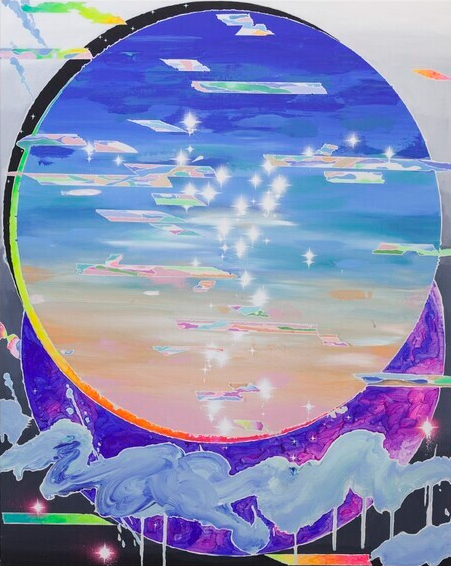
While Beyondscape takes the very concept of “landscape
painting” as the subject of the painting by disassembling and recombining the
motifs, composition, brushwork, and picturesque elements of the landscape
genre, Painted Painting takes the medium of painting itself
as its subject. Although this work presents the form of the four seasons on the
surface, it also brings into one picture plane painting’s representational
quality, embodiment, ornamentality, symbolism, narrative, and materiality.
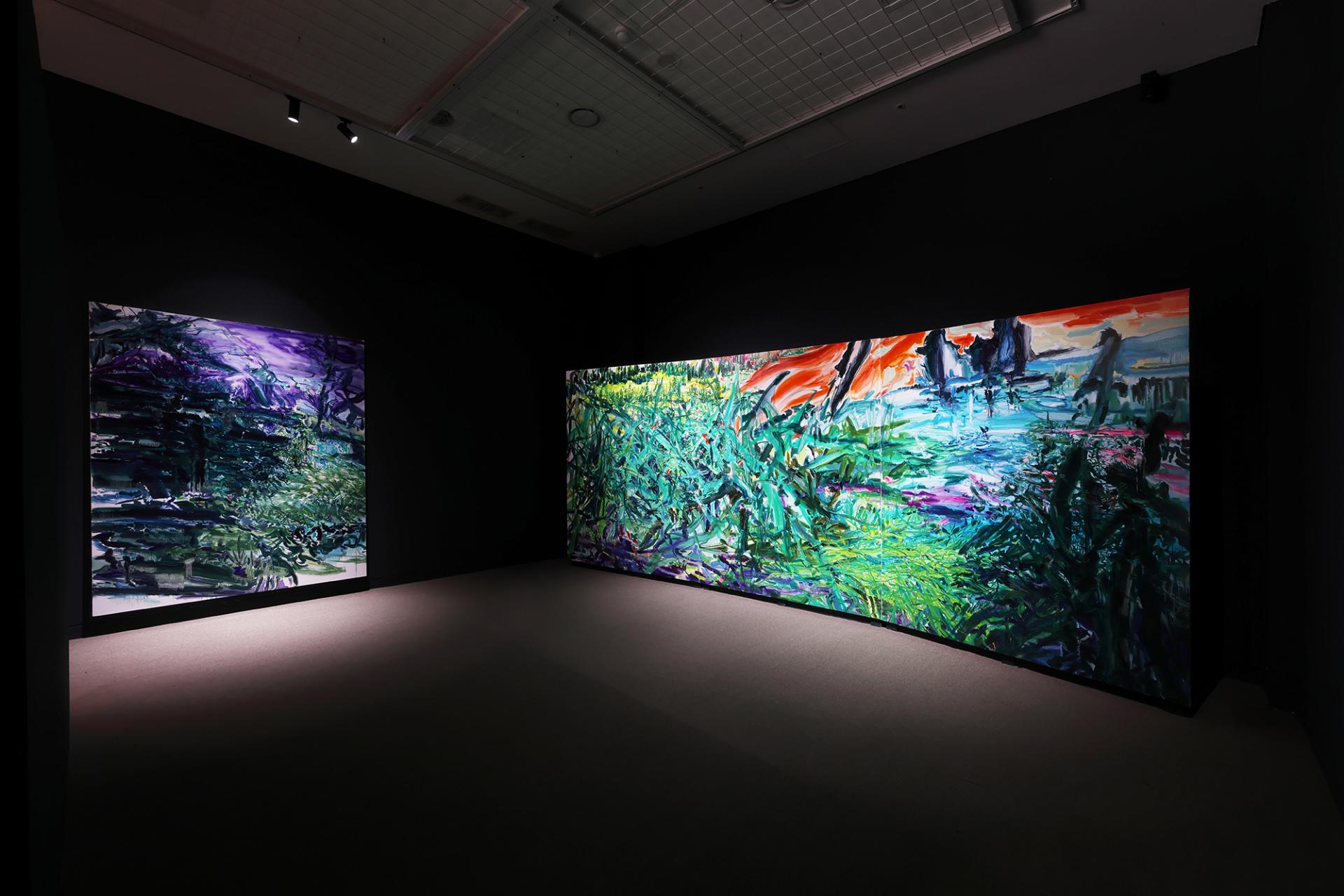
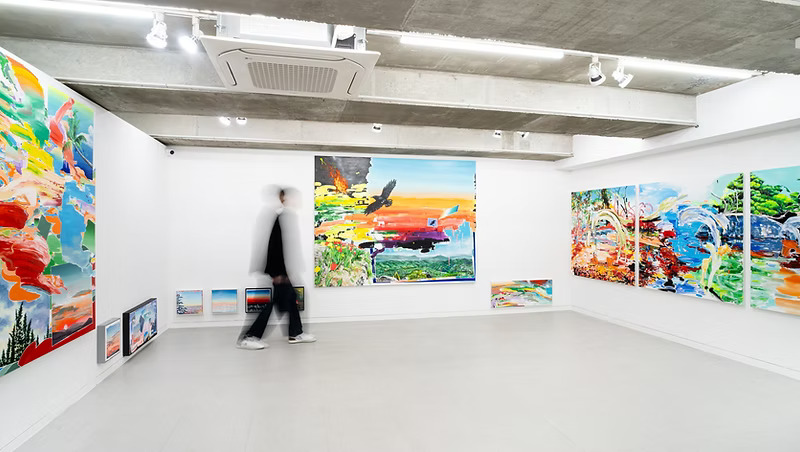
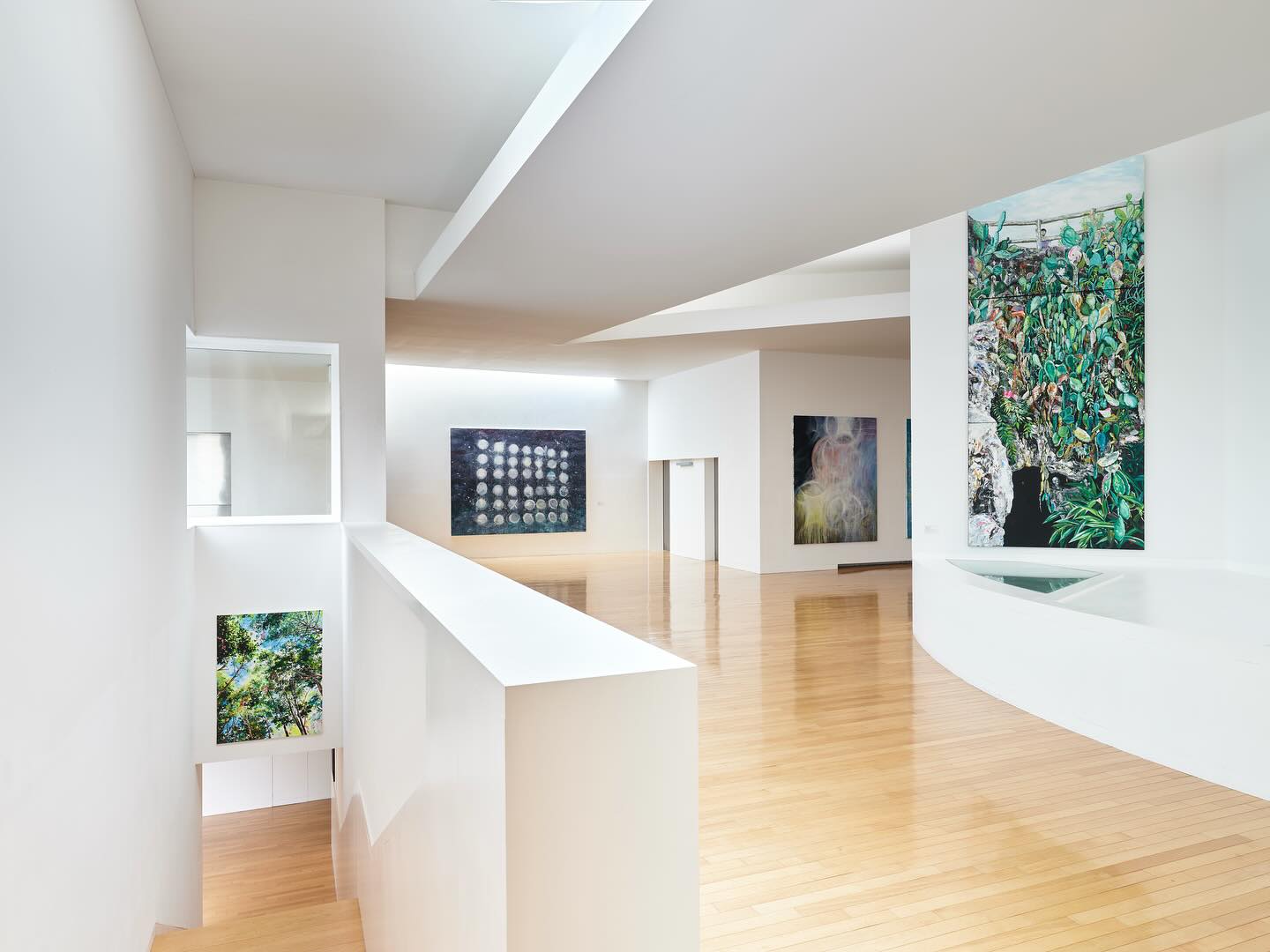
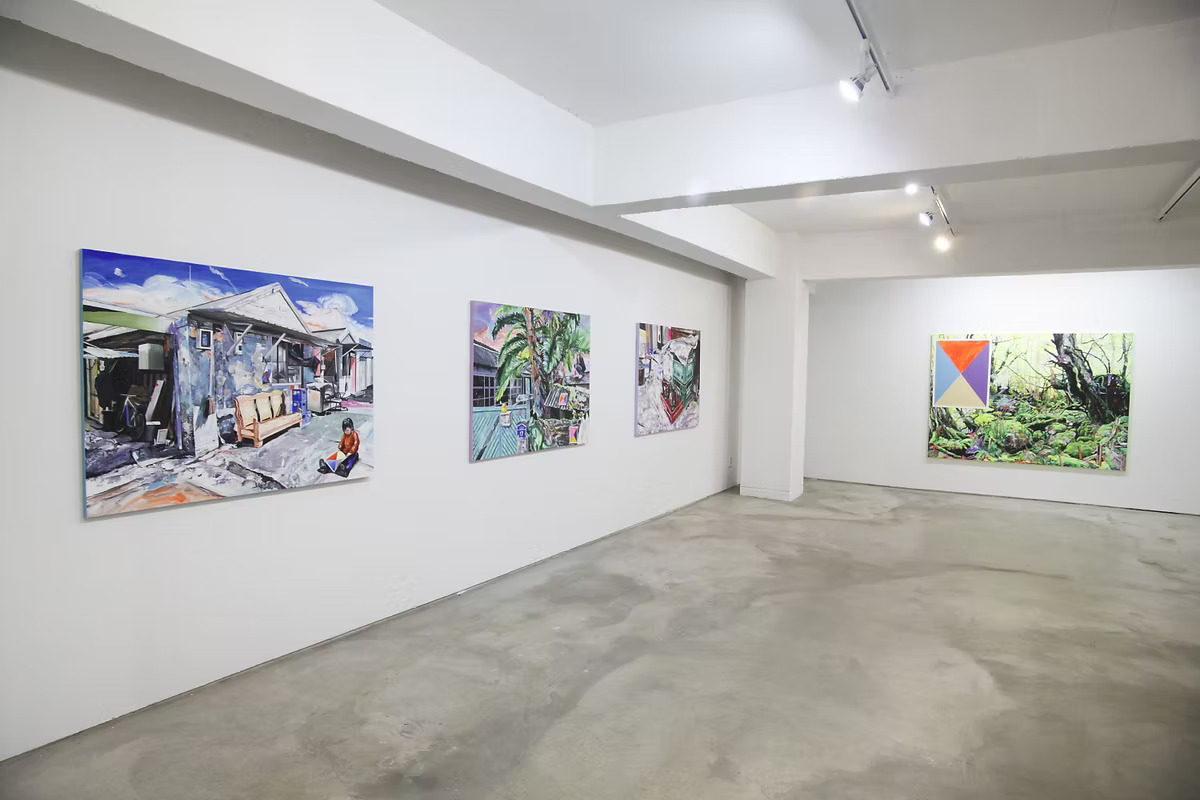
Later, in 《Picturescape》(Space Willing N Dealing,
2025), the artist focuses on the afterimage and rhythm that arise in the moment
of moving from one painting to the next. The slight delay in which a viewer
receives the next scene while still not having fully forgotten the landscape
seen before appears in his paintings as resonance between images. Each canvas
placed in the exhibition space functions less as a fixed single painting than
as an entity that autonomously proliferates and responds to others, showing how
widely painting can expand even within the physical condition of flatness.