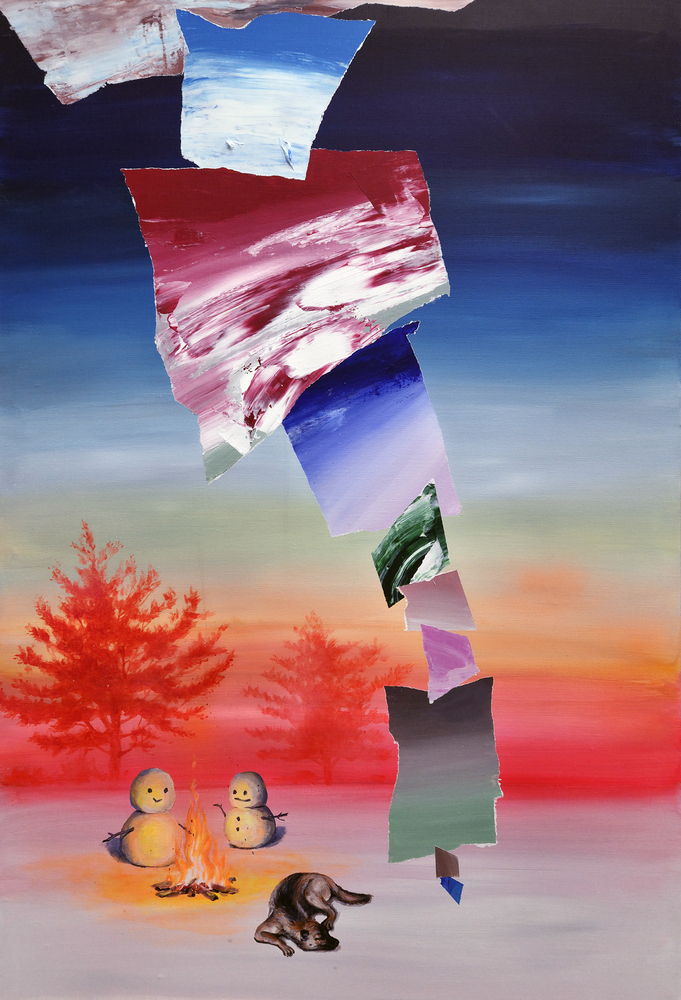
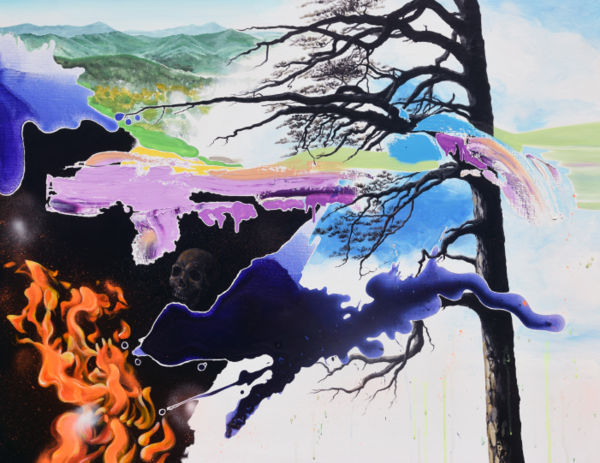
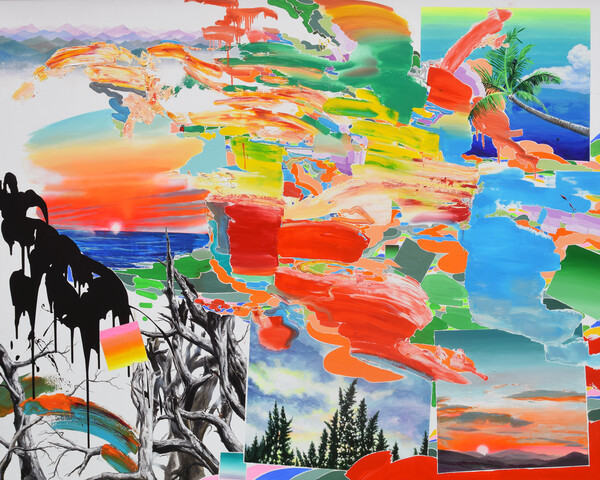
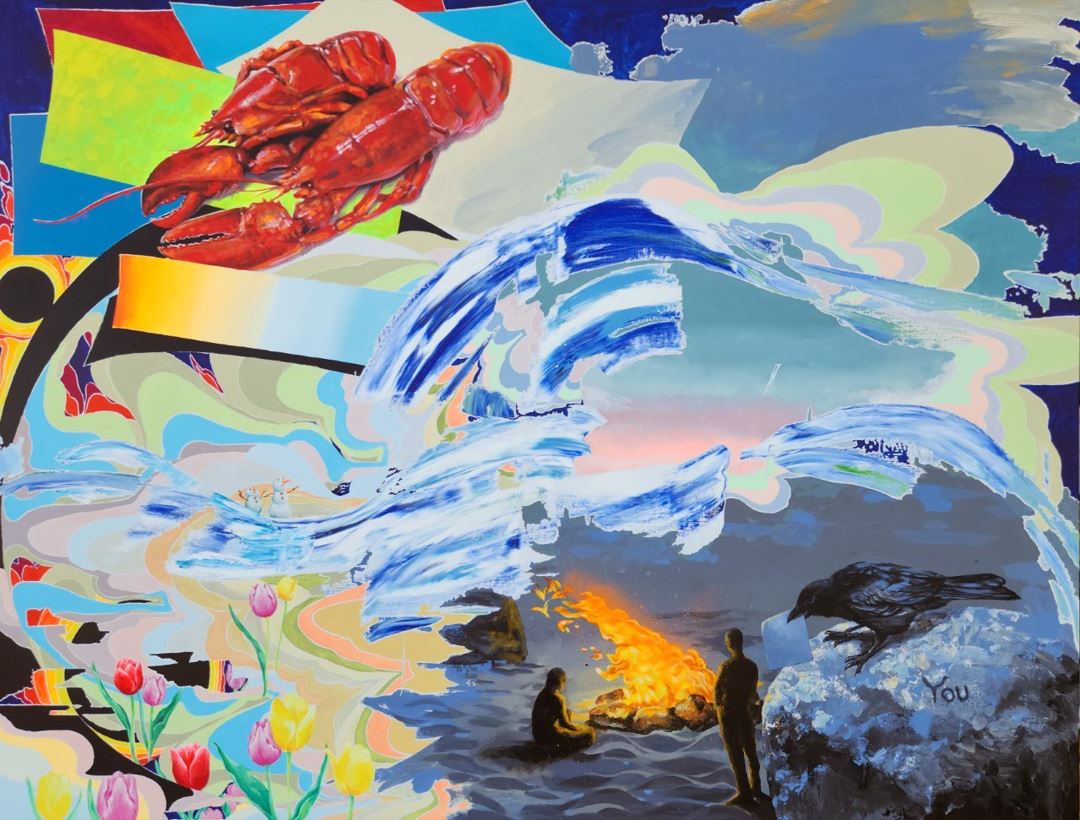
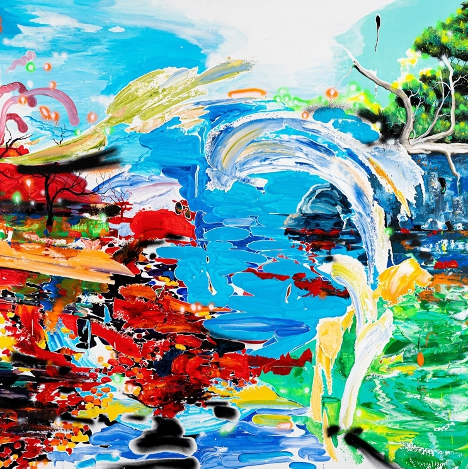
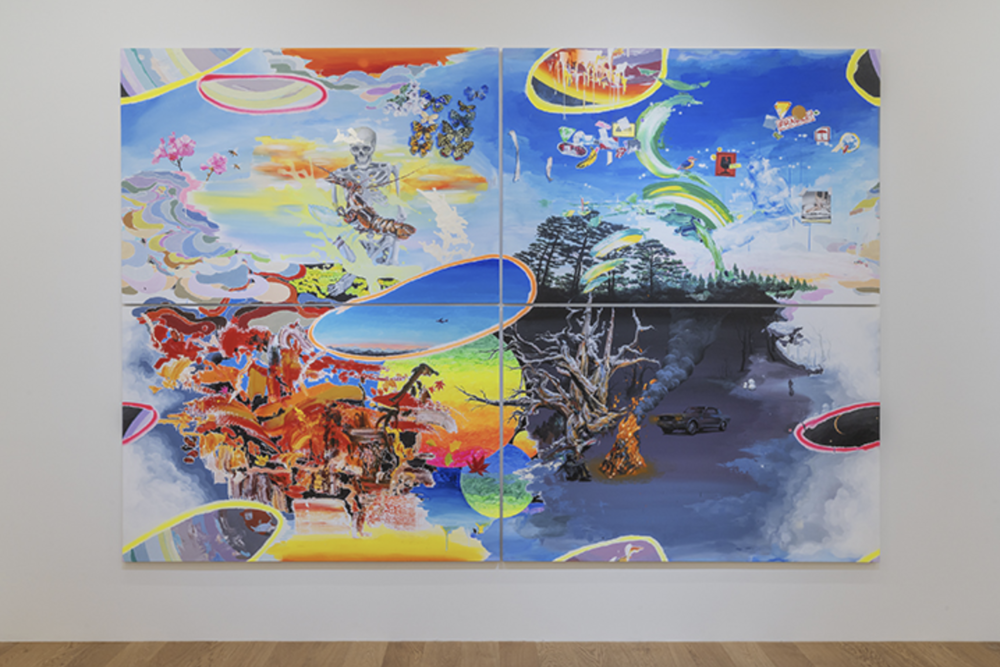
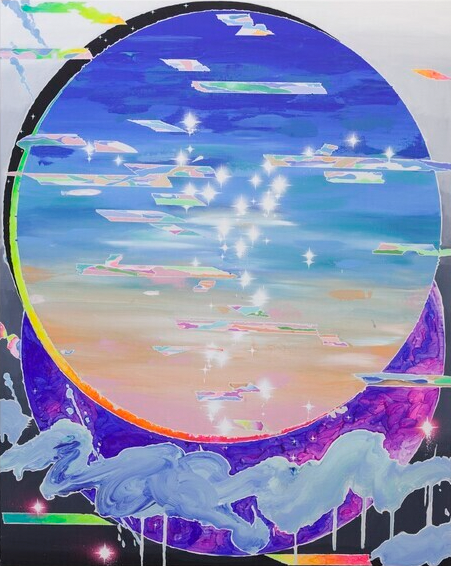
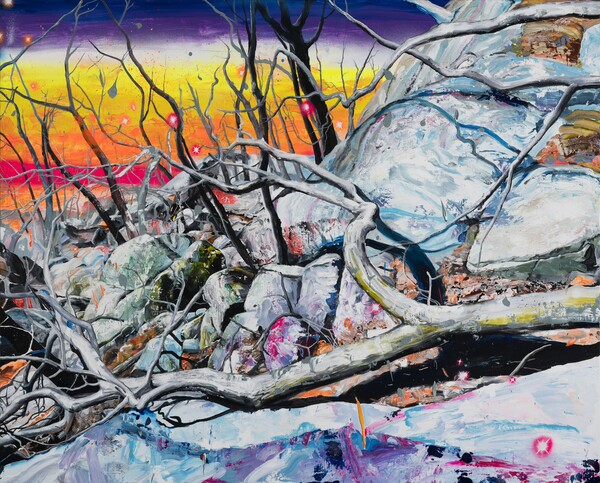
Sejun Lee (b. 1984) has developed a distinctive painterly practice that brings together figurative and non-figurative forms within a single canvas through the use of bold, vibrant color. Employing his own visual language—characterized by the juxtaposition of seemingly non-ordinary visual elements, images, and materials—Lee creates singular pictorial worlds in which reality and unreality coexist.


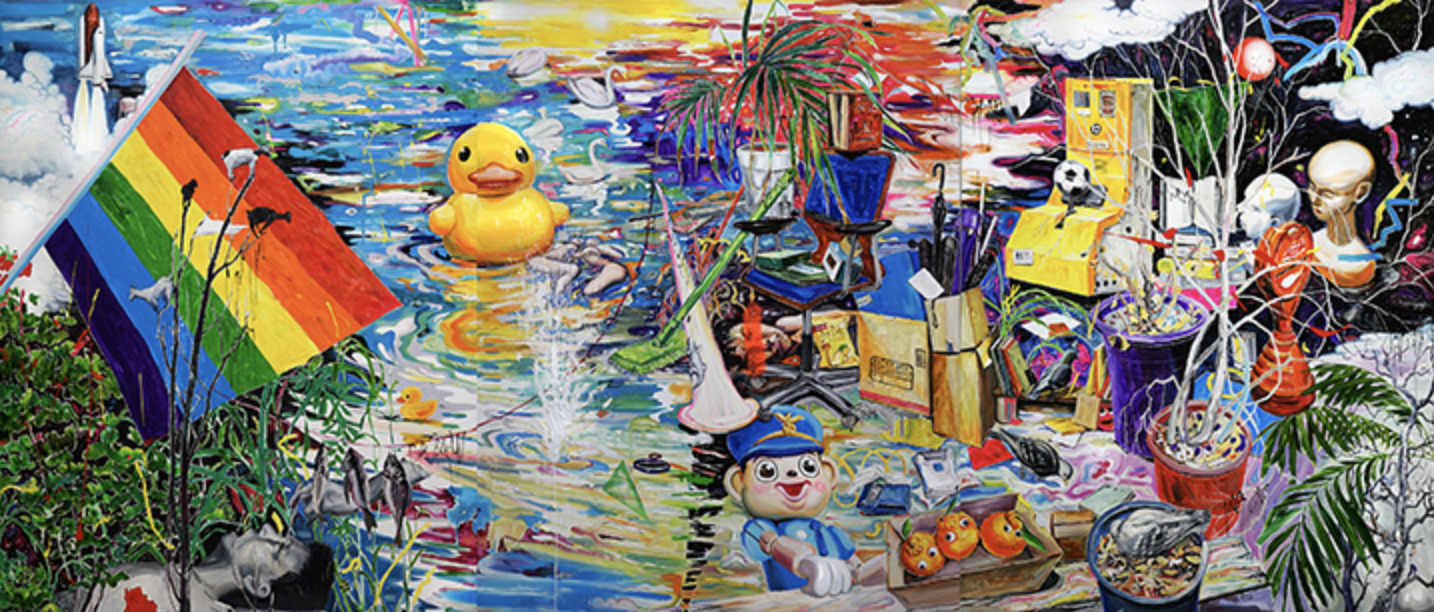
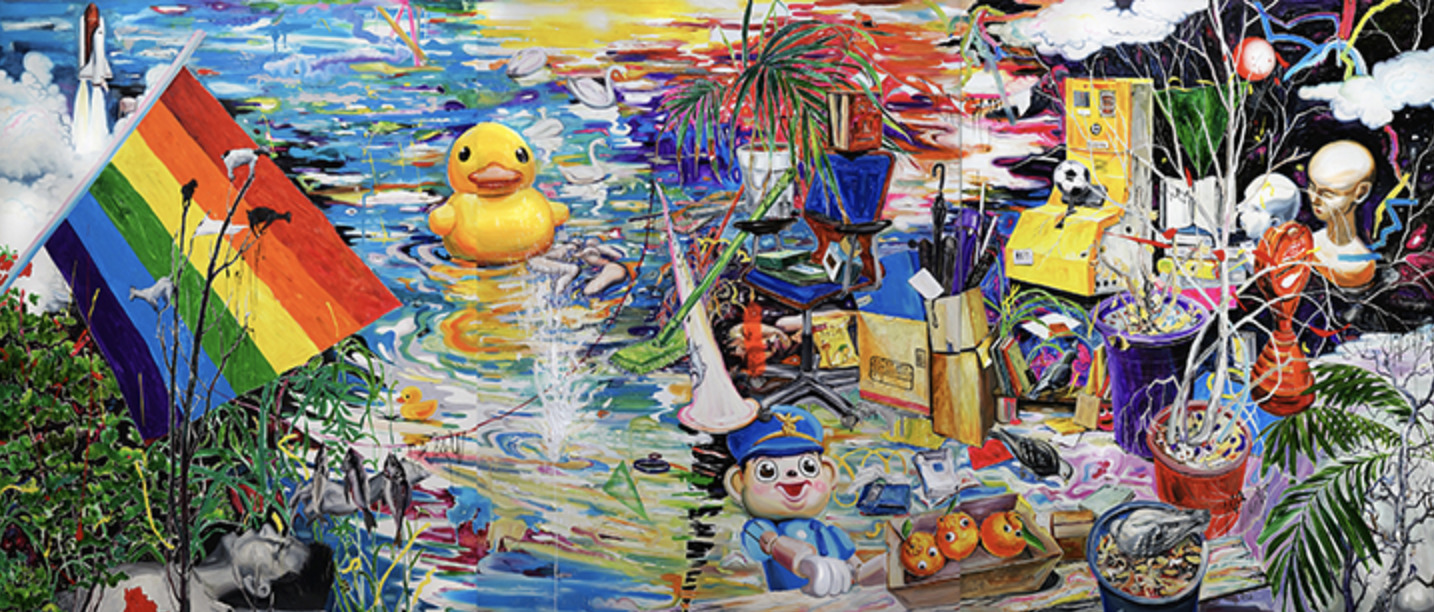
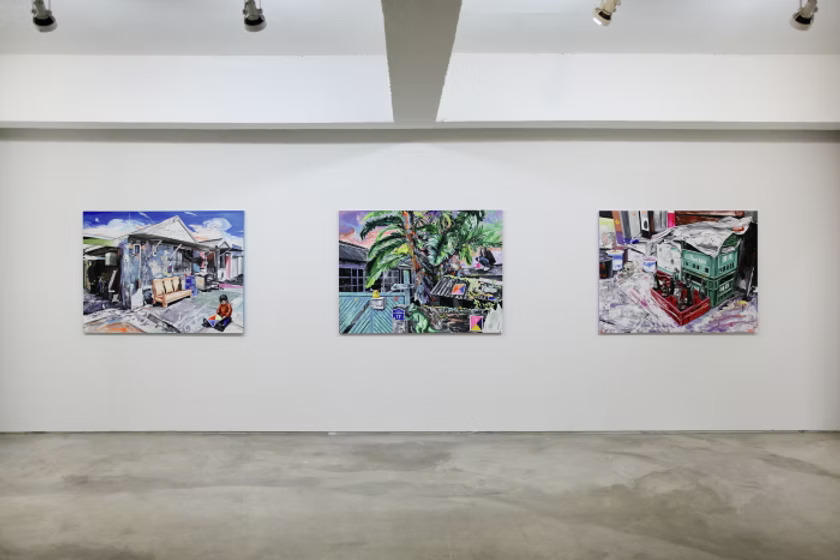
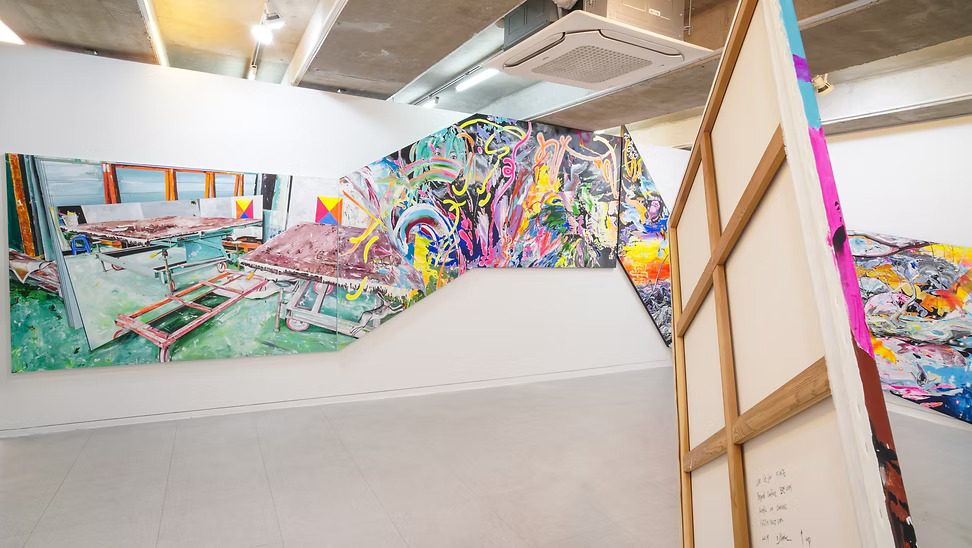
Sejun Lee, Things Adrift, 2015, Oil on canvas, 145.5x336.3cm (3 pieces) © Sejun Lee

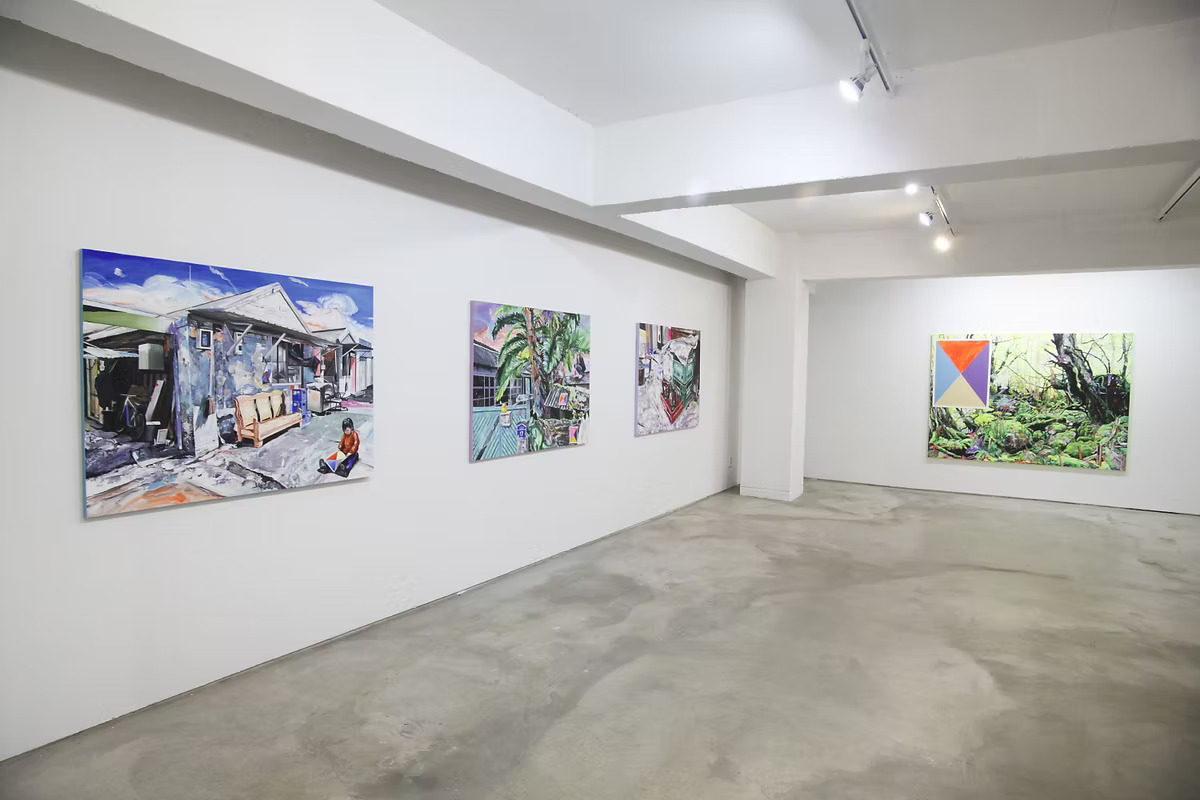
Sejun Lee's paintings, populated by a multitude of objects and landscapes, stem from his aspiration to encompass the diverse narratives and structures that constitute the world we inhabit. For Lee, the world is defined as a place in constant transformation, where heterogeneous elements collide and continually reshape one another.
 
To articulate this vision, the artist brings together multiple subjects and motifs within a single pictorial field, drawing equally on figurative and abstract modes of painting. The resulting compositions, layered with overlapping objects, images, and narratives, resist simultaneous perception, paradoxically revealing the impossibility of fully encompassing the complexity of the world to which the artist aspires.


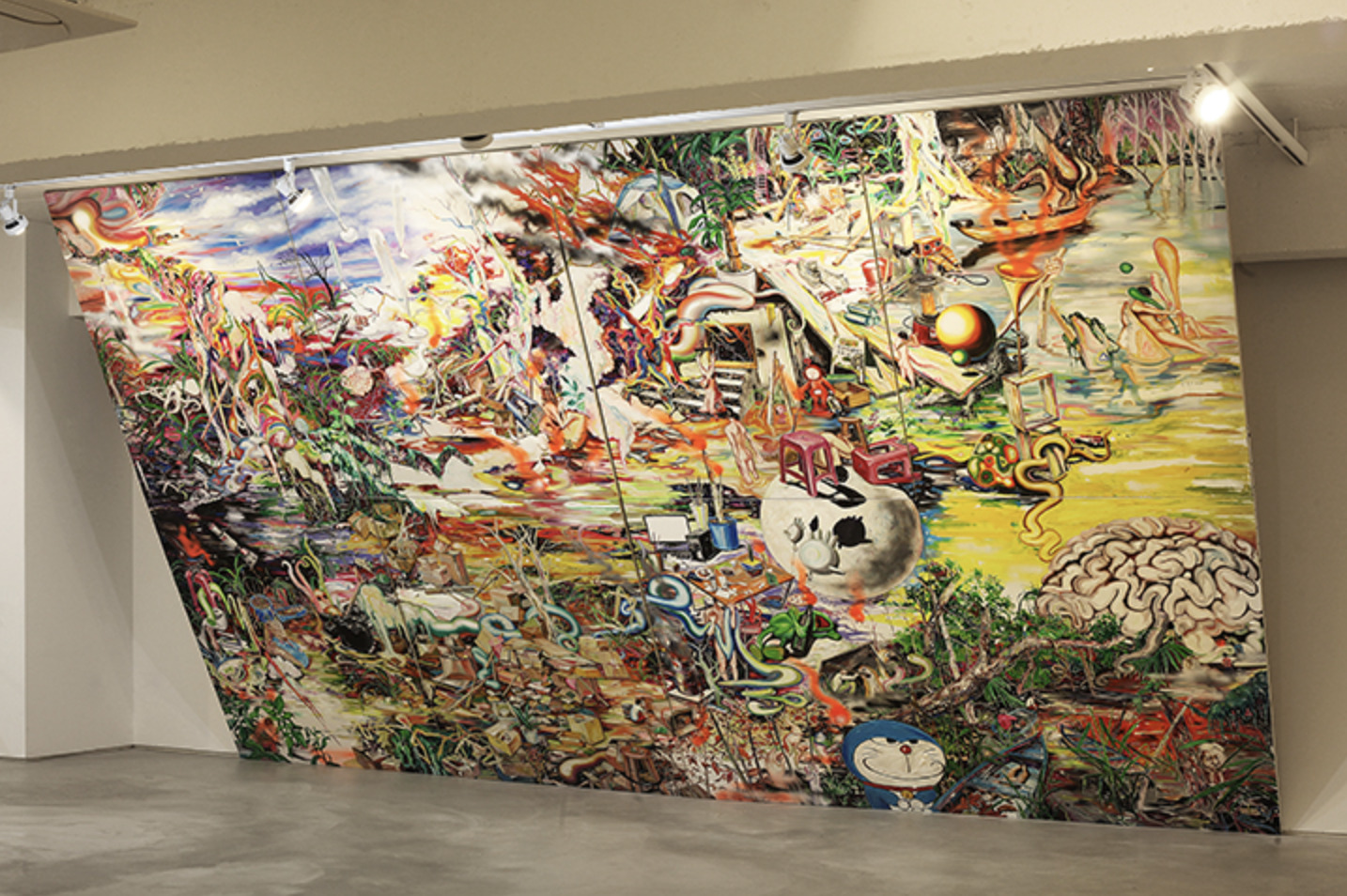
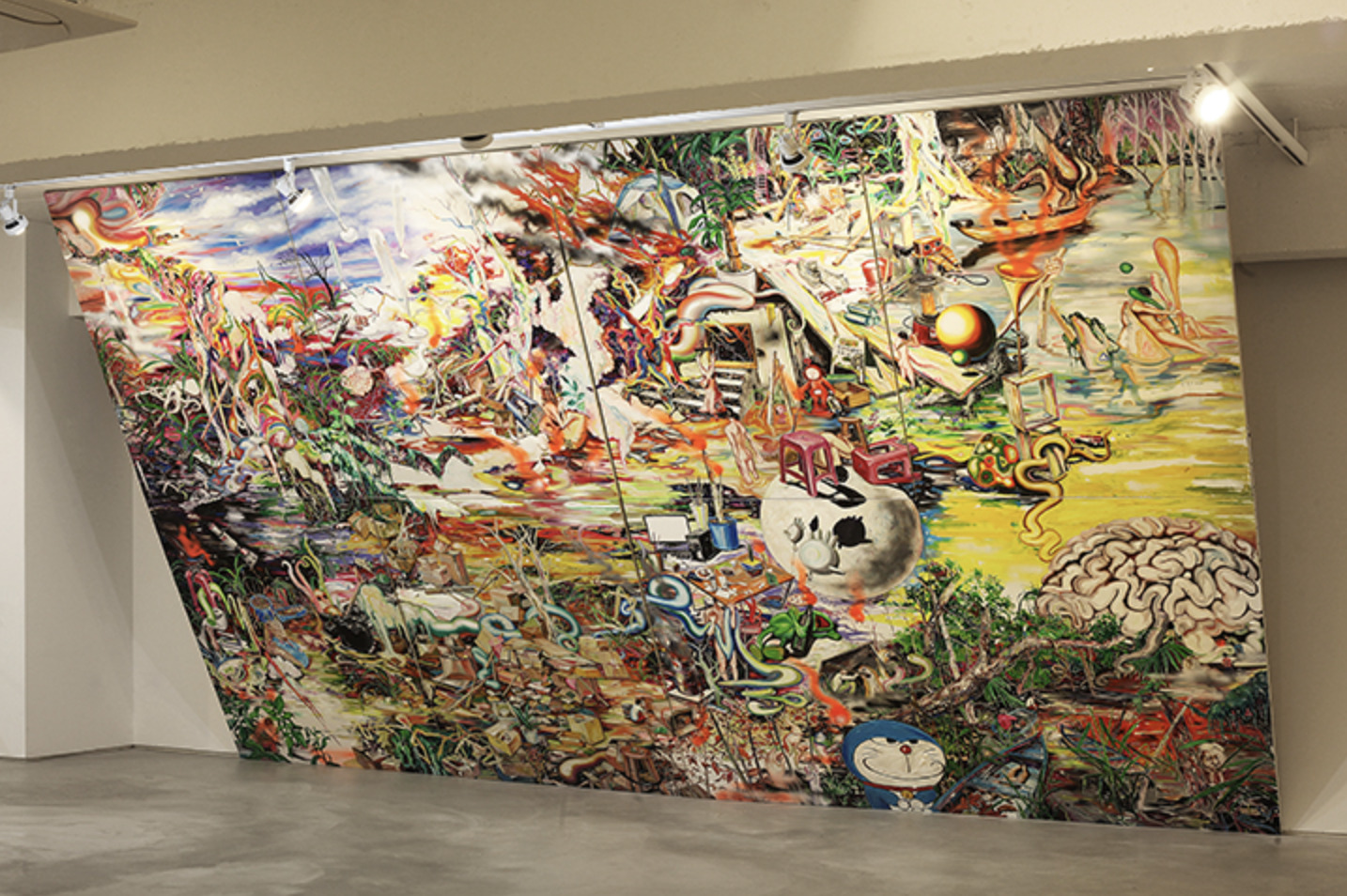
Sejun Lee, What Have We Burned?, 2015, Oil on canvas, 324.4x521.2cm (8 pieces). Installation view of 《What will it burn?》 (Space Willing N Dealing, 2015) © Space Willing N Dealing

Lee approaches painting through the fundamental question, "What is the world we inhabit?" In seeking an answer, he has developed a practice that maps the very structure of the world onto the act of painting itself.
 
Since 2014, the artist has invited audiences to share their own perceptions and images of the world, collecting individual ideas and worldviews as part of his ongoing practice.
 
These collected images have subsequently been translated into multiple canvases and presented as interconnected compositions. For Lee, the world resembles a vast organic entity in which heterogeneous elements coexist, continuously influencing one another and remaining in a constant state of transformation.
 
By expanding his works through the physical connection of separate canvases, he metaphorically evokes the ways in which distinct individuals come together to constitute a single, shared world.


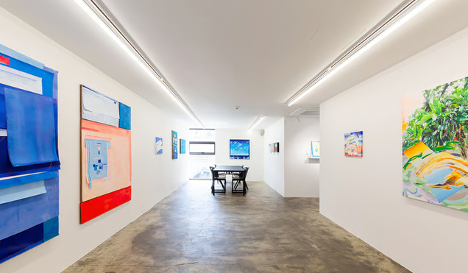
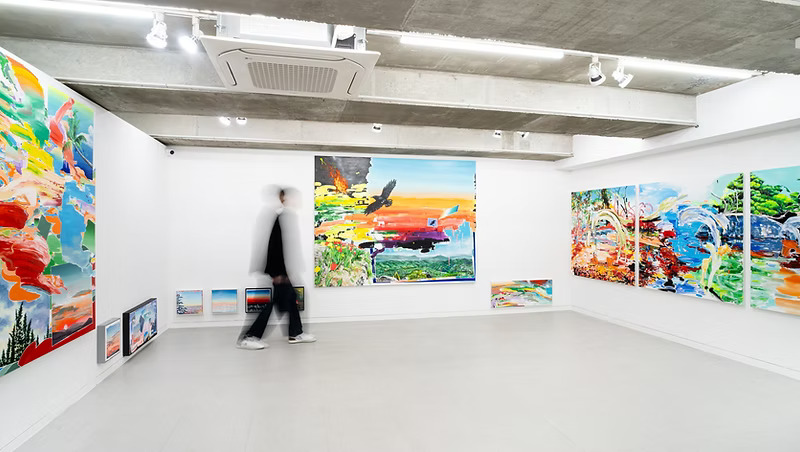
Installation view of 《Weltanschauung》 (Space Willing N Dealing, 2019) © Space Willing N Dealing

This line of inquiry culminated in Lee's 2019 solo exhibition 《Weltanschauung》 at Space Willing N Dealing, which originated from his attempt to construct a new world by collecting individual ways of seeing the world through clues found in microscopic landscapes, bringing together worldviews that converge, diverge, or collide.
 
The exhibition title, “Weltanschauung (Worldview)”, refers literally to the perspective or conceptual framework through which one perceives the world. Here, Lee sought to give visual form to the subjective worldviews that emerge through each individual's lived experience.
 
Driven by his persistent question—"How is an individual's worldview formed within a single world?"—Lee moved beyond representing isolated images or fragments. Instead, he assembled the structures and appearances of the world as perceived through his own lens into a single pictorial field, where heterogeneous ways of seeing coexist and enter into dialogue.


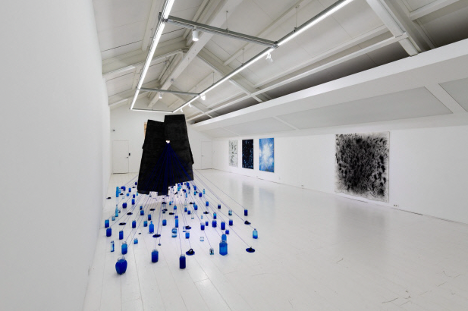
Installation view of 《Weltanschauung》 (Space Willing N Dealing, 2019) © Space Willing N Dealing

Through this exhibition, Lee presented works that drew upon a wide range of cosmologies and worldviews collected from religion, mythology, genre fiction, cinema, and even fictional universes devised by individuals, translating these diverse conceptions into visual form.
 
Lee is fascinated by the fact that, although we inhabit the same world, each person perceives and defines it differently. These differing perceptions shape not only individual modes of behavior and attitudes but also the values and aspirations that guide one's life.
 
Gathering and accumulating such disparate ways of seeing, the artist reconfigures them into a single pictorial world on the canvas.


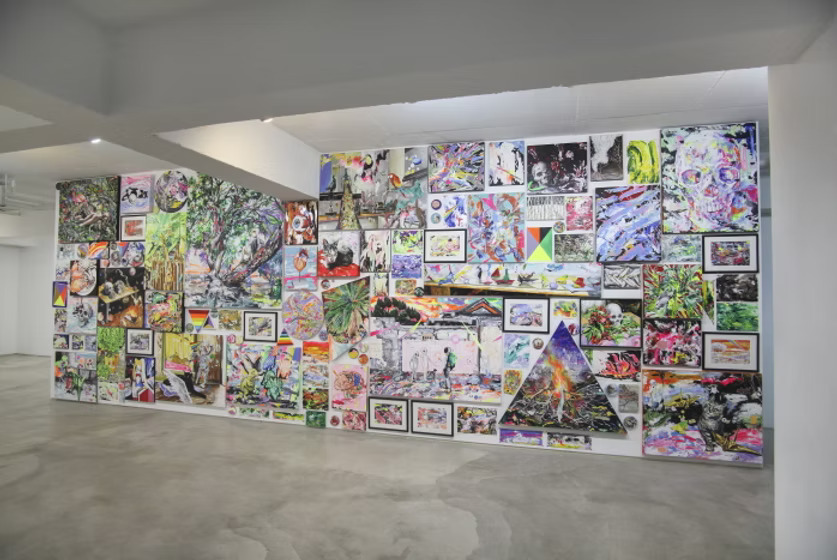
Installation view of 《Weltanschauung》 (Space Willing N Dealing, 2019) © Space Willing N Dealing

The resulting 124 paintings were assembled into a single painterly installation titled The 7.7 Billion Names of God. Across the installation, figurative depictions that evoke scenes from everyday life coexist with abstract passages composed of gestural brushstrokes and bold fields of color. In some works, recognizable forms gradually dissolve into distortion, while in others only enigmatic traces remain.
 
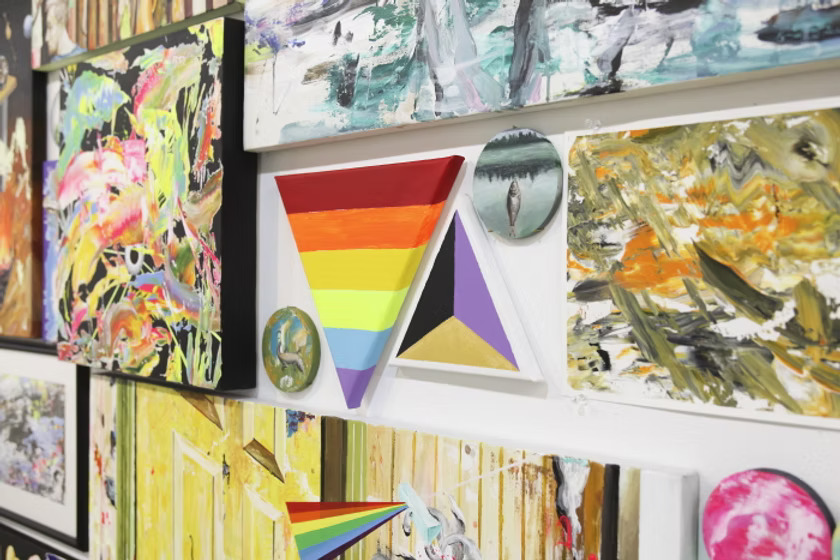
Several paintings also feature painted stickers or actual stickers affixed to their surfaces. These function as a kind of intermediary layer that disrupts the illusionistic space of the painted image, marking a threshold between reality and unreality.
 
As the artist explains, they create "a loose connection between different works, appearing at once as stickers attached to the painting itself and as stickers adhered to something depicted within the painting."


Installation view of 《Weltanschauung》 (Space Willing N Dealing, 2019) © Space Willing N Dealing

Lee's inquiry into the nature of the world also found expression through another methodological approach. One of the works presented in the exhibition, With a Crocodile, was created by repeatedly cutting and layering painted canvases to construct a single image.
 
The contours carved along each pictorial layer generate physical depth through the spaces between them, producing a composition with heightened density and spatial complexity.
 
Whereas Lee's earlier works expanded pictorial space horizontally by joining multiple canvases together, foregrounding the coexistence of complex and heterogeneous images, this body of work adopts a different strategy.
 
By allowing images and layers to alternately conceal and reveal one another, it seeks to transcend the limitations of painting as a flat surface, opening up a multidimensional pictorial space in which depth emerges through the dynamic interplay of overlapping forms.


Installation view of 《Weltanschauung》 (Space Willing N Dealing, 2019) © Space Willing N Dealing

In this way, diverse worldviews that appear mutually contradictory or fundamentally irreconcilable become key references for Lee's paintings and installations.
 
They invite viewers to reflect on what they choose to believe and what they dismiss as implausible or absurd. In doing so, his work also suggests that one's deepest convictions may, from another's perspective, seem no more than an improbable fiction.


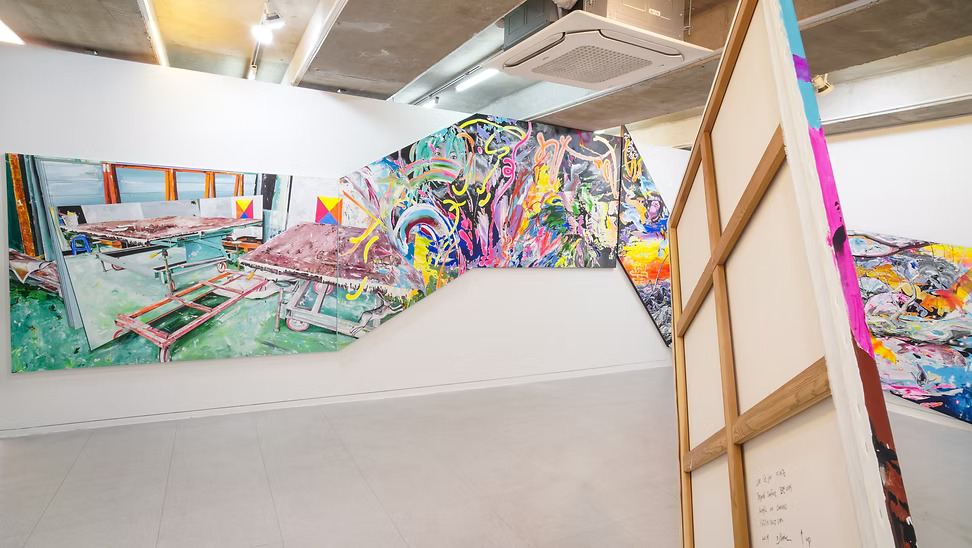
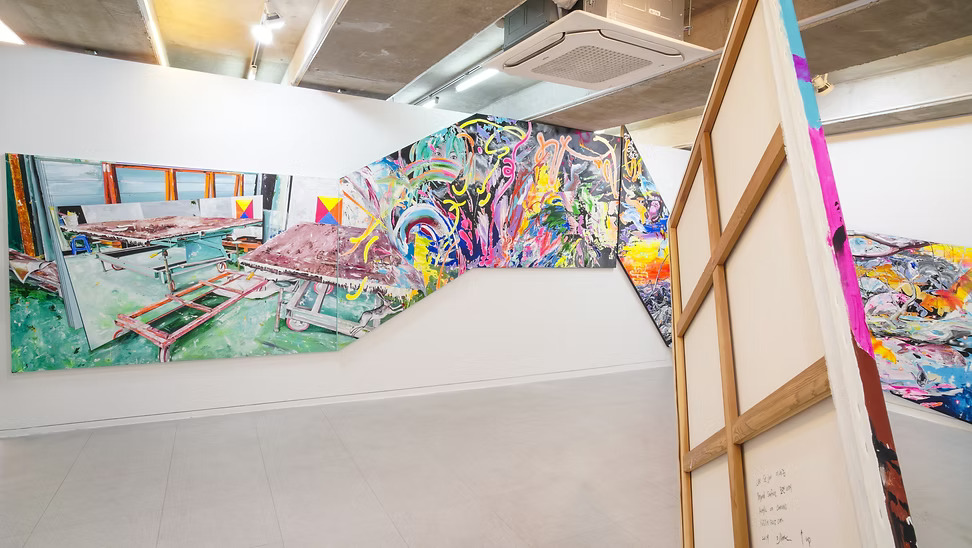
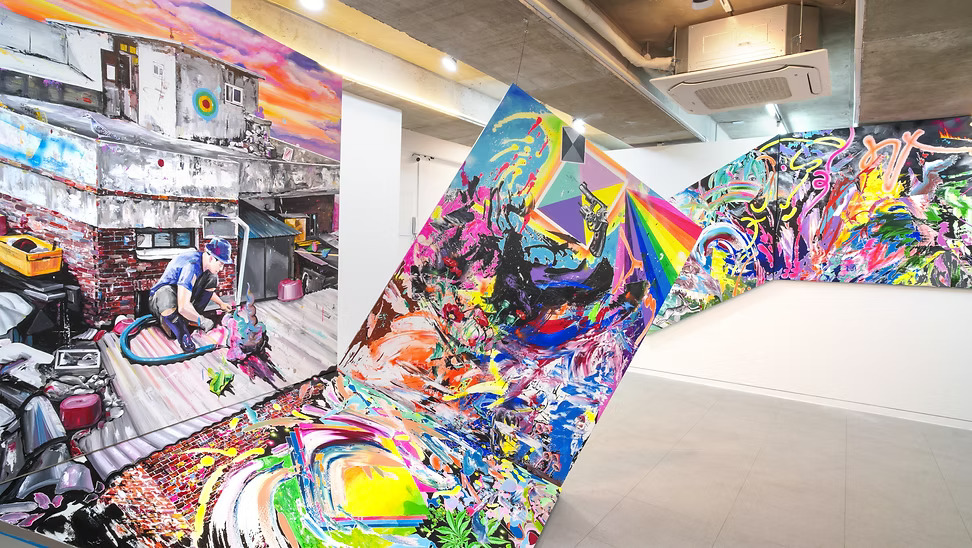
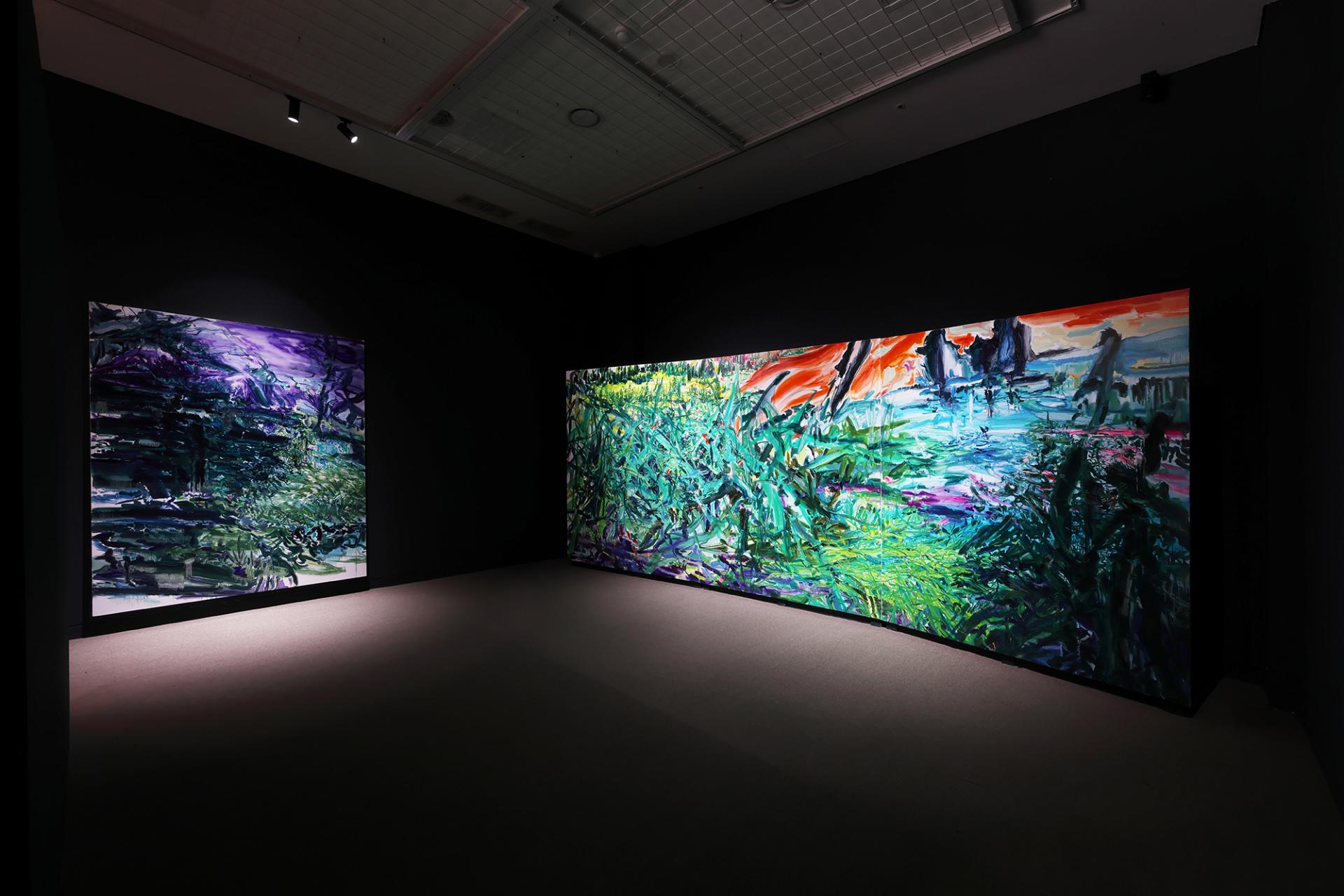
Sejun Lee, Anti Plot_Space Arcade, 2019-2023, Oil, acrylic, and fluorescent pigment on linen, 246x1821.1cm (13 pieces). Installation view of 《Finally When You and I Meet》 (Space Willing N Dealing, 2023) © Space Willing N Dealing

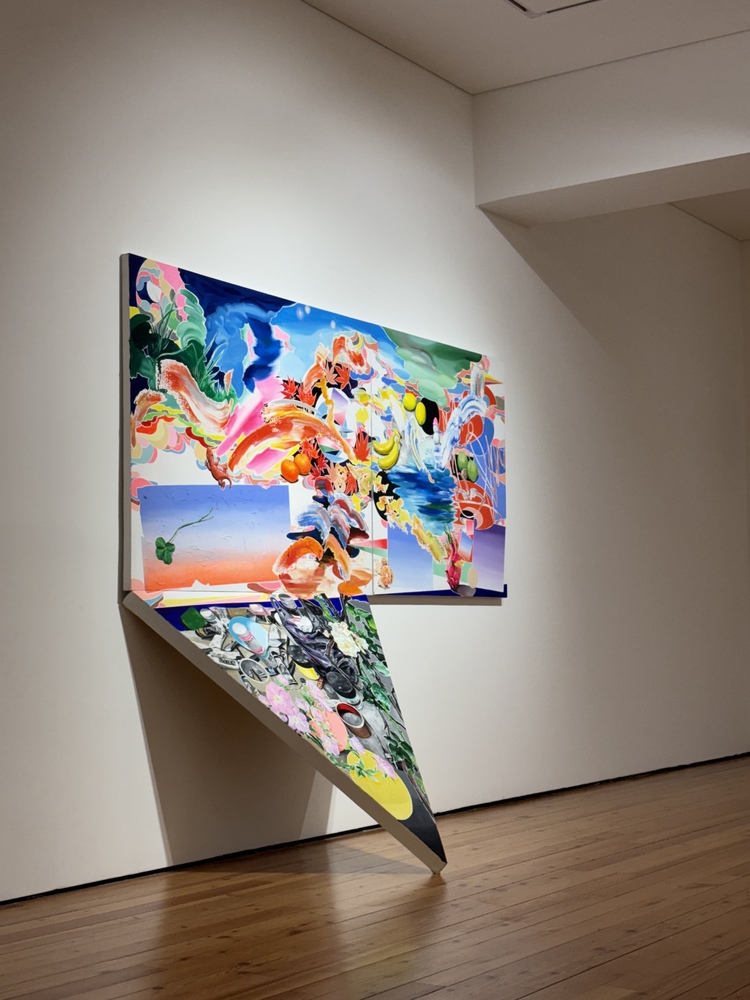
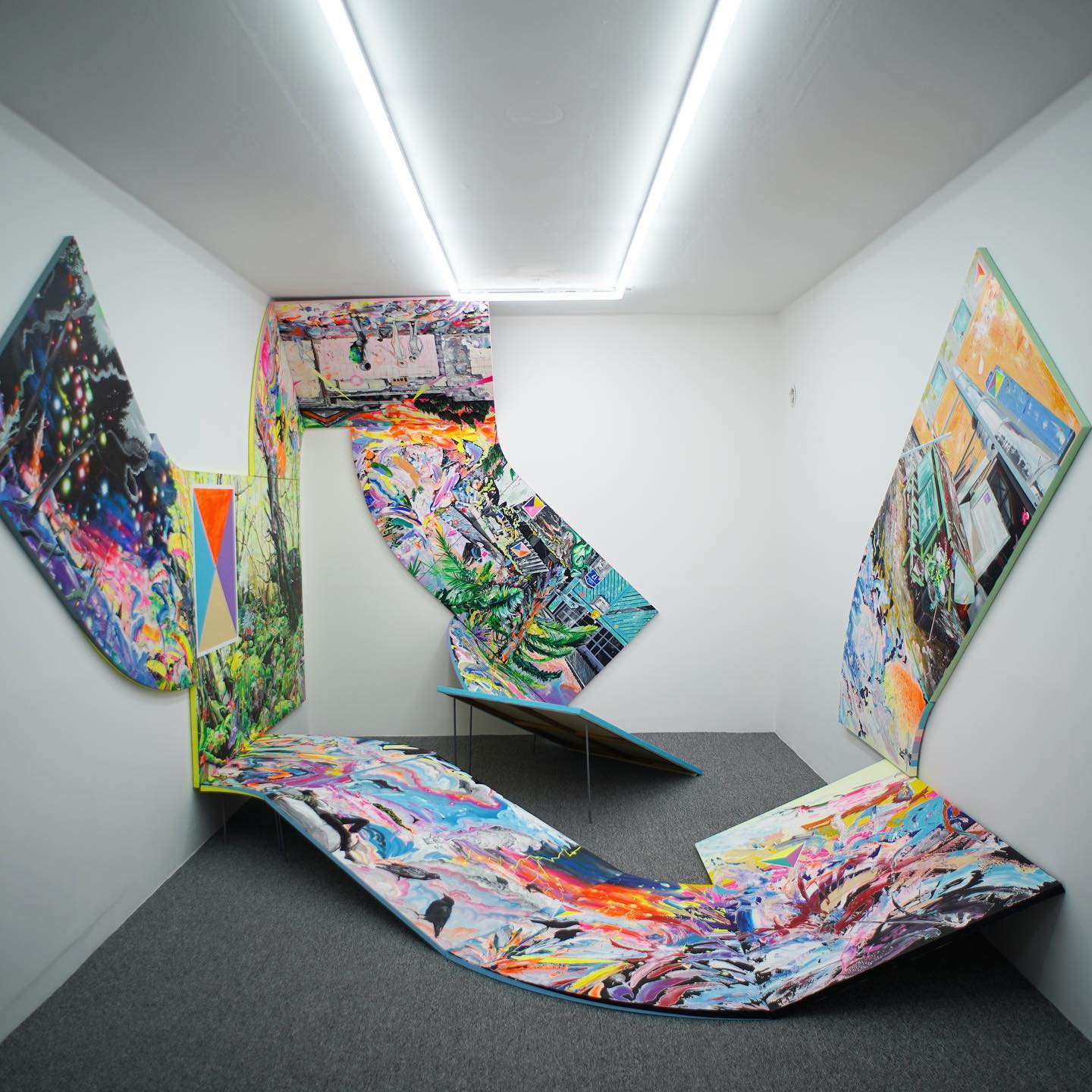
Since 2020, Lee's paintings, which embody his multilayered conception of the world, have increasingly extended beyond the conventional boundaries of the canvas.
 
Occupying portions of the exhibition space, they interrupt the viewer's path and assert a physical presence; elsewhere, newly shaped canvases are inserted between existing ones to create landscapes that appear to shift, connect, and evolve organically.
 
Lee has also begun experimenting with the continual repositioning of individual paintings within the exhibition space.
 
These formal investigations reveal the complex systems that operate beyond the confines of the canvas while simultaneously expanding the possibilities of painting as a medium.


Sejun Lee, Anti Plot_Space Arcade, 2019-2023, Oil, acrylic, and fluorescent pigment on linen, 246x1821.1cm (13 pieces). Installation view of 《Finally When You and I Meet》 (Space Willing N Dealing, 2023) © Space Willing N Dealing

A further example can be found in 《Finally When You and I Meet》, Lee's 2023 solo exhibition at Space Willing N Dealing.
 
In this exhibition, Lee presented Anti Plot_Space Arcade, in which 13 paintings look like one specific scene. This is a form in which the entire space looks like a huge mural structure with a diamond-shaped 'interval' series sandwiched between the landscapes of different scenes from 2018 to 2020.
 
This work cannot be apprehended in a single glance despite constituting a single installation. Just as various forms and objects are constantly found on the canvas painted by Lee, this work also creates a form that cannot be recognized at once.
 
This metaphorizes that Lee's desire to "describe everything in the world" is bound to be an unreachable aspiration, as Lee's experience does not exist as everything in the world and cannot detect everything in the world.


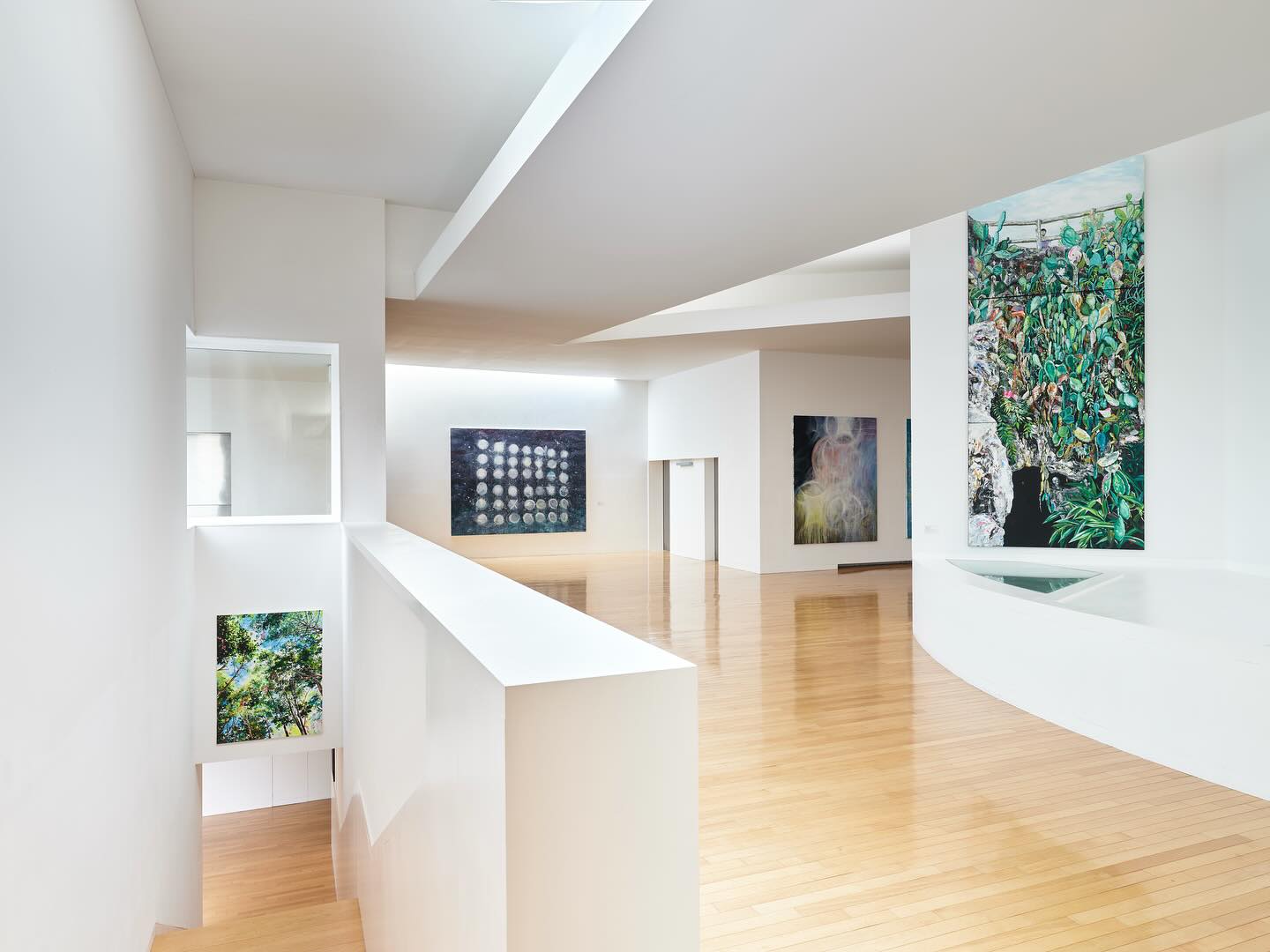
Installation view of 《Meta Fiction》 (Space Hwangumhyang, 2023) © Space Hwangumhyang

The artist also refers to a series of works as the ‘Bridge’ series, a process in which a new image is painted to connect two earlier paintings positioned on either side.
 
By placing a blank canvas between two existing works and allowing the images from each side to extend toward the center, Lee enables them to merge organically within the intervening space.
 
He then introduces visual elements extracted from other paintings into this newly formed middle ground, generating a hybrid image through the convergence of multiple pictorial sources. Through this ‘Bridge’ series, Lee gives visual form to the otherwise invisible concept of temporality.


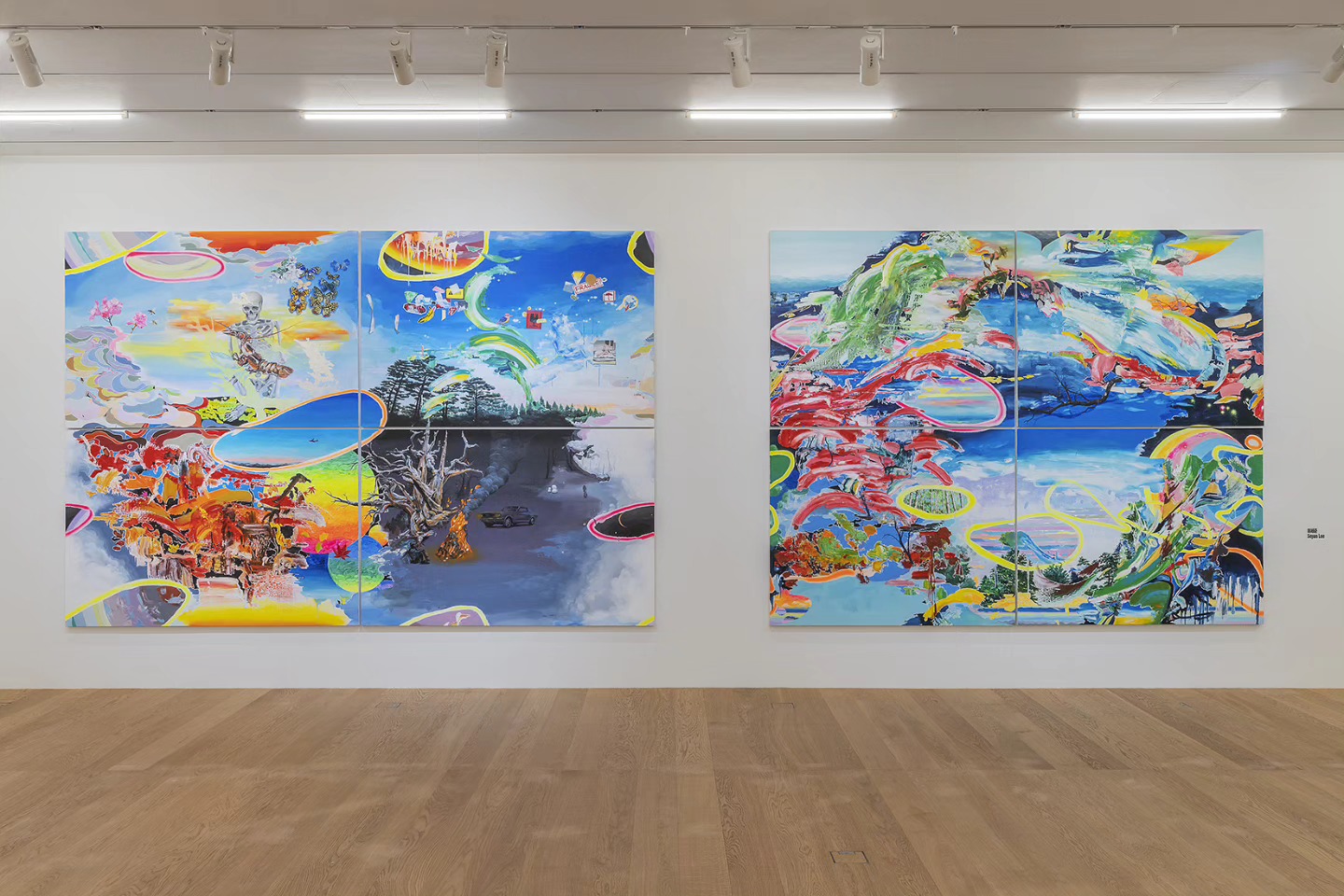
Seujun Lee, Painted Painting (2023), Beyondscape (2023), Installation view of 《The 23rd SONGEUN Art Award Exhibition》 (SONGEUN, 2023) © SONGEUN

At 《The 23rd SONGEUN Art Award Exhibition》 (SONGEUN, 2023), Lee further experimented with repositioning his paintings throughout the duration of the exhibition. The showcased works, Beyondscape (2023) and Painted Painting (2023), are large-scale paintings comprising four canvases each.
 
Positioned variably throughout the exhibition, these constituent pieces suggest different compositions depending on the viewer's timing, encouraging varied perceptions and interpretations.
 
Beyondscape explores the concept of "landscape painting”, depicting a series of processes wherein landscape paintings are recombined while preserving the vibrant, pictorial elements of various scenes. On the other hand, Painted Painting transcends the genre of landscape painting to center on the medium of painting itself.
 
While representing the four seasons—spring, summer, fall, and winter—the work also questions the diverse possibilities and limitations of painting by delving into characteristic features of the medium, such as symbolism, illusion, materiality, narrative, and decoration.


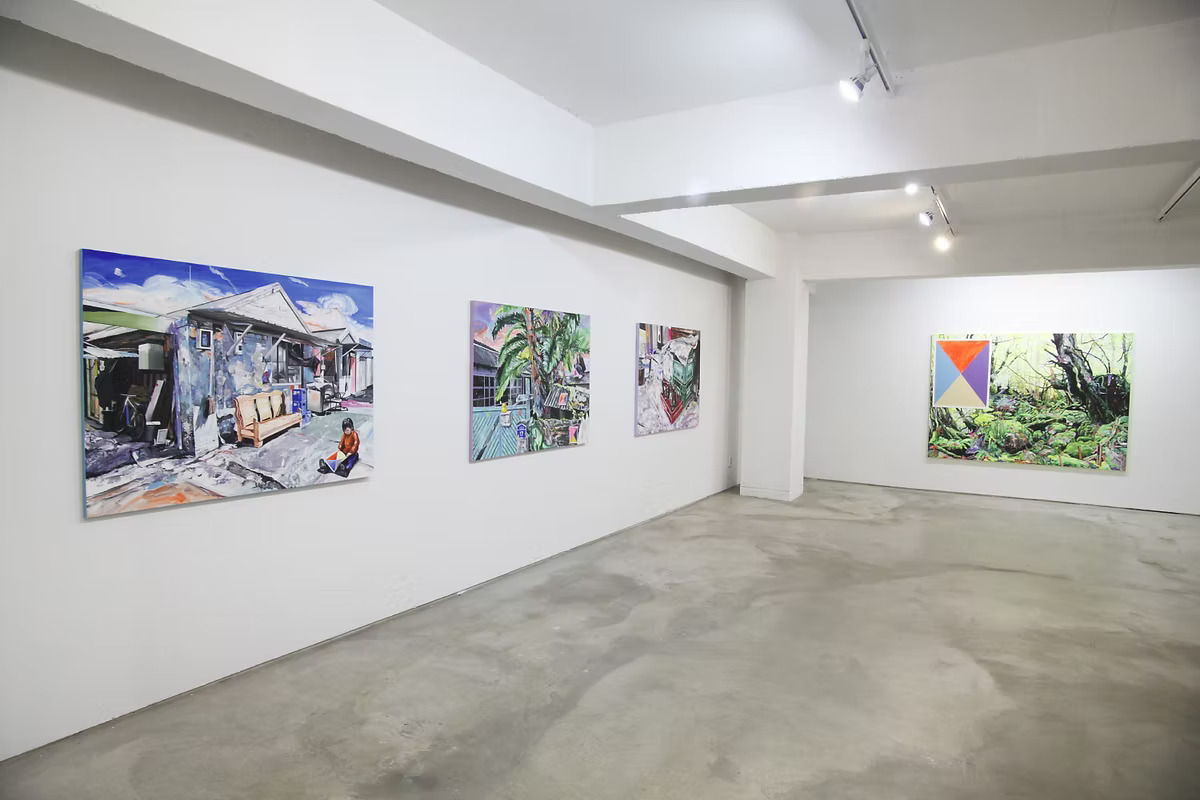
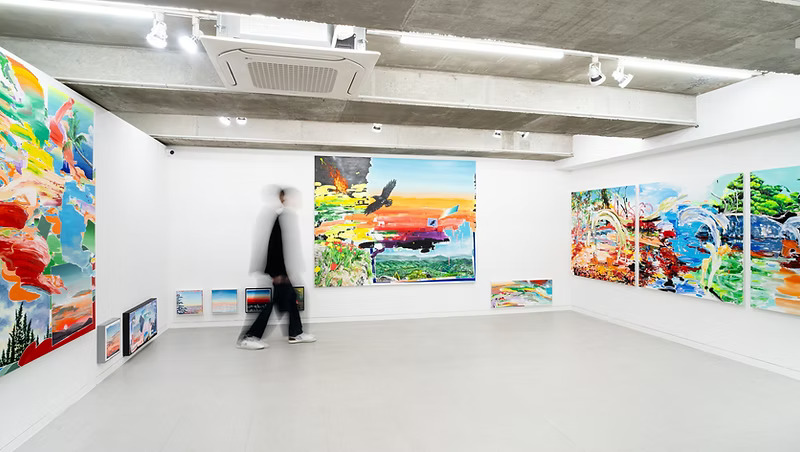
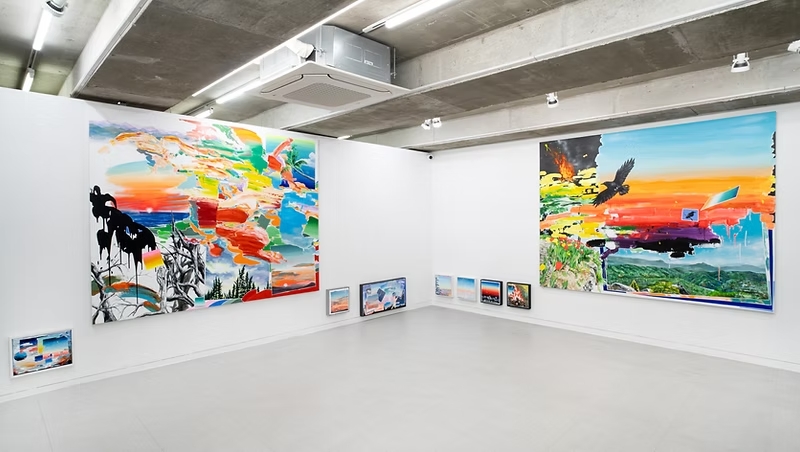
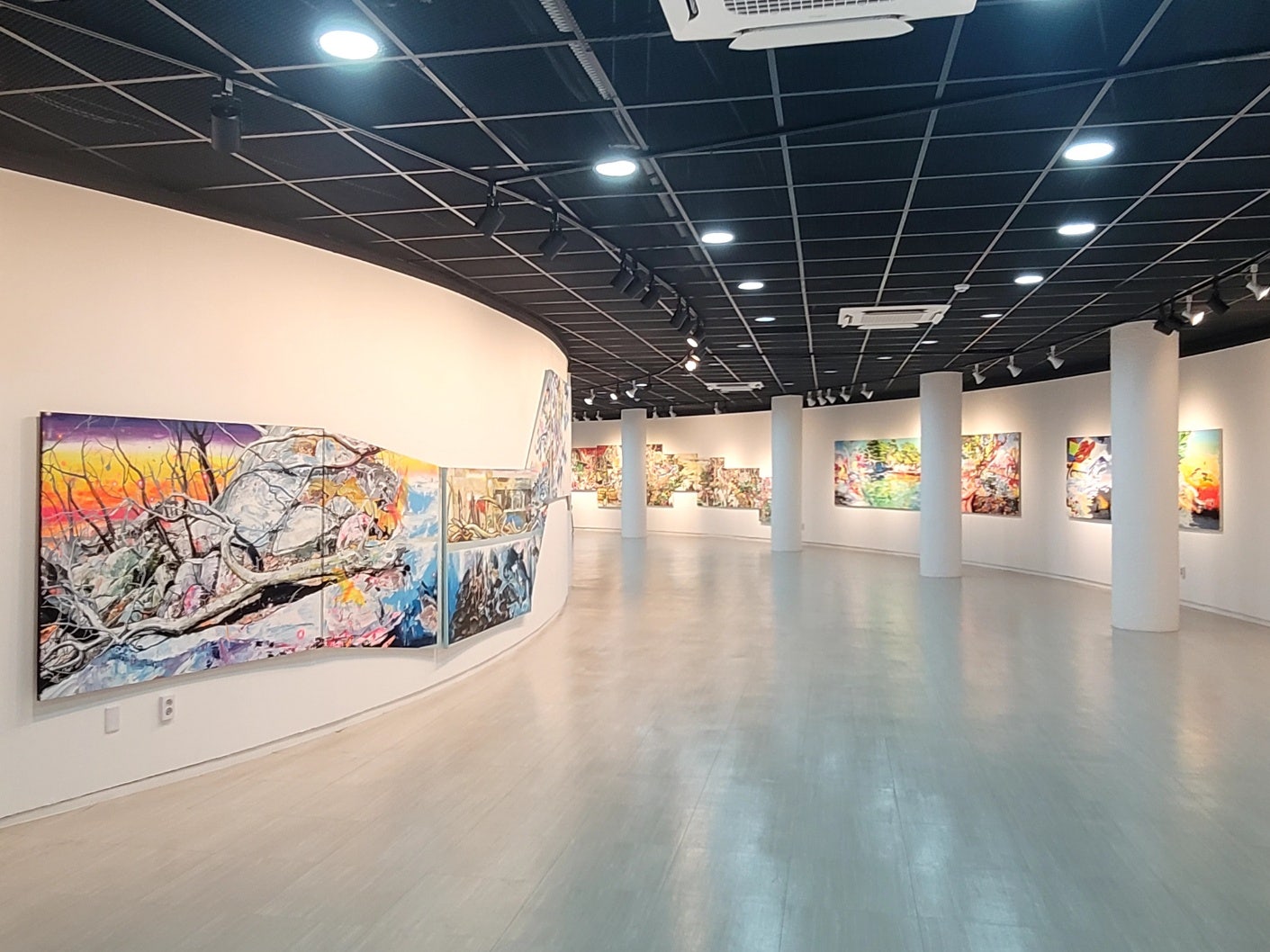
Installation view of 《Picturescape》 (Space Willing N Dealing, 2025) © Space Willing N Dealing

As a further development of these formal investigations—and their expansion into the exhibition itself—Lee's solo exhibition 《Picturescape》 (Space Willing N Dealing, 2025) began with an imagination of the landscape that emerges in the interval between one landscape painting and the next.
 
Lee proposes that the perceptual transition from one painting to another is never entirely complete. Instead, as viewers move from one image to the next, they may continue to retain traces of the preceding landscape while simultaneously receiving the new one. He further suggests that this transitional experience differs subtly from one body to another, shaped by each viewer's unique mode of perception.


Installation view of 《Picturescape》 (Space Willing N Dealing, 2025) © Space Willing N Dealing

Lee hypothesizes that the subtle delay inherent in this perceptual transition possesses its own distinct visual rhythm, directing his attention to the rhythms generated through the resonance between images.
 
Accordingly, the landscapes presented in the exhibition are not landscapes in the conventional sense of representing natural scenery. Rather, they function as a painterly proposition that explores alternative possibilities for painting through the affective resonance produced by the overlap and juxtaposition of heterogeneous images within a single pictorial field.
 
Installed throughout the exhibition space, each canvas exists as an autonomous entity, continually generating and proliferating in relation to the others, revealing the limitless potential of the image to expand beyond its own boundaries.


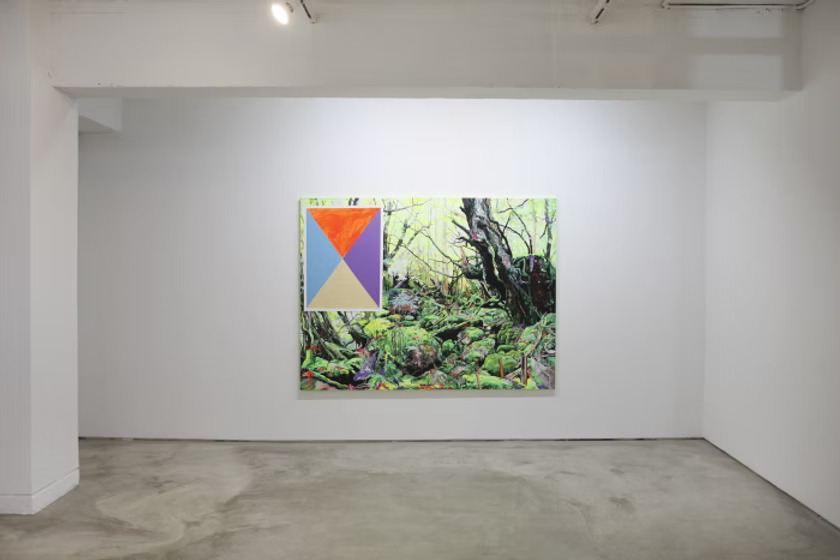
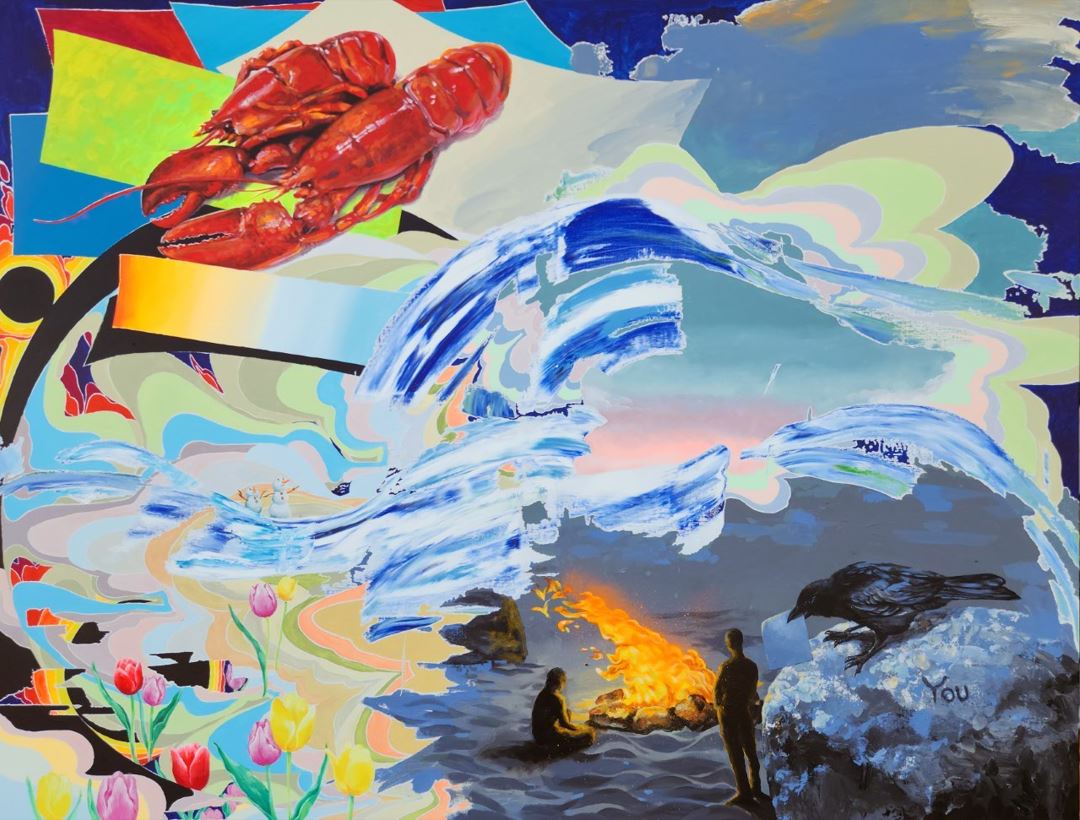
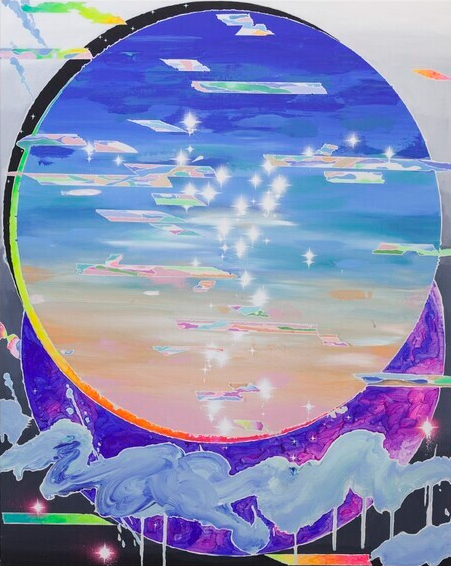
Sejun Lee, Painting of Possible Worlds_Lobster Letter, 2024, Oil, acrylic, and fluorescent pigment on linen, 112.1x145.5cm © Sejun Lee

In this way, Sejun Lee has continually expanded the formal and conceptual possibilities of painting, seeking to create pictorial spaces in which the diverse narratives that constitute the world we inhabit can coexist within a single image.
 
Conceiving painting as an organic entity unfolding within a nonlinear flow of time, Lee has explored the limitless potential of painting as a two-dimensional image. His practice moves beyond representation to continually question what painting can become and what it is capable of containing.
 
Like the world itself—constantly evolving and coming into being—his paintings likewise generate new meanings through their ongoing interaction with viewers. Bringing their own experiences and worldviews to the work, viewers project their own perspectives onto the paintings, constructing individual narratives and ways of understanding the world.

"I want to create paintings in which diverse stories coexist within a single image. To accommodate narratives that collide yet remain in harmony, and that operate in complementary ways, I primarily work on large-scale paintings composed of multiple canvases.
 
I want my work to encompass everything from grand narratives—such as the birth and death of the universe, life and death—to subjective and emotional experiences, including the changing of the seasons and the longing for someone I love." (Sejun Lee, Artist's Note)


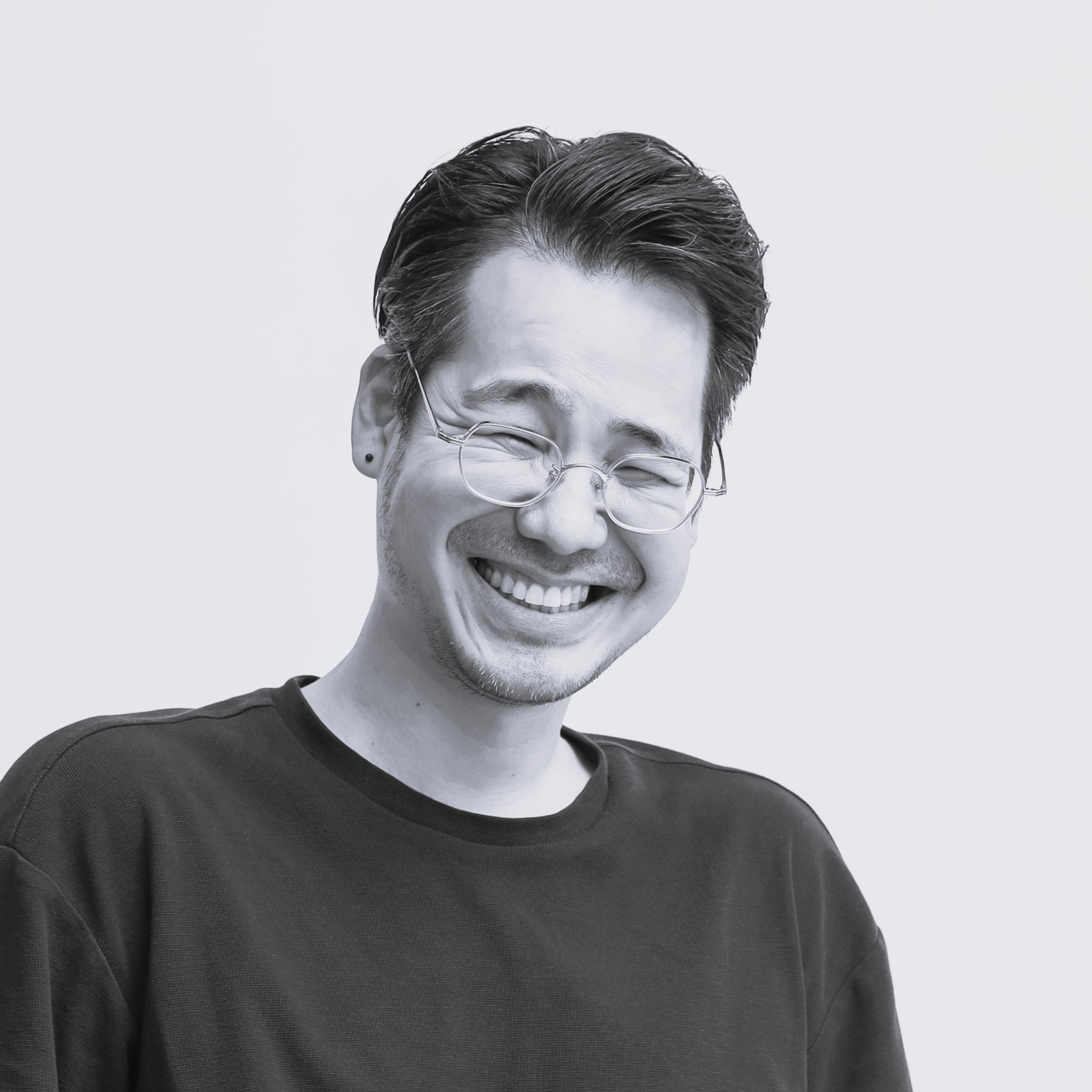
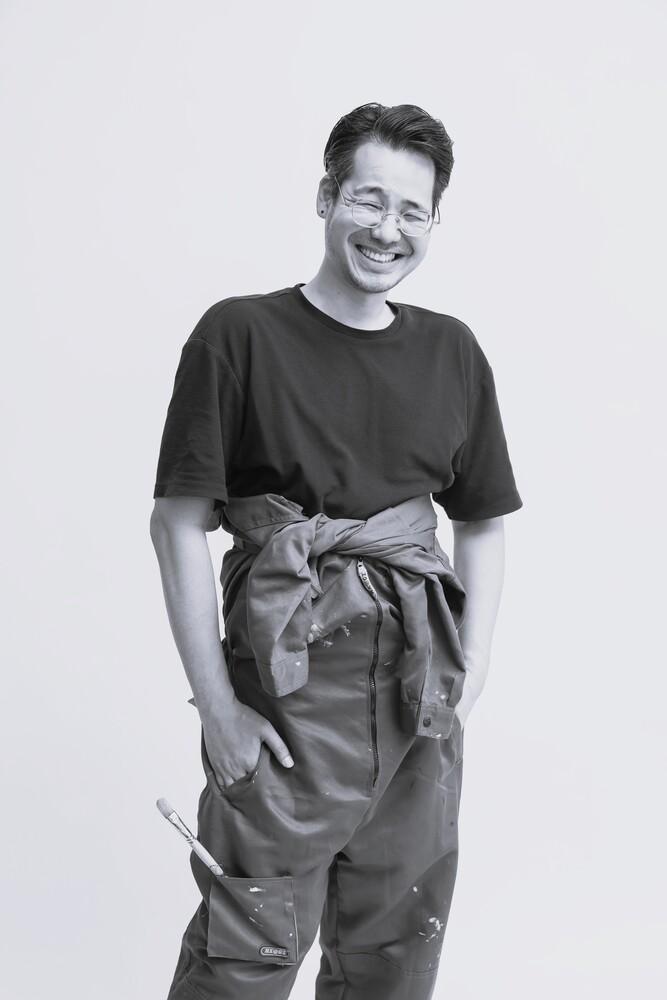
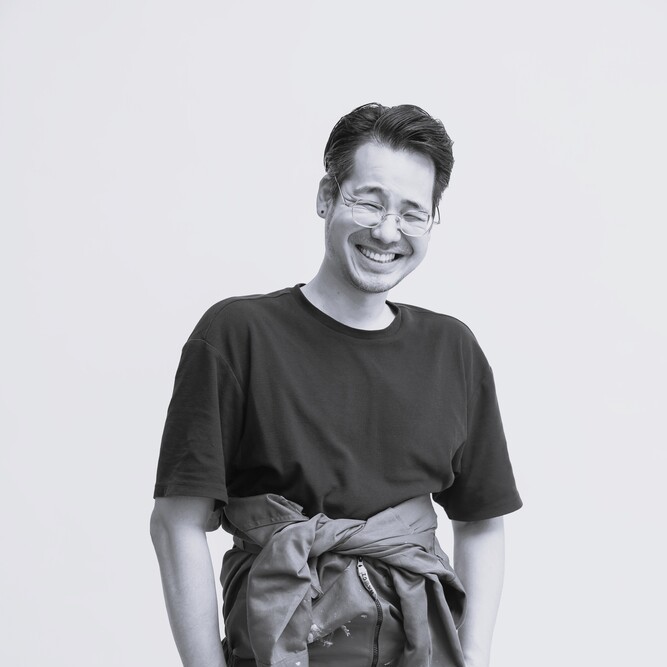
Artist Sejun Lee © Kiaf SEOUL

Sejun Lee received his BFA, MFA, and Ph.D. in Painting from Hongik University. His recent solo exhibitions include 《Picturescape》 (Space Willing N Dealing, Seoul, 2025), 《Paintings of Possible Worlds》 (Pyeongtaek Northern Center for Culture and Arts, Pyeongtaek, 2024), 《Finally When You and I Meet》 (Space Willing N Dealing, Seoul, 2023), and 《Meta Fiction》 (Space Hwangumhyang, Seoul, 2023).
 
Lee has also participated in numerous group exhibitions, including 《Moments That Form a Landscape》 (OCI Museum of Art, Seoul, 2026), 《The Story of That Day》 (Art Museum VERSI, Yongin, 2025), 《Euphoria》 (Mimesis Art Museum, Paju, 2025), 《Connecting the dots》 (Aram Museum of Art, Goyang, 2024), 《The 23rd SONGEUN Art Award Exhibition》 (SONGEUN, Seoul, 2023), and 《This Is (Not) My (Your) Painting》 (Space Willing N Dealing, Seoul, 2022).
 
Lee has been awarded residencies at Seoul Art Space Geumcheon (2025), Goyang Artist Residency Haeum (2022–2024), and SeMA Nanji Residency (2020), among others. In 2012, he became the youngest artist selected for the Seoul Museum of Art's Emerging Artist Support Program, and later received the Grand Prize at the inaugural KSD Art Award in 2019.

References