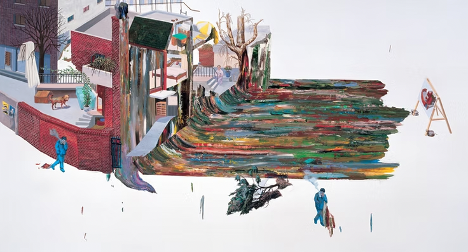
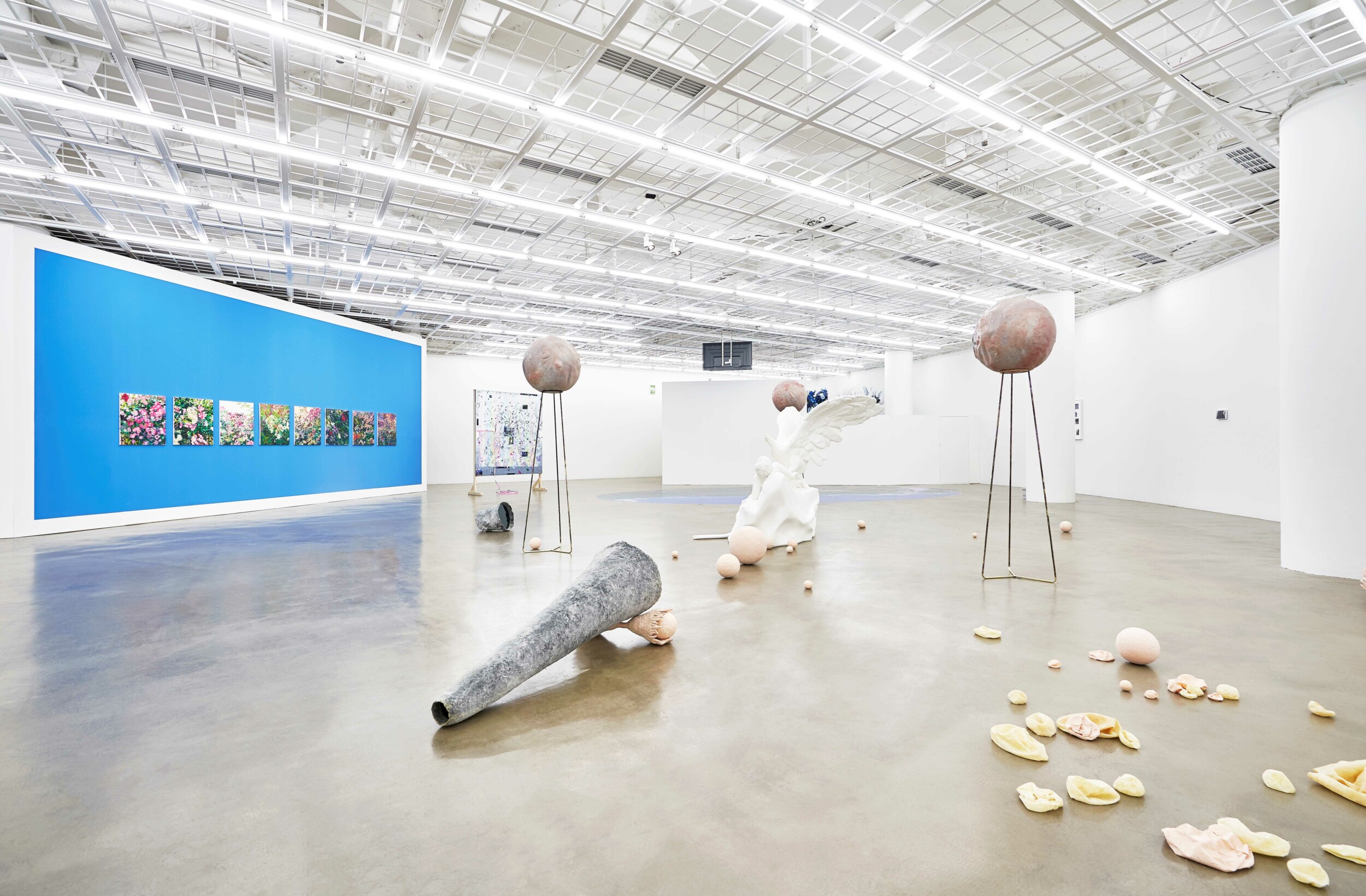
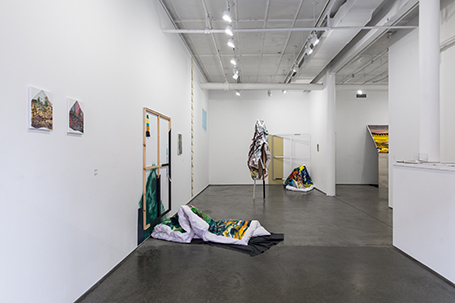
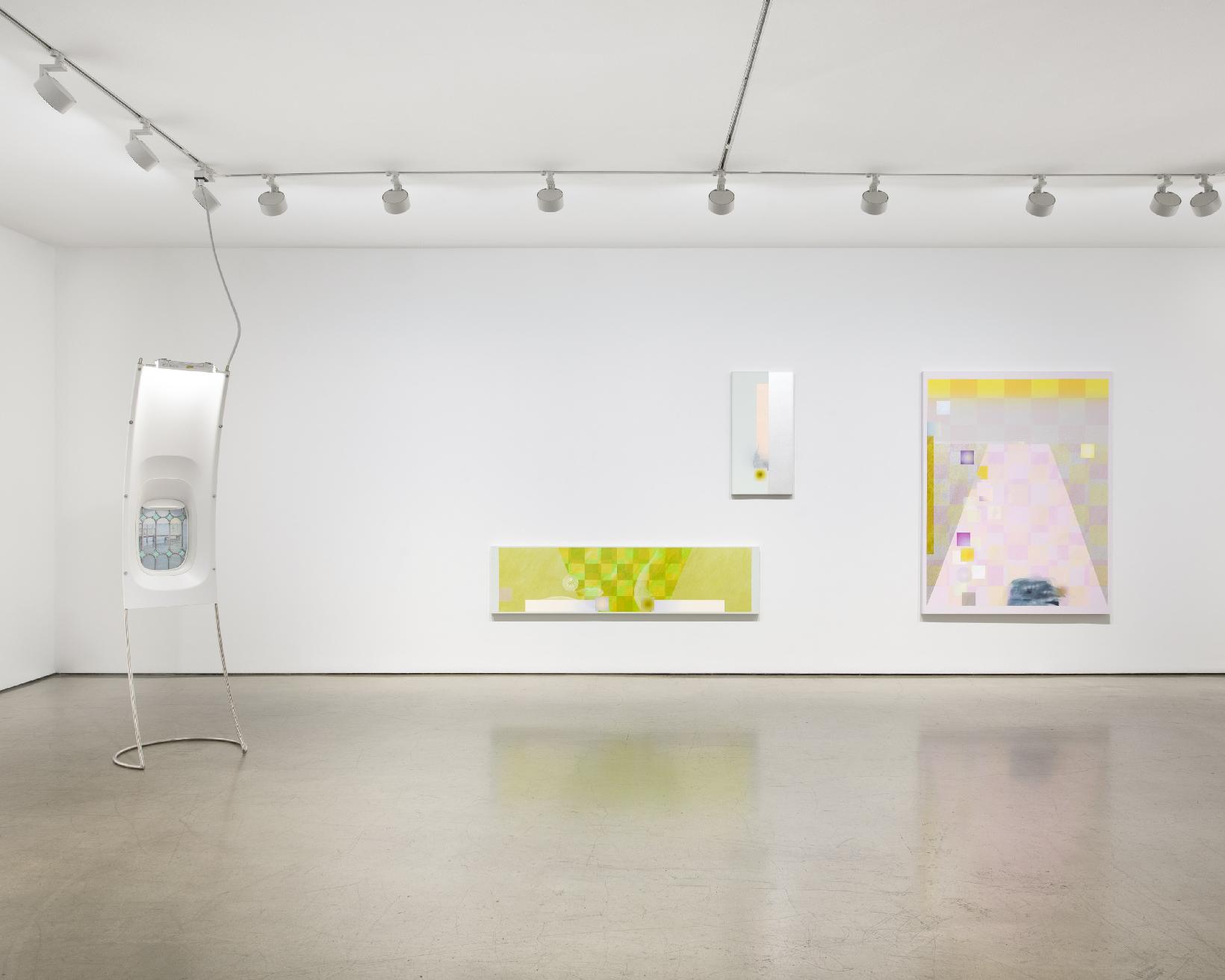
In fact, even within a mechanized environment, or rather in a state where what might be called an environment is almost absent, the artist recalls scenes and memories that transcend fixed places and times, just as before, and carries out painting accordingly. In the studio rather than outdoors, she unhesitatingly paints the various discords that arise between inside and outside.
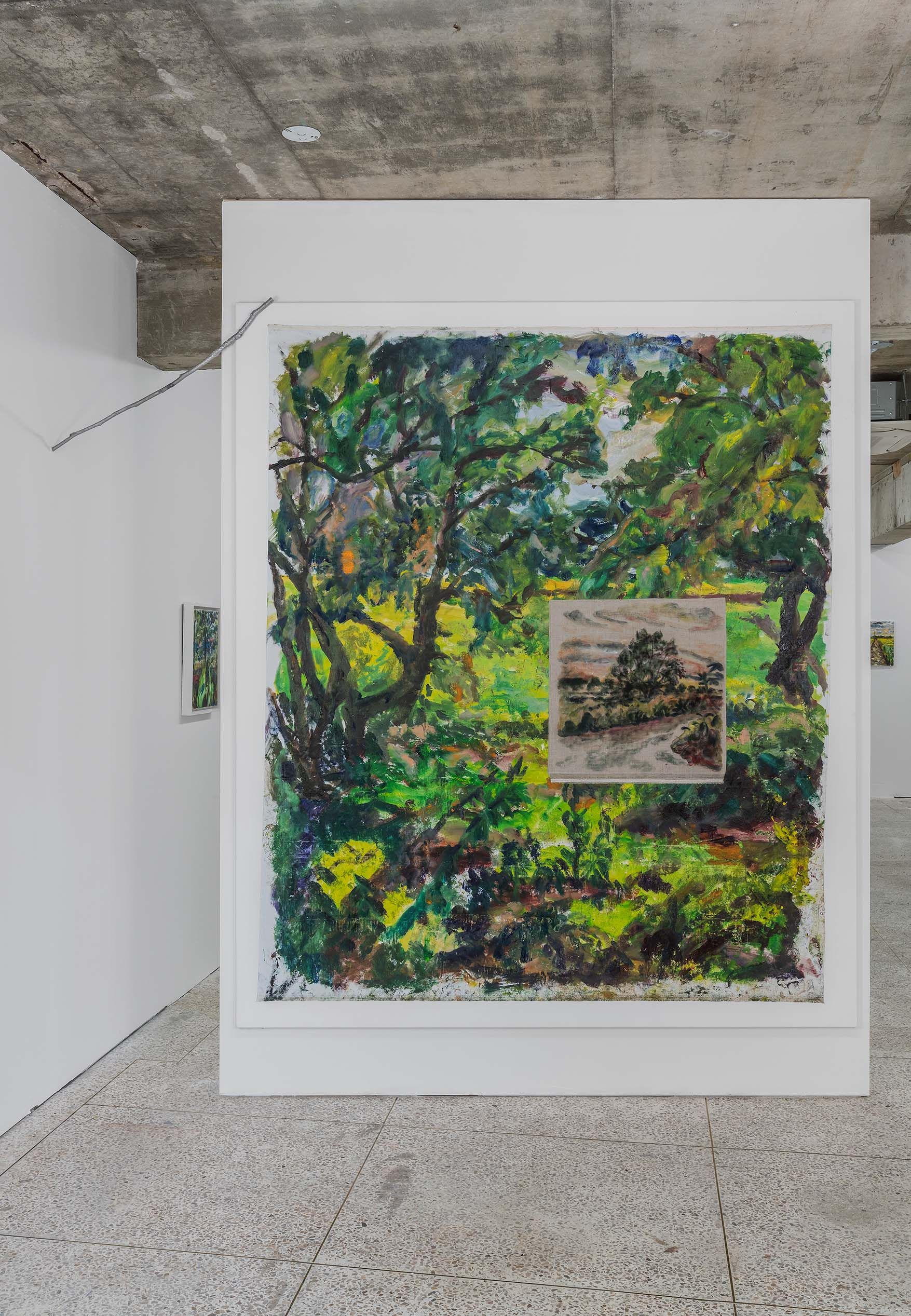
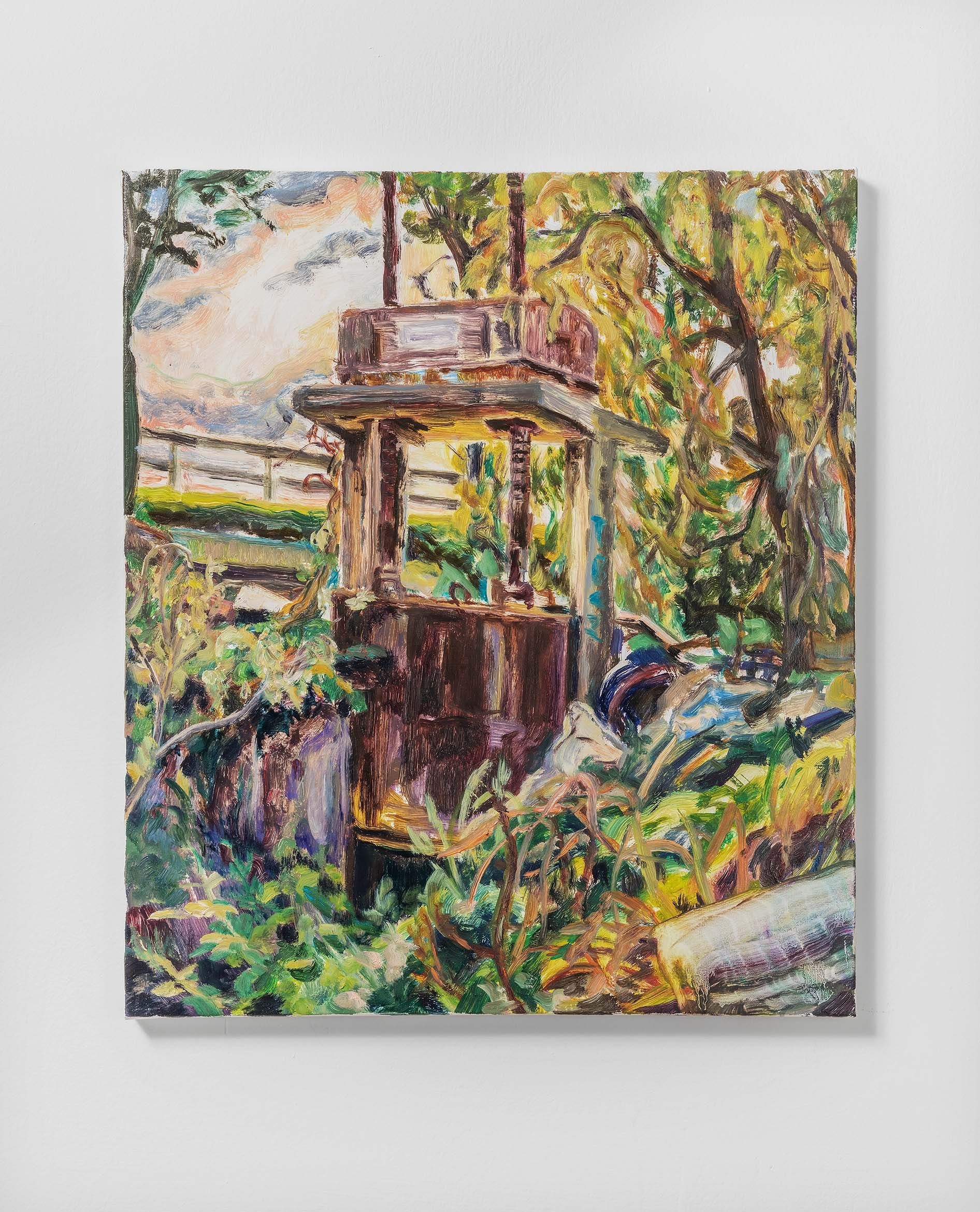
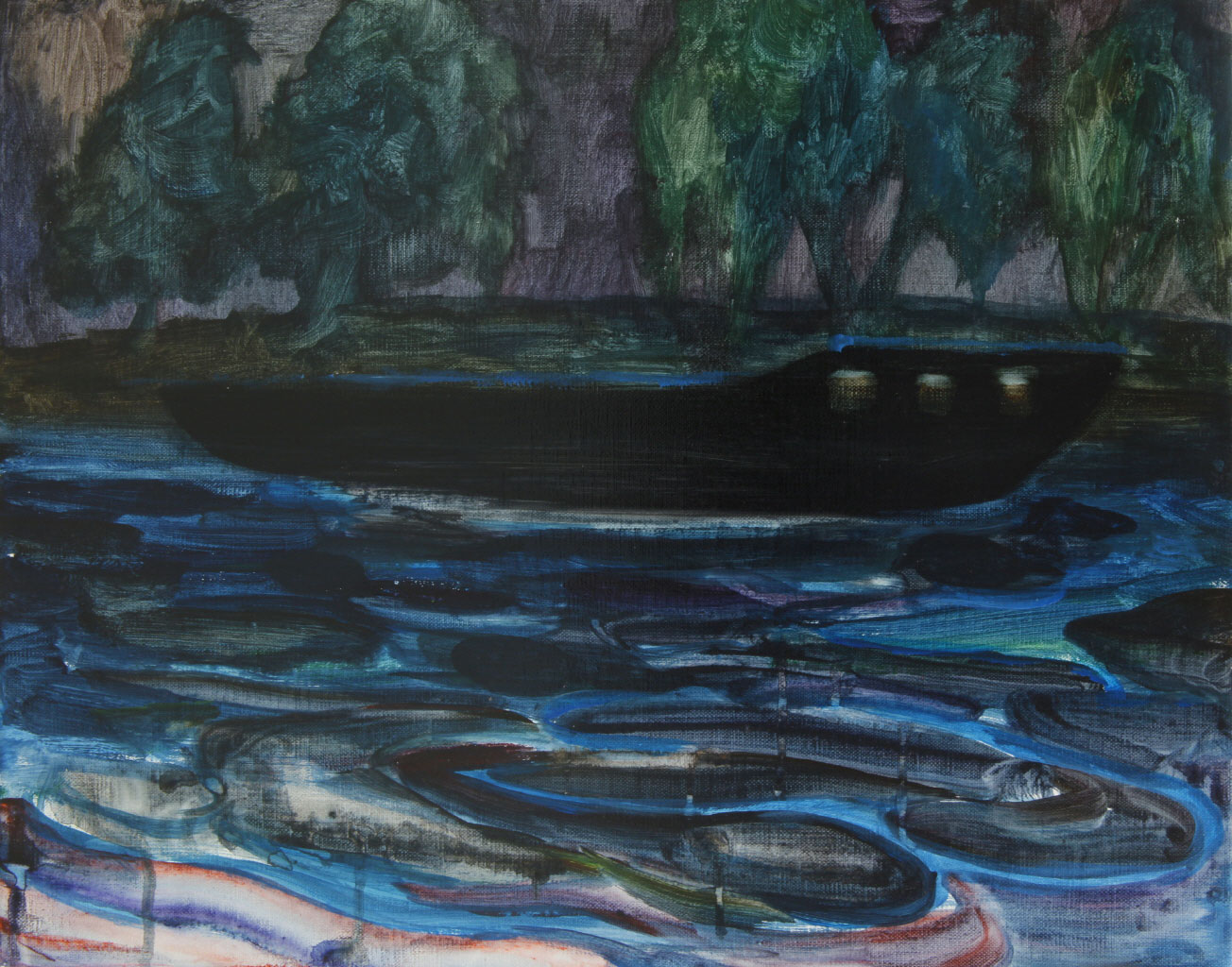
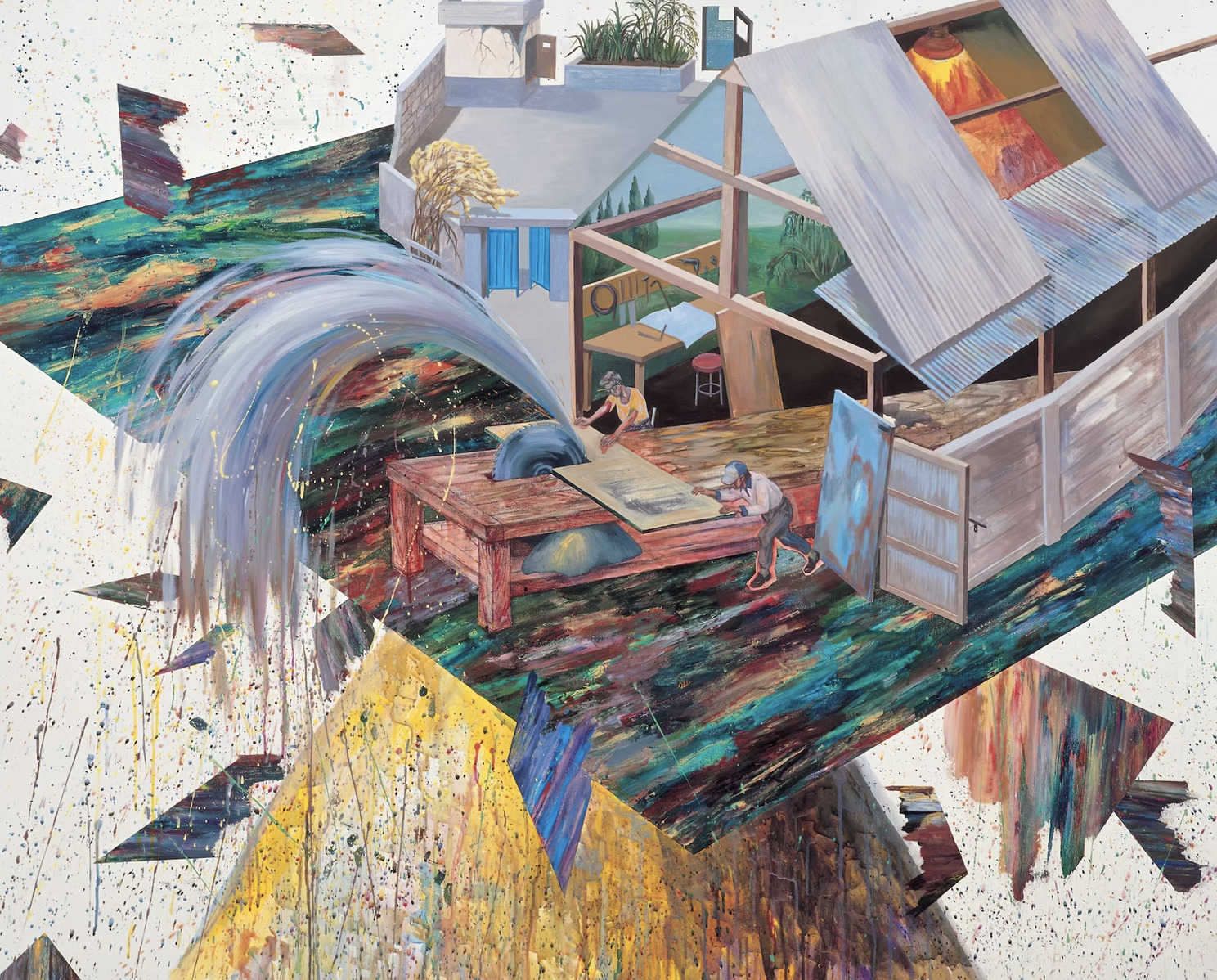
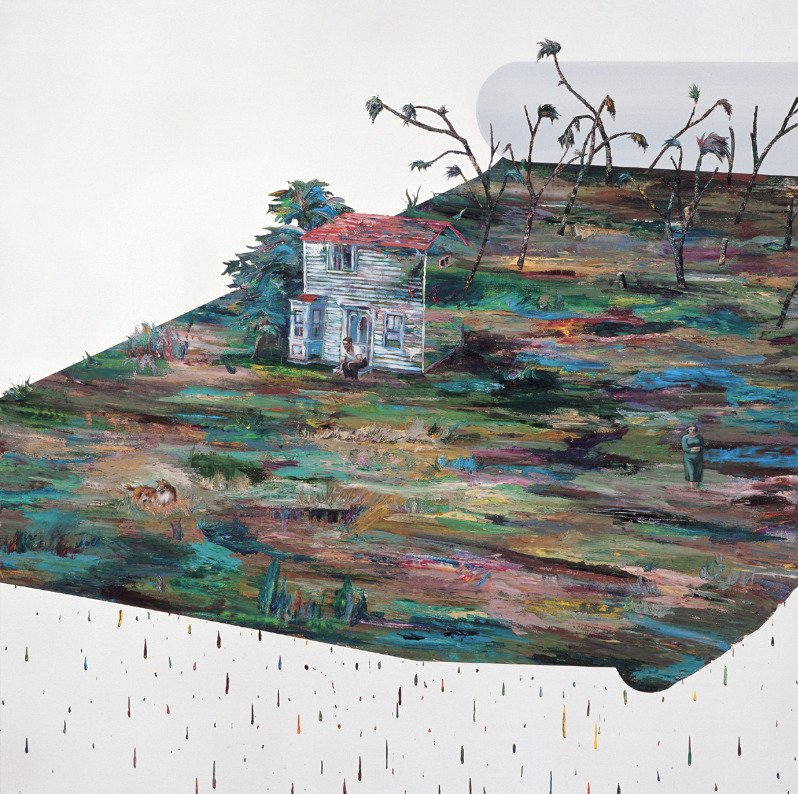
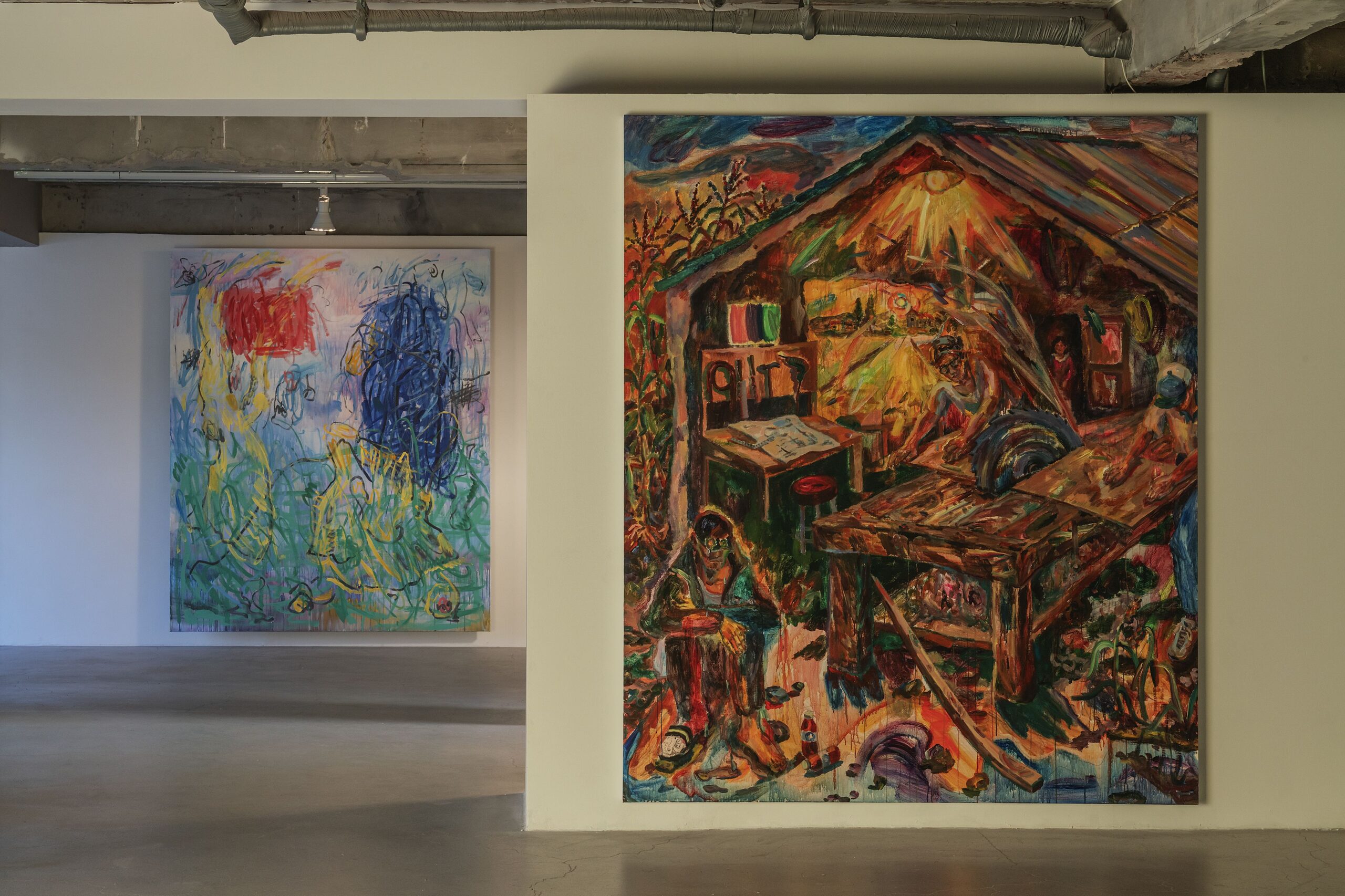
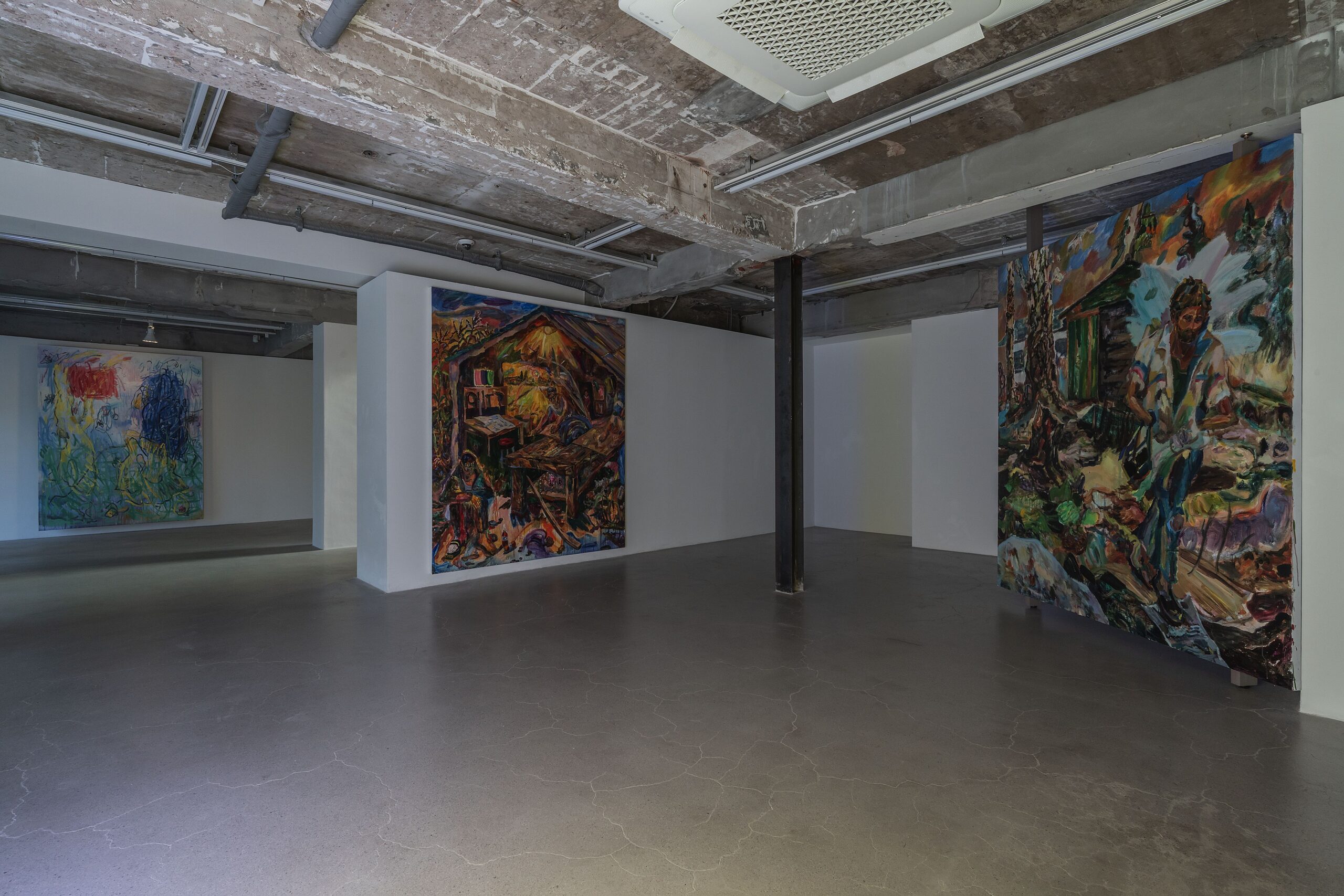
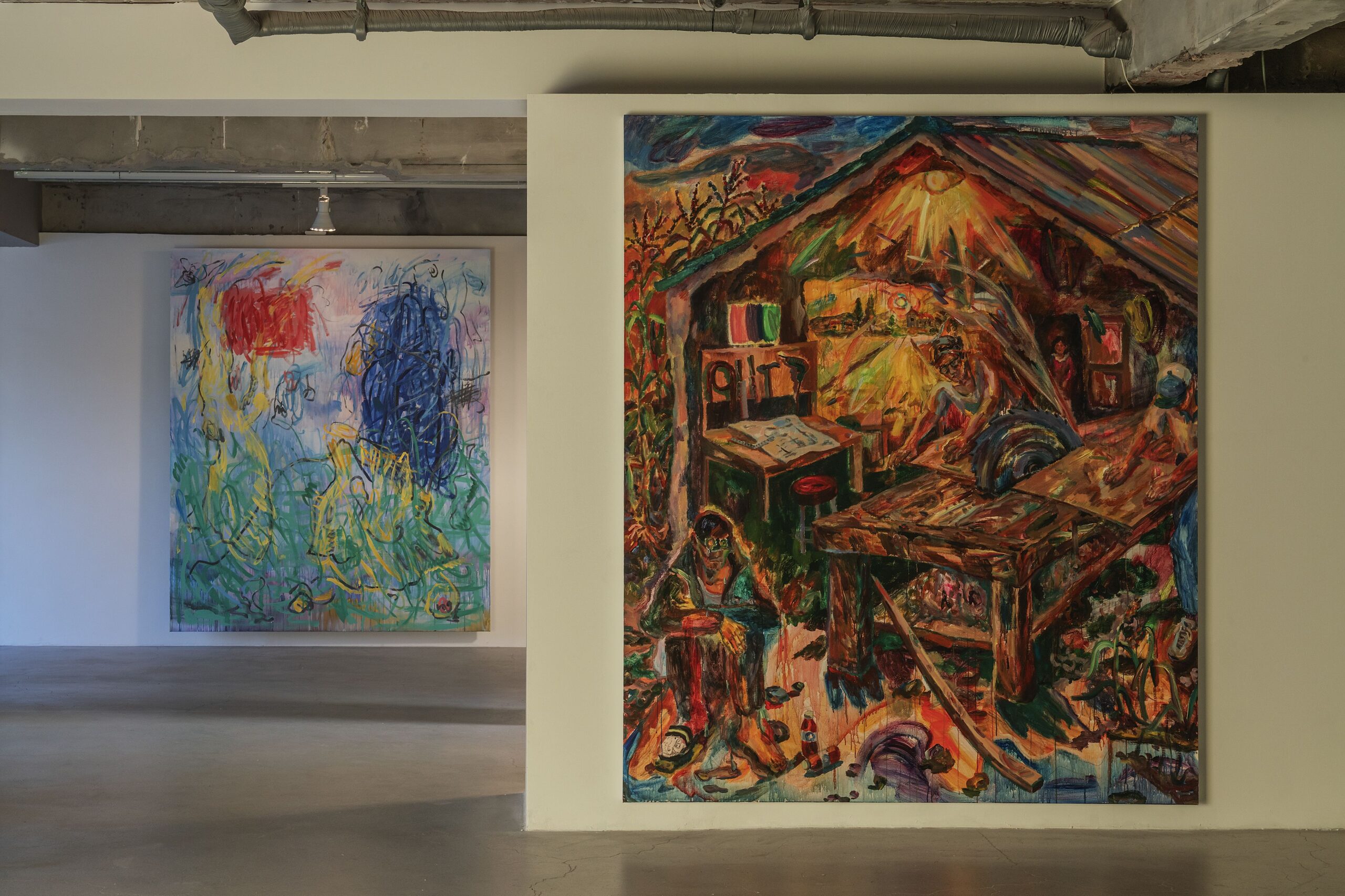
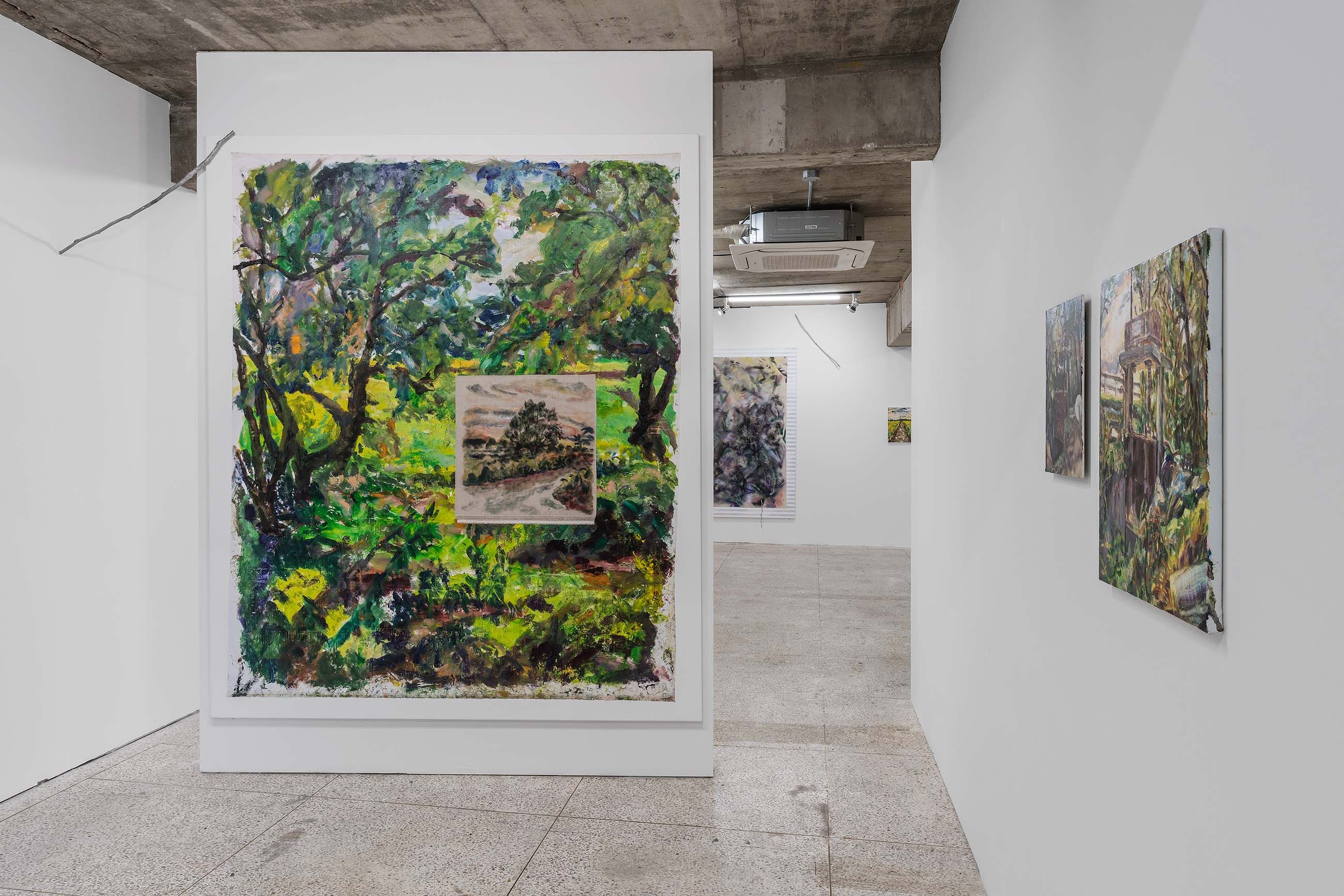
For example, The Man Living in Ruins_Mergenthalerring Small Garden Area, Cloudy(2022), included in the exhibition, is painted while recalling the ruins of a redevelopment area the artist visited while living in Germany ten years ago, and a man she passed in front of them. Also, The Carpenter’s Time(2022) revisits her grandfather’s carpentry workshop, which remains as a childhood memory and can be considered a major theme of her 2008 solo exhibition 《A Cold World》.
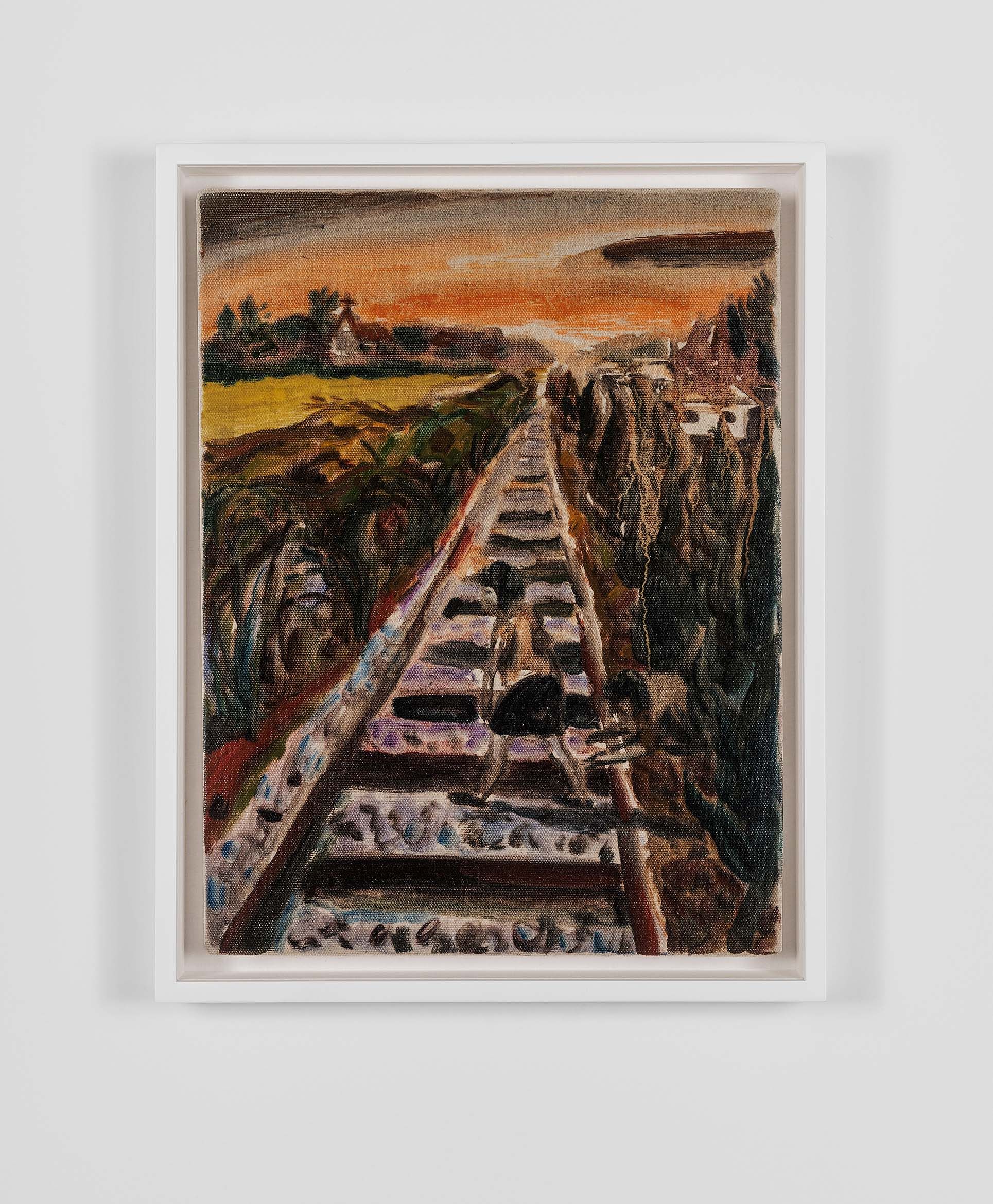
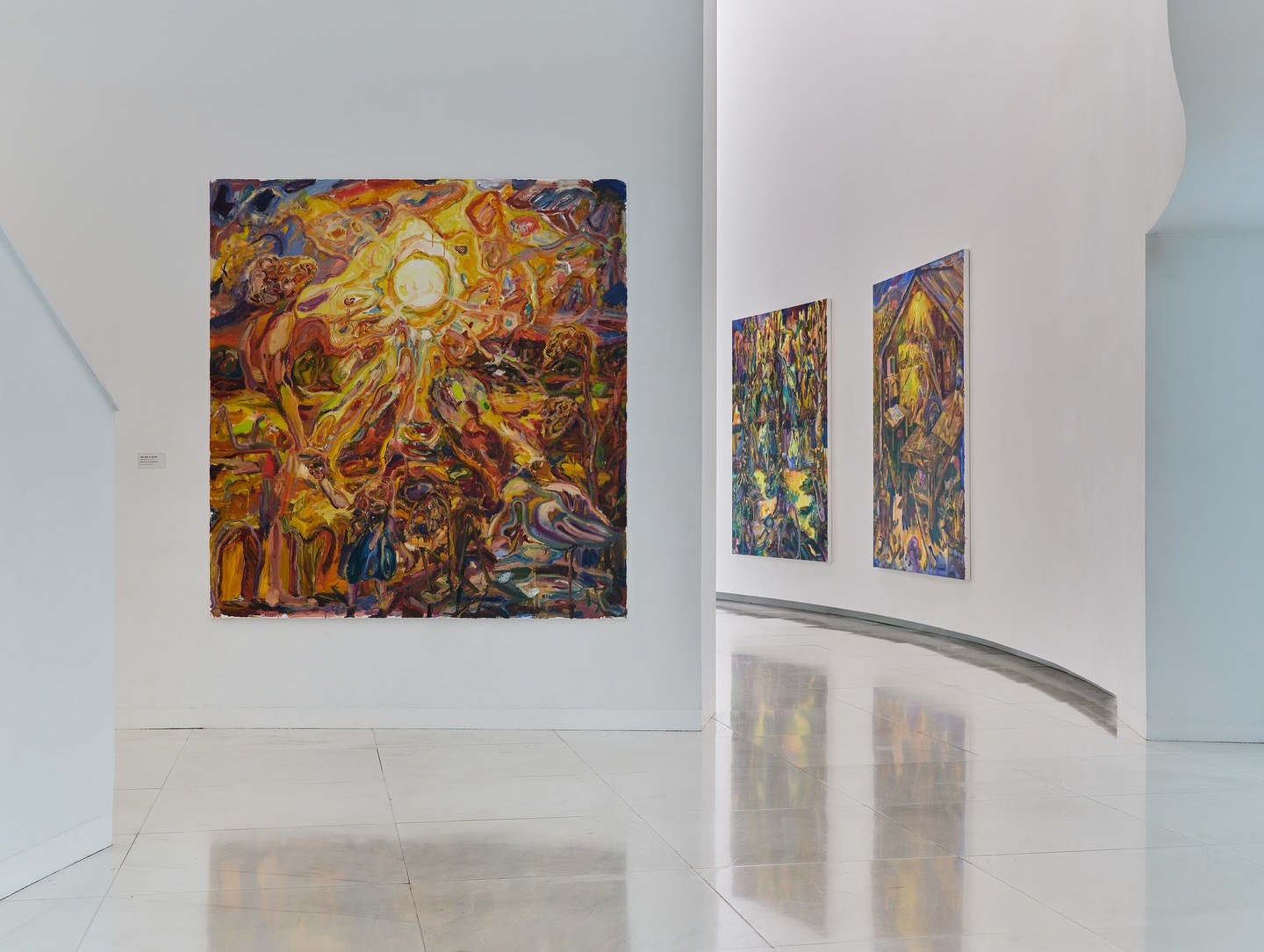
This work partially resembles the artist’s 2008 work The Carpenter’s Time. In addition, the works in the exhibition summon places that do not easily leave memory, such as the landscape with aspen trees that used to be visible from the artist’s house but disappeared with the arrival of the train, and the railroad tracks of Neunggok.
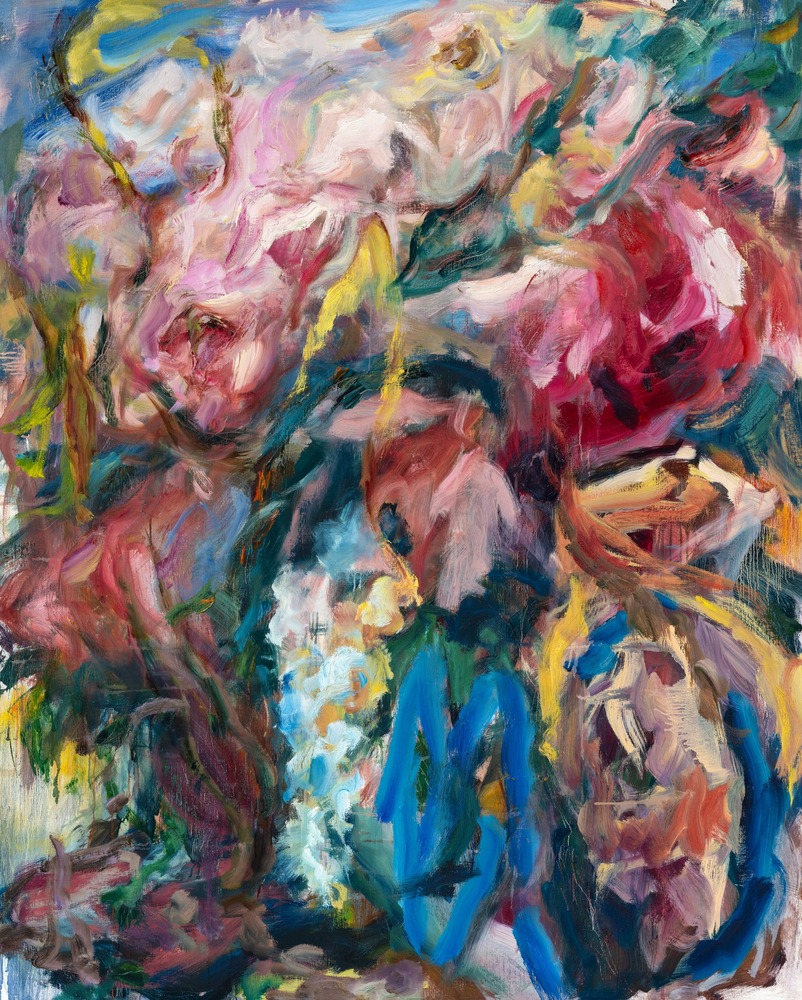
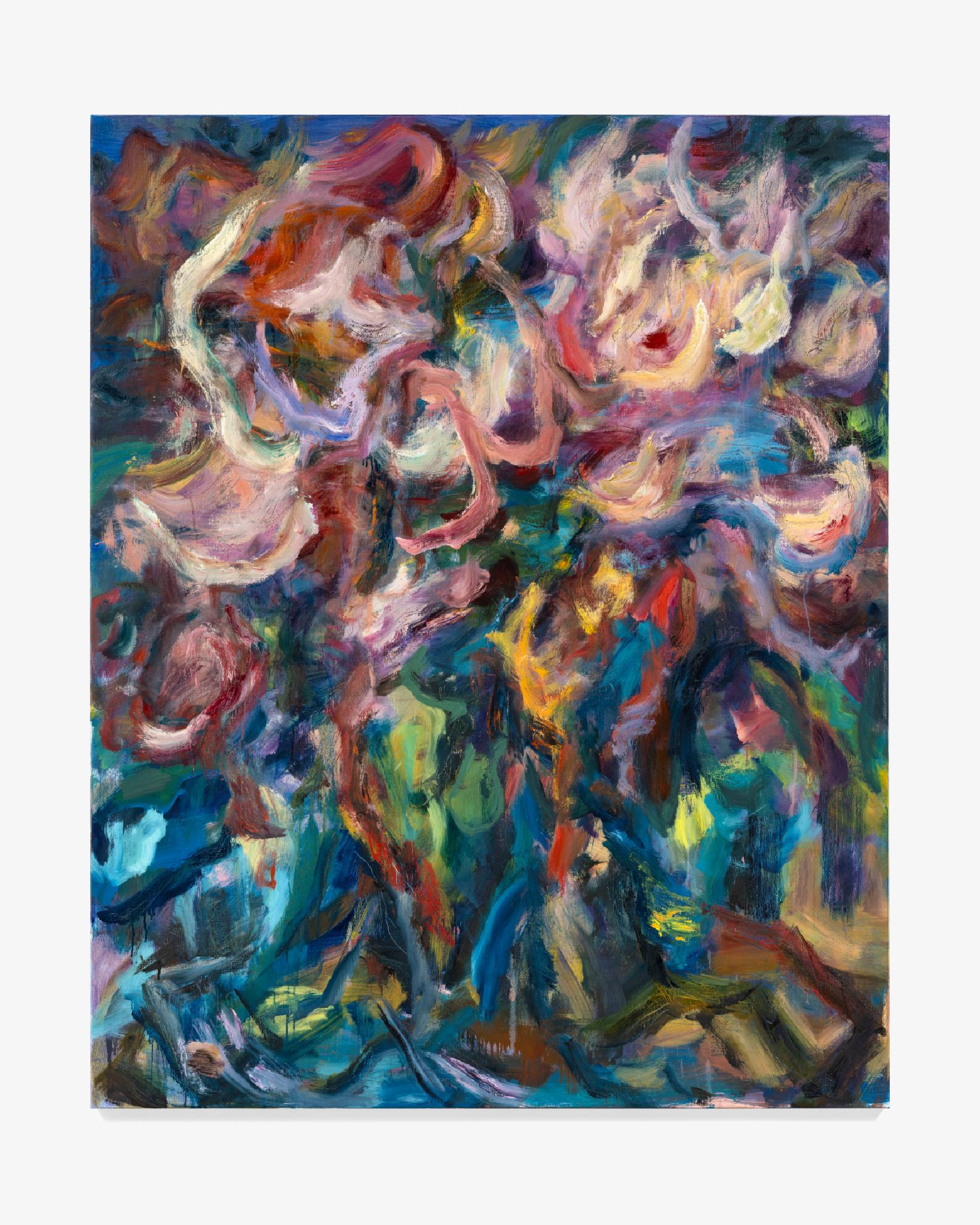
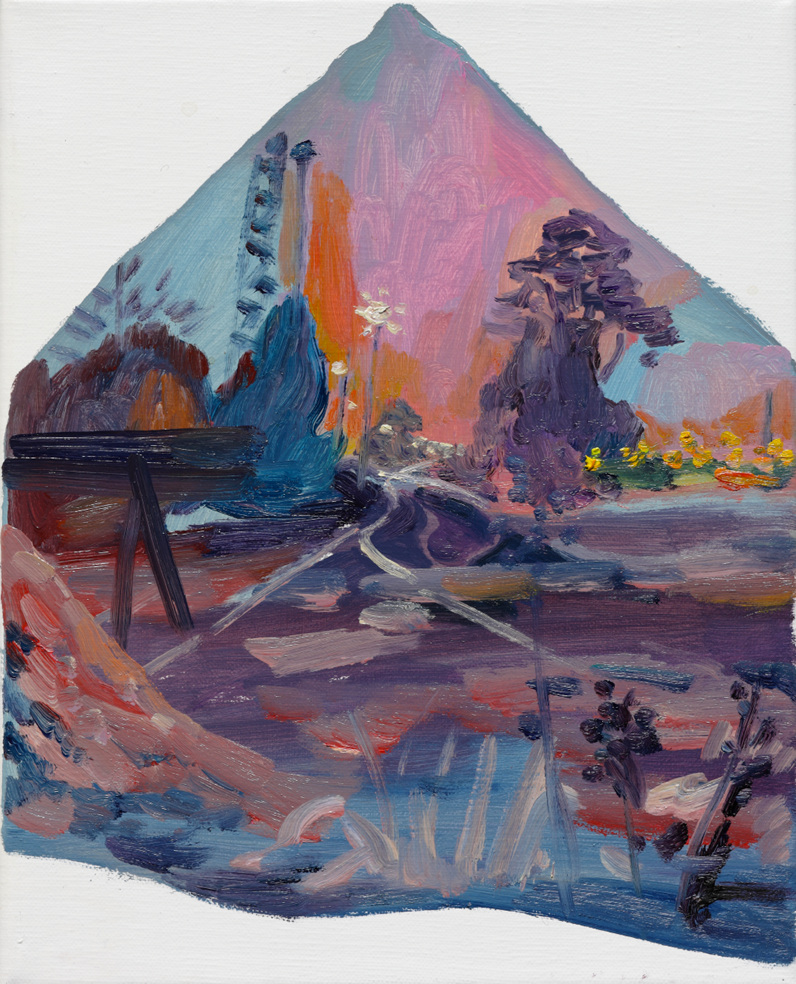
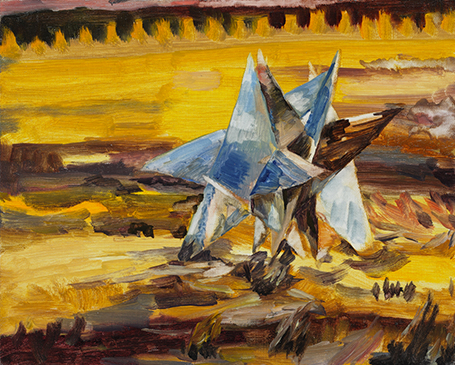
Works such as The Man Looking at the Floor(2022) and The Last Painting(2022) semi-automatically reveal a certain presence and atmosphere, or its imprint and trace, through brushstrokes of movement and speed. The landscapes painted in this way, the figures within them, and the painting that is not subsumed into concrete forms approach us less as images representing specific objects than as memories and constructs of existence accumulated within the individual over a very long time.
The program set by the exhibition clearly seems to execute a “repeated return” to something. From the beginning of her practice, the artist has attempted to “return” somewhere. The place she checked the weather for and diligently sought out may have been not a constantly changing present, but the memory of a disappeared place. “Can I return to that place and begin again?”, “Can I still feel and recognize what I felt then?”(Artist’s note, 2010), “What if I painted the field paintings from ten years ago once again in the same place?”(Artist’s note, 2020).
This repeated wish to return led to various methodological experiments, such as bringing back and repainting parts of past works in her 2018 solo exhibition 《Sync》. The program of this solo exhibition 《L. Practice》(Museumhead, 2022) can likewise be seen not as an attempt to convert and acquire the environment and experience of a specific time and space as convenient signs, but as an attempt to once again reveal and confirm something that still remains within the self across repeated time.
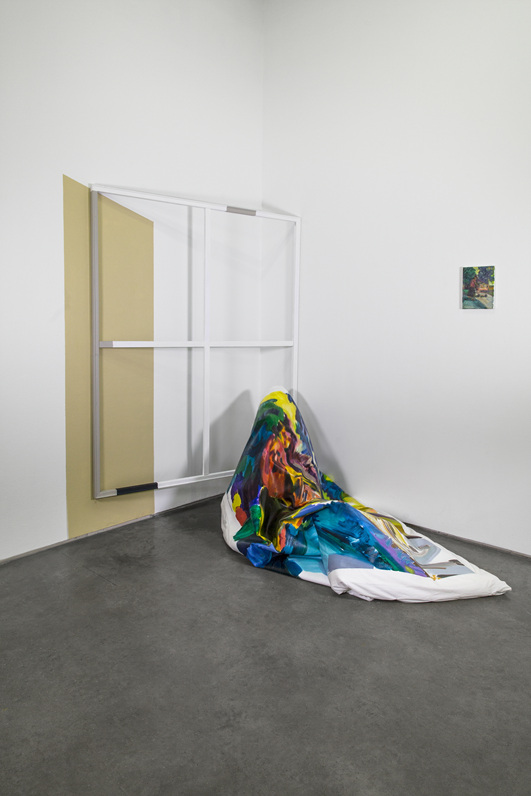
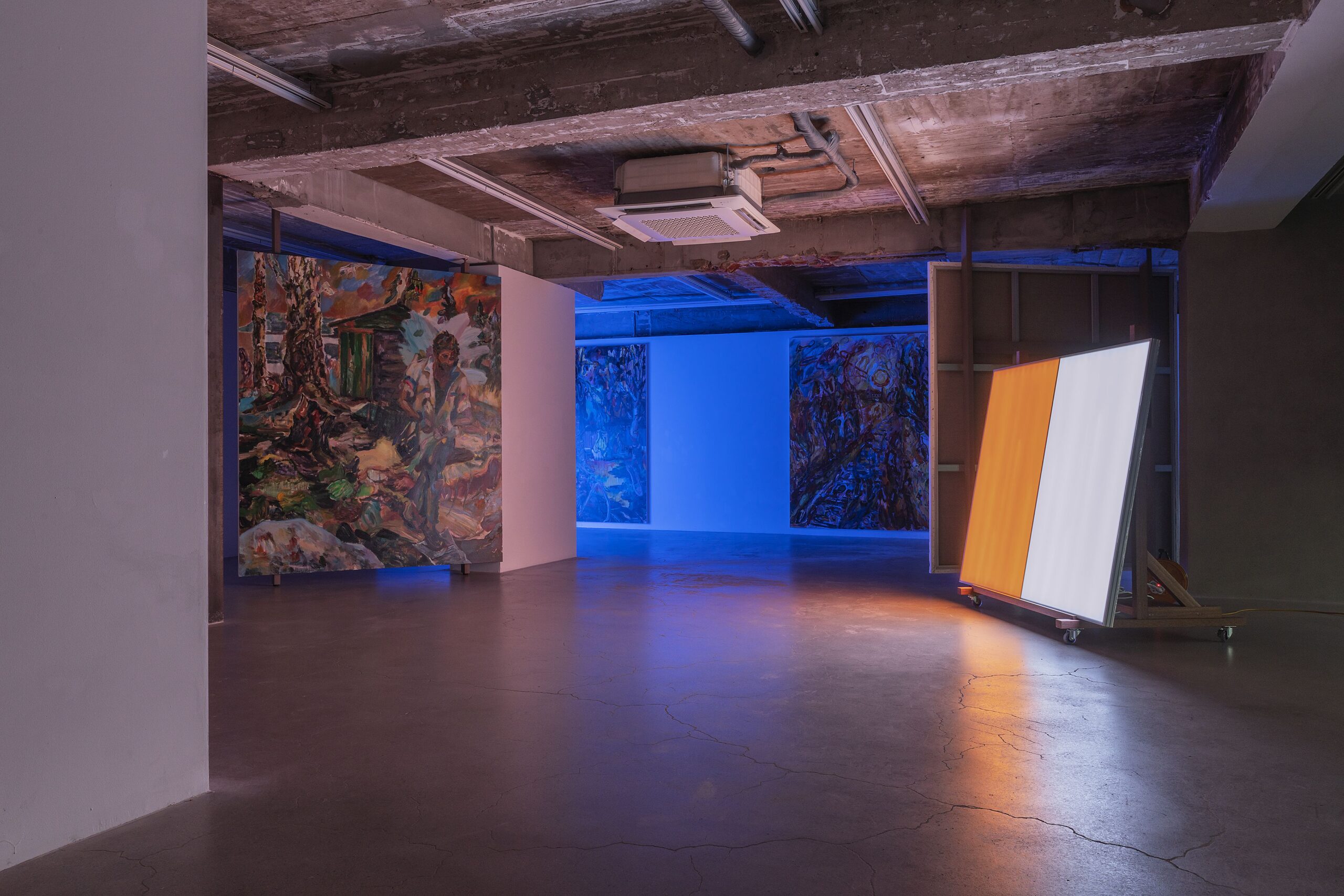
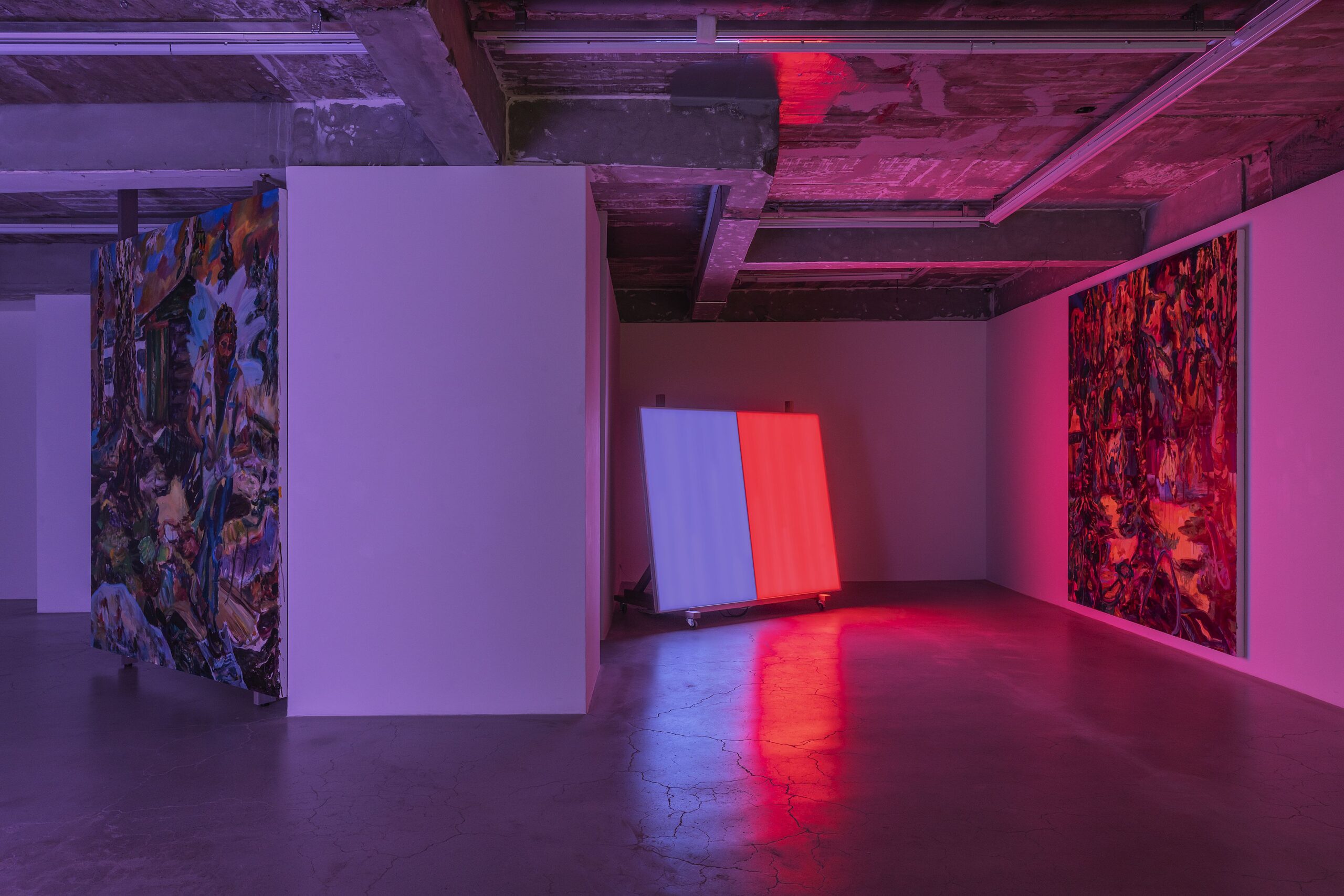
《L. Practice》(Museumhead, 2022) intersects painting and automatic programs. The traces of several tools and devices placed in the exhibition space along with the paintings, including LED lights, ironically invite us to imagine not a perfectly reproduced place, but its reverse side: personal experience and memory, and the qualities of a deeper place.
The exhibition says that painting is ultimately more closely involved not with external factors but with something embodied within oneself. In this way, the lights of the exhibition space, changing from moment to moment, become a screen that illuminates painting as an automated occurrence, into which countless moments have penetrated and accumulated.
And the letter “L,” which becomes the title of all these practices, points to many things such as place and emotion, painting and memory, yet remains an abstract sign that cannot be fully deciphered. Will the past-tense sentence that this exhibition will write, “Hyein Lee checked the weather,” announce that the artist has come to foreground her discord with specific objects/nature/figures and focus on the world within herself?
Will this experiment in automatically occurring painting overturn the concept of plein-air painting that has explained Hyein Lee’s work until now, and begin in earnest to explore the realms of autonomy and abstraction? How will Hyein Lee pass through and later look back on this here and now, which may become a point of divergence in the history of her painting?
Curation/Text: Kwon Hyukgyu