
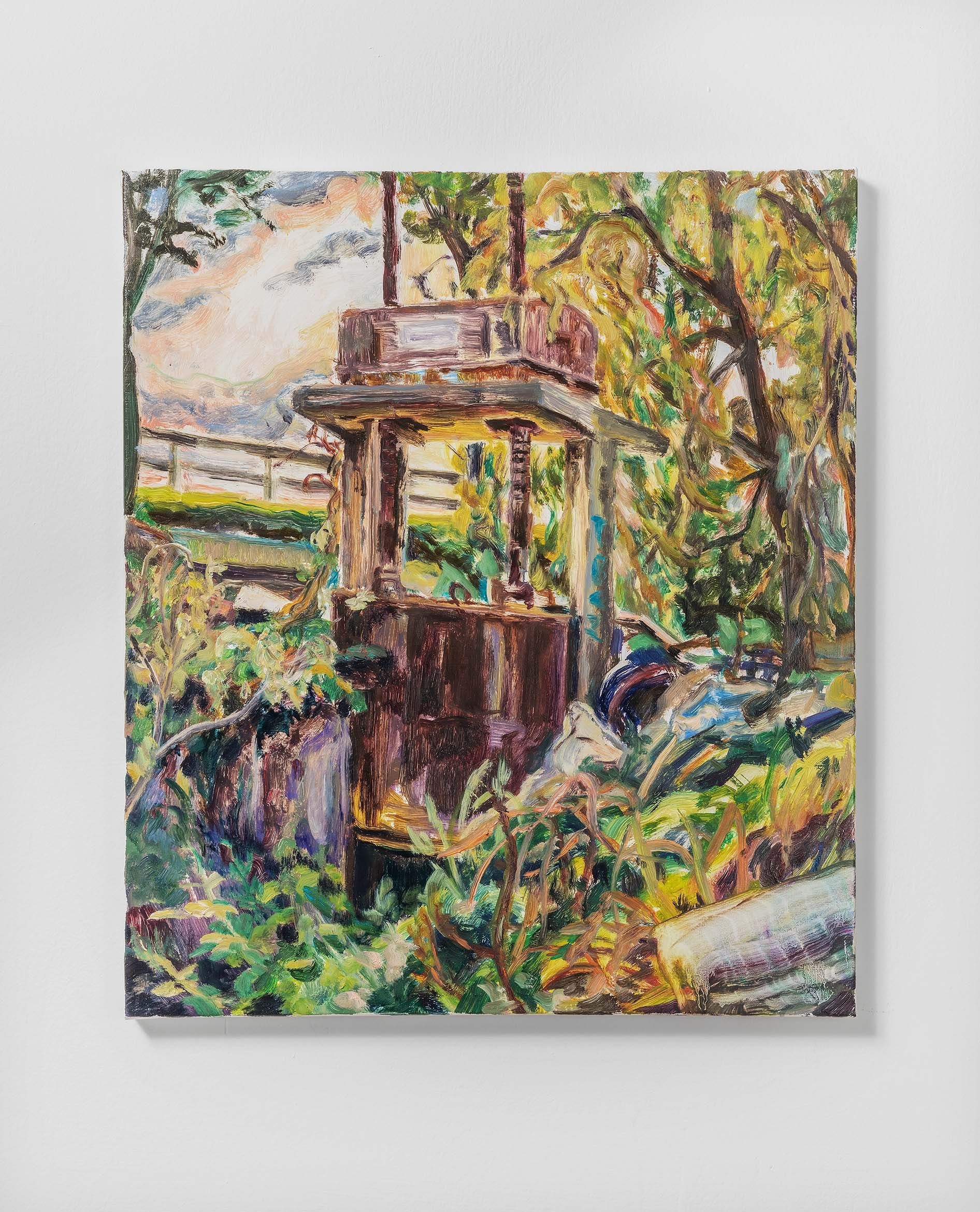
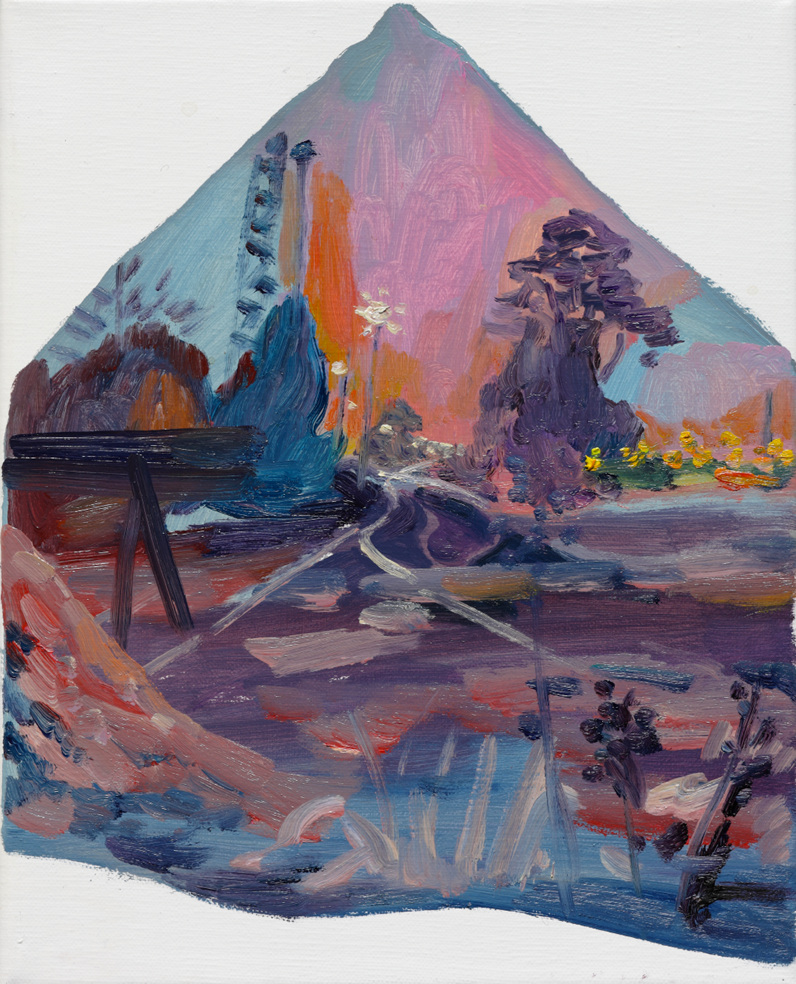
Hyein Lee (b. 1981) has explored, through the language of painting, the sensations and memories that accumulate and transform over time, drawing on prolonged stays in specific places and embodied experiences.
 
In particular, she is interested in the moment a landscape disappears, or in the lingering traces of memory left by having once inhabited it, translating these fleeting impressions into the pictorial density and materiality of painting.


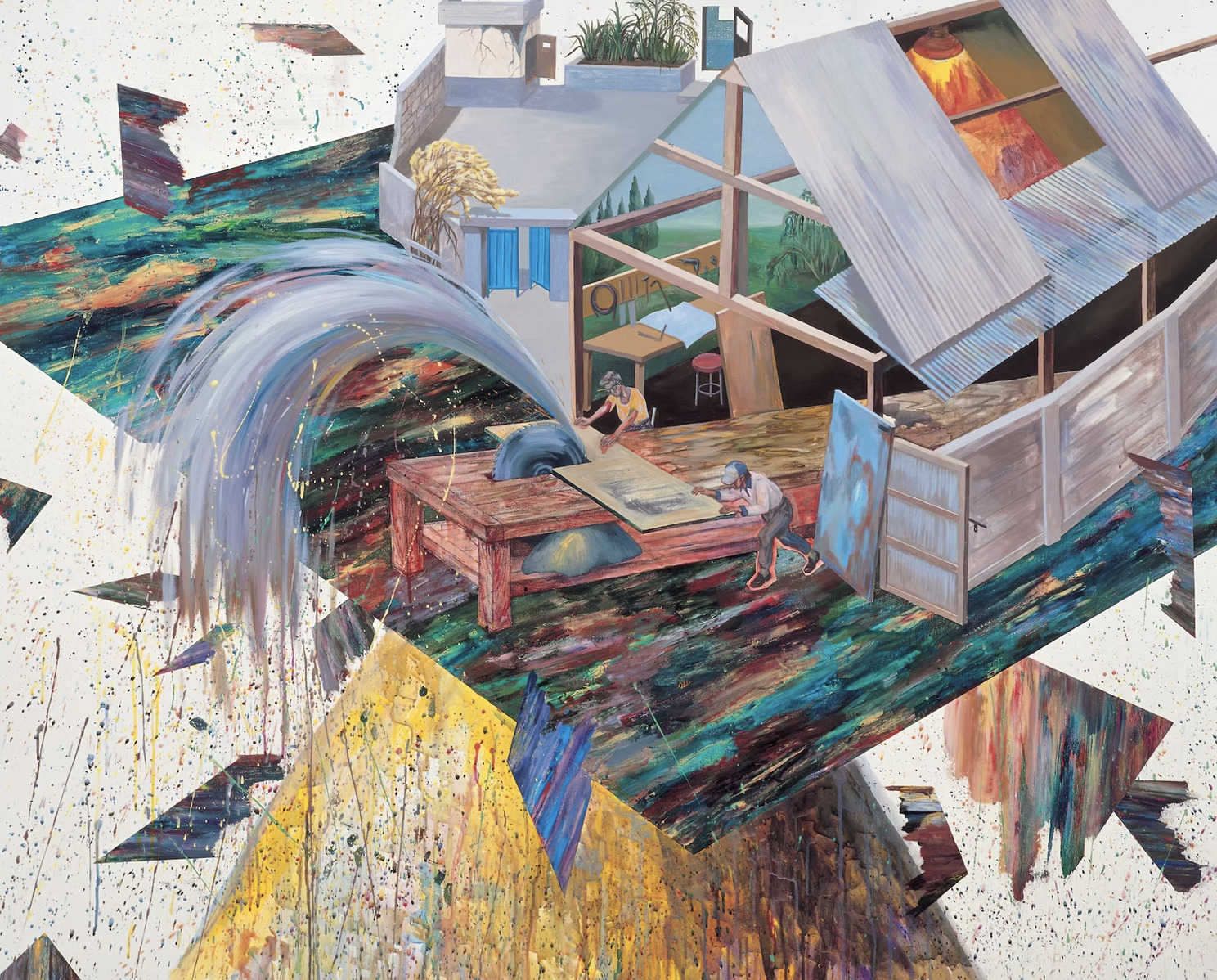
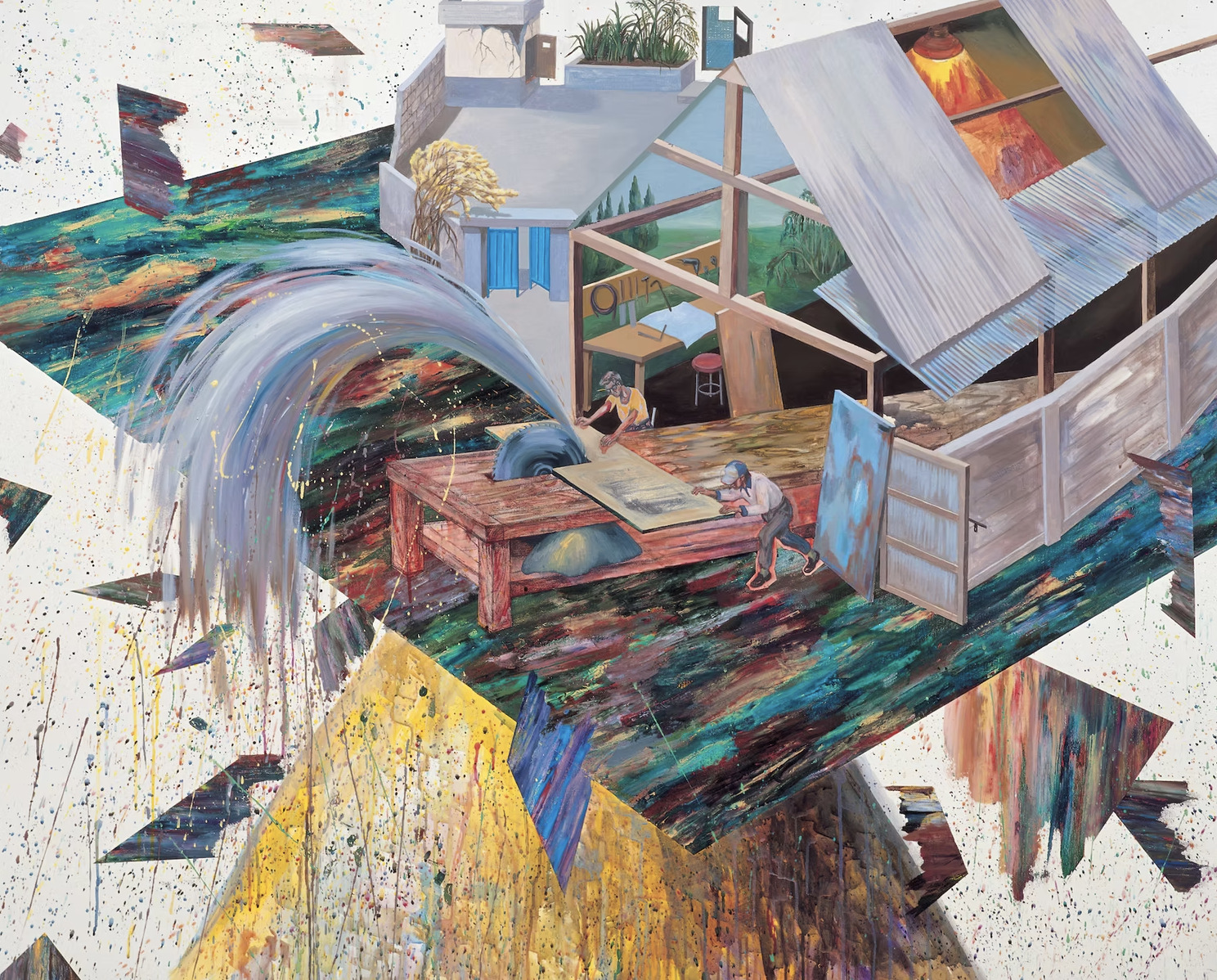
Hyein Lee, Carpenter's time,, 2008, Pencil, acrylic & oil on canvas, 130x162cm © Hyein Lee

In her early works, Hyein Lee depicted landscapes rooted in autobiographical memory. These scenes intertwine the anxieties of individuals confronting an elusive reality with indistinct daydreams and nightmares. Through these imagined landscapes, Lee sought to capture the realities and emotional atmosphere of the contemporary world she inhabited.


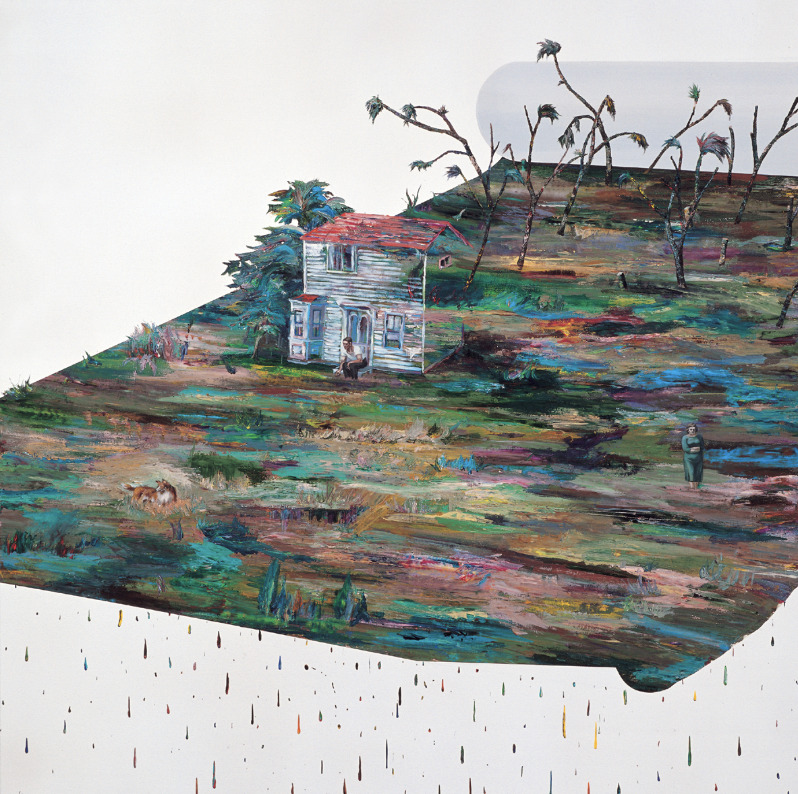
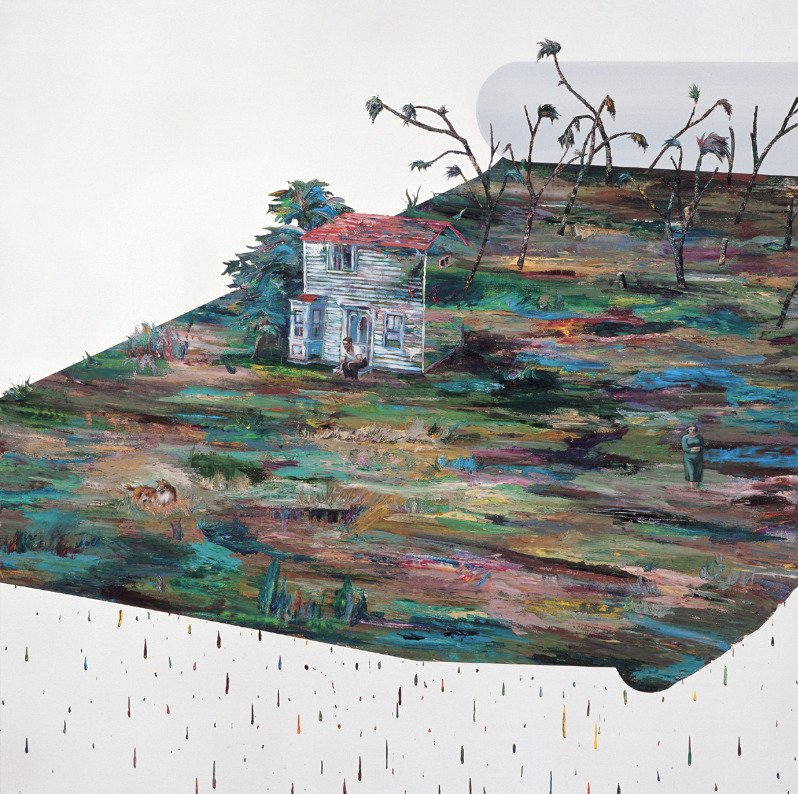
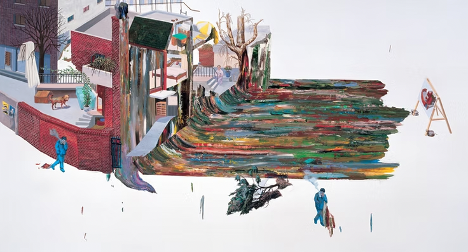
Hyein Lee, Insentient Nature,, 2008, Acrylic on canvas, 145x145cm © MMCA Art Bank

For example, Insentient Nature (2008) reflects Lee's contemplation of how painting might visualize landscapes on the verge of disappearance after witnessing the rapid environmental transformations brought about by urban development.
 
Drawing upon landscapes preserved in memory, Lee developed a painterly language that combined the act of translating remembered scenes onto the canvas through drawing with the physical process of pushing and layering multiple colors of paint using a squeegee or palette knife.
 
Through these techniques, she rendered lingering impressions of the instability that characterizes the contemporary landscape.
 
The painting depicts a man, a woman, a dog, and a solitary house positioned at considerable distances from one another across a thin, paper-like expanse of land that appears to unfurl and drift through space.
 
Borrowed from the imagery of Edward Hopper, these motifs reinterpret the desolate atmosphere of his paintings, where figures occupy the same space yet remain emotionally and psychologically distant.


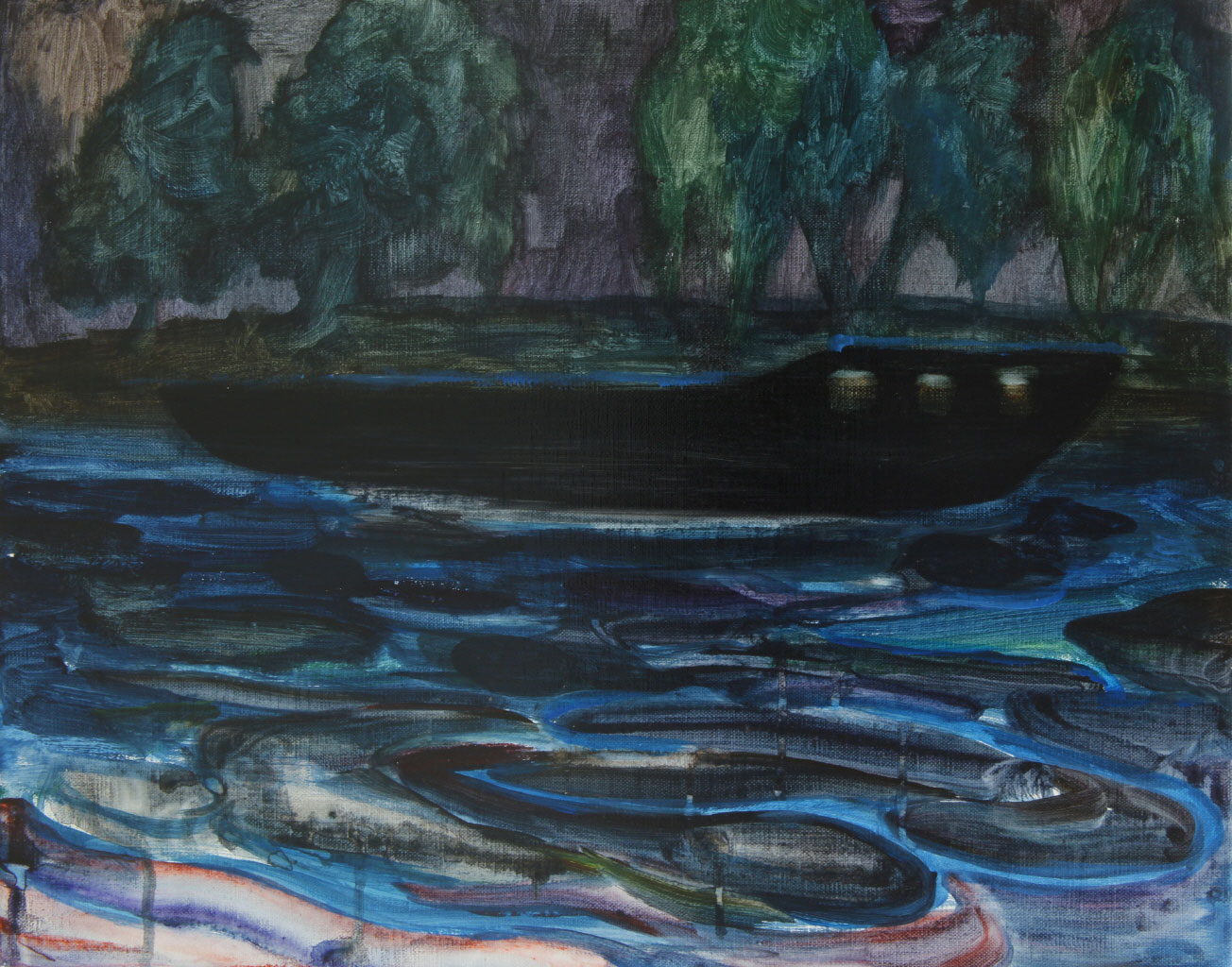
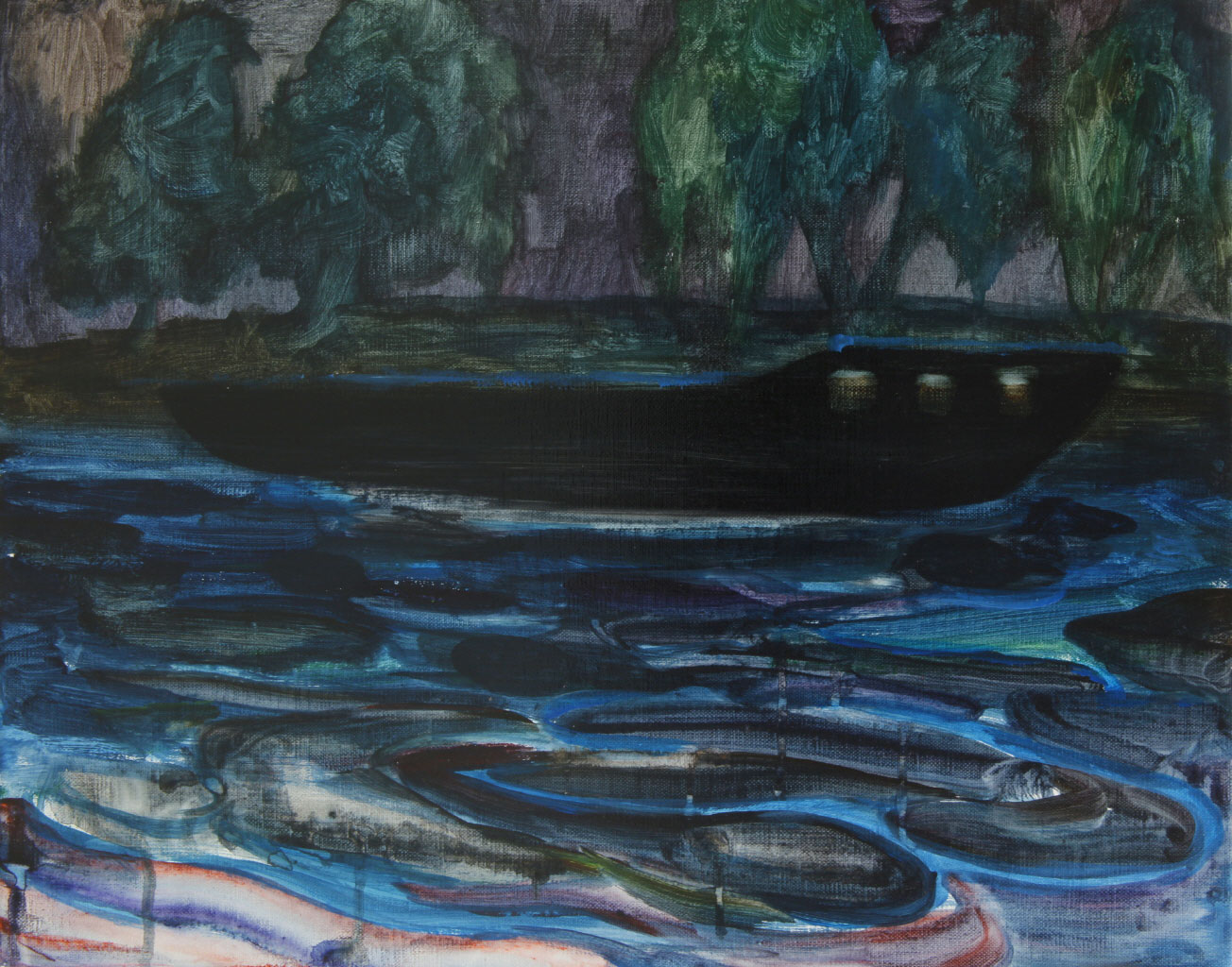
Hyein Lee, The Summer Midnight in Berlin,, 2012, Oil on canvas, 40x50cm © Hyein Lee

While Lee's early works translated remembered landscapes and lingering mental images into painting, from around 2010 onward she began adopting the traditional plein air approach long embraced by Post-Impressionist painters, taking her canvas to sites on the outskirts of Seoul, Berlin, and other locations to capture the surrounding landscape on small canvases.
 
The aim of this practice was not to achieve faithful representation or a predetermined formal outcome. Rather, Lee sought to integrate her own artistic vision with the experiences gathered from specific physical sites and the elements of chance that emerge from working within the constraints of a particular time, place, and material conditions.


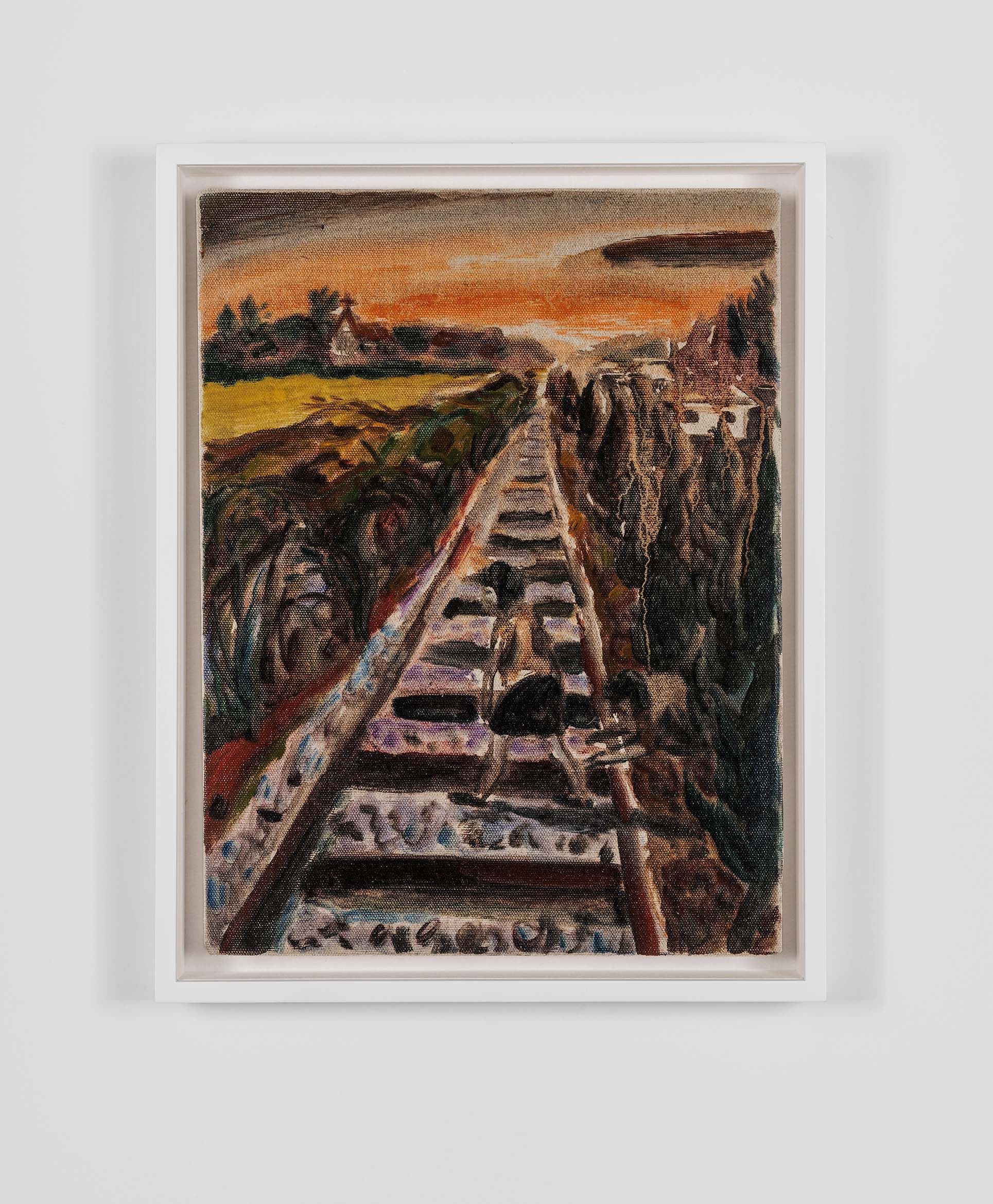
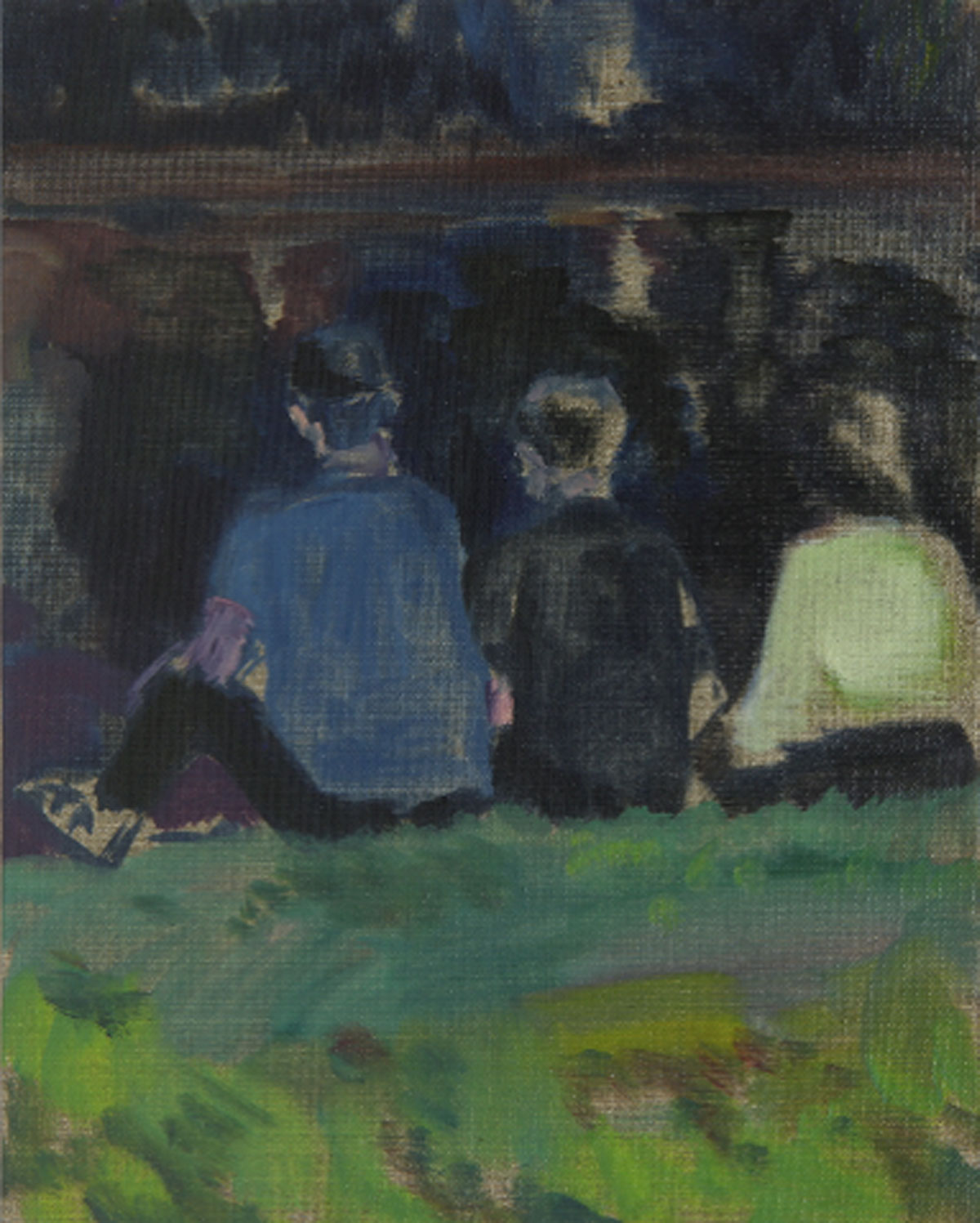
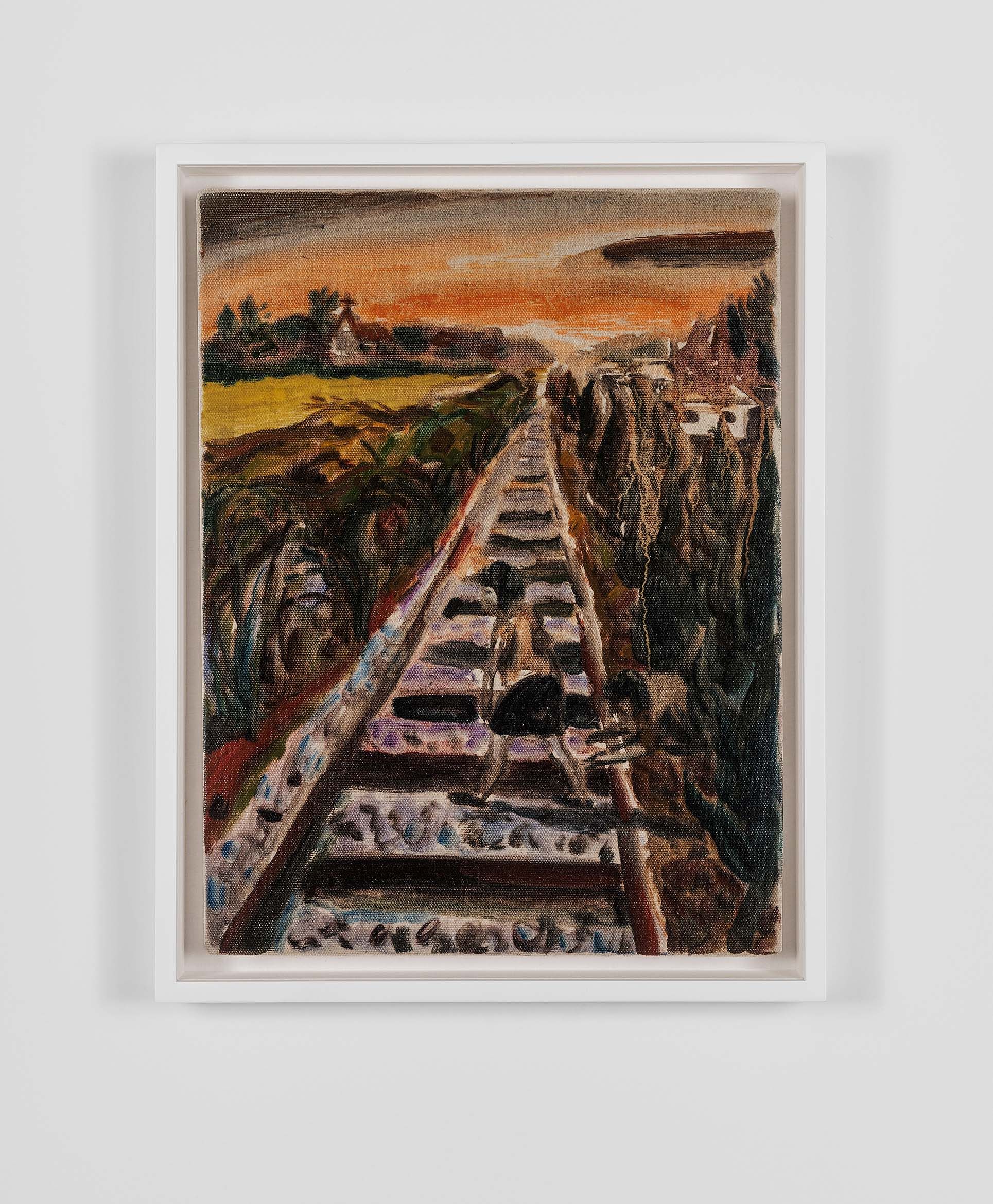
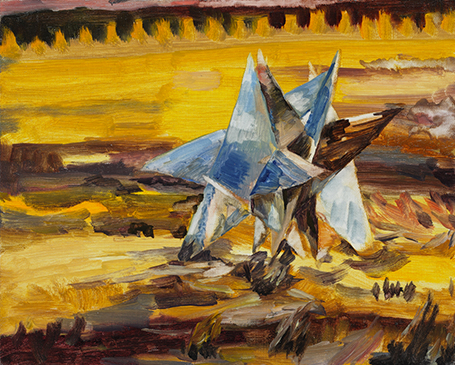
Hyein Lee, 2019. 9. 20. across the railway,, 2019, Oil on canvas, 40.7x31.7cm © KICHE

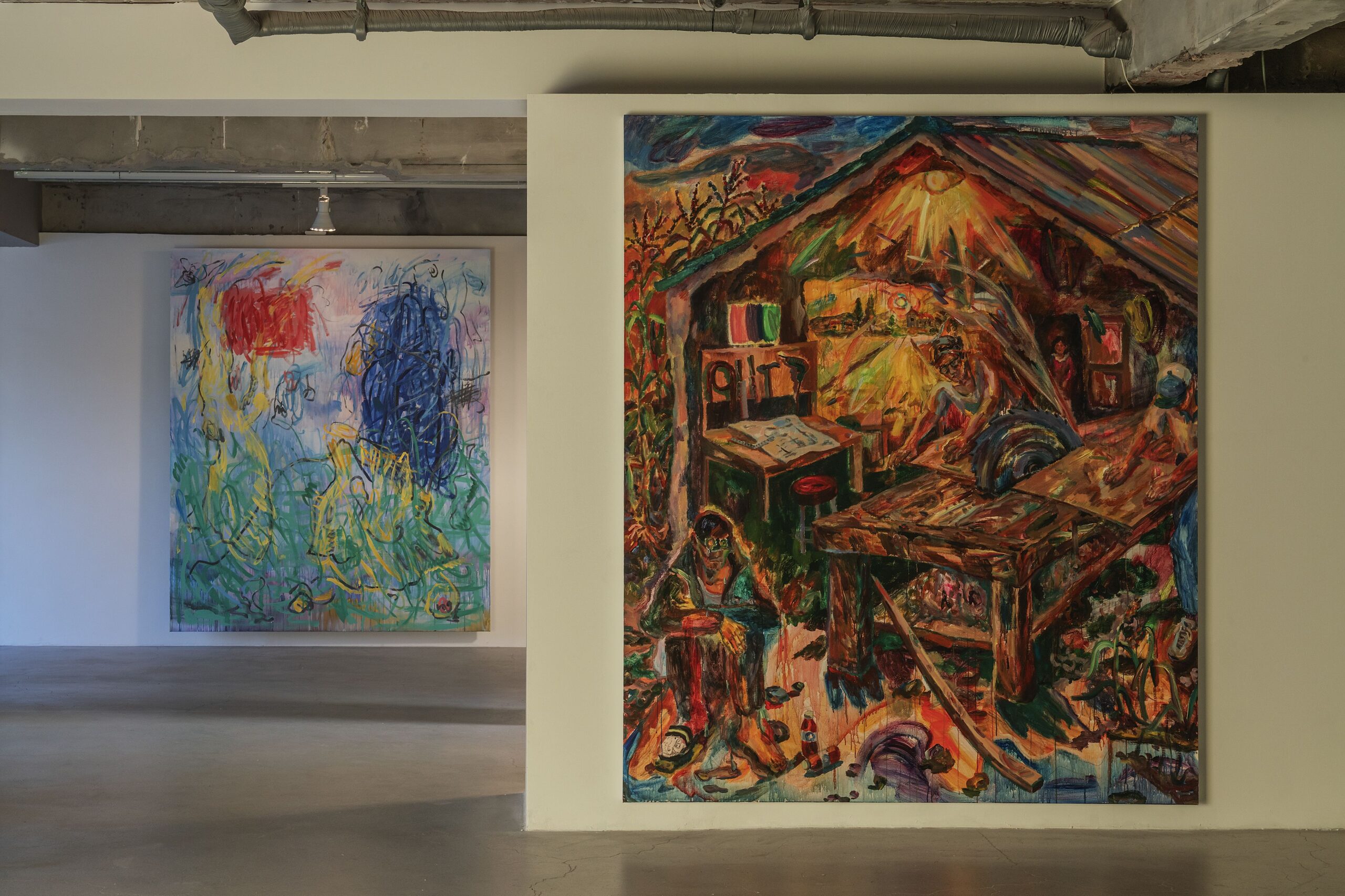
Lee's plein air practice, therefore, is not simply an exercise in reproducing the scenery before her eyes. Rather, it is an exploration of her own embodied presence—the unique state of being that emerges through encountering a particular situation.
 
Remaining in an outdoor setting and sensing the weather of a particular moment, forming unexpected encounters with others, negotiating or accepting the conditions required to paint within a given situation, physically registering the day's humidity and temperature, and overlaying memories evoked by the landscape before her onto the here and now—all constitute integral aspects of Lee's practice.
 
Lee translates these lived moments into a painterly language that moves fluidly between figuration and abstraction, recording them as multiple layers within the pictorial surface.


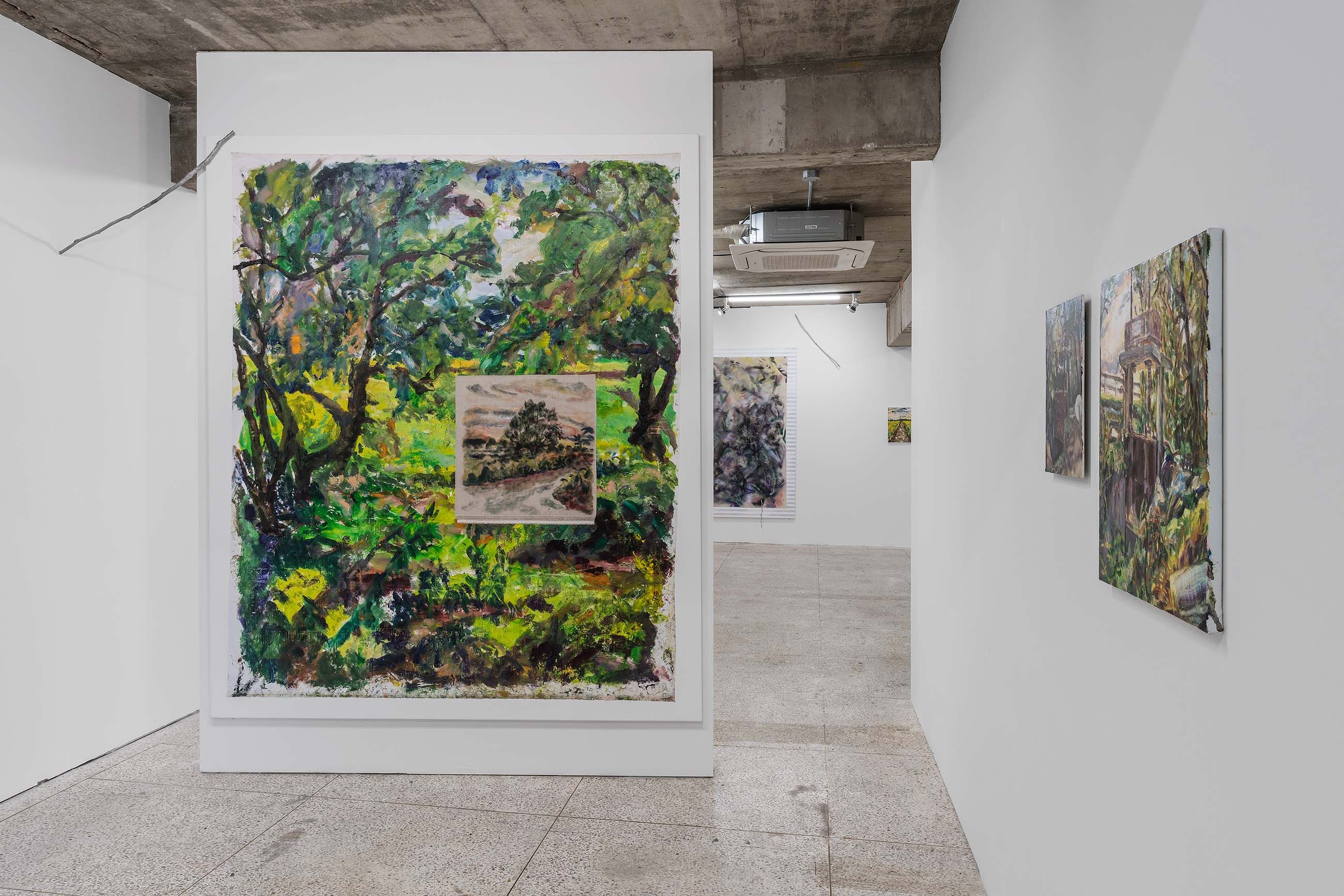
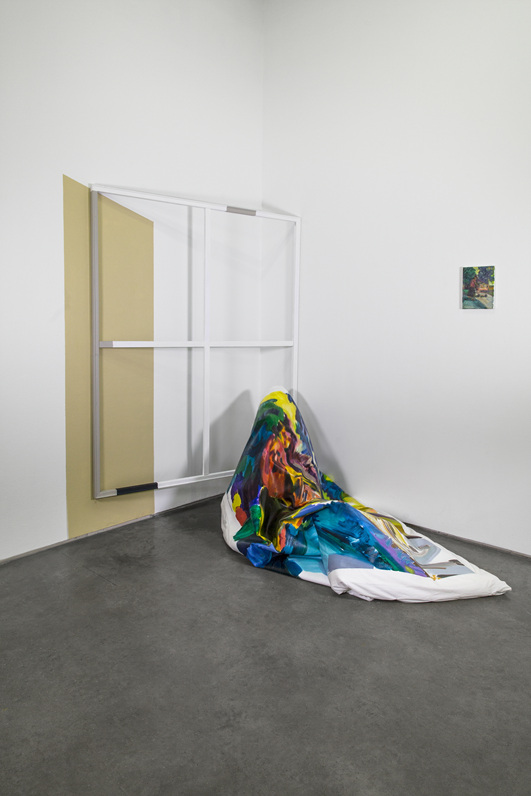
Installation view of 《One day, stepping on the weather》 (KICHE, 2020) © KICHE

More than a means of representing a visible subject, it is a way of entering into a relationship with the world—of connecting past and present, and of keeping open, through brushstrokes that continue like the rhythm of breathing, the possibility of a future that is constantly arriving in the present.
 
In this way, Lee continually gauges her own position and seeks equilibrium through her relationship with the world around her. The landscape before her is thus no longer a fixed scene, but is reconstituted as a pictorial field in which embodied experience and emotion, shaped by a particular place and circumstance, gradually accumulate.


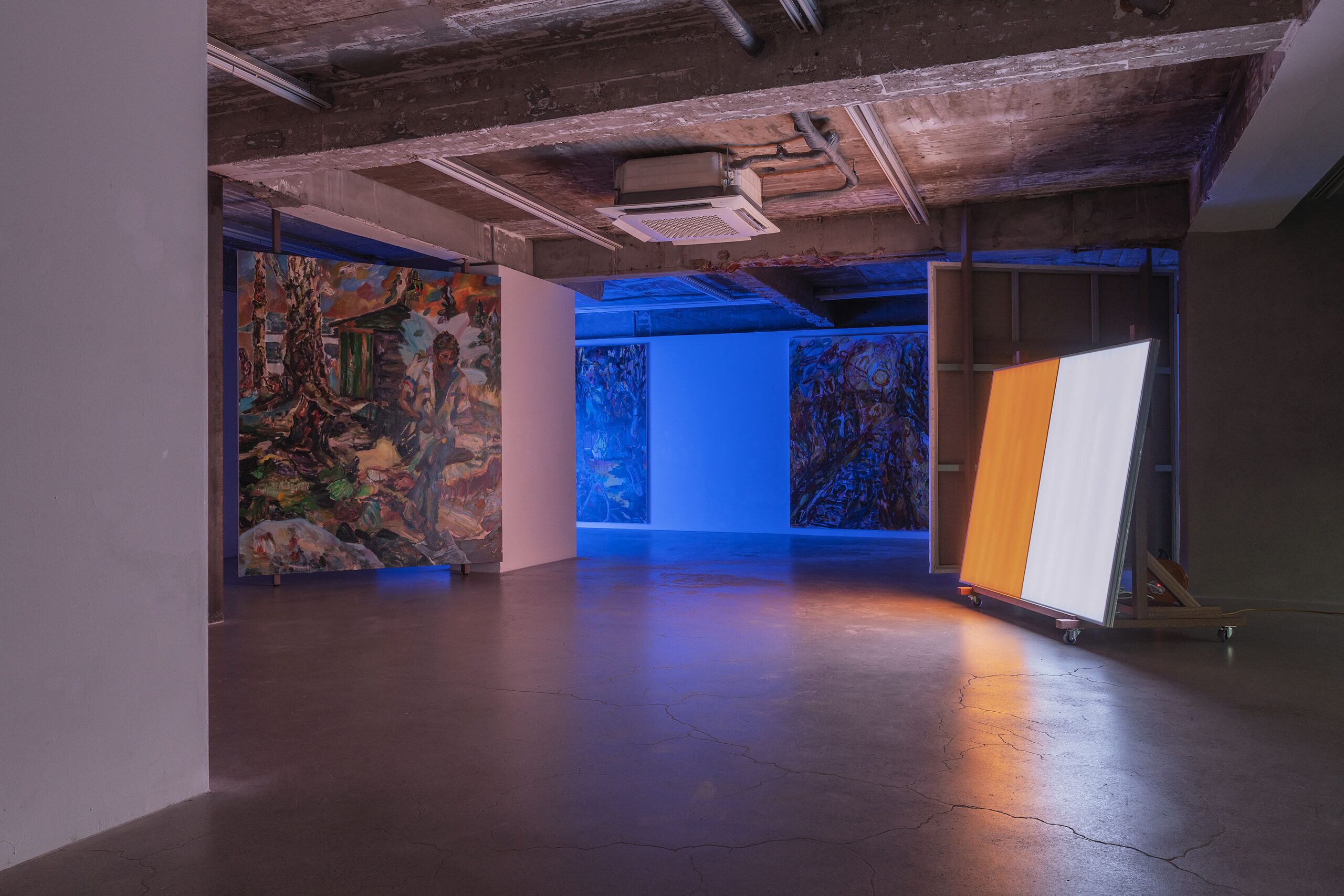
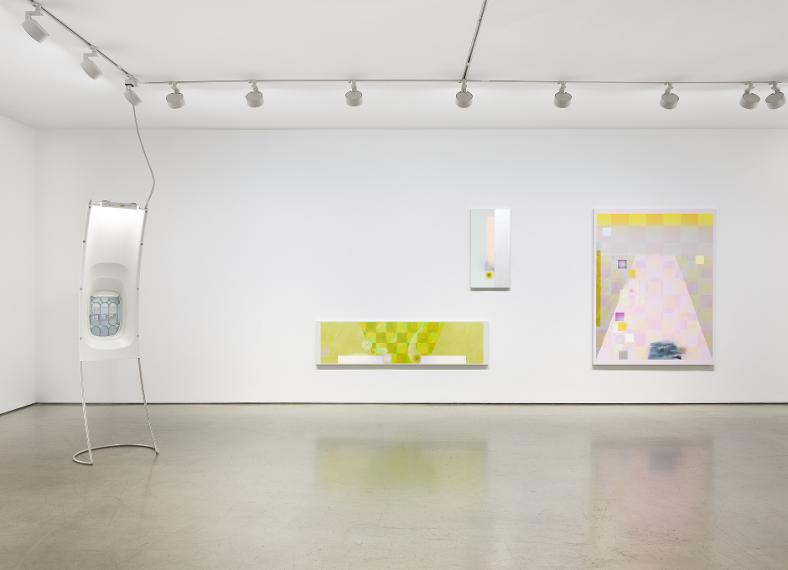
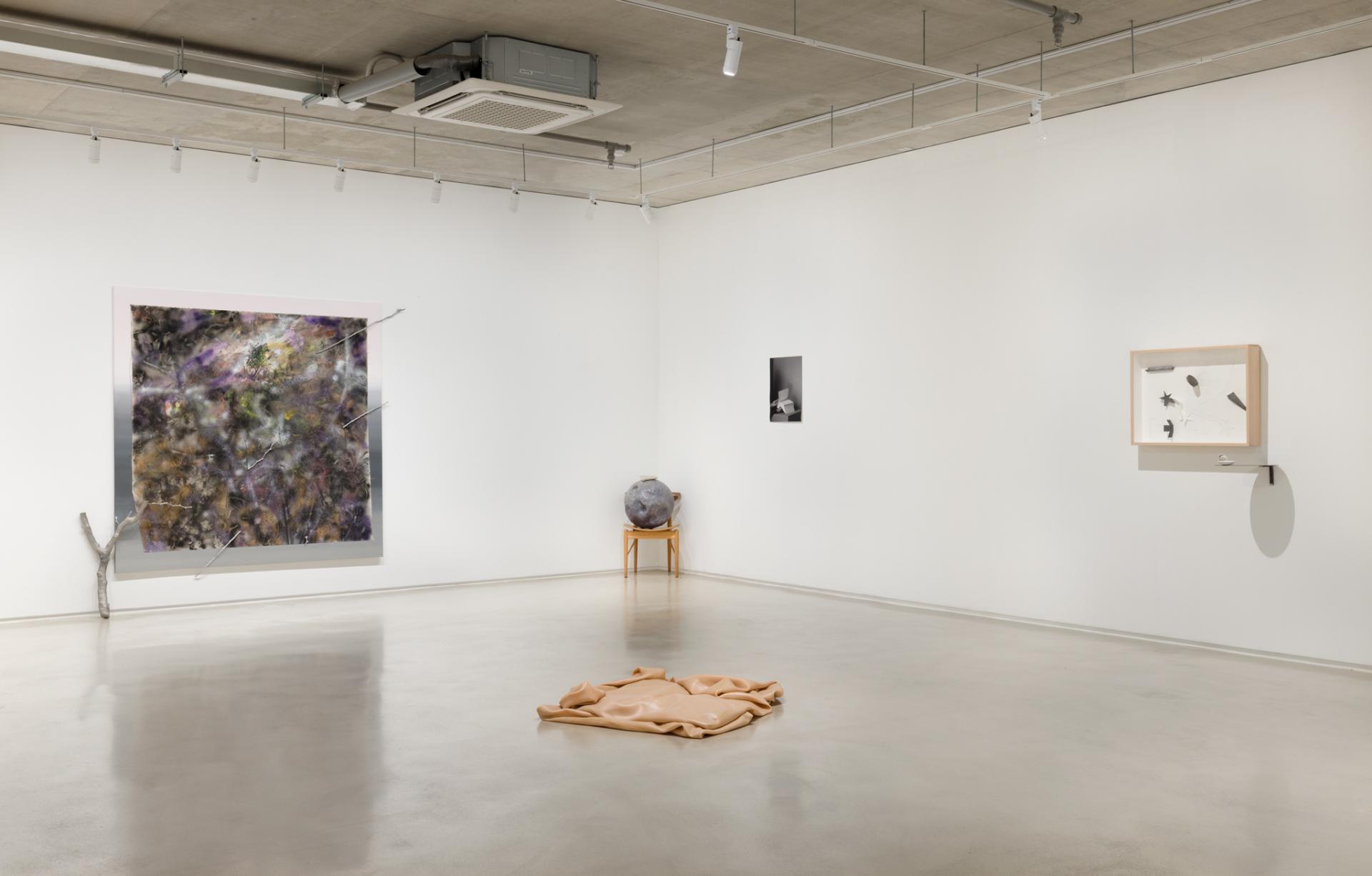
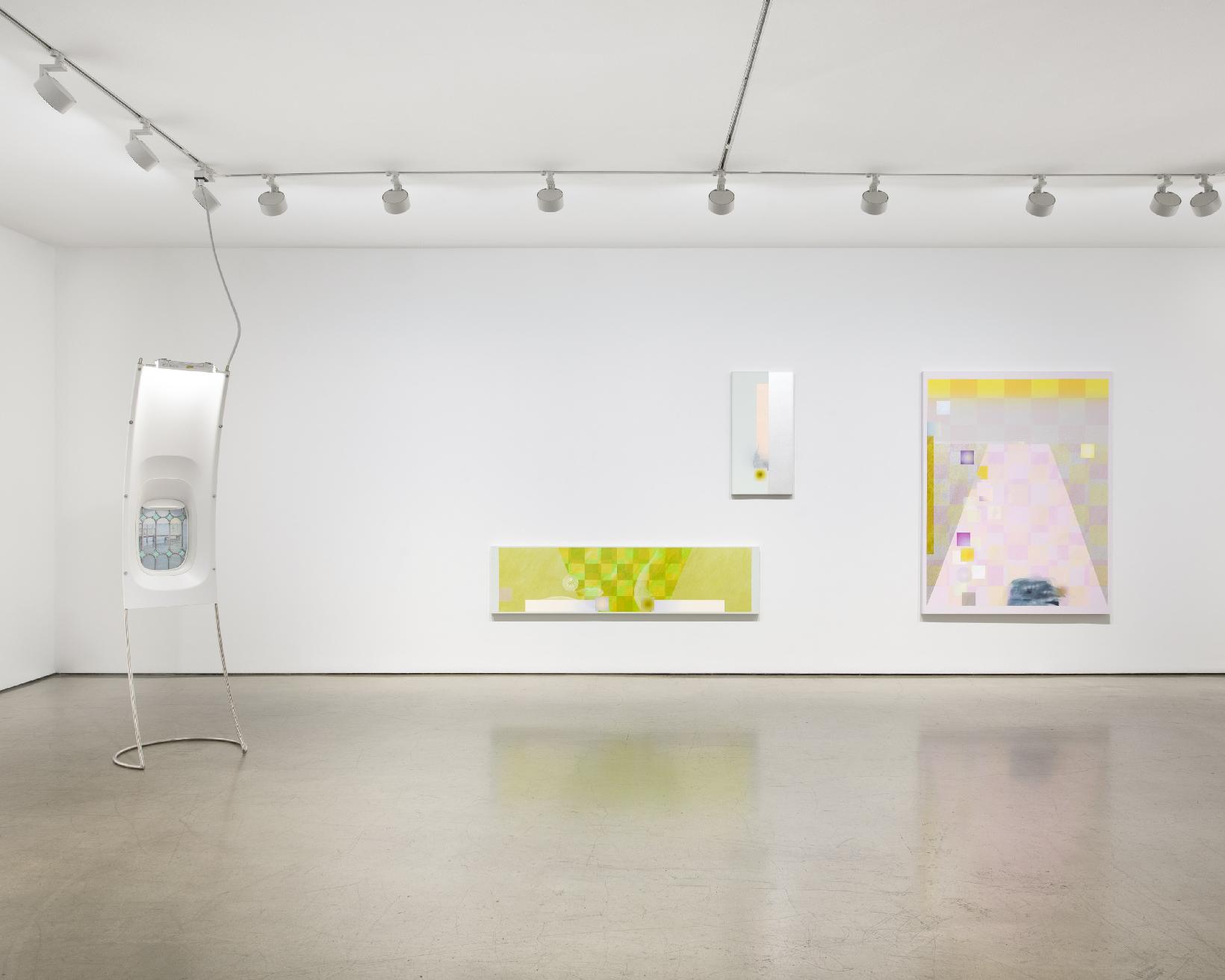
Installation view of 《L. Practice》 (Museumhead, 2022) © Museumhead

Beginning in 2022, however, Lee shifted her practice from outdoor sites to the studio, expanding her work toward reconstructing within the pictorial space the layers of time, sensation, and memory accumulated in specific places and moments.
 
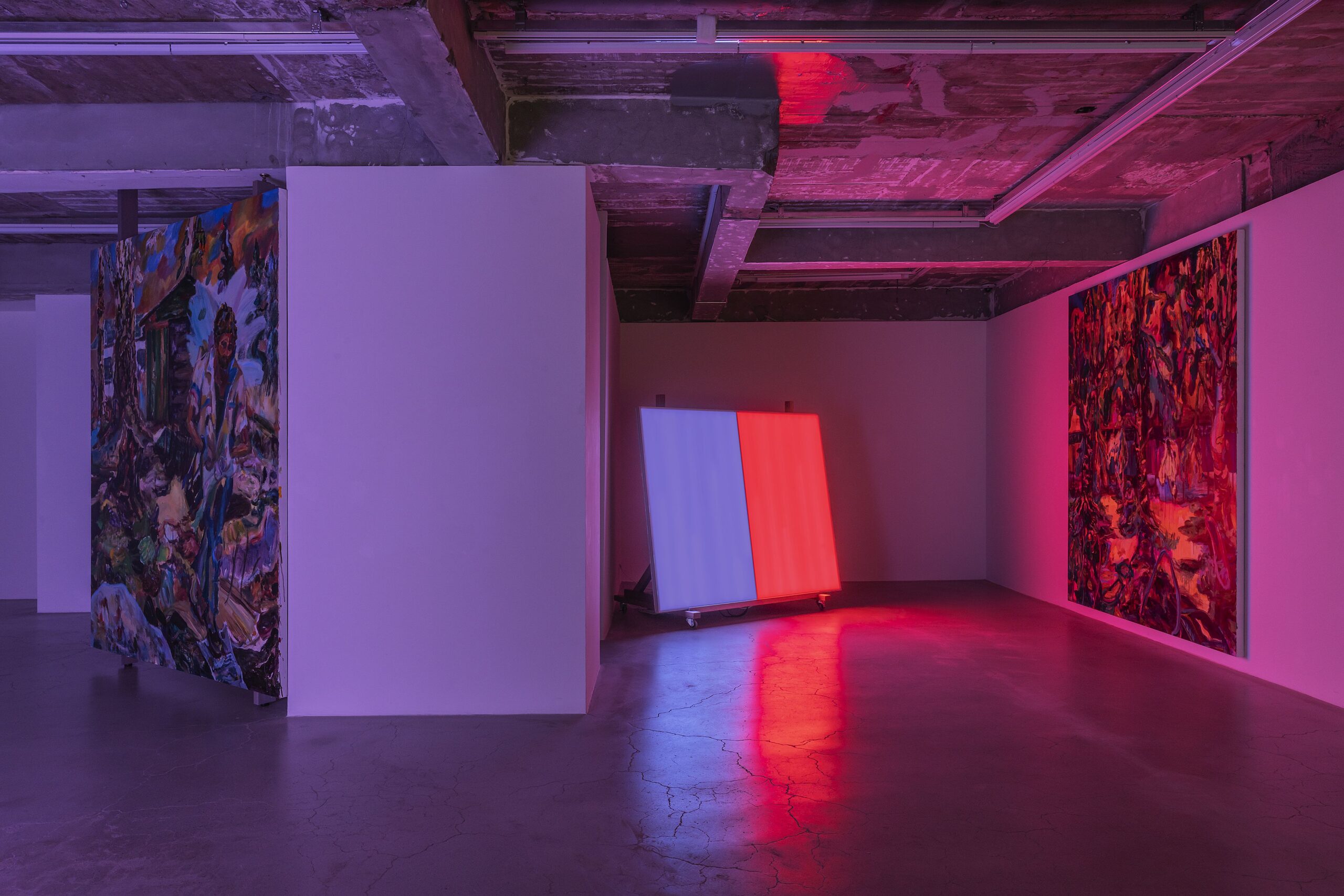
In her 2022 solo exhibition 《L. Practice》 at Museumhead, rather than venturing outdoors, Lee experimented with partially automating the experience of being in nature through a device that translated the outdoor environment into a form of data. This process enabled her to turn her attention to the personal thoughts and reflections that emerged naturally from the experience itself.


Installation view of 《L. Practice》 (Museumhead, 2022) © Museumhead

For instance, to express weather conditions—clear skies, overcast skies, rain, and snow—as sequences of color and time, Lee installed an LED lighting system that converted real-time weather data from a specific location, generated by entering its latitude and longitude, into RGB color values. She then treated this apparatus as a virtual outdoor environment in which to paint.
 
Along similar lines, she conceived of a clay platform that, through its tactile resemblance to the ground beneath one's feet, functioned as the literal site of painting, as well as a drum set that translated the movements of her body within that space into sound and performance.
 
Through these experiments, Lee sought to simulate within the studio the sensory conditions of working outdoors—light, sound, and touch—and to bring to the fore the invisible landscapes that emerge, proliferate, and diverge from those experiences.


Installation view of 《L. Practice》 (Museumhead, 2022) © Museumhead

These experiments suggest that painting is not determined by external conditions alone, but unfolds through the natural activation of memories, sensations, and experiences accumulated in the body over time. Indeed, Lee continued her practice by recalling landscapes, figures, and atmospheres she had encountered in the past, without needing to revisit the places themselves.
 
In this process, the canvas no longer functions as a faithful representation of a single site. Instead, it becomes a space in which different temporalities and memories overlap, encountering present sensations to produce a newly constituted landscape.


Installation view of 《L. Practice》 (Museumhead, 2022) © Museumhead

In the exhibition essay, curator Hyukgue Kwon explains that Lee's repeated return to places and memories from the past is "not an attempt to restore the past as it was," but rather "a process of discovering how the sensations that continue to reside in her body and memory remain alive and active within her present paintings."
 
Her paintings, therefore, are less records of specific landscapes than processes through which memories and experiences accumulated over time are regenerated through the brushstrokes of the present.


Installation view of 《L. Practice》 (Museumhead, 2022) © Museumhead

Ultimately, 《L. Practice》 understands painting not as an act of representing the external world, but as a process through which memories and sensations accumulated in the body emerge autonomously on the pictorial surface.
 
In doing so, Lee expands the practice of plein air painting beyond a method of observation or representation, reimagining it as a painterly practice in which memory and time, body and sensation continually enter into relation, generating new images.


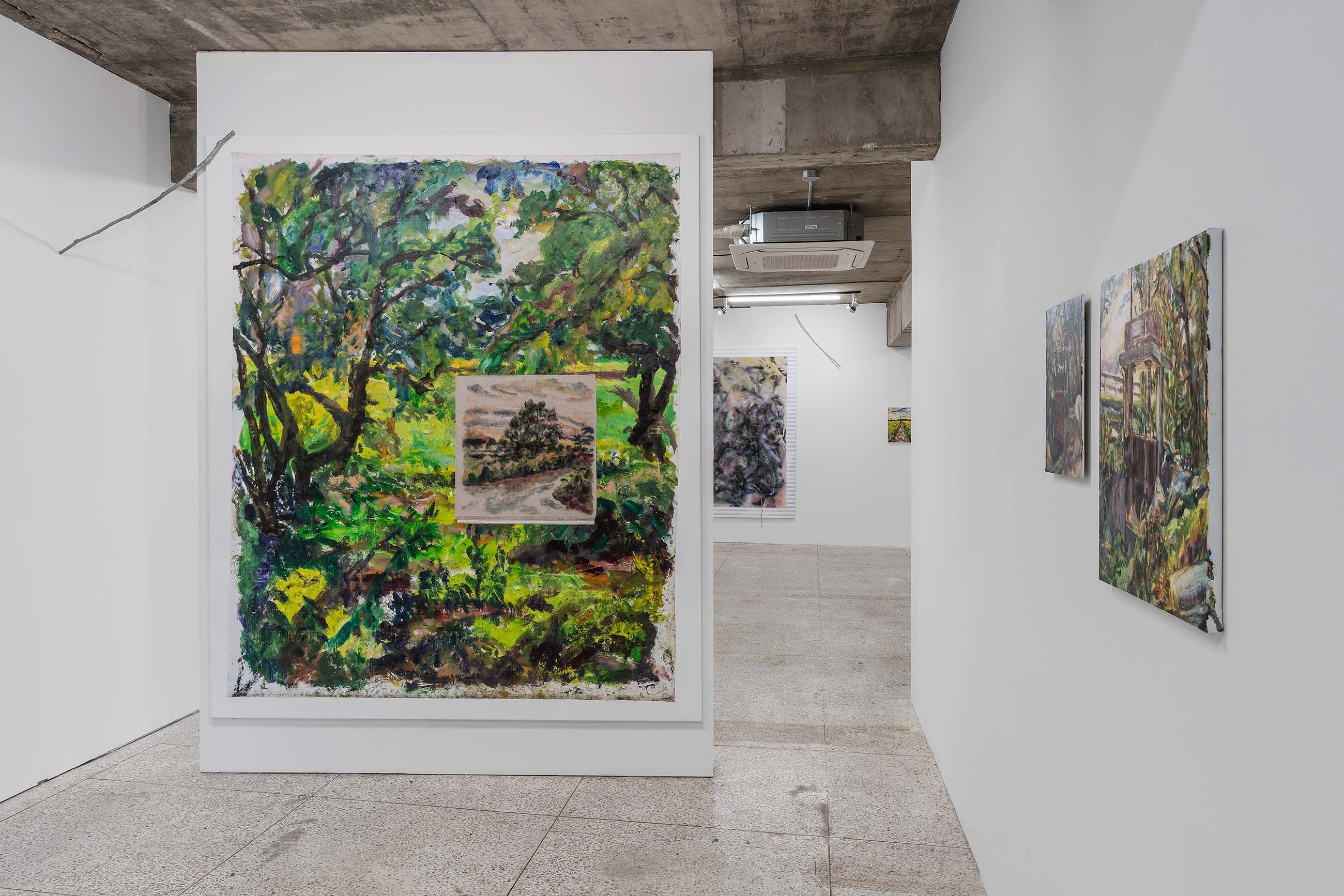
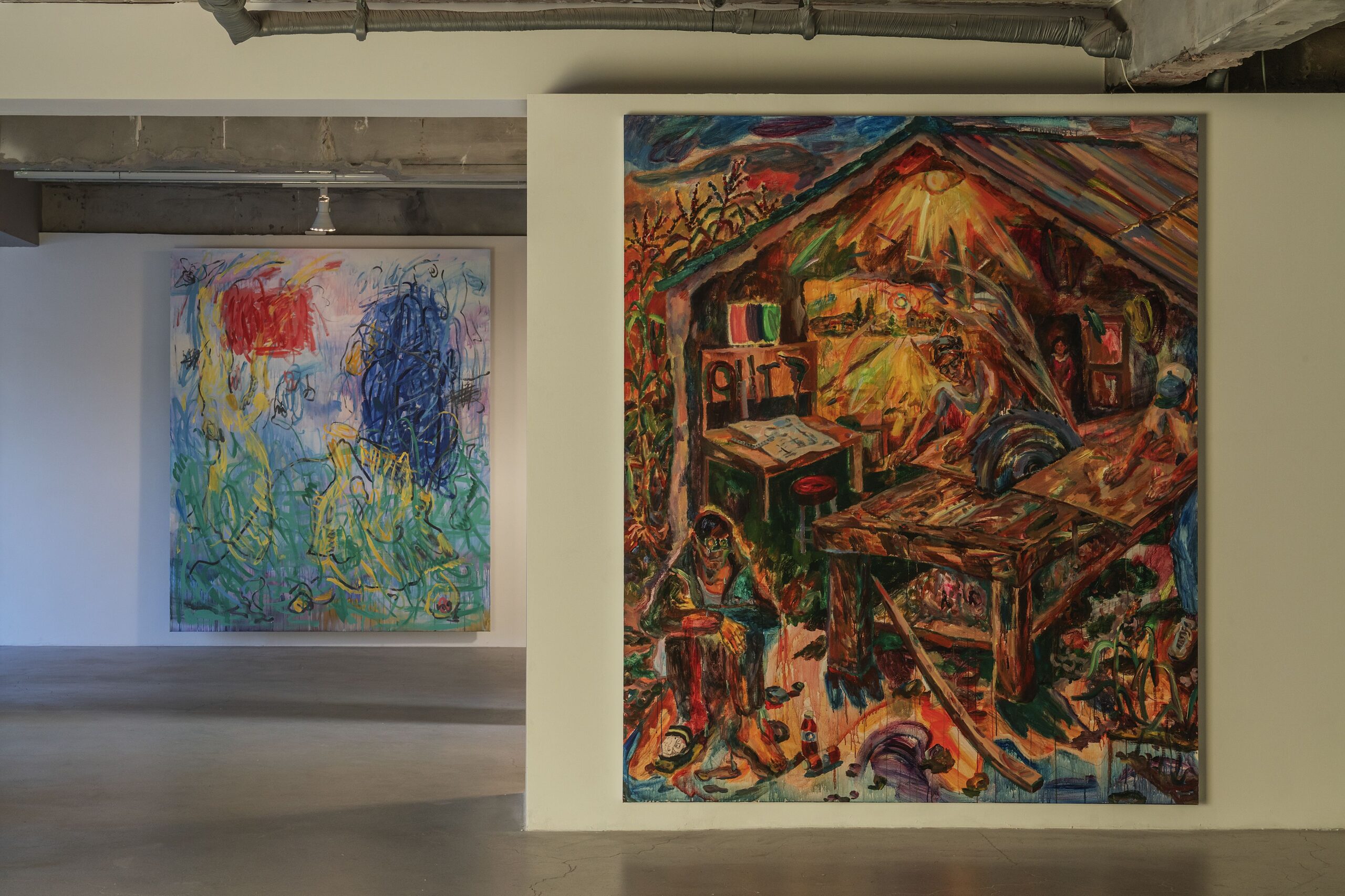
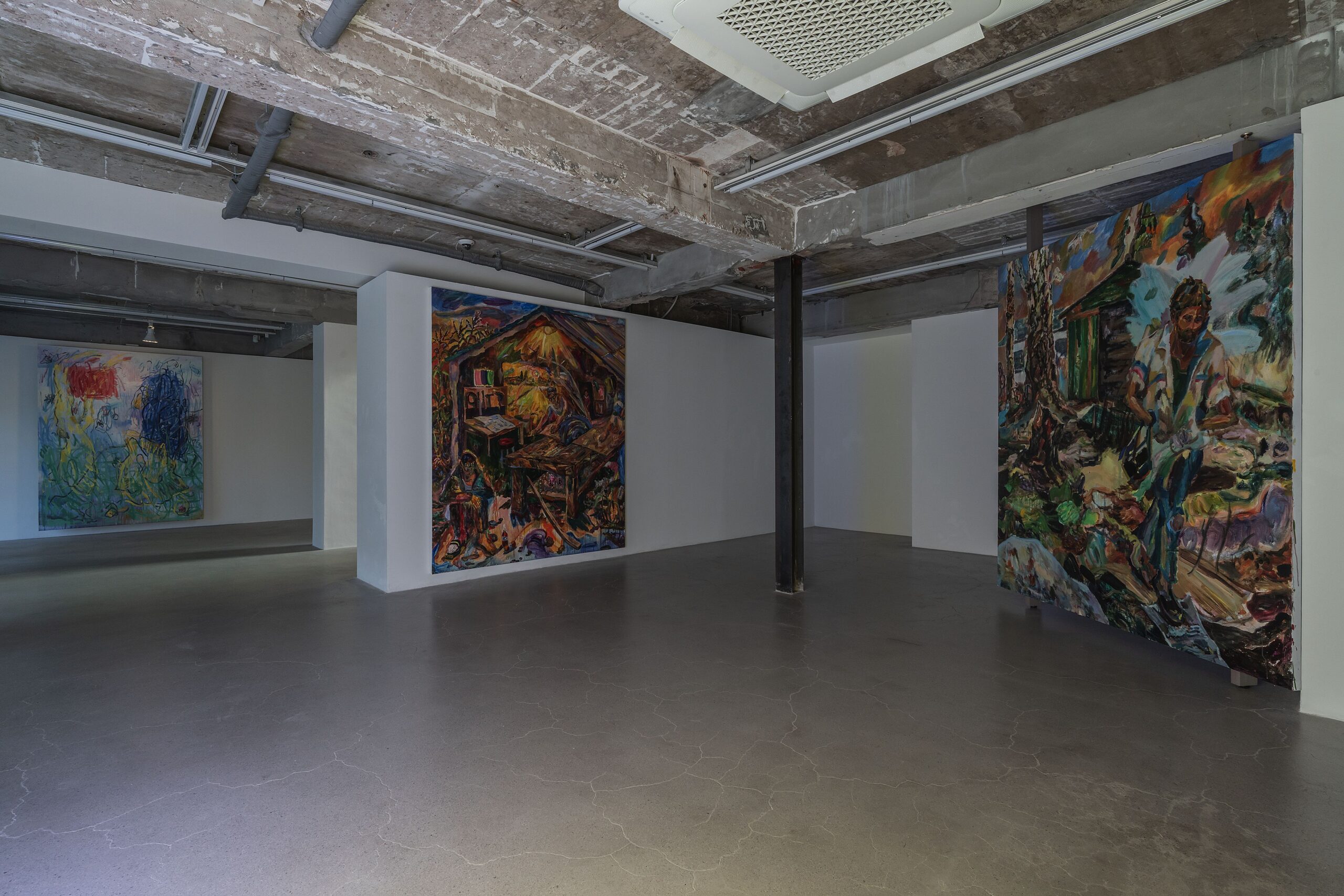
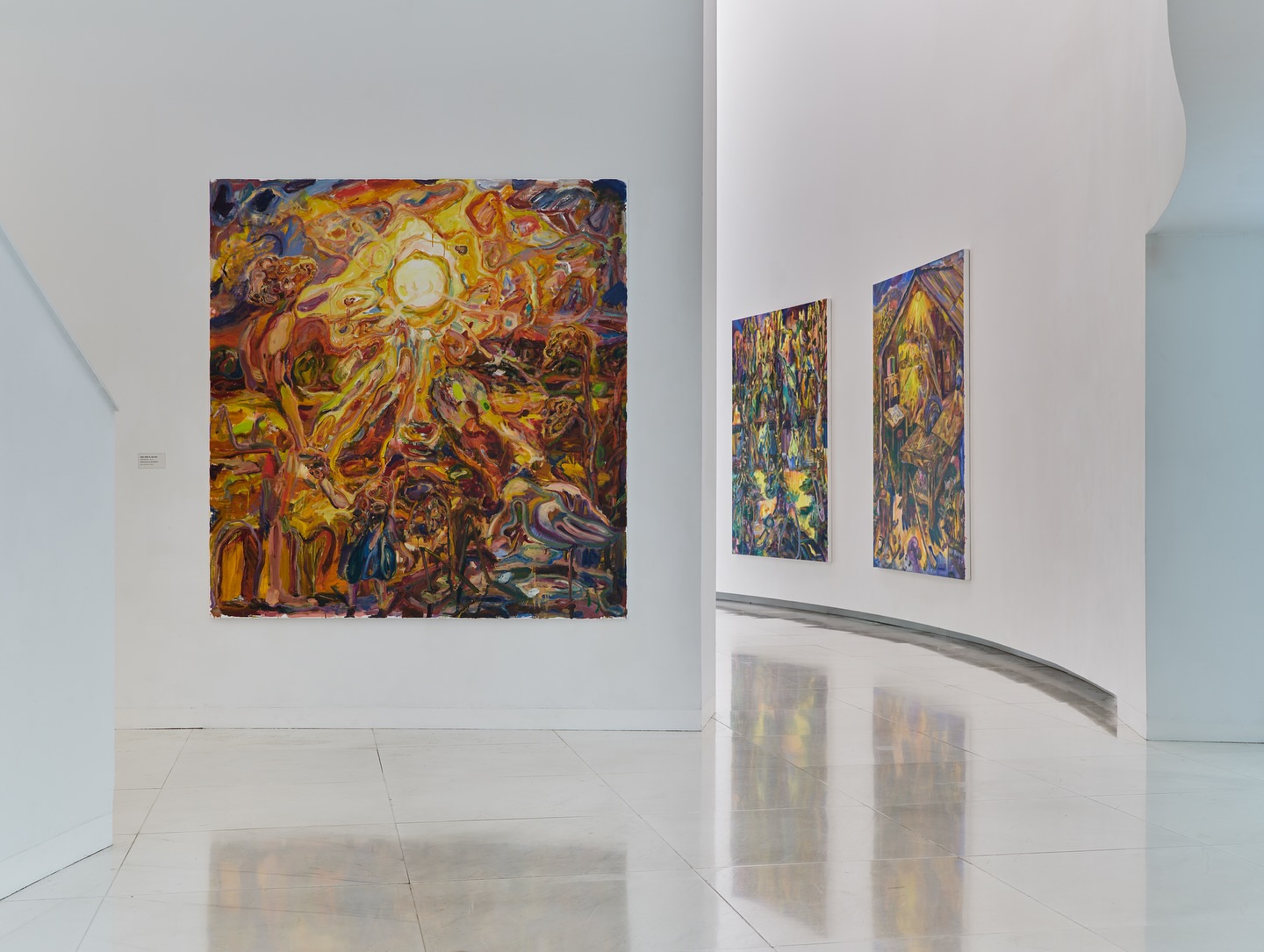
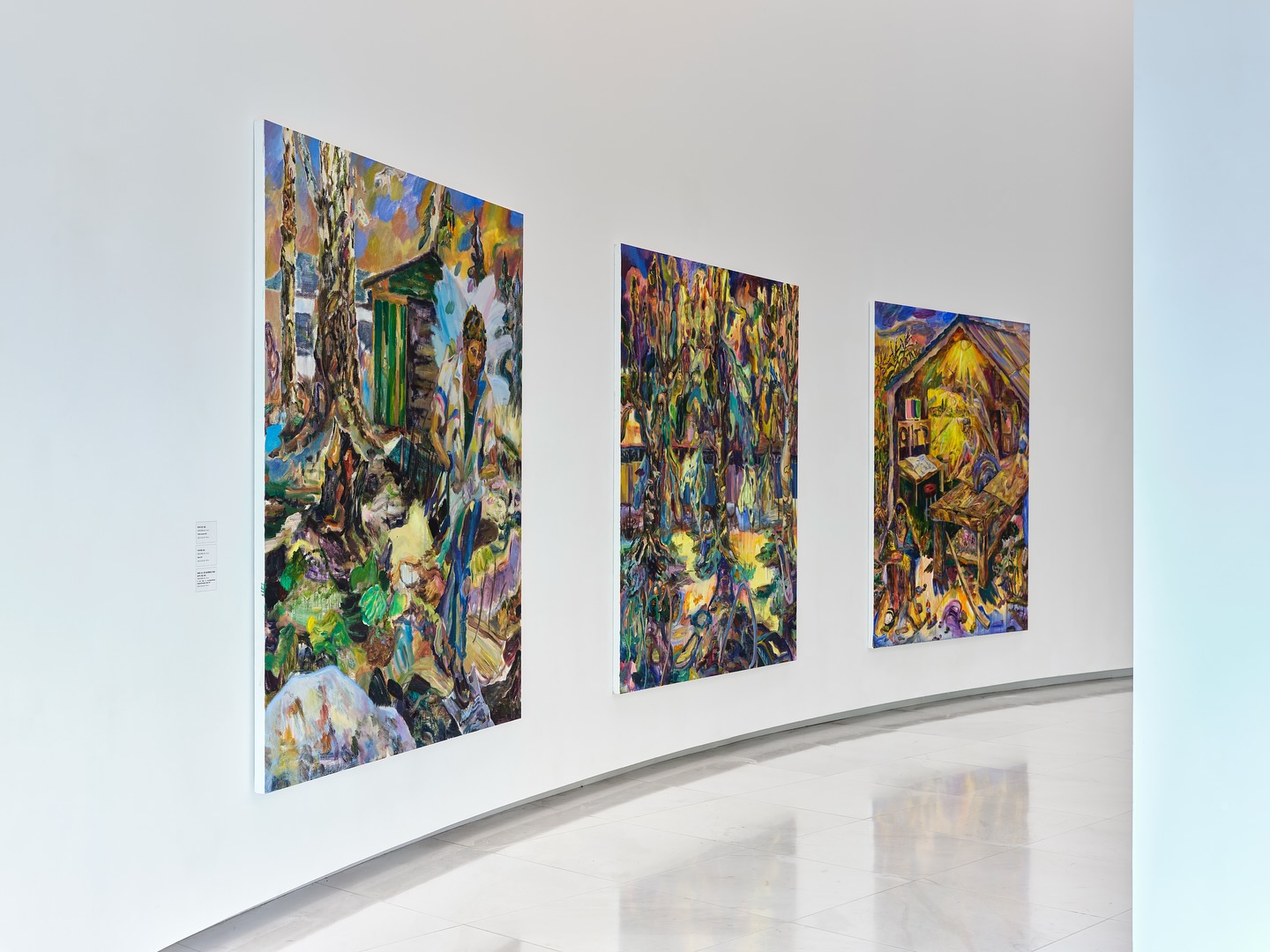
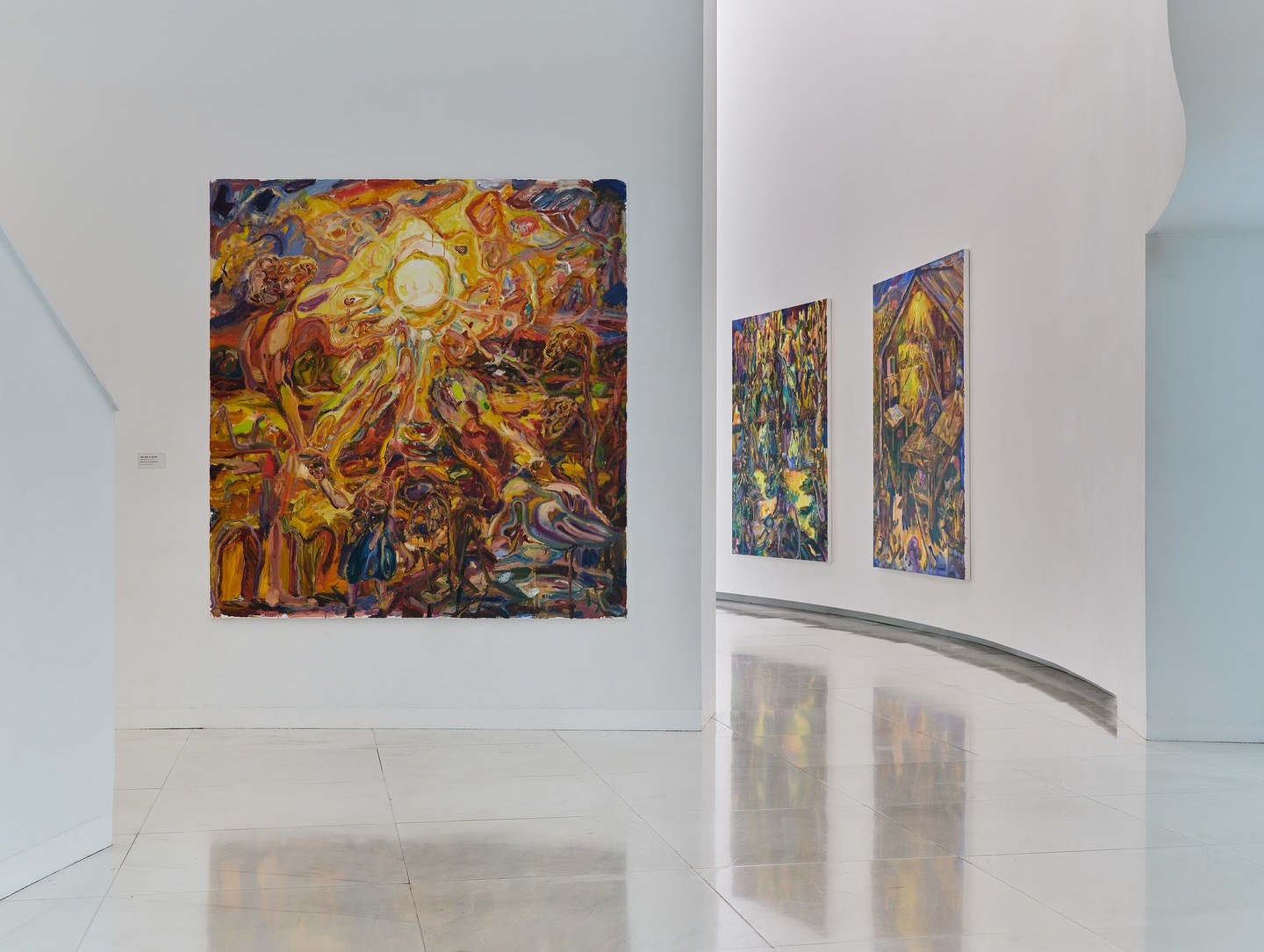
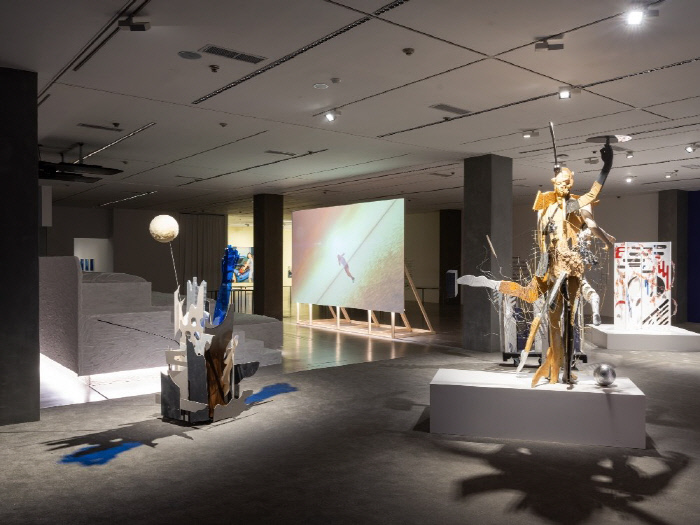
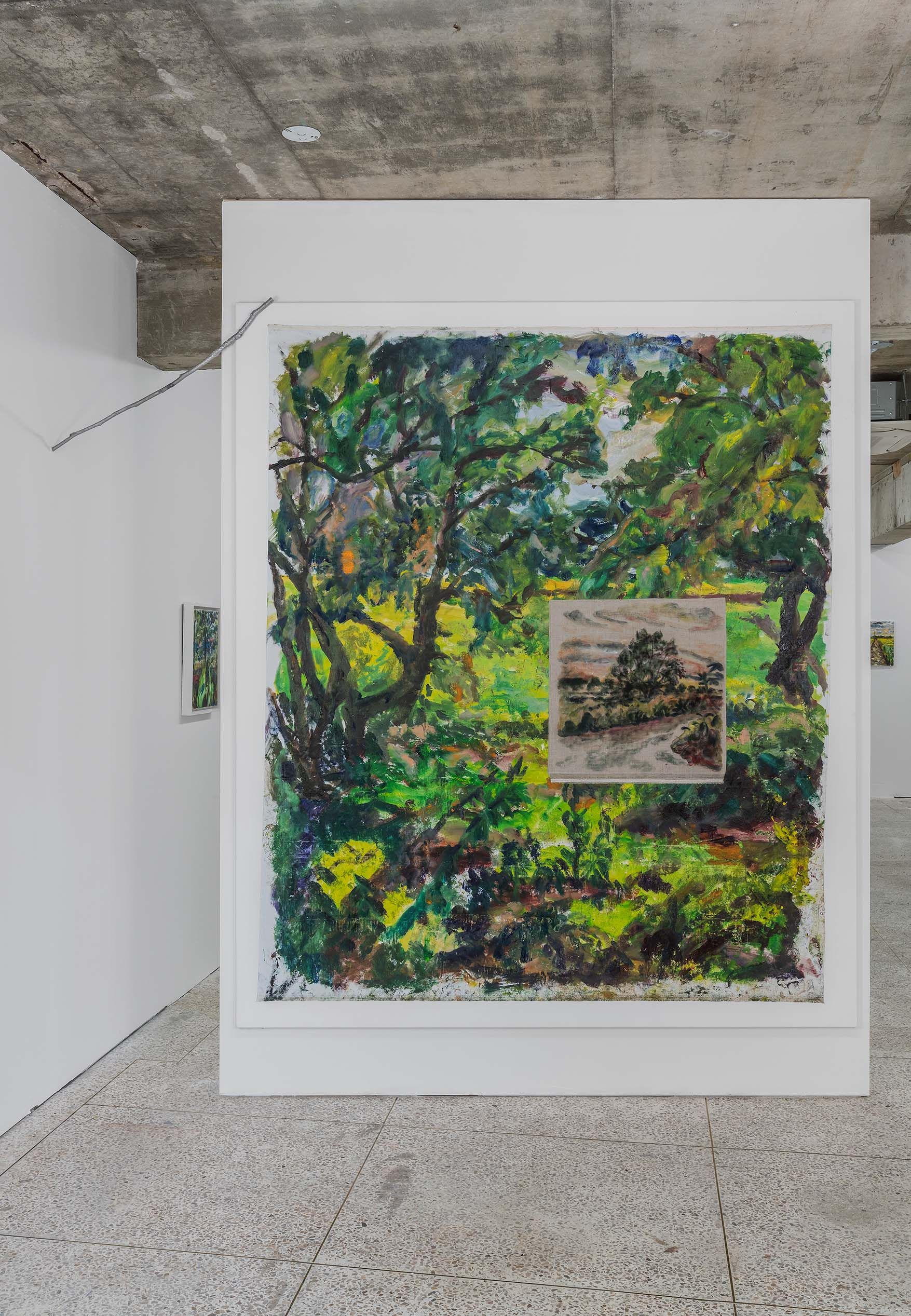
Installation view of 《Eternal sunset in my mind》 (Mimesis Art Museum, 2025) © Mimesis Art Museum

As such, Lee's practice has evolved from her early paintings, which drew upon memories of particular places, to an extended engagement with plein air painting, grounded in direct encounters with the world. More recently, she has turned once again toward the deeper strata of memory, producing works that emerge from this renewed engagement.
 
Her 2025 solo exhibition, 《Eternal Sunset in My Mind》, presented at the Mimesis Art Museum, traces this trajectory in reverse, revealing how this mode of inquiry has remained central to her practice despite shifts in period, medium, and painterly approach.


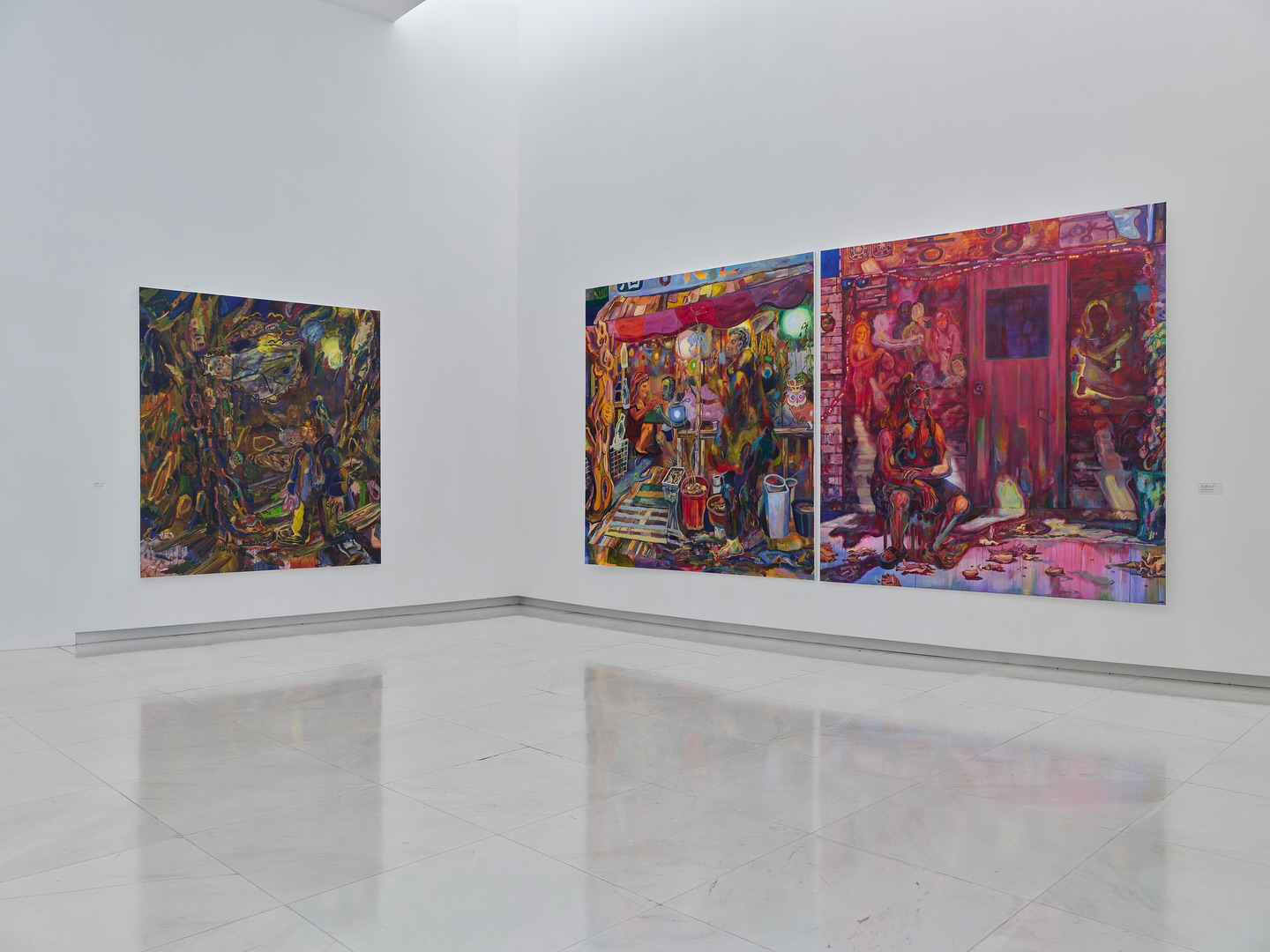
Installation view of 《Eternal sunset in my mind》 (Mimesis Art Museum, 2025) © Mimesis Art Museum

In the act of painting, Lee remains acutely aware of the temporal gap between the moment of encountering a subject and the moment of translating it onto the canvas. She embraces the remnants that settle into the fissures of memory over time, entering into an intimate dialogue with an immaterial past and connecting it to the sensations of the present.
 
The resulting paintings are populated by distinct figures—her family, as well as the people and animals she encountered in the places where she has lived and stayed. These are not only subjects to whom the artist is deeply attentive, but also beings that often go unnoticed, gradually disappear, or exist at the margins of society.


Installation view of 《Eternal sunset in my mind》 (Mimesis Art Museum, 2025) © Mimesis Art Museum

Lee has remarked that these beings enable her to empathize more deeply, and that preserving a sense of their presence serves as a driving force behind her practice. The time she spends recalling them and bringing them into her paintings becomes an opportunity to reflect on others—and on the world beyond herself—that she has never fully known.
 
Lee's paintings can therefore be understood as fields of relations that traverse time and space, as well as gestures toward the underlying essence that emerges through those encounters. They are attempts to attend to what lies beyond the visible, and painterly practices through which she seeks to establish a genuine relationship with the world to which she belongs.


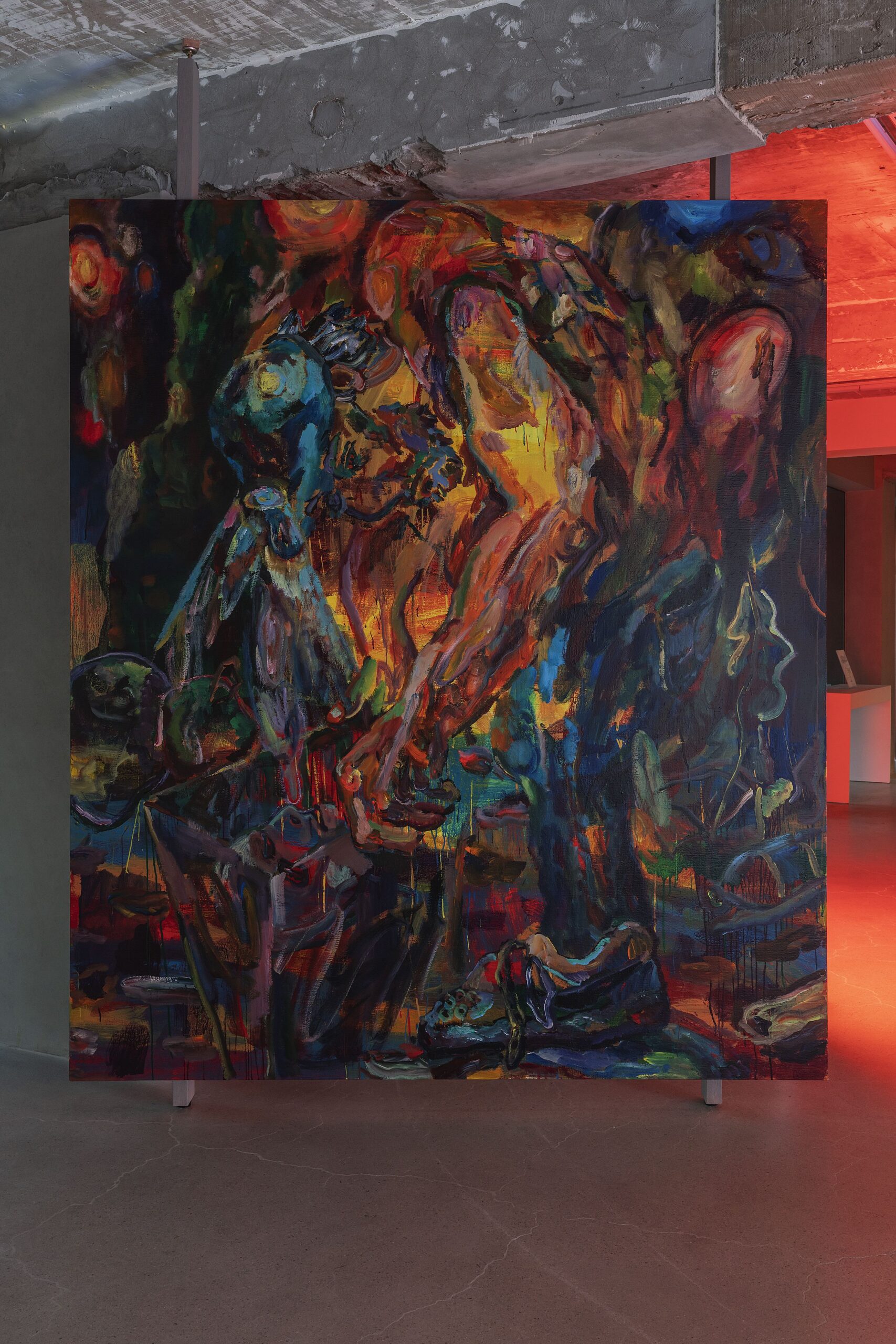
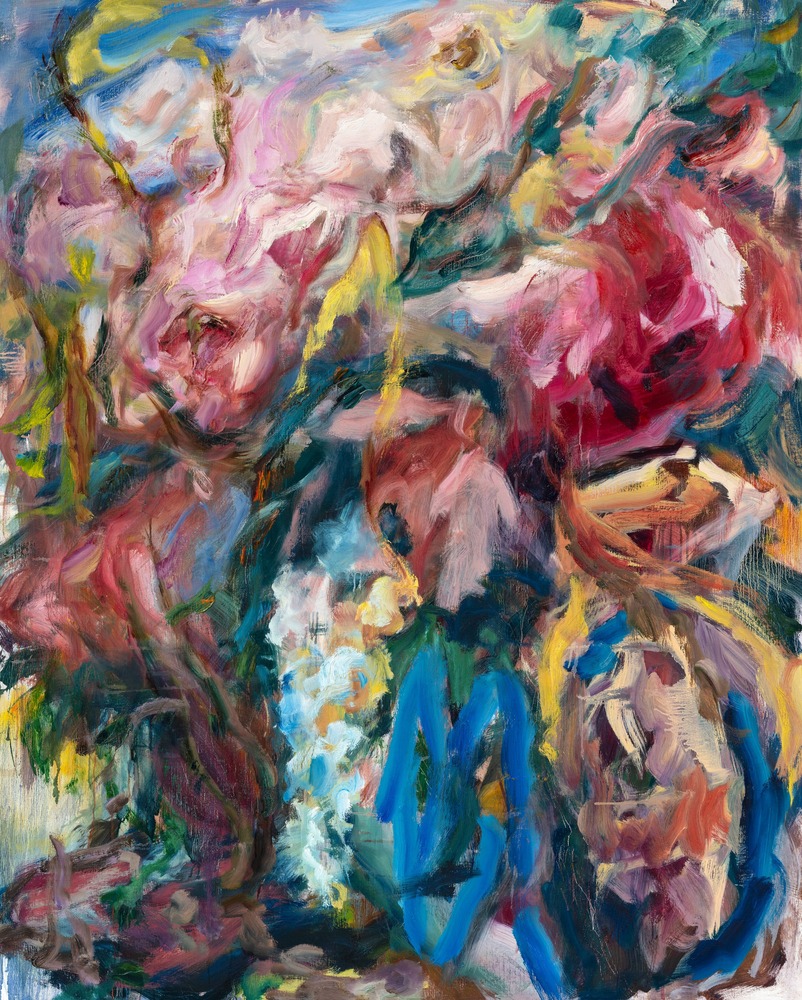
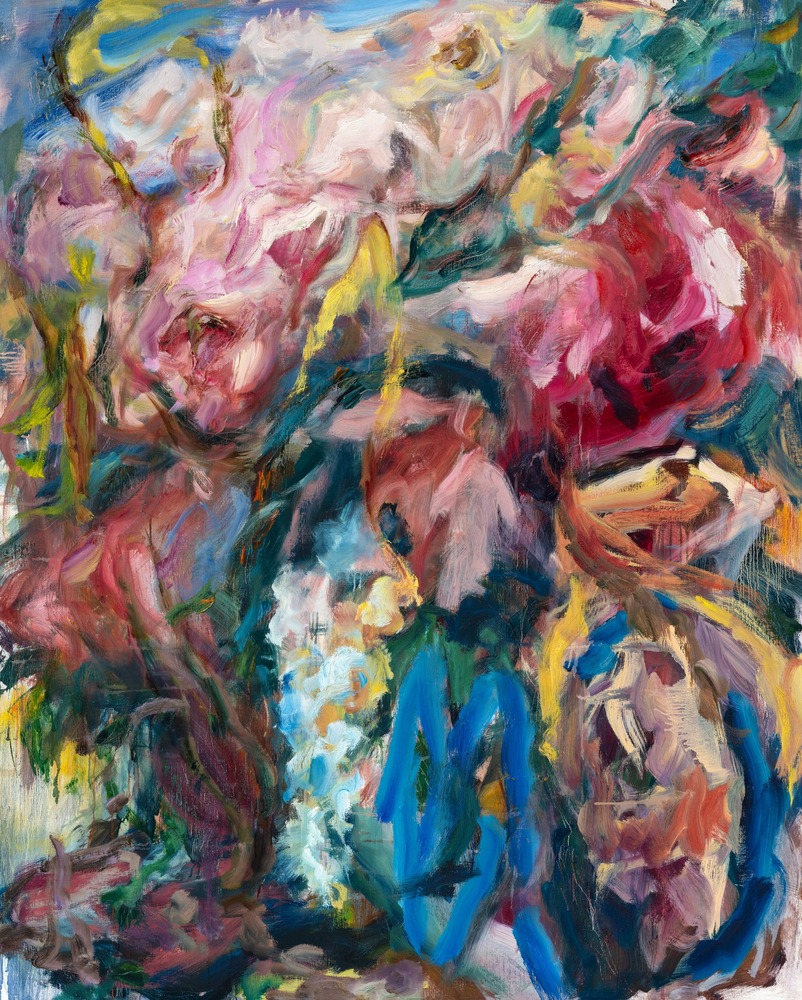
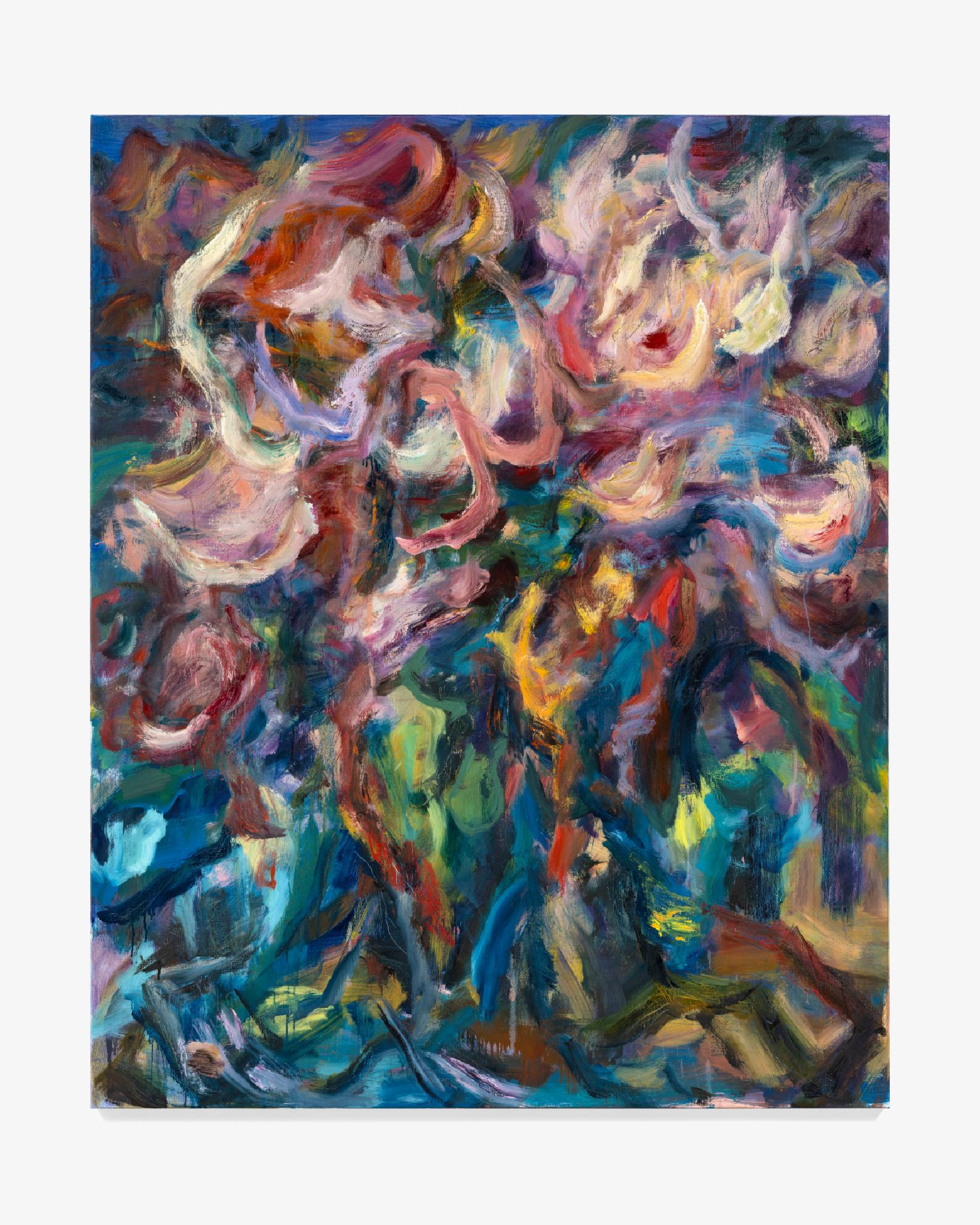
Hyein Lee, Rosa, part 1.,, 2026, Oil on linen, 162.5x130.5cm © Gallery Hyundai

Throughout her practice, Hyein Lee has remained engaged with that which is inherently mutable and destined to disappear—memory, landscape, and atmosphere.
 
Fragments of incomplete memories and fleeting sensations become fixed as material on the canvas, while simultaneously serving as conduits that connect the various times and places through which the artist has passed, inviting viewers to imagine what lies beyond the visible.
 
The pictorial surface, built up through repeated acts of layering, erasure, and scraping, becomes a field in which multiple temporalities and sensations reside. Lee's paintings thus embody images of memory and sensation that have accumulated and been transformed through relationships among time, space, and the body.
 
In doing so, they articulate, in richly layered form, her reflections on both her inner world and the world that surrounds her.

“A sensation from a particular moment, a passing thought, or a certain memory... It is there that ‘abstraction’ comes into being. (...) Is this not also where the mystery, wonder, and beauty of an unknown world arise?
 
To catch sight of a light, however briefly, from a horizon discovered deep within one's inner self—a horizon reached through the unique path of each individual's experience. To realize, in the fleeting act of painting, that the different horizons upon which each of us stands are nonetheless connected. This is what I understand to be the role of painting today, and the kind of abstraction I seek to attain.” (Hyein Lee, Artist's Note)


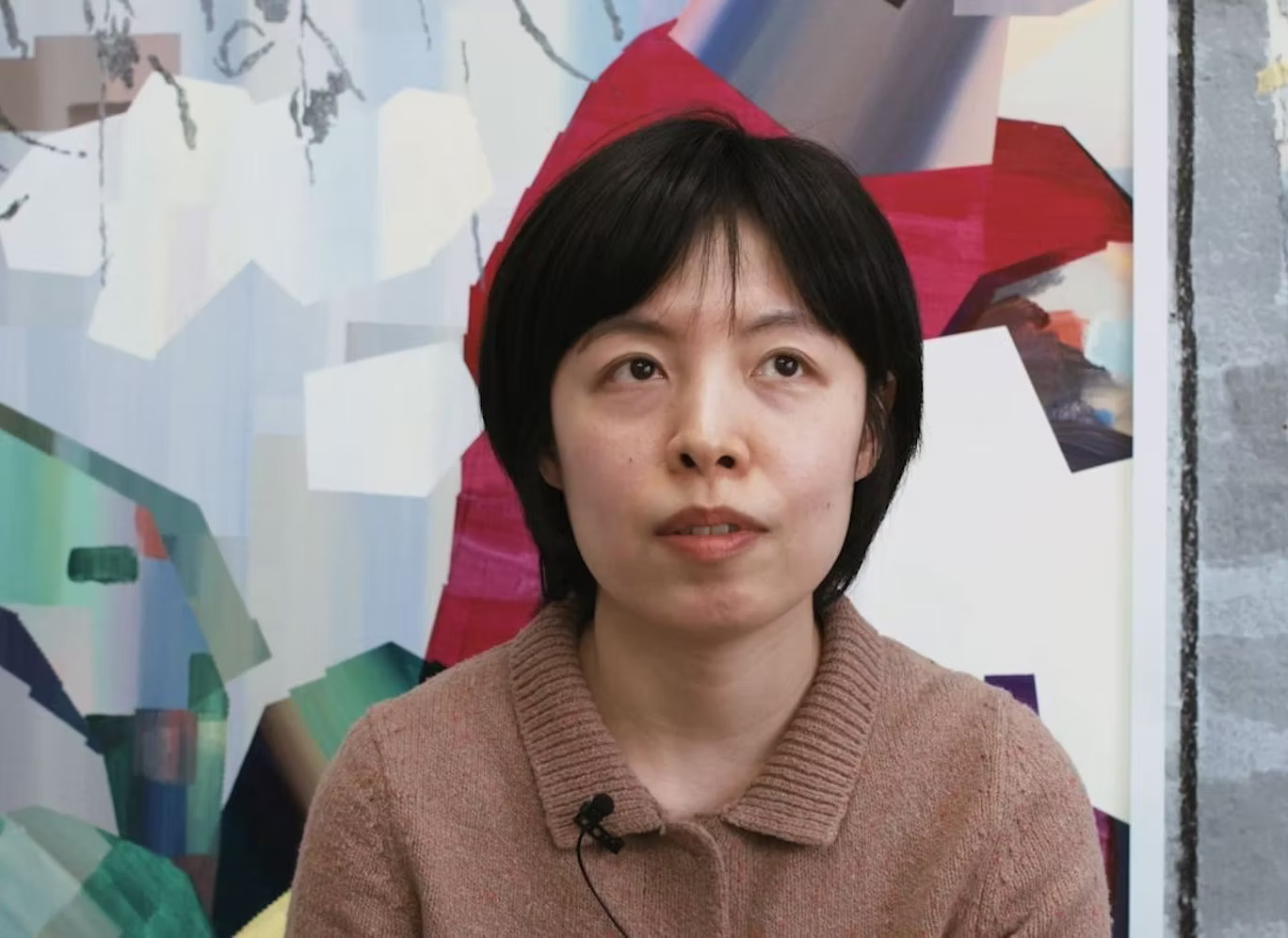
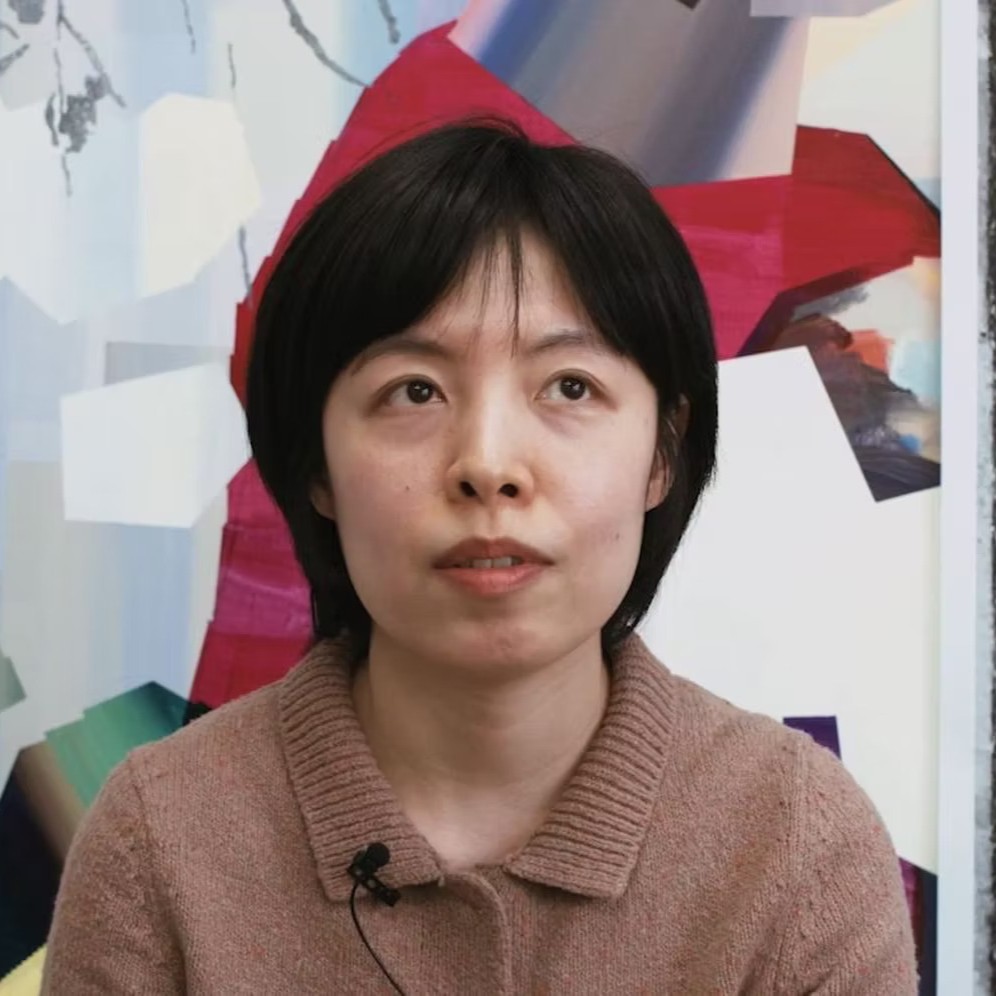
Artist Hyein Lee © Chongkundangkochon Yesuljisang

Hyein Lee received her BFA in Painting from Seoul National University and completed the MFA coursework in Painting at the same institution. Her recent solo exhibitions include 《Eternal Sunset in My Mind》 (Mimesis Art Museum, Paju, 2025), 《L. Practice》 (Museumhead, Seoul, 2022), and 《One day, stepping on the weather》 (KICHE, Seoul, 2020).
 
Lee has also participated in numerous group exhibitions, including 《SAUVE QUI PEUT》 (Gallery Hyundai, Seoul, 2026), 《The 24th SONGEUN Art Award Exhibition》 (SONGEUN, Seoul, 2024–2025), 《Collection Variable》 (MMCA, Seoul, 2024), 《The Gesture of Image》 (PIBI Gallery, Seoul, 2022), 《UNBOXING PROJECT: Today》 (New Spring Project, Seoul, 2022), 《In Bloom》 (HITE Collection, Seoul, 2021), and 《Night Turns to Day》 (Art Sonje Center, Seoul, 2019–2020), among others.
 
Her works are held in the collections of the MMCA, the MMCA Art Bank, the Daegu Art Museum, the Busan Museum of Art, the Museum of Contemporary Art Busan, and the DOOSAN Gallery, among other public and private collections.
References