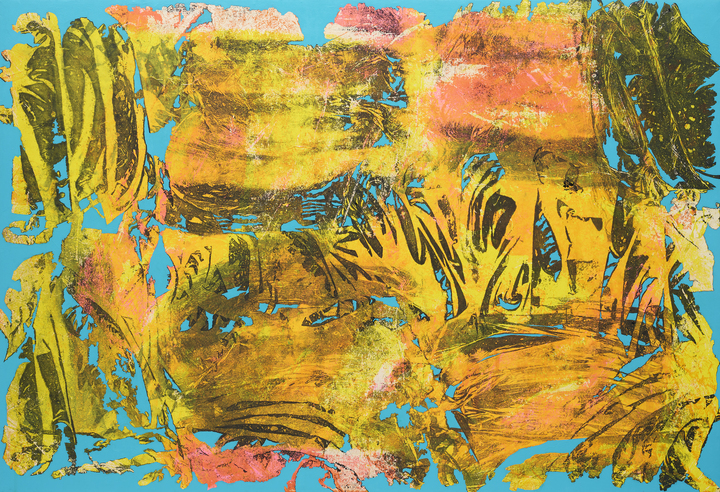
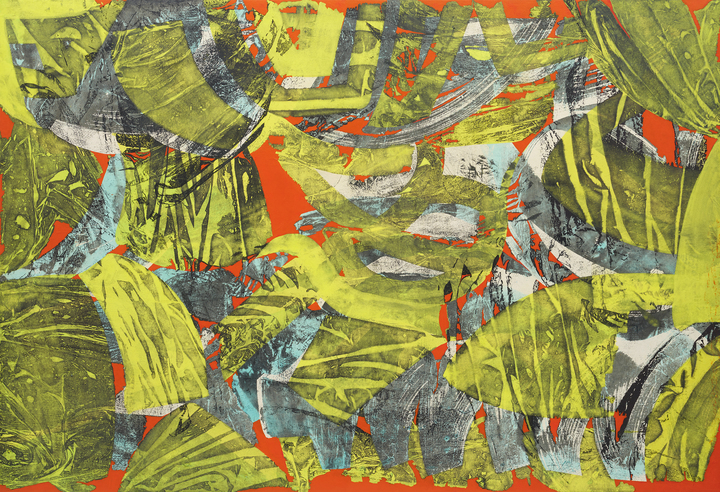
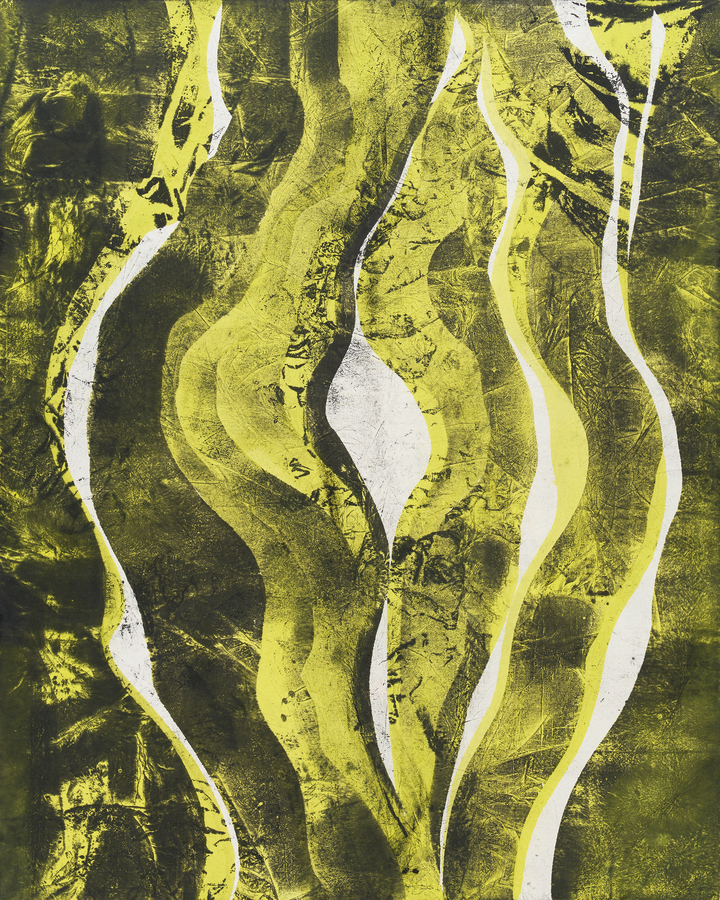
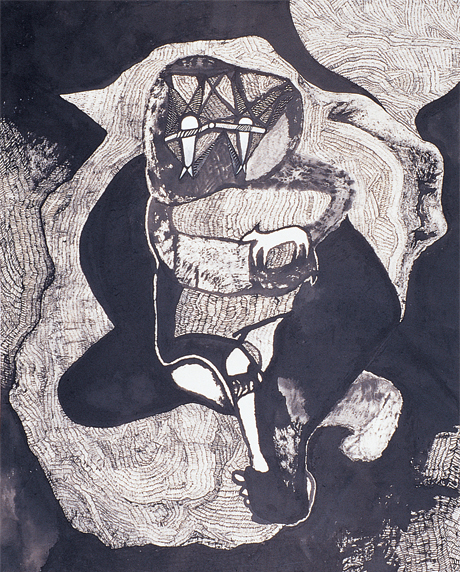
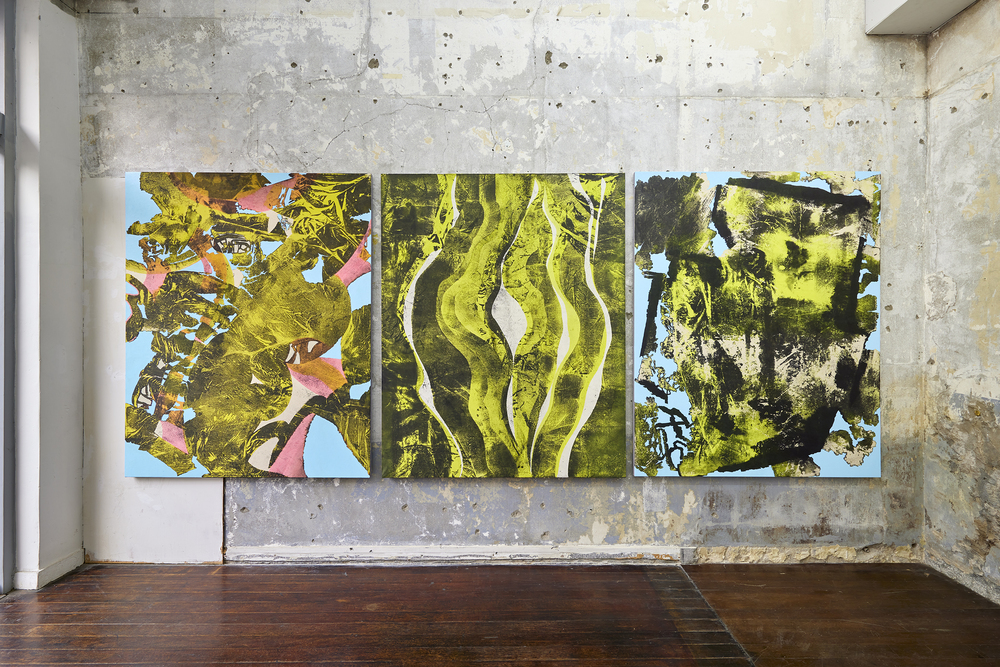
At first glance, Lee Kang Wook's paintings, characterized by an awkward visual language reminiscent of a child's innocent drawings, appear entirely different from the meticulously composed and delicately structured paintings of Sojung Lee. According to conventional classifications, Lee Kang Wook, who studied Western painting, produces works that resemble Korean painting, while Sojung Lee, trained in Korean painting, creates works that evoke Western painting.

One is figurative, the other abstract. Yet their practices, in which the boundaries between Eastern and Western painting become increasingly ambiguous, continually traverse distinctions that have been artificially constructed. Executed on paper with an understated sensibility while employing combinations of materials not ordinarily used together, both artists share a deep concern for the role of chance within artistic creation.

A work of art, comparable to a jewel-like microcosm, exists through a delicate balance between closure and openness. A gemstone, after all, must first be extracted from deep within the earth as a rough stone, then meticulously cut and polished before it can reveal its brilliance under an external source of light.

The seemingly self-contained microcosm ultimately depends upon forces beyond itself. This is true not only of inorganic substances such as gemstones but also of life itself, which unfolds its potential, grows, and survives through continuous interaction between its interior and exterior.


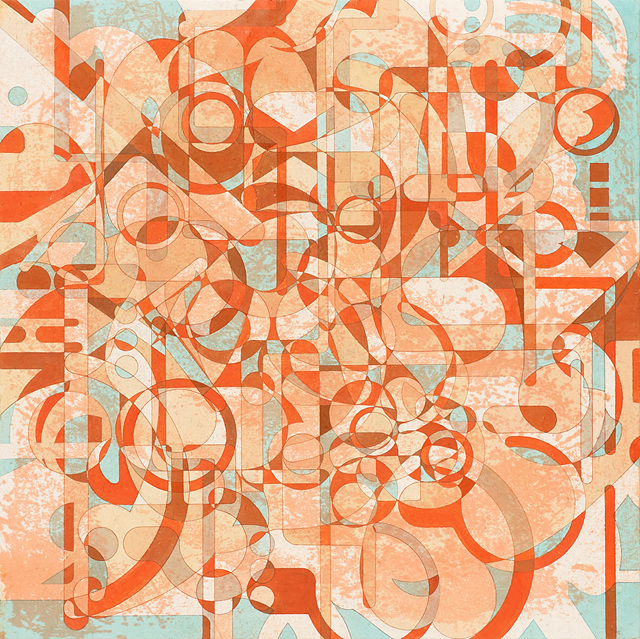
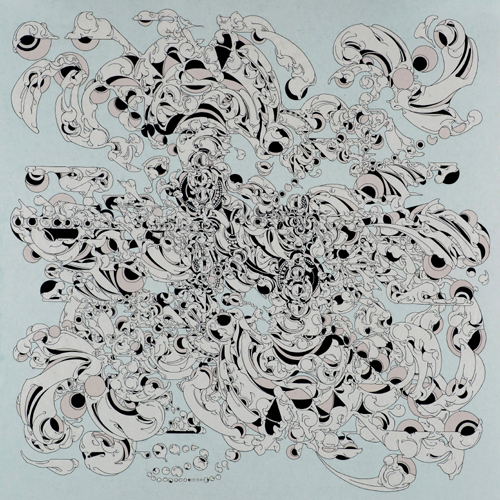
Sojung Lee, Interpreter, 2019, Ink, cinnabar red ink, and watercolor on paper, 85 x 85 cm © Sojung Lee

There have been countless aesthetic definitions of what constitutes a great work of art, but among them, the analogy between a work of art and a living organism remains one of the most compelling. Art does not imitate the outward appearance of nature; it imitates nature's creative force.

Much like the function of a cell membrane, a work of art possesses boundaries that preserve its own internal equilibrium while simultaneously allowing communication with what lies beyond. Beauty, likewise, is characterized by both self-sufficient fullness and openness to the outside. When one ignores the countless others that constitute the self and insists solely upon an egocentric notion of identity—"I am simply myself"—one ultimately arrives at little more than tautology.

There are many who, whether willingly or not, embrace solitude to such an extent that it produces suffocating enclosure, leaving them intoxicated by the very aura they themselves have created. The romantic myth of the artist has fostered ideals of singular individuality and unwavering conviction, yet many artists are, in reality, immersed less in genuine originality than in self-pity or dogmatism.

This condition, in many ways, reflects the marginal position artists occupy within contemporary society. Certainly, everyday life is filled with forces that threaten one's sense of selfhood, making such defensive—or even aggressive—attitudes understandable to some degree.

The Romantic image of the artist emerged as traditional systems of artistic patronage collapsed, leaving artists with little to rely upon except themselves. Yet excessive openness can be equally problematic, dissolving meaning altogether and, at its worst, rendering one vulnerable to passing fashions. Such freedom becomes little more than arbitrariness, lacking the power to effect genuine transformation.

Meaningful and compelling works ultimately arise from a delicate balance between chance and necessity, and from the subtle relationship established between the two. Chance is elevated into necessity only within a carefully constructed context. One of the underlying structures in the works of both Lee Kang Wook and Sojung Lee is a system of signs resembling letters or symbols, which serves as both a visible and invisible foundation for countless variations.

The currents that move through their works transform the point of origin into traces. For necessity to leap toward another necessity, it must first embrace chance. Equally important is the artist's ability to fix fleeting moments of inspiration into material forms that invite others to participate in interpretation.

This is something only artists for whom making art has become an inseparable way of life can achieve. The works of Lee Kang Wook and Sojung Lee ultimately function as robust platforms from which viewers may begin their own journeys of imagination, speculation, or interpretation.


Sojung Lee: The Ripple Effects of Chance in the Microscopic World


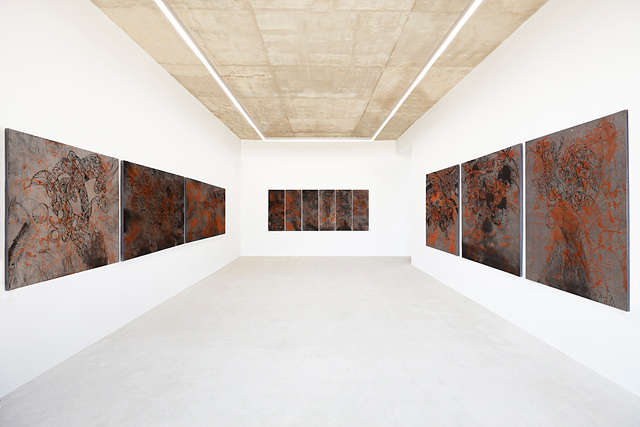
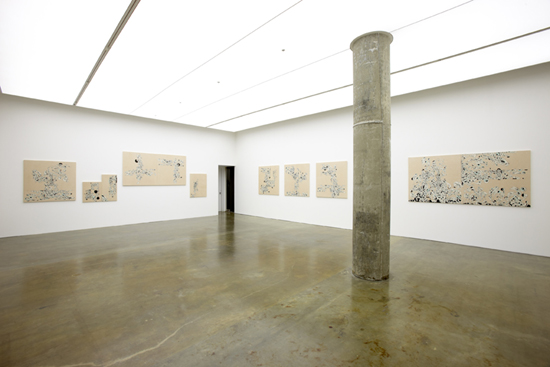
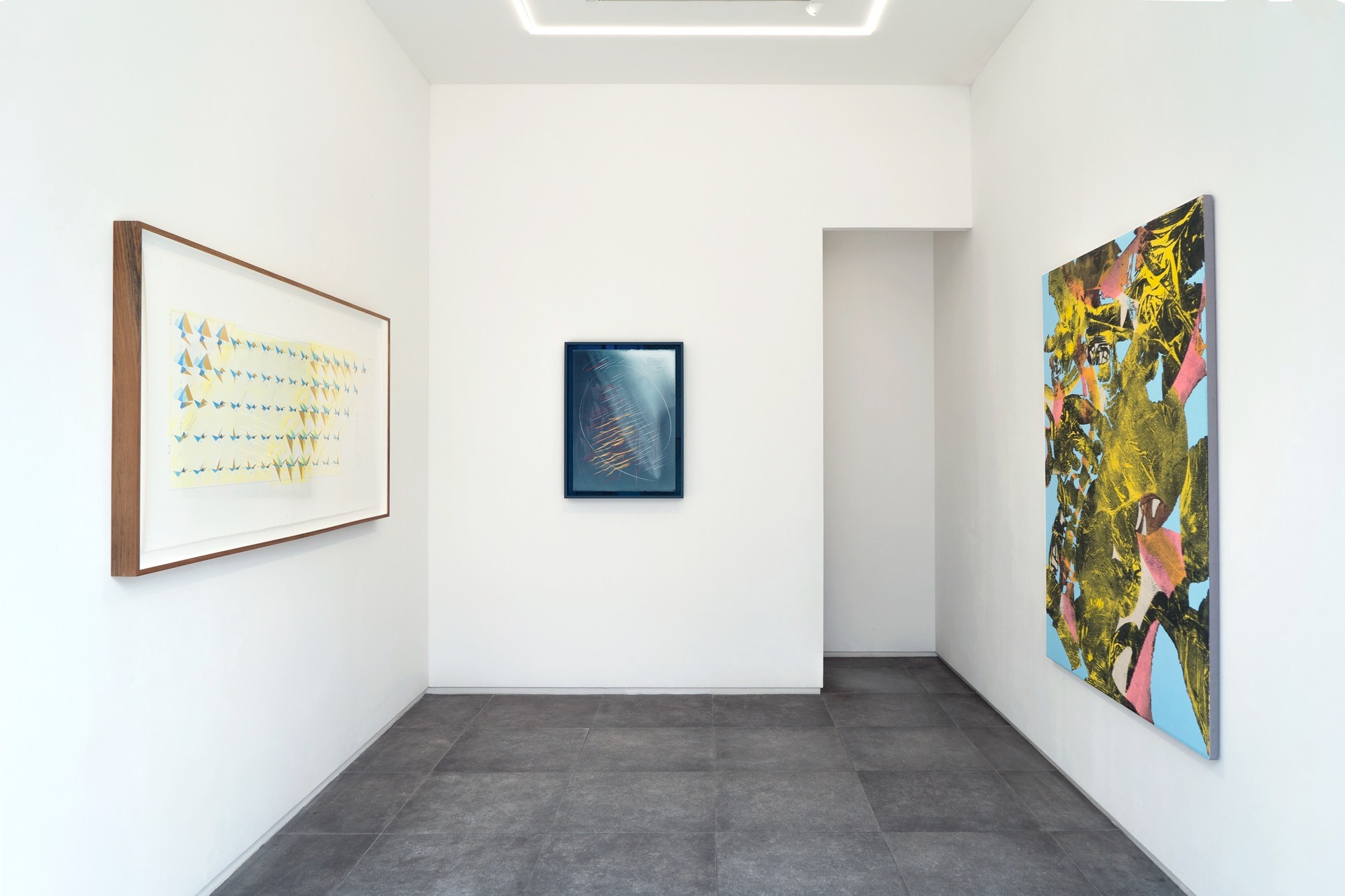
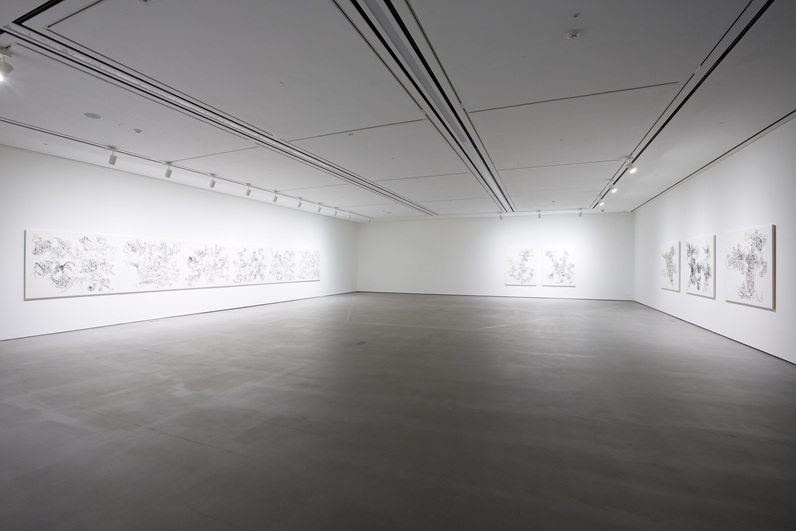
Installation view of 《Detectives》 © GALLERY 2

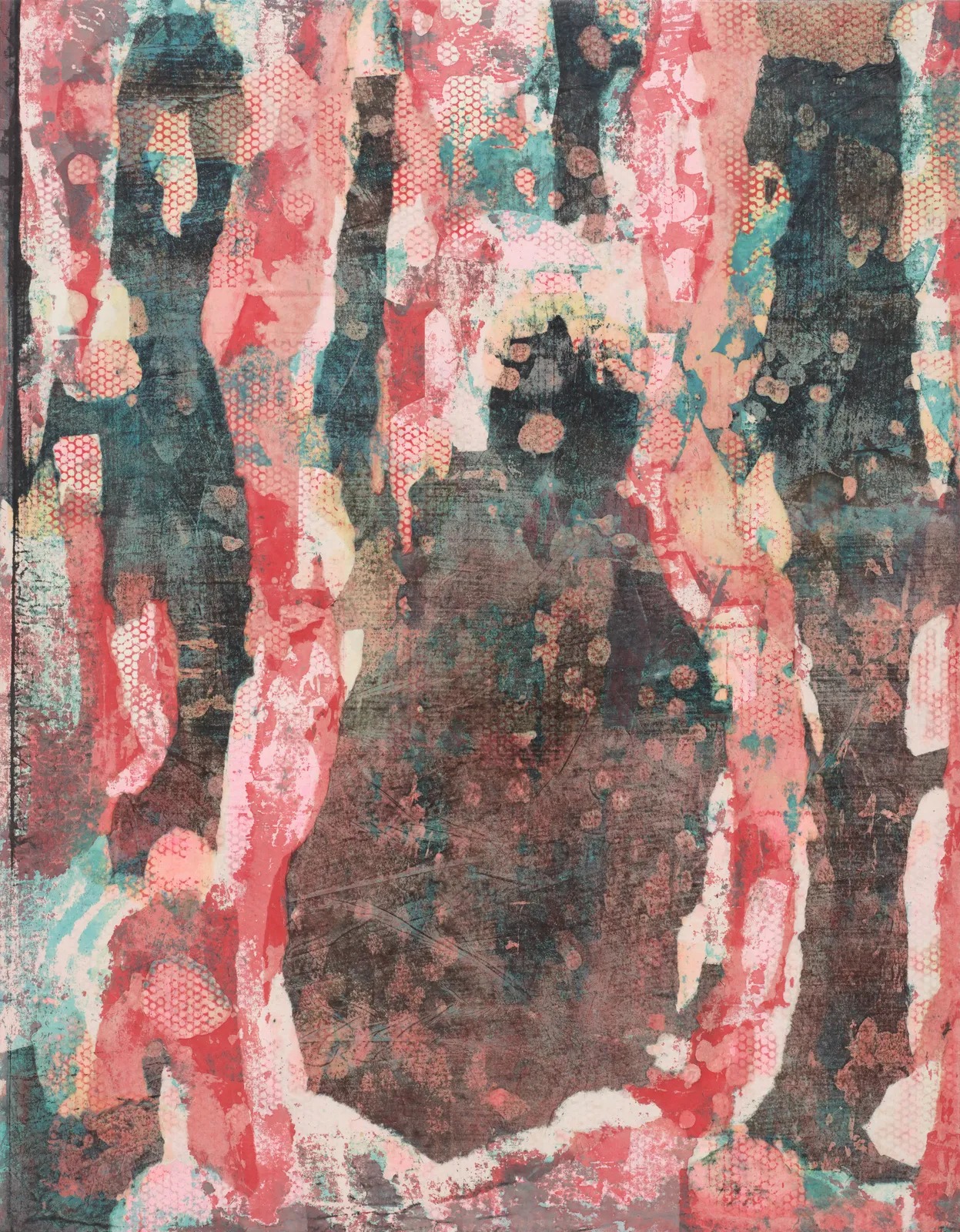
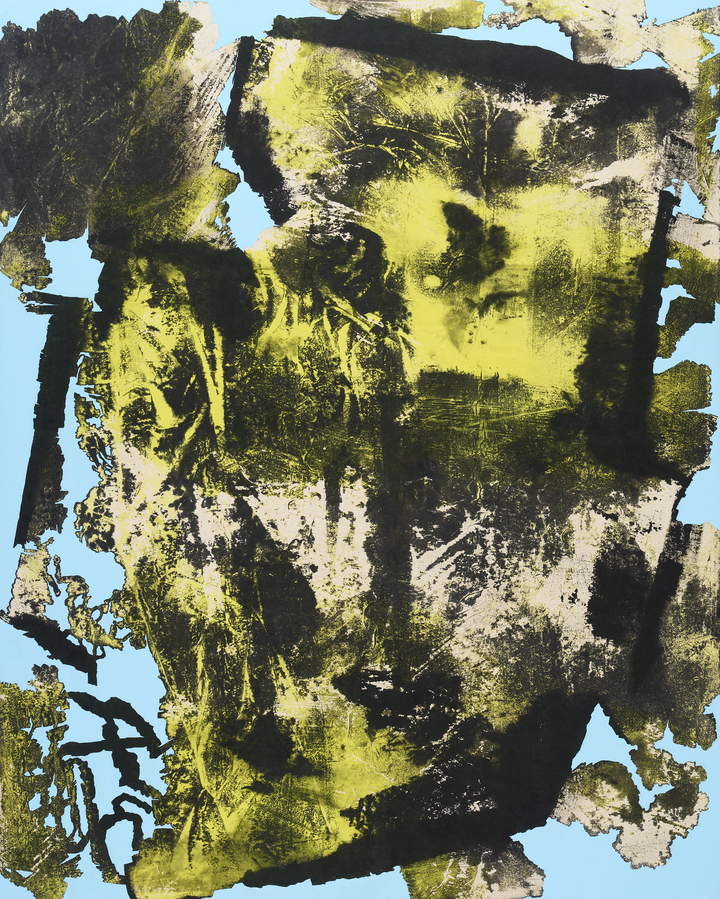
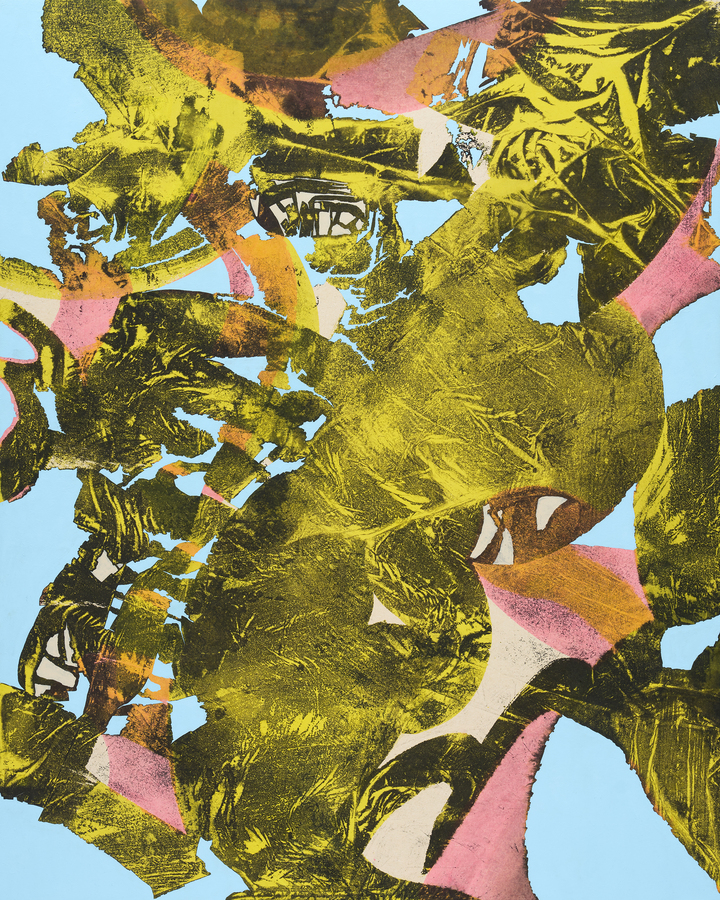
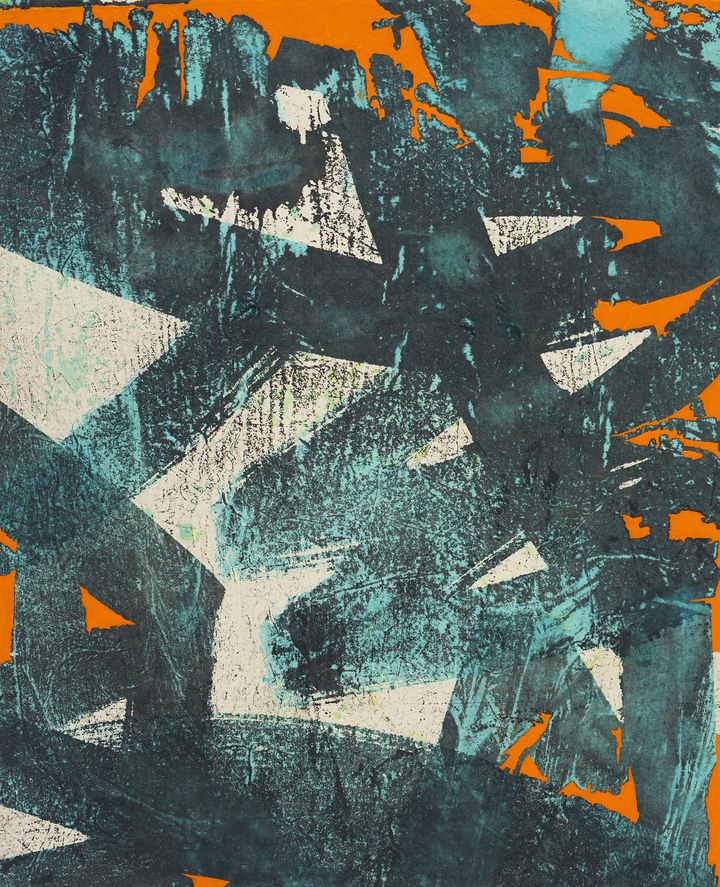
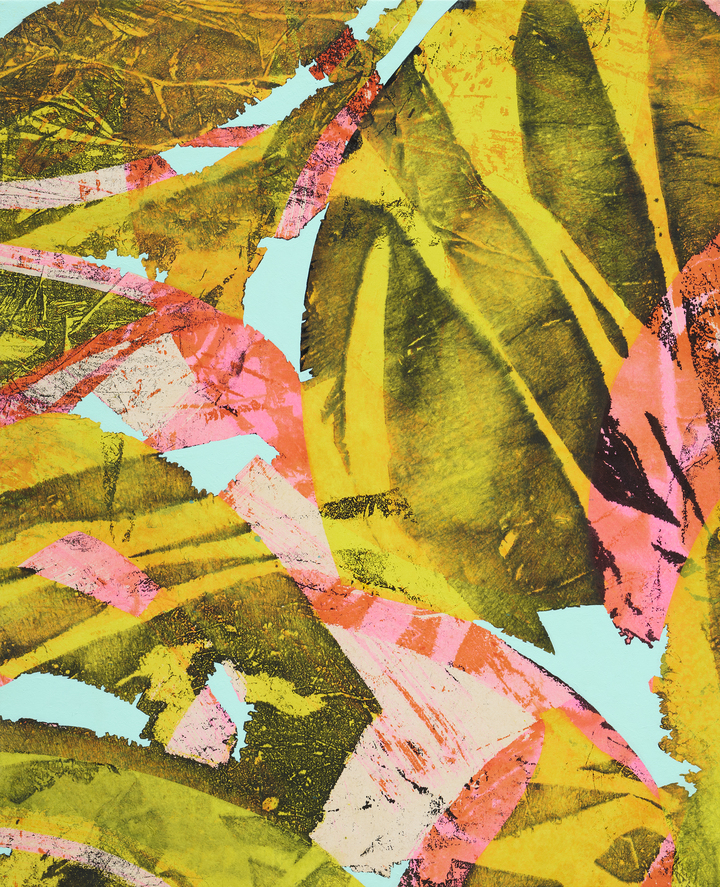
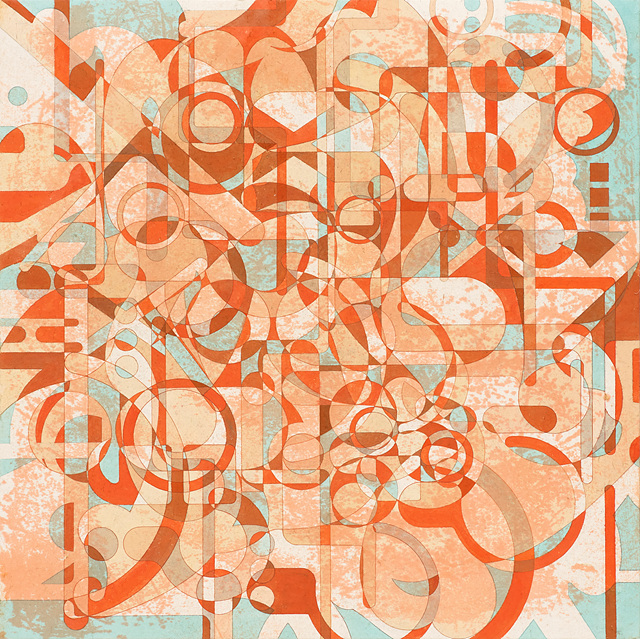
In Sojung Lee's paintings, the sharply defined forms that appear to contain densely folded interiors originate from faint stains. The multiple layers of the pictorial surface, distinguished by different colors and forms, begin with traces of red ink that have seeped through thin sheets of hanji. These accidental marks of pigment become seeds from which each work grows in a different way.

Once the forms begin to develop, they unfold according to a recognizable set of rules characteristic of Sojung Lee's practice, yet their point of origin remains fundamentally accidental. Chance is a double-edged force, generating both arbitrariness and diversity. The technique of transforming chance (the unconscious) into necessity (the conscious) ultimately determines an artist's distinctive style.

The artist humbly accepts that art is not created so much as discovered—or, more precisely, rediscovered. Another layer emerges as the discovered traces are covered once again with ink, subtly regulating the visual weight and rhythm of the composition.

The symmetrical installation of the works is equally striking. Their precisely aligned arrangement, seemingly tailored to the dimensions of the exhibition space, reveals the artist's intention to reconstruct an accidental beginning into something stable and deliberate. Works installed in a three-by-three grid of square canvases function almost as though they were a single unified composition.

Yet the individual titles—Blossom, Interpreter, The Person with the Big Mouth, Ice Storage, Outlaw, Pink Wave, Peach Blossom, Real Audience, Snail, and others—remain arbitrary words whose interconnections are impossible to determine. The carefully calibrated installation appears to erase this arbitrariness, evoking a cube puzzle whose disparate pieces might be aligned through the right sequence of movements.

Even works containing forms that appear loose and scattered, like fallen flower petals, are gathered together in orderly rows, lending them an unexpected sense of discipline and structure.


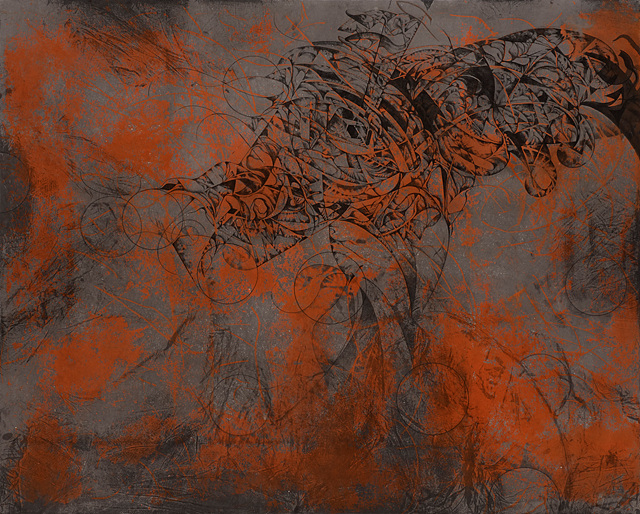
Sojung Lee, Premiere, 2019, Ink and cinnabar red ink on paper, 130 x 162 cm © Sojung Lee

The nine works originate from a single source: some are densely filled, others appear almost unfinished and largely empty, while a continuous series of variations exists between these extremes. This reveals that variation itself is the artist's primary strategy for generating diversity. The various systems of signs employed by humans enable the greatest range of expression through a limited set of elements, and Sojung Lee's paintings incorporate precisely such a semiotic mechanism.

Among the works, one can detect traces resembling punctuation marks—such as exclamation points and question marks—or editorial notations like line breaks and indentations. The relationship between sign and referent remains arbitrary, much like the titles, which seem to have been assigned through free association.

Although human beings communicate through signs, signs themselves remain open to free expression rather than fixed meanings, precisely because of this inherent element of chance.

The exhibition title 《Detectives》 evokes the act of following clues to reconstruct an event. The event itself has already occurred, and the artist traces its remaining evidence, gradually constructing a sequence of forms. The significance of chance has been understood differently across cultures and historical periods.

During the ages of myth and religion, it was regarded as a subversive concept that challenged divine providence, whereas in the modern era—where artificial systems often constrain the individual—it has come to be welcomed as a catalyst for change and freedom. Works such as biologist Jacques Monod's Chance and Necessity and physicist Werner Heisenberg's Uncertainty principle attribute profound significance to chance at the atomic and molecular levels.

Even the ancient atomists regarded chance as fundamental within a universe composed of moving atoms. Contemporary scientific theories and hypotheses—whether concerning the role of mutation in evolution or the possibility that the act of observation itself affects phenomena at the microscopic scale—offer a framework for understanding the artist's process, in which a vortex emerging from a simple stain unfolds into an unpredictable visual scene.

References