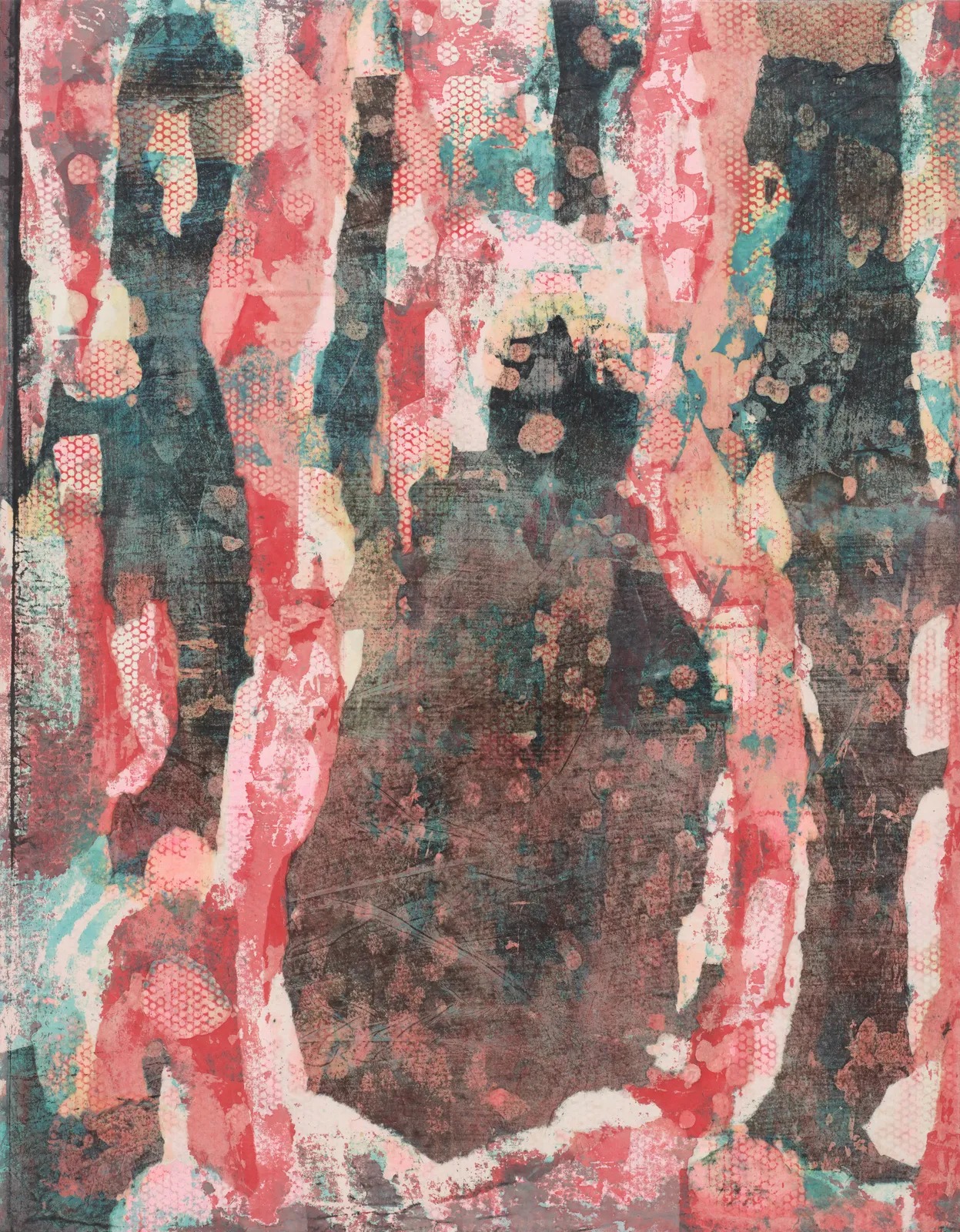
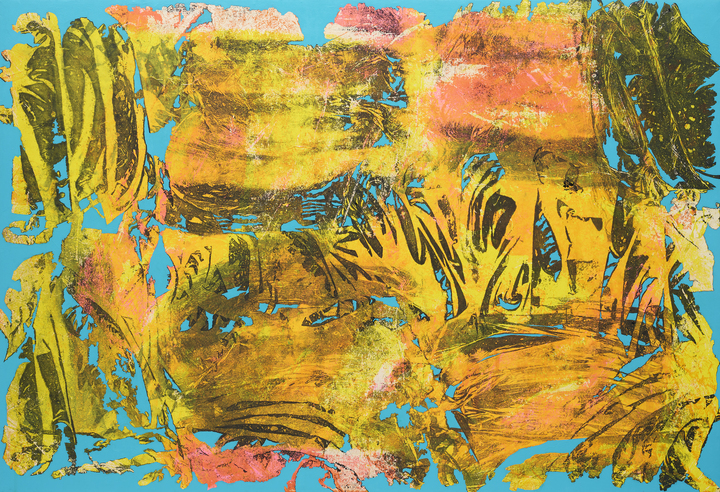
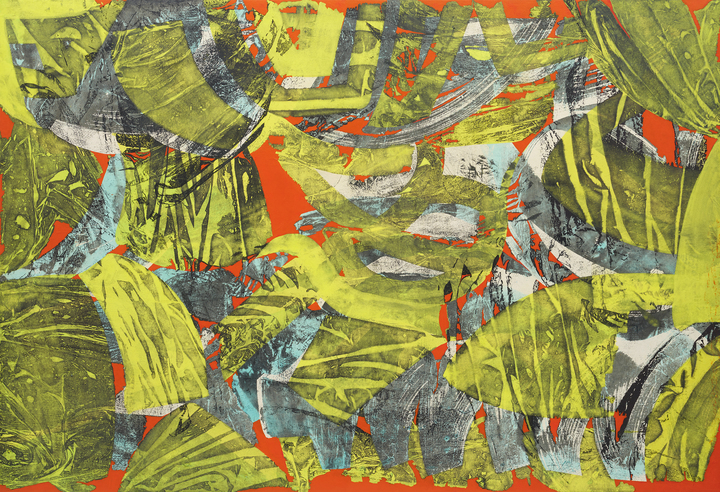
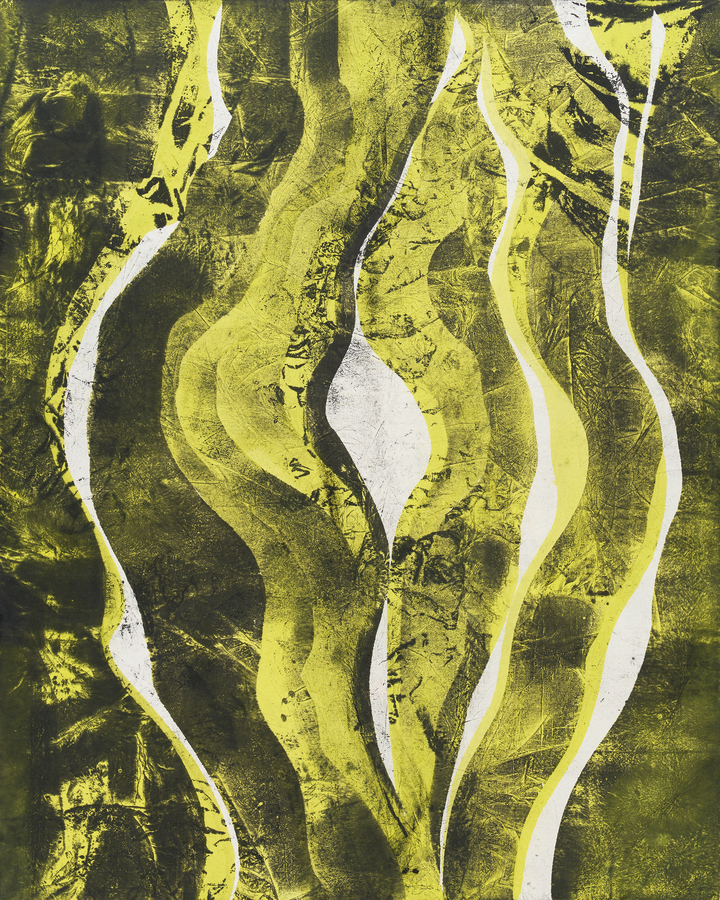
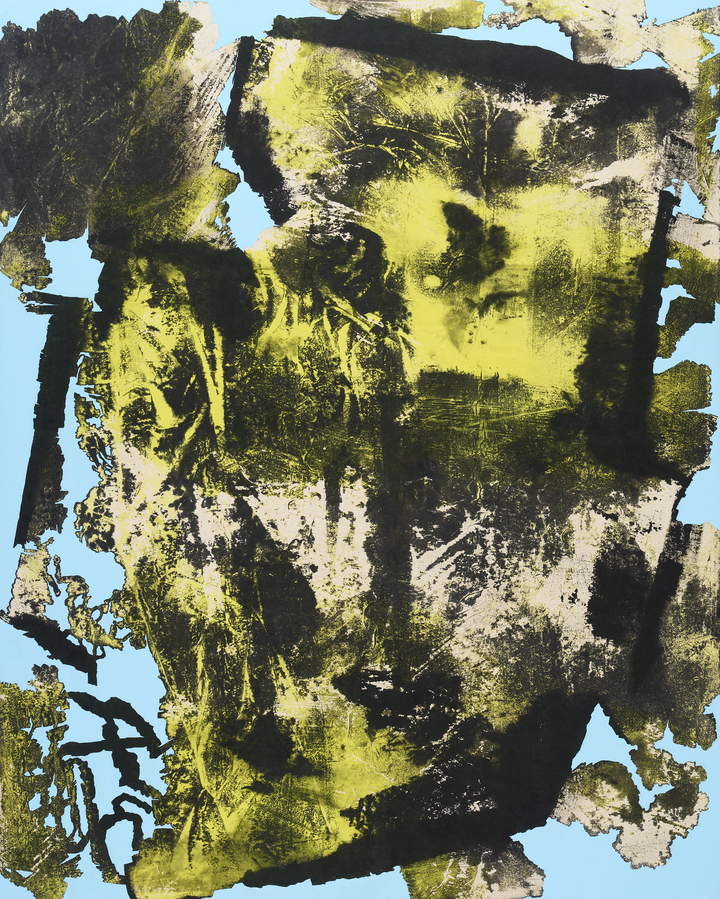
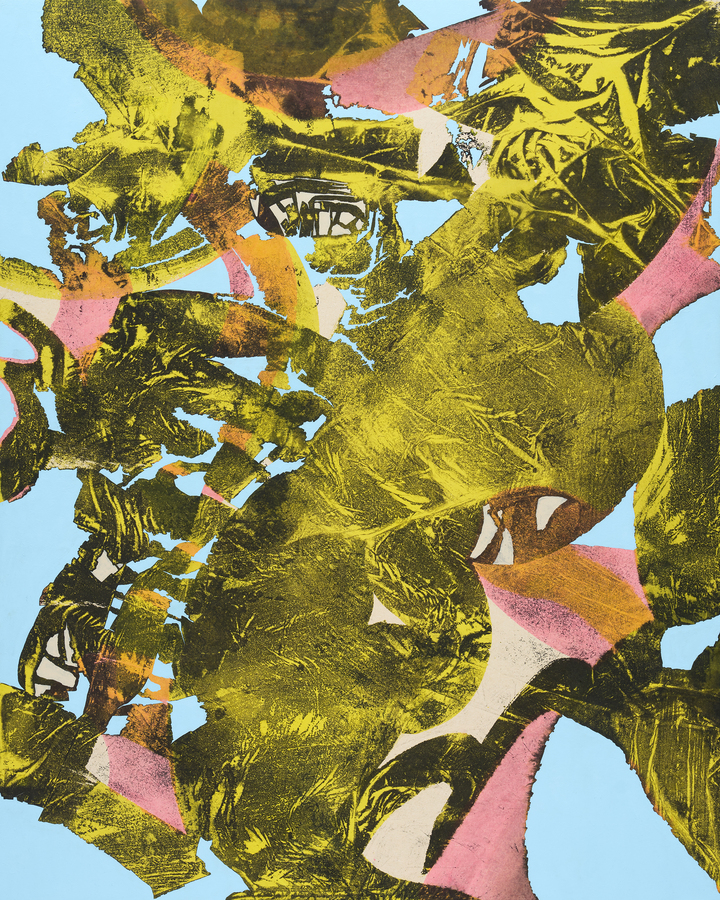
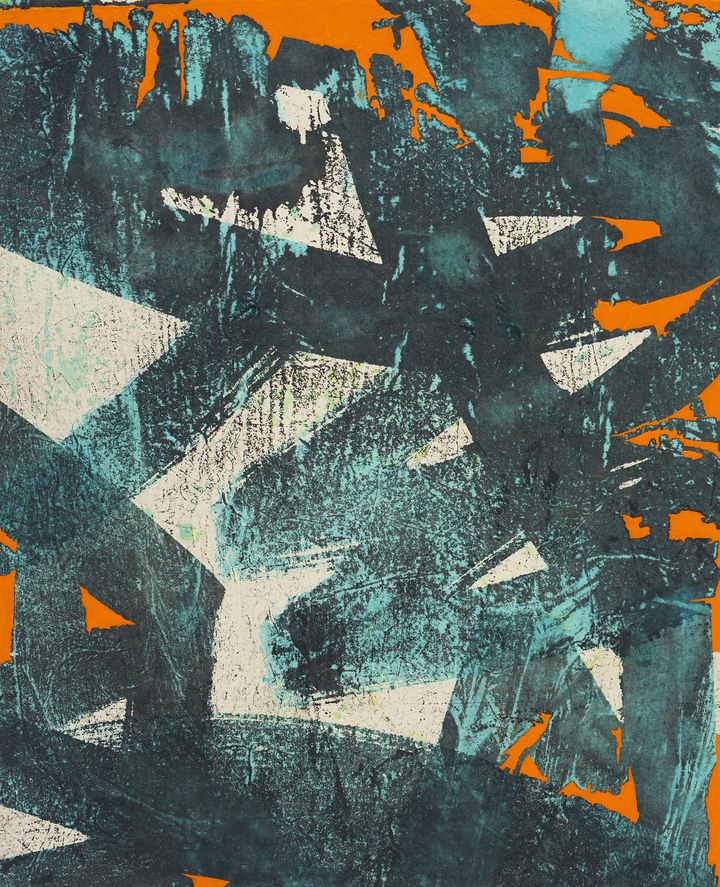
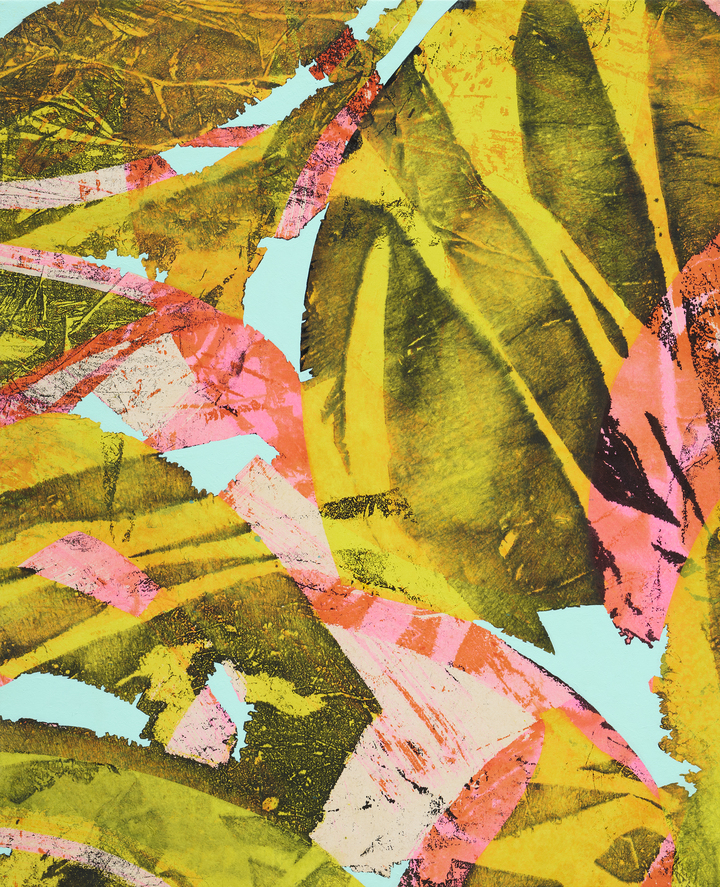
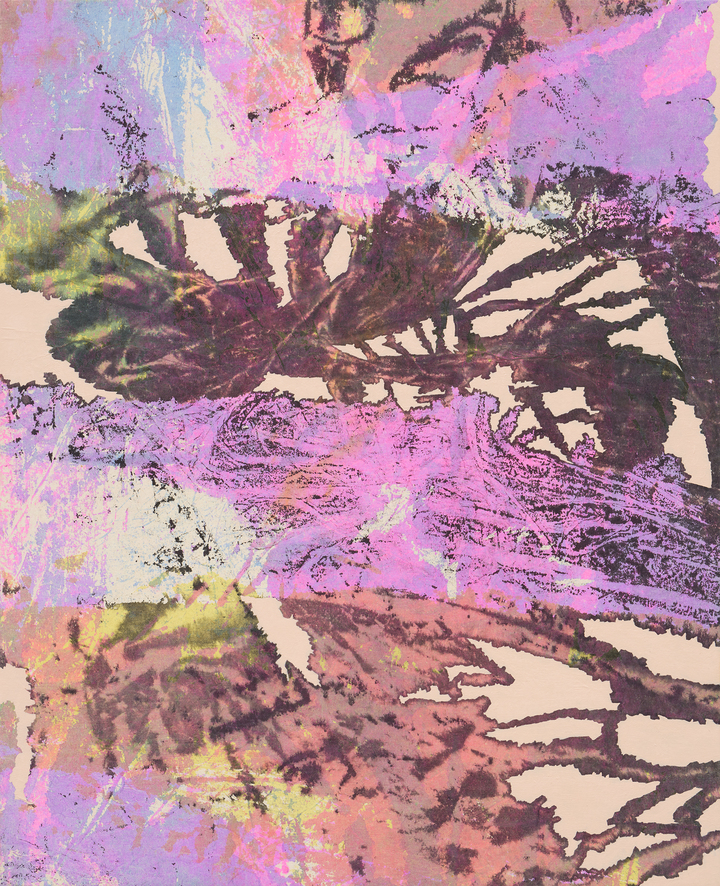
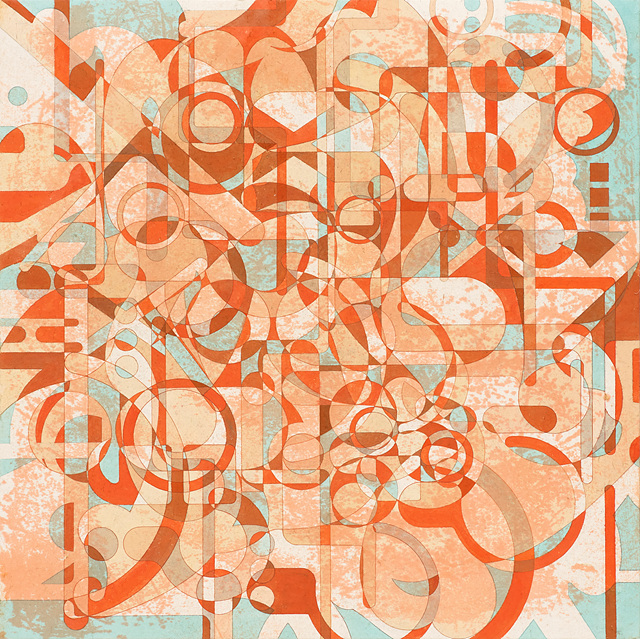
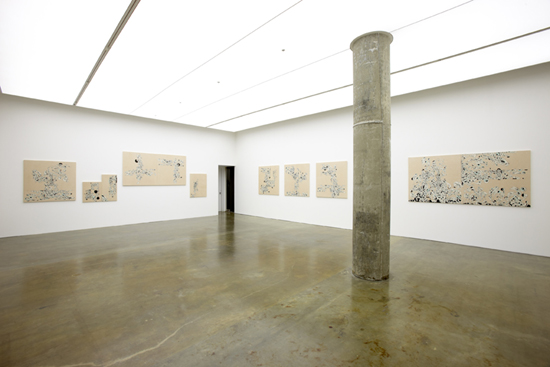
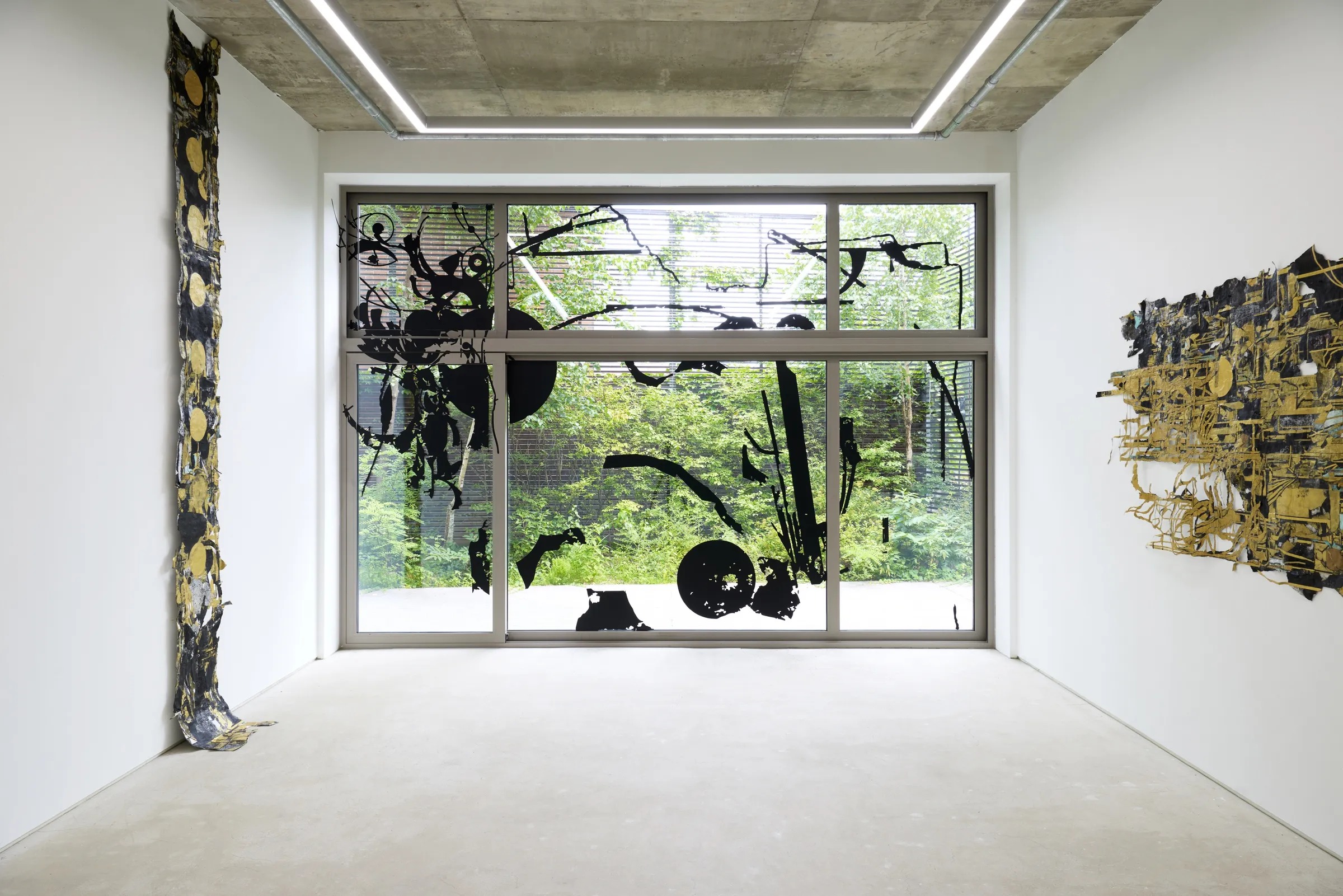
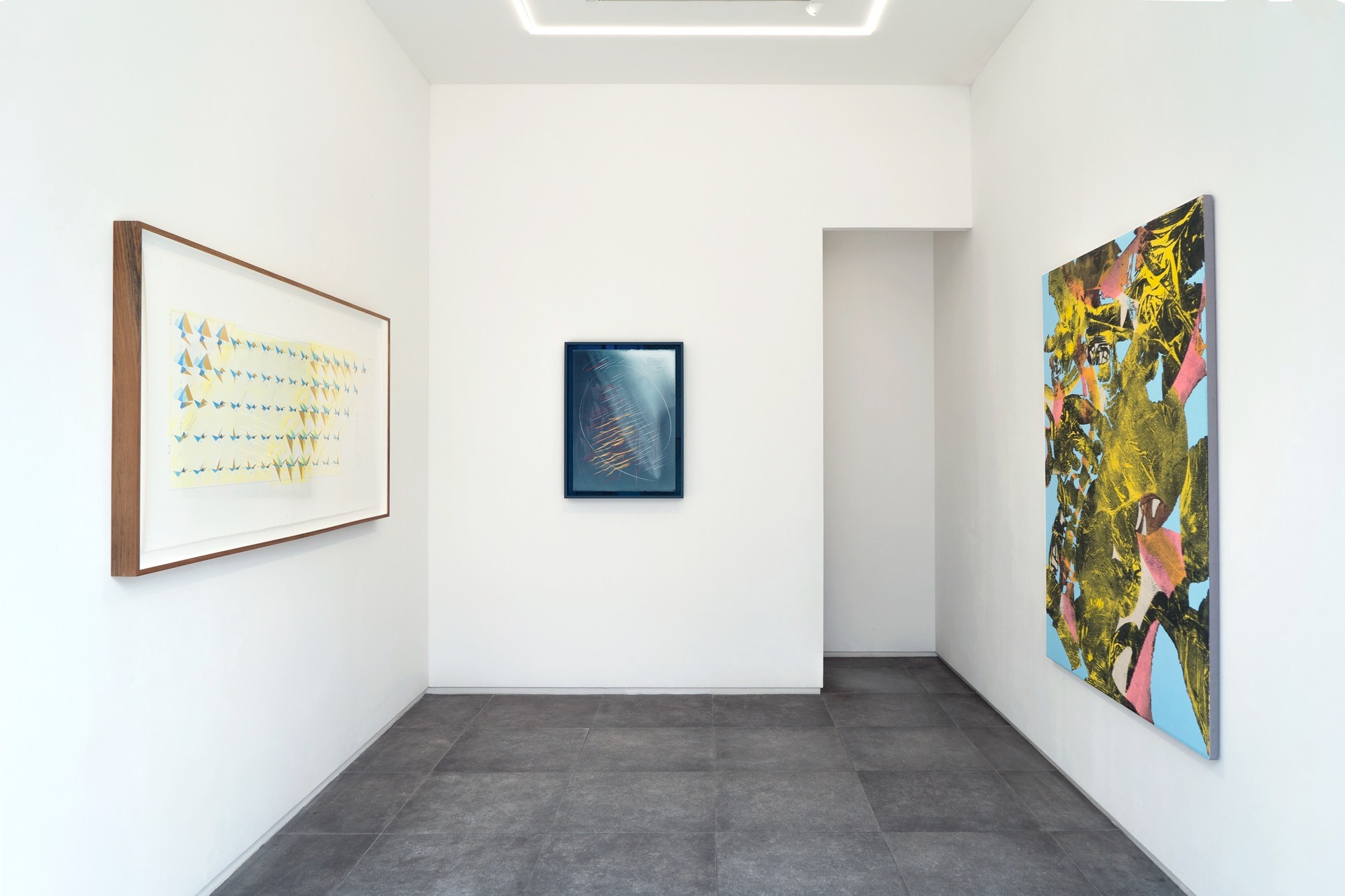
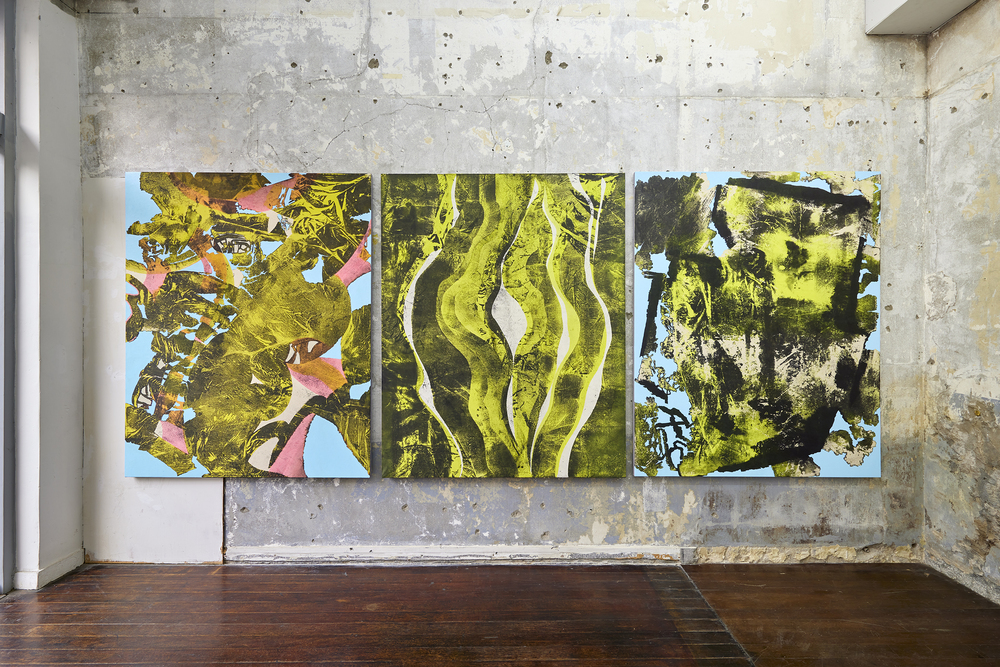
The paintings of Suyoung Kim and Sojung Lee, rendered in soft pastel hues and varying in scale, explore the dynamic relationship between representation and abstraction, and between abstraction and concreteness. Their works reveal that representation and abstraction are far more closely intertwined than they may initially appear, and that formal languages which move further away from their referents are capable of constructing new realities.
In Suyoung Kim's paintings of the corners of aging buildings, the geometric patterns inherent in the original subjects remain embedded within the pictorial surface. By contrast, Sojung Lee's paintings consist of organic patterns generated by arranging structural units derived from nature according to rules established by the artist. Suggesting the modern built environment alongside the body or the unconscious, their works present a series of landscapes or scenes composed of fragments whose relationships between part and whole remain impossible to fully grasp.
The folded surfaces of their paintings, defined by shared motifs of straight or curved lines, render any sense of a core or interior fundamentally uncertain. Consequently, the status of the subject also becomes ambiguous. Nowhere in the paintings can traces of human presence be found, and even the brushstrokes that might attest to the artist's physical presence are meticulously concealed.
While Suyoung Kim's pictorial spaces retain a sense of gravity and atmosphere by layering the flatness of painting with the illusion of architectural fragments, Sojung Lee's spaces—composed of rhythmically arranged enigmatic fragments—exist in a state of weightlessness and vacuum. If Kim's paintings reveal a process of abstraction from reality, Lee's works foreground the concreteness generated by a derived or secondary reality.
Although their practices differ technically, reflecting the traditions of Western and Korean painting respectively, both artists employ restrained and rigorous methods of production that result in compositions of remarkable balance and density. Without resorting to verbose conceptual explanations or overt declarations, these formal strategies distill the history and logic of contemporary painting with striking clarity.
In Suyoung Kim's exhibition 《Balance and Symmetry》, painted architectural fragments—constructed from reinforced concrete and finished with paint—are overlaid with the painted surface itself, causing represented walls and actual painted planes to converge. While contemporary skyscrapers are characterized by sleek façades clad in glass curtain walls, Kim's paintings frequently depict older buildings with massive, heavy walls that dominate their structures.
Even the International Style, which originally sought to erase the traces of history, ultimately bears the marks of time. Bathed in sunlight and punctuated by the occasional open window, these buildings remain entirely expressionless. The dark recessed planes, resembling eye sockets within compressed pictorial spaces through which the viewer's gaze might otherwise travel, are often configured as windows, revealing the artist's deliberate removal of anything conventionally "worth seeing."
Positioned near the center of the composition, the corner of a building unfolds its two façades to either side, establishing a carefully calibrated balance. Another work, Two Sides, divides two separate buildings across the picture plane. Any contextual relationship these structures might have possessed within three-dimensional space has been deliberately omitted. Occupying the entire pictorial field, the paired façades and divided surfaces assume the appearance of geometric abstraction.
It simultaneously represents a geometrically partitioned reality while functioning as the underlying structure of a painting bounded by the edges of the canvas. Against this foundation, variations of light and color—perhaps corresponding to the actual brightness and hues of the buildings themselves—create subtle contrasts.
In Two Facades, where two different buildings are juxtaposed, the abstract condition of painting as a flat surface becomes even more pronounced. The exhibition subtitle, Balance, may also be understood as referring to the relationship established between representation and abstraction. Architecture and paintings of architecture share a common characteristic: both are artificial constructions.
This is the means by which Suyoung Kim brings reality and representation into close proximity. The central axis dividing the paired façades and split surfaces becomes a fold when the reproductions of the works are printed in brochures and leaflets. This act of folding allows otherwise disconnected dimensions to meet.
The surfaces of buildings—or of paintings themselves—which achieve resemblance to their referents through trompe-l'œil, ultimately obscure the representational process through which objects are identified and recognized.
Since the Renaissance, the supposedly transparent network of representation has produced orderly realities by establishing causal relationships between surface description and underlying depth. Representation, often regarded as a rational means of depicting reality, is far from a neutral or quasi-scientific device.
Rather, it arises from an obsessive desire for order. For the contemporary painter, however, the network of representation has become opaque. The subtle geometric reliefs embedded in the surface of the canvas, containing within them the play of difference and repetition, may ultimately be nothing more than traces of oil paint. These material traces become all the more active through the absence of any human presence.
The paired quality of the façades and divided surfaces calls into question representation itself, which has traditionally depended upon the binary relationship between original and copy. By filling the picture plane not with architectural structure but with the building's outer skin, the paintings emphasize appearance—or simulacra—rather than essence.
The subtle disjunctions found particularly in Two Sides heighten the viewer's sense of absence in relation to reality. This may ultimately derive from the illusory nature of the modern environment that first served as the artist's point of departure.
Rows of identical windows and vertically repeated wall patterns are defining characteristics of the contemporary environment, itself constituted through the endless replication of codes. While preserving the weathered texture of old walls, the artist supplements the smooth optical space generated by these codes with a tactile sense of materiality.
The overlap of subject and process transforms the sign—from a transparent vehicle carrying meaning—into the very process of weaving a network of signs. Like the surfaces of objects themselves, this network acquires its own material presence. The paintings thus establish themselves not as faint reflections of reality but as another reality existing parallel to it.
In constructing this new pictorial reality, Suyoung Kim avoids the transcendental and idealist tendencies to which abstraction has often gravitated—the assumption that reality and ideas merely constitute two sides of the same identity.
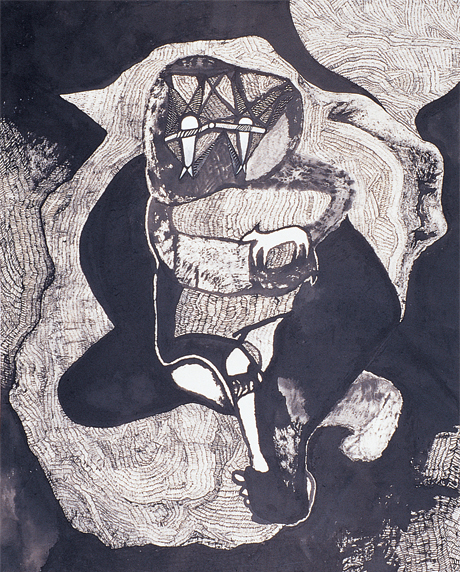
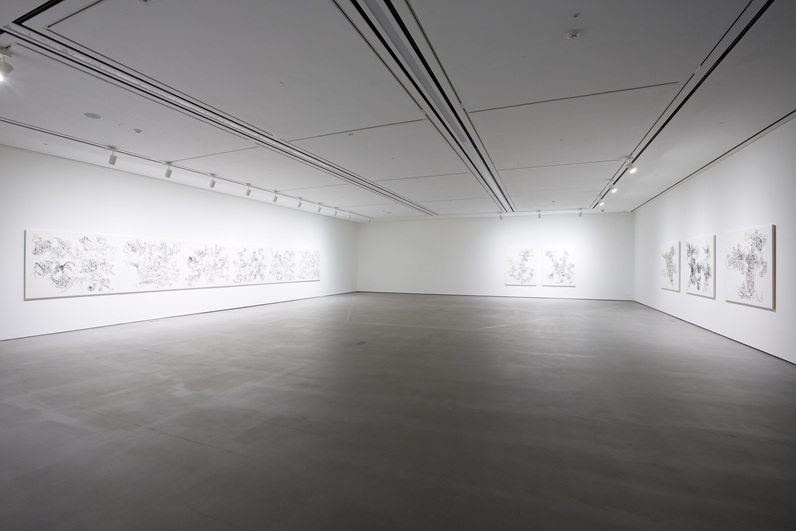
Sojung Lee's paintings combine freely flowing organic patterns with rectilinear structures of verticals and horizontals. Rather than depicting growth from a seed, they follow the principle of cuttage—a method in which a new organism grows from a severed part of a mature body. This is precisely the meaning of the exhibition title 《Cuttage》. Her works emerge through the interaction of organic growth and deliberate intervention.
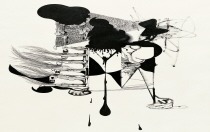
Such intervention is already inherent in the ink-wash techniques of Korean painting, yet the artist contemporizes this tradition by controlling the chance processes of ink diffusion. The approximately twenty works in the 'Sion' series are products of various forms of grafting. Their rhizomatic connections between severed fragments describe a process common to both living organisms and machines.
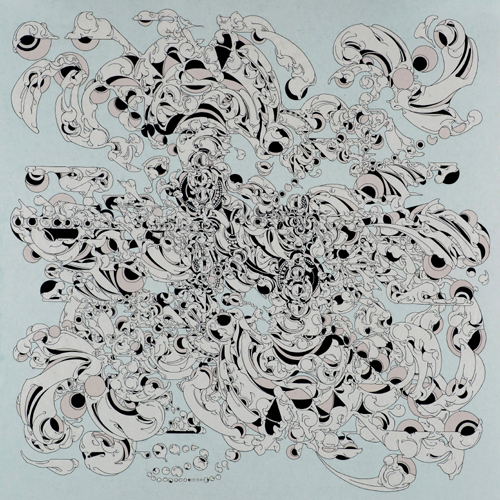
It is equally suggestive of the operation of the body without organs and the unconscious. The works combine forms that evoke parts of the body—such as splashing mucus, expanding vulvas, or eyeballs—with geometric shapes and signs resembling arrows, generating an array of organic patterns. Elements that suggest openings through which something might enter or exit, whether optically or tactilely, are arranged with the precision of mechanical diagrams. The paintings thus become a game played between drawing and erasing boundaries.
The original source from which these compositional elements derive, together with the rules governing the layered divisions of the pictorial surface, survives only as traces. Fragments recalling organic bodies or mechanical parts, despite their potentially unsettling implications, are transformed into images possessing a gentle, restrained atmosphere that would seem perfectly at home within refined interior spaces.
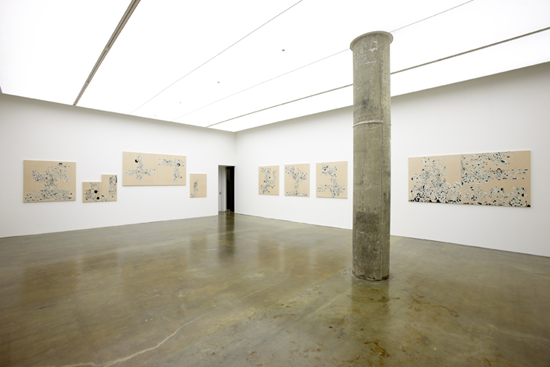
A significant number of works in the 'Sion' series measure 120 × 120 cm, functioning as modular units in themselves, much like Mondrian's squares or LEGO blocks. Arranged in varying sizes, heights, and intervals, they are composed across the exhibition space, allowing the paintings to unfold in an installation-like manner.
Fragments of organisms that are not necessarily associated with death, and fragments of machines that do not inevitably signify malfunction, redefine the relationship between part and whole while departing from representational systems traditionally applied to both nature and civilization.
Although Sojung Lee's paintings are far removed from realism, neither are they abstract in the conventional sense. Their emphasis on constructive processes and the generation of new entities aligns them more closely with the aesthetics of Concrete Art. Theo van Doesburg, who first introduced the term "concrete" in place of "abstract," argued that "the artist's aim is not abstract or interpretive art, but concrete, constructive art.
It must eliminate all associations and employ only clear, simple forms completely governed by the mind. Its order should be organized as impersonally and mechanically as possible. Such a structure contains a reality that can be demonstrated with clarity and logic." The principles of Concrete Art are likewise reflected in Juan Gris's well-known remark: "Cézanne transformed a bottle into a cylinder; I begin with a cylinder and create a particular bottle. I compose and assemble abstract forms."
Contemporary artists seek not only to move beyond nature and representation but to transcend abstraction itself. Art no longer imitates nature; rather, it creates new forms of nature. Today, nature itself is increasingly destroyed and reassembled within sterile laboratories or virtual spaces such as cyberspace. Rather than presenting illusions derived directly from nature, Sojung Lee's works foreground the composition and arrangement of individual elements.
Invisible systems of signs govern cloud-like or bubble-like forms. In earlier works, the artist even appropriated symbols from assembly manuals as compositional principles. As in mathematics, relationships take precedence over substance, and the methods by which individual elements are defined and combined remain fundamentally experimental. The basic forms she employs continually come into contact and connect in diverse ways, dismantling existing realities while constructing entirely new ones.