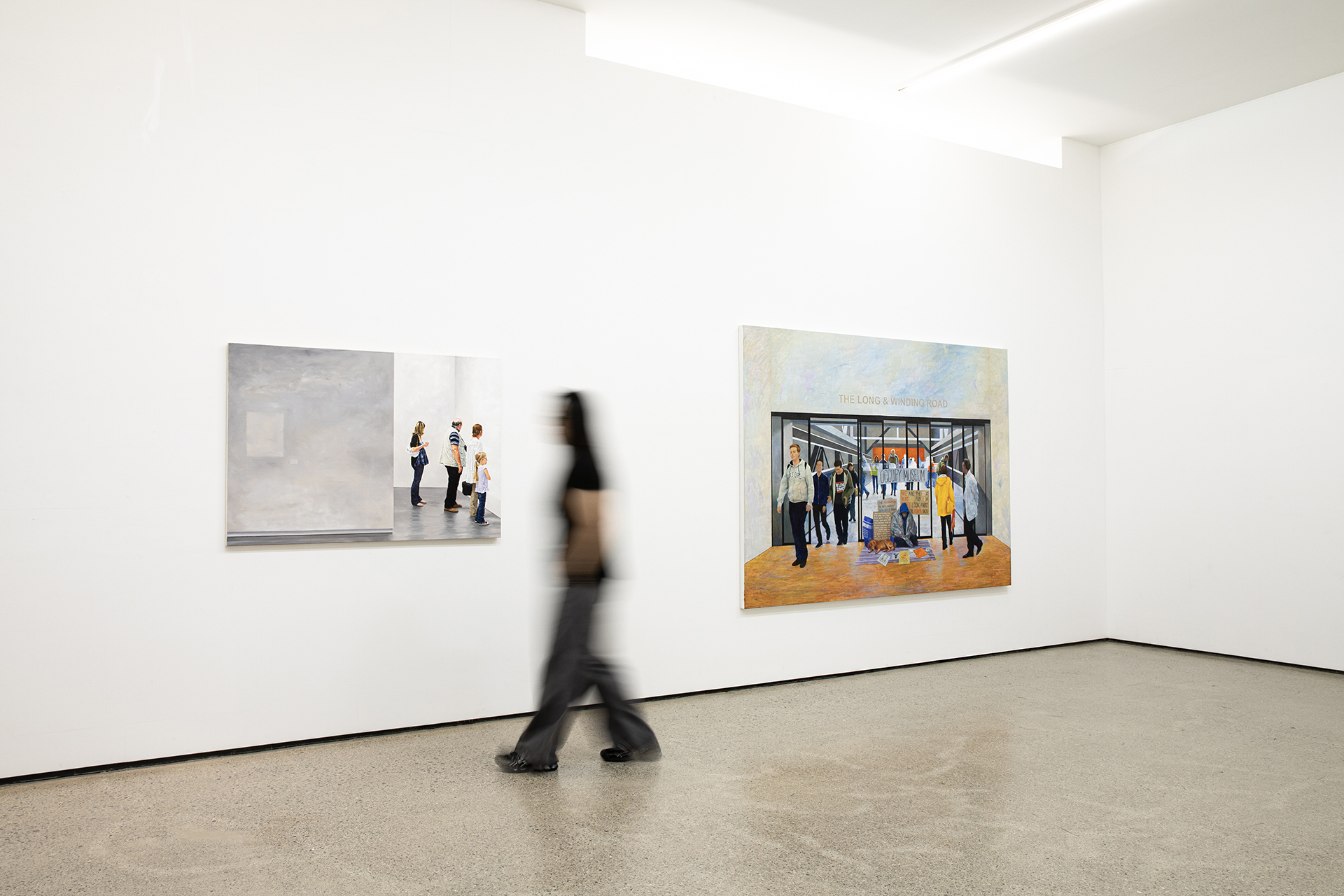
The title of Seo Sangik's (47) solo exhibition, 《Pictures》, is borrowed from the landmark exhibition 《Pictures》 curated in 1977 by the American art critic Douglas Crimp (1944–2019).

At the time, the word pictures was chosen both to emphasize the recognizable imagery present in the participating artists' works and to exploit the ambiguity inherent in the term itself. The title also reflected the fact that the artists' practices had already moved beyond conventional artistic media.

In Seo Sangik's exhibition 《Pictures》, the word pictures is employed not simply to denote a specific medium—such as painting, photography, film, or sculpture—but also in its verbal sense: to imagine or to depict. In doing so, the exhibition foregrounds the inherent ambiguity embedded within the word pictures.


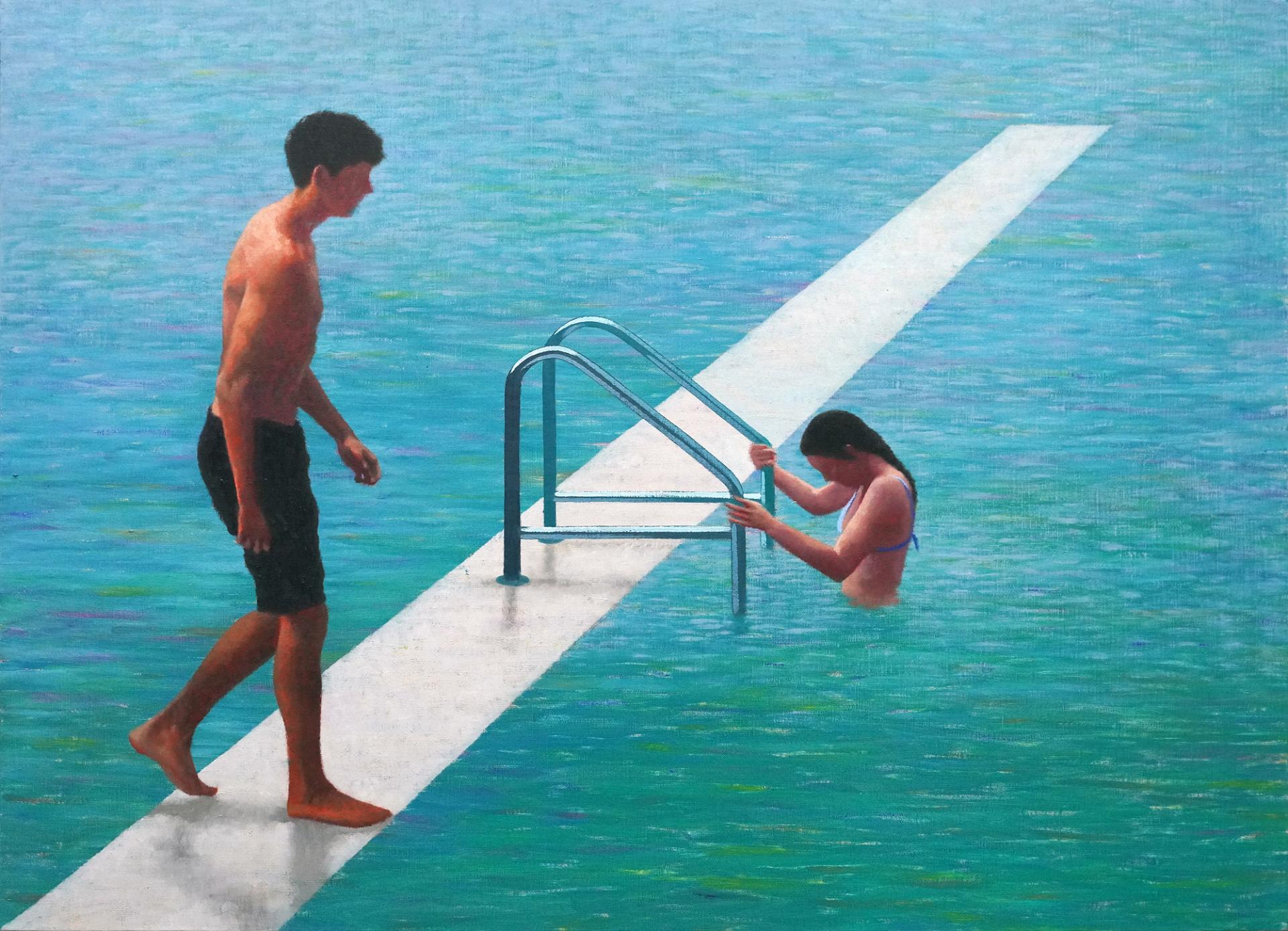
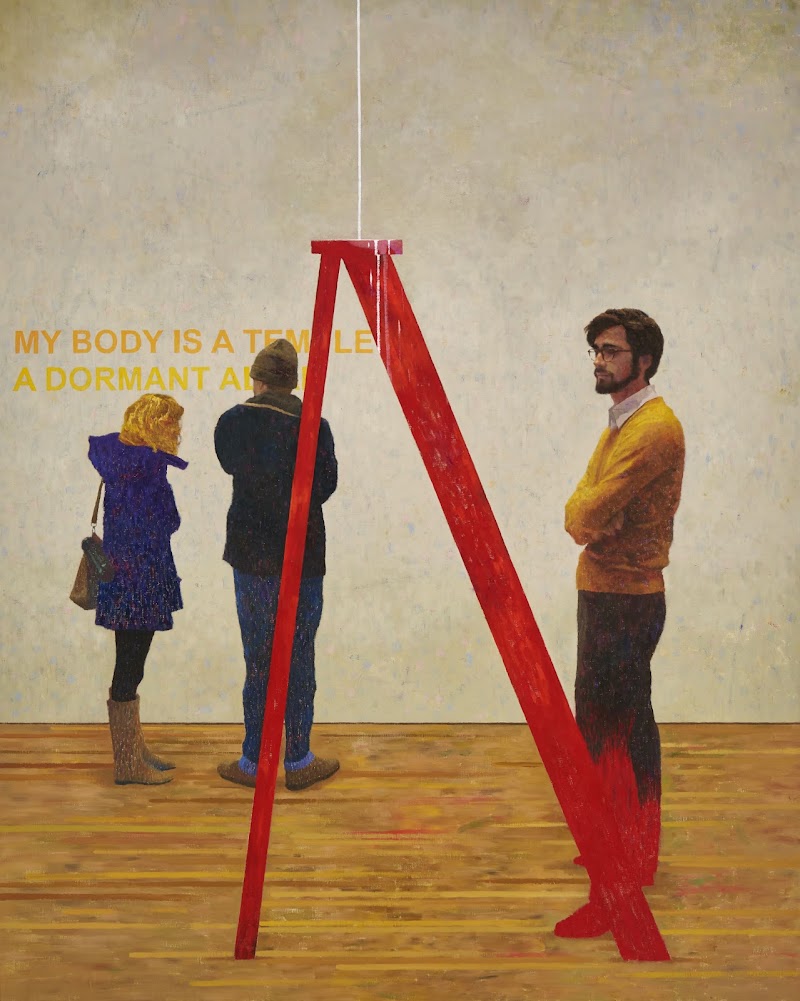
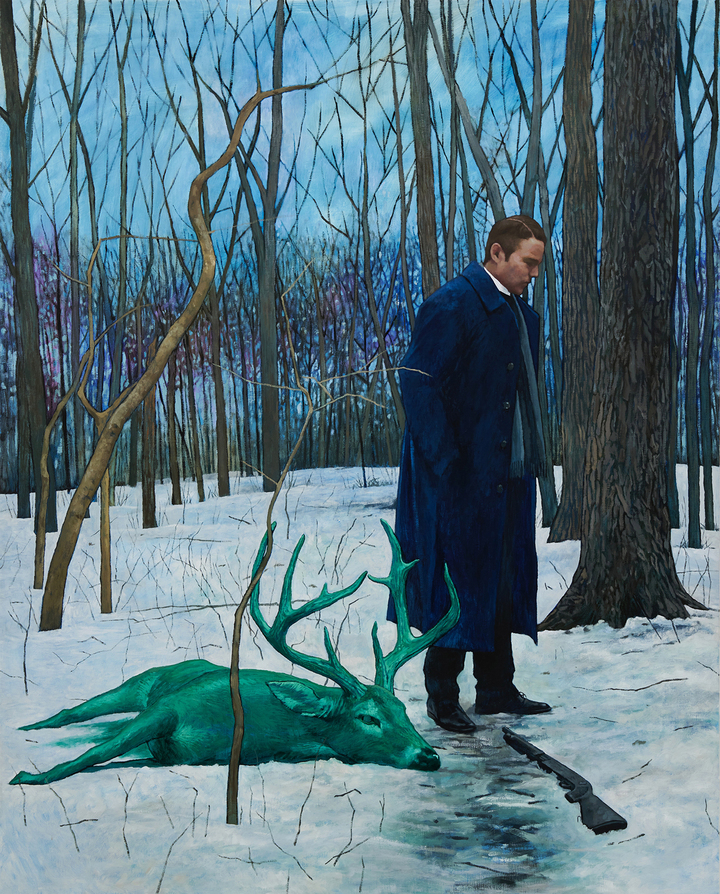
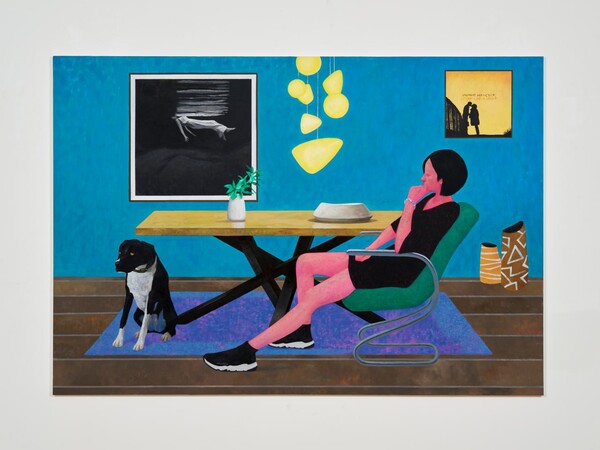
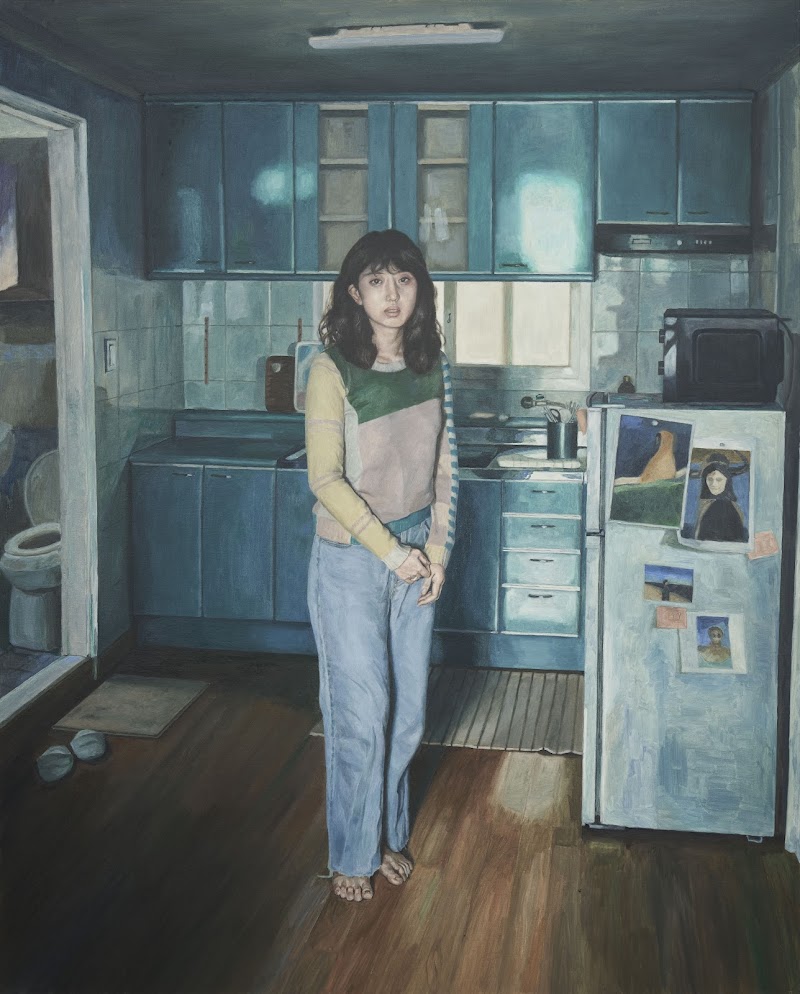
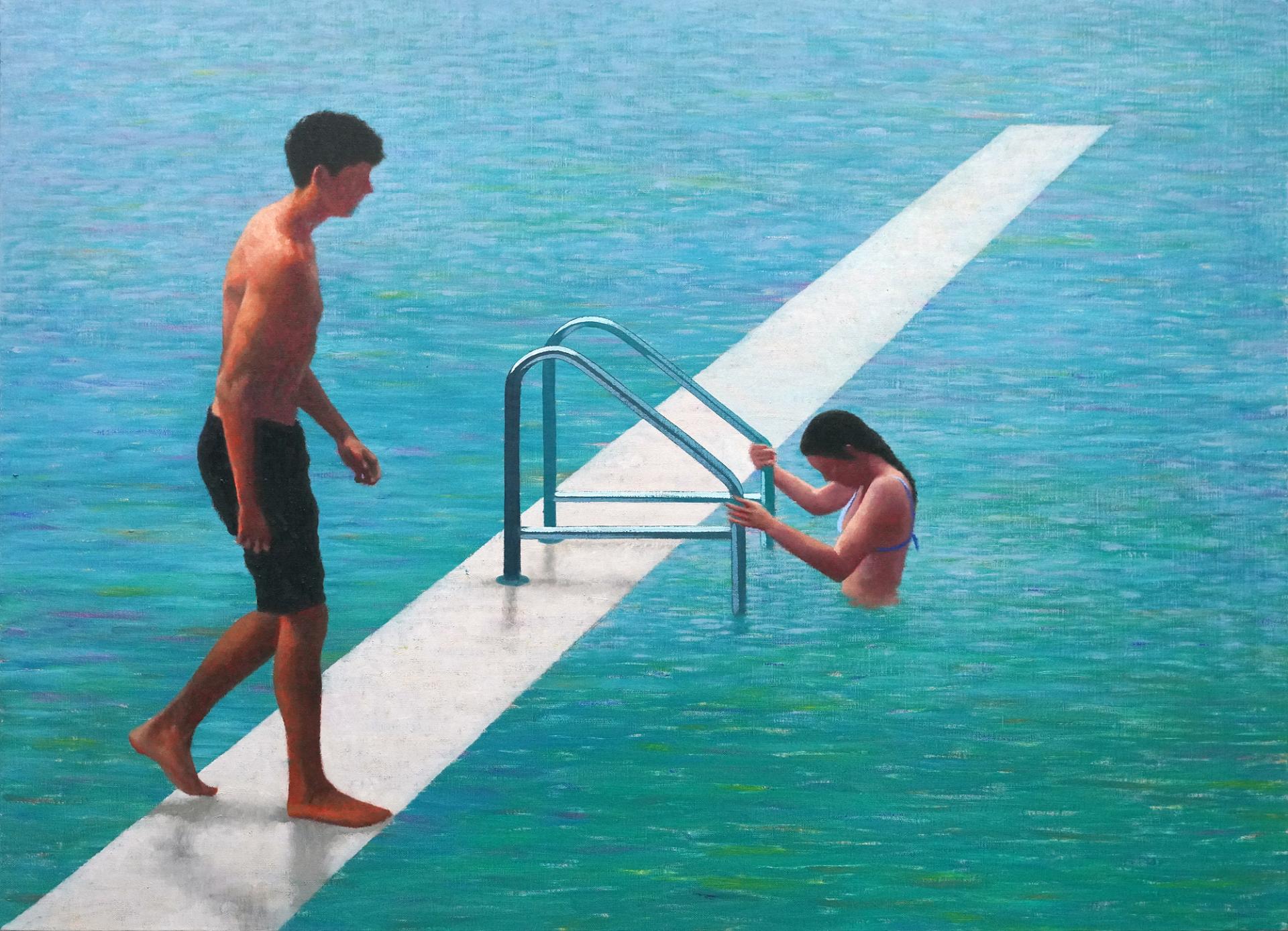
Seo Sangik, Small and Still, 2024, Oil on canvas, 162.1 x 130.3 cm © Seo Sangik

In his first interview with this writer approximately three years ago, Seo Sangik explained: "I introduced symbolic human or animal figures with strong narratives in order to explore how landscapes become spaces and the theatrical possibilities created by people within those spaces."

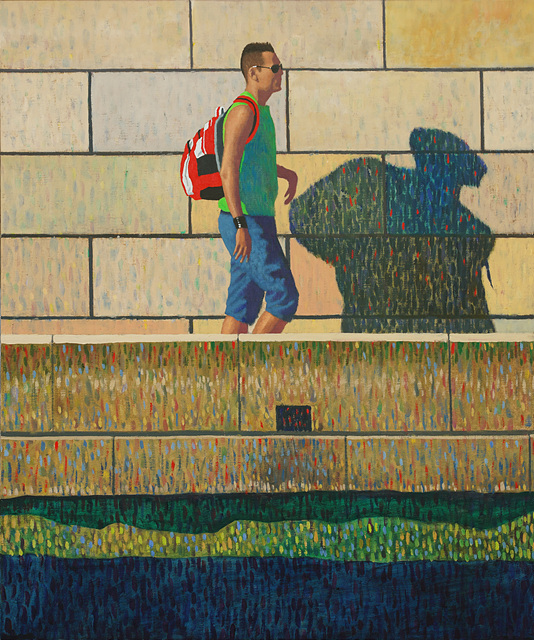
Spaces and objects, whether large or small, possess their own narratives shaped by particular situations and psychological states. Seo Sangik's paintings are distinguished by their arrangement of fragments from the lives of anonymous passersby as though they were frozen frames.

Yet there is a fundamental distinction between a photographic still and a painting. While retaining the specificity of an actual location, the artist selects spaces that transcend time and places figures at the center of the composition, lending the scenes a dynamic quality. This also serves as a means of overcoming the "flatness" inherent to the medium of painting.


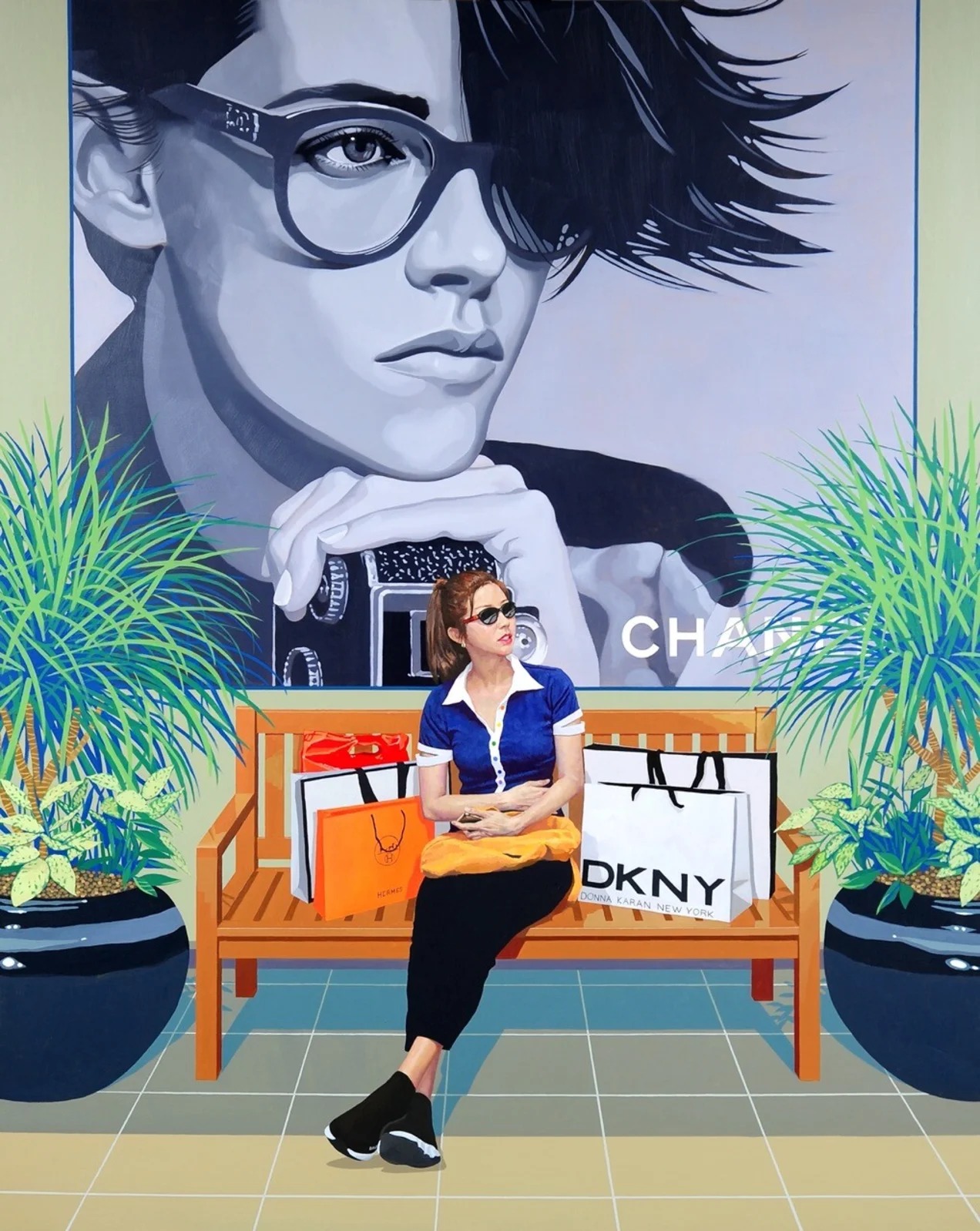
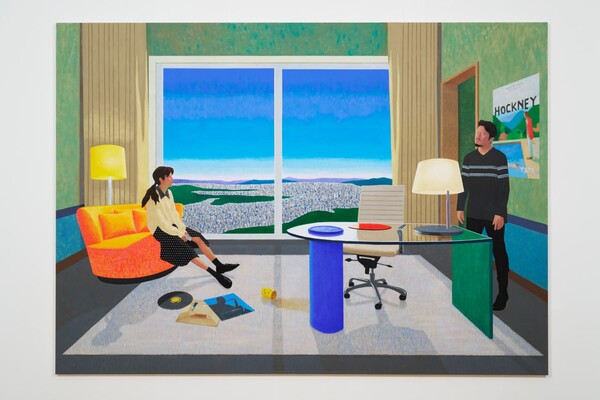
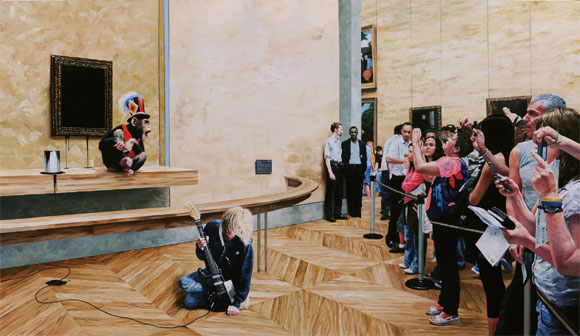
Seo Sangik, Fickle and Impatient, 2024, Oil on canvas, 162.1 x 227.3 cm © Seo Sangik

Clement Greenberg (1909–1994) famously declared that "what makes each art unique and truly itself is its own medium." This became one of the central tenets of modernist art.
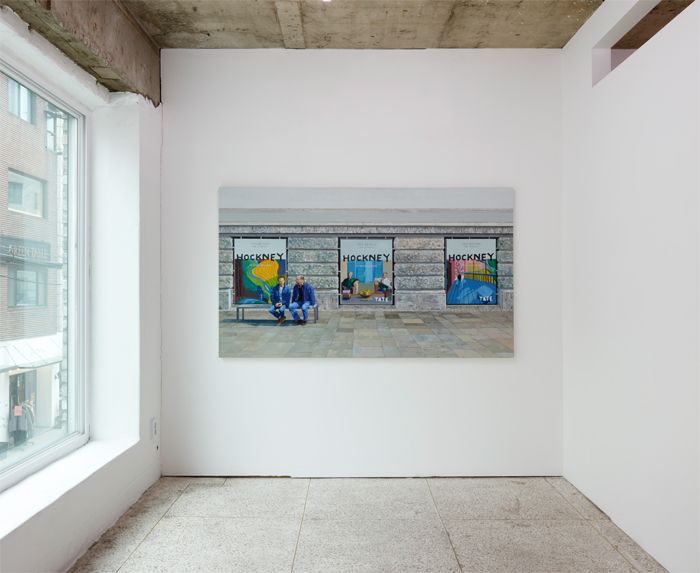
As Greenberg argued, the fundamental condition that defines painting as a medium is its flatness. For Greenberg and his contemporaries, the purity of painting resided in the flat image itself. Yet even the most reductive color-field painting depends upon the physical presence of the canvas, which is itself a three-dimensional object. Likewise, a sheet of paper possesses measurable thickness.

If "flatness" can never be realized as a perfectly physical condition, then the distinction between flat painting and three-dimensional sculpture ultimately begins to collapse. It is precisely from this line of reasoning that Conceptual Art emerged, questioning the very boundaries separating painting from sculpture.


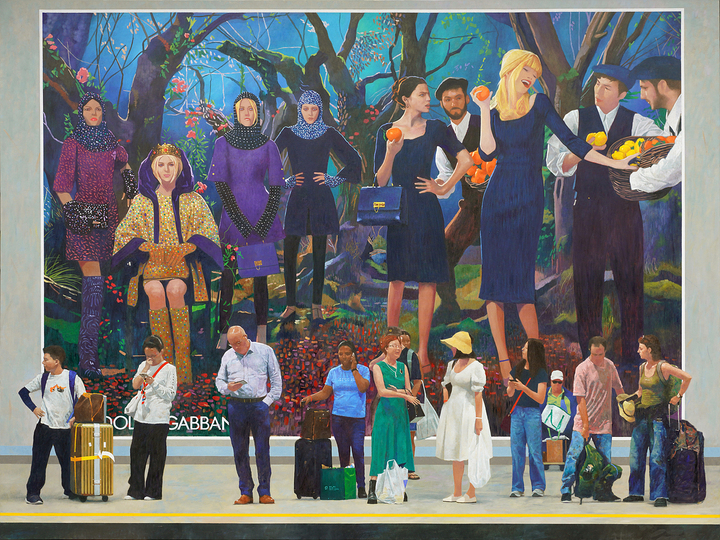
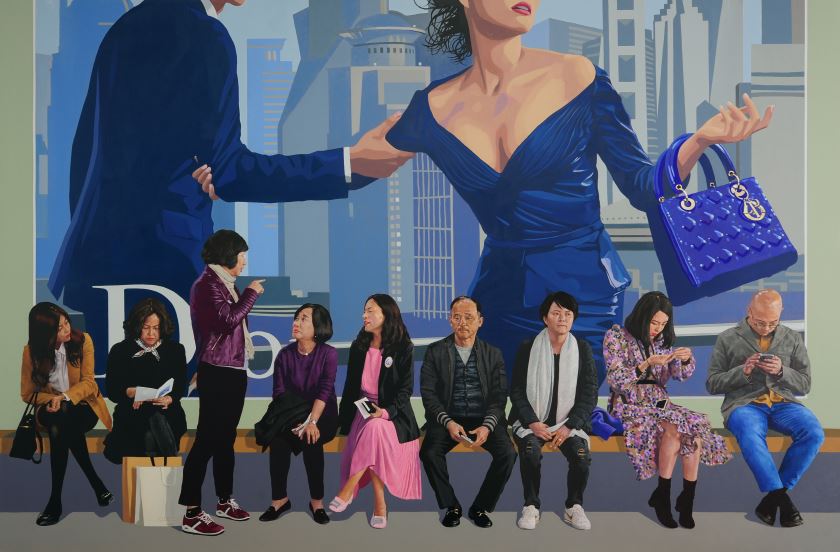
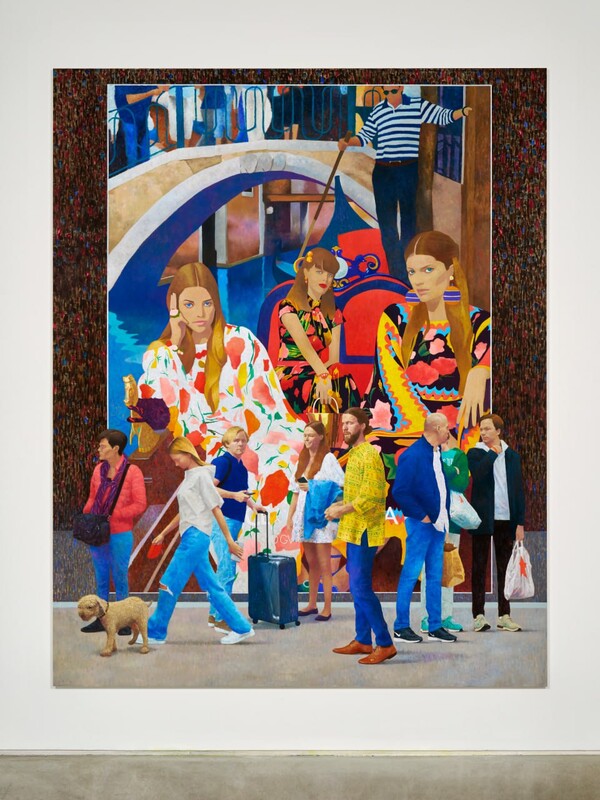
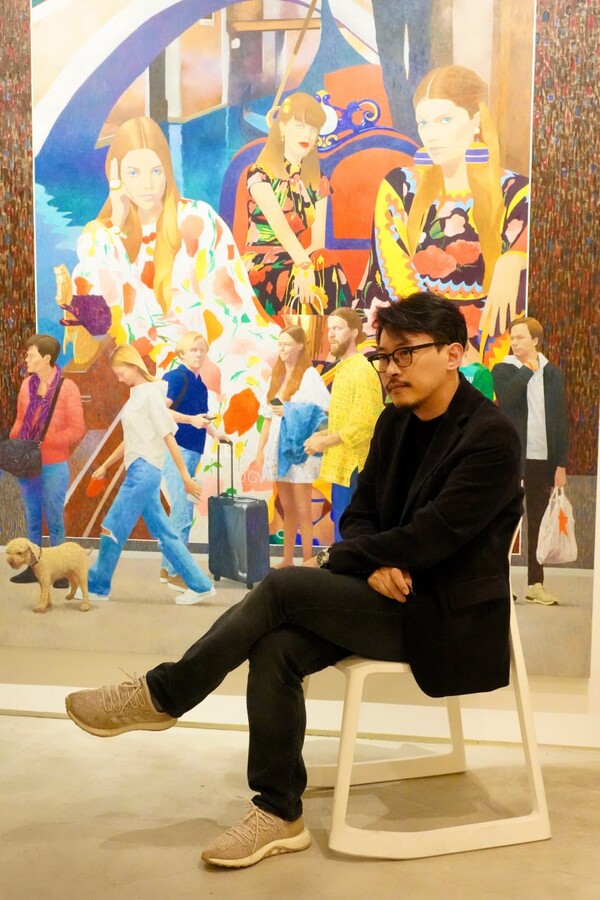
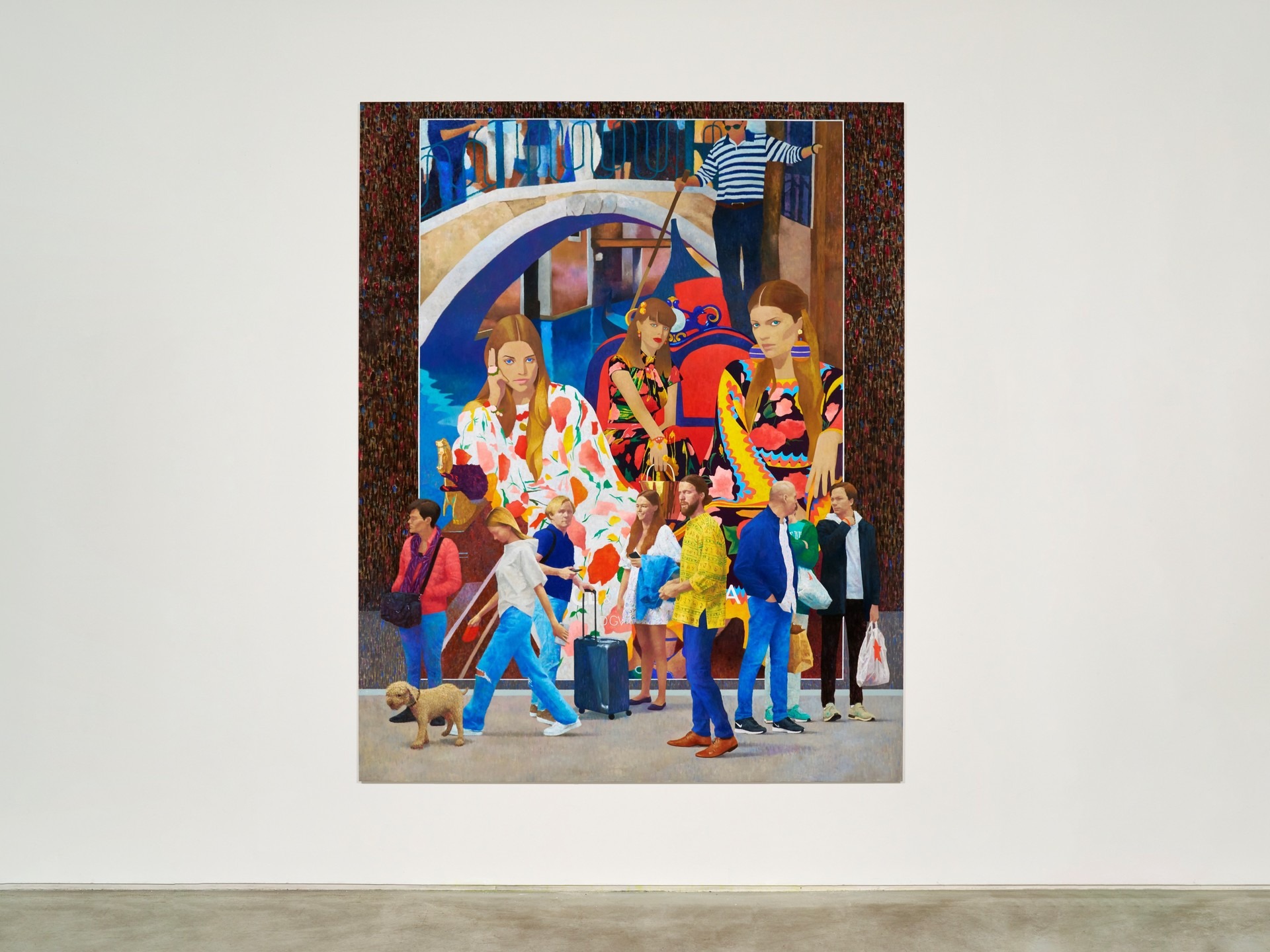
Seo Sangik, Neither Venice nor Sweetness, 2024, Oil on canvas, 237.3 x 181.8 cm © Seo Sangik

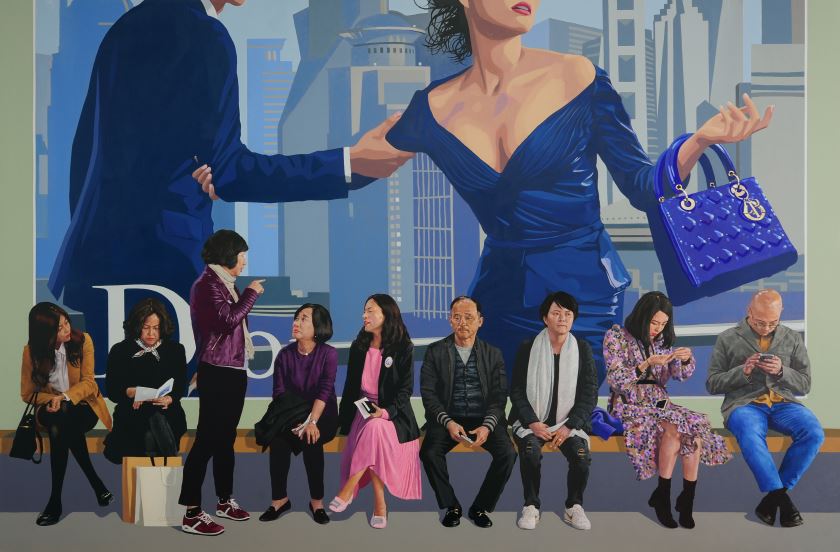
Seo Sangik is a magician of pictorial space. One of the most striking devices revealed through both viewing the exhibition and speaking with the artist is his recurring use of the billboard as a compositional element within the picture plane. In works such as Neither Venice nor Sweetness (2024) and The Landscape with the Image 1 – Dior and a Large Group of People (2021), large advertising billboards serve as the backdrop against which the figures are staged.

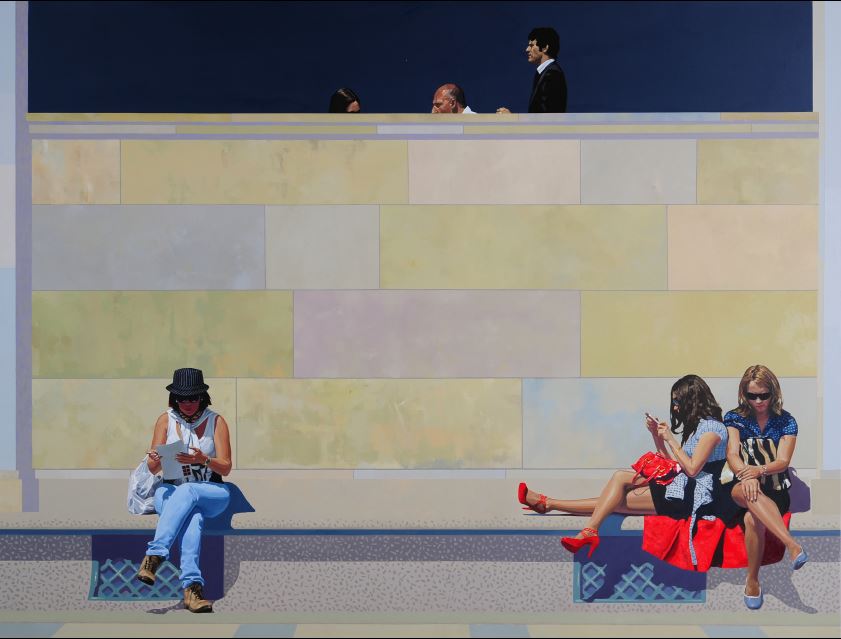
In Neither Venice nor Sweetness, tourists and local residents gather before a billboard depicting three fashionably dressed young women, set against Venice's iconic canals. In The Landscape with the Image 1 – Dior and a Large Group of People, the people seated on a bench before an enormous Dior billboard appear almost like extras whose role is simply to accentuate the luxury handbag held by the model in the advertisement.

Through luminous color, Seo exposes the shadow cast by capitalism, in which contemporary product design and commercial imagery become objects of reverence.

In both paintings, the figures themselves are of little importance, whether as subjects or as narrative agents. They merely suggest the anonymous mass of consumers who, within commodity capitalism, are flattered by the title of "customer." By incorporating the billboard—a structure far thicker and more materially substantial than the canvas itself—Seo approaches the point at which the flat picture plane is realized as a tangible physical entity.

In the film Three Billboards Outside Ebbing, Missouri, the three billboards famously bear the messages: "AND STILL NO ARRESTS?" and "HOW COME, CHIEF WILLOUGHBY?"

Within the film, the billboards become a mother's anguished accusation against the local police for failing to solve the murder of her daughter. The monumental advertising structure is transformed into an instrument of protest and revenge.

In 1999, the critic Rosalind Krauss (b. 1941) published A Voyage on the North Sea: Art in the Age of the Post-Medium Condition. The title was borrowed from A Voyage on the North Sea (1974–1975), a work by the Belgian Conceptual artist Marcel Broodthaers (1924–1976), who is widely regarded as a pioneer of installation art.

Broodthaers' work adopted the form of a book while simultaneously existing as a "moving image," consisting of a four-minute film accompanied by a thirty-eight-page publication.

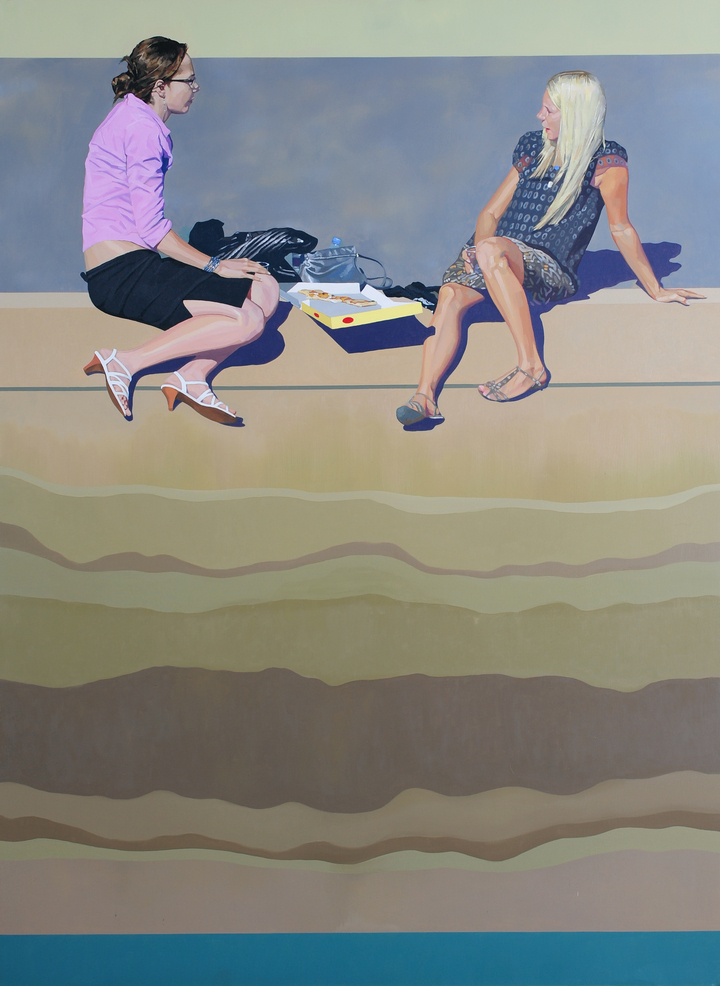
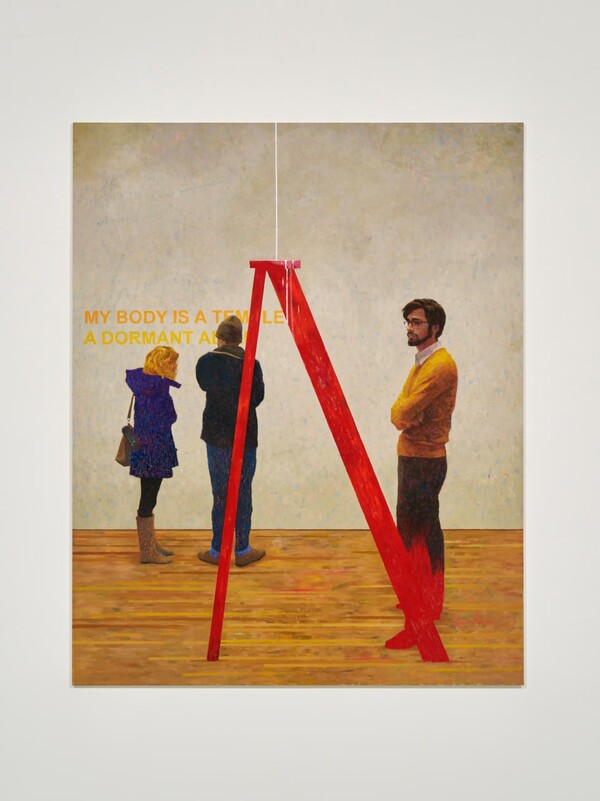
Do the titles of Seo Sangik's works—the textual dimension of pieces such as Fickle and Impatient and The Origin of Myth—truly correspond to the images they accompany?


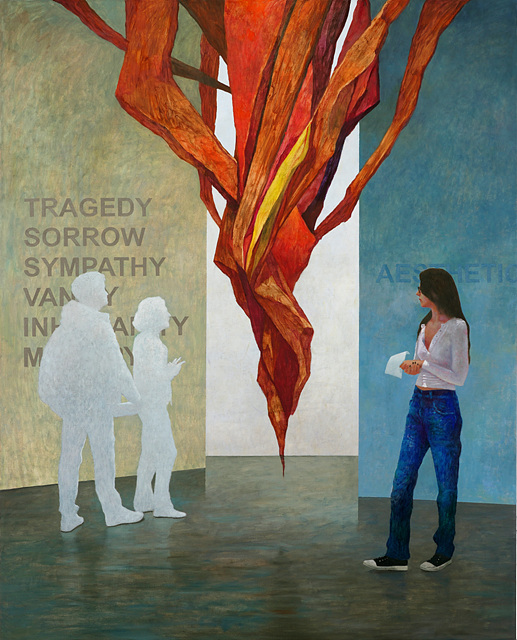
Seo Sangik, The Origin of Myth, 2024, Oil on canvas, 162.1 x 130.3 cm © Seo Sangik

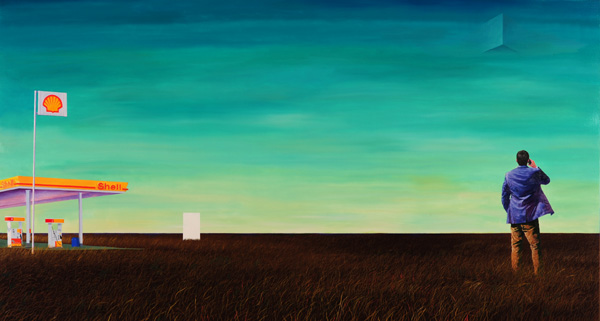
The Origin of Myth visualizes what, in the artist's words, would be "exactly this kind of situation" if the moment in which a viewer encounters an imagined sculptural form within a space were translated into three-dimensional form.

Marcel Broodthaers frequently explored the relationship between text, objects, and the images of objects. In his work For the Glorious Development of Artistic Action (1964), ten eggshells are presented alongside the phrase "For the Glorious Development of Artistic Action."

The text and the objects exist in dialogue with one another. Without the accompanying words, the installation would consist merely of ten broken eggshells. Broodthaers demonstrates that language cannot be replaced by images, just as images cannot be replaced by language.

Whether the imagery of Seo Sangik's paintings corresponds directly to their titles is therefore beside the point. Just as Broodthaers declared his own private space to be a museum and appointed himself its director, it is ultimately the artist who assigns the title to a work.

Through this exhibition, Seo Sangik poses a fundamental question: is it necessary to interpret the picture plane as spatial or sculptural? He questions whether the forms that establish relationships between subject and subject, subject and object, or object and object are themselves the essential point of reference. At the same time, each individual form continues to retain its own intrinsic role.

Examined at close range, the paintings prioritize a density reminiscent of Dansaekhwa (Korean monochrome painting) or abstraction. To heighten the sense of flatness, Seo removes much of the oil from his paint and works extensively with dry-brush techniques.

Seo Sangik is, fundamentally, a painter who believes in the primacy of painting—an artist who demonstrates that the essential condition of painting, its flatness, is itself capable of generating a wide range of critical discourses. Preparing this exhibition, he realized that his own attitude toward painting had changed considerably.

"I've come to realize that making art means pushing through and clearing away whatever stands in front of you—like struggling through dense undergrowth."

He adds:

"One thing is certain: I'll continue to change."


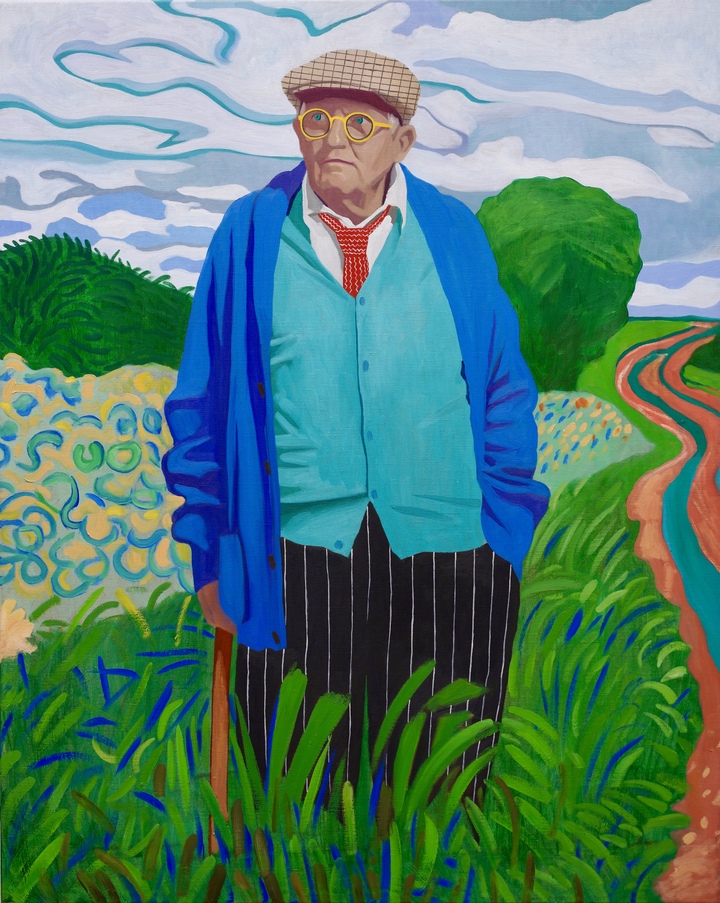
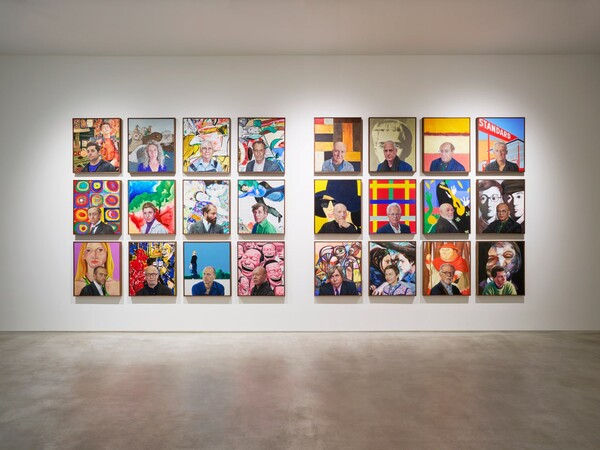
Seo Sangik, 'Temple of the Artist' series, 2012- © Seo Sangik

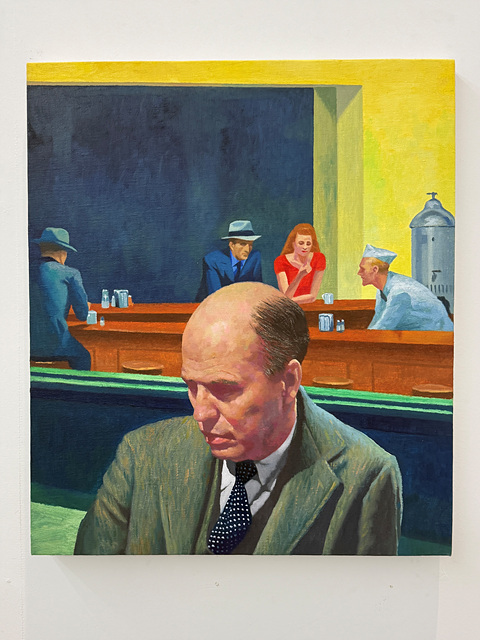
The 'Temple of the Artist' series, initiated in 2012, consists of portraits of contemporary art's celebrated figures, using the artists themselves as models through a close study of the compositional structures and color palettes of their works. By granting these mythologized figures of contemporary art a status akin to that of saints in religious traditions, Seo Sangik symbolically enshrines them within a sacred space—a temple dedicated to artists.

The works painted on mirror stainless steel explore the themes of artistic fame and illusion. Once fame itself is transformed into an image, it becomes, for those who oppose the fetishization of art, nothing more than an illusion reflected in a mirror.

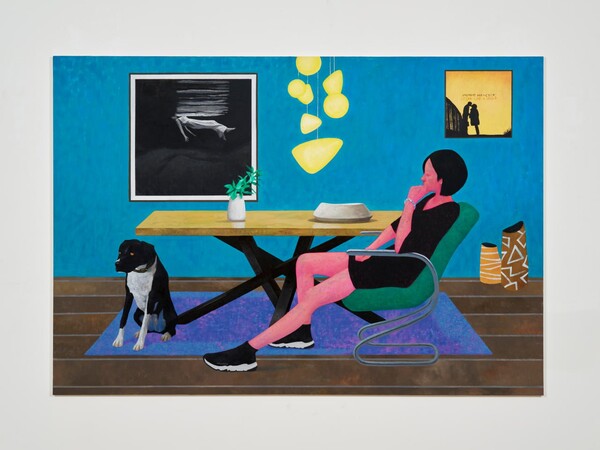
Seo Sangik is acutely aware that, within the art market, it is essential for an artist's signature image to remain continually recognizable. While maintaining an ongoing relationship with the market, he simultaneously seeks to evolve his practice. In his compositions, modern furniture and interior spaces—objects that embody the desires of capitalism—occupy positions as significant as the human figures themselves.

His carefully chosen viewpoints and compositions function as projections of the capitalist shadow cast over everyday life. Ultimately, the paintings ask what everyday existence becomes within a system governed by the mechanisms of capitalist desire.


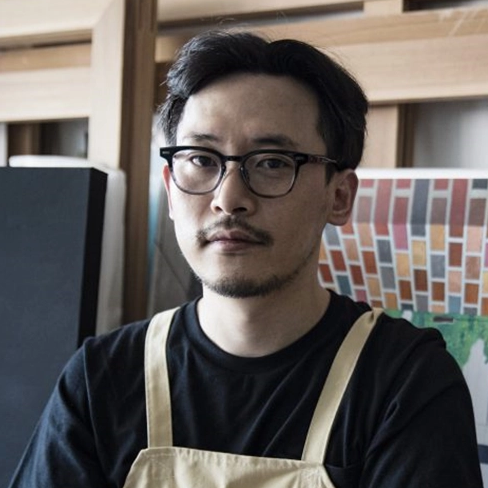
The Artist © Seo Sangik

Rather than engaging directly with the dominant social discourses of his time, Seo Sangik is more interested in relationships, fixed ideas, and the narratives embedded in everyday life. His compositions avoid ideological polarization and refuse to align with any particular camp or faction. Likewise, they keep a measured distance from immediate social catastrophes or current events.

Much like the novels of Nobel Prize laureate Han Kang, which address dark historical and social events through their enduring effects on the everyday lives of those who survive them, Seo seeks to understand the broad meaning encompassed by the word pictures.

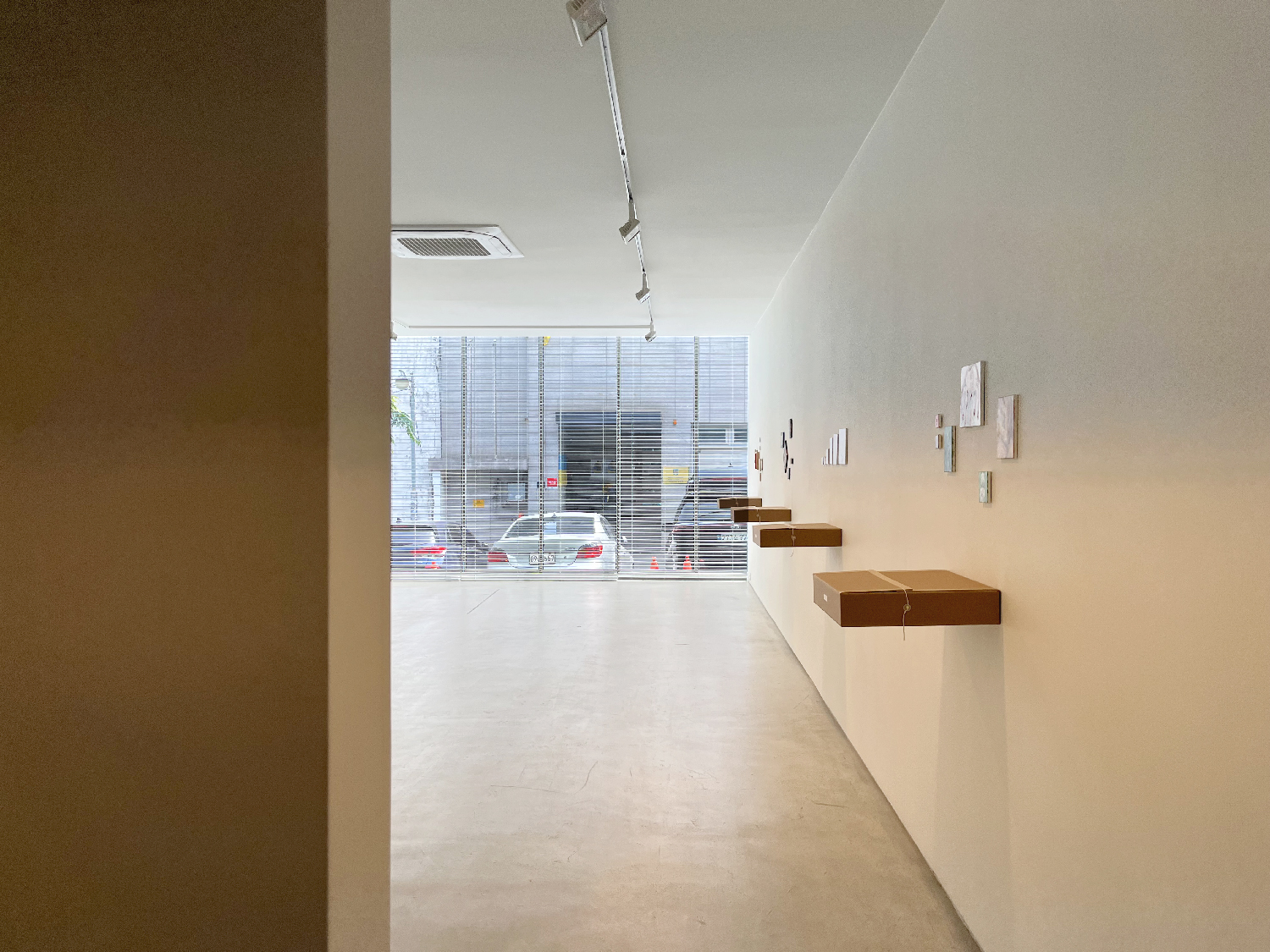
His practice embodies what might be called an "aesthetic distance," one that ultimately returns to the enduring questions: What is art? and What should art be? 《Pictures》 will be on view at Newspring Project in Yongsan-gu, Seoul, through November 24.

References