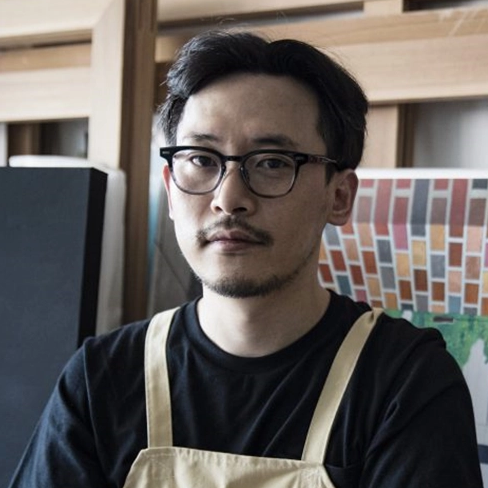
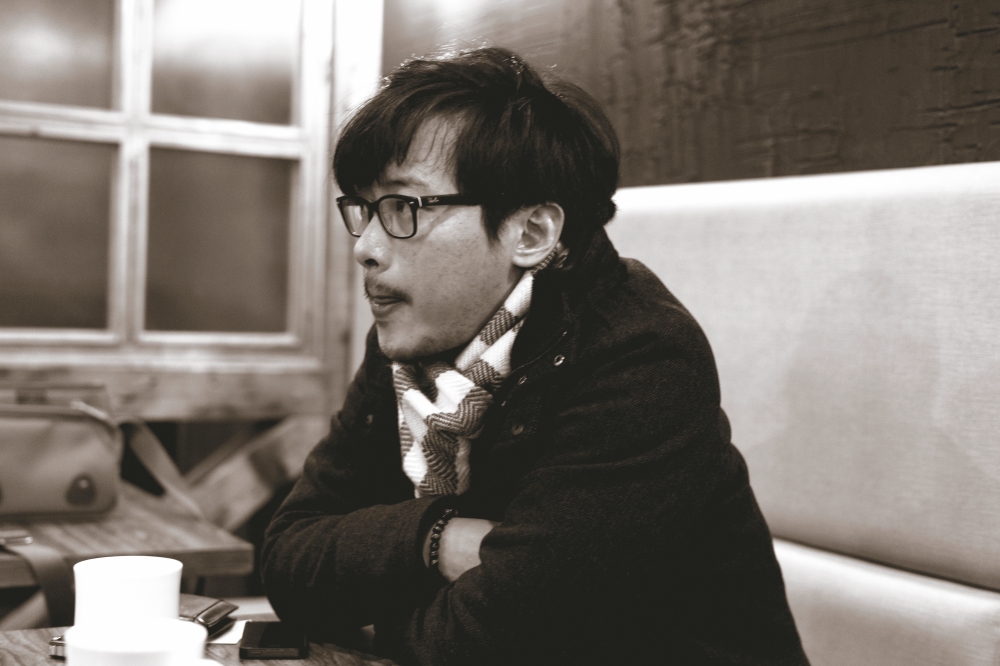
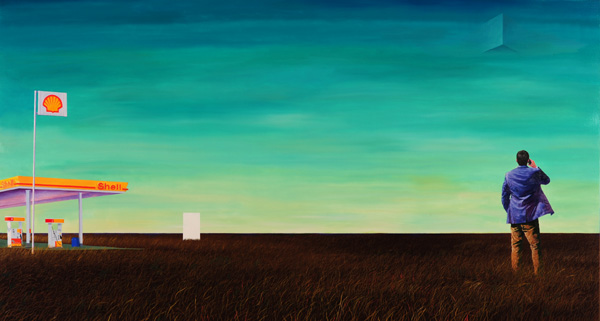
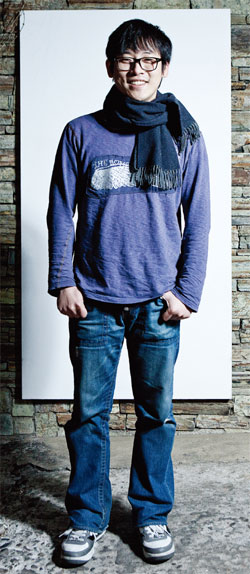
The Artist © Seo Sangik

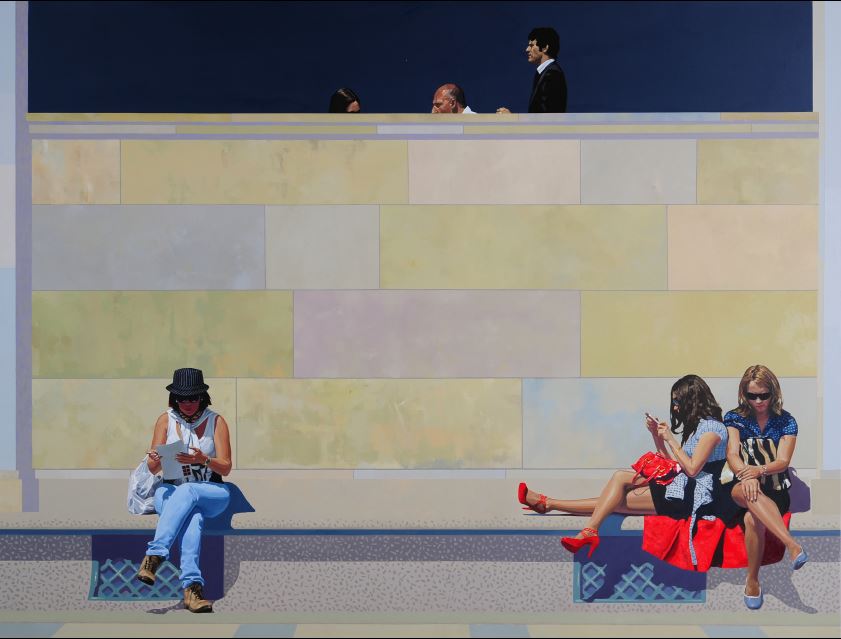
Seo Sangik captured the attention of discerning viewers with a single painting. Created during his graduate studies at Seoul National University, Sunday PM 4:00 made a lasting impression through its remarkable technical skill and vibrant imagery.

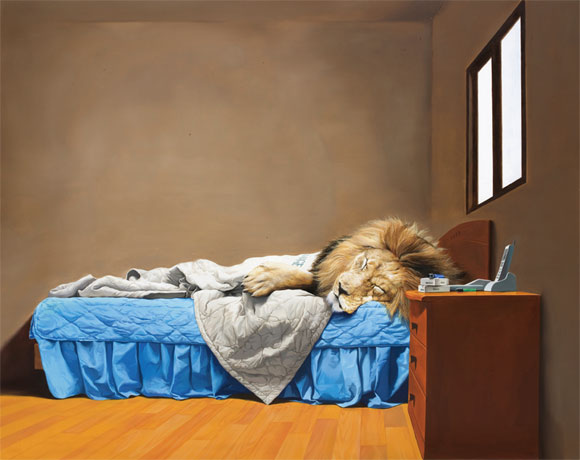
The "King of Beasts" is shown idling away a leisurely Sunday afternoon, yet the cramped setting of a narrow single bed in a small student apartment reveals the reality of his circumstances. His dream may be to become the "king of beasts" (baeksu, 百獸), but in reality, is he not simply an unemployed youth (baeksu, 白手)? Few paintings have conveyed the dreams and realities of Korea's so-called "880,000-won generation" with such clarity.

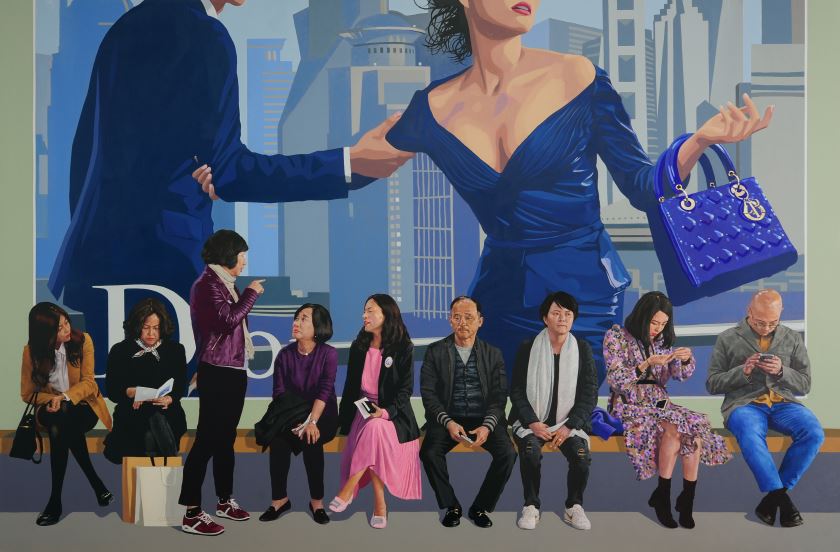
The reason this young artist, who has held only two solo exhibitions, deserves close attention is that his work reveals new possibilities for Korean painting. Seo Sangik's paintings embody the defining characteristic of an era in which the concept of "life" has largely been replaced by that of "everyday life."

"Everyday life may seem empty and repetitive, but I dissolve it through my own imagination and dreams. This moment yesterday is not the same as this moment today. Even within what appears to be the monotonous repetition of daily life, I constantly feel that an individual's story can unfold in endlessly diverse ways. These individuals who live their everyday lives are the very members of our society, and I want to affirm their diversity and coexistence."

Seo Sangik's paintings mark the return of the "stories of lived experience," a theme that had largely disappeared from Korean art following the Minjung Art movement, albeit in an entirely new form. Rather than abstract narratives grounded in imported Western theoretical discourse, his work speaks of the lives and aspirations of a generation living concretely in the here and now.

The foundation of these dreams and imaginings lies in the popular culture that has most profoundly shaped him—film, music, and other cultural experiences that have captivated and inspired him. These narratives from popular culture interact with the seemingly trivial moments of everyday life, generating the stories within his paintings.

Because his imagination is sparked by mass media, it does not remain solely his own; instead, it becomes something we can all recognize and share—a collective imagination rather than a purely individual one.


Seo Sangik, Sunday PM 4:00, 2007, Oil on canvas, 130.3 x 162.2 cm © Seo Sangik

Use Your Illusion depicts Slash, the guitarist of the rock band Guns N' Roses, performing an electrifying guitar solo inside Seo Sangik's small apartment. Behind him, the artist's own guitar appears to be watching the performance. Purchased as a beginner's instrument after being inspired by Slash's musicianship, it simultaneously alludes to the artist's still-unpolished playing skills.

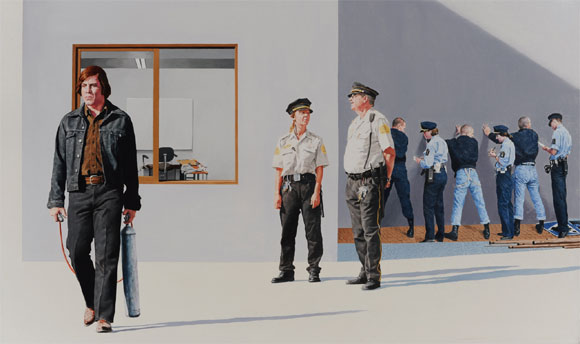
The fantasy of becoming a great guitarist redeems the drabness of everyday life, transforming it into the subject of painting. No Country for Me draws inspiration from the Coen brothers' film No Country for Old Men. Outside the artist's studio, a violent criminal walks confidently through the street, while police officers irrationally search only the wrong people. At this moment, the Coen brothers' signature brand of dark, brutal humor is reimagined as a black comedy surrounding the act of artistic creation itself.

Seo Sangik's gift for storytelling opens new possibilities for Korean figurative painting. His work suggests that, even if our lives are not imbued with grand significance, they nevertheless remain worthy of being painted.
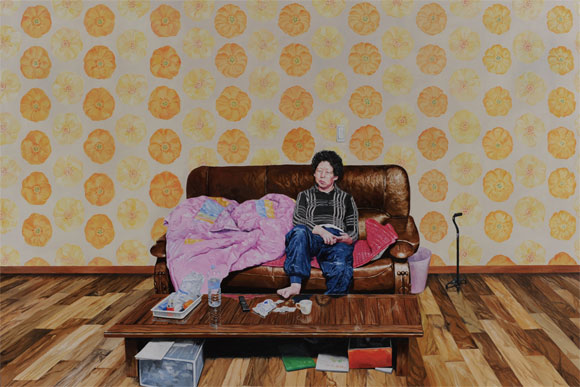
In Mother's Garden, painted after his mother underwent surgery and was recovering at home, the artist filled the walls with flowers so that, although she could no longer venture outside to see a garden, she might at least be surrounded by blossoms within her home. The inevitable experiences of birth, aging, illness, and death—the fundamental conditions of human life—have likewise become subjects of his paintings.


Seo Sangik, No Country for Me, 2009, Oil on canvas, 89.4 x 145.5 cm © Seo Sangik

A Declaration of Independence from the Tyranny of Both Critical Discourse and the Market

When Seo Sangik was in art school, installation and media works driven by conceptual discourse dominated the contemporary art scene. Very few people were painting. Yet he simply continued to enjoy painting. Confronted with the possibility that there might no longer be a place for painting—particularly figurative painting—within contemporary art, he graduated and spent two years working at an animation company.

By the time he returned to graduate school, however, the atmosphere had shifted, and painting had once again become an accepted mode of artistic practice. As people began telling him that he "painted well," he gradually gained recognition. Today, he speaks with conviction: "I trust my own sensibility." Following his first solo exhibition, the response from the art world was overwhelmingly positive.

He was invited to participate in exhibitions of all scales and quickly emerged as one of the most promising young artists of his generation. His studio in Pyeongchang-dong is itself the result of this growing recognition: a patron who sought to support emerging artists with new potential renovated a private residence and offered it as a shared studio space.

After the successful conclusion of another solo exhibition, the studio now stands emptied of paintings, while stacks of newly purchased paint—acquired at considerable expense—fill the room in preparation for future work. This changed reality following his early success has also found its way into his paintings. His recent work NG candidly reflects his concerns and self-questioning in the face of these new circumstances.


Seo Sangik, Mother's Garden, 2010, Oil on canvas, 130.3 x 162.2 cm © Seo Sangik

"My paintings are honest stories drawn from my own everyday life. But at some point, I realized that the naïve fantasies of a man in his early thirties living in a semi-basement apartment had somehow become a strategy for the art market. It began to feel as though the shabbiness of everyday life was no longer genuine, but something staged like a movie set. I wanted to remain the subject of my own life, yet somehow the roles had been reversed—I had become an actor instead."


Seo Sangik, No Exit, 2009, Oil on canvas, 22.7 x 15.8 cm © Seo Sangik

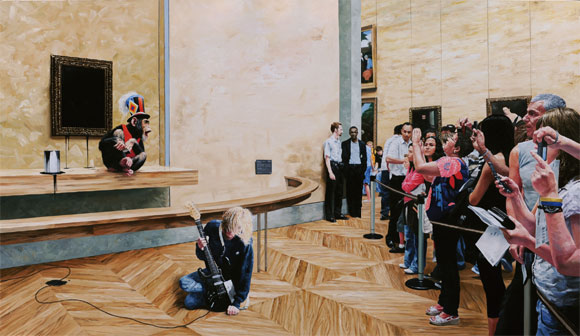
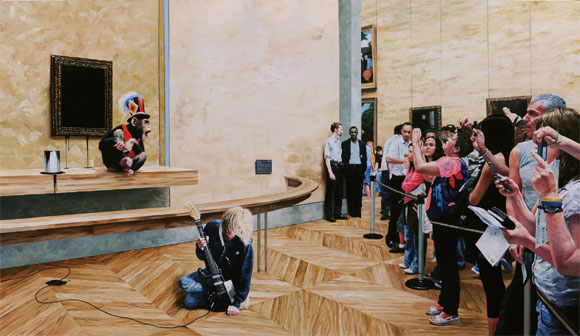
His determination not to allow his practice to become an artistic "NG" (outtake) has found expression in works that critically examine the institutions of the art world, including museums and the art market. In Paint It Black, a chimpanzee stands where the Mona Lisa hangs in the Louvre, proudly presenting a canvas covered in black paint while delivering an impassioned lecture.

An unsuspecting audience listens intently, captivated by the spectacle. Meanwhile, the true artist—depicted as a guitarist—finds himself kneeling before the chimpanzee. Likewise, in Untamed, viewers are once again reduced to passive spectators within a space constructed by the grand narrative of art history. This time, they gaze earnestly at an empty canvas.

Trusting that it must be an important work because it hangs in a museum, they study it with sincerity, yet contemporary art remains, for them, nothing more than an "empty" presence. Crossing before the audience is a coyote carrying a tattered gray cloth—a direct reference to Joseph Beuys's celebrated performance I Like America and America Likes Me.

The gray rag recalls Beuys's signature felt cloth. At the end of Beuys's performance, the wild coyote was ultimately tamed. Seo Sangik, however, declares, "I refuse to be tamed." It is his own declaration of independence—not only from the tyranny of critical discourse but also from the tyranny of the art market.

"The moments an artist should feel most ashamed are either when they possess the desire and conviction to create but choose idleness instead, or when their conviction and passion have already disappeared, yet they continue producing work mechanically through repetition."

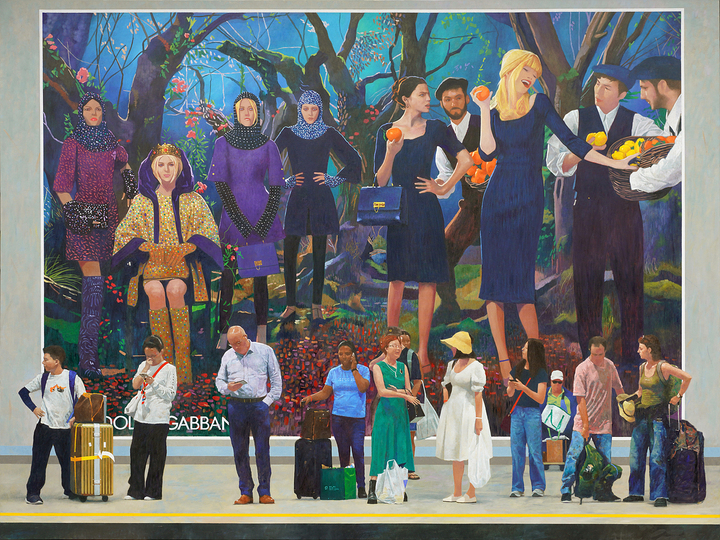
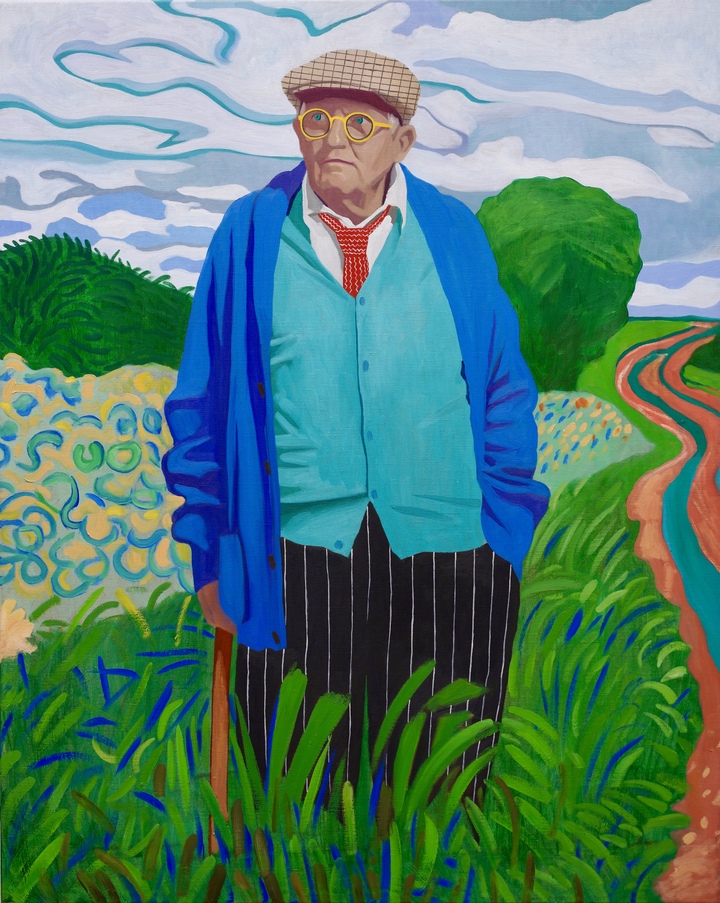
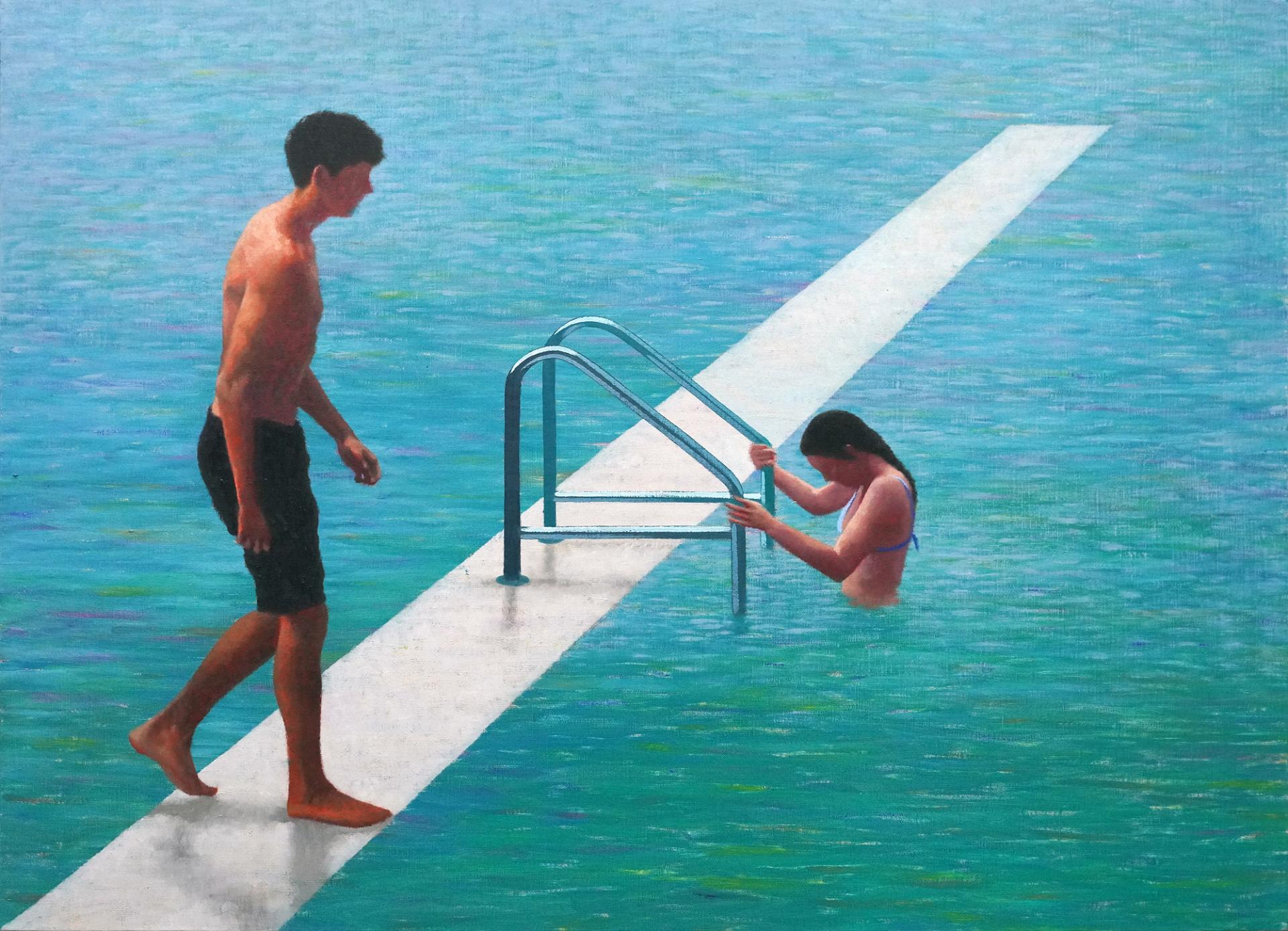
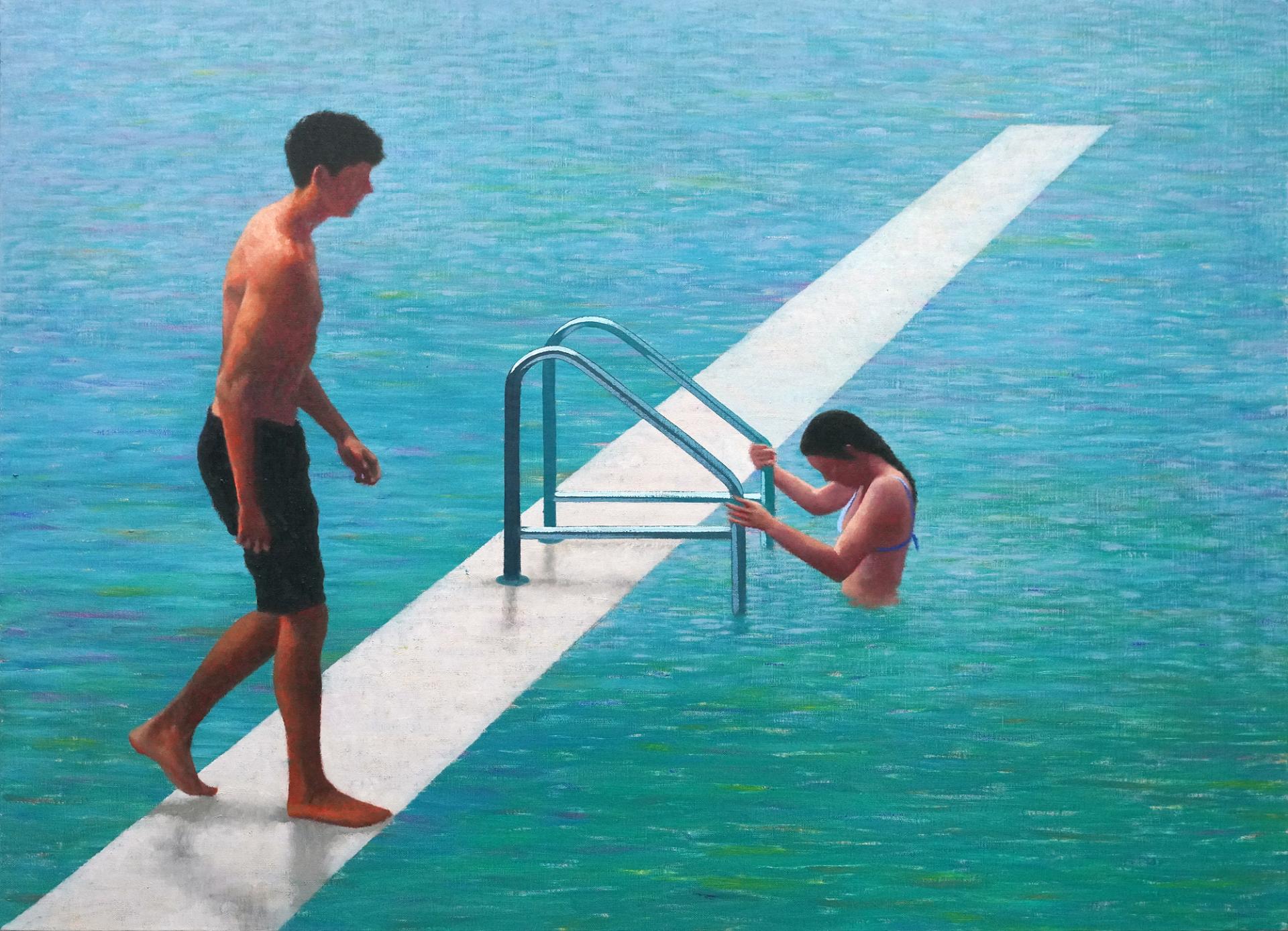
Seo Sangik recognized this crucial truth about artistic creation at an early stage in his career. Because his commitment to painting remains so strong, the evolution of his work has been equally rapid. While his earlier paintings were rooted primarily in photorealism, his recent practice seeks to move beyond the inherent artificiality of photorealist representation.

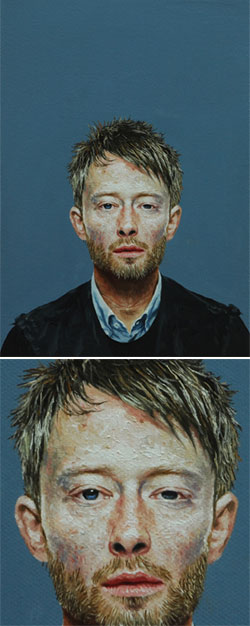
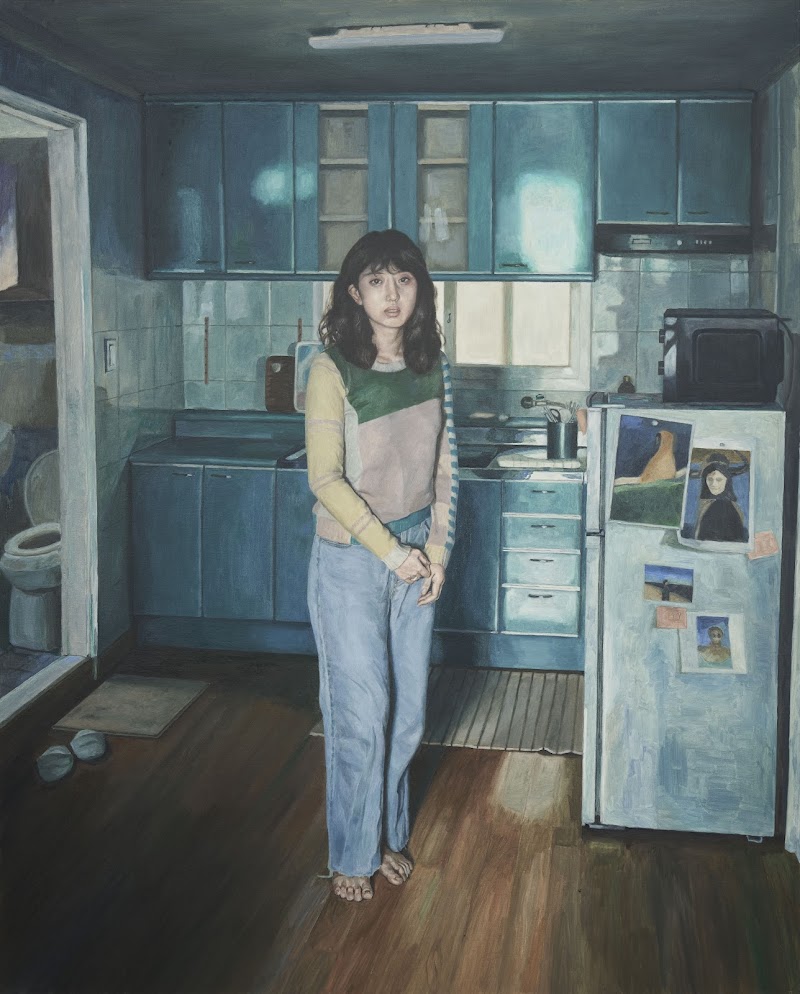
Rather than pursuing flawlessly smooth surfaces, he has begun experimenting with a wider range of expressive brushstrokes. In works such as No Exit, he has become increasingly interested in rendering the distinctive textures of skin and hair.

"I used to be captivated by the pleasure of telling stories. Now, I find myself even more captivated by the pleasure of painting."


Seo Sangik, Paint it Black, 2010, Oil on canvas, 97 x 193.9 cm © Seo Sangik

It is this continual questioning of what makes a good painting that continues to transform Seo Sangik's work. Like most successful artists, he is always changing ahead of his audience, never afraid of transformation.

As he puts it, "I'll be painting until the day I die, so I have to take the long view." His exhibition schedule for 2011 is already fully booked. With both passion and youth on his side, Seo Sangik's next steps as an artist promise to be well worth watching.
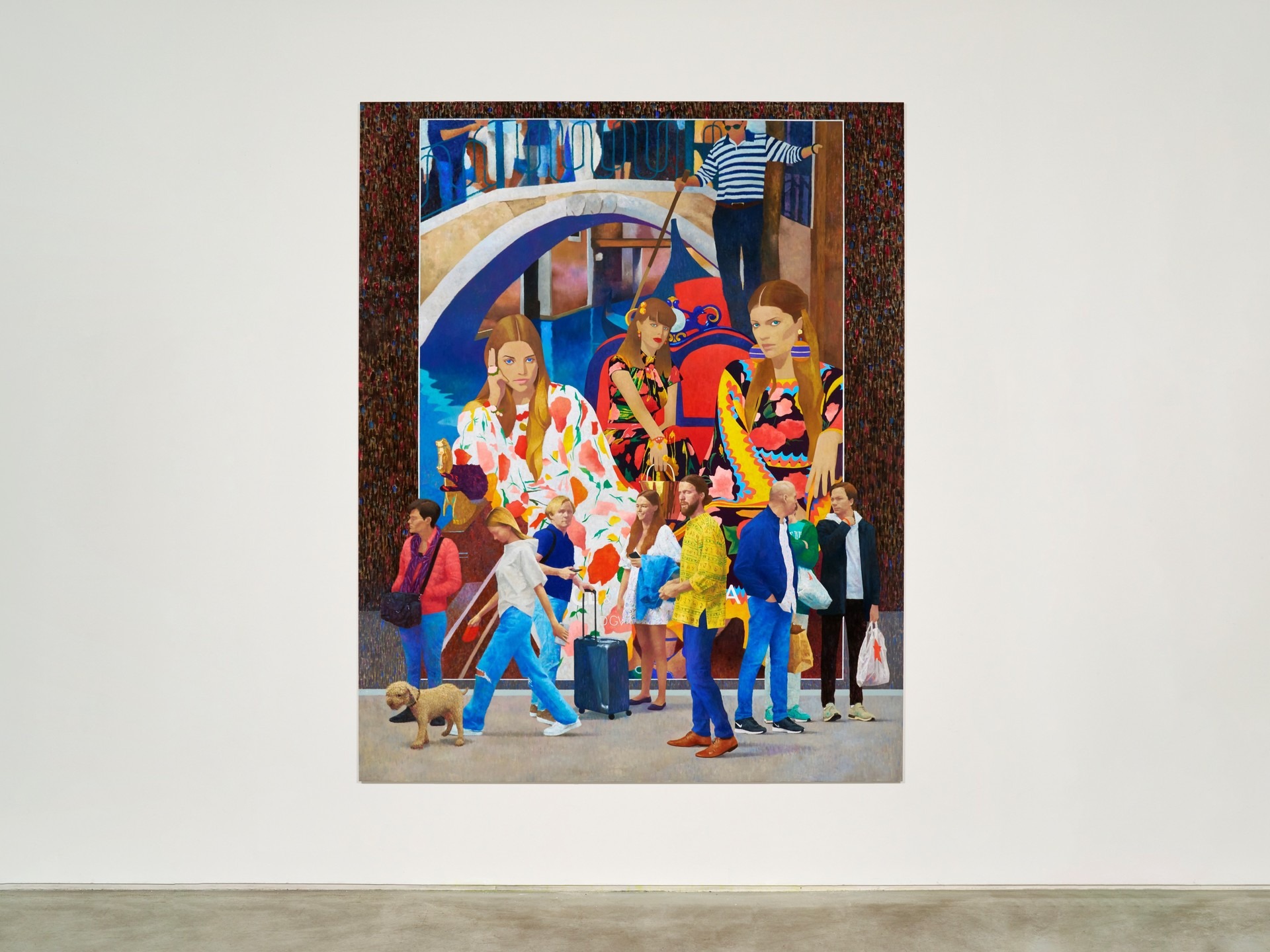
References